
Nuremberg, Germany: Things To Do & Is It Worth Visiting?
Nuremberg is a great place to visit for its rich history and architecture, with plenty of things to do. The city is a transport hub in central Germany, so it’s easy to reach.
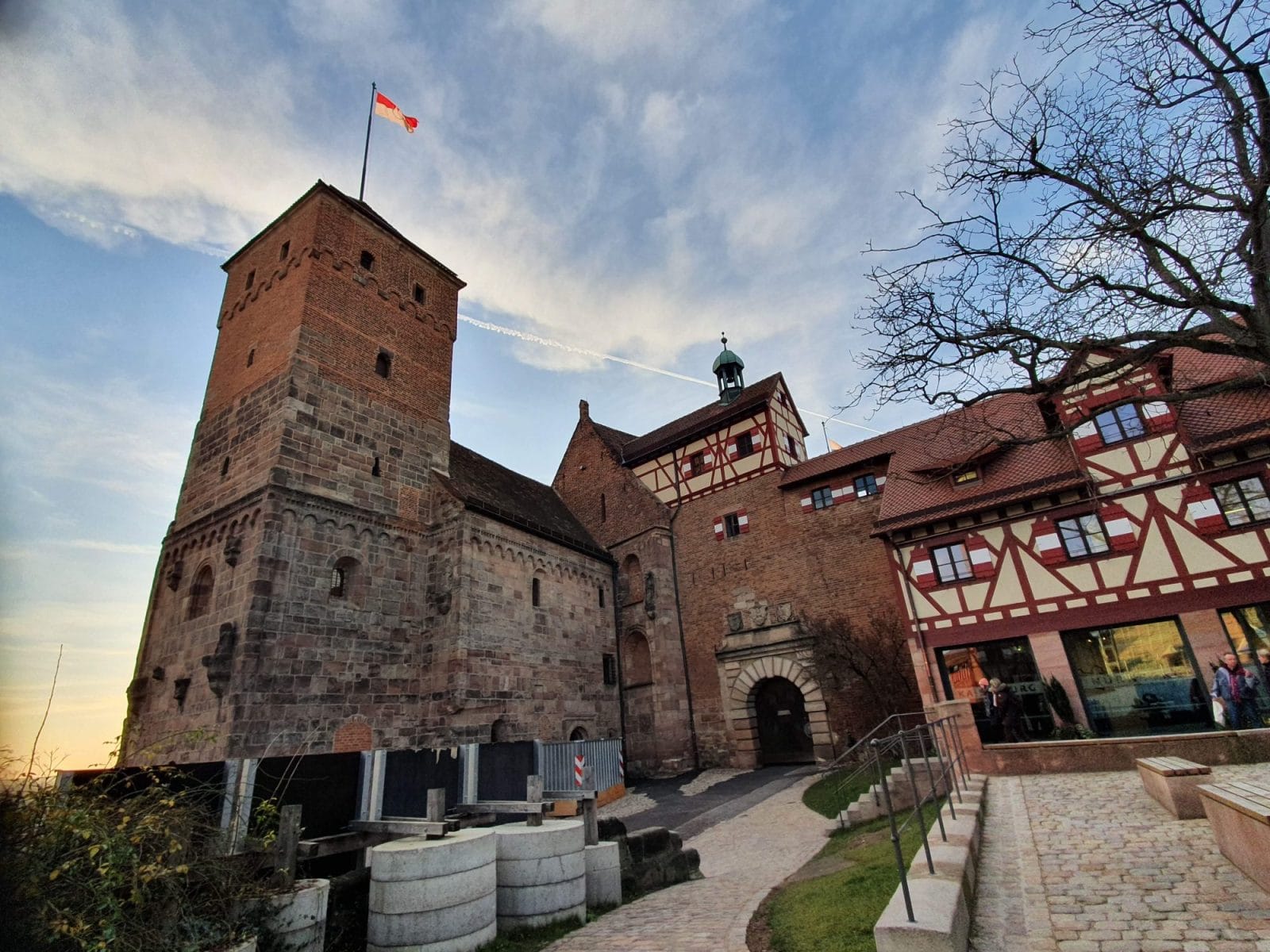
Nuremberg is in the state of Bavaria, Germany, and is the second-largest city in Bavaria after Munich. It is on the River Pegnitz, which flows through the city’s old town.
Things To Do in Nuremberg
Disclosure! Keep in mind that some links in these posts are affiliate links. If you click one of them, I may earn a small commission (for which I’m extremely grateful) at no extra cost to you. Thanks for visiting!
Nuremberg has plenty of historical places to visit. This includes key sites within the medieval city walls. It also hosted the Nuremberg Trials and the Nazi Party rallies. You can find tours on the GetYourGuide website.
Imperial Castle
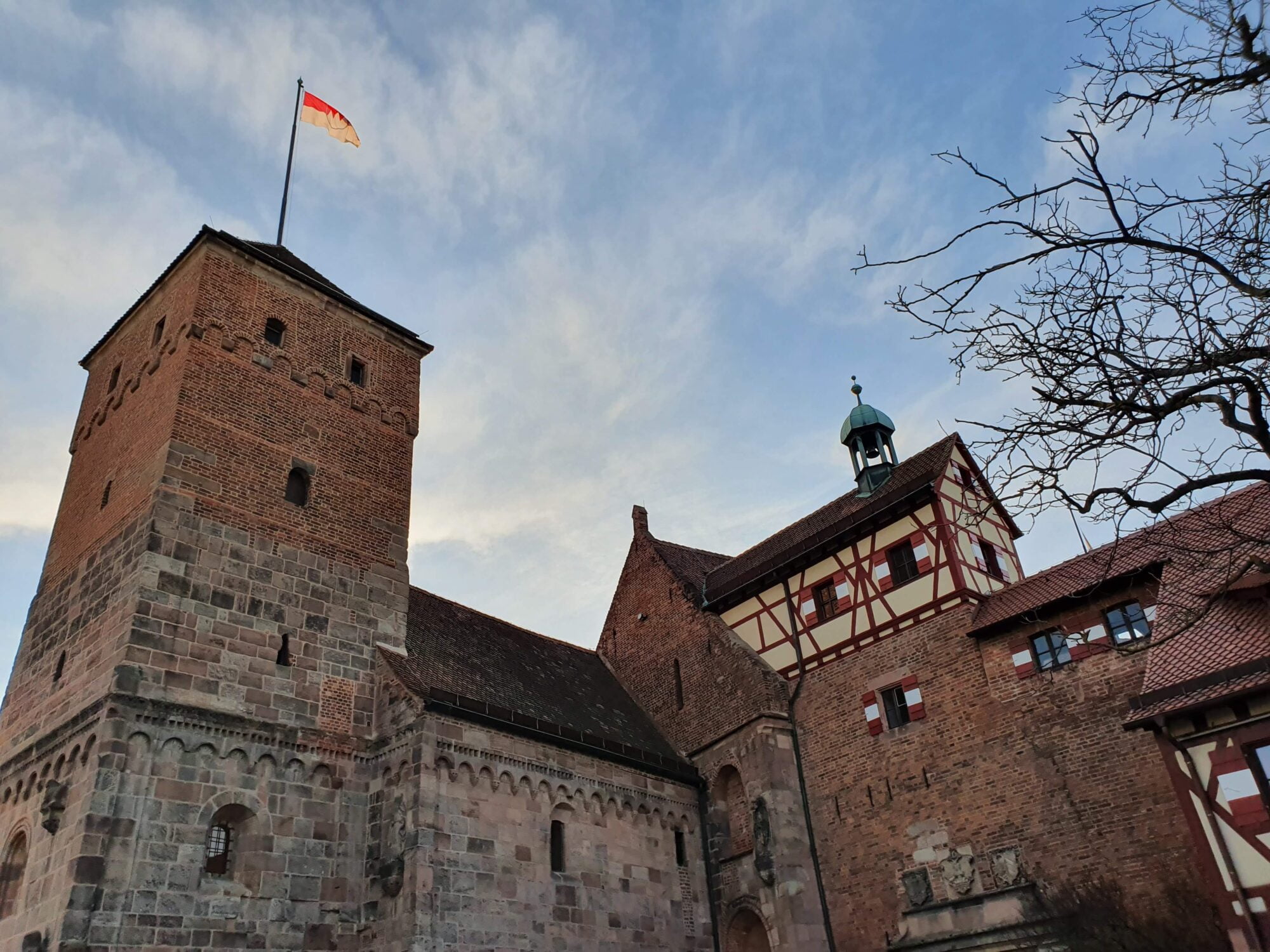
On a hill within the city walls is the Imperial Castle of Nuremberg. The outer area of the castle is free to visit and has views of the city skyline, including the spires of the prominent churches.
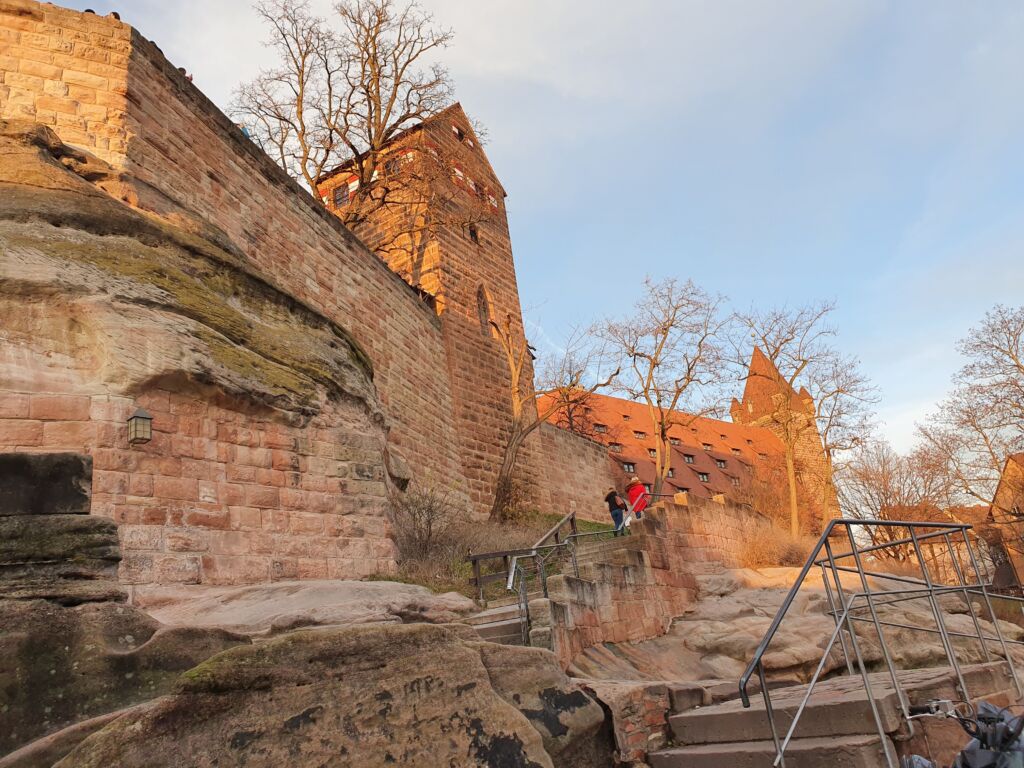
Known locally as Nürnberger Burg, the castle is a group of medieval fortified buildings on a sandstone ridge. Together with the city walls, the castle is one of Europe’s most formidable medieval fortifications.
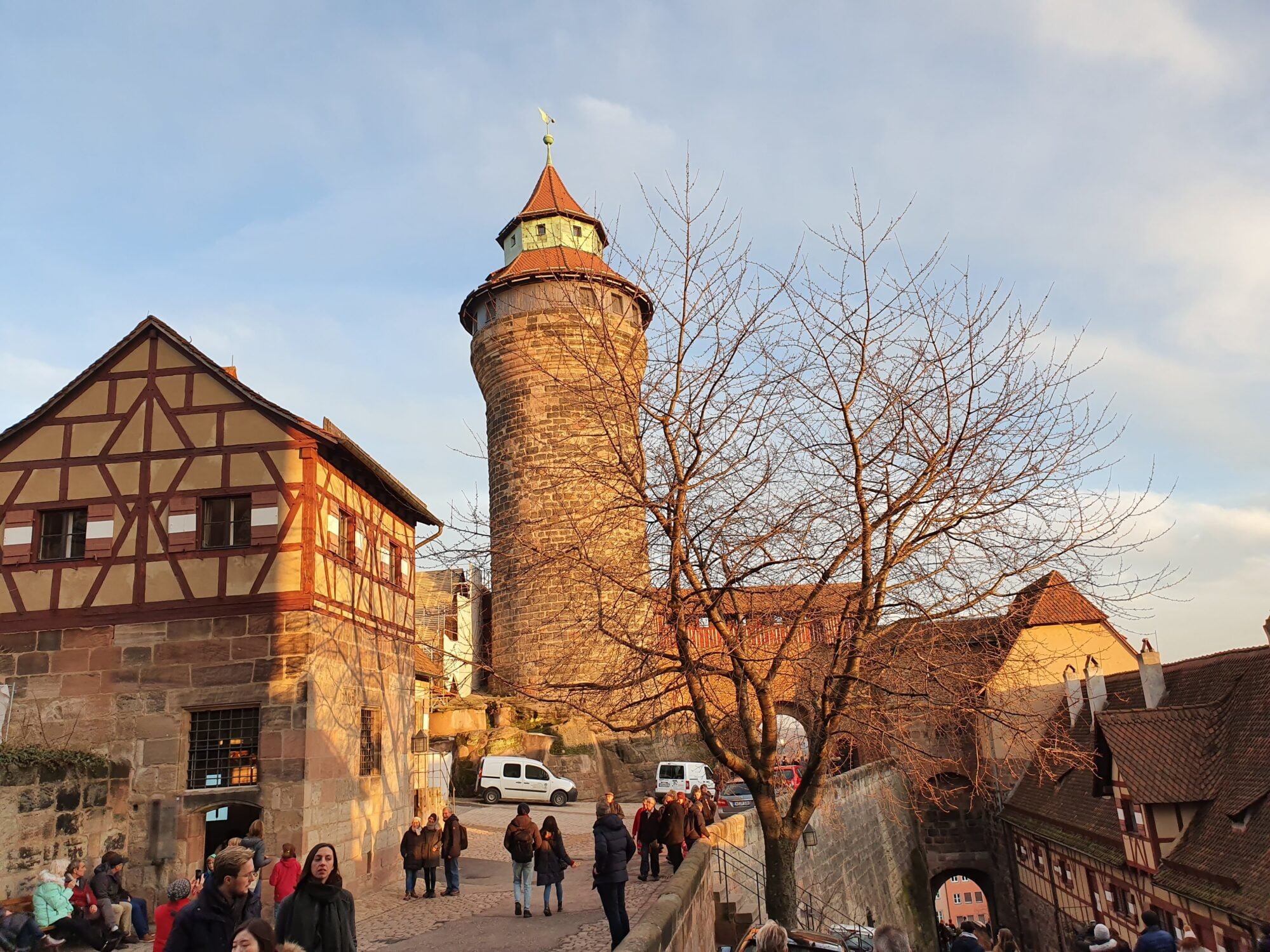
The footpath to the castle follows a sandstone ridge which leads into the outer courtyard and through the Heavenly Gate (Himmelstor). The gate is next to the Hasenburg tower, named after the Bohemian Hasenburg family. The castle exterior features fortifications, timber-framed buildings, and towers.
Christmas Markets
The annual Christmas market in the city is one of the more well-known in Germany. It has a great reputation, and the whole place embraces the festivities.
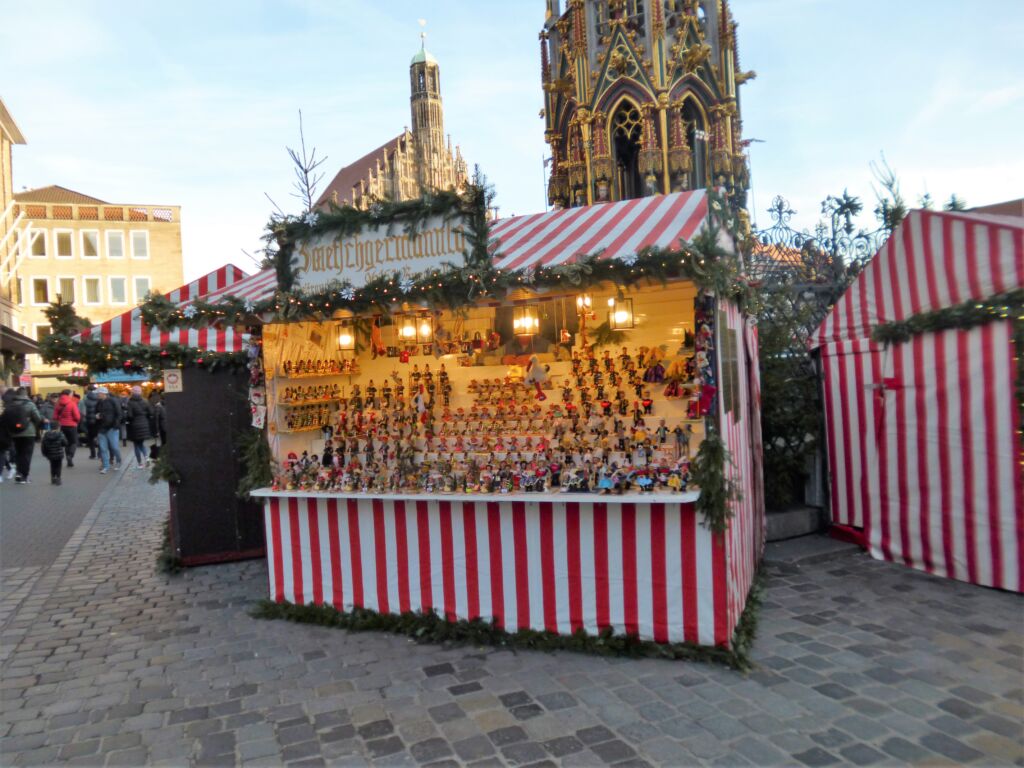
The bulk of the market is on the site of Nürnberger Hauptmarkt, with the Church of Our Lady as the centrepiece. Expect festive entertainment, nice Christmas smells, good, rich food and a fun vibe at Christkindlesmarkt.
Frauenkirche

The Church of Our Lady, also known as the Frauenkirche, is a stunning example of brick Gothic architecture, built on the orders of Charles IV. Charles IV was Holy Roman Emperor between 1355 and 1378. It was consecrated in 1358; the building was completed in 1361 and is still active as a parish church today.
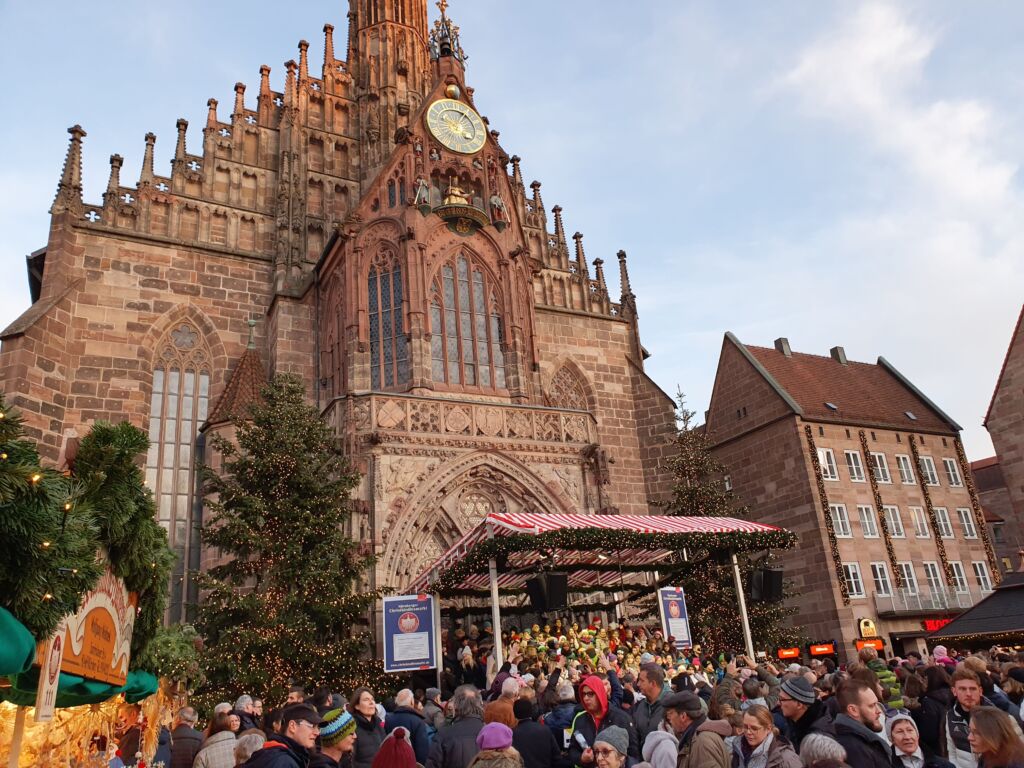
It has two aisles and a tribune for the emperor. It houses sculptures, some of which have been heavily restored over the years. Inside, you can see medieval artwork. This includes the Tucher Altar, which was originally the high altar of the Augustinian church of St Vitus.
St Sebaldus Church
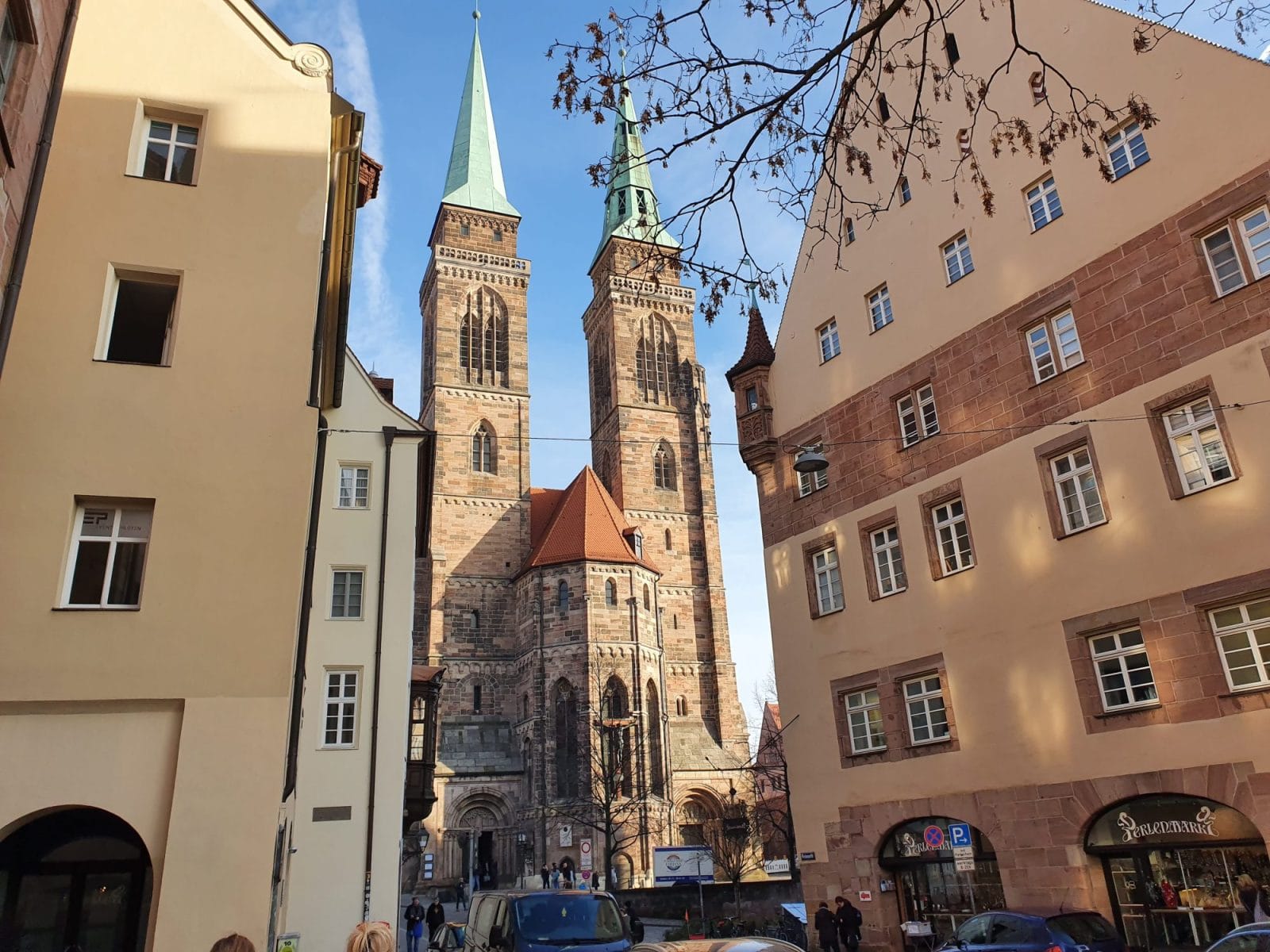
St Sebaldus, also known as St Sebald or Sebalduskirche, is a medieval church. It is one of the city’s oldest and most important churches. The church stands on Albrecht-Dürer-Platz, in front of the old city hall.
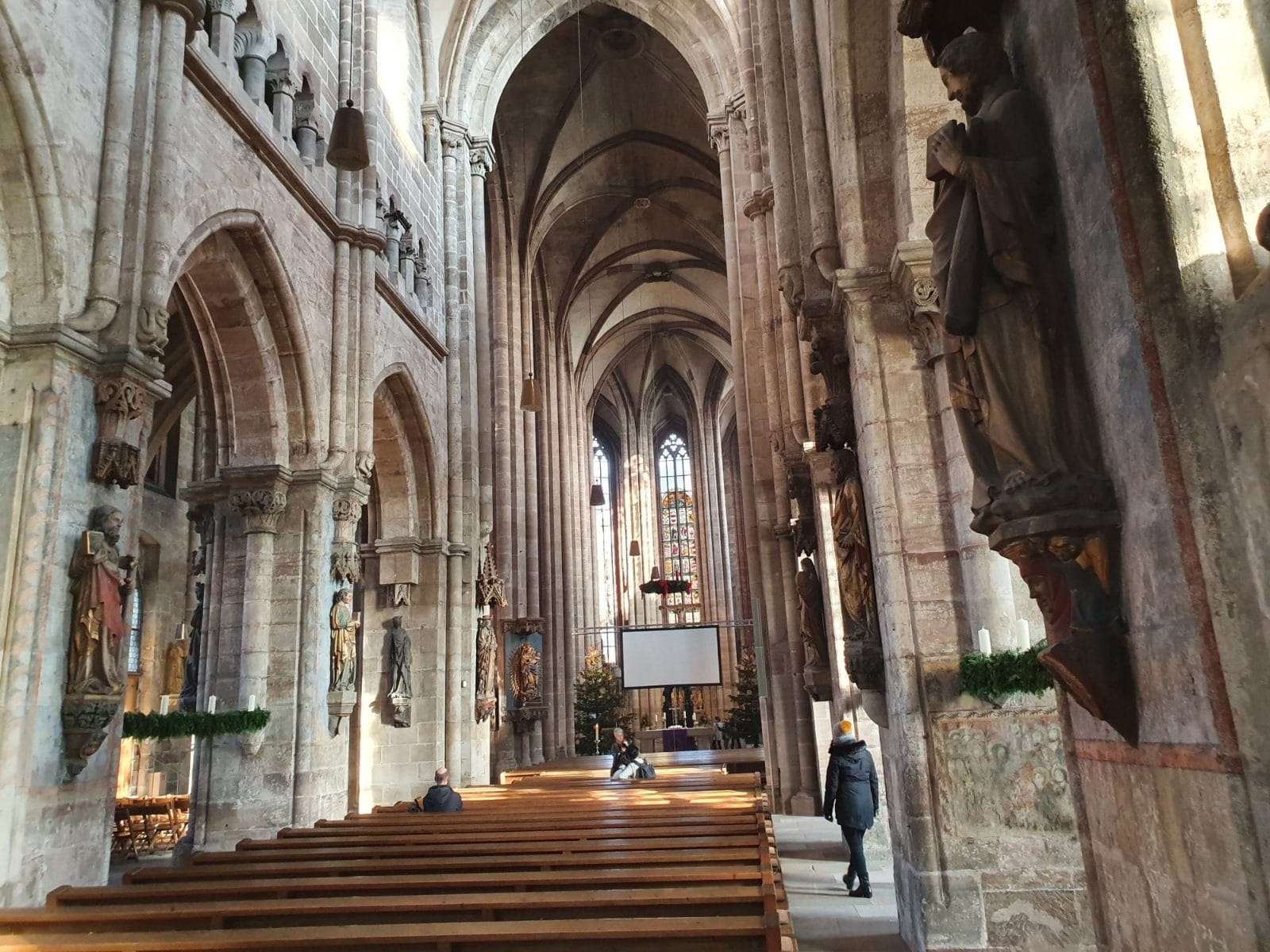
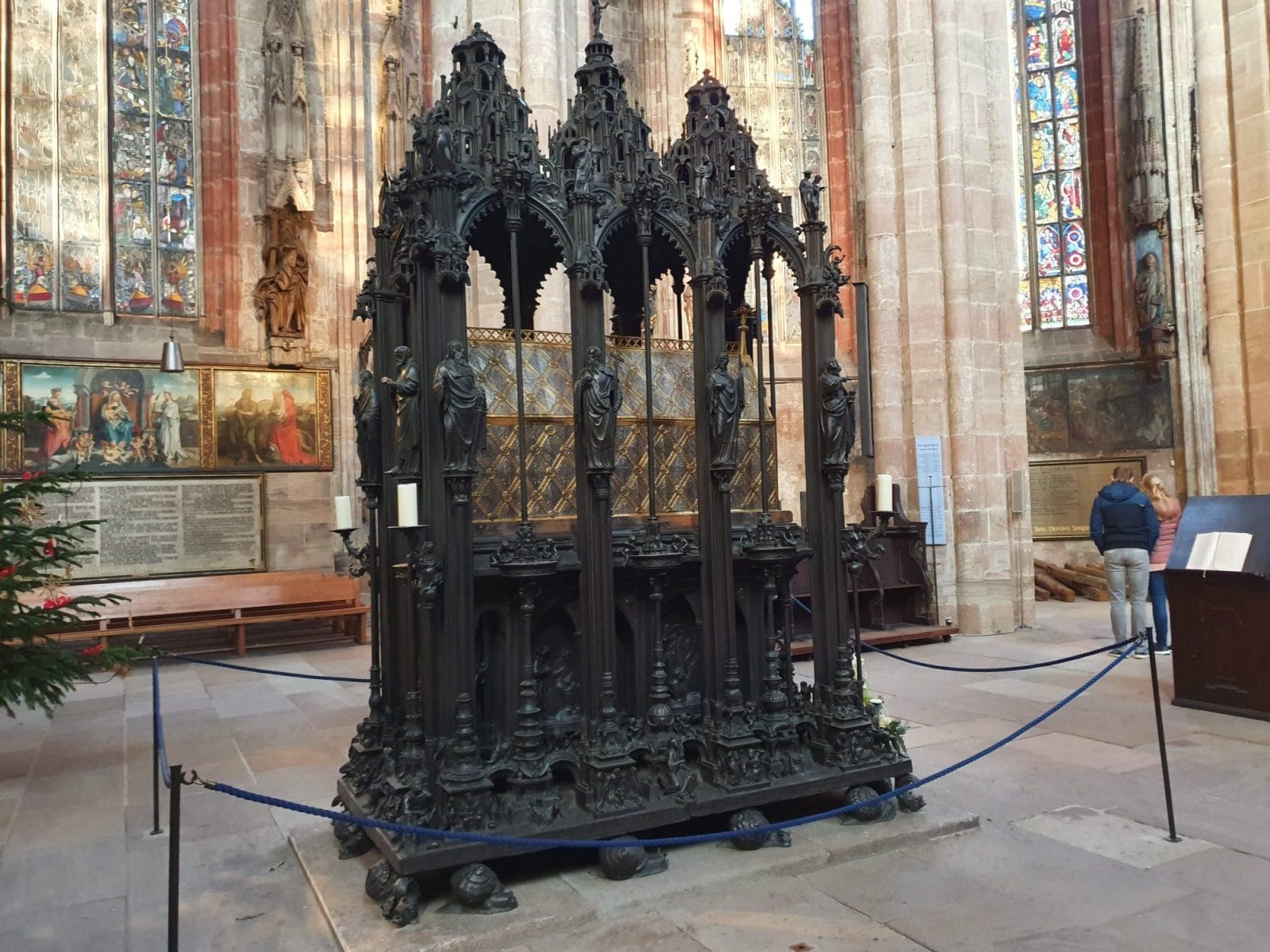
The facade has two towers on either side of the main door. It takes its name from Sebaldus, an 8th-century hermit and missionary who is Nuremberg’s patron saint. The building of St. Sebald began in 1225 and was completed by 1275. Inside, you can see artefacts and organs and learn some of the city’s history.
River Pegnitz
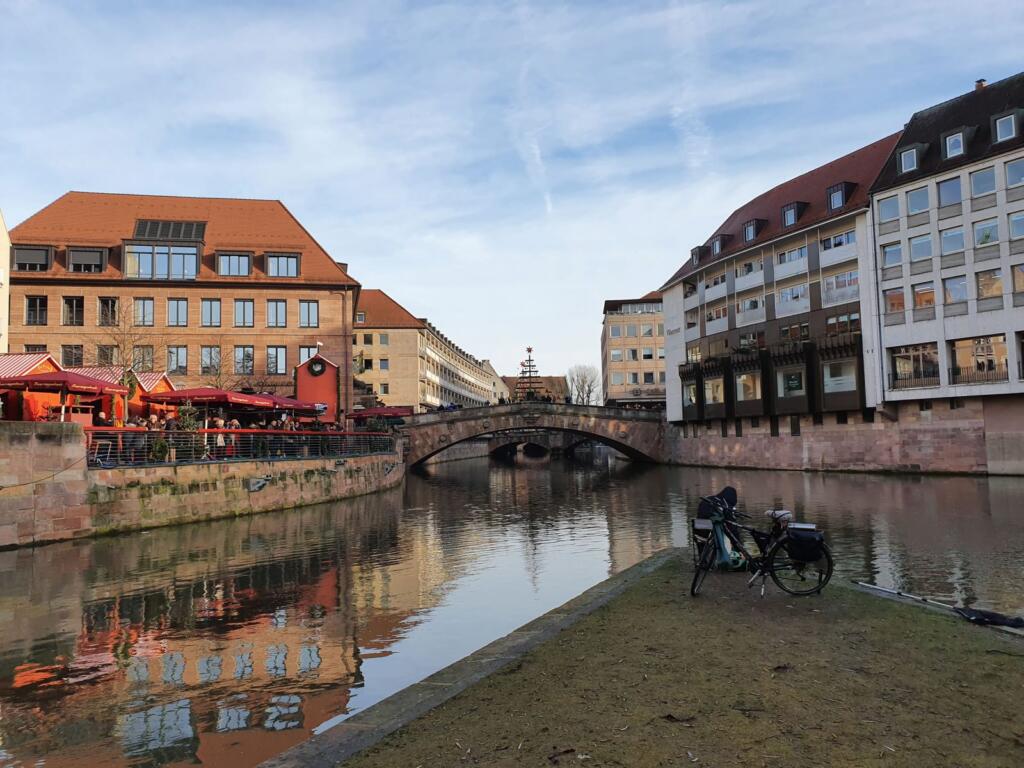
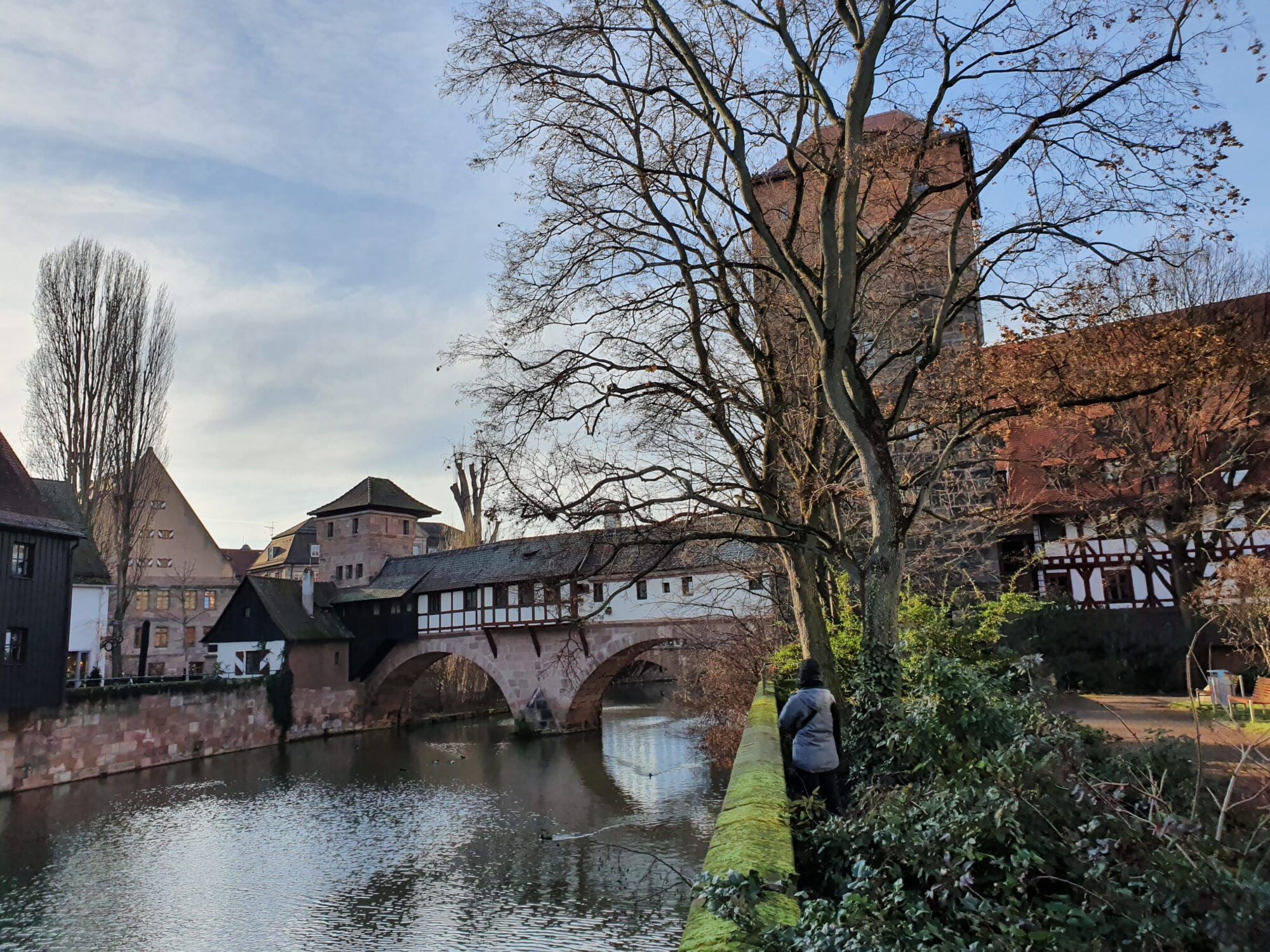
The River Pegnitz runs through the old town centre and has a few bridges connecting the north and south halves. Bridges across the river are good places for photos. The banks are a nice, quiet place for sightseeing or for sitting and relaxing.
Wasserturm
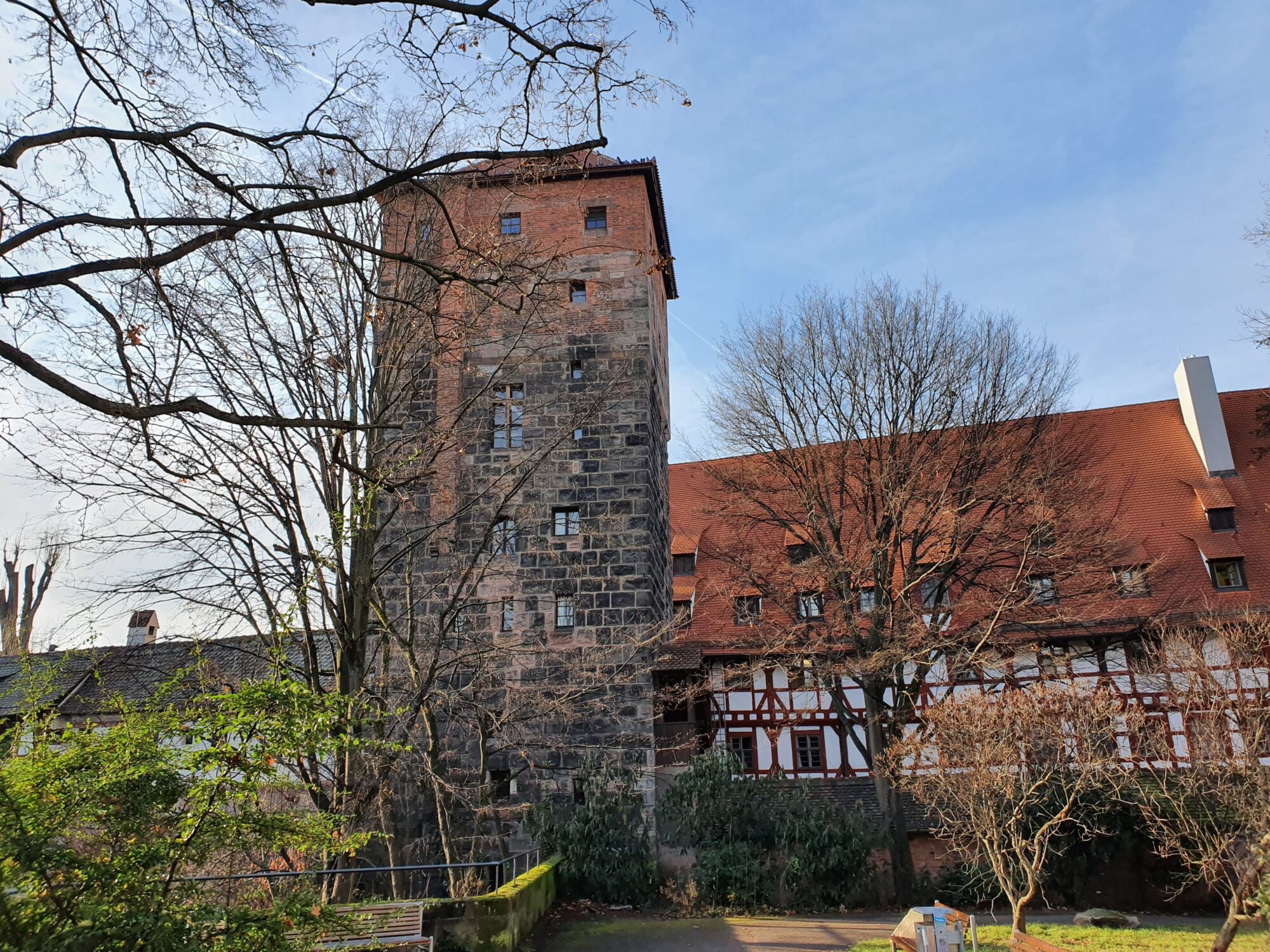
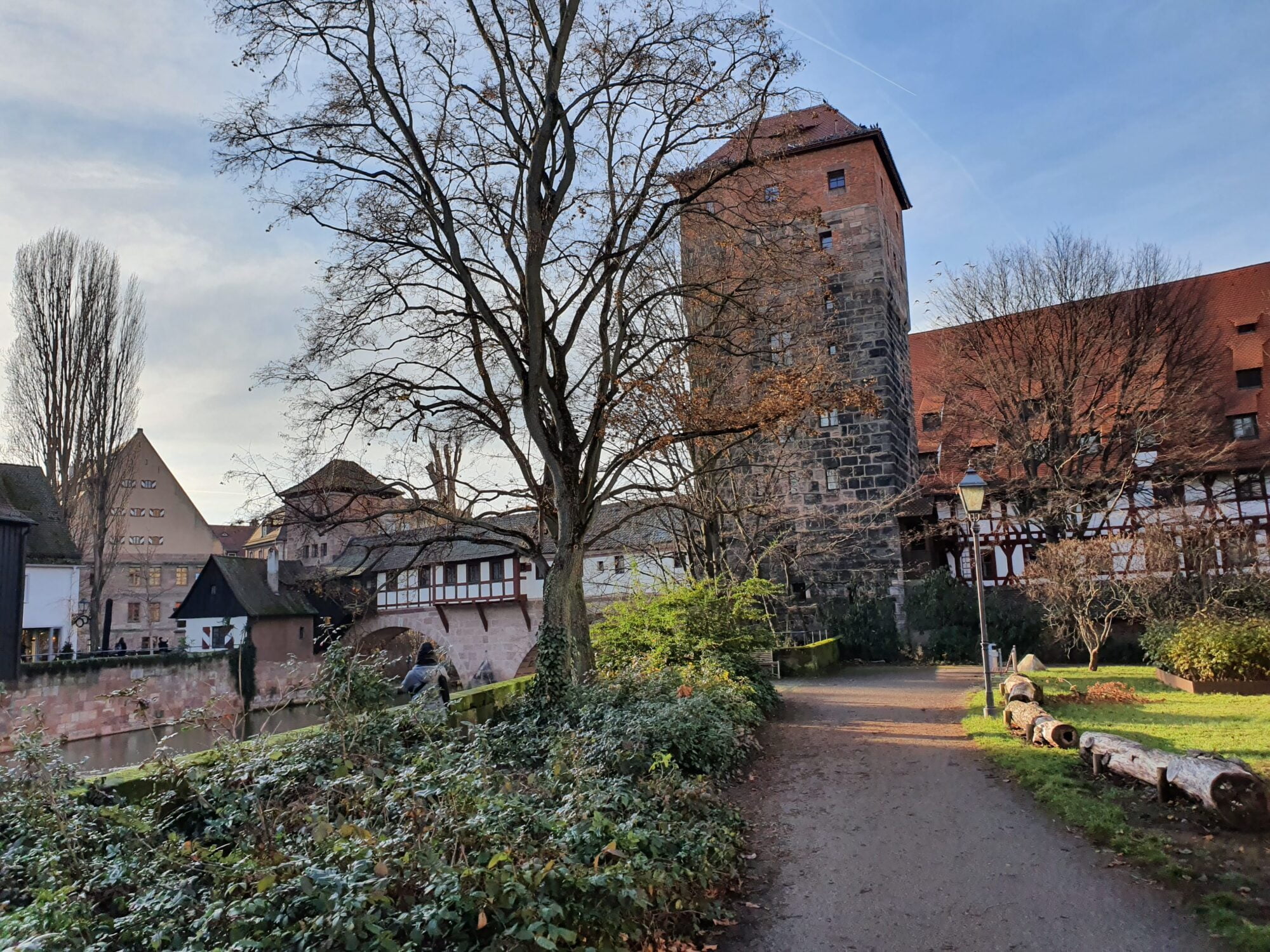
Also on the banks of the river is Wasserturm, or water tower. Wasserturm is connected to the executioner’s tower by the hangman’s bridge. The tower was built between 1320 and 1325. Despite its name, it ceased to be used as a water tower in 1400 and was converted into a prison.
Hangman’s Bridge
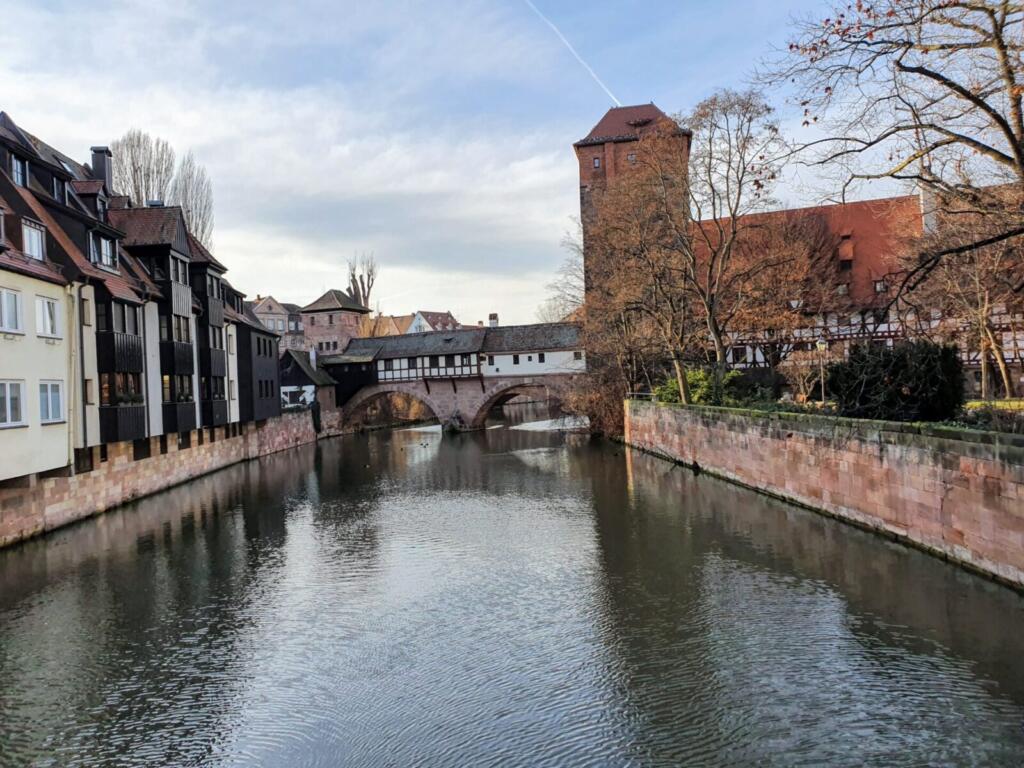
The Hangman’s Bridge is a wooden bridge they built in 1457. The bridge crosses the River Pegnitz, and the tower is where the hangman once lived.
Medieval City Walls & Towers
The city walls of Nürnberg Old Town are an attraction in themselves, with 5 kilometres of fortifications, towers and gates. These walls are a good option for a circular walk, passing the castle and crossing the river twice.
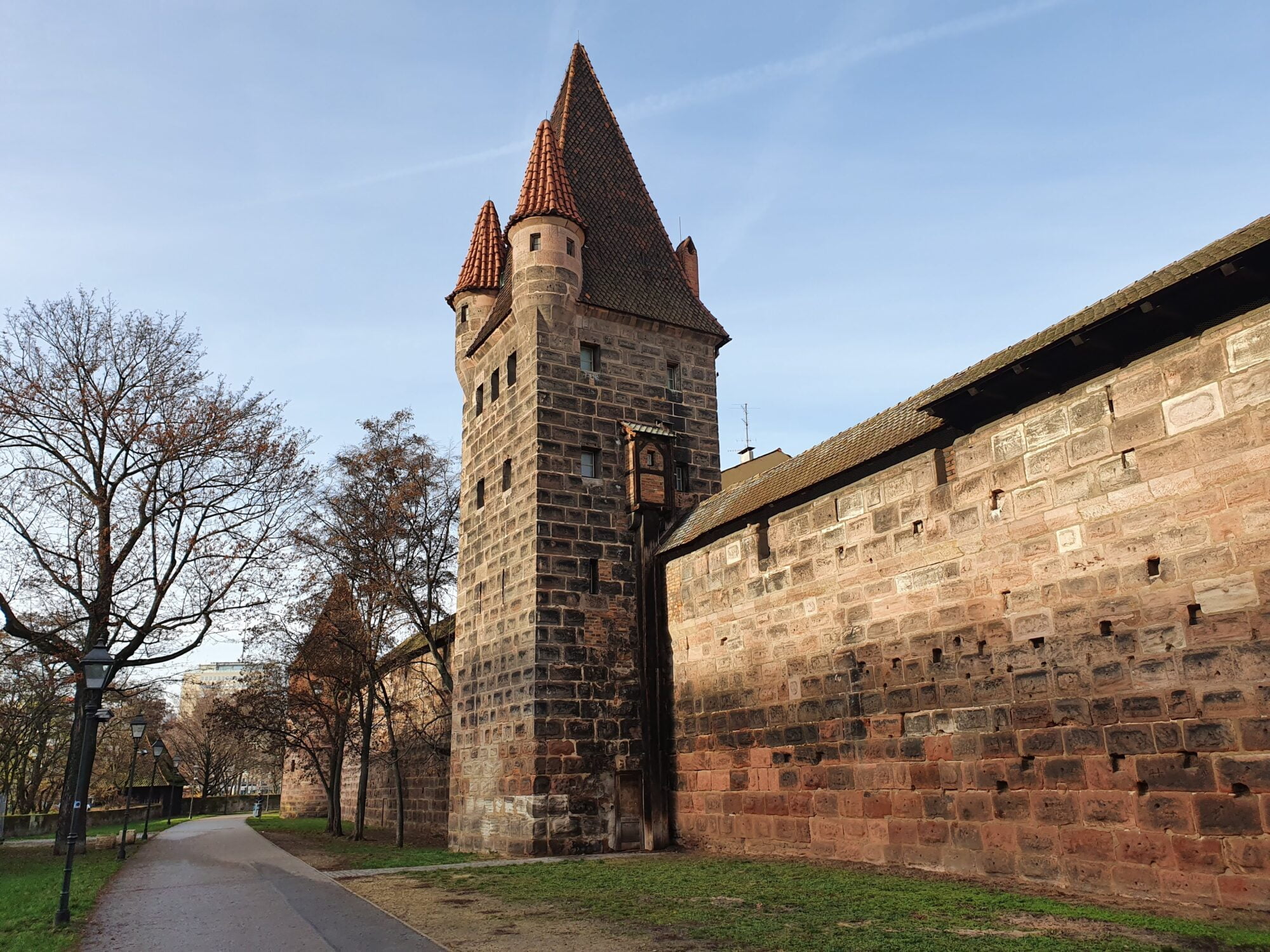
Construction of the walls began in the 12th century and officially ended in the 16th century. The towers include the Spittlertor, an old gate in the southwest of the city wall.
The Spittlertor (The Spittler Gate Tower) is one of the four round main towers of the fortifications. They named it after the Elisabeth Hospital of the Teutonic Order. During the Second World War, they used the tower as a high bunker. Nowadays, it has become home to the library and archive of the Nuremberg Garrison Museum.
St Jakob Church
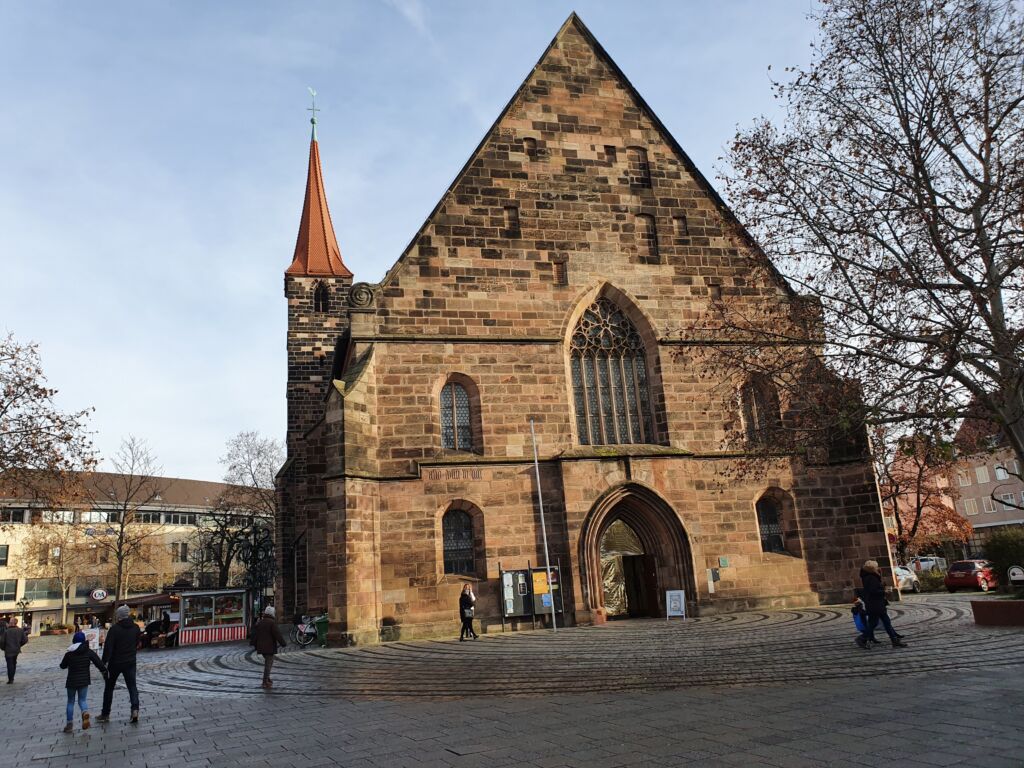
St Jakob, also known as St James the Greater, is a medieval church of the former free imperial city of Nuremberg. The church is at Jakobsplatz in the southwest of the city. The church dates from 1209, when the Holy Roman Emperor Otto IV founded it.
Schöner Brunnen in Hauptmarkt
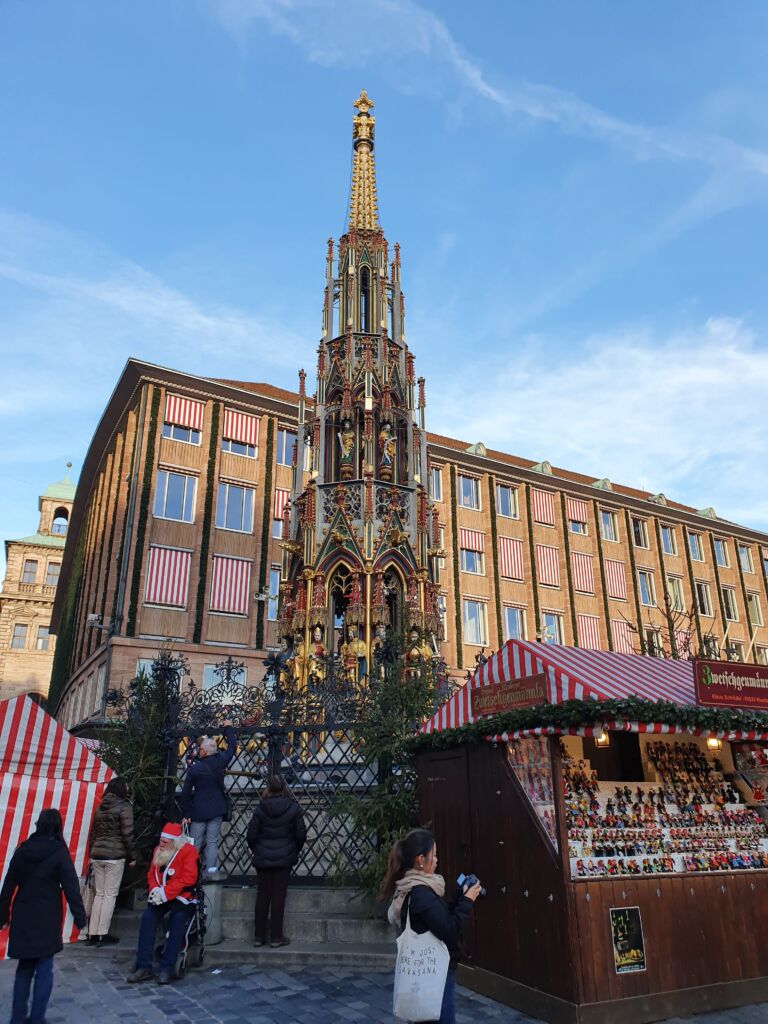
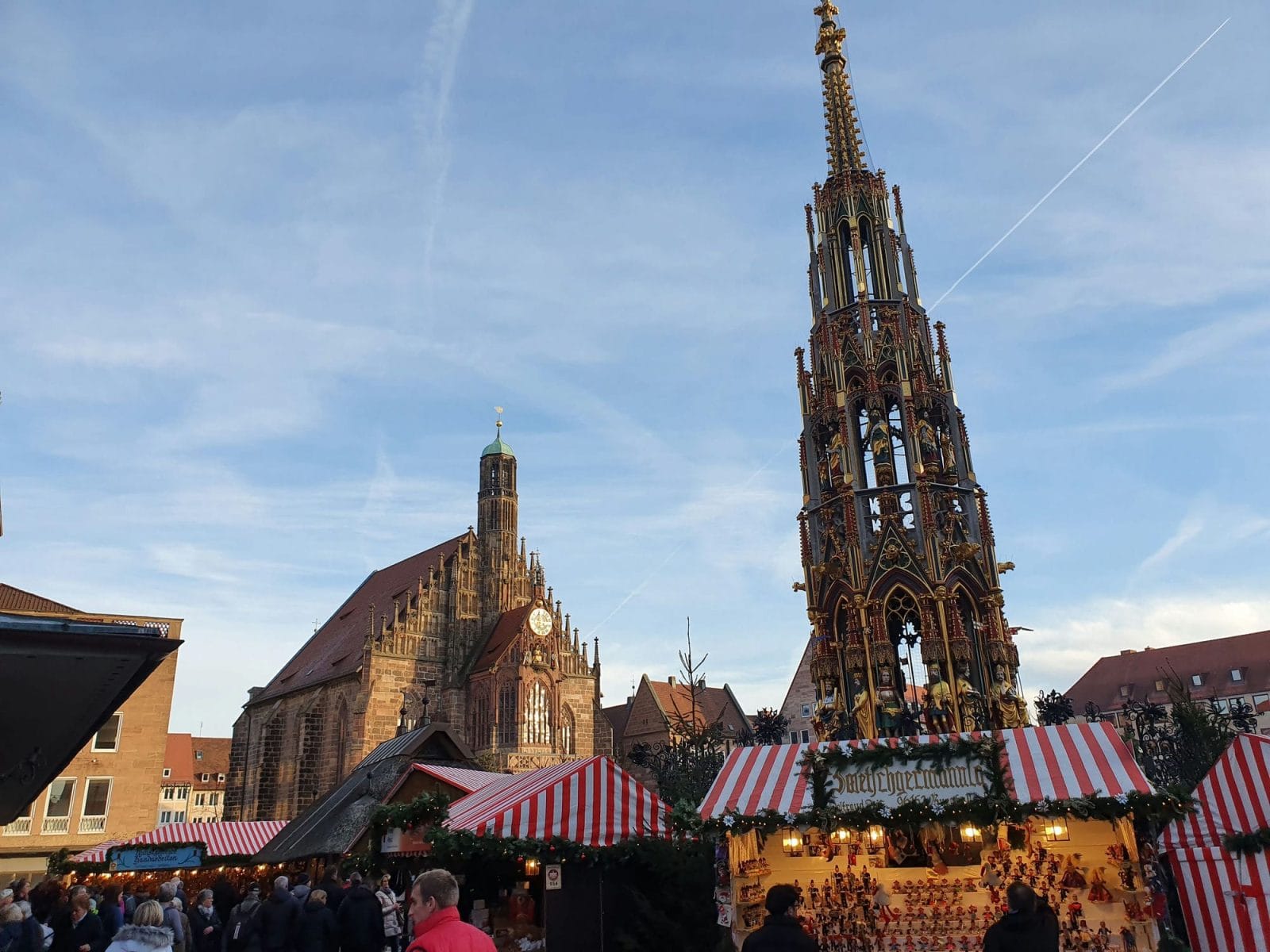
Schöner Brunnen in Hauptmarkt is a 14th-century fountain, an ornate work of art. They built the fountain in 1396 on the edge of the city’s principal market. The Schöner Brunnen Fountain is roughly 19 metres tall and looks like a Gothic church spire.
City Museum
The City Museum is housed in Fembo House, which is a former merchant’s house on the hill towards the castle. The building was constructed in the Renaissance style and retains original rooms. The museum showcases 950 years of the city’s history.
Lorenzkirche
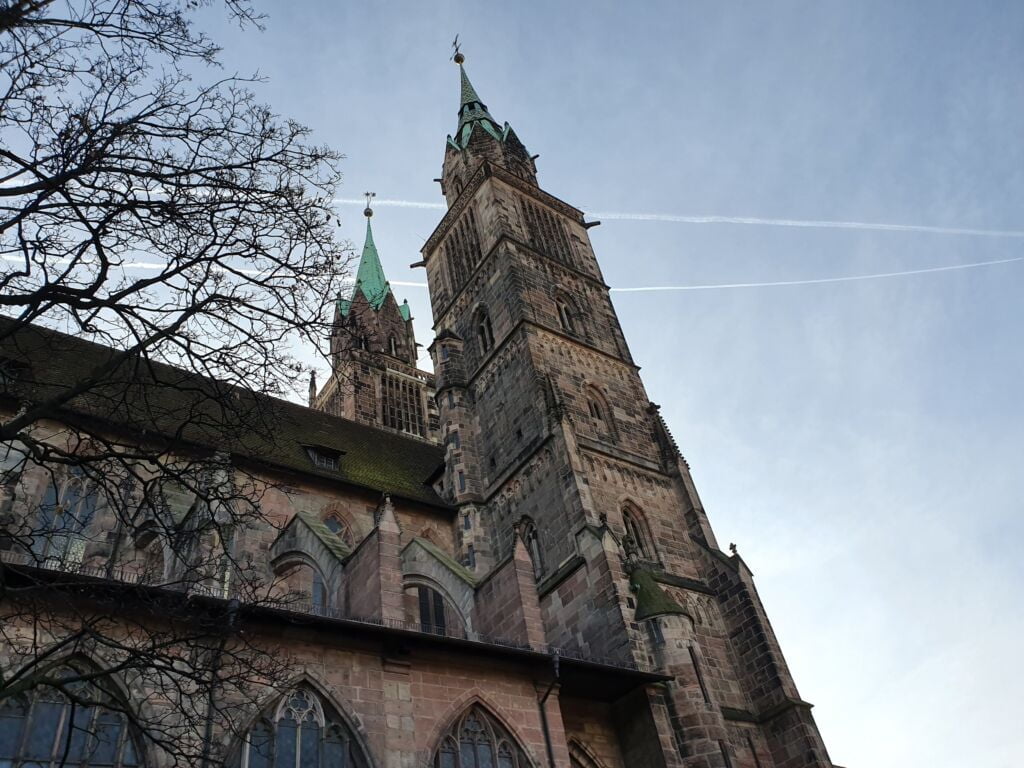
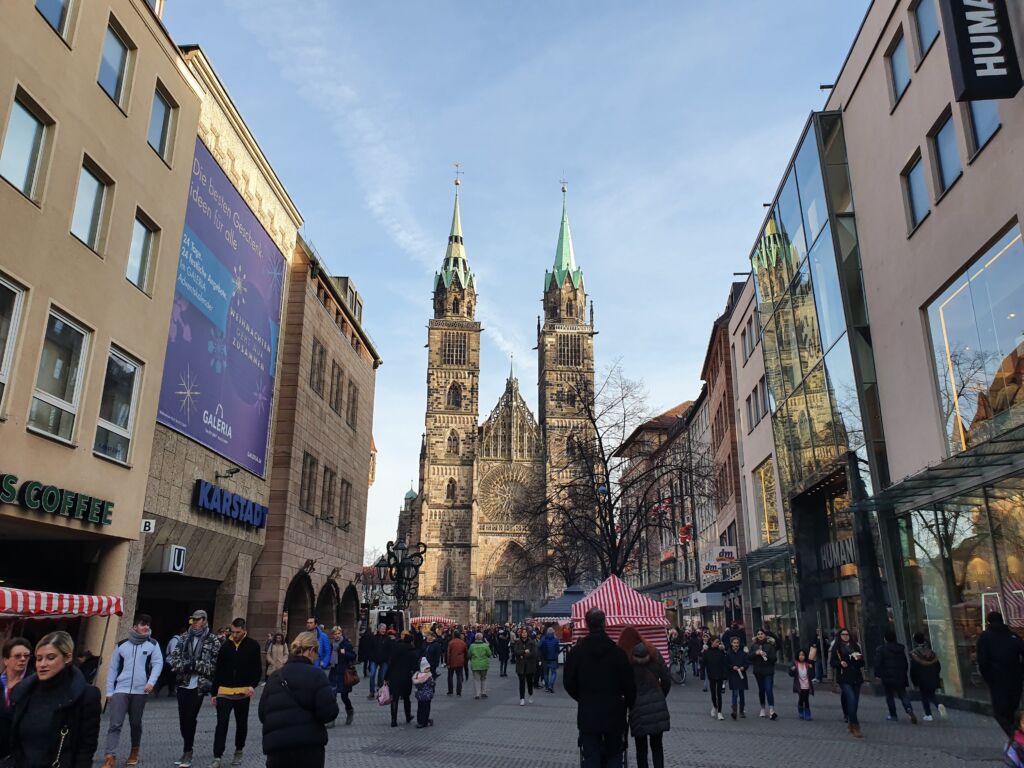
Lorenzkirche is a medieval church dedicated to Saint Lawrence. He was a 3rd-century Christian martyr. It is one of the most recognisable churches of the Evangelical Lutheran Church in the State of Bavaria.
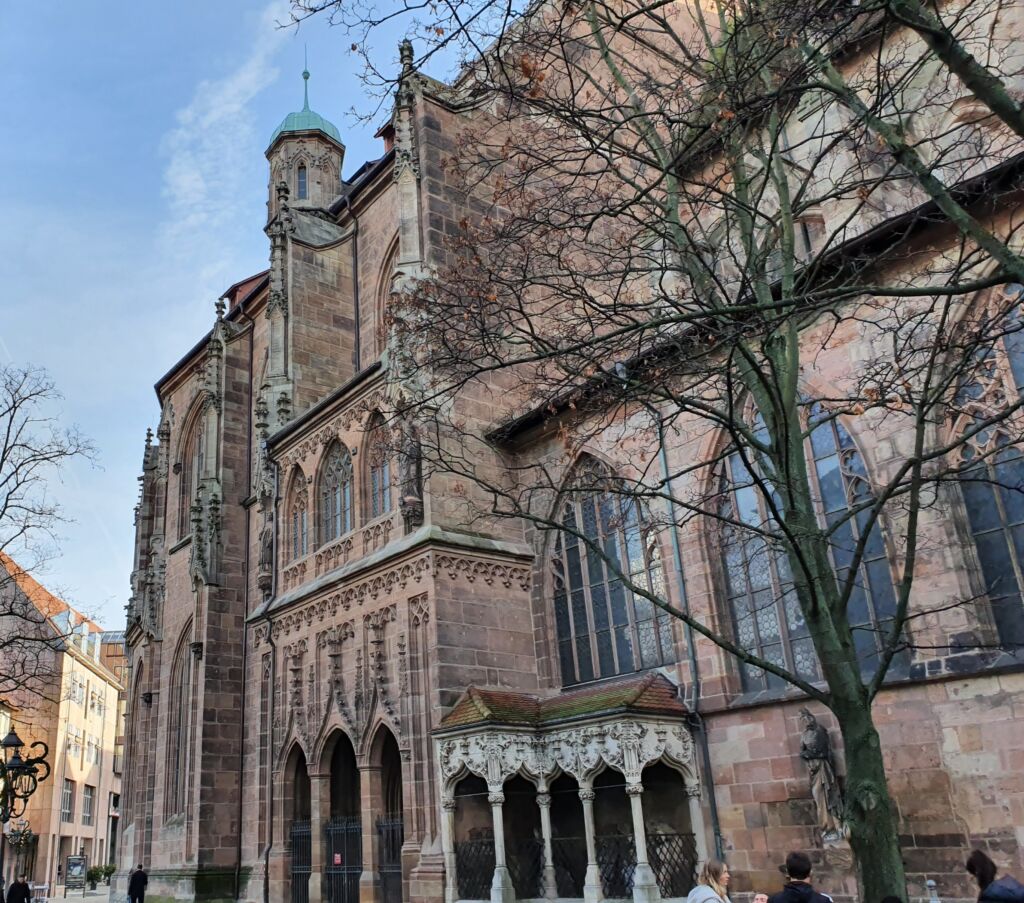
The building is Gothic in design with two spires. The spires are a standout feature of the city’s skyline. They started building Lorenzkirche in 1250 and finally completed it in 1477.
Weißer Turm
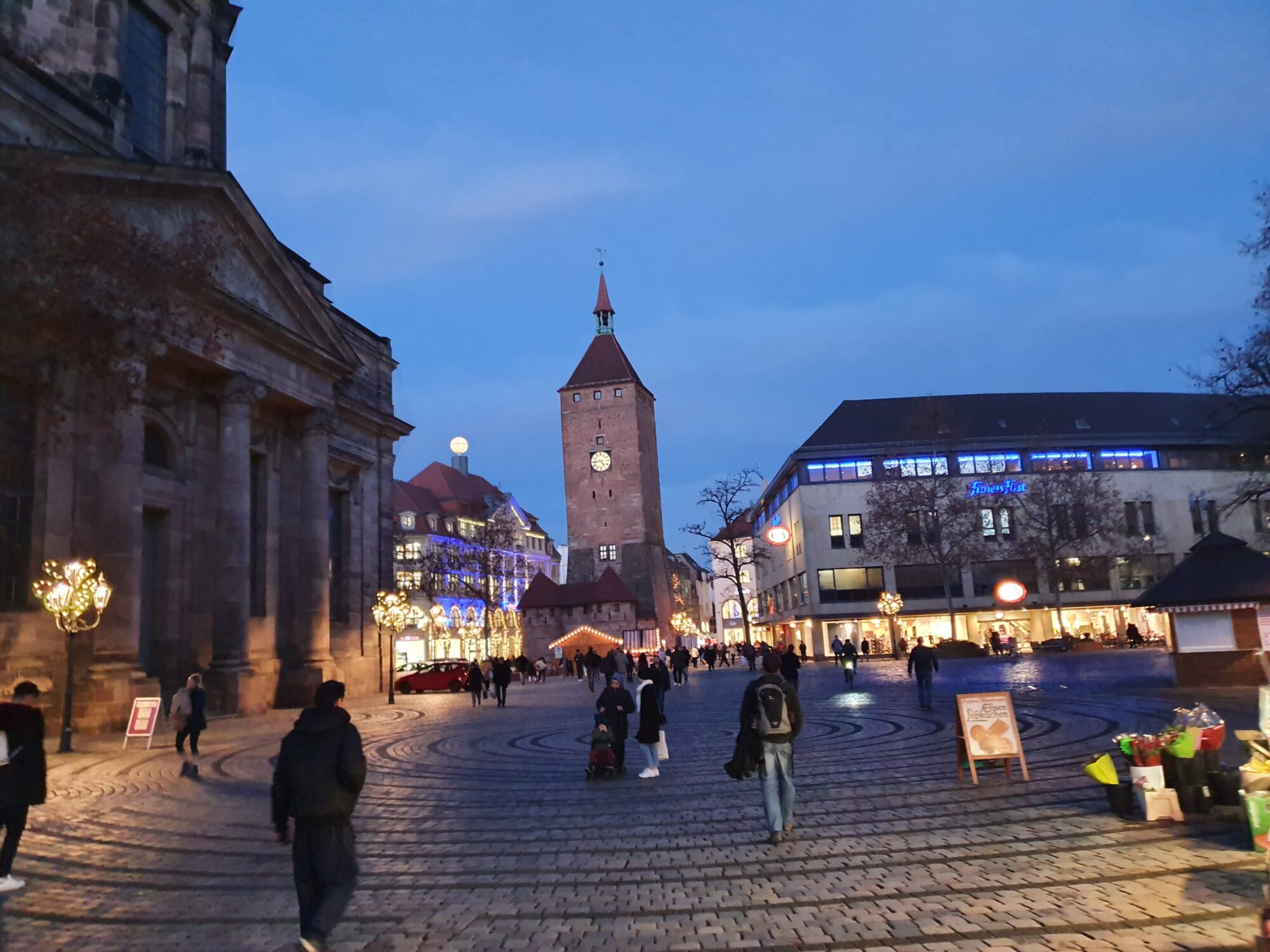
The Weißer Turm, or White Tower, stands in the main shopping area. Weißer Turm used to be part of the second city wall. It is now a standalone building. Locals affectionately call it the carousel. The tower acts as an entrance to the city’s subway system.
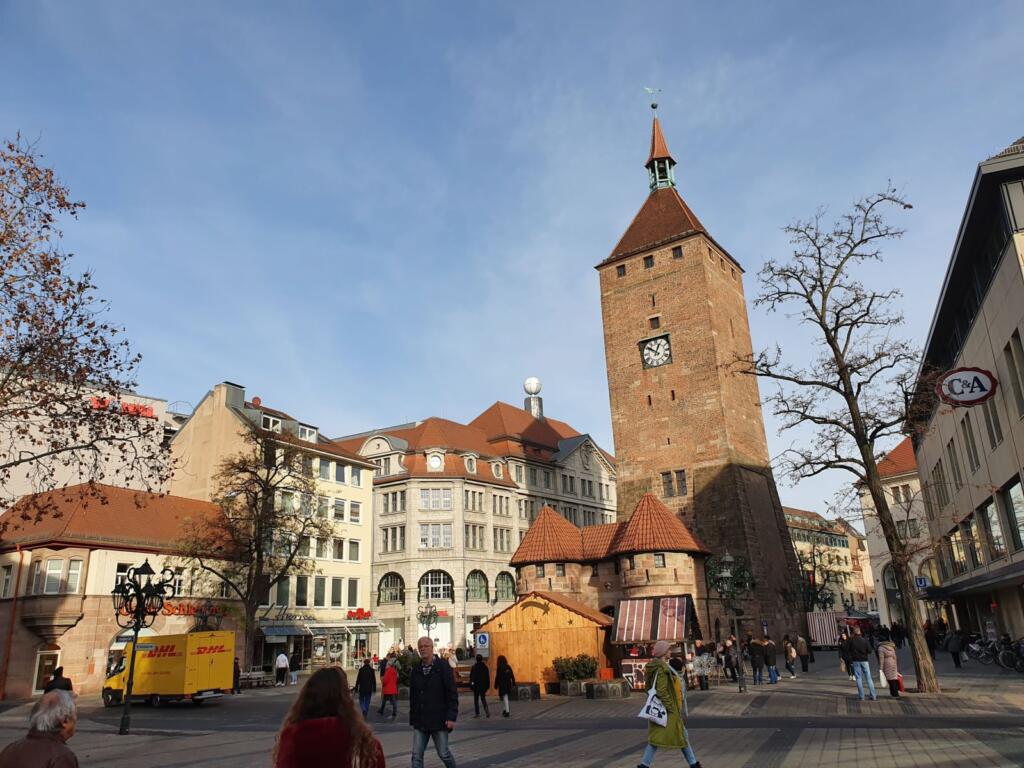
The White Tower was originally part of the Inner Spittler Gate. It houses a somewhat complicated clock. They made the Weißer Turm from brick and sandstone blocks with an arched gate passage. The building dates back to around 1250 and originally also served as a toll booth.
Ehekarussell Fountain

In the shopping district is the fascinating but controversial Ehekarussell. The fountain has a ring of statues depicting Hans Sachs’ poem “Bitter-sweet Married Life.”
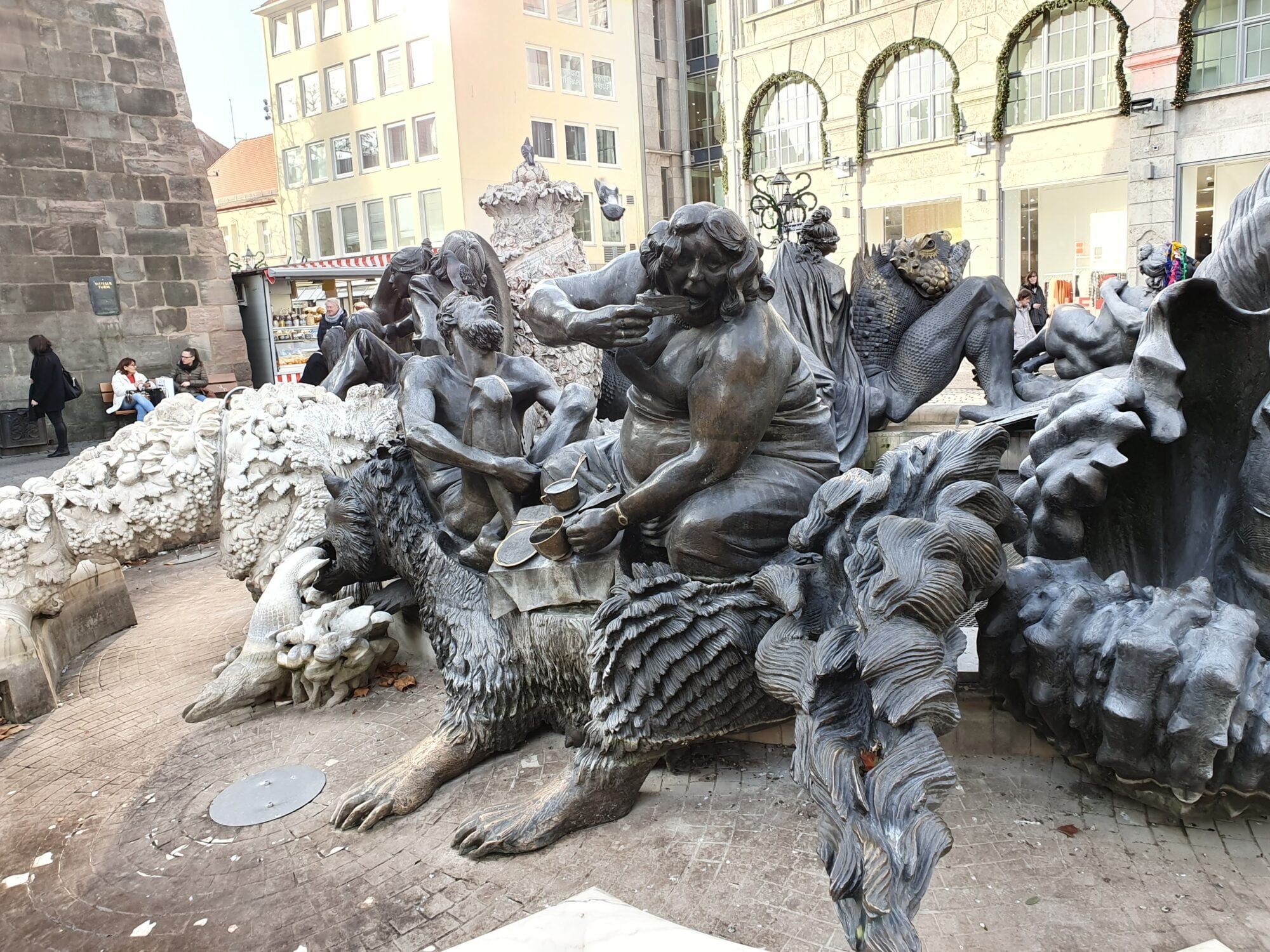
The Ehekarussell fountain depicts the sad course of marriage, from dating to death, through many stages of the relationship. They completed the artwork in 1981, which features nudes, various animals, and beastly characters.
St Elisabethkirche
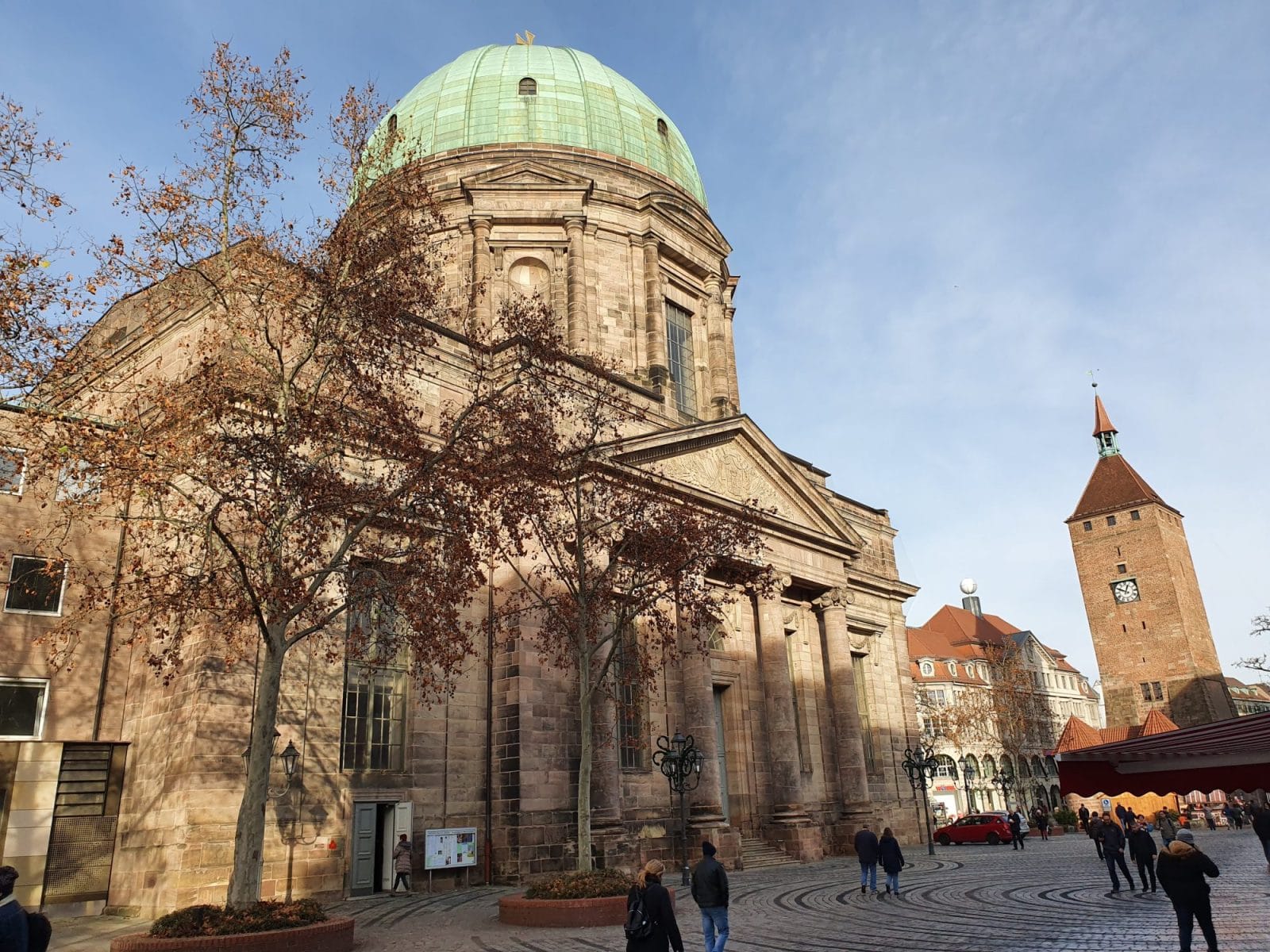
St Elisabethkirche, or St Elisabeth Church, is a large, domed Catholic church with columns at its entrance. Inside, an interesting pipe organ and a luxurious altar draw the eye. Elisabethkirche dates back to 1235, when a chapel on the site was dedicated to Elizabeth of Hungary. They began construction of the current structure in 1785 and completed it in 1803, when they crowned the dome with a golden cross.
Bavarian Cuisine
The city has restaurants and other eateries to suit most tastes and budgets, including some that specialise in local cuisine. Street food options are also available, the most popular of which is the local sausage.
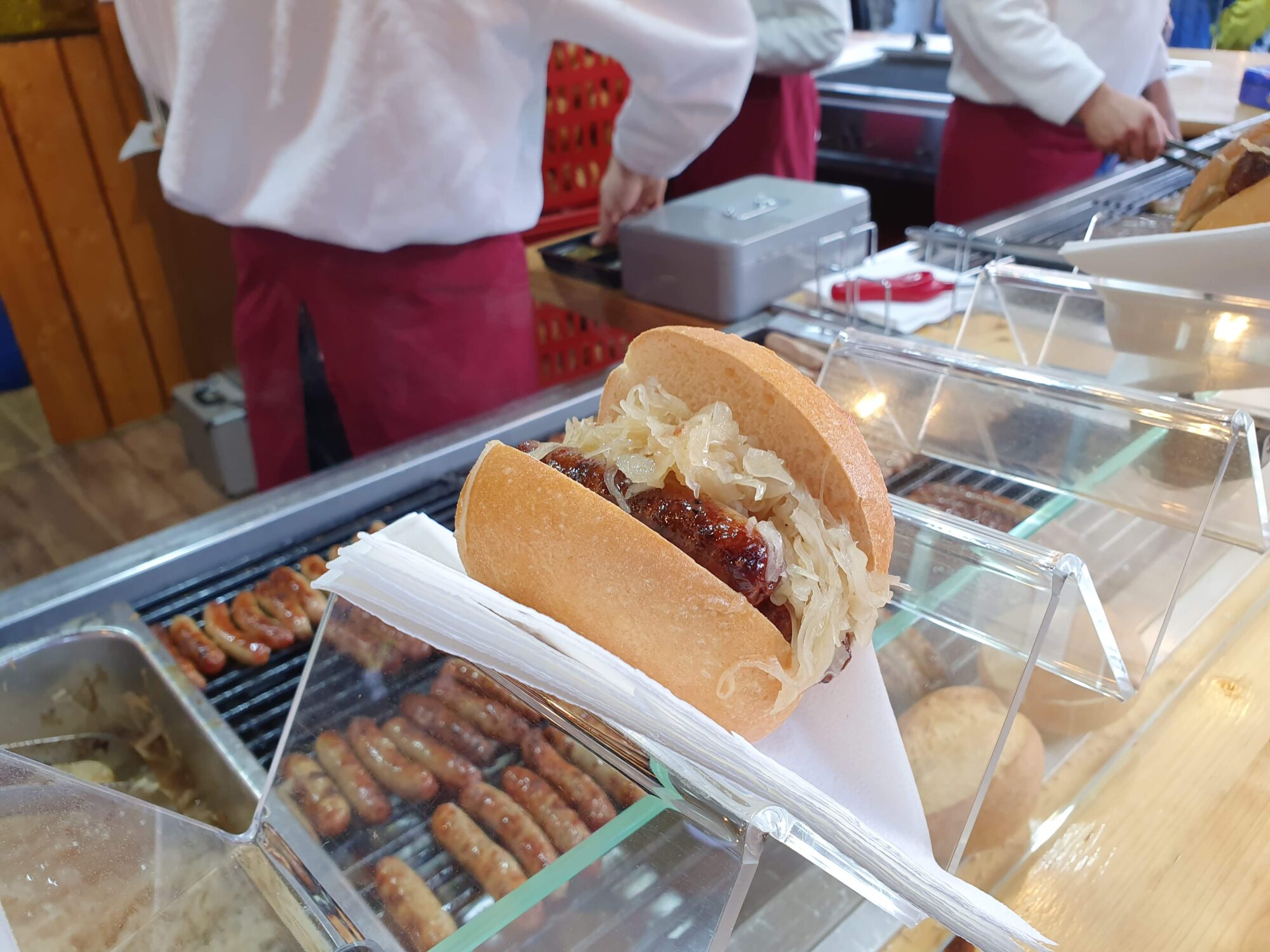
They typically serve the Nuremberg sausage in threes in a bun with sauerkraut or mustard. Nurembergers are made from coarsely ground pork. They season them with marjoram, salt, pepper, ginger, cardamom and lemon powder.
Local Beer – Tucher
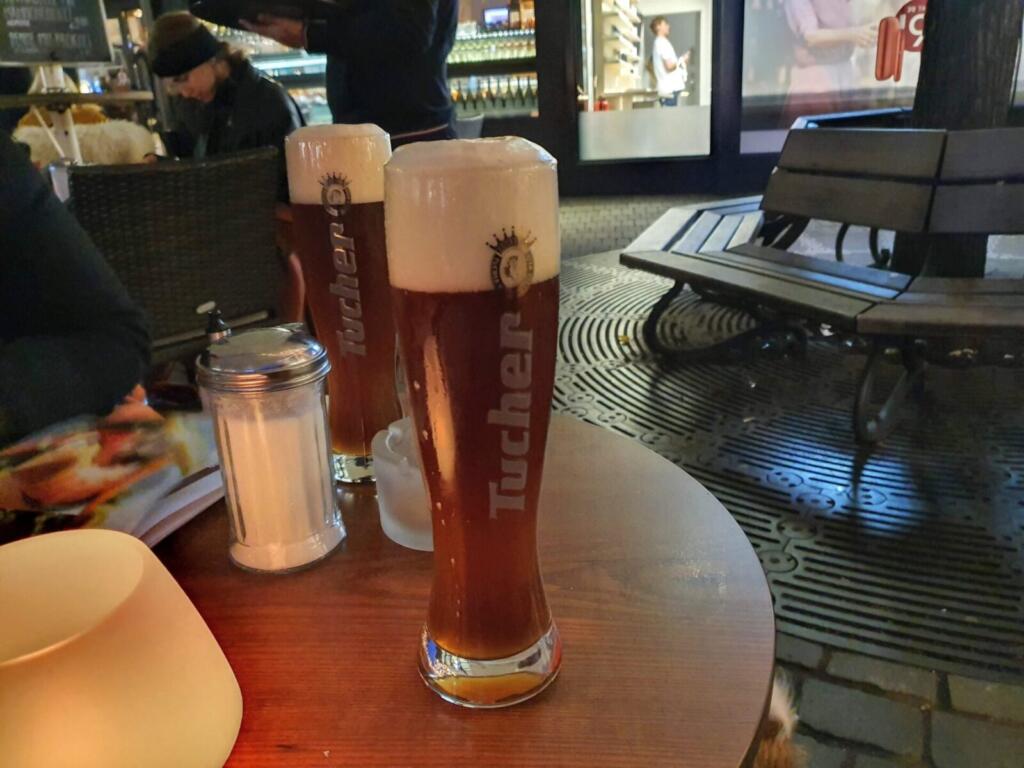
Germany is known for its beers; however, when in Nuremberg, one must try a locally brewed version. Tucher fits the bill of a local beer, an enjoyable one at that. Tucher is a brewery based in Fürth and Nuremberg. Founded in 1672, it is a well-established brewery. We found many of the city’s bars to be dog-friendly, including Brown’s Coffee Lounge and Hotel das Paul Restaurant.
Staatstheater Opera House
Staatstheater is also called the Nuremberg Opera House. This theatre is one of four Bavarian state theatres which show regular operas, plays, ballets and concerts.
Watch The Sunset From The Castle
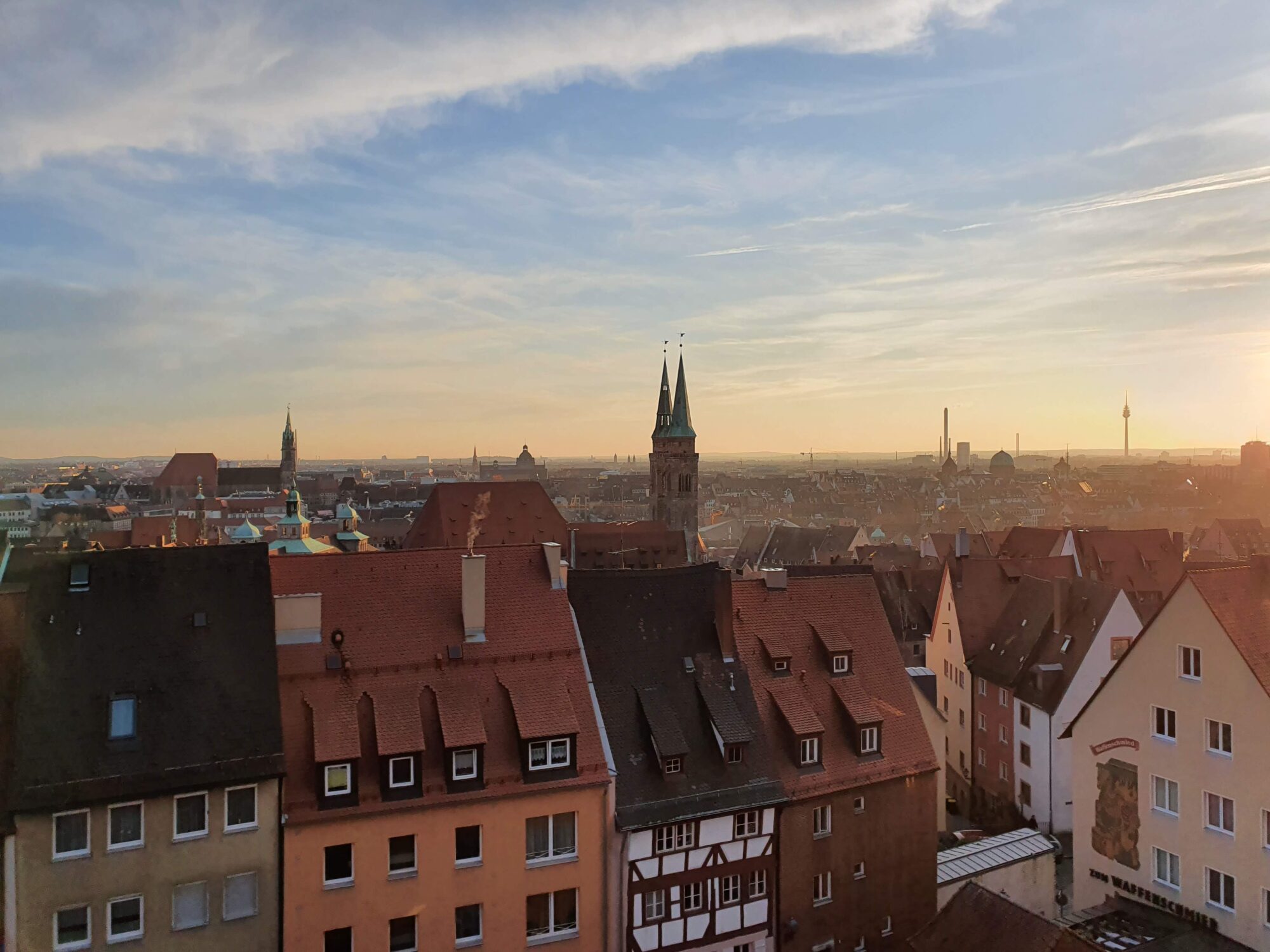
The castle viewpoint is a perfect place to watch the sunset. The views are splendid, and you can see the buildings below and the spires of the city’s churches. The castle building also glows just before sunset.
Walking Tours
Nuremberg offers various walking tour options. These are suitable for tourists who want to see all the key places of interest in a short time. They cover specific topics or offer general tours of the city. You can find several on the GetYourGuide website.
Former Nazi Sites
This includes the Documentation Centre at the Nazi Party Rally Grounds. This is a place to learn about the darker times of the country’s history. You can also visit the Nuremberg Trials Courtroom in the Nuremberg Palace of Justice. The exhibit is all about the post-WWII Nuremberg trials of Nazi war criminals.
Explore The City After Dark
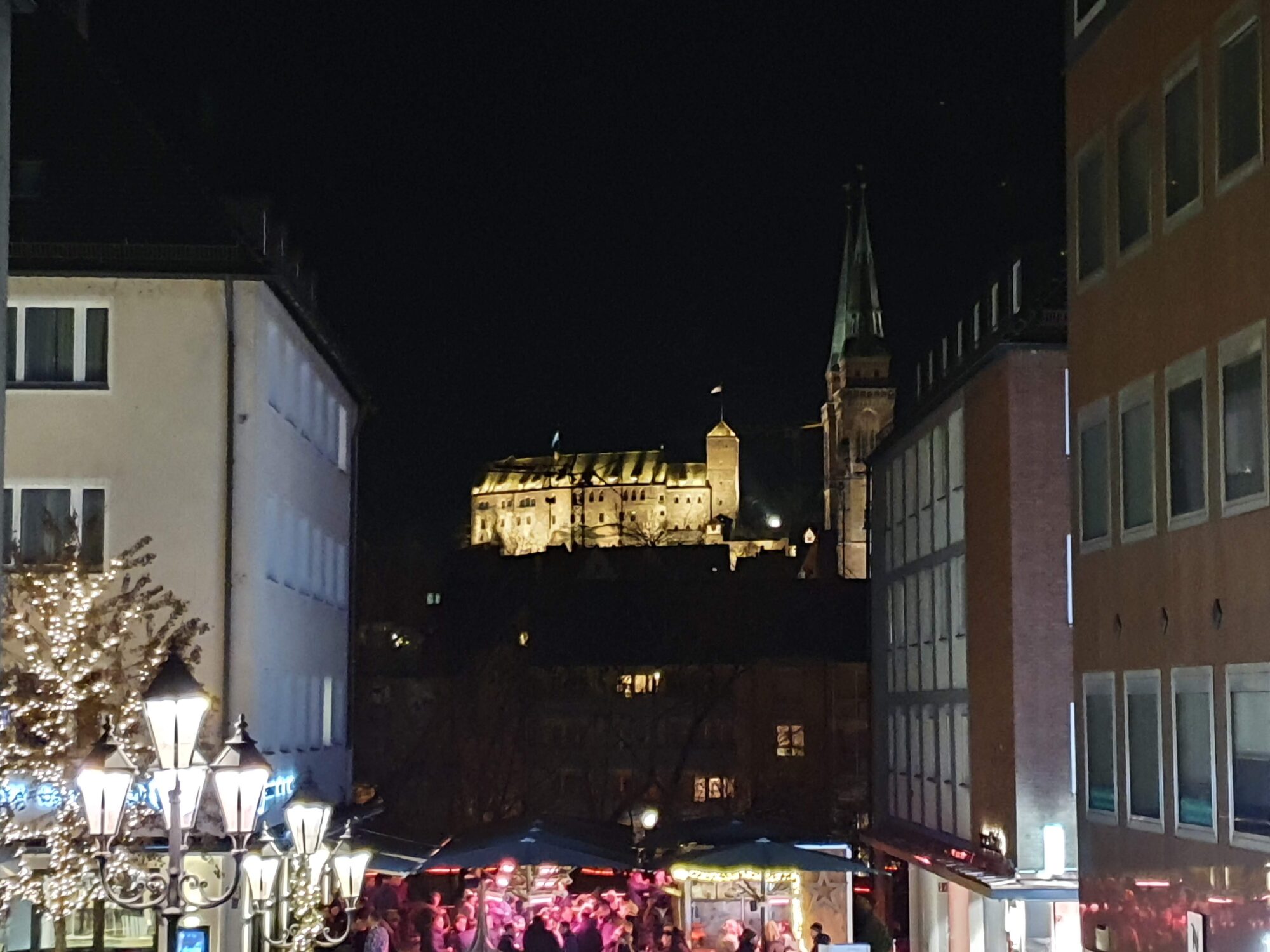
Night certainly makes some features of the city stand out, especially the castle, which is fully lit up.
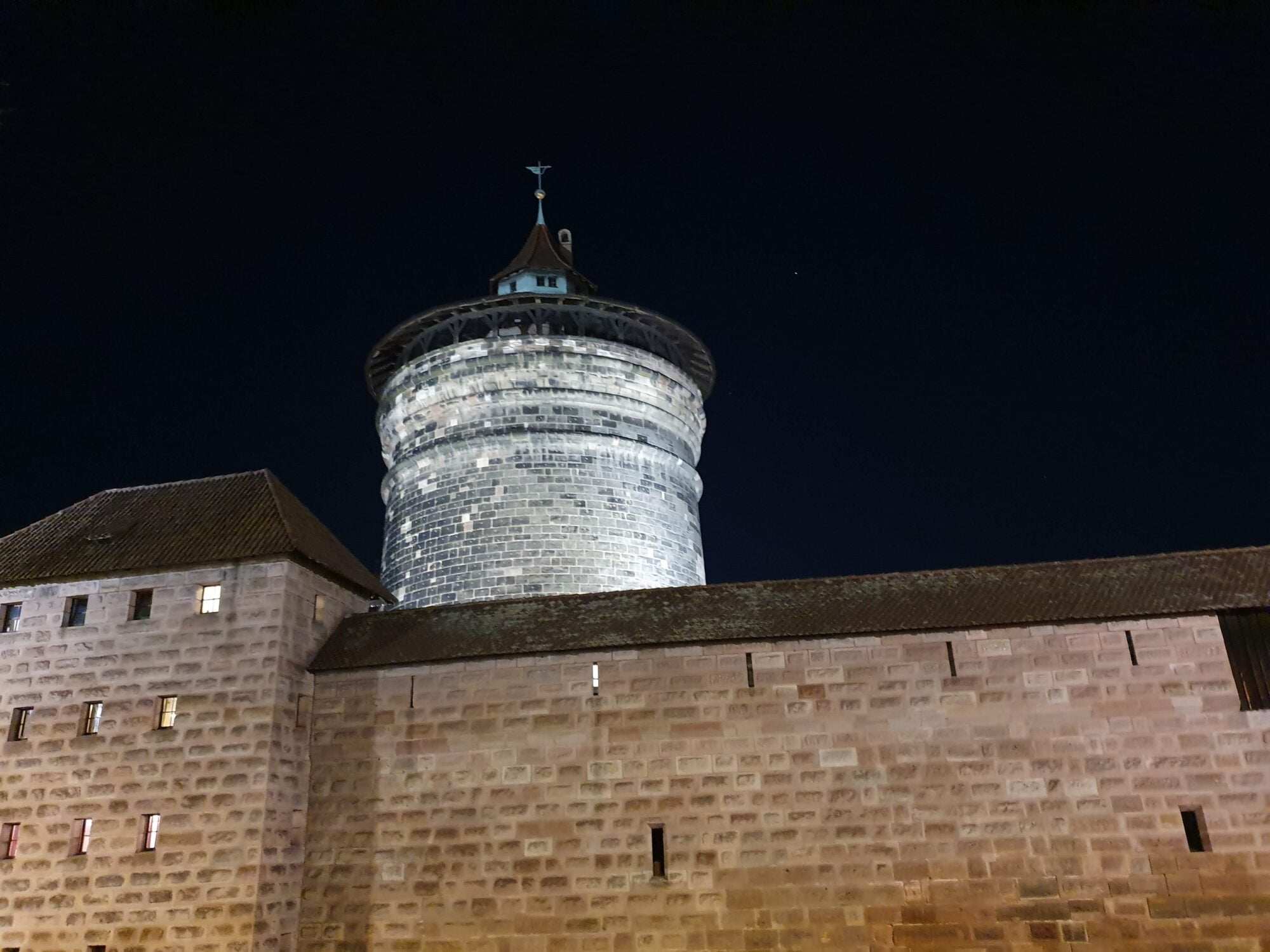
At night, the city walls and towers of the old town area are all lit up. We walked it a few times, seeing both the exterior and interior paths.
Burgkapelle St Walburgis
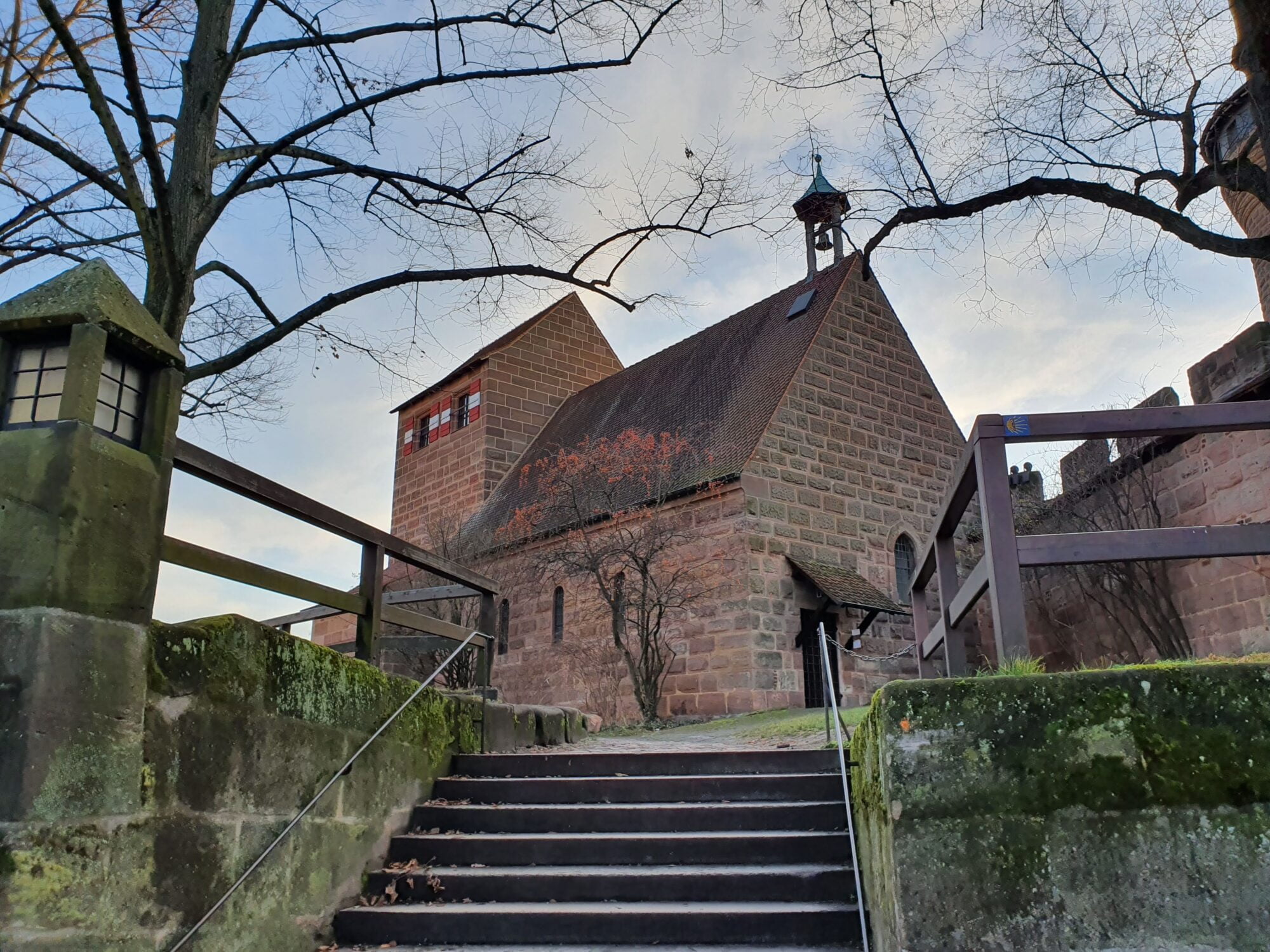
Burgkapelle St Walburgis is located at the entrance to the Imperial Castle. The chapel looks fantastic next to the castle’s fortifications and tower. You can see the building from the outside, and it’s next to an amazing viewpoint.
Travel to Nuremberg
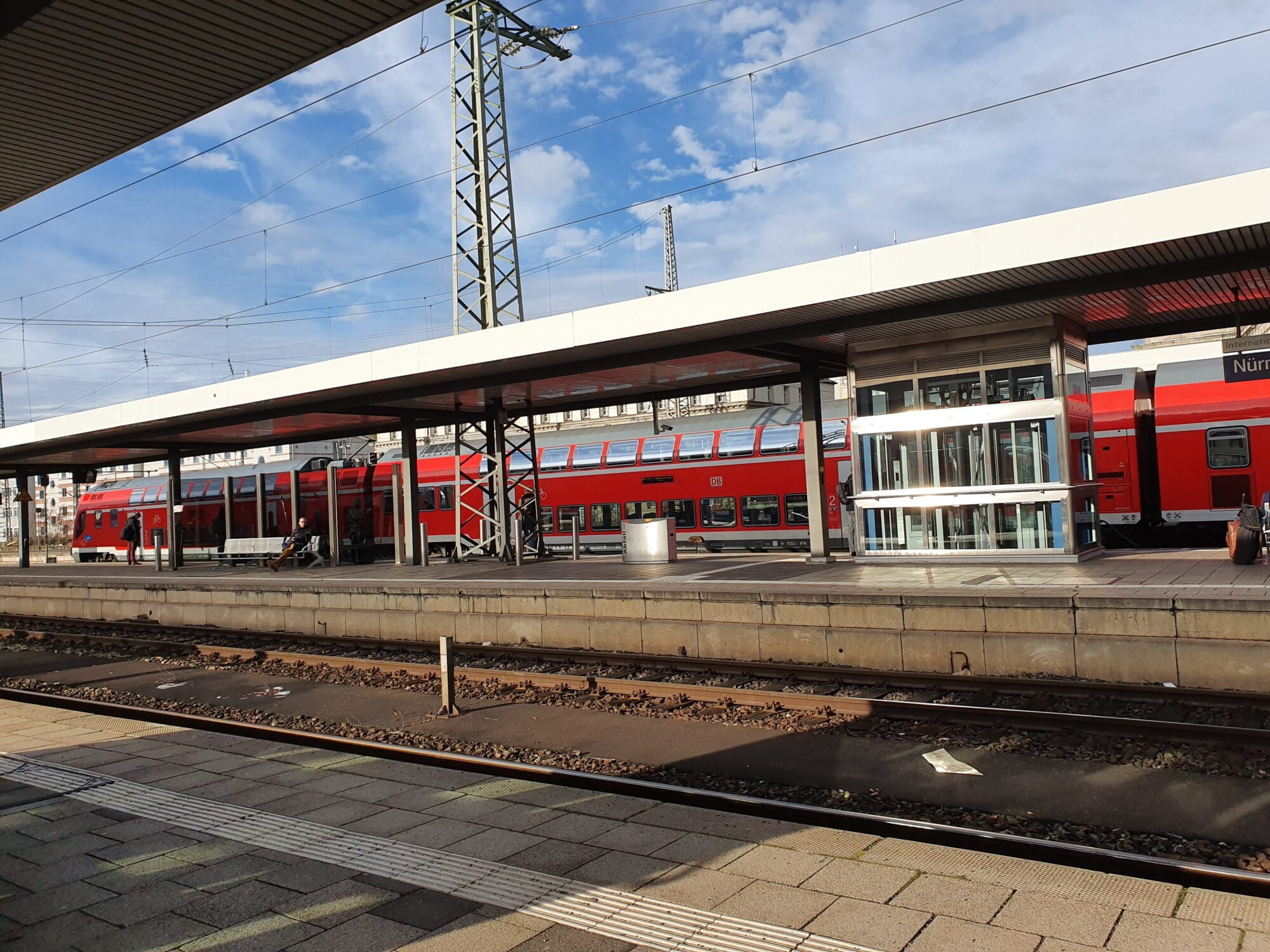
Nuremberg has a major railway station with direct routes from other major European cities. You can travel by rail directly to Berlin, Prague & Vienna. Because of the rail links and beauty, the city is an ideal destination for Interrail pass holders. FlixBus operates several routes through the city.
Trainline is a handy app for booking trains in Germany.
Where To Stay?
You have many options, including places to stay within the city walls and in the surrounding districts. The city has many hotel options, from luxury chains to budget hotels and cheaper hostels.
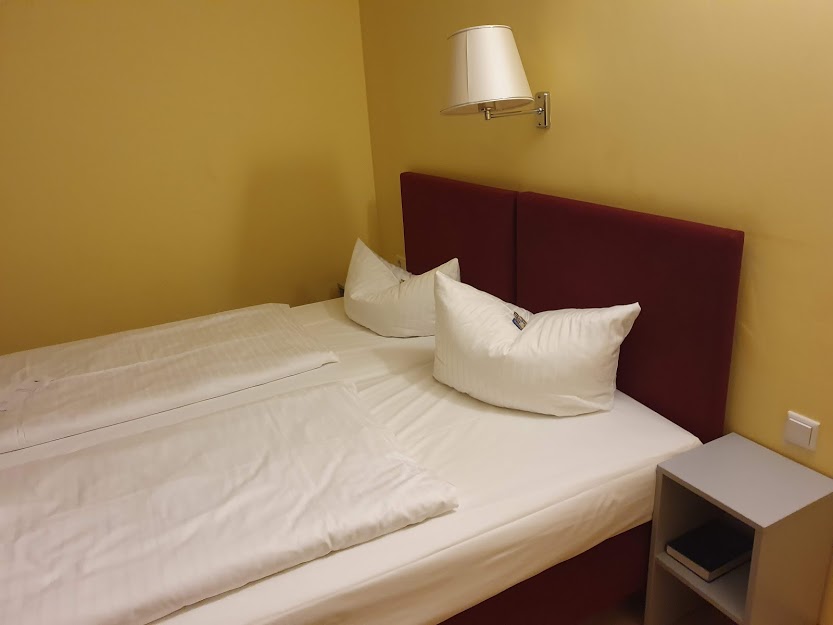
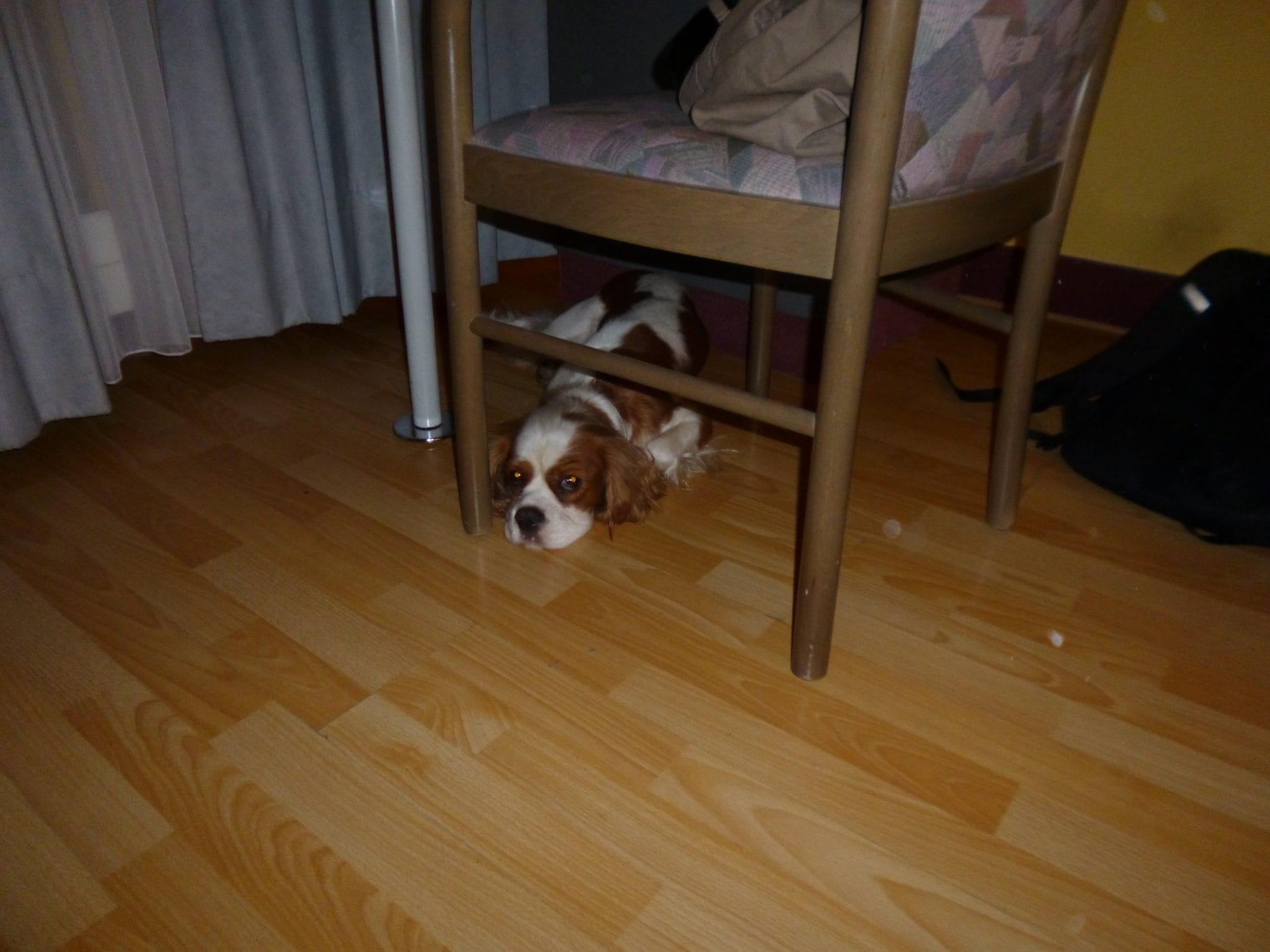
We stayed at Invite Hotel, a cheap but convenient option for city-centre sights. It was dog-friendly, had a sauna, and offered free Wi-Fi. It had many stores and fast food places nearby, which was handy.
Is Nuremberg Worth Visiting?
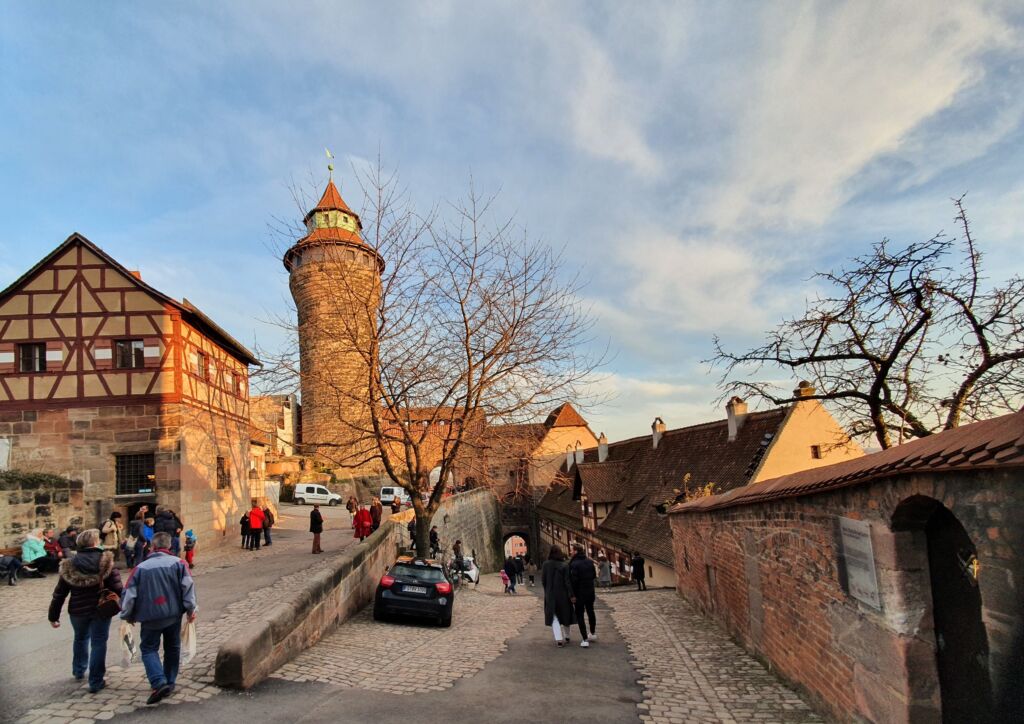
I enjoyed a few days in Nuremberg in December and highly recommend visiting then. The city is often called the most Christmassy place in Germany, and I can see why. It was beautiful and had loads to see, including medieval buildings. I’d happily go back to explore more as it was very dog-friendly.
Nuremberg looks awesome, somewhere I’ve wanted to visit for a while. I’m interested in the history but love the beautiful buildings. And who doesn’t love a Christmas market? Especially a German Christmas market
Definitely keen to see Nuremberg. As a history freak, I’d need a few days to really take it all in.
Nuremberg looks lovely! So pretty and so much to see & do. I’ll have to add it to the Germany itinerary!
Researching 19th century photos of Nurnberg and was confused as to which church was which – your website was of great help, and much appreciated.
I love the Christmas Markets in Europe. Festive.
As for Nuremberg, the race comes to mind first. But I see there are far more things to do there.