
Things To See or Do in Trieste, Italy & Is It Worth Visiting
Trieste is a beautiful city on the Adriatic Sea in Italy, and there are lots of things to do and places to see. Highlights include grand Habsburg architecture, sea views, historic squares, castles, Roman remains and a strong cafe culture.

I found it one of the more unusual Italian city breaks, especially because of its mix of Italian, Central European and maritime influences.

Disclosure! Keep in mind that some links in these posts are affiliate links. If you click one of them, I may earn a small commission (for which I’m extremely grateful) at no extra cost to you. Thanks for visiting!
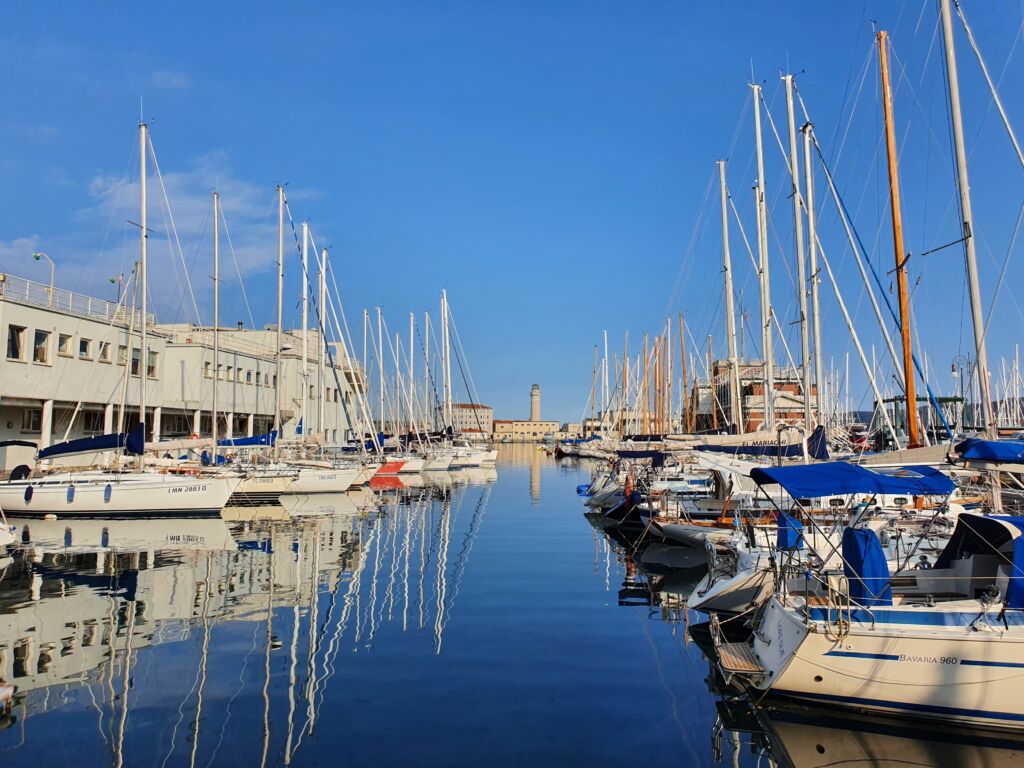
The city’s deep harbour enables larger vessels to visit. Overall, I rate Trieste as a great place to visit for a European city break and a popular cruising destination.
Trieste in Italian History

Trieste has an interesting history from the Roman era right through to more recent history.
- Trieste’s history began with the formation of a town in pre-Roman times.
- It then became a city after Roman conquest in the second century BC and its subsequent colonisation.
- After the Roman era, it declined following barbarian invasions and became less significant for centuries.
- Trieste joined the House of Habsburg in 1382.
- Between the 18th and 19th centuries, the city prospered because of its free port and the growth of a thriving shipping industry. This made it one of the most important cities in the Austro-Hungarian Empire.
- After the First World War, Trieste became part of the Kingdom of Italy in 1920.
- After the Second World War, it became the capital of the Free Territory of Trieste.
- Following the 1954 London Memorandum, Italy annexed and incorporated it.
Things to Do & What To See in Trieste, Italy
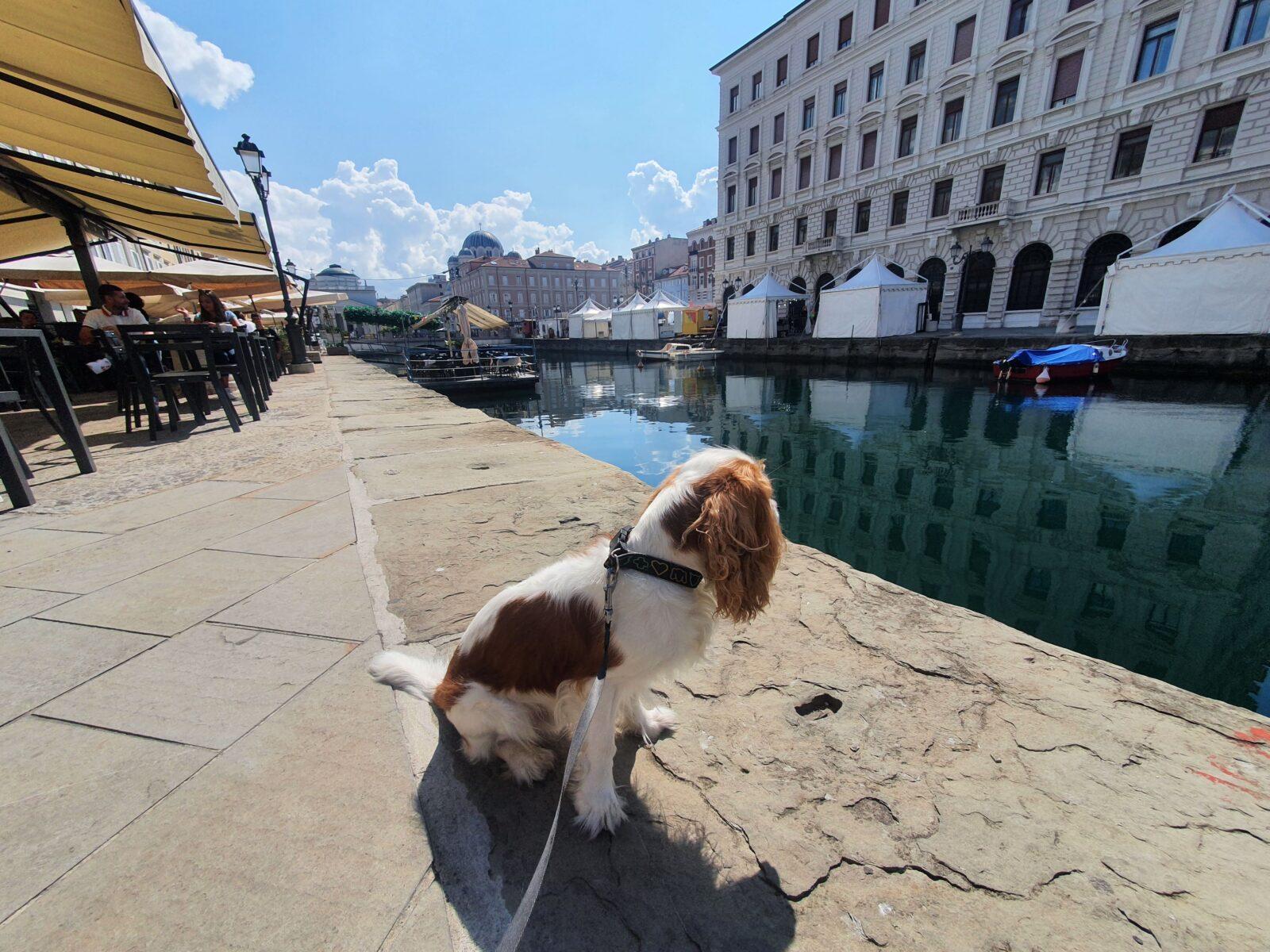
Trieste has many tourist attractions and is an ideal place for sightseeing on foot. There are tour options on the GetYourGuide website.
Unity of Italy Square

The Unity of Italy Square, or Piazza Unità d’Italia, is a large square and a must-see place for sightseeing in Trieste. Grand buildings surround the square on three sides and the sea on the fourth.

The square has a fountain and often hosts events. The Fountain of the Four Continents is the centrepiece of the square. On our visit, there was a local craft fair and workshops. Viewing the square from the pier during the golden hour is fantastic too.
Palazzo del Lloyd Triestino

Palazzo del Lloyd Triestino is one of the grand buildings in the Unity of Italy Square. The palace used to be the headquarters of Lloyd Triestino di Navigazione, a big shipping company. However, the palace now houses the offices of the Presidency and the Council of the Autonomous Region of Friuli-Venezia Giulia. The palace was built between 1880 and 1883, and its facade features allegorical sculptures.
Castello di San Giusto
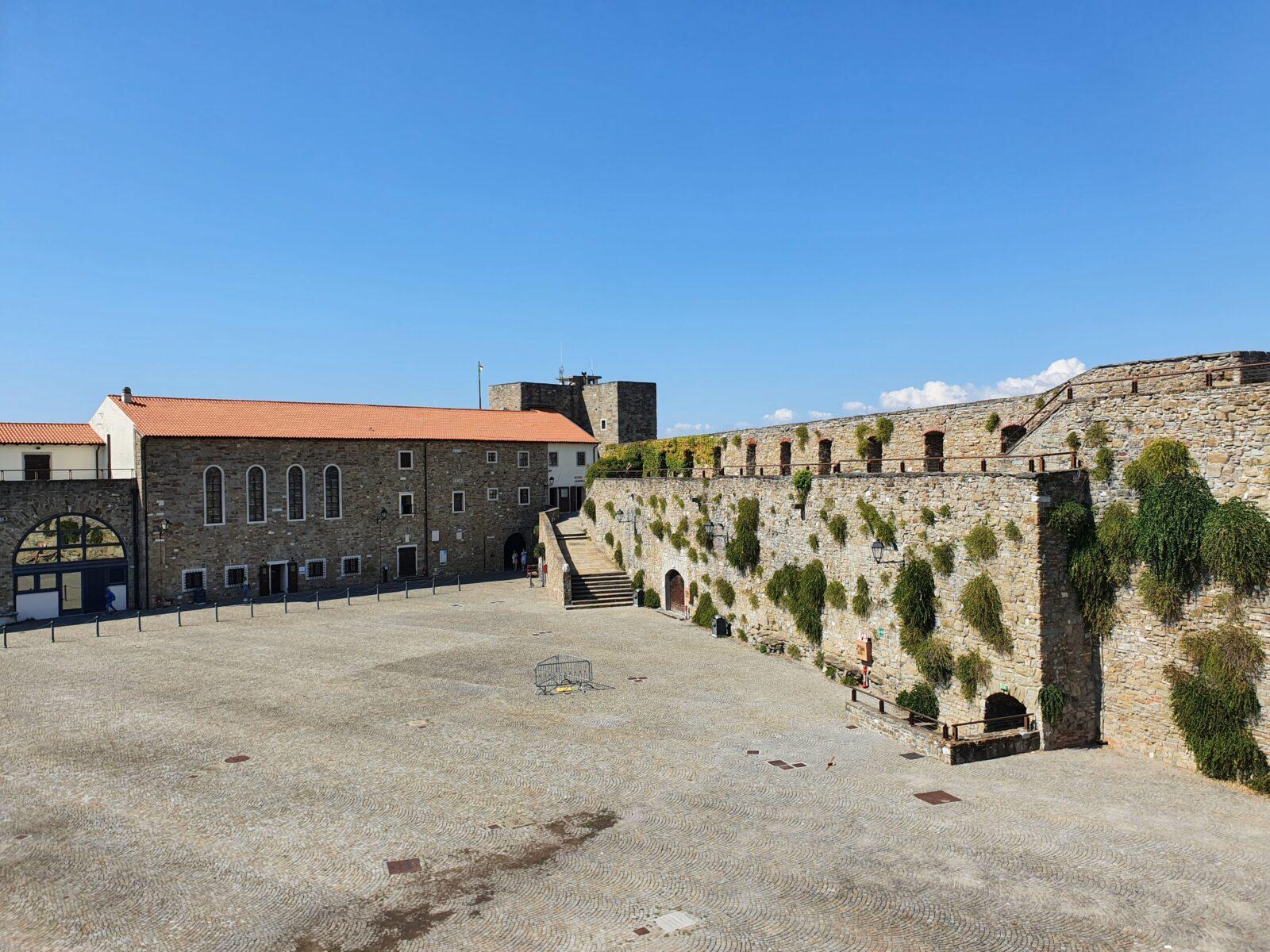
On the hill overlooking Trieste is Castello di San Giusto. The castle is an imposing 15th-century castle & fort that hosts a museum of historical weapons & local history on site.
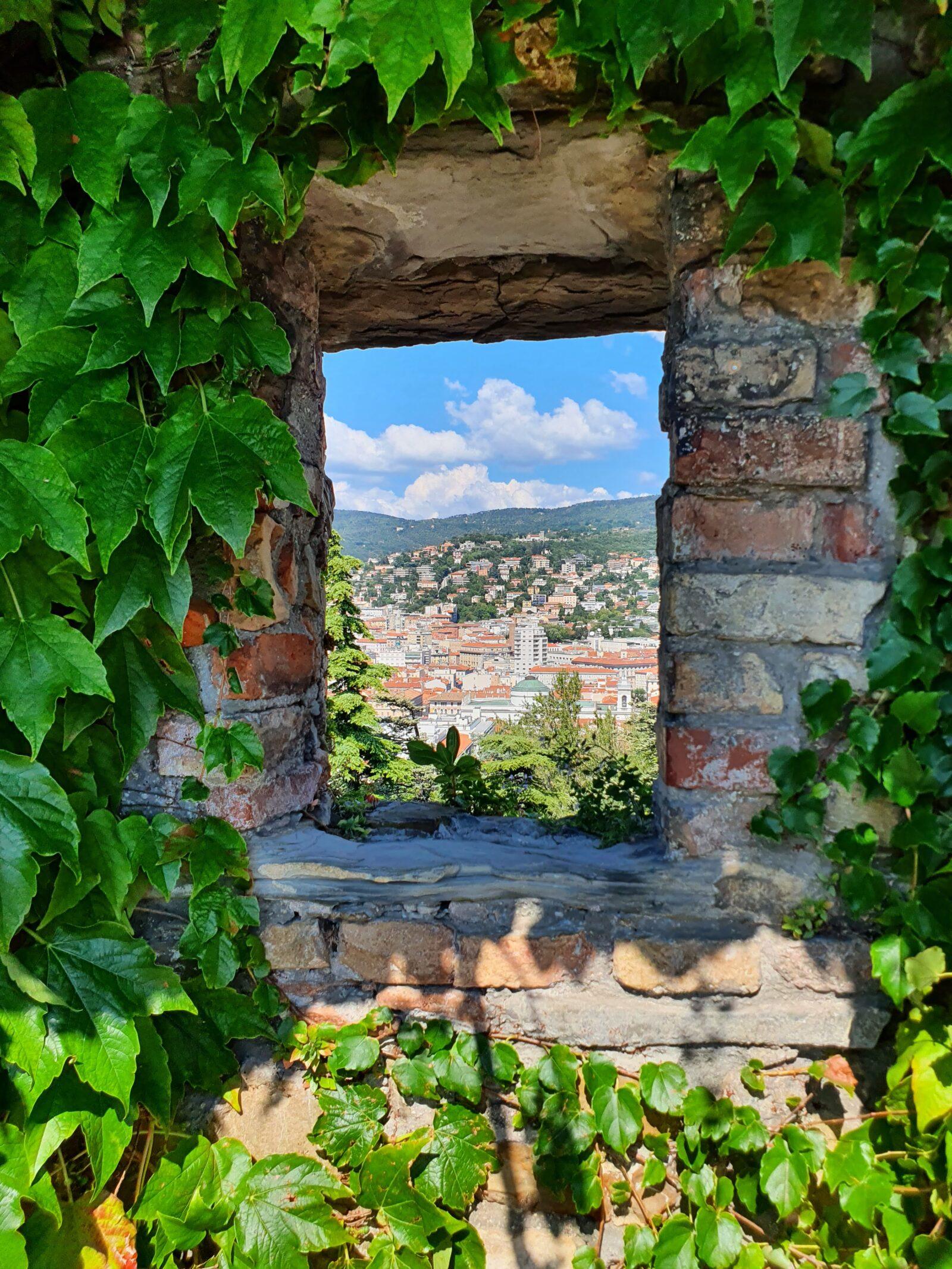
Entry to the castle costs 7 euros and includes admission to the medieval weapons museum and the Lapidario Tergestino.
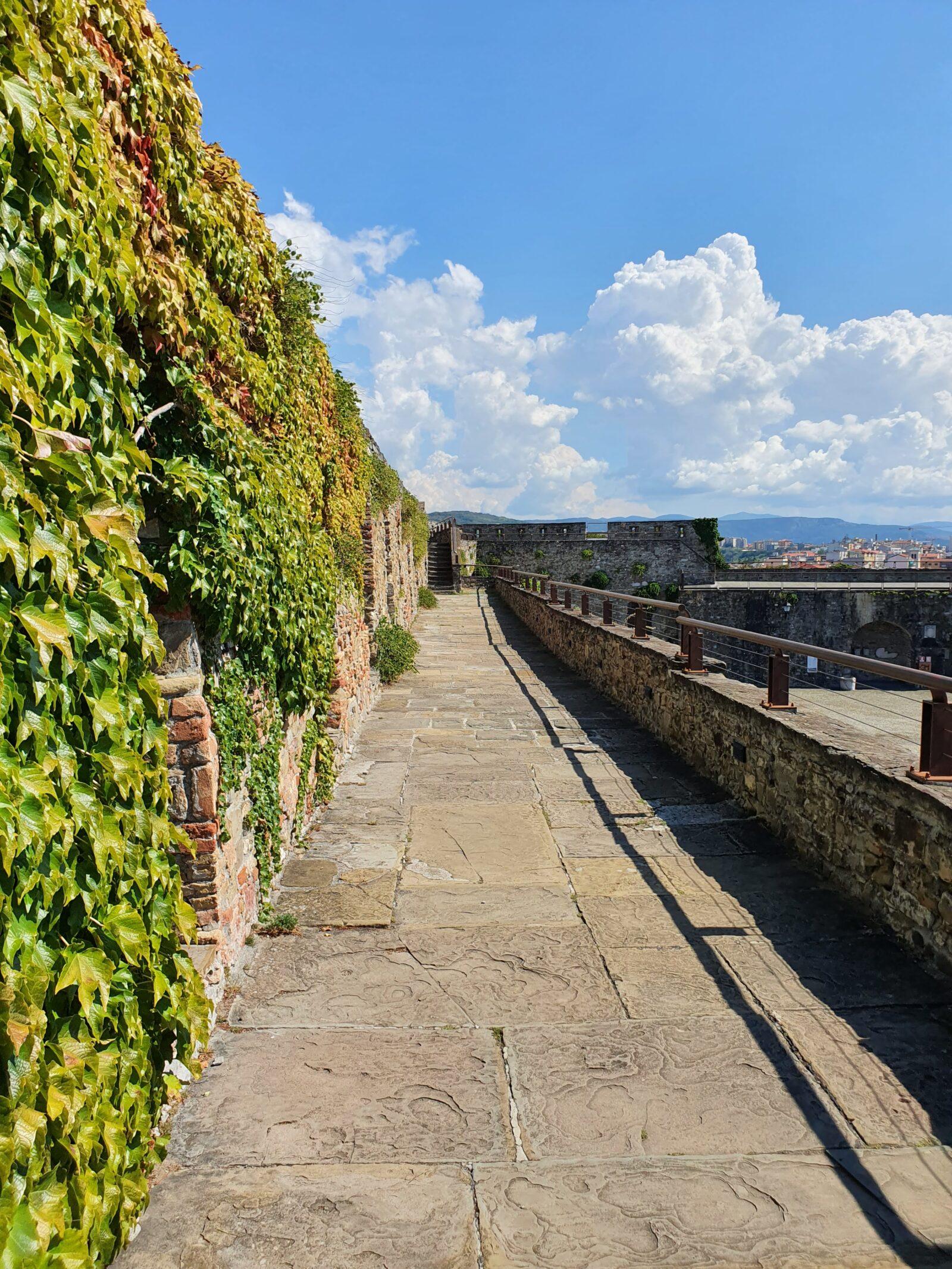
There’s a lot to see at the castle, including views of the sea and the city below. The two best views are from the terrace on the round bastion and through the windows of the fortification. Part of the castle is a museum of medieval weapons and local history. It highlights the weaponry used throughout the castle’s eras, from spears to rifles.
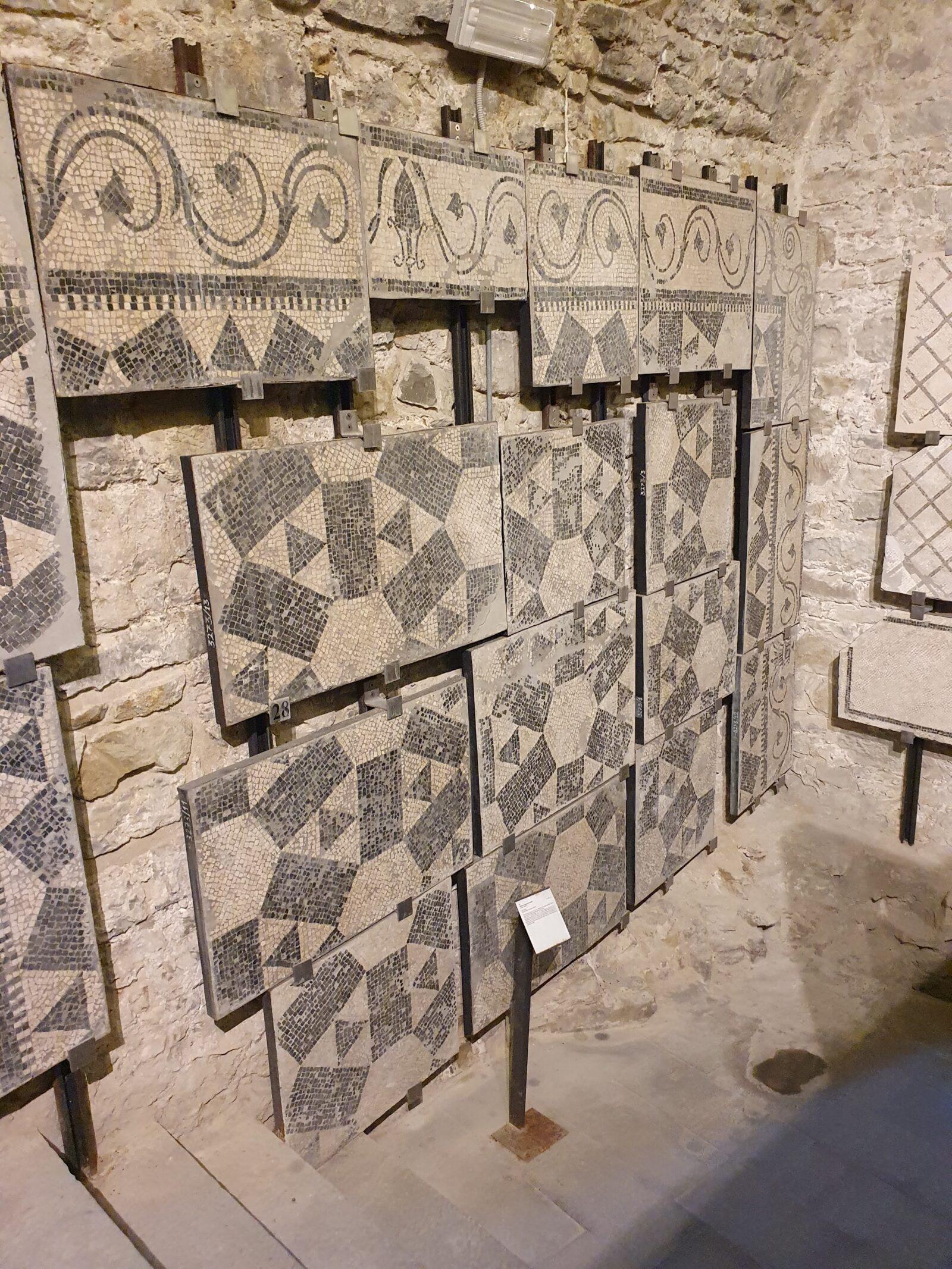
Displays are in both Italian and German. When inside, the views from the windows are very nice, including the city from above and a view of the cruise port. The Lapidario Tergestino is included in the price, which is an impressive collection of ancient artefacts. This includes some discovered when the Trieste Amphitheatre was excavated.
Cattedrale di San Giusto Martire – Trieste Cathedral

Trieste Cathedral, or Cattedrale di San Giusto Martire, is a Roman Catholic cathedral and is the seat of the Bishop of Trieste. It became a basilica minor in 1899 when Pope Leo XIII granted it the status. The church was completed in 1320, 18 years after breaking ground.

The church is right next to the castle and is eye-catching, including from the bastion above. The tower and the entrance have arches, a tower, and a rose stained-glass window.

It is dark inside, with unique lighting that highlights the artwork behind the altar. During my visit, the organ was playing, which certainly added to the church’s vibe.
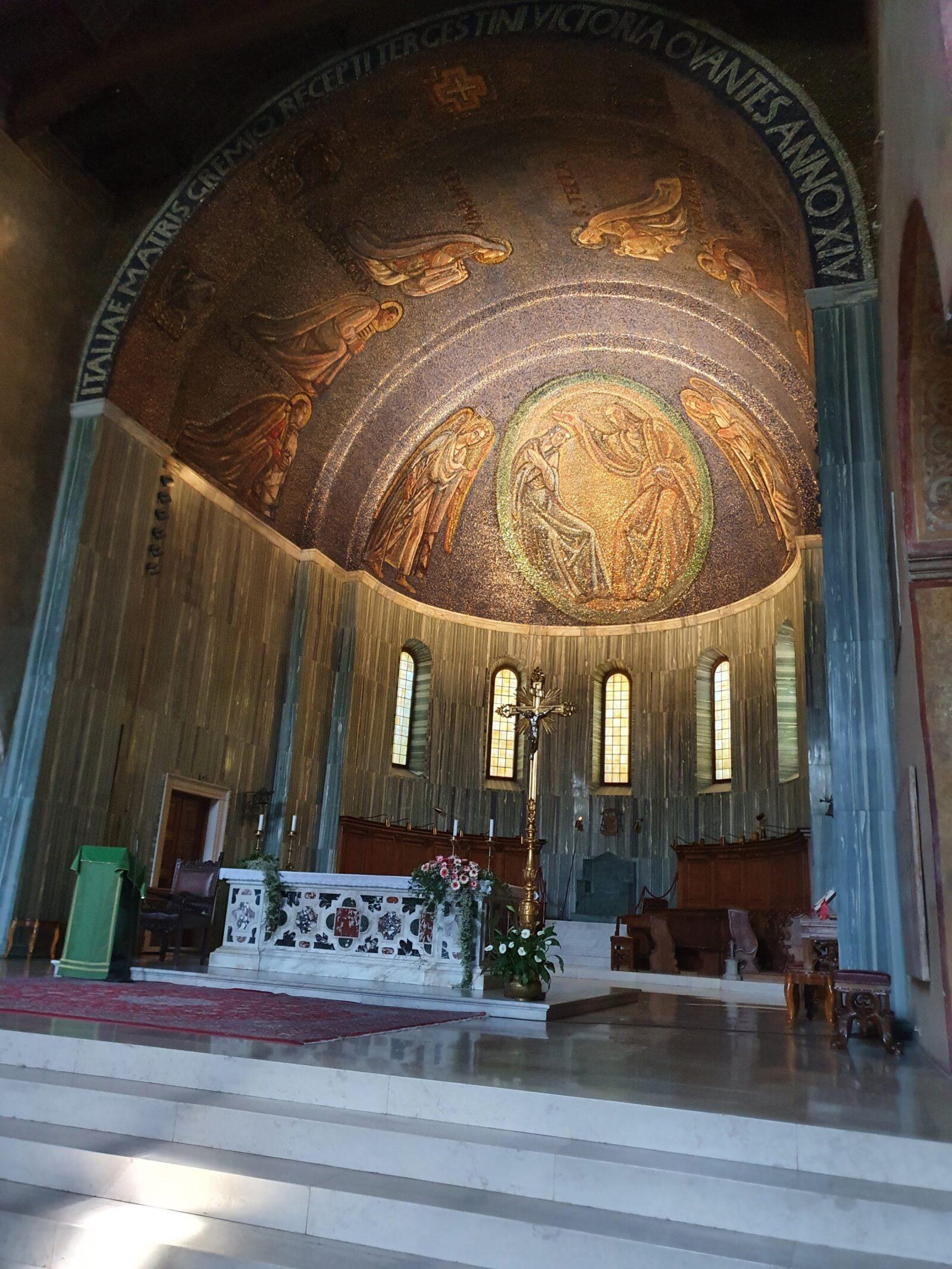
Among the artworks of historical interest in the cathedral are the apsidal mosaics, which depict Our Lady of the Assumption and Christ between Saints Justus and Servolus. These were laid by master craftsmen from Veneto in the 12th-13th centuries. It is free to enter and well worth popping inside, and it was my favourite church to visit in Trieste.
Roman Amphitheatre

The Romans initially constructed the amphitheatre in the 1st century and later expanded it in the 2nd century to accommodate 6,000 visitors. They unearthed the amphitheatre in 1938. You can see the structure from the street. However, some artefacts are on display at San Giusto Castle.
Grand Canal

The Grand Canal was built by Venetian Matteo Pirona between 1754 and 1756. It was constructed so that boats could come directly to the city centre to unload their goods.

The Grand Canal in Trieste is a fantastic place for sightseeing, boat spotting, cafes and restaurants.
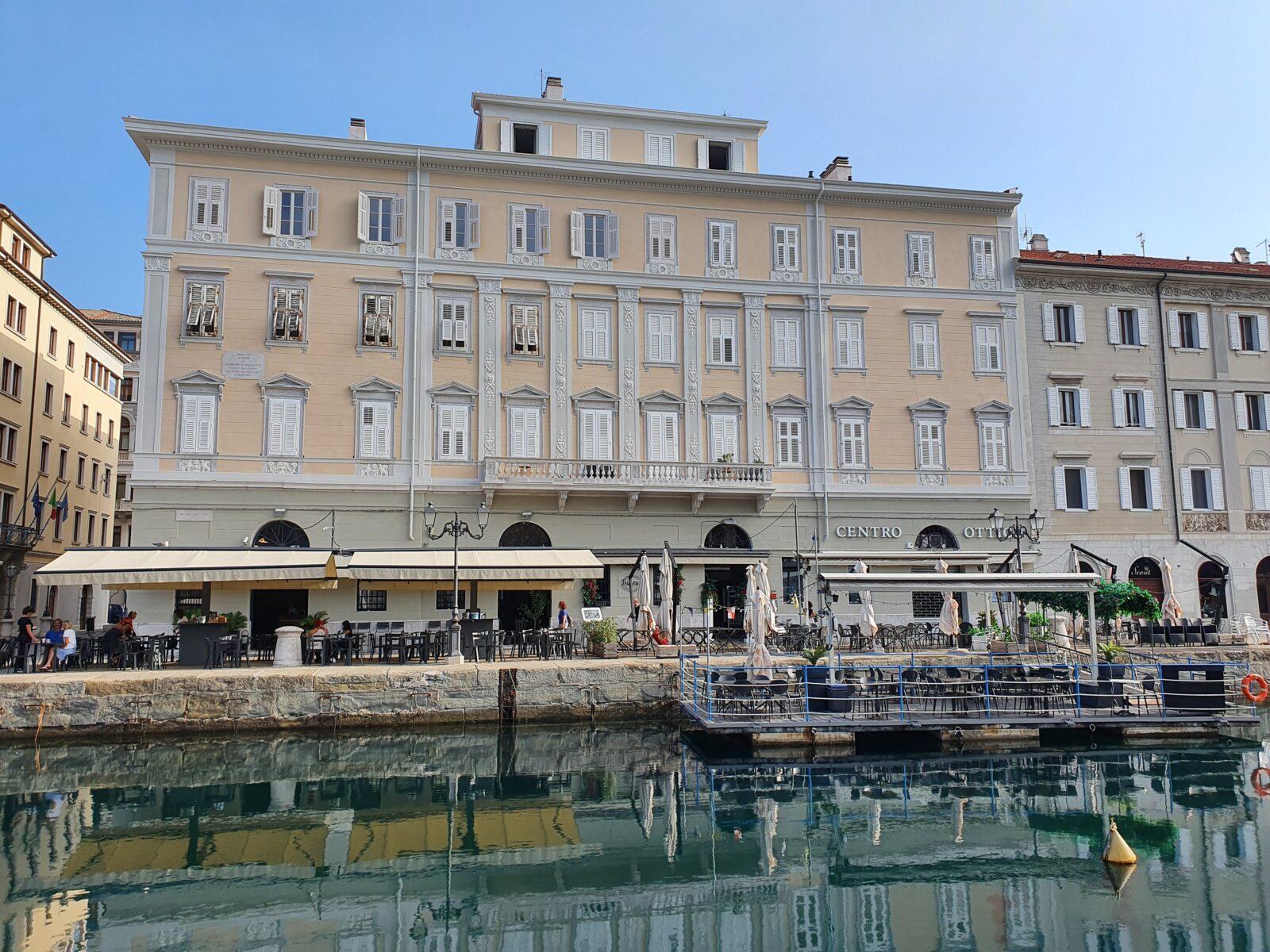
At the top end of the canal, you can see the Church of Sant’ Antonio Nuovo. Near that is the unique Serbian Orthodox Church of Saint Spyridon. There are other buildings, including a couple of palaces enclosing the canal.
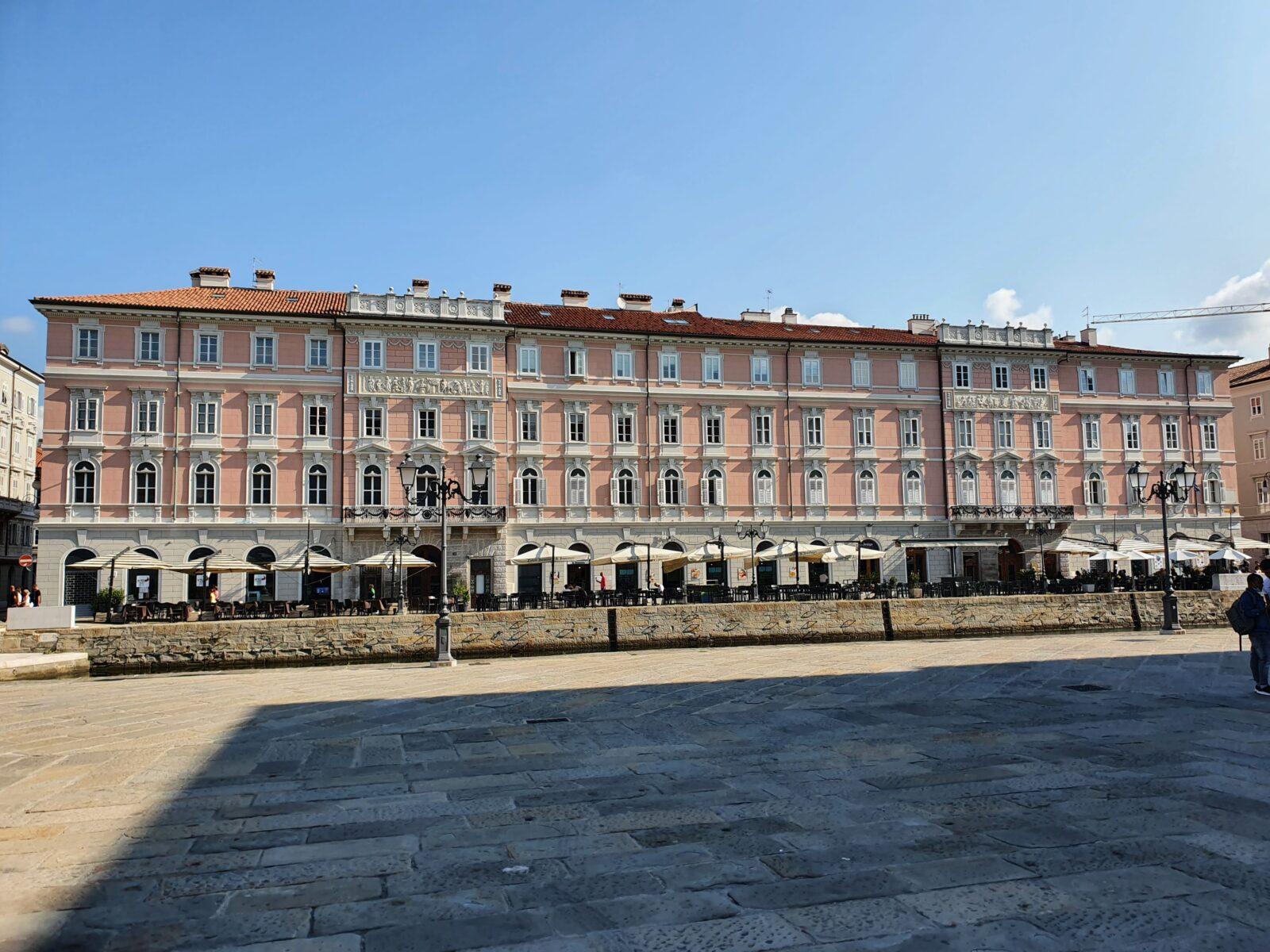
Sometimes there are street food vendors or other markets next to the canal, and it is quite the hub of activity.
Palazzo Gopčević

Alongside the Grand Canal in Trieste is the stunning Palazzo Gopcevich. The details of the building are well worth a look up close. Inside the palace is a museum that documents local theatre & musical history. Exhibits include posters, instruments and costumes.
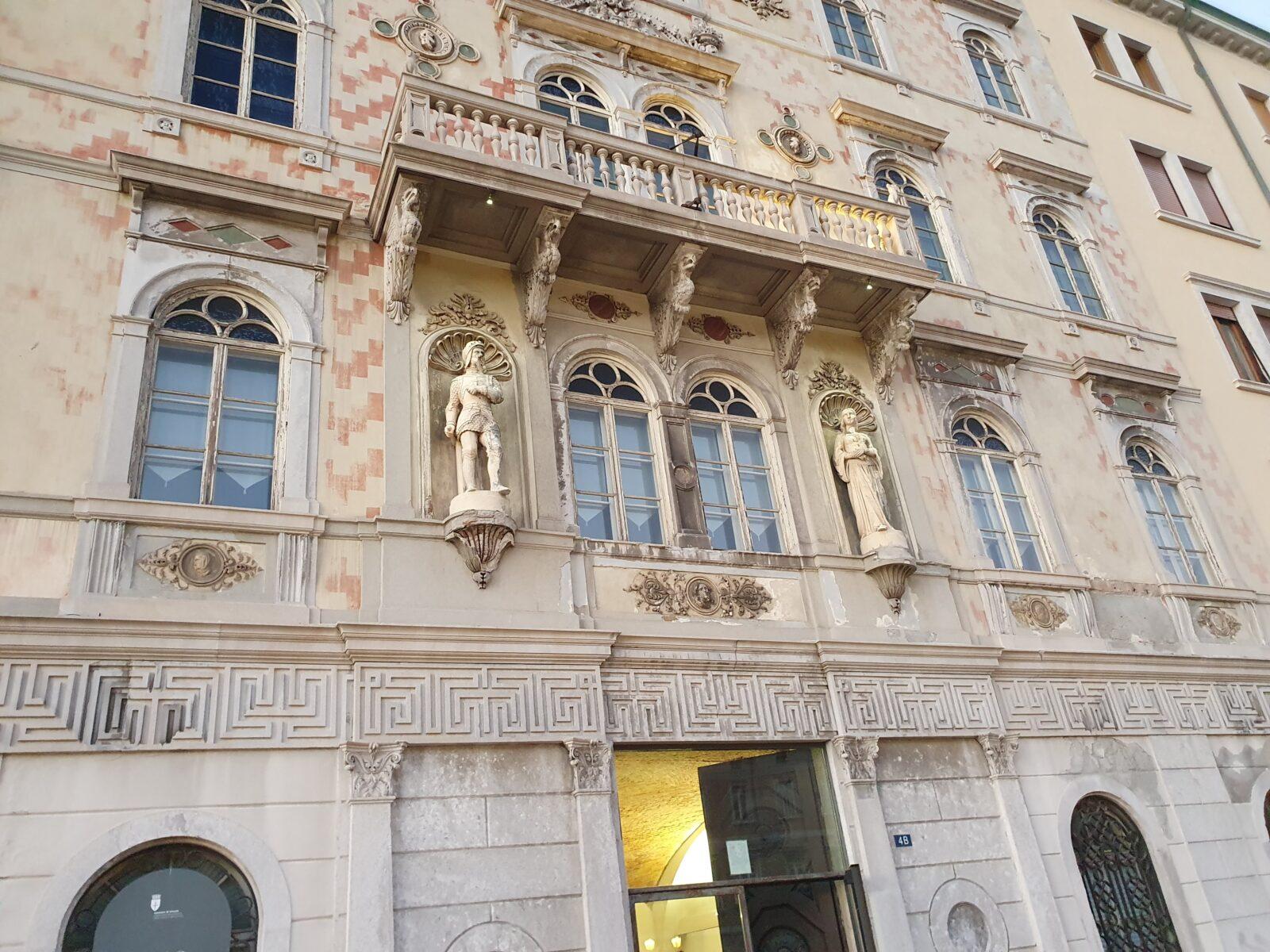
Construction started in 1850, which is one of the first and most important examples of eclecticism in Trieste.
Piazza della Borsa
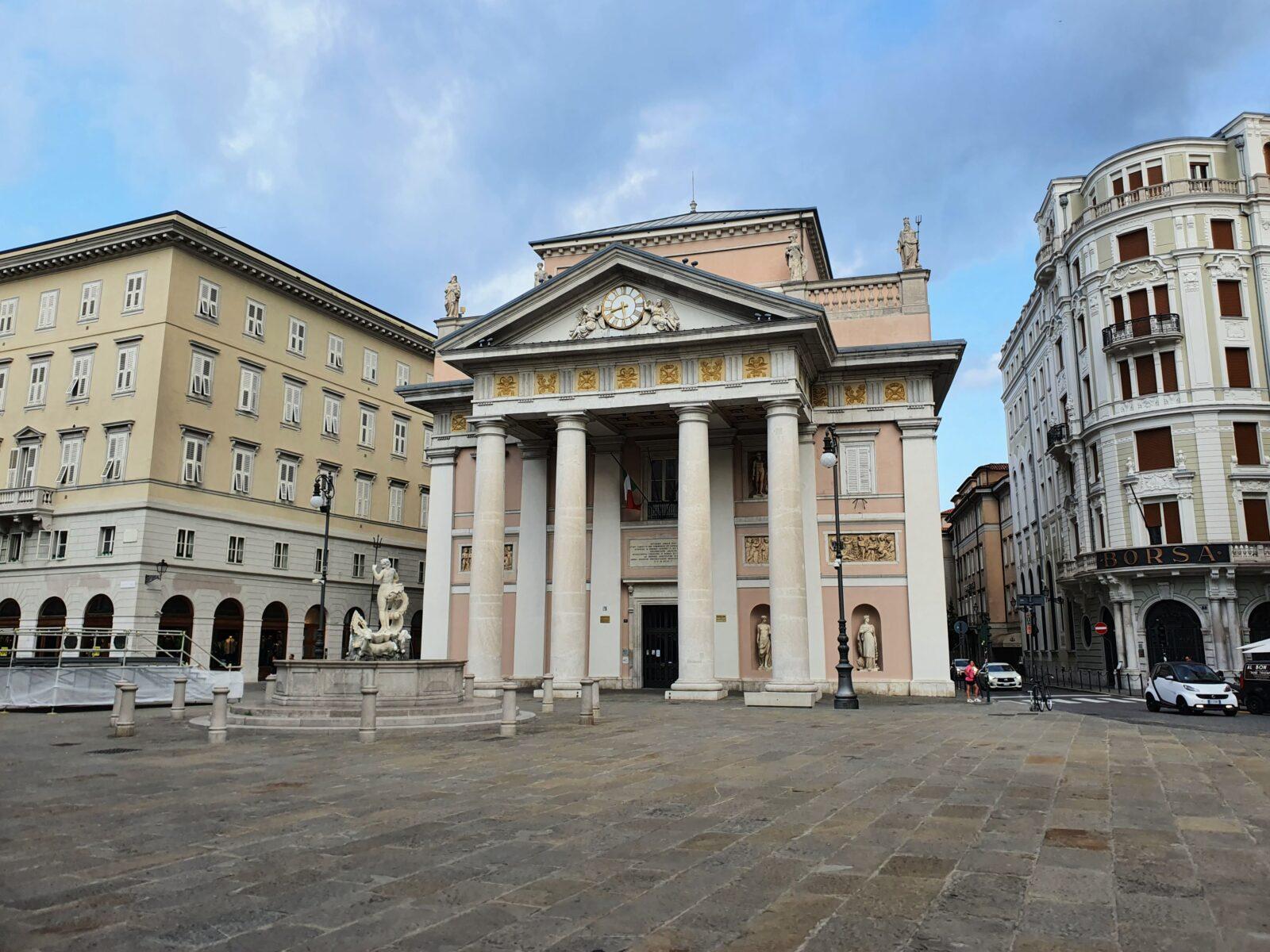
Piazza della Borsa is a town square with special architecture and some cool bars. The focal point of the square is the old stock exchange building, which was built in the style of a Greek temple in 1806.
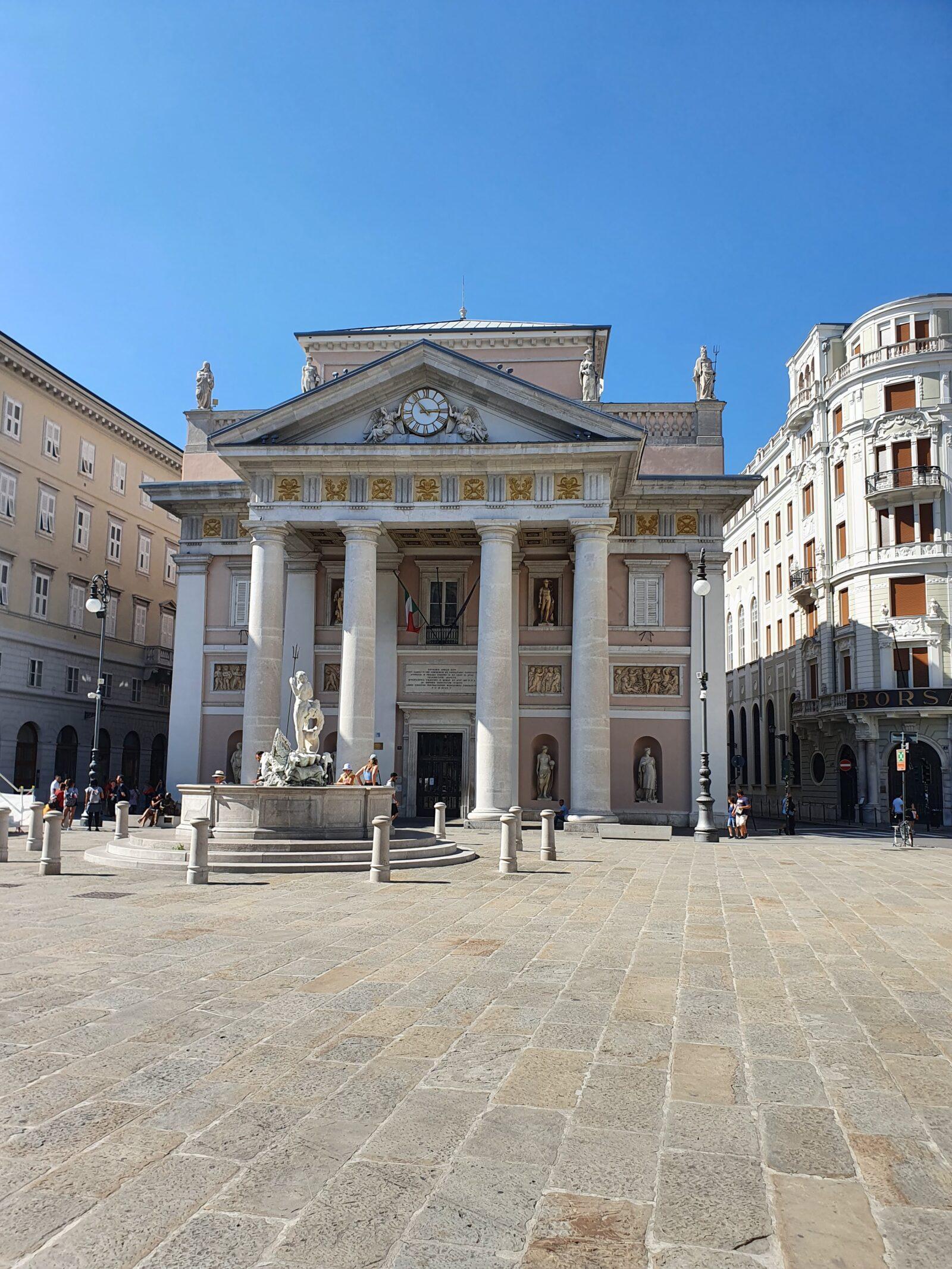
The Fountain of Neptune is at the front of the stock exchange. As well as bars on the square, there are some benches to sit and chill while enjoying the surroundings.
Sunset at Molo Audace

Molo Audace is a 200 m-long stone pier built in 1751. Late in the day, the pier becomes a hive of activity with people out to watch the sunset. Many bring a picnic from a local deli or some wine to enjoy the spectacle.
Trieste in One Day Metro Tourist Map
Trieste Metro has created a map to enable visitors to see the must-see sights. These have a specific order. As a bonus, each site has information boards in a variety of languages.
This map takes you through a variety of sights, including some fantastic architecture and landscapes. These detail past events that took place at the site, as well as the artists, scientists, and traders who were involved.
Church of Sant’Antonio Nuovo
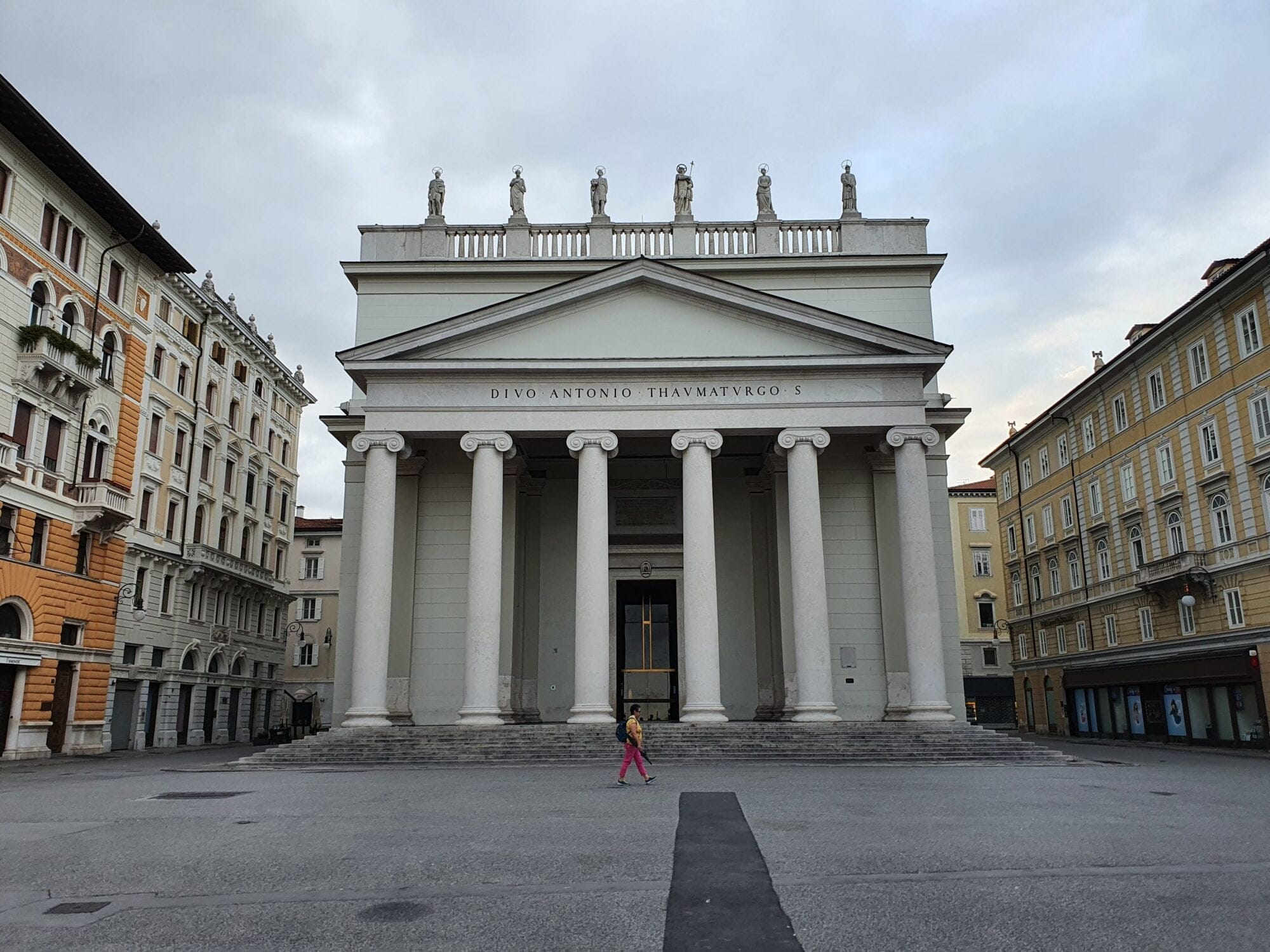
Alongside the Grand Canal in Trieste, you can see the neoclassical Church of Sant’Antonio Nuovo. The church has 6 Ionic columns on its facade. Above the facade are six statues. The church was built between 1825 and 1849. You can visit inside or attend a service.
Paleochristian Basilica
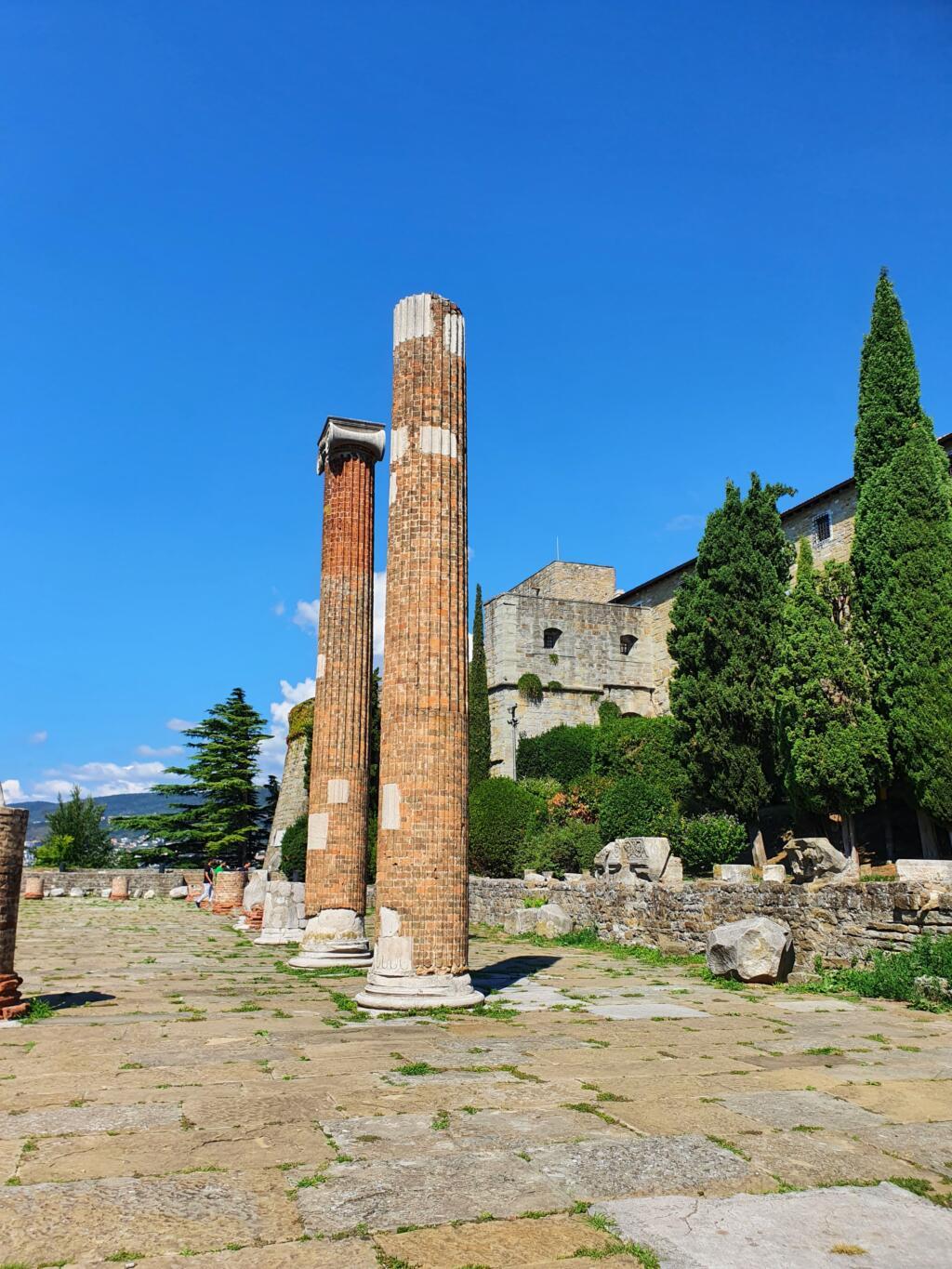
Near the castle is a unique attraction, the Paleochristian Basilica of Trieste. This early Christian basilica dates back to the 4th-6th centuries. Basically, what’s left are some incomplete columns of the old church building. It’s well worth a visit when sightseeing near the castle.
Street Markets

A fun thing to do in Trieste is to visit the various street markets. These sell a range of produce, from crafts to food. The cheese stalls were a big draw for me, and I got some to enjoy with bread for lunch at our apartment. The markets have a history dating back to the late 19th century.
Palazzo del Municipio di Trieste
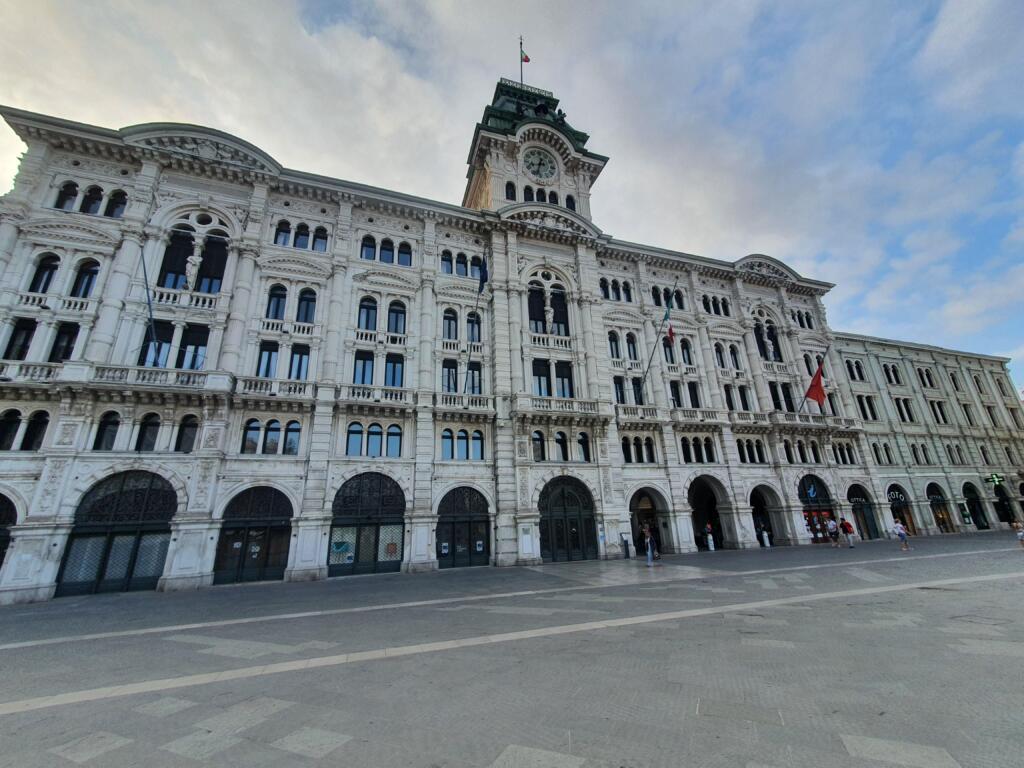
Palazzo del Municipio di Trieste is the city hall and was built in 1875. The facade of the Palazzo del Municipio di Trieste was designed in the eclectic architectural style. There are lots of details to see outside the building, including the clock tower, statues and arches.
Serbian Orthodox Church of Saint Spyridon
Alongside the Grand Canal is the Serbian Orthodox Church of Saint Spyridon. There is a park to the front which is perfect for walking or enjoying the views. You can visit the inside and see its amazing decor, including some special frescoes.
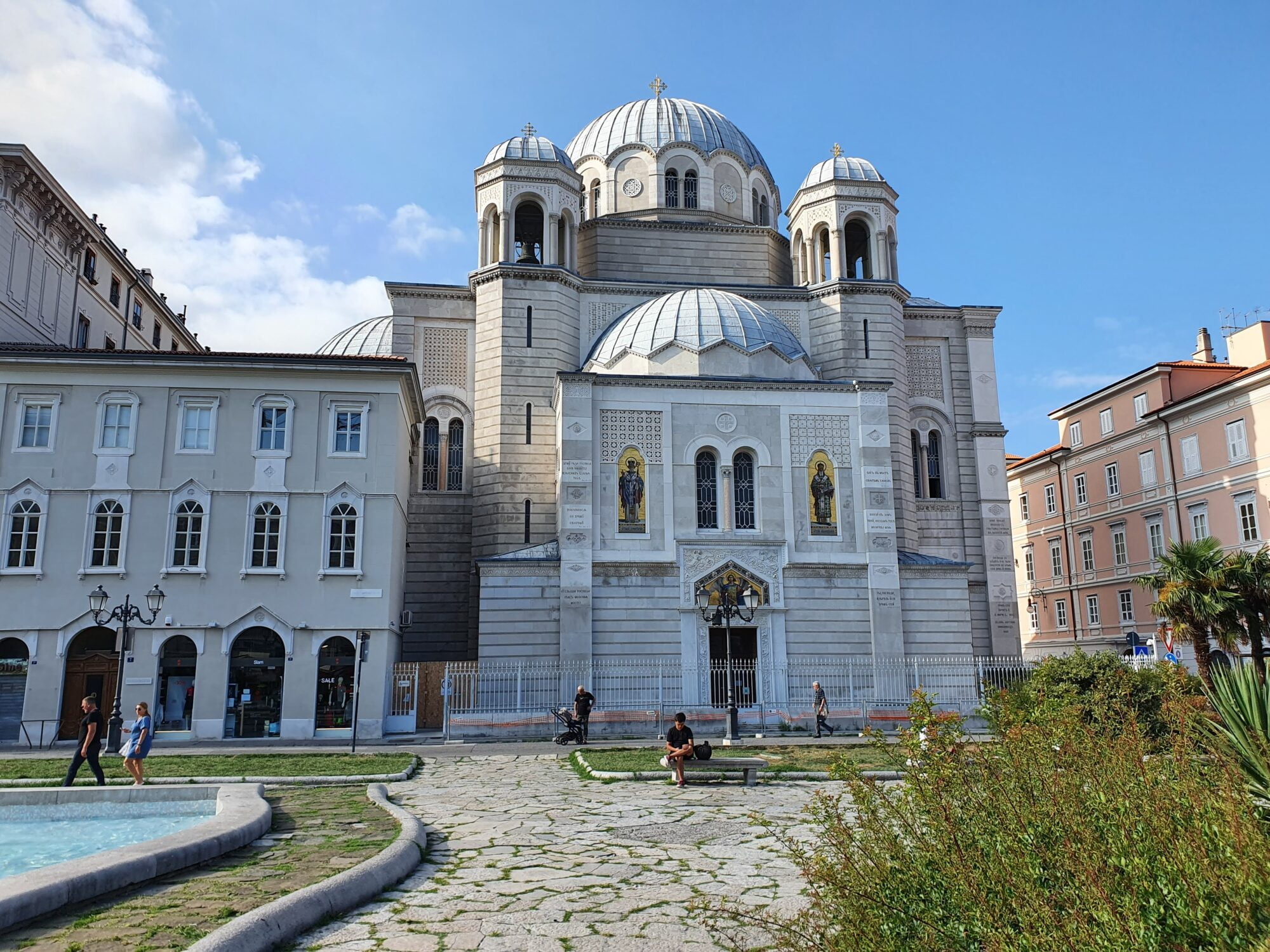
The immigration of Serbian traders to the area in the 17th century led to the construction of this church. They completed the first Orthodox church in 1756 and the current version in 1868.
Is Trieste Dog Friendly?
We found Trieste to be dog-friendly, as in most of Italy, and there were others out and about with their dogs. Most eateries seemed to accommodate canine guests, with some providing water bowls. Many of the city’s shops also had “dogs’ welcome” signs.

There are loads of sights to see on walkies and quite a few green spots. Finding dog-friendly accommodation in Trieste was straightforward. Booking.com had options at many price points, including budget rooms.
Dog-Friendly Accommodation
There were many options on Booking.com for places to stay in Trieste that were dog-friendly. However, we needed budget accommodation near the train station and city centre.
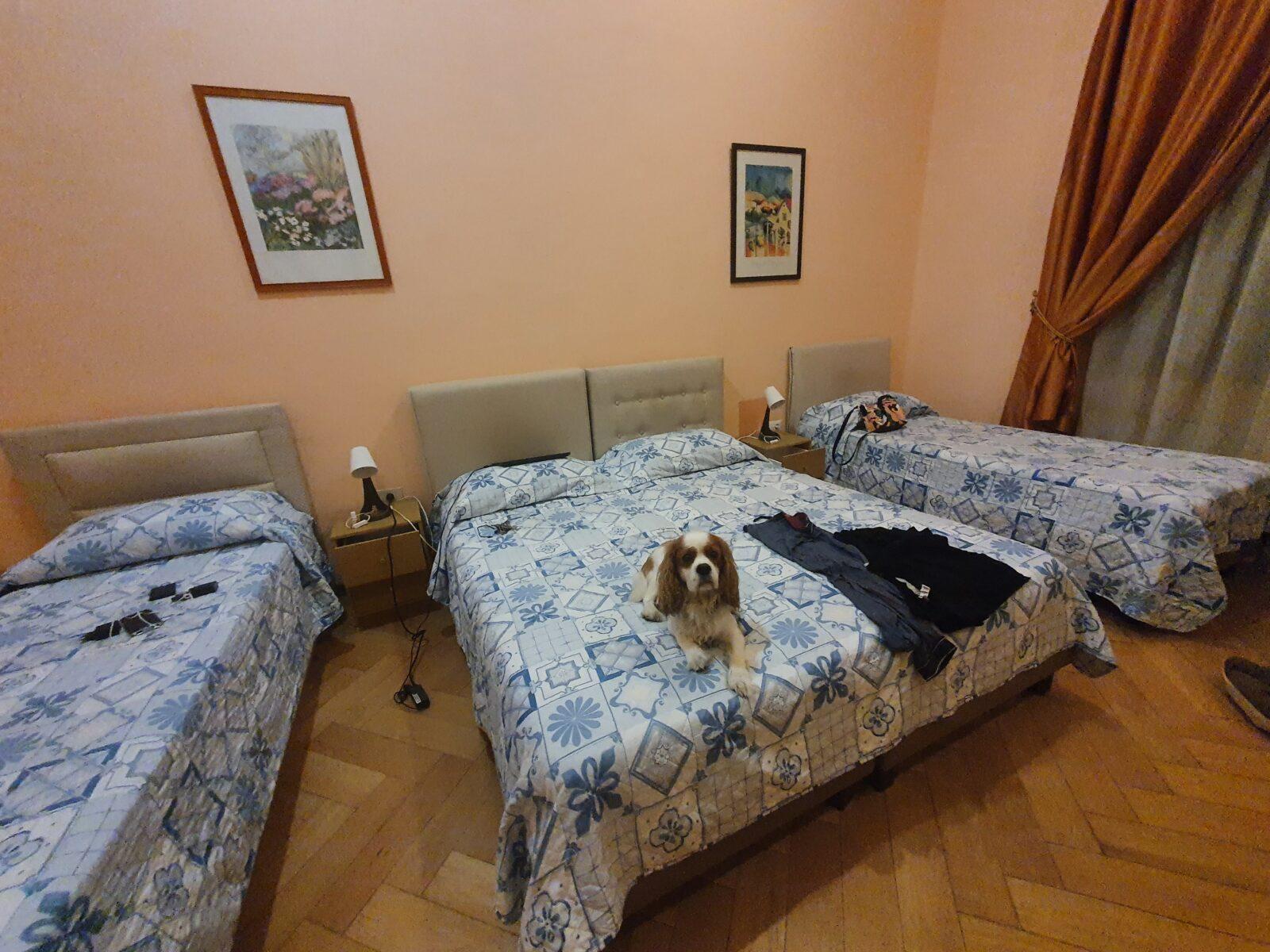
We opted to stay at Affittacamere alla Stazione, a basic budget place. Affittacamere alla Stazione had big rooms with comfy beds, shared showers, and was dog-friendly. The host was lovely too, and I would recommend staying here. As a bonus, it’s close to the train station and central areas.
Getting To Trieste in Italy By Train
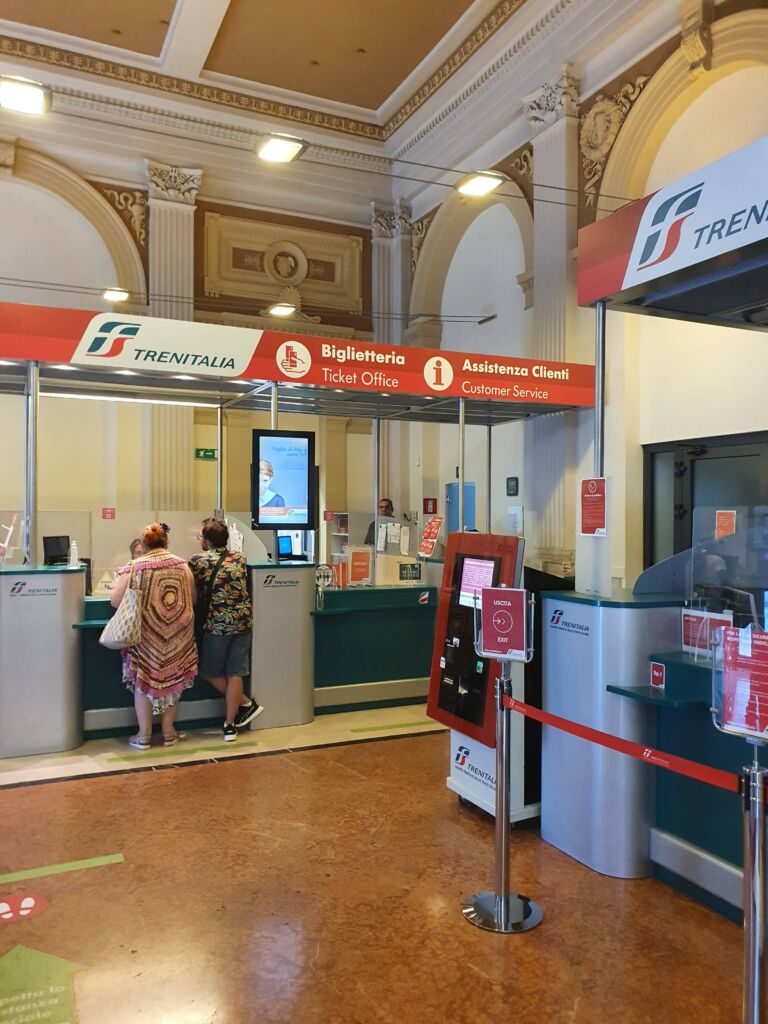
Trieste is simple to reach from both Slovenia and the rest of Italy. Most routes from Italy go via Venice. There are trains from Ljubljana that pass through several other places in Slovenia. You can find details about the trains on many sites, including the Interrail Planner app and Omio. You can find other transport methods using the Omio search engine.
Is Trieste Worth Visiting?
I found Trieste, Italy, a fantastic city to visit, even with a dog in tow. There are loads of things to see, and it has an interesting history.
There are pleasant bars, restaurants, and options for street food. Being a port, it is also a great destination for a cruise in the Adriatic Sea. It is quite a unique place to visit because of its historical influences.
Trieste looks like a wonderful place to visit. I do love an amphitheatre so would love to see that and the Grand Canal looks great – nice to see that there are so many things to do in the area. That’s a splendid sunset at Molo Audace – watching that with a deli picnic and wine would make for a lovely evening. Henry looked extremely comfortable on the bed at Affittacamere alla Stazione!
The Grand Canal of Trieste looks like a great place for a stroll with a few photo stops.A Roman Amphitheater is always a great place to visit. I didn’t know much about Trieste, but now I would love to spend a couple of days exploring the city.
Love all the influences of the building styles and that grand canal. Gorgeous sunset shot too!
I love all things history so would love to visit Trieste, Italy! So beautiful and super cool it is dog-friendly!
Trieste looks like an interesting amalgamation of Italian and Habsburg influences. The buildings themselves look Italian, but the overall design of the city looks a little more Habsburg. I love the art in the apse of Trieste Cathedral.
Beautiful and with an interesting history – two of the main features I look for in cities to visit. I am not surprised the cruise ships call there. I wonder how this pans out with the locals? I have visited places where the cruise visitors are resented somewhat as they do not use local hotels or restaurants but return to their cabin and eat on the ship. Other places welcome them as they do bring some business. Anyway, I would definitely want to visit Trieste – but I think I would be one of those backpackers or Interrailers!
I’ve been wanting to visit Trieste for a long time. Your pictures are amazing, and I love how much history and architect design there is to see and explore.