
Ethnographic Park Romulus Vuia – Open-Air Museum in Cluj-Napoca
Just outside Cluj-Napoca’s centre is the Ethnographic Park Romulus Vuia, a fantastic visitor attraction to visit. This is an open-air museum set in some beautiful parkland overlooking Cluj. There are many preserved historical buildings to see at the museum.

This includes old houses, farmsteads, churches and artisan workshops. The site shows how people used to live historically in the Transylvania region of Romania. It is very similar to the Village Museum in Bucharest.
About Ethnographic Park Romulus Vuia in Cluj-Napoca
The National Ethnographic Park “Romulus Vuia” in Cluj-Napoca, the first open-air museum in Romania, was founded on the 1st of June, 1929.
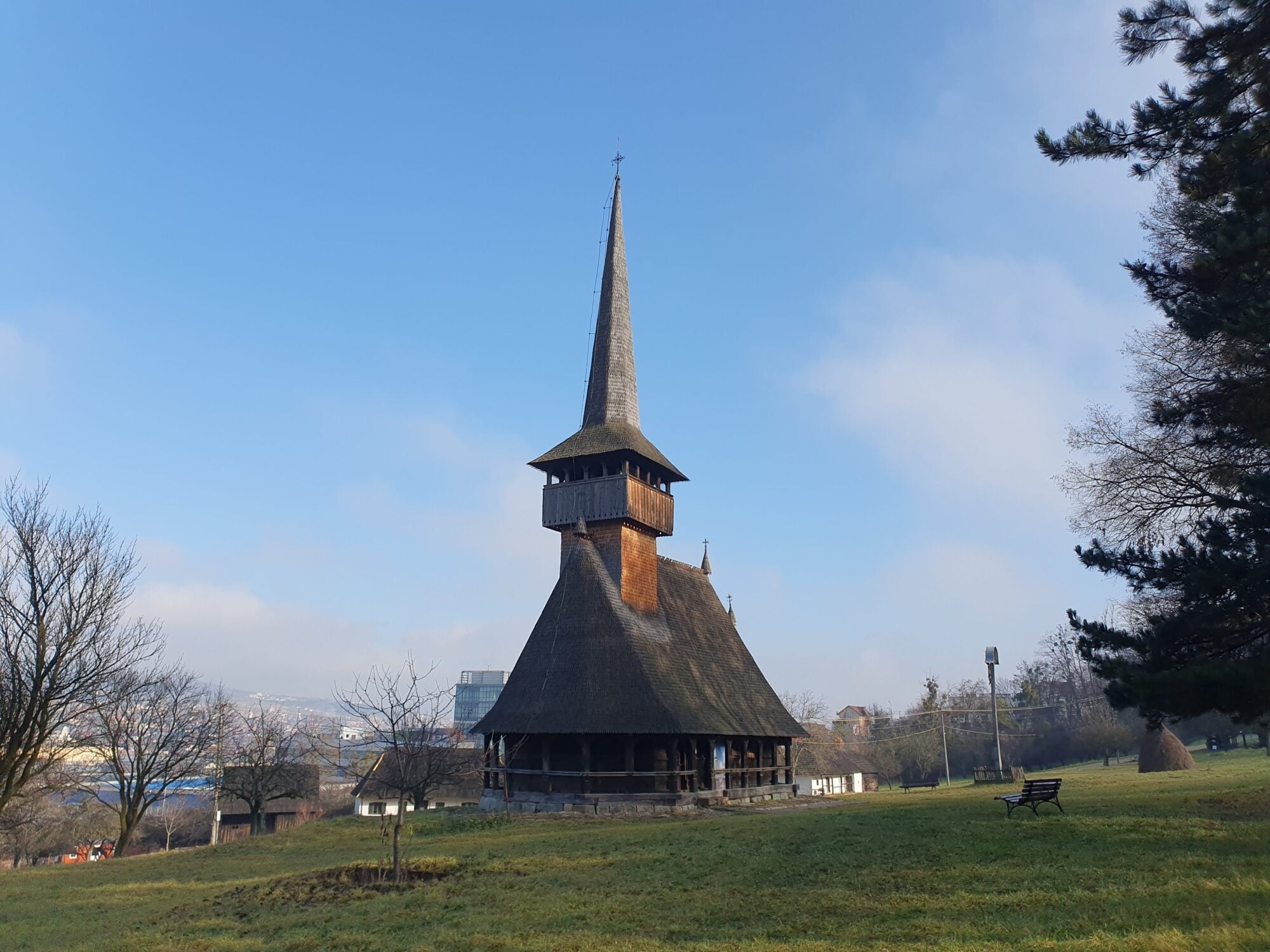
One sector of the park contains peasant technical installations and workshops from the 18th and 20th centuries. Basically, the industry of the era in Transylvania. They show the traditional techniques of
- Wood and iron processing.
- Gold extraction
- Wool processing and manufacture of fabrics
- Clay and stone crafts
- Cereal processing, including milling
- Extraction of oils, including olive oil
- Winemaking and the extraction of juice from grapes
The other section is made up of traditional peasant farmsteads from distinctive ethnographical areas in Transylvania. These are from between the 17th and 20th centuries.
Entry Costs and Opening Hours
Entry is rather cheap and costs 10 lei for adults. This comes with a handy map. You can pay in cash or by card at the reception near the entrance gates.

It is closed on Mondays and Tuesdays each week. During the winter they open at 9am, and the last entry is 3pm to close at 4pm. During the summer they open at 10am and remain open until 6pm, with the last entry at 5pm.
Things to See at Ethnographic Park Romulus Vuia
Navigating the site is a lovely walk through the park. They have a main trail with little footpaths towards the individual buildings. Some of these paths can get muddy in the winter and after rain.
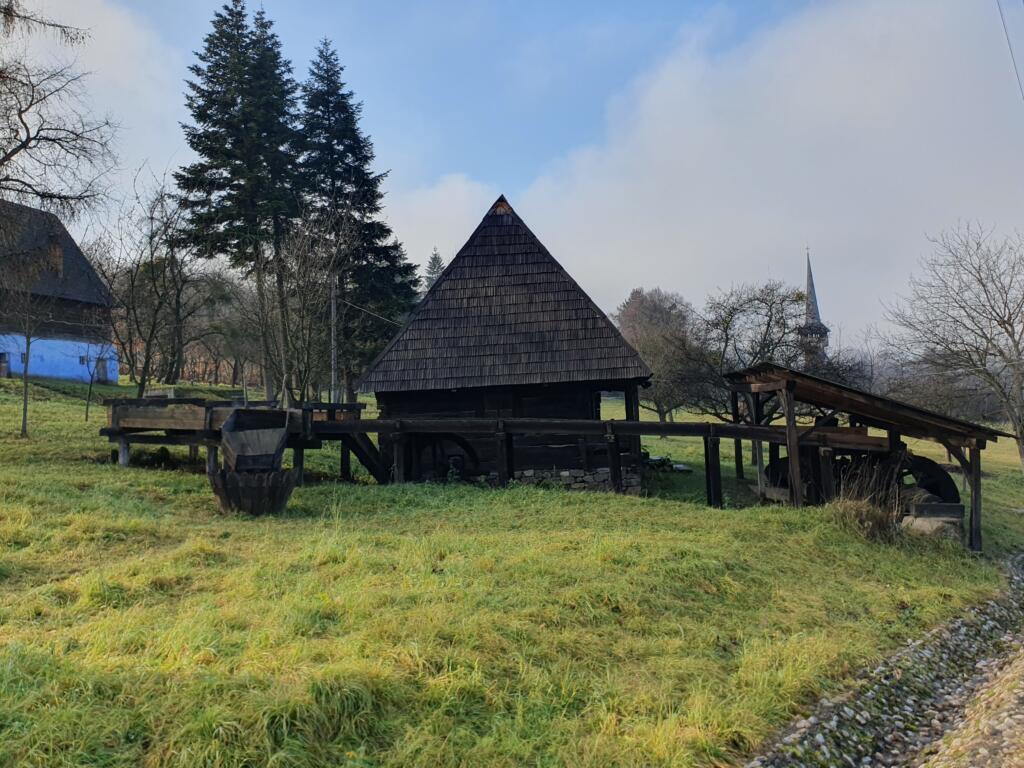
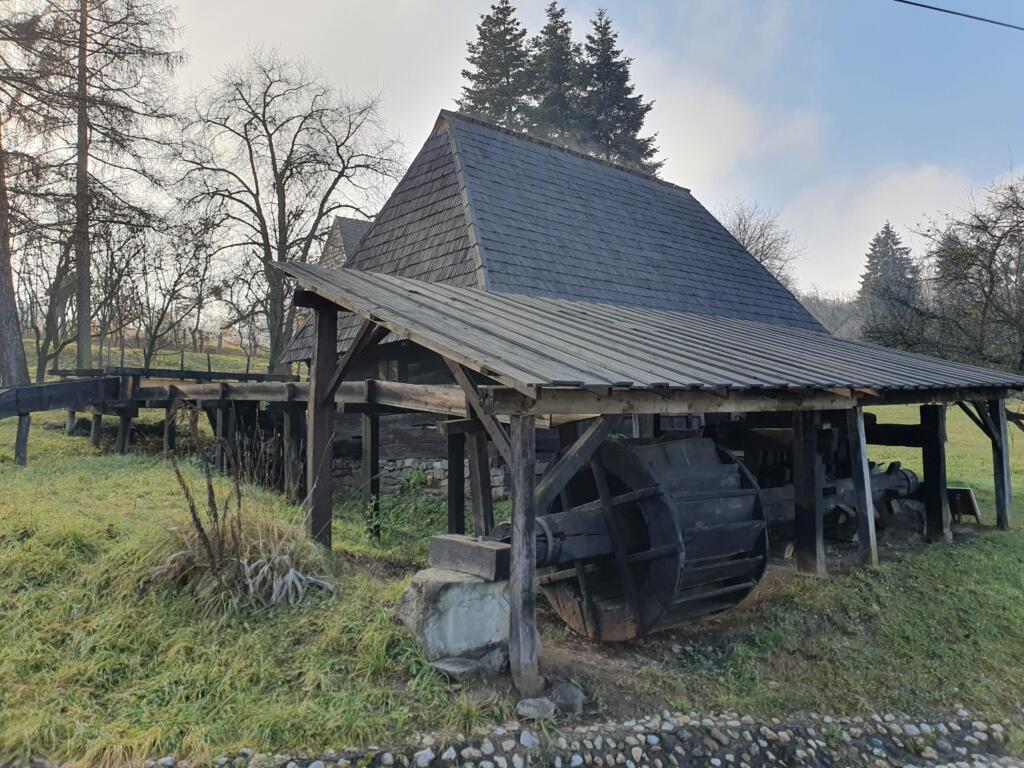
One of the first exhibits was the Artisan Pile from Maramures County in rural Romania. tes from the early 20th century.
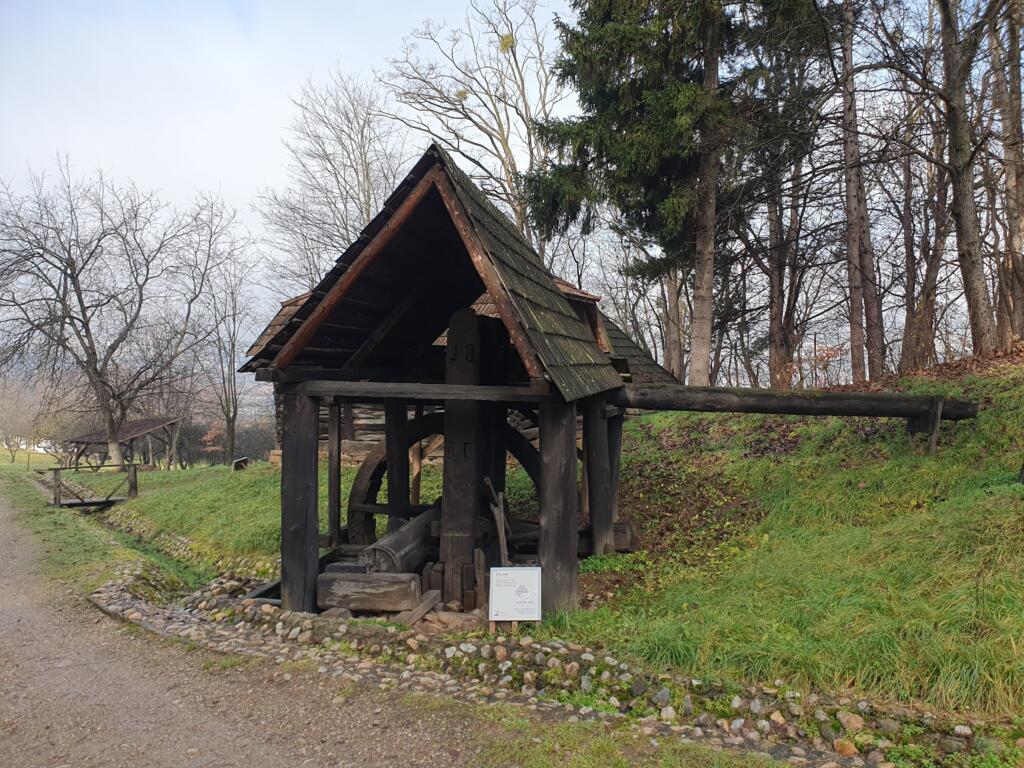
A fascinating building was the stamp mill from Alba County, dating from the early 19th century. This included a hydraulic mill for crushing gold ore.
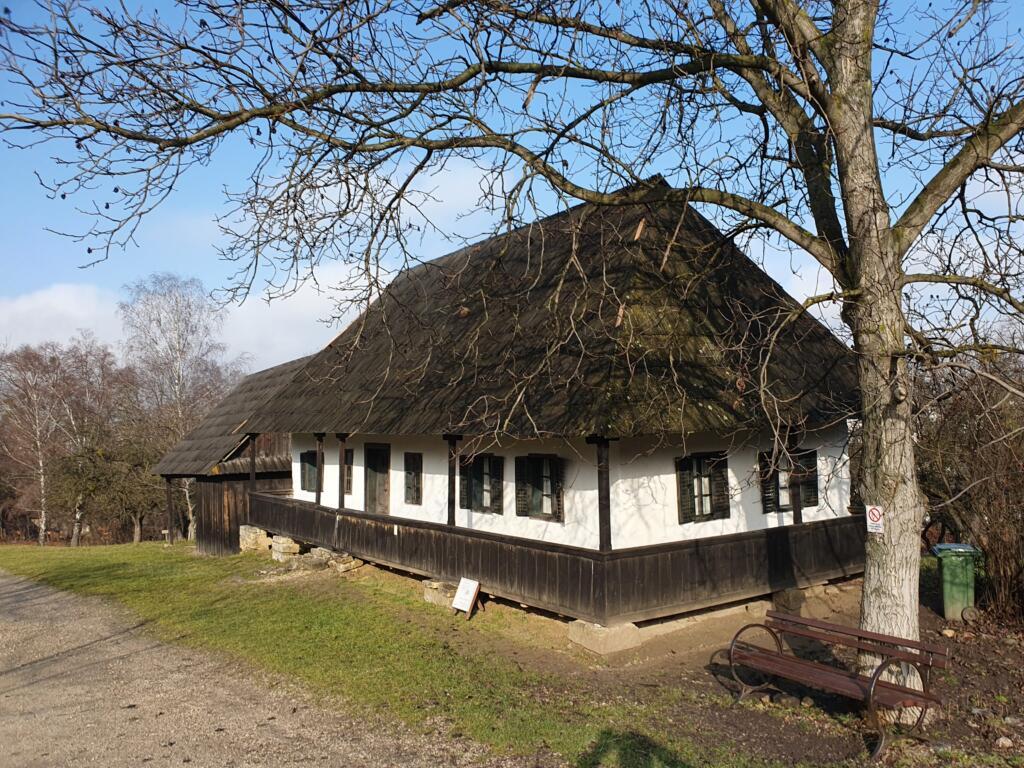
Just down the trail was the house of a potter that they moved here from Bistrita. It’s a thatched cottage and is rather photogenic.
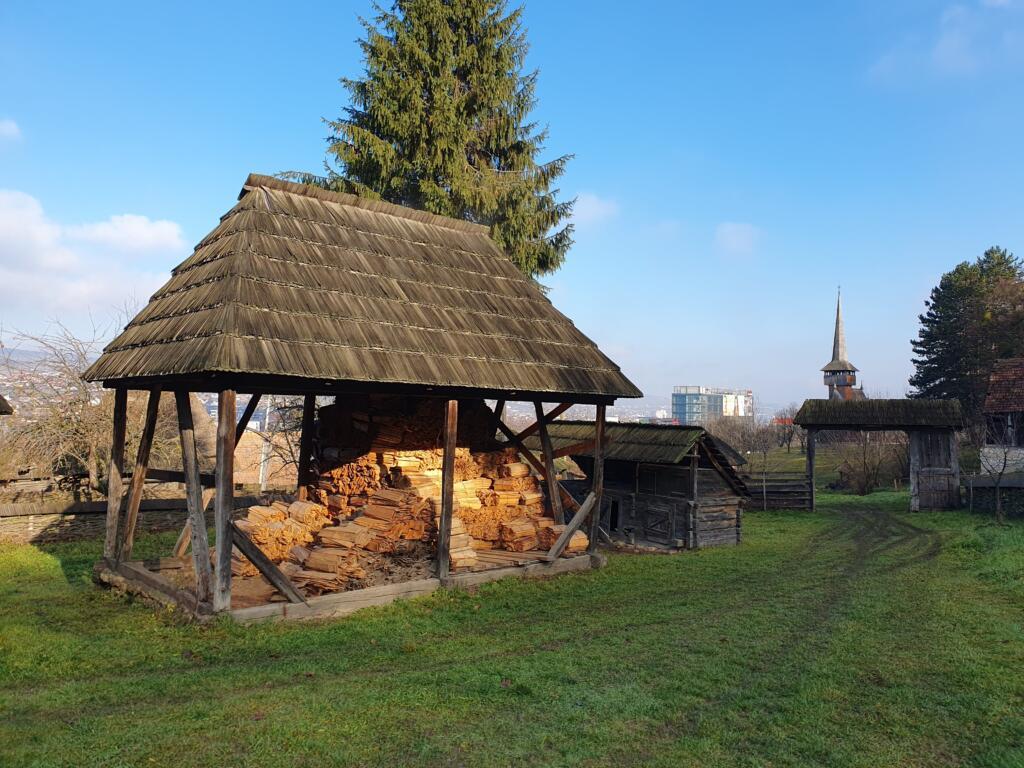
Some buildings have a simple but very important function. This is a woodshed to allow firewood to dry out, ready to burn to cook or create heat.
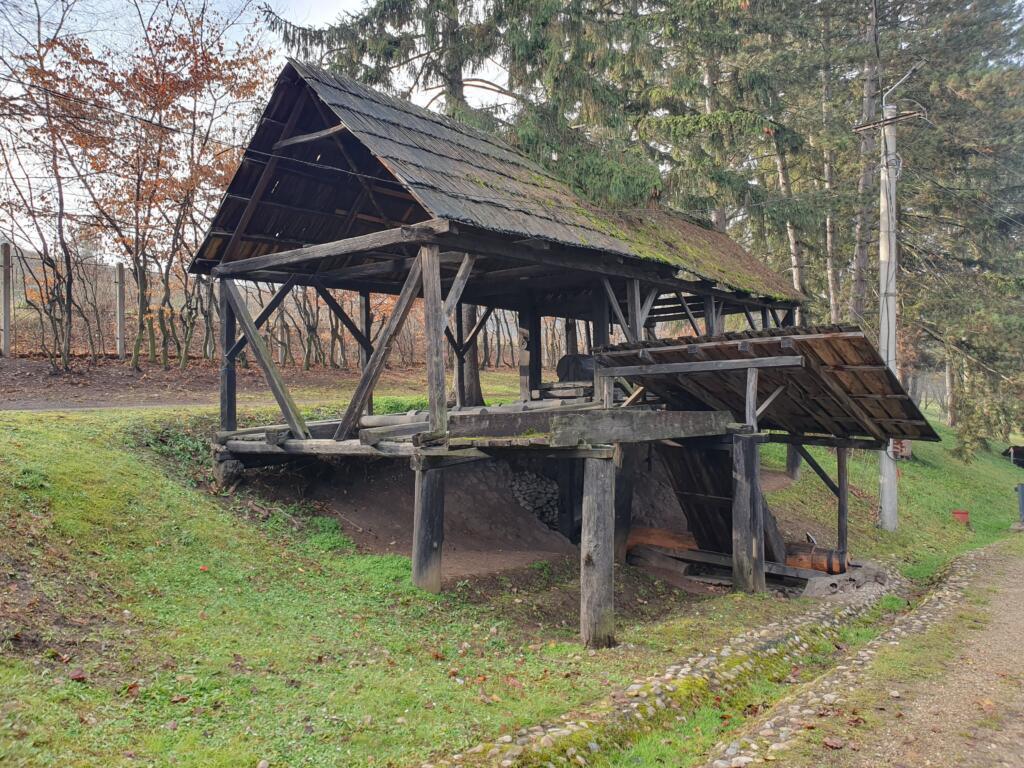
Before electricity, people used ingenious and now-considered environmentally friendly ways to automate tasks. This is a hydraulic sawmill which basically used water to enable people to mill timber.
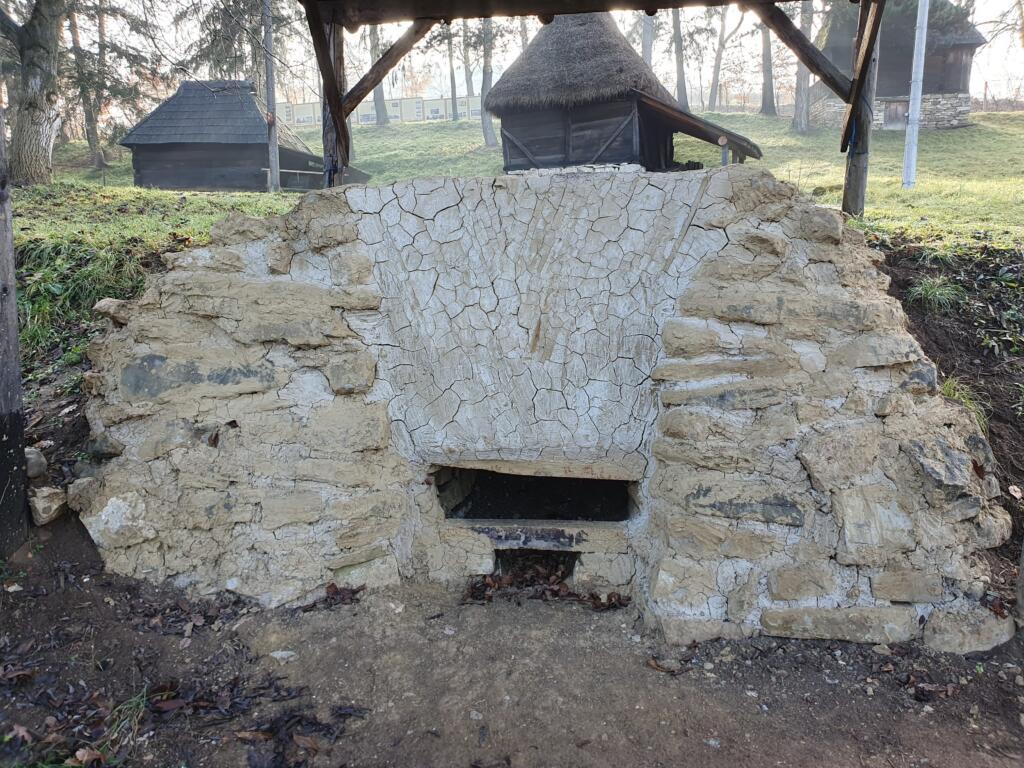
A lime kiln is a kiln they used for the calcination of limestone to produce the form of lime called quicklime. They used this for building renders on floors and walls. People also used it in agriculture as a soil additive to enhance the chances of their crops growing.
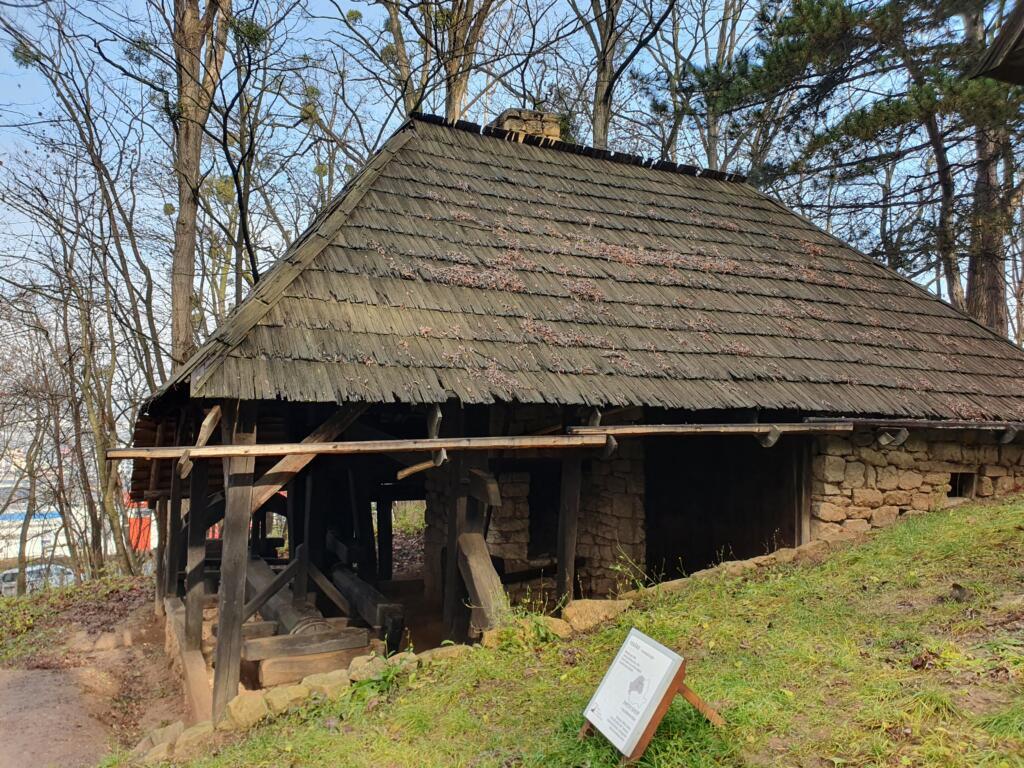
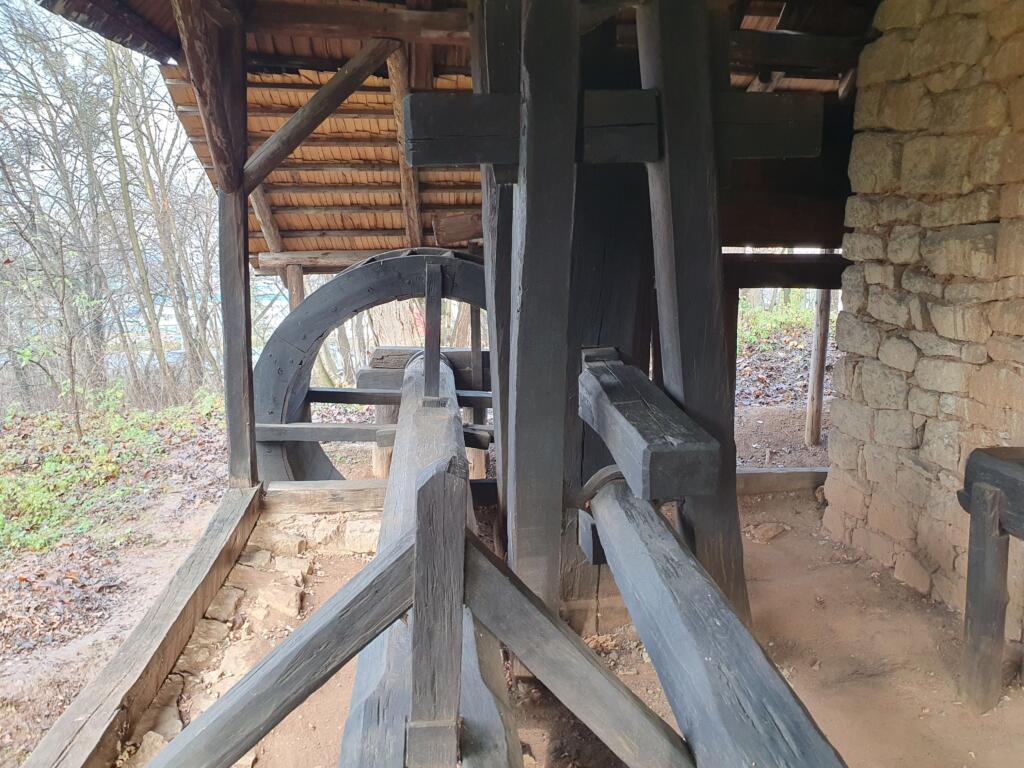
Also at the museum, you can see historic smith shops which contain some equipment used by blacksmiths of bygone eras. This one is from Alba County in Transylvania.
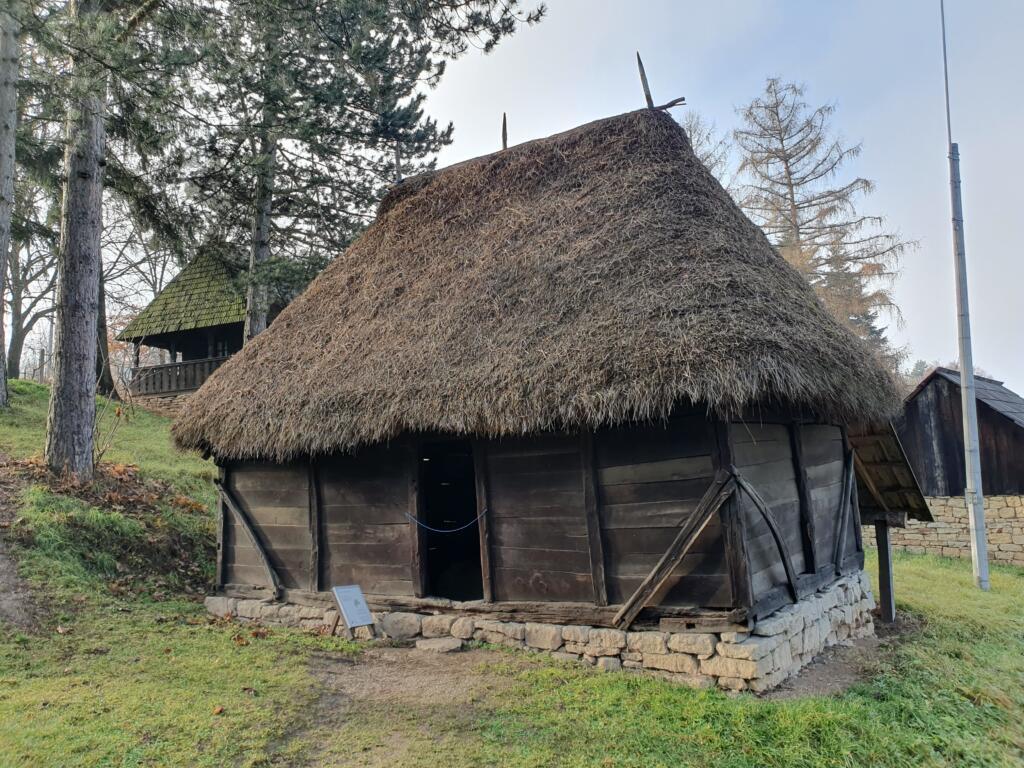
Felting was also a popular trade historically, and you can see a felting mill here with tools used.
Are They Dog Friendly?
They are a dog-friendly attraction, and the park is ideal for dog walking. Their rules state that dogs must remain on a lead, and you must clean up after your pet.
Refreshments
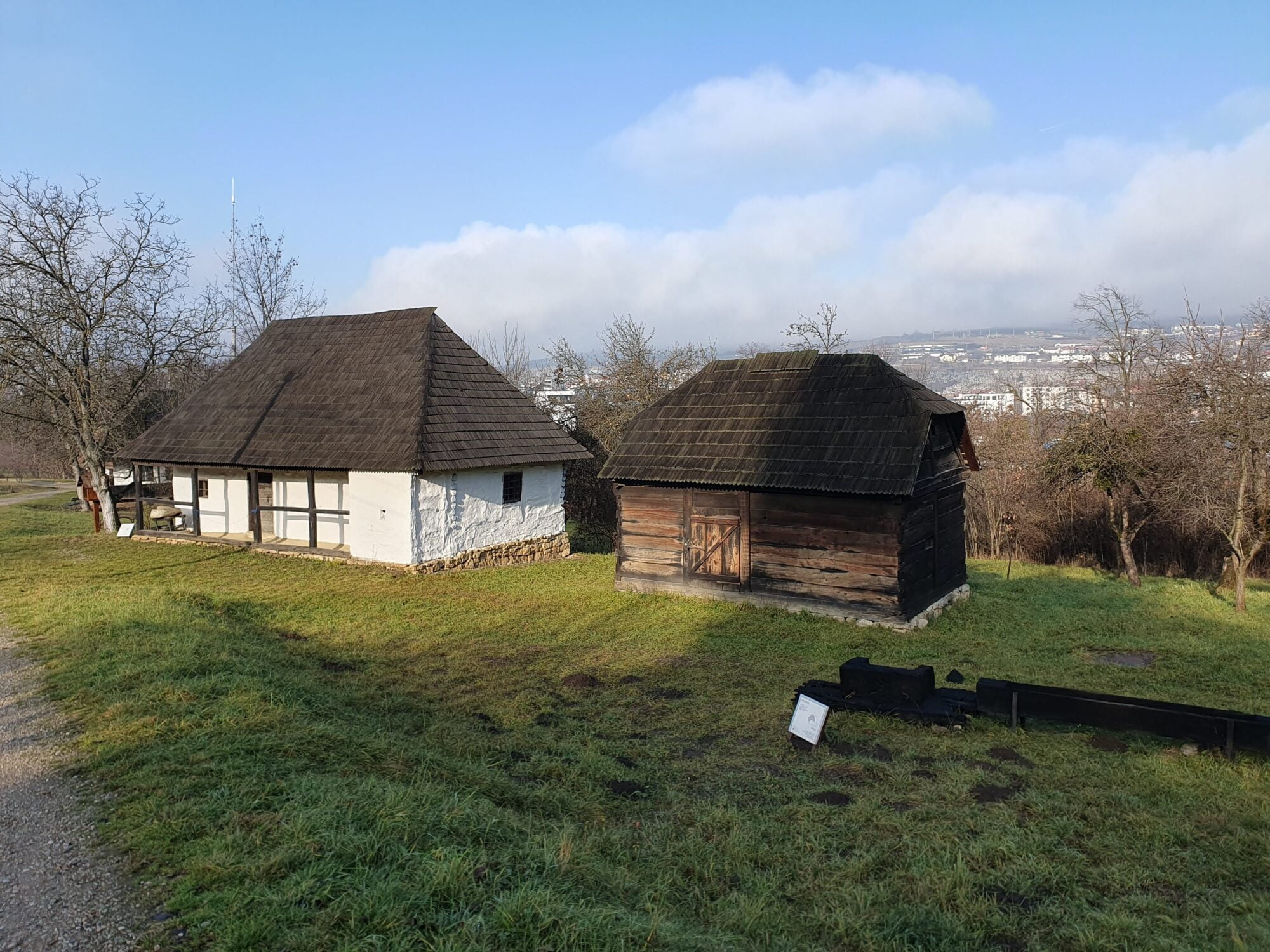
Sadly, there is nowhere to purchase refreshments here. Google reviews forewarned me, so I carried my drink with me. There are many benches to sit and enjoy a snack or a drink. You could also visit a nearby restaurant on the walk downhill after. There are toilets, one by the church and another by the entrance.
How To Get There?
To reach the park, you can take a bus out of Cluj Town Centre; the number 6 is the route I took to the Ursus Brewery, then a 15-20-minute walk uphill to the park. Taxis in the city are quite cheap, making them an easy way to reach the attraction. Alternatively, you could use an app like Uber or Bolt to reach the museum.
Is the Museum Worth Visiting?
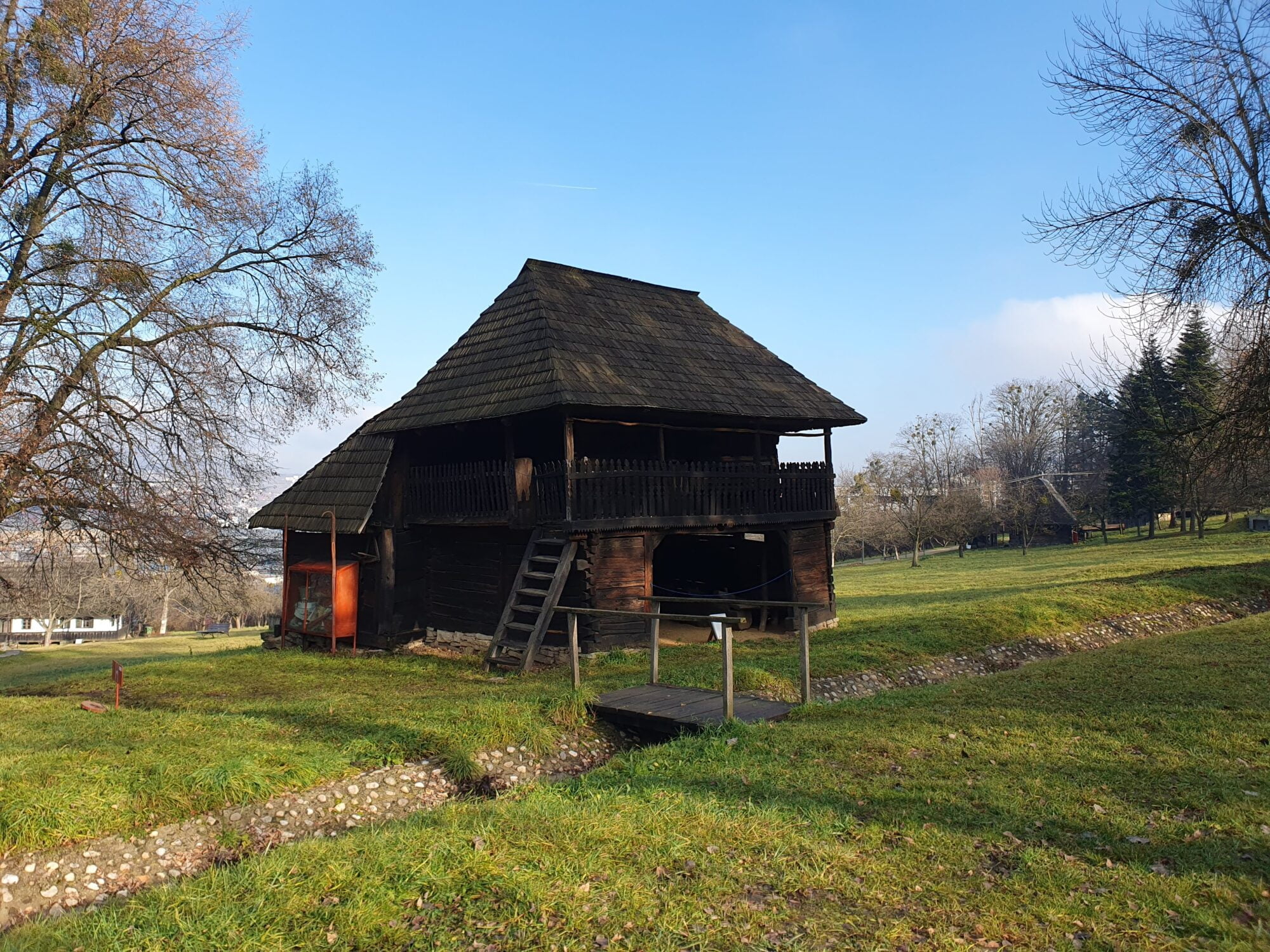
Ethnographic Park Romulus Vuia in Cluj is well worth visiting. They set the museum in pretty countryside, and the exhibits are interesting. The museum has houses, churches and buildings relating to agriculture in a bygone era. The museum is a great way to learn about how locals lived in the past and the ingenious things they created. Exploring here was one of my favourite things to do in Cluj-Napoca.