
Shrewsbury, Shropshire | Things to Do & Travel Guide
Shrewsbury is a nice place to visit because there are lots of things to do. These include a castle, an abbey, a prison, gardens, churches, and other historic buildings.

Shrewsbury is a historic town with an abundance of interesting architecture. It’s a good place for riverside walks or walks into the Shropshire countryside. I visited on multiple day trips and enjoyed each one, exploring the town.
About Shrewsbury
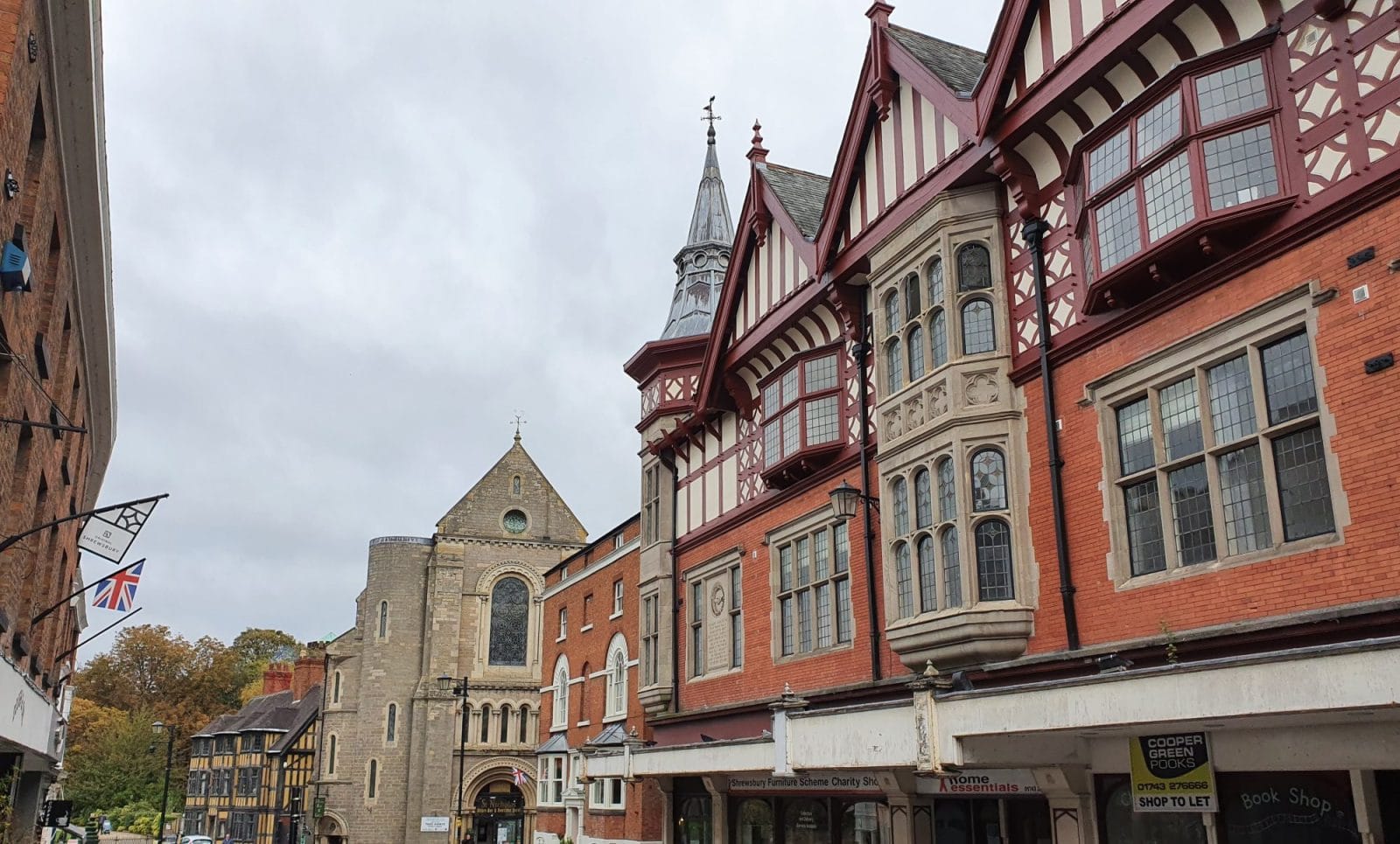
Shrewsbury is a large market town and is the county town of Shropshire in England. It is on the River Severn, which shaped its development. Shrewsbury town centre has an unspoilt medieval street plan and has over 660 listed buildings. These include examples of 15th- and 16th-century timber framing.
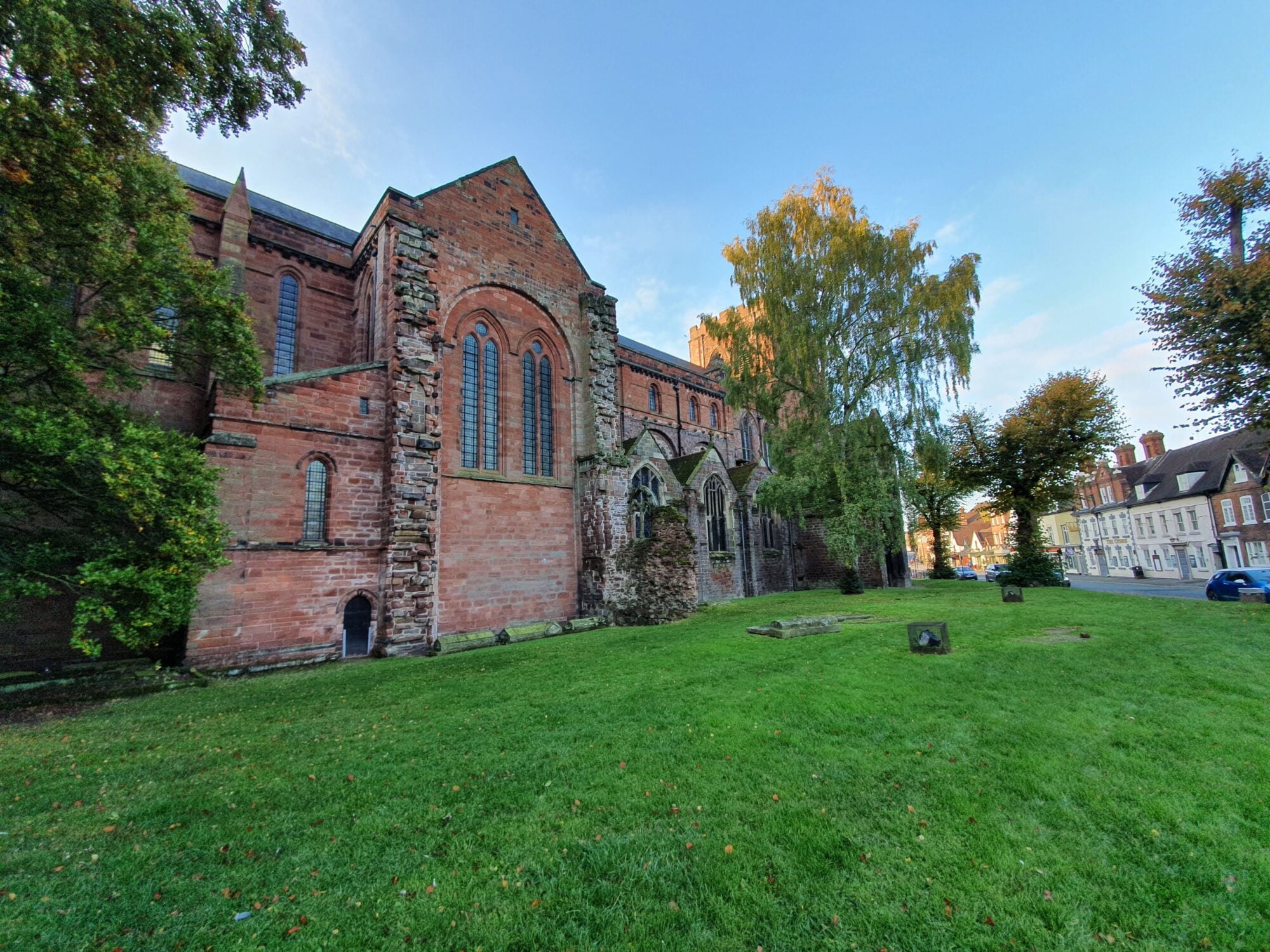
Other highlights include Shrewsbury Castle and Shrewsbury Abbey. It is the birthplace of Charles Darwin, who spent 27 years here. As a result, he is featured in various places around the town, including a statue.
Is Shrewsbury Worth Visiting?
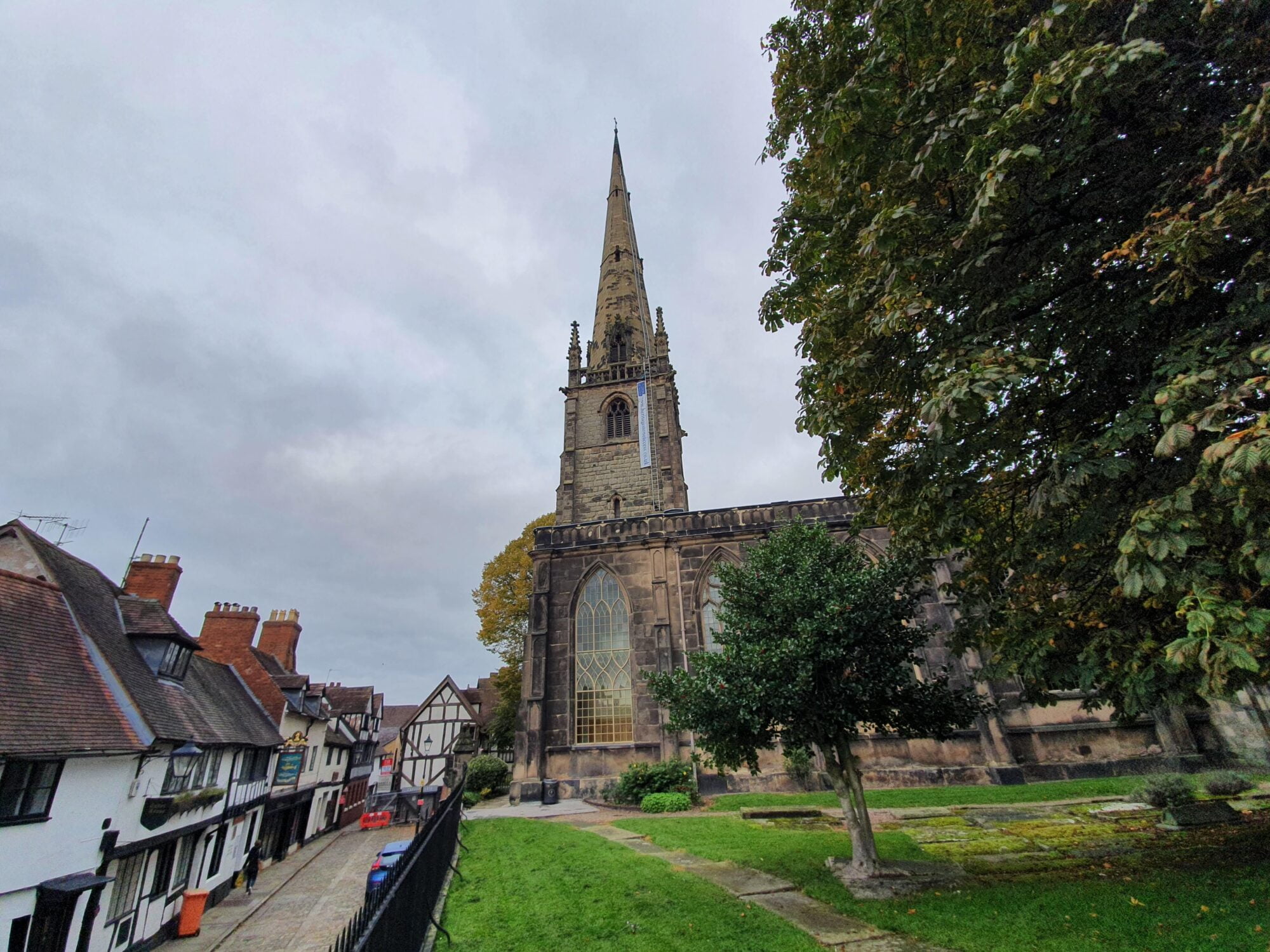
Shrewsbury is a fantastic town that’s well worth visiting. There are plenty to see, including colourful gardens, riverside walks, and historic sites. The foodie scene here is good. It’s an excellent option for a day trip or a long weekend away.
Things to Do in Shrewsbury
Disclosure! Keep in mind that some links in these posts are affiliate links. If you click one of them, I may earn a small commission (for which I’m extremely grateful) at no extra cost to you. Thanks for visiting!
Shrewsbury Castle
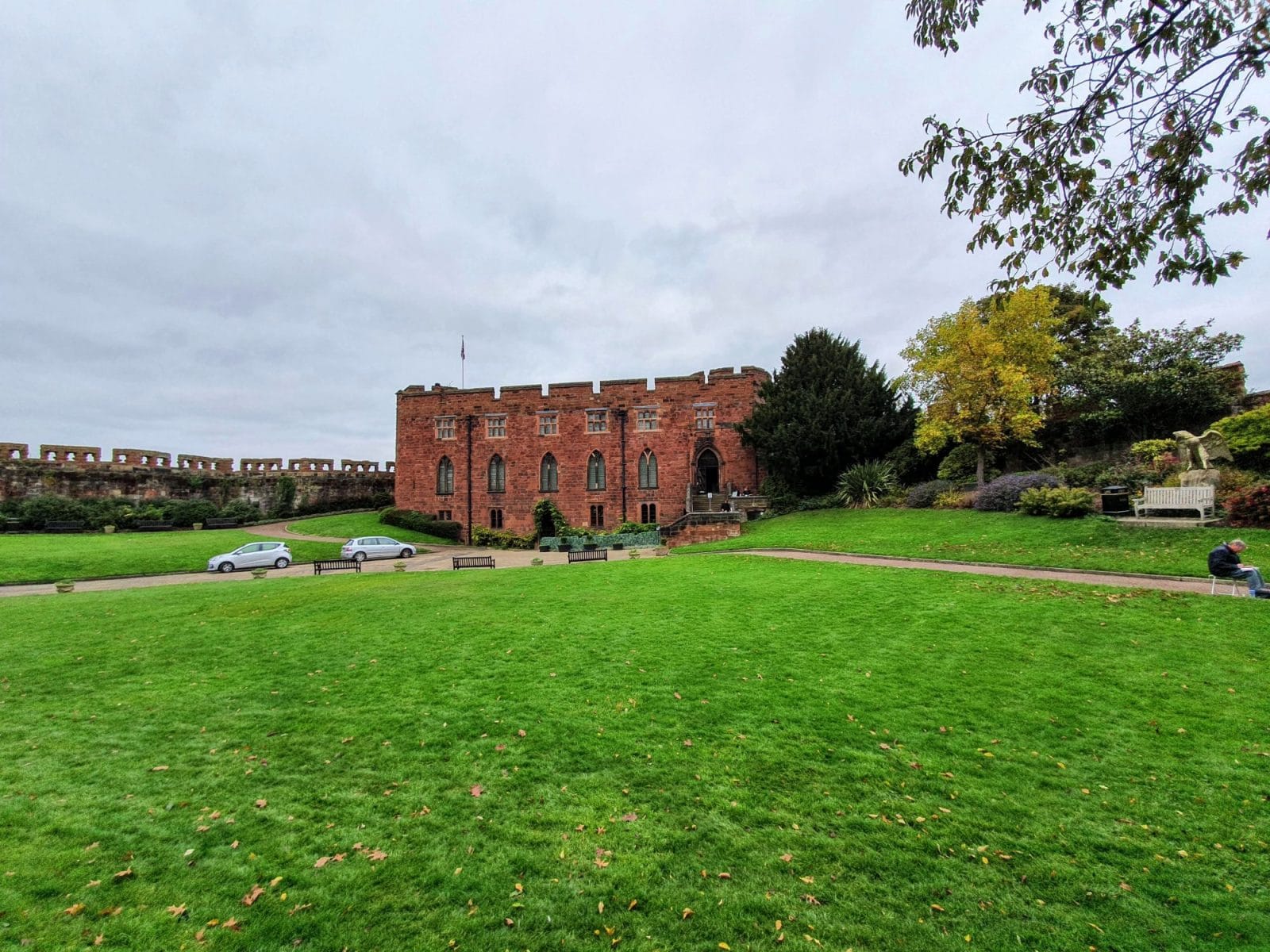
Shrewsbury Castle is built from red sandstone and stands on a hill overlooking the River Severn, just above the railway station. Its history dates back to 1067, when William the Conqueror ordered its construction as a defensive fortification. It was also besieged during the English Civil War.
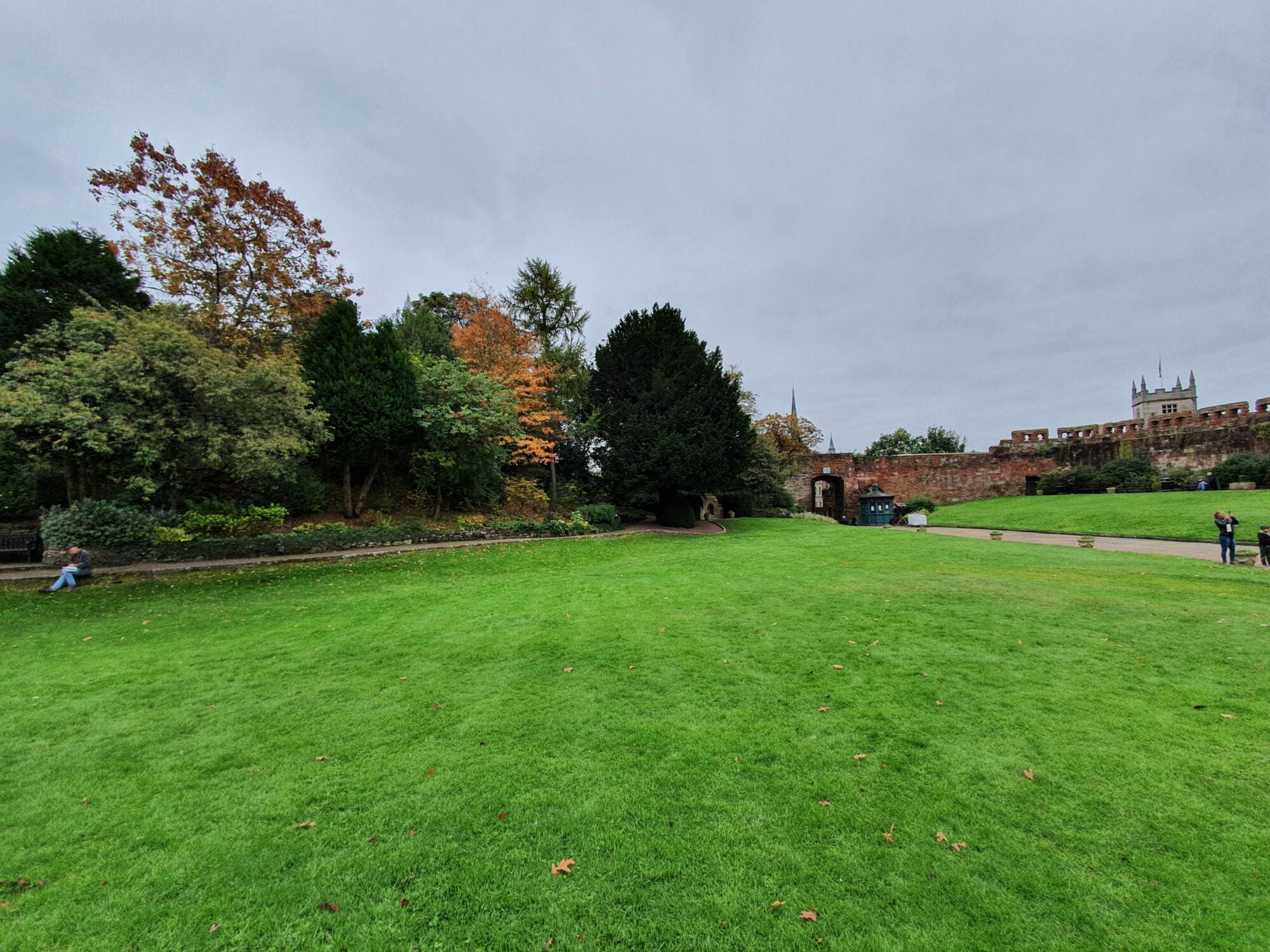
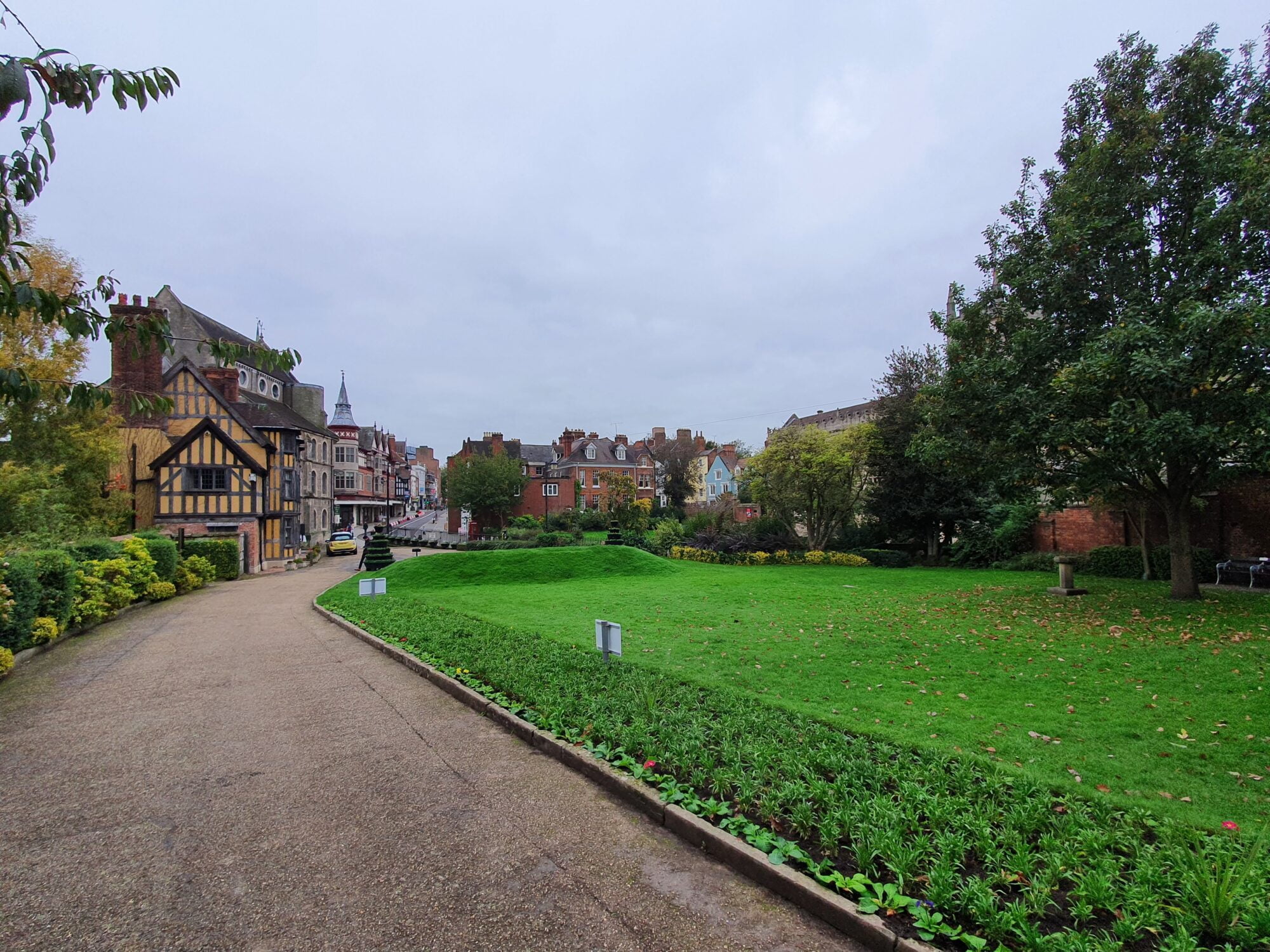
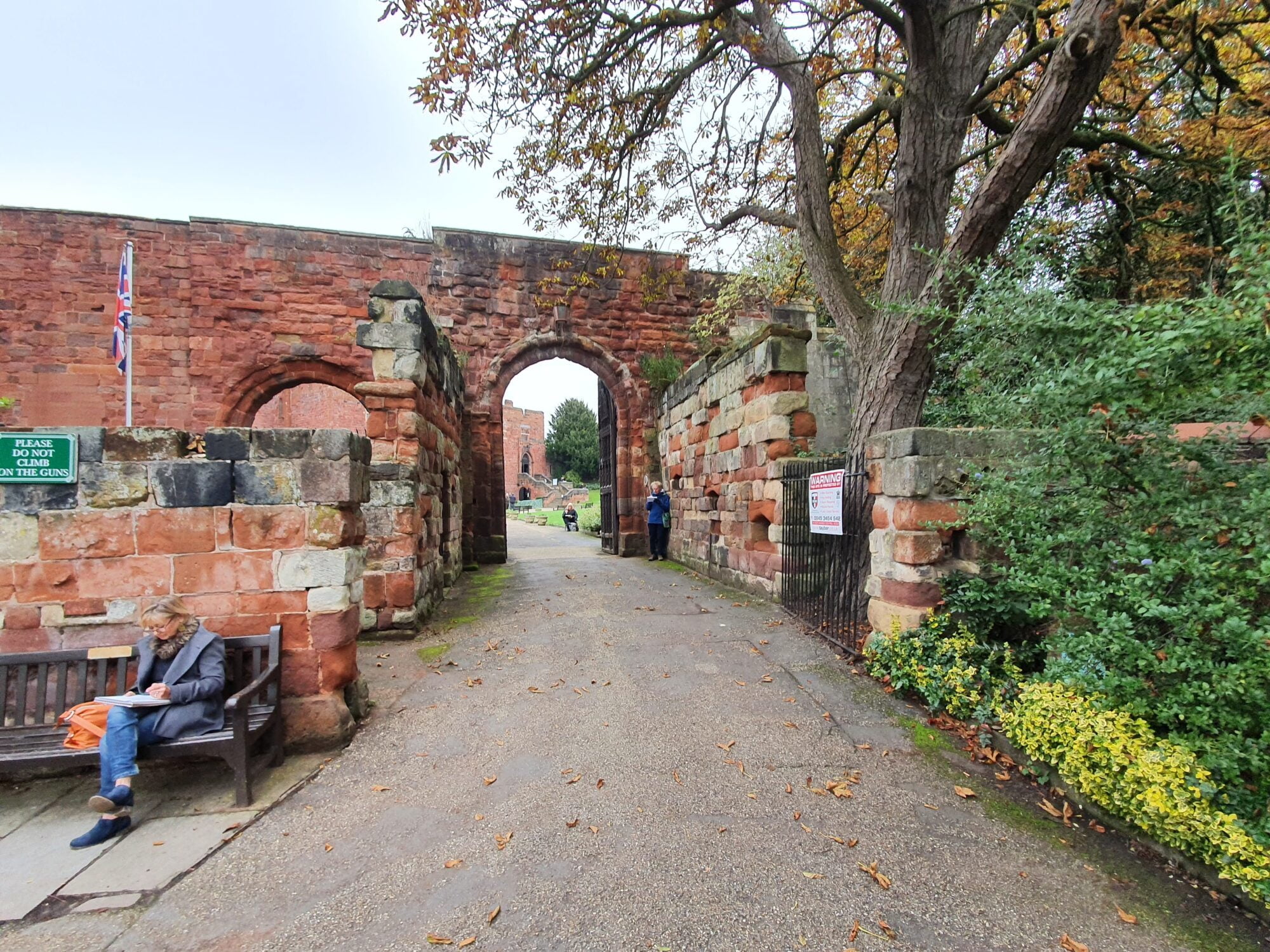
The grounds are free to enter, and I enjoyed having a mooch around the gardens and getting a closer look at the castle’s sandstone walls, keep and turrets. You can’t climb the turrets, and Laura’s Tower, a lookout tower, was closed when I visited. There are benches around the grounds, and the entrance gate is another feature worth seeing.
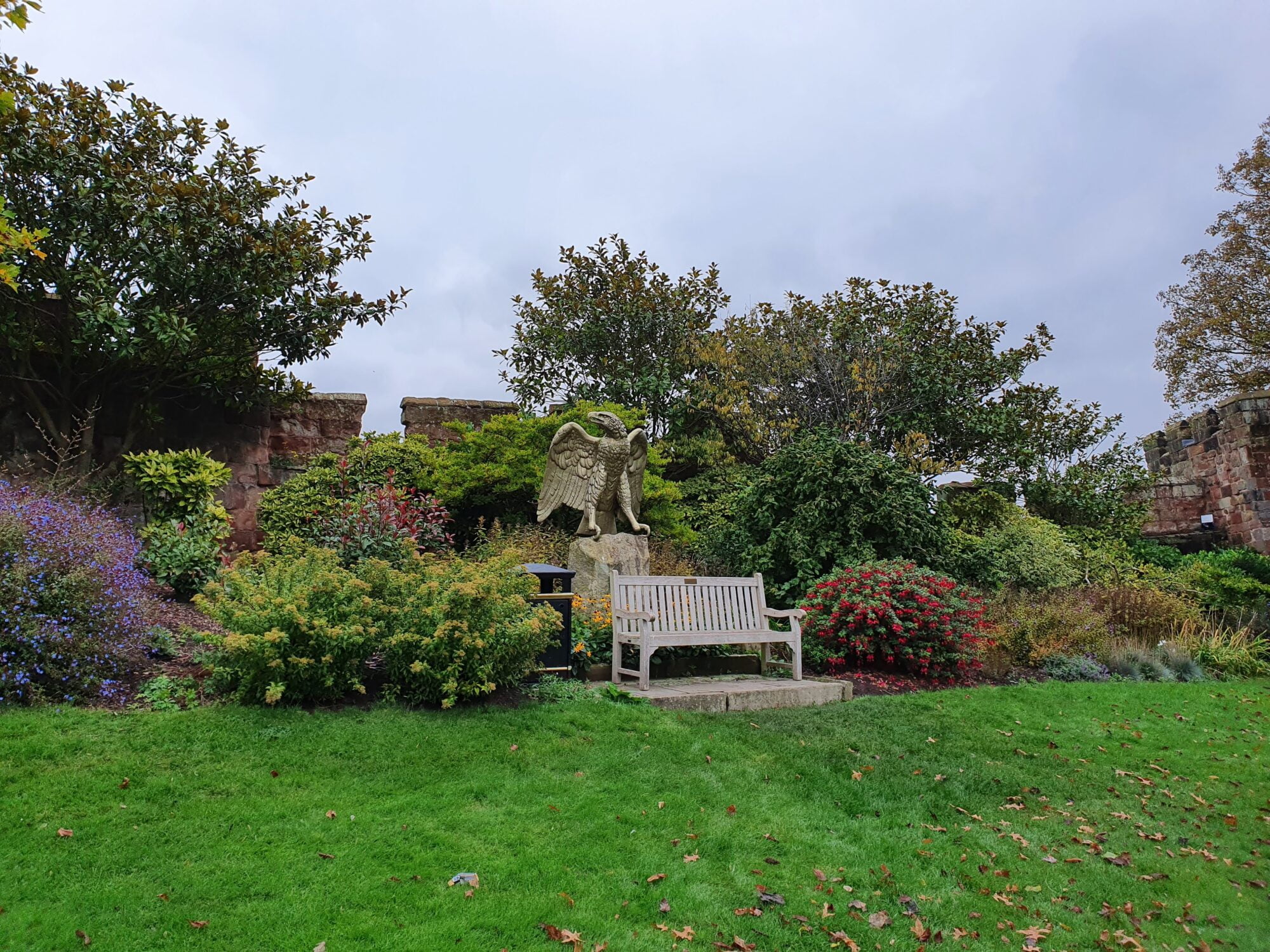
One unusual feature is the golden eagle statue, brought from Minden Barracks in Germany, where the regiment was stationed after the war. I enjoyed exploring the grounds, and even without visiting the museum, it’s worth a quick look around. Dogs aren’t permitted on the castle grounds.
Soldiers of Shropshire Museum
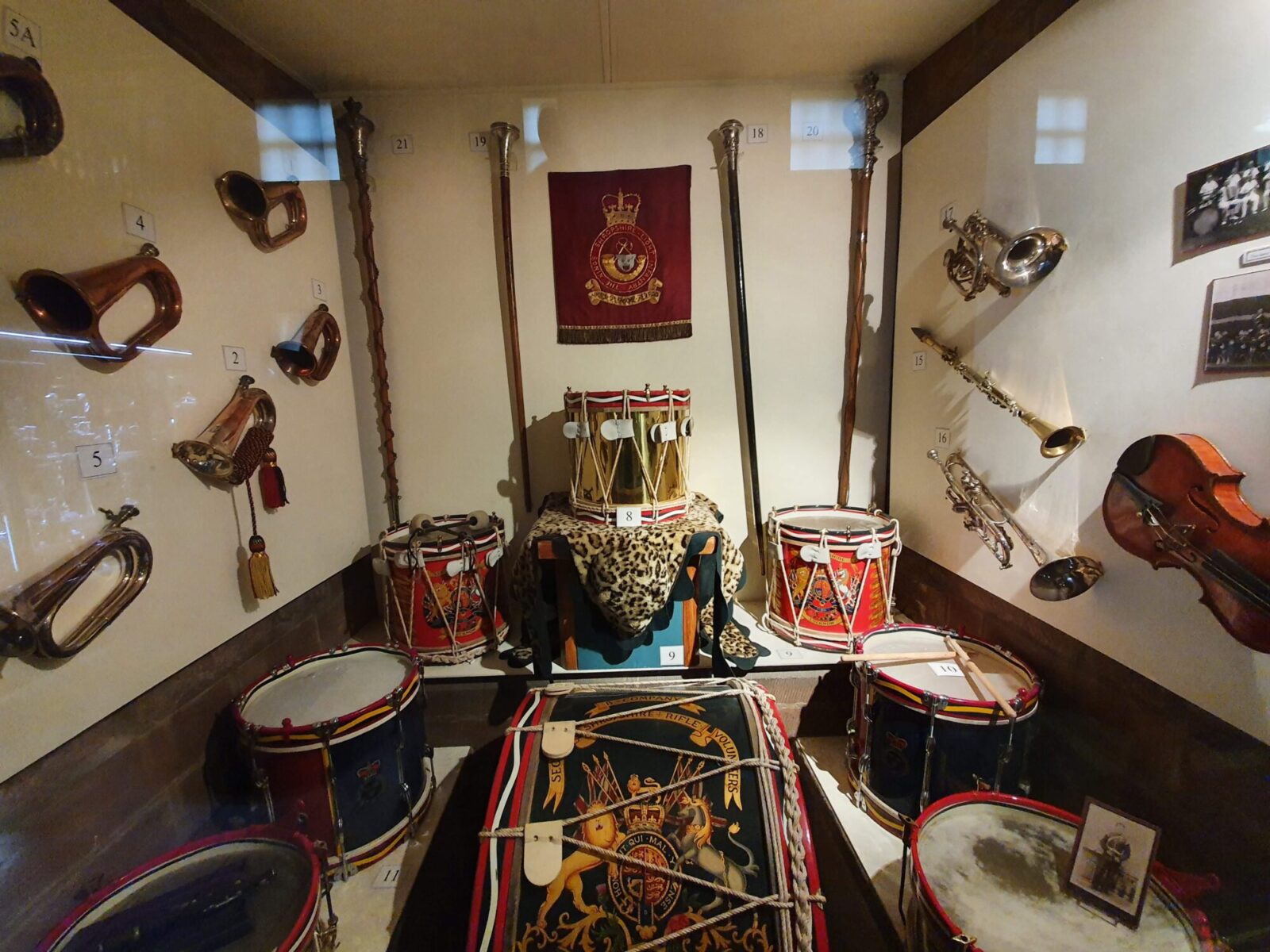
Inside Shrewsbury Castle is the Soldiers of Shropshire Museum, which has displays of military uniforms, weapons and medals. The basement also has an informative exhibition about the history of the castle itself. I enjoyed visiting because I’m interested in military history as well as castles.
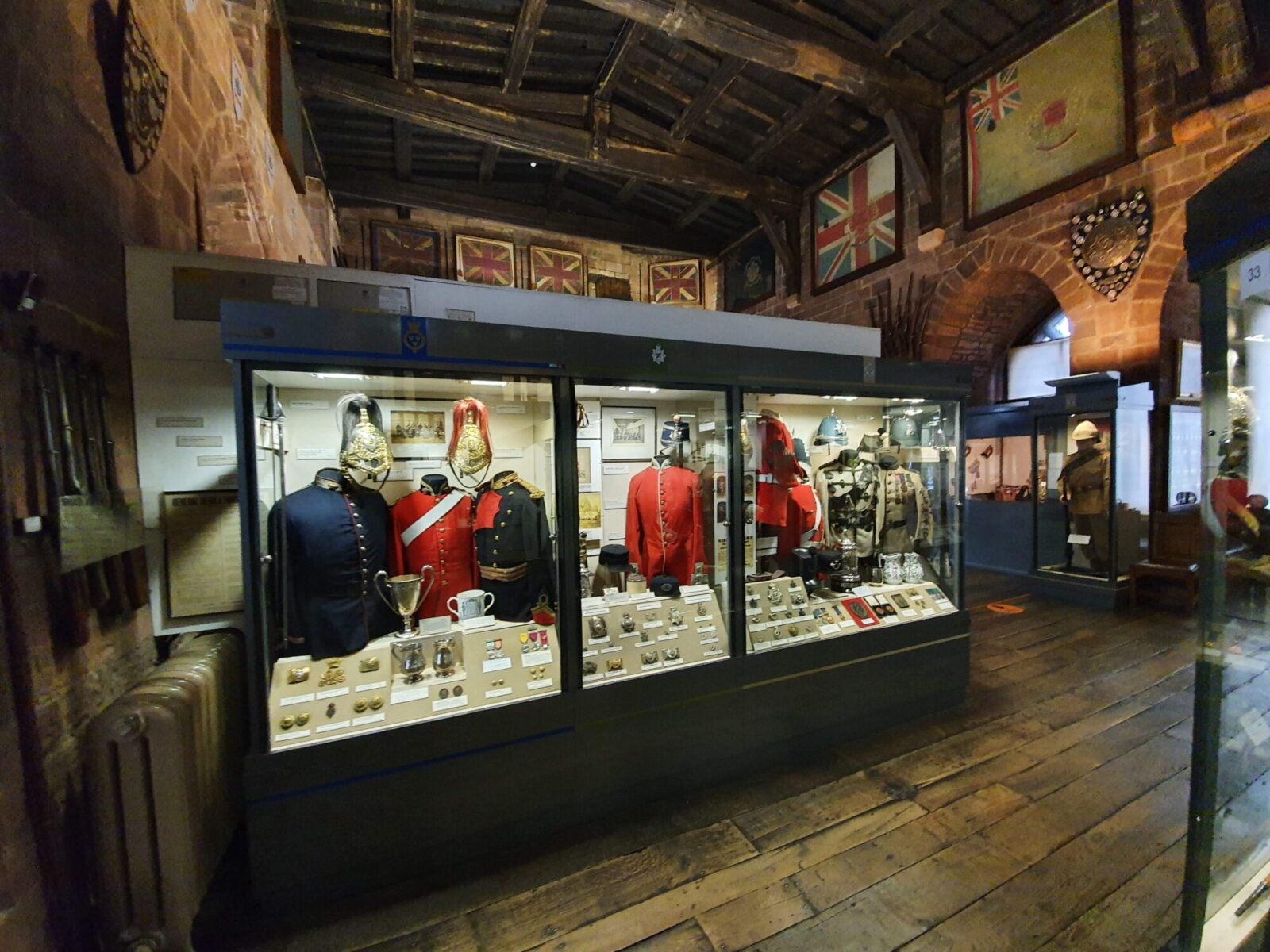
There is a charge to enter the museum, although you can explore the castle grounds for free. Check the official opening times and admission details before visiting.
Shrewsbury Abbey
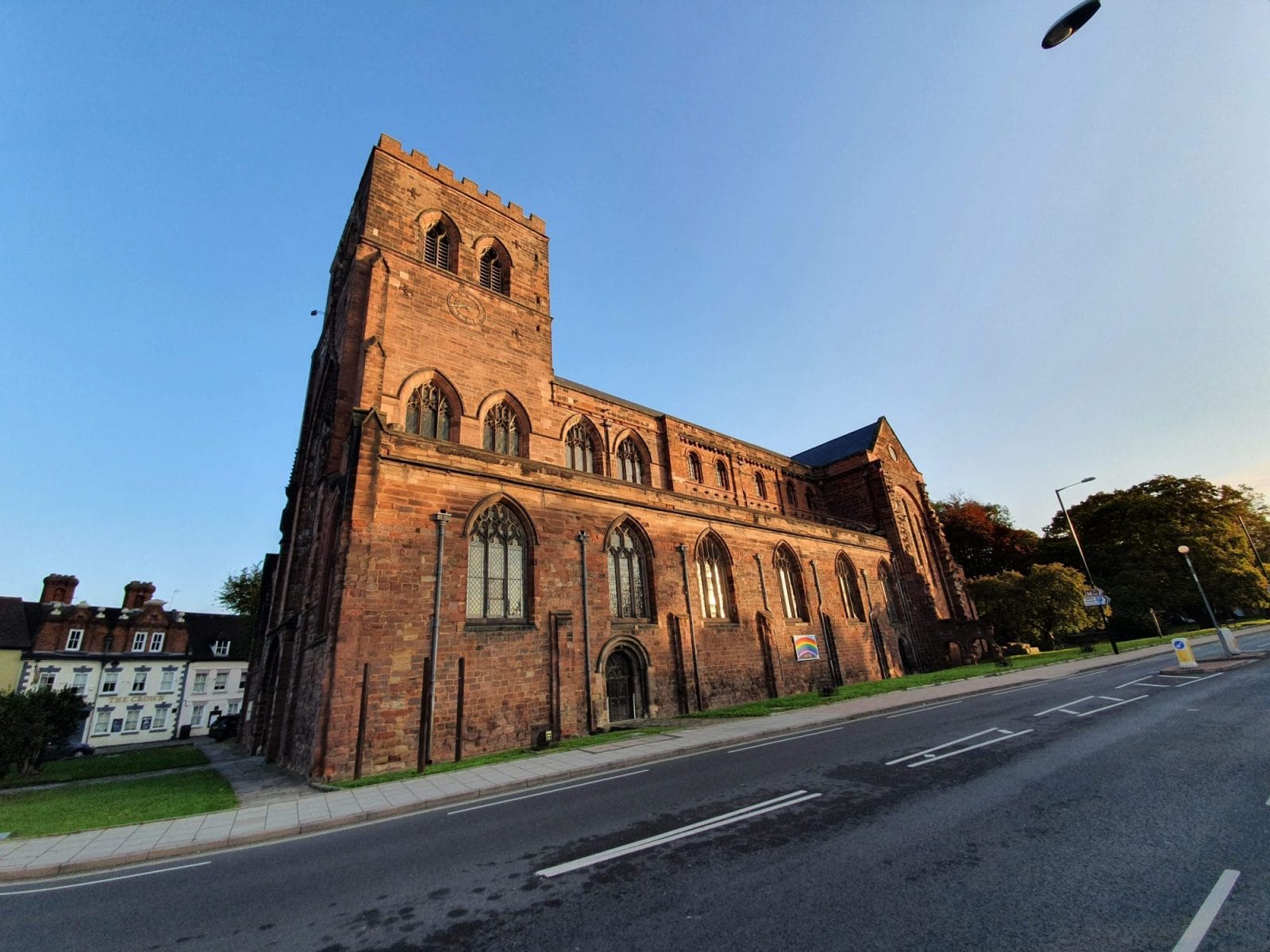
Also known as the Abbey Church of Saint Peter and Saint Paul, Shrewsbury Abbey is an ancient foundation in Shrewsbury. The Norman Earl of Shrewsbury, Roger de Montgomery, founded it in 1083 as a Benedictine monastery.
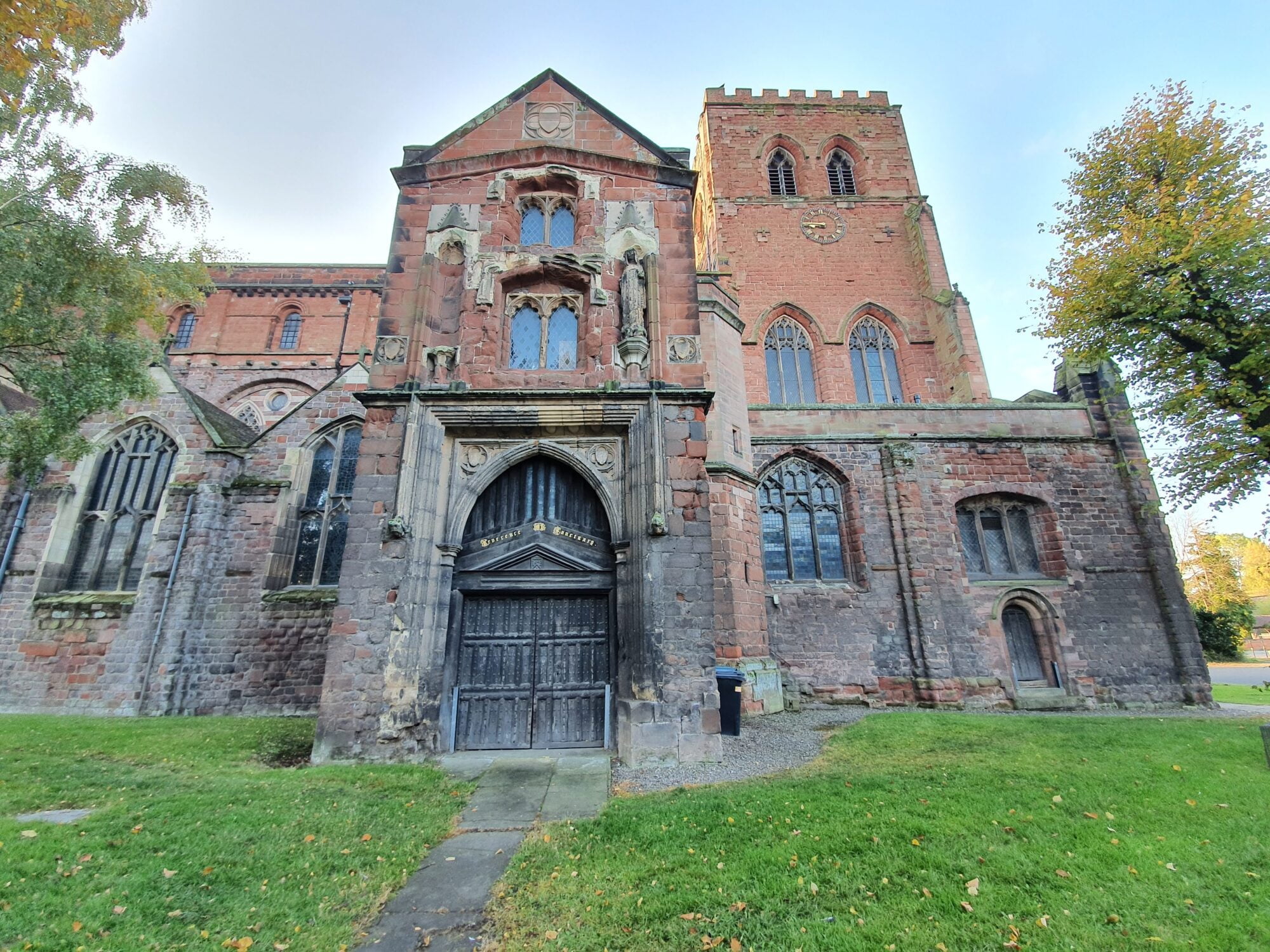
It subsequently became one of the most important abbeys in England. Shrewsbury Abbey is a Grade I listed building surrounded by the Abbey Foregate. The abbey is quite striking and has a churchyard with graves and memorials to peruse.
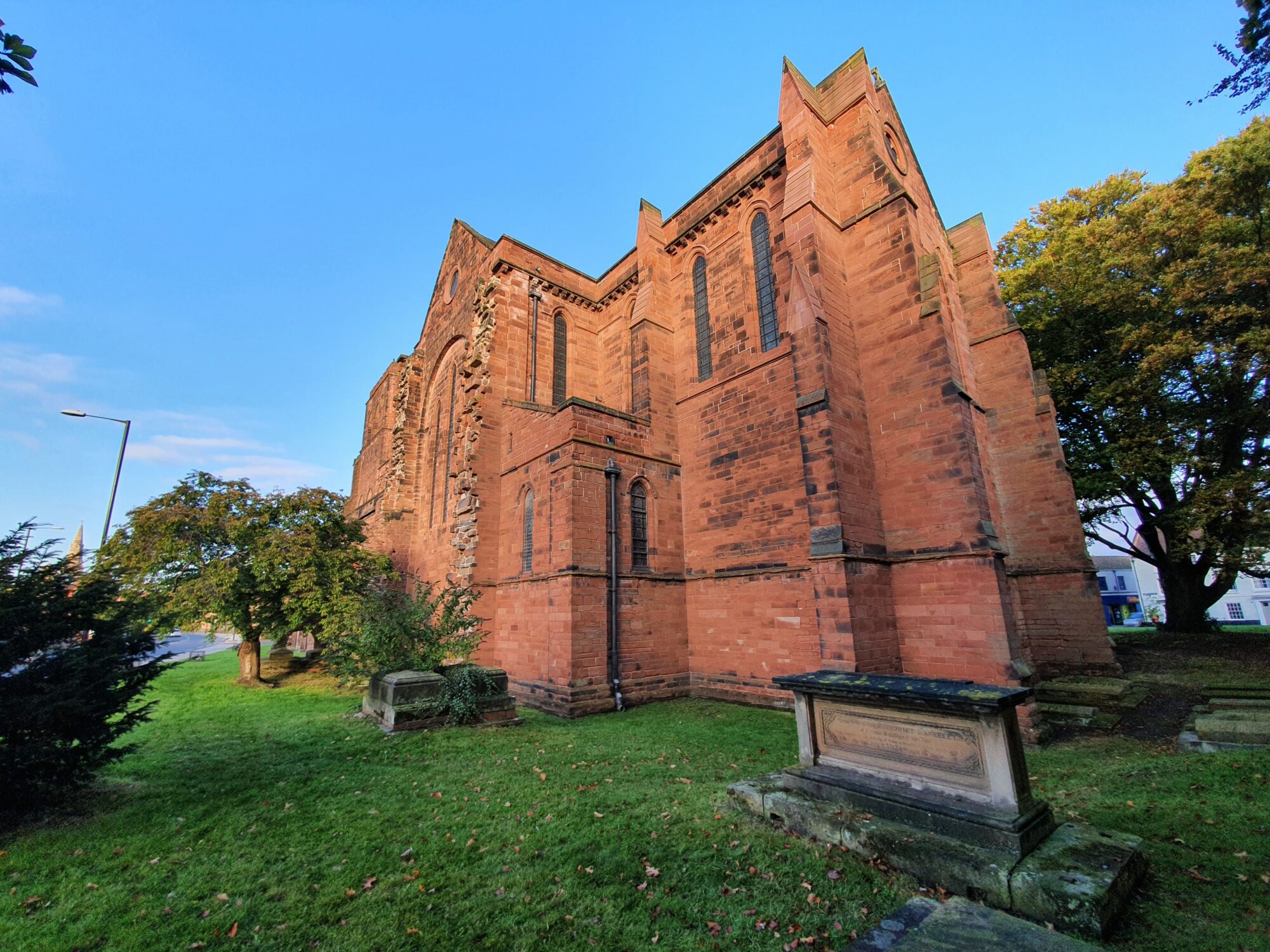
Many of the original Norman 11th-century features survive in the present building, and it is delightful.
Shrewsbury Prison
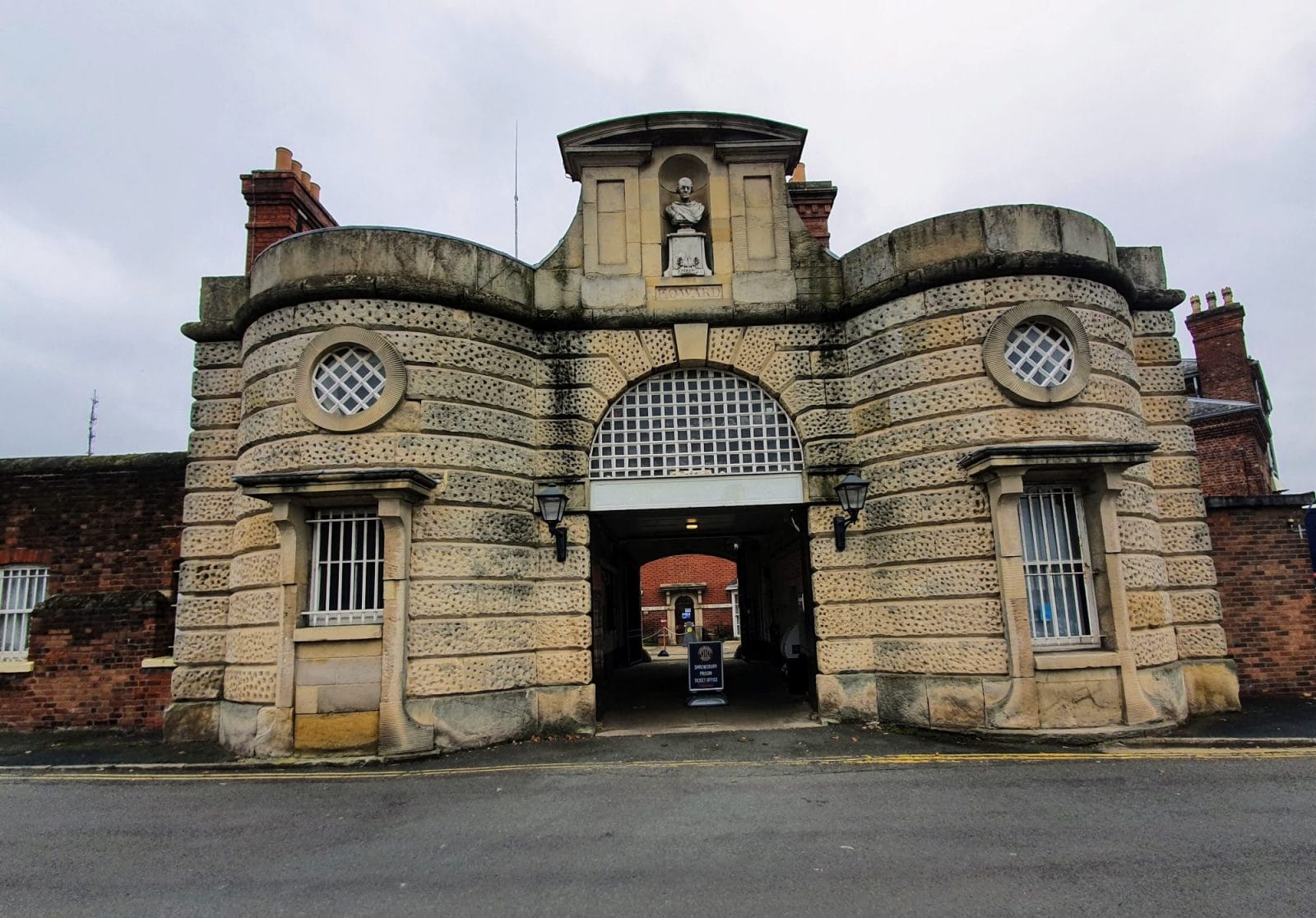
Shrewsbury Prison (HM Prison Shrewsbury) was a Category B/C men’s prison. It’s now decommissioned and open to the public. A prison has stood on the site since 1793. Thomas Telford built the original building to plans by Shrewsbury architect John Hiram Haycock, and much of the prison was later rebuilt during the 19th century. The prison offers a few types of tours, including a ghost tour.
The Quarry
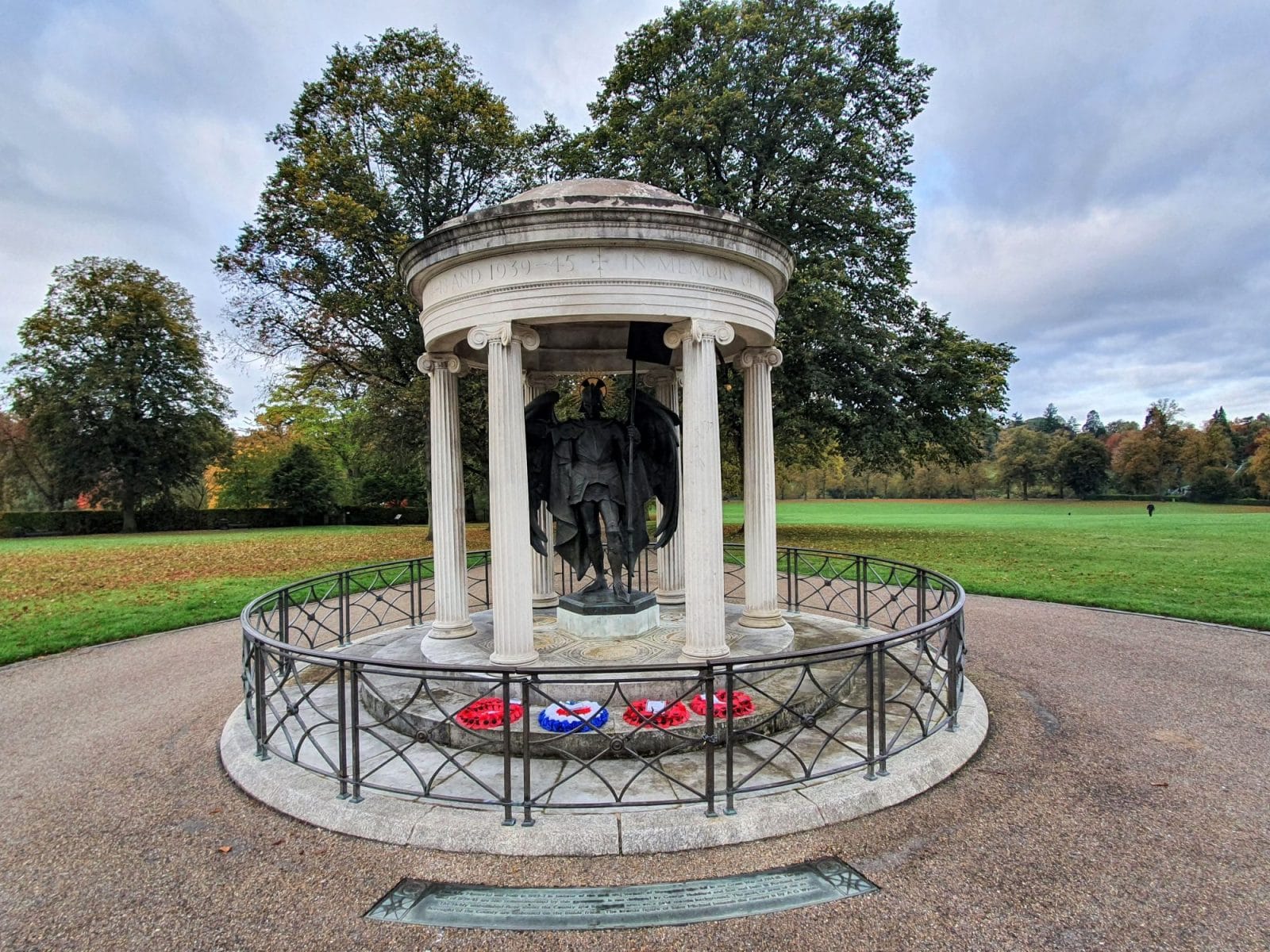
This park sits on the banks of the river and includes landscaped gardens and The Dingle, a botanical park. The Quarry has a bandstand, a gatehouse and statues, including one of Hercules. People have used this site for recreational activities in Shrewsbury since the 16th century.
The Dingle

The Dingle is a floral masterpiece, cultivated by world-renowned gardener Percy Thrower. It is a sunken landscaped garden with alpine borders, brilliant bedding plants and shrubbery.
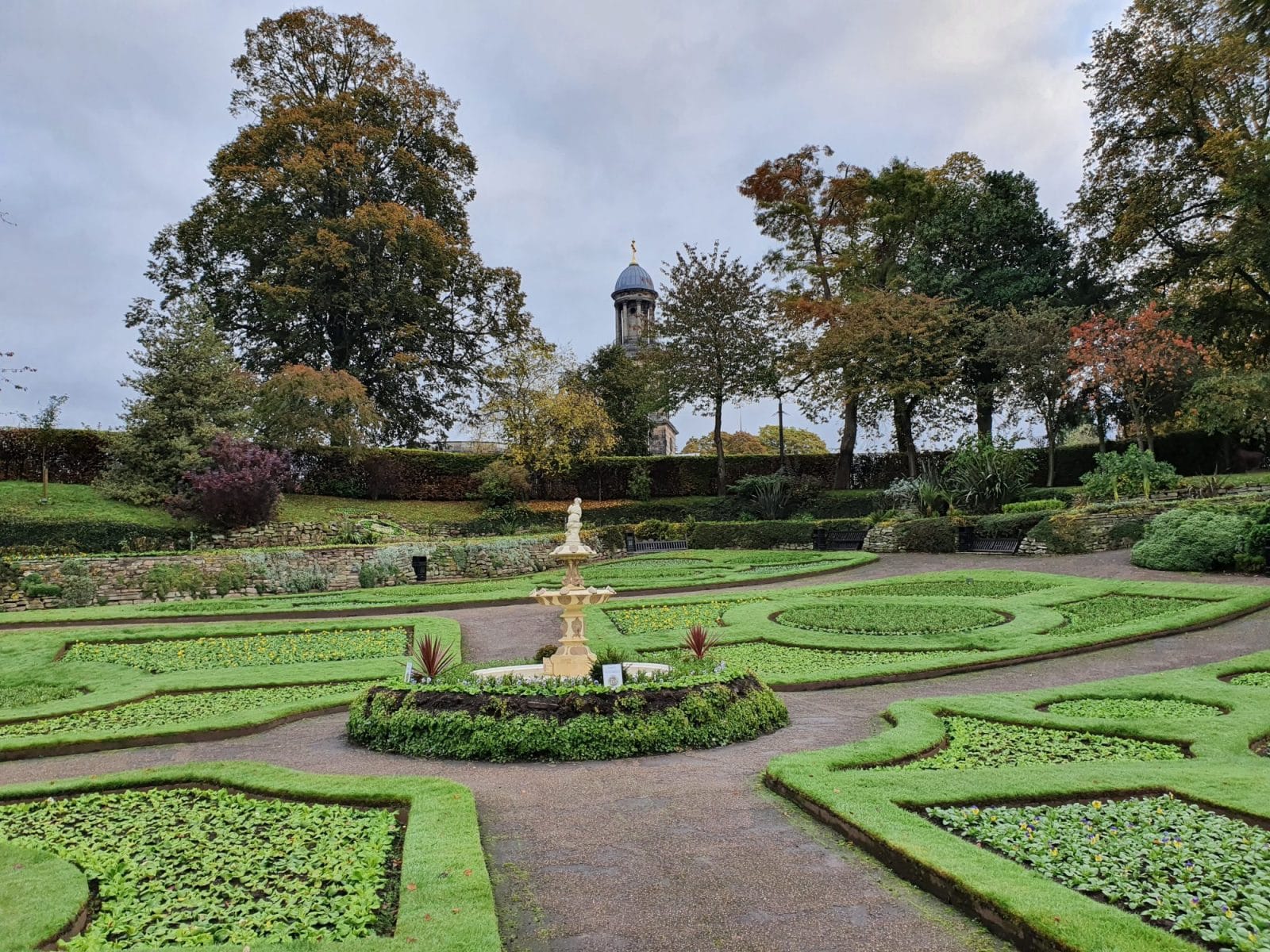
It has water features and a long pond through the centre. The colours are vibrant, and the features are eye-pleasing.
Walk Along The River Severn

The River Severn nearly surrounds Shrewsbury, as it’s on a horseshoe bend; the river marks the boundary of the town centre.
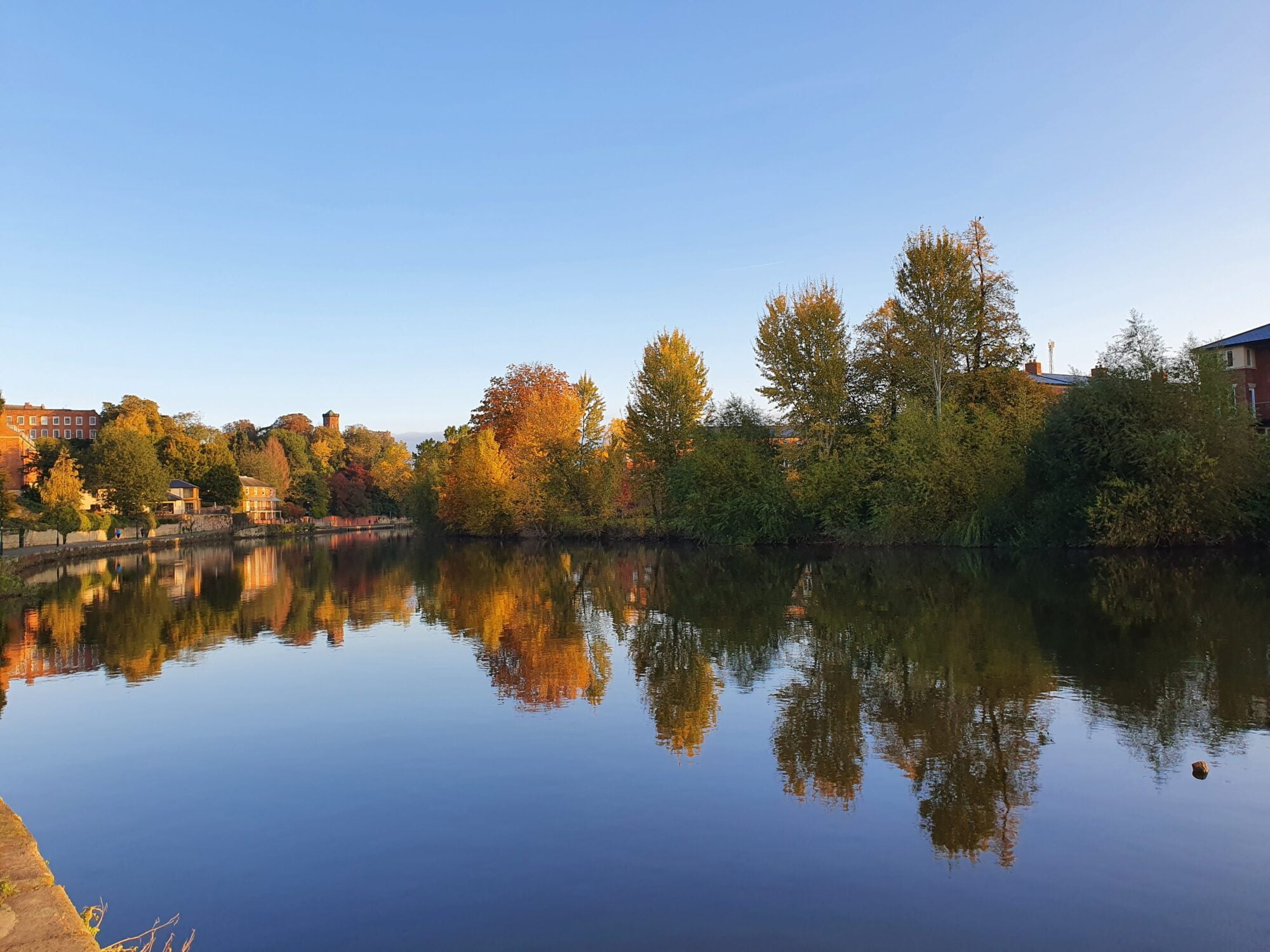
Roads and footbridges cross the river at various points, including the famous Welsh and English bridges. Its banks are a great place to have a walk along the river.
Welsh Bridge & Boat Trips

Located to the west of the centre is the Welsh Bridge, a masonry arch viaduct and a Grade II* listed building. The bridge was constructed between 1793 and 1795; it replaced the medieval St George’s Bridge.
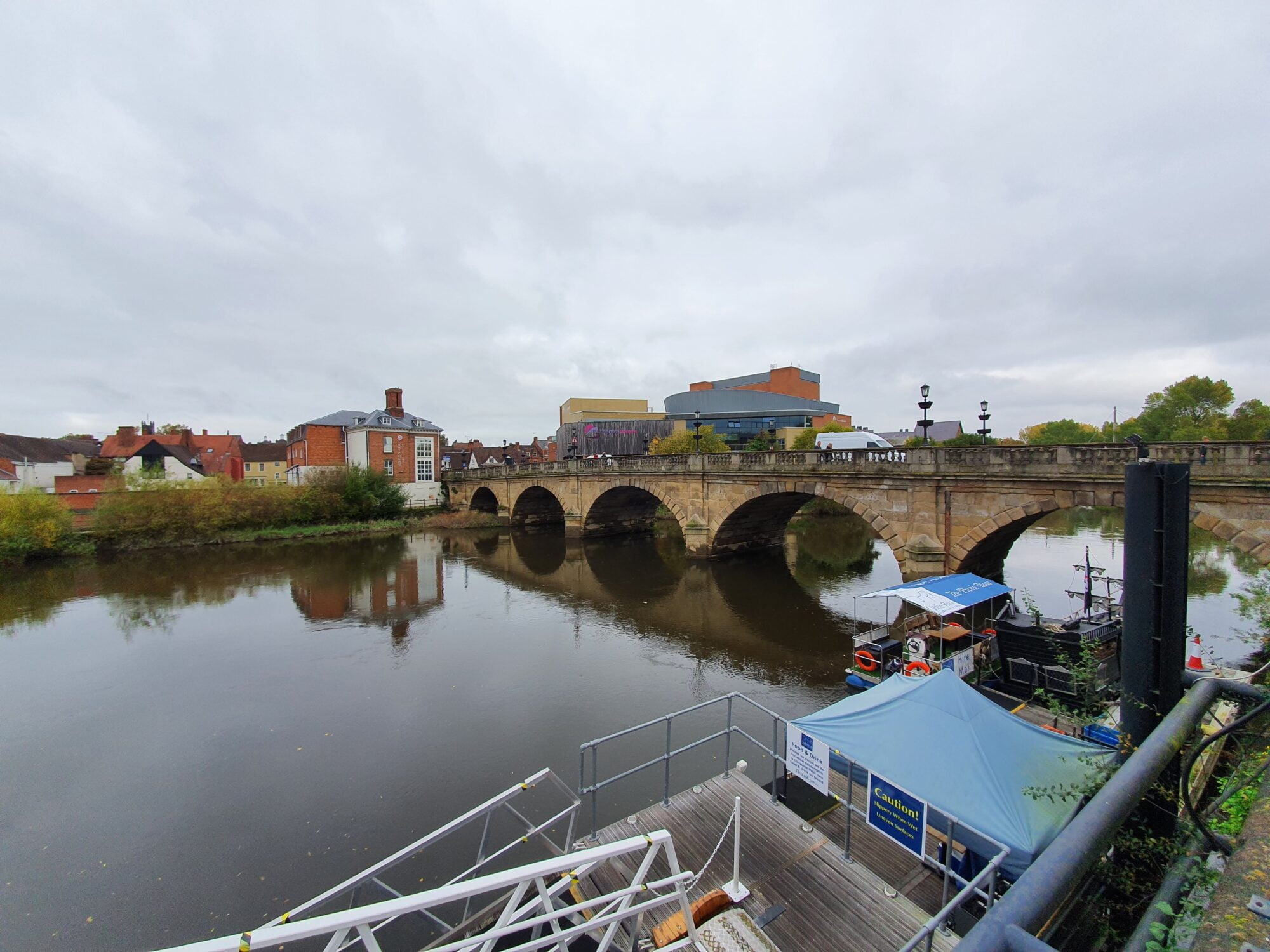
This is near waterfront restaurants such as Hickory’s, a smokehouse, and The Armoury. Boat trips on the Sabrina leave from near the Welsh Bridge. The Sabrina is a triple-deck passenger boat. It can carry 60 passengers.
The Old Market Hall
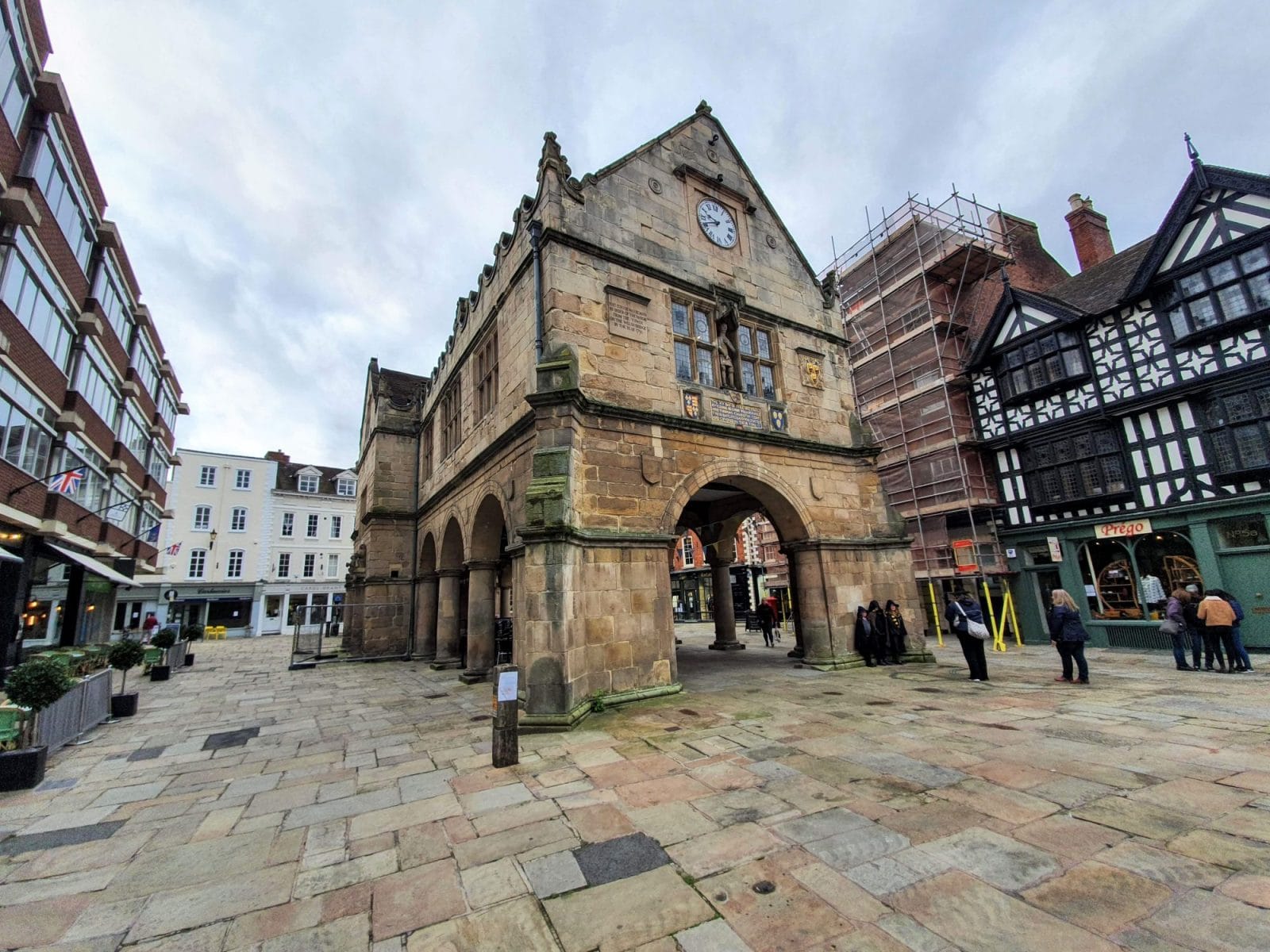
The Old Market Hall is in The Square, right in the town centre. They repurposed it as an independent cinema.
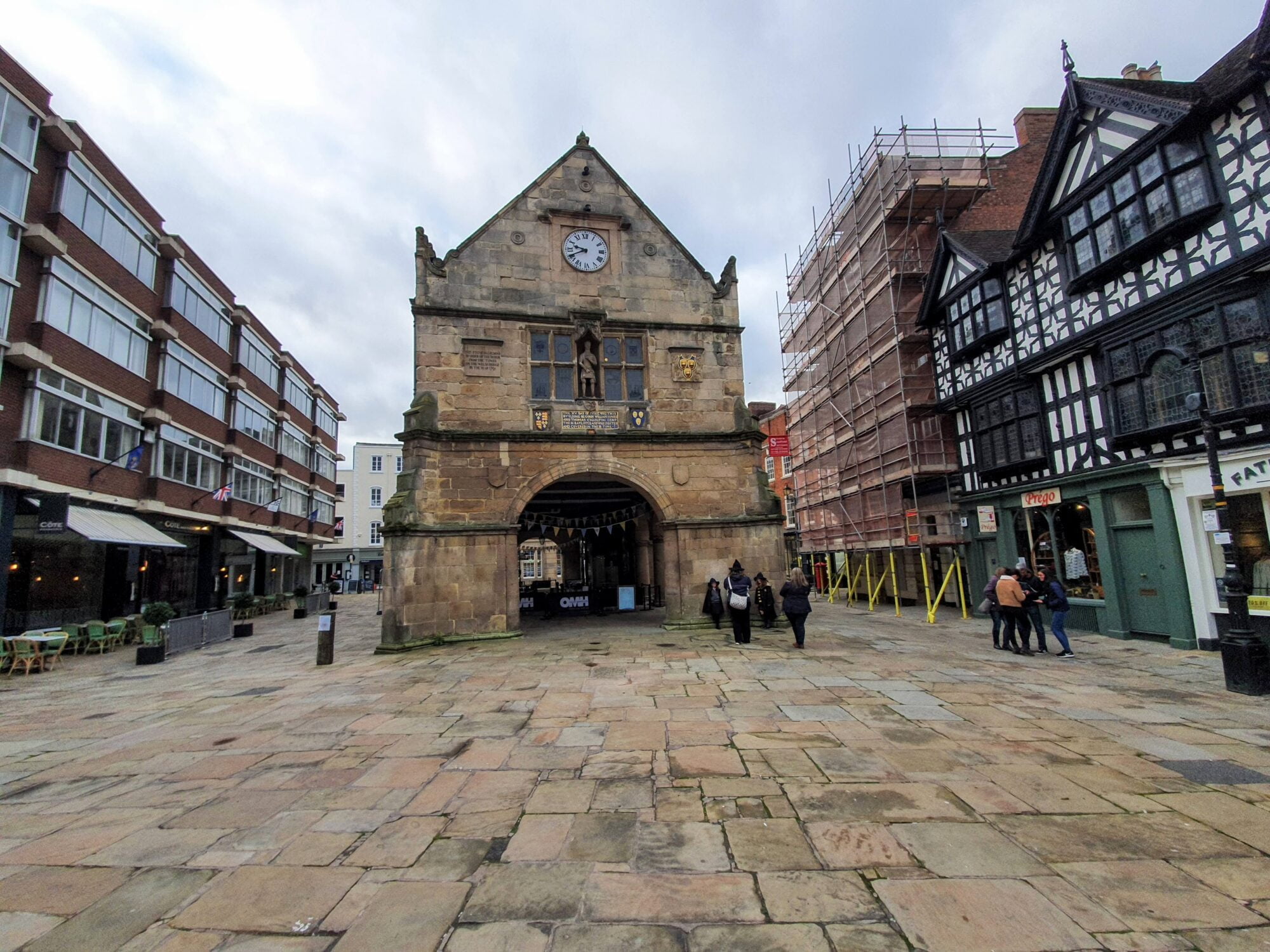
The Corporation of Shrewsbury built The Old Market Hall, or Market House, in 1596, and it is one of the town’s nicest buildings. Market buildings stood on the site before this was built, some dating back to 1260.
Statue of Charles Darwin at the Library
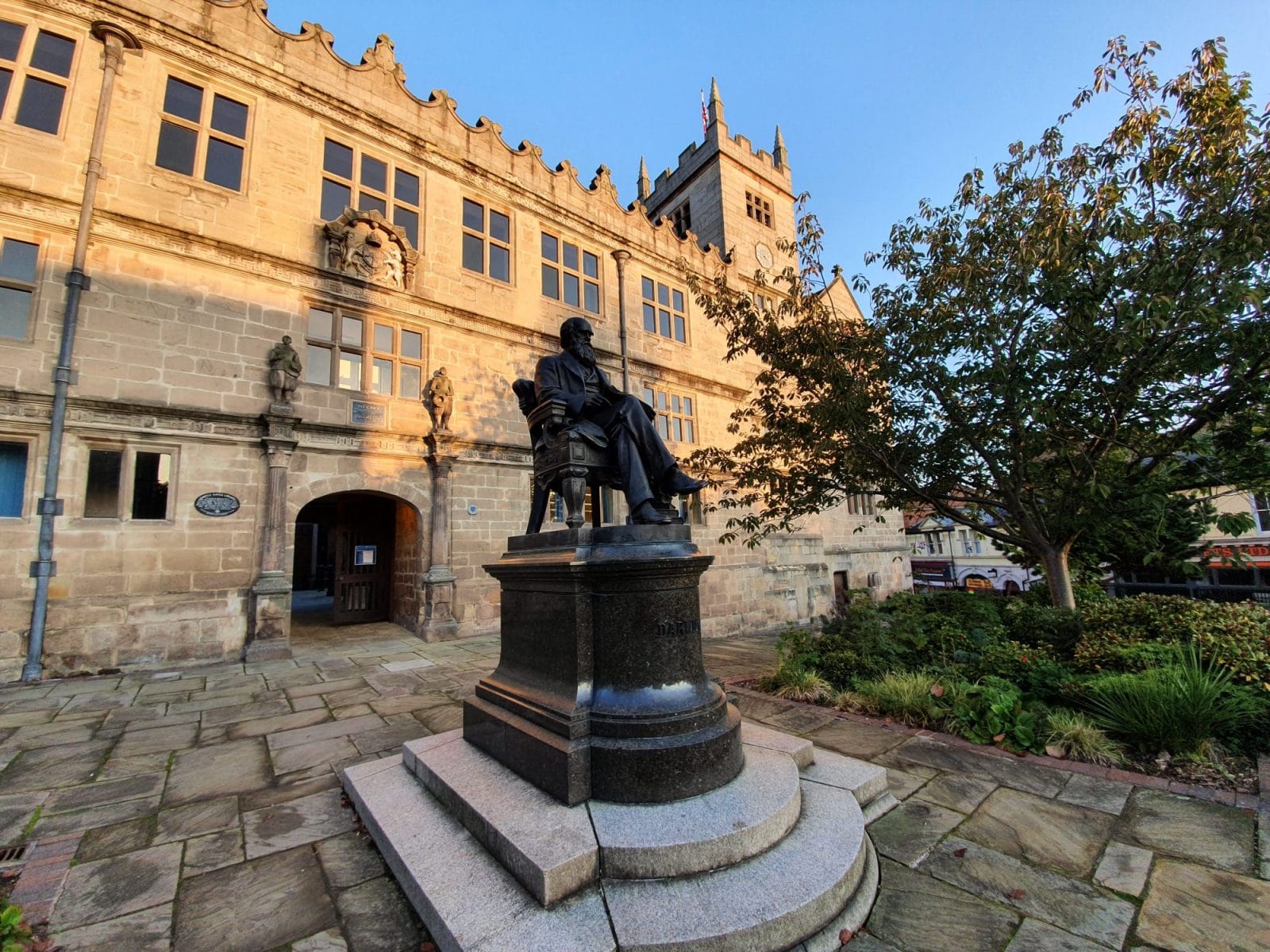
The Charles Darwin statue is located outside the front of the library. The statue was built to honour the scientist in 1897. Charles Darwin was best known for his work “On the Origin of Species” and his theory of evolution. He was born here and lived in Shrewsbury for many years.
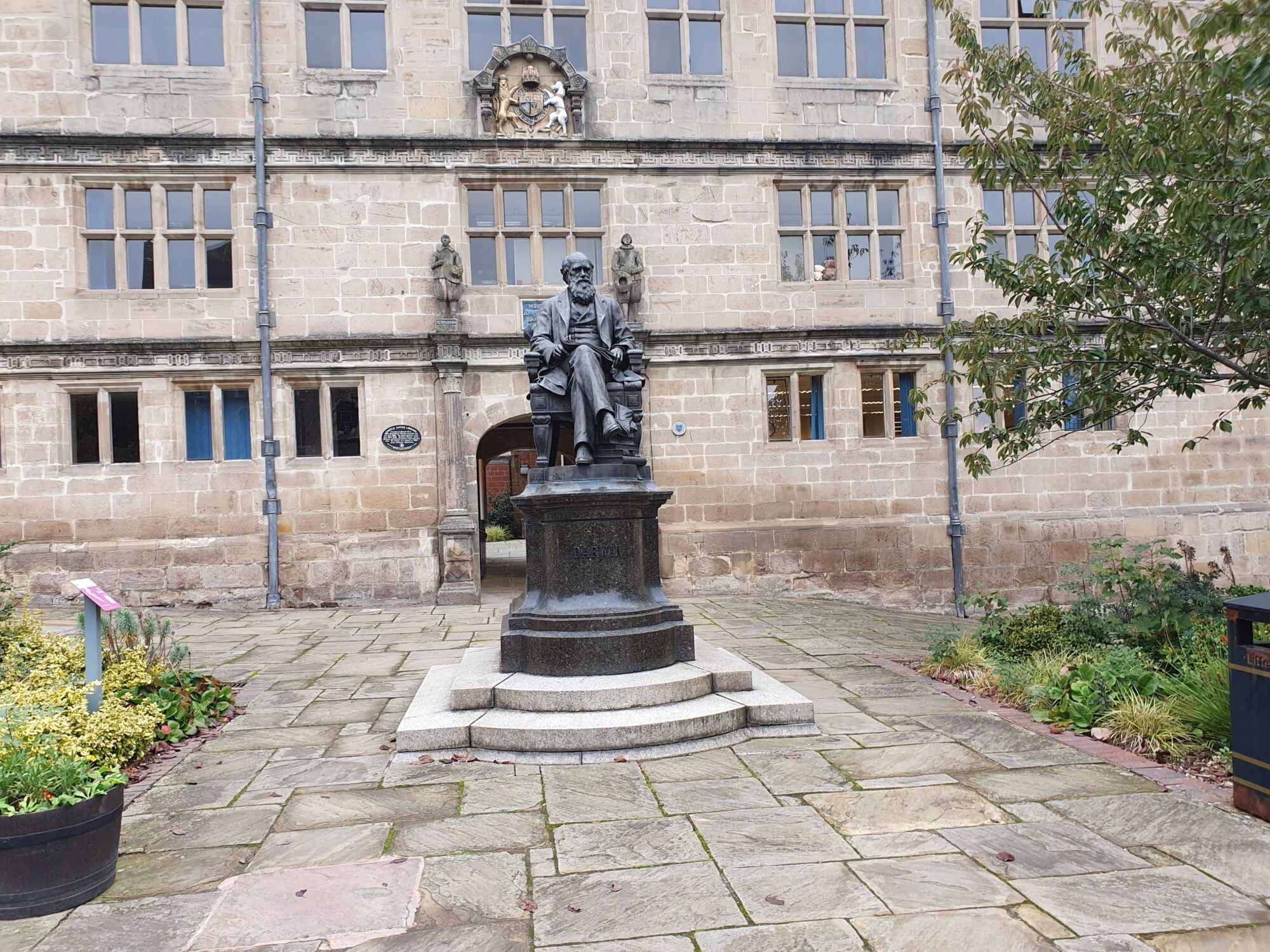
The original timber-framed library started as a school. Stone buildings were added from 1594 to 1630 to the special complex it is now. After the school moved, it became the library. The library is a Grade I listed building. You can join the Darwin Trail here to learn about the famous biologist and how he lived.
Cathedral Church of Our Lady
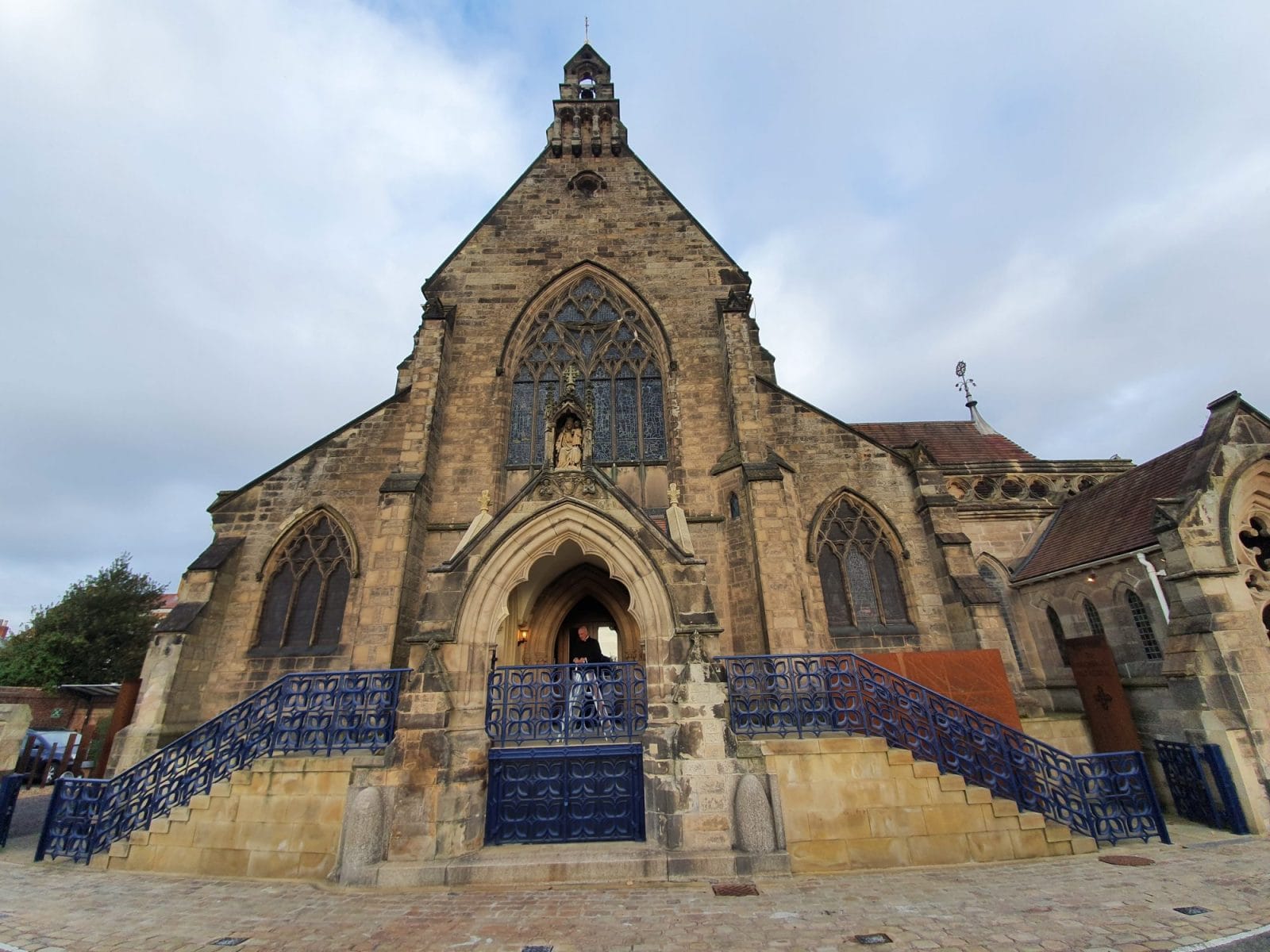
Known as Shrewsbury Cathedral, the Cathedral Church of Our Lady dates from 1856 and overlooks the horseshoe bend of the river.
Church of St Mary the Virgin
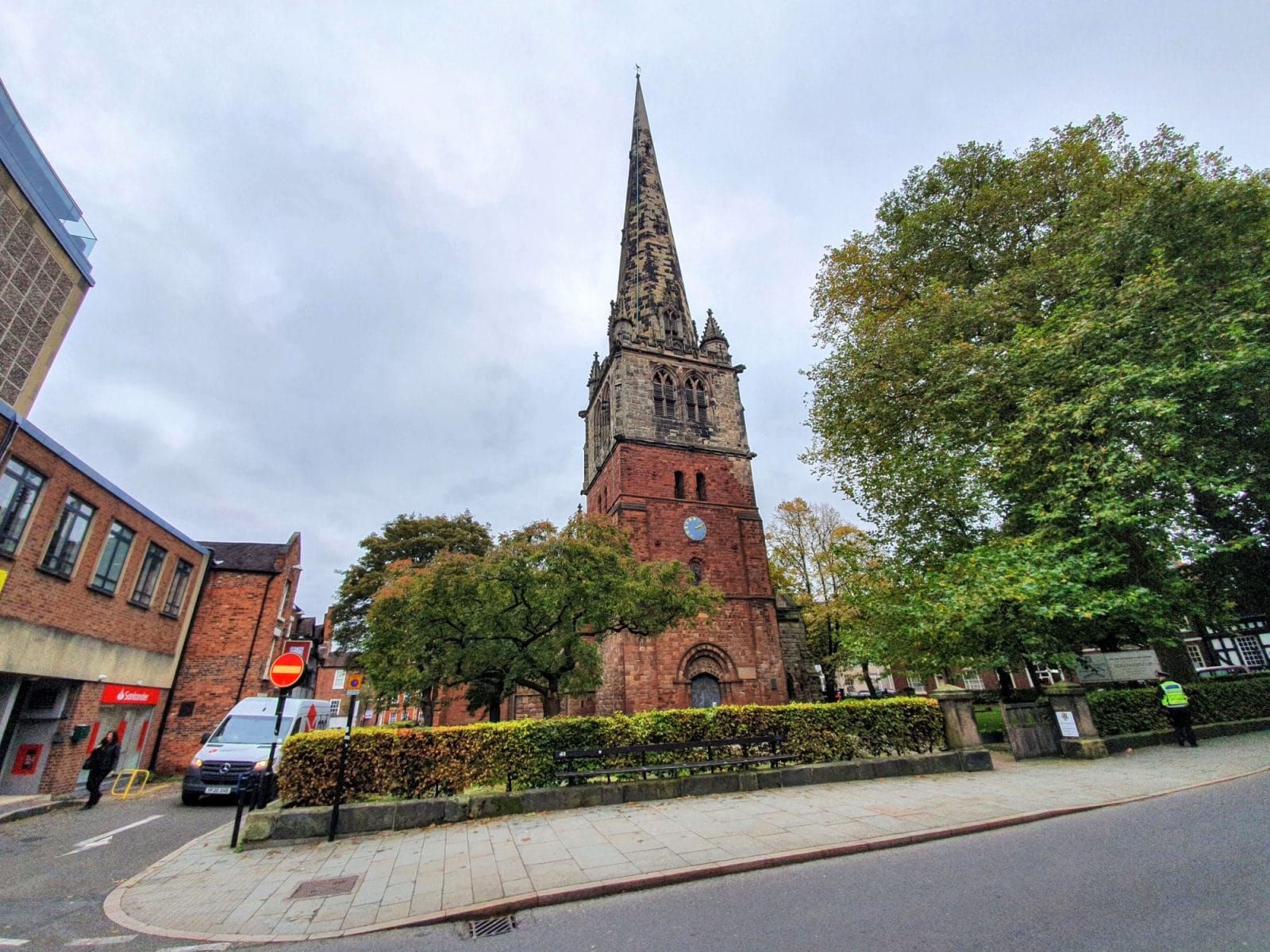
The Church of St Mary the Virgin was built in the Gothic style, and it’s renowned for its elaborate details. It is made from both red and white stone. The church has unique stained-glass windows. St Mary’s Church is a redundant Anglican church and a Grade I listed building.
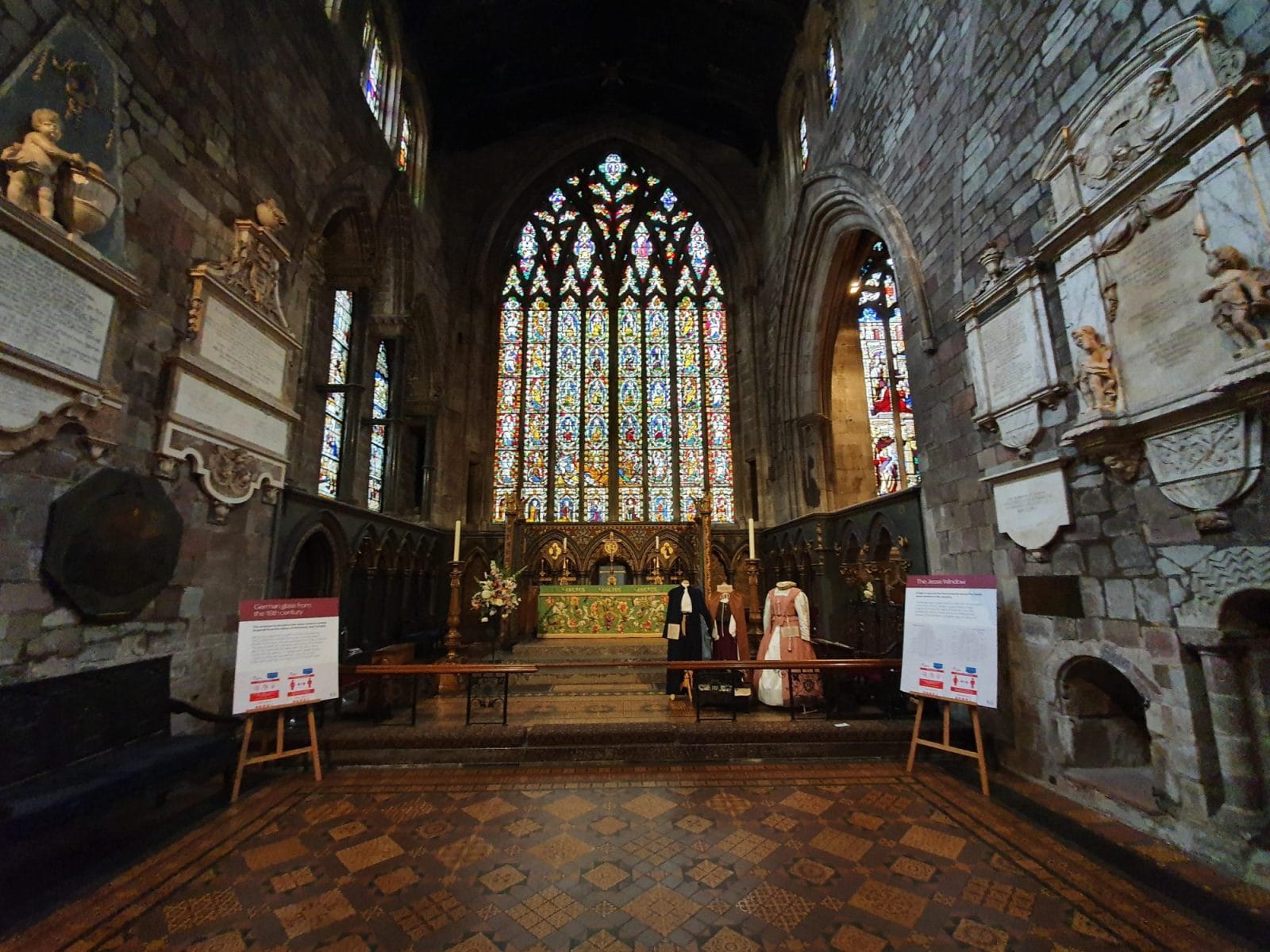
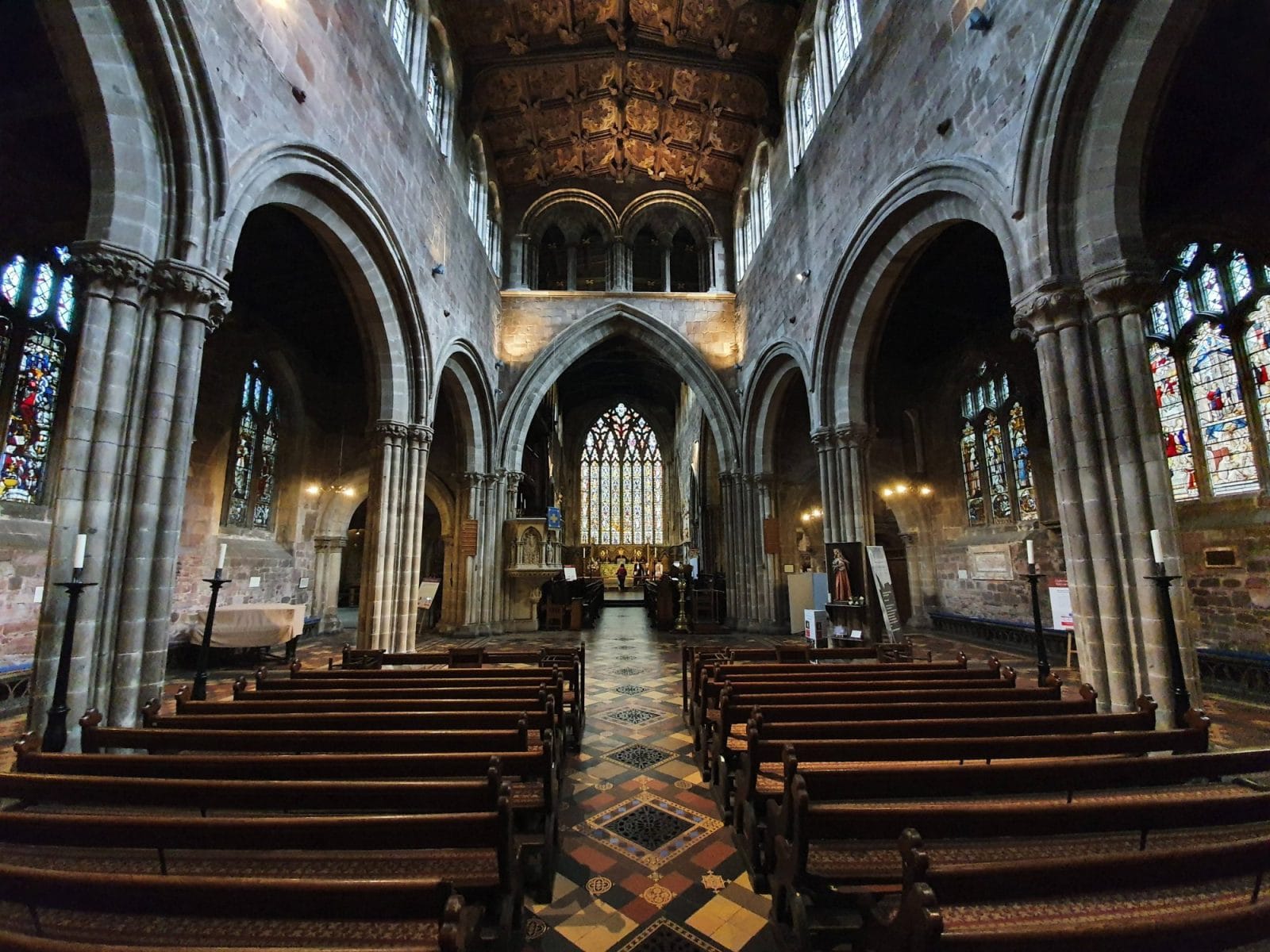
One highlight is seeing the Jesse Window, a historic stained-glass window.
St Chad’s Church
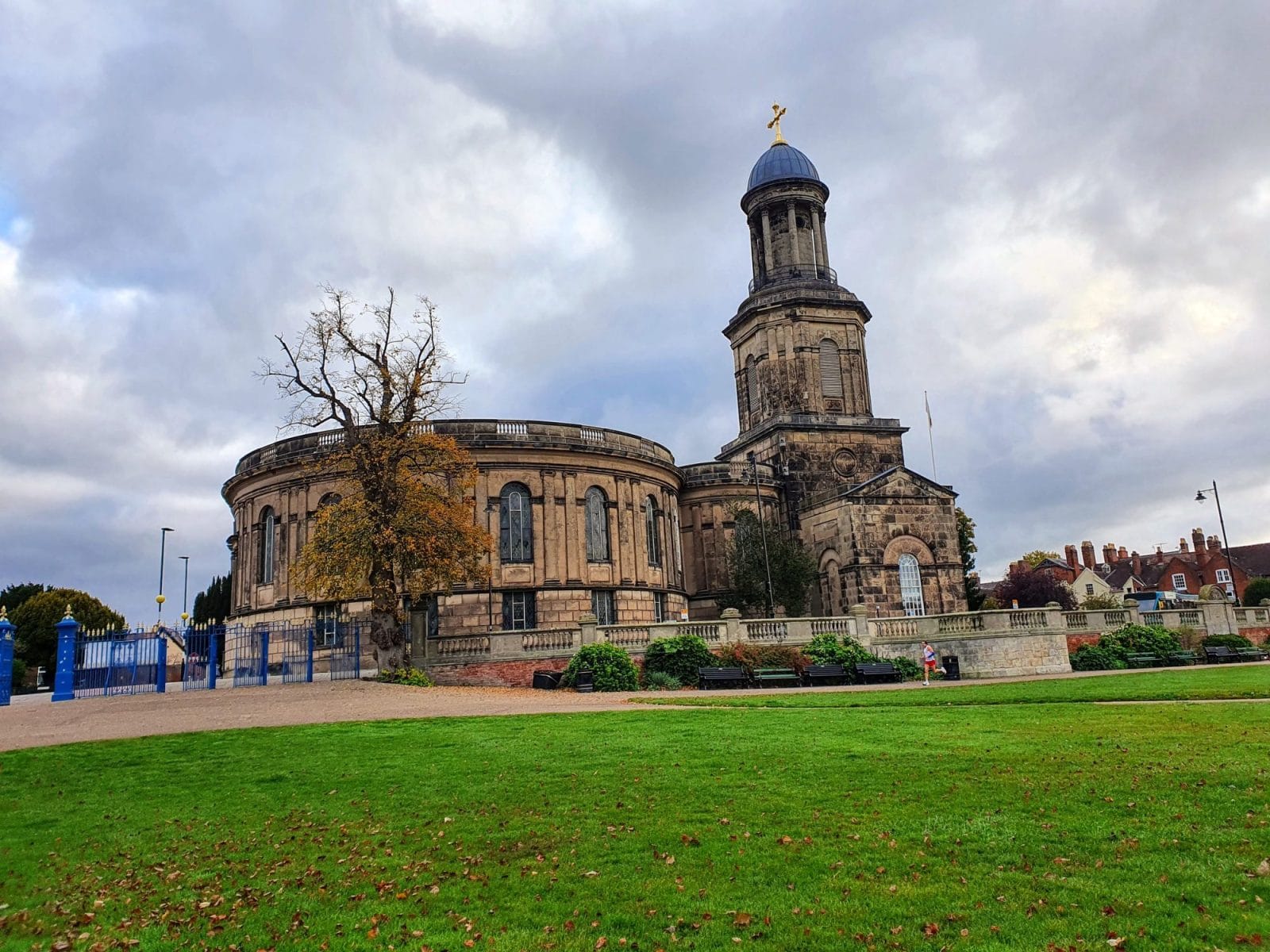
Since medieval times, a local church has been dedicated to St Chad, the first bishop of Mercia. The building has an architectural history, including Thomas Telford’s prediction that it would collapse. In 1788, the original building collapsed, as predicted. The replacement church is fascinating in design and is big. Charles Darwin was baptised here in 1809.
Local Produce at The Farmers Market
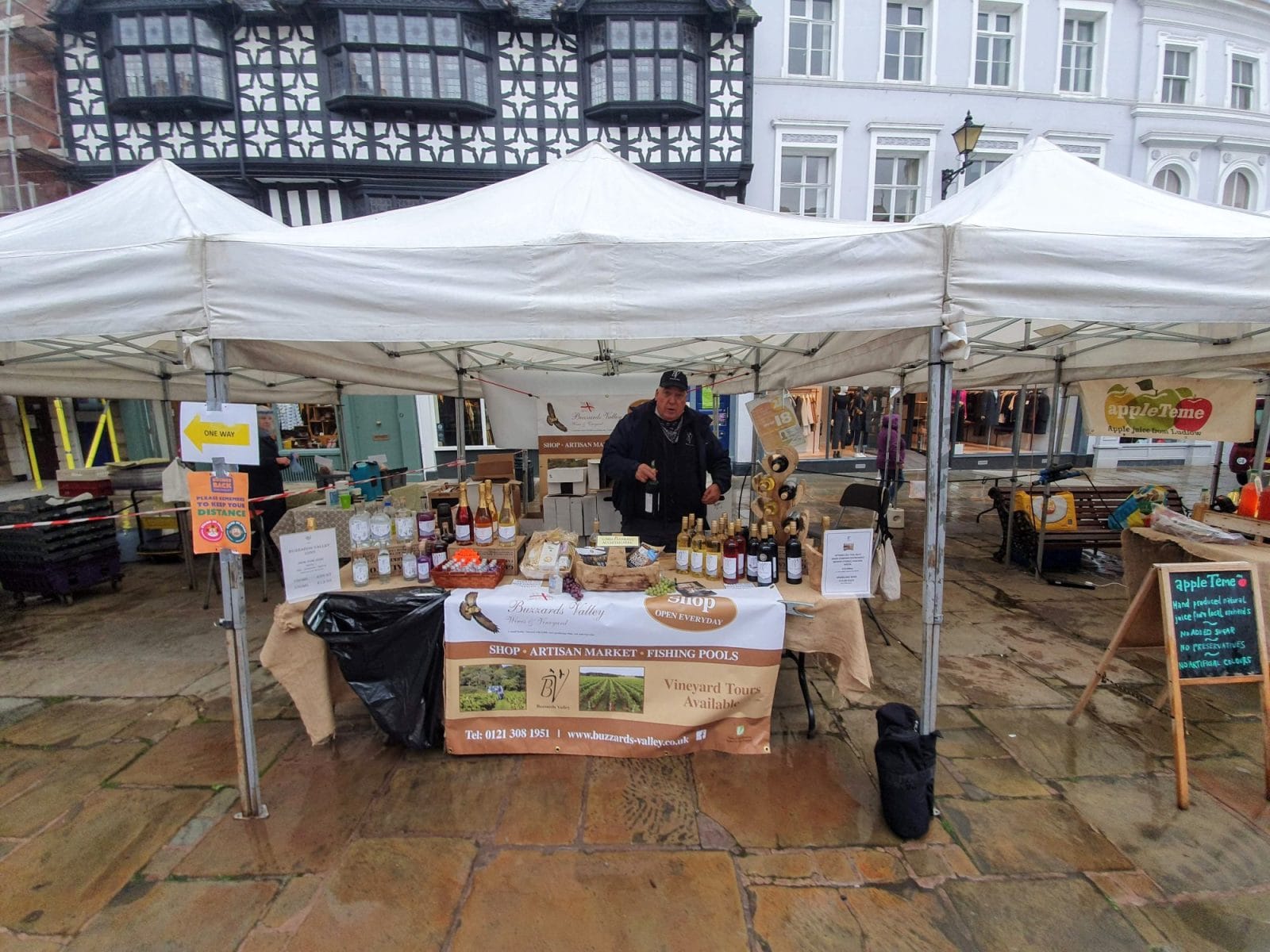
On the first Friday of the month, near the Old Market Hall, the Shrewsbury Farmers Market lets you buy local produce. The stalls sell a range of locally grown or produced food, from wine to honey.
Independent Shops
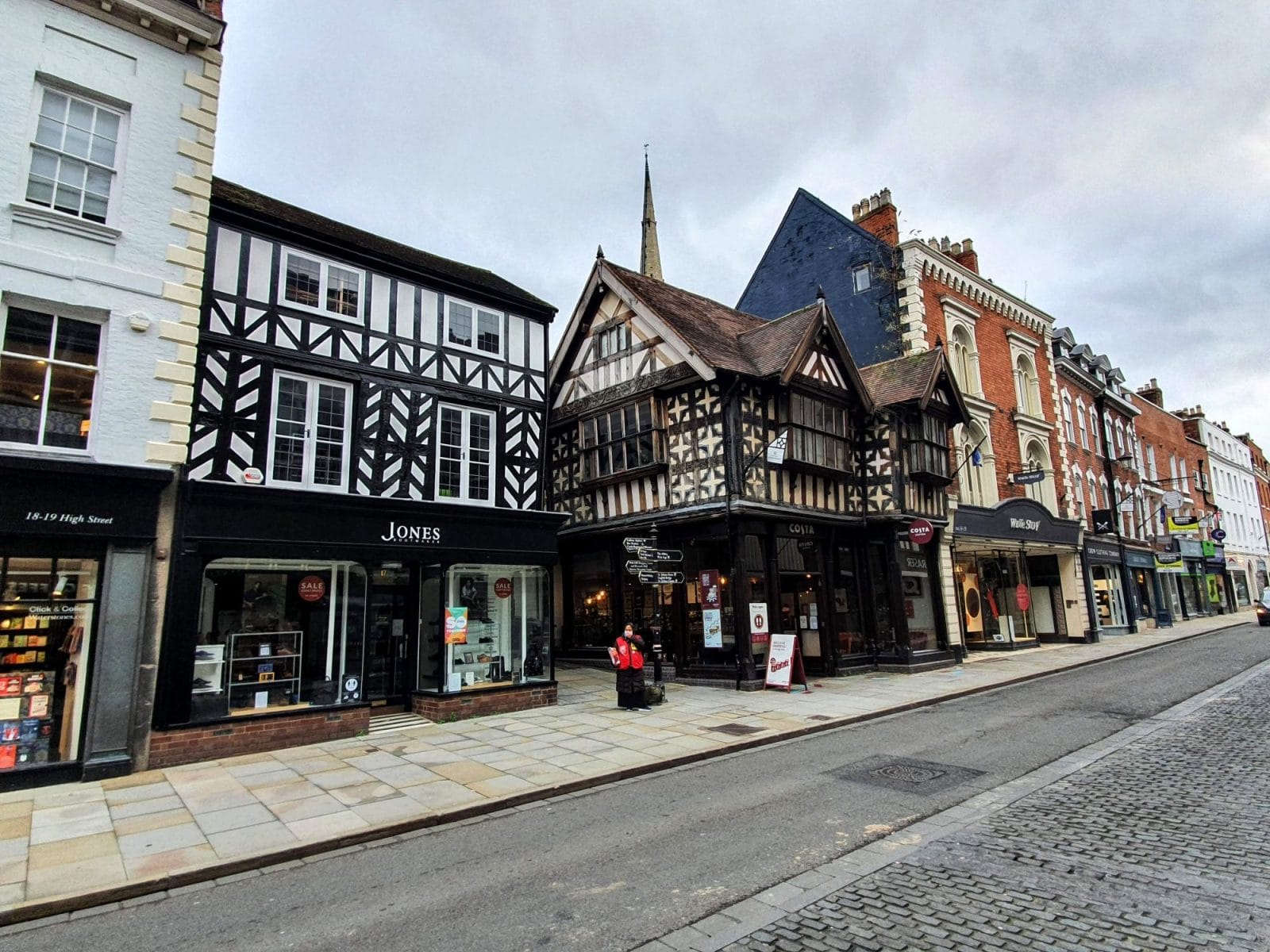
Shrewsbury has a range of chain and independent shops. One of my favourite parts of shopping here is what’s above the shop fronts. The historic facades of the upper-floor shops are fascinating.
Hiking & Cycling

Shrewsbury is an excellent place for hikers and walkers because it is on 2 major routes. First, it is on the Severn Way, a long-distance walking path that follows the entire River Severn.
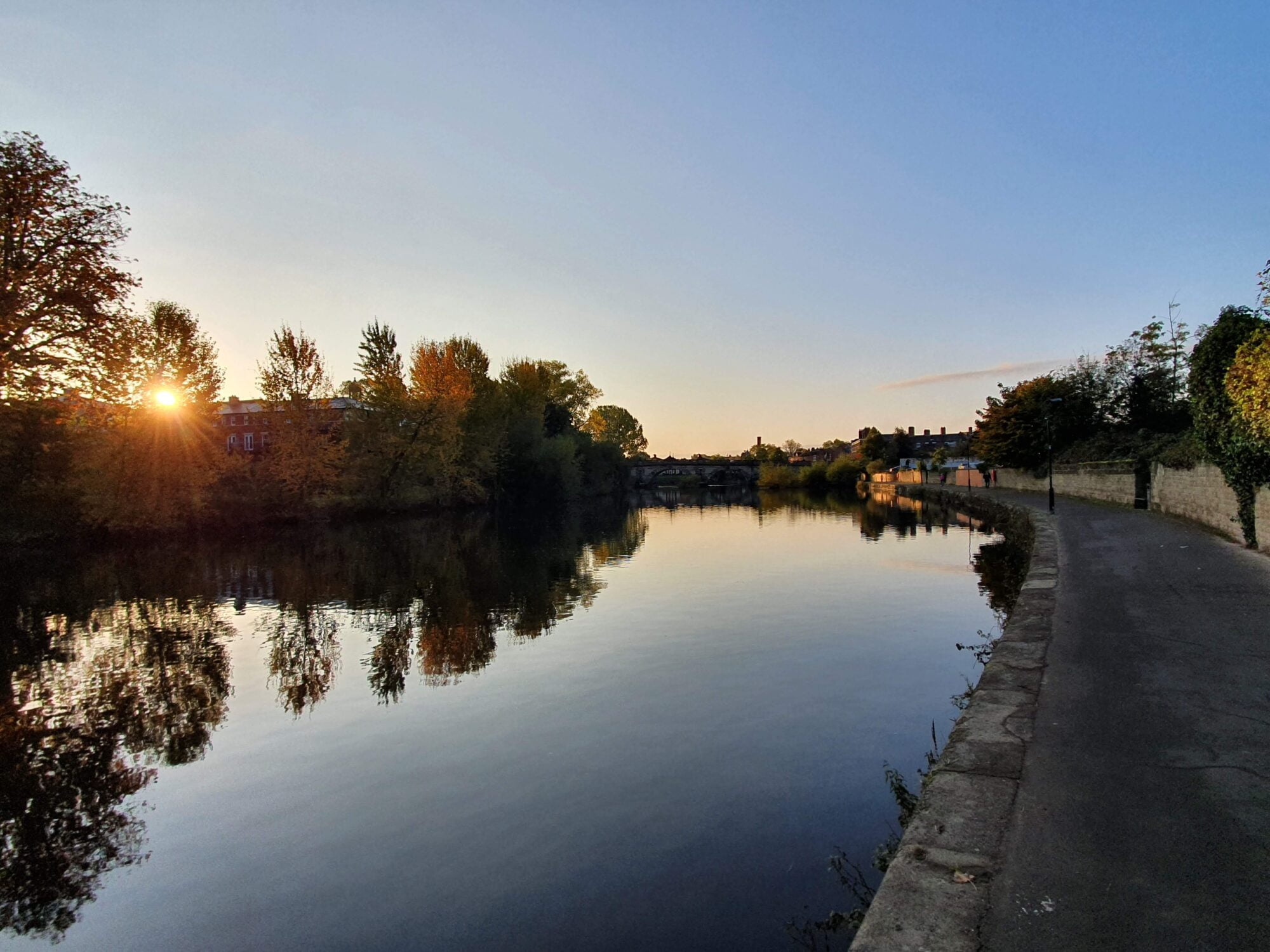
For cyclists, there are bike shops and places to cycle in the local countryside. It is on Sustrans Cycle Route 81, a 118-mile-long route from Aberystwyth to Wolverhampton.
Eat Or Drink Out
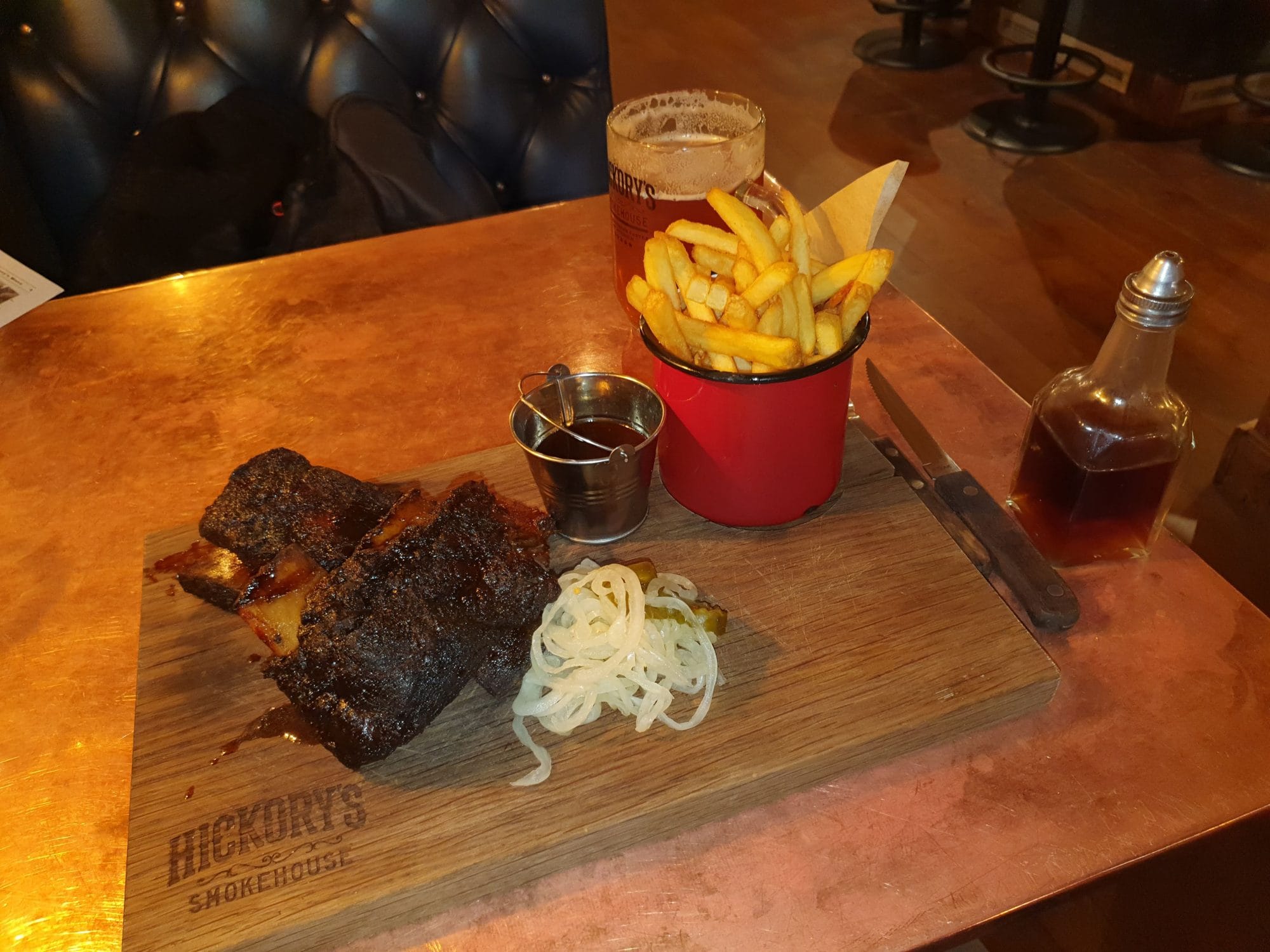
On my trips, I found great places to eat or drink. My favourite was Hickories for food, as the barbecue was delicious. I also enjoyed beer at the local historic pubs.
More Sights & Historic Places in Shrewsbury
Abbey Gardens
Between the abbey and the River Severn, you can find Abbey Gardens, a scenic place to walk or sit and enjoy the park with river views. The garden has ornate features and is a haven for wildlife, most notably kingfishers.
Train Station
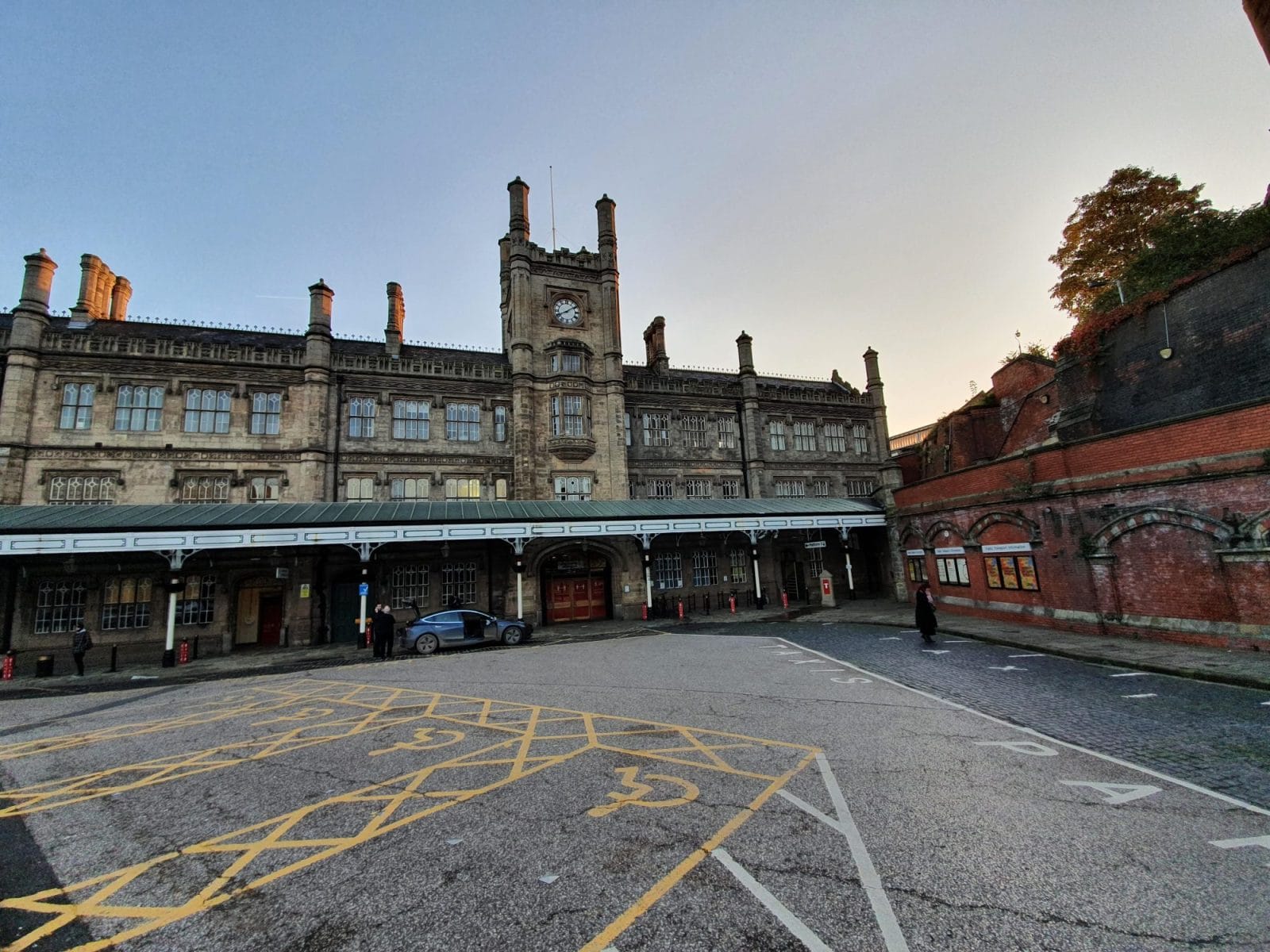
In most places, train stations are bland, but Shrewsbury Railway Station is special and pleasing to the eye. Built in 1849 and added to in 1900, it is now a Grade II-listed building with a clock tower. The style is imitation Tudor, which comes complete with carvings of Tudor-style heads around the window frames. The station is best viewed up close or from Dana Walk alongside the castle walls.
St Alkmund’s Church
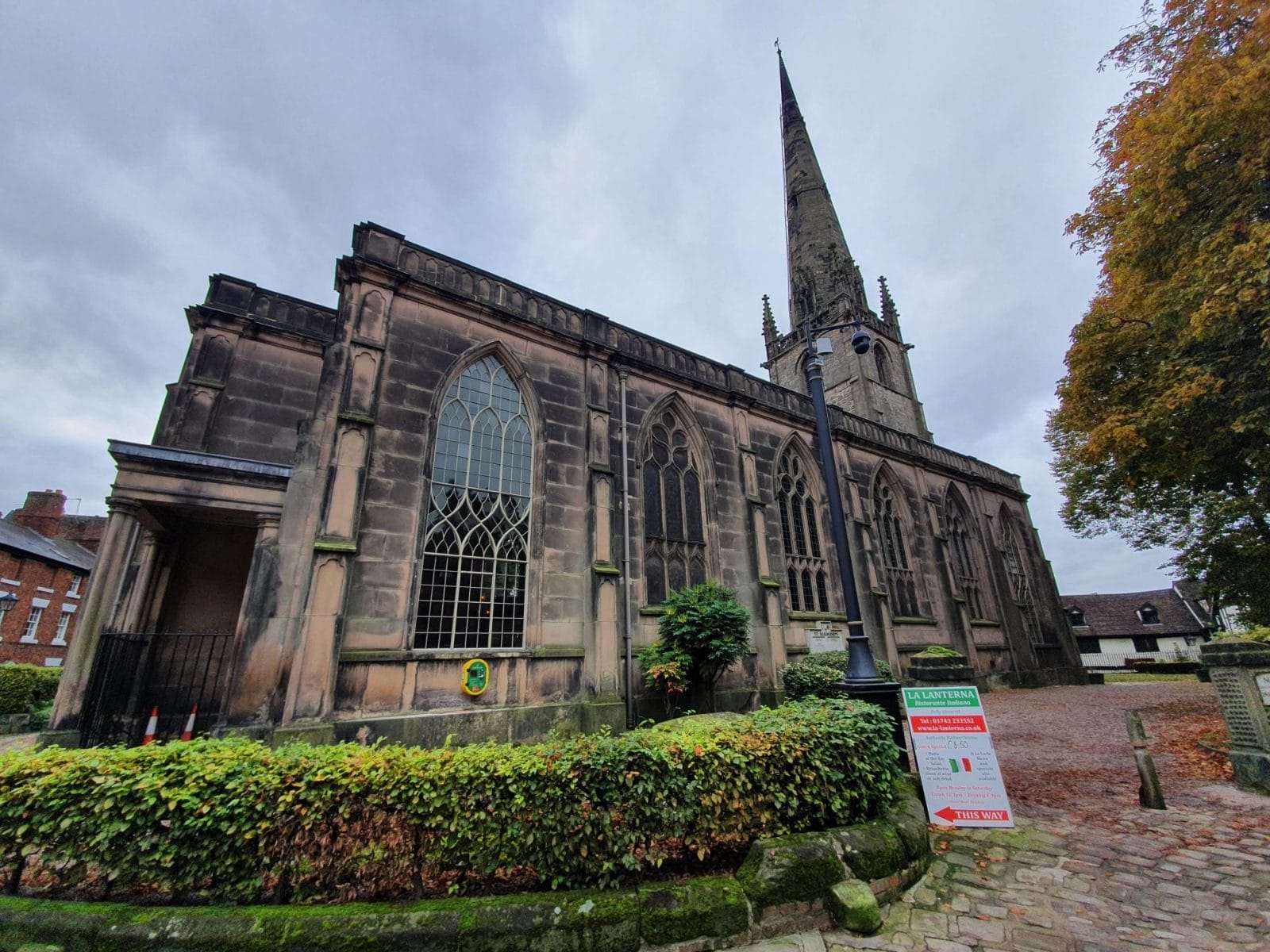
The intriguingly named St Alkmund’s Church is over 1100 years old, founded in 900. It was built on the highest point in the town. The current church is part medieval and part Georgian. Its tower and spire are 56 metres high and were built in 1475 in the Perpendicular style.
St Julian’s Church
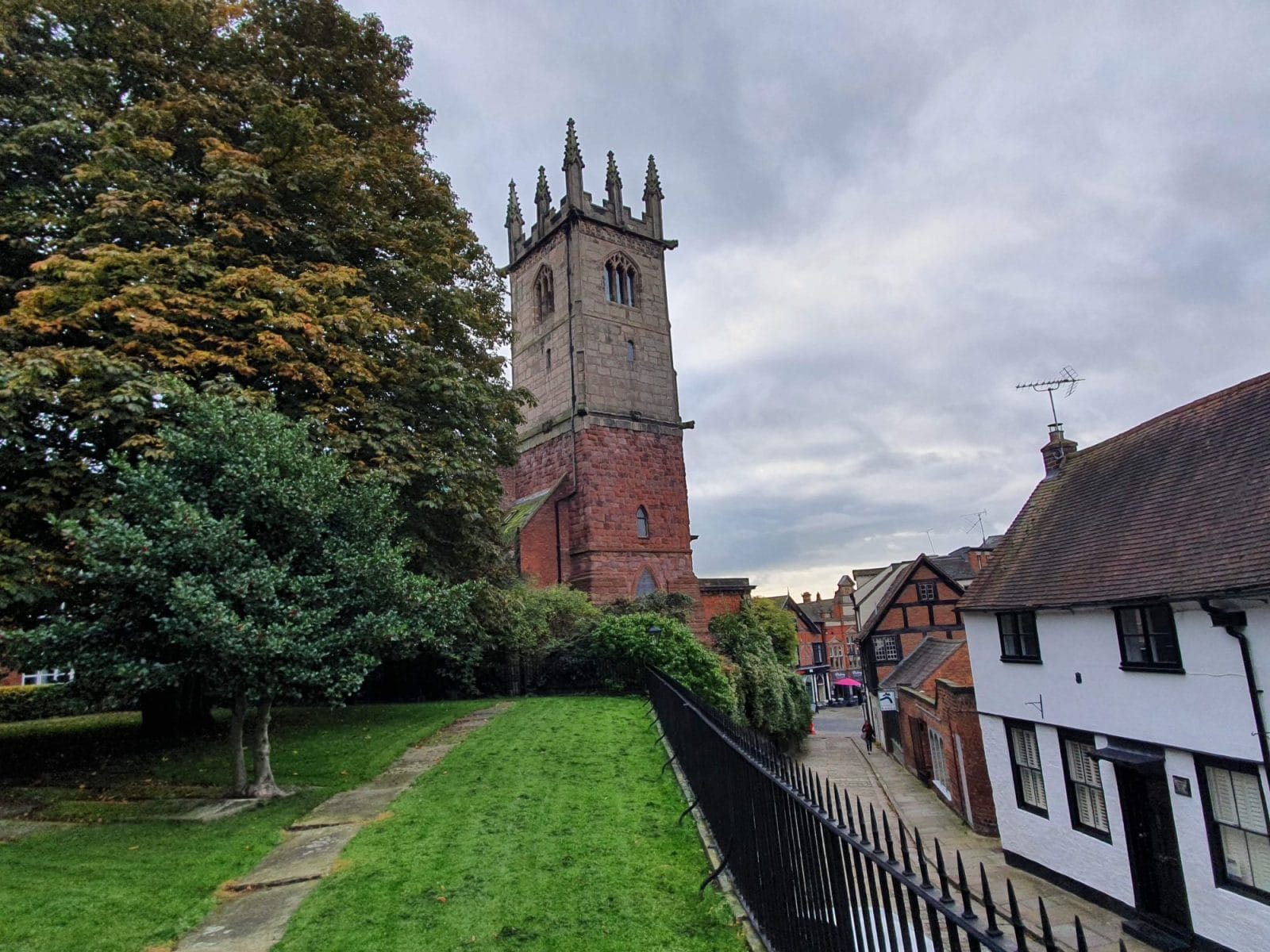
Near St Alkmund’s is St Julian’s Church, which was built on the foundations of a Saxon church. Only the 12th-century tower remains of its medieval origins. This church is distinctive as it was built with red and white sandstone.
United Reformed Church
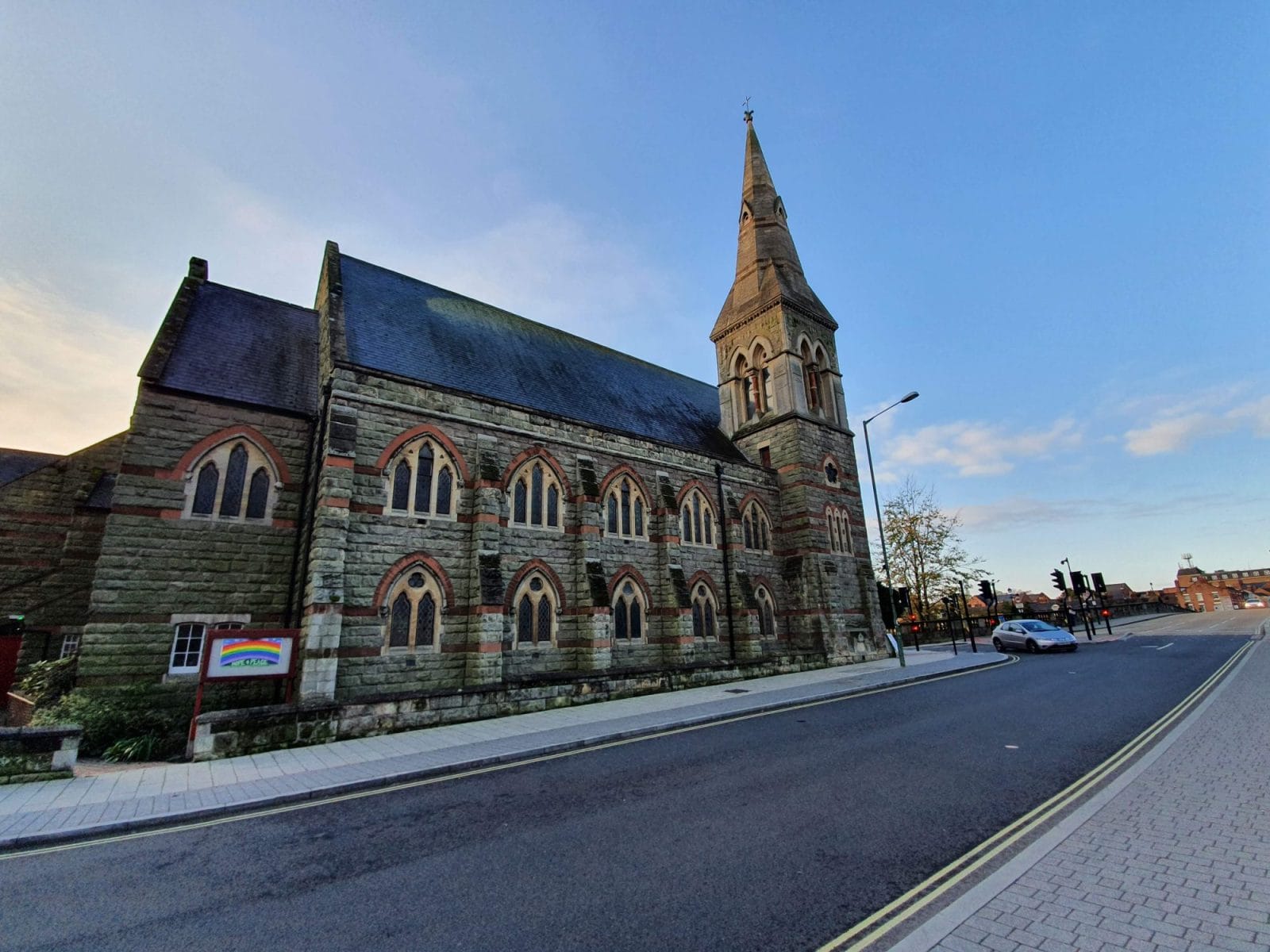
Near the English Bridge is the United Reformed Church, dating back to 1863. This 19th-century nonconformist chapel is a Grade II-listed building. Its unique appearance comes from the stones it was built with: white ashlar, red sandstone bands, and a Welsh slate roof.
The English Bridge
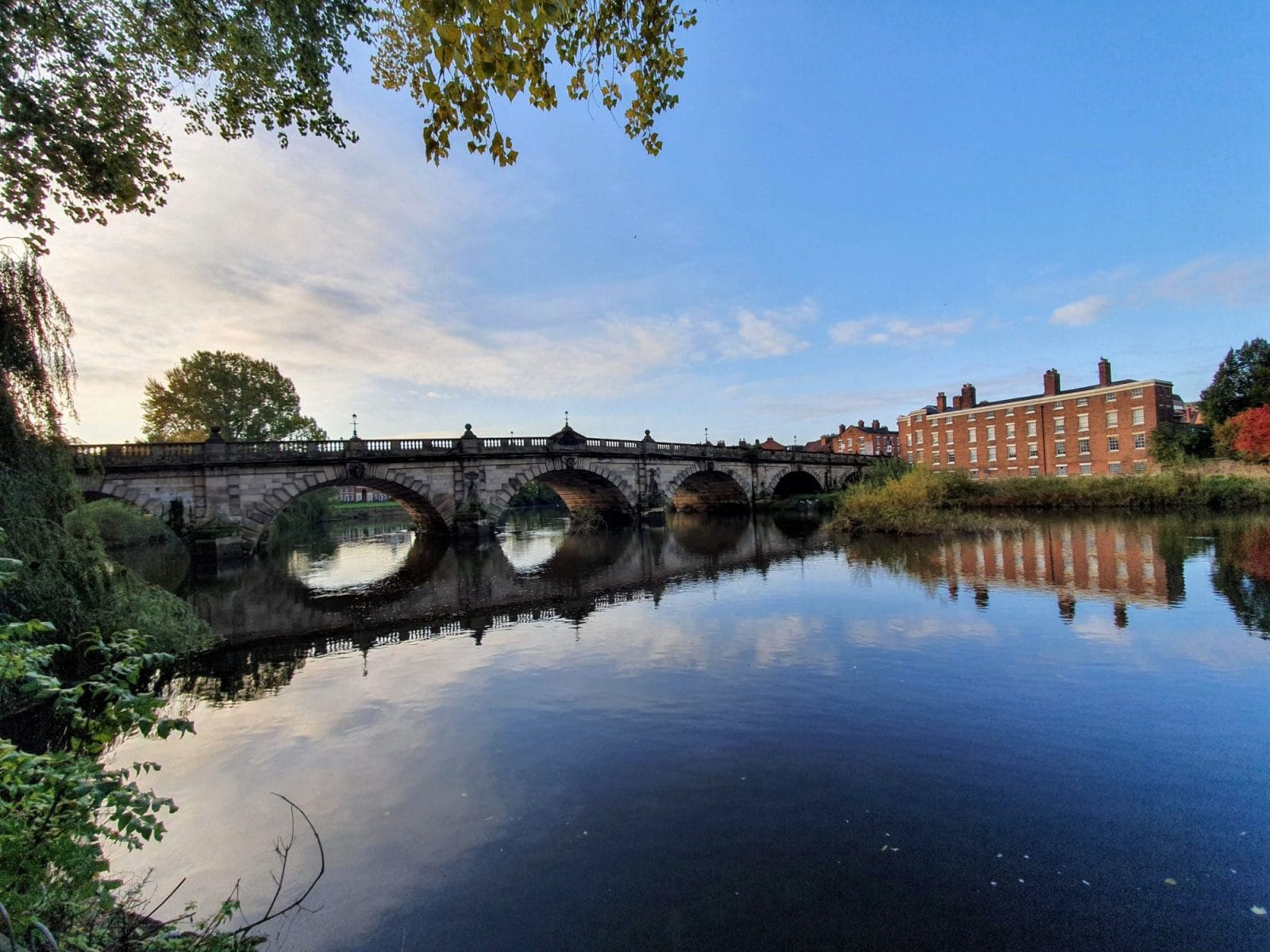
Located east of the town centre, on the way to the abbey, the English Bridge is a masonry-arch viaduct and a Grade II* listed building. The English Bridge is a masonry-arch viaduct and a Grade II* listed building. It was rebuilt in 1926 using masonry from the 1774 stone bridge; Queen Mary officially opened it in 1927.
Drapers’ Hall
Drapers’ Hall is a black-and-white timber-framed building that has been a meeting place for local drapers since 1485.
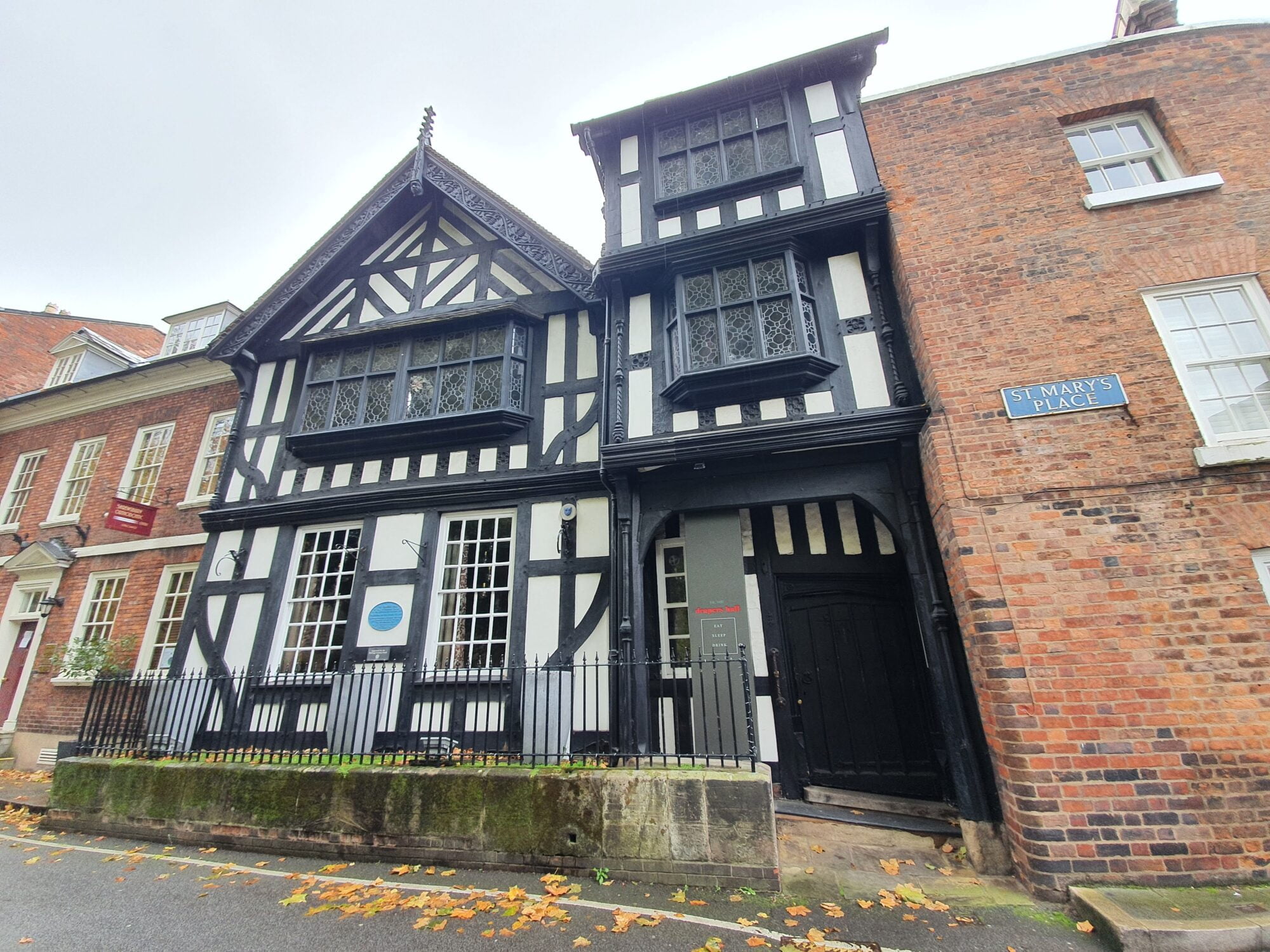
The company was prosperous in the Welsh cloth trade and was an important part of the town from the 1500s until 1700. Nowadays, Drapers Hall is a hotel and restaurant where you can still see the original 17th-century oak furniture.
Town Wall Tower
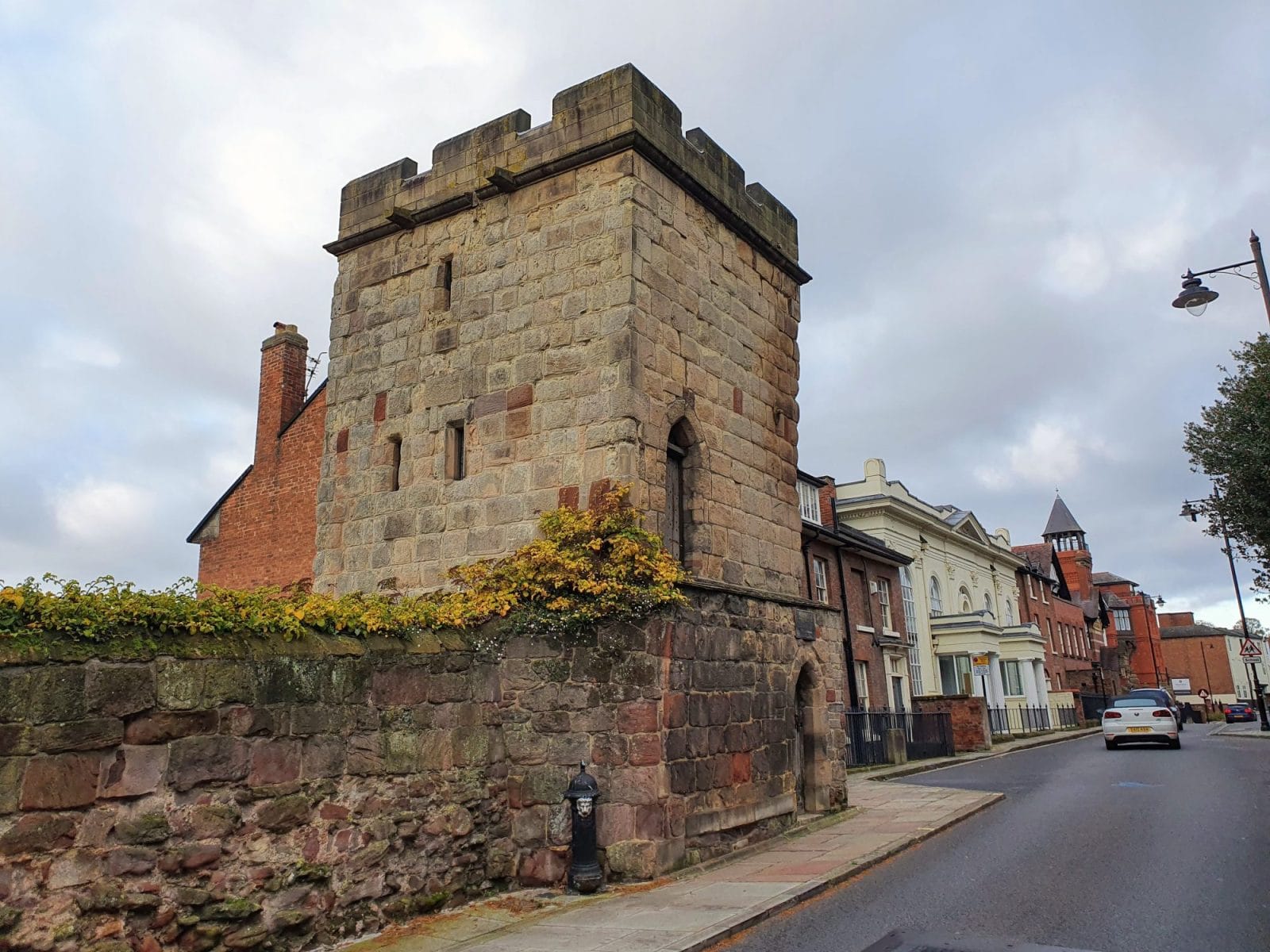
This 14th-century stone watchtower was part of the town’s walls and is one of the few surviving sections. Shrewsbury’s town walls were strengthened during Henry III’s reign to help defend the town from Welsh attacks. This tower, owned by the National Trust, is open on a limited number of days throughout the year.
The Gateway House
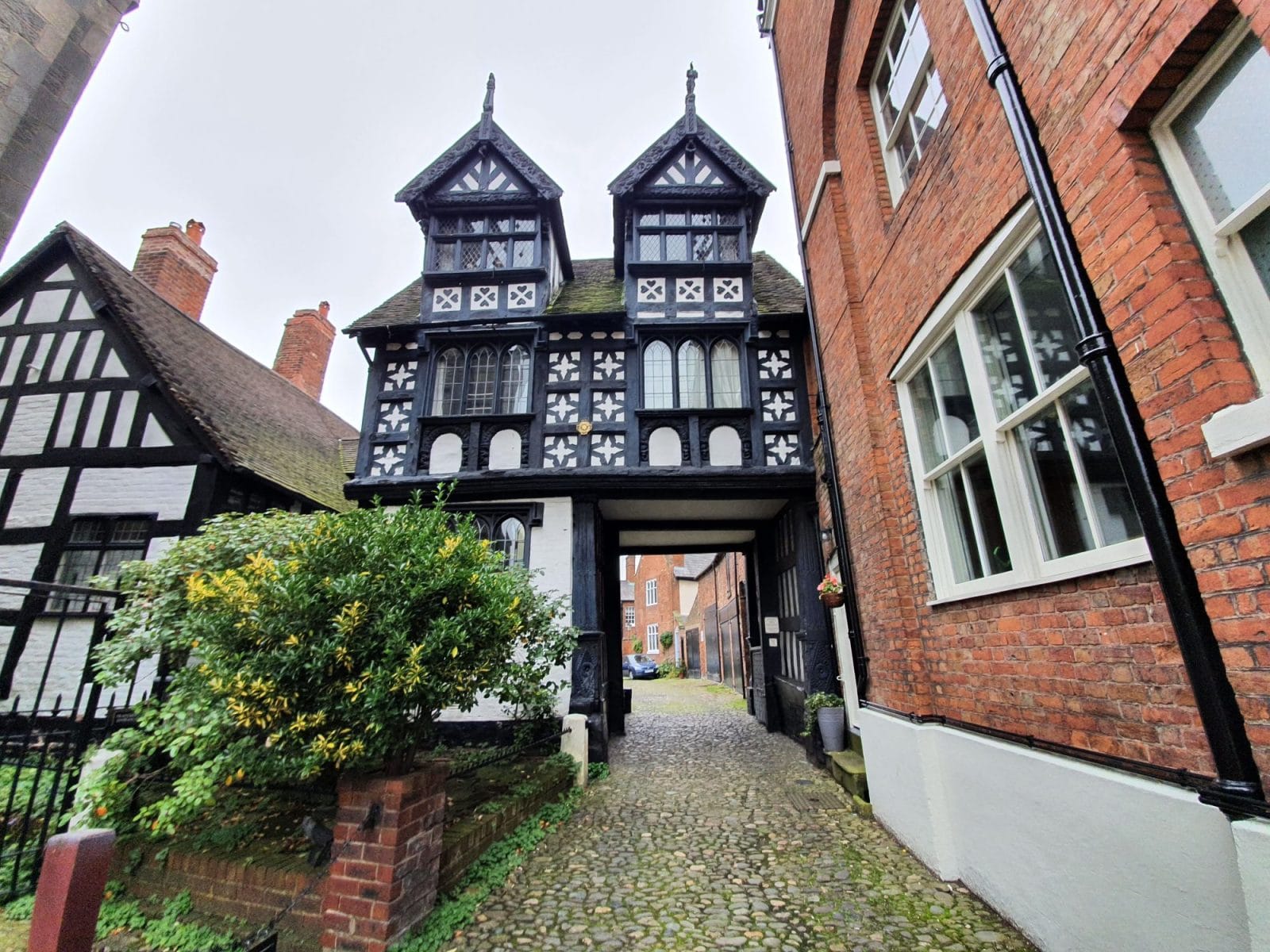
Both the Gateway House and the Council House are hidden away on the left as you head uphill from the castle. Both have a blue plaque.
The timber-framed gateway, built around 1610, was the entrance to the 16th-century council house. King Charles I stayed at the property in 1642, when the English Civil War began.
Castle Gates House
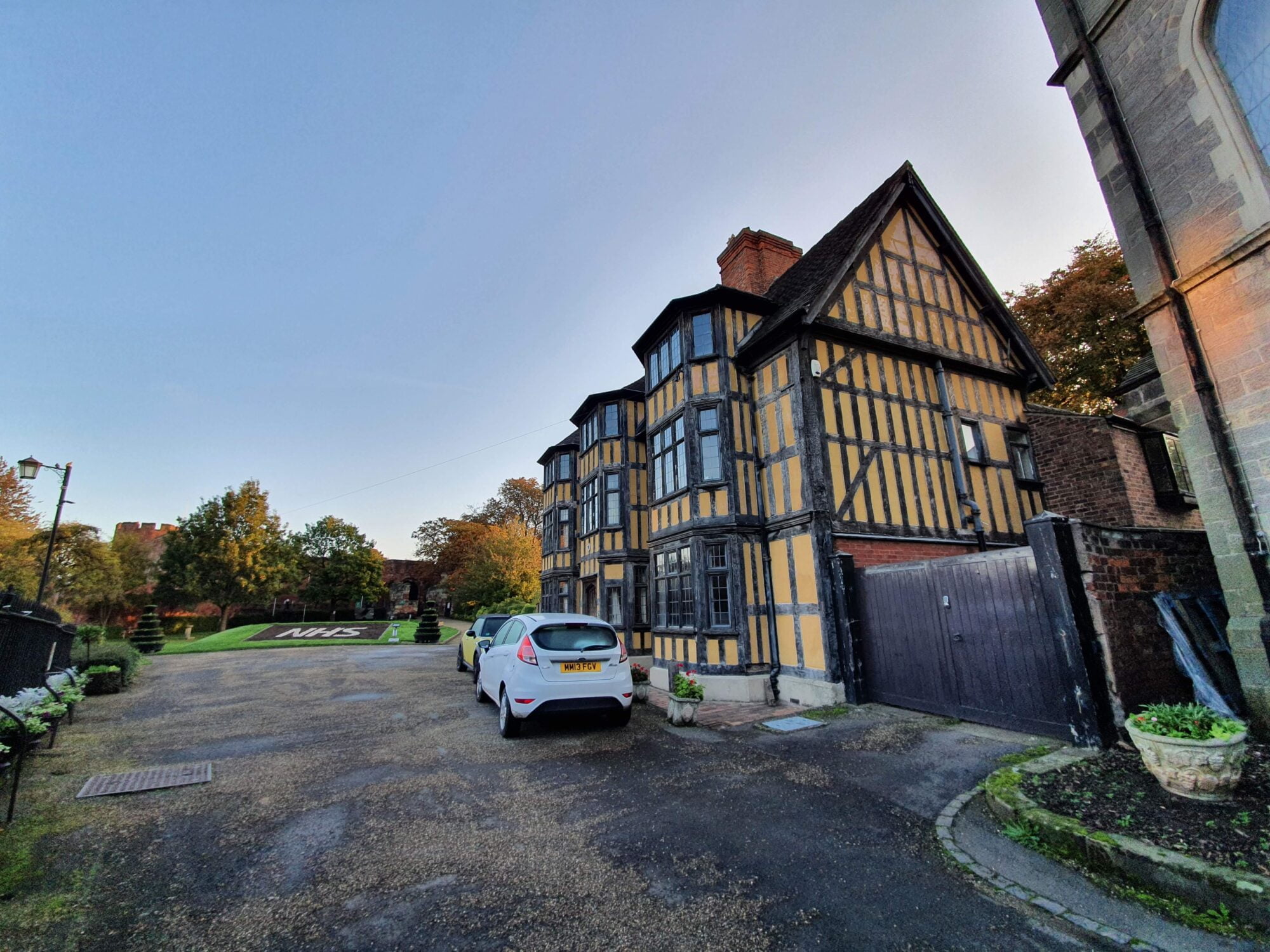
Castle Gates House, near the castle entrance, is a timber-framed building painted yellow. The Grade II listed building dates from the late 16th century. This was originally elsewhere and was moved here in 1702 by the Earl of Bradford.
Rowley’s Mansion
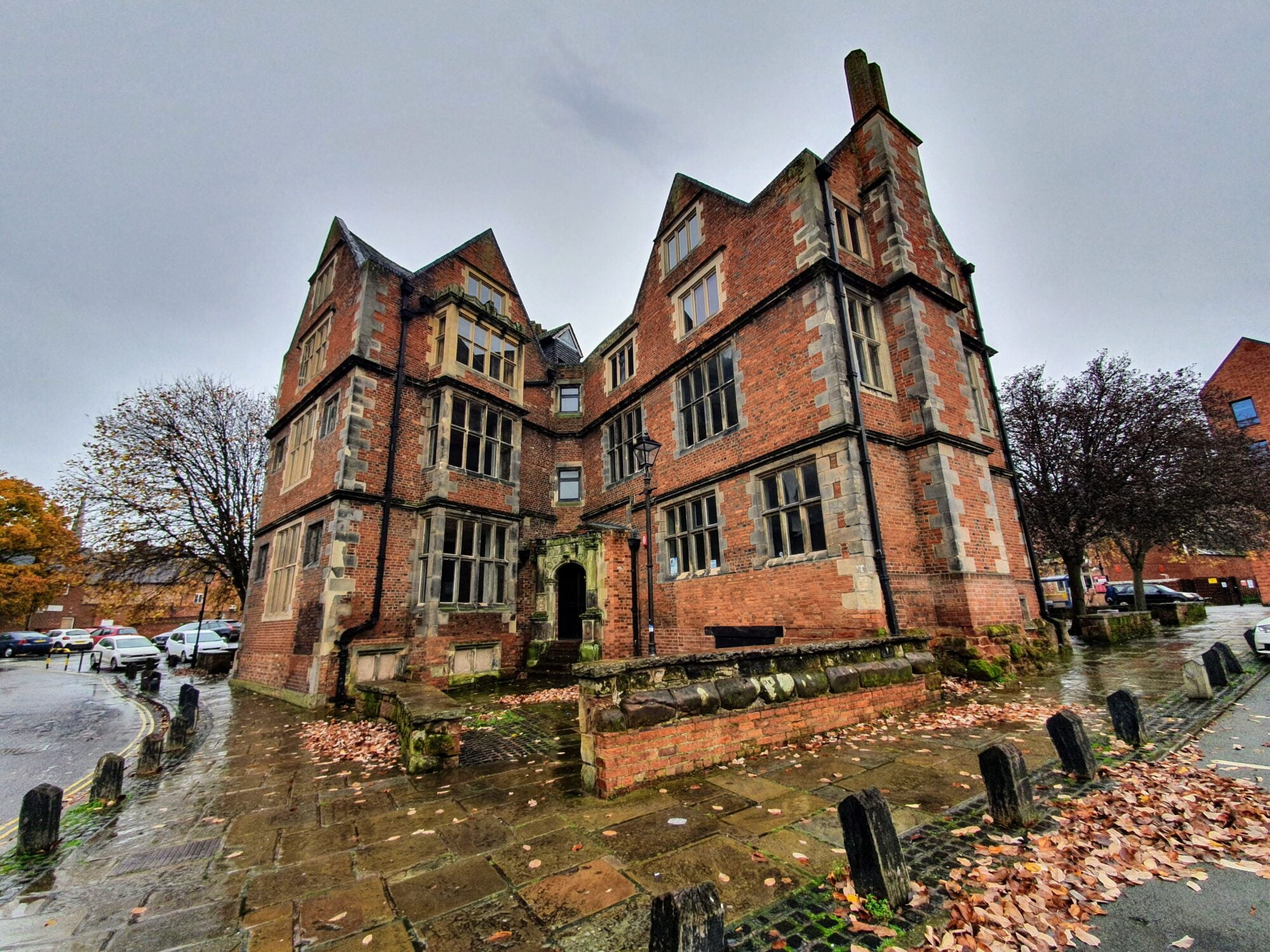
Rowley’s House & Mansion caught my eye when exploring. William Rowley, a draper and brewer, established himself in the town. He started with the timber-framed house during the reign of Elizabeth I. Because of his success, he built this mansion in 1618. Rowley Mansion was Shrewsbury’s first red-brick building.
How funny, a mate of mine grew up in this town and we recently discussed doing some stand-up paddling down the Severn, so hopefully I’ll get to see Shrewsbury soon. Will revisit your post before I do.
Wow, what a beautiful town! Shrewsbury Abbey has been on our radar for a while, but we had no idea how much more there was to see. Great post!