
Palace Of Parliament in Bucharest, Romania: Tours & Views
One of the most imposing buildings in Bucharest is the massive Palace of Parliament. It is the seat of Romania’s parliament and is also a popular tourist attraction that offers tours.
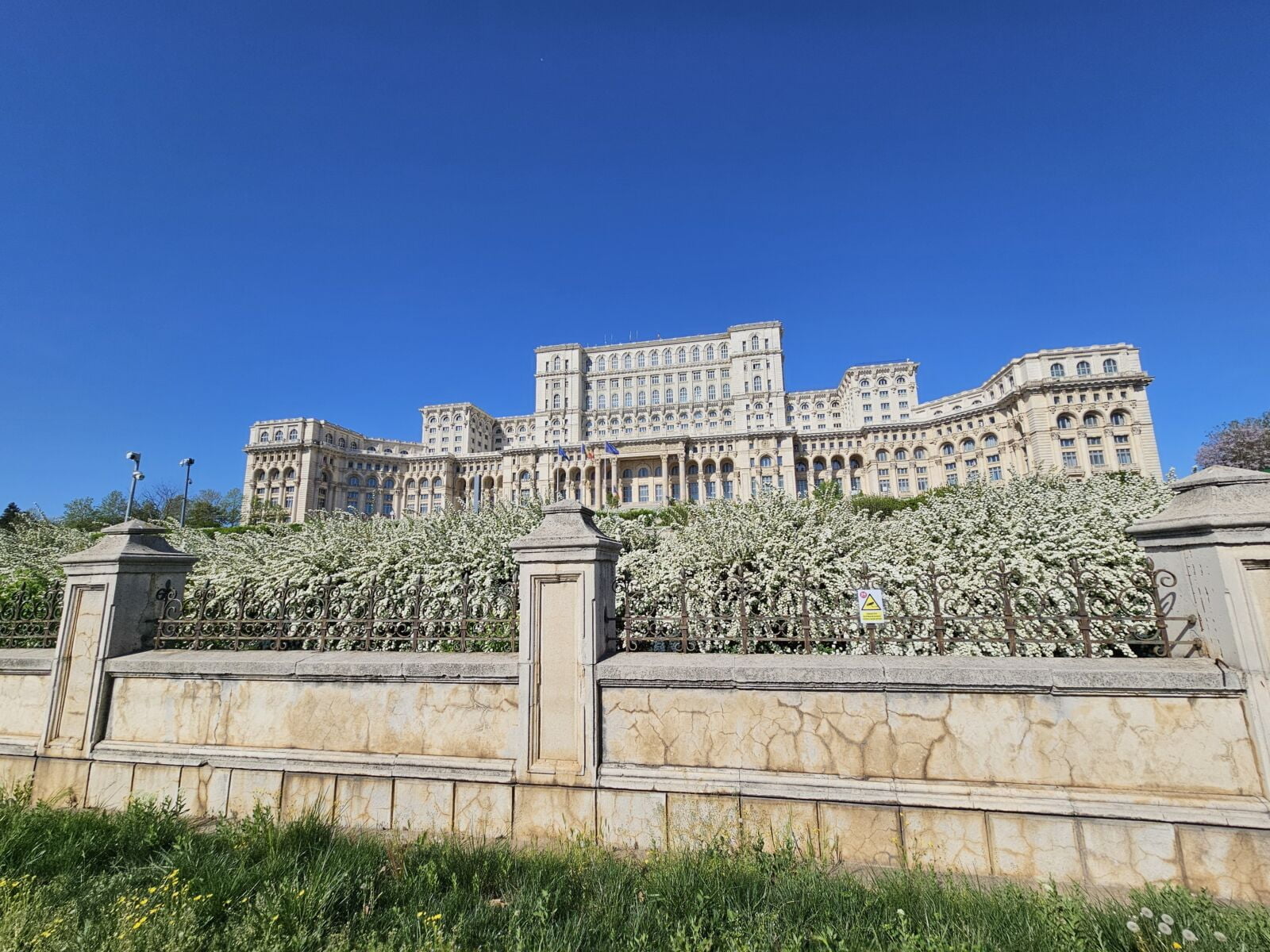
Tours inside the parliament building are interesting, especially getting the chance to look around the big, decorative rooms inside. The exterior is also good for a walk around the perimeter, with the best views from Piața Constituției.
About The Palace of Parliament in Bucharest
Disclosure! Keep in mind that some links in these posts are affiliate links. If you click one of them, I may earn a small commission (for which I’m extremely grateful) at no extra cost to you. Thanks for visiting!
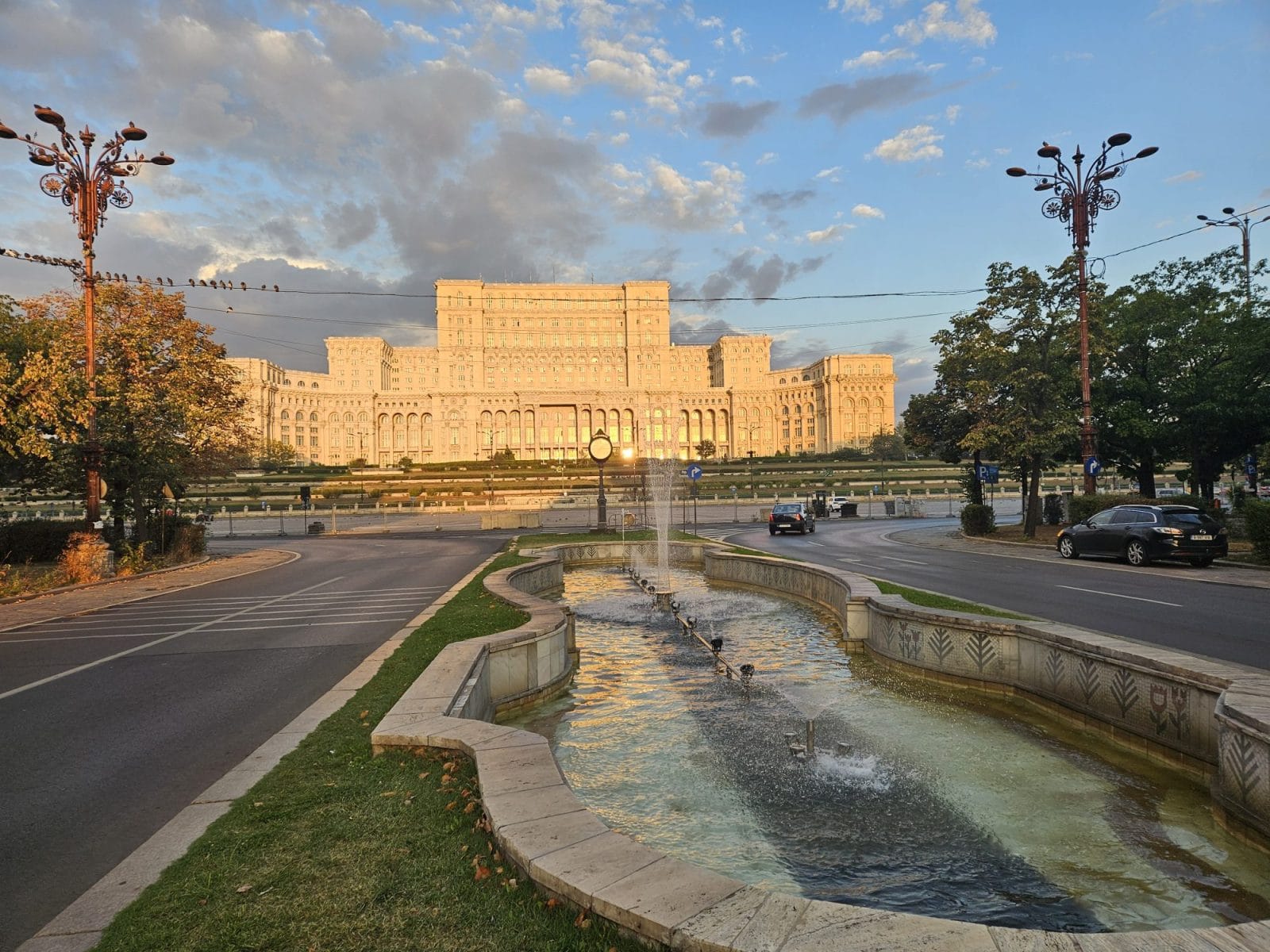
The Palace of Parliament in Bucharest is 84 metres high and is the heaviest building in the world. Construction of the building started in 1984 under the stewardship of dictator Nicolae Ceaușescu. It was completed in 1997; however, some interiors took longer to finish, into the mid-90s.
The construction of the Palace of Parliament was the most extreme expression of the systematisation programme imposed on the country by Nicolae Ceaușescu. Systematisation was a programme of urban planning carried out by Ceaușescu, who was impressed by the societal organisation and mass adulation he saw in North Korea.
The building has over 1,000 rooms, some of which you visit on tours. It has extensive nuclear bunkers and was built using only Romanian materials. It weighs 4.1 million tonnes, thus being the heaviest building in the world.
Booking a Tour of The Palace of Parliament
On our visit, we prearranged tickets on the Booking.com website; this was straightforward to book but required collecting the tickets from an office a short walk from the Palace of Parliament. The booking confirmation gave clear instructions for that.
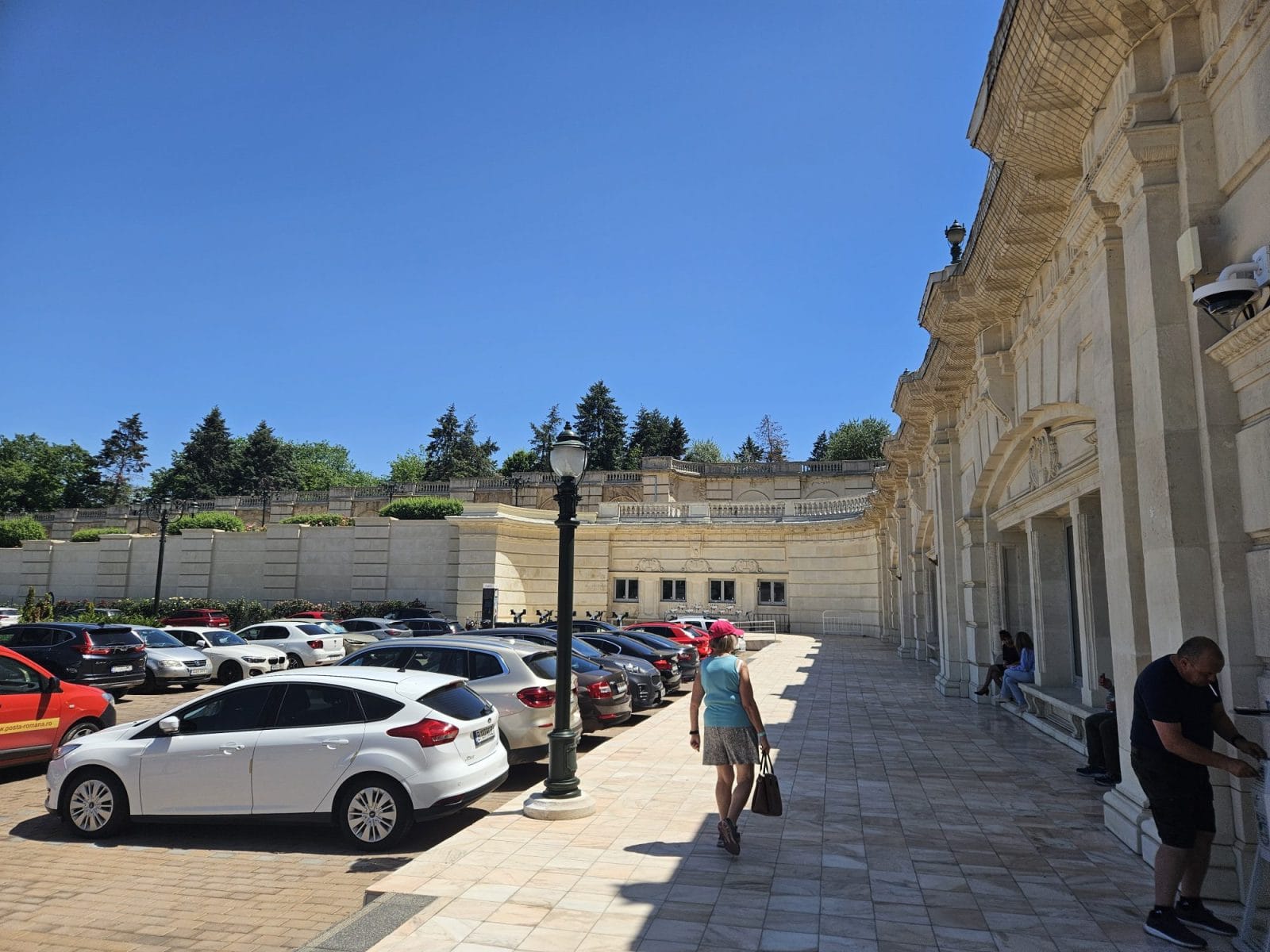
Once the tickets were collected, we walked as a group to the side entrance where tours start, ready to meet the guide for the day. This was a bit of a wait in the entrance hall. However, they had a cafe and restrooms there. You can also choose to book via the GetYourGuide website, which has a selection of options.
What You See on A Tour Inside
The tour we went on took just over an hour and took us through the key areas inside.
Official Entrance (Gallery of Honour)
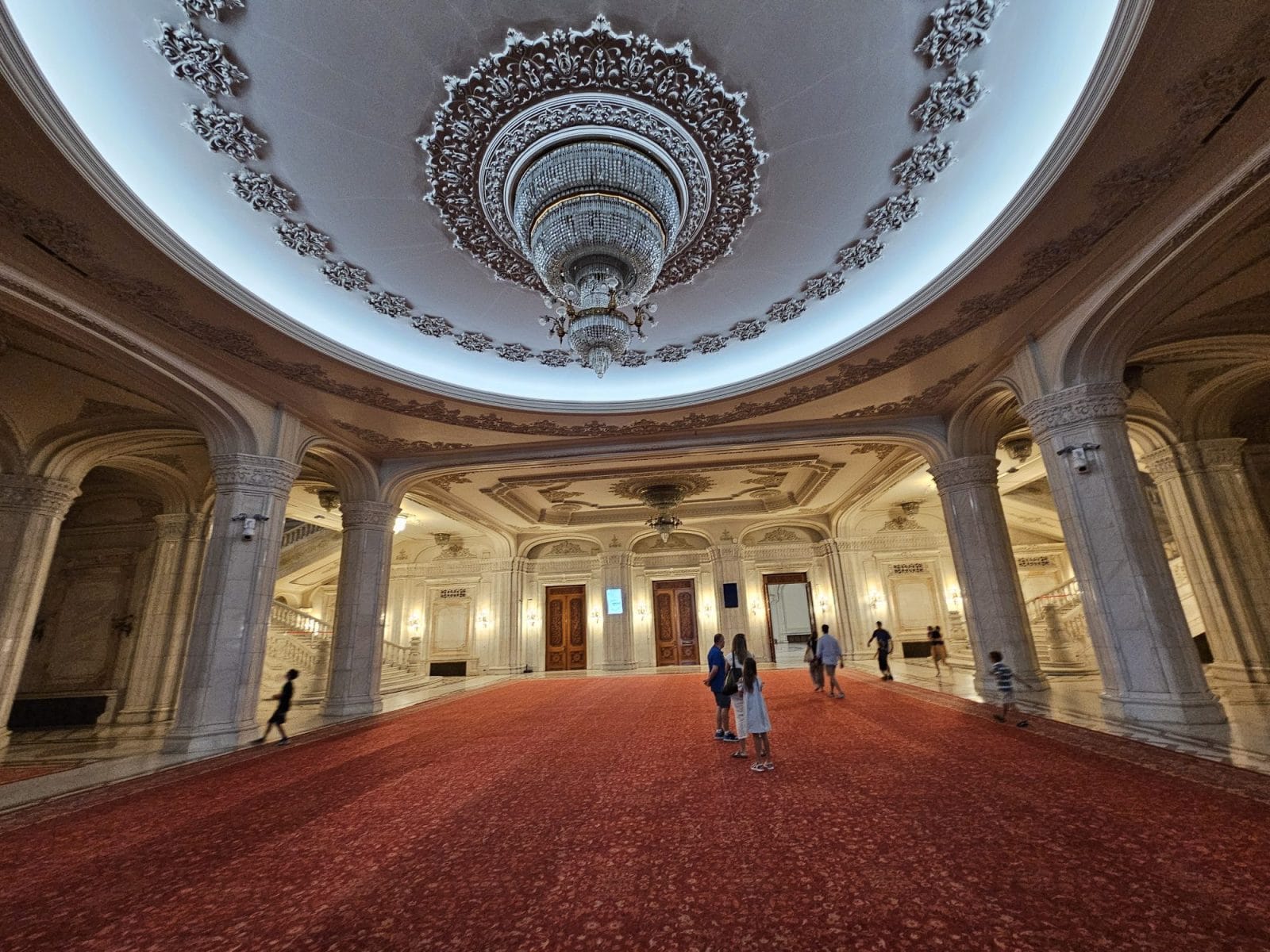
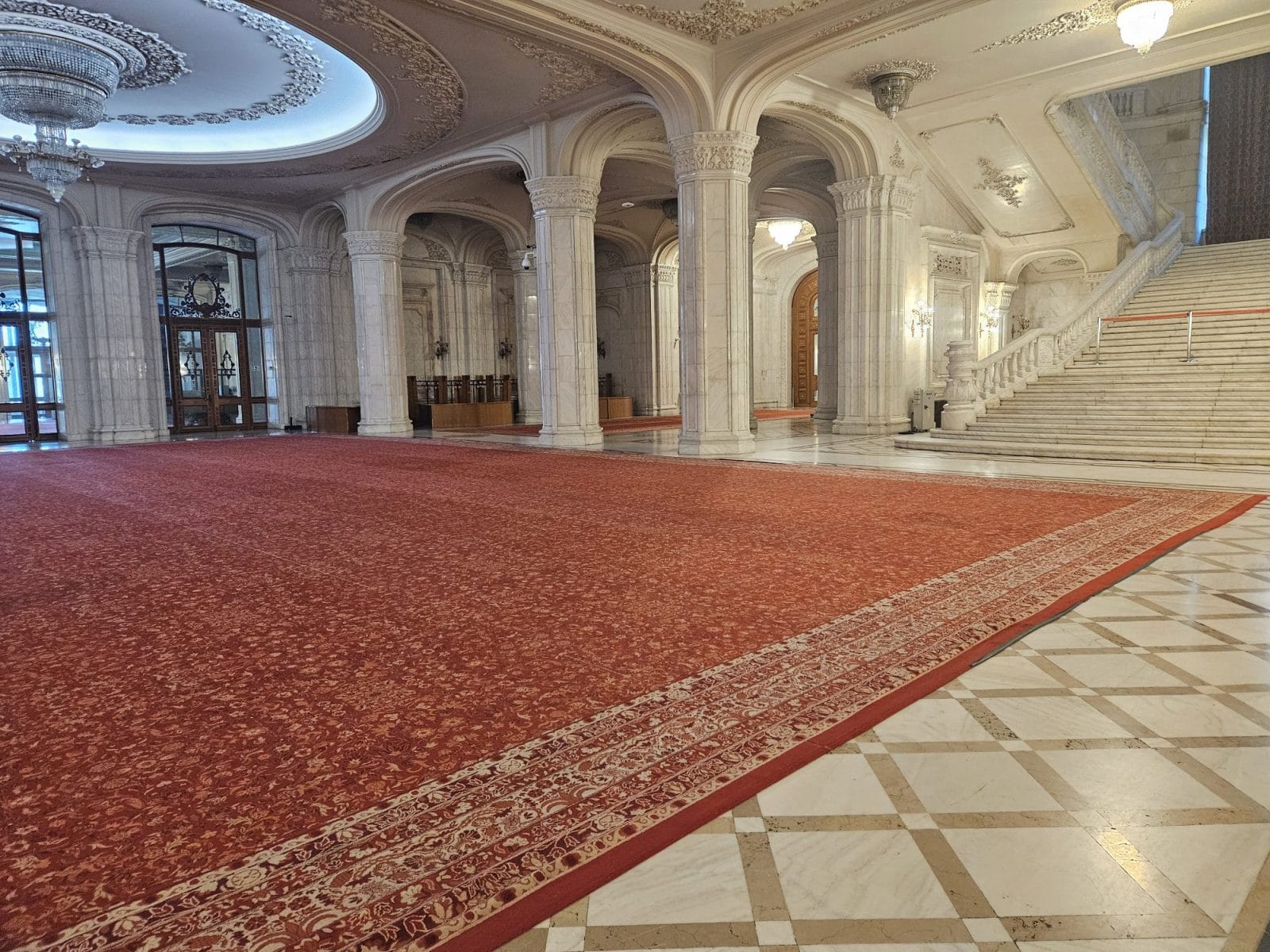
On our visit, we passed through the Official Entrance or Gallery of Honour a few times. It’s a fantastic part of the palace with 34 carved columns, grand staircases, a red carpet and other decorative features.
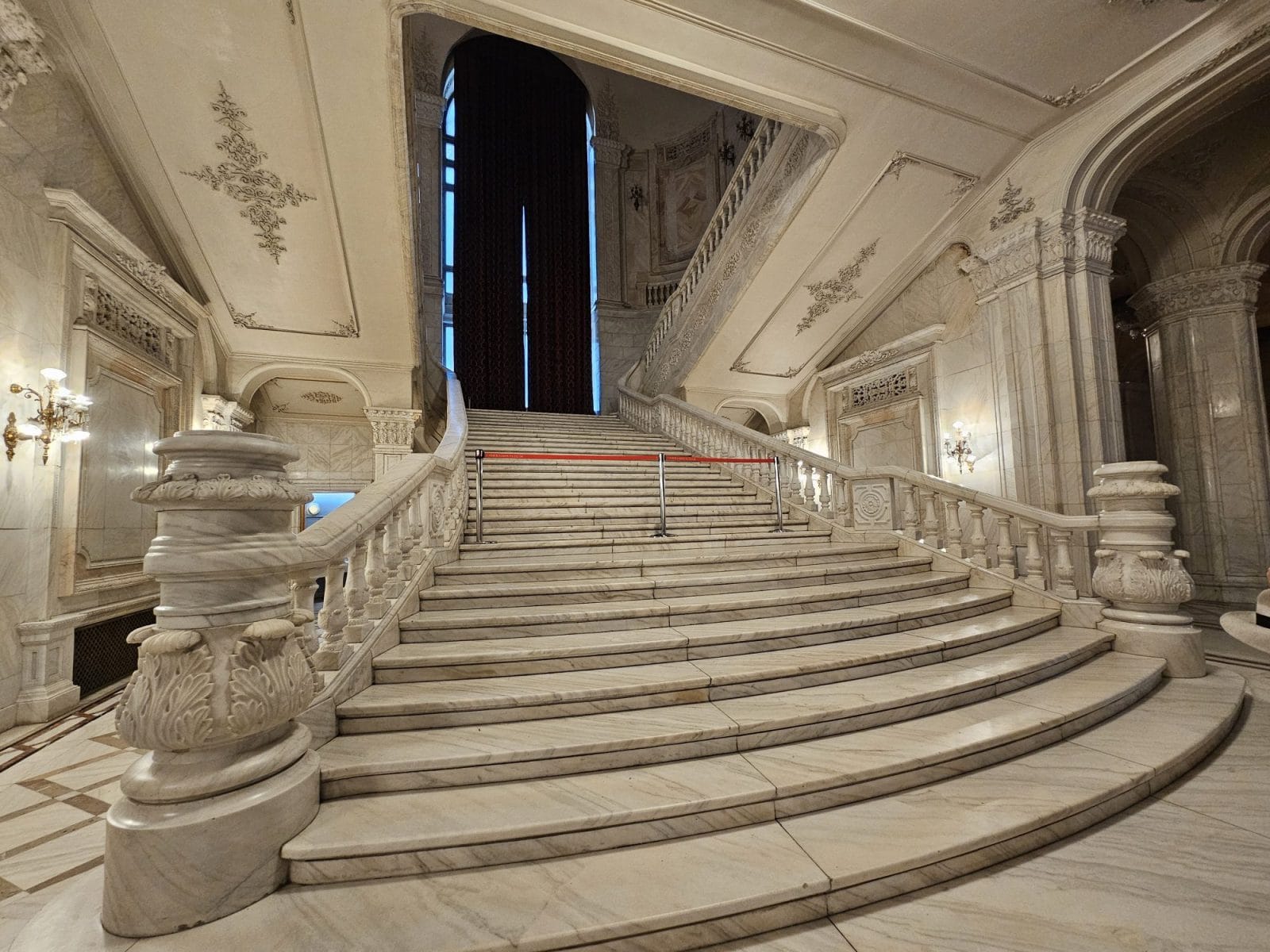
The staircase was designed with shallow steps to fit the foot length of Elena Ceaușescu. On our tour, these were popular with people taking photos.
C.A. Rosetti Hall
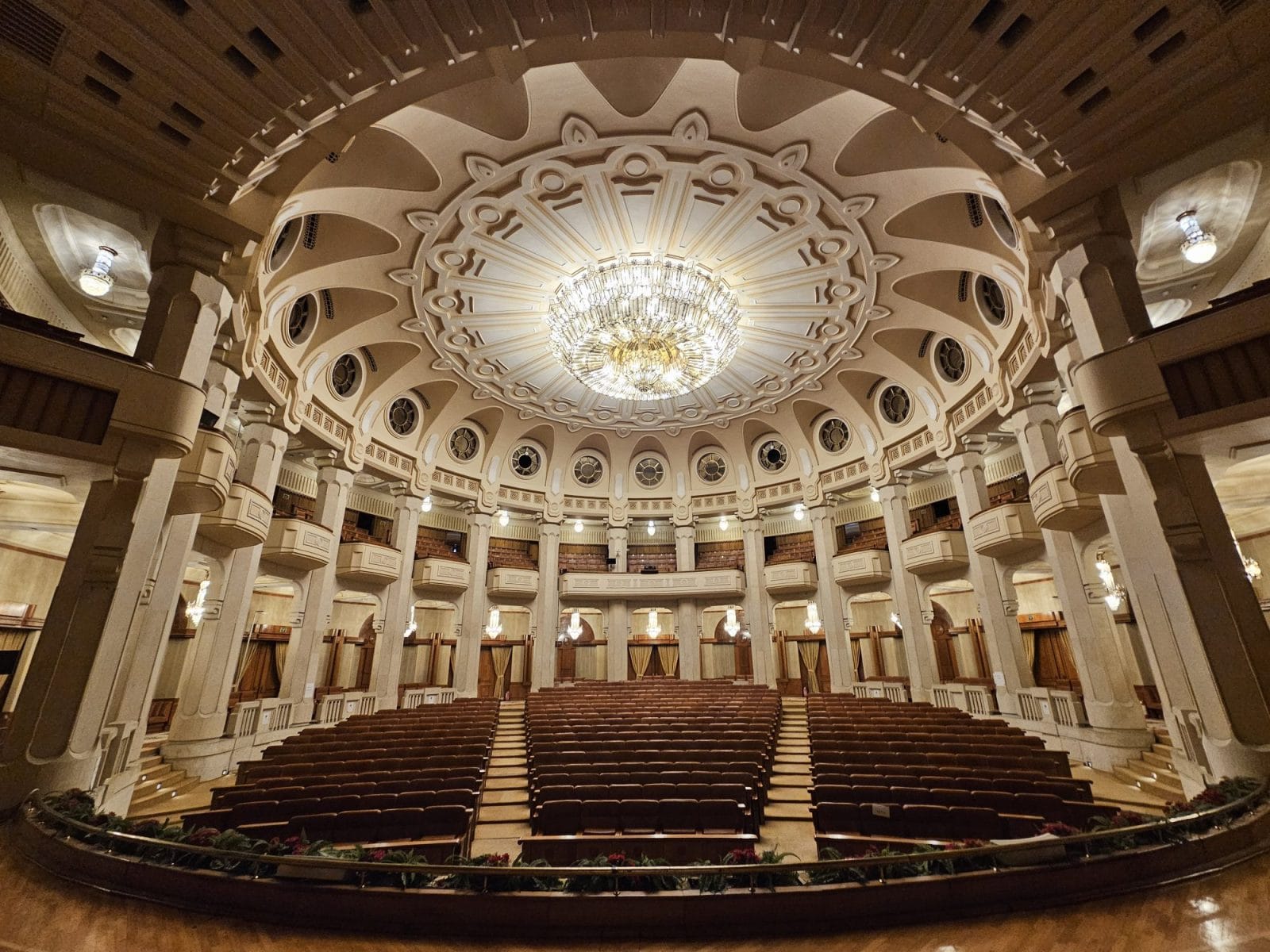
The C.A. Rosetti Hall is an opulent event space, which is nice to visit. It is named after the prominent 19th-century Romanian revolutionary and politician C.A. Rosetti. The hall is designed in the heavy, neoclassical “socialist realism” style, which was the preference of the Communist regime.
C.A. Rosetti Hall is famous for its lavish decoration, marble accents, and a massive crystal chandelier which weighs several tonnes. During the tour, we covered the creation of the chandelier and the ongoing maintenance of it.
Human Rights Hall (Sala Drepturilor Omului)
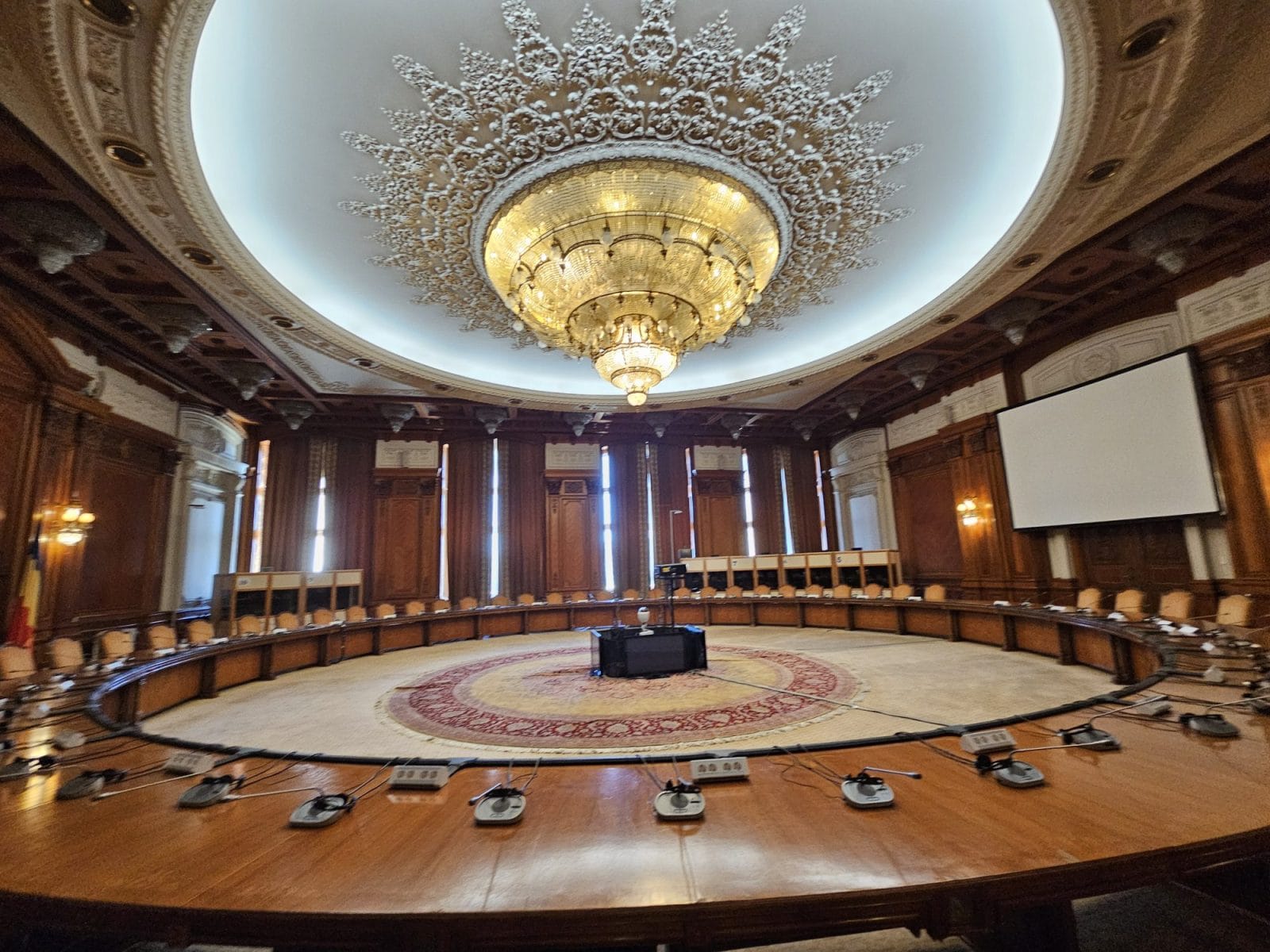
The Human Rights Hall is one of the most famous and photogenic rooms in the building. It was designed to host executive meetings of the communist Party.
In this hall you can see a massive, 60-seat circular oak table and the second-largest chandelier in the palace. The room also has ornate oak panelling, columns, and long pastel-coloured curtains.
Unirii Hall
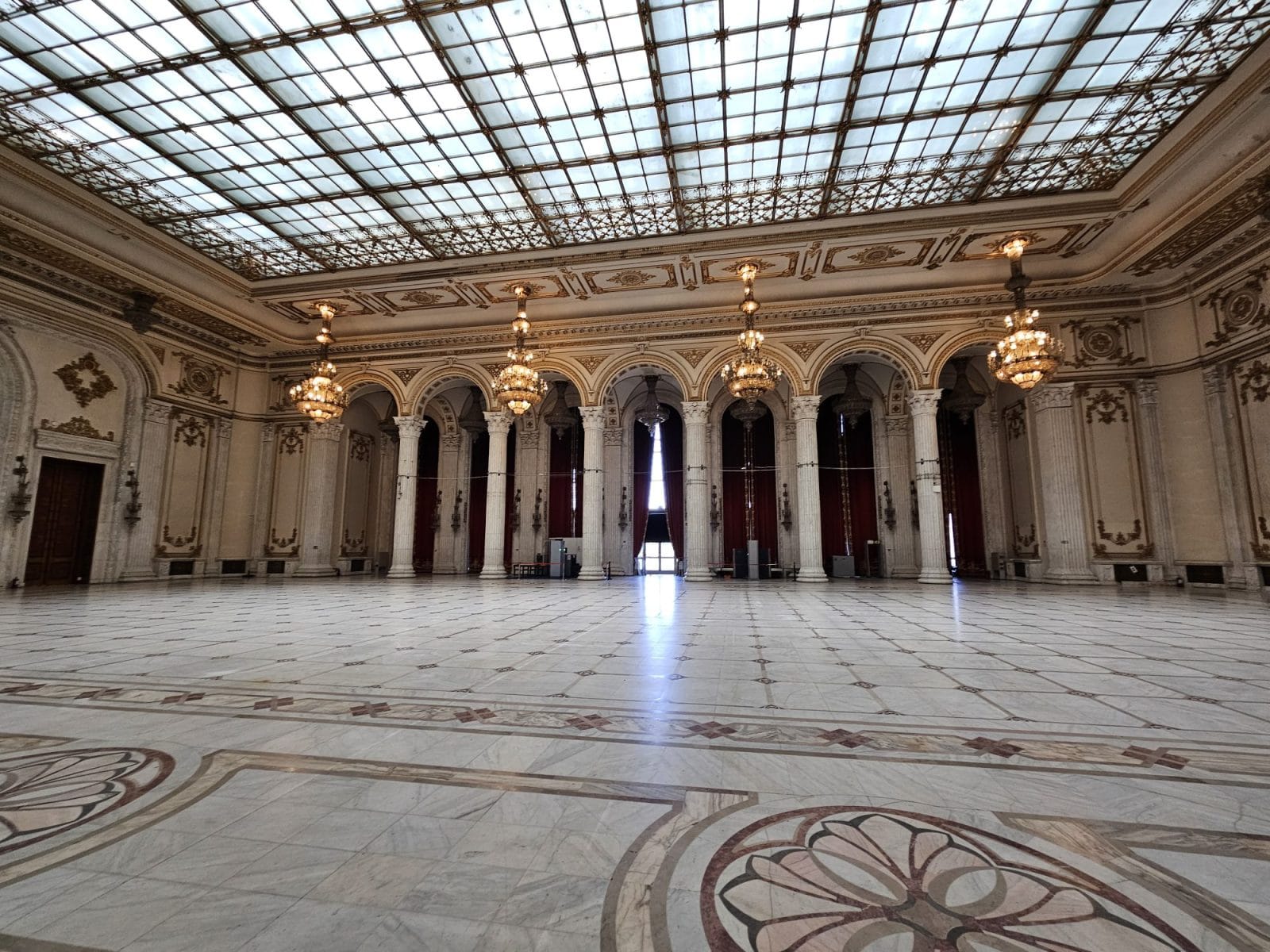
Unirii Hall, or Union Hall, is the largest room and was designed as a colossal ballroom. It is an enormous, highly ornate space which could host 2000 people.
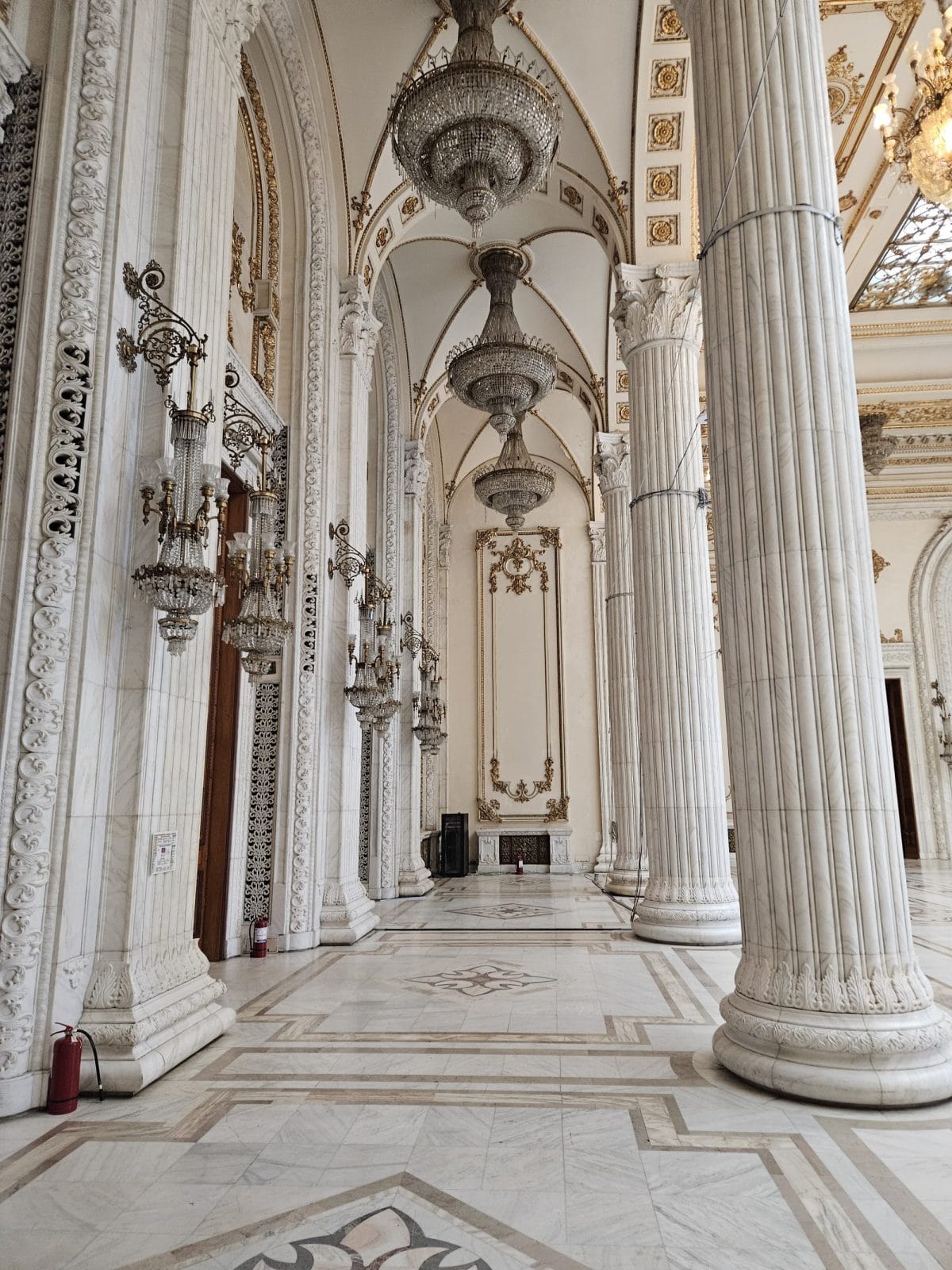
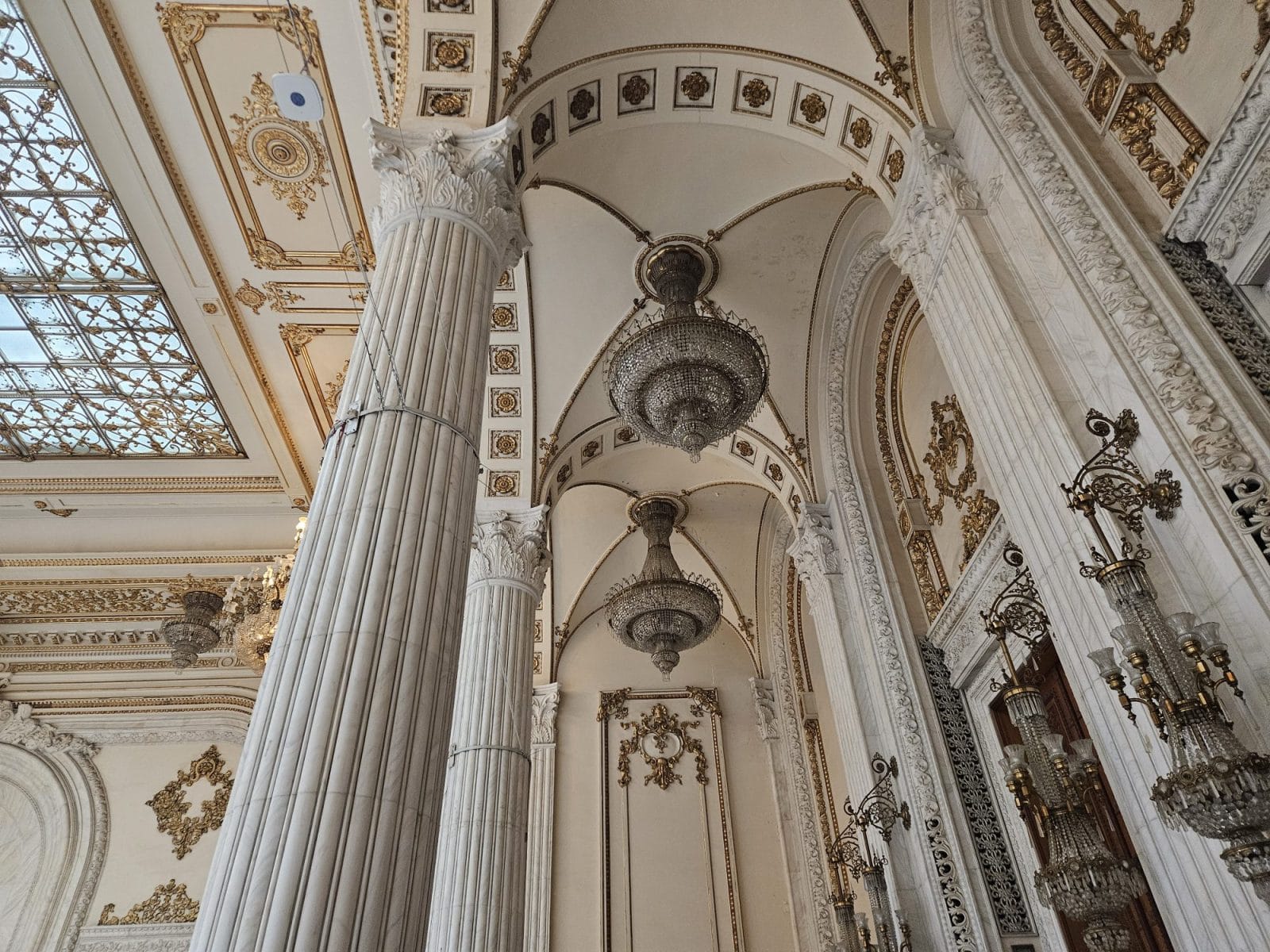
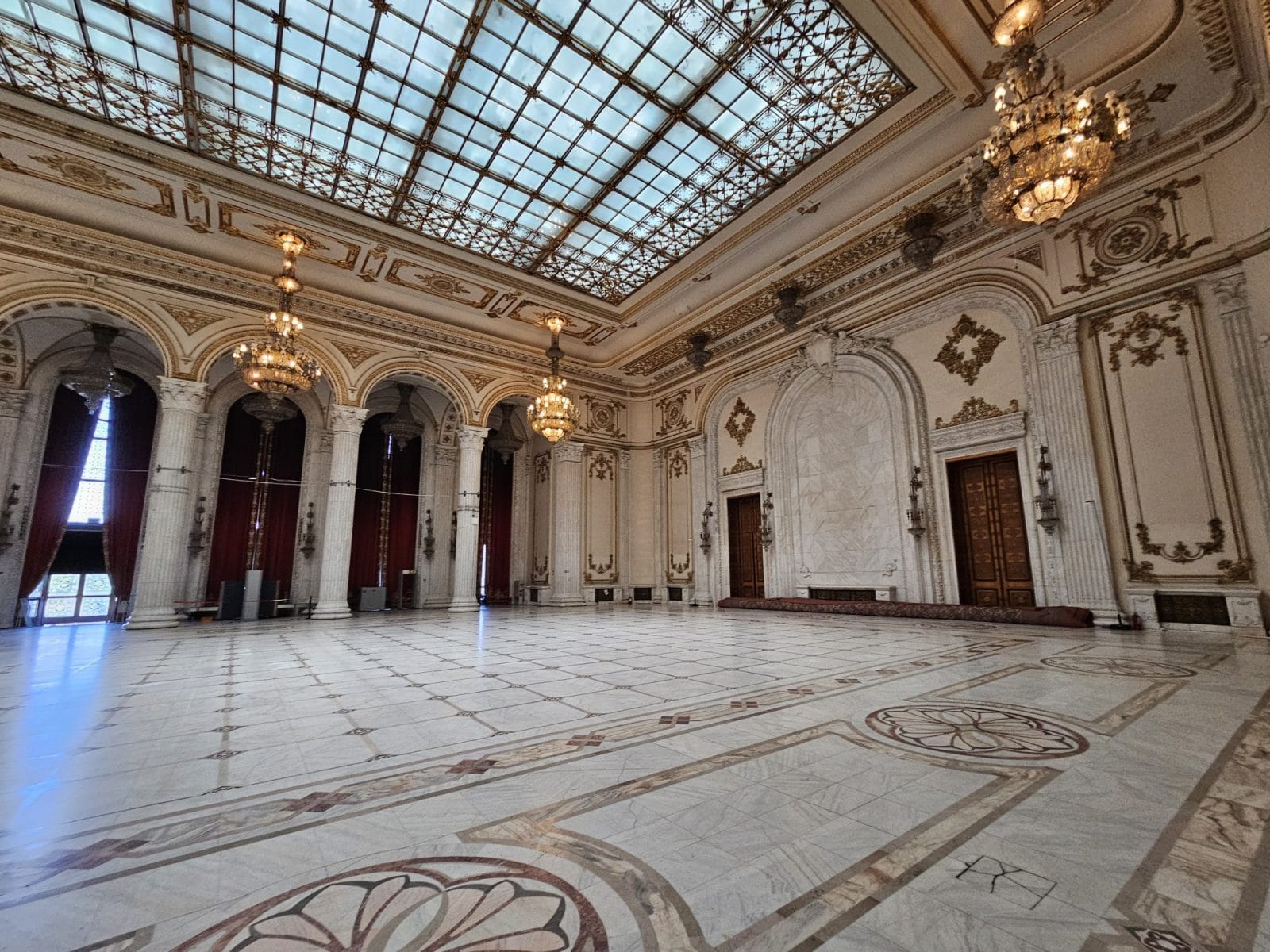
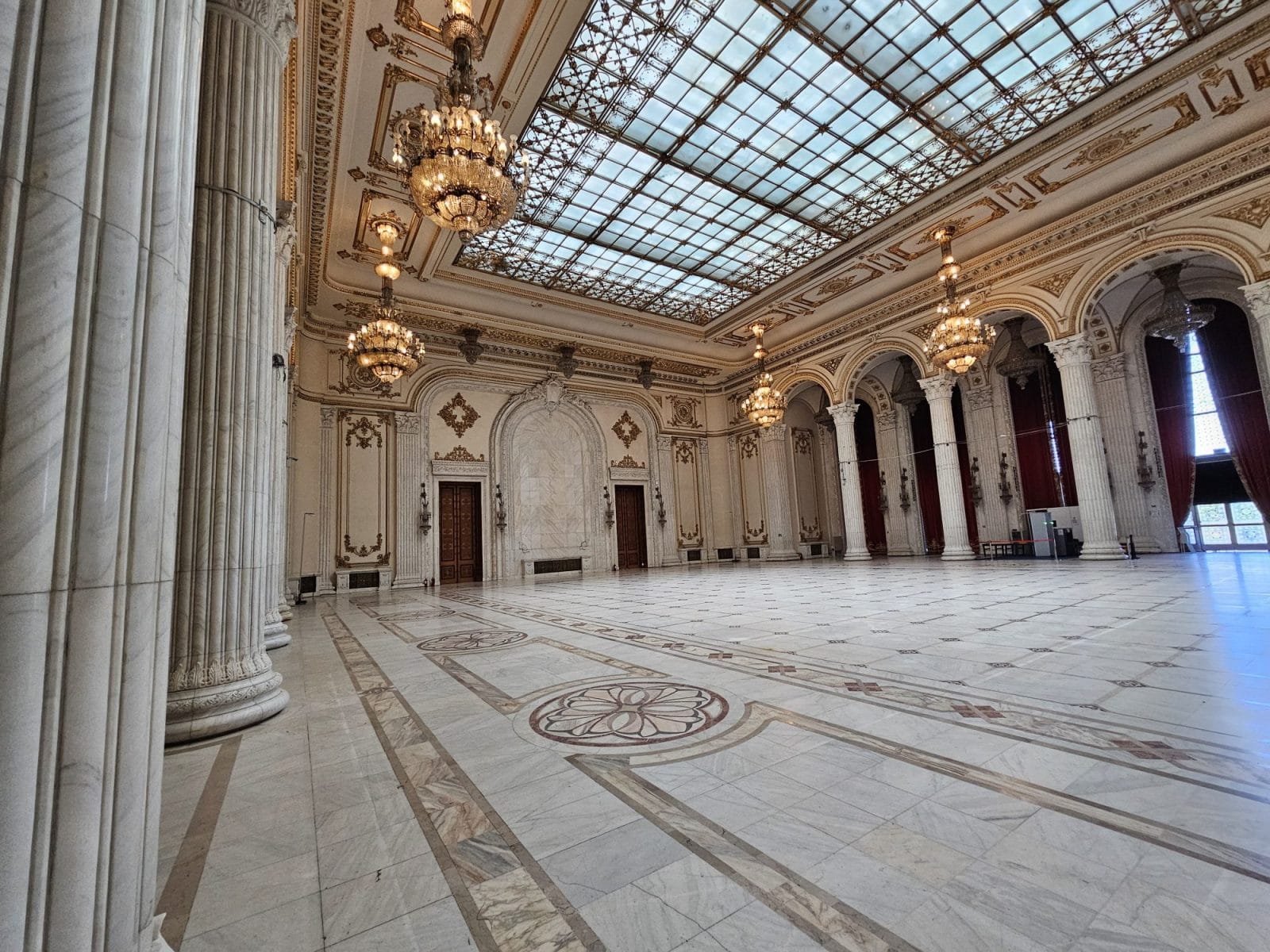
This was one of the highlights of our visit, and the decor, columns, massive ceiling window and chandeliers piqued my interest.
Nicolae Iorga Hall
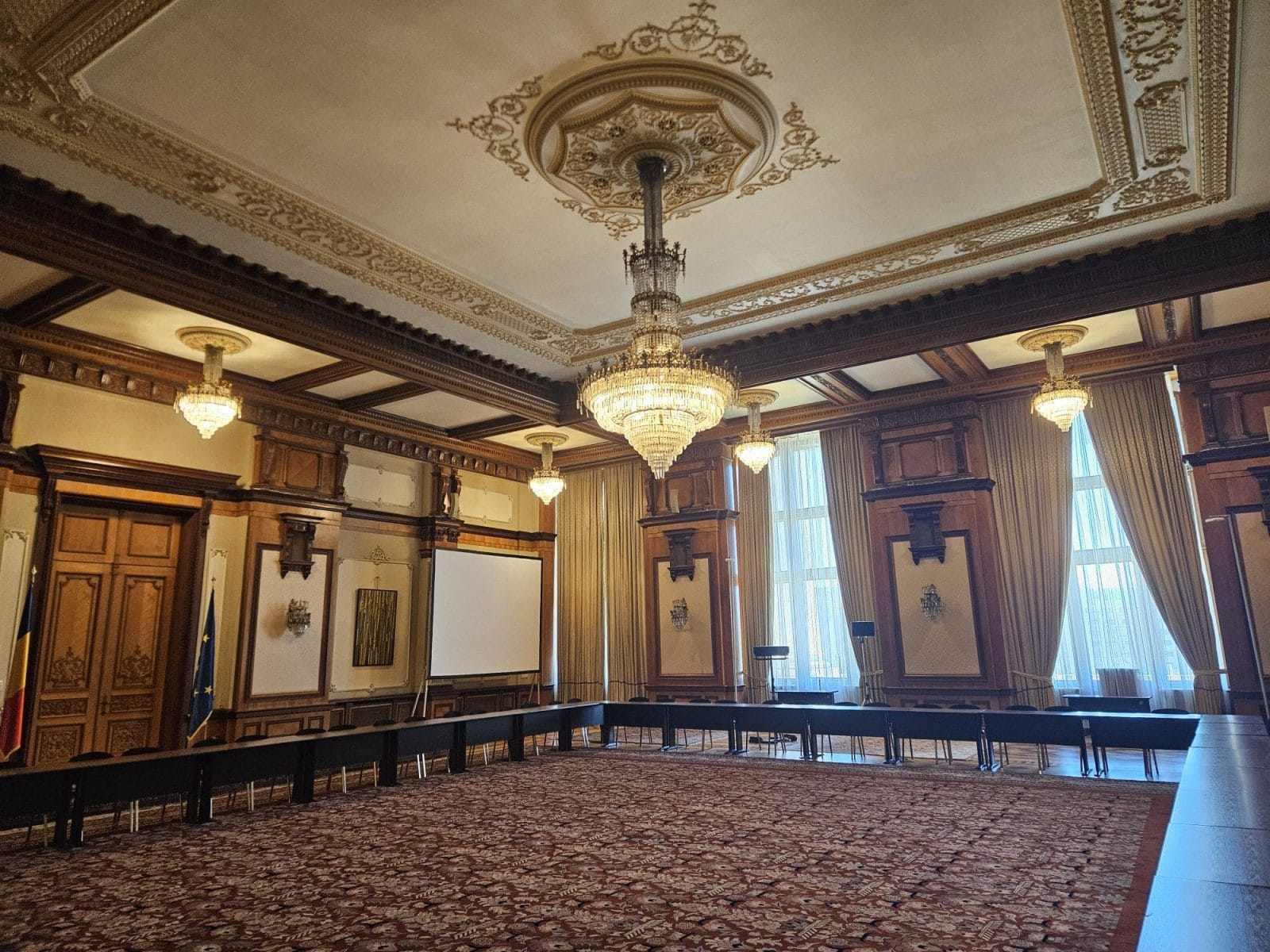
The Nicolae Iorga Hall is a grand, wood-panelled conference and event space. It was named after the Romanian historian, writer, and former Prime Minister, Nicolae Iorga. Key features include oak walls and a ceiling, and a crystal chandelier. The room also has artworks by notable Romanian painters.
Nicolae Bălcescu Hall
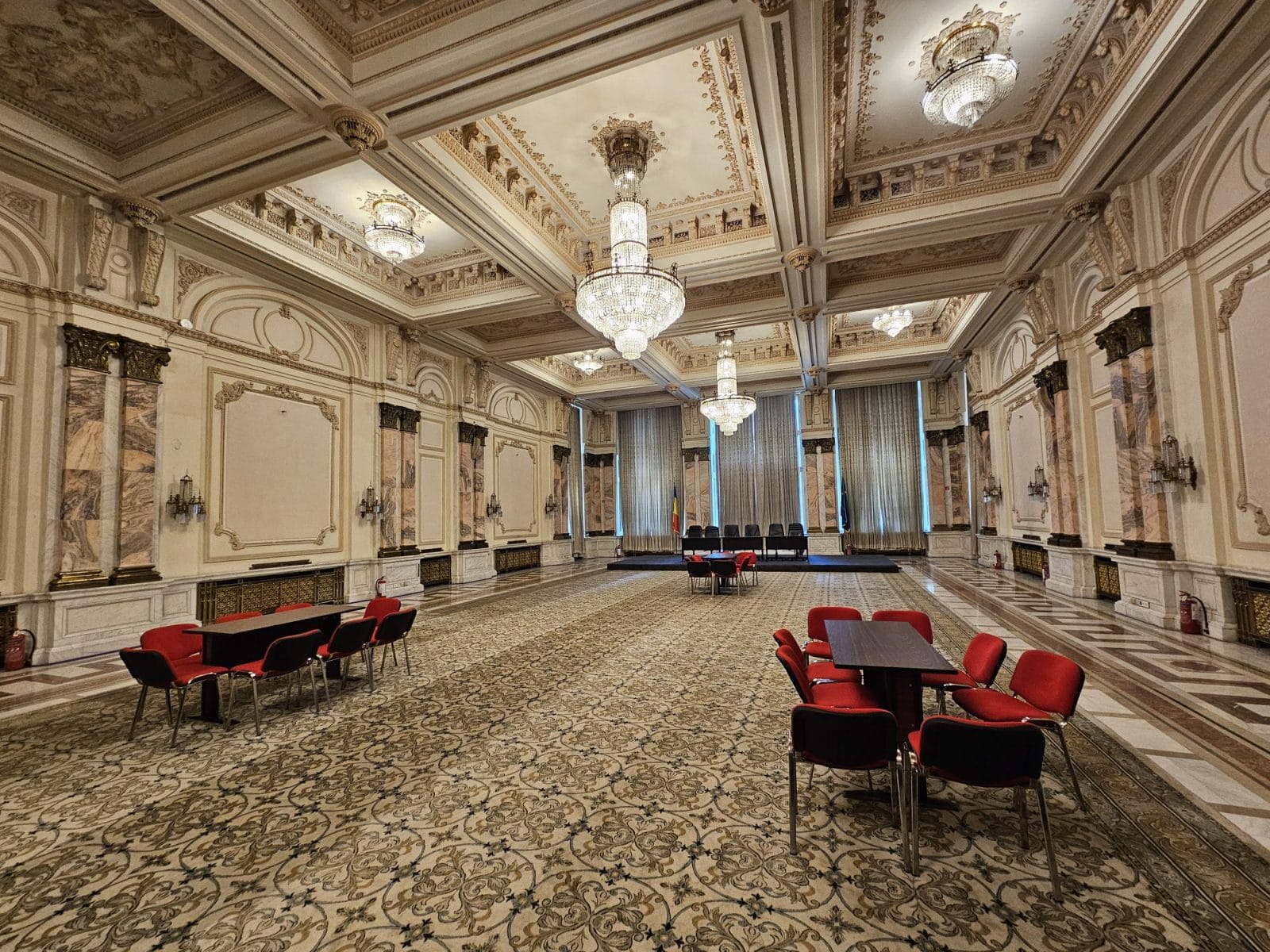
The Nicolae Bălcescu Hall is one of the grandest ceremonial rooms inside. It was named after Nicolae Bălcescu, who was a 19th-century Romanian revolutionary and historian. The ornate decor here impressed me, including its large marble columns, velvet curtains, crystal chandeliers, handmade floral carpets and mahogany doors.
Nicolae Titulescu Hall
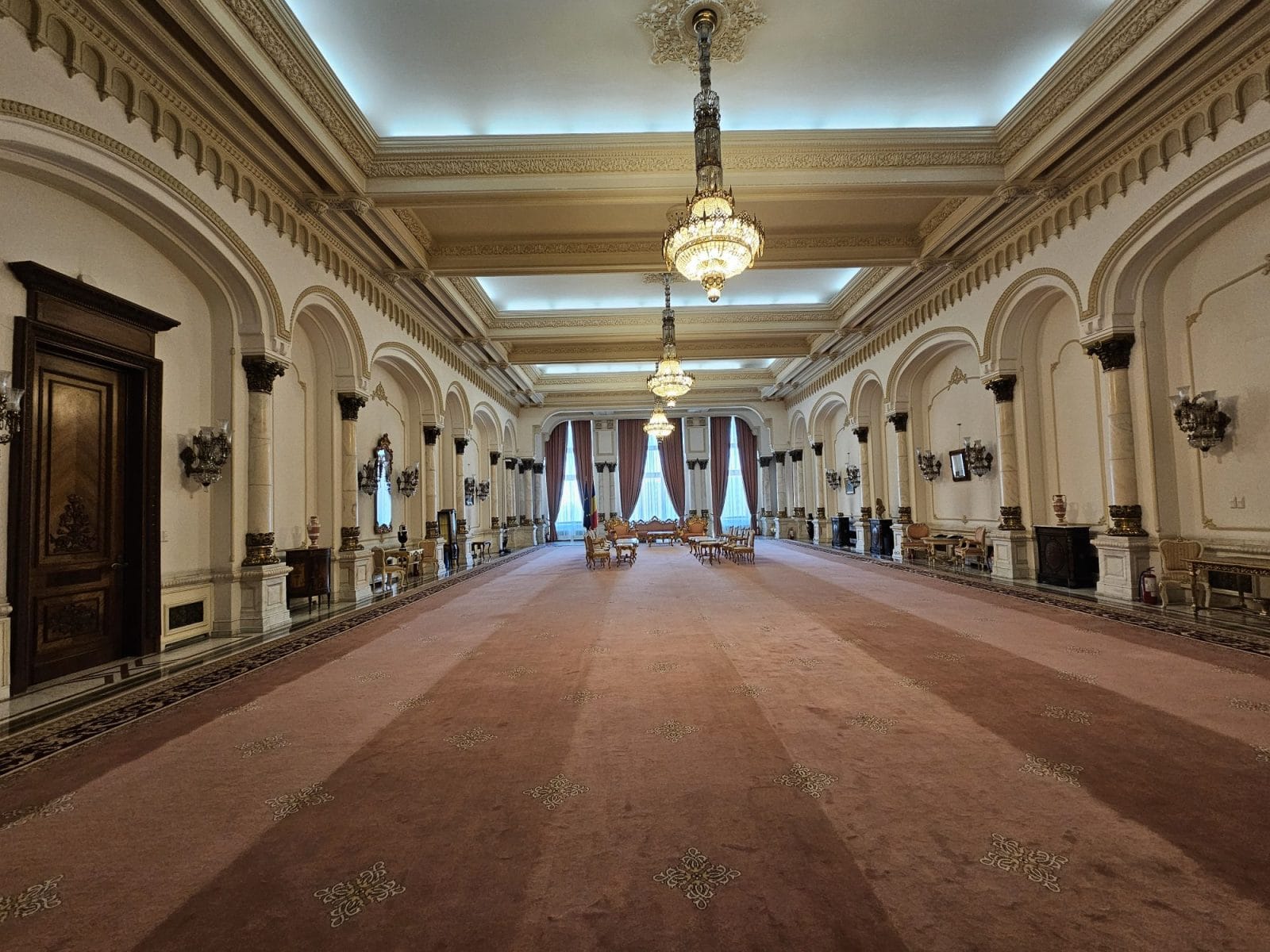
The Nicolae Titulescu Hall, also called the Pink Room, is a lavish ceremonial space which was named after the Romanian diplomat Nicolae Titulescu. The room is famous for its distinct, fairytale-like pink decor and classical French neoclassical architecture. Here you can see tall, elegant arches, large curtains, large crystal chandeliers, and soft pink carpets.
Hall at the Entrance to the Senate
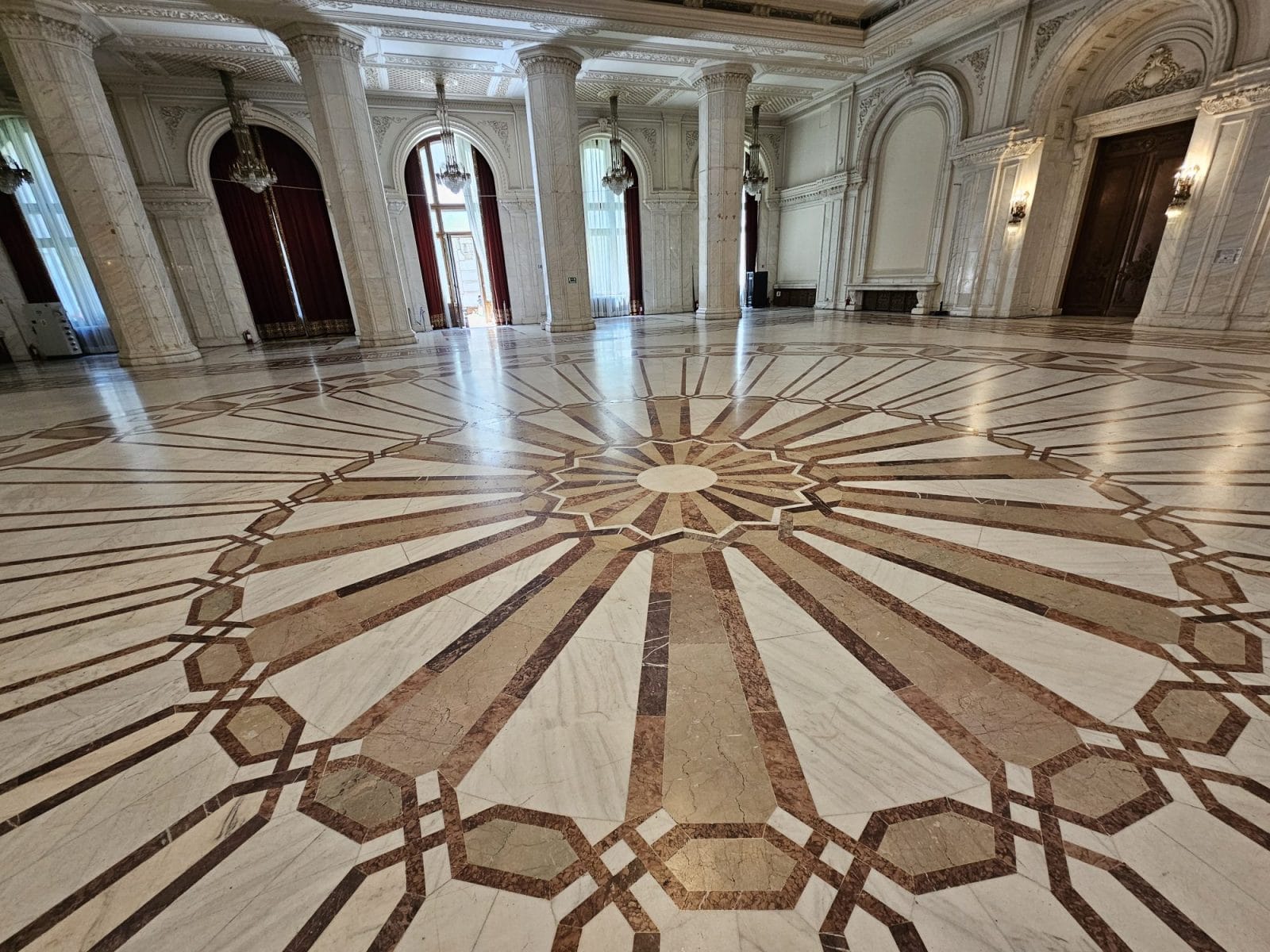
The hall at the entrance to the Senate features a large, intricate marble floor mosaic, uniquely mirrored by the design on the ceiling.
Press Gallery Hall
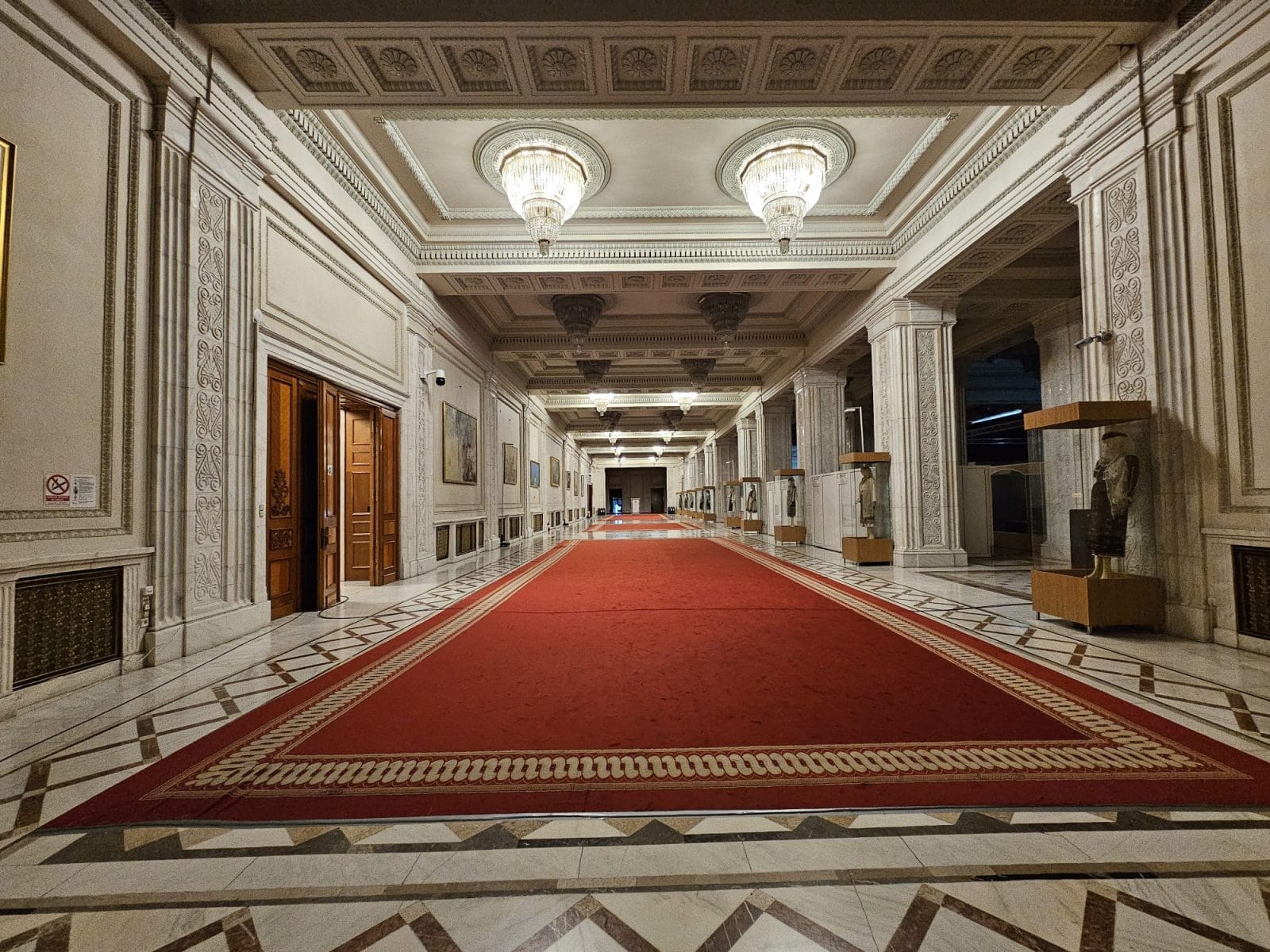
The Press Gallery Hall, or Sala Galeria Presei, is a 1,700-square-metre reception space used for large state events, exhibitions, and tours.
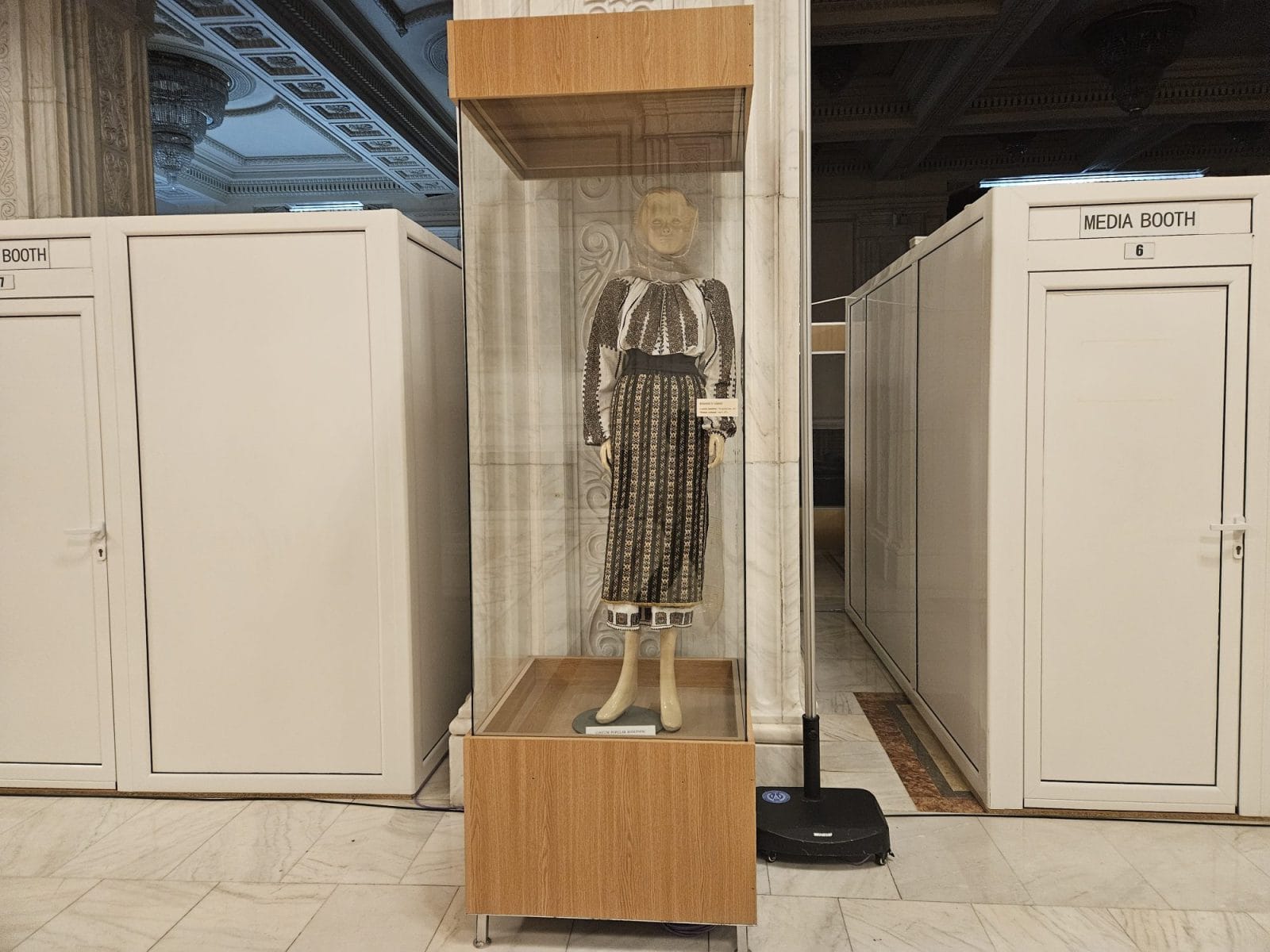
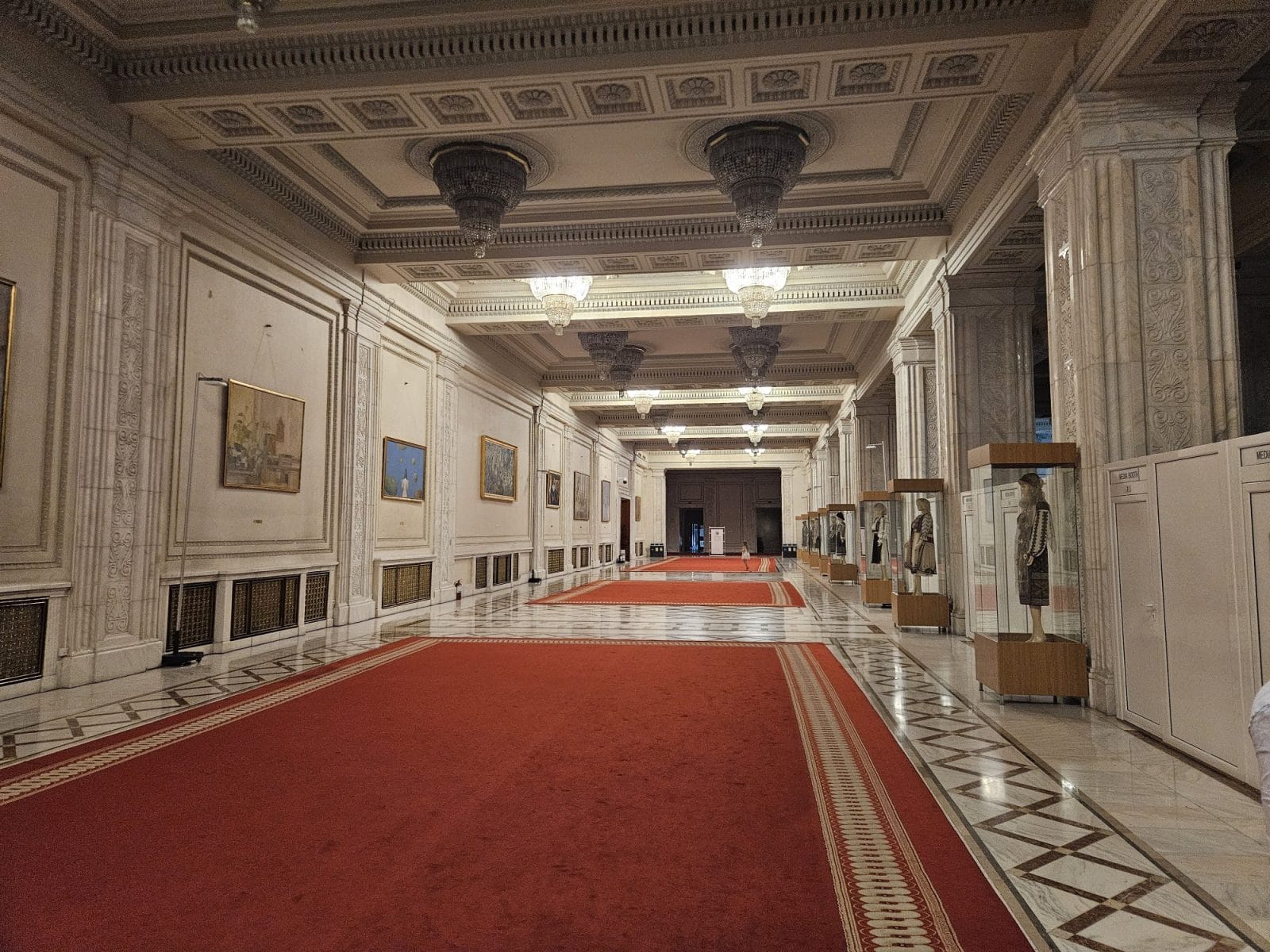
In the long hall, you can see the long, distinct red carpet, contemporary Romanian paintings on the walls, and displays of traditional Romanian folk clothing. This was rather interesting, especially the artworks and clothing displays.
Views From The Outside
On my first few visits to the capital, I enjoyed exploring the perimeter of the site, marvelling at its size. It’s a long walk, but I found it worthwhile. You can also zoom around the edges on an e-scooter to save time stopping to look or take photos occasionally.
The best time of day I found was during the sunrise; the views from Piața Constituției and Bulevardul Unirii at this time of day were great, and the area was also quiet compared to during the day.
Piața Constituției
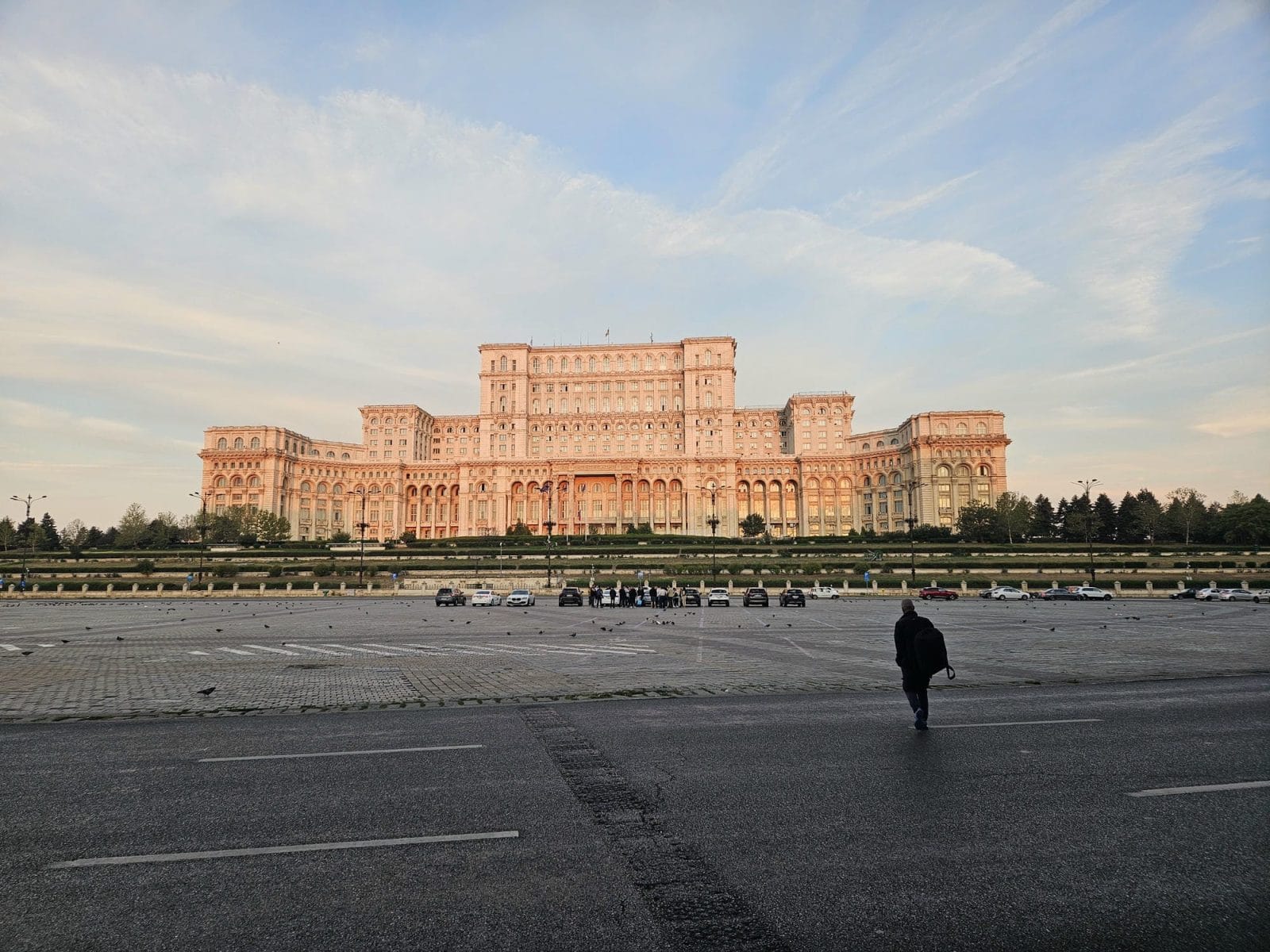
Early in the morning, when there are no cars parked and the roads are quiet, is a great time to see the palace from the front. The early sunlight lights up the facade nicely. There is also one pedestrian crossing to the car park.
Bulevardul Unirii
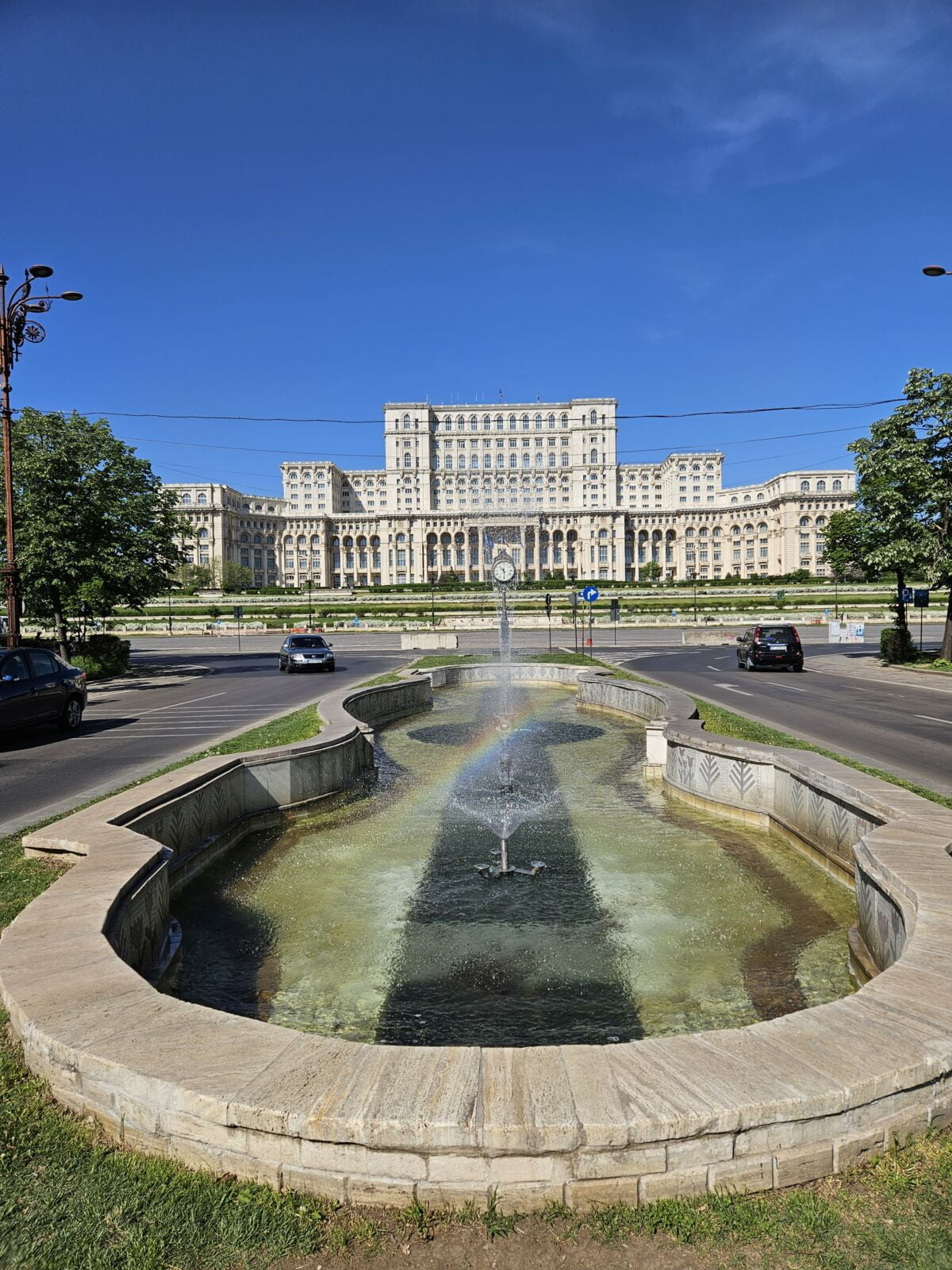
The boulevard is a nice place to walk to the Palace of Parliament, where you get glimpses as you go. My favourite spot here is the closest crossing to the building. Also near here are some bars and restaurants for refreshments before visiting.
Izvor Park
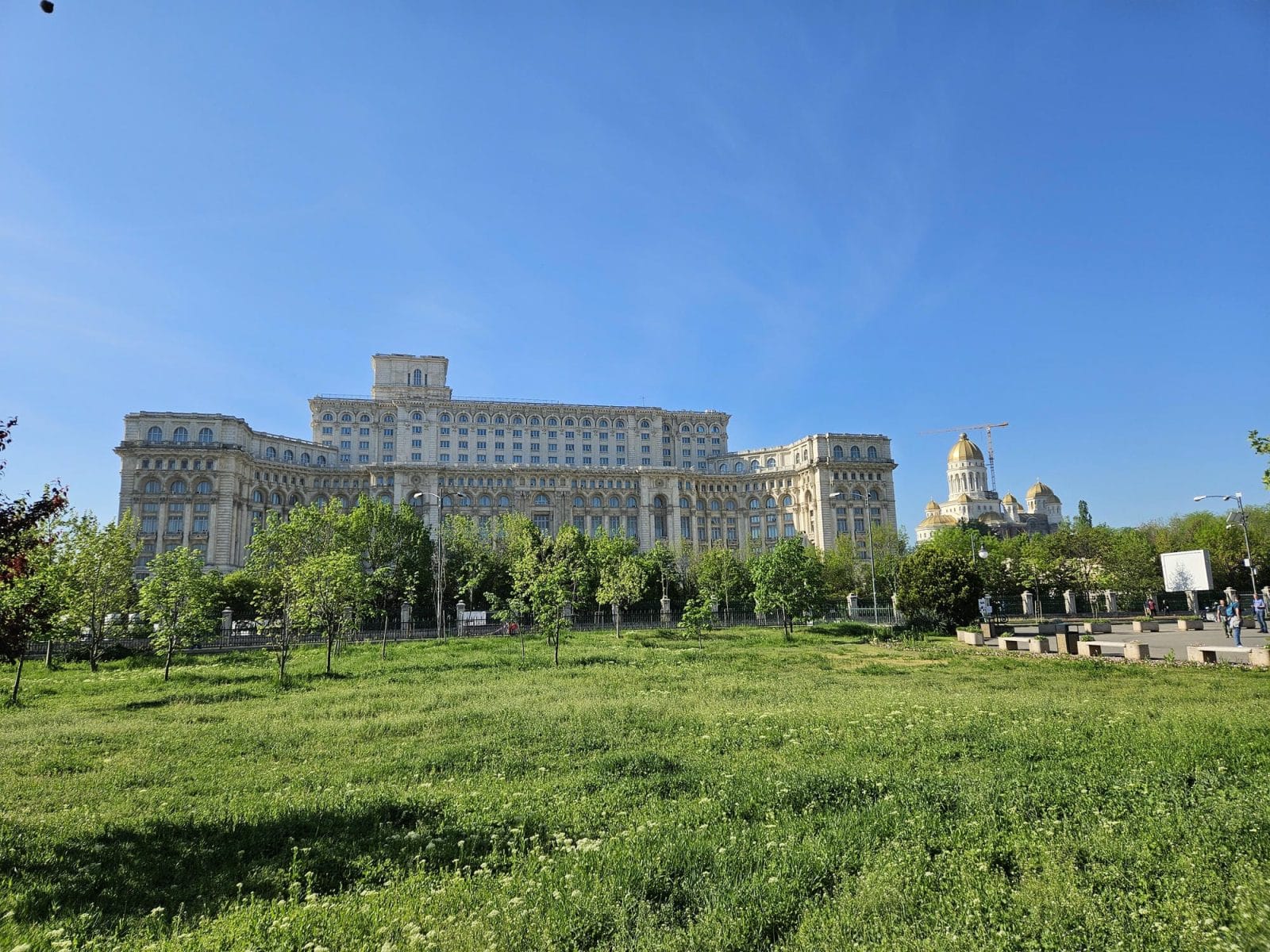
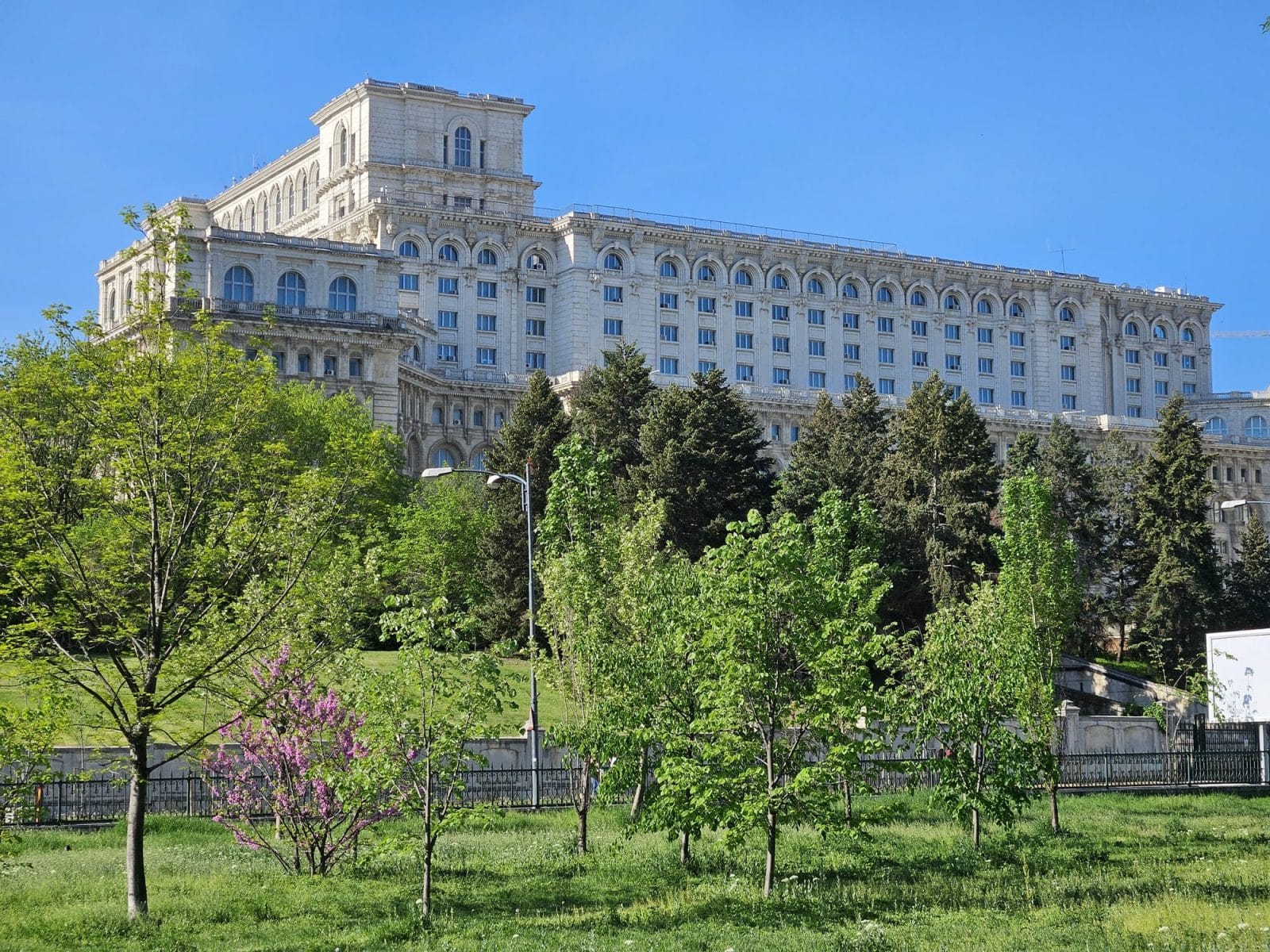
If heading to the site by underground, Izvor is a handy place to stop and walk through Izvor Park, which has views of the building’s side and the new cathedral.
Promenadă Dâmbovița
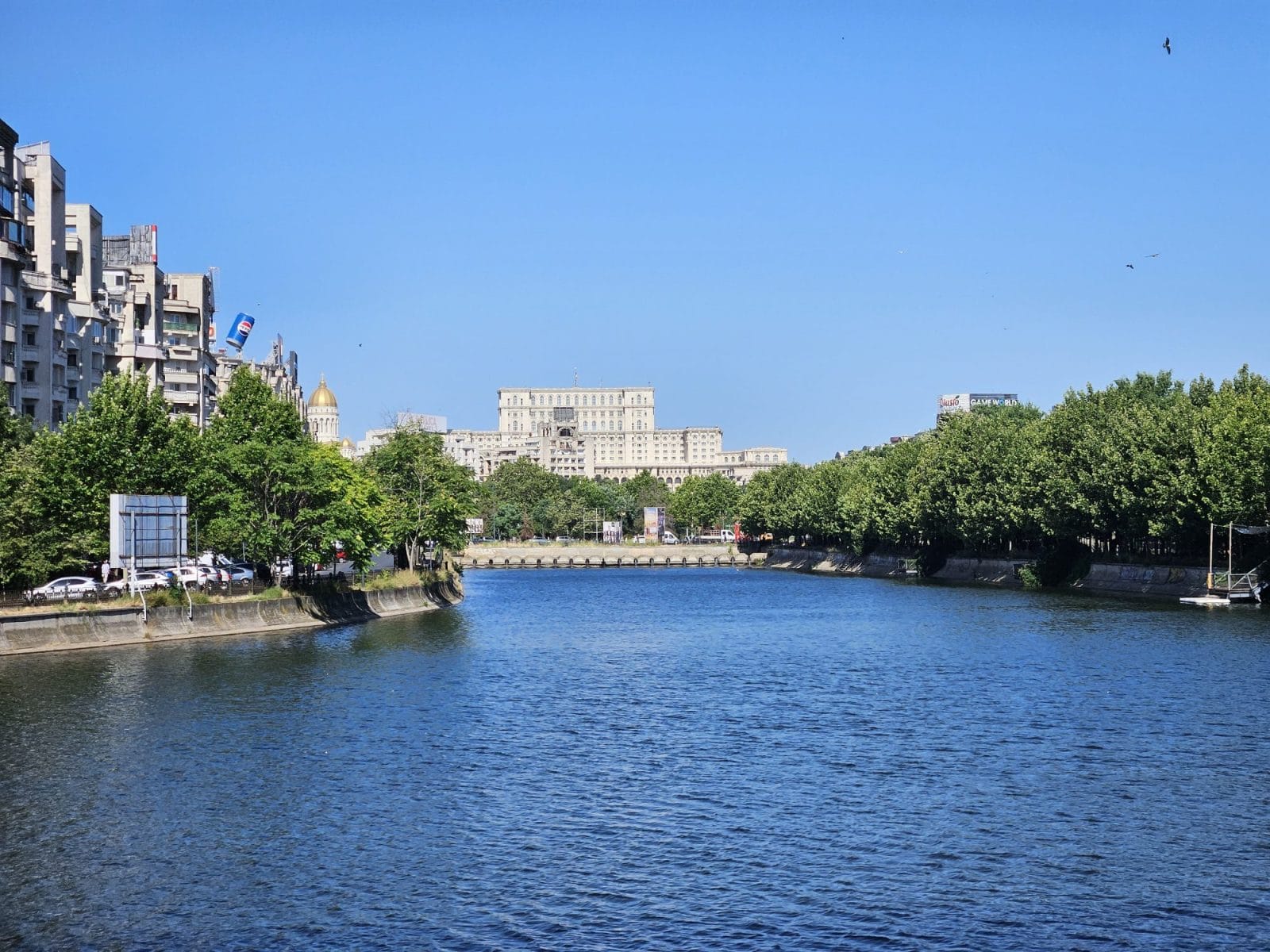
Promenadă Dâmbovița is a lovely place for a walk away from the city’s traffic; here you can see the epic structure across the water.
Patriarchal Cathedral
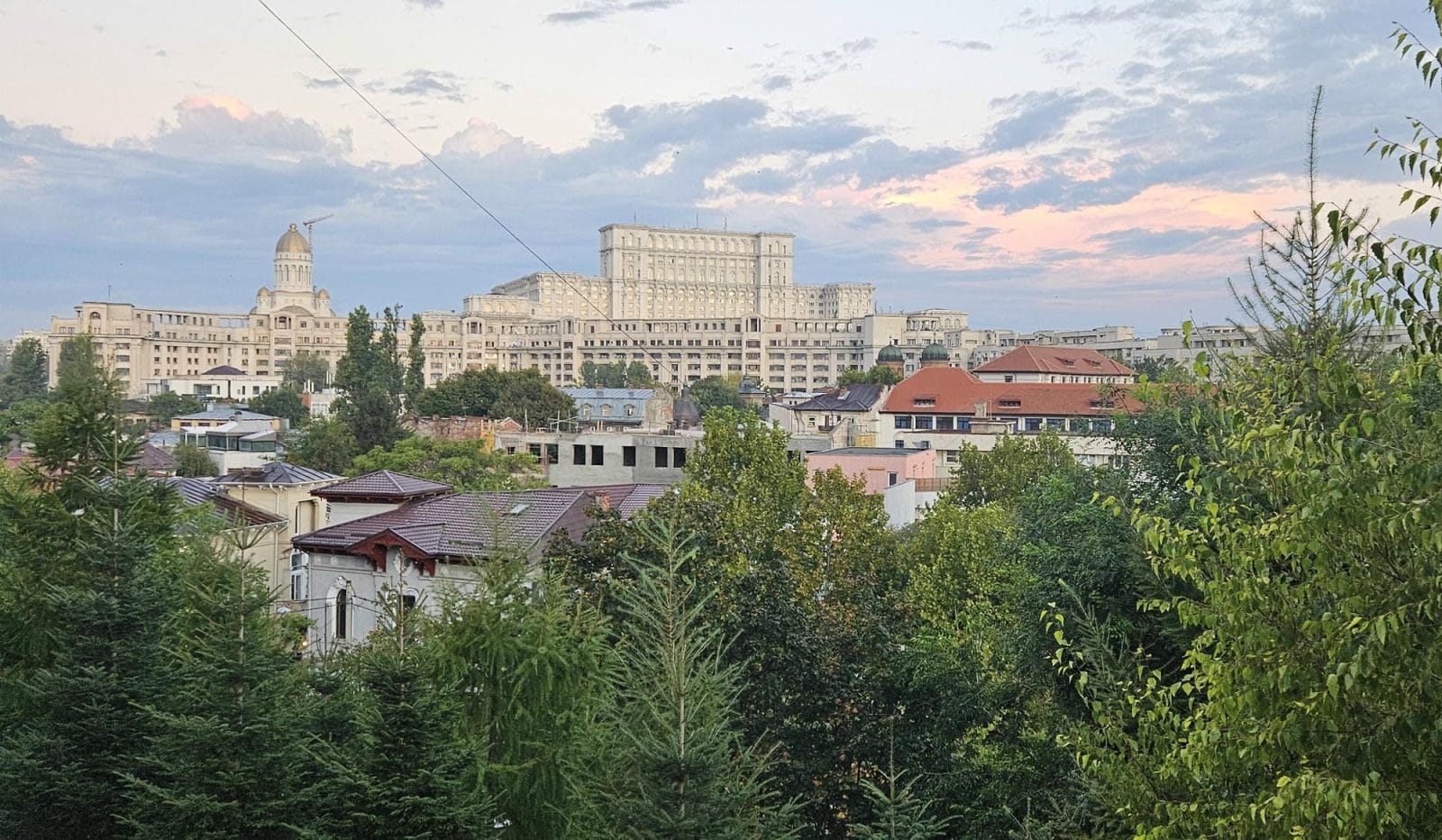
The Patriarchal Cathedral is another top place to visit in Bucharest; while exploring, you’ll have views of the Parliament building.