
Colle di Val d’Elsa Tuscany: Things To Do, Food & River Swimming
Colle di Val d’Elsa is a hilltop town in Tuscany known for its medieval upper town, the Elsa River and the Sentierelsa trail. I visited once for the river swimming and waterfalls and another time to explore the old town and its historic buildings.
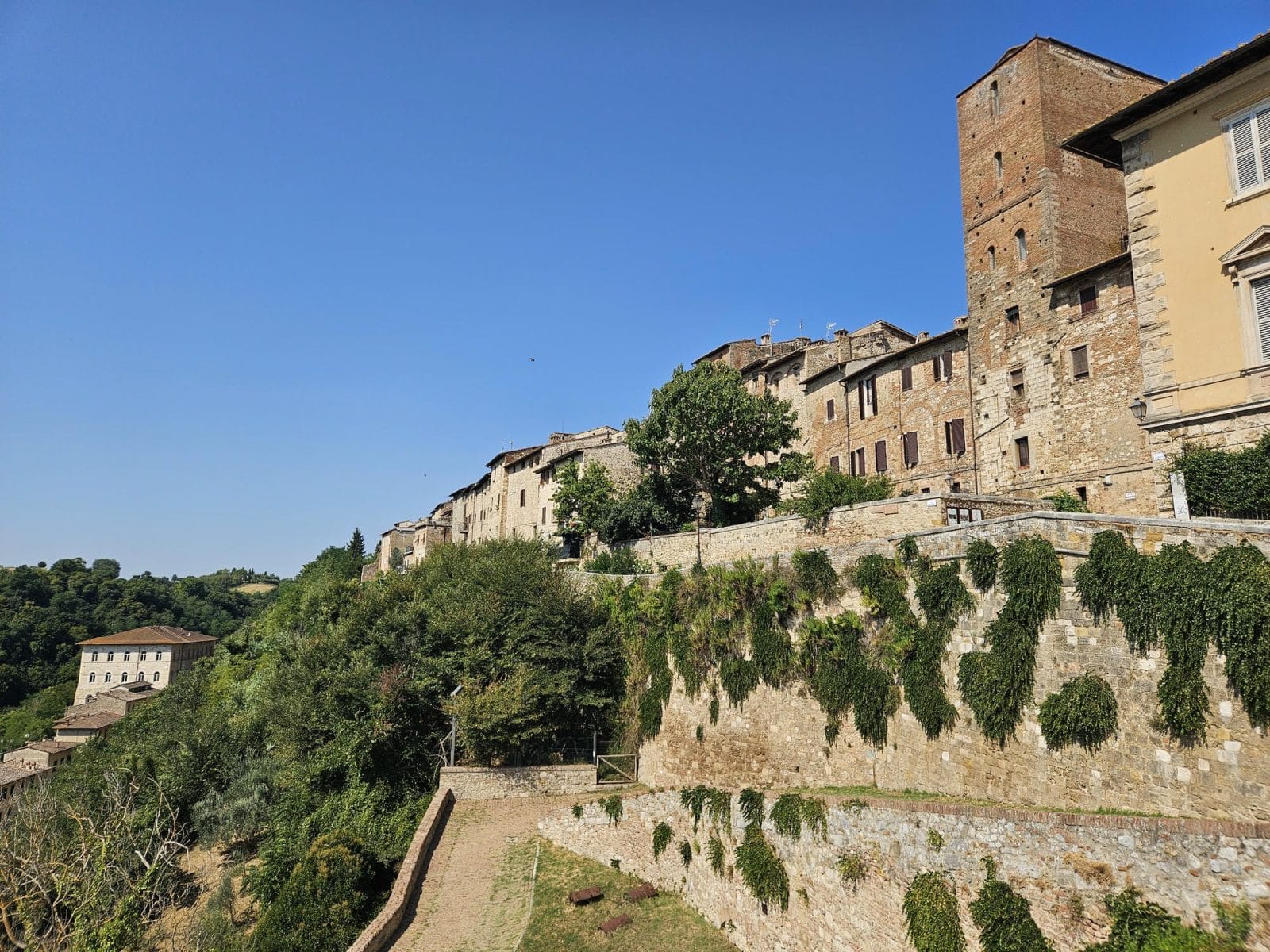
‘Colle di Val d’Elsa’ translates to ‘the Hill of Elsa Valley’, where ‘Elsa’ is the name of the river which crosses it and ‘Valdelsa’ is the name of the valley. The river is scenic and has a hiking trail alongside it from the centre.
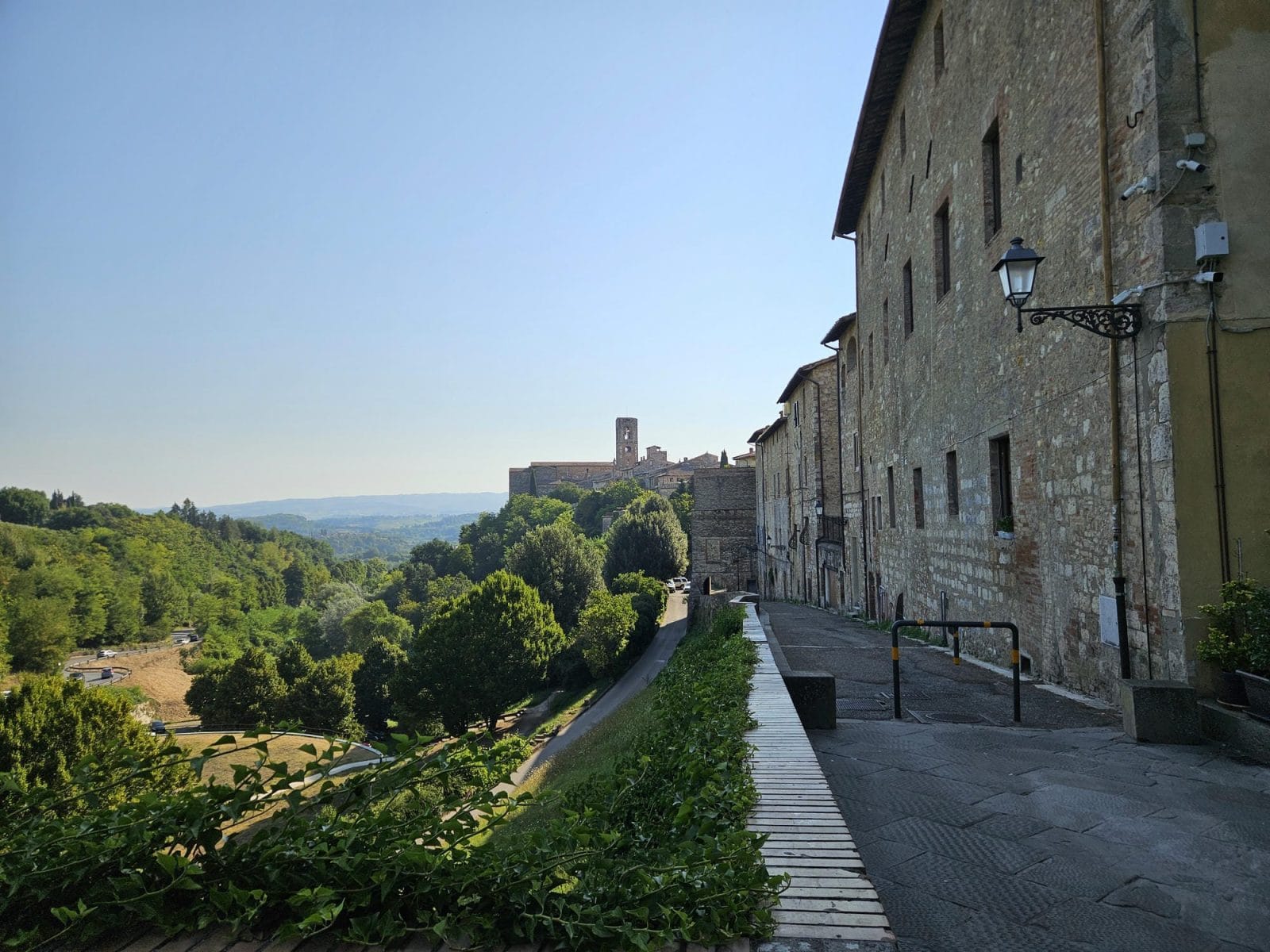
There are lots of interesting sights in the hilltop town, which is surrounded by countryside. It’s also a great place to dine out and enjoy local Tuscan food or wine.
What is Colle di Val d’Elsa Known For?
Colle di Val d’Elsa was prosperous during the Middle Ages and was a significant point on the Via Francigena pilgrimage route. It was the site of the 1269 Battle of Colle, which Dante the author mentioned in his book Purgatory.
It evolved into an important economic and cultural centre, known for its preserved medieval heritage and for using river power to drive industries such as paper mills, ironworks, and glassworks. It is now world-renowned as the City of Crystal, responsible for a significant portion of Italy’s crystal glass production.
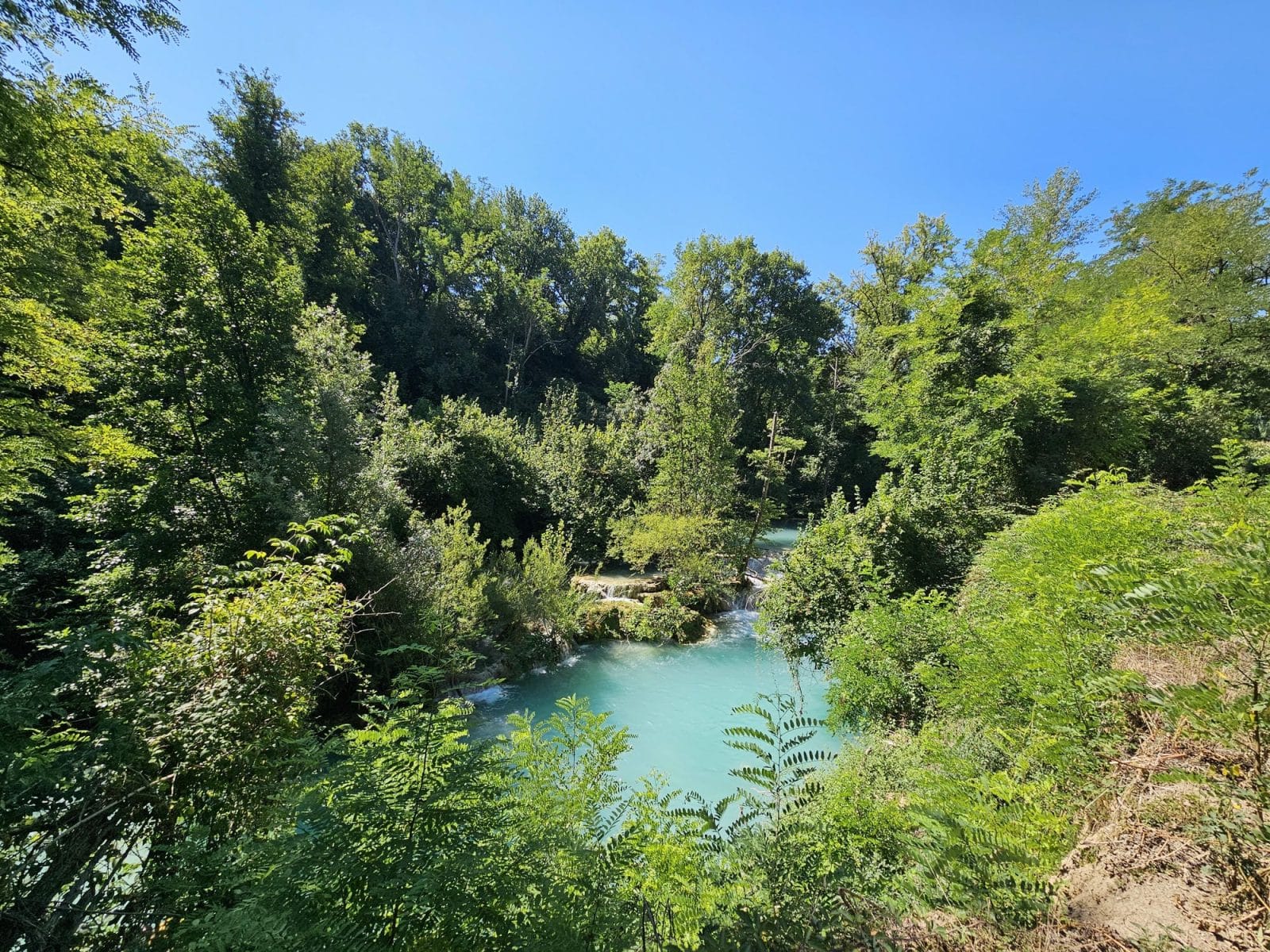
The river Elsa runs through the area, which is 47 miles long and flows through Tuscany. It has various waterfalls and during the summer is popular with people paddling and wild swimming. There are also various hiking routes that run alongside the water.
Things To Do in Colle di Val d’Elsa
Wild Swimming In The Elsa River
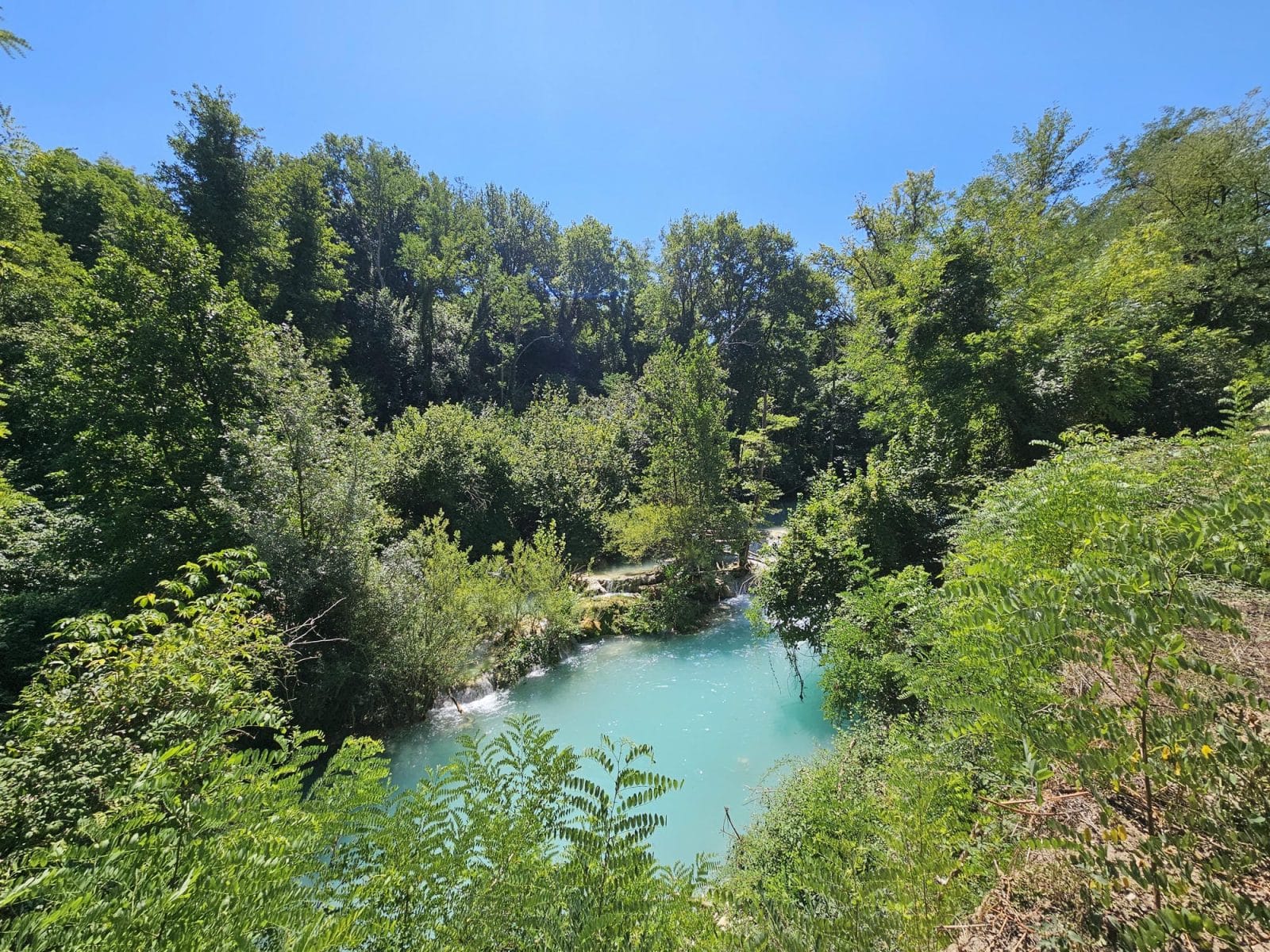
A fun activity to do during the summer is head down to the river and go for a paddle or swim. The trail is easy to find and runs from the central areas.
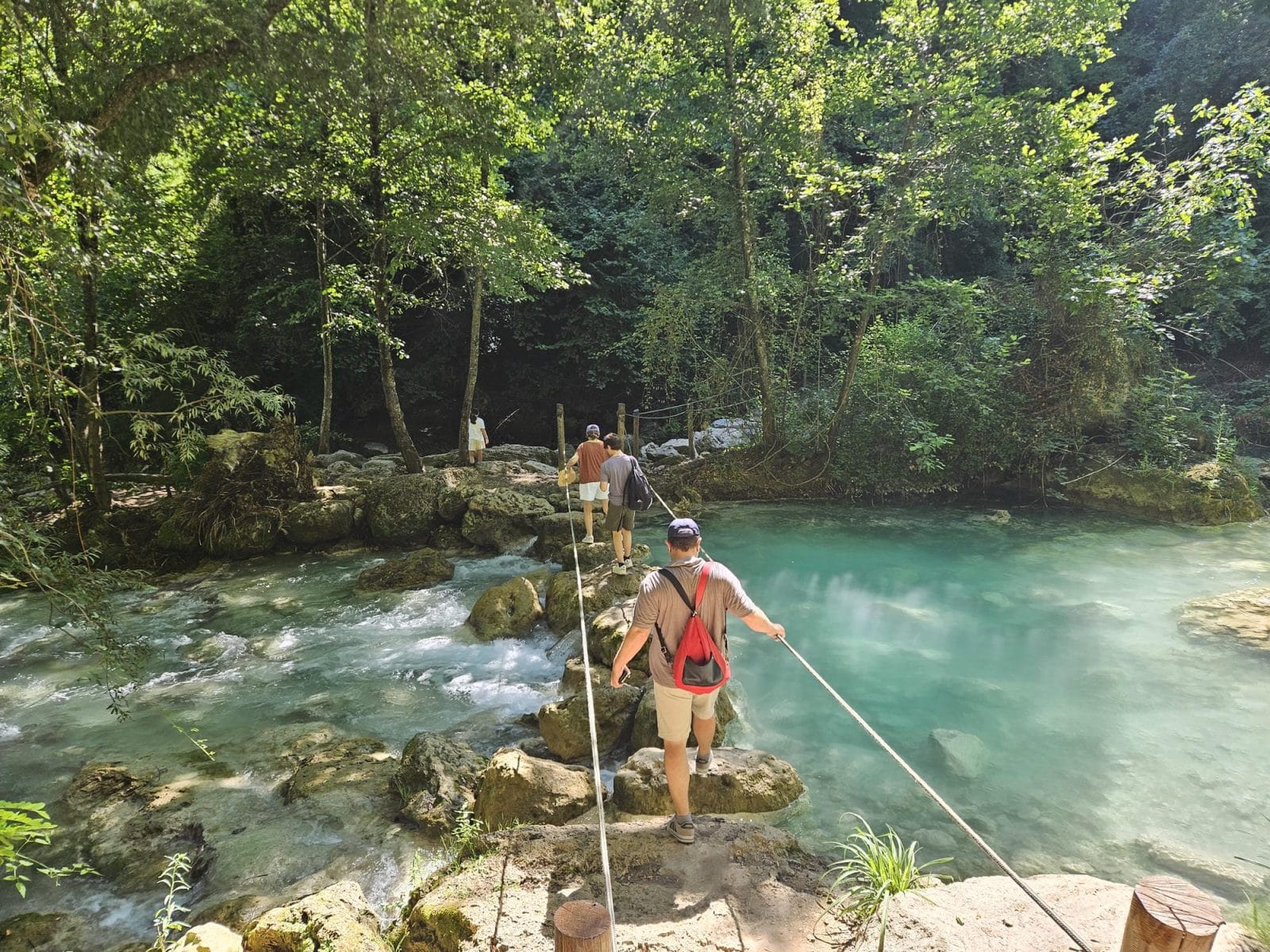
We enjoyed walking along the river, and the general advice beforehand was to find somewhere quiet along the section and pop in. We found it busy in parts, with bottlenecks at the stepping-stone bridges across the water.
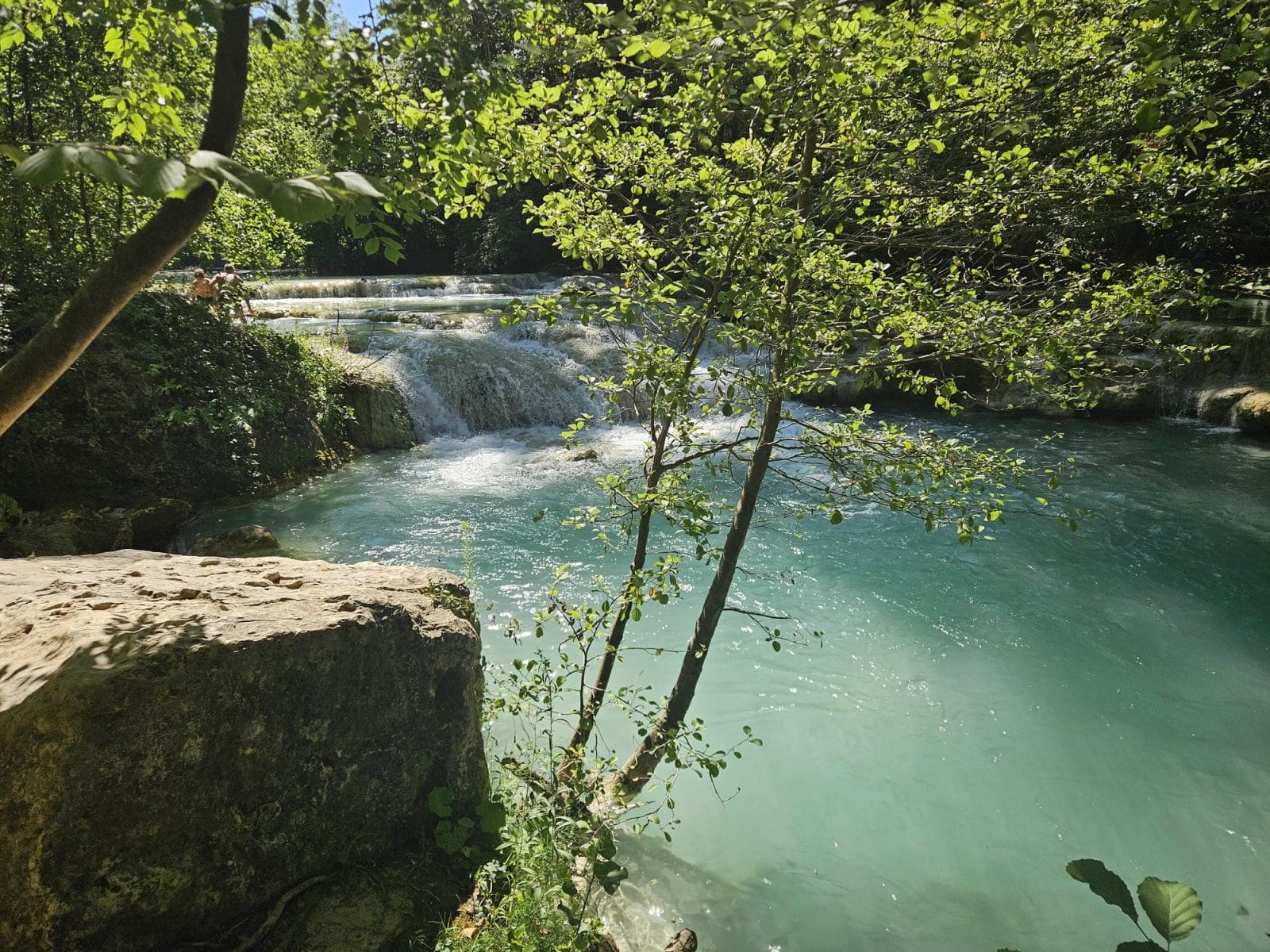
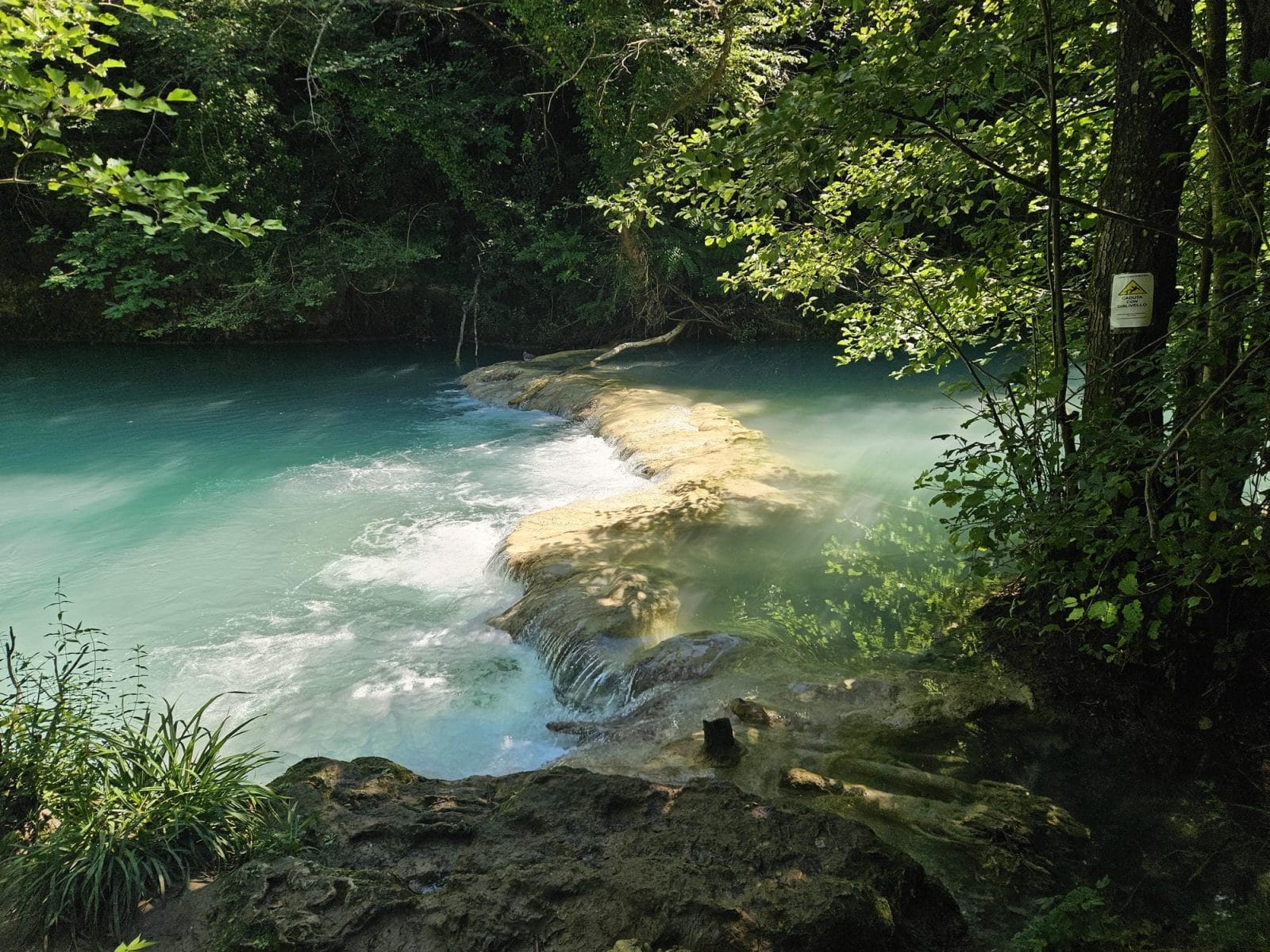
We found various places to enter the water and had fun getting in just above a small waterfall. The part of the river we were in was deep enough for comfortable swimming, with a few places to hold onto trees and float while appreciating the views.
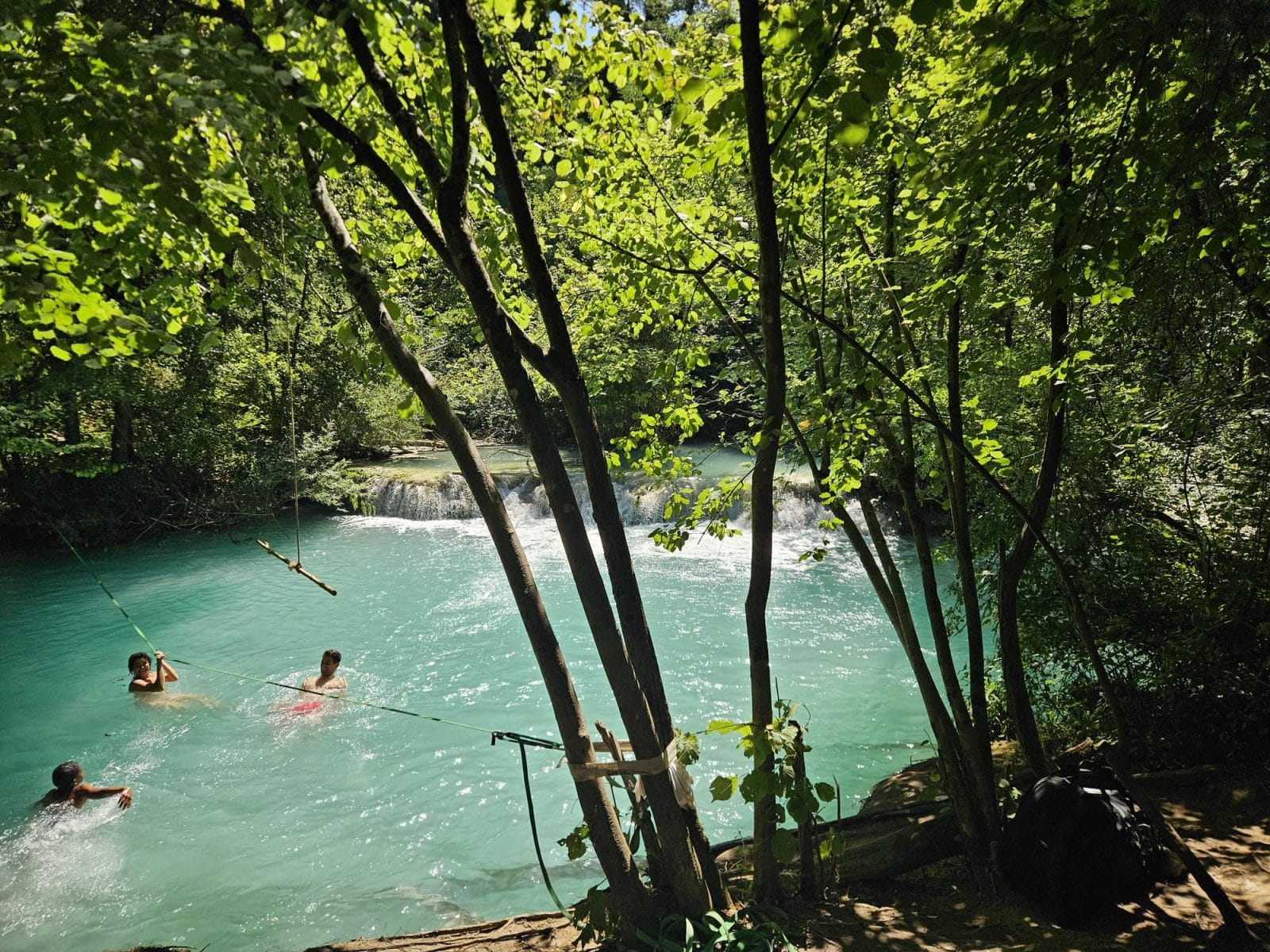
Other people were swimming along the course, including at spots with small waterfalls. To get the pick of the bank, it’s best to arrive early. Another section on the way had a rope swing, which was rather popular.
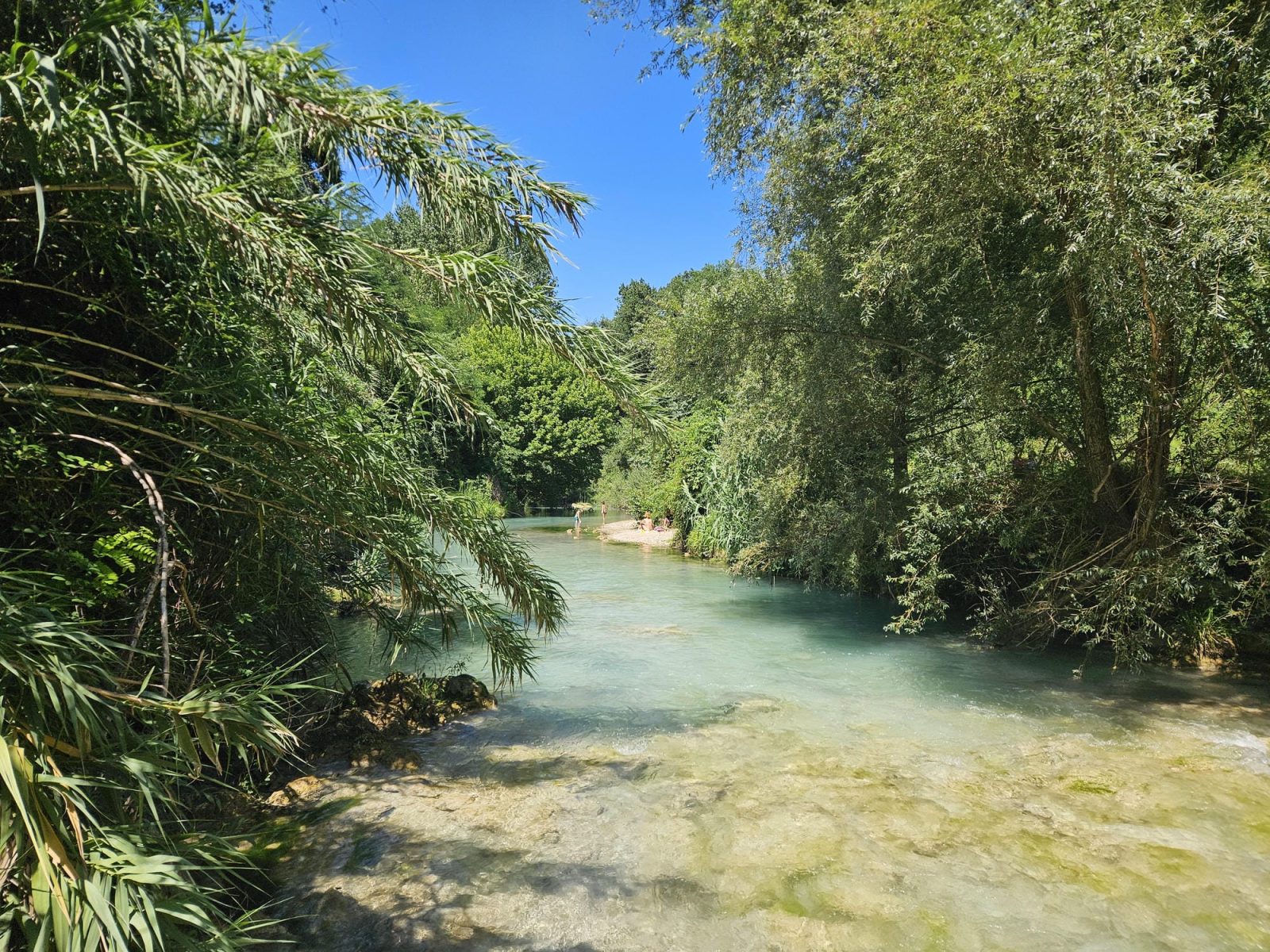
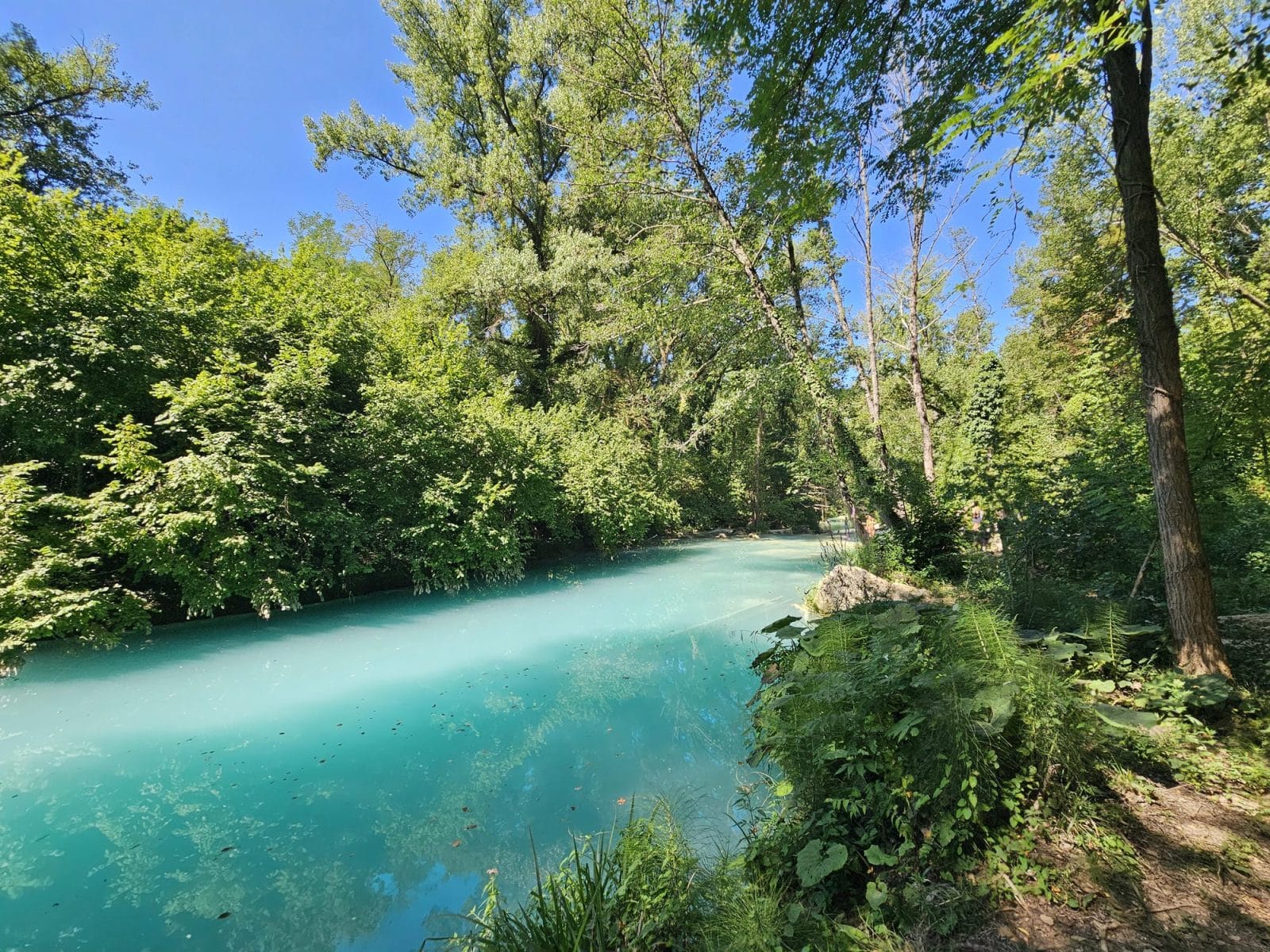
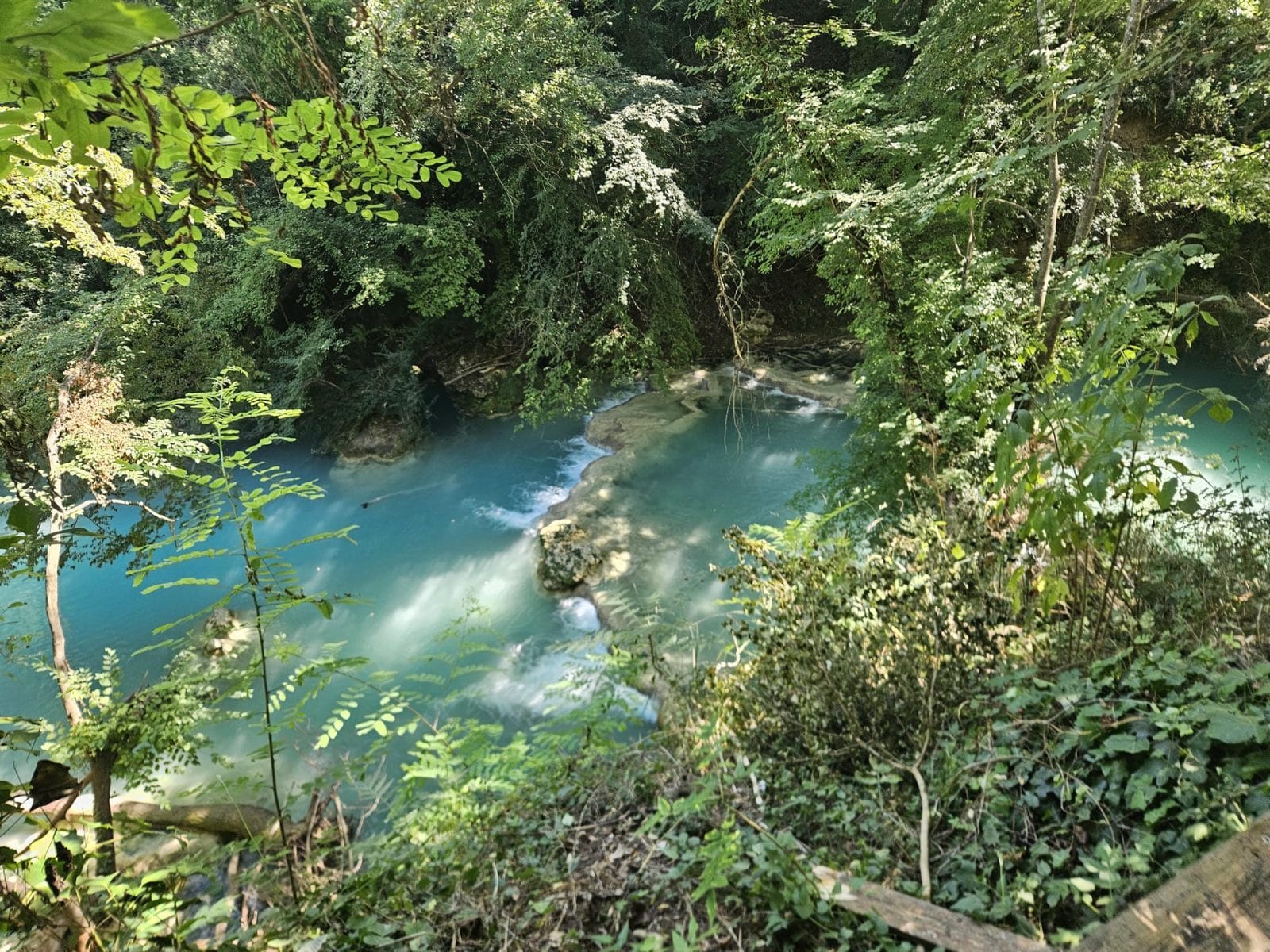
The water was nice, not too cold, and the currents were slow, so I felt safe while in the water. There was nowhere to change, so I advise bringing a large towel to change clothes afterwards.
Walk the Sentierelsa Trail
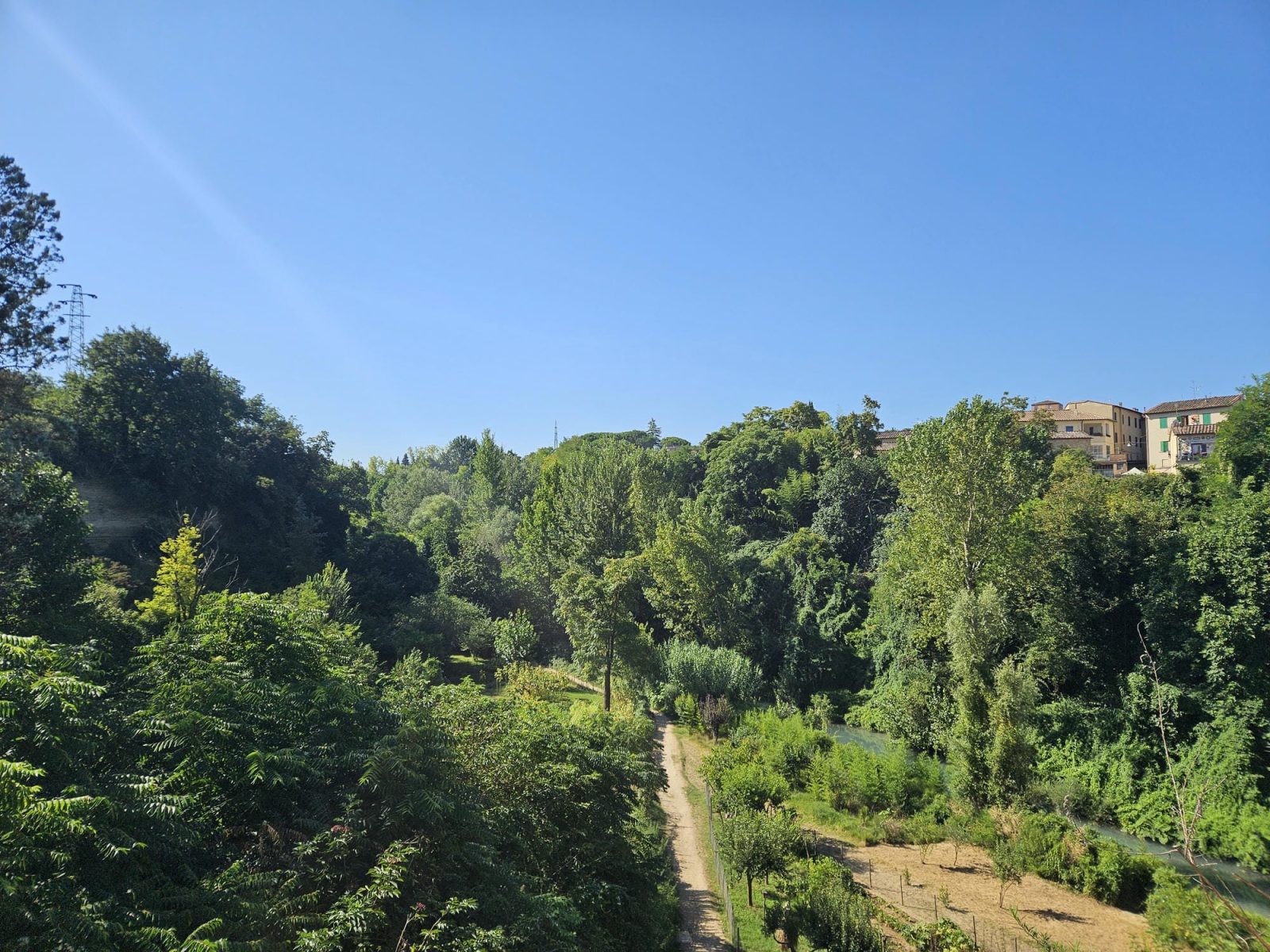
The Sentierelsa Trail is a beautiful place to walk alongside the river. We walked the length in search of perfect swimming spots, taking in the scenery along the way. We started at the road bridge and then followed it upstream to the main falls.
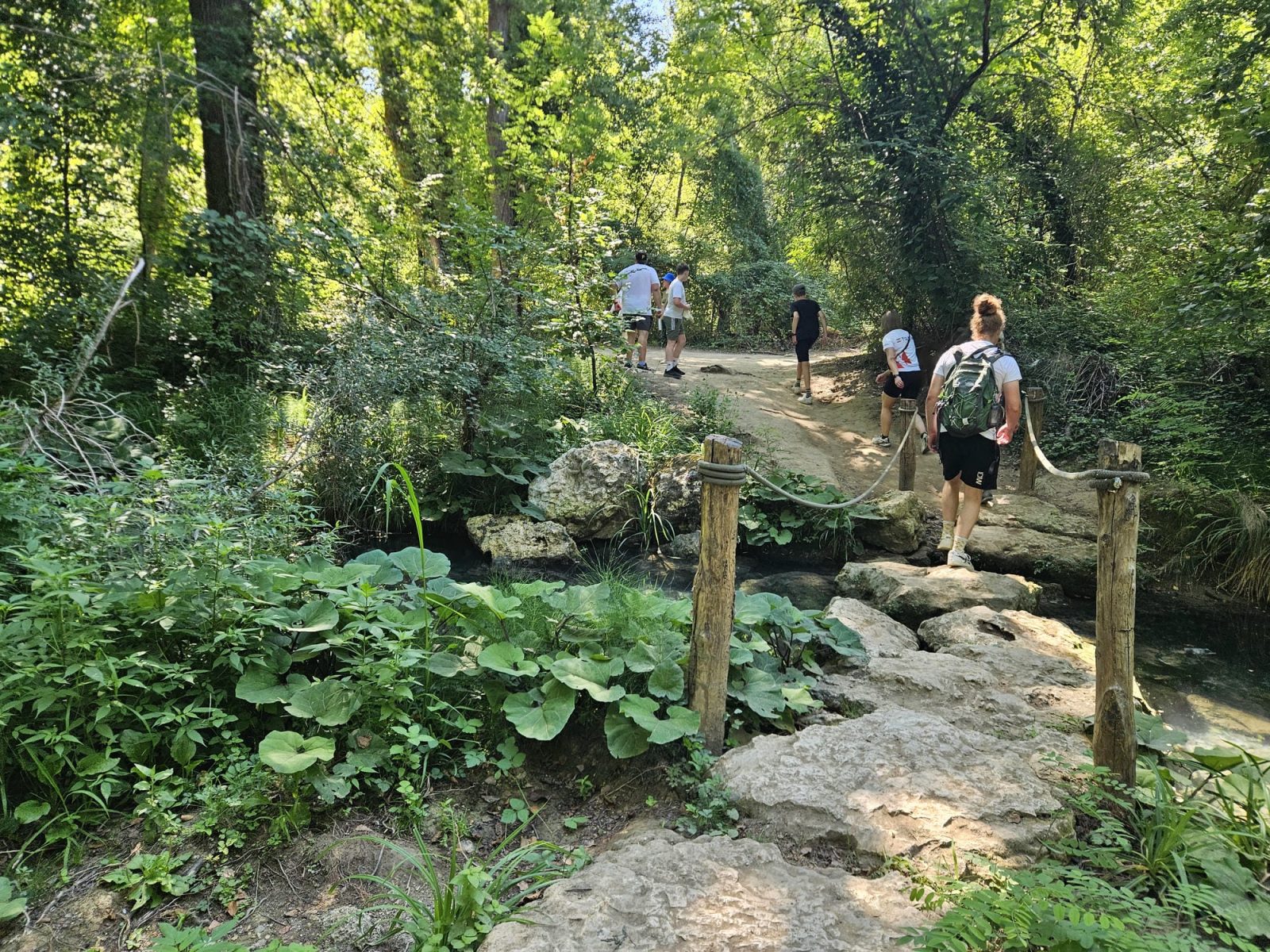
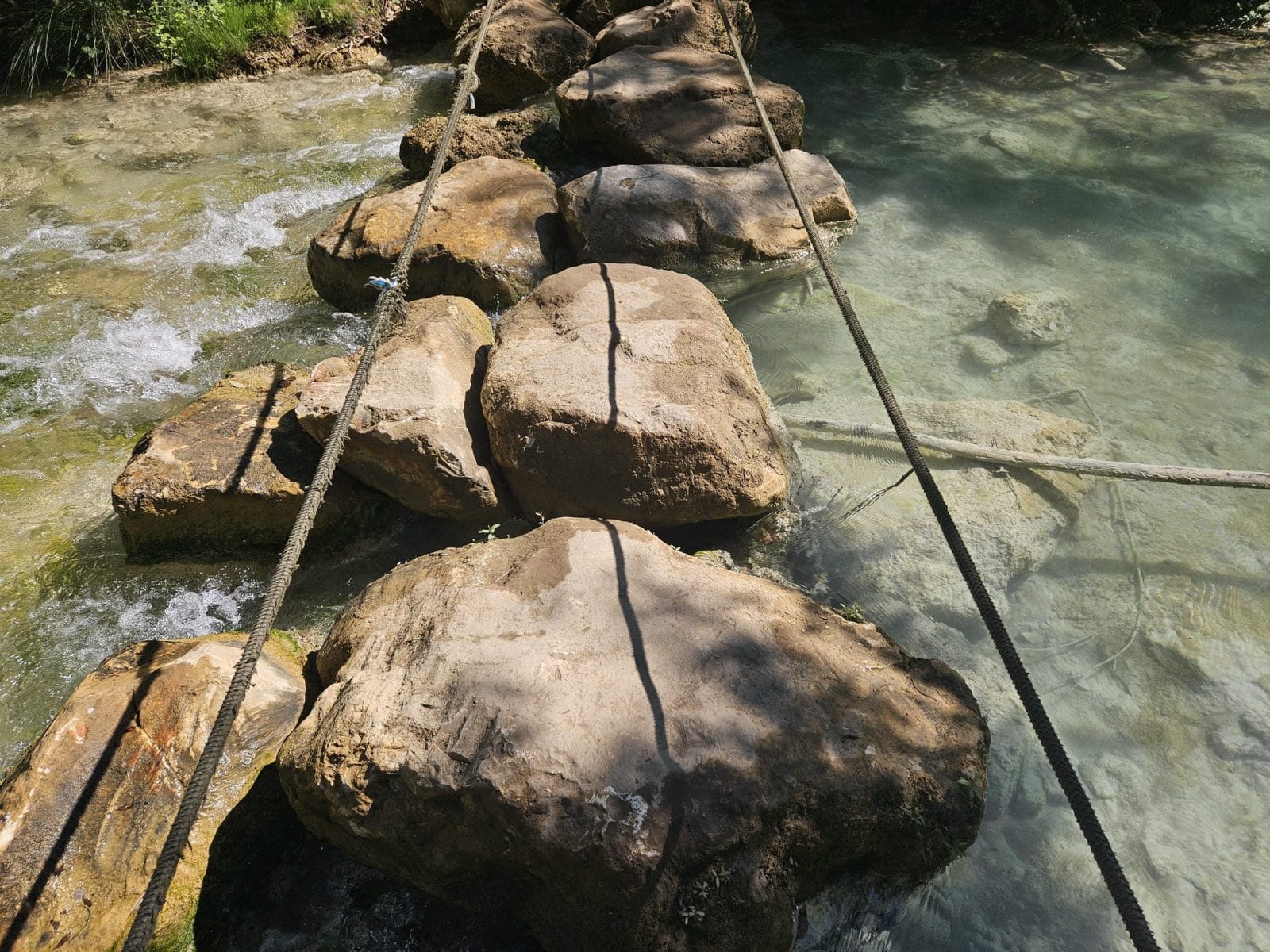
There were a few crossings which were stepping stones with guide ropes. They felt pretty safe, but watch your footing if a wet person had dripped before you crossed.
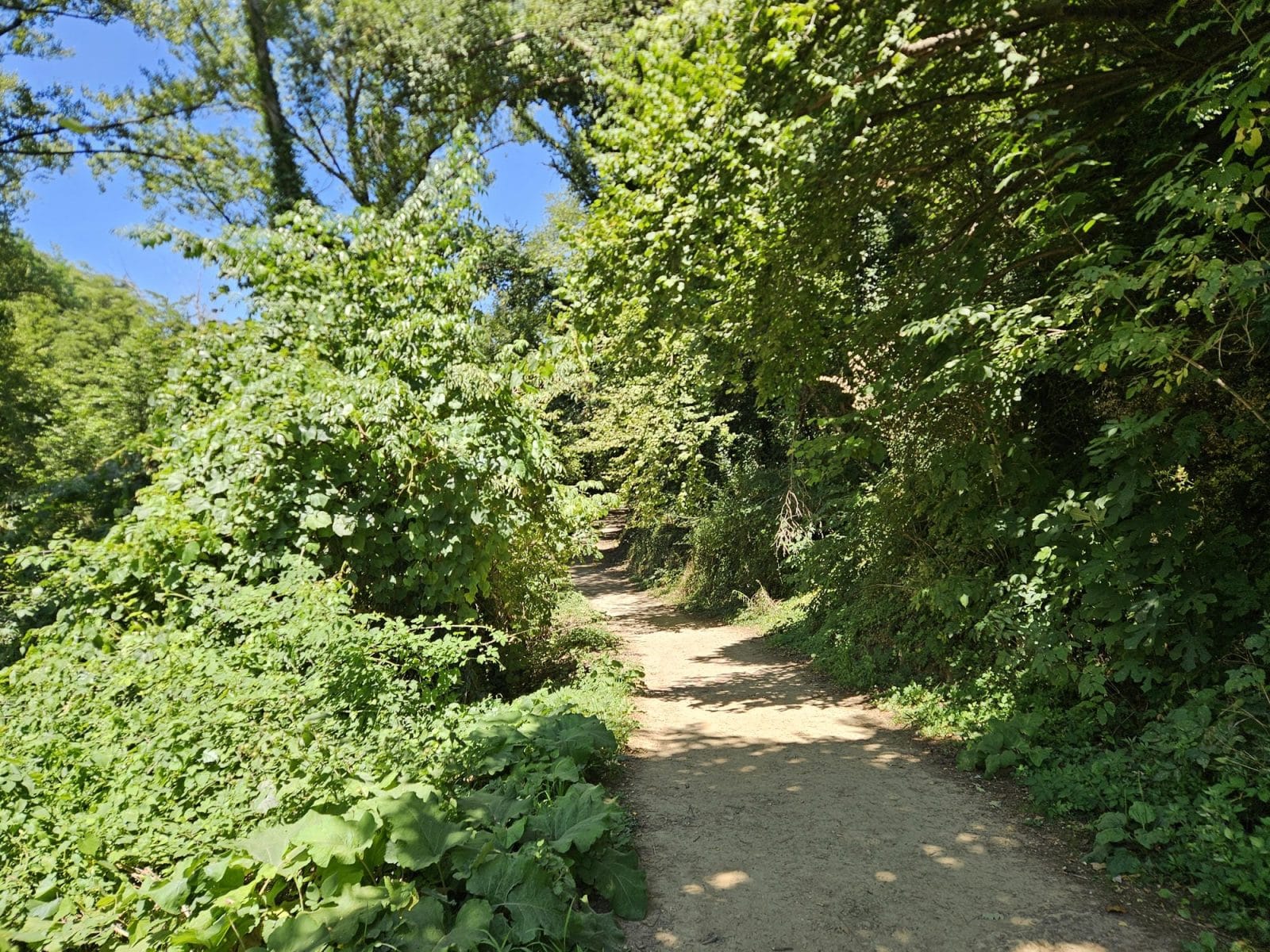
We spotted wildlife on our walk here, including big fish and lots of birds. The plants alongside the river were also special. In the early part, there were a few small holdings growing vegetables.
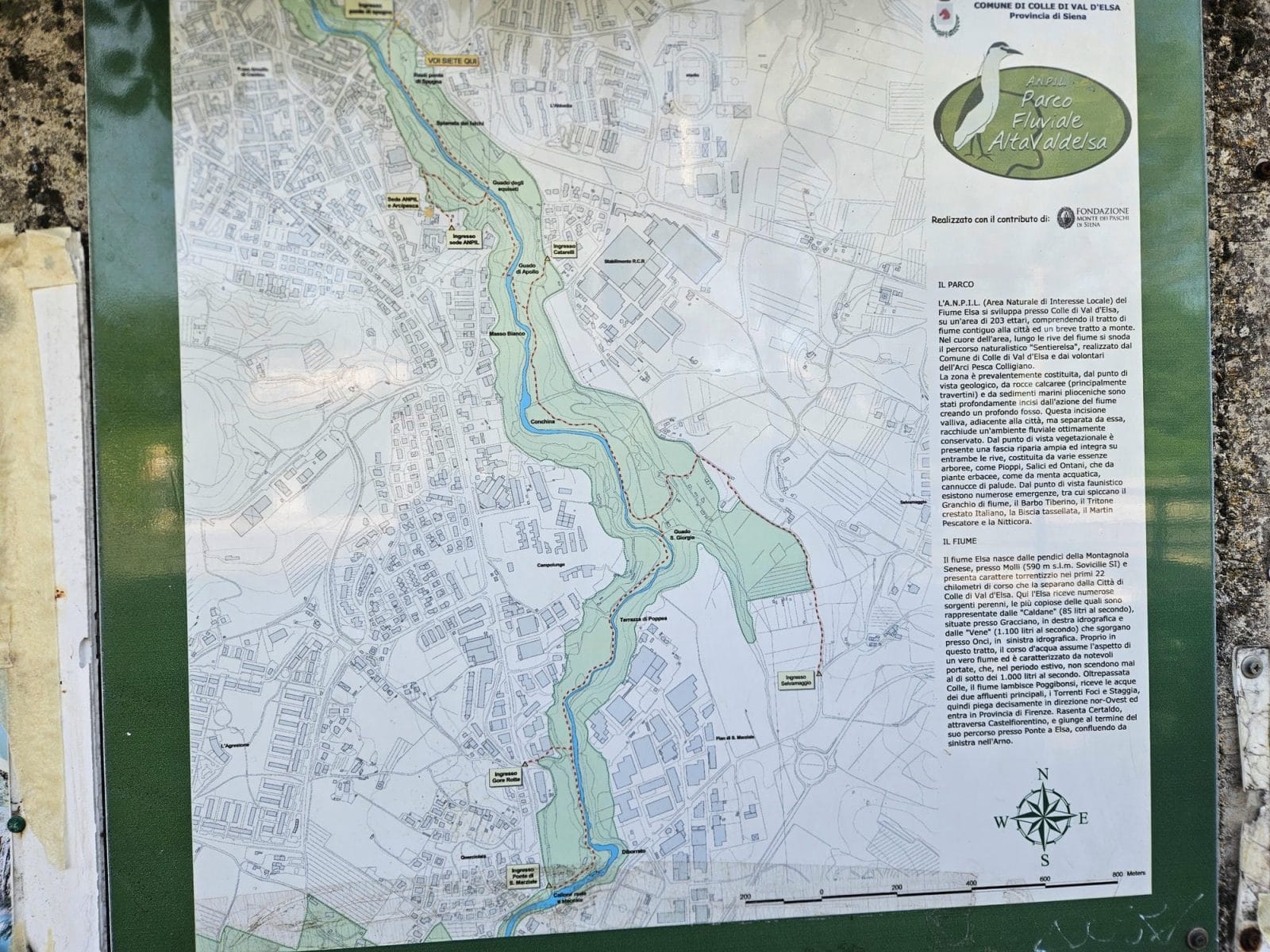
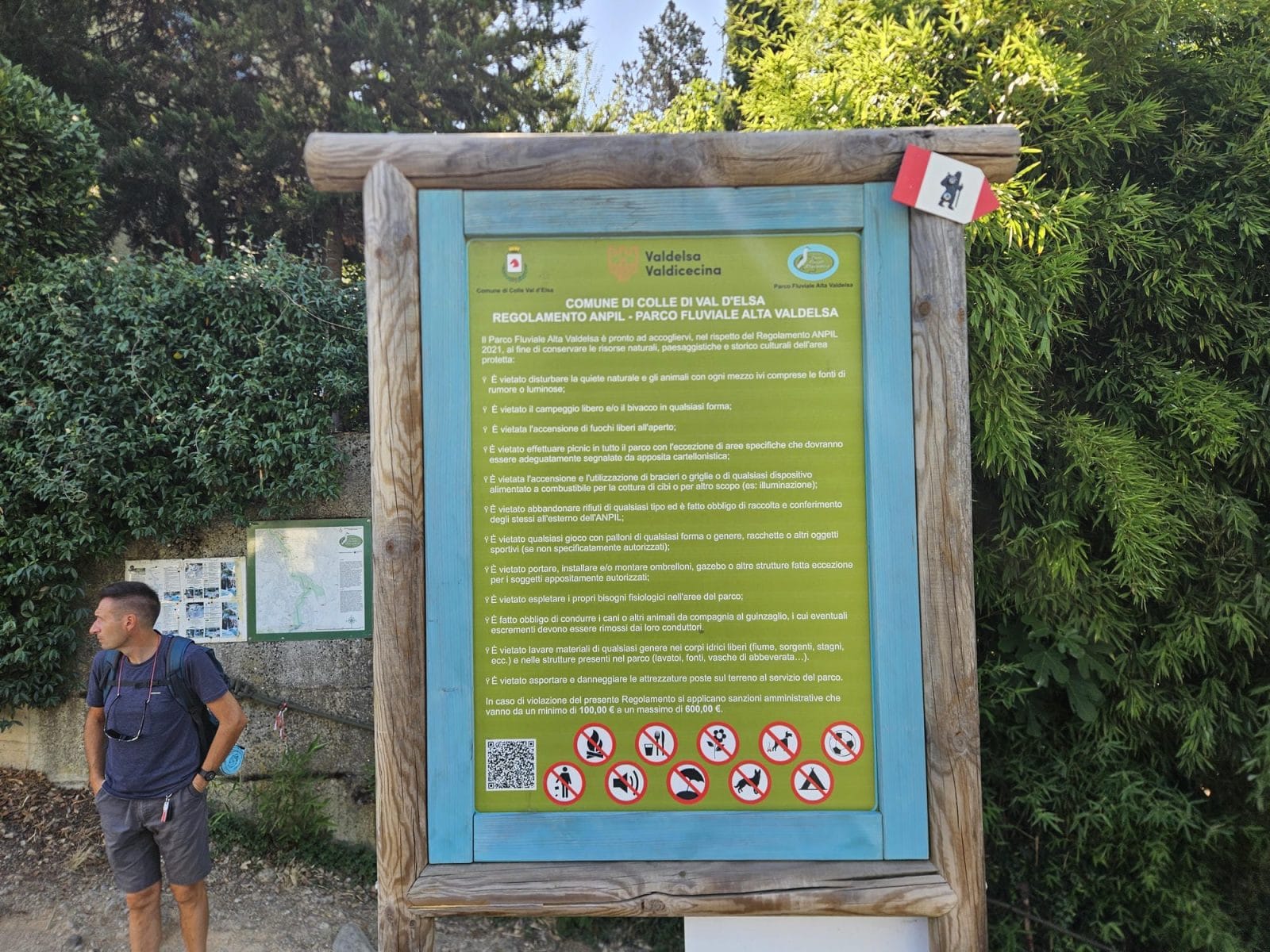
At the start of the walk, there are some maps to help you find the key places of interest. There are also some commonsense rules to follow in the area.
Medieval Upper Town
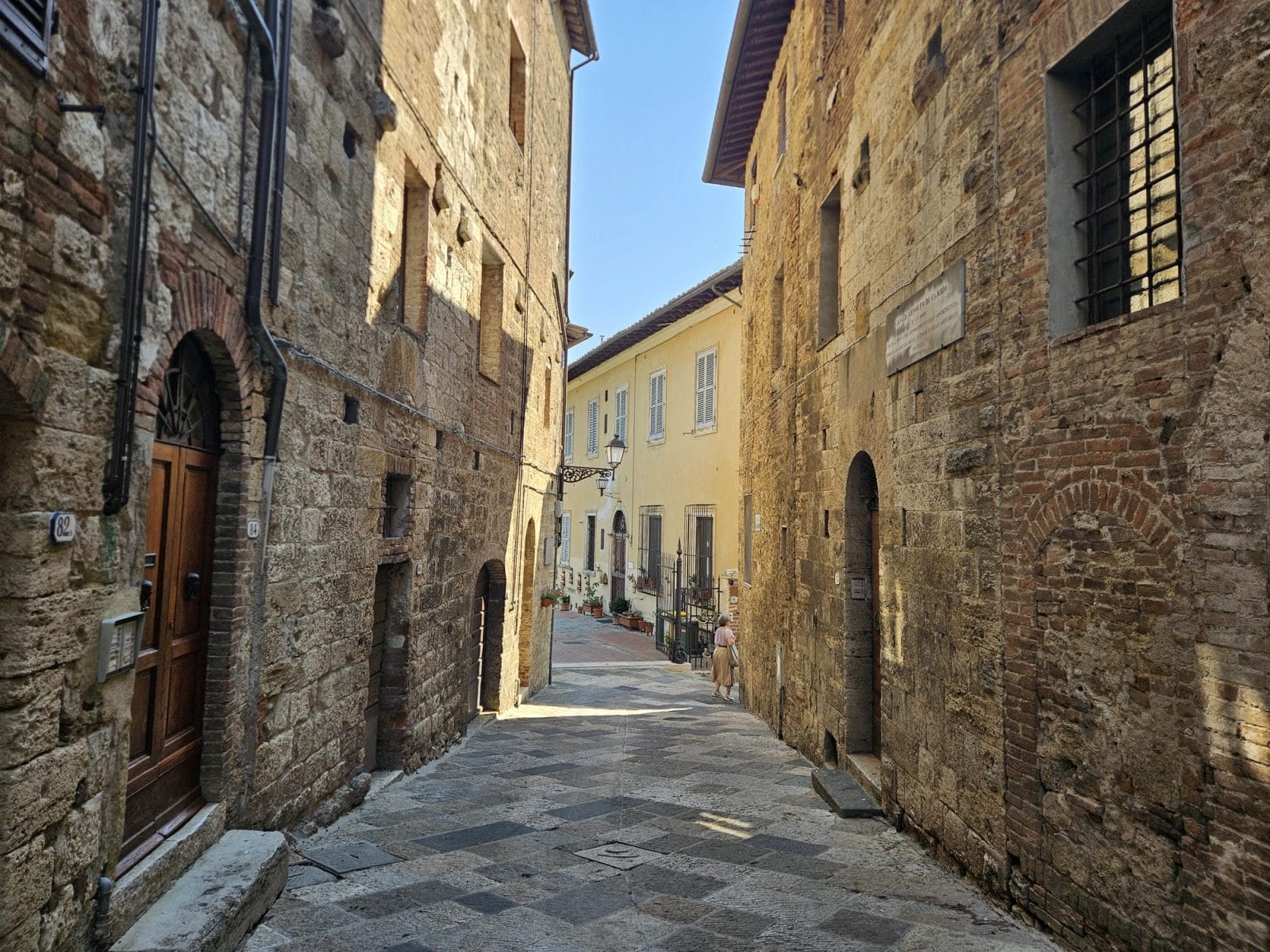
The upper town is the main medieval part, full of little gems to see while exploring. The streets are narrow once you have walked up the hill, with lots of beautiful buildings. This includes fortifications, gates, palaces and churches. Note: to reach the top, it is rather a steep walk on cobbled streets.
Porta Nuova
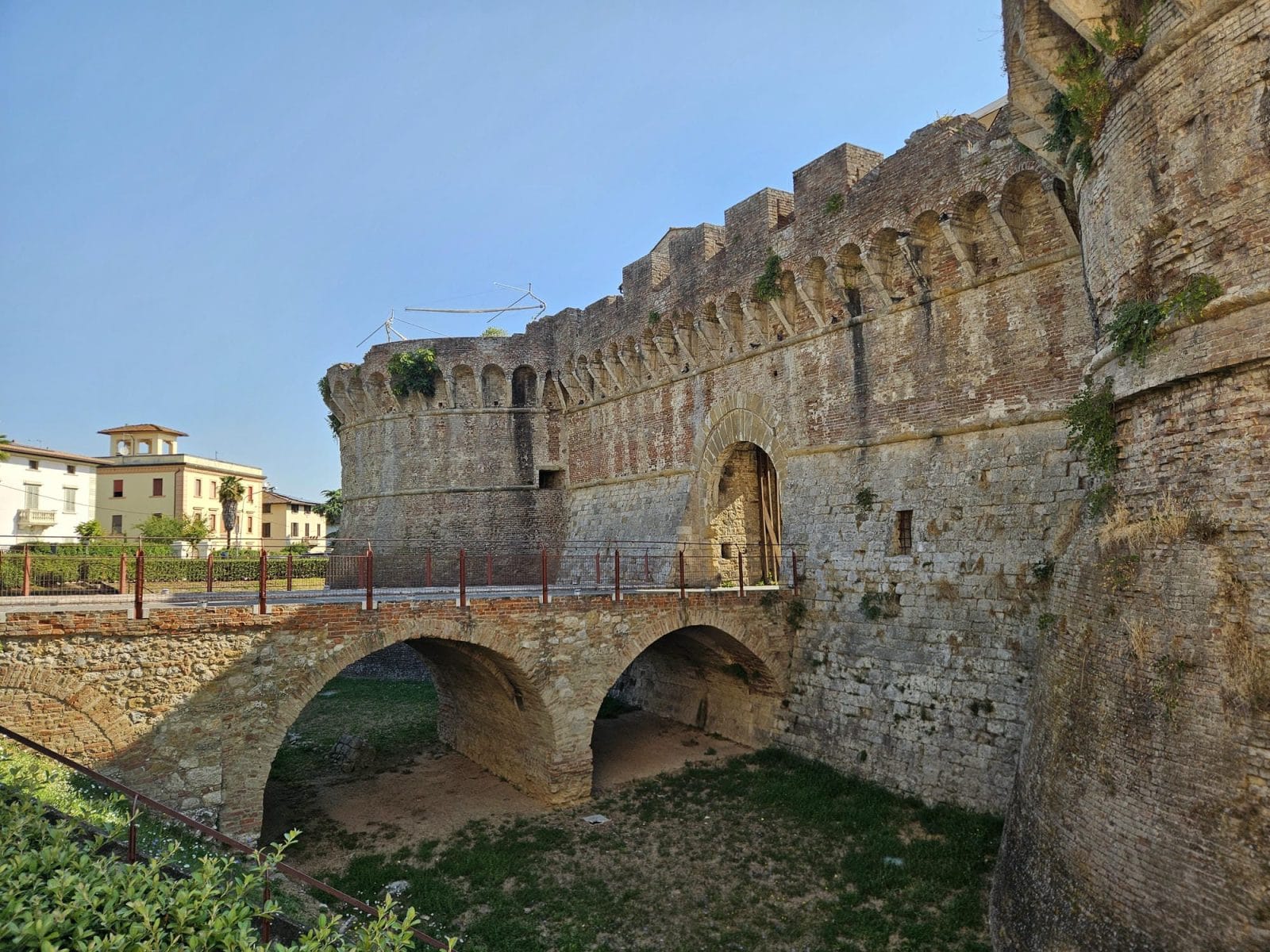
One of the main sights is Porta Nuova, a gate that provided access to the medieval village and formed part of its defences. The current gate was built from a combination of stone and terracotta. This was built to replace the previous Selva gate that was destroyed during a siege in 1479.
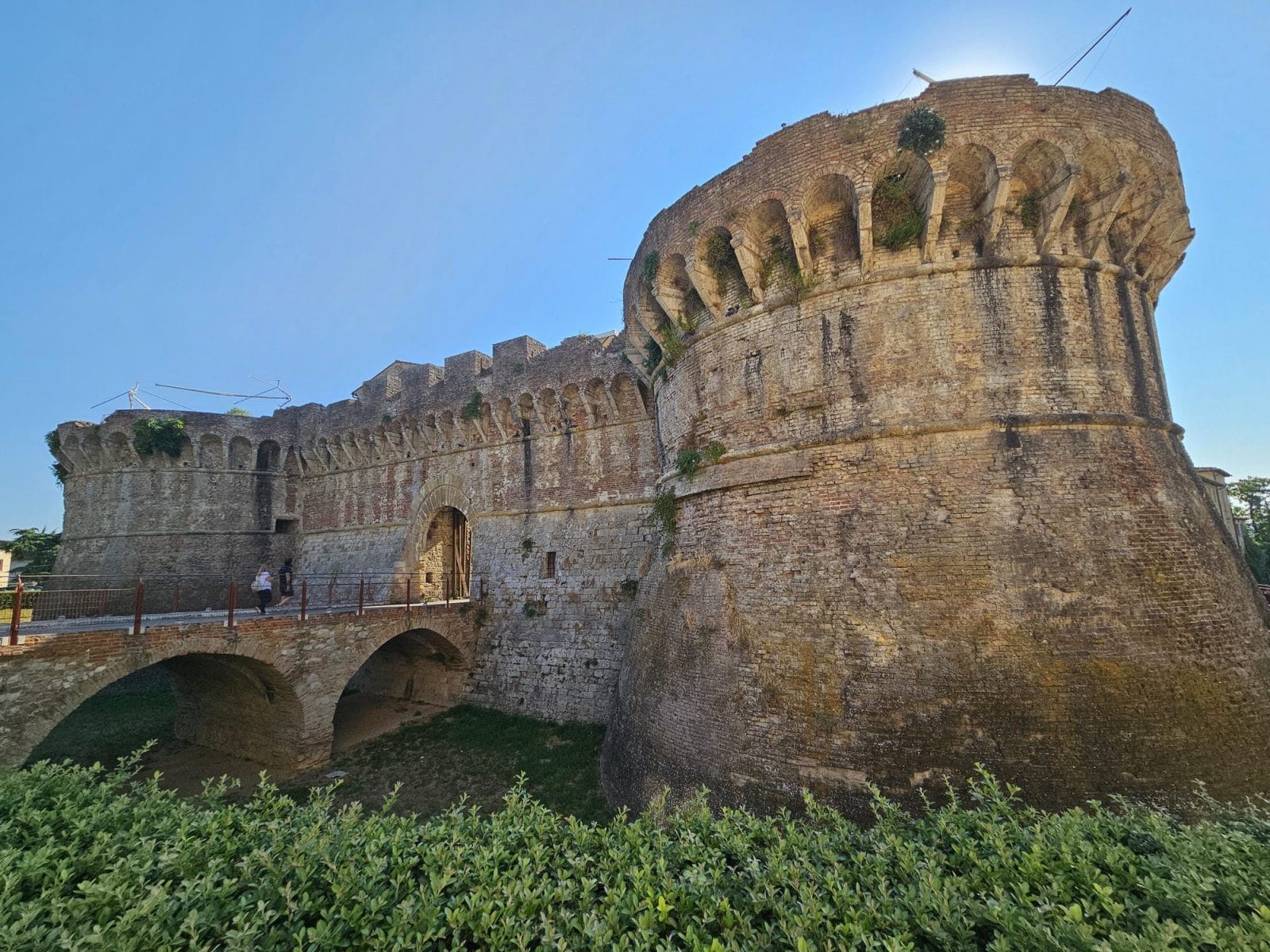
Porta Nuova is flanked by two bastions and has a moat. The gate is a wonderful example of Renaissance military architecture and is well worth the uphill walk to see it. Parts of the gate are now a restaurant.
Duomo di Colle: Cathedral & Crypt
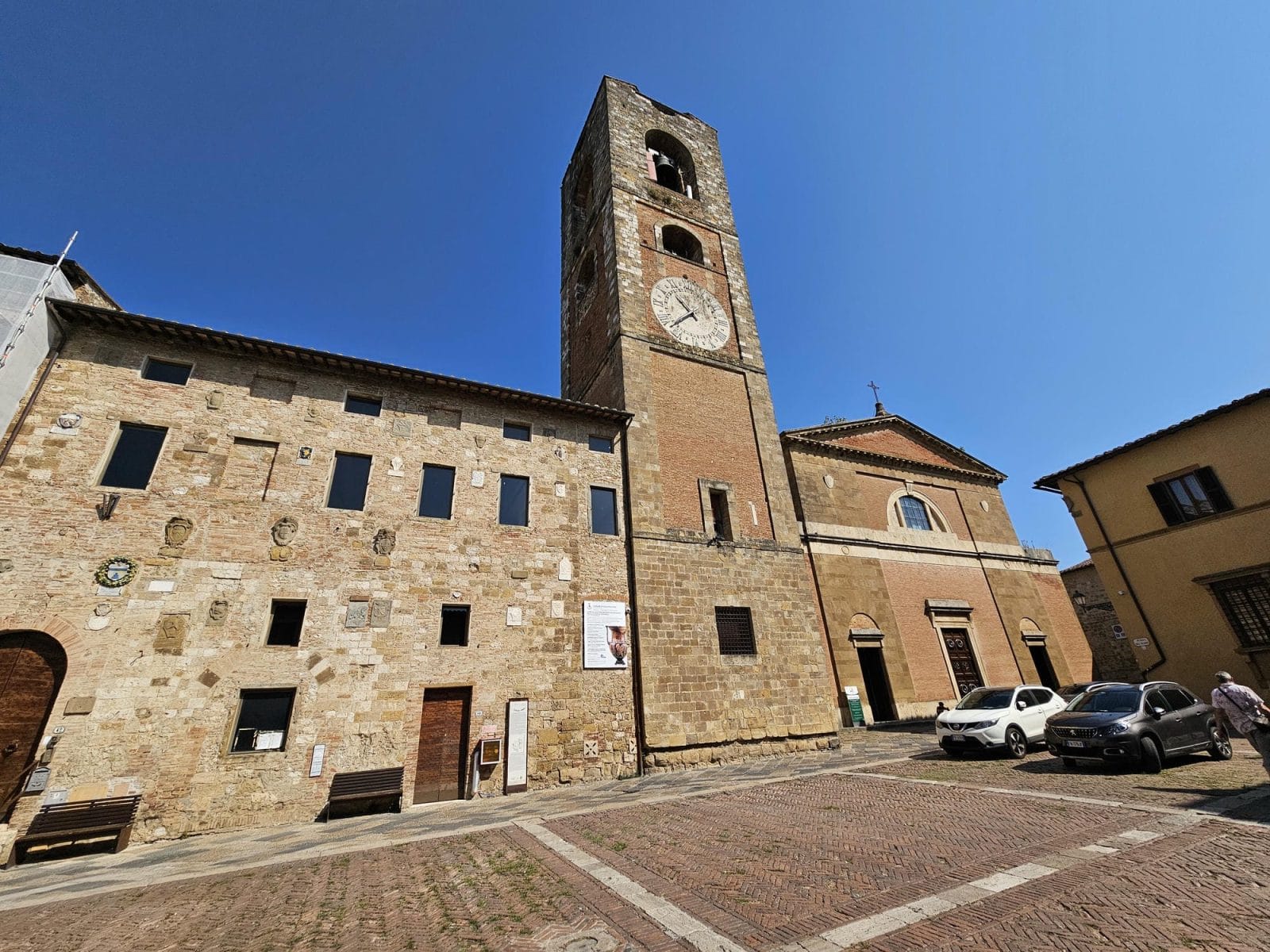
The principal church is the Duomo di Colle, dedicated to Saints Albert and Martial. The cathedral was begun in 1603, following the creation of the local diocese in 1592. It was built on the site of an old parish church. The cathedral is free to go inside.
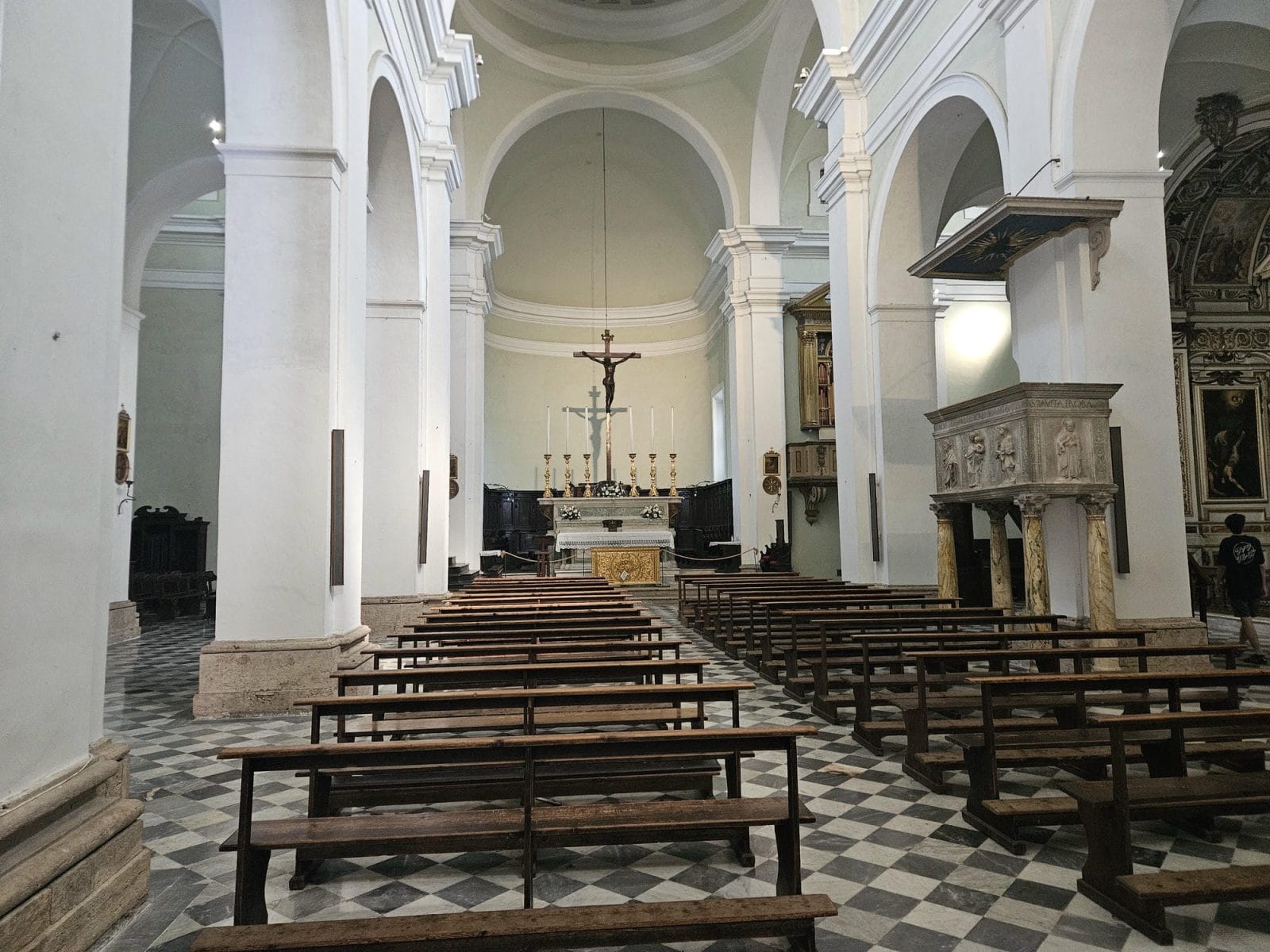
The building is in the shape of a Greek cross and has a pretty nave. There were also side chapels with some good artworks.
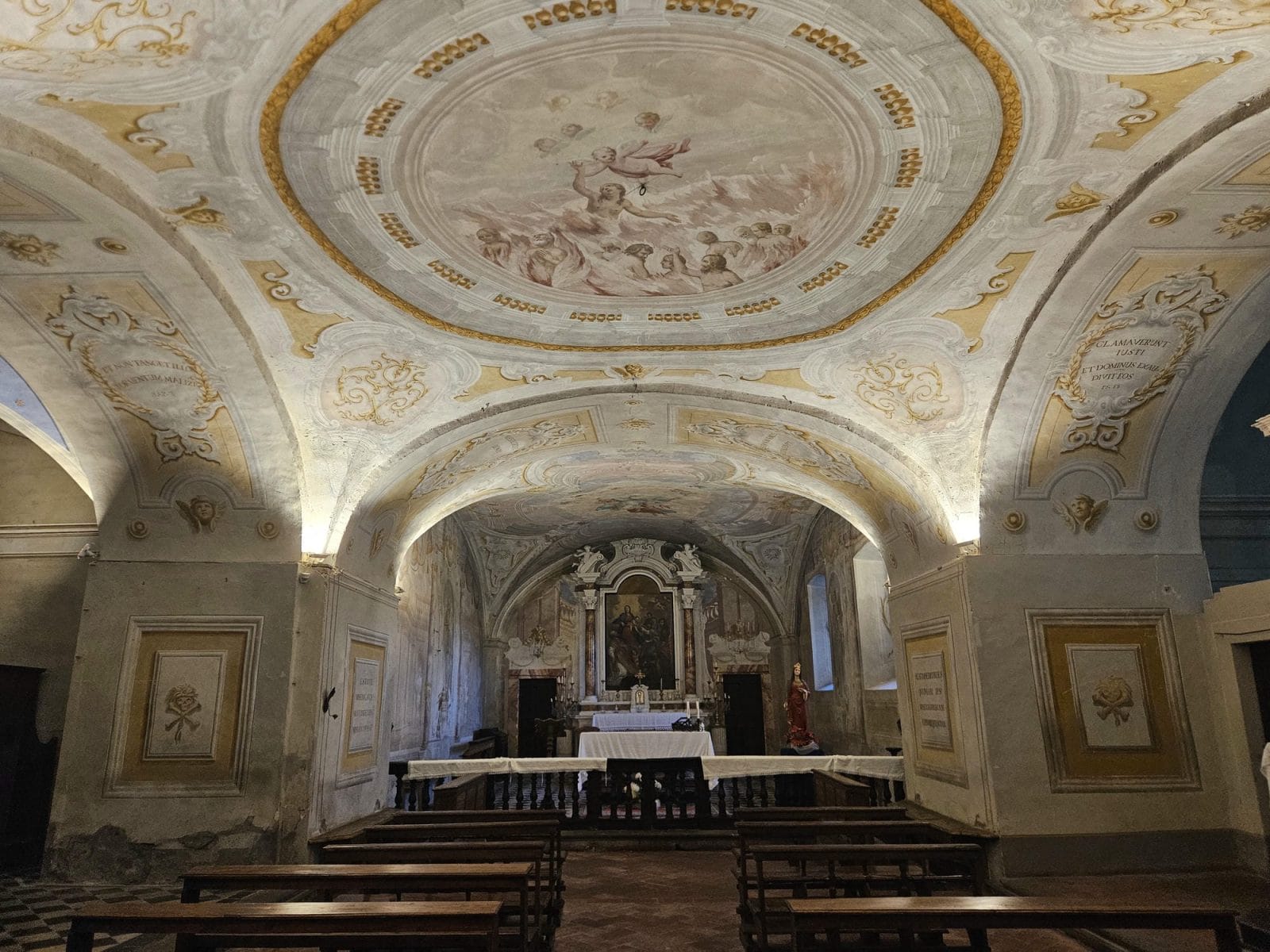
Next door to the cathedral is the Duomo di Colle crypt, which is also free to enter. This is underground and was a cool place to escape the heat. I was really impressed with the decor inside and had the pleasure of having the crypt to myself.
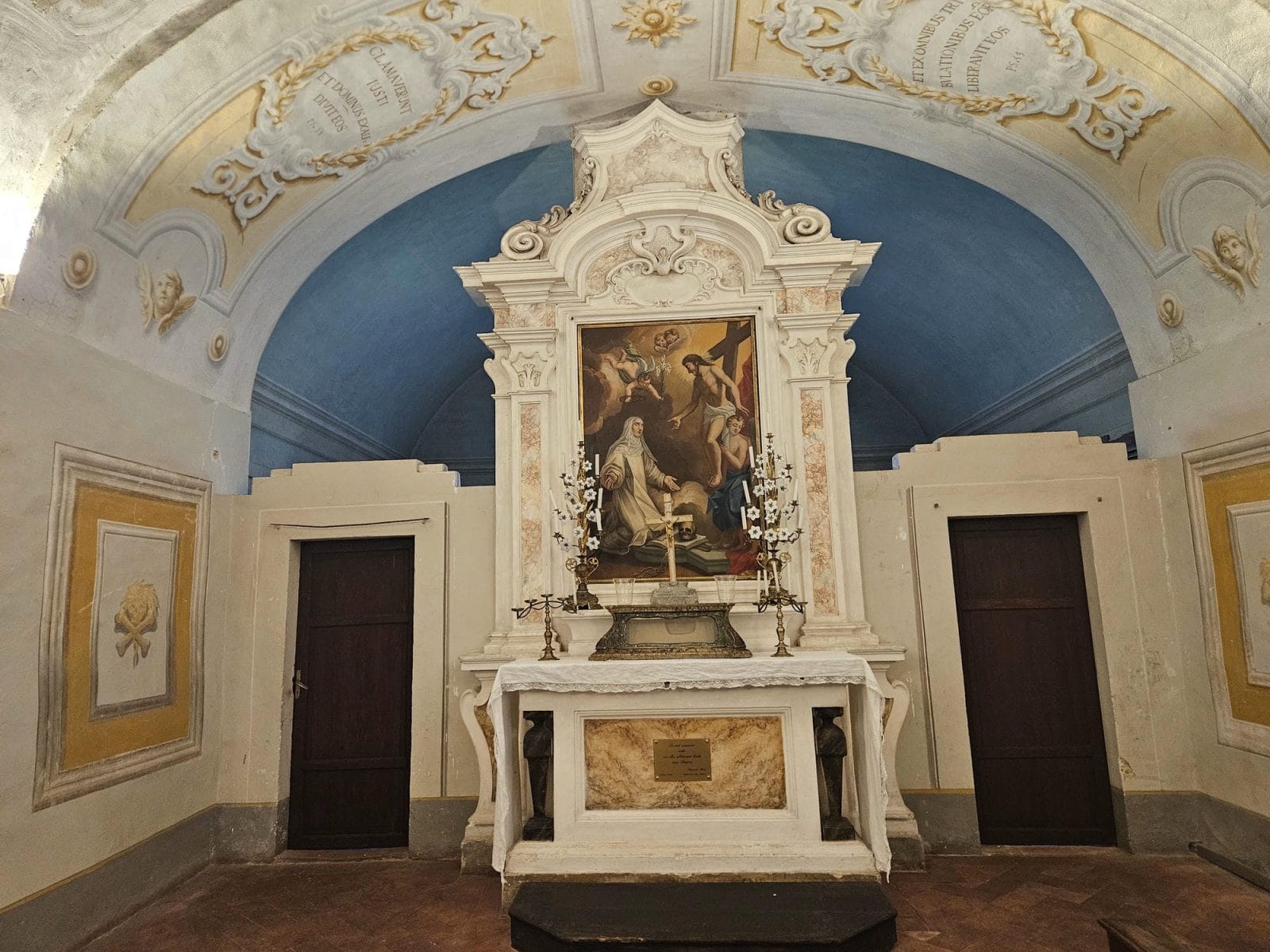
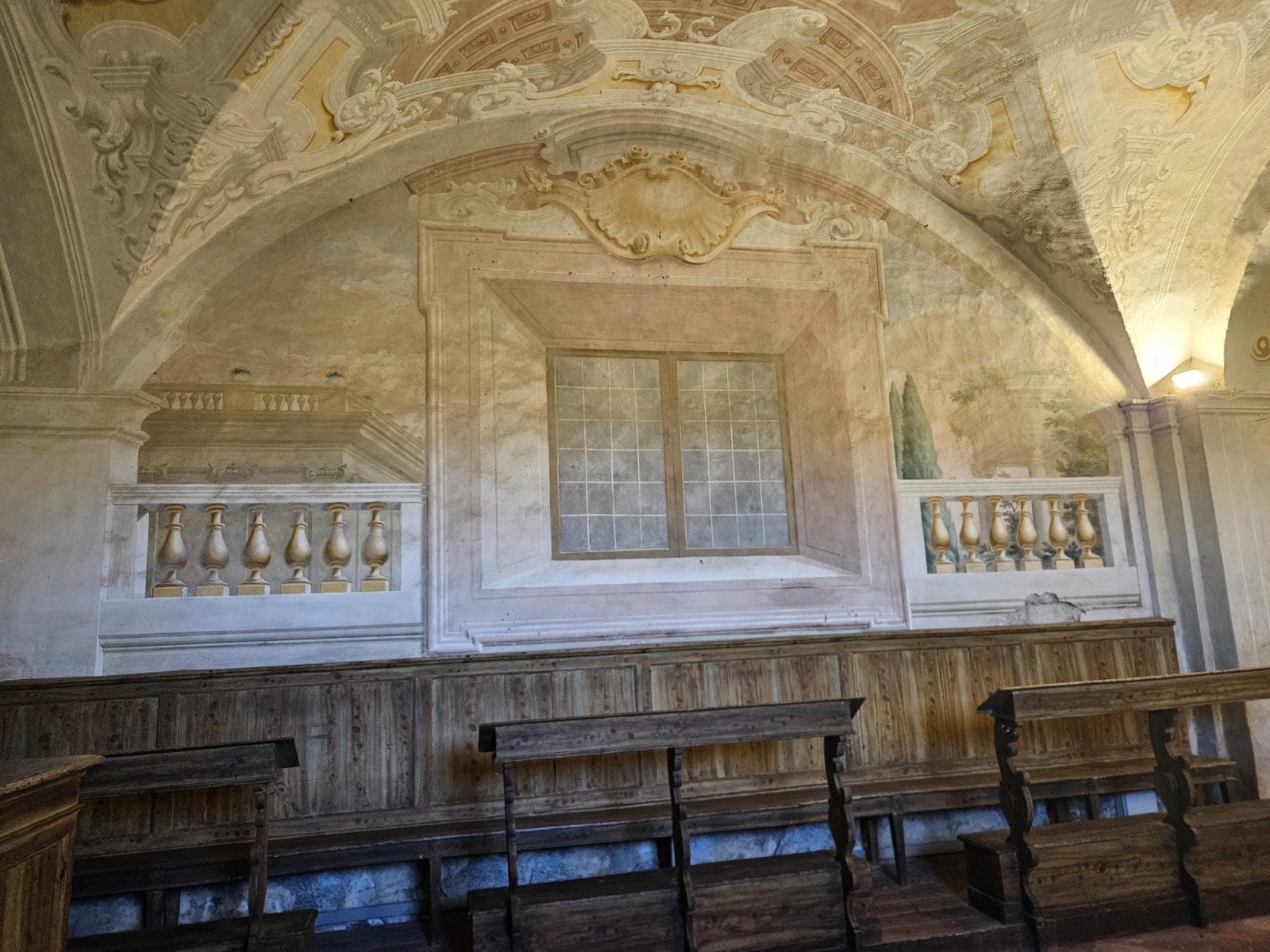
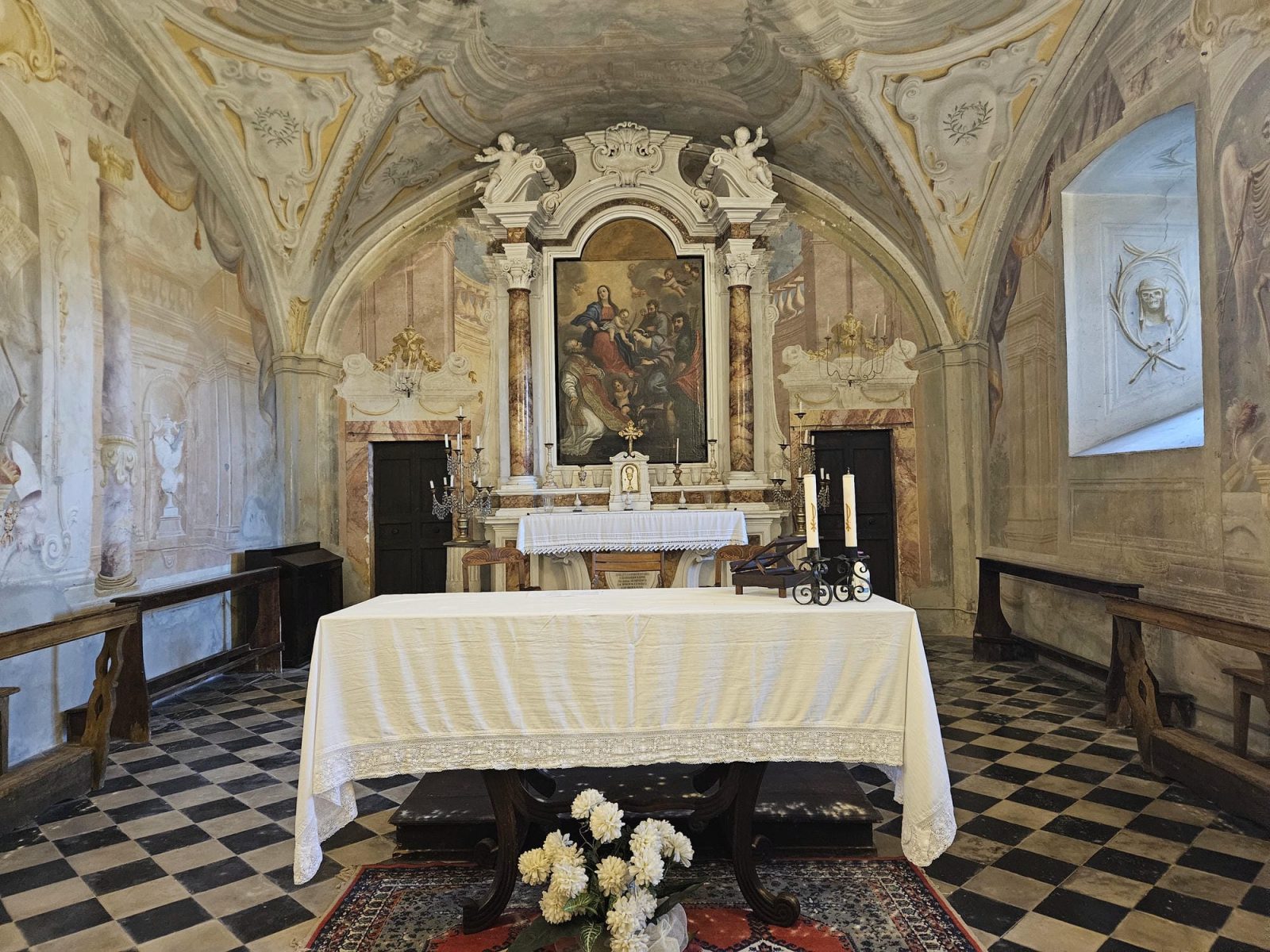
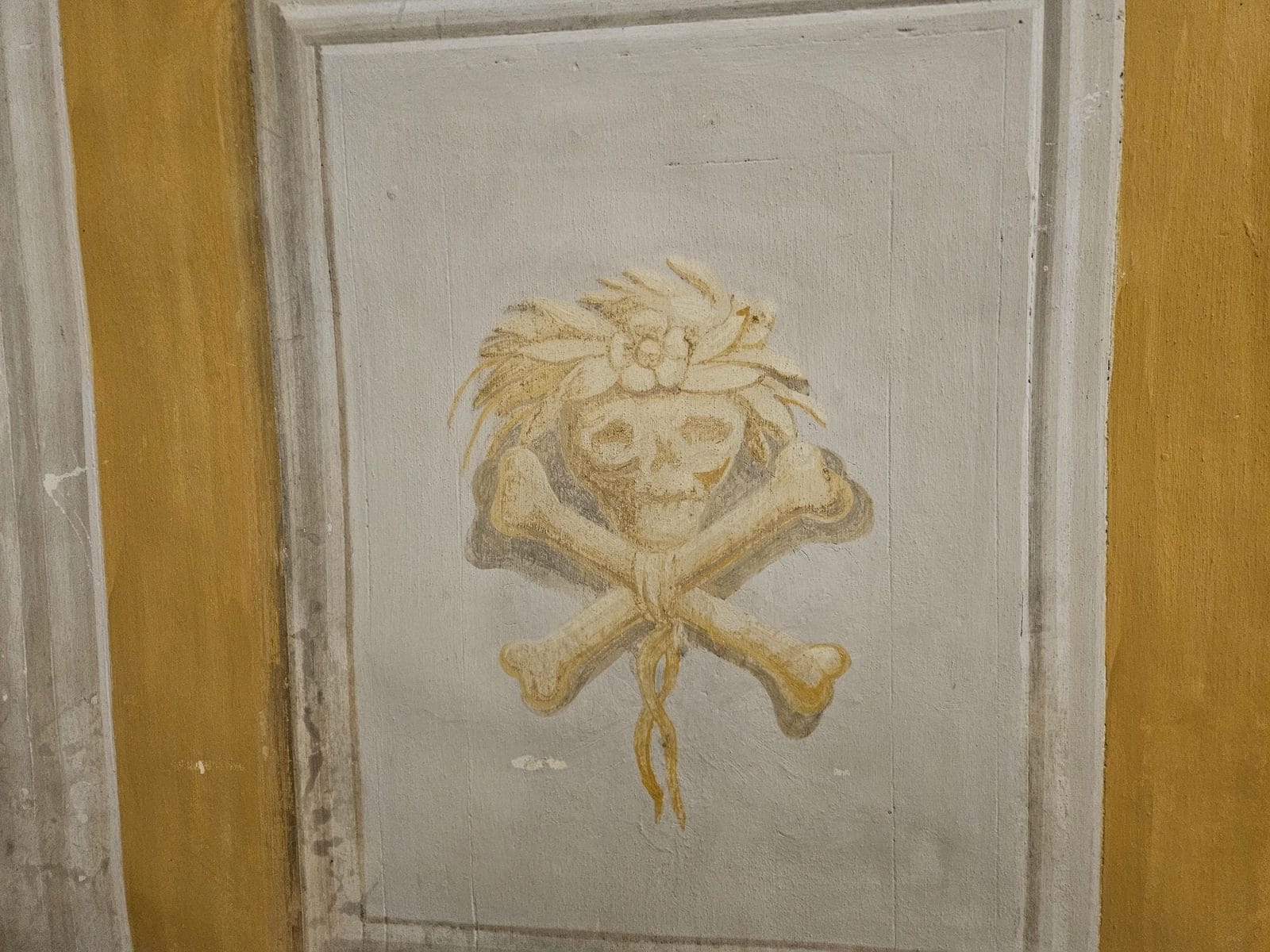
This crypt dates from the 17th century, and it is also known as the Oratory of Jesus, Joseph and Mary. It is famous for its Baroque frescoes depicting religious and death-related themes. This art covered topics including the Inferno, Purgatory, and Paradise.
Walk the Via Francigena Near Colle di Val d’Elsa
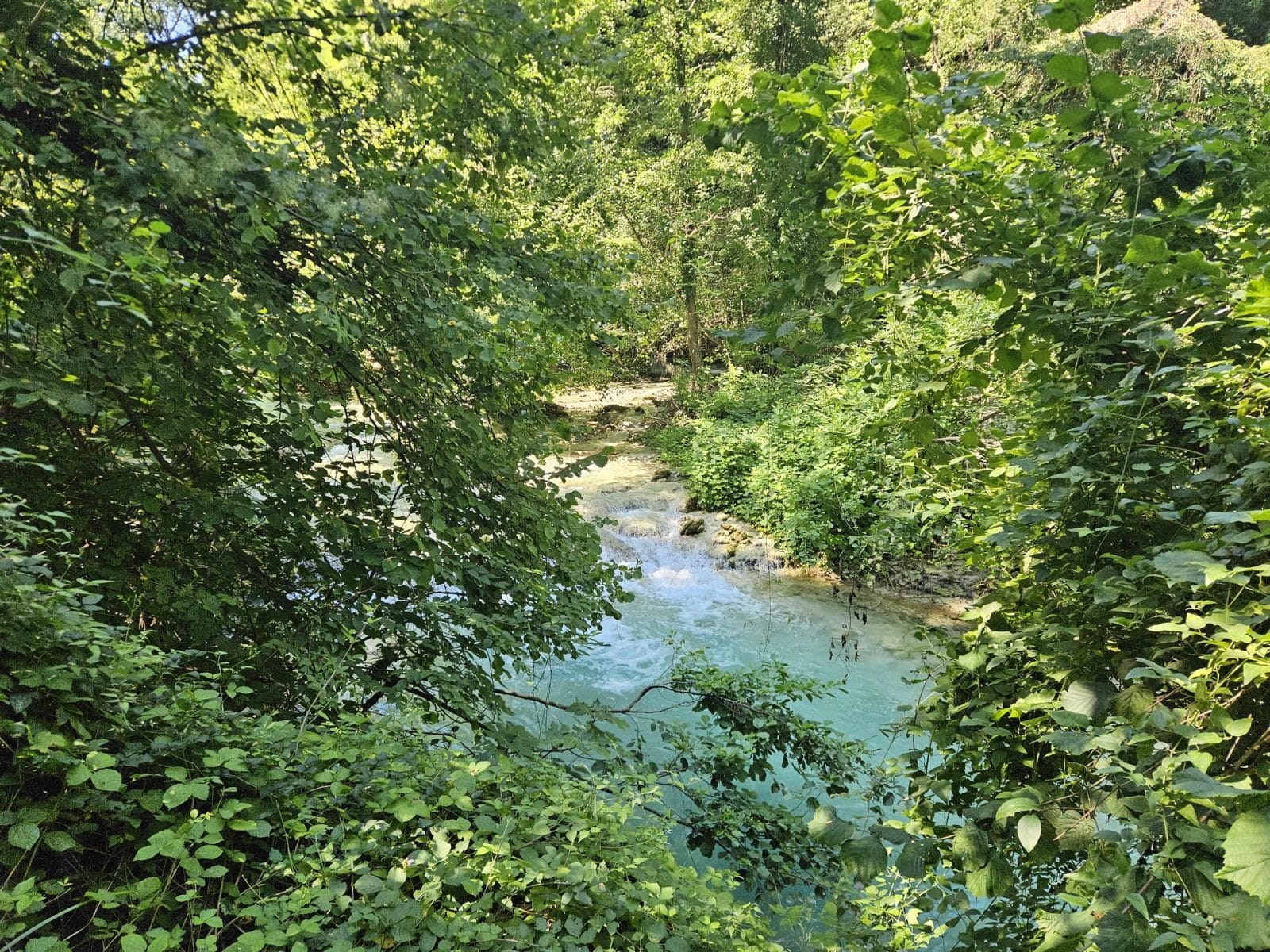
On the Via Francigena, you can walk along some of Europe’s oldest paths. The trail’s origins trace back to the Lombards in the 7th century; it was first documented in 725, long before blogging. The route is 3000 km long and goes from Canterbury in England to Rome, Italy’s capital. This route also passes through Monteriggioni and Siena.
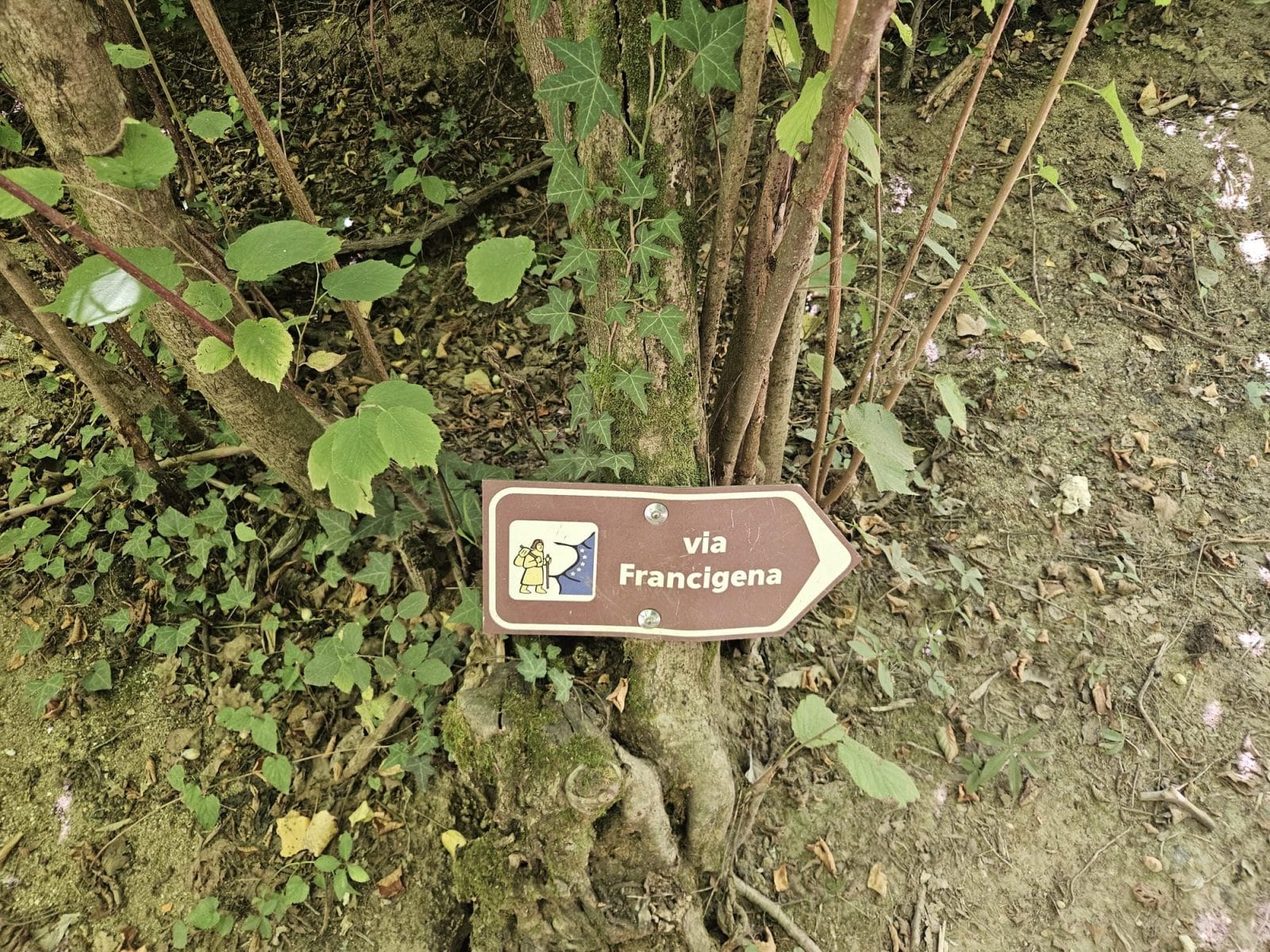
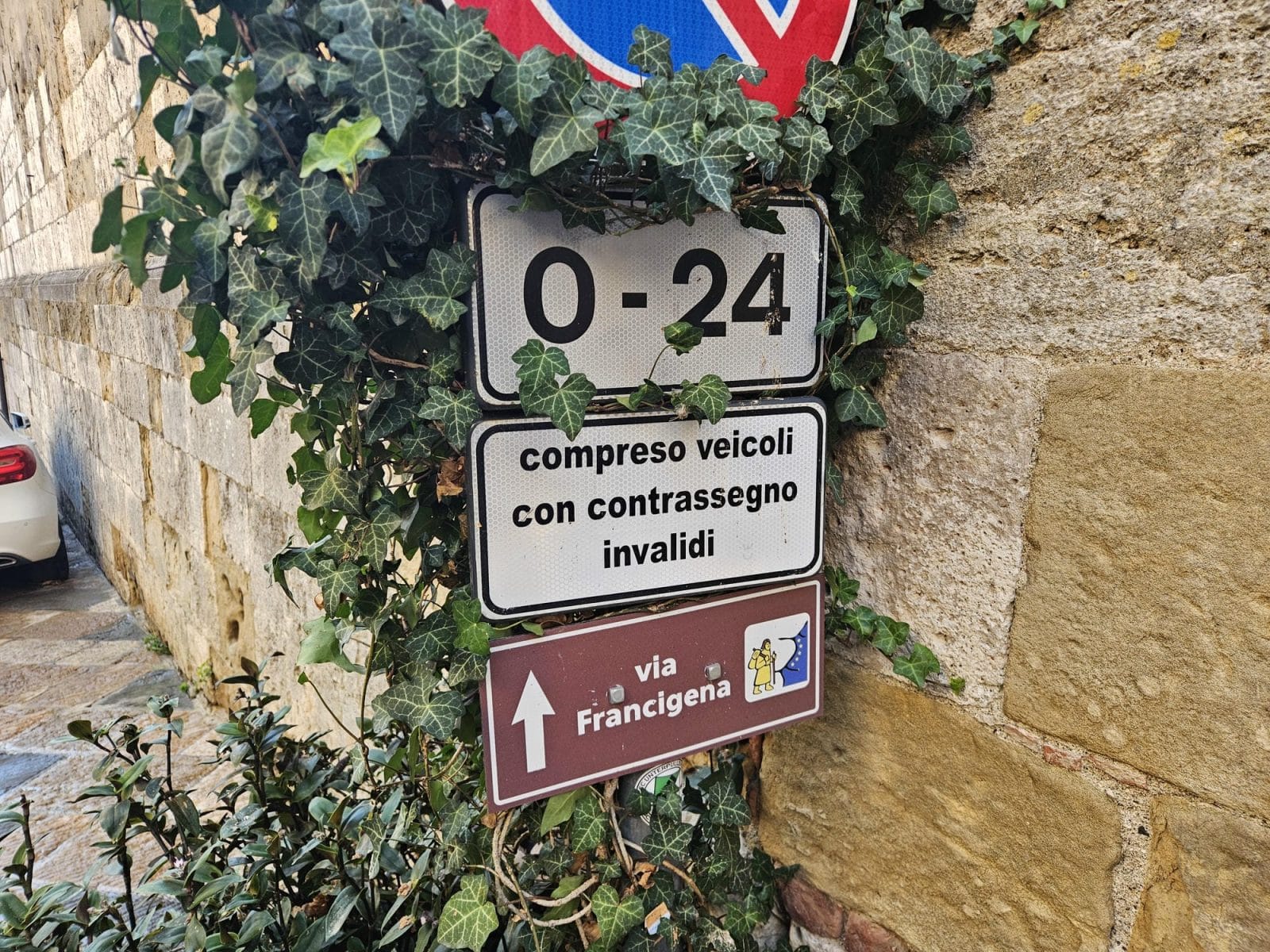
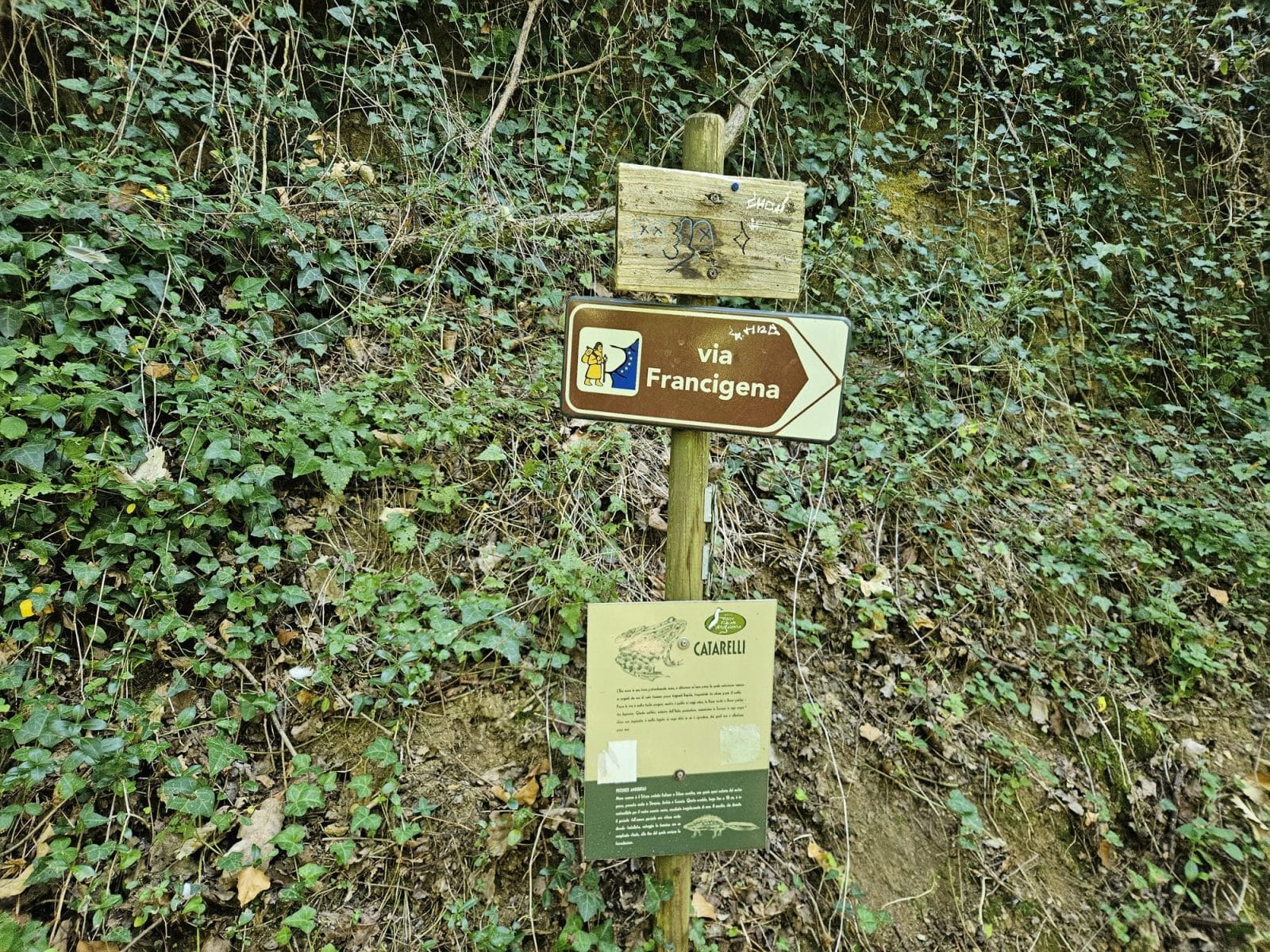
On the route, you can find out the history of the places on the route. Via Francigena has a handy website with information to plan a hike along the route.
Chiesa di Santa Maria in Canonica
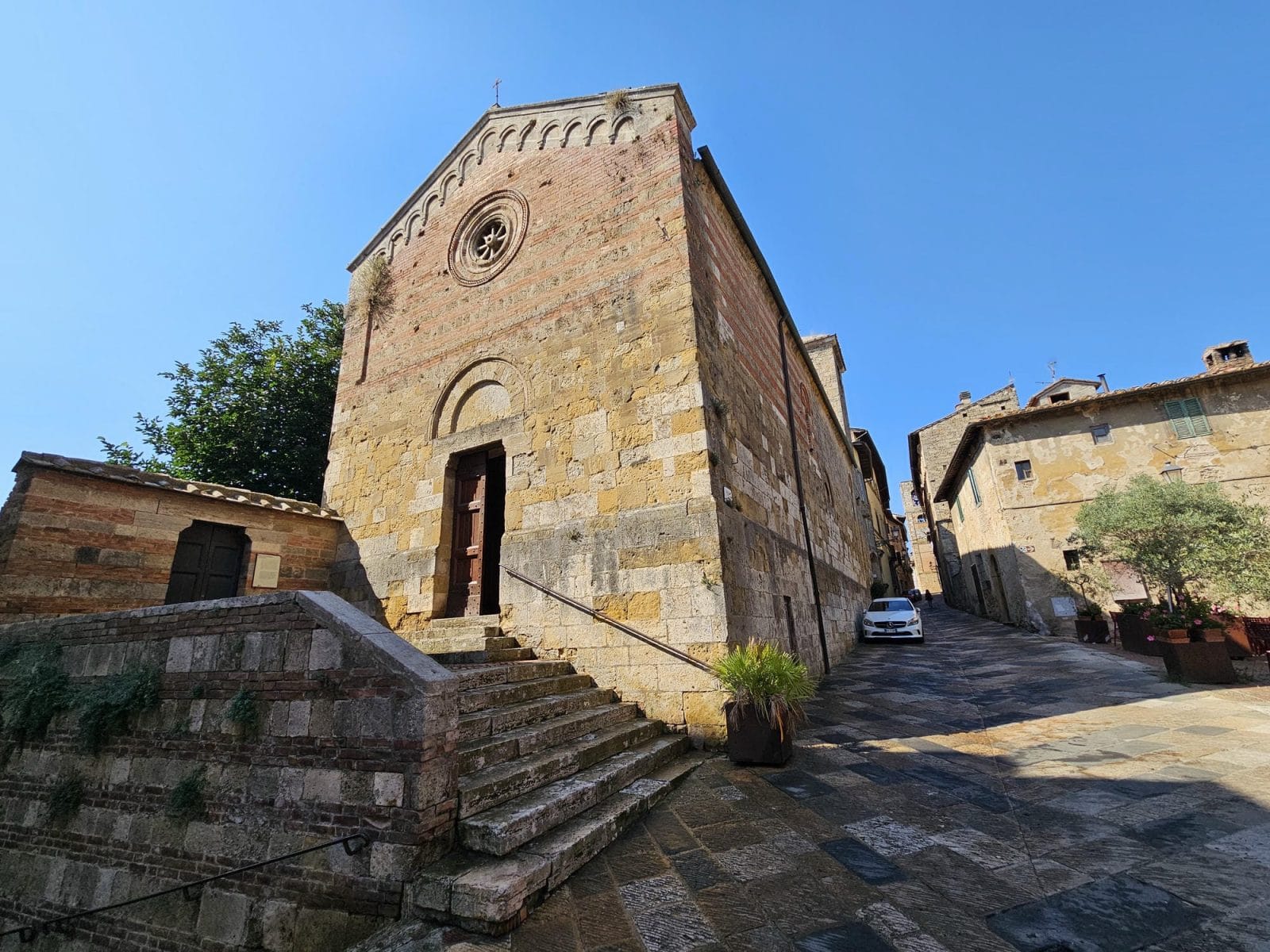
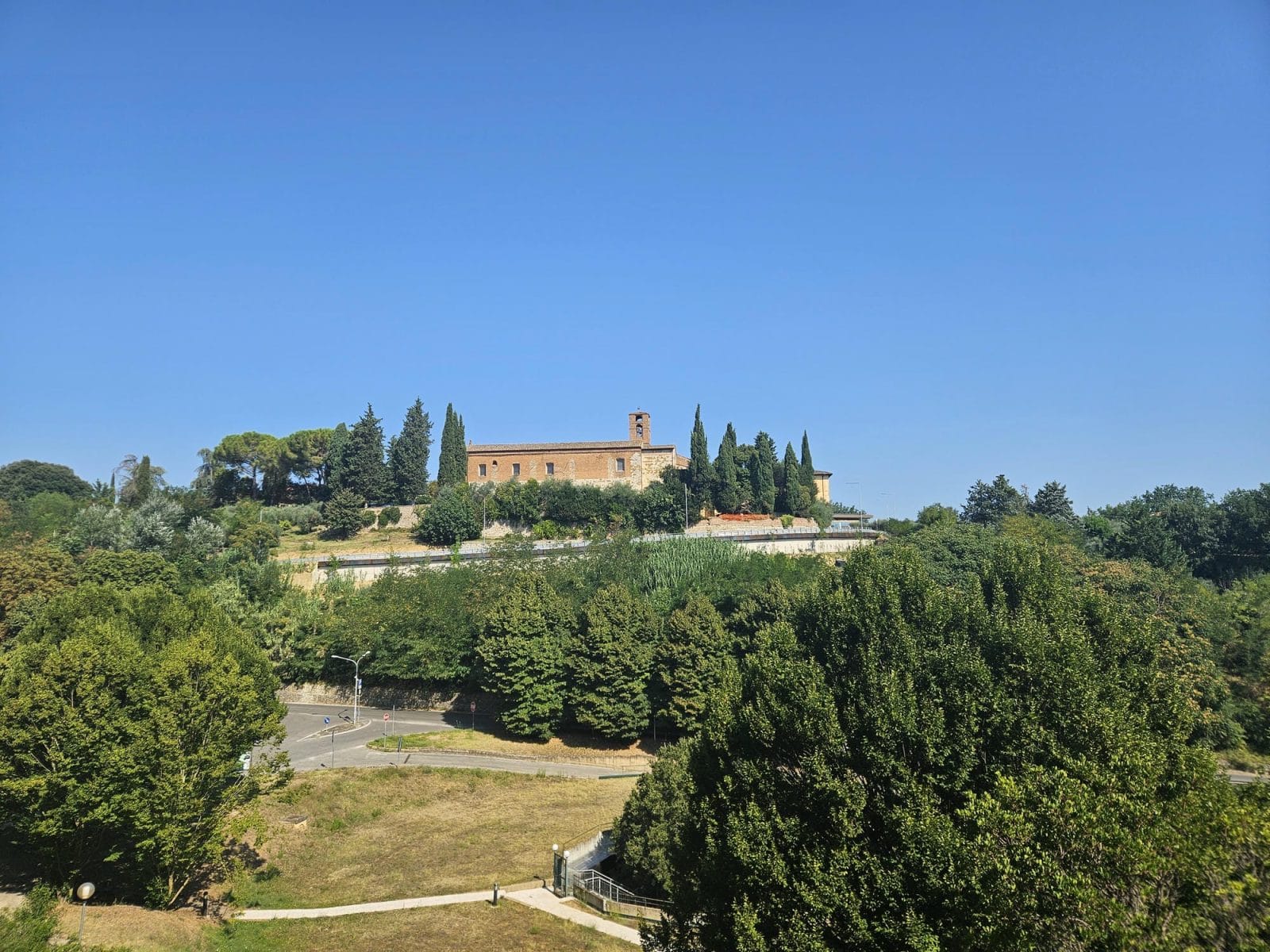
Chiesa di Santa Maria in Canonica is a small medieval church in the upper town. The church has a documented history dating back to 1183. This is a small, single-nave church with a Romanesque plan.
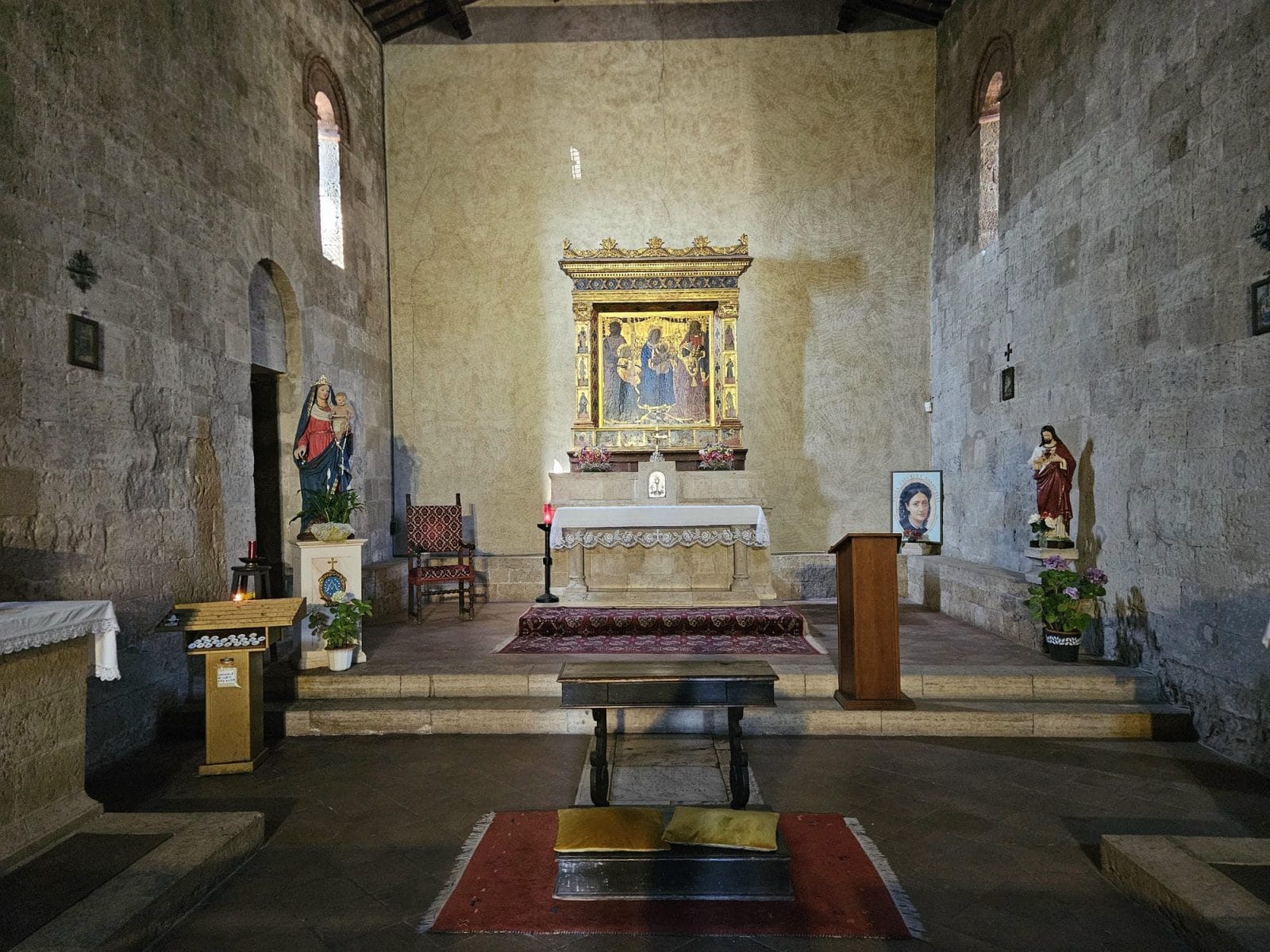
Inside is the large 15th-century temple-like high altar piece by Pier Francesco Fiorentino, representing the “Madonna and Child with Saints John the Baptist, Lawrence, Mark and Nicholas”. There are also traces of frescoes. The bell tower has a bell, dated 1245, known as La Martinella, which was recovered from the Siennese loot. This was free to enter.
Cafés & Restaurants
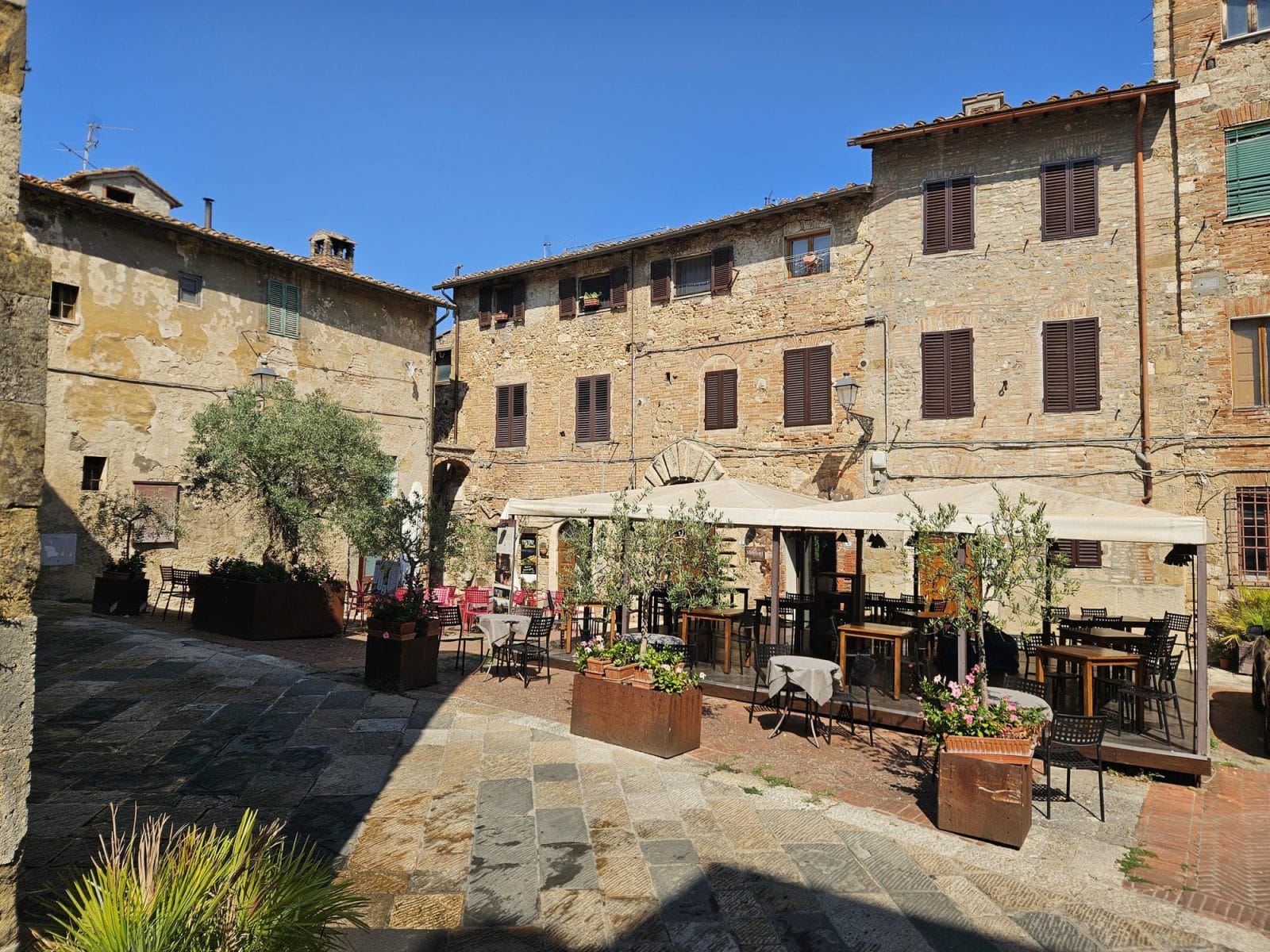
There are good choices for dining out or having drinks; these are the details of the places I tried.
Gimmy Gio
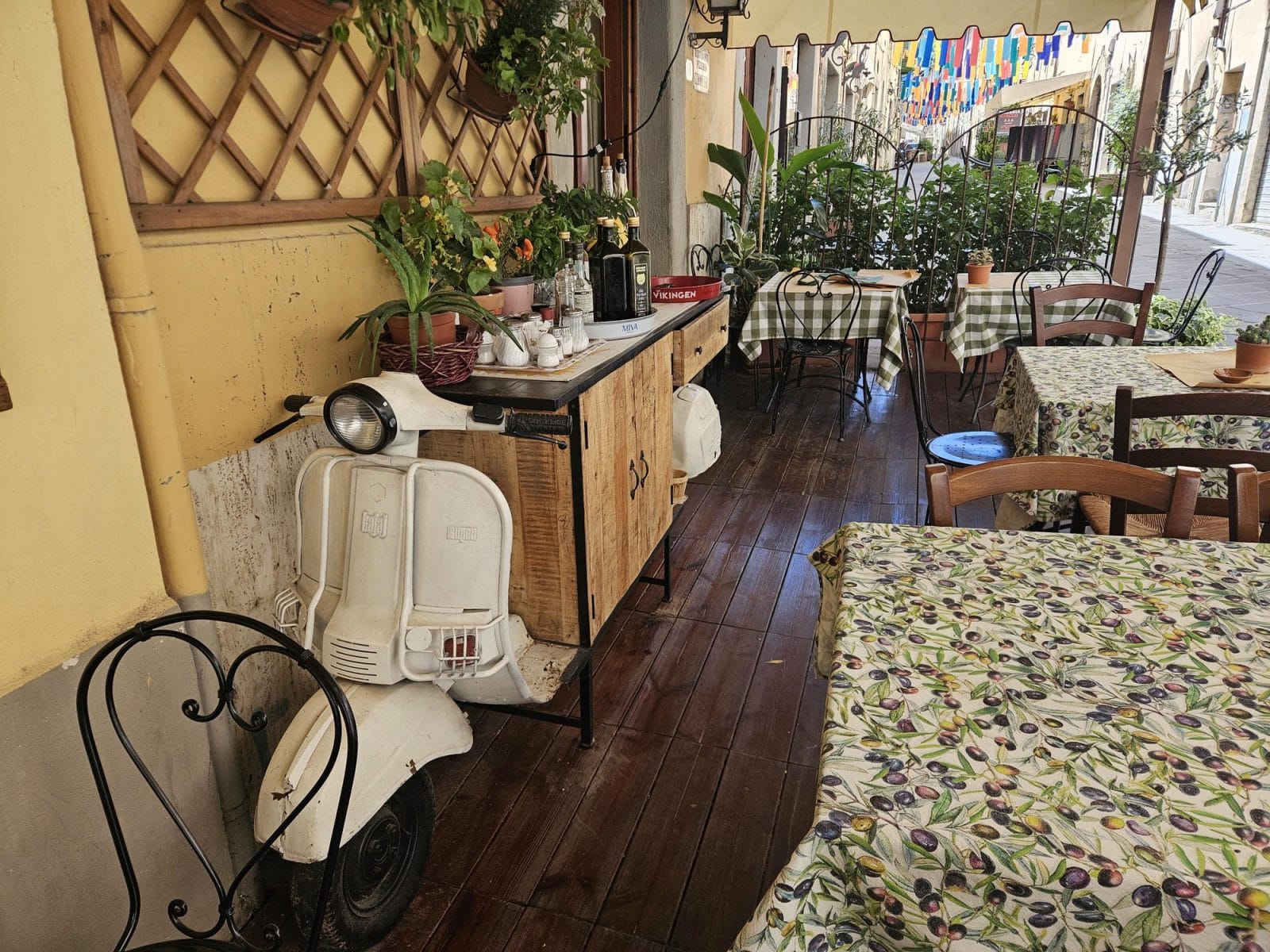
We ate a fantastic meal out at Gimmy Gio, a nice restaurant with indoor and outdoor seating.

For drinks, they had a good selection of craft beers relevant to the local pilgrimage routes. These were made by San Gimignano and influenced by the Via Francigena. I drank a few bottles of Sigeric, a blonde lager which tasted great.
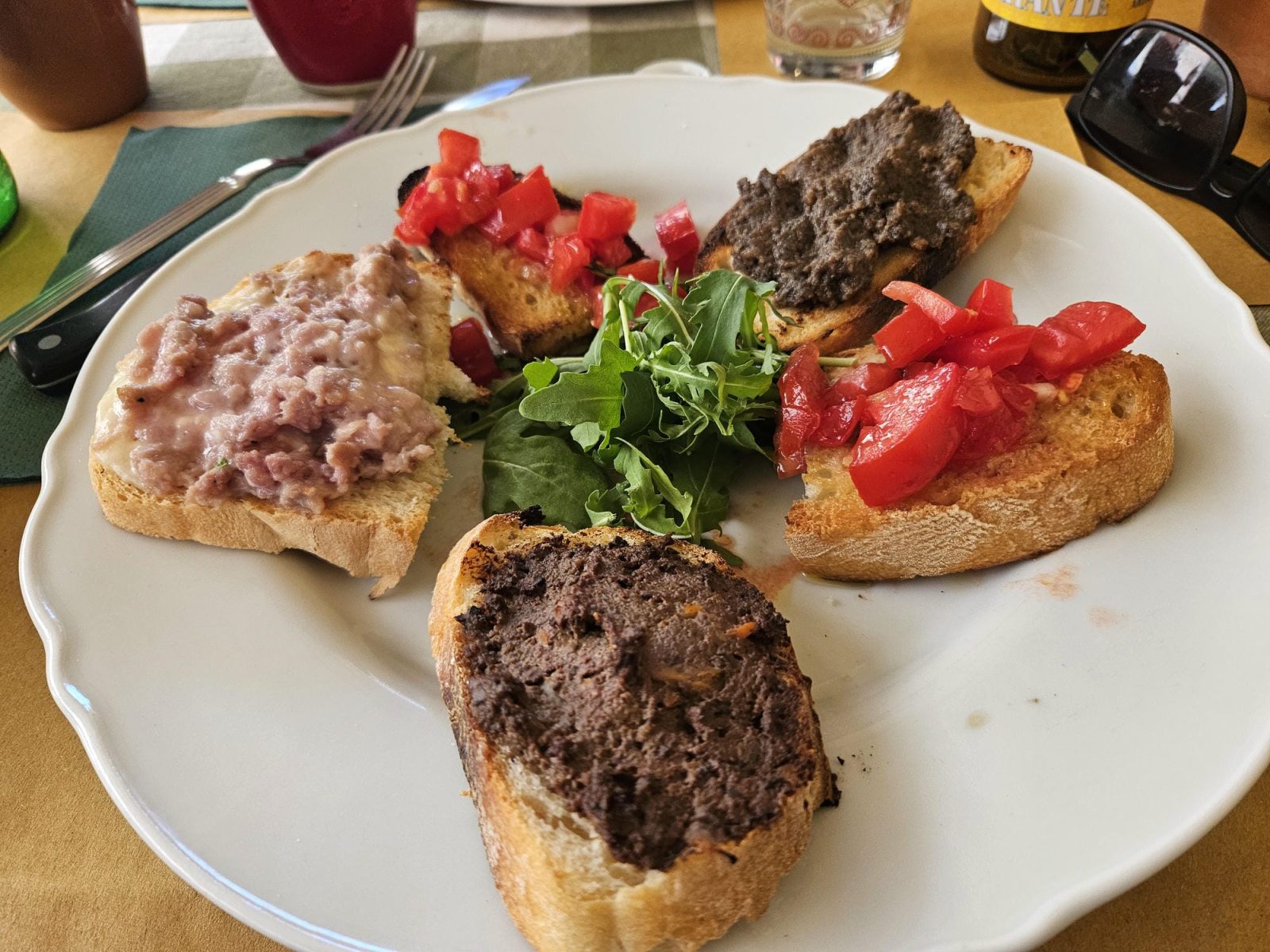
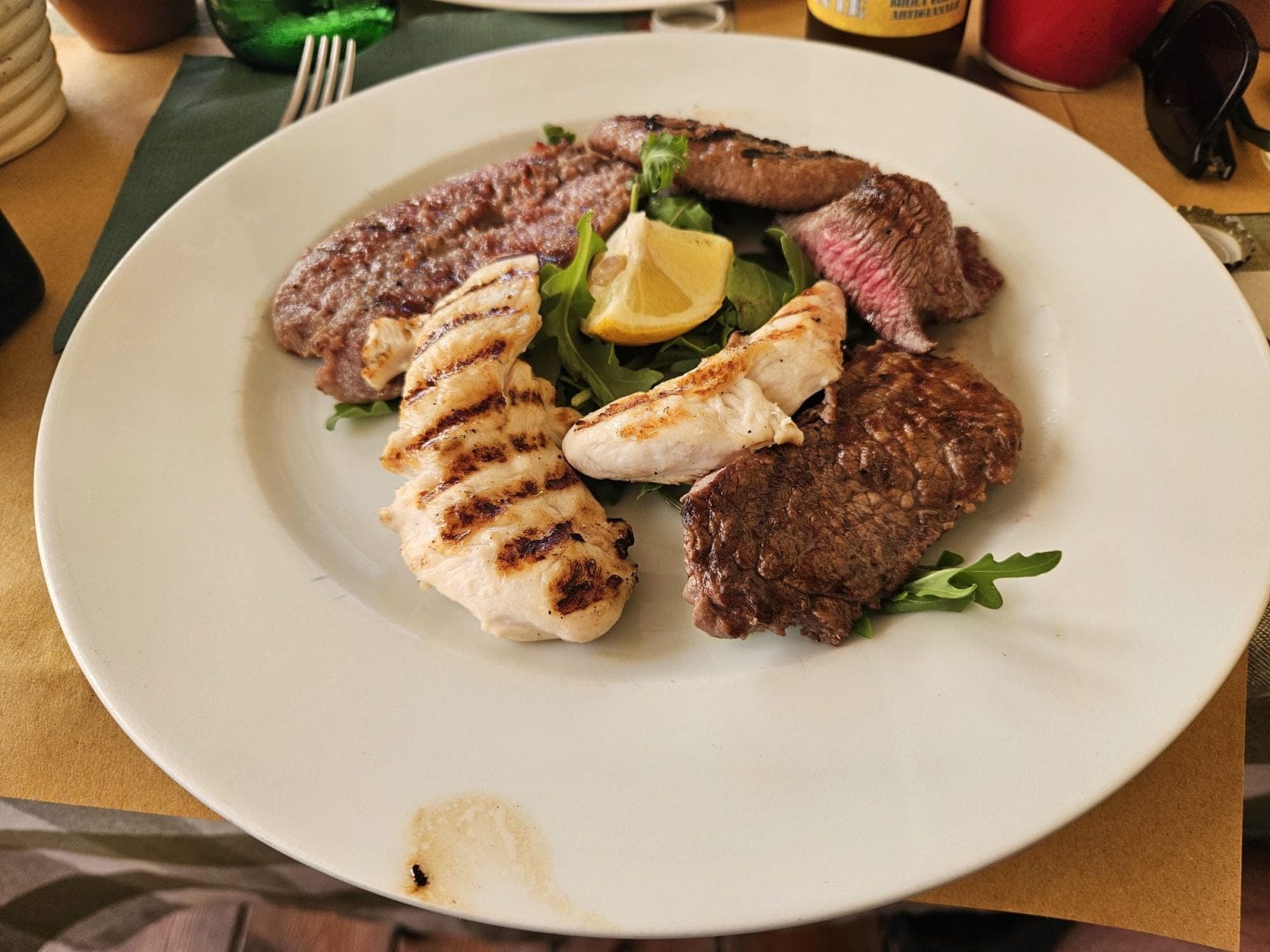
For food, we started with mixed bruschetta with various toppings: tomatoes and olive oil, pork and chicken liver, and a Tuscan speciality. For the main course, I had a Tuscan mixed grill with local meats, including some wonderful sausages.
Bar Caffè Pizzeria Santa Caterina
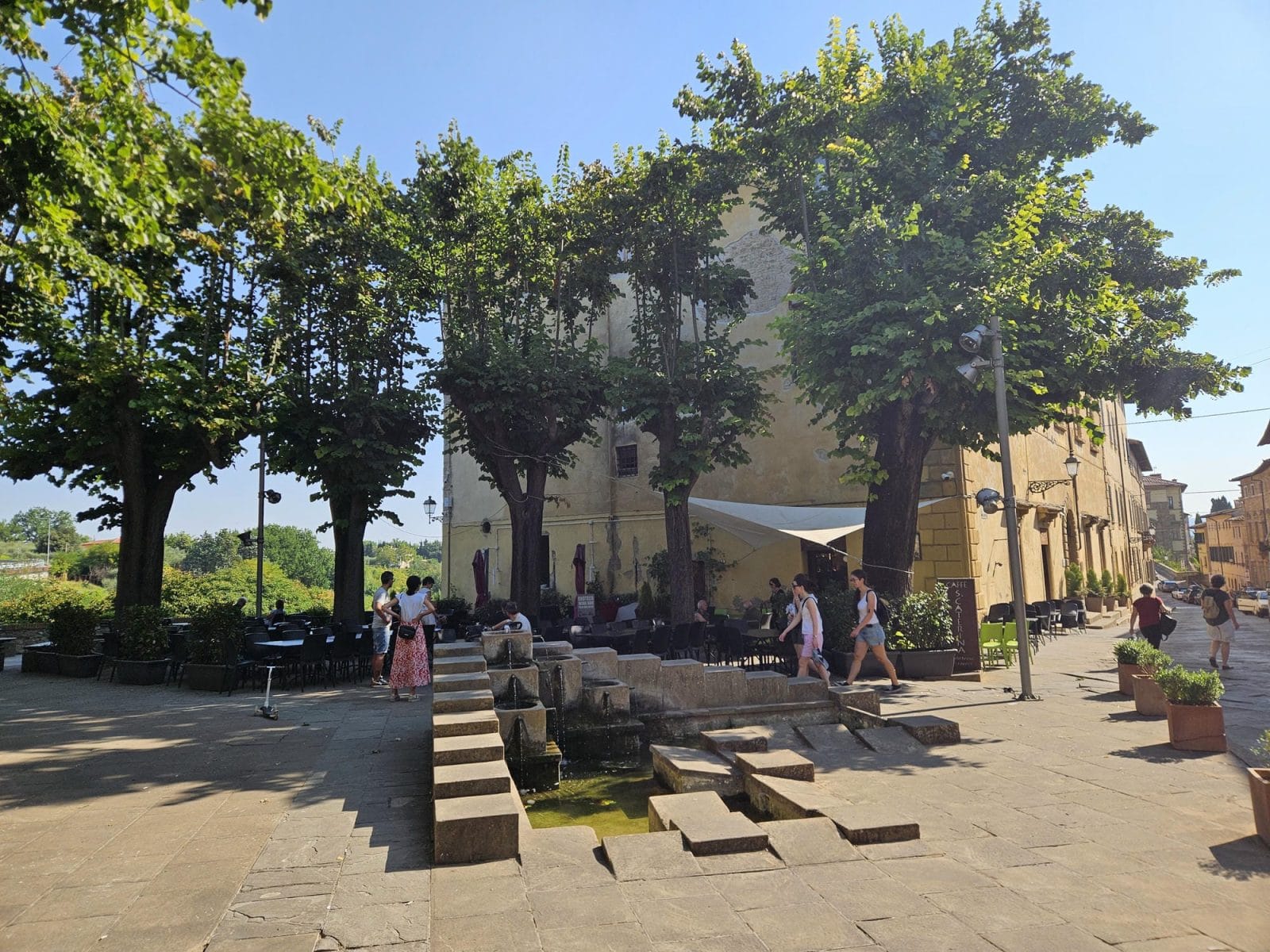
A good place for food or drinks near the hilltop is Bar Caffè Pizzeria Santa Caterina. Bar Caffè Pizzeria Santa Caterina is a cute square with views of the church and other features. Their food menu includes pizzas, focaccia and salads. They also serve a big range of drinks, including beer, wine and coffee.
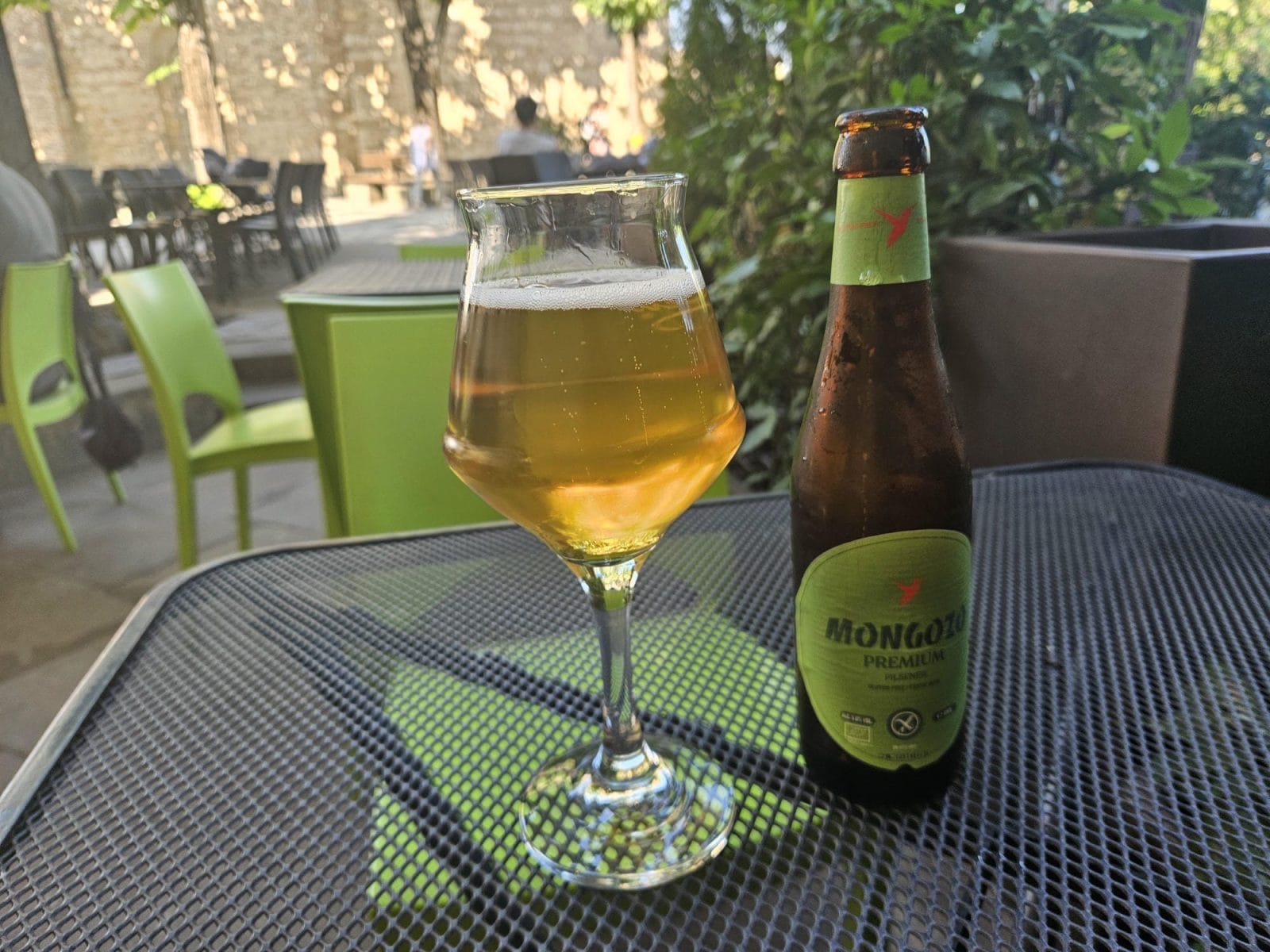
I sat outside for a beer to recover after walking up the hill and found it a friendly, pleasant place. I drank a bottle of gluten-free beer, which was rather tasty; since then, I’ve discovered that it is quite popular in this region.
Bar Pasticceria Garibaldi
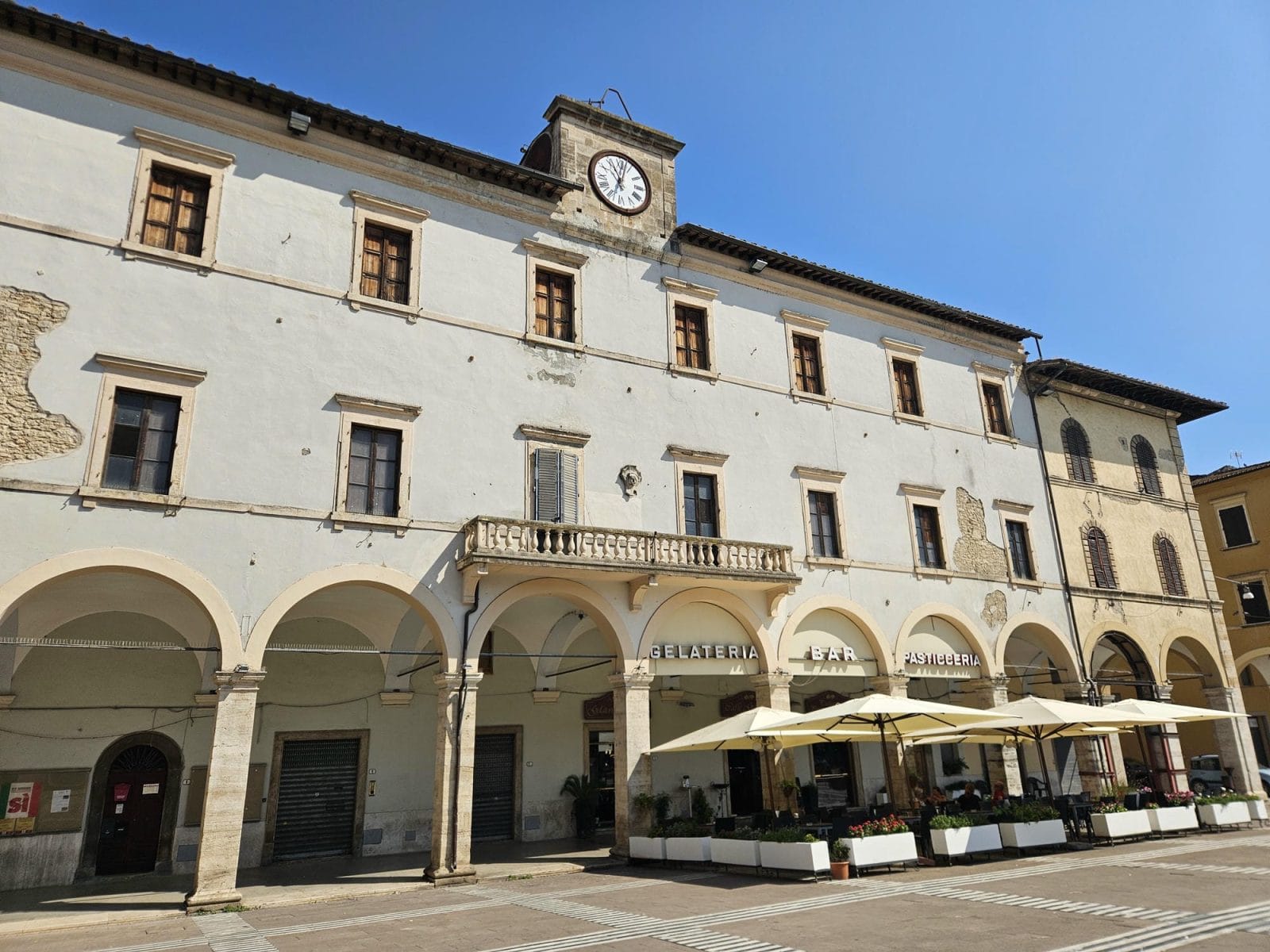
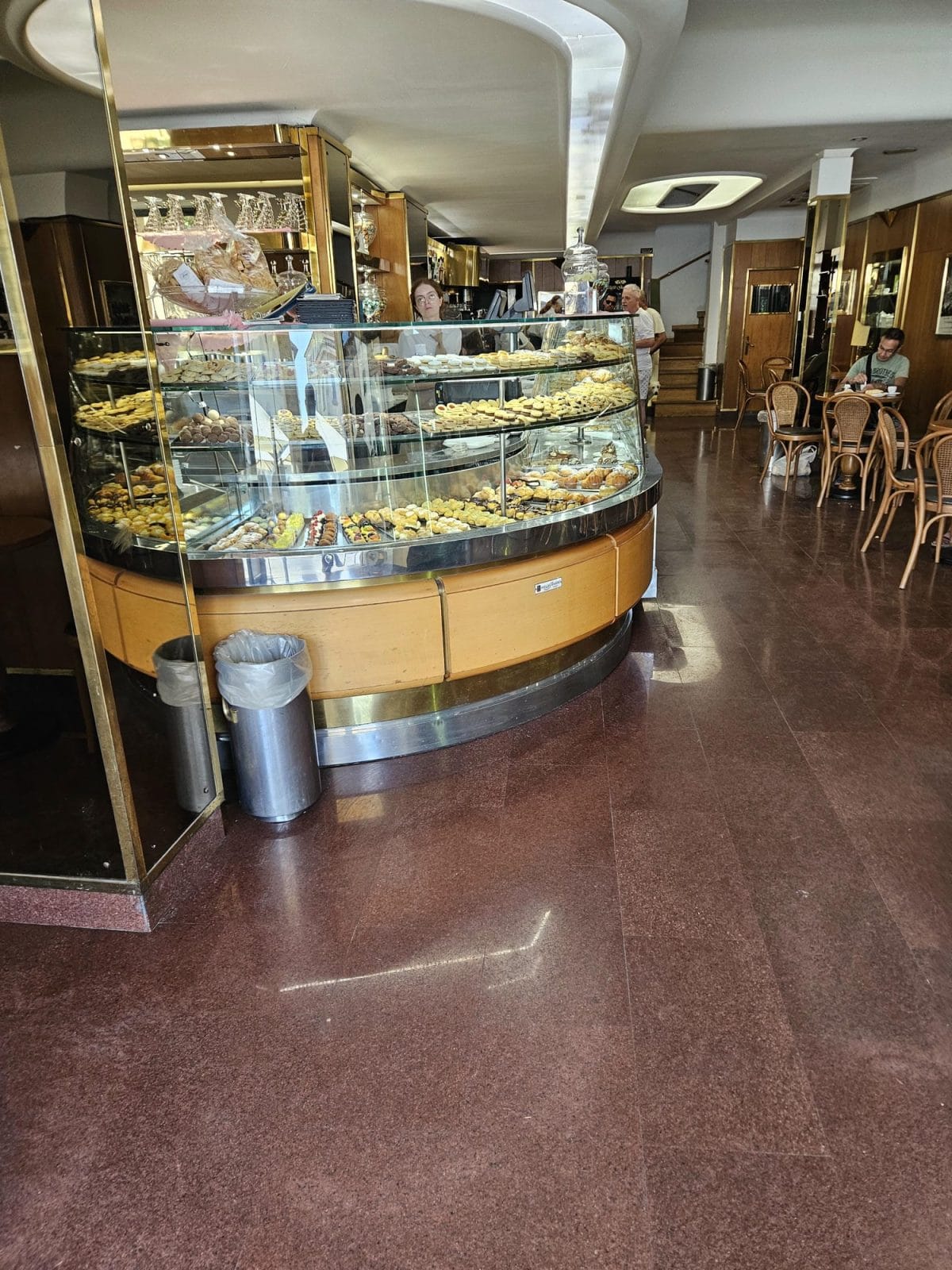
Near the bus station in the main square, Piazza Arnolfo di Cambio, is Bar Pasticceria Garibaldi. Bar Pasticceria Garibaldi is a bakery and cake shop that also serves drinks. They have indoor and outdoor seating options; I sat outside to take in the views.
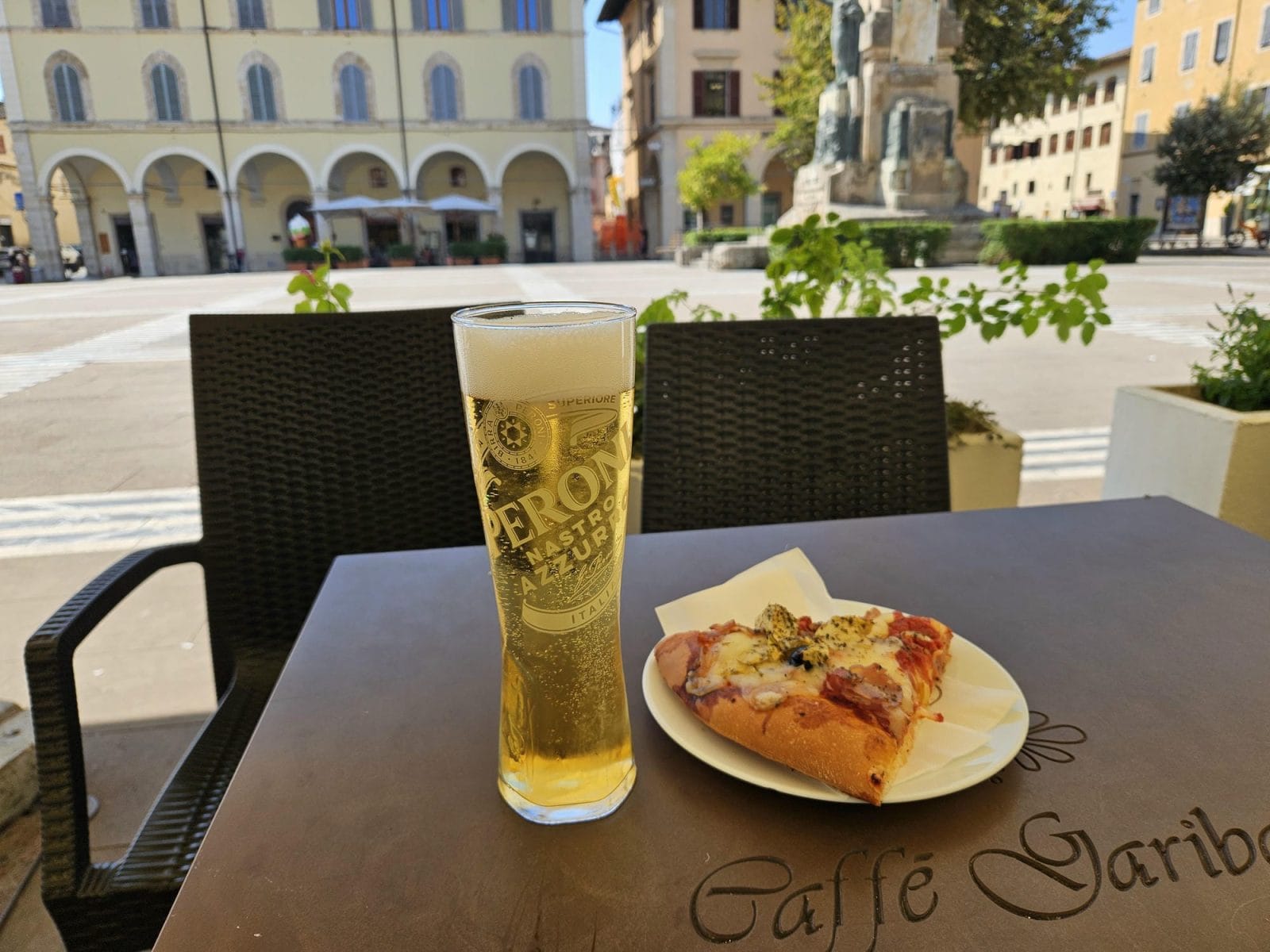
They have both sweet and savoury pastries, as well as a range of drinks, including beer, coffee and soft drinks. I had a Peroni and a slice of pizza. This hit the spot as a great brunch while sightseeing.
Armonia del Gusto
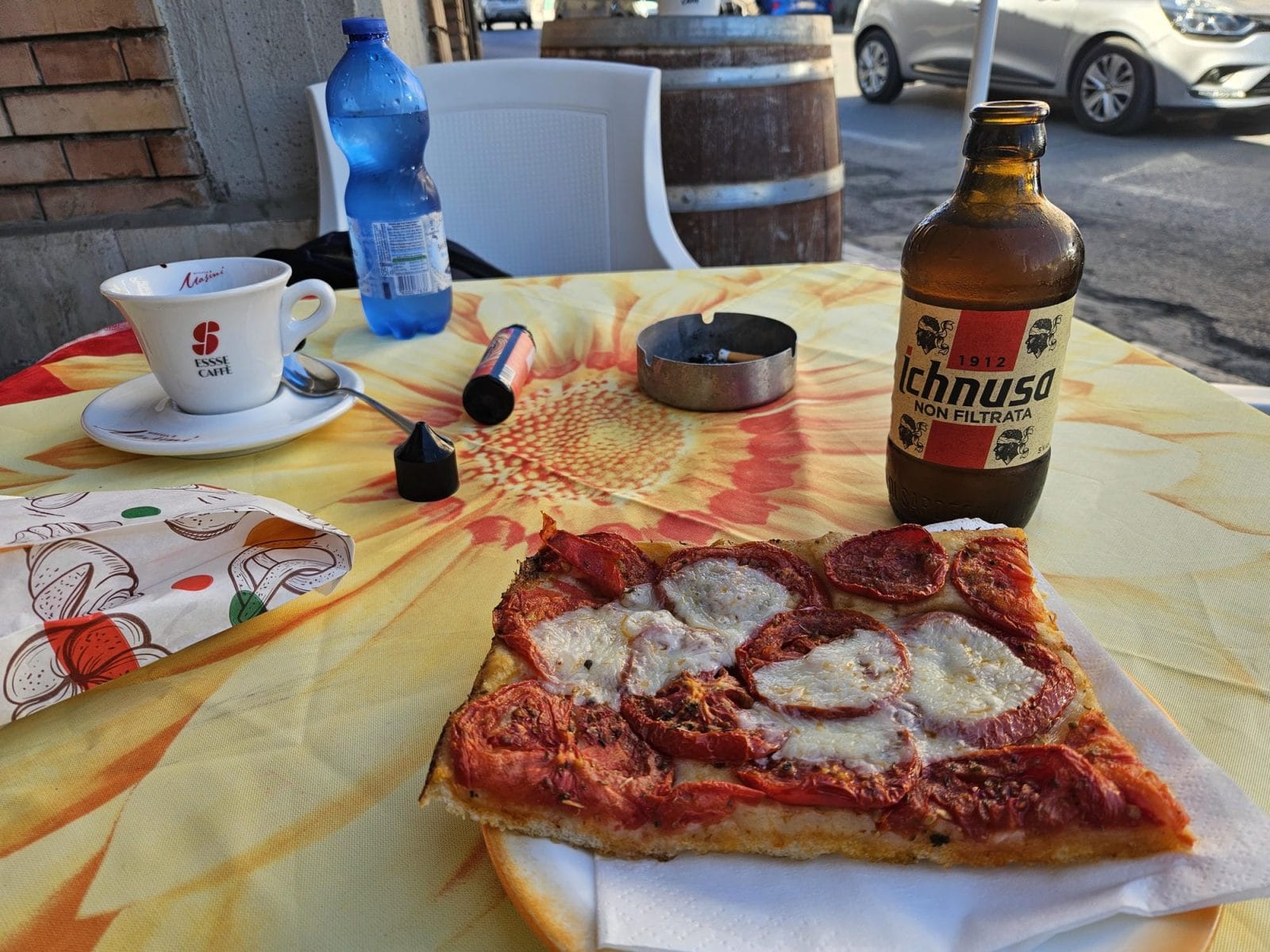
Near the bridge and the trail alongside the river is Armonia del Gusto, a nice cafe. We visited before going swimming at the waterfalls and enjoyed coffee, beer and some pastries.
Getting Here From Siena
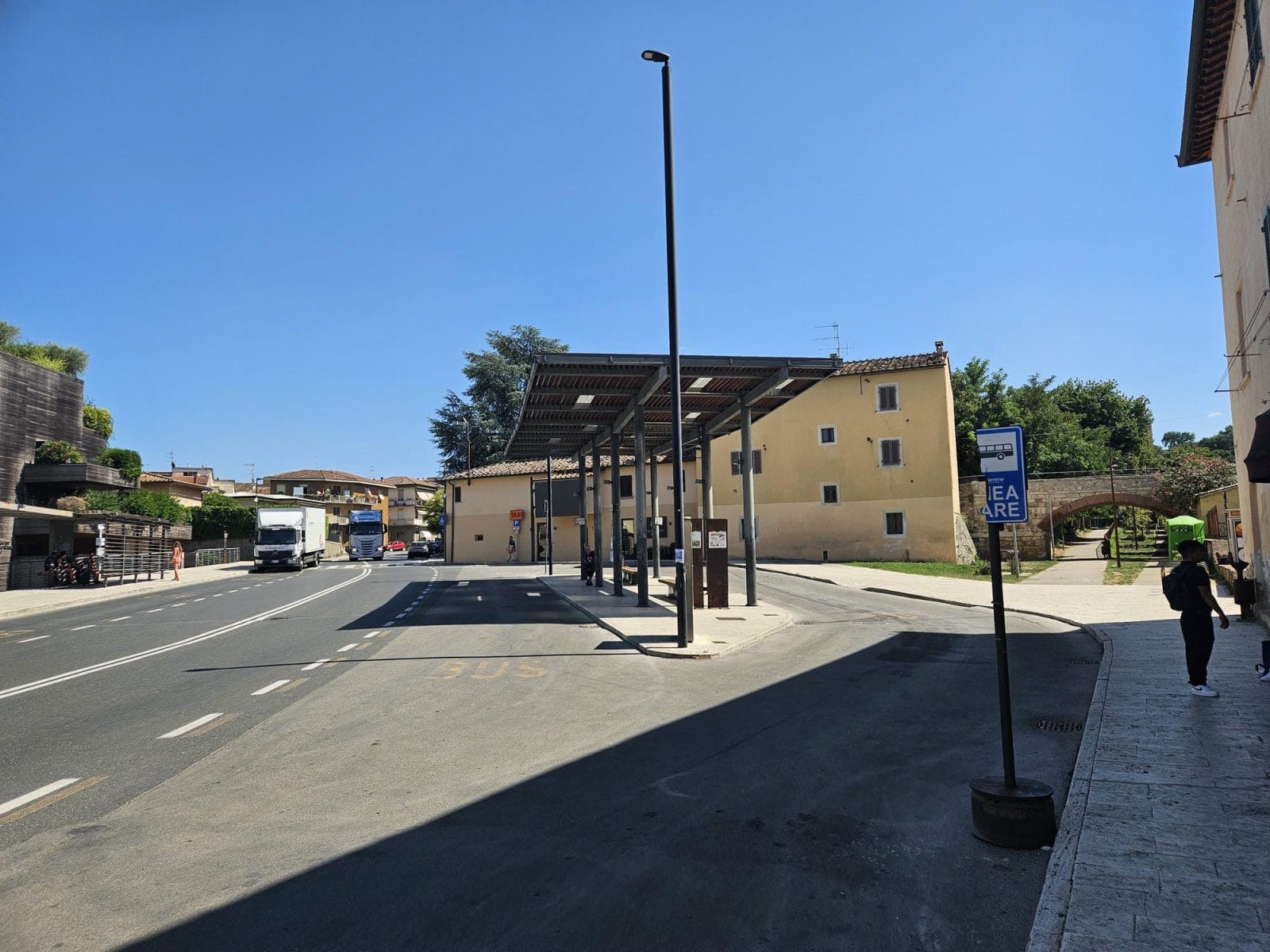
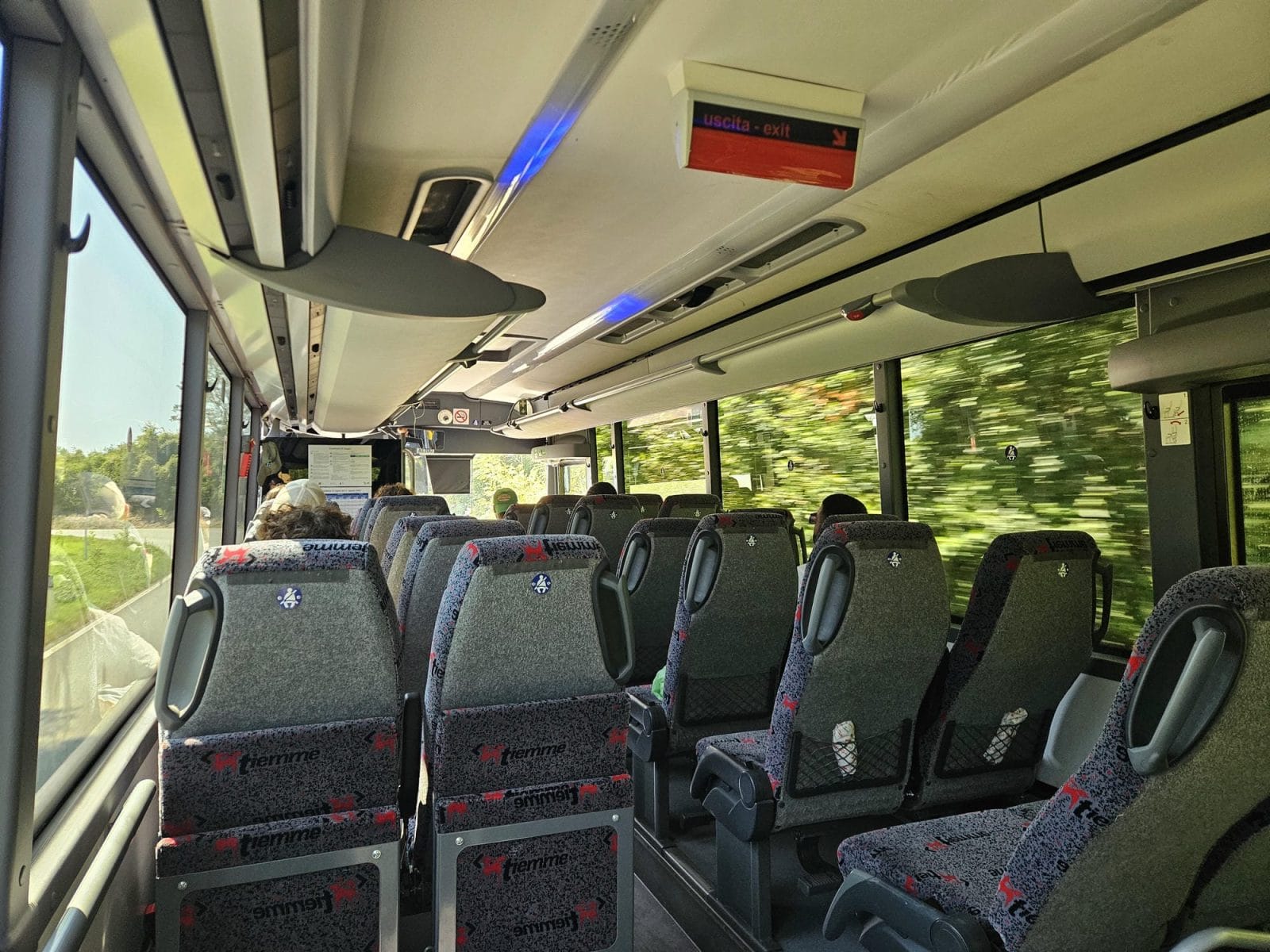
There is a regular bus service from the centre of Siena and the suburbs to the west of the city. The route numbers are 130 and 131 and take roughly 30 minutes. The best way to get tickets is to use the AT bus company app, where you buy tickets before travelling and then activate them on the app once on board. Note: the machines onboard were confusing or not working.
Is Colle di Val d’Elsa Worth Visiting?
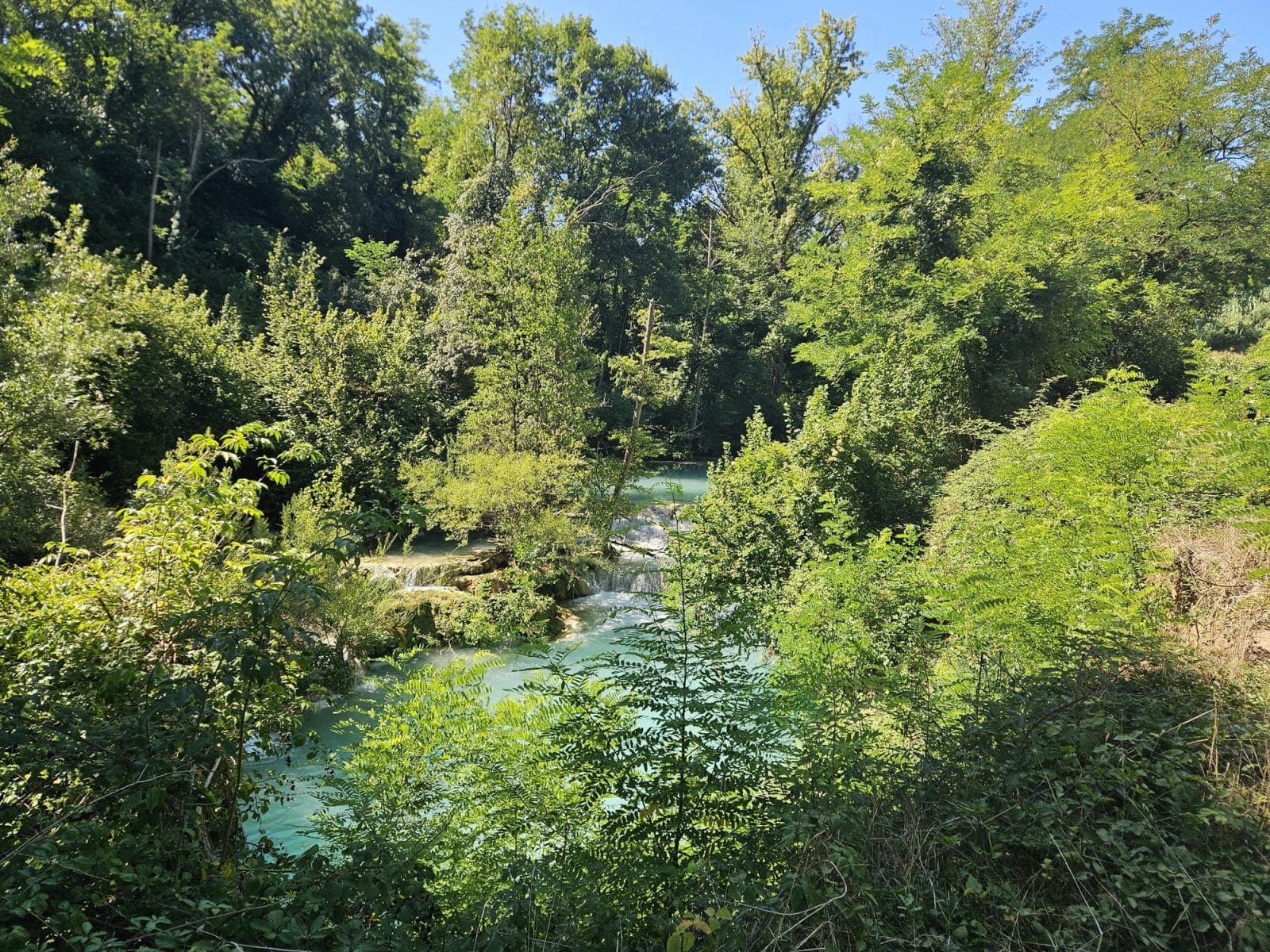
I discovered Colle di Val d’Elsa the day we had a water problem in Siena, and most of the city had none. I had a crazy idea of finding somewhere to wild swim nearby, and hey presto, the waterfalls on the Elsa River popped up. The walks and swimming were special and made the trip worthwhile.
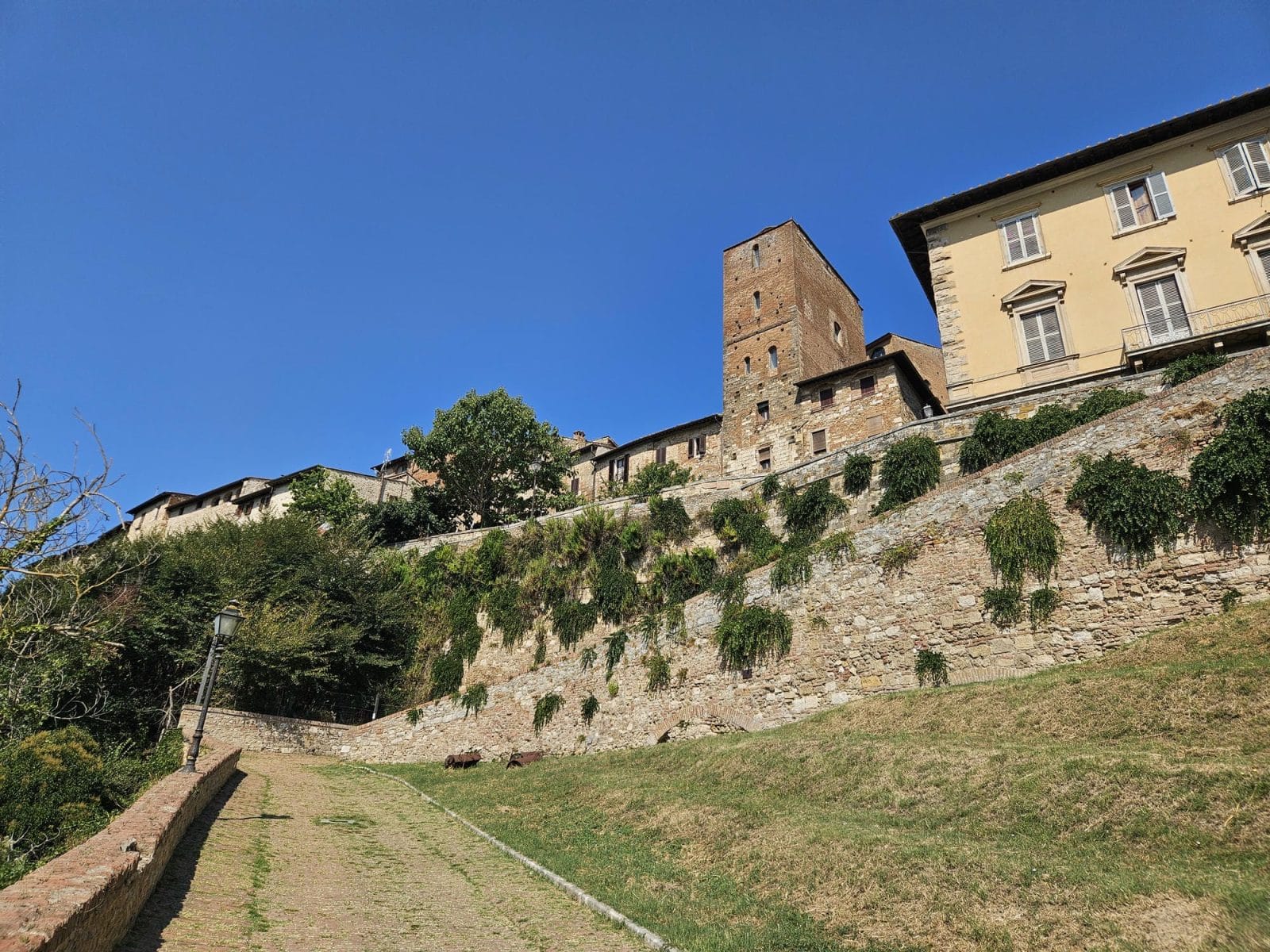
As a bonus, the town had medieval aspects that were great to explore. I enjoyed exploring the narrow side streets, historic buildings, and viewpoints, which offered panoramas of the Tuscan countryside. Food and beer out were also as good as you’d expect in Italy.