
Kunsthistorisches Museum Vienna: Art Gallery & Architecture
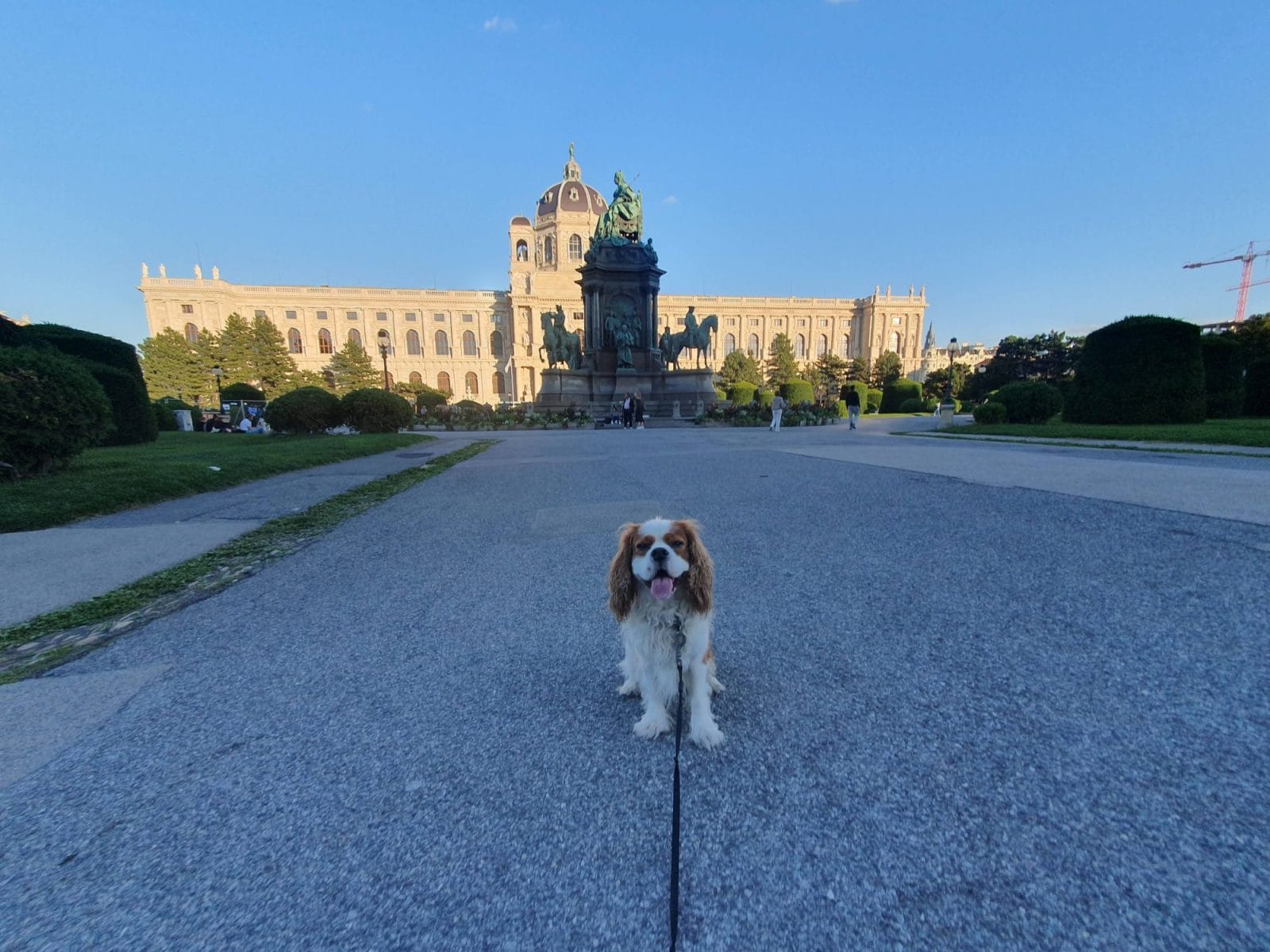
The Kunsthistorisches Museum in Vienna is a fascinating place to visit, especially if you enjoy art, architecture and history. It is in Maria-Theresien-Platz, one of the key sightseeing areas in central Vienna. It’s a lovely place to wander around and take in the building’s architecture.
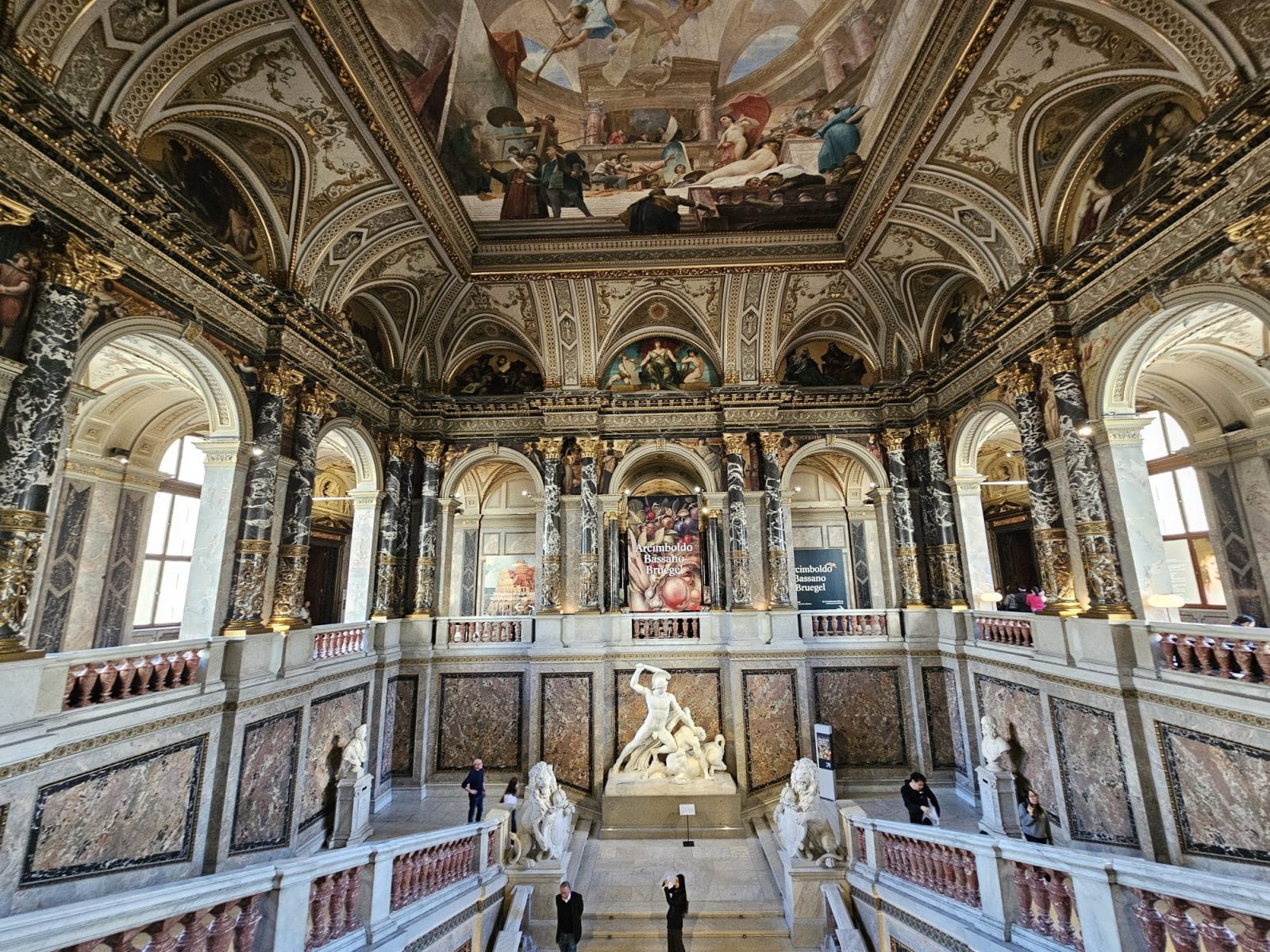
Inside, the Kunsthistorisches Museum really impressed me with its decorations, grand staircases, and the number of themed exhibitions.
About The Kunsthistorisches Museum
The Museum of Art History was founded in 1891 by Emperor Franz Joseph I to house the vast art and artefact collection amassed by the Habsburgs. It was designed in the Renaissance Revival style. The main exhibits of the museum come from the personal collections of Habsburg rulers, notably Archduke Ferdinand II, Emperor Rudolf II, and Archduke Leopold Wilhelm. They purchased numerous Renaissance and Baroque masterpieces, which you can see here.
Disclosure! Keep in mind that some links in these posts are affiliate links. If you click one of them, I may earn a small commission (for which I’m extremely grateful) at no extra cost to you. Thanks for visiting!
Tickets
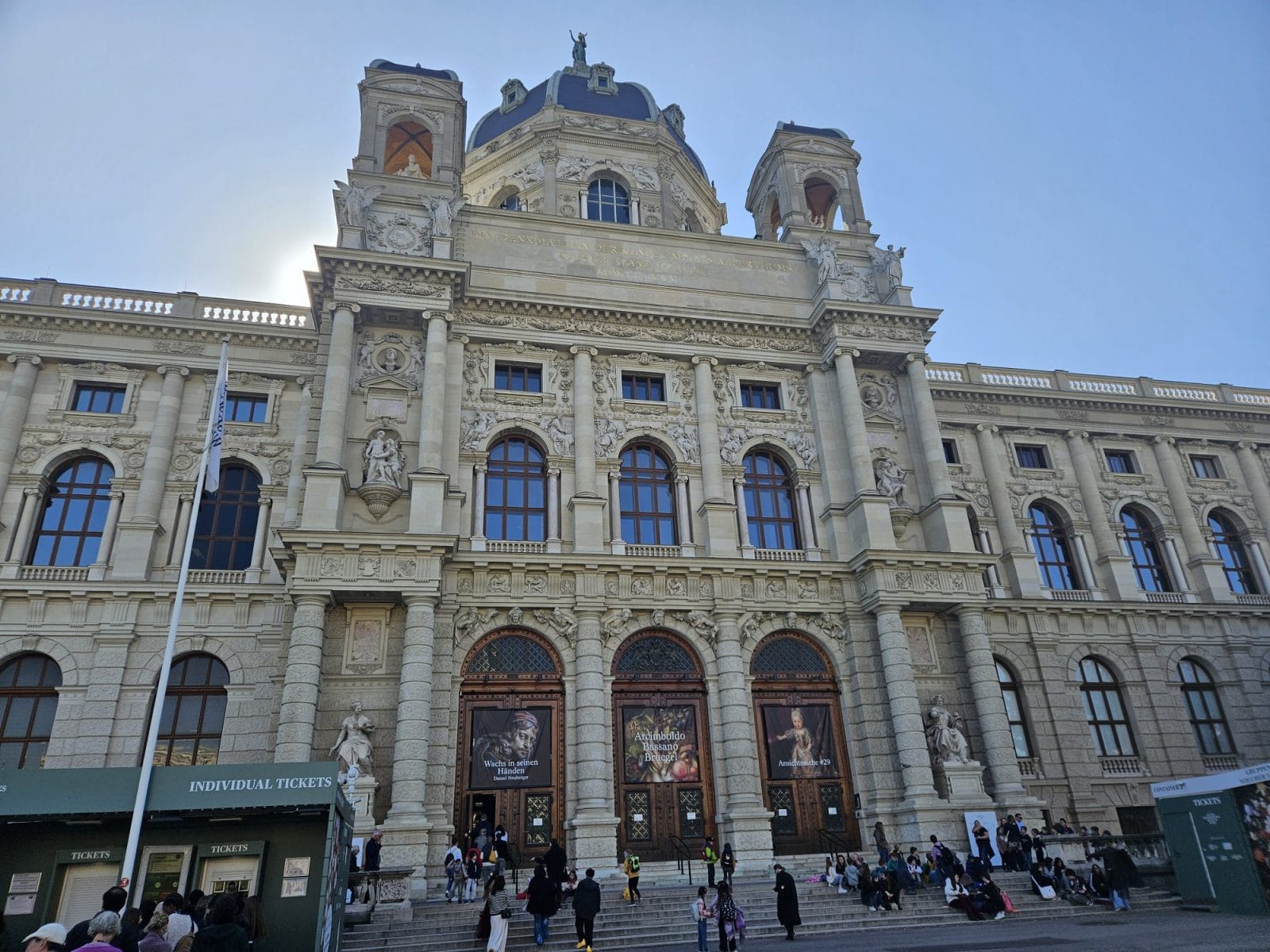
To buy tickets, you have a few options: you can buy them at a kiosk outside or on their website. Options include tickets for this museum alone or a range of combined tickets. You can also visit the museum with the Vienna Pass. Entry was straightforward with a ticket. Note that you cannot walk around with a bag; however, there are lots of lockers to the left of the entrance.
Decor Inside
The galleries were mostly designed to show off the artworks, but the main reception area and corridors were rather impressive.
Main Entrance Hall
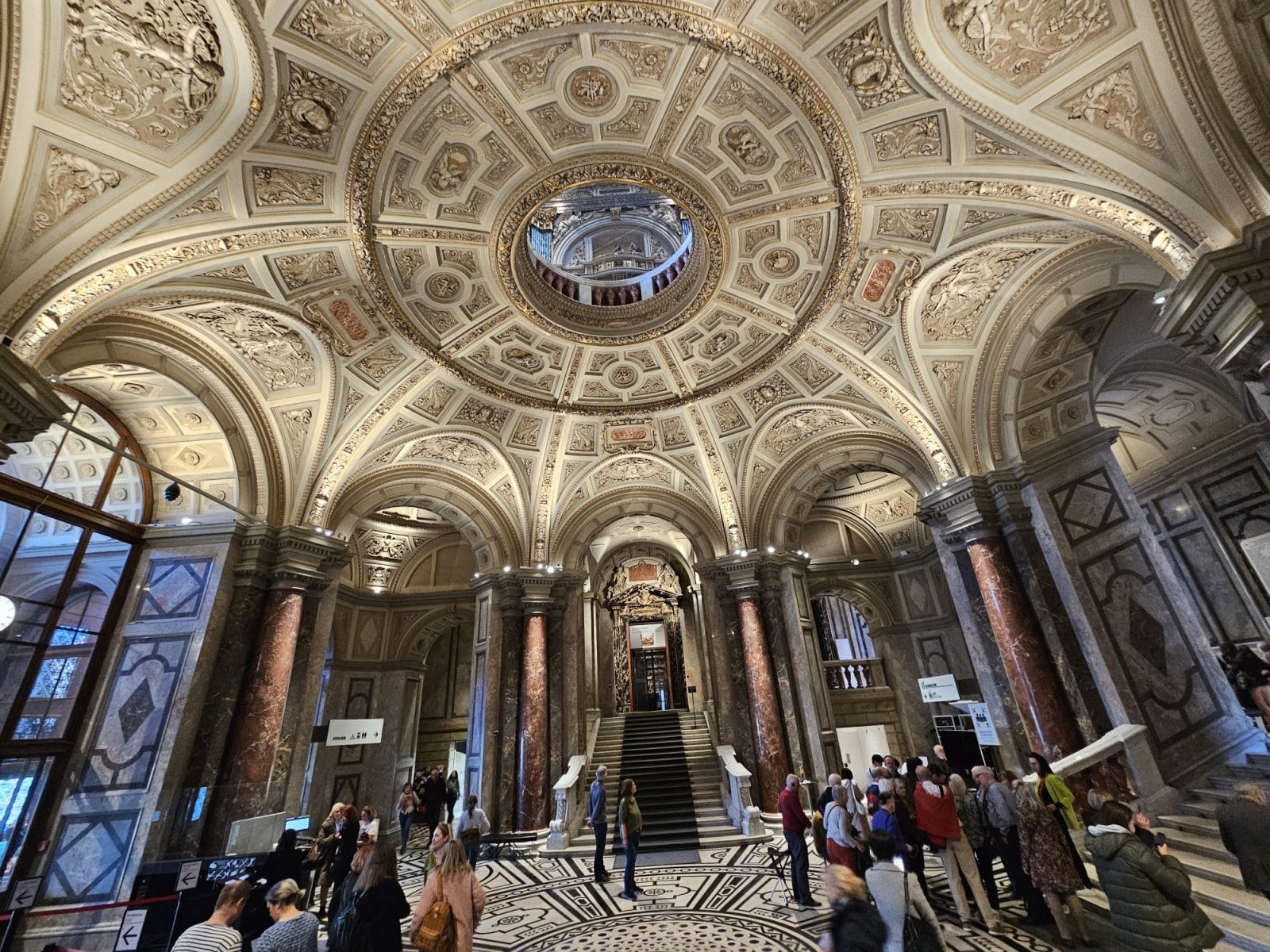
As you enter the building, you are greeted by the grand entrance hall, which has three staircases off it and signs to help you find what you are looking for. The museum is massive and so much needed.
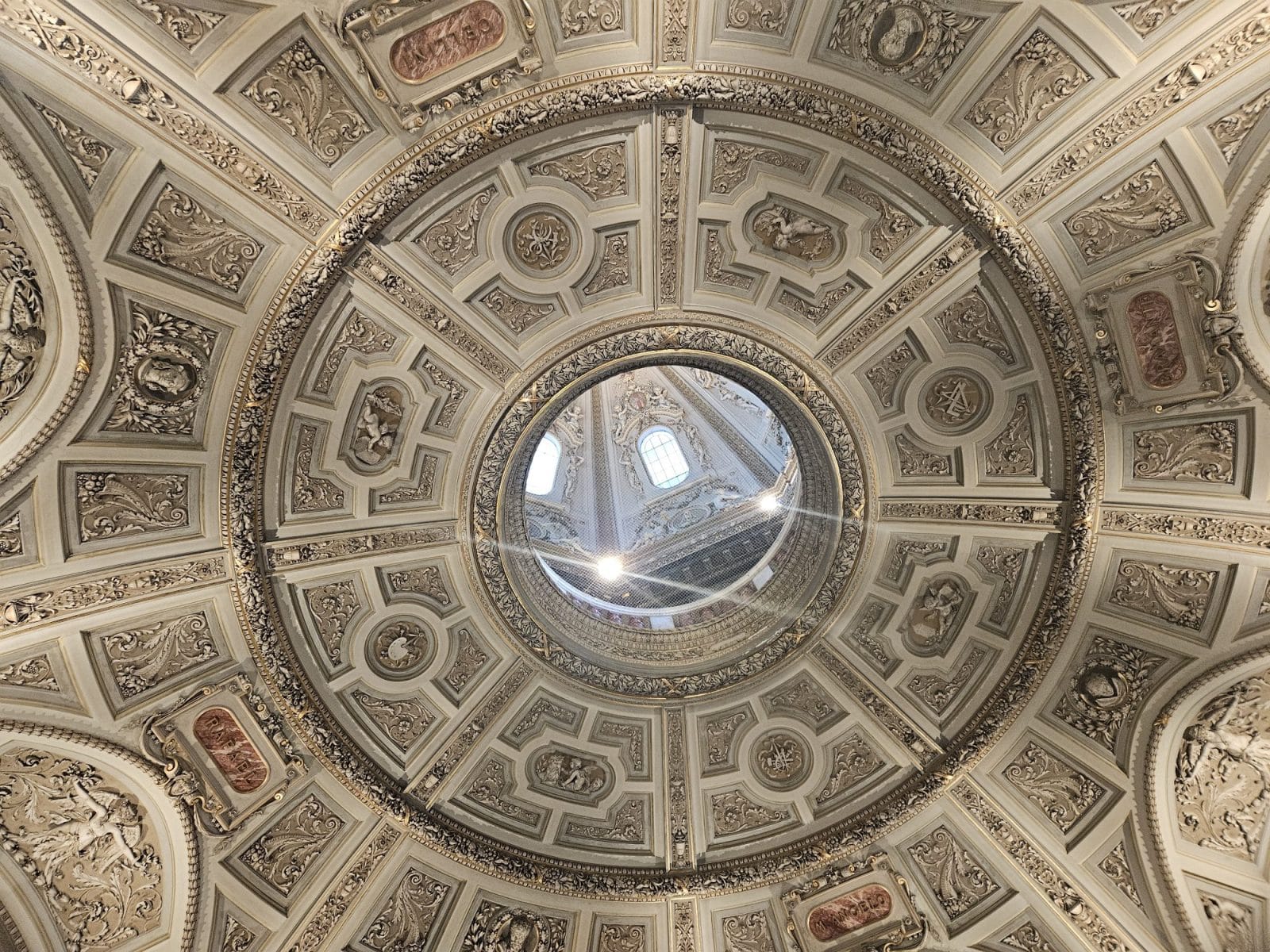
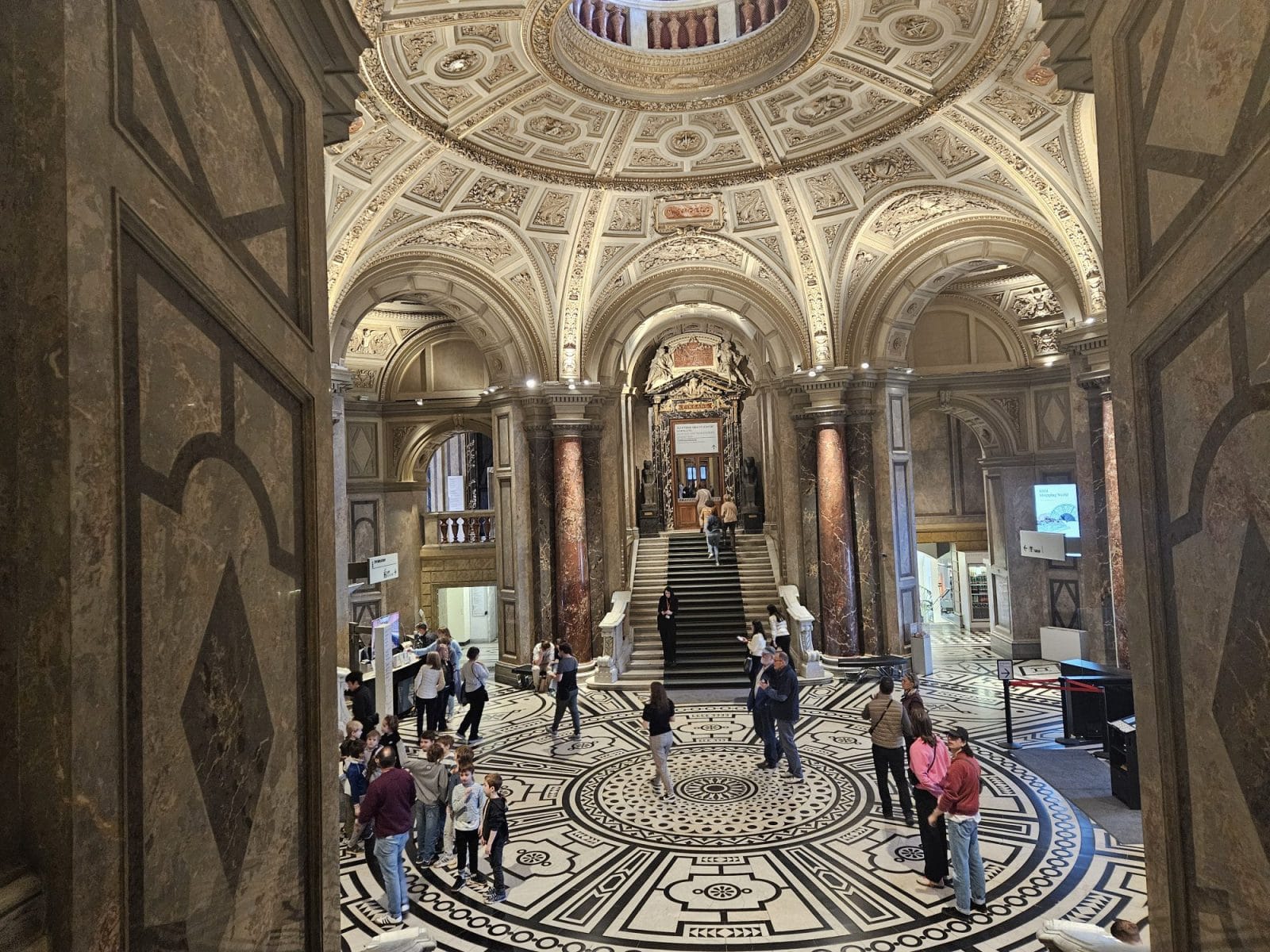
Decorative features include the Decorated dome ceiling and the flooring, best seen from the stairs on the left or right.
Grand Staircase
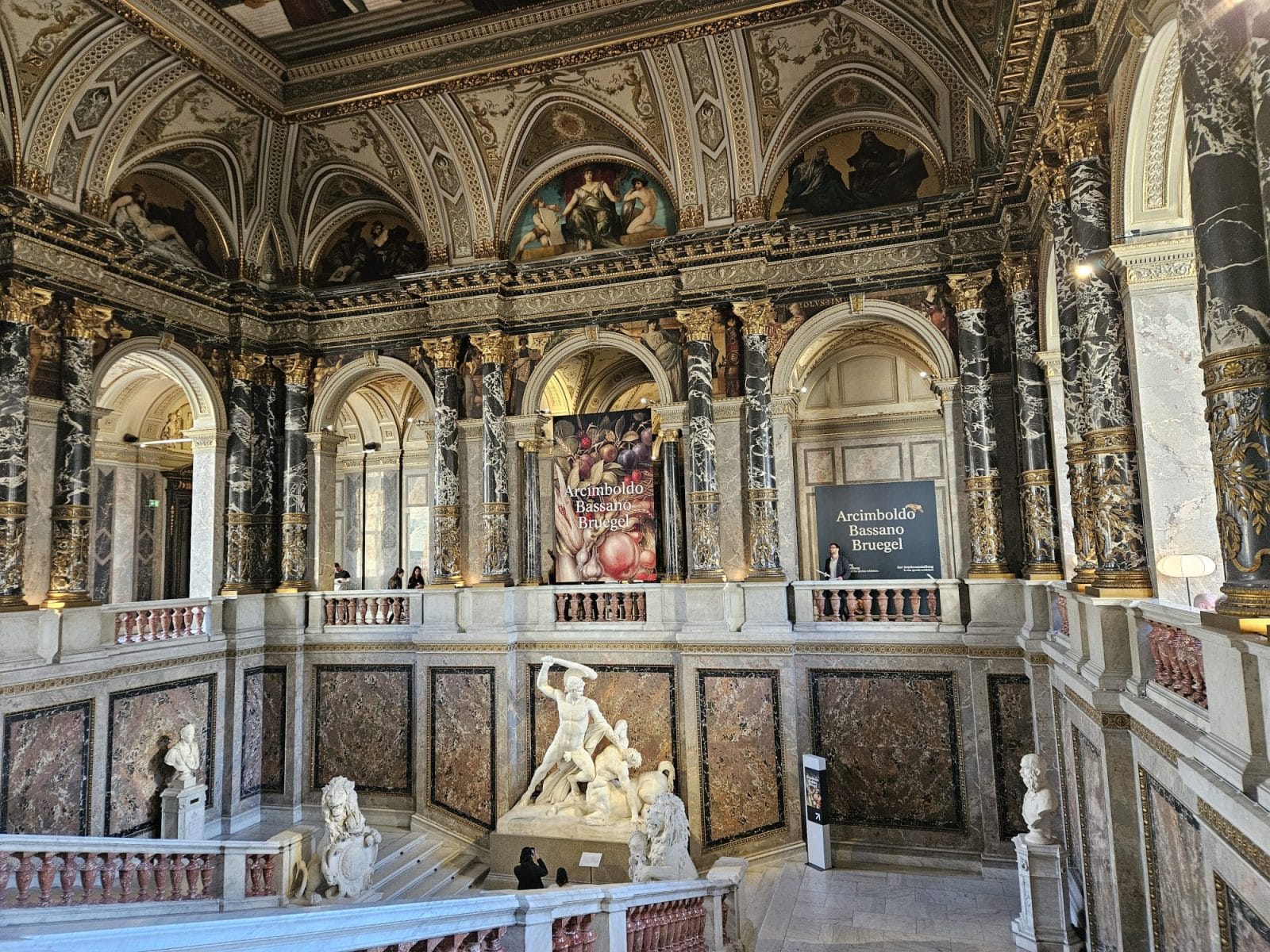
One of the most eye-catching areas was the lavish grand staircase, which led to the Habsburg collections. It is classed as a masterpiece of 19th-century imperial architecture. The Grand Staircase features marble, statues, and paintings by Gustav Klimt and Mihály Munkácsy.
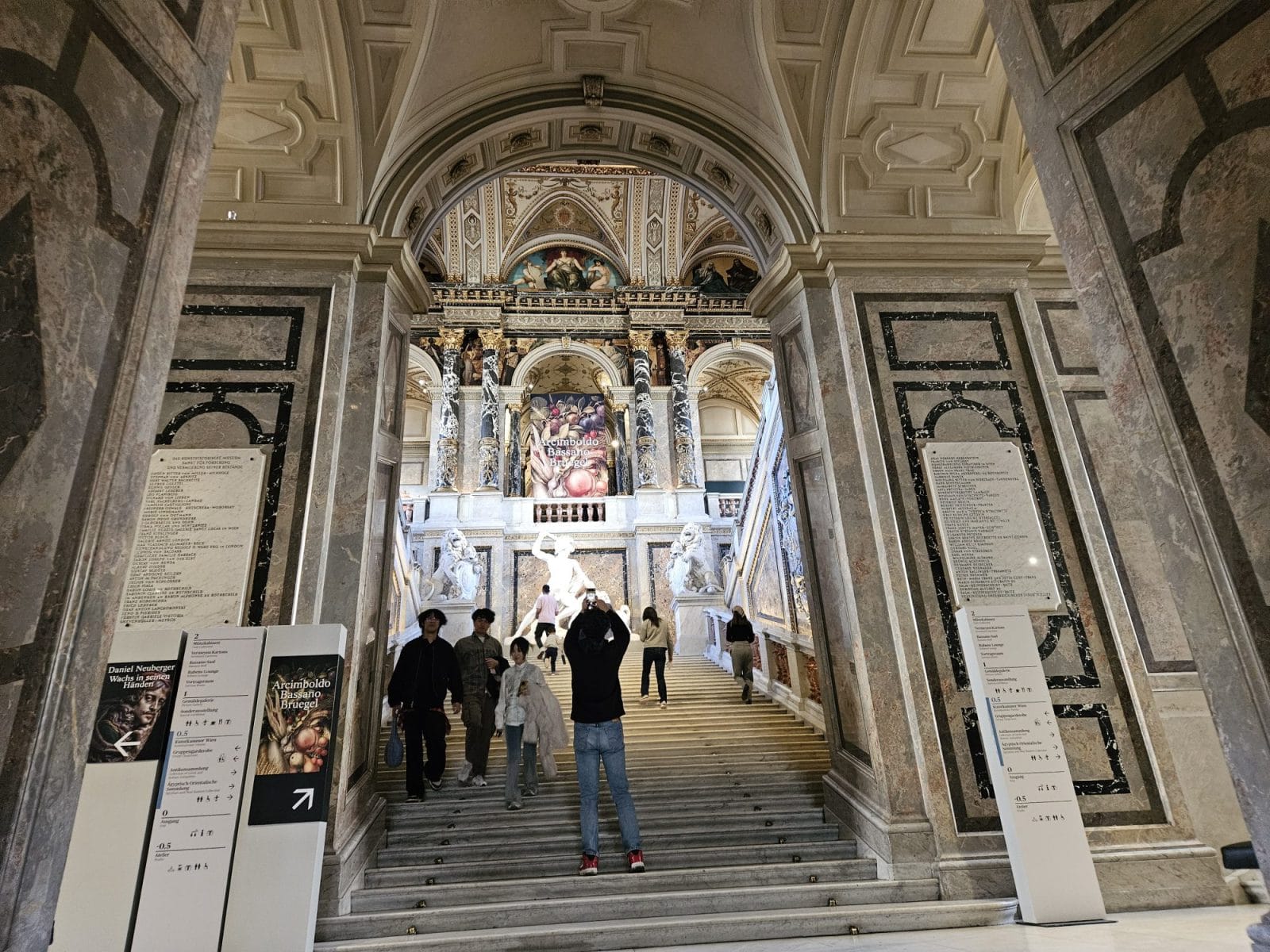
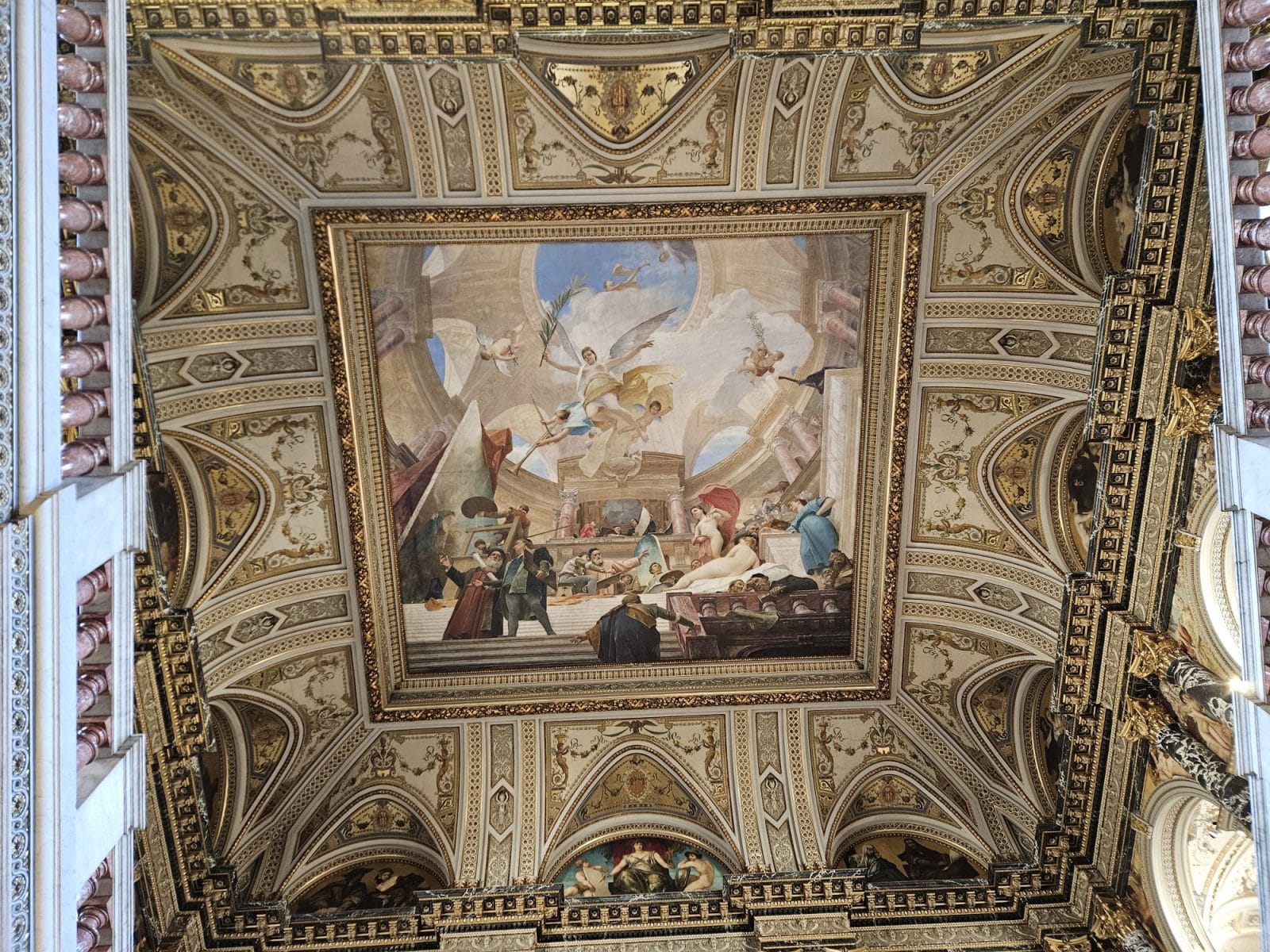
I spent quite a bit of time here, as it was just up my street. There were lots of spots to take photos of the walls, columns, stairs and the impressive ceiling here, which was nice.
Cupola Hall: Dome & Balconies
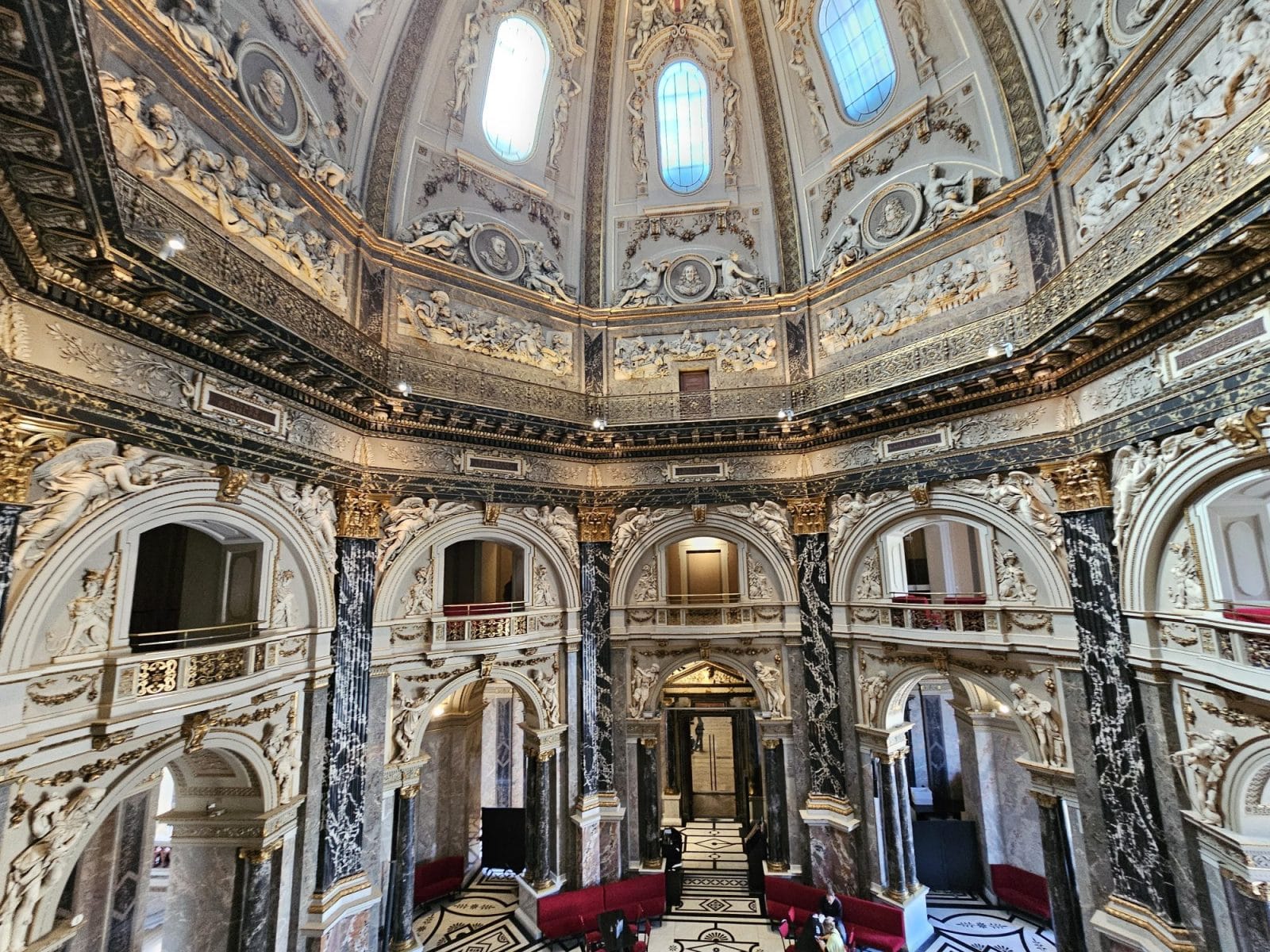
Another eye-catching place is the Cupola Hall, which is home to the museum’s cafe. It has many decorative features, including marble columns, gold-leaf accents, and a glass dome.
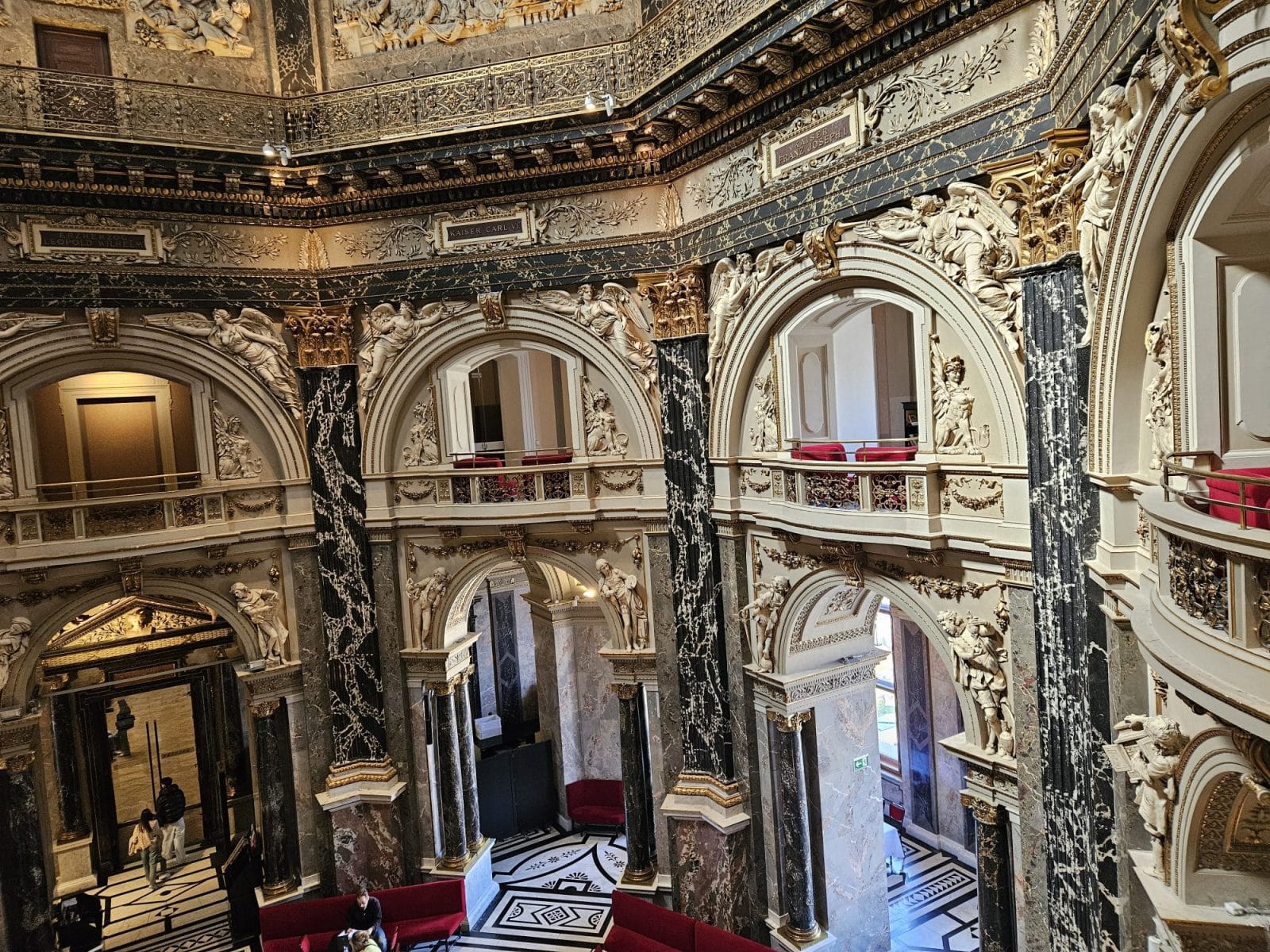
I enjoyed visiting the two levels of balconies above the cafe. These were perfect for views of the hall’s decorative walls and dome. These were popular with tourists taking photos but not overly busy. To reach each level, you climb pretty stairways; there is also a lift.
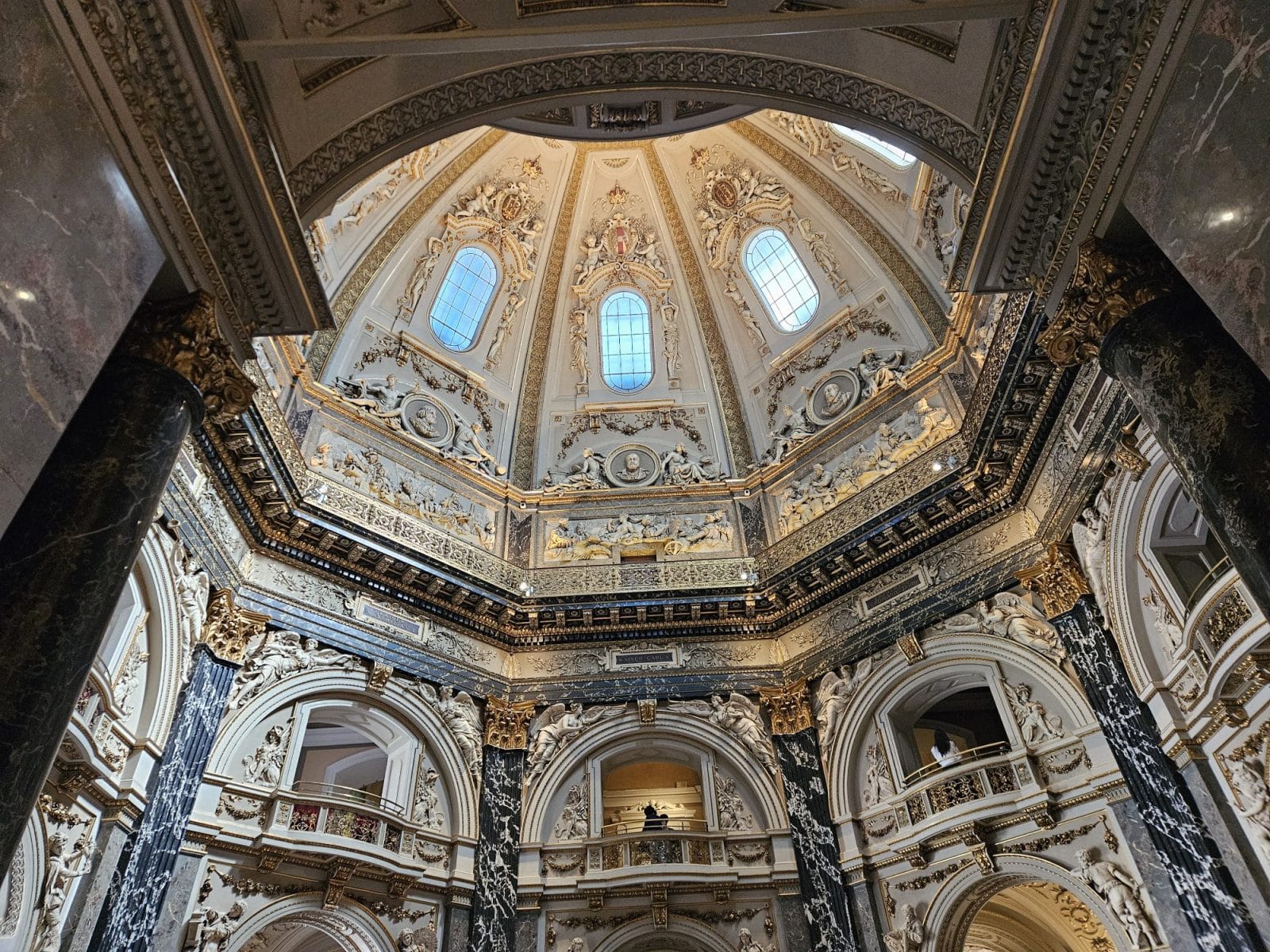
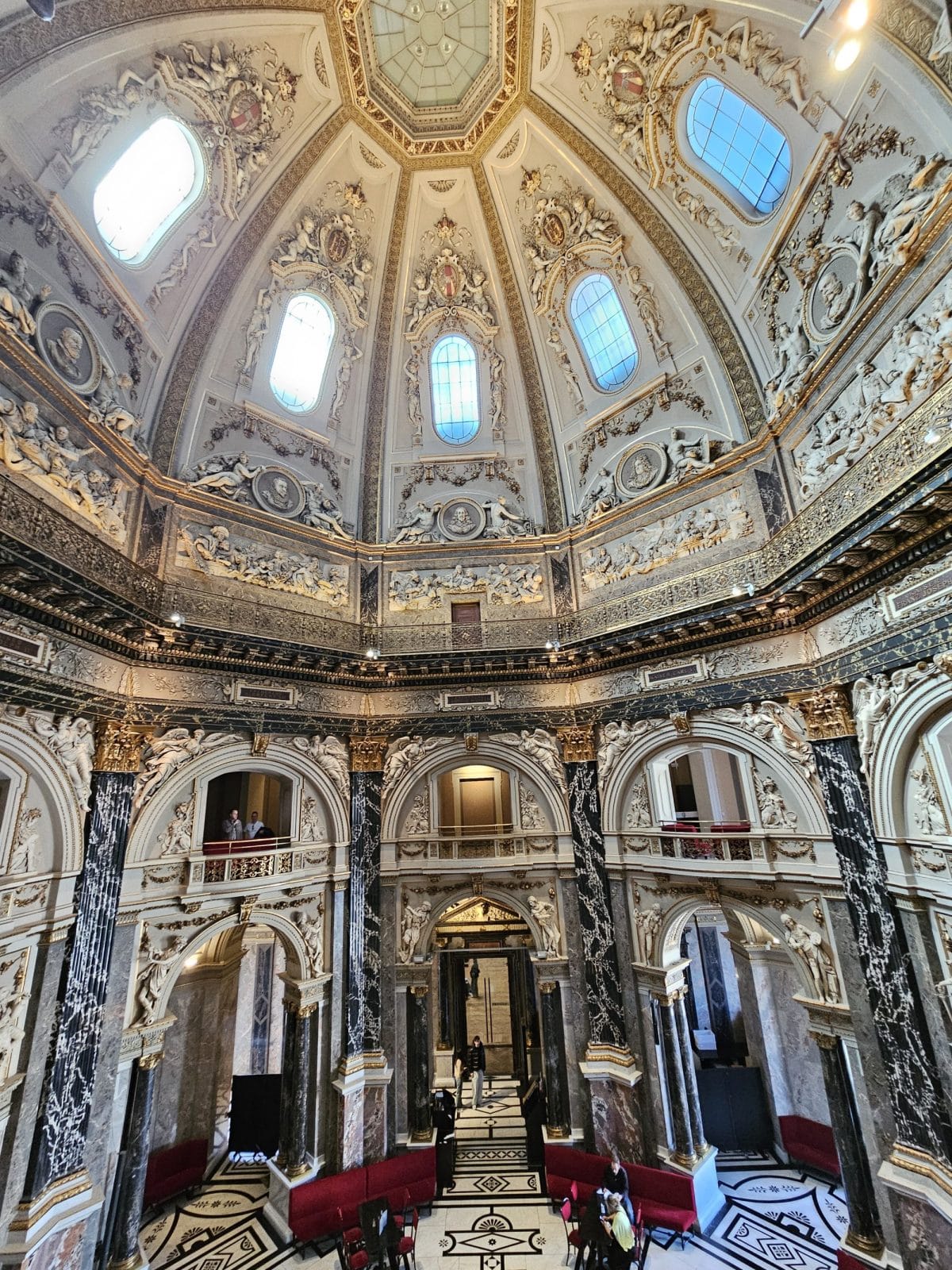
The views from the octagonal dome were impressive; it was 60 metres high and fully decorated.
Memorable Art Collections
I didn’t have a plan for what to see; I think I should have. Despite that, I saw many things I enjoyed.
Egyptian and Near Eastern Collection
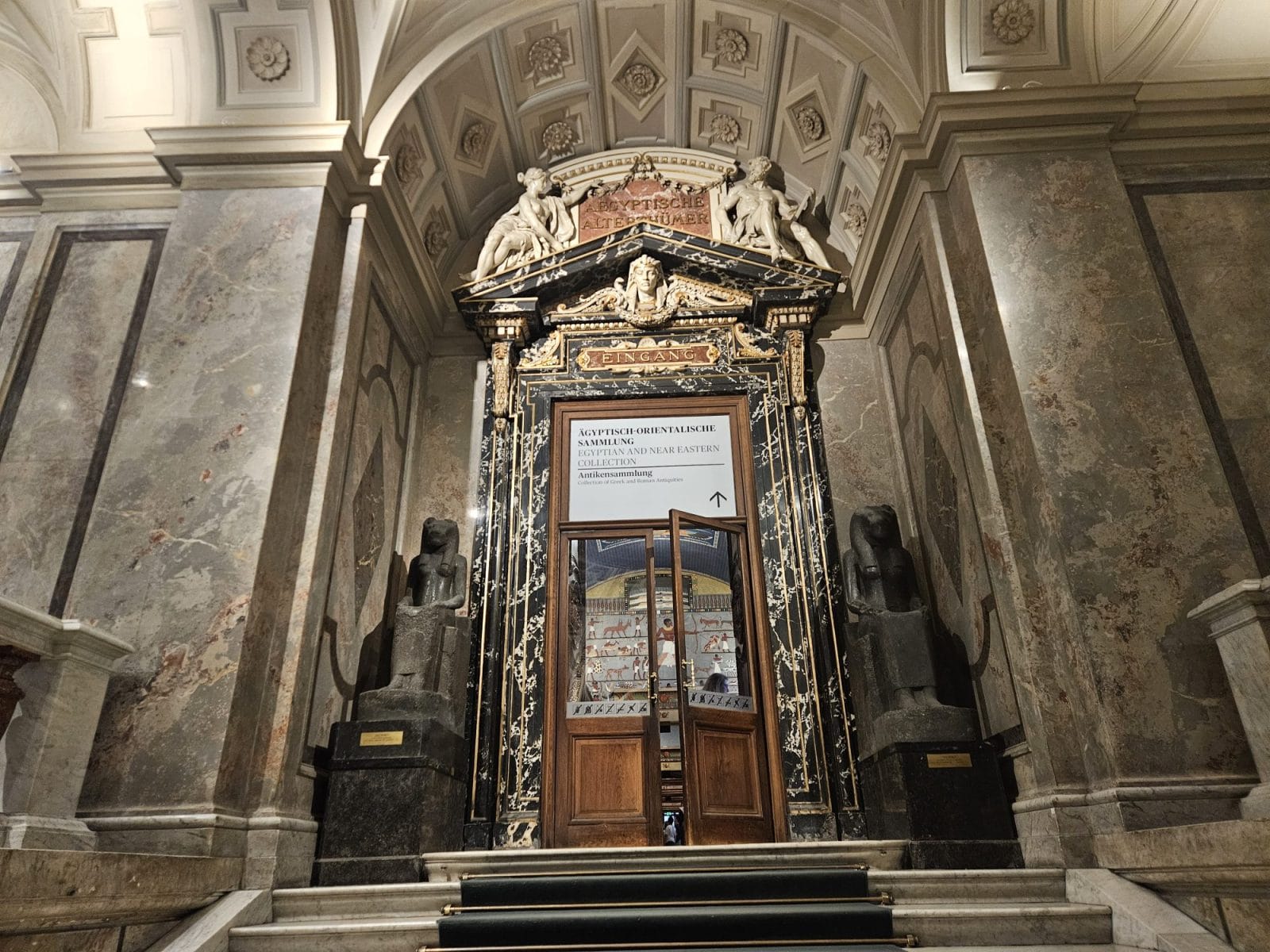
One collection that really appealed to me was the Egyptian and Near Eastern Collection. To find this was straightforward from the main entrance hall.
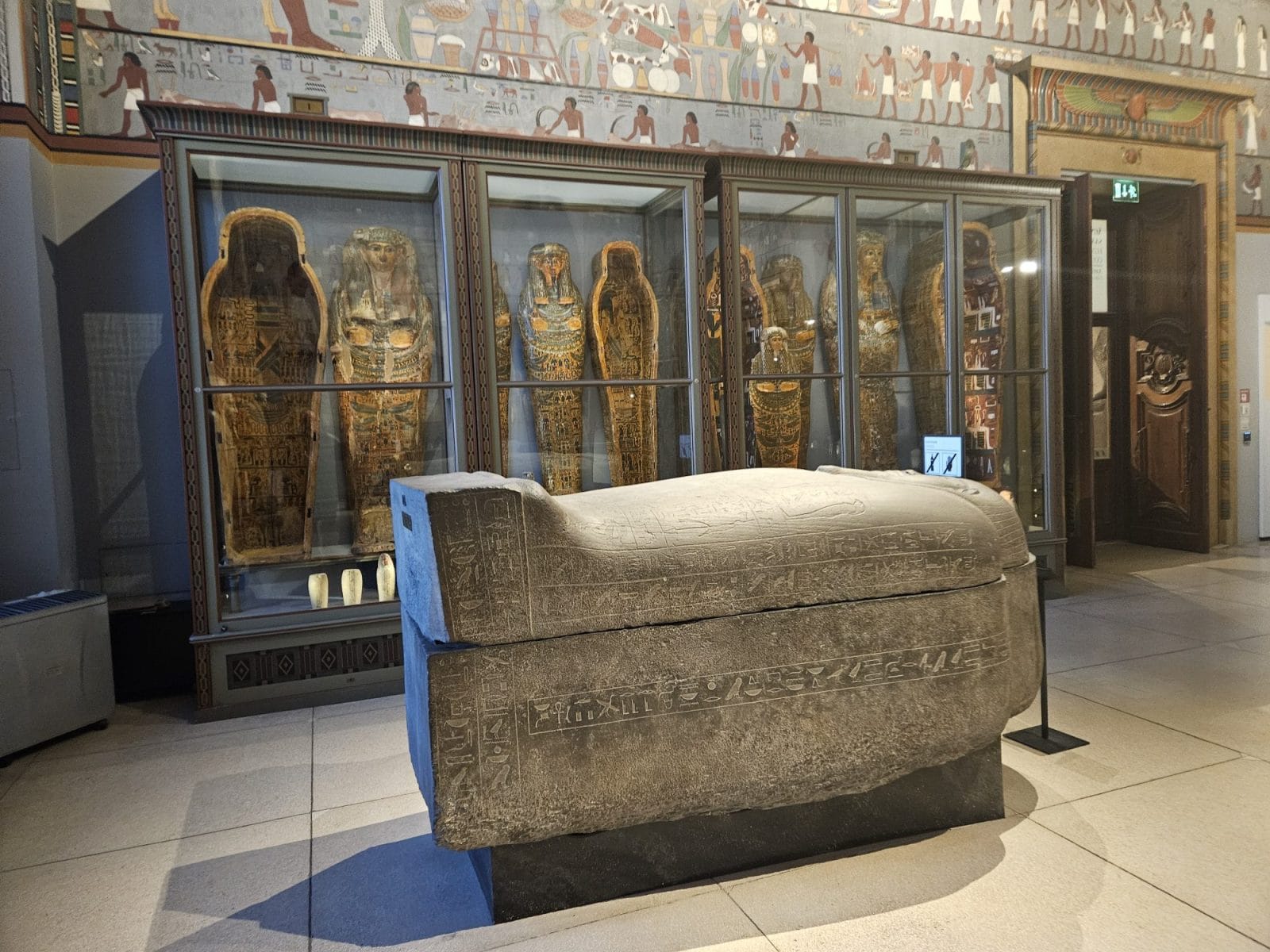
This had loads of ancient artefacts and displays. It evoked memories of when I visited Egypt as a younger person.
Picture Gallery
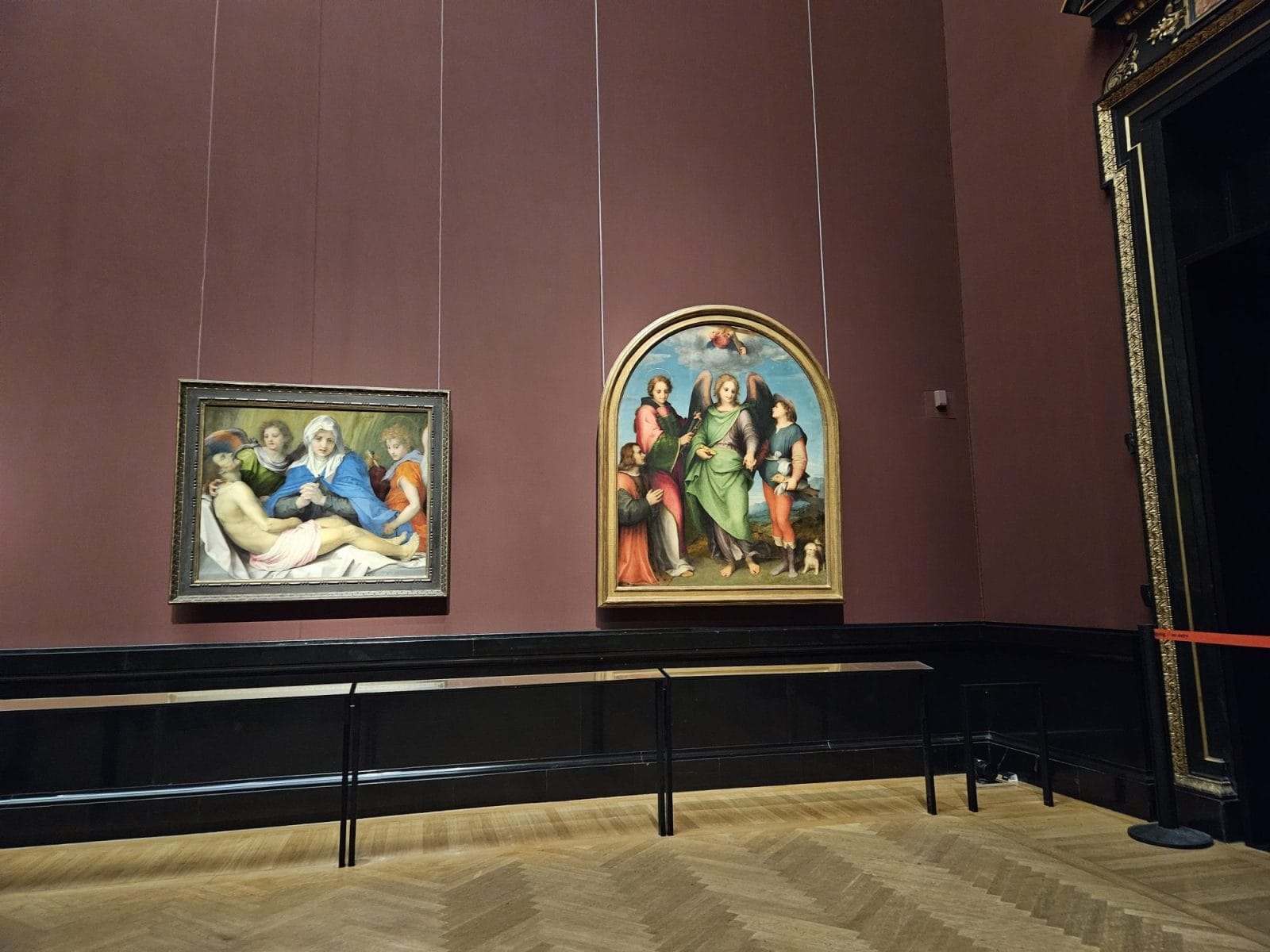
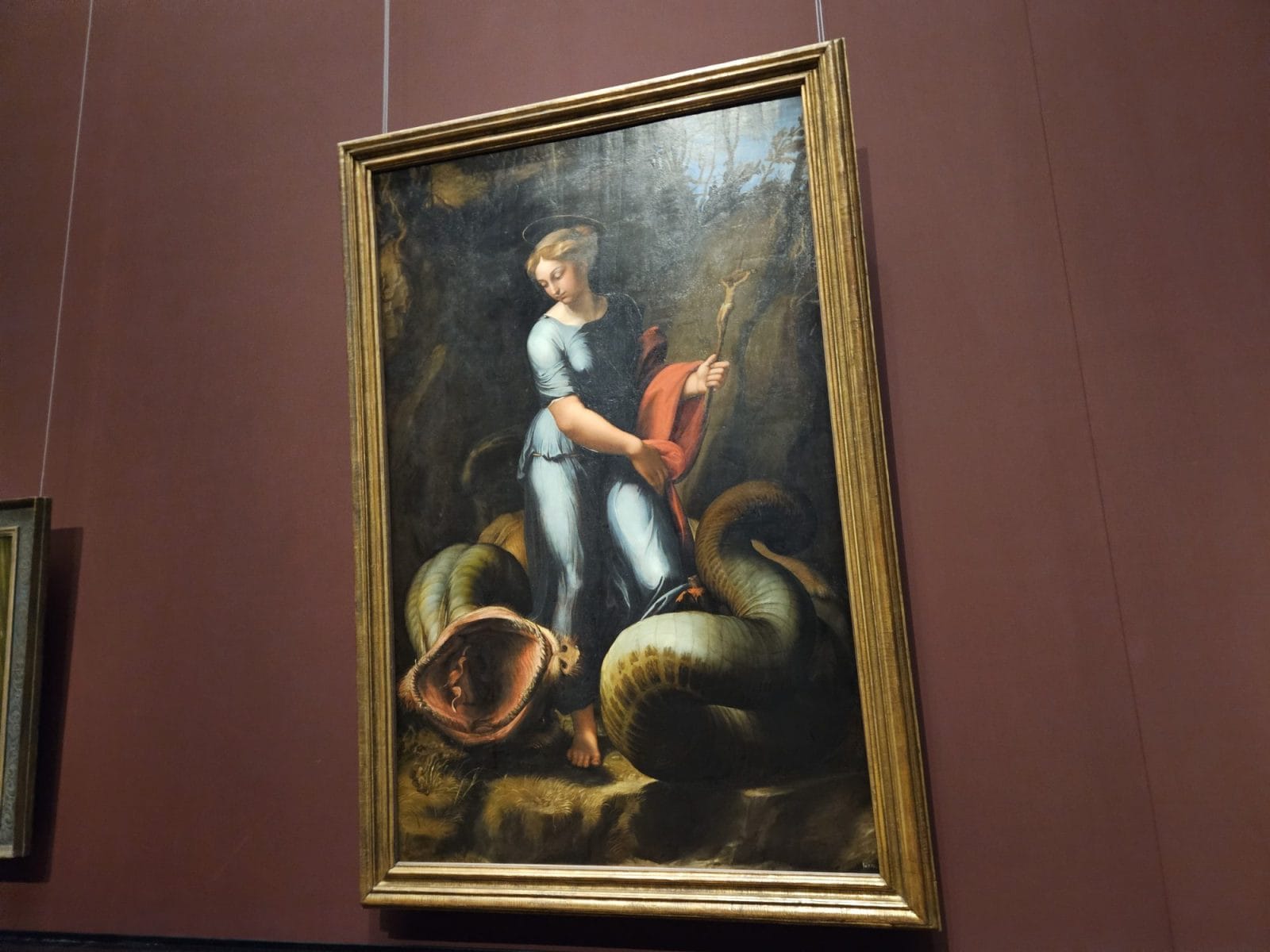
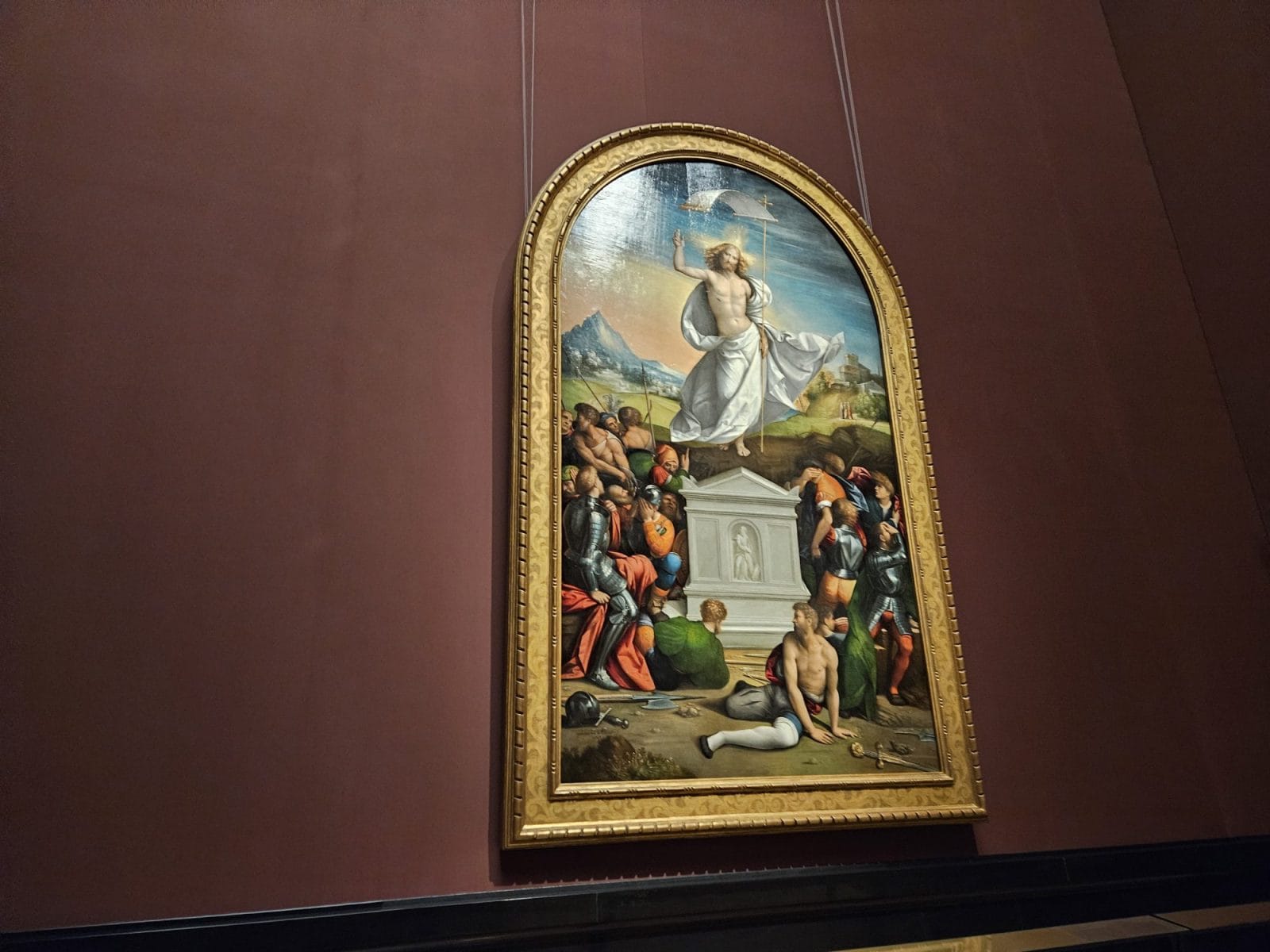
The Picture Gallery was a memorable room which houses a world-renowned collection of Old Master paintings, including some by Raphael. This room had some comfy seating so you could sit and look at the artworks.
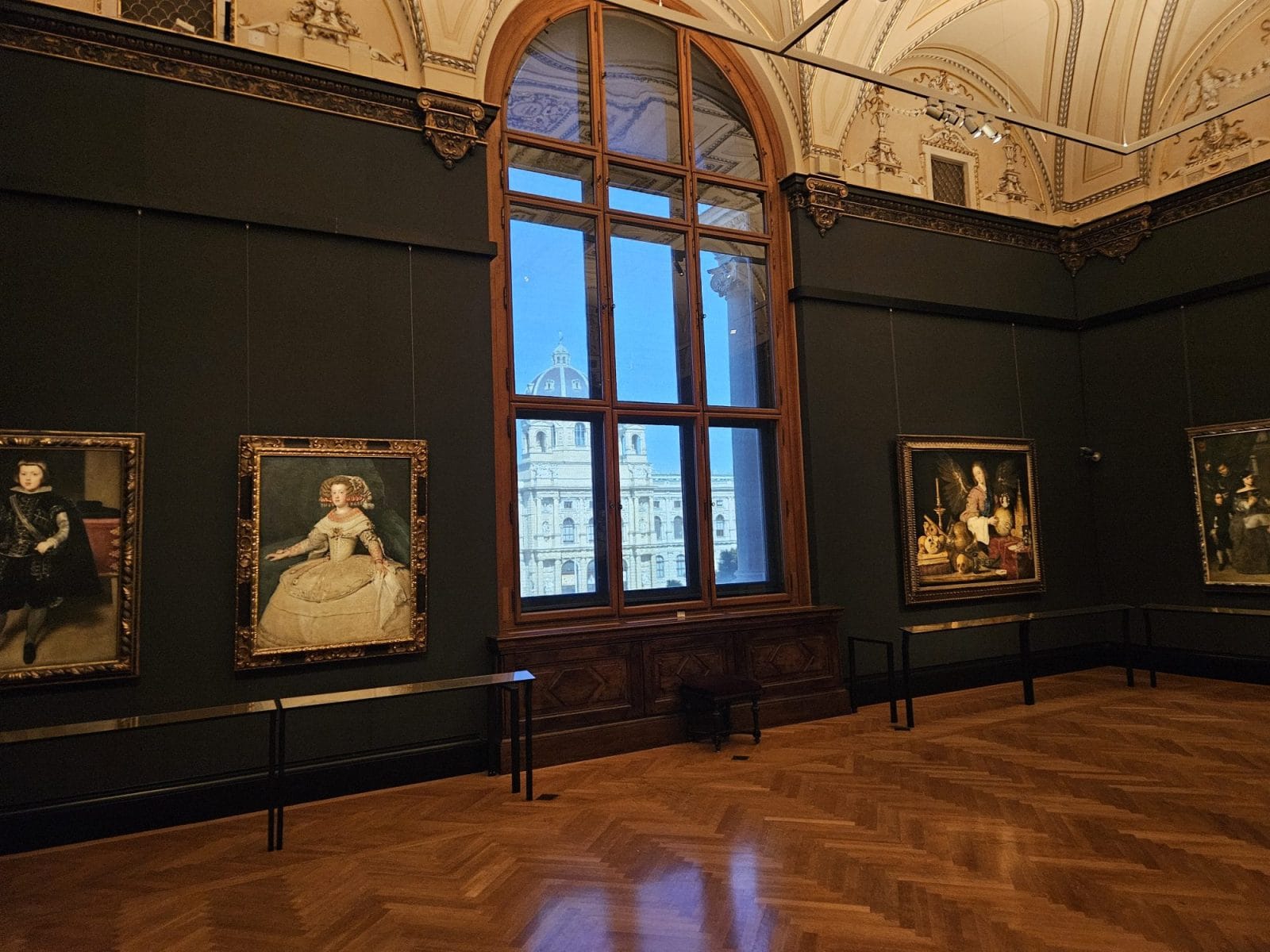
There were some nice side rooms with windows in the Picture Gallery with views of the other buildings in Maria-Theresien-Platz.
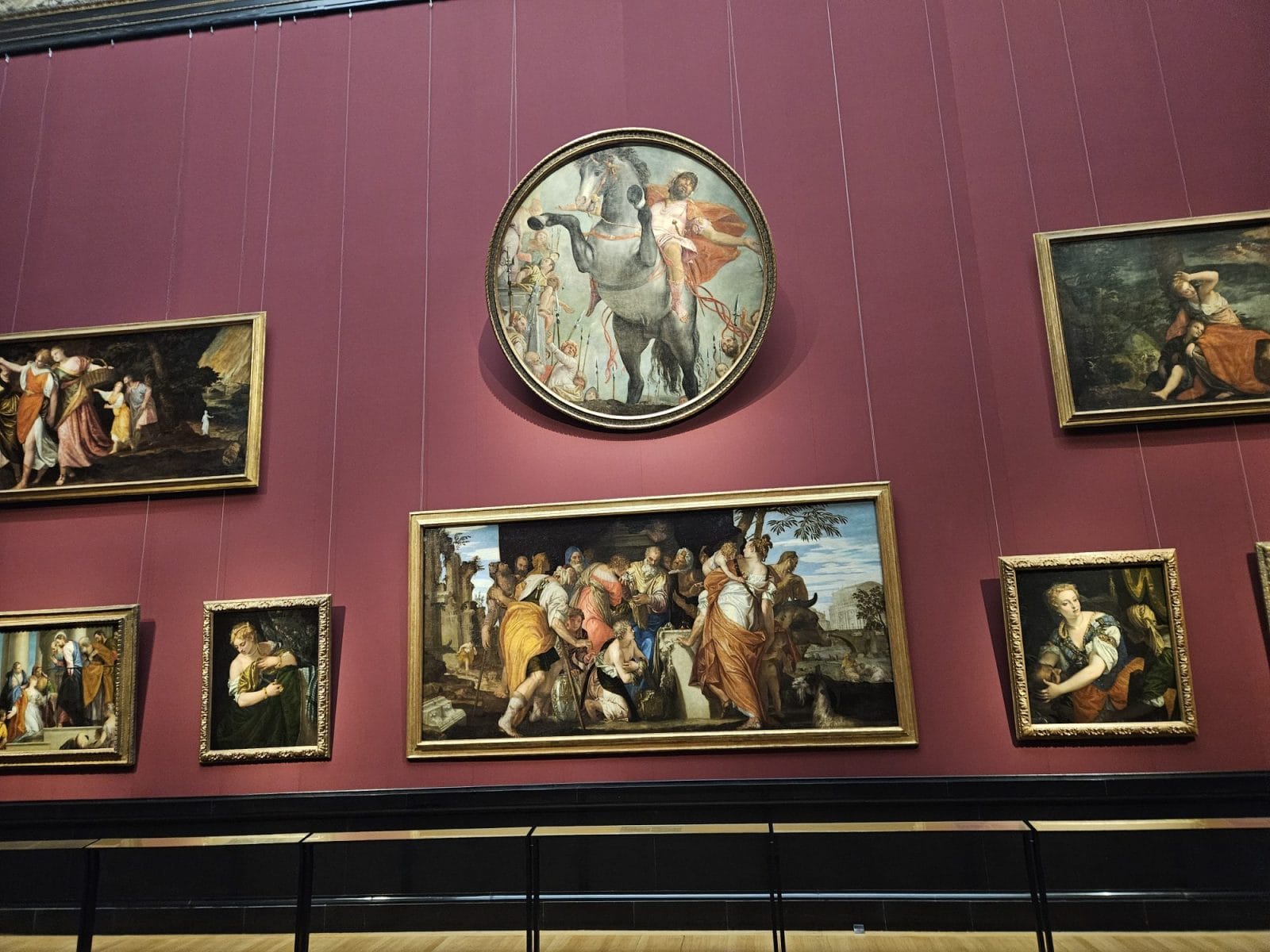
Also in this part, there was a gallery featuring Italian Renaissance painters. The circular picture got my attention; this is Titian’s “Risen Christ”.
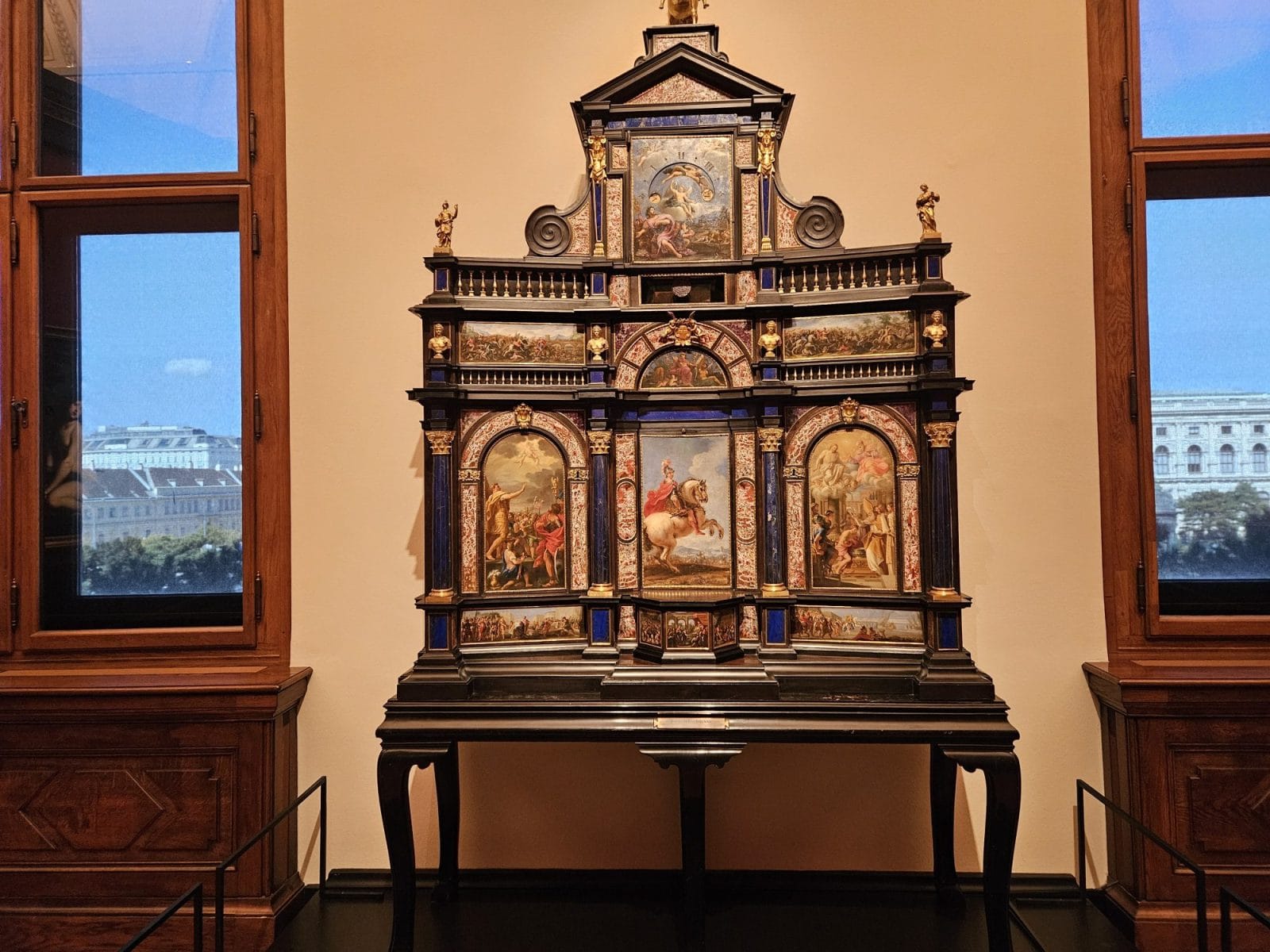
Artistic furniture piques my interest, and the Cabinet with Nighttime Clock by Jakob Hermann certainly did that. This dates from the Baroque era and was created between 1663 and 1668.
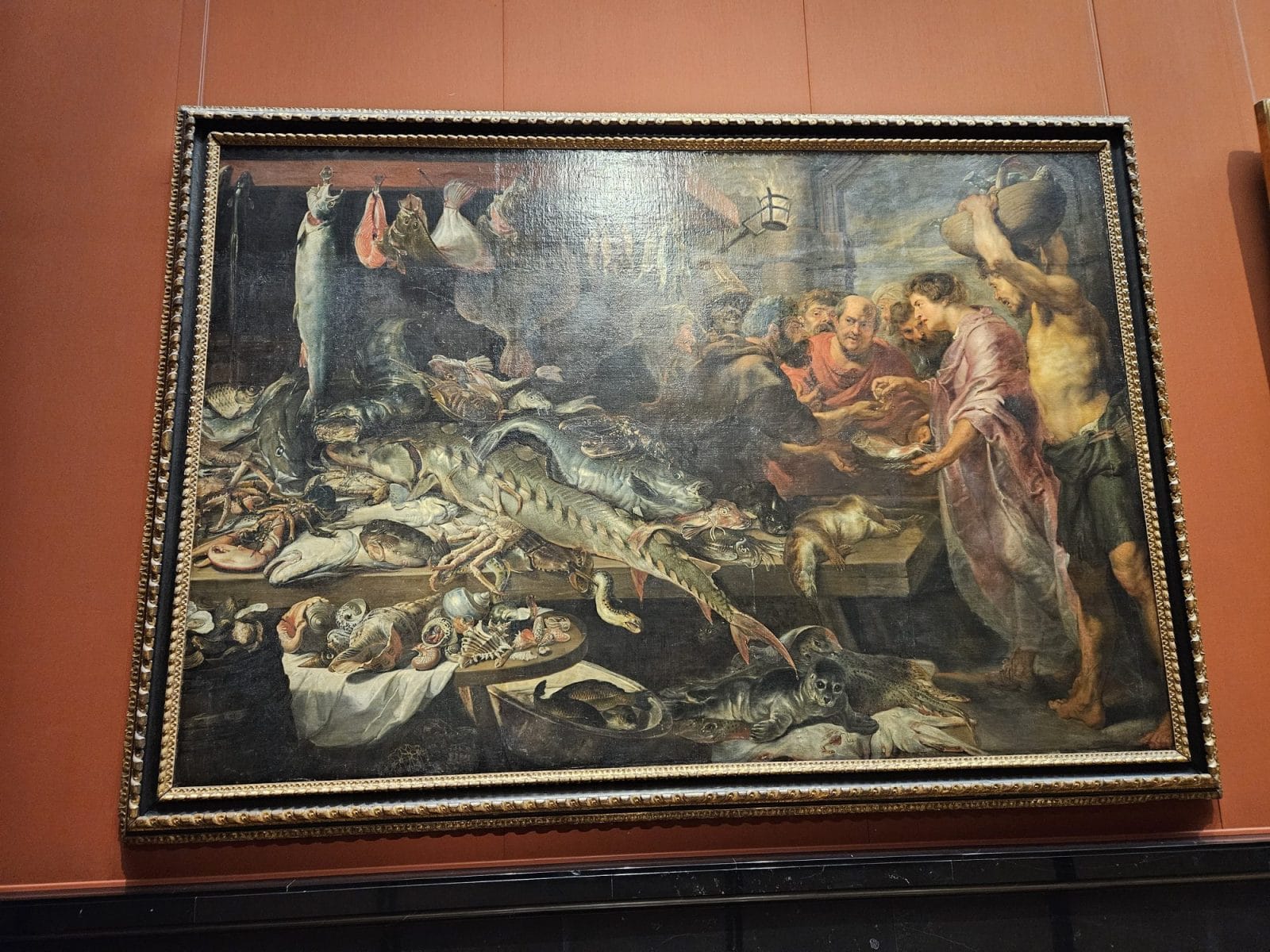
Fish Market (Tribute Money?) is an eye-catching oil painting by Flemish Baroque painter Frans Snyders. It’s a big painting about a topic I love, fish markets. This one dates from 1621.
Habsburg Royal Collection
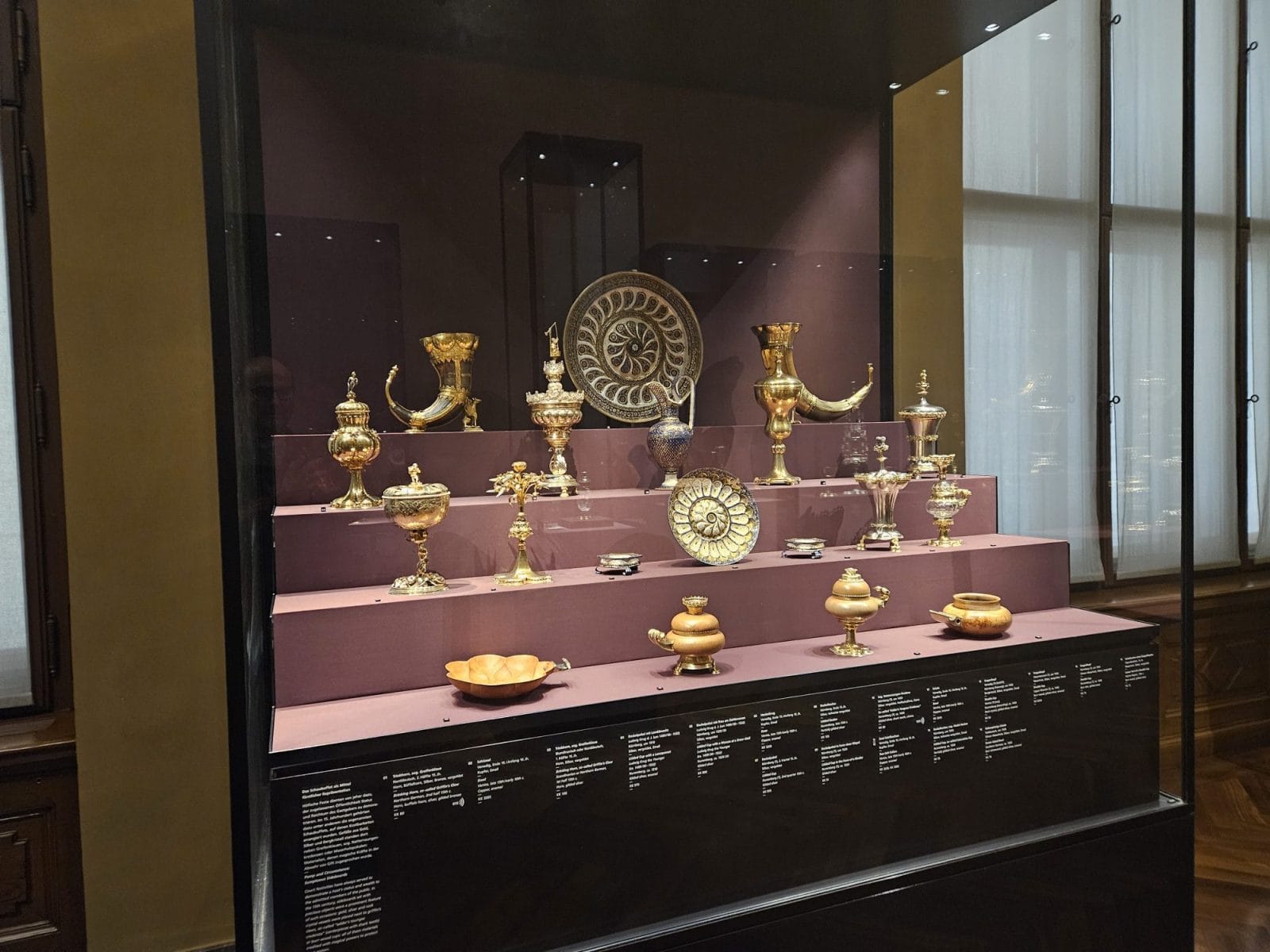
The Habsburg Royal Collection was interesting, with many exhibits, including paintings and valuable objects collected by generations of Habsburg emperors and archdukes.
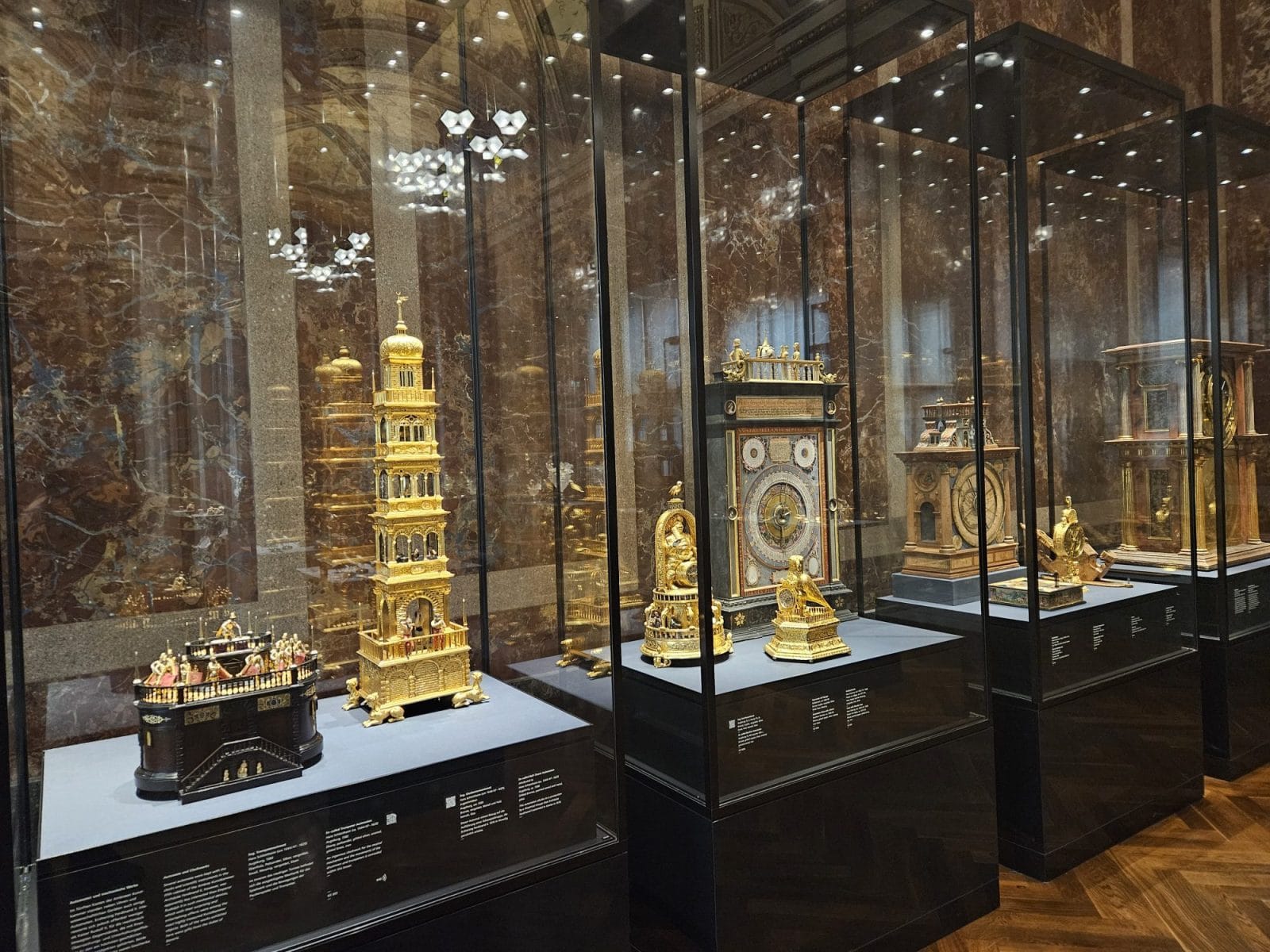
One part that piqued my interest was the collection of Renaissance and Baroque clocks, which were elaborate and mostly gold.
Collection of Greek and Roman Antiquities
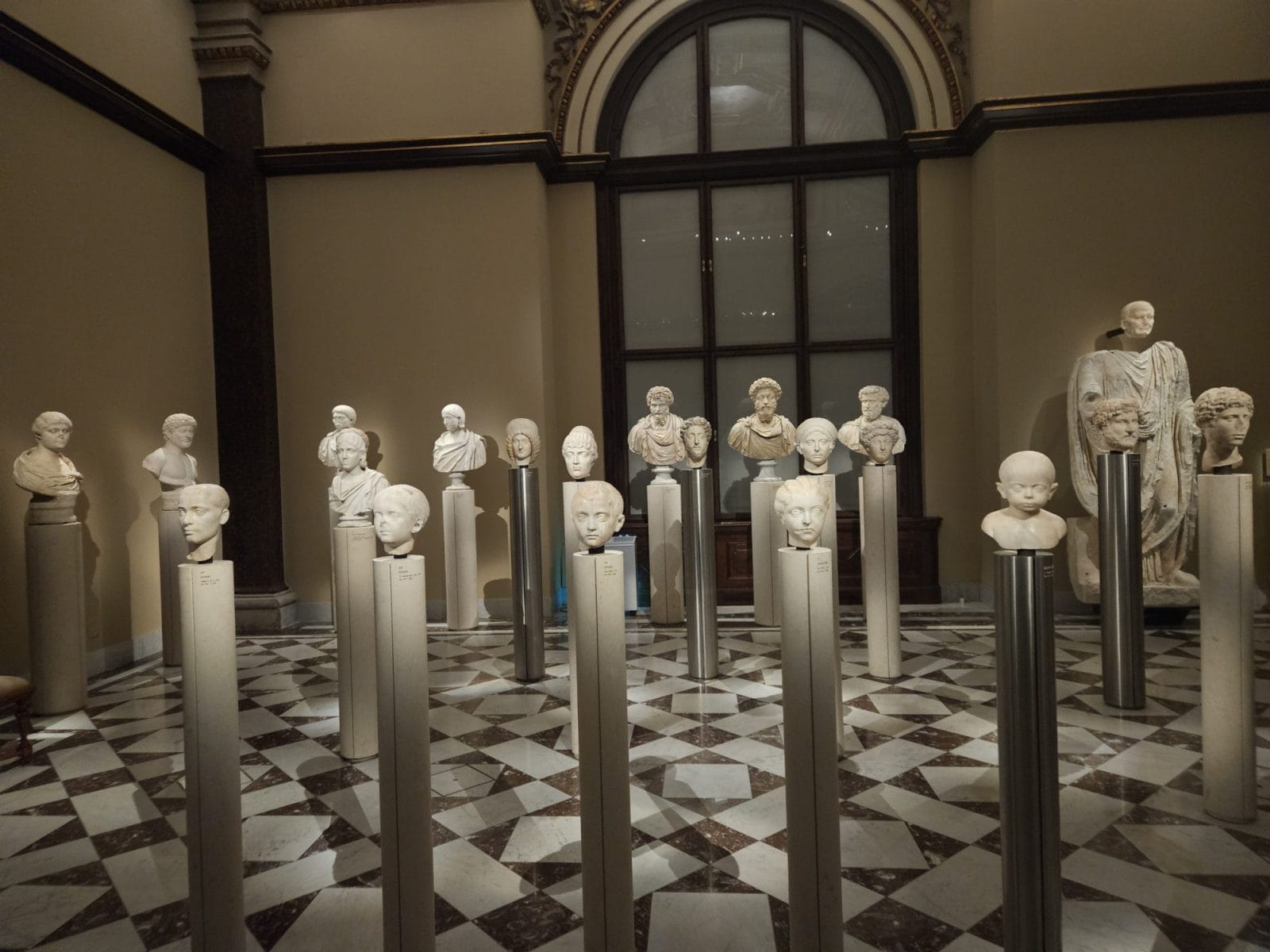
I visited the museum’s collection of Greek and Roman Antiquities, which featured many pieces from this era.
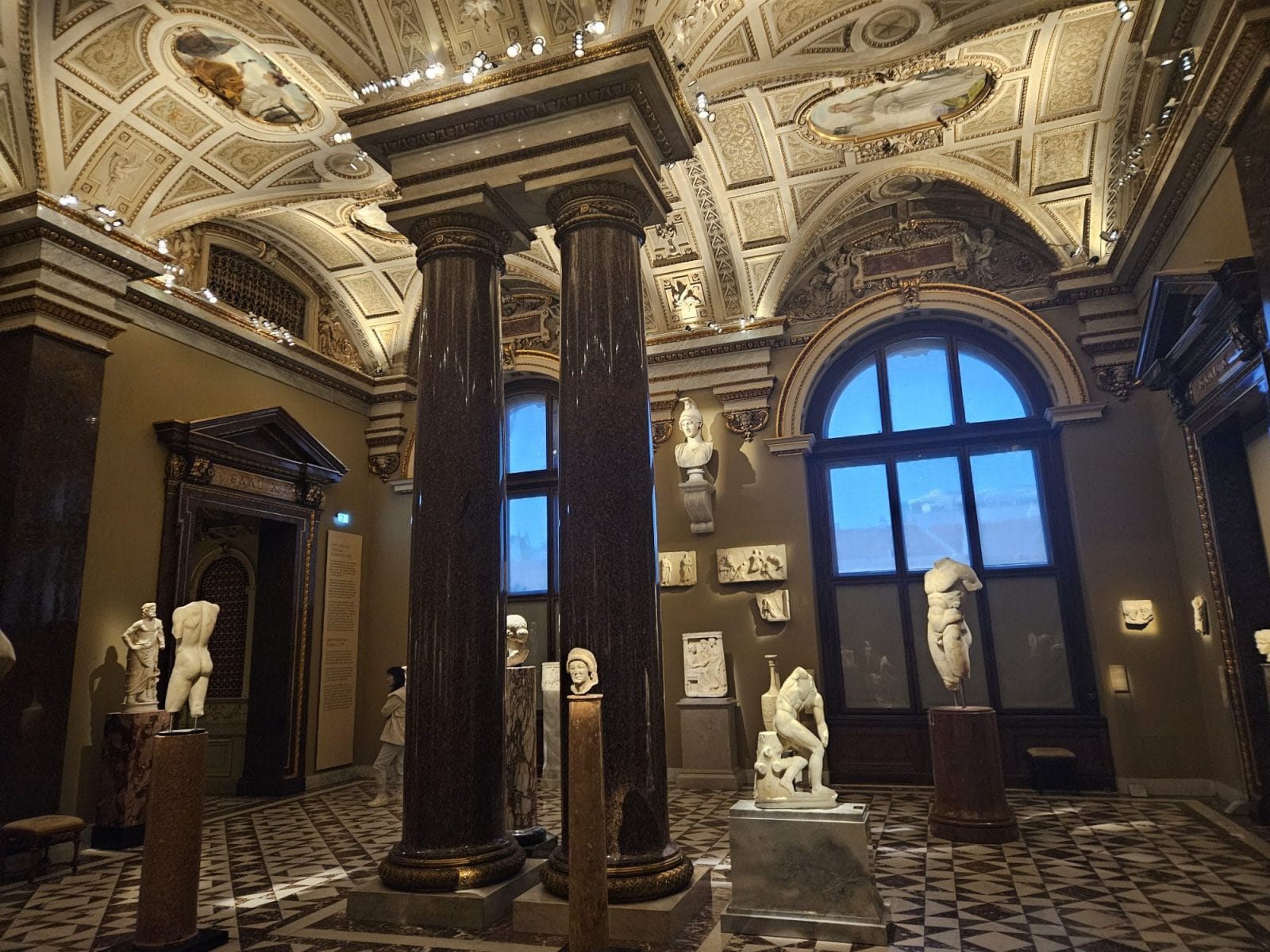
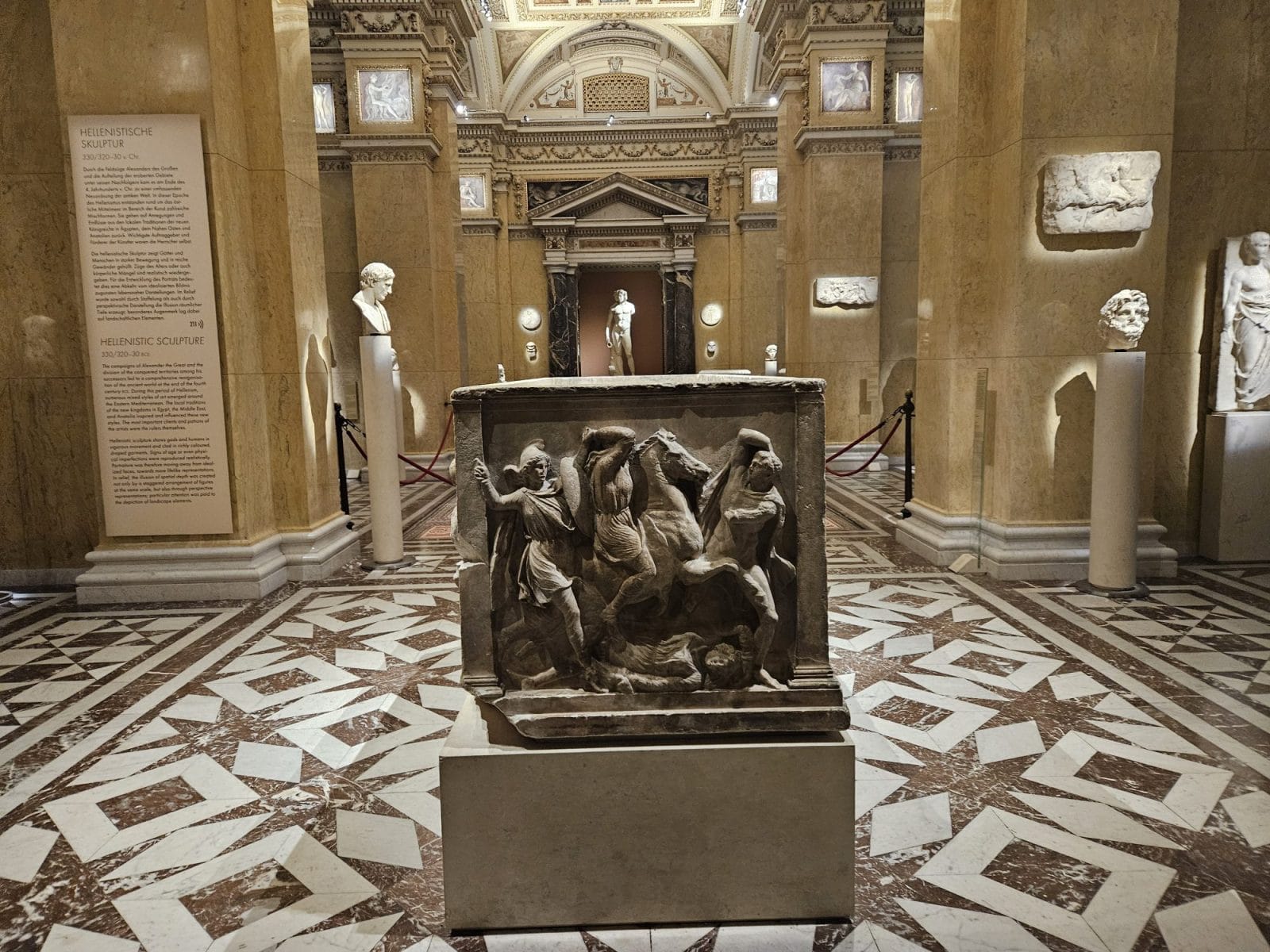
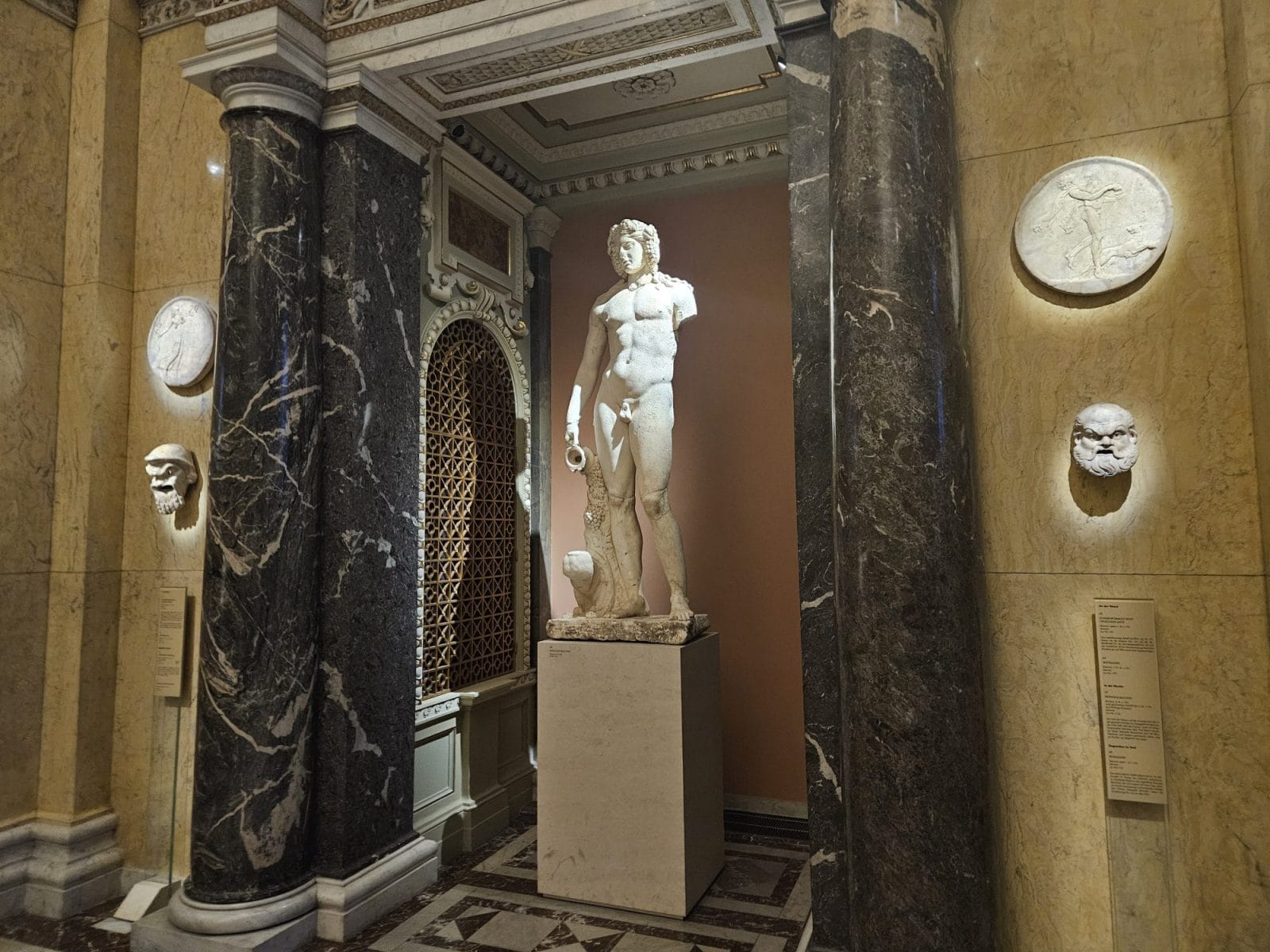
There were many stone and marble statues and other stonework here, with information about each piece.
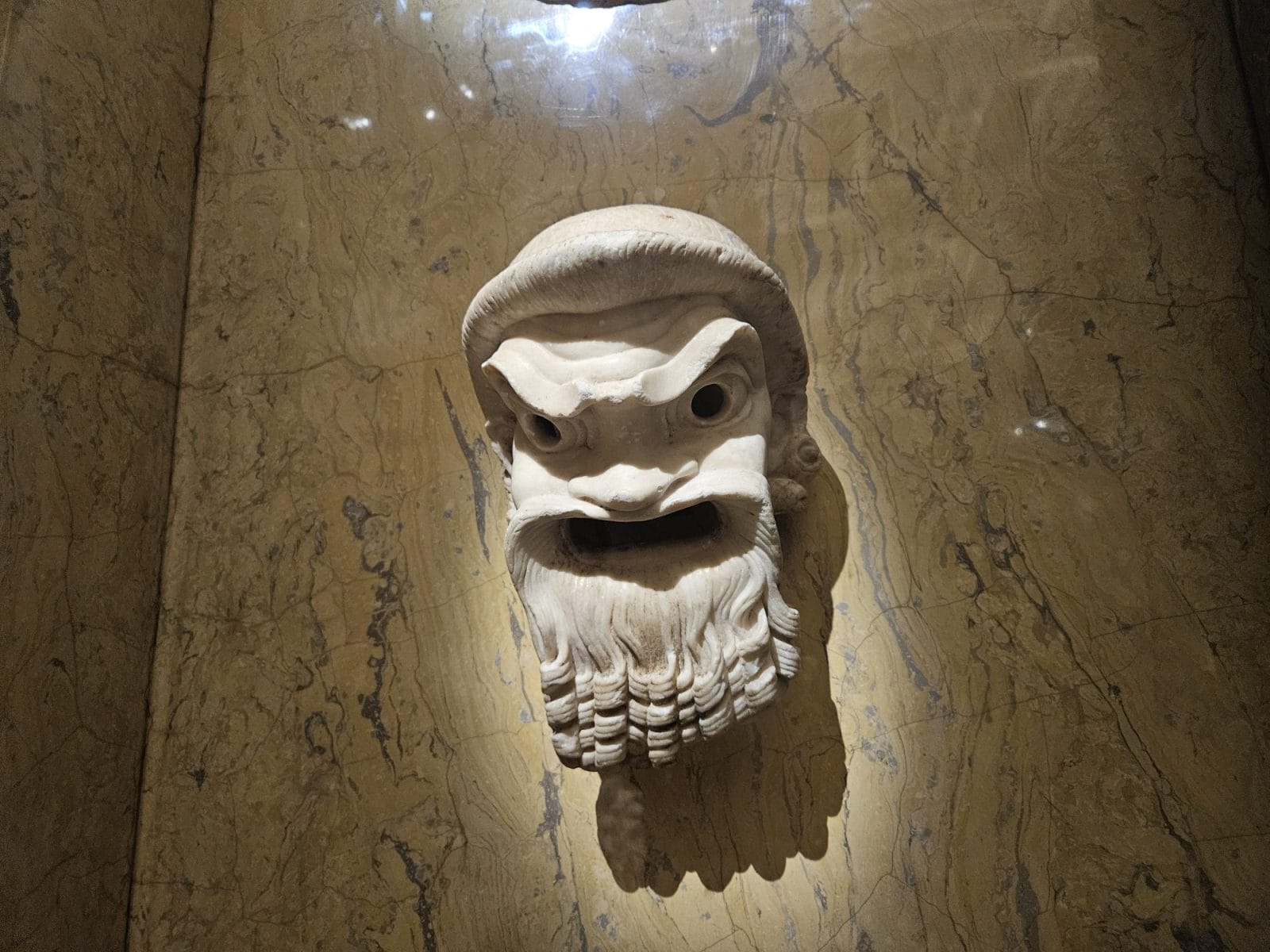
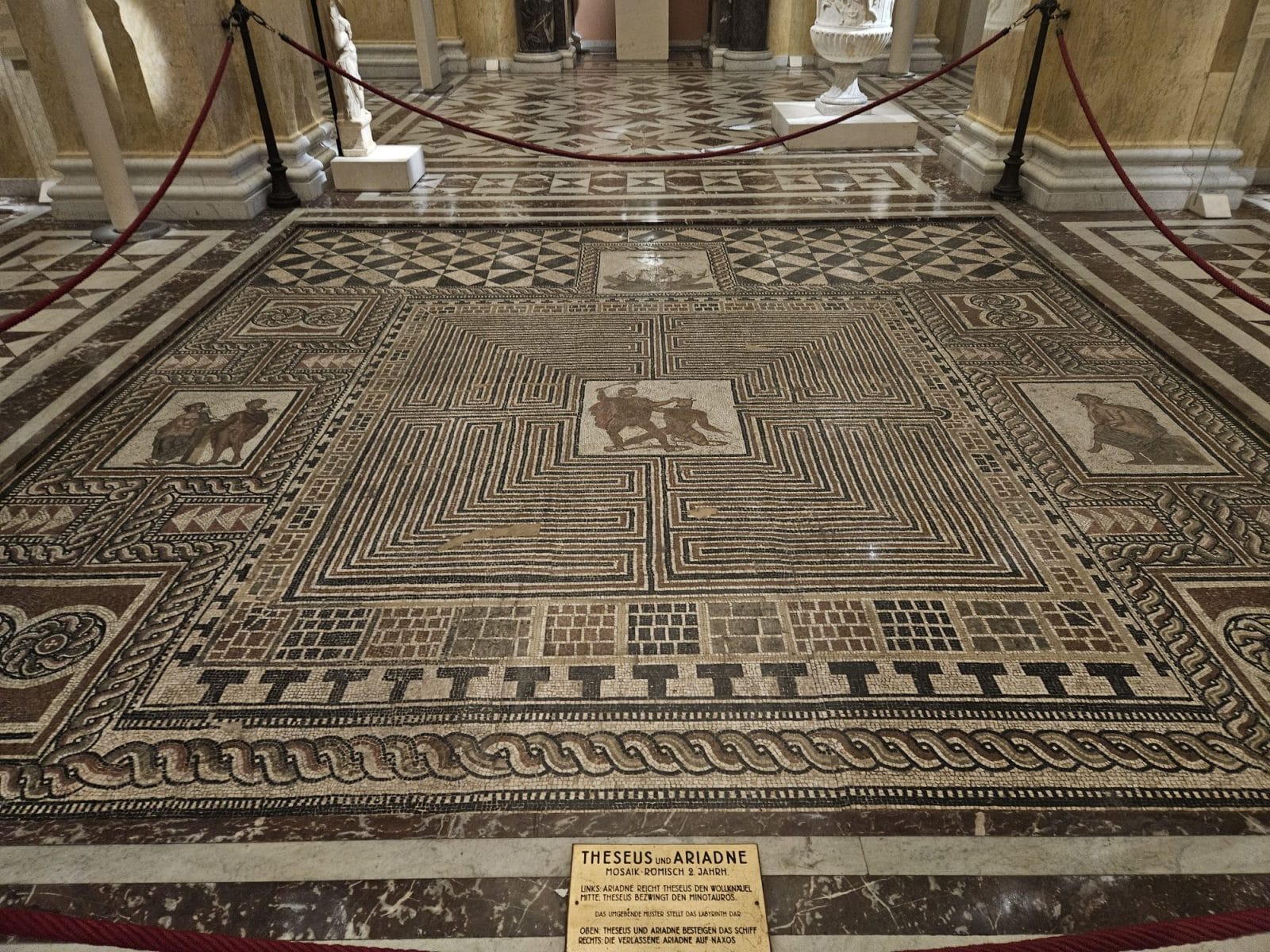
A large mosaic featuring Theseus and the Minotaur, and a Roman marble comedy mask depicting a zornigen (angry) old man, were memorable parts of this section.
Münzkabinett (Coin Cabinet)
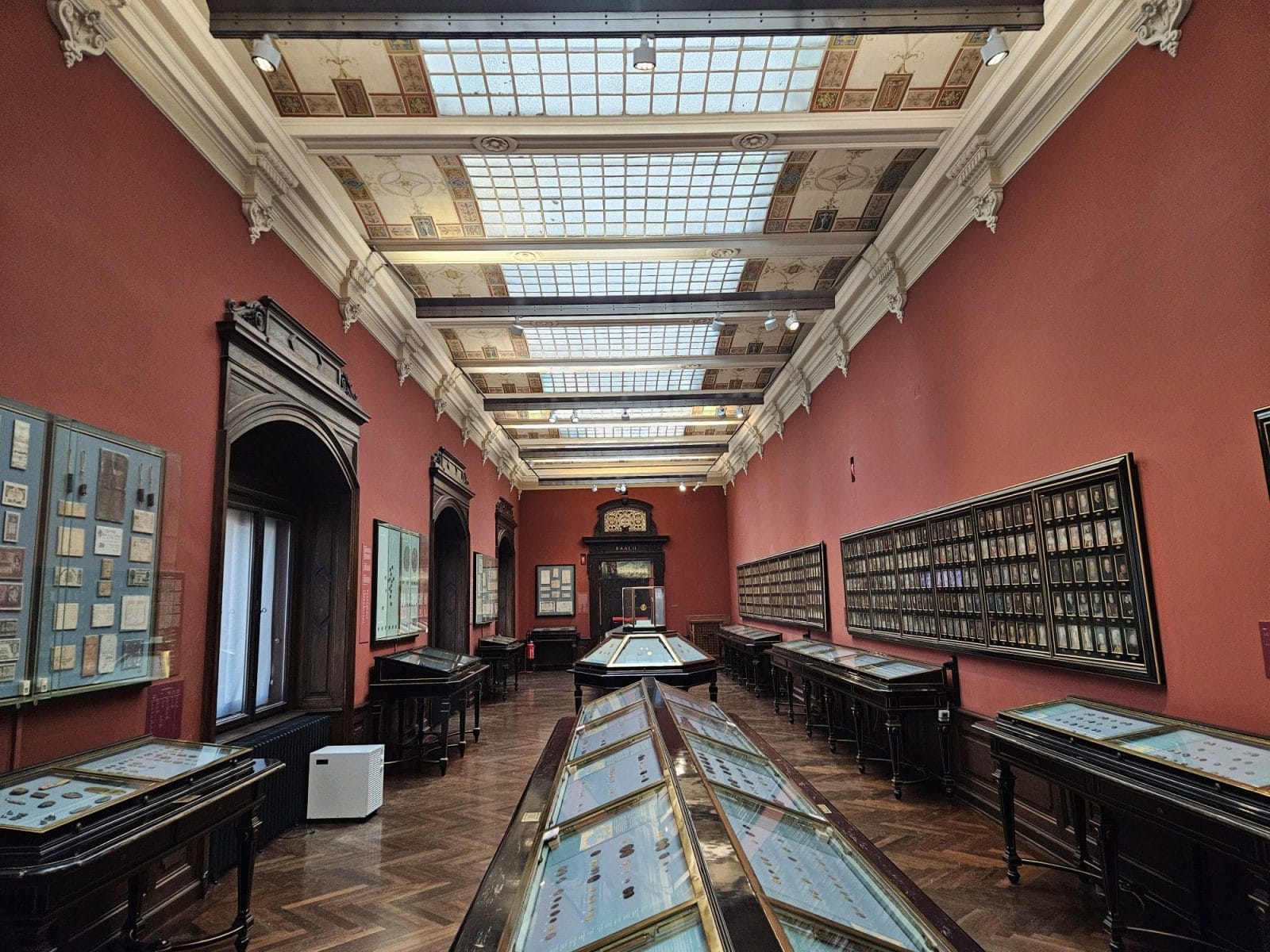
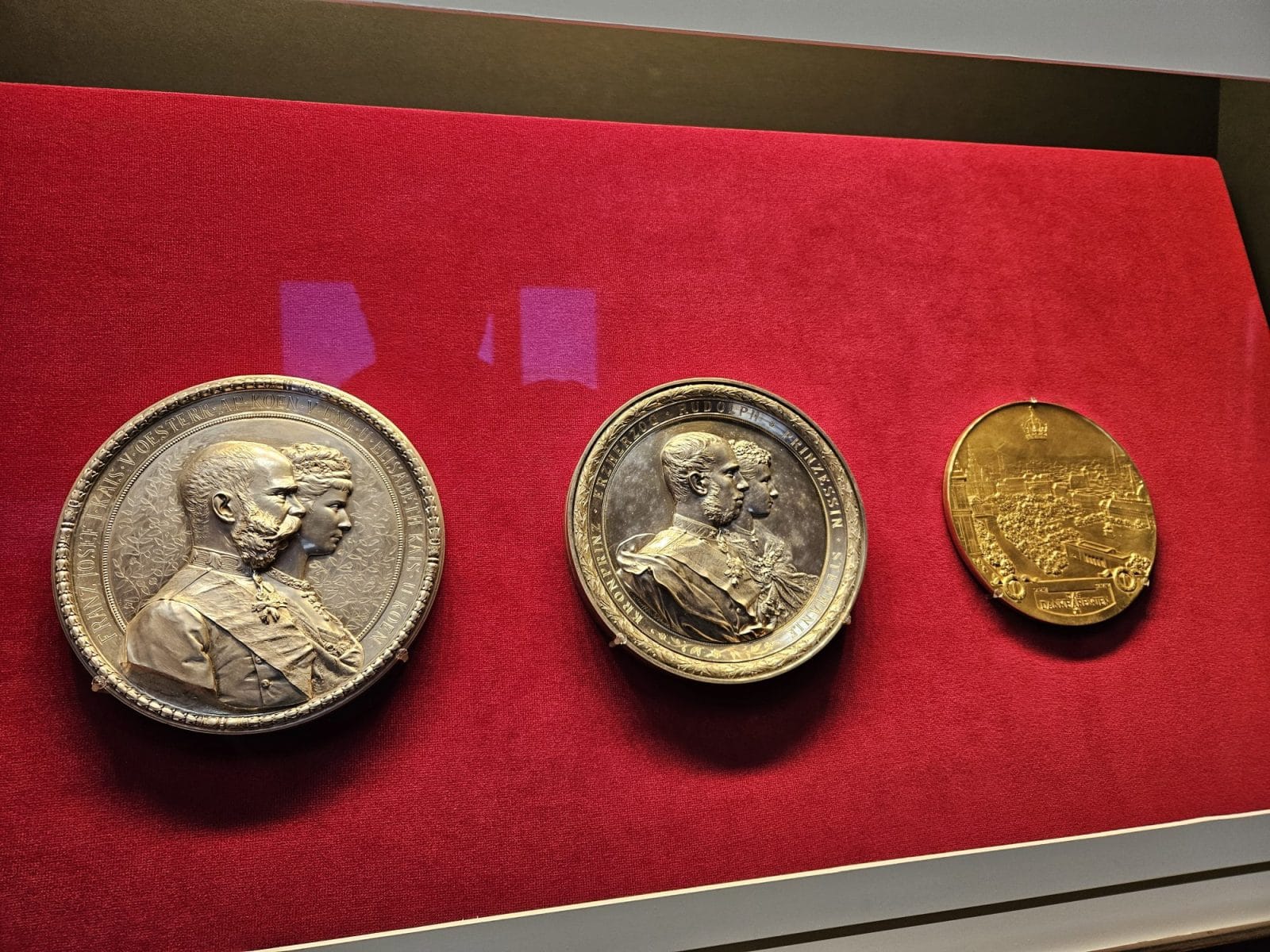
This is one of the largest collections of coins in the world and was fascinating to see. There were coins and medals from lots of eras of Austria’s history.
Tapestry Collection
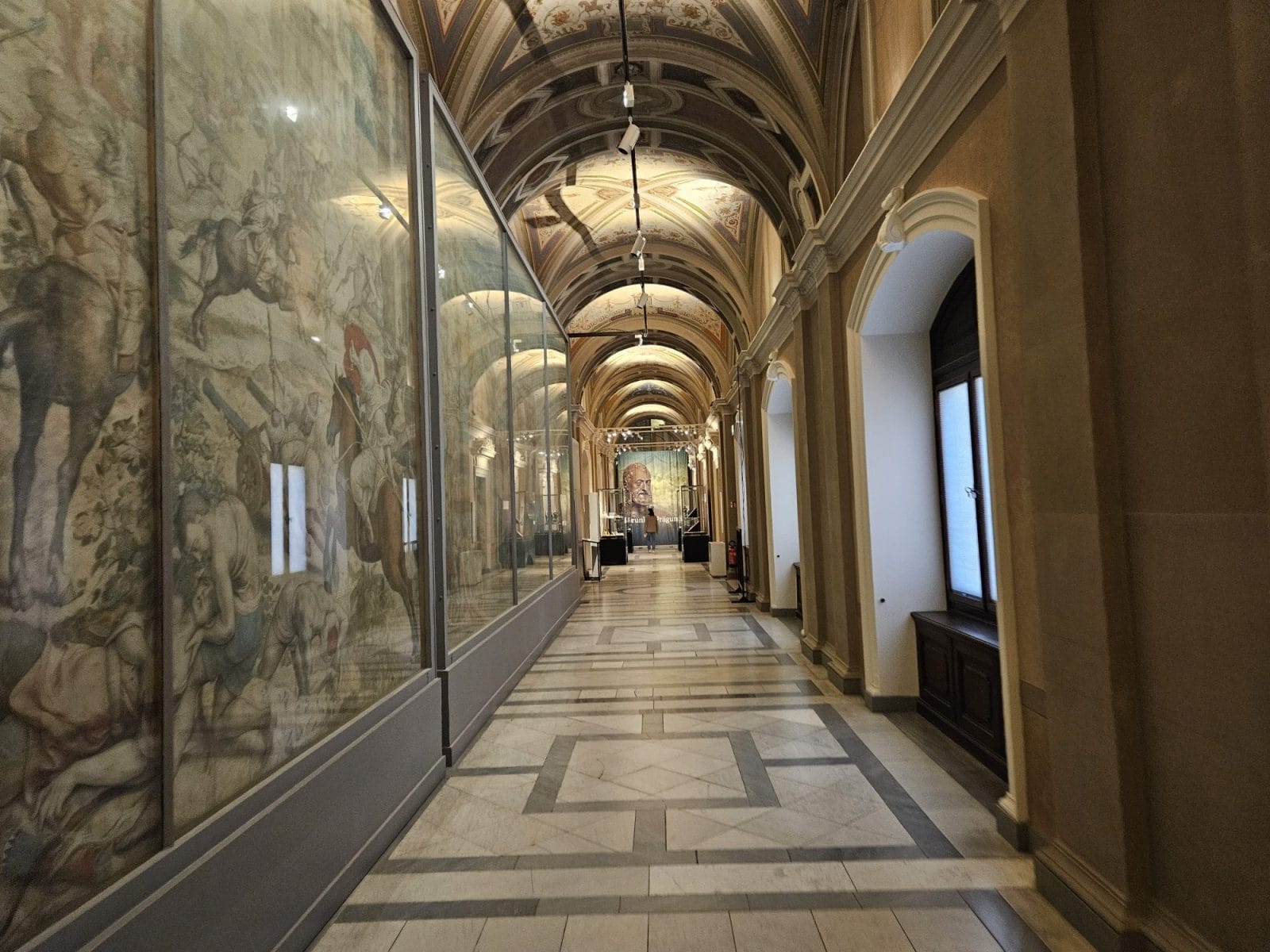
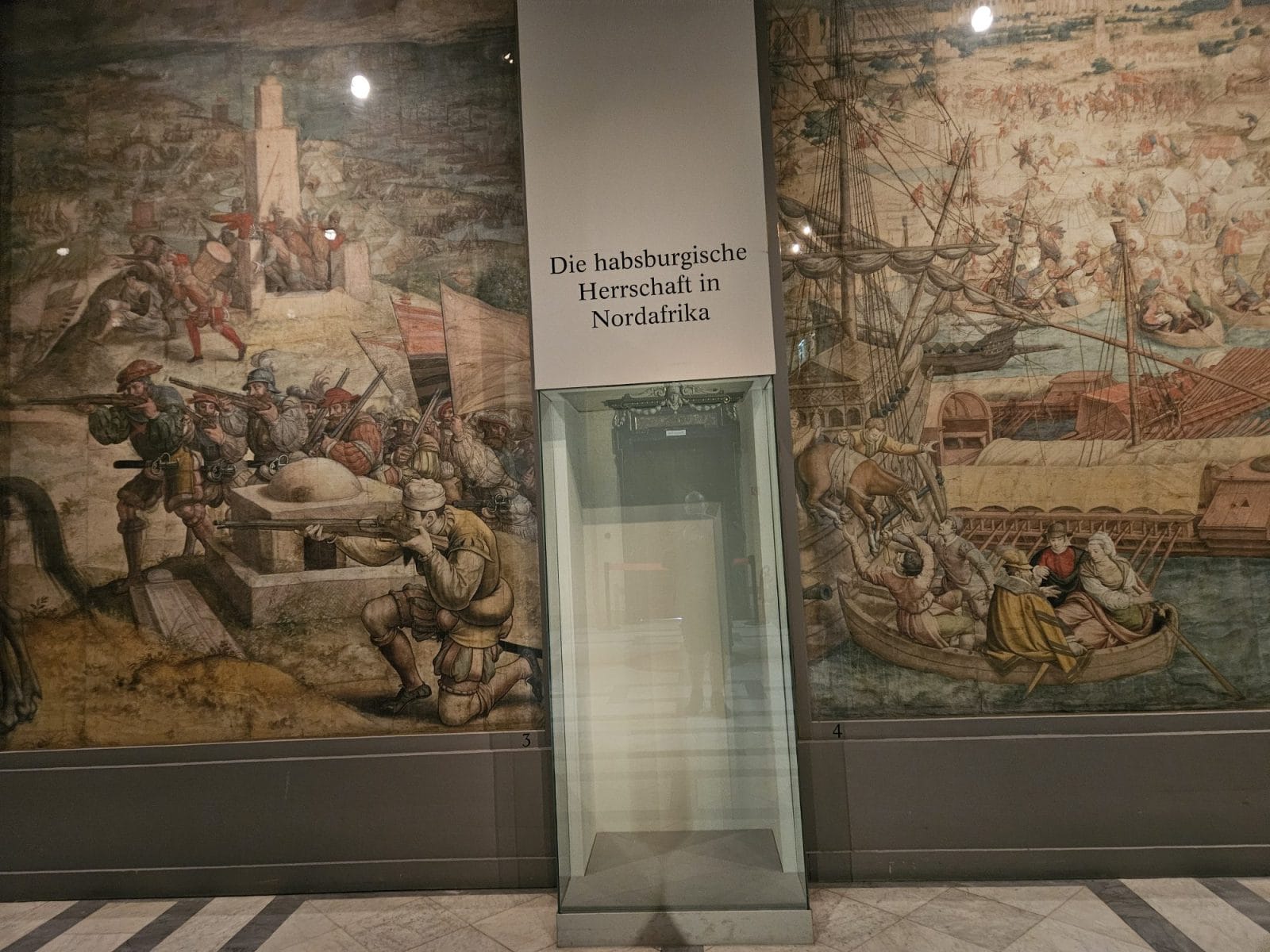
The world-renowned tapestry collection surprised me. It is among the largest and most important of its kind.
Is Kunsthistorisches Museum Wien Worth Visiting
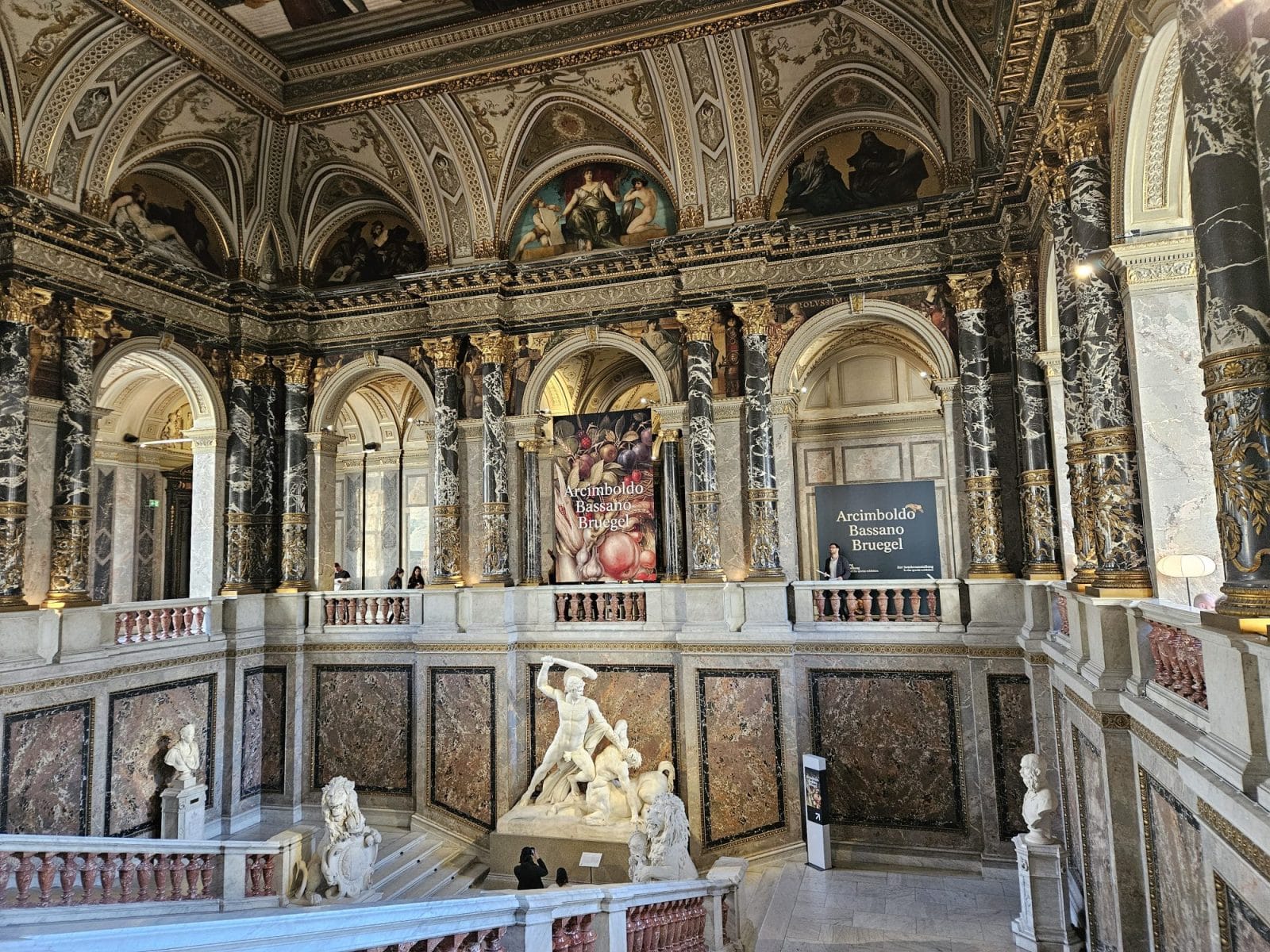
I really enjoyed my visit inside the Kunsthistorisches Museum and found it more interesting than I suspected. It’s a well-organised place with such great collections. I visited for 3 hours and was all arted out by the time I left, but would happily return to see more. Highlights for me were the interior architecture, some new-to-me paintings and the ancient Egyptian collections.
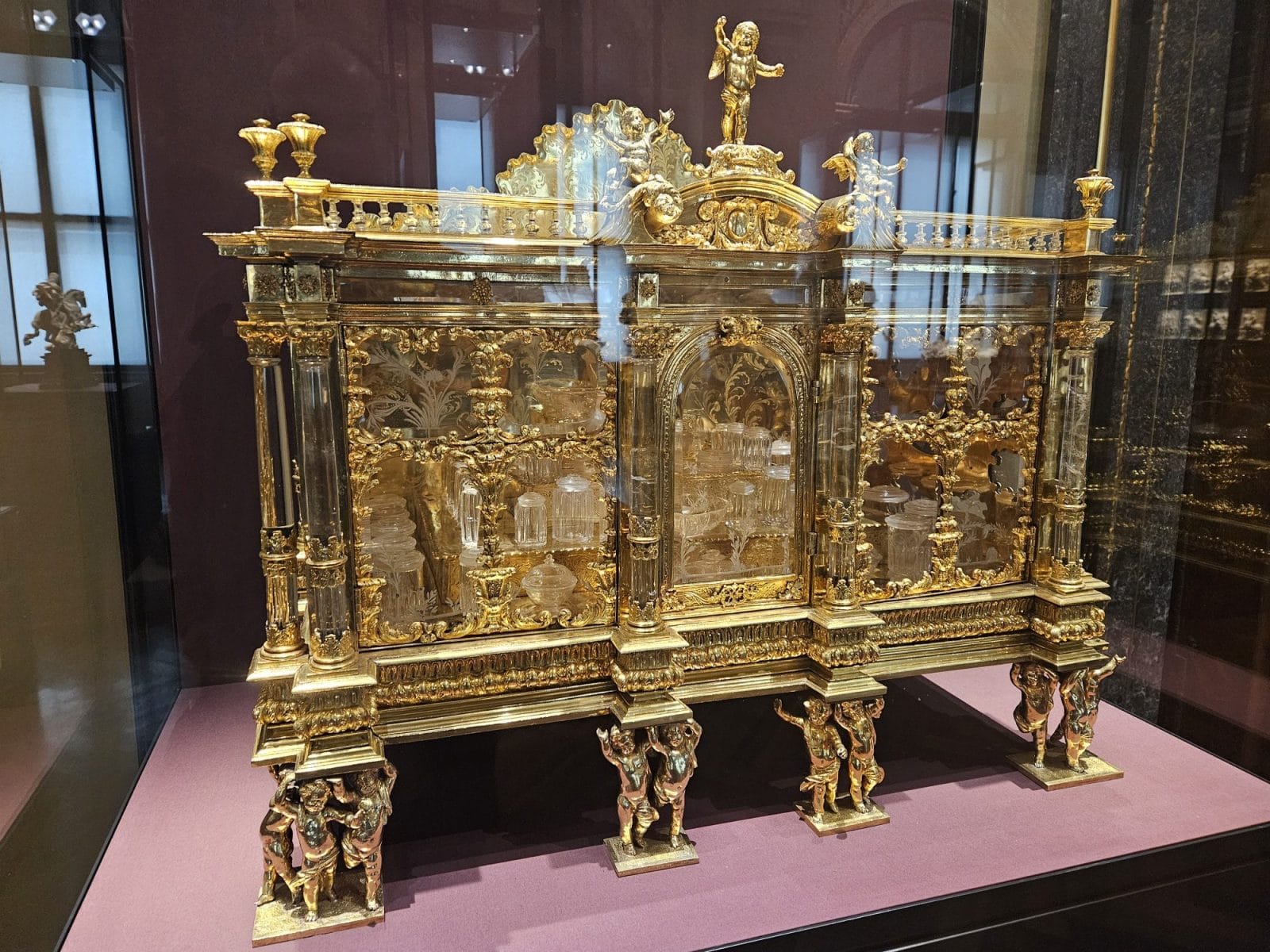
It was also spacious, and no particular spot other than the cafe seemed busy. If you have special interests or are fans of specific artists, I’d suggest making a plan before visiting. That being said, I loved getting sucked into things that caught my eye in the distance.