
Basilica of Sant’Apollinare Nuovo in Ravenna
The Basilica of Sant’Apollinare Nuovo was the first of the famous mosaic monuments I visited in Ravenna, as it was closest to our accommodation and the railway station. It is one of many UNESCO-listed churches and mosaics in the city. Sant’Apollinare Nuovo dates to the late 5th and early 6th century.
I bought the combined four-monument ticket and started here before walking to the other sites. I found it easy to find all of these with the map provided when I got the ticket. The church was one of my favourite things to see in the city because of the decor and unique tower.
Exterior and Bell Tower
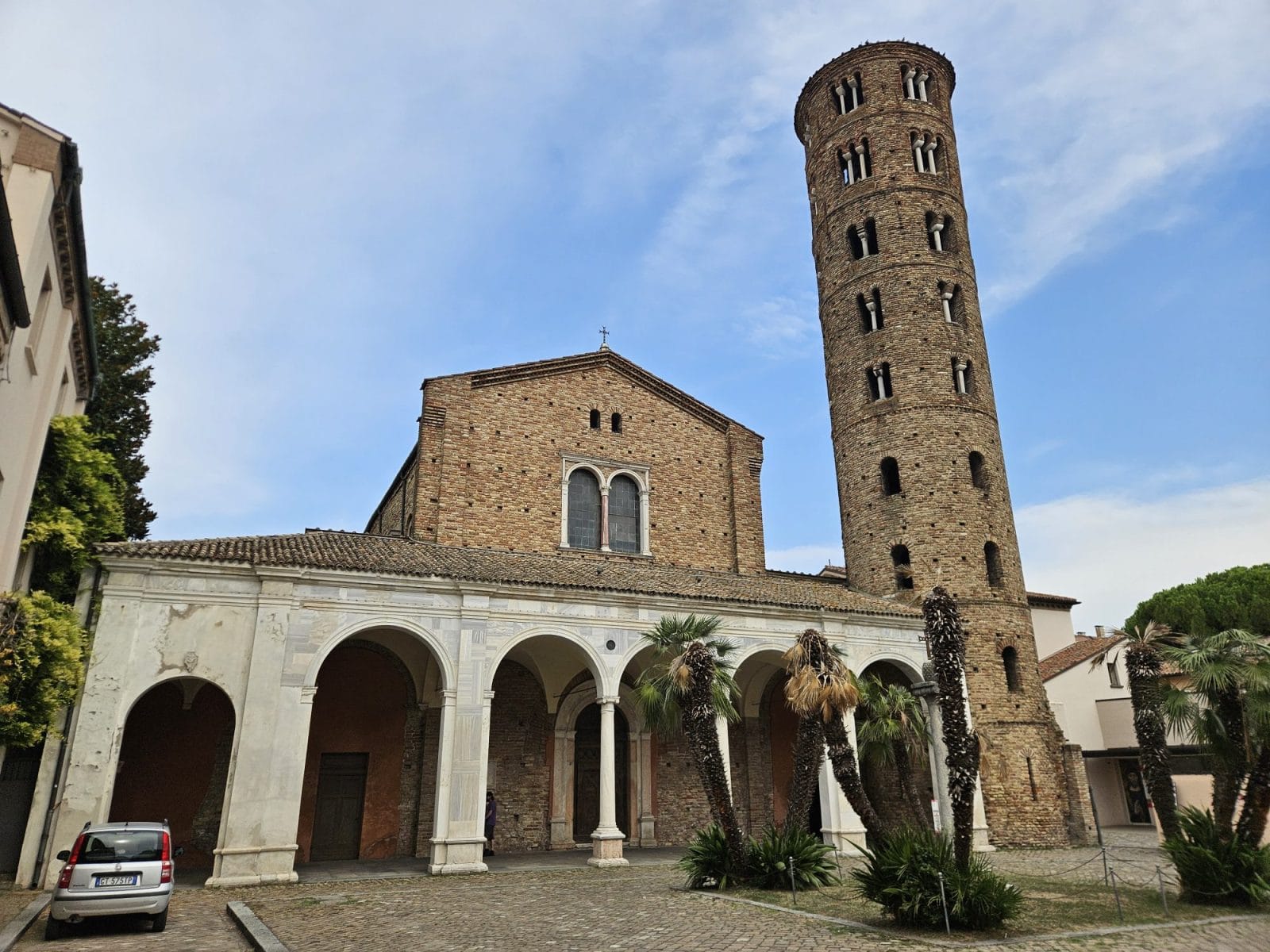
Sant’Apollinare Nuovo in Ravenna is a brick church with a portico across the front and an eye-catching cylindrical bell tower alongside it. I liked the views from the front courtyard and cafe opposite, where you can see the front of the basilica and the tall round tower together.
Inside the Basilica of Sant’Apollinare Nuovo
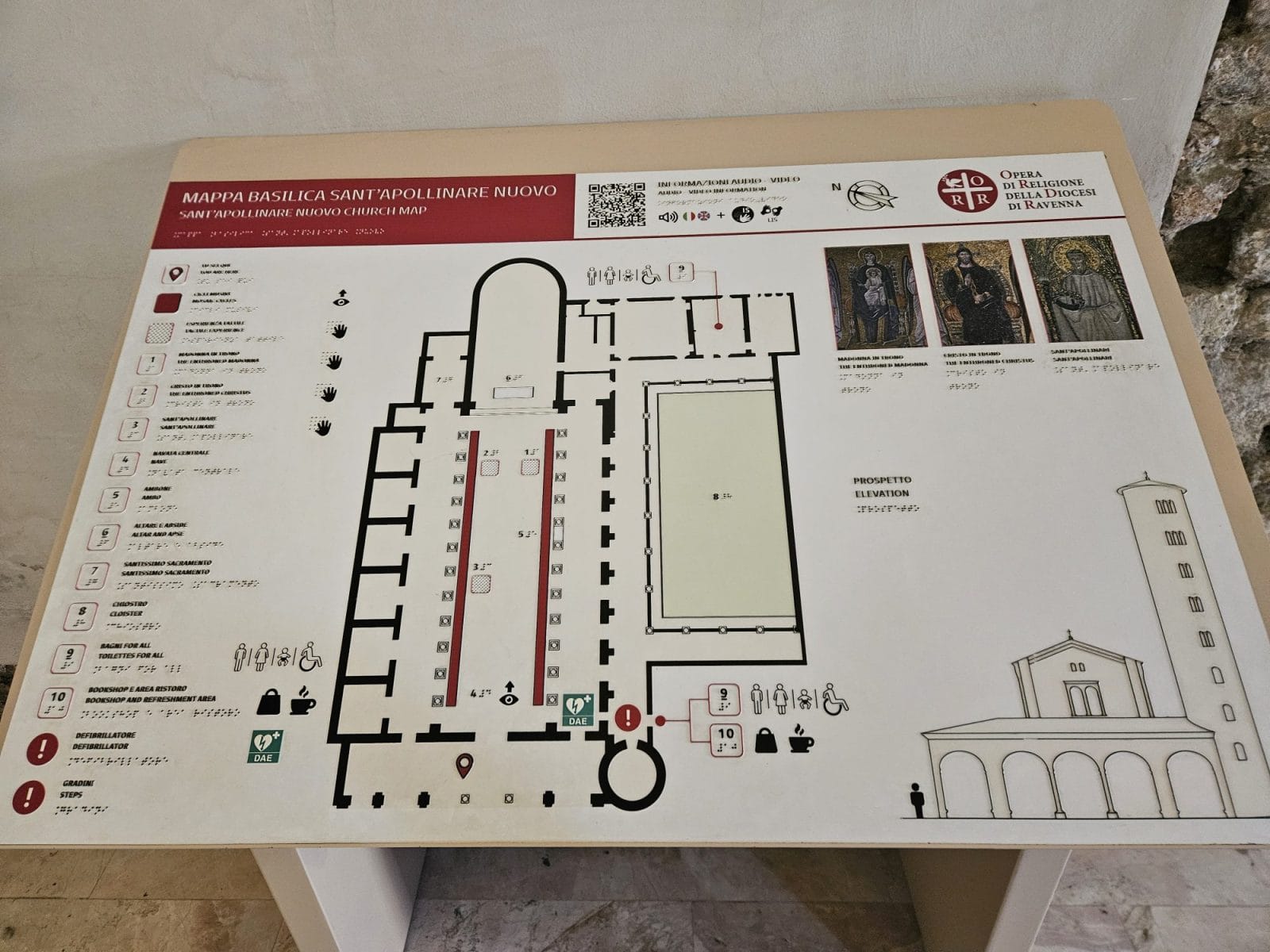
To find the various parts of the church, there are plans around the site; you can also purchase guidebooks for more detail at the ticket office.
The Nave and Columns
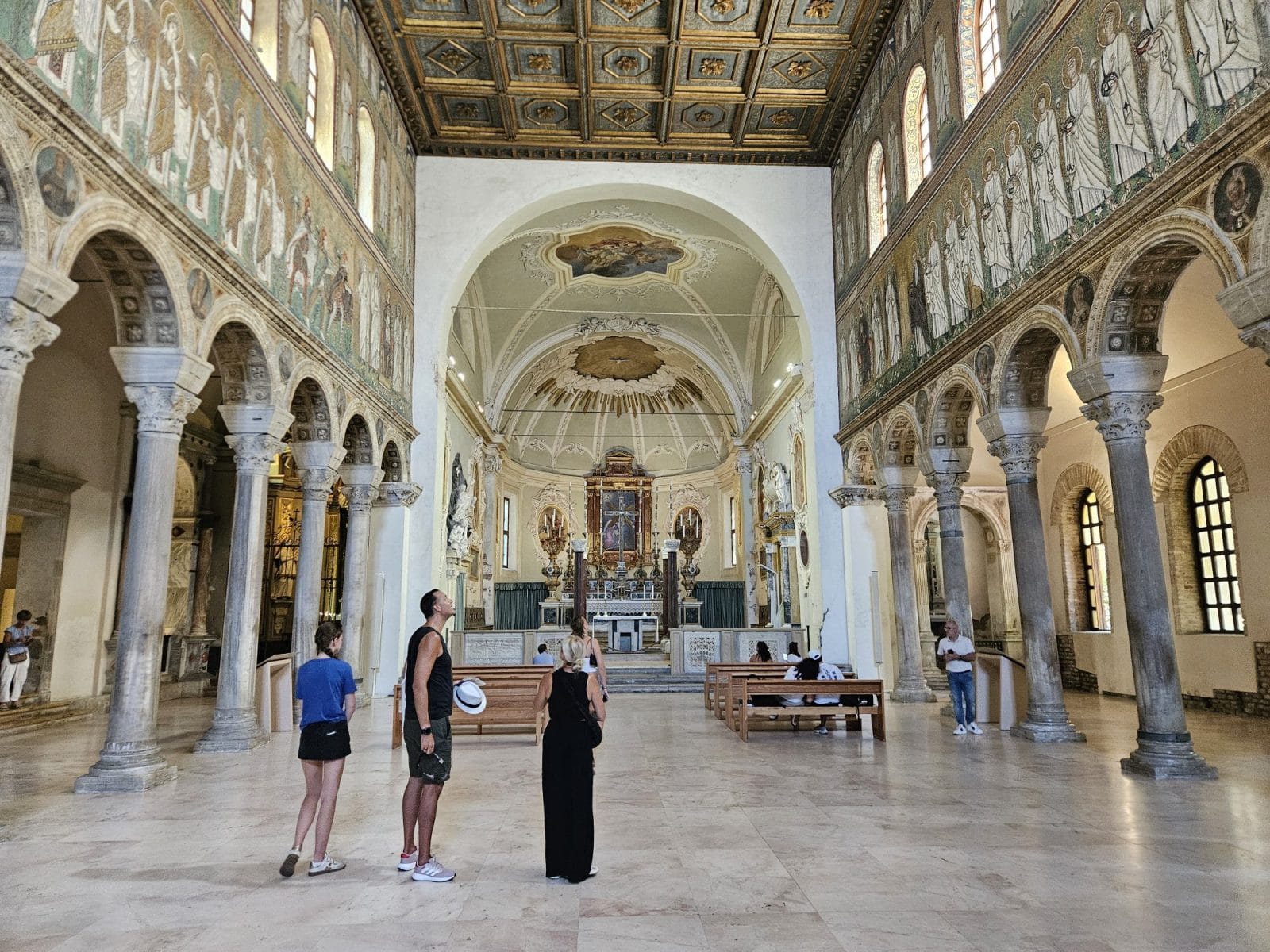
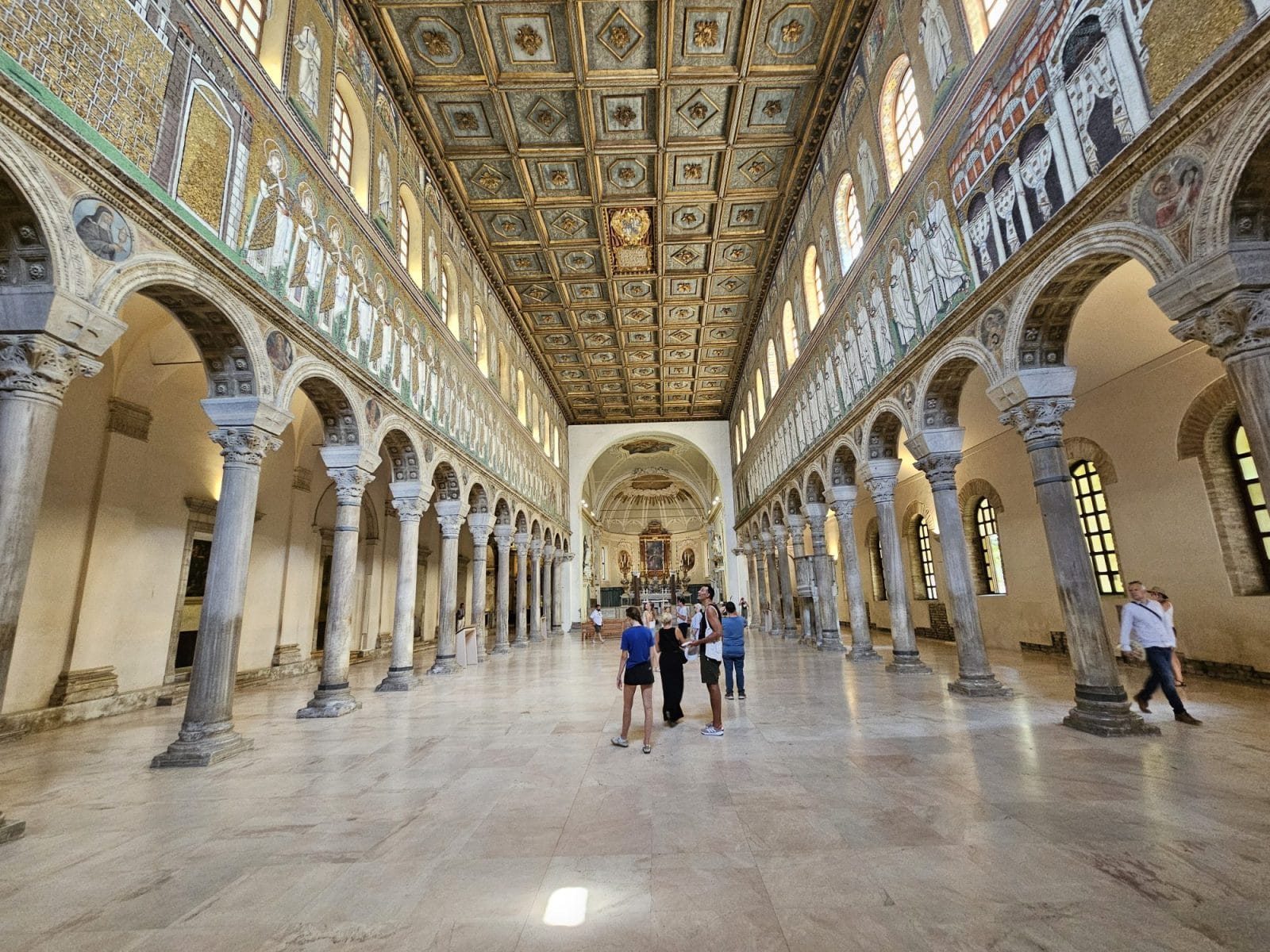
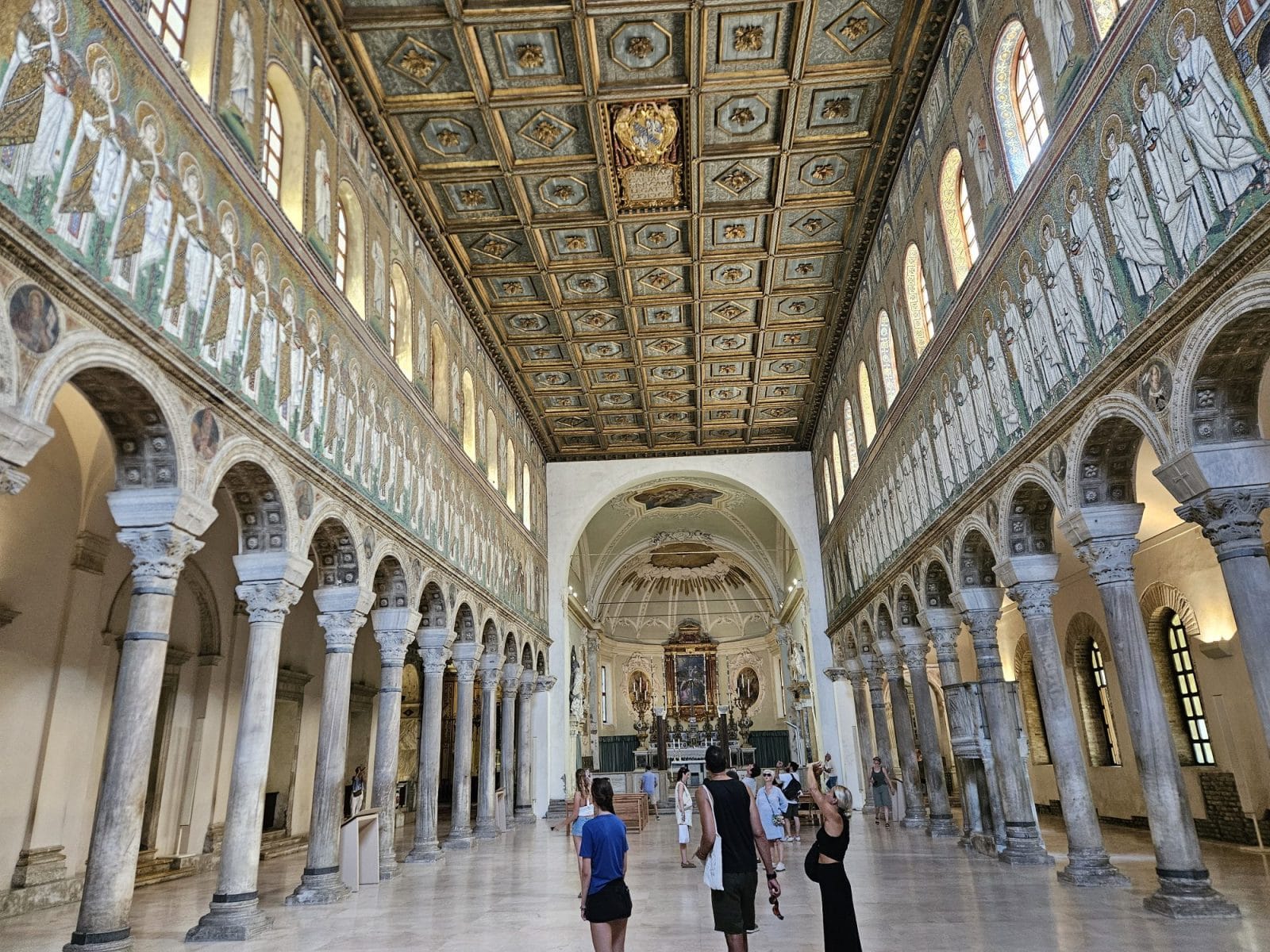
The view along the nave is one of the best inside Sant’Apollinare Nuovo; when I entered, I was very impressed. Two lines of marble columns lead towards the altar, with arches above and the mosaic decoration extending along both upper walls.
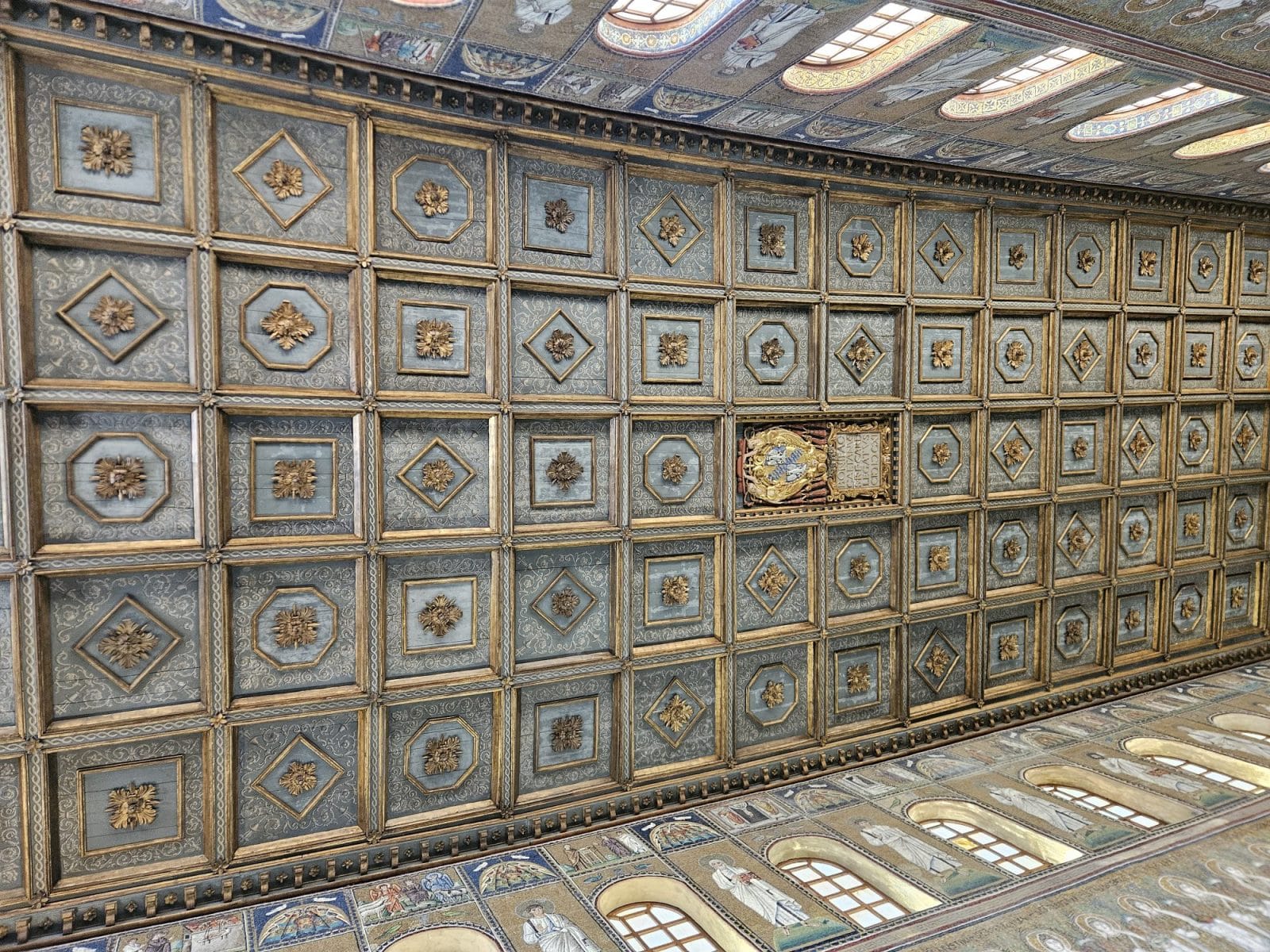
The nave also has a beautiful ceiling which dates to the 17th century, with a grid of recessed square and rectangular panels.
Altar
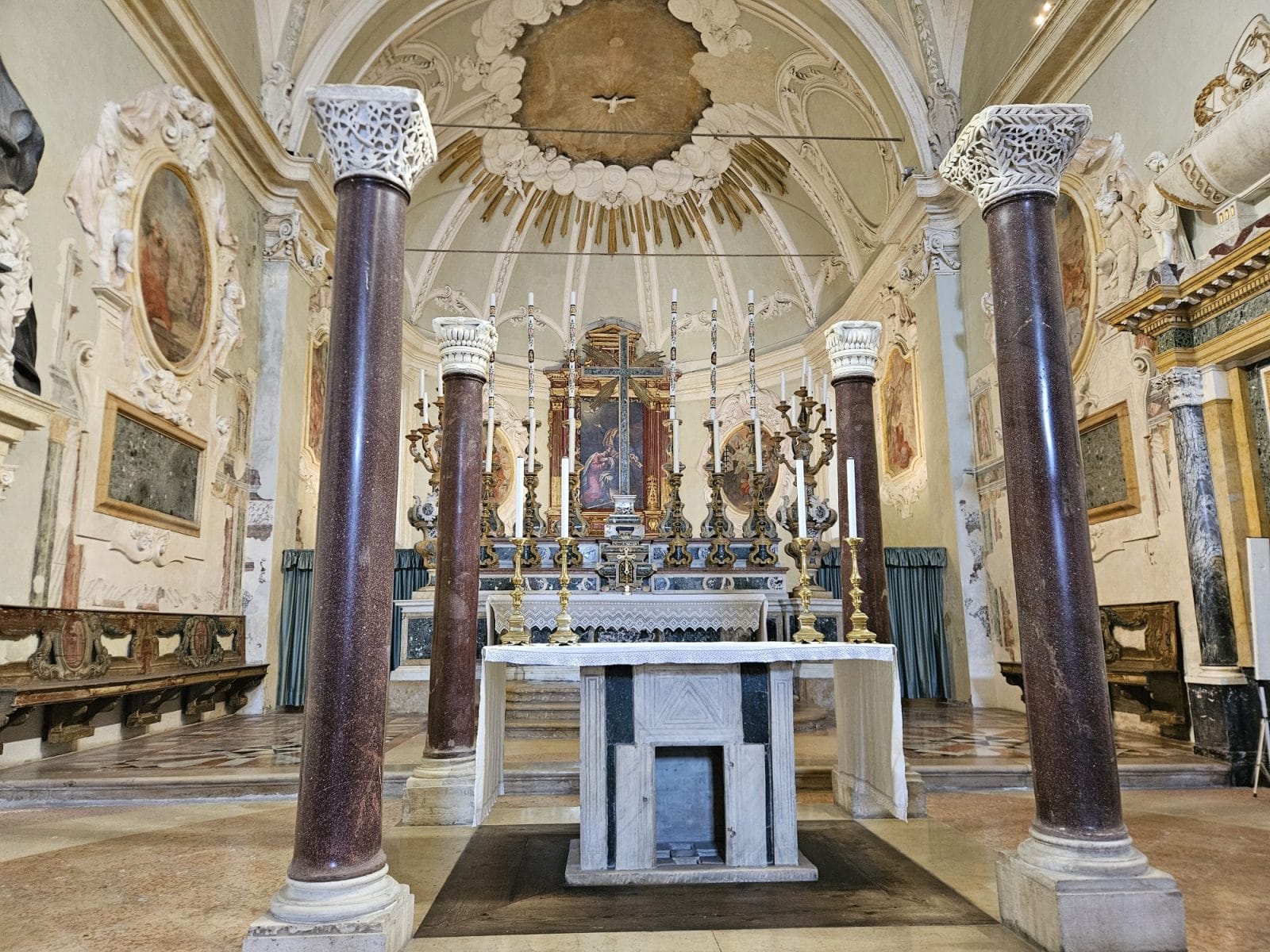
The main altar stands in the apse, which was rebuilt in the 16th century and decorated again in the 18th century. I loved the details here, especially the marble columns and wooden seating to the sides.
6th Century Pulpit
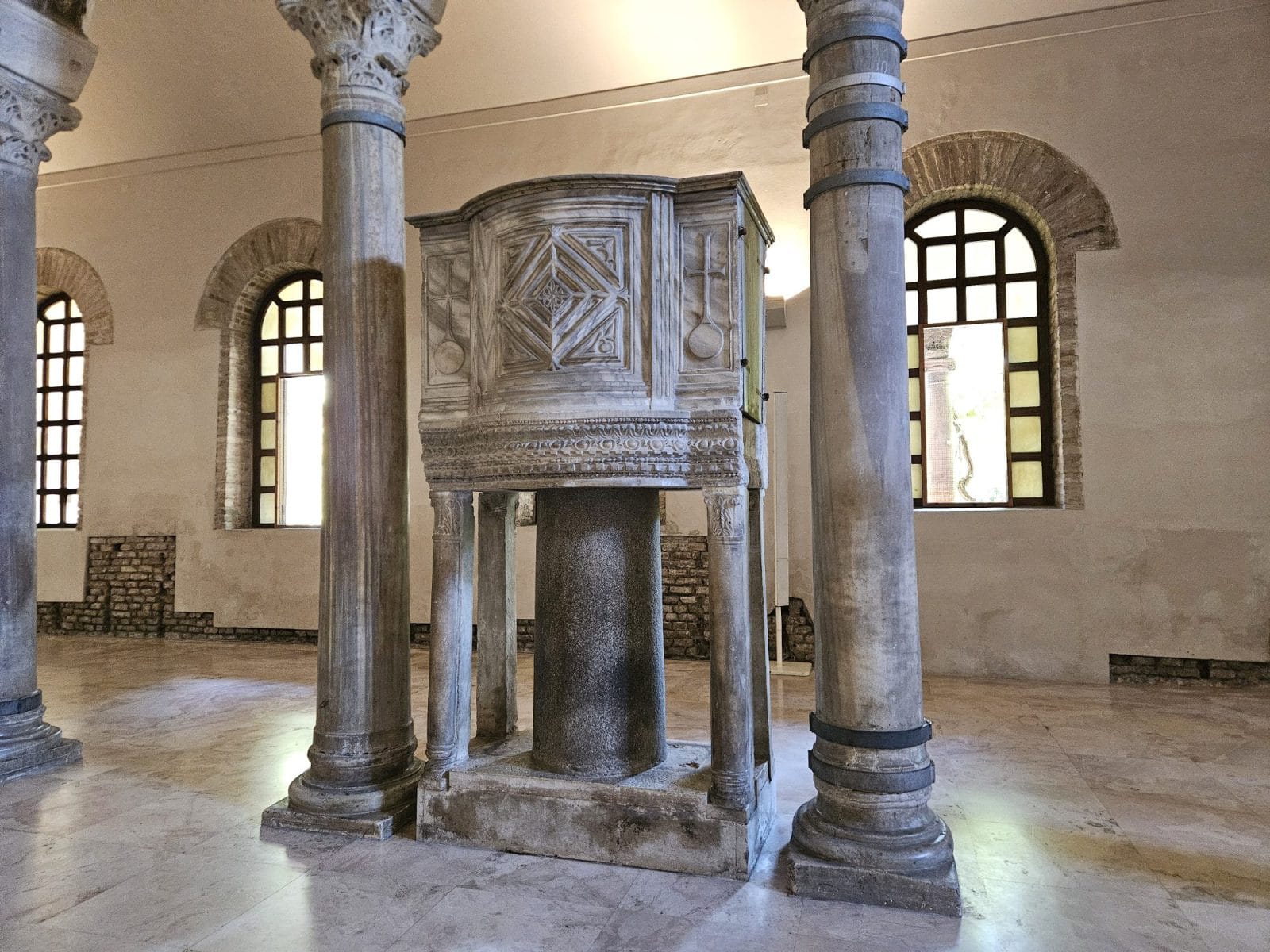
Another interesting feature inside the basilica is the 6th-century marble ambo, or pulpit, beside the right-hand colonnade.
Side Chapels
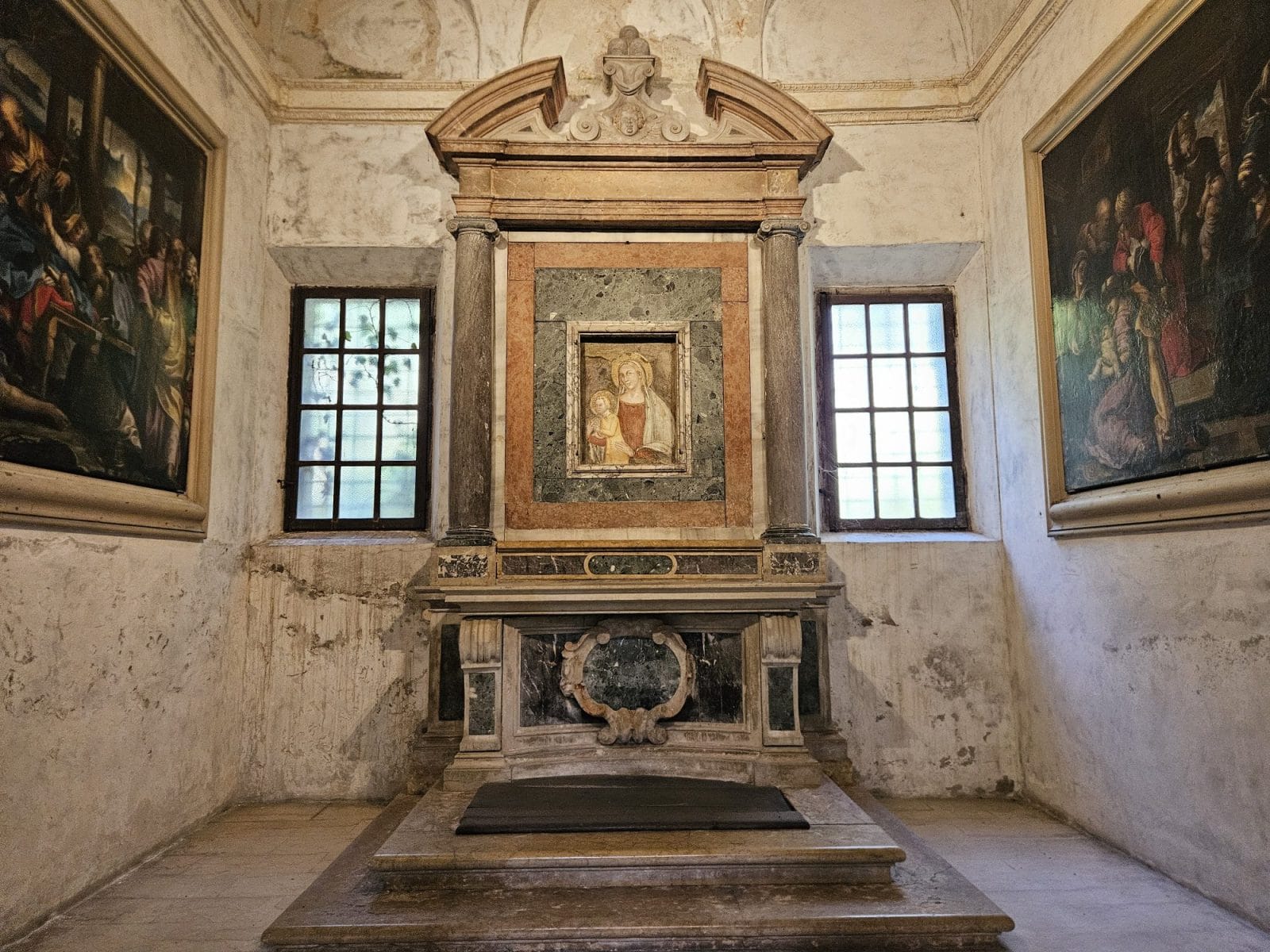
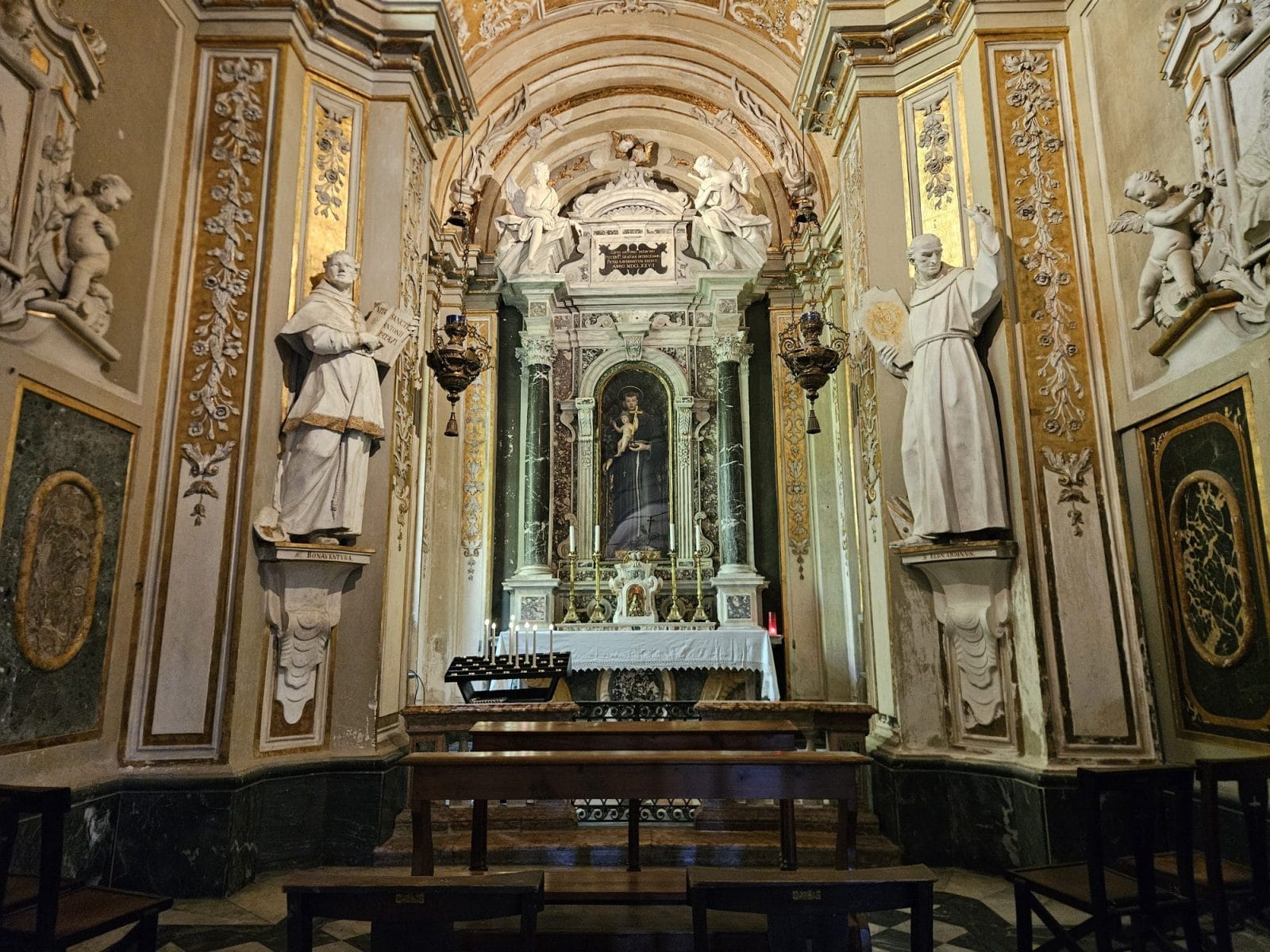
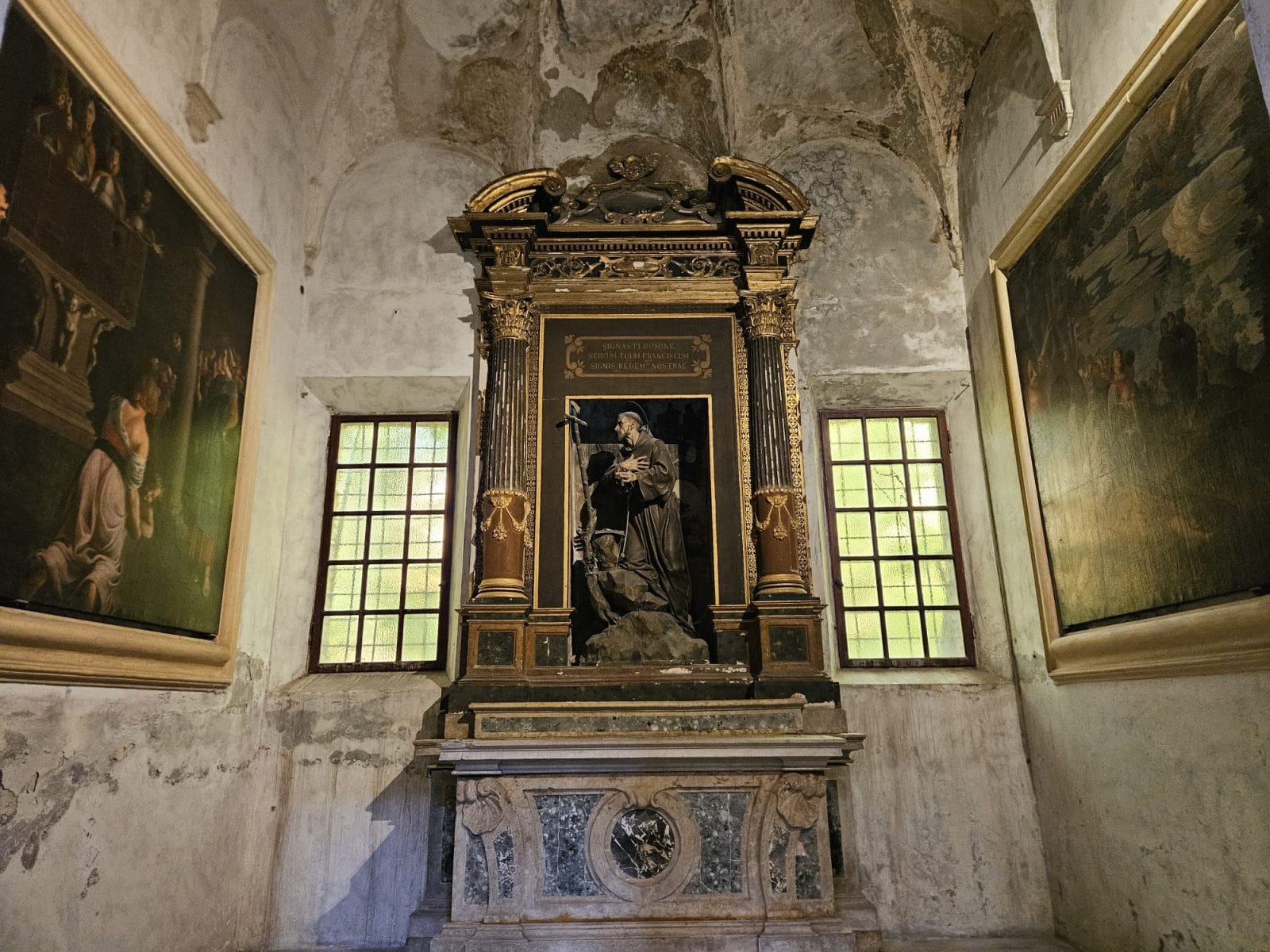
Several interesting side chapels are worth exploring as you move through the basilica. One has an ornate altar showing St Francis of Assisi receiving the stigmata, with paintings on either side. Another chapel has a very different feel, with faded wall decoration surrounding an altar and a figure of Christ as Ecce Homo, wearing the crown of thorns and a red robe.
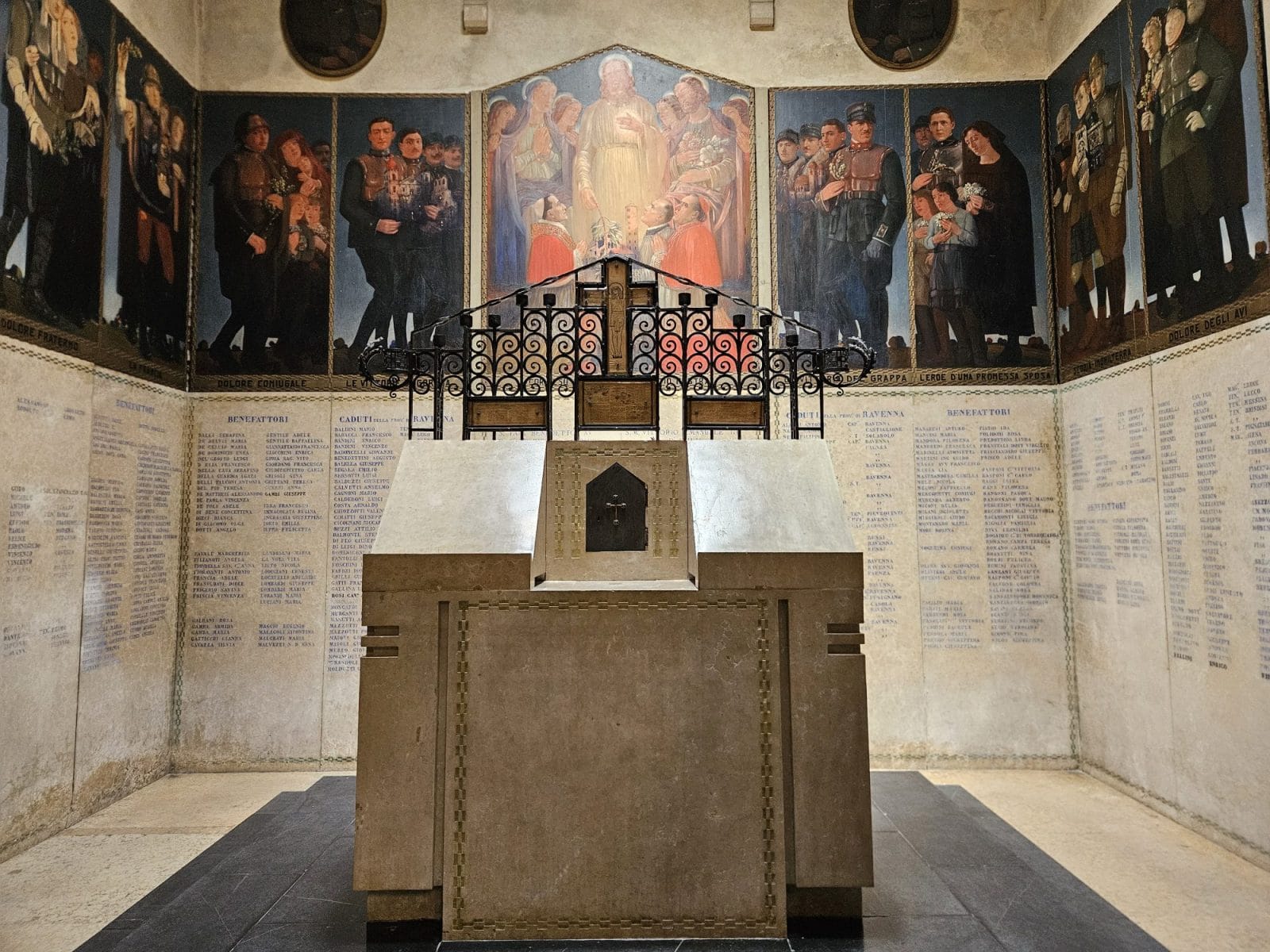
The Chapel of Peace and Victory is another, consecrated on 30 November 1919, and commemorates those affected by war. Built after the First World War, the chapel remembers the fallen and marks the church’s restoration. Here, you can see some nice oil paintings and names of fallen soldiers around its lower walls.
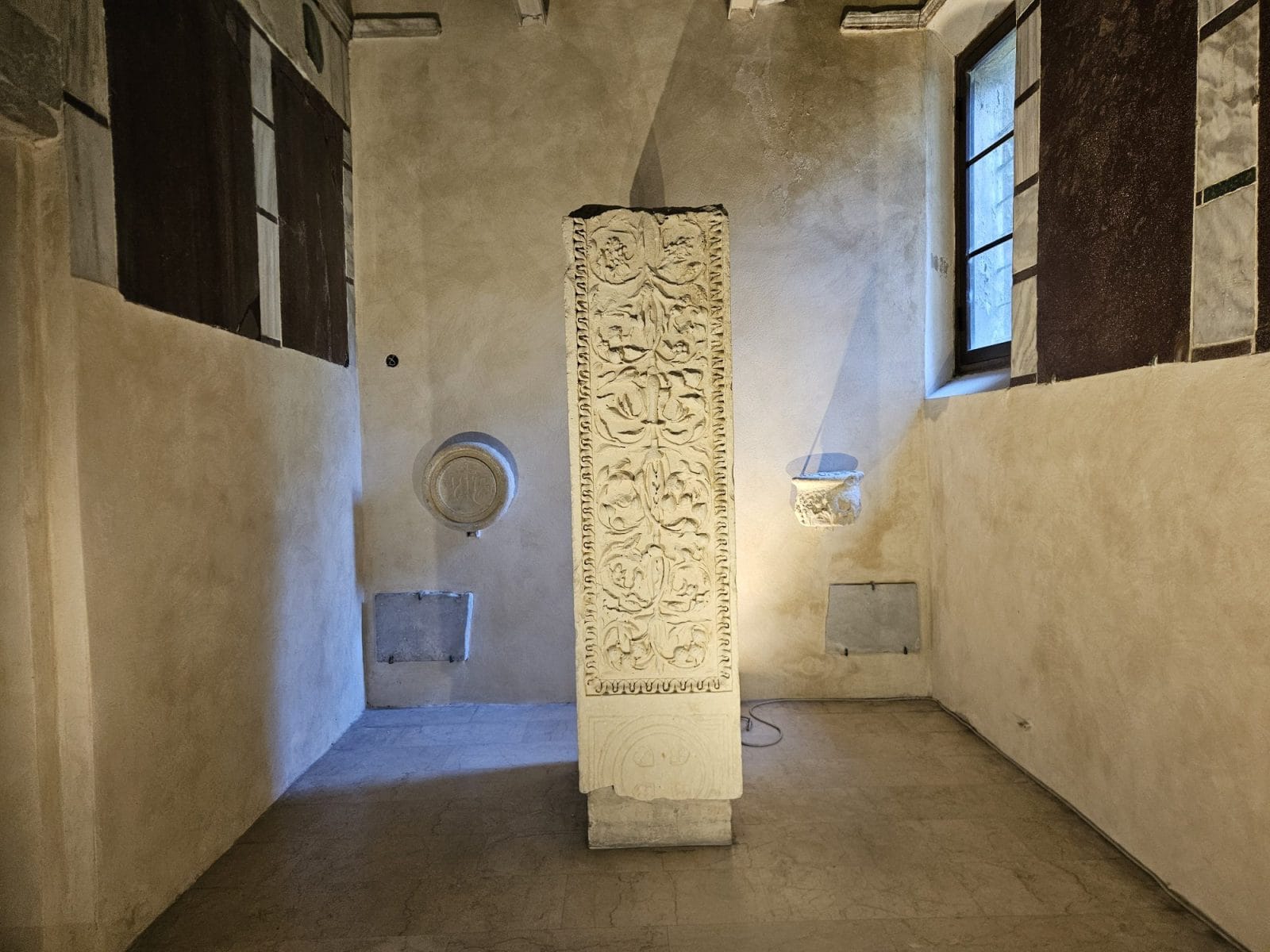
Some carved stone artefacts are also displayed. One that caught my eye was a tall stone panel decorated with scrolling plant designs, alongside several smaller carved fragments.
Mosaics at Sant’Apollinare Nuovo
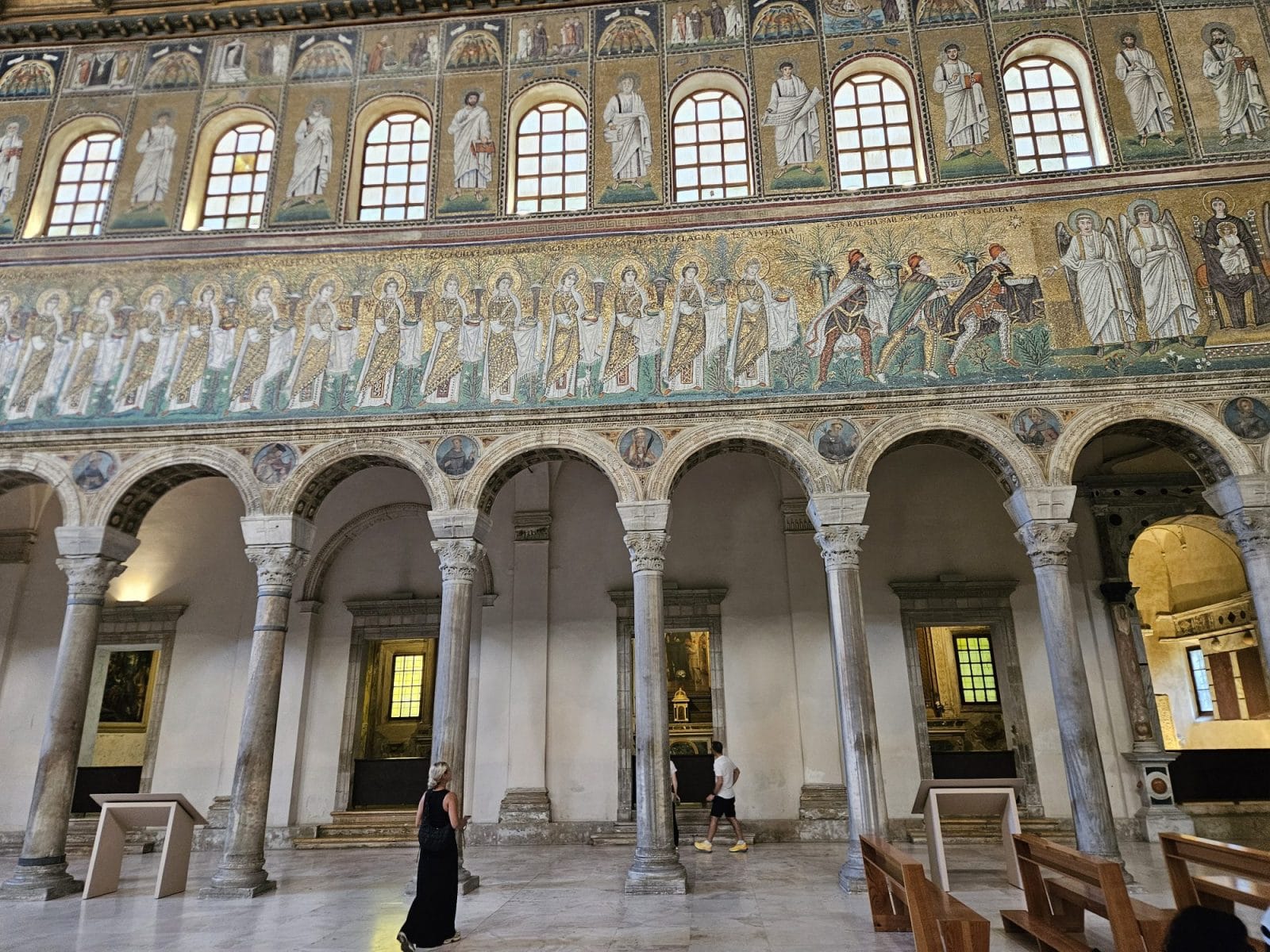
The mosaics cover both sides of the central nave and are arranged in three levels. I found it worth walking along both sides, as the lower processions are the most obvious at first, while the smaller scenes and individual figures higher up are easier to miss.
Processions of Martyrs and Virgins
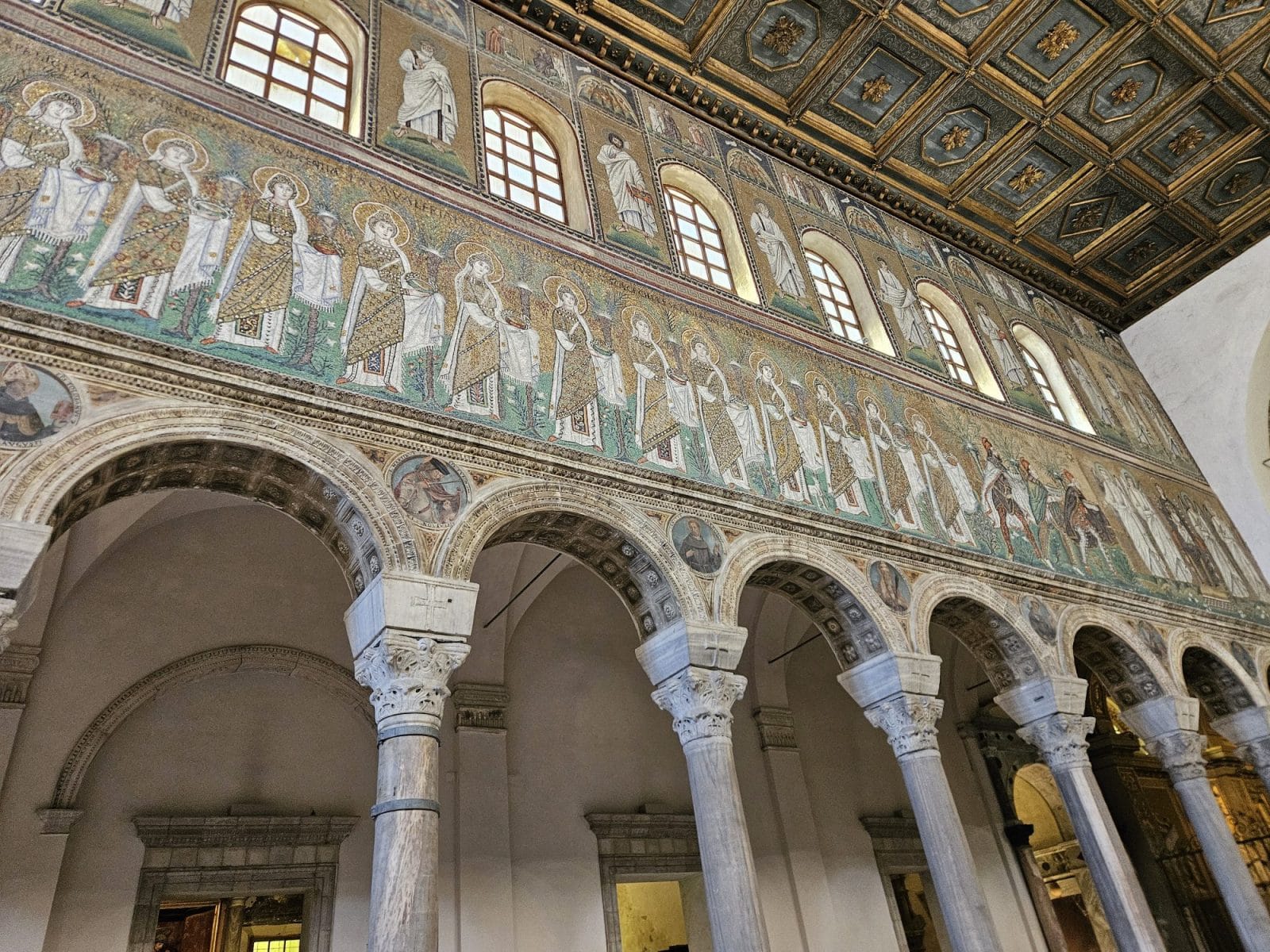
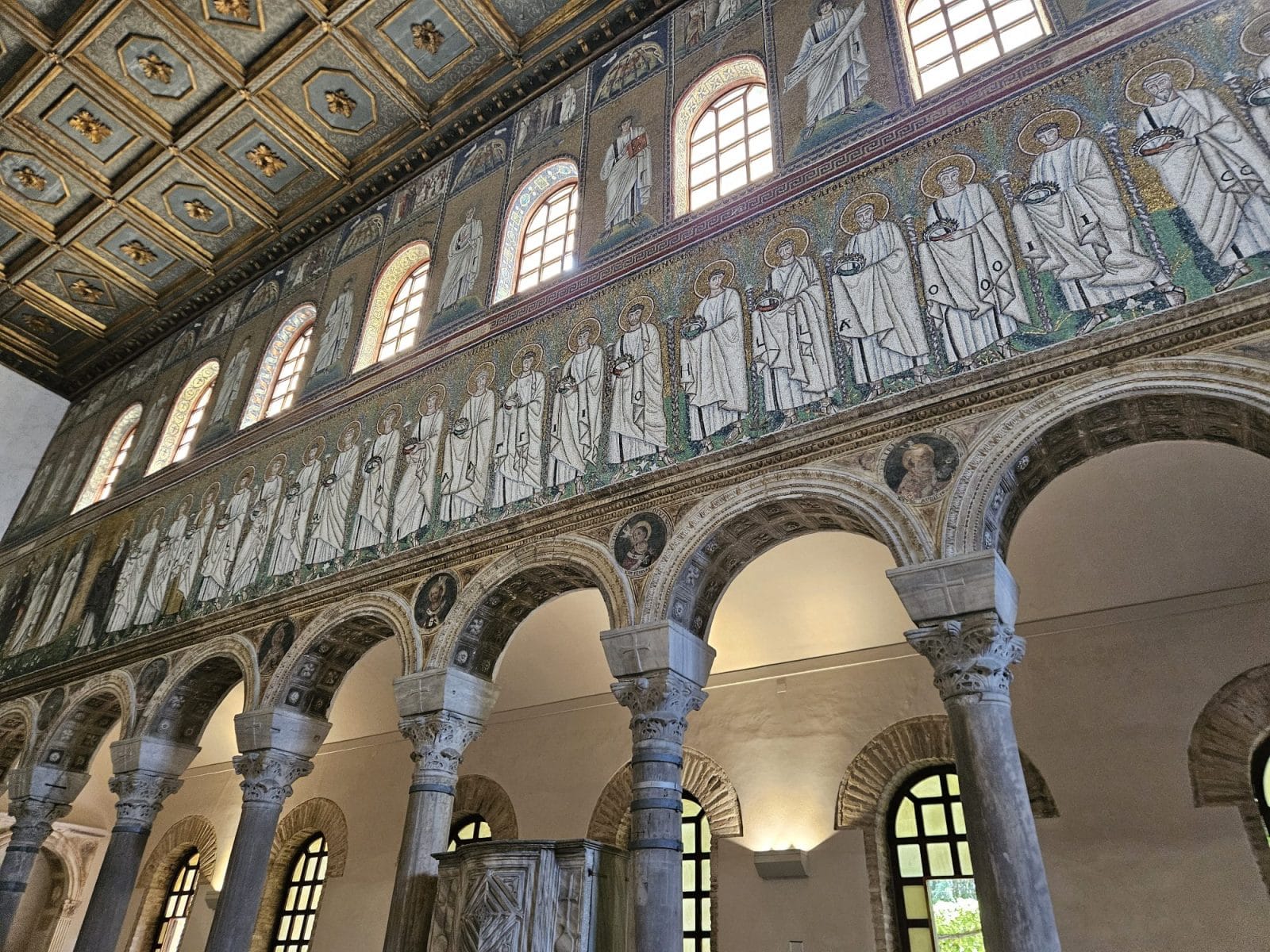
The lower level has the long processions that dominate the nave. On one side, male martyrs in white robes walk towards Christ enthroned, while on the opposite wall, female saints and virgins lead towards the Virgin and Child, with the Three Wise Men near the end of the procession.
Prophets and Apostles
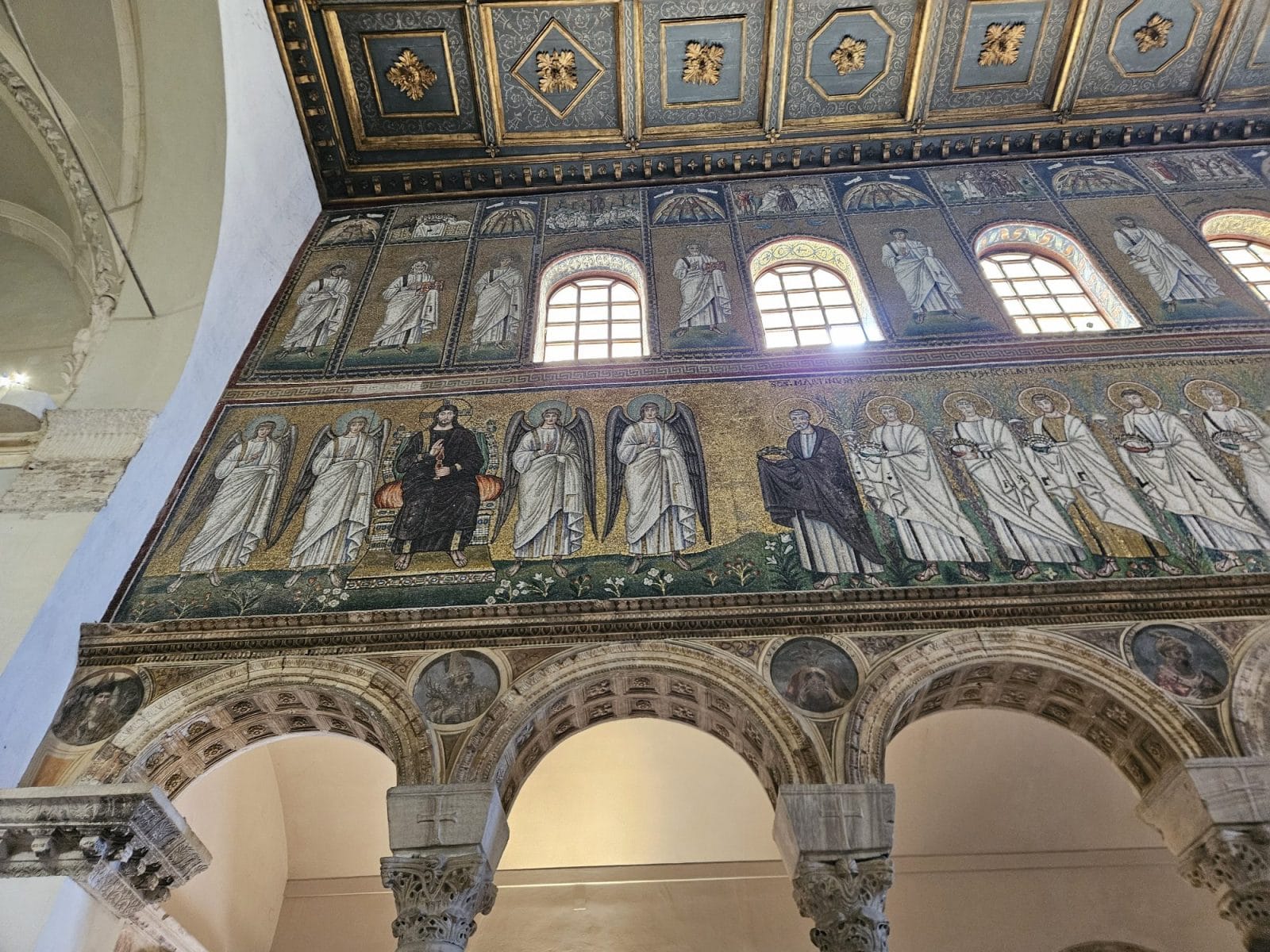
Between the windows is another band of mosaics with individual standing figures holding books or scrolls. These are generally identified as prophets, apostles and evangelists, with 32 figures spread across the two nave walls.
Scenes From the Life of Christ
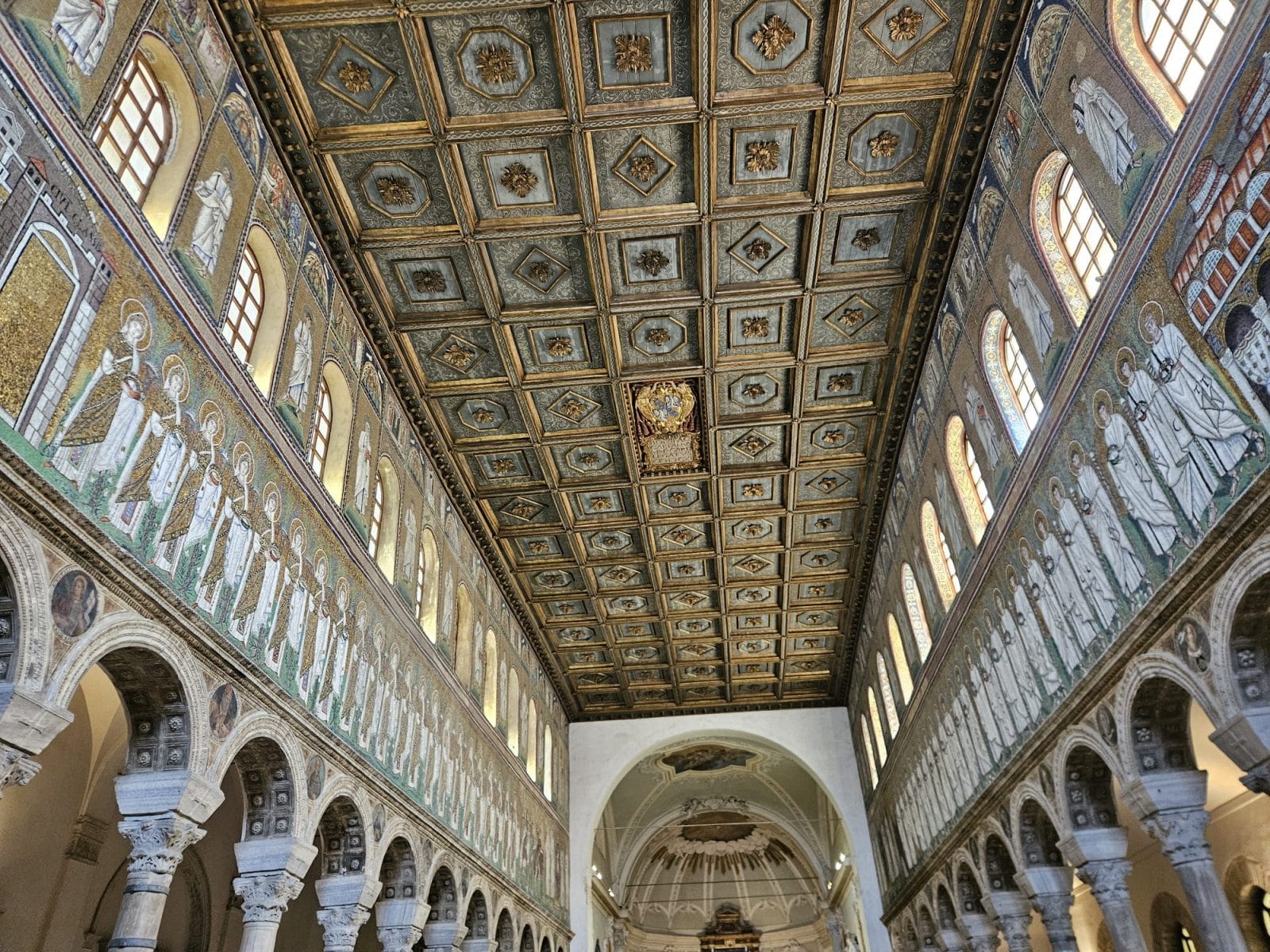
The highest level has 26 small mosaic scenes, 13 on each side, showing episodes from Christ’s life, miracles, Passion, and Resurrection.
Theodoric’s Palace and the Port of Classe
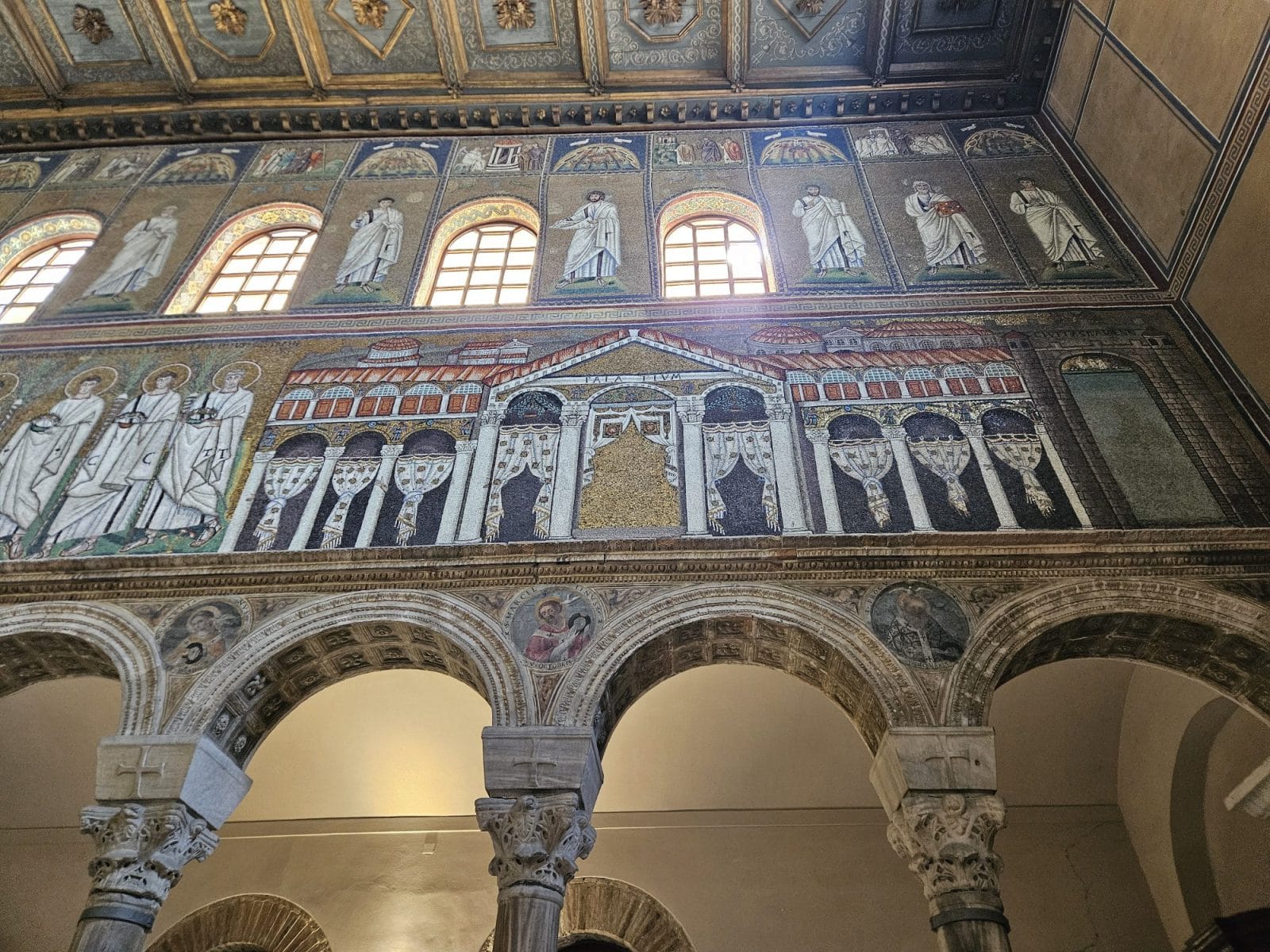
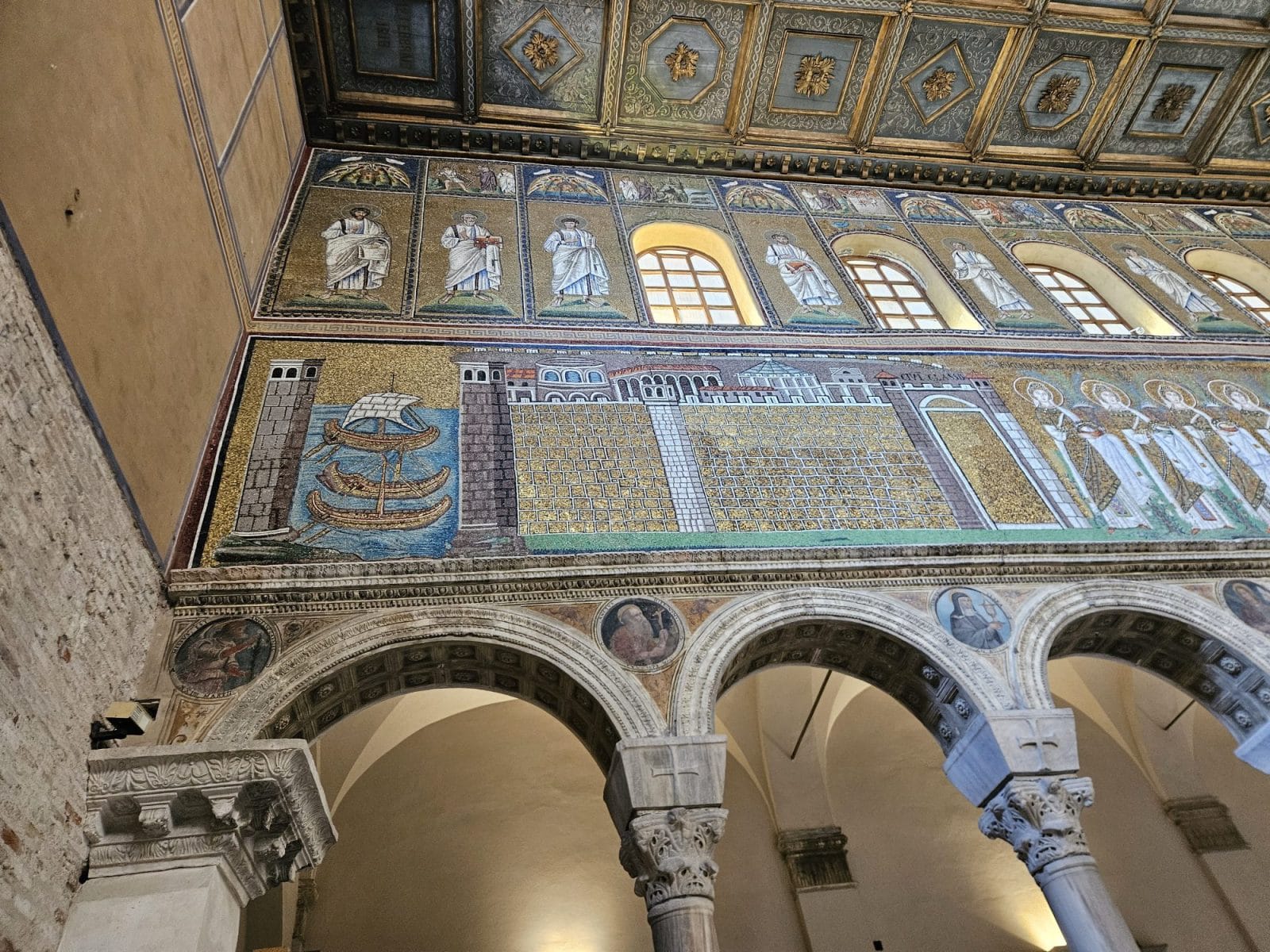
One end of the lower mosaic cycle shows Theodoric’s Palace, while the opposite wall shows the ancient Port of Classe with its walls, buildings and ships.
The palace mosaic is particularly interesting because figures from Theodoric’s court were later removed. Some traces remain, including hands still visible against the columns.
Cloisters and Bell Tower Views
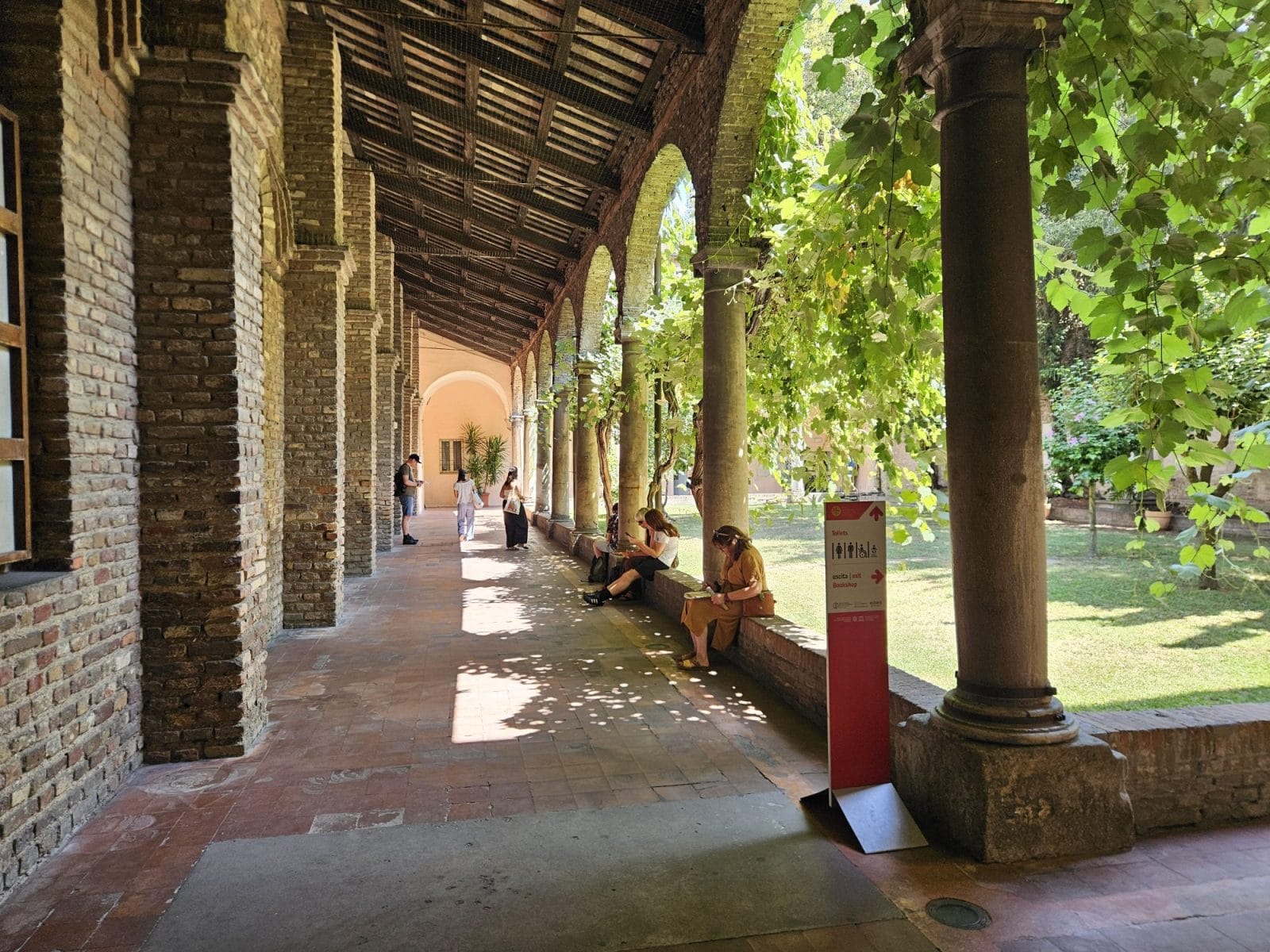
The cloisters were another part of the basilica I enjoyed; I passed through these to exit the site. They are much quieter than the main nave and give you a chance to look at the church from a different angle.
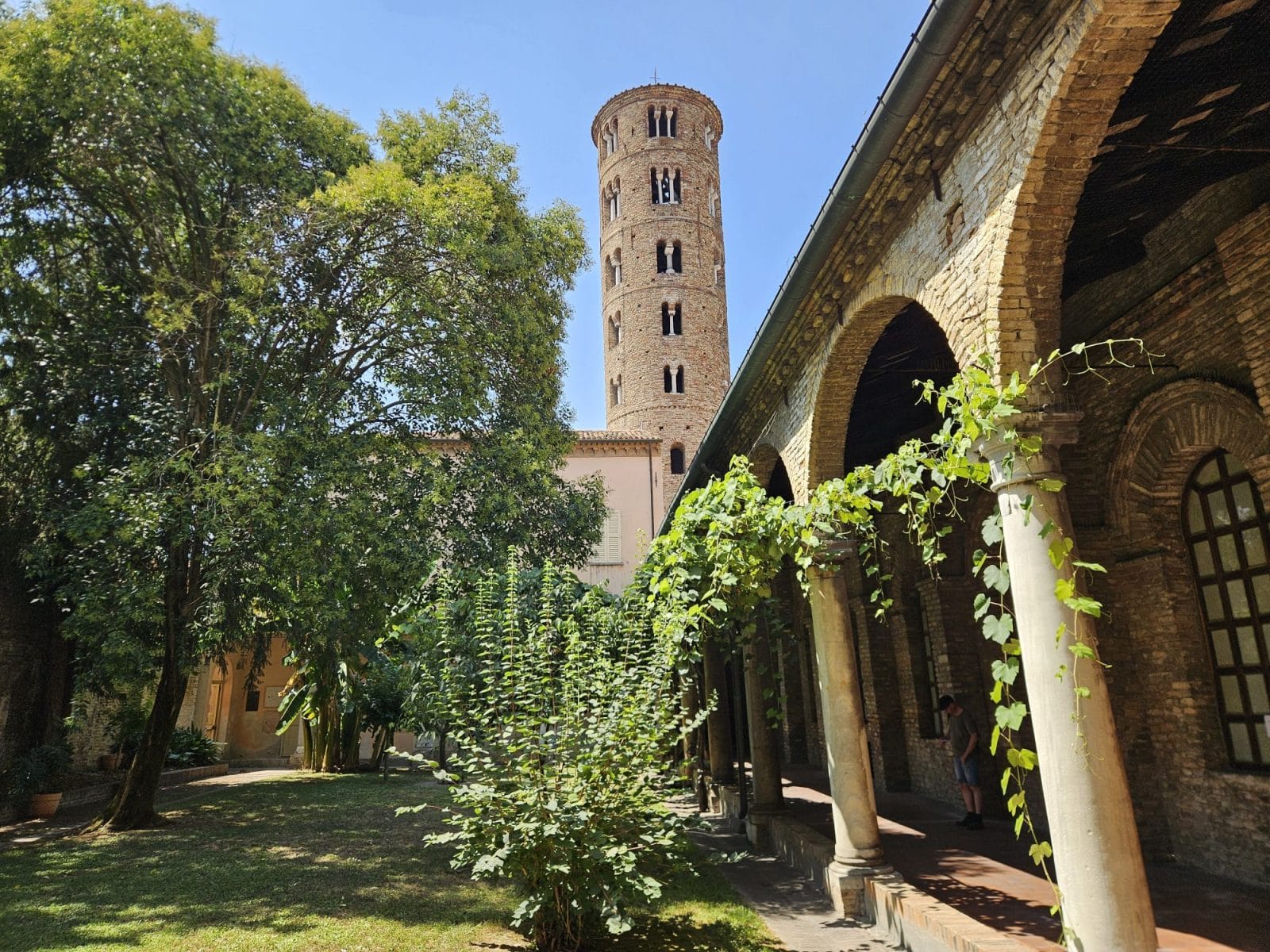
From the cloister, there are especially good views of the cylindrical bell tower rising above the basilica. I thought this was one of the best places to appreciate the tower’s shape and height away from the street.
Tickets for Sant’Apollinare Nuovo
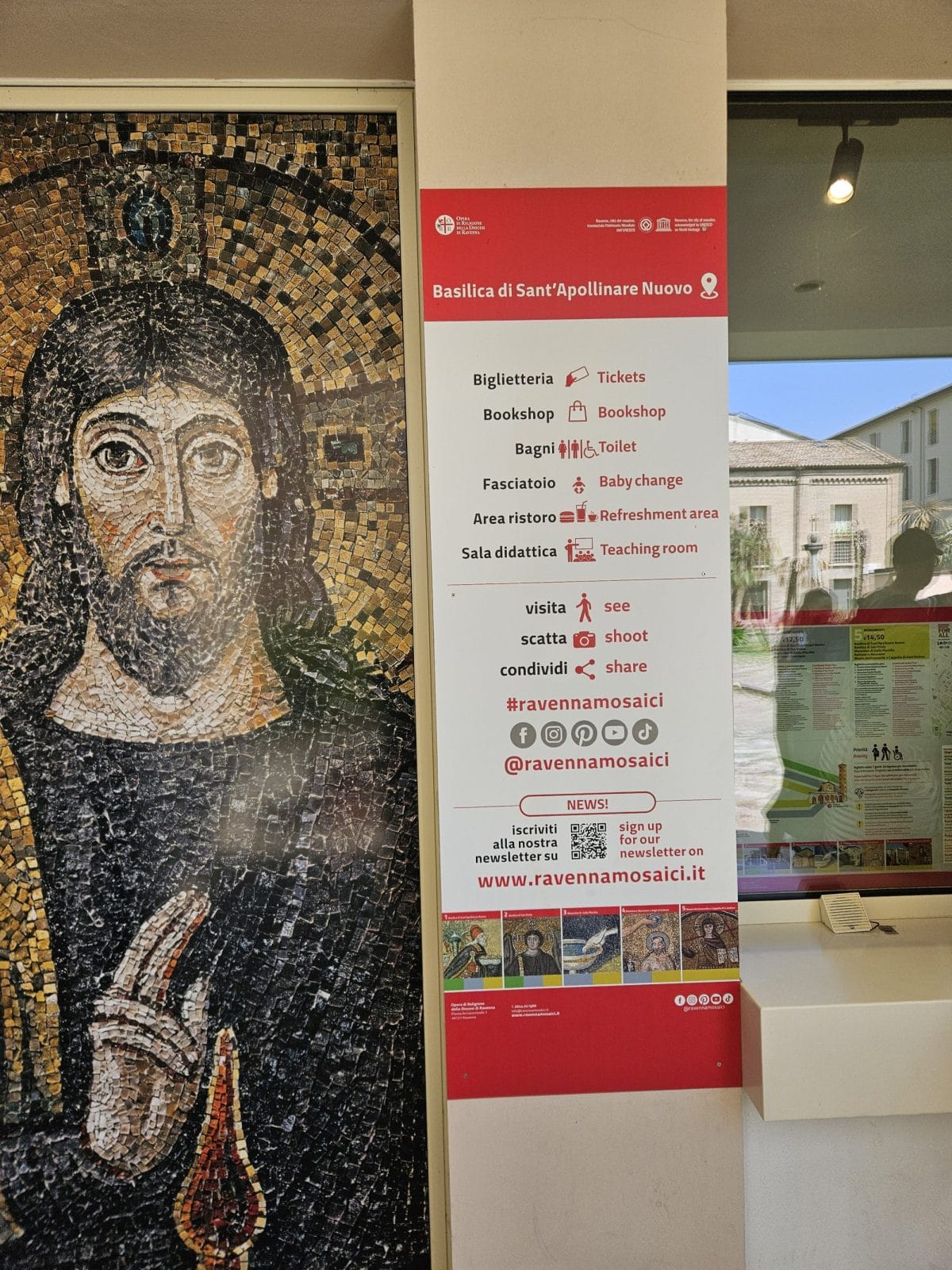
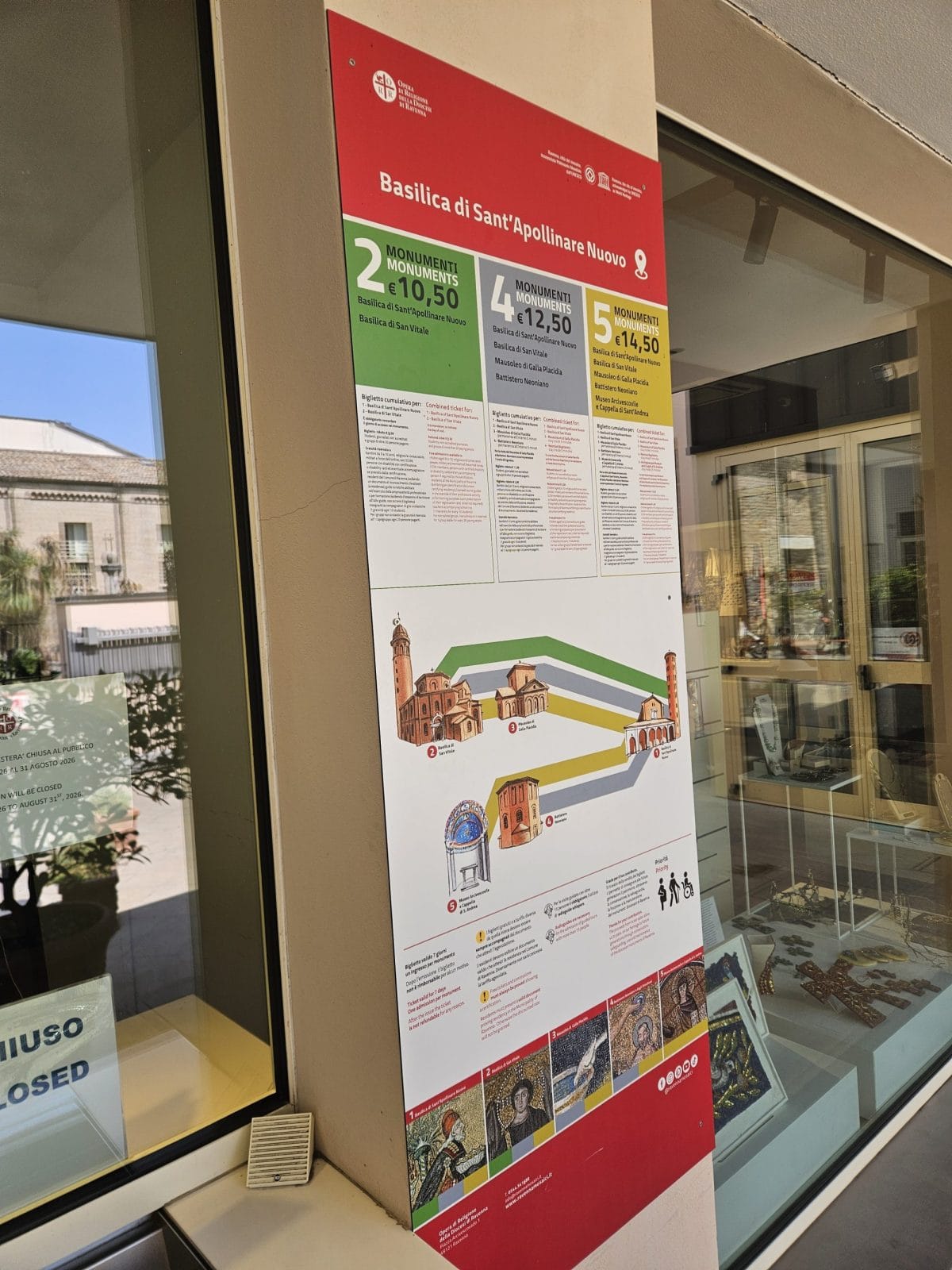
I bought my tickets at the ticket office to the right of the entrance; I chose the combined four-monument ticket, which included the Basilica of Sant’Apollinare Nuovo, the Basilica of San Vitale, the Mausoleum of Galla Placidia, and the Neonian Baptistery. They accepted cash or cards, but the queue was long, so online tickets might be more convenient.
There was also a five-monument ticket that included the Archepiscopal Museum and Chapel of Sant’Andrea. Unfortunately, the museum was closed when I visited. You can find out prices, opening times and tickets on their website.
Visiting Sant’Apollinare Nuovo
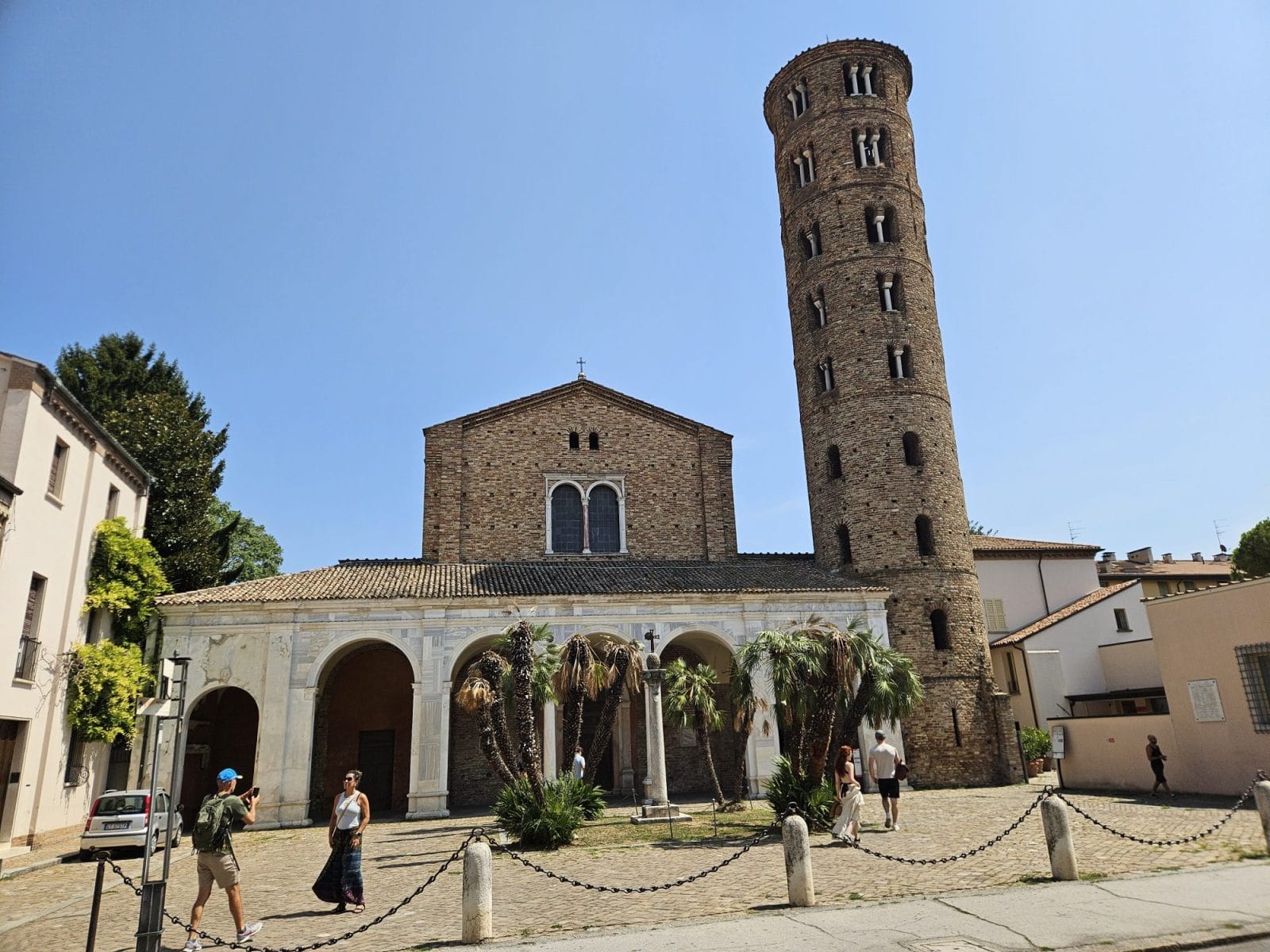
The basilica is on Via di Roma and is easy to reach on foot from Ravenna’s historic centre and train station. I started my tour of the combined-ticket attractions here before continuing to the other mosaic monuments around the city.
I recommend allowing enough time to walk down both sides of the nave and view the mosaics from different positions; I spent about an hour here. Information panels inside also explain some of the church’s less obvious details and history.
For refreshments nearby, Etna Cafe is almost opposite the basilica and has good views of the front of the building. There are also plenty of places for food and drink within walking distance.