
Romanian Food: Traditional Dishes to Try in Romania
Romanian food is hearty, seasonal and full of flavour, with many traditional dishes based around pork, cabbage, sour soups, polenta, cheese, pickles and fresh local produce. Some of the most famous Romanian dishes include sarmale, mici, ciorbă, mămăligă, papanași and bean stews with smoked meat.
This guide covers typical and traditional Romanian food from across the country, including everyday meals, regional specialities and dishes served for Christmas, Easter and other special occasions. I’ve tried many of these foods while travelling around Romania, including Transylvania, Bucharest and the Danube Delta.
What food do Romanians eat?
Romanians eat a wide variety of traditional dishes, but many meals are built around meat, soups, vegetables, pickles, bread, potatoes or mămăligă. Pork and chicken are common in many regions, while fish is especially important in the Danube Delta. Soups, known as ciorbă, are also a major part of Romanian cuisine.
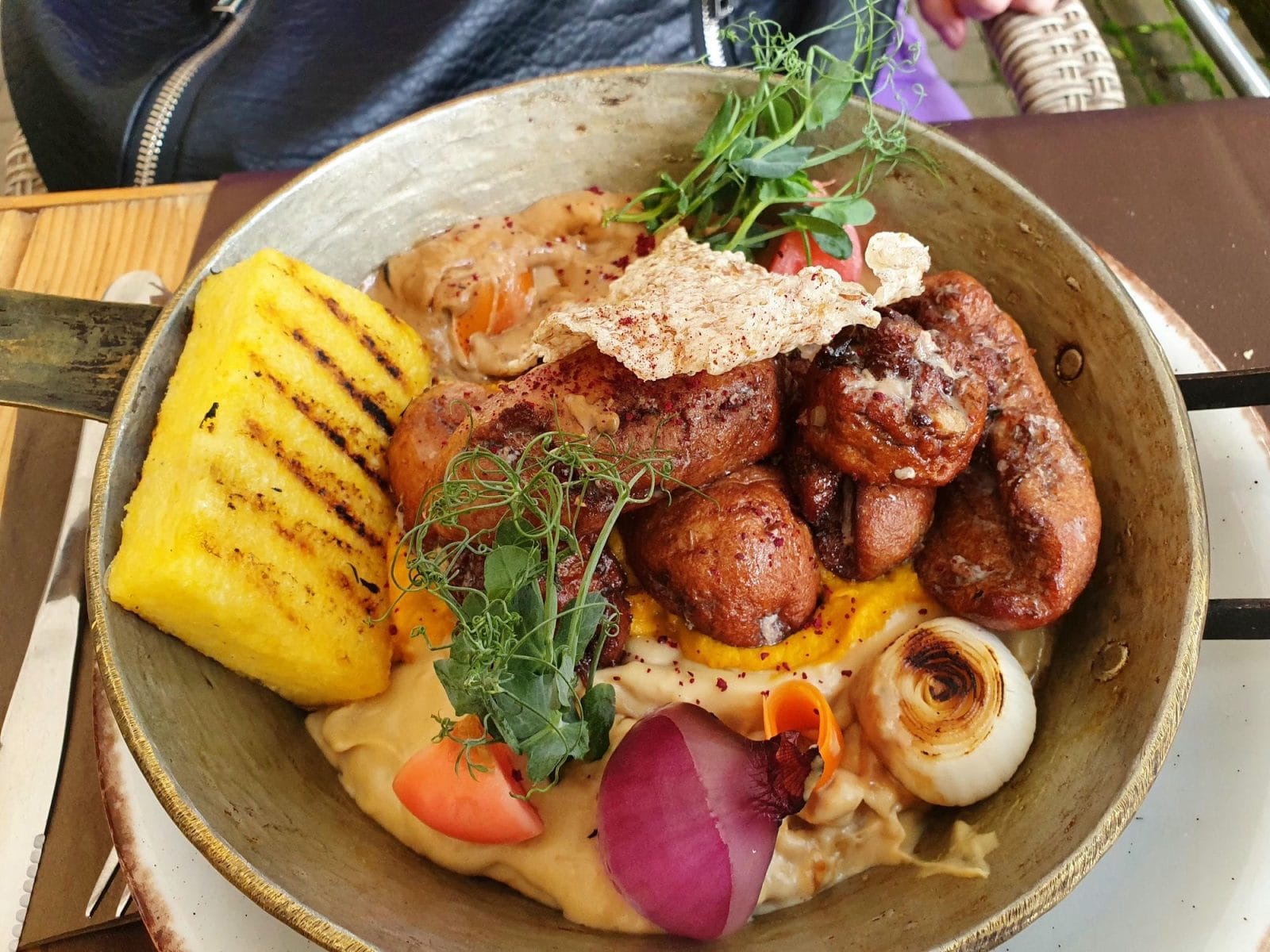
Some of the most popular dishes to try include sarmale, mici, ciorbă, mămăligă, papanași, drob and cașcaval pane. These give you a good introduction to Romanian cuisine, from grilled meats and sour soups to comforting side dishes and rich desserts.
Romanian cuisine also varies by region. Transylvania has strong Hungarian and Saxon influences, the Danube Delta is known for fish dishes, and cities such as Bucharest, Brașov and Cluj-Napoca have plenty of restaurants serving both traditional and modern Romanian food.
Influences
Other cultures influenced traditional Romanian cuisine. These include Turkish, Hungarian, Greek, Serbian, Austrian, Russian, Polish, French, and Italian. As with many cuisines, Romanian food has developed through local ingredients, regional traditions and outside influences over time.
Pork is common in many Romanian dishes, although fish, poultry, lamb, cheese, vegetables and fasting foods also play an important role in Romanian cuisine.
Traditional Romanian Dishes to Try
Mici / Mititei – Romanian Grilled Sausages
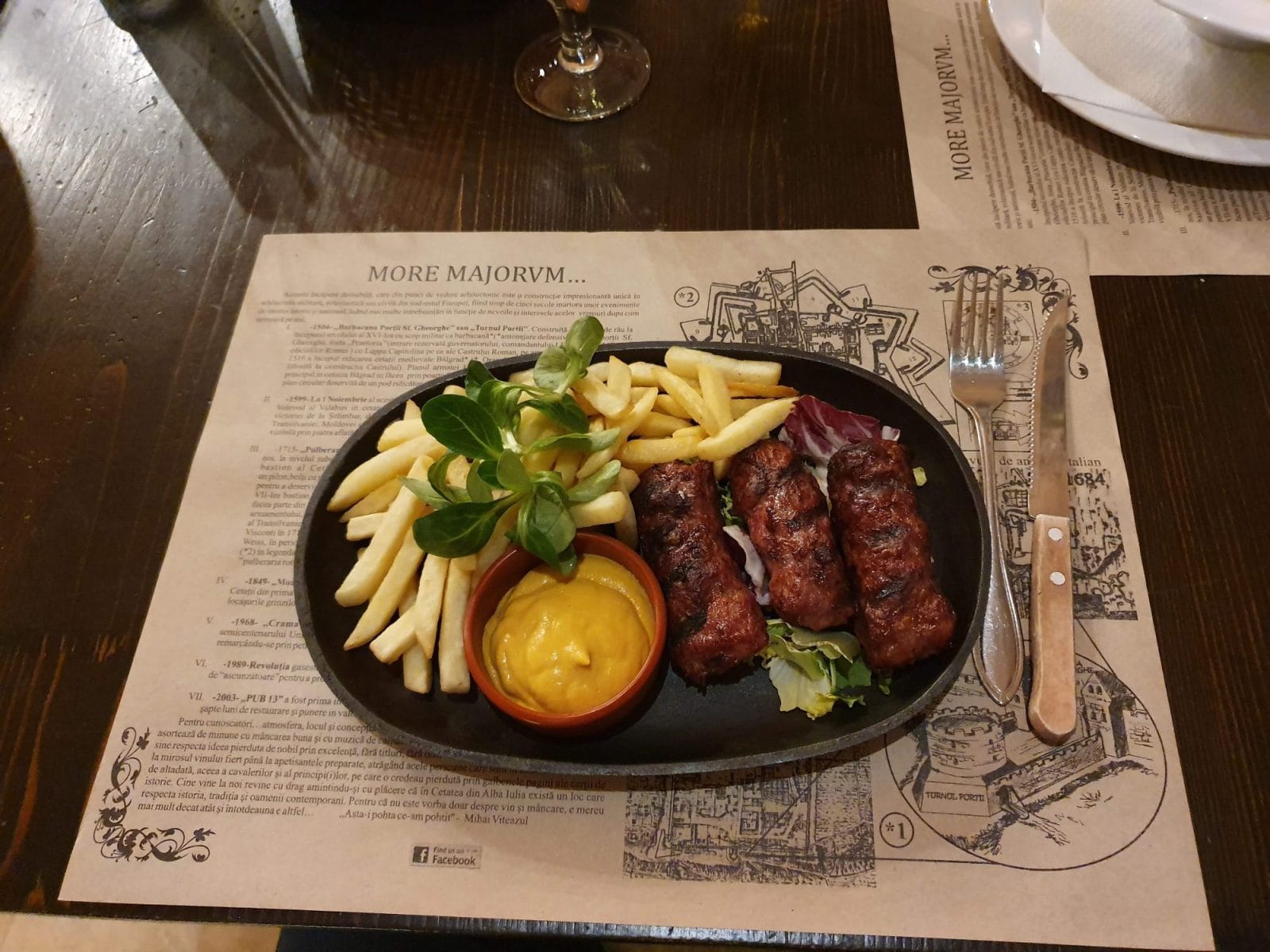
Mici, also called mititei, are small skinless grilled sausages and one of the most common Romanian foods to try. This makes for a good meal or snack to enjoy with a beer. I really enjoy this as either a starter, a snack, or even a main course. You will find variants of this skinless sausage throughout the country.
Ciorbă – Traditional Romanian Sour Soup
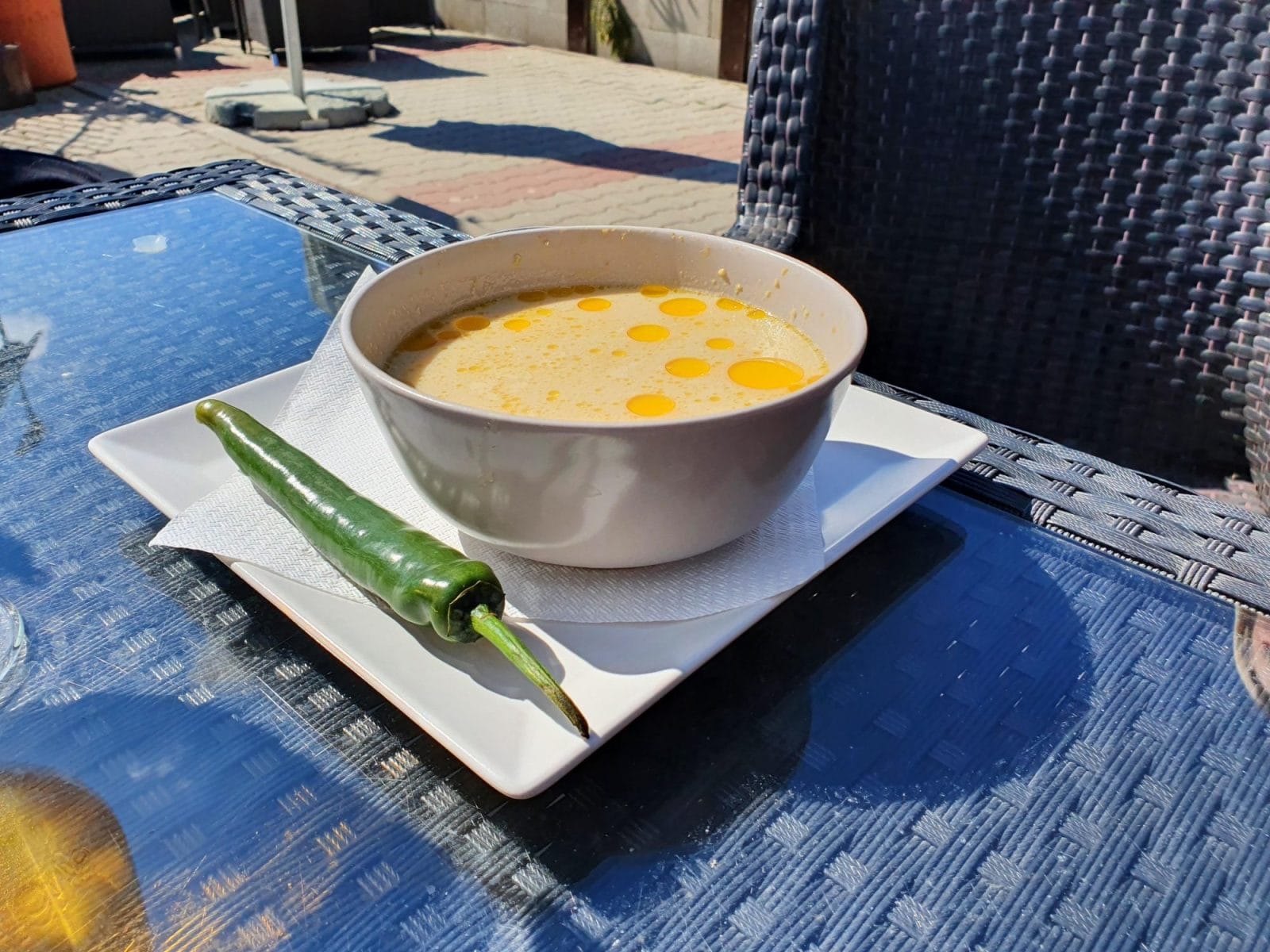
Many Romanians are passionate about soup, especially traditional sour soups known as ciorbă. Most soups are sour, achieved by adding an ingredient called ‘borș’. You can also add quality vinegar instead to make soups more sour.
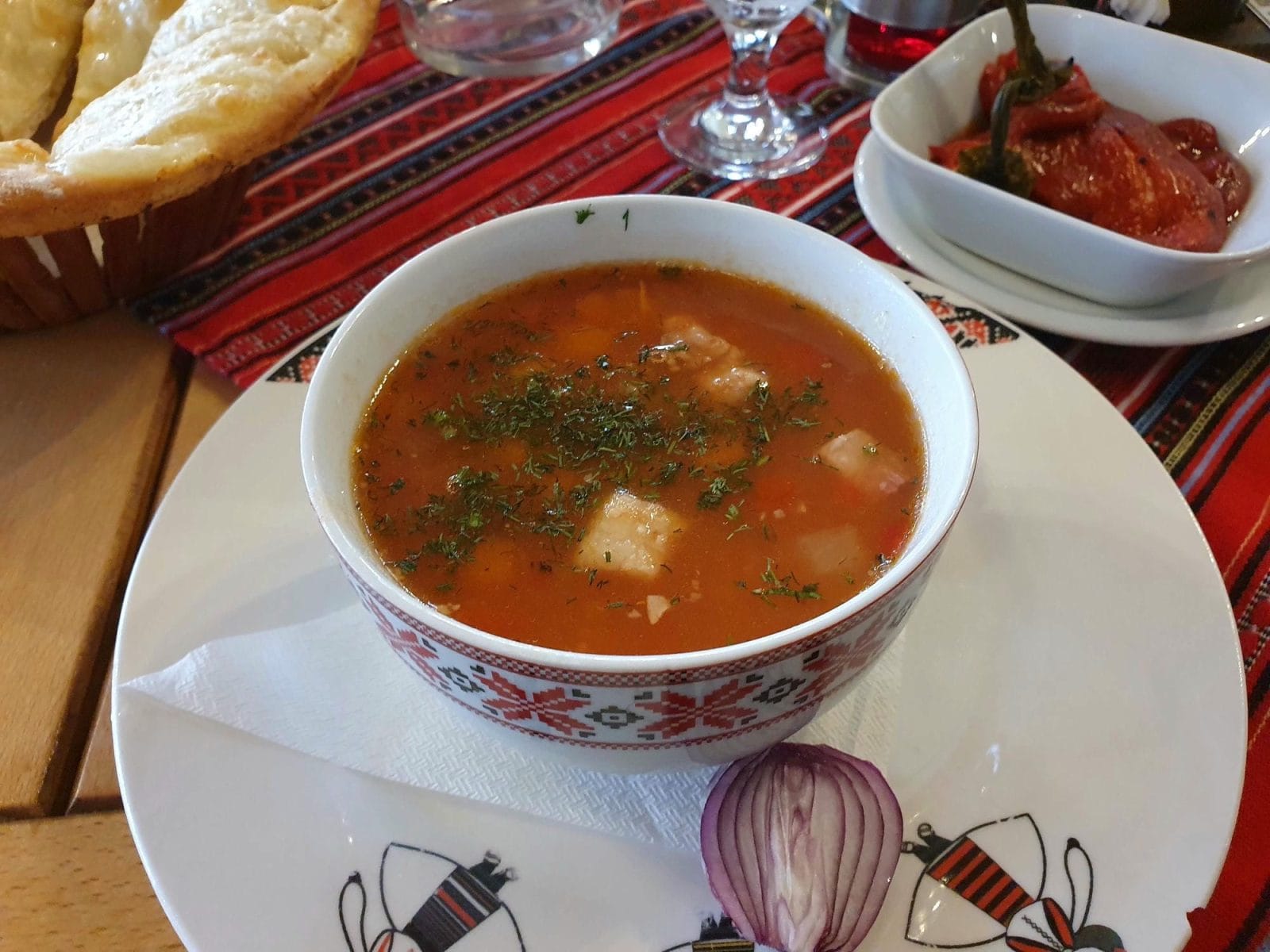
Popular traditional ciorbă in homes and eateries is the bean soup with smoked pork. Fish soup is a staple in the Danube Delta, and creamy sour tripe soup is throughout Transylvania.

The bean soup is delicious, filling and well suited to my tastes. I have recreated this with my choice of herbs. I have cooked with a variety of beans and pork types, including smoked bacon lardons. The tripe soup is special, and many locals love this one; it is creamy. It supposedly takes a long time to cook the right flavours. They often serve tripe soup with a whole chilli to add a kick to the dish.
Sarmale: A Cabbage Roll
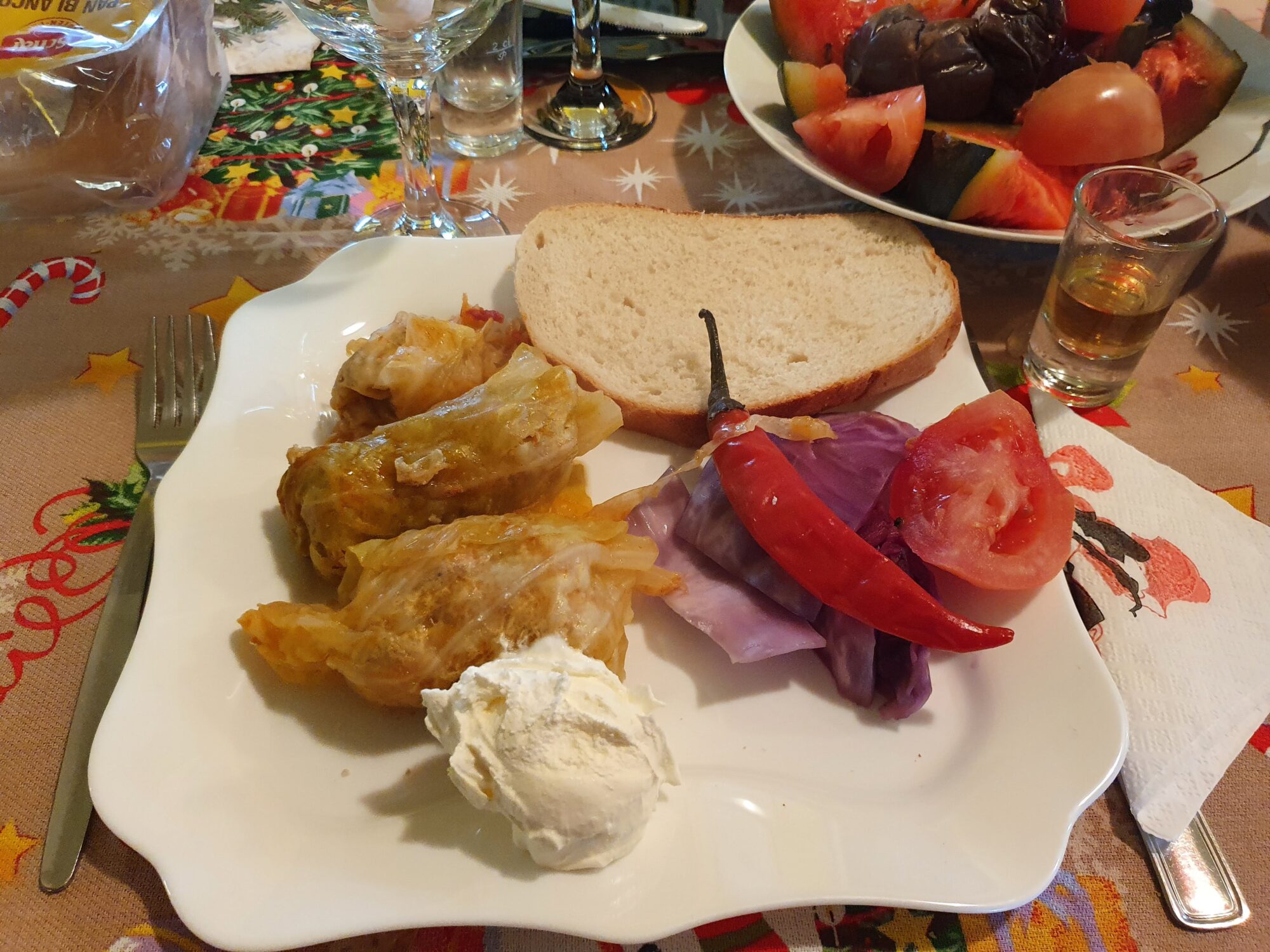
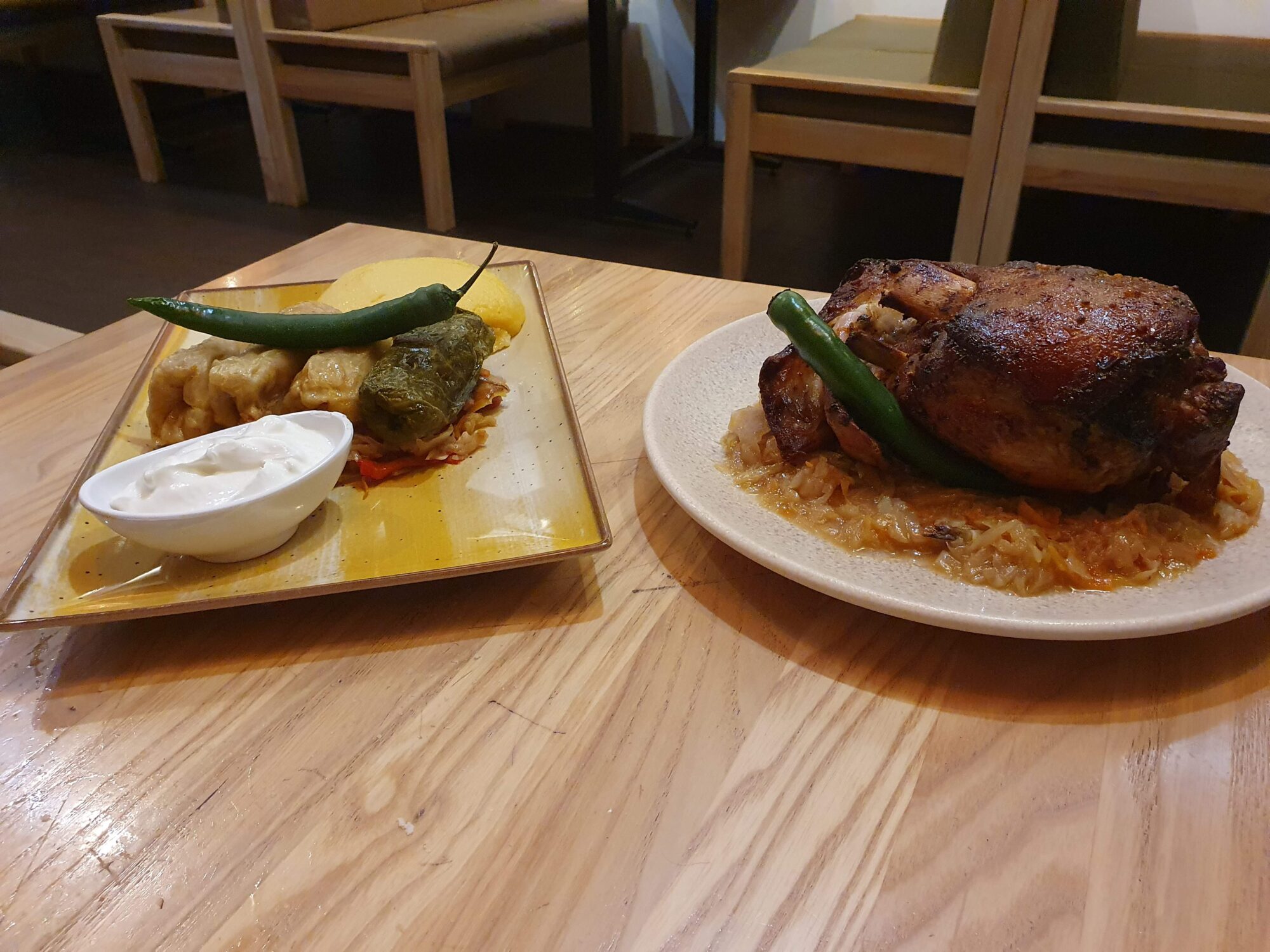
Sarmale is basically a stuffed cabbage roll. This is Romania’s unofficial national dish. In Transylvanian homes, they usually prepare this dish for special occasions. This includes Christmas, birthdays and also weddings. They traditionally stuff the cabbage leaves with pork combined with other meats.
Varză à la Cluj – Layered Cabbage from Cluj-Napoca

Varză à la Cluj is a cabbage dish made with minced meat, sour cream, and herbs. It’s a delicious dish and somewhat reminds me of a cross between sarmale and meatloaf. The recipe for Varza a la Cluj dates back to the 17th century and is a speciality in Cluj-Napoca. ‘Varza a la Cluj’ translates to ‘Cabbage a la Cluj’. However, it is also called ‘cabbage in layers’ or ‘scattered sarmale’.
Romanian Mixed Grill

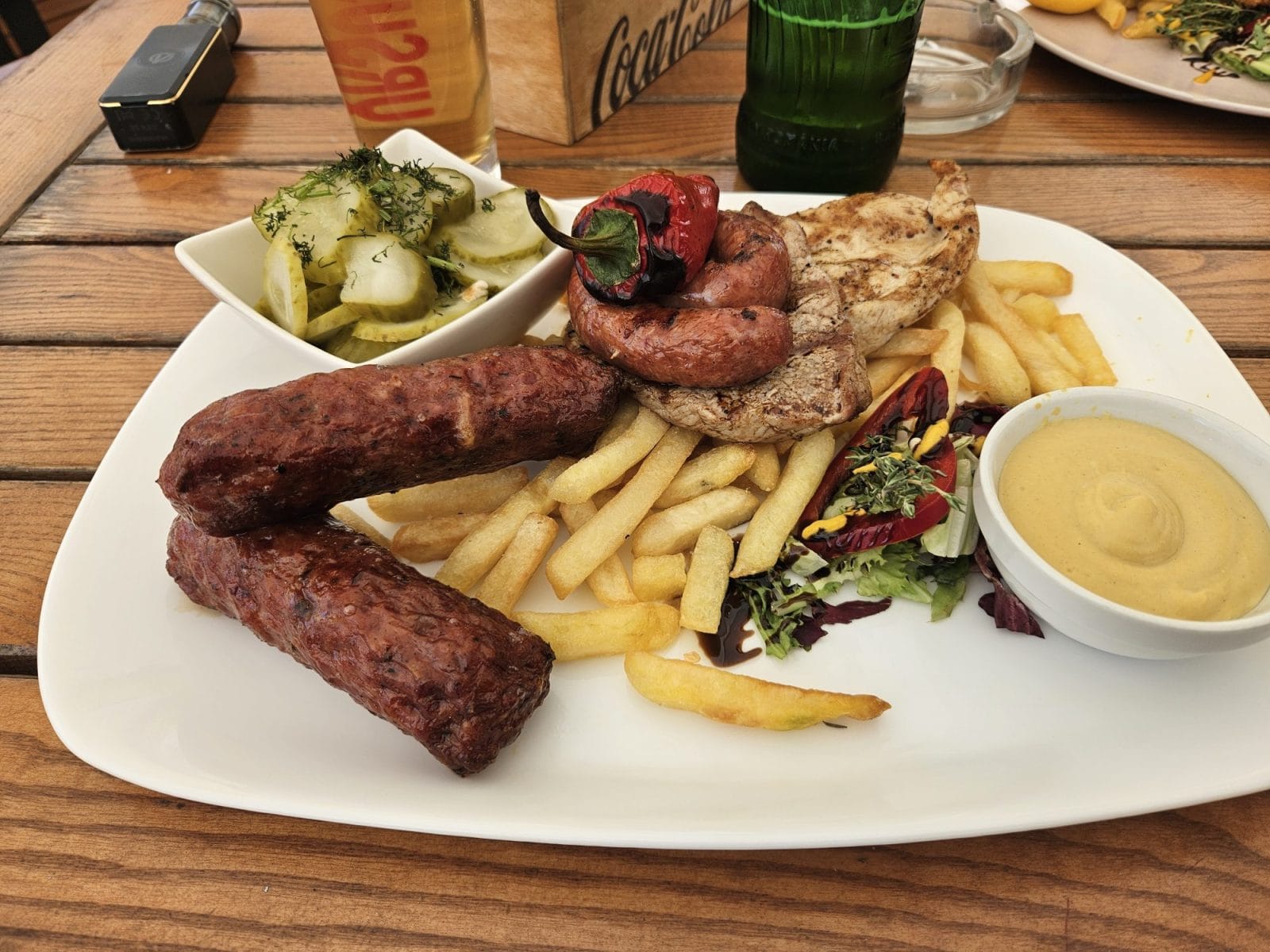
Mixed grills typically include pork, chicken, and some mici. Mixed grills are more often than not served with pickles & mustard. Another accompaniment to the mixed grill is peasants’ potatoes, which are very flavourful. They cook these with bacon, herbs and spices to make a delicious side dish. There are lots of versions of peasants’ potatoes.
Fish Dishes in the Danube Delta
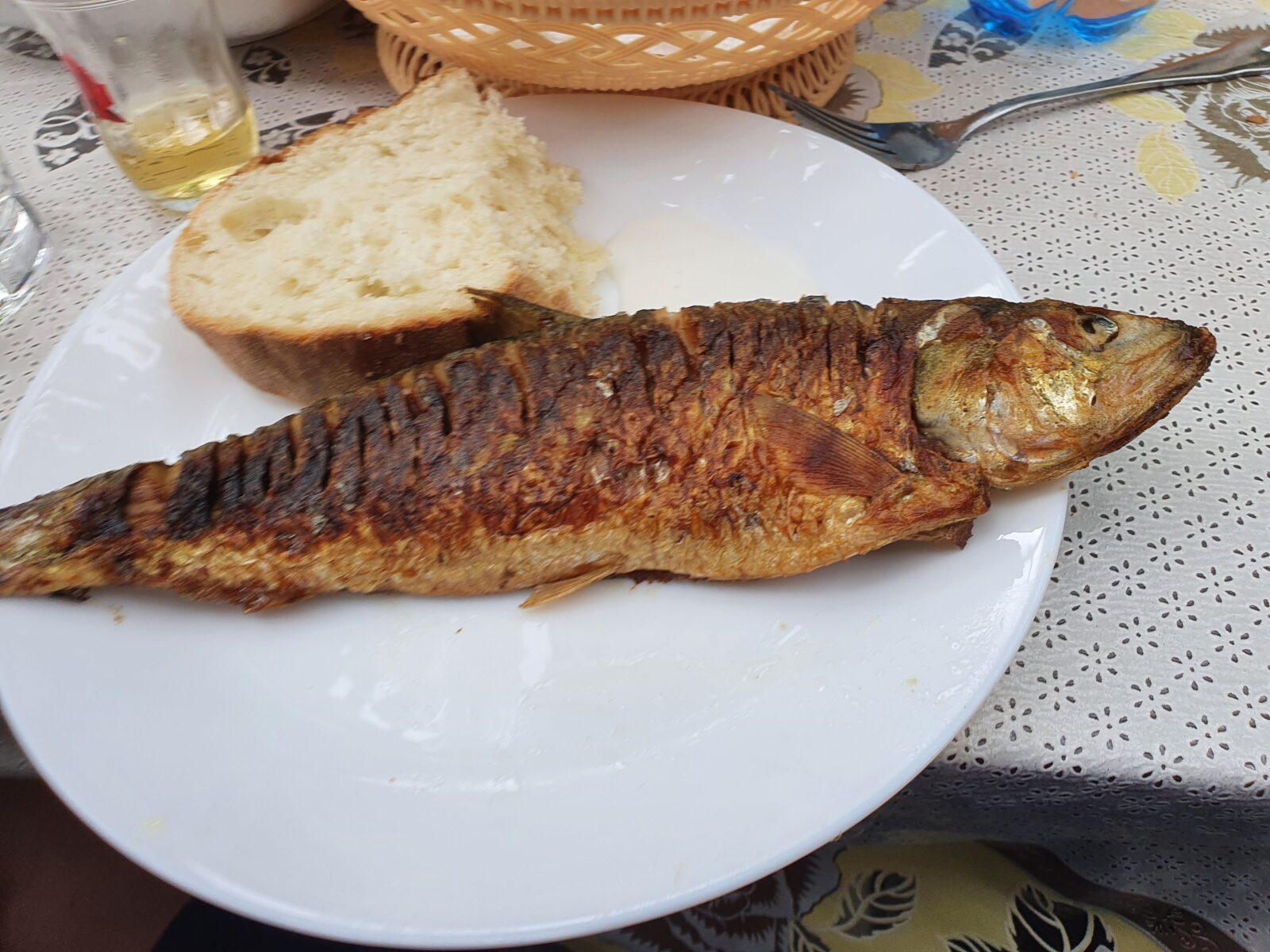
The Danube Delta area is well known for being an excellent place to go fishing, and many of the locals fish as a way of life. This is reflected in the region’s menus, and fish plays an important part in most meals. The fish served are predominantly river fish from the Delta, including pike and catfish.

They sometimes prepare the fish into a soup with vegetables and herbs. Fish head soup is popular and loaded with fresh fish. Another popular soup is the fish ball soup, in which they combine the fish with eggs, similar to meatballs.

Other times they fry or grill whole fish cooked with seasoning and served with vegetables or salad. They also have dishes similar to ratatouille or ragu where the fish is cooked with tomato sauce.
Drob: Easter Food
Drob is a speciality food enjoyed by people during Easter, and it’s delicious. It is somewhat similar to haggis in terms of flavour and ingredients. The key ingredients for Drob are lamb entrails, including liver, lungs, spleen, heart and kidneys.

They also add greens, including green onions, dill, parsley, and garlic. Eggs, both raw and boiled, are added into the mix, and then bread soaked in water or milk is too. This is then placed in a tray, over which the meat mixture is placed. You can serve this with a variety of sides, including salad, vegetables or baked cheese. A perfect condiment to have with drob is a horseradish and beetroot sauce.
Papanași – A Popular Romanian Dessert

Papanași is a traditional Romanian and Moldovan pudding that is often on the dessert menus of restaurants throughout the country. It is a fried or boiled pastry. They make it in the shape of a doughnut with a small ball on top. They fill these with urda, a soft cheese. Restaurants serve Papanași covered in sour cream with a delicious jam topping.
Mămăligă and Bulz – Romanian Polenta Dishes
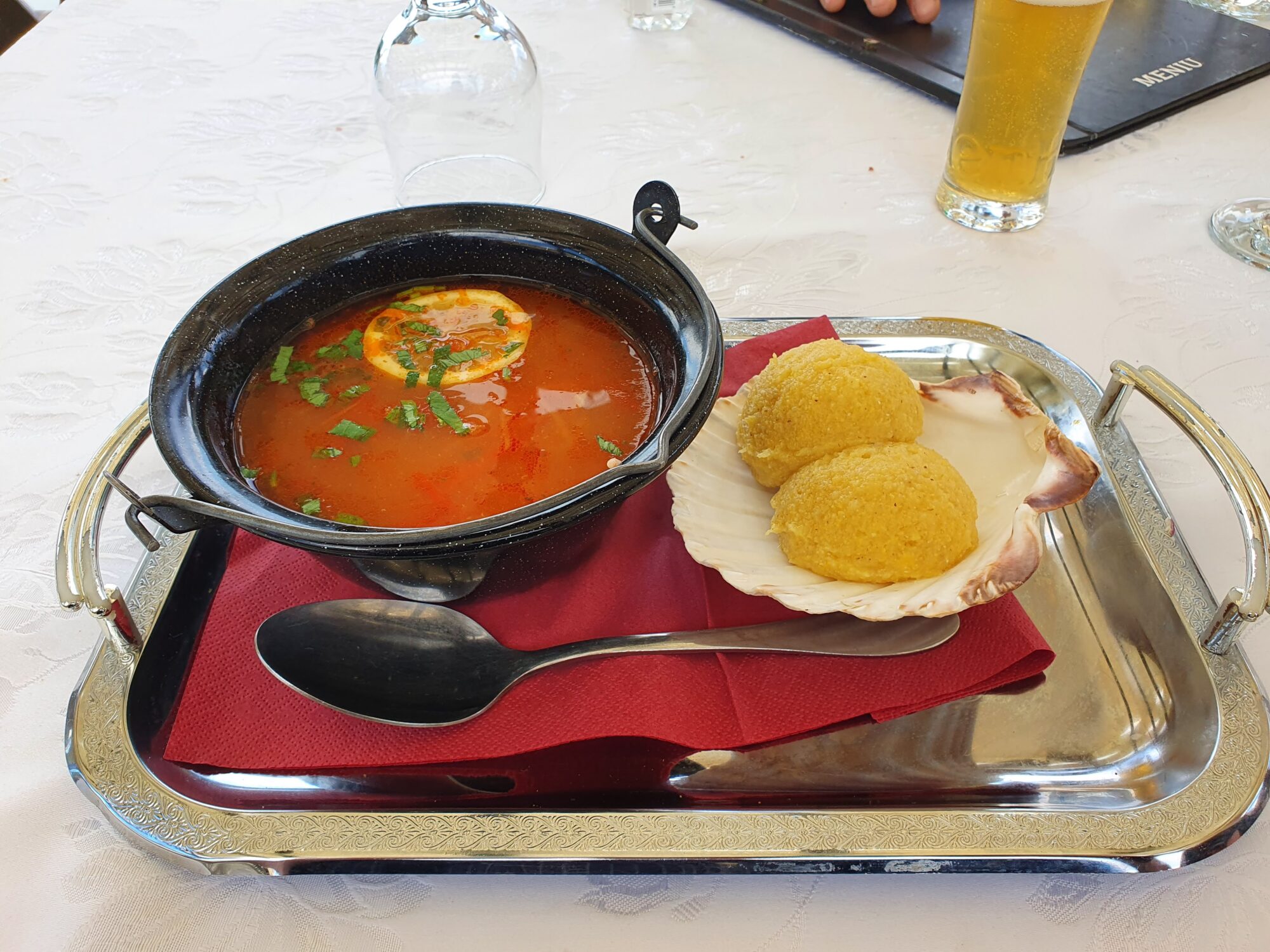
Polenta, or mămăligă, is a side dish that accompanies many dishes on meals out. It’s made from cornflour boiled in water with a pinch of salt and a bit of oil. It’s a nice gluten-free carb to accompany a meal and is great for soaking up sauces.
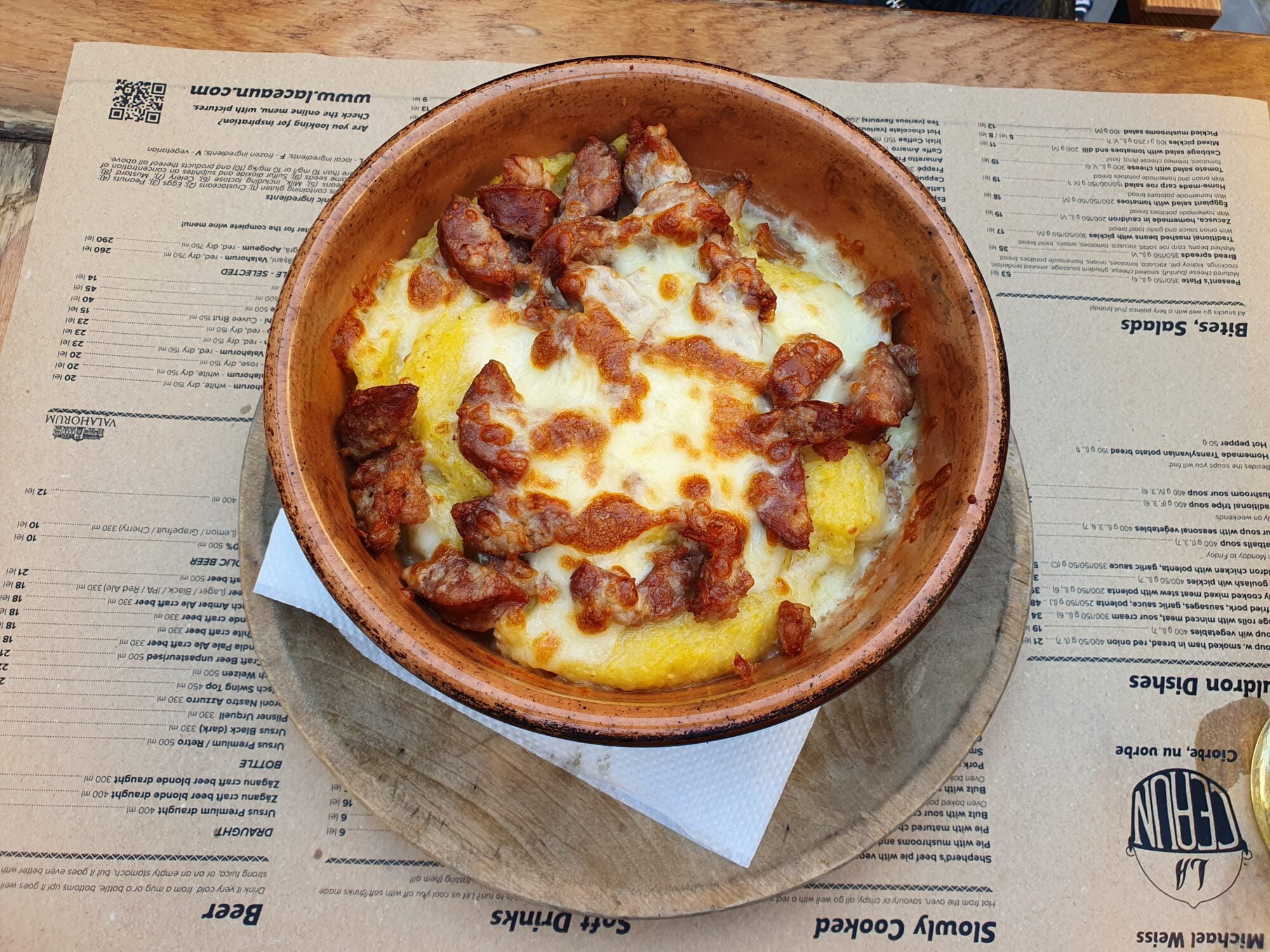
A related Romanian speciality is called ‘bulz’. Bulz is polenta combined with sheep’s cheese.
Bean Stew With Sausages
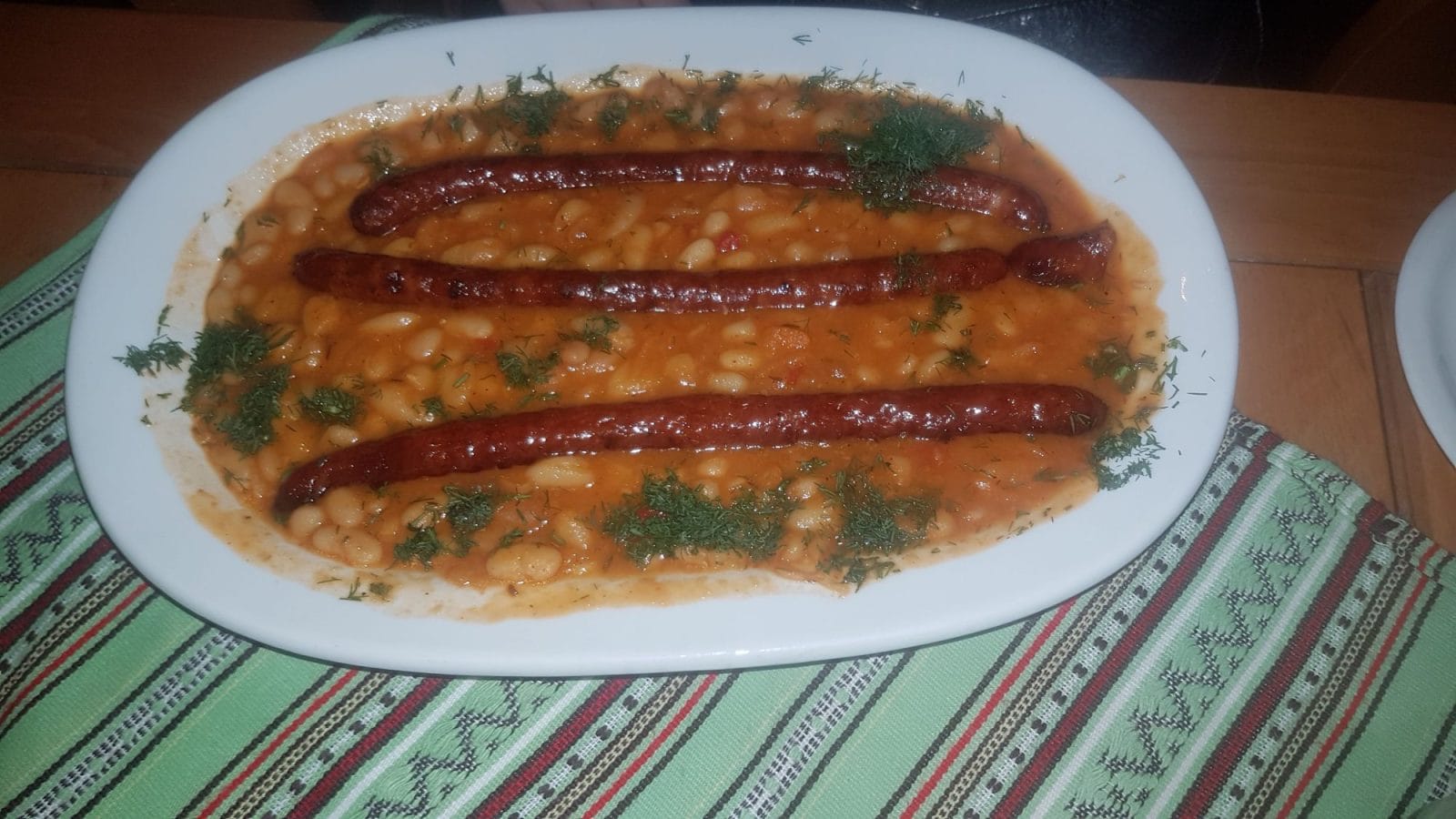
Another dish that’s frequently at restaurants is bean stew with sausages. There seem to be lots of variations of this with different beans and sausage types. Anyway, the bean stew is tasty with a tomato, pepper and herb sauce with sausages on top. This is a great option for a cheap lunch out and can be bulked up with some bread.
Kürtőskalács (kurtos)
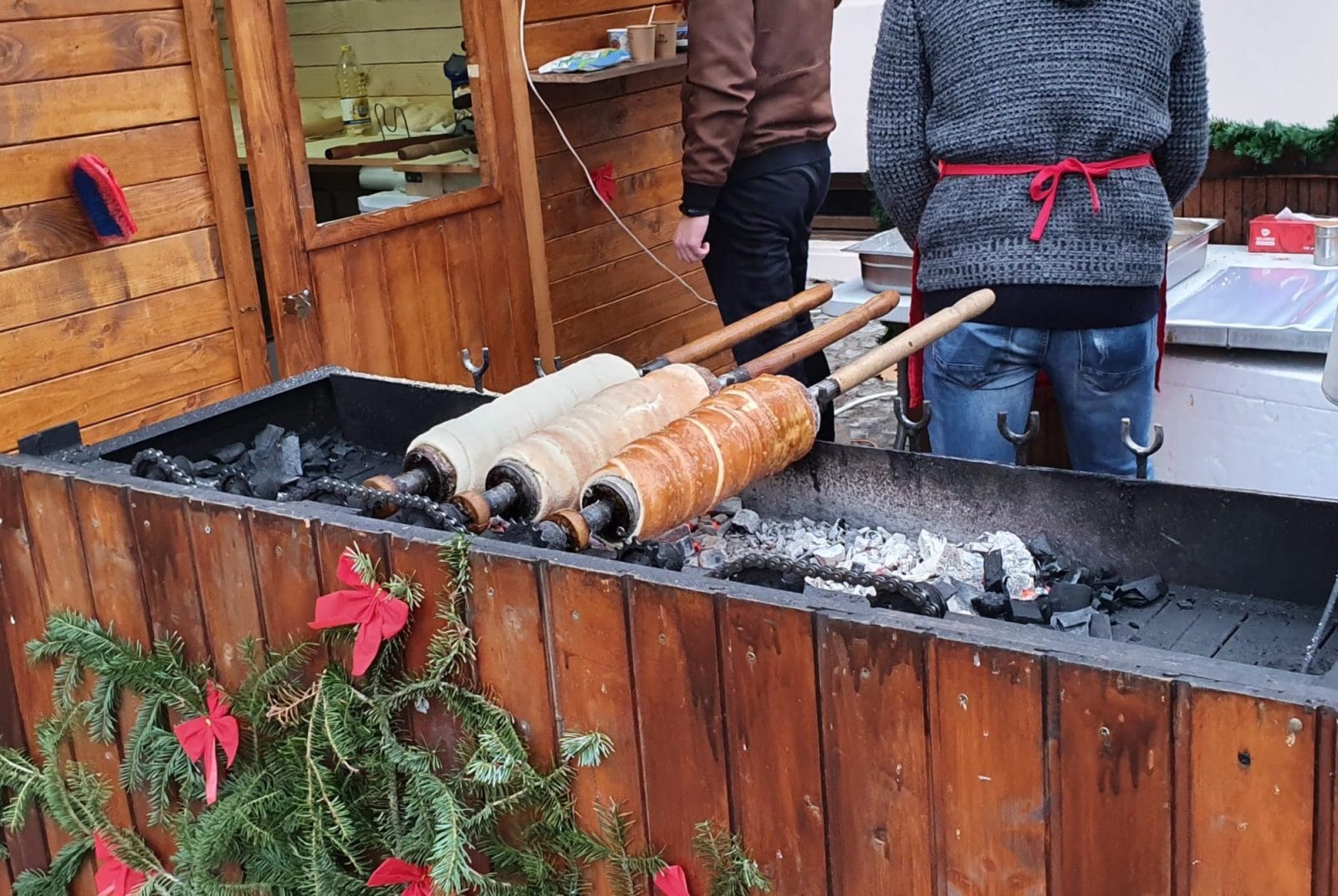
Kürtőskalács is a sweet treat with Hungarian origins. It is made from sweet yeast dough, which is spun and then wrapped around a truncated cone-shaped baking spit. It is then finally rolled in sugar, nuts, or both. These are similar to the famous chimney cakes in Prague.
Local Honey
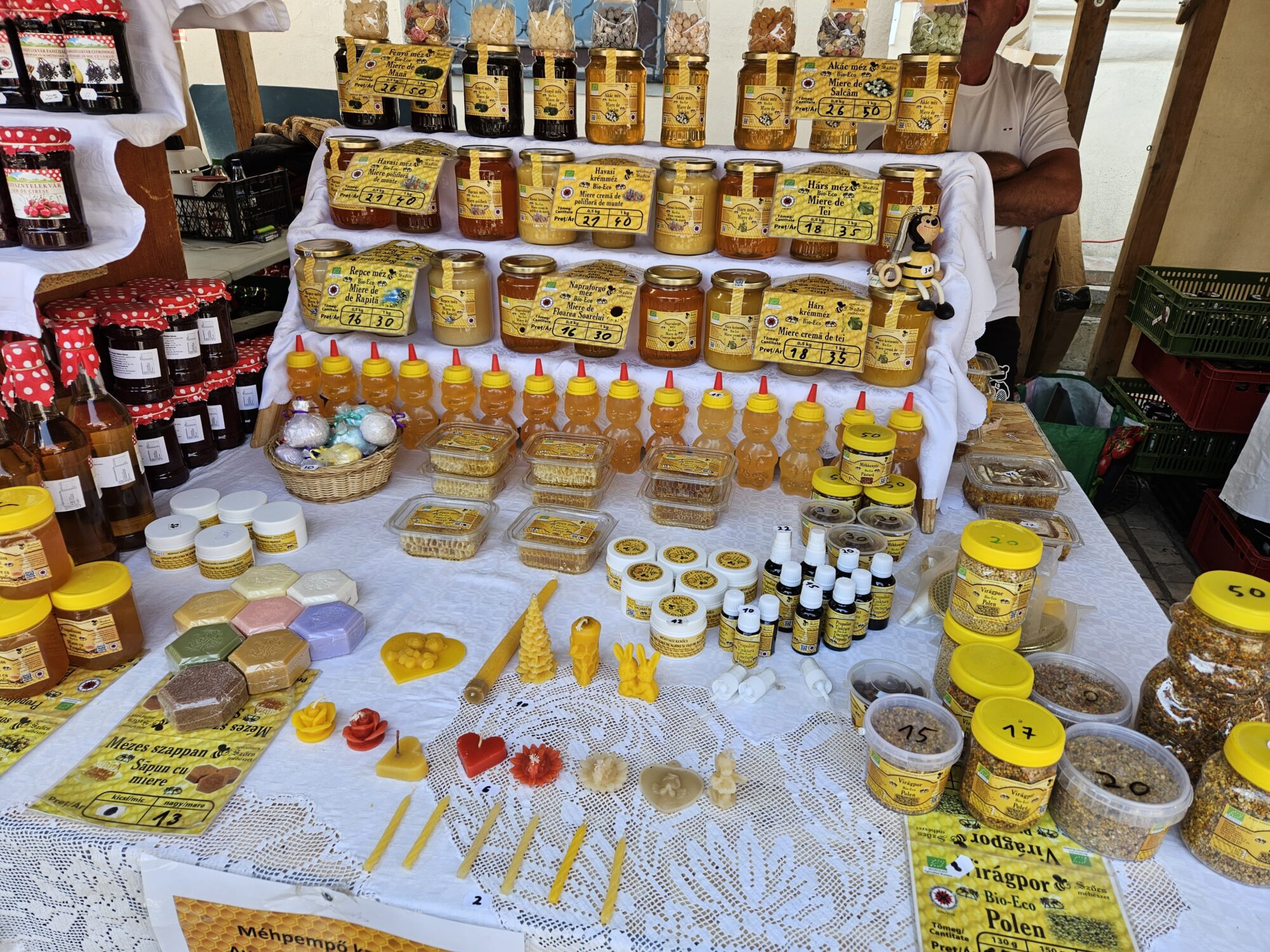
Romania is a big food-producing nation, and that includes some fantastic honey. You can buy local honey in most places I’ve been, including at various markets in the country. These come in many types and shades of gold. You can also buy honeycombs, which are a sweet and tasty snack. We’ve even bought some at the roadside from mobile beehives, which are fascinating to see.
Ham Hock & Bean Stew
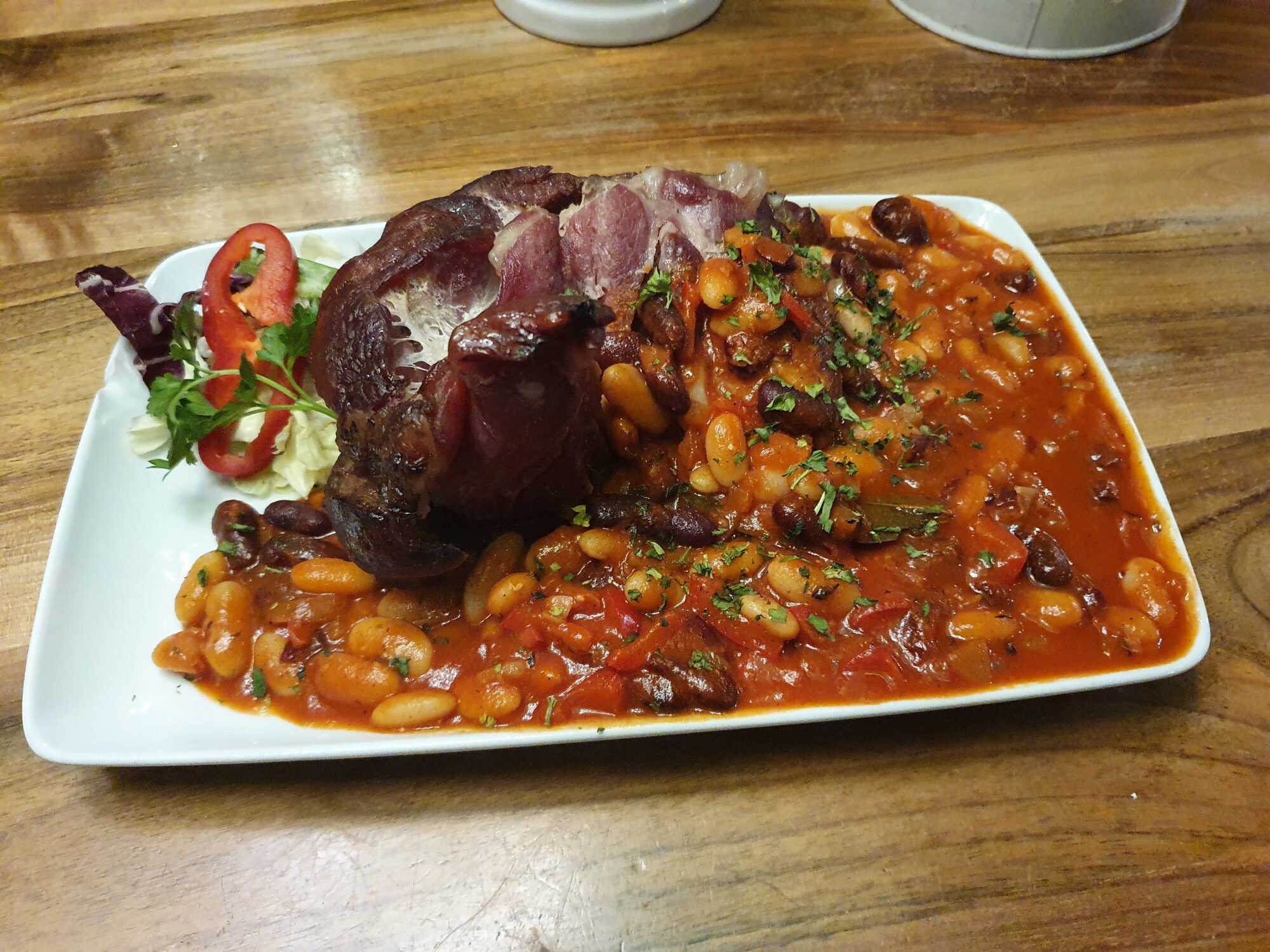
Another popular Transylvanian dish is ham hock and beans, which is hearty and delicious. It is a slow-cooked smoked ham hock that is tender and tasty. Many restaurants serve this with a bean stew.
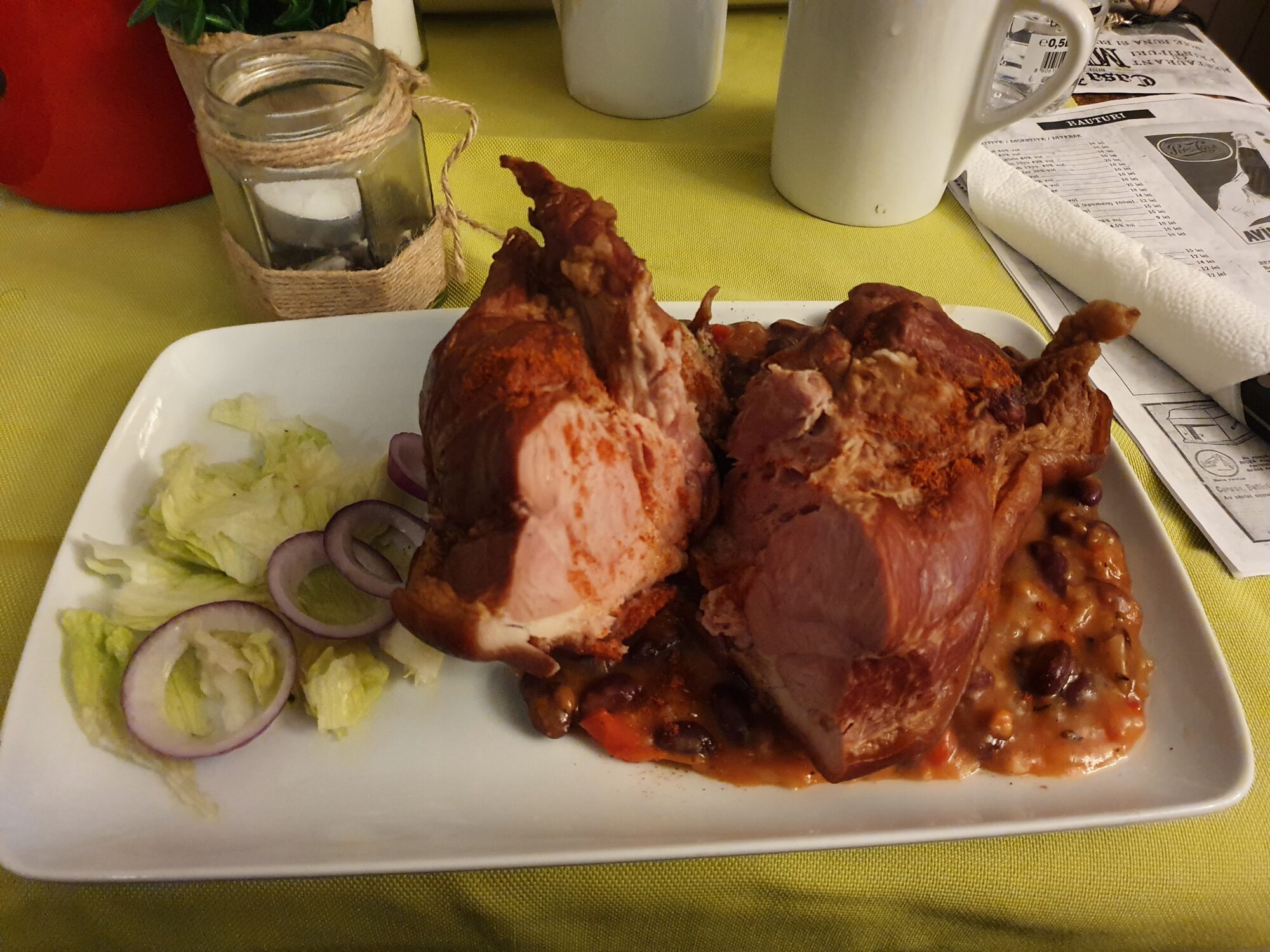
They make this with tomatoes, herbs and peppers; however, depending on the restaurant, a variety of beans are used. This is one of my favourite hunger busters when dining out.
Goulash
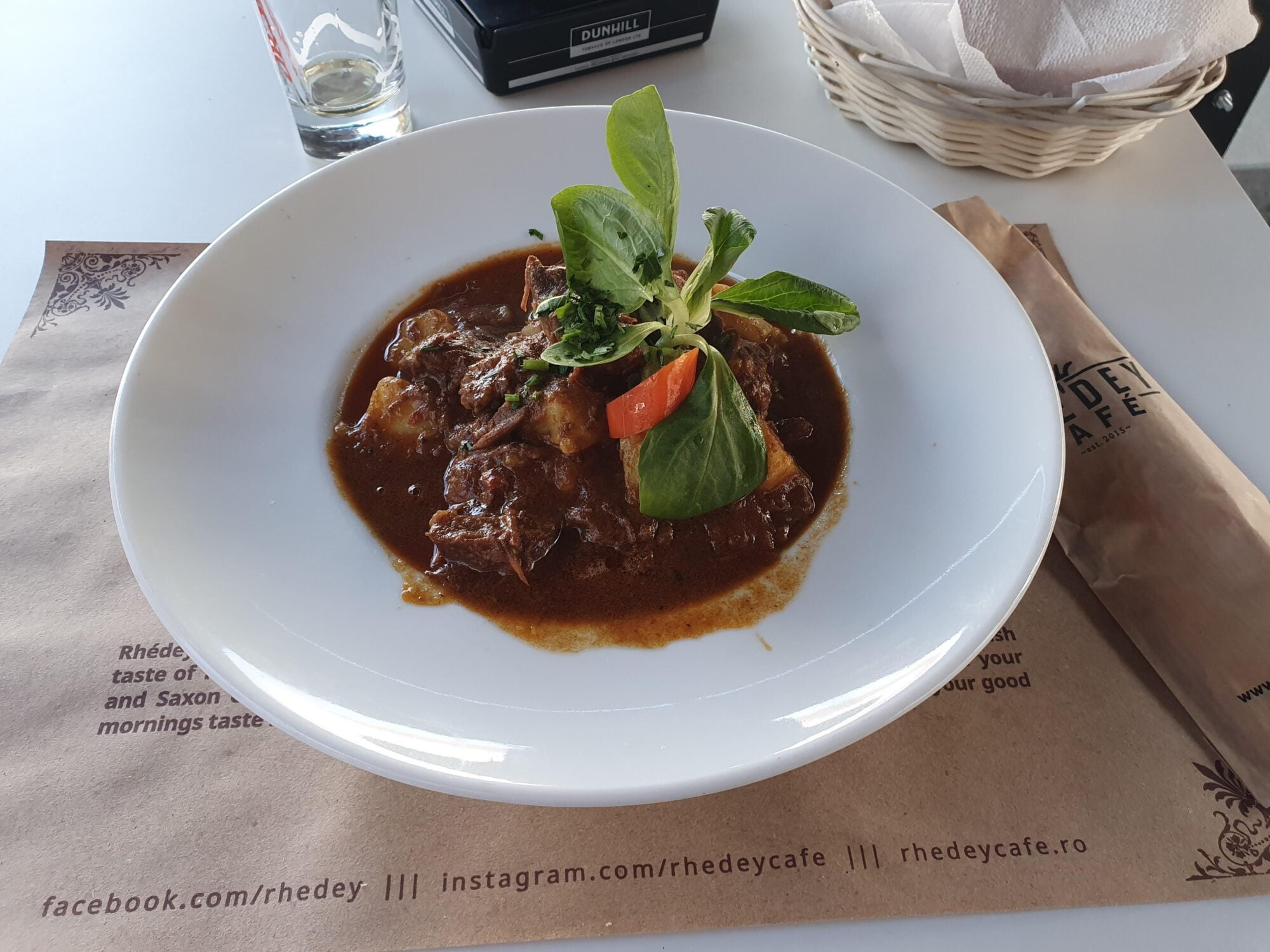
Hungarian cuisine influences some areas of Transylvania and has goulash on its menus. I’ve enjoyed quite a few nice versions in various places. This is slow-cooked meat, usually beef and sometimes flavoured with paprika, depending on the restaurant.
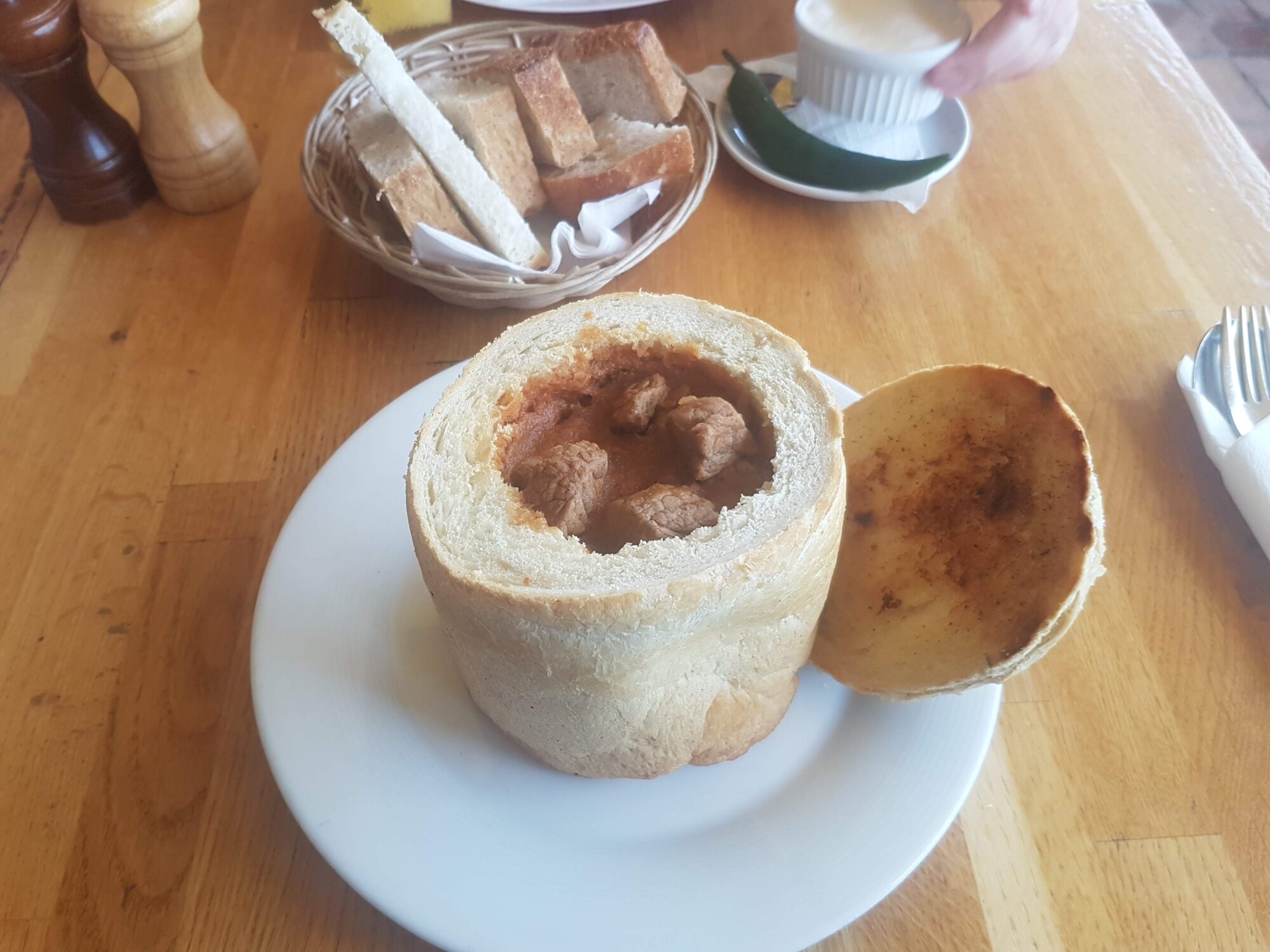
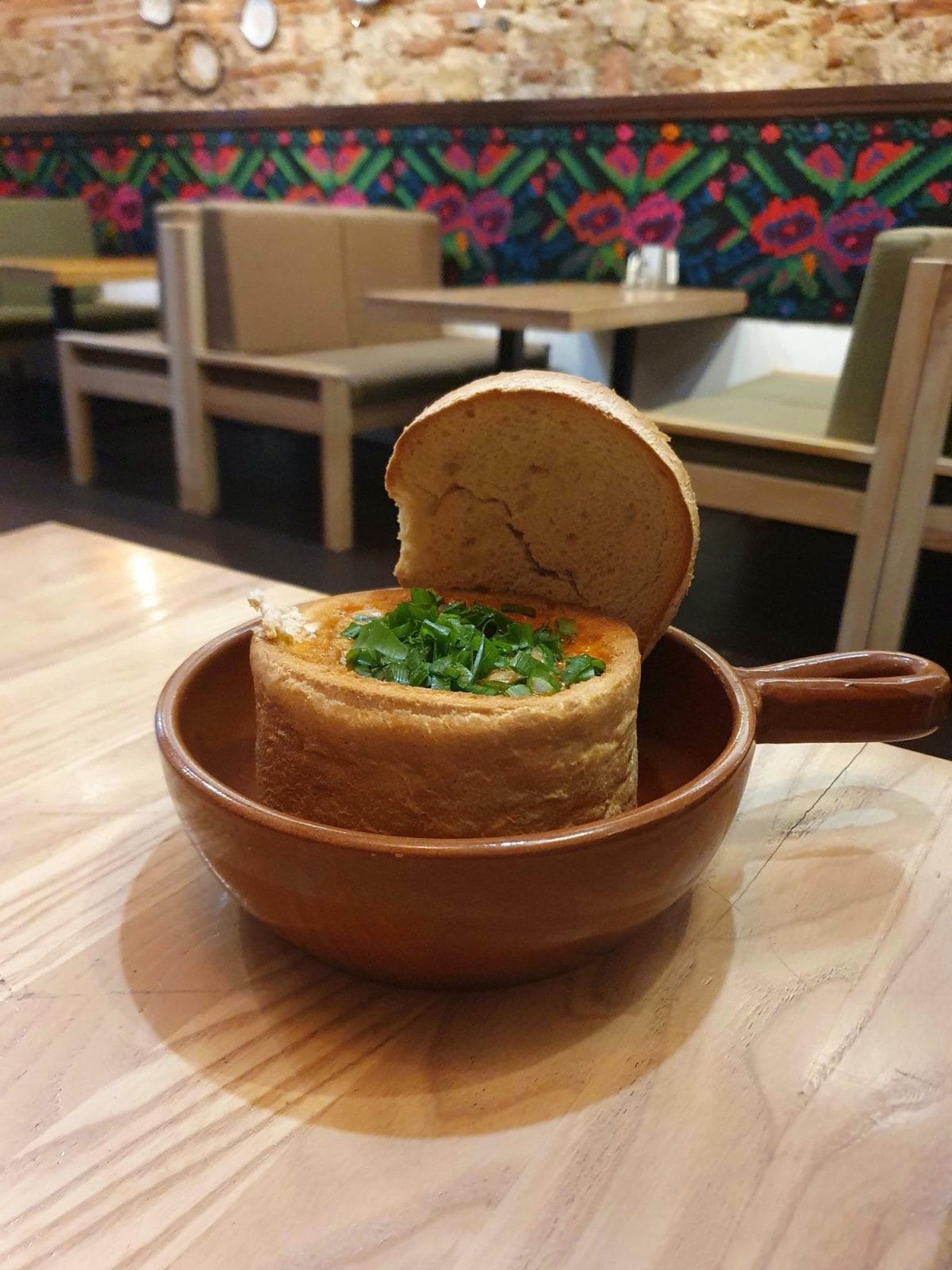
A unique way of serving this is in a bread bowl, which is rather filling, and the bread absorbs the flavour. Every country I’ve visited seems to have its own twists on goulash, and I usually enjoy it.
Cabbage Salad
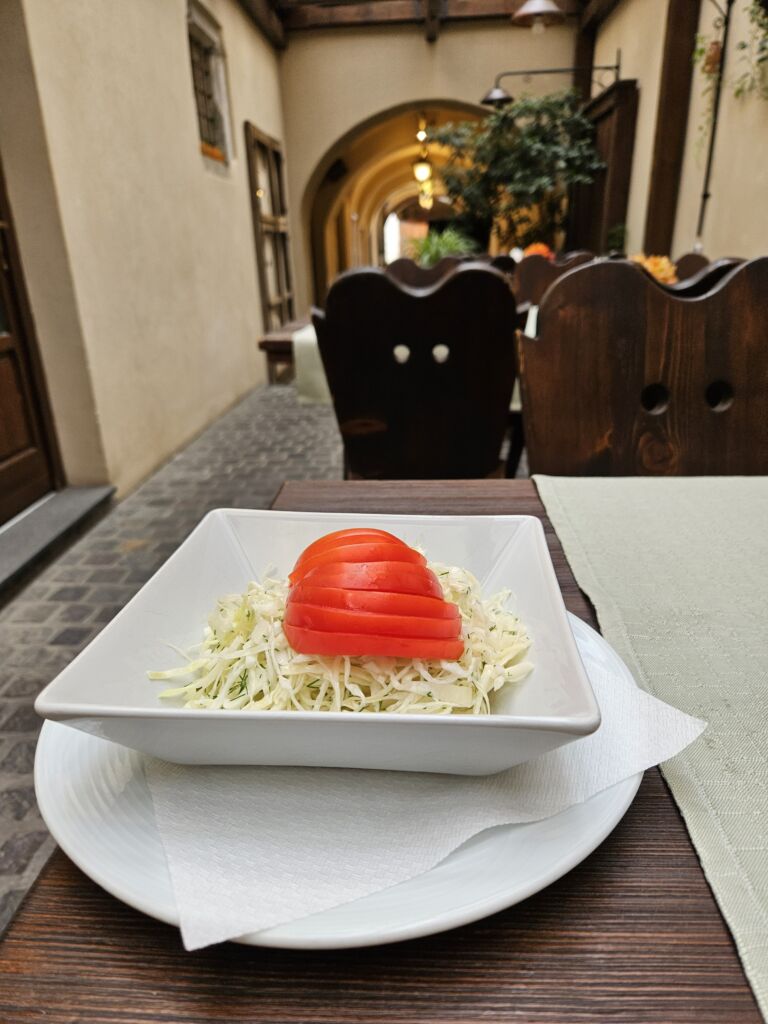
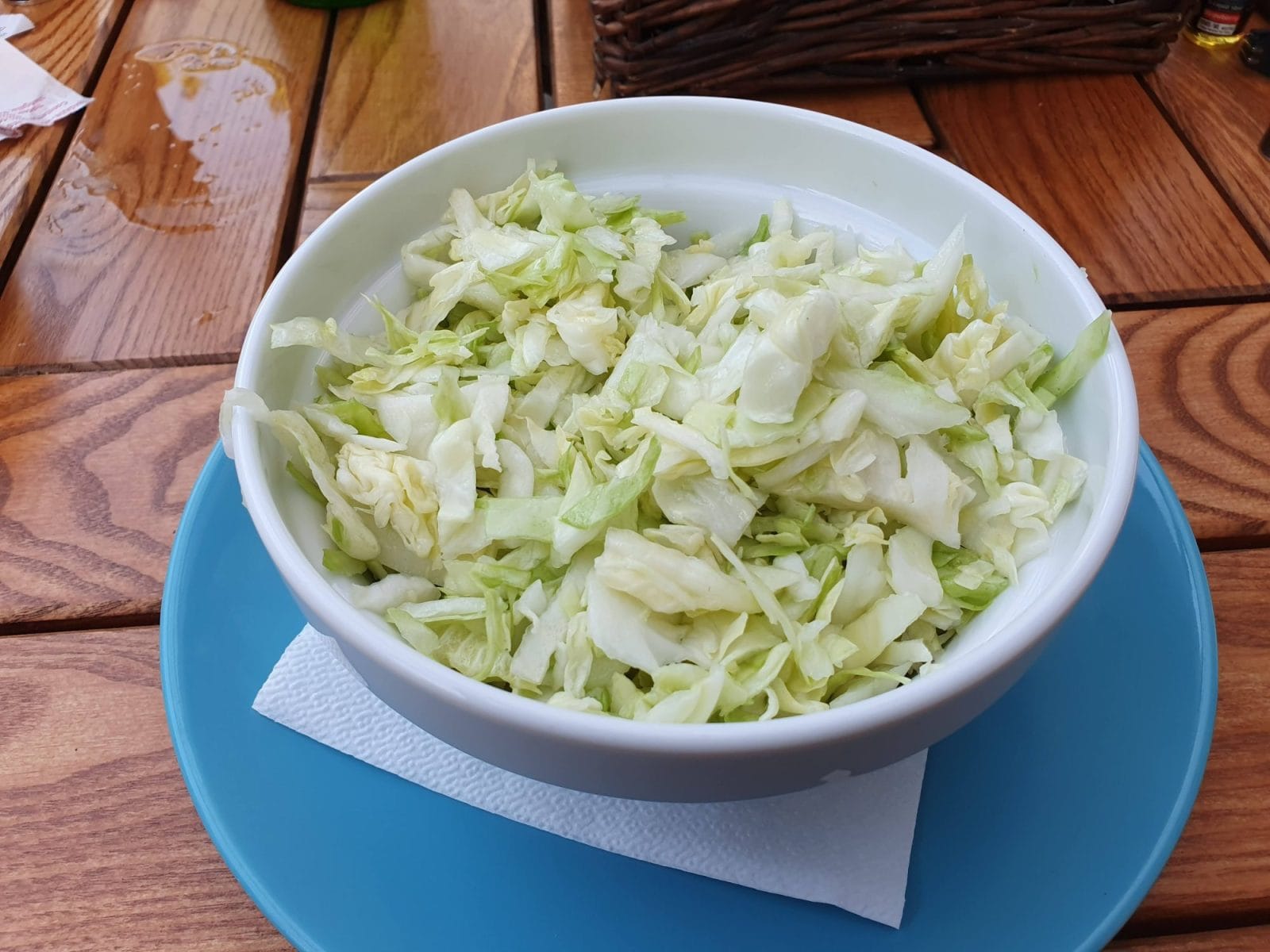
A side dish that I enjoy with grilled meats is the simple cabbage salad. They often make this with thinly shredded white cabbage and season it with white wine vinegar and salt.
Cașcaval Pane – Deep Fried Cheese
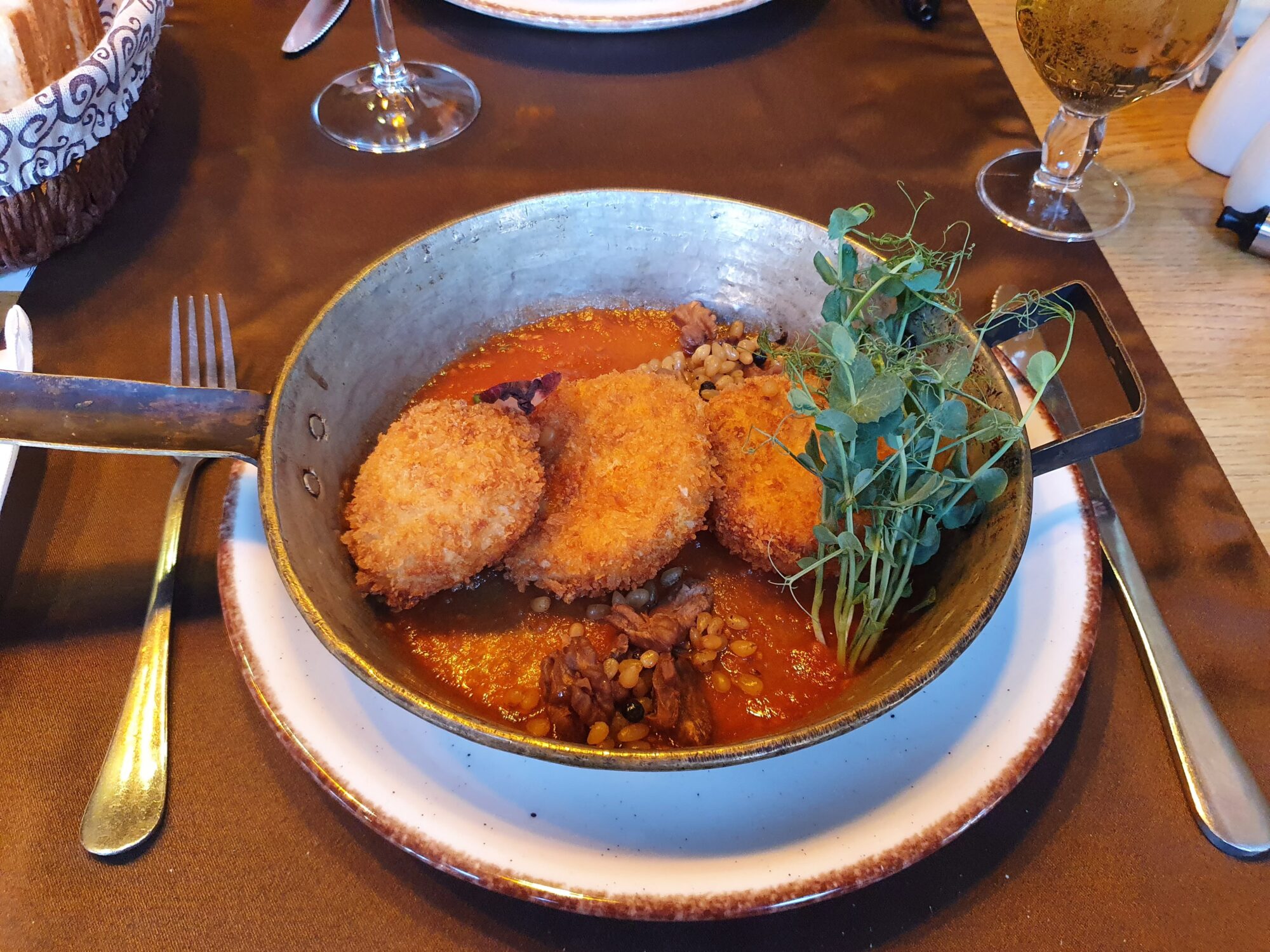
Another nice dish to try is Caşcaval pane, a good non-meat option in restaurants. Caşcaval pane is deep-fried cheese coated in breadcrumbs. In some places it’s a starter, and in others it’s a main course option with fries or salad. There are also regional variants throughout the Balkans, and I’ve eaten something similar when in Bulgaria. I had an elevated version, which was quite fancy, at the Sub-Tampa restaurant in Braşov.
Salată de Vinete – aubergine Dip
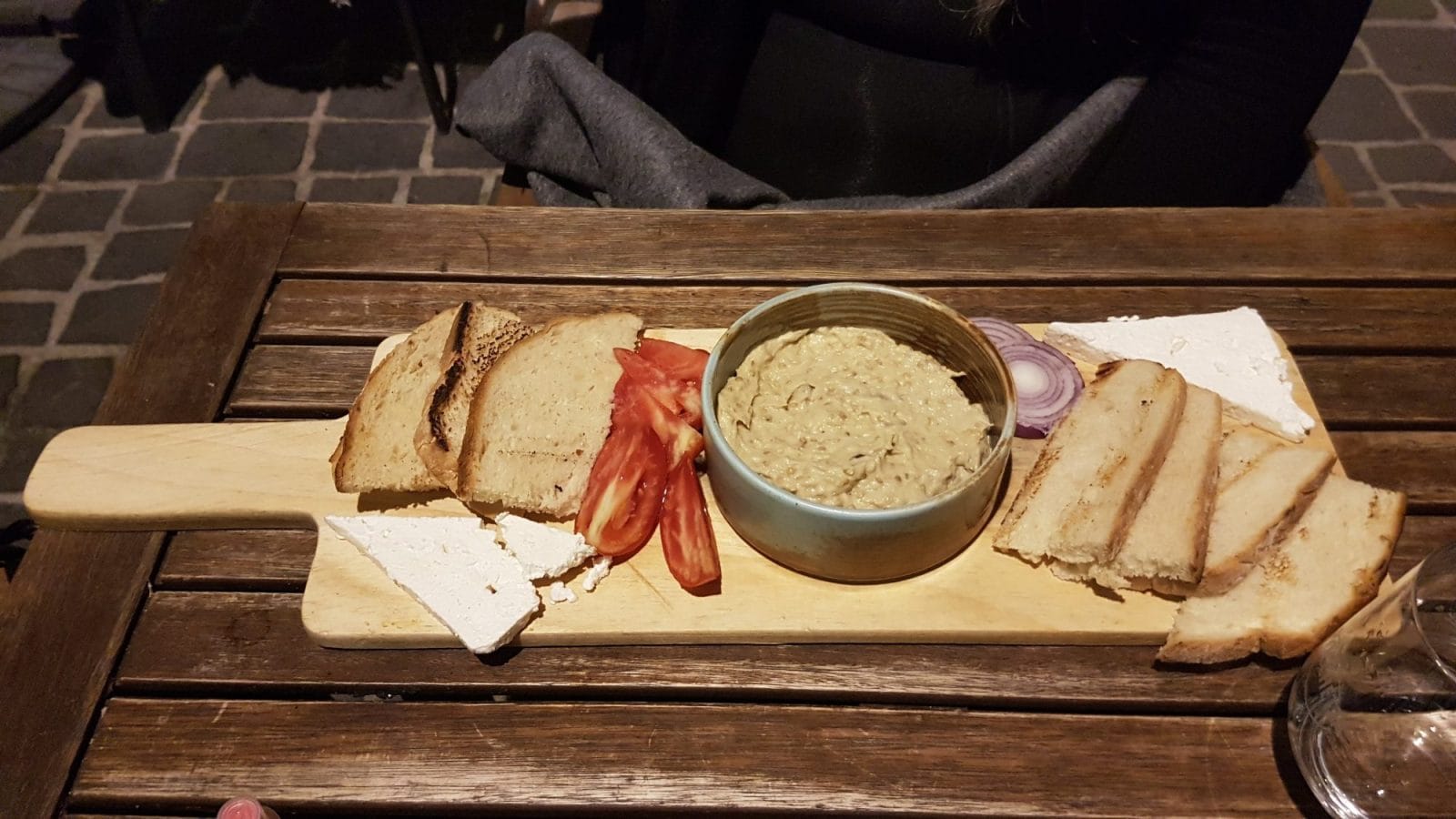
Another nice option as a side dish or a starter is the Salată de Vinete, an aubergine dip that is popular in Romania. It is prepared from ripe, peeled and finely chopped aubergines. They mix this with oil, lemon/vinegar, salt and pepper. They often serve this with freshly chopped red onions, tomatoes and bread to dip. It’s a nice dish that often comes out at barbecues.
Where to eat Romanian food (by city)
A guide to restaurants and eating out in various places in the country.
- Cluj-Napoca Restaurants – A guide to all the best places that I have enjoyed eating out in the city.
- Braşov Food – A guide to the restaurants and bars for food in the Transylvanian city.
- Sighisoara Restaurants – A guide to places that serve Transylvanian cuisine in the medieval citadel.
- Brașov Markets – A great place to purchase local ingredients and baked goods.
- Bucharest Restaurants – Some of my favourite places for food in the capital.