
Basilica of Saint Servatius in Maastricht, a Nice Church with a Treasury
The Basilica of Saint Servatius is a Romanesque church and a pilgrimage site in Maastricht, the Netherlands. The building is pretty and has an art-filled treasury housing St Servatius’ relics.
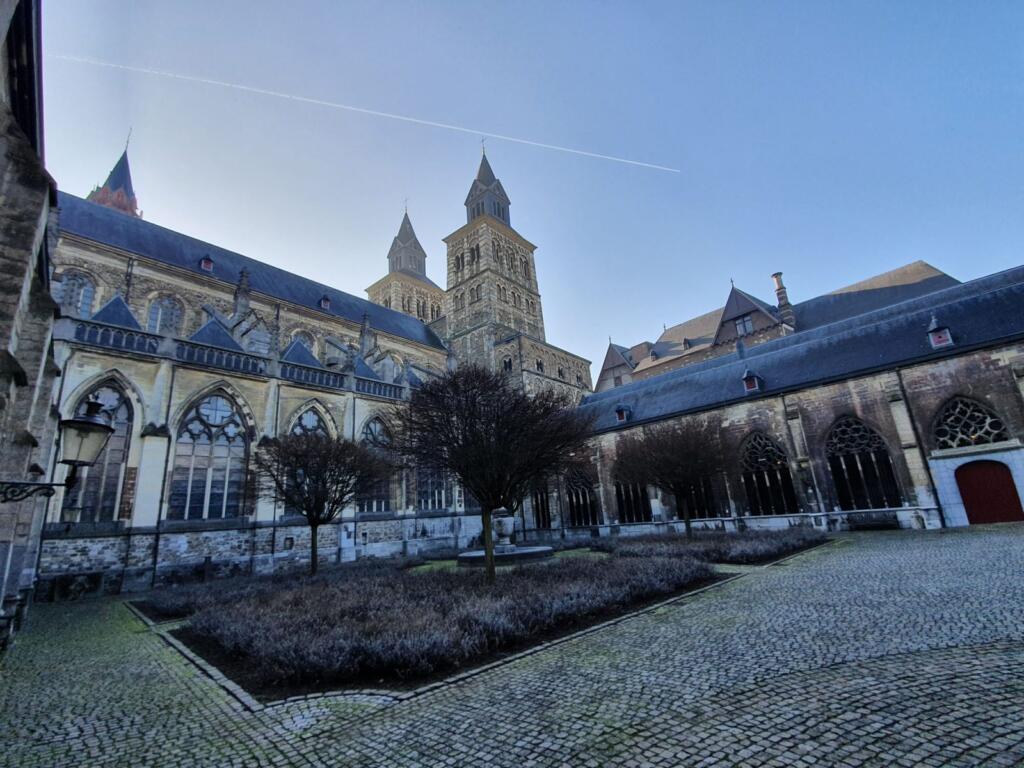
The Basilica of Saint Servatius is on the edge of Vrijthof. The Vrijthof is the city’s main square, also right next door to the Gothic church dedicated to Saint John.
Basilica of Saint Servatius in Maastricht
The current church building is the fourth church they built on the site of Saint Servatius’s grave. Saint Servatius was an Armenian missionary who was bishop of Tongeren. Legend claims he was a cousin to John the Baptist, making him a distant relative of Jesus. Supposedly, Saint Servatius died in 384 in Maastricht. They class him as one of the “Ice Saints”, and his feast day is on May 13th every year.
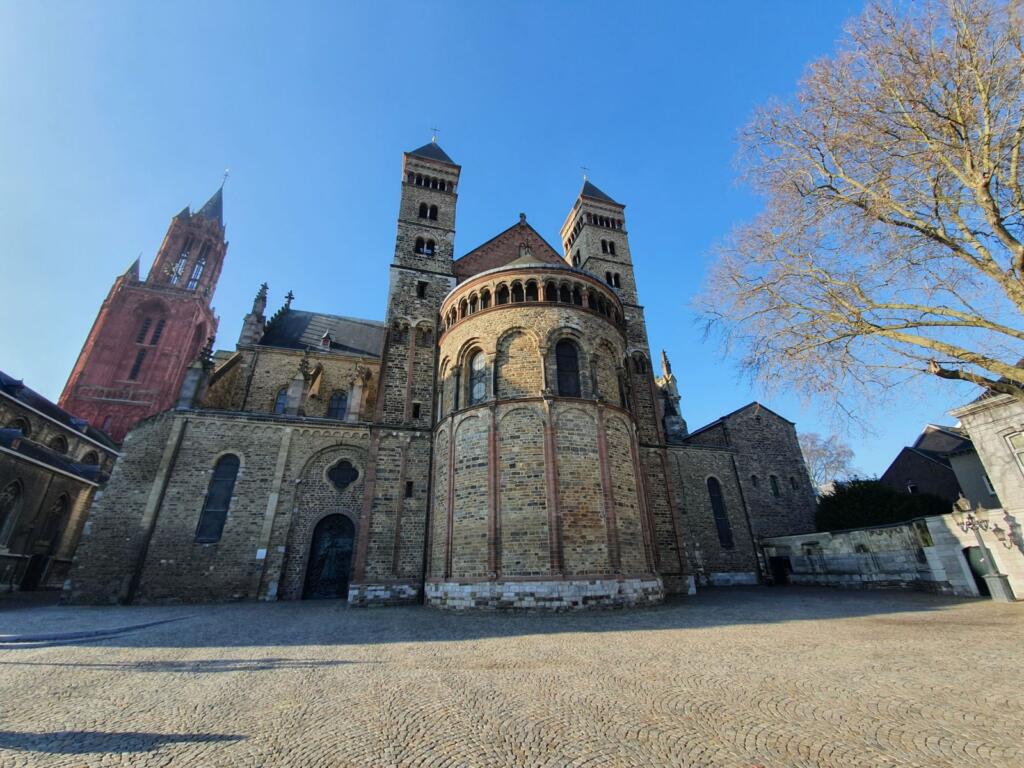
They buried his remains in a crypt in the Basilica of Saint Servatius. The crypt in question dates back to the 6th century. This tomb has been a site of pilgrimage for Maastricht for many centuries. Many have visited the church, including some famous people. This included Pope John Paul II and Holy Roman Emperor Charles V. They consider the Basilica of Saint Servatius to be the oldest currently active church in the Netherlands.
My Visit to the Basilica of Saint Servatius in Maastricht
I arrived at the north entrance of the church after having a good look around, taking photos of the building. Also admiring the beautiful neighbouring Gothic Church of Saint John. I entered the building through a very ornate rear doorway.
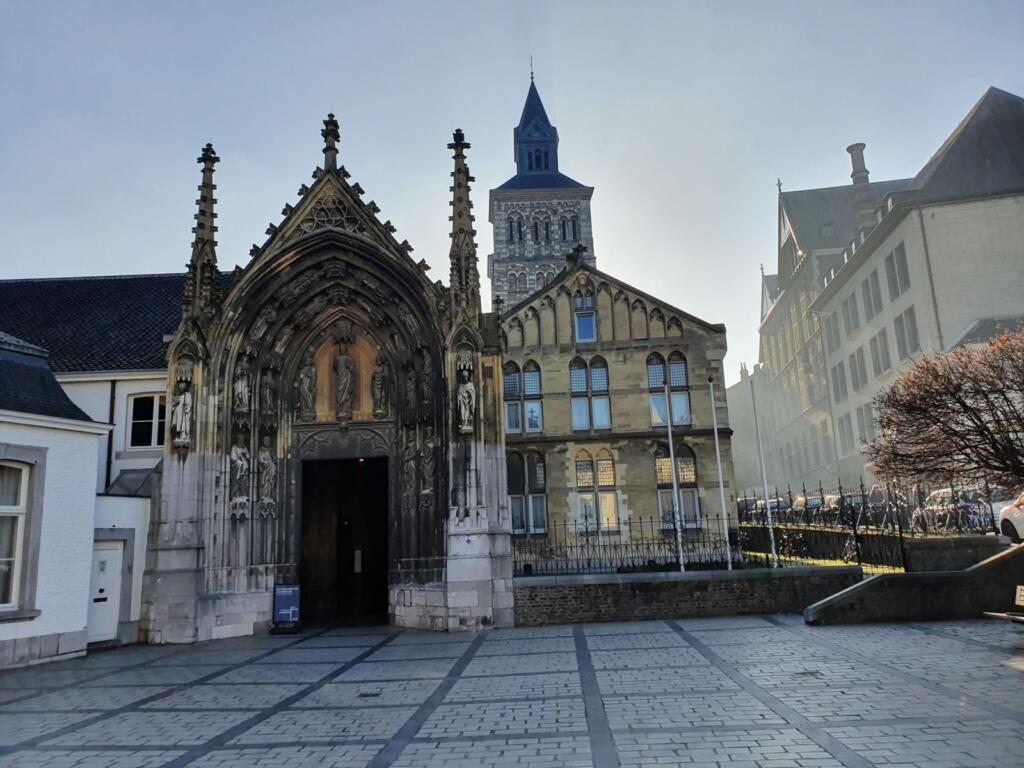
In the ticket box, I met a friendly man who was very informative. After finally paying the 4.5-euro entrance fee (they don’t accept VISA), I entered the stunning Cloisters.
Exploring the Cloisters
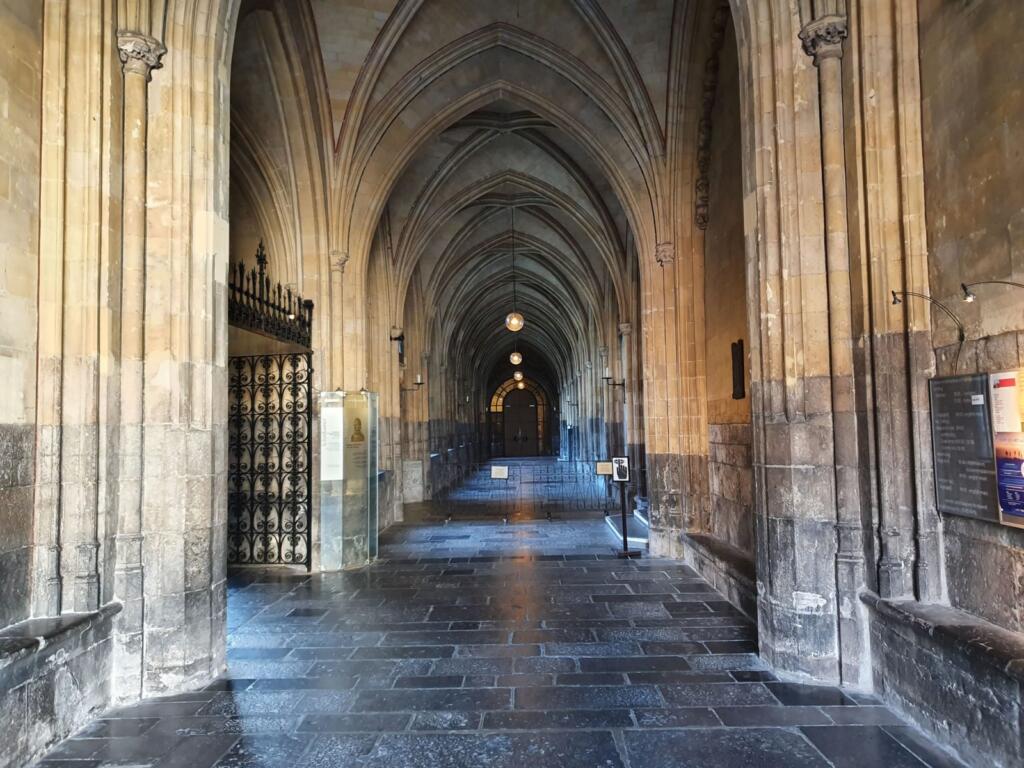
The cloisters surrounded the garden on 3 edges. These were very eye-pleasing. They are Gothic in style.
Pawn Garden & Bell
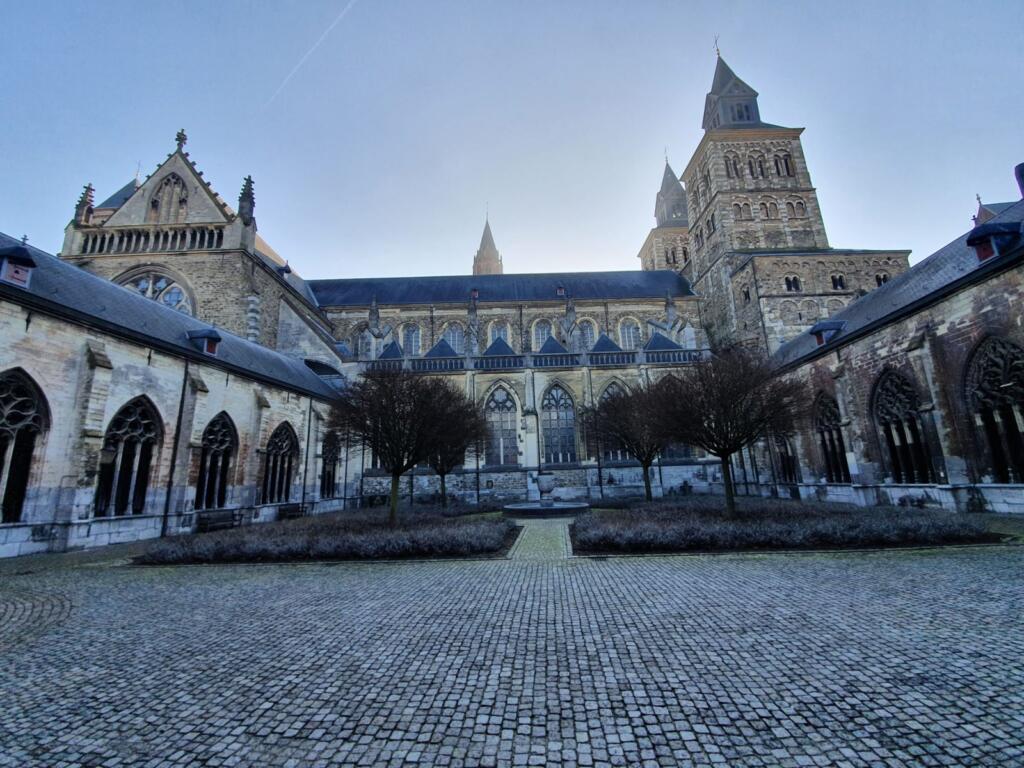
The first exit from the church’s cloisters led outside to the pawn garden. The garden was square, surrounded on 3 sides by the cloisters, and on the 4th side stood the main church building. In the corner nearest the doorway is a big bell, which makes for some wonderful photographs and is a focal point of the garden.
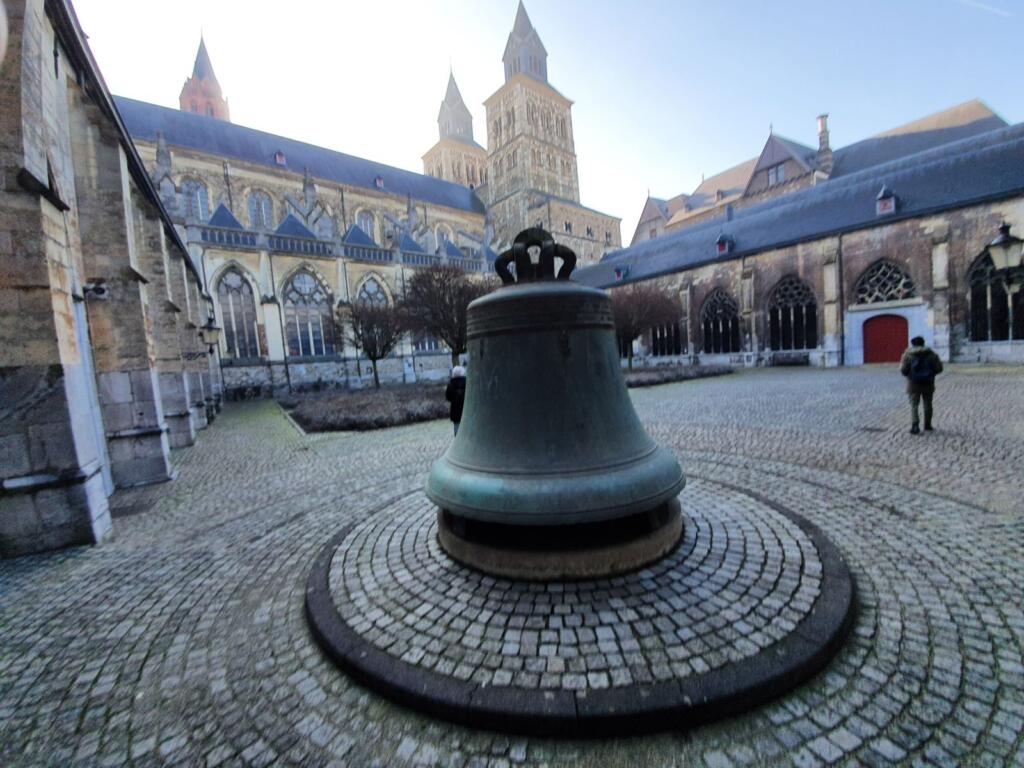
They referred to the old church bell as “Grameer” or “grandmother” in English. The bell dates from 1515 and was in use until 1850.
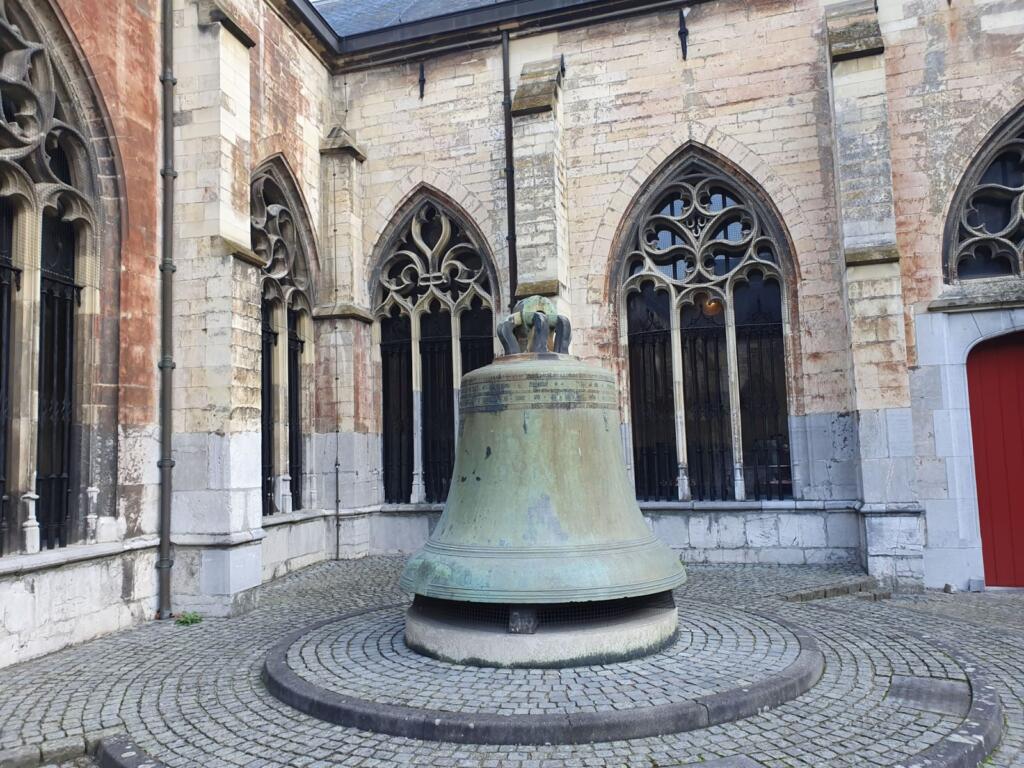
After a walk around the garden and a quick soft drink, I took a few photos, then went back into the cloisters.
Visit to the Saint Servatius Treasury
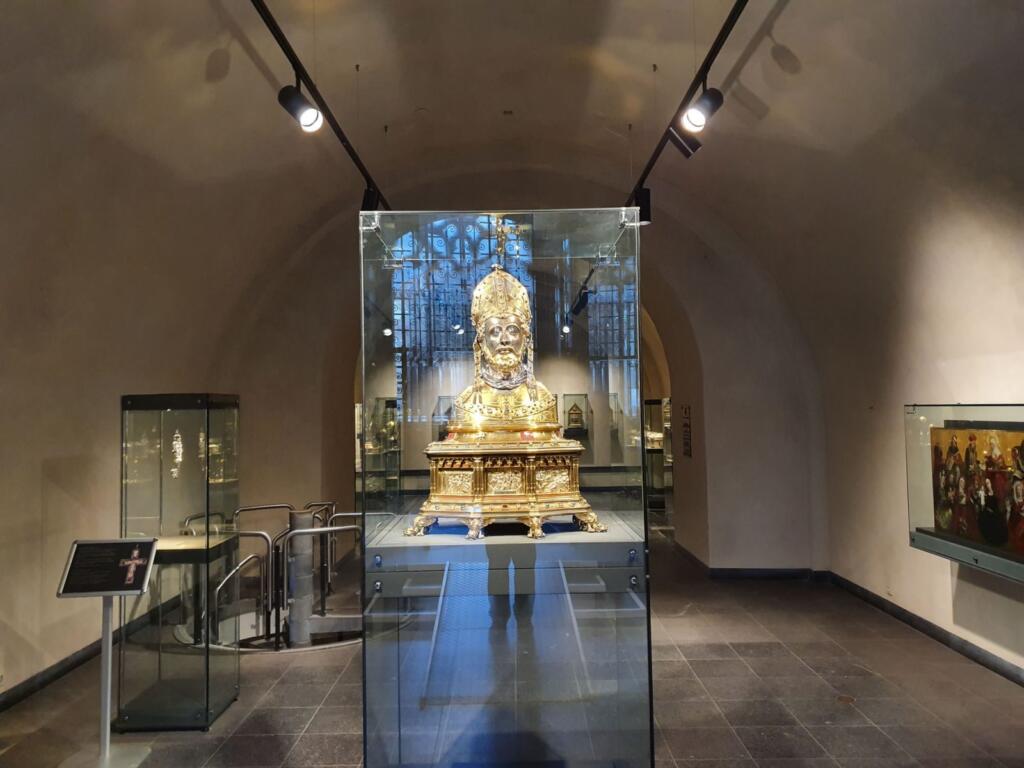
The next doorway along the cloisters led to the church’s treasury. The Treasury is a museum of religious artworks and related artefacts. These artefacts impressed and interested me; some were very grand and ornate. They stored most behind glass to stop wandering hands from damaging them, I suppose.
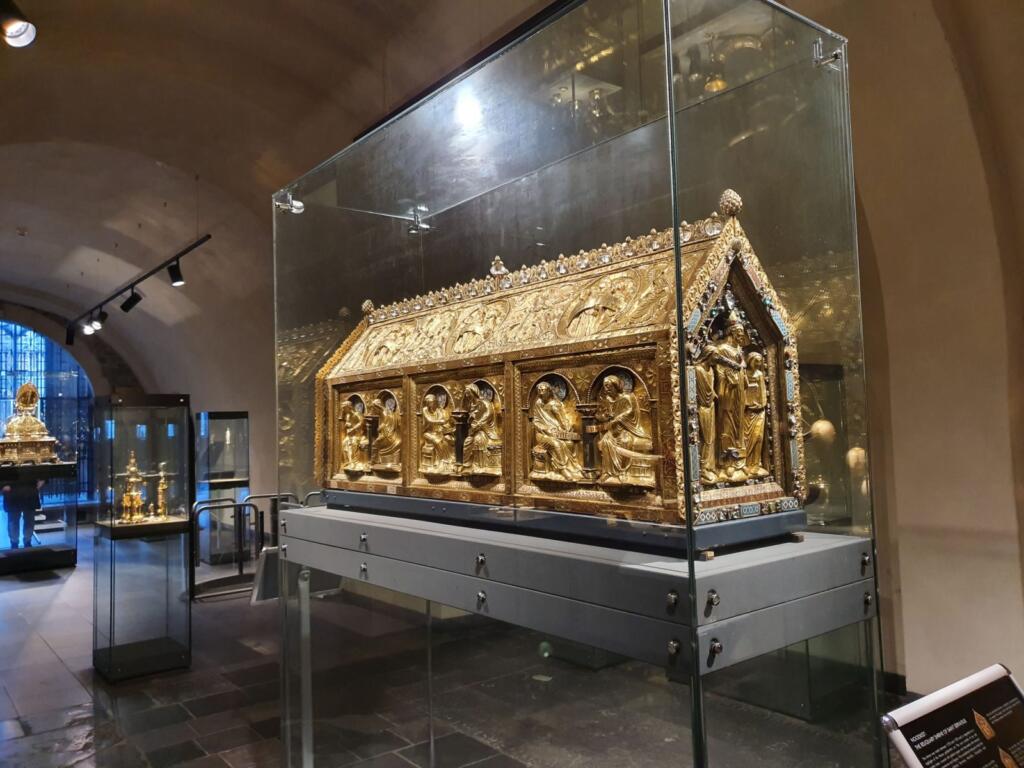
This room is called the Double Chapel; it is in the oldest surviving parts of the church, which dates back to the 11th century. The treasury has had a few homes in the church, but it was restored to the Double Chapter back in 1982 and is now used for its original purpose.
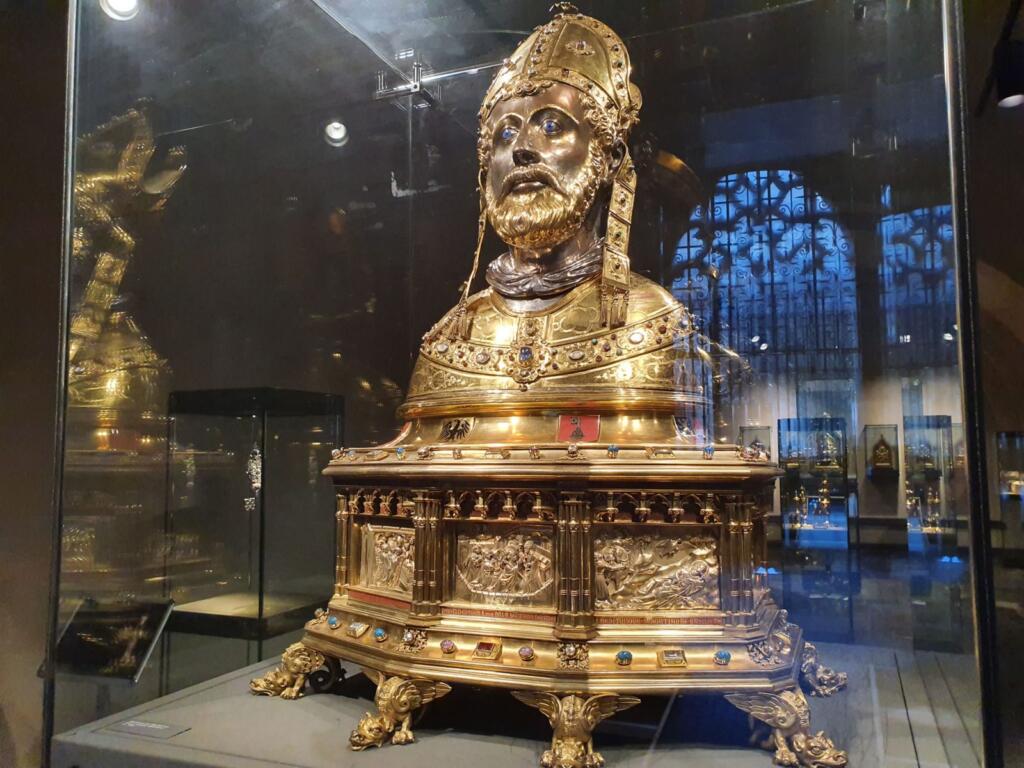
There were a variety of artefacts, including the Key of St Servatius, the Reliquary chest (‘Noodkist’), a portrait bust of St Servatius, a patriarchal cross and an ivory reliquary. There was loads to see, and it was fascinating to take in the ornate details and special pieces of this collection.
Inside
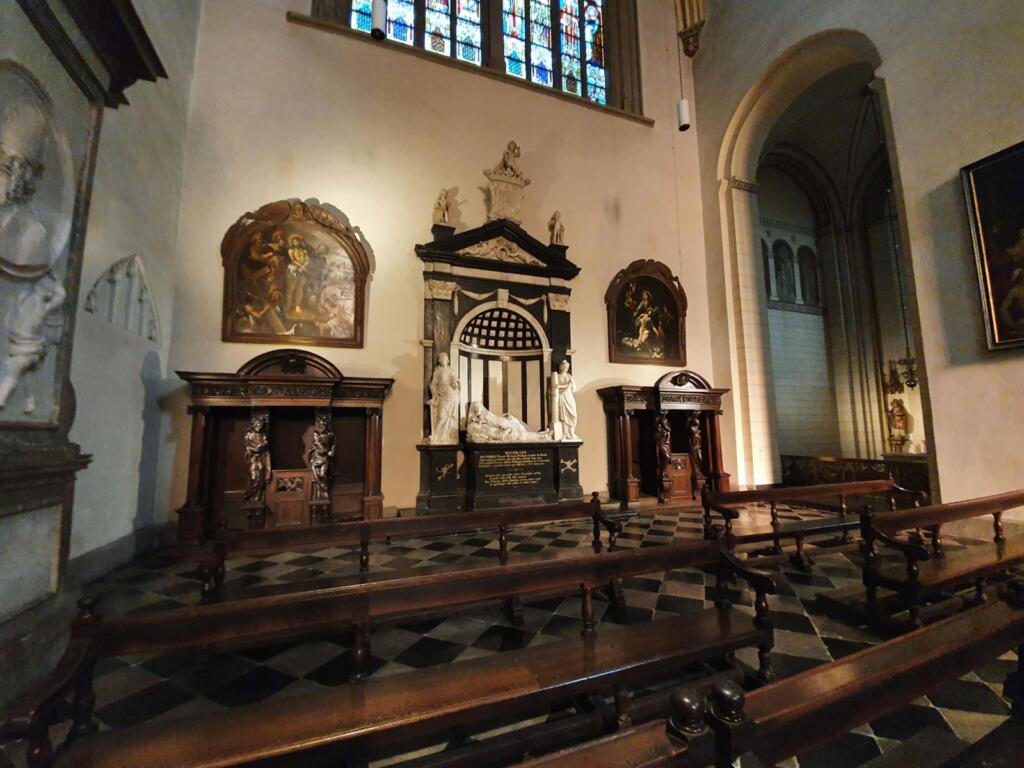
After the Treasury, I was keen to enter the main part of the church, so I headed along the cloisters and through the big wooden door. A very special church was before my eyes, and its grand design humbled me. There were side chapels and a big main aisle for me to explore.
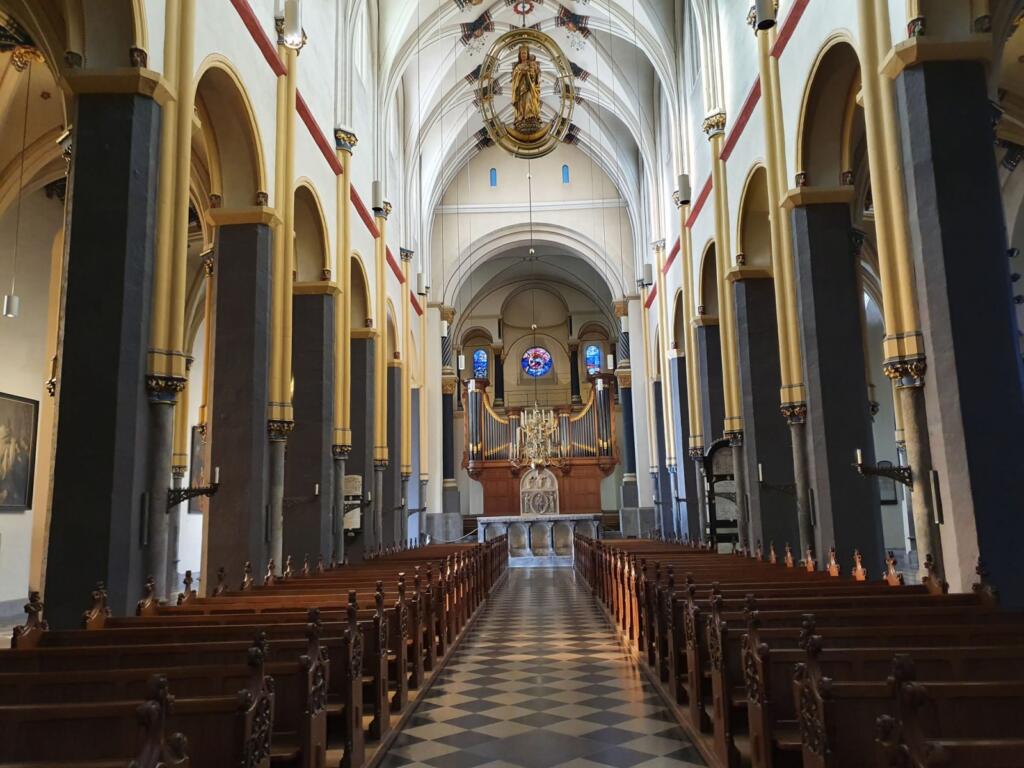
Lucky for me, the church building was empty, and I had the place to myself. I sat on a pew and reflected on my Interrail adventure, then soaked up the beauty.
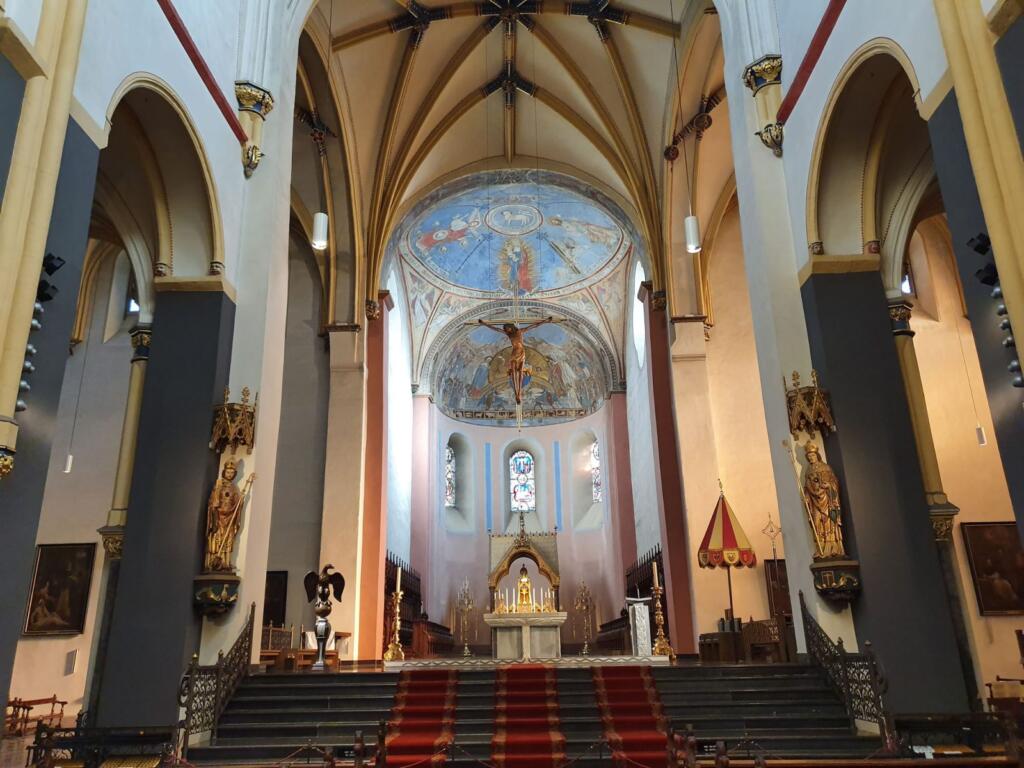
The nave, the central aisle of the church, was special to walk down and admire the building. In front of me was “The Crossing”. This was up a few steps, guarded by ornate bishops. Jesus on the cross was up high towards a circular, intricately designed ceiling. Behind The Crossing was where the choir sat behind an altar.
The Impressive Church Organ
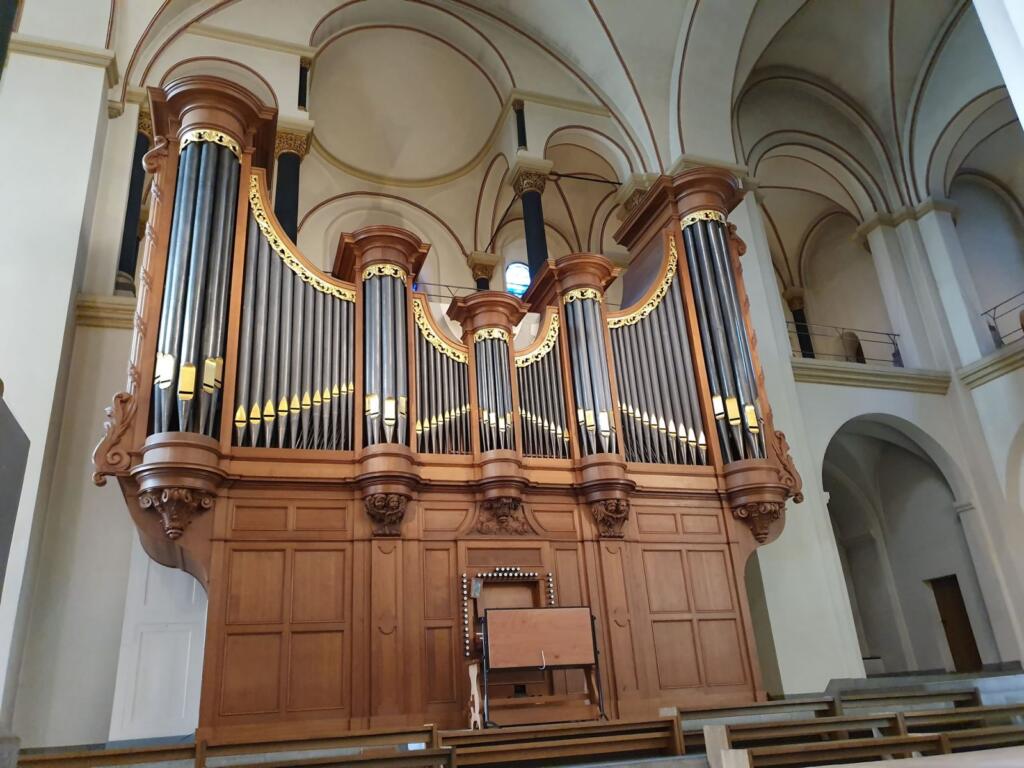
At the other end of the nave, in the westwork, is a very special organ. The current organ has had an eventful history. It dates back to the early 1650s. It used to be in the nearby Dominican church in Maastricht (Dominicanenkerk), which is now a bookshop.
After a difficult period in the church’s history, they moved the current organ into its current place between 1804 and 1806.
The Church’s Spires
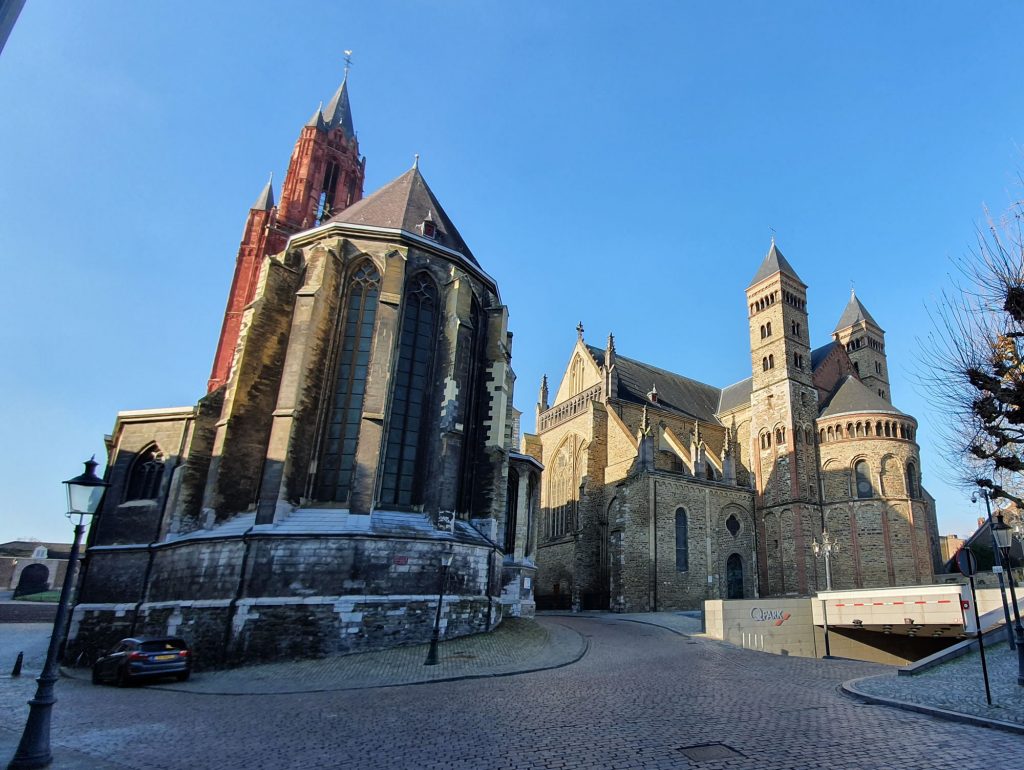
The church has 3 main spires, the final one installed in 1556. They also added a late Gothic spire onto the westwork between the two existing towers. In 1770, they crowned the entire westwork with Baroque helmet spires. These certainly add to the charm of the church, especially when seen with the neighbouring Church of Saint John next door with its also impressive spires.
Pilgrimage Site
During the late Middle Ages, the number of relics in the treasury continued to increase. A septennial pilgrimage of the relics called Heiligdomsvaart attracted tens of thousands of pilgrims. They displayed the main relics for the pilgrims in Vrijthof Square.
The Catholic Pilgrimage of the Relics, or Maastricht Septennial Pilgrimage, occurs every seven years. Originating in the Middle Ages, it started off as a pilgrimage to the grave of Saint Servatius. Nowadays, it has morphed into a religious, historical, cultural, and commercial event with displays and processions of relics. About The Pilgrimage…
Review of my visit to Saint Servatius Church
After browsing this magnificent building, the next stop was to exit and have a beer in a bar overlooking Vrijthof. Meaning I could imagine myself at one of André Rieu’s fabulous concerts. The Basilica of Saint Servatius is beautiful and has a fascinating history. However, I feel I was lucky with the crowds back on a weekday in January, maybe the best time to visit Maastricht.
More Info About This Maastricht Church
For more information, these sites provide additional background and historical context. https://www.sintservaas.nl/
Everyone knows the ‘name’ Maastricht, but I had no idea that it was such an interesting place with such history and amazing buildings