
The Charterhouse In London: Almshouse & Tudor Mansion
On my autumn visit to London, I headed to Smithfield Market to explore a new area and discovered the Charterhouse. After exploring the market and having a beer in the early-opening pub, the Fox & Anchor. I continued wandering around, following things on the horizon, and saw a beautiful building: The Charterhouse. At the entrance, a guy was trying to introduce people to the site.
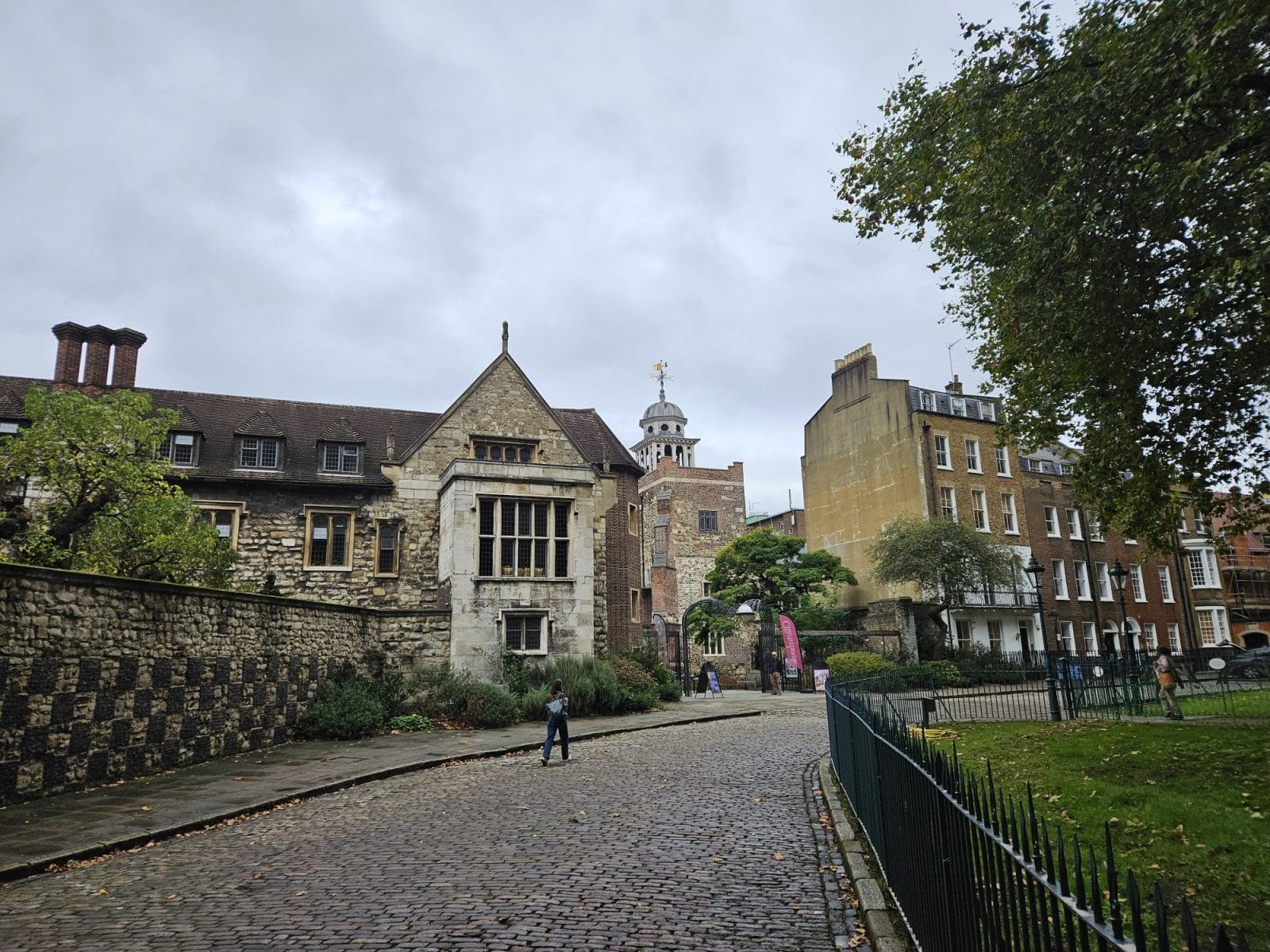
Apparently, I had missed the guided tour, but he took me in and showed me the key features and the key historical aspects of the Charterhouse. The Charterhouse dates back to the 14th century. In its early days, this was both a plague pit and a Carthusian monastery. It then became a Tudor mansion, school, and almshouse.

We also discussed my travel blog and how they struggle to attract visitors to the site, even though they consider it a hidden historical gem. I agree it was a fascinating historical site. I had heard of the famous private school (now in Surrey) but not the Almshouse as an attraction. It is one of many interesting churches in London to visit.
The History of the Charterhouse In London

The site’s story starts in 1348, when it was used as a burial ground for victims of the Black Death. Then, in 1371, a Carthusian monastery was established here. The monastery gave the site its name (derived from “La Chartreuse”, which was the original Carthusian monastery in France). The monks here led a life of solitude and prayer.
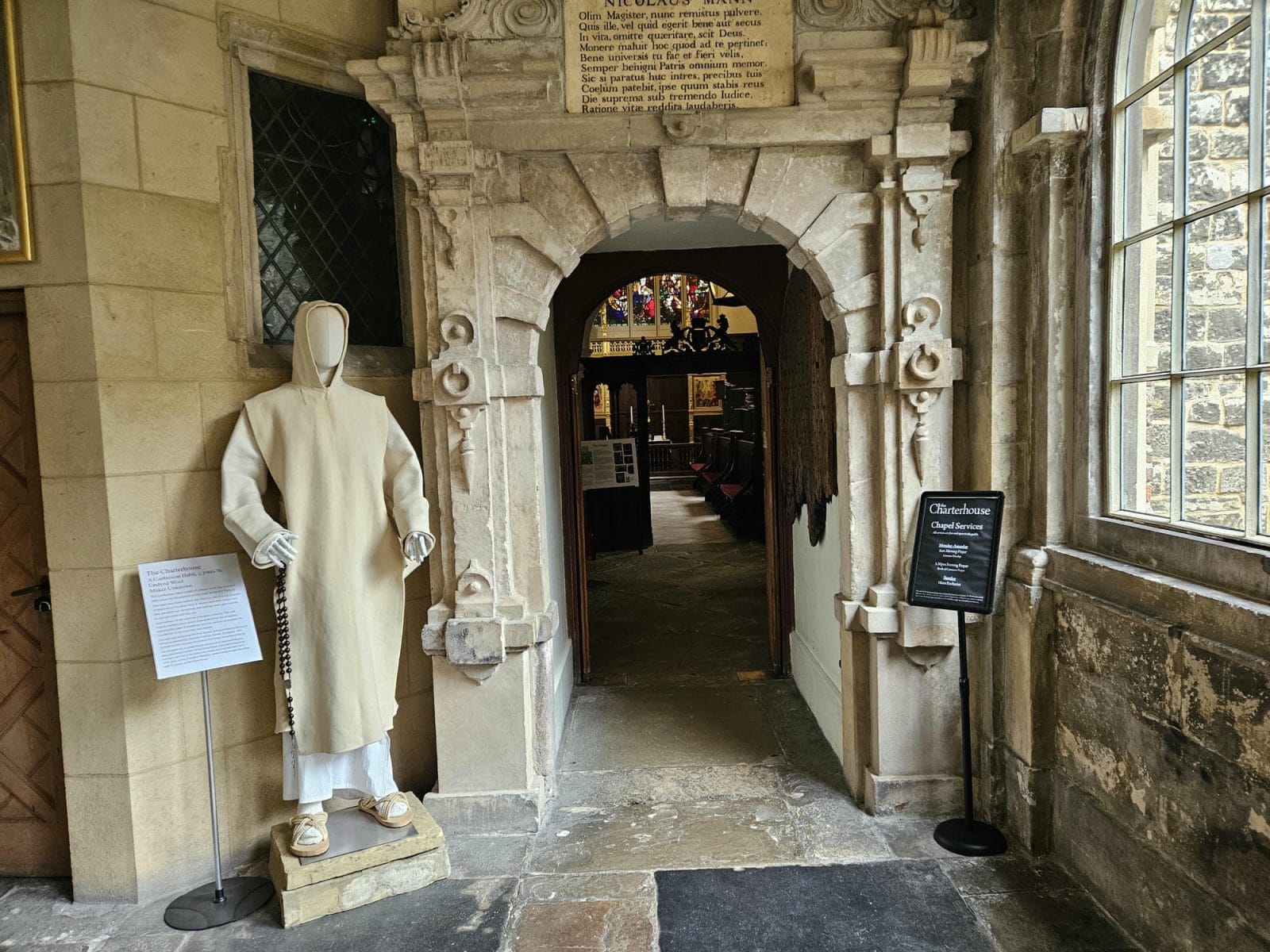
Following Henry VIII’s dissolution of the monasteries, the Charterhouse was converted into a grand Tudor mansion. It later served as a school, educating notable figures such as John Wesley, the founder of Methodism.

In the 17th century, it became an almshouse, providing shelter and support for elderly men, a function it continues to serve today. A concept similar to that of the Royal Hospital Chelsea, the place I was staying this trip. There are usually 40-50 residents, known as ‘Brothers’; despite ladies having been residents since 2017, they decided to keep the traditional name. These are all single people, aged 60 or older, who are in financial and social need and can live independently. Many of these are former vicars, apparently.
What To See?
The Charterhouse is a blend of medieval, Tudor, and Georgian architecture that tells the site’s history. Its most notable features are:
The Great Chamber
A grand Tudor hall with exquisite wooden panelling and an impressive fireplace, once used for feasts and gatherings. Unfortunately, to see this, one has to be on the official tour.
The Chapel
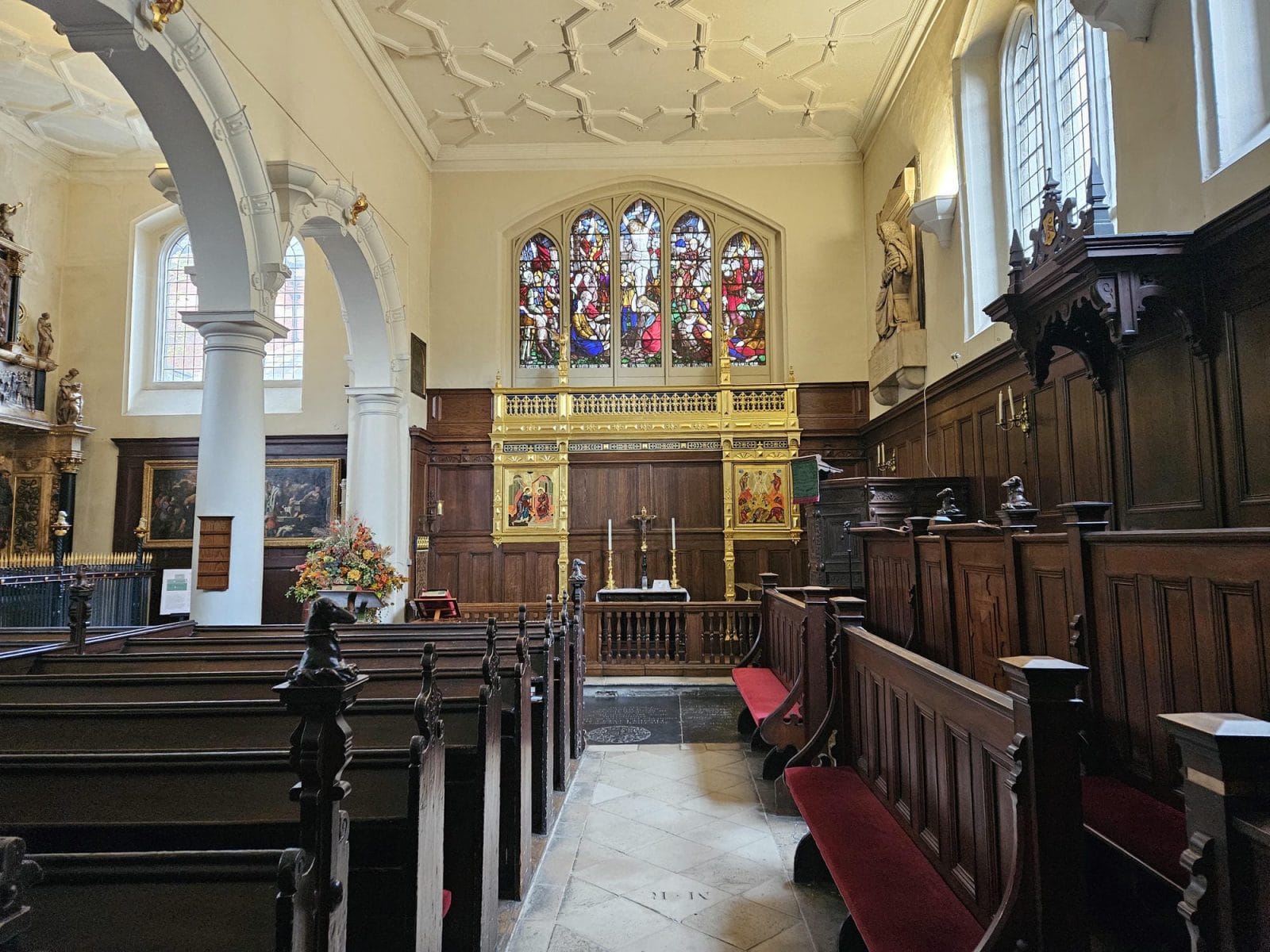
Originally part of the monastery, the chapel has undergone several restorations but retains its chilled vibe. It’s a small chapel and has some interesting decorative features to see. You can see some original features in the first aisle, as well as stone ribs dating to 1512.
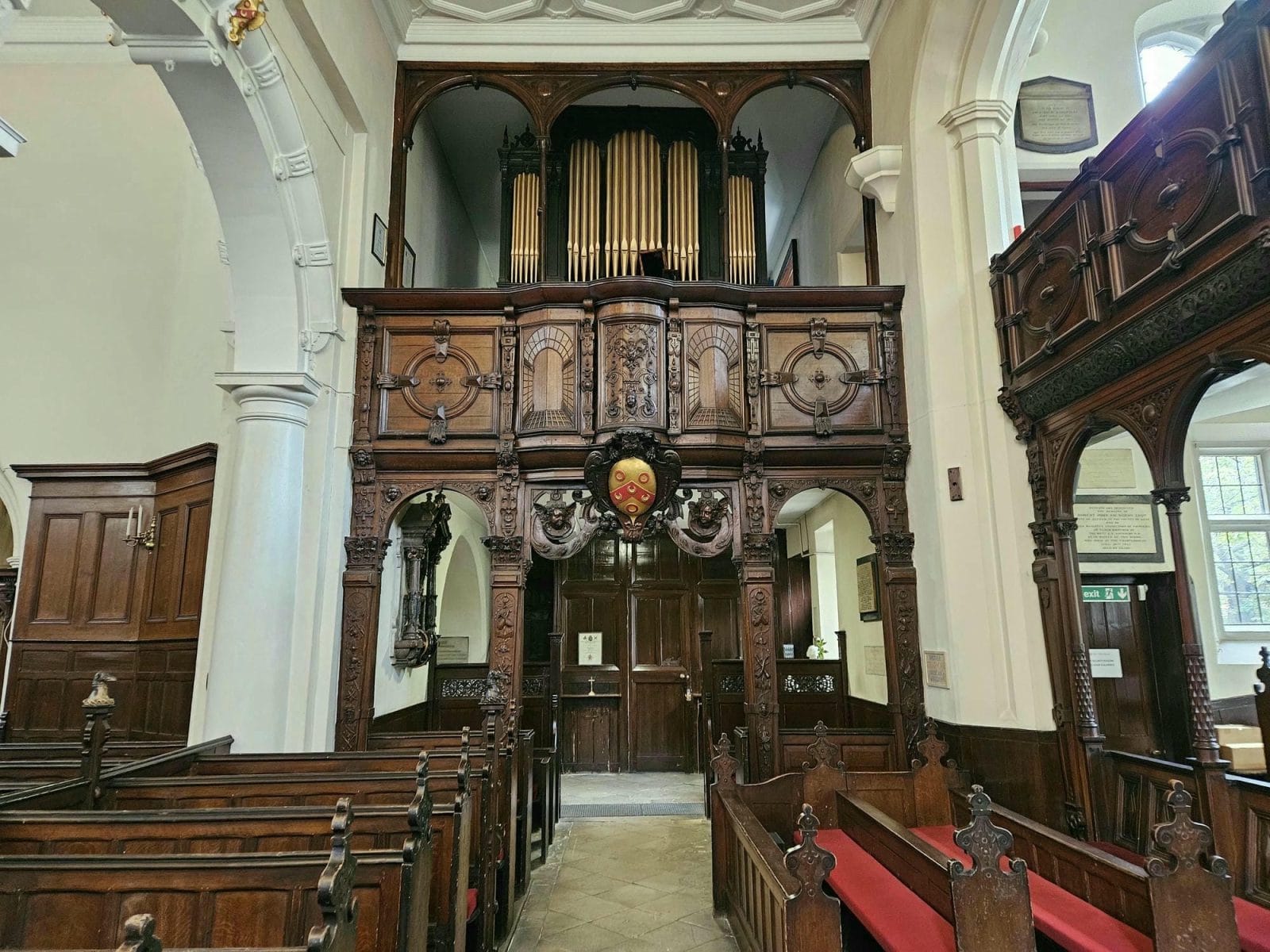
The interior of the chapel also features a Jacobean carved-wood screen, a pulpit, and an impressive organ and gallery.
The Cloister
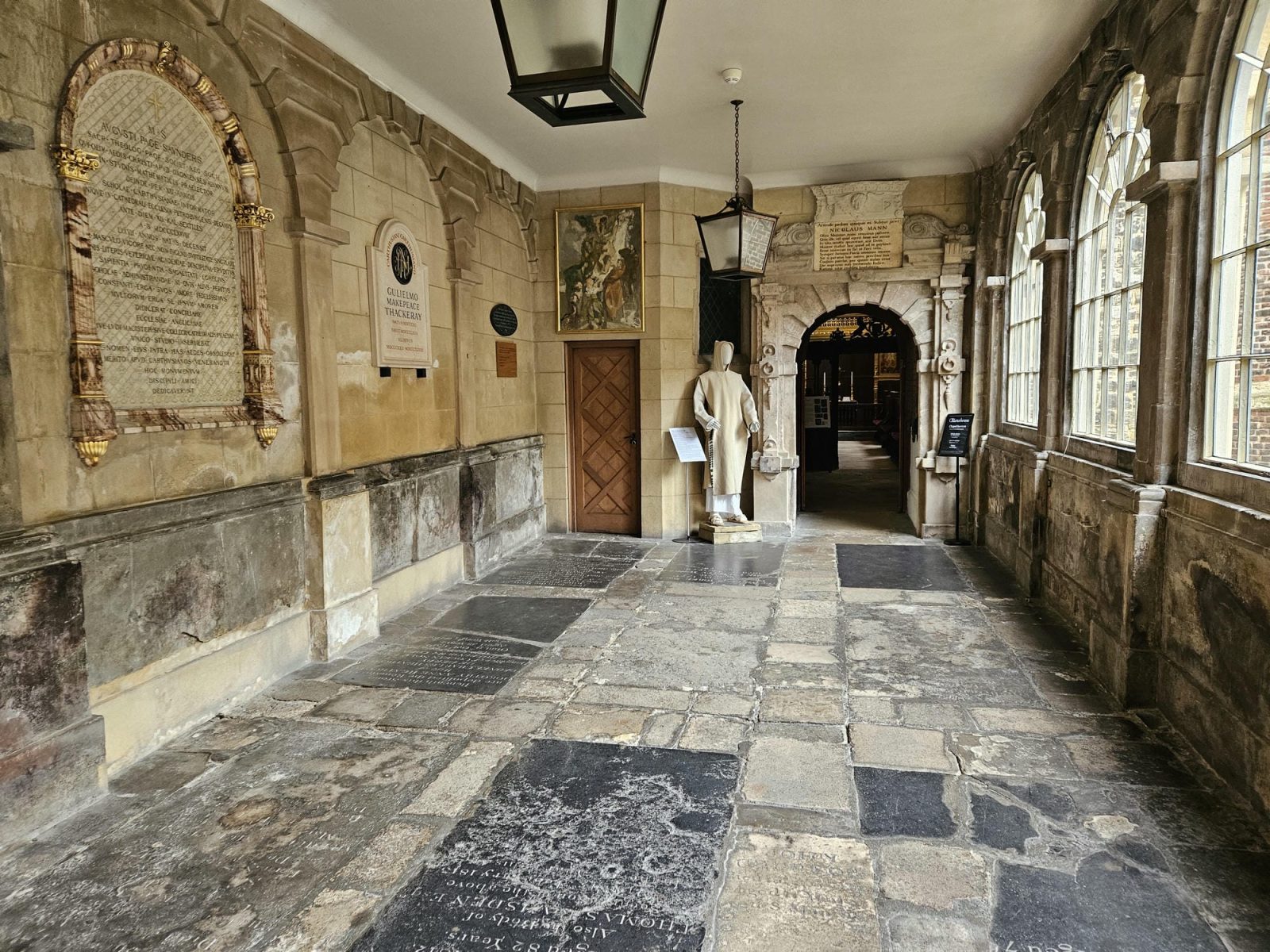
The cloister led to the chapel and was rather nice, with lots of plaques and memorials on the walls. This includes John Wesley, the founder of the Methodist church; Ann Kemshed, a former matron at the school; and Sir Henry Havelock, who also has a monument in Trafalgar Square. Through the windows are historic buildings and nice grounds.
The Museum
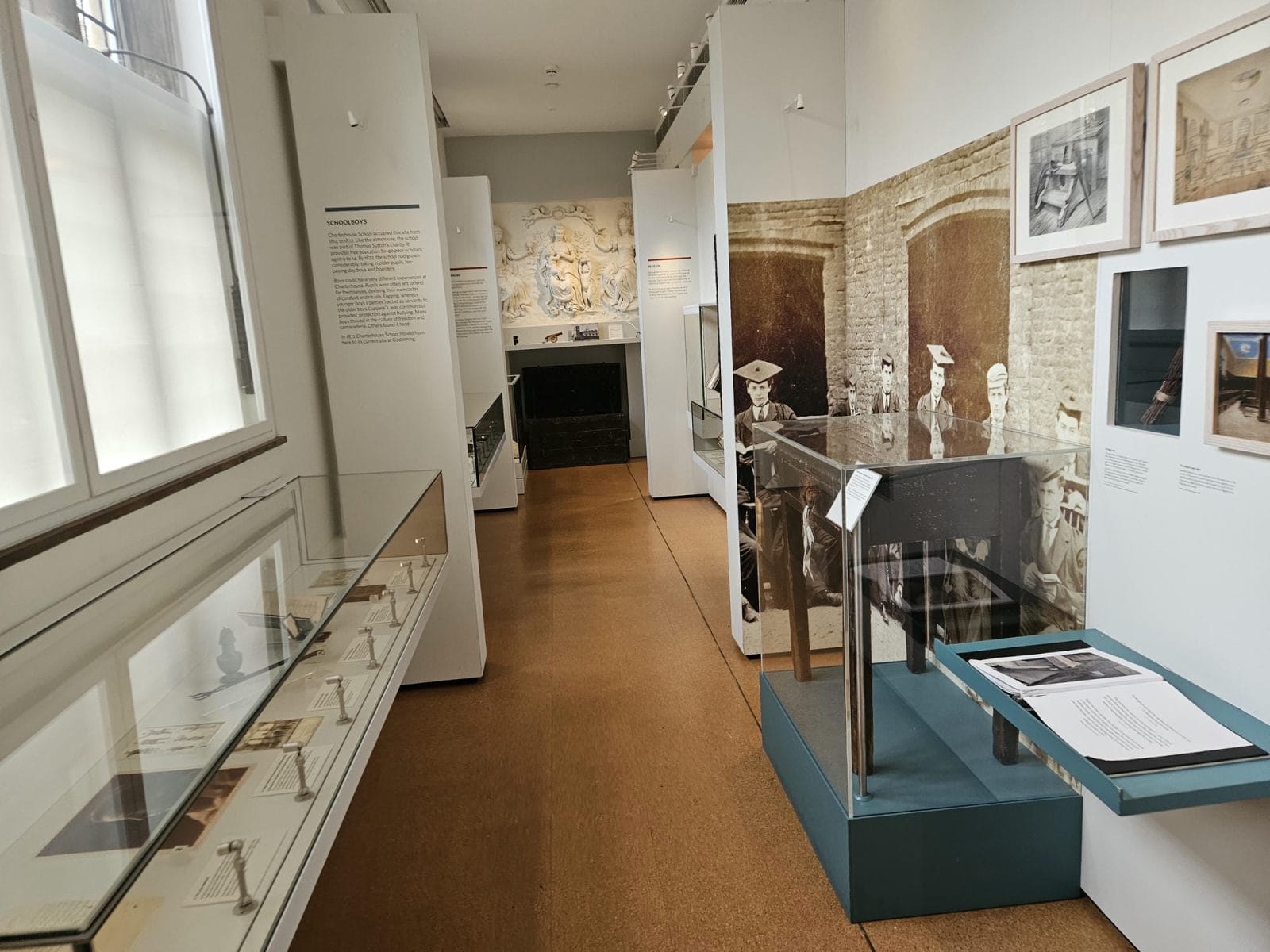
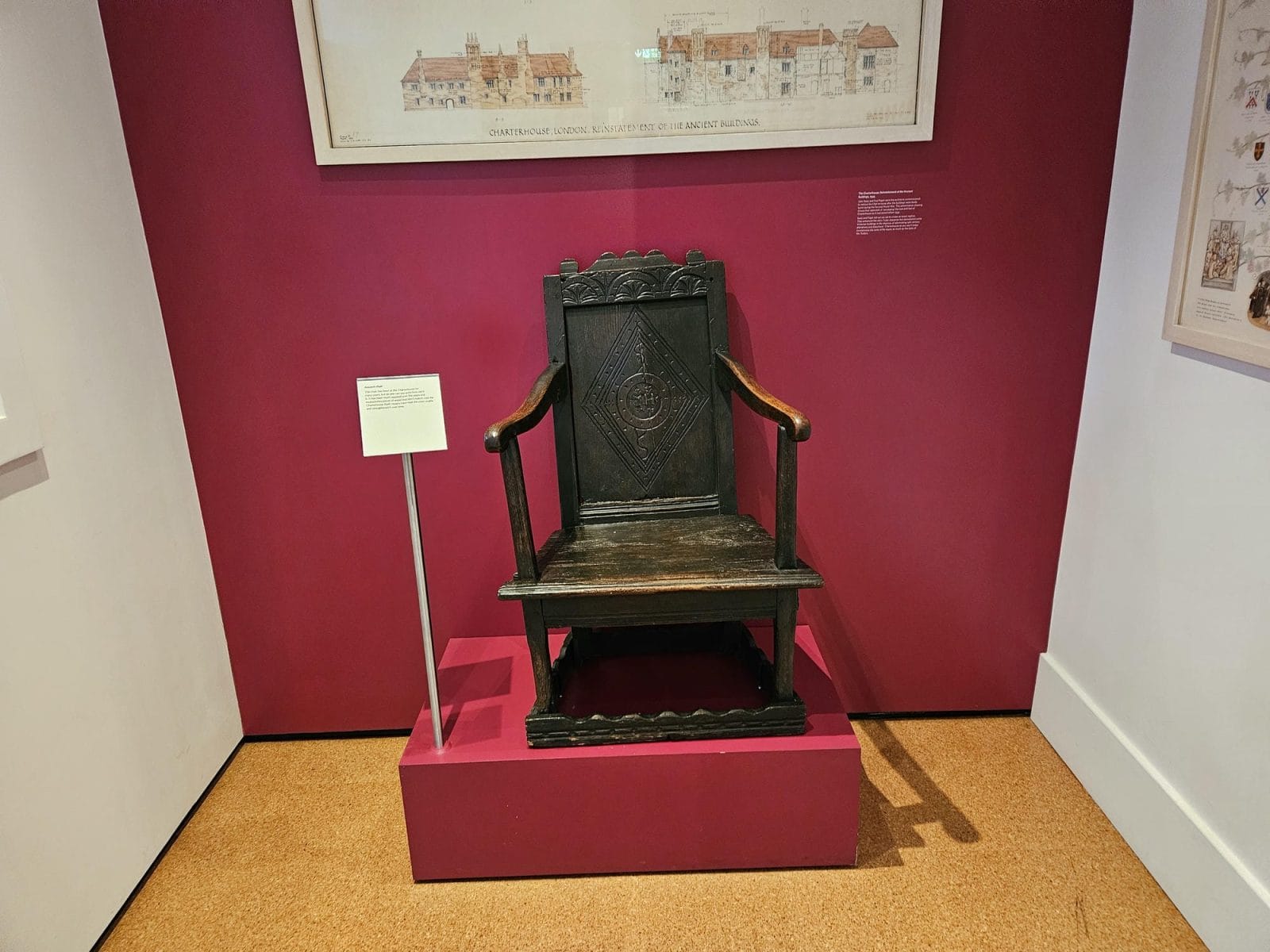

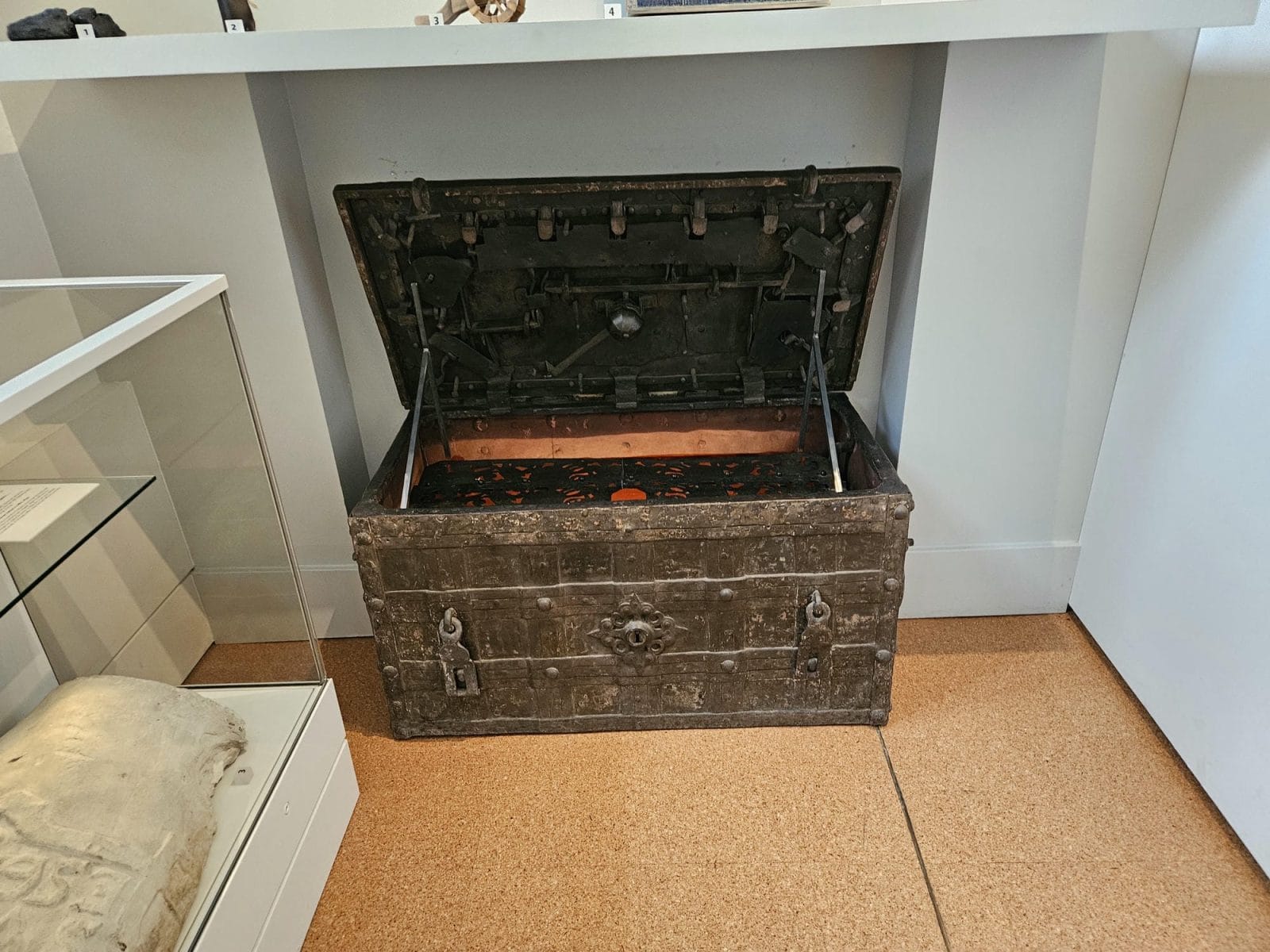
Opened in recent years, the museum provides an engaging overview of the Charterhouse’s history through artefacts, interactive displays, and personal stories. I found it interesting, which complemented the guide’s information about the building and its former residents.
Visiting The Charterhouse
There are a few options for visiting The Charterhouse. Due to timing, I enjoyed the self-guided experience. Visitors can enjoy guided tours which include access to areas not typically open to the public, such as the crypt and gardens. They also host a variety of events throughout the year, including lectures, concerts, and seasonal celebrations. For those who prefer a self-guided experience, the museum and gardens are open to explore at your own pace.
Where?
Their address is Charterhouse Square, Clerkenwell, London EC1M 6AN. The nearest tube stations, Farringdon and Barbican, are a short walk away. MAP.
If you fancy a beer or a bite to eat before or after your visit, I recommend the historic Fox & Anchor pub.
Opening Times & Visitor Information
Their website is useful for finding the latest information on tours and museum opening times. Admission to the museum is free, but guided tours typically require a ticket. Advance booking is recommended for the guided tours.