
Dohány Street Synagogue Budapest: Great Synagogue Guide
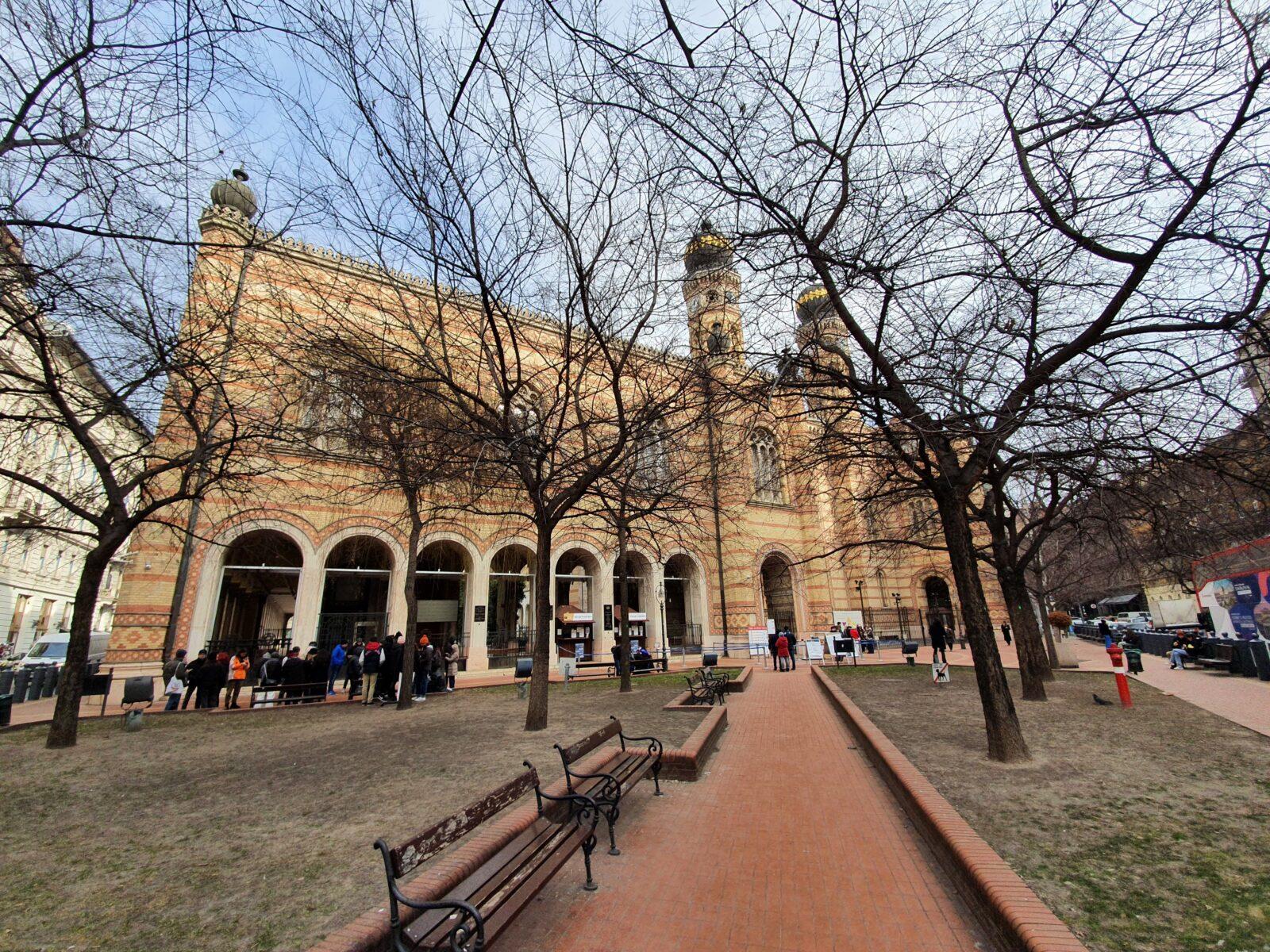
Dohány Street Synagogue, also known as the Great Synagogue, is a major sight in Budapest’s Jewish Quarter. The complex includes the main synagogue, the Heroes’ Temple, the cemetery, the Holocaust Memorial and the Jewish Museum.
The Dohány Street Synagogue museum has exhibits about the era when the Nazis turned the quarter into a ghetto, and many were forced to live there, and many died.
Disclosure! Keep in mind that some links in these posts are affiliate links. If you click one of them, I may earn a small commission (for which I’m extremely grateful) at no extra cost to you. Thanks for visiting!
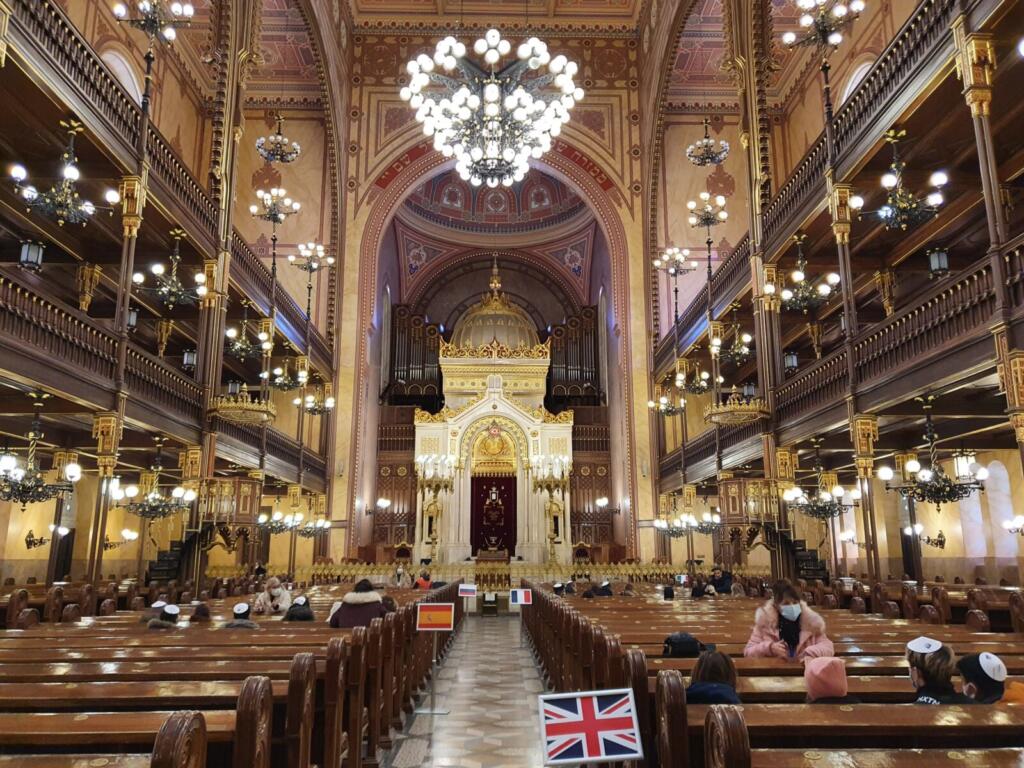
The Dohány Street Synagogue in Hungary is the largest in Europe and also one of the largest in the world. It seats up to 3000 people inside, and it’s beautifully decorated.
The Dohány Street Synagogue was built between 1854 and 1859 in the Moorish Revival style. The complex includes the Great Synagogue, the Heroes’ Temple, the graveyard, the Memorial, and the Jewish Museum.
Dohány Street Synagogue Tickets, Tours and Opening Times
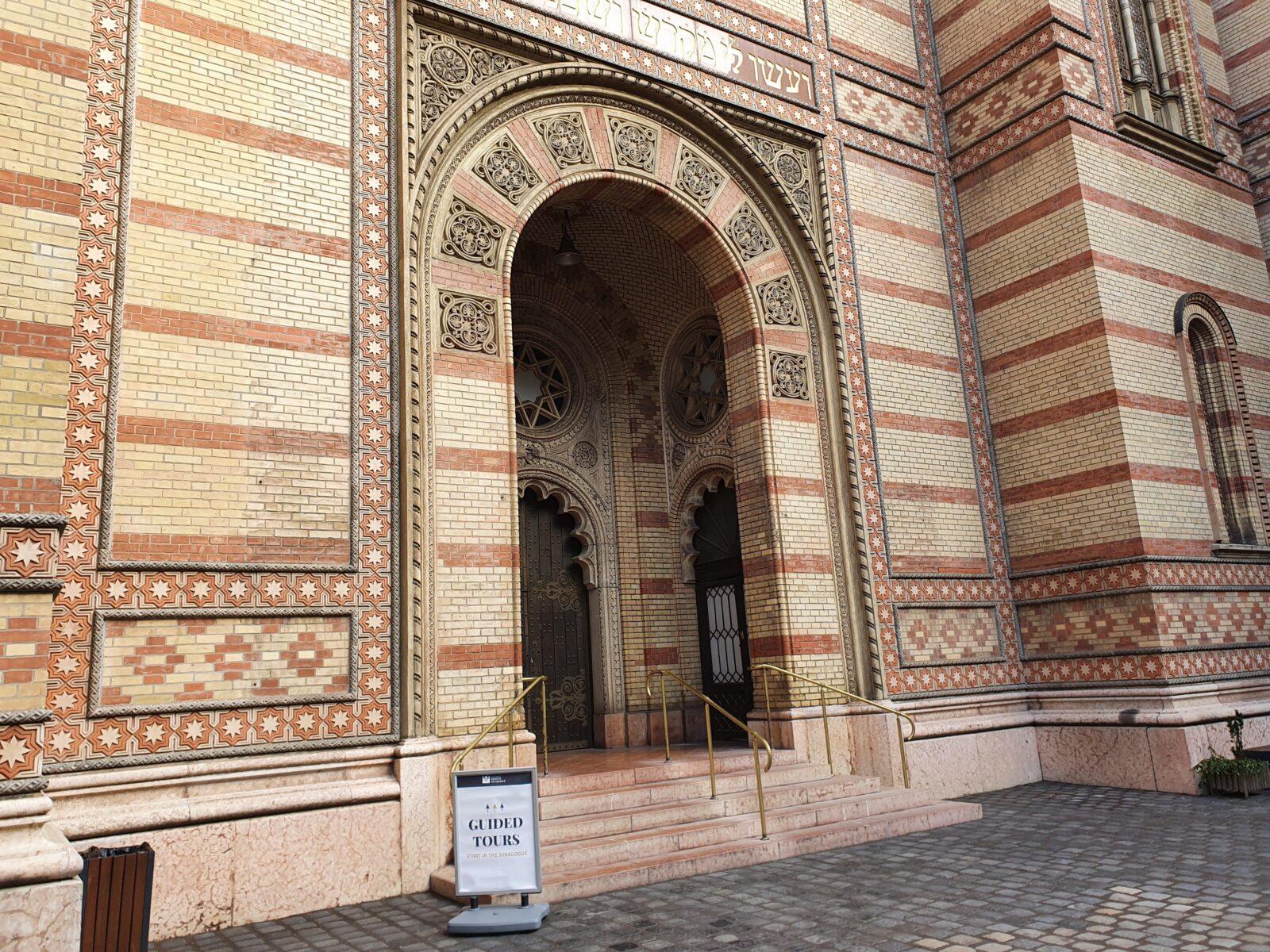
You can buy entry at the synagogue, or book an advance ticket if you like. You can also visit the venue as part of a guided tour. Another option is to buy a skip-the-queue ticket online to save time if you are on a whirlwind trip to Budapest.

You can visit the synagogue every day except on Saturday, the Jewish Sabbath. It opens at 10 am daily with varying closing times.
What to See at Dohány Street Synagogue
The Great Synagogue
The Great Synagogue’s interior is impressive, with plenty to see. This is the starting point for many guided tours of the complex, with country flags to highlight where to join the tour in your language. To enter, men need to cover their heads; not to worry, though – they provide head coverings at entry.
It is well worthwhile just taking a seat and enjoying the view of the interior decor. Inside the Great Synagogue, you can see the Torah ark and frescoes. The ground-floor seats are for men, and the upper-floor seats are for women. This synagogue is unique in that it has a pipe organ and a cemetery. The pipe organ dates to 1859 and has 5,000 pipes.
The Heroes’ Temple
The Heroes’ Temple is a separate building next to the graveyard with a dome on top and an arcade. The arcade and the Heroes’ Temple seat 250 people and are used for religious services on weekdays and in winter. This was added to the Dohány Street Synagogue complex in 1931.
The Cemetery
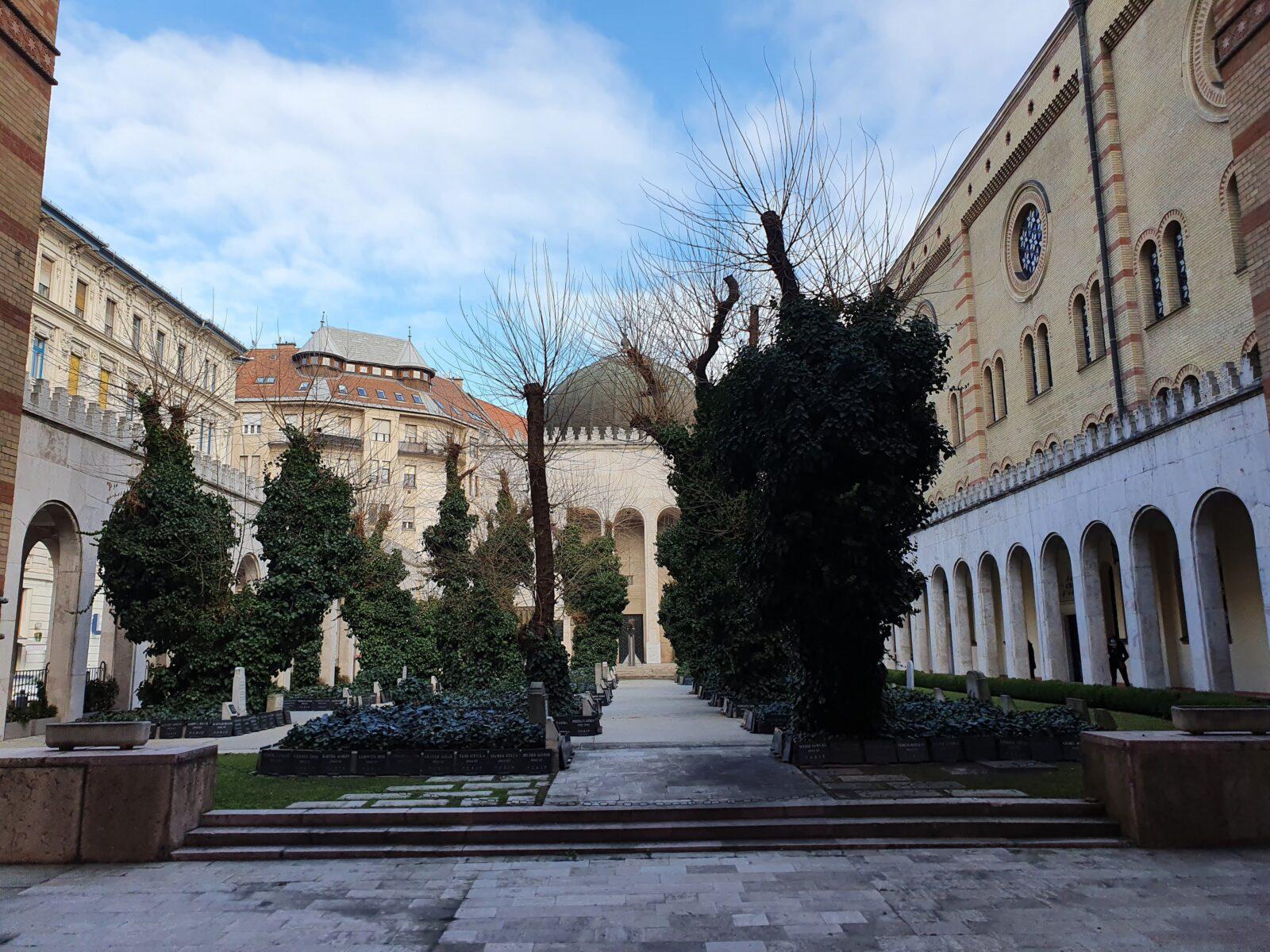
The cemetery at Dohány Street Synagogue is a poignant place. In 1944, this synagogue was part of the Jewish ghetto for the Jews of Budapest and served as a shelter for many hundreds. Over 2000 people who died between 1944 and 1945 were buried in the courtyard. It is not normal for Jewish people to have a cemetery next to a synagogue. The Torah specifies that descendants are to be buried outside of city limits. However, the horrific times meant they used the courtyard.
The Holocaust Memorial
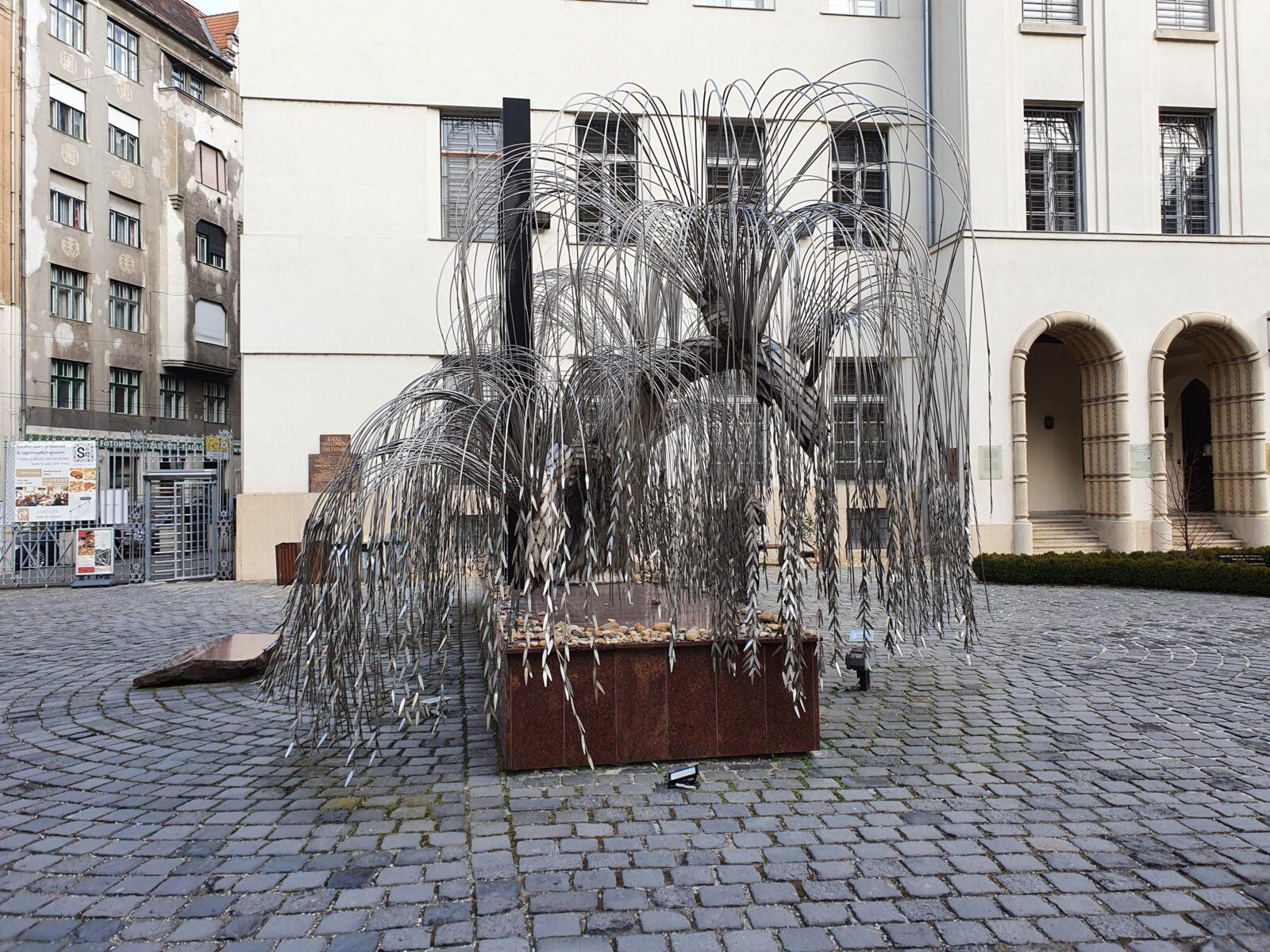
The Raoul Wallenberg Emlékpark, or memory park, is in the synagogue’s rear courtyard. The park is home to the memorial of the Hungarian Jewish martyrs. Over 400,000 Hungarian Jews were murdered by the Nazis during the Second World War. The memorial looks like a weeping willow; its leaves bear inscriptions of the victims’ names.
The Jewish Museum
The Jewish Museum in the complex is a fascinating place to visit. You can learn about the history of the Jewish people in Hungary. There are artefacts to see, as well as some historic religious texts.