
Visit Graz Cathedral & Mausoleum of Emperor Ferdinand II
Two impressive places to visit side by side in Graz, Austria, are the cathedral & Mausoleum of Emperor Ferdinand II. A pleasant area surrounds them, where visitors can sit and enjoy the views of the architecture.
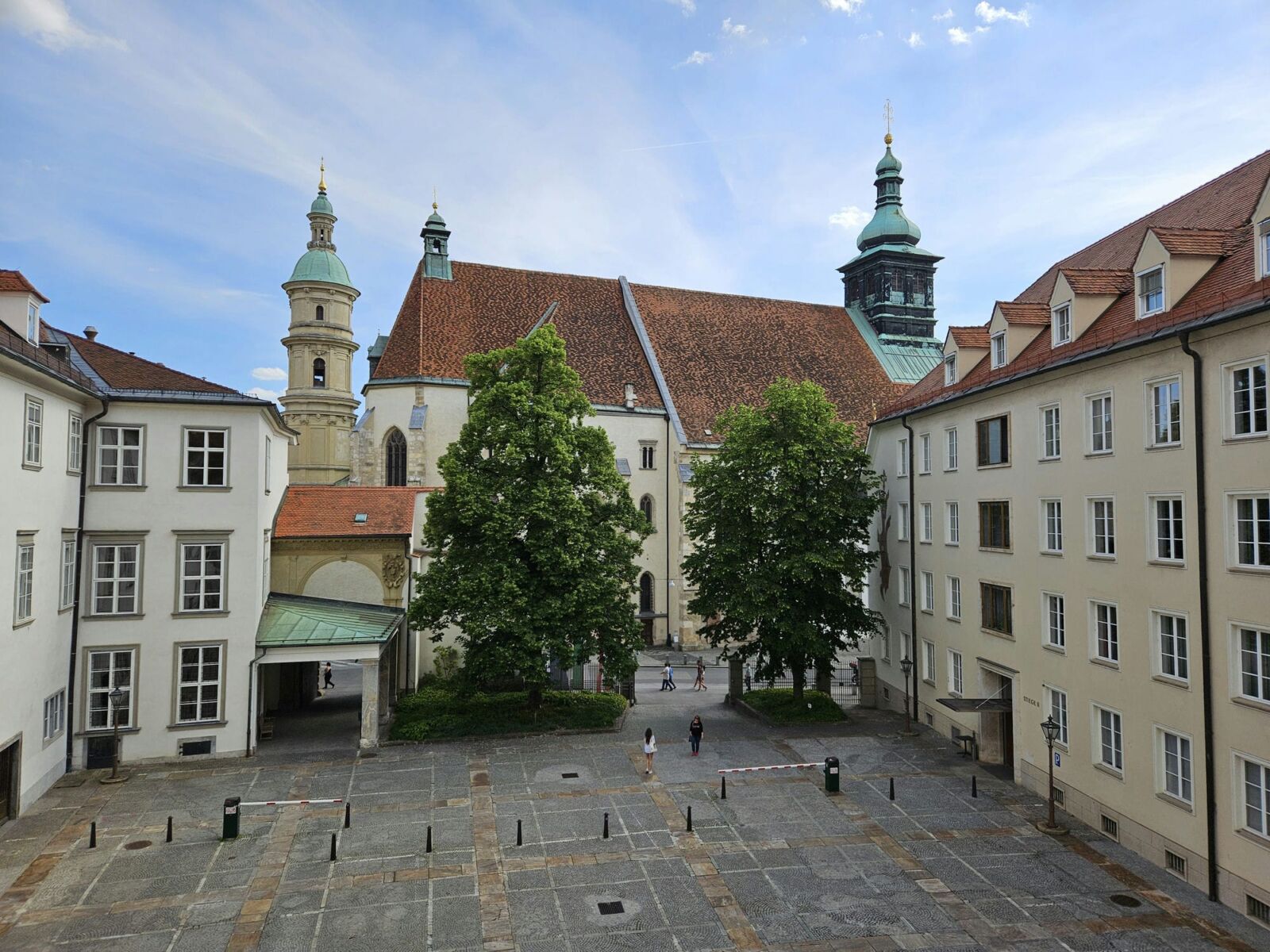
An ideal way to see both sites together is from the top of the nearby Doppelwendeltreppe spiral staircase. Alongside the castle grounds, these two were the free attractions in Graz that piqued my interest.
Graz Cathedral
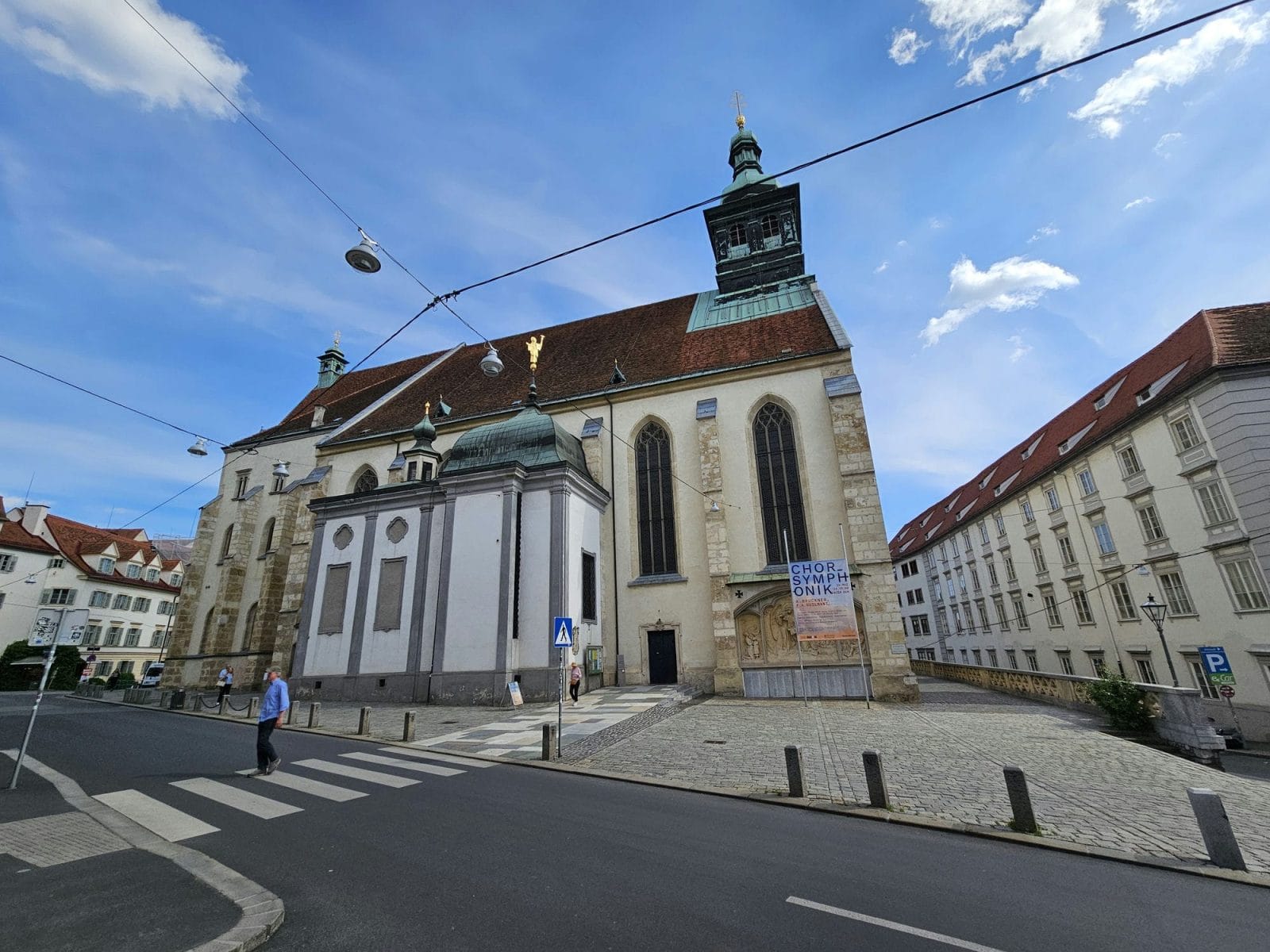
Graz Cathedral, which is dedicated to St Giles, is next door to the famous Mausoleum of Emperor Ferdinand II. It has some grand features inside. During my visit, it was rather quiet and was a great opportunity to see the details up close.
History
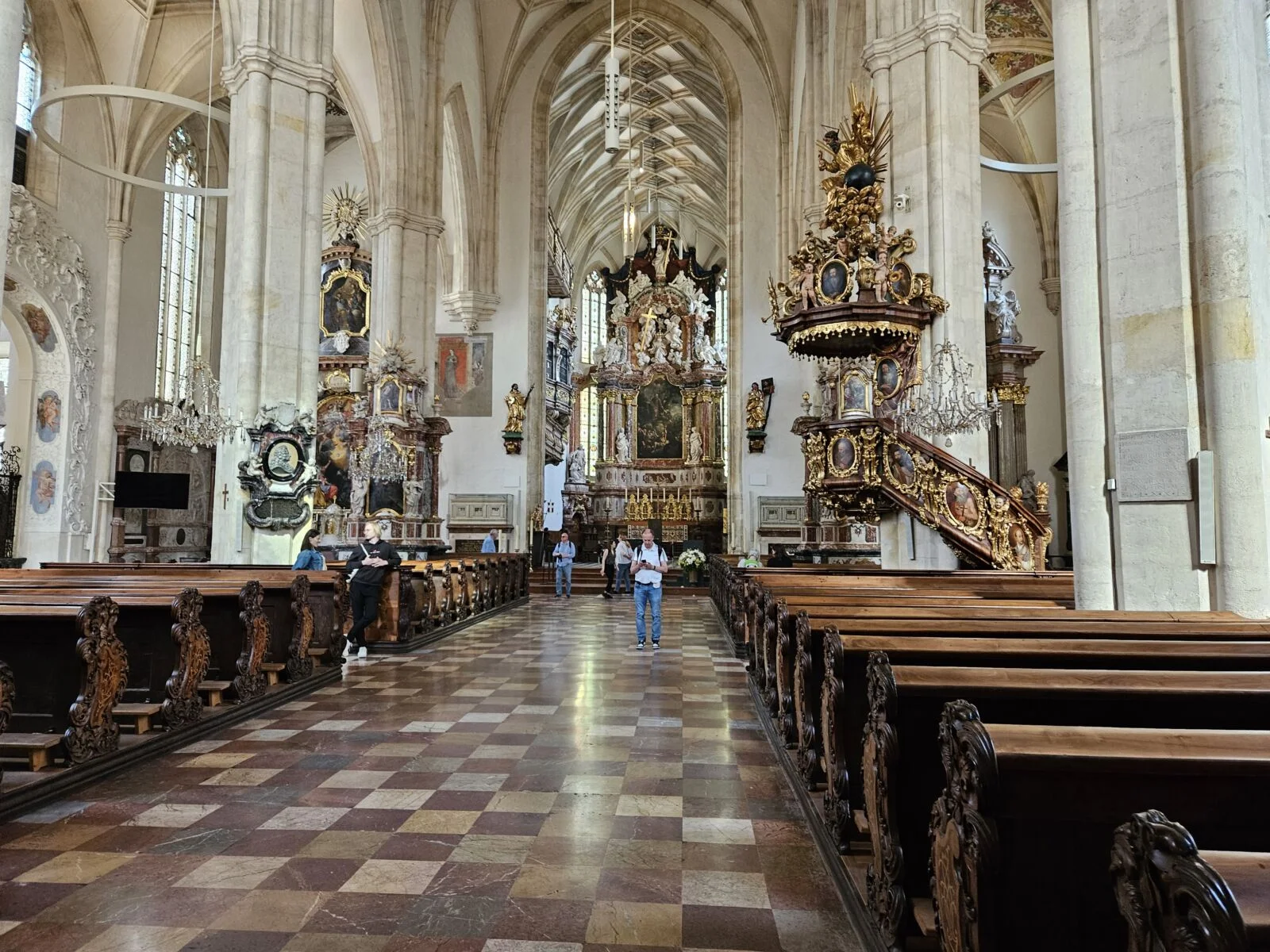
They built Graz Cathedral in the Gothic style between 1438 and 1462 to be used as a Church of the Court, AKA Hofkirche. Subsequently, the Jesuits redesigned the building in the Baroque style.
Outside Photos
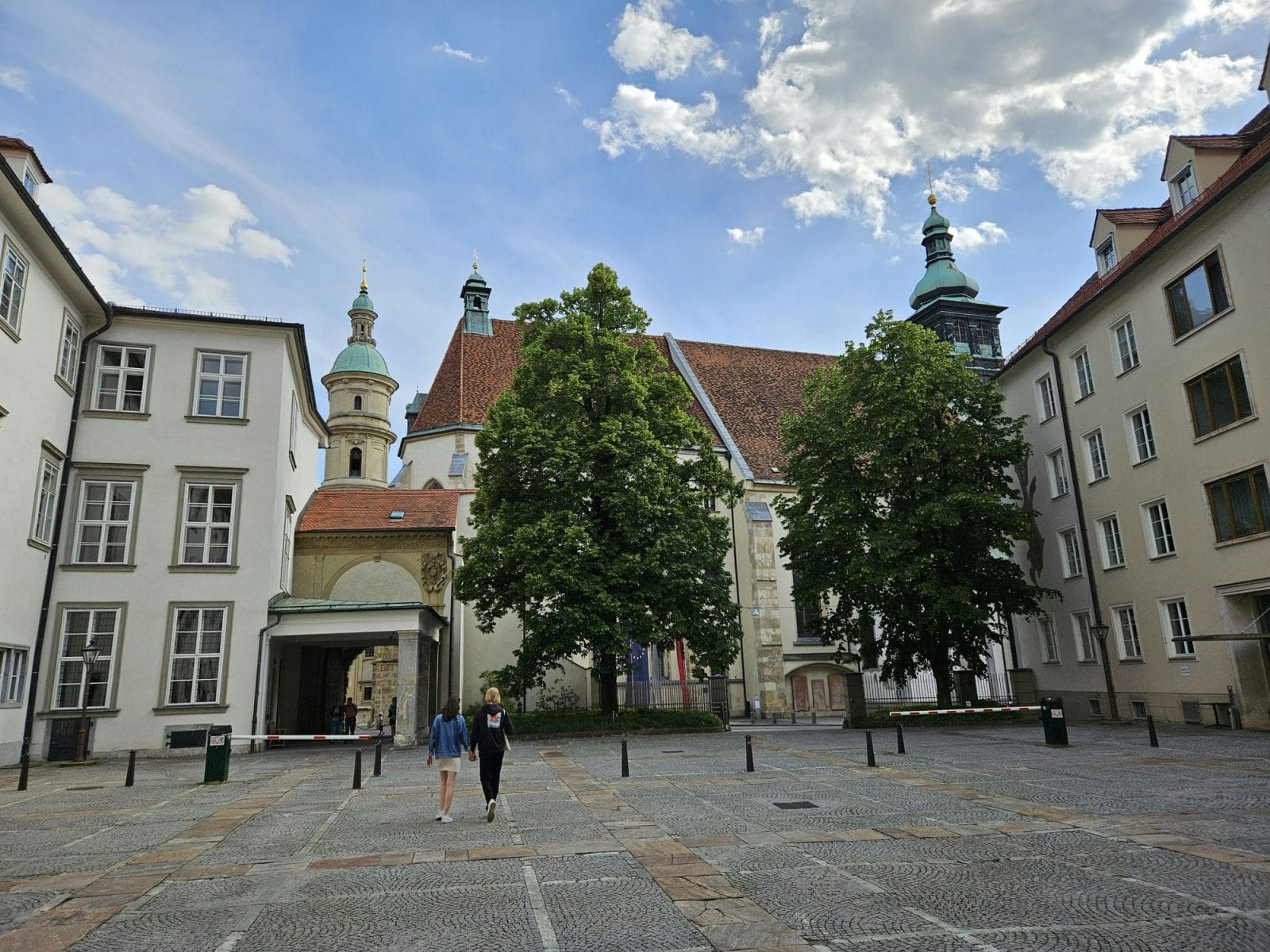
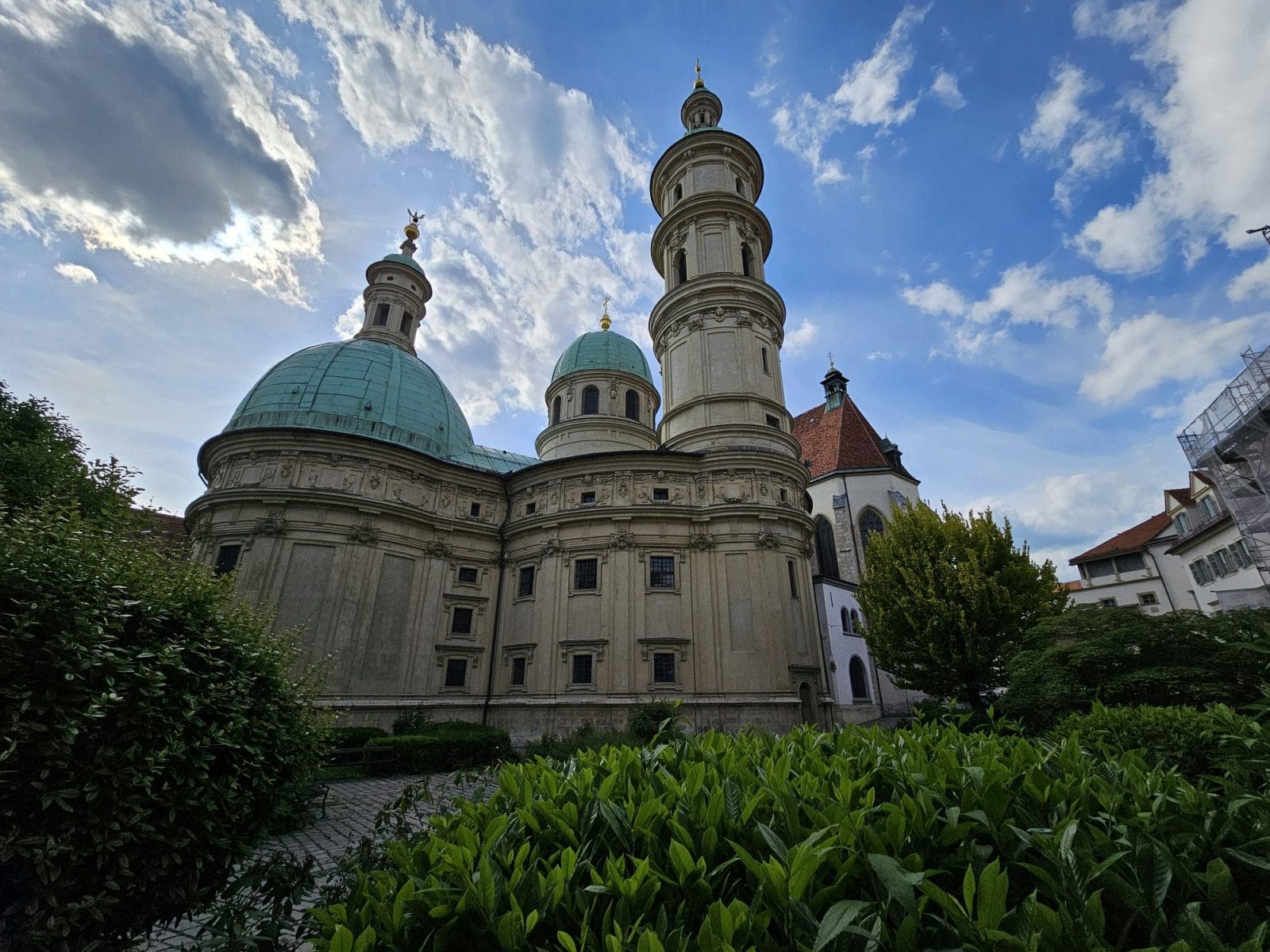
The outside of the church is pretty to see from a distance, including from the courtyard of the Burg or from the windows of the Doppelwendeltreppe.
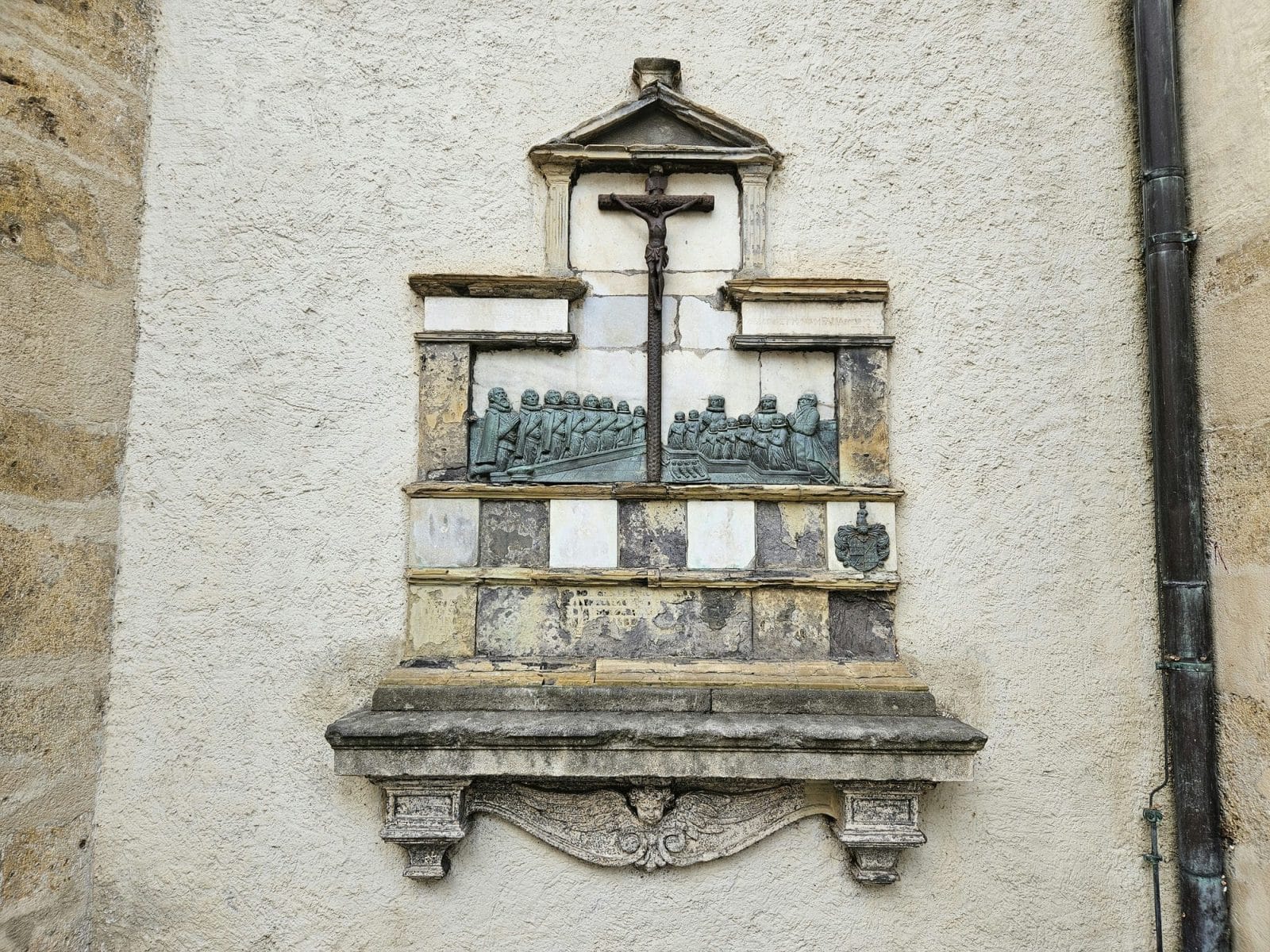
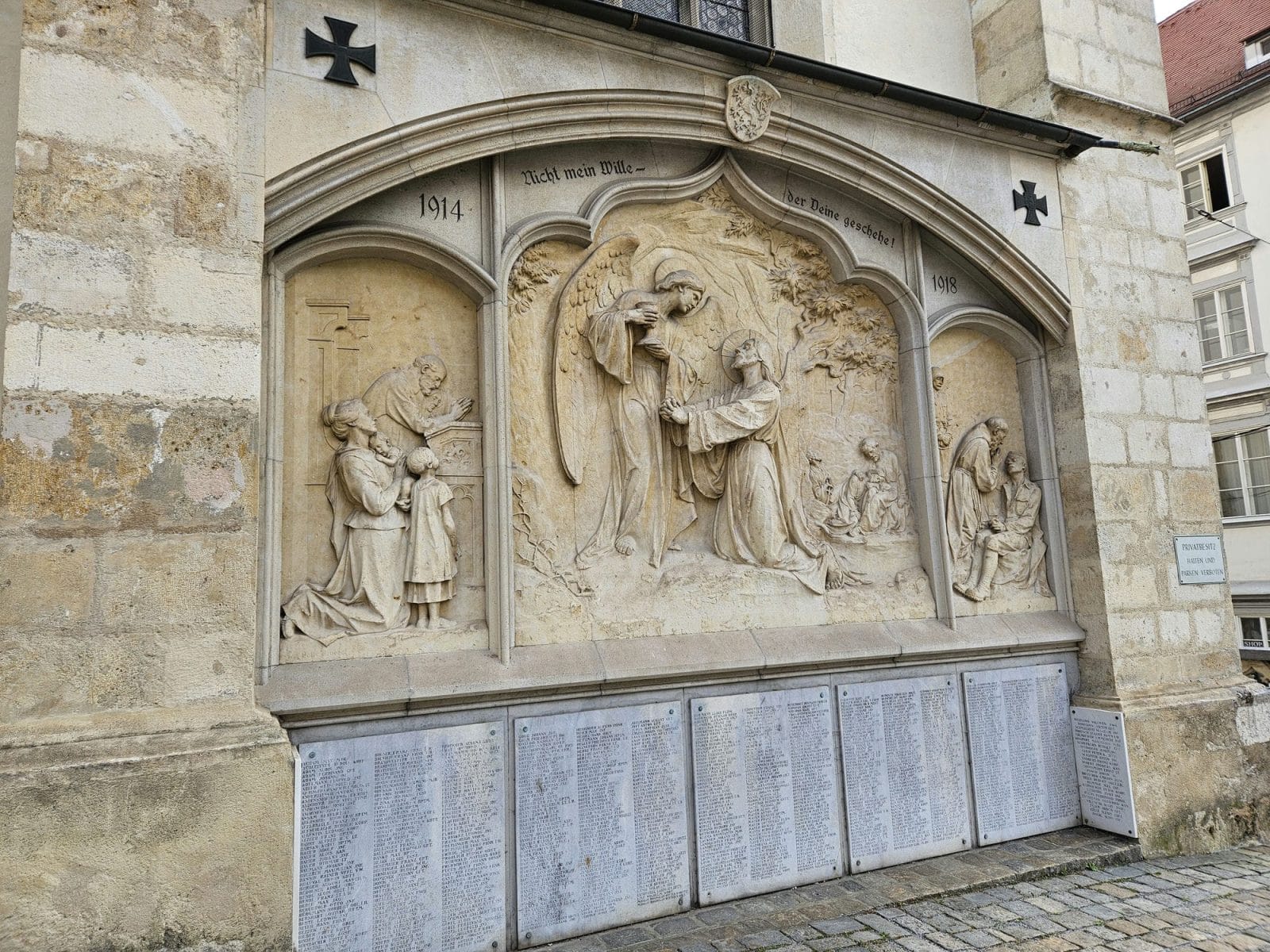
The outer walls also have stonework, memorials and art.
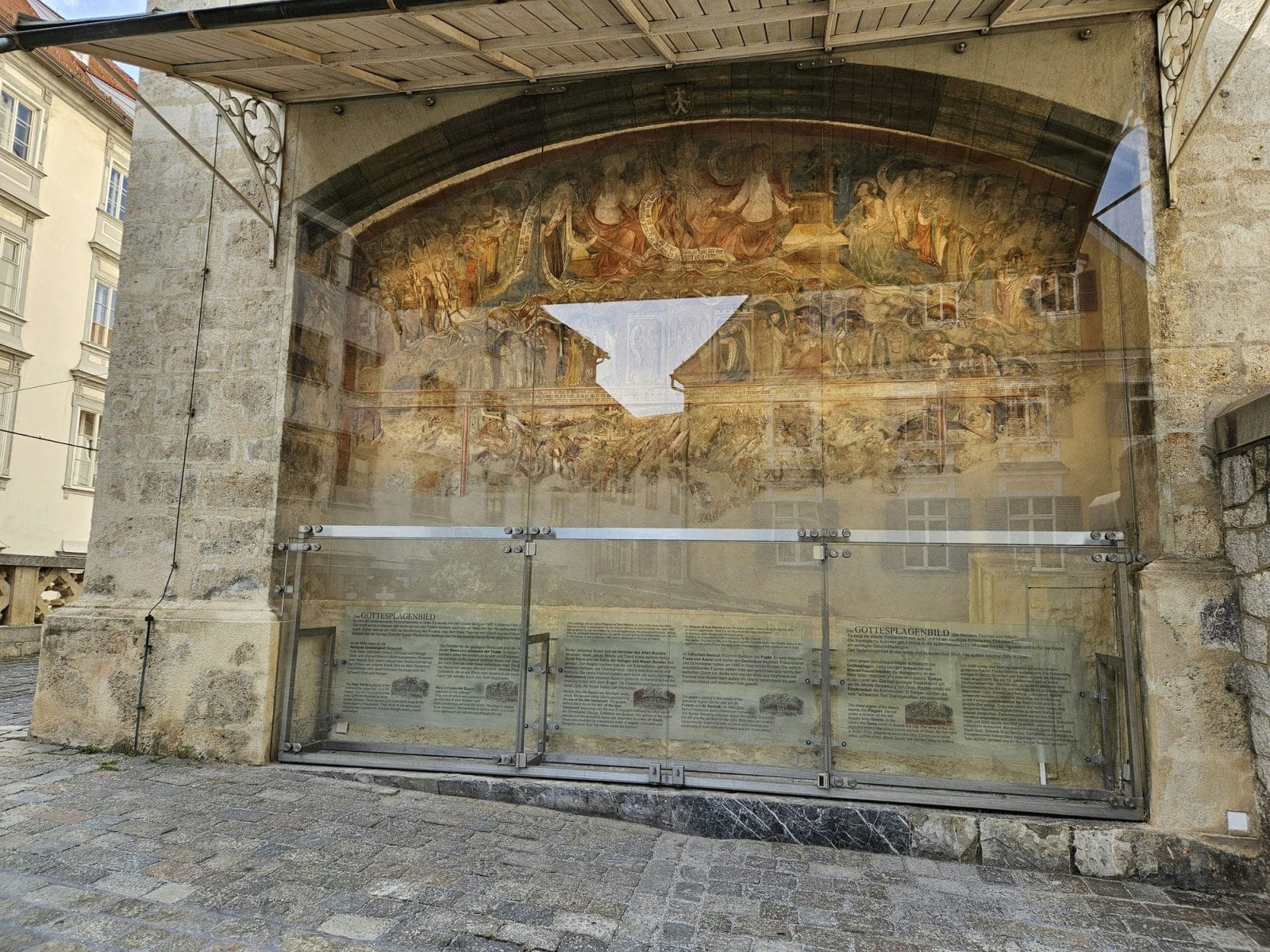
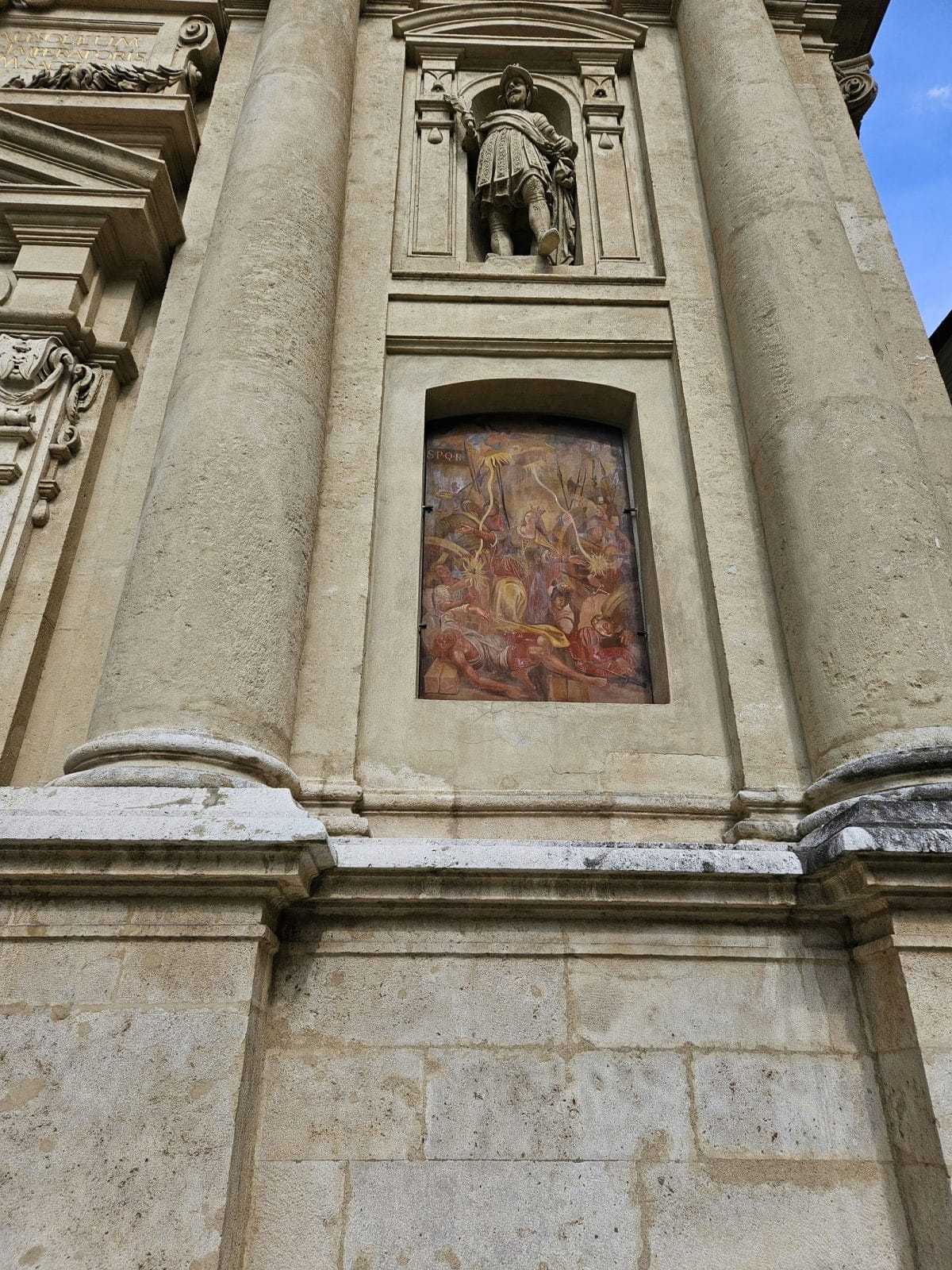
Outside the door on the mausoleum side of the cathedral, there is a lovely, well-preserved fresco behind glass. Historically, there were more frescoes; however, this one is the only one preserved: The Plagues of God. This artwork is by Thomas Villach, who painted it in 1485. Apparently, the citizens of Graz paid for this after a bad year for the city, which included trouble with the Ottomans, a plague, and some locusts.
Interior Photos
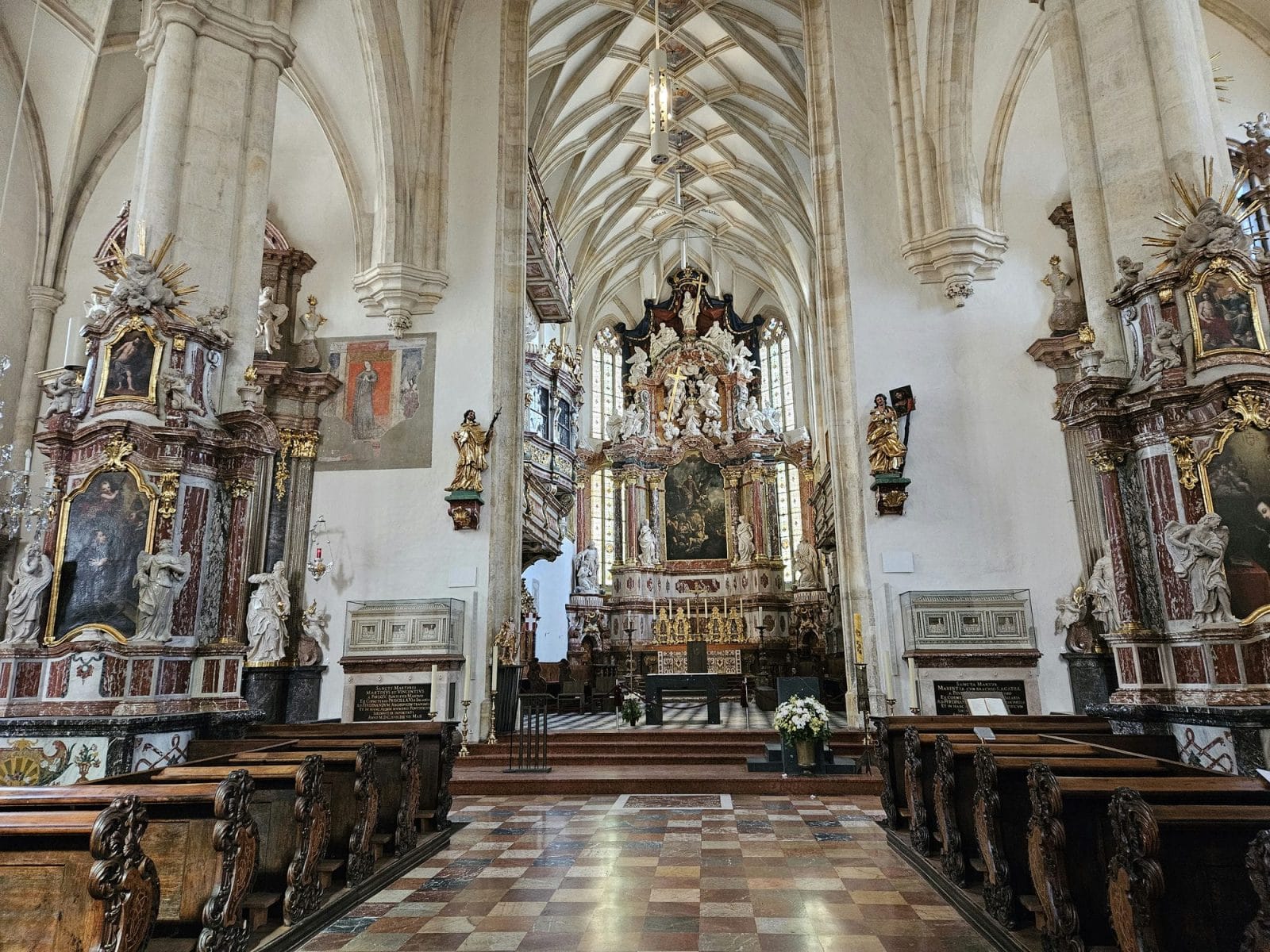
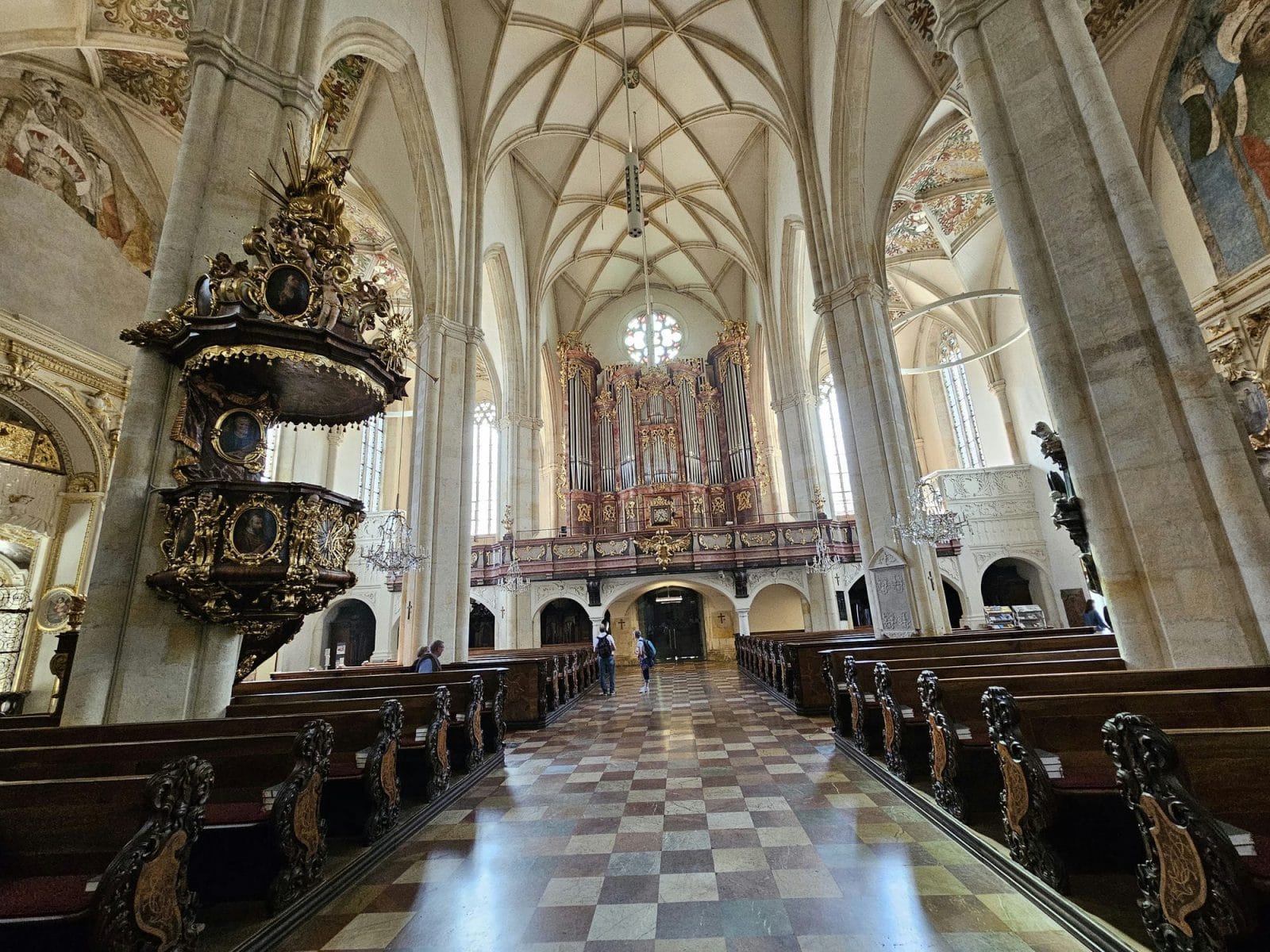
Inside the cathedral, there are artworks and decorative church features. The view up the nave along the aisle is special, looking both ways. At one end, you have the high altar, and at the other, a pipe organ.
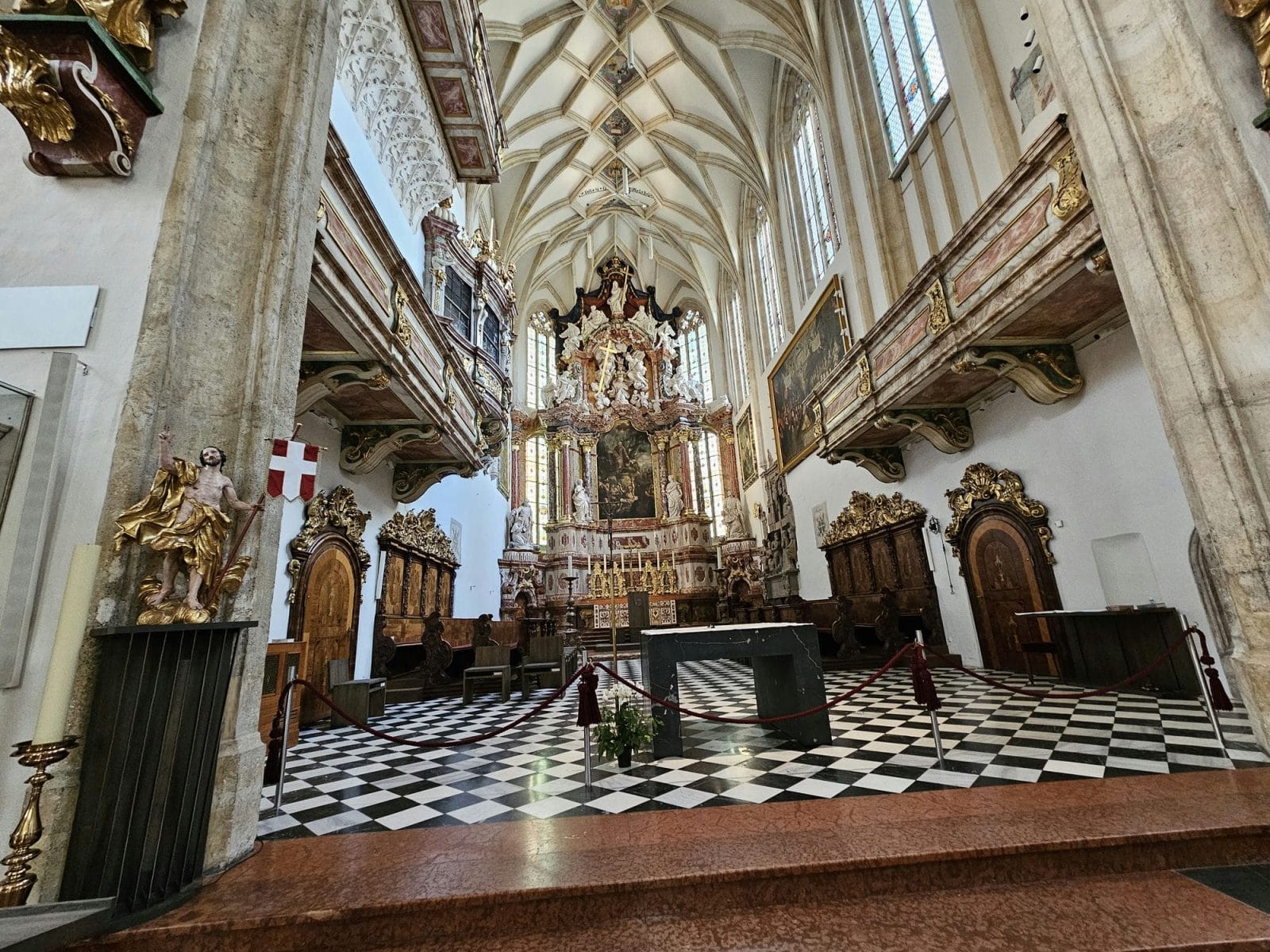
The Baroque high altar is eye-catching and is a focal point for most of the church. This altar was built in 1733, and it replaced a Renaissance one.
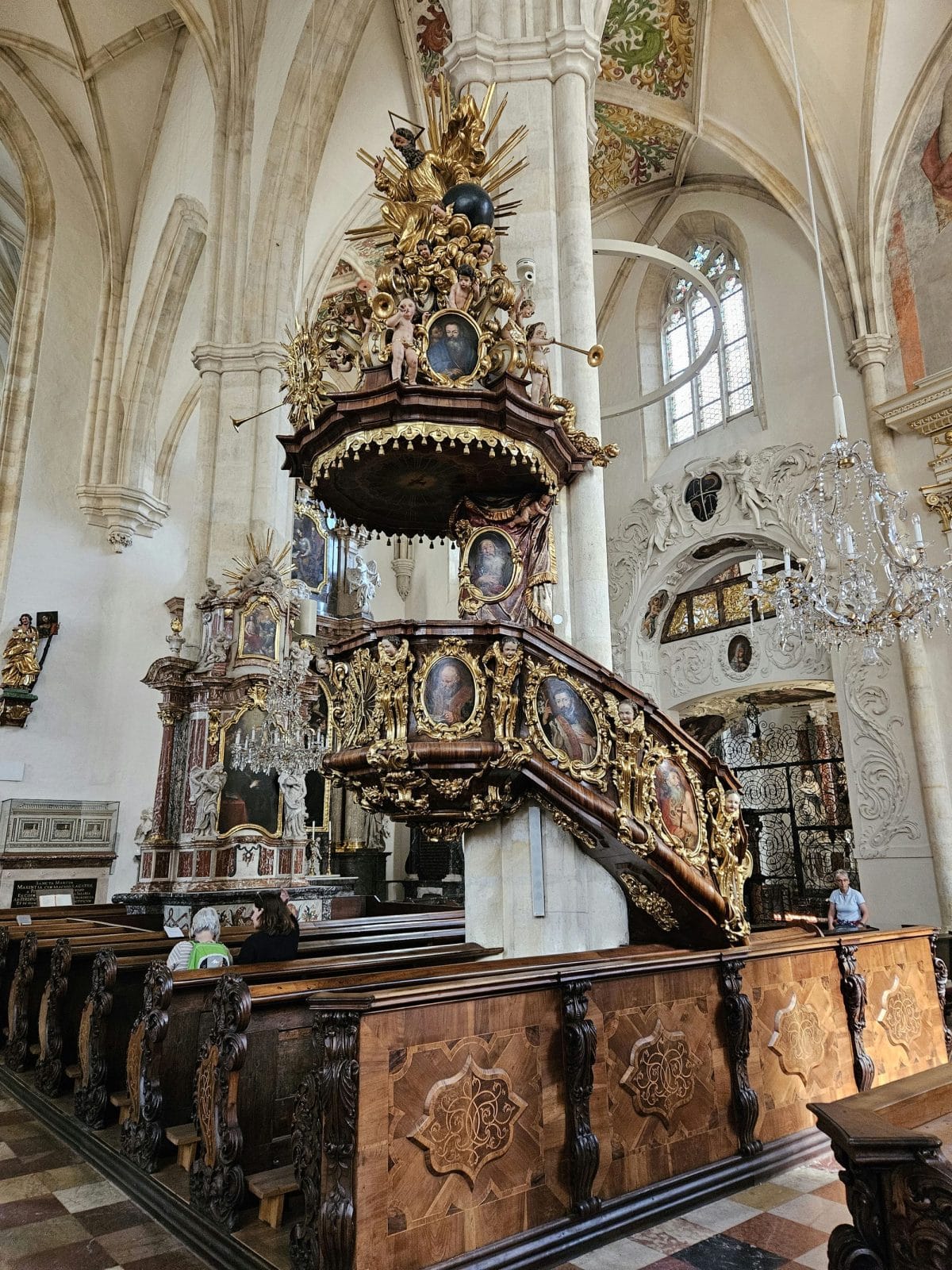
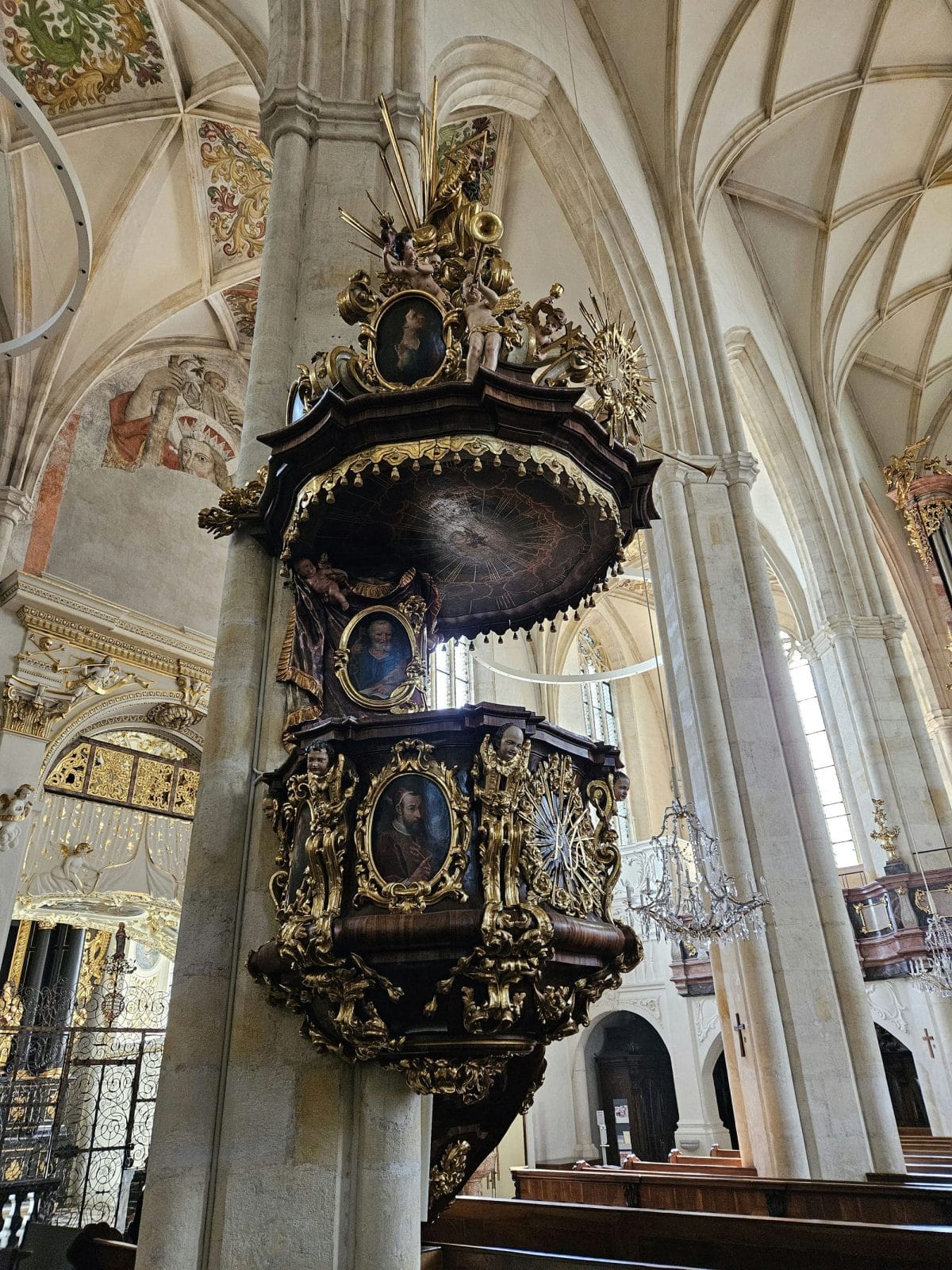
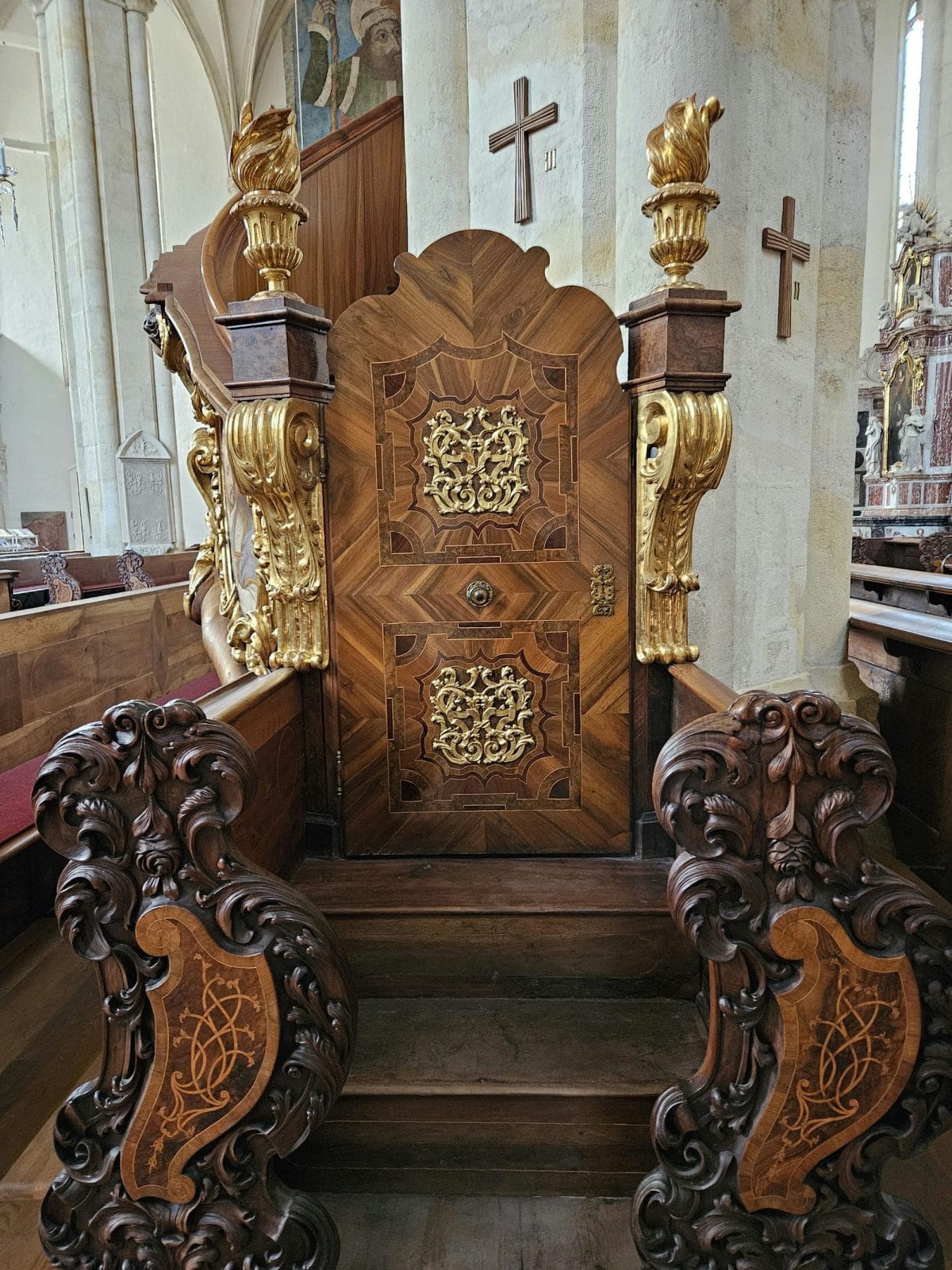
One of my favourite things to see inside churches is the pulpit, and Graz Cathedral delivered. This one is on a column in the aisle. The entrance to this pulpit impressed me with its wood carvings.
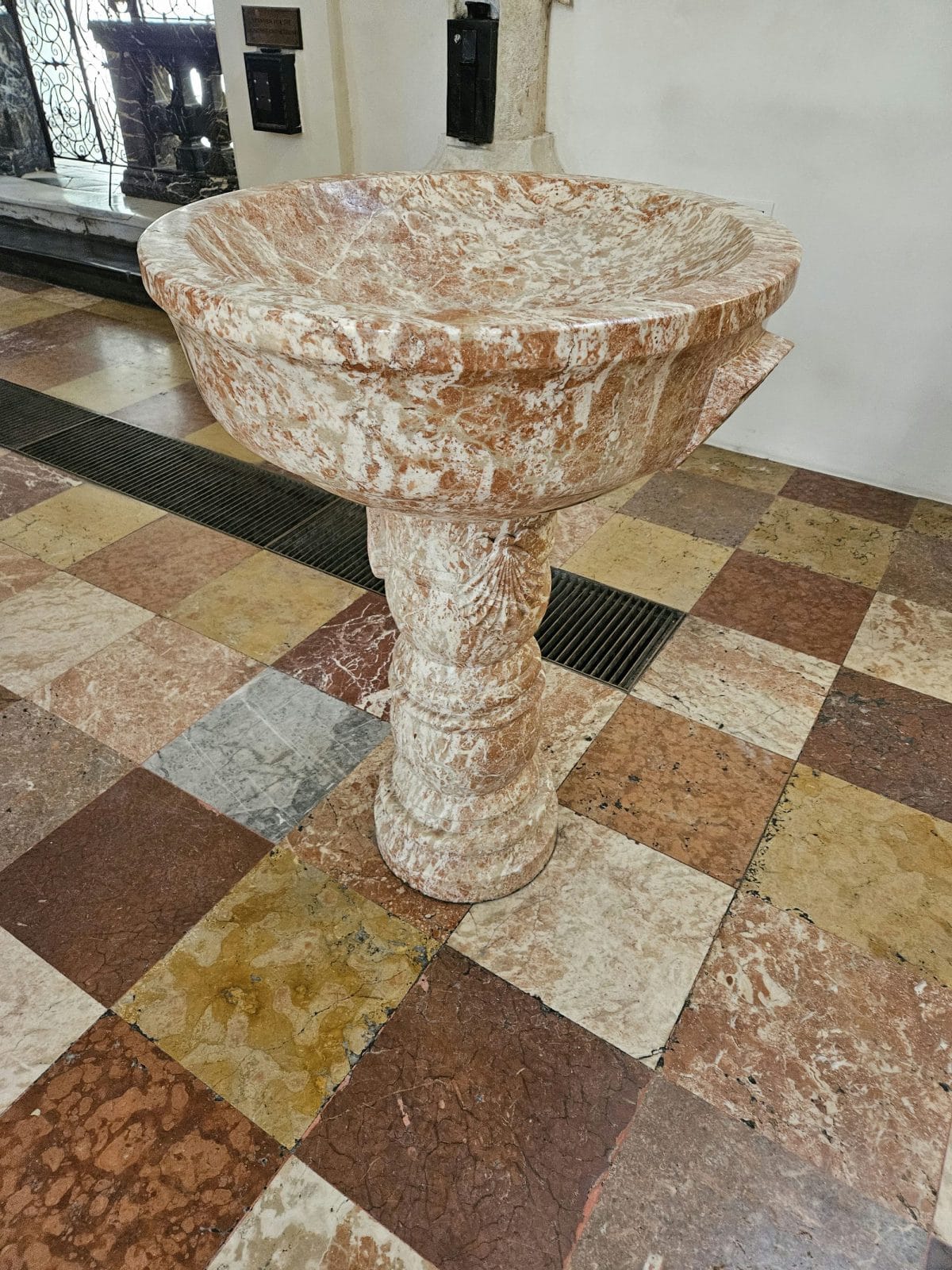
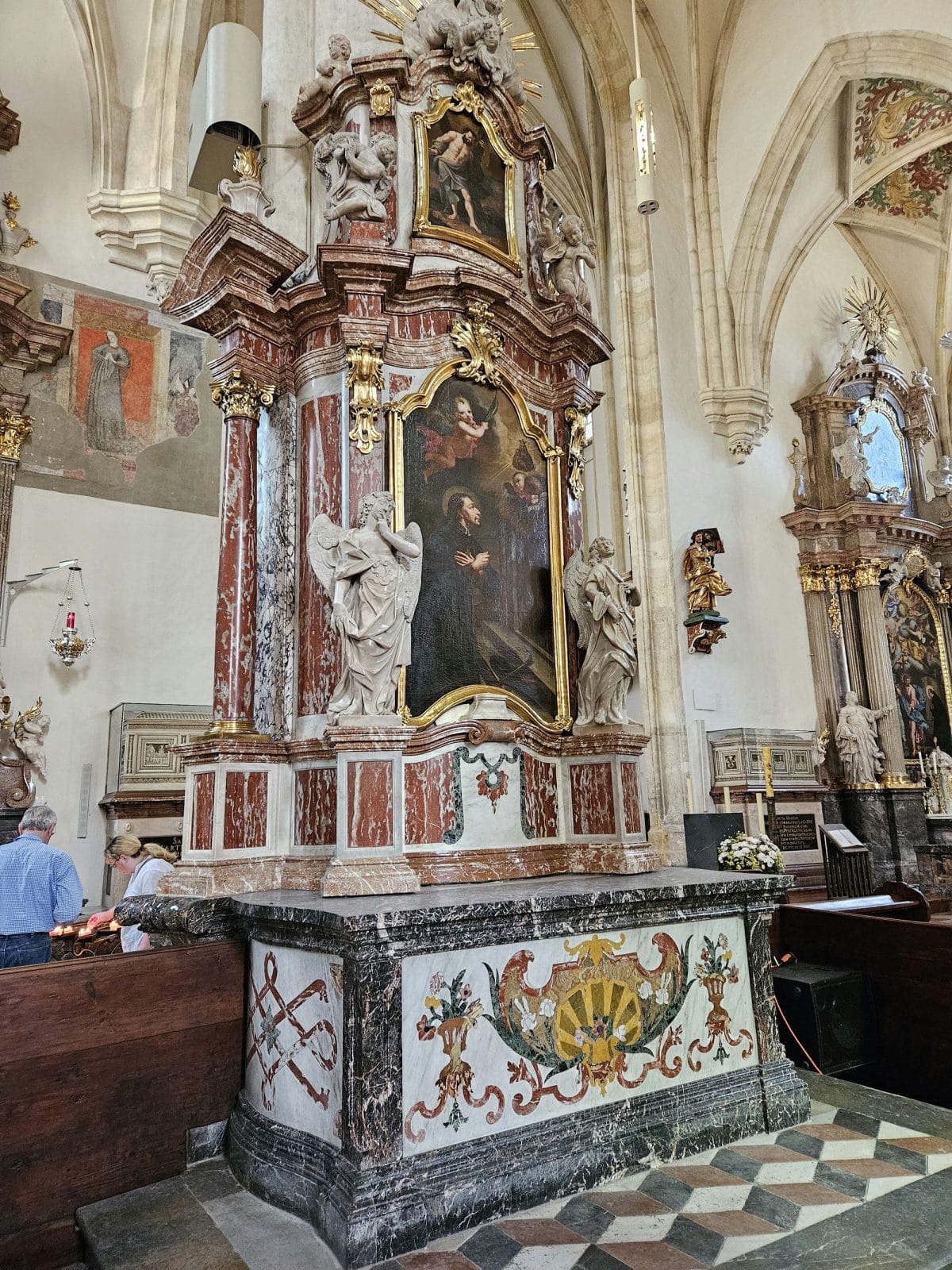
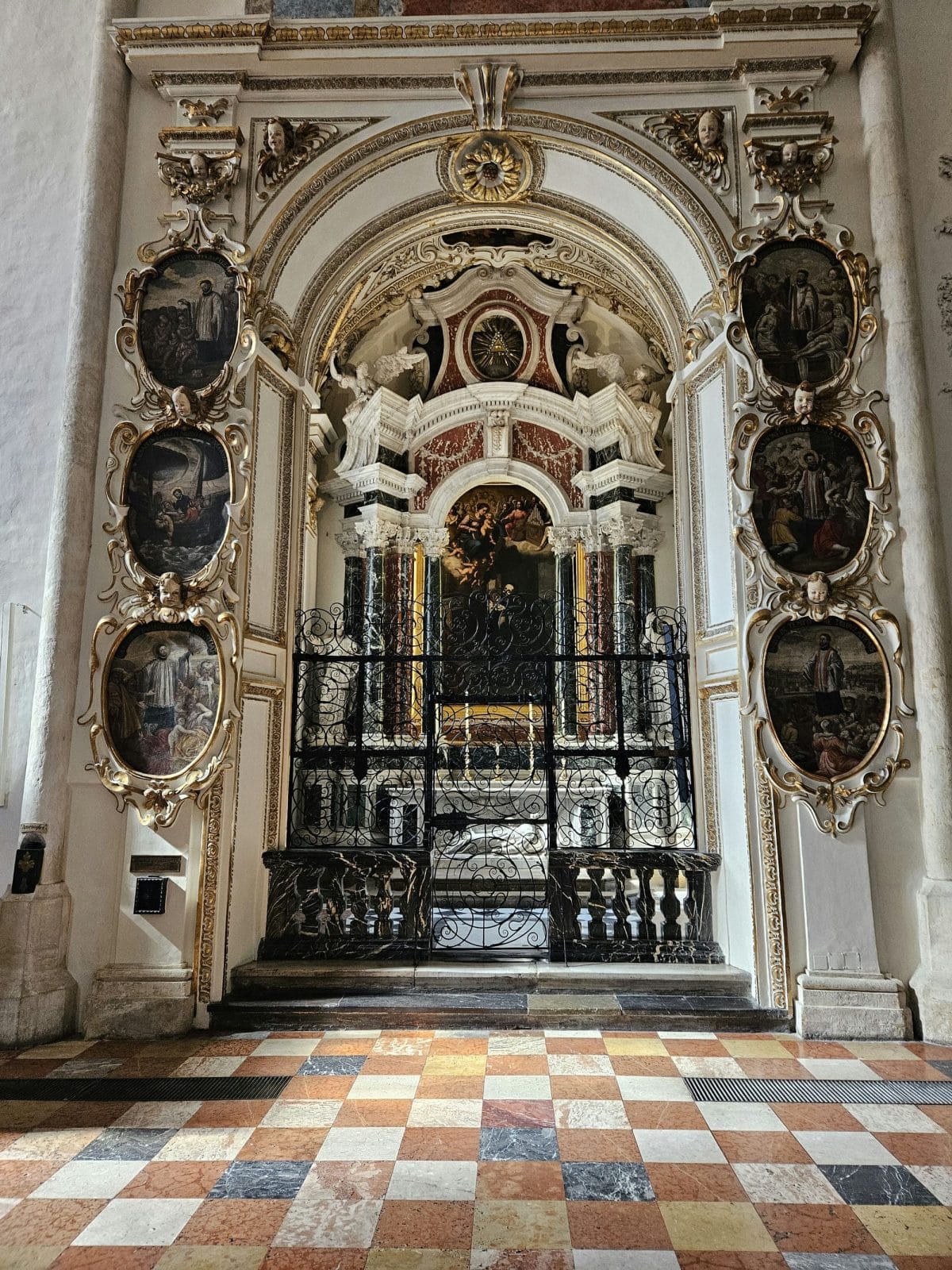
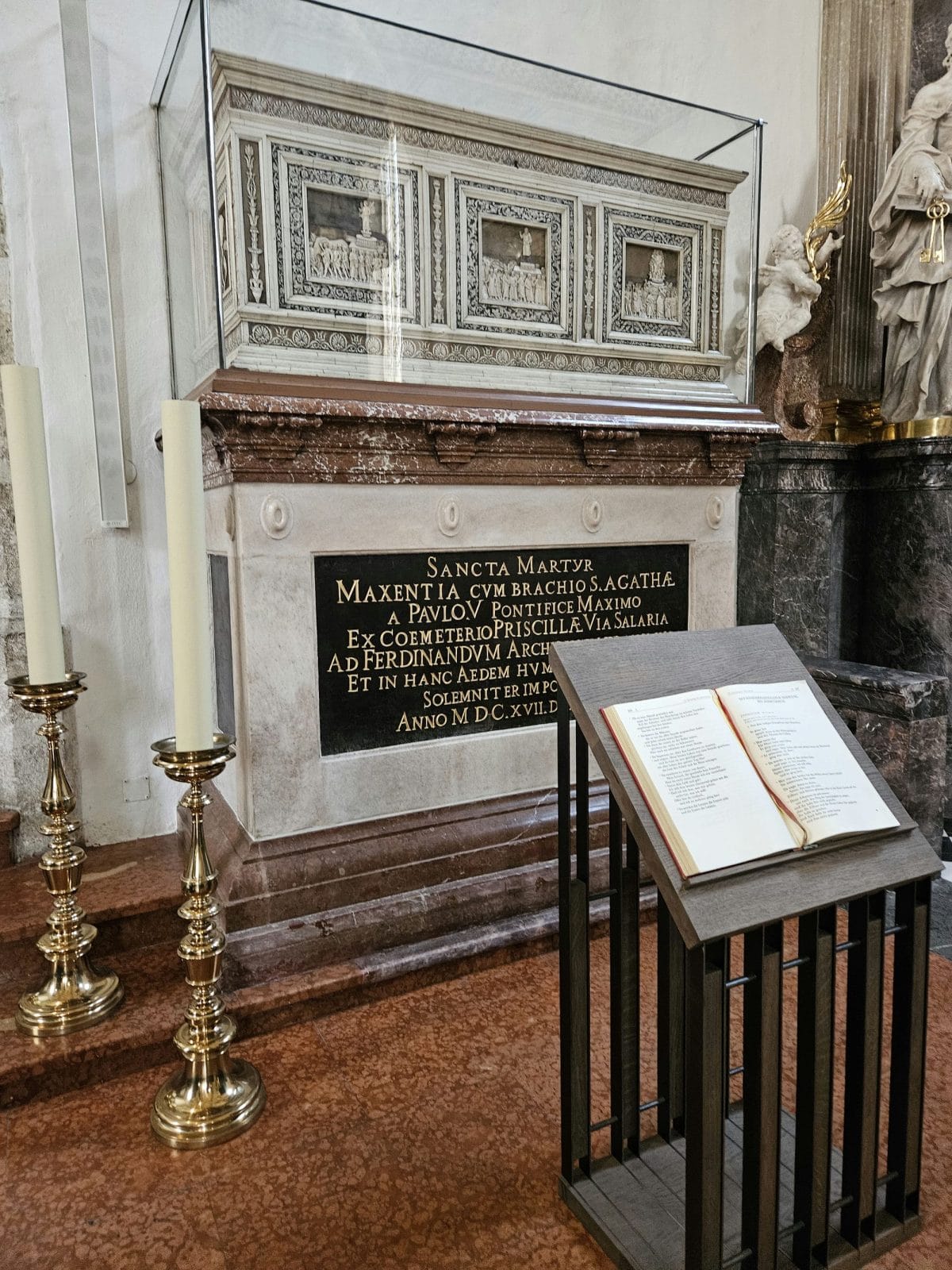
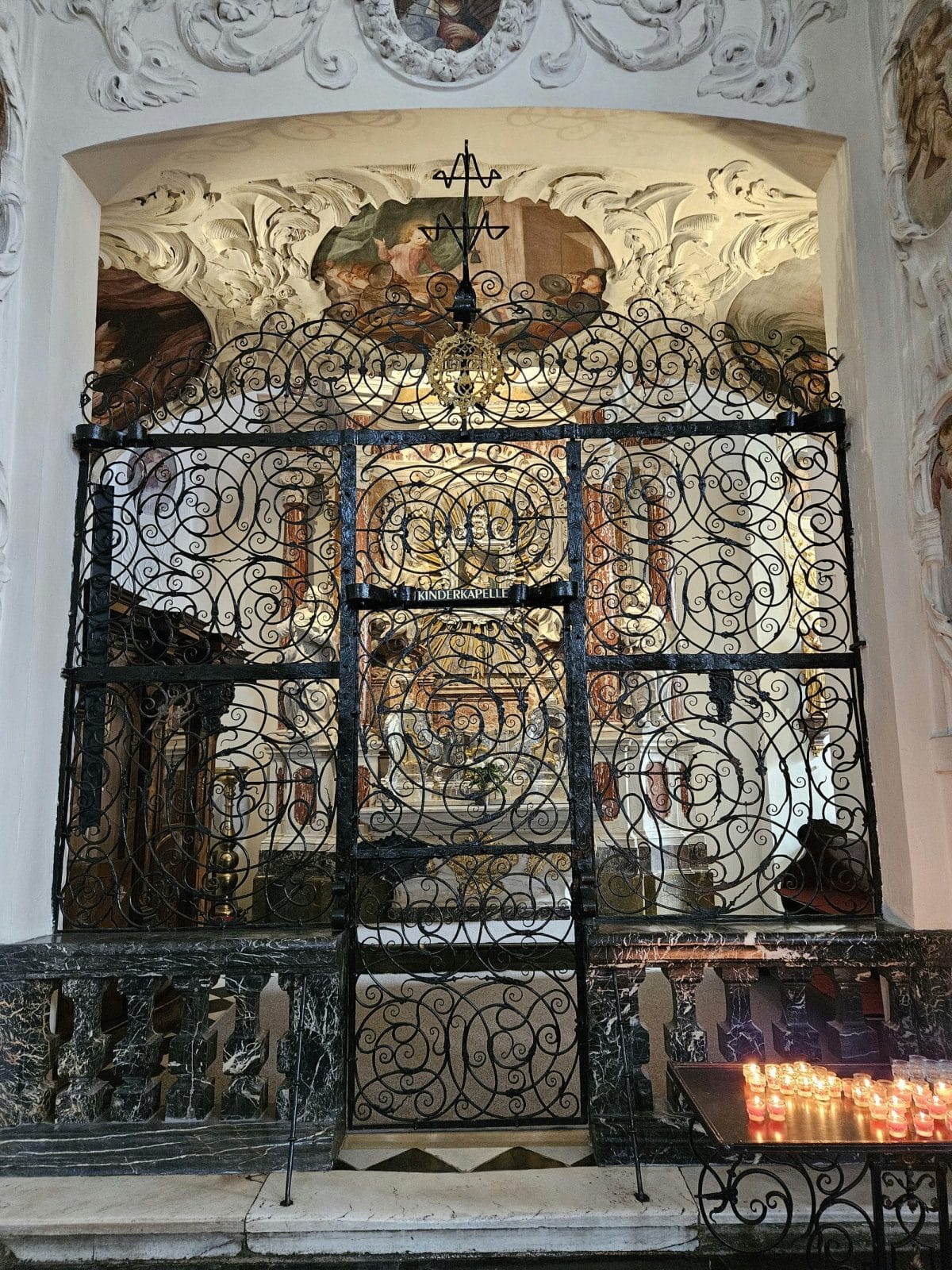
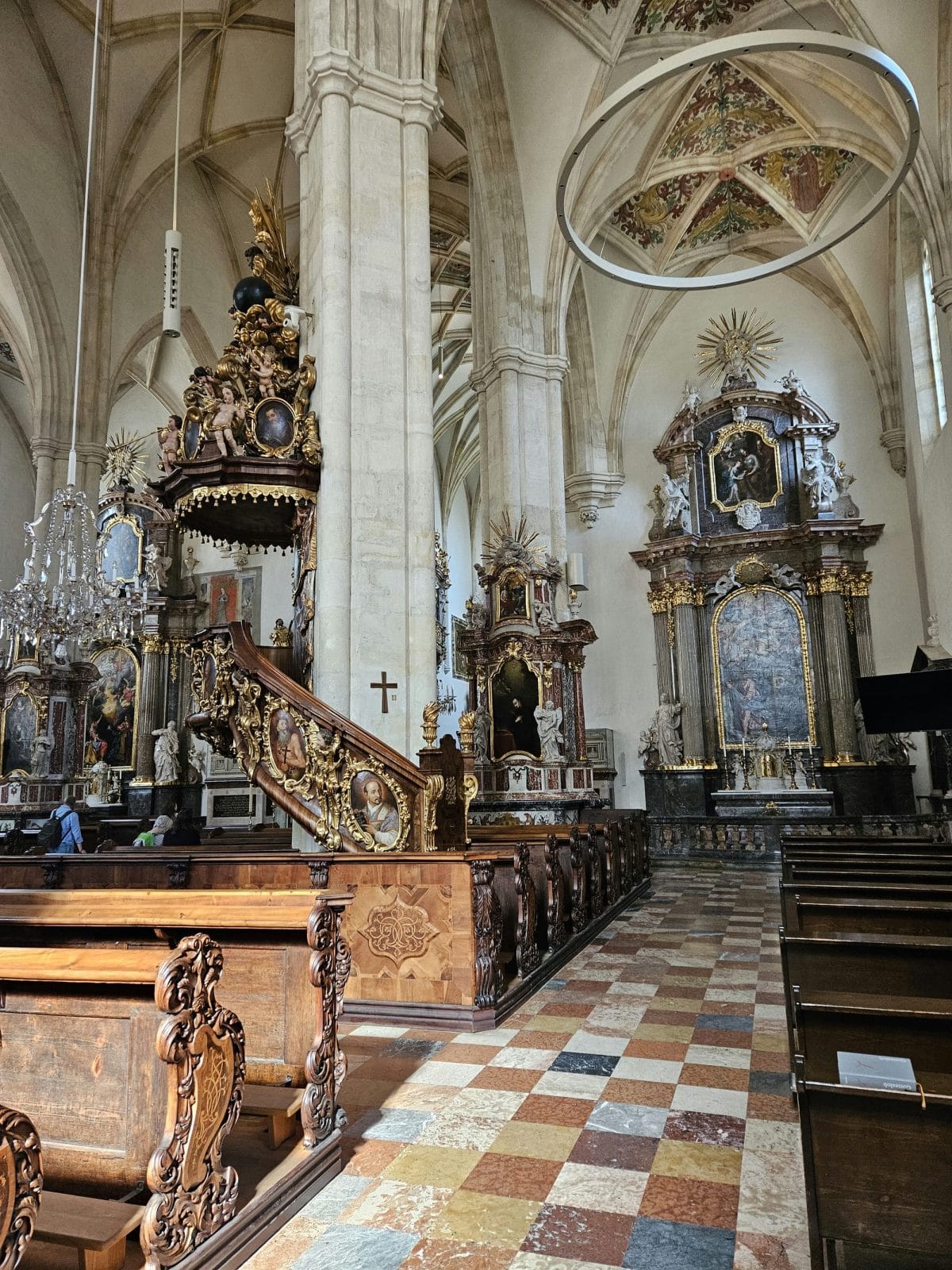
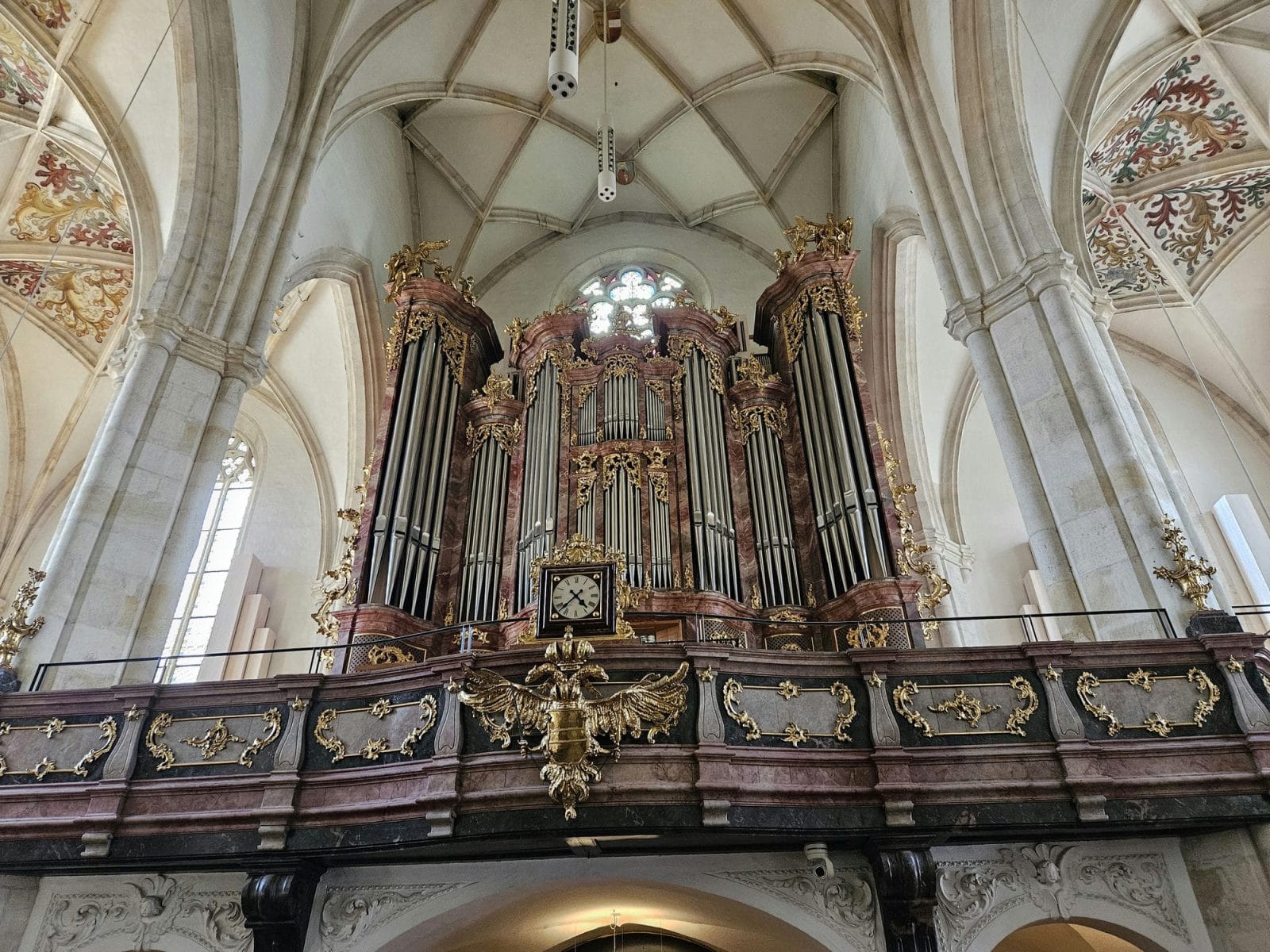
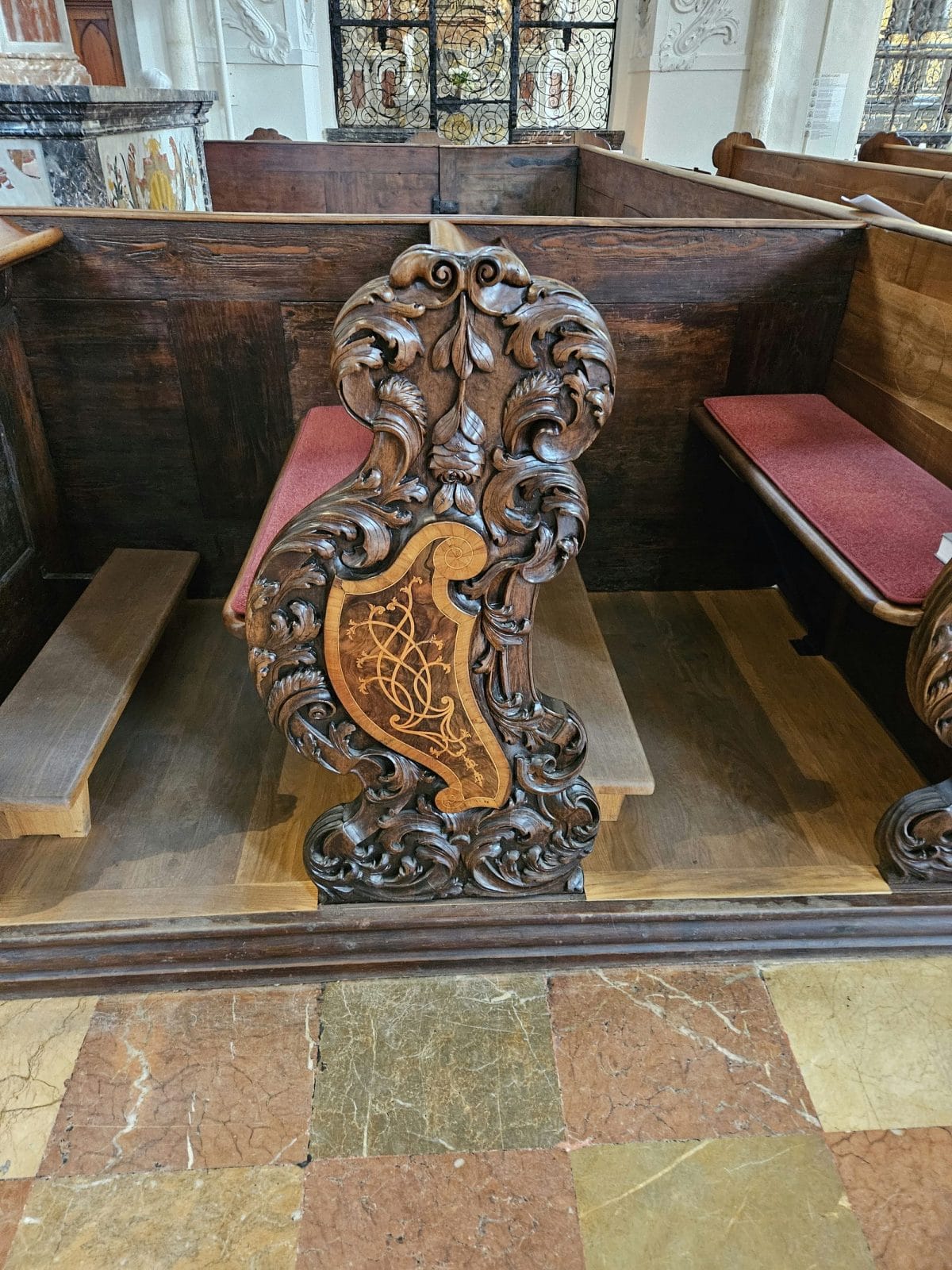
There are many other features to see inside too, including the organ, art everywhere, a font and the side chapels, including the Kinder Chapel. The pews also have wood carvings.
Mausoleum of Emperor Ferdinand II
The Mausoleum of Emperor Ferdinand II is a fantastic place to visit and was on my must-see list when visiting the city. The building is in two distinct parts. The first you enter is St Catherine’s Church, and then, to the side, is the burial chapel.
History
In 1614, Ferdinand commissioned the construction of a mausoleum and an adjacent St Catherine’s Church. However, when he was elected emperor in 1619, construction halted. When Emperor Ferdinand II died in 1637, they buried in the half-finished mausoleum. Interestingly, his heart was kept in the Herzgruft at the Hofburg Palace in Vienna. The mausoleum was completed under the supervision of Emperor Leopold I, his grandson.
Exterior
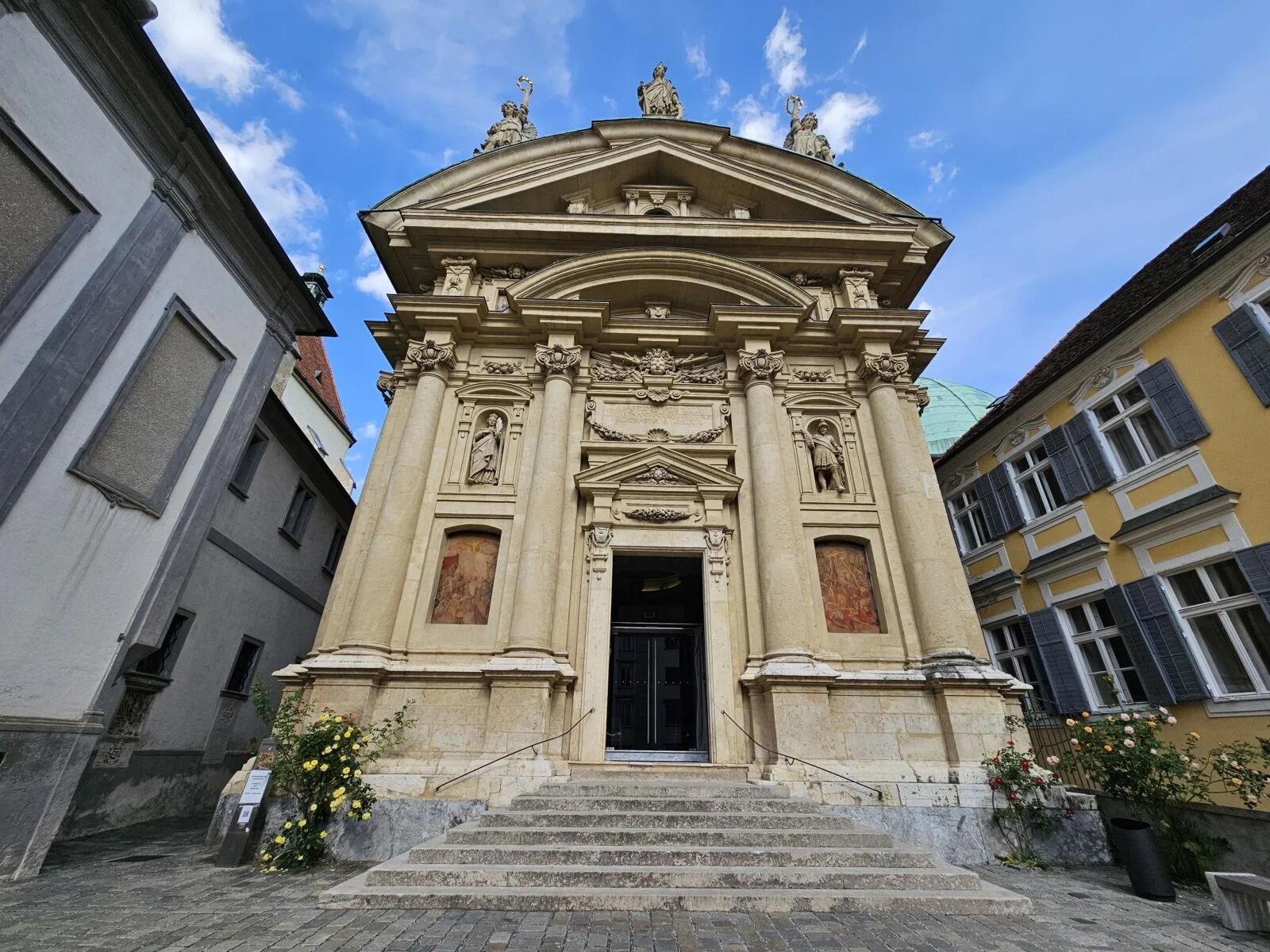
The Mausoleum of Emperor Ferdinand II looks like a church and is nice to view from the outside. I really liked the decorations near the entrance, which include various statues, three of which are on the roof above the door.
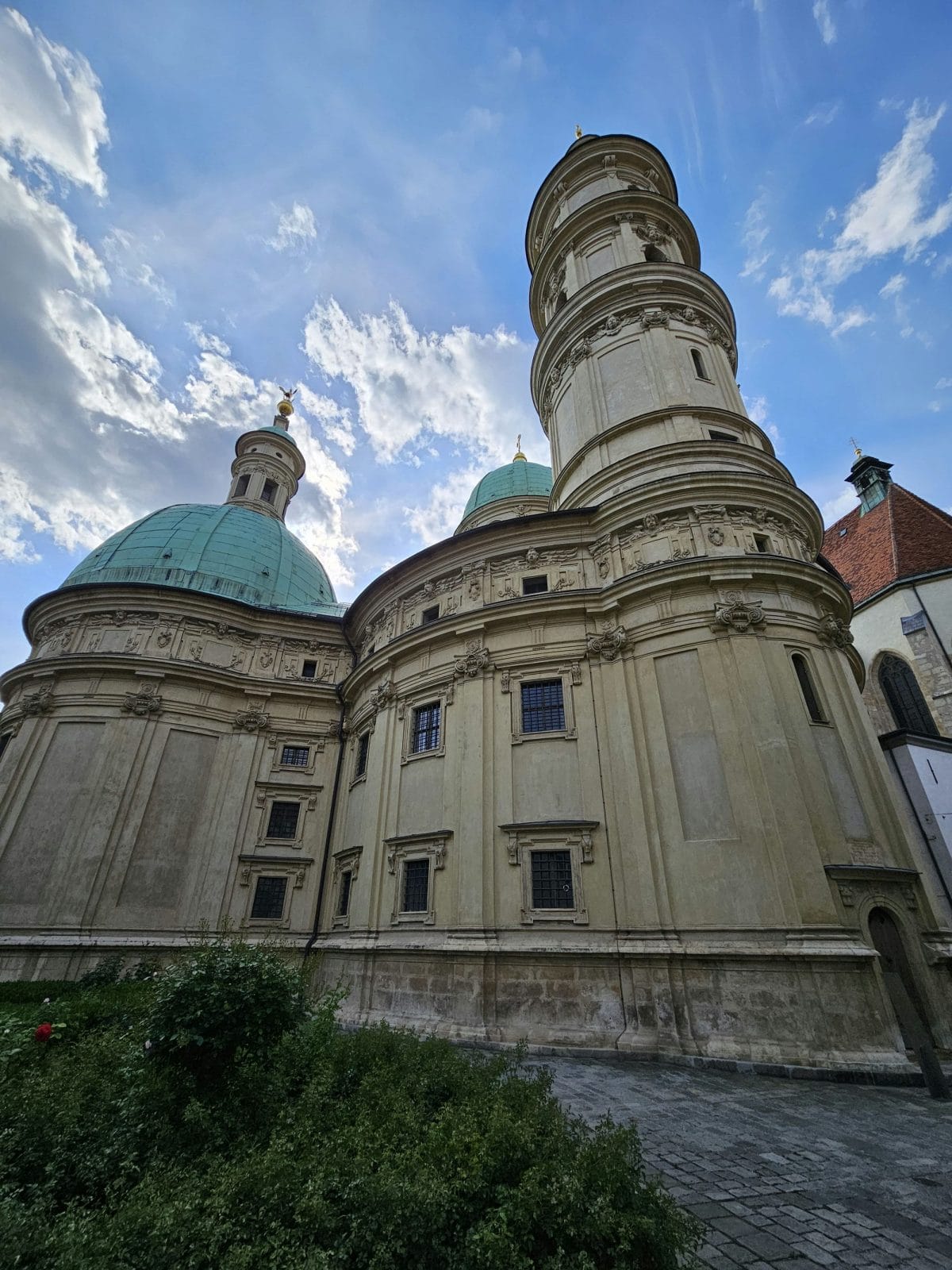
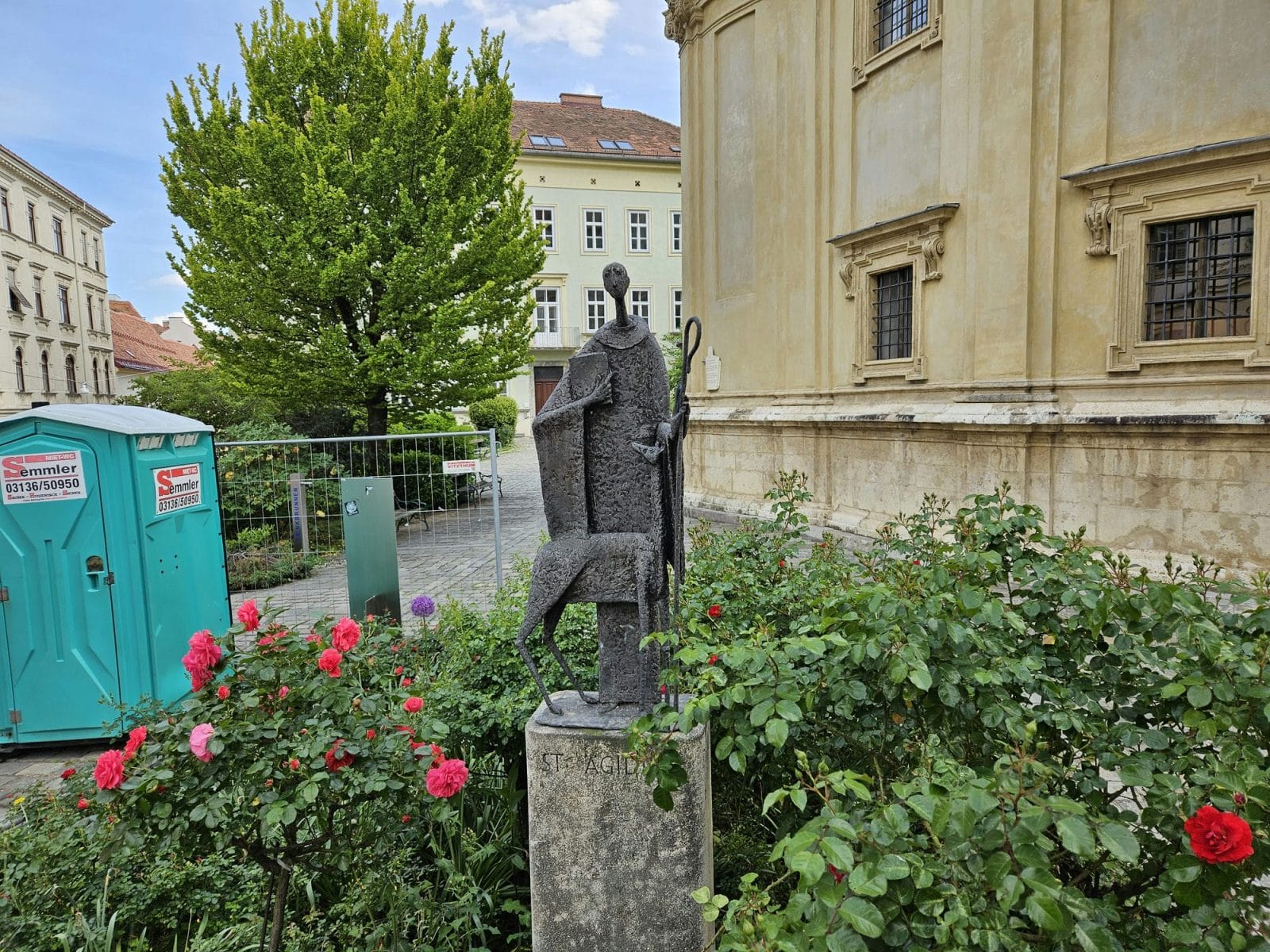
The grounds have good views of the buildings, some statues, and well-maintained gardens. There were a few benches outside too, which were handy for resting my legs and having a drink to recover from some epic sightseeing.
Inside
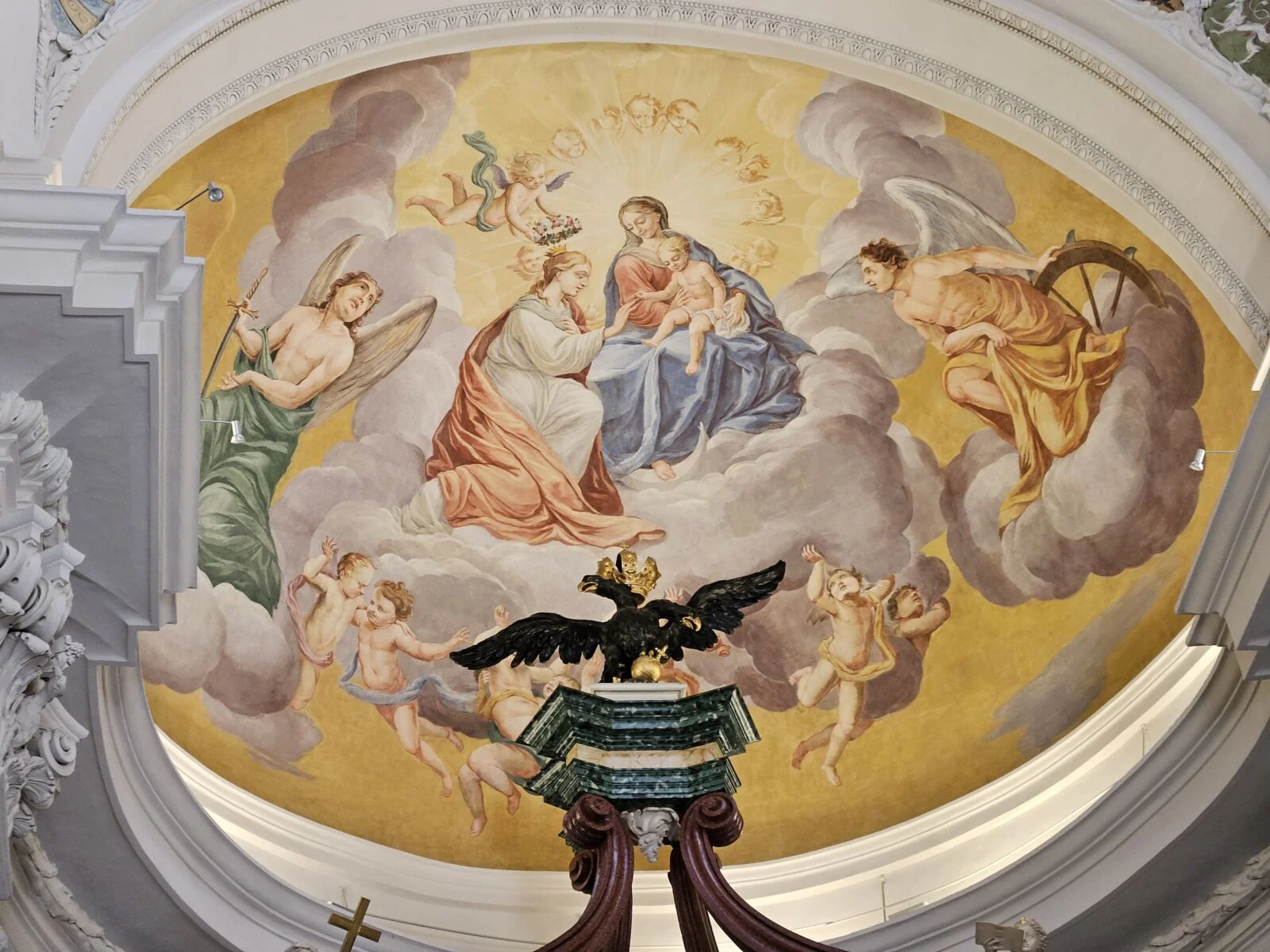
Inside, the mausoleum has some wonderful decor and altars, especially on the ceilings. It’s all very grand, including the statues and the view into the burial chamber.
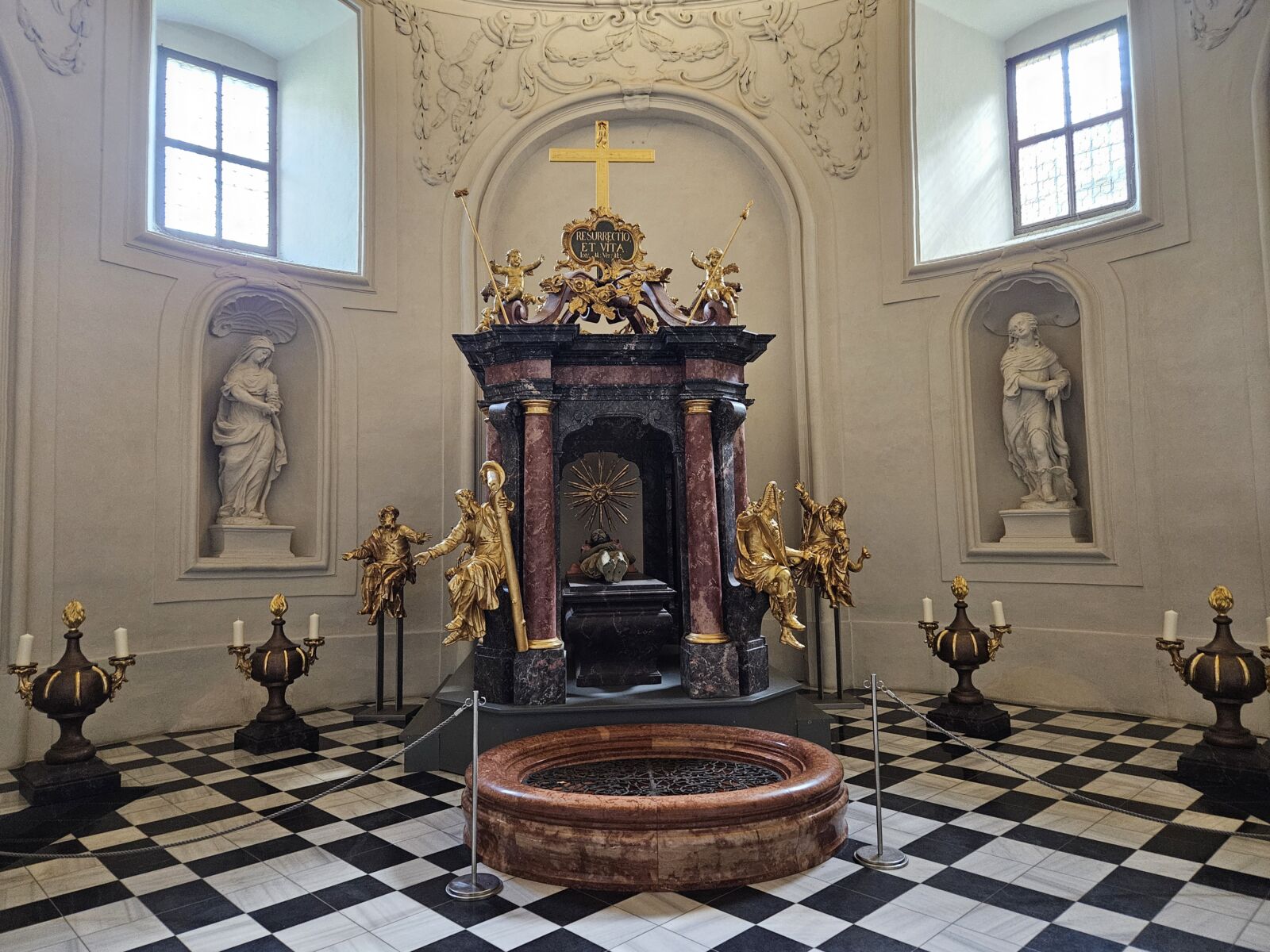
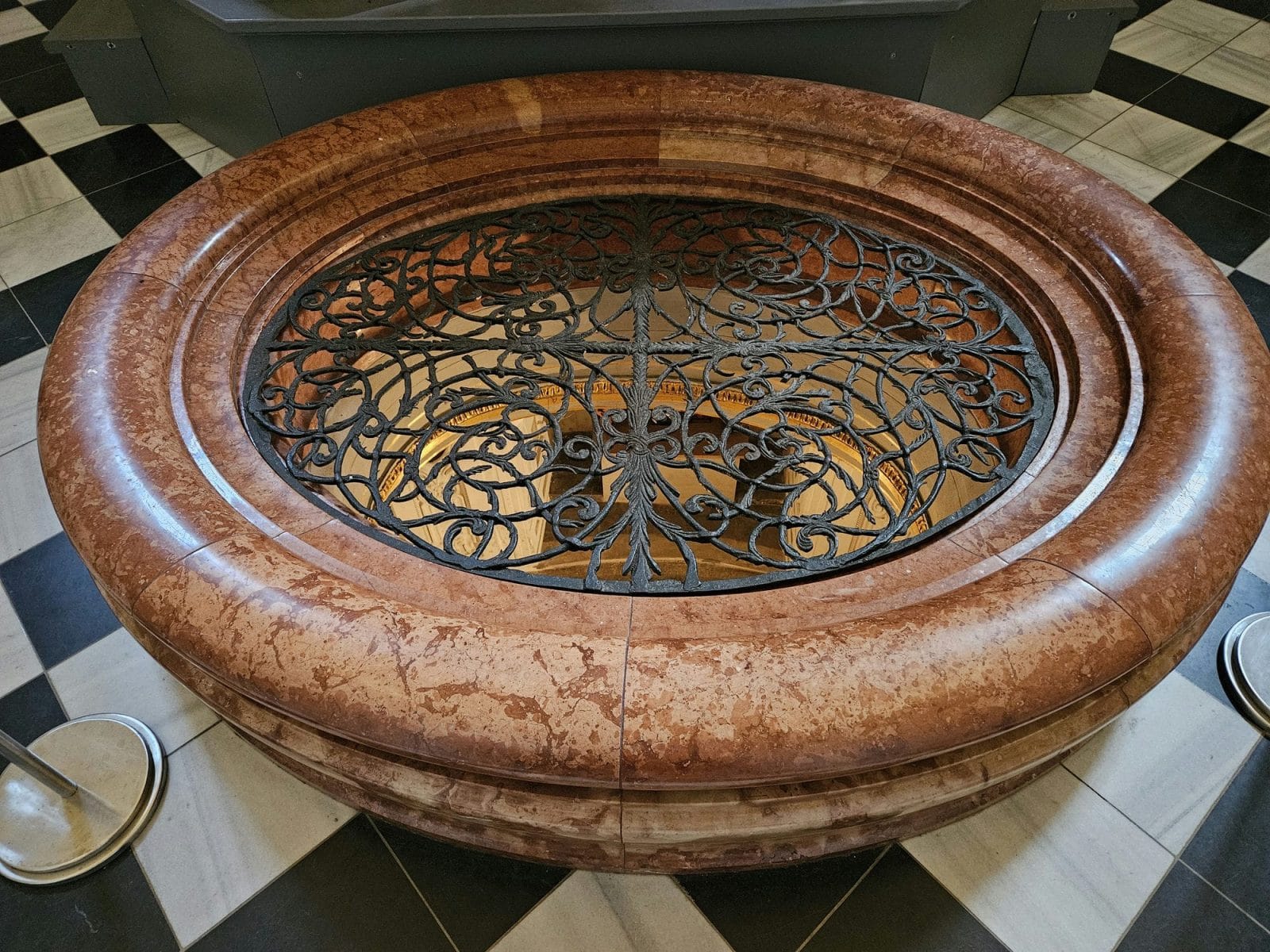
The burial chamber was the main thing to see inside, where most people congregated. This included some tour groups, so I bided my time for a good look. The chamber is underground and, from the top, looks like looking down a well. Surrounding the chamber are some cool statues. The main feature of the burial chapel is the Holy Sepulchre that Veit Königer created between 1768 and 1769.
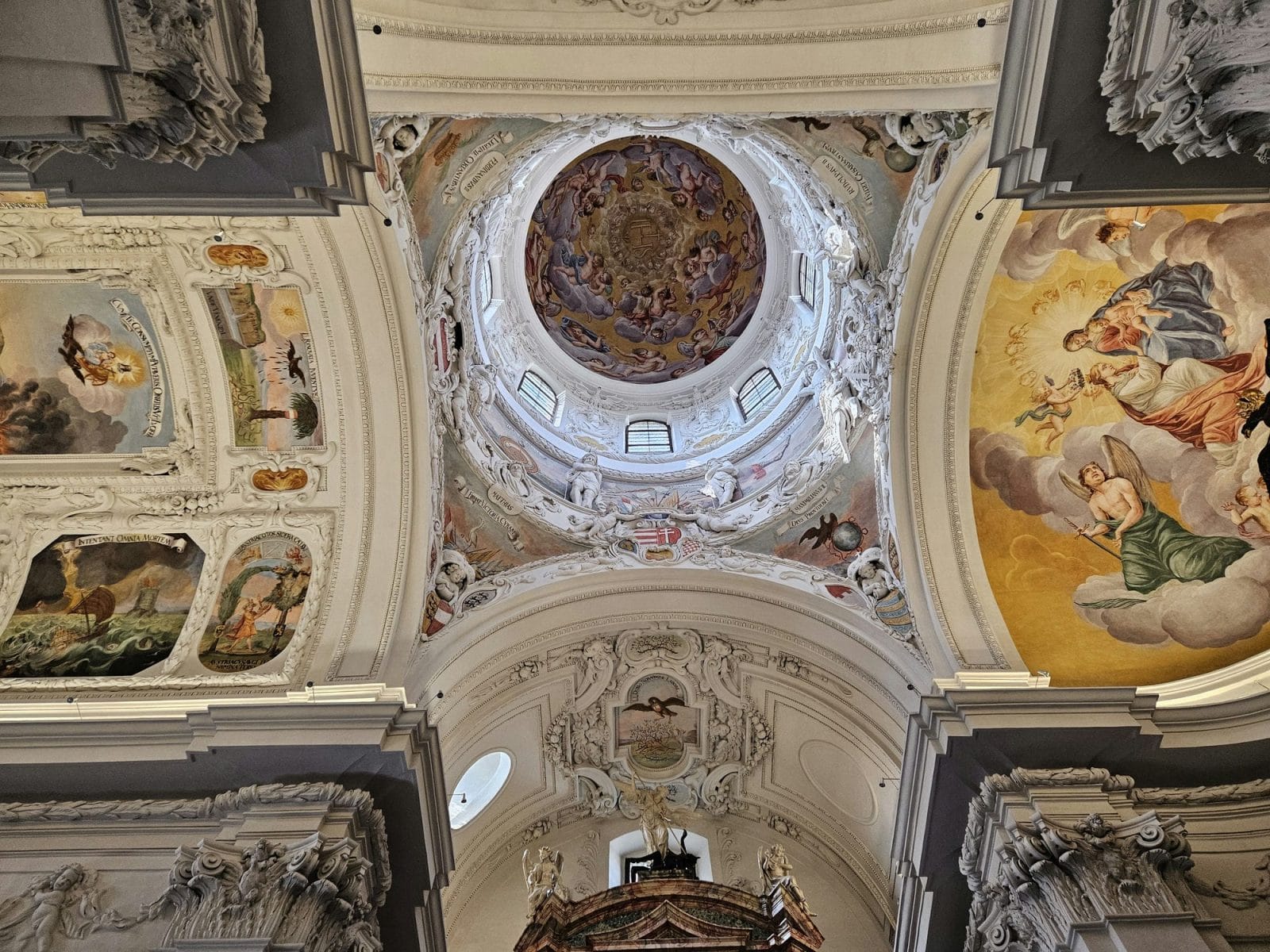
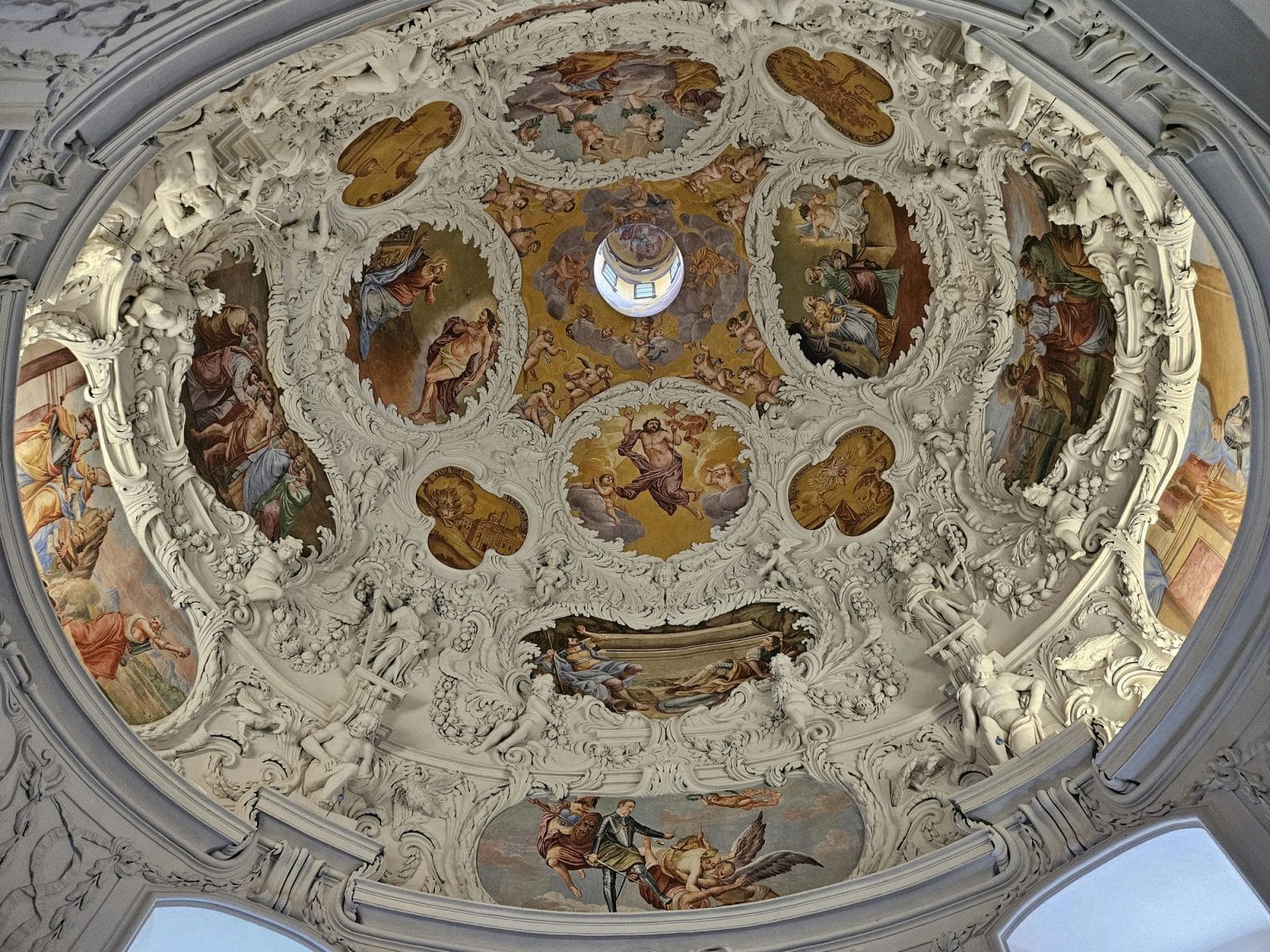
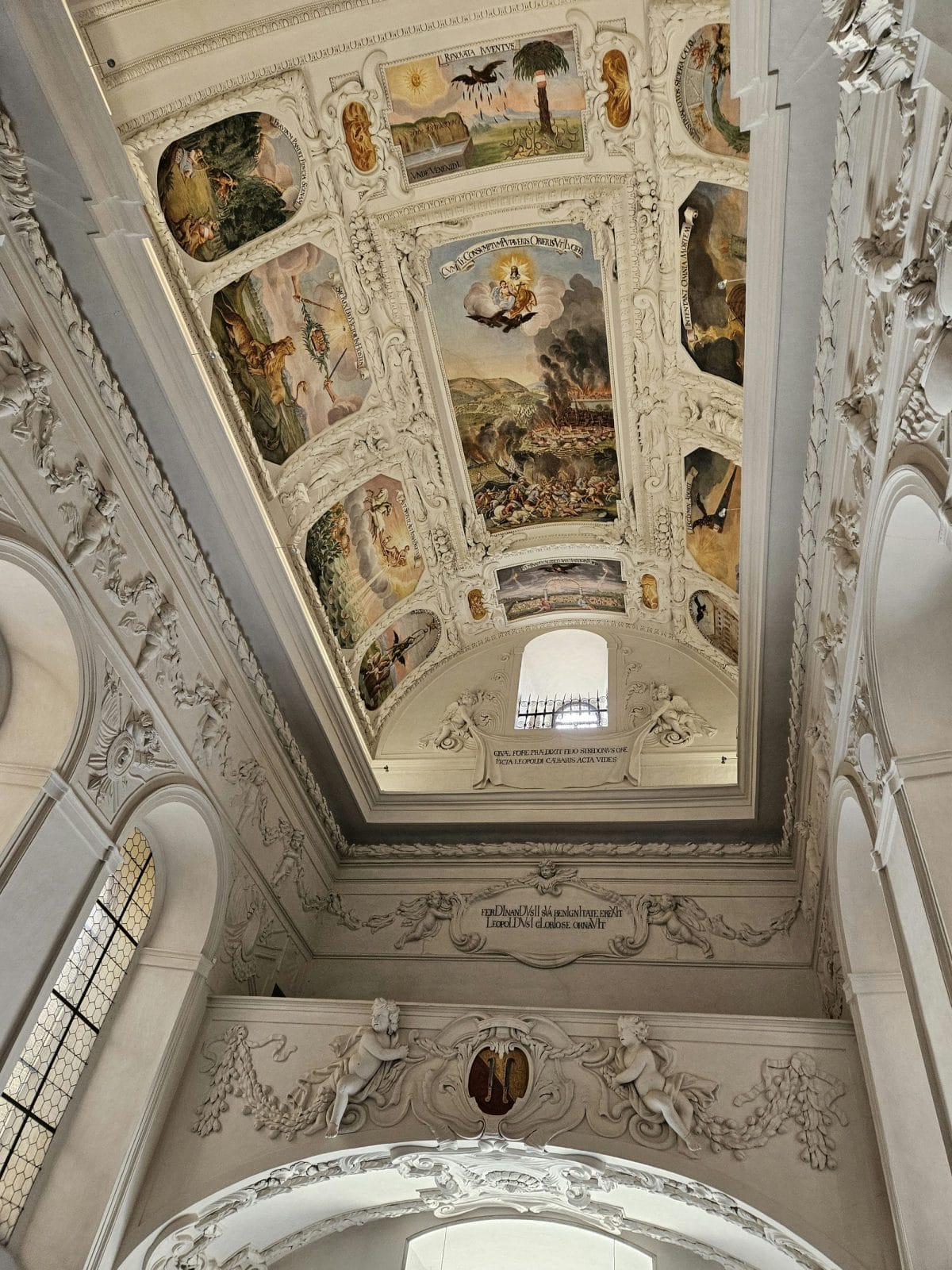
The most eye-catching thing for me was the art on the ceilings. It is decorated throughout, including inside the mausoleum’s domes.
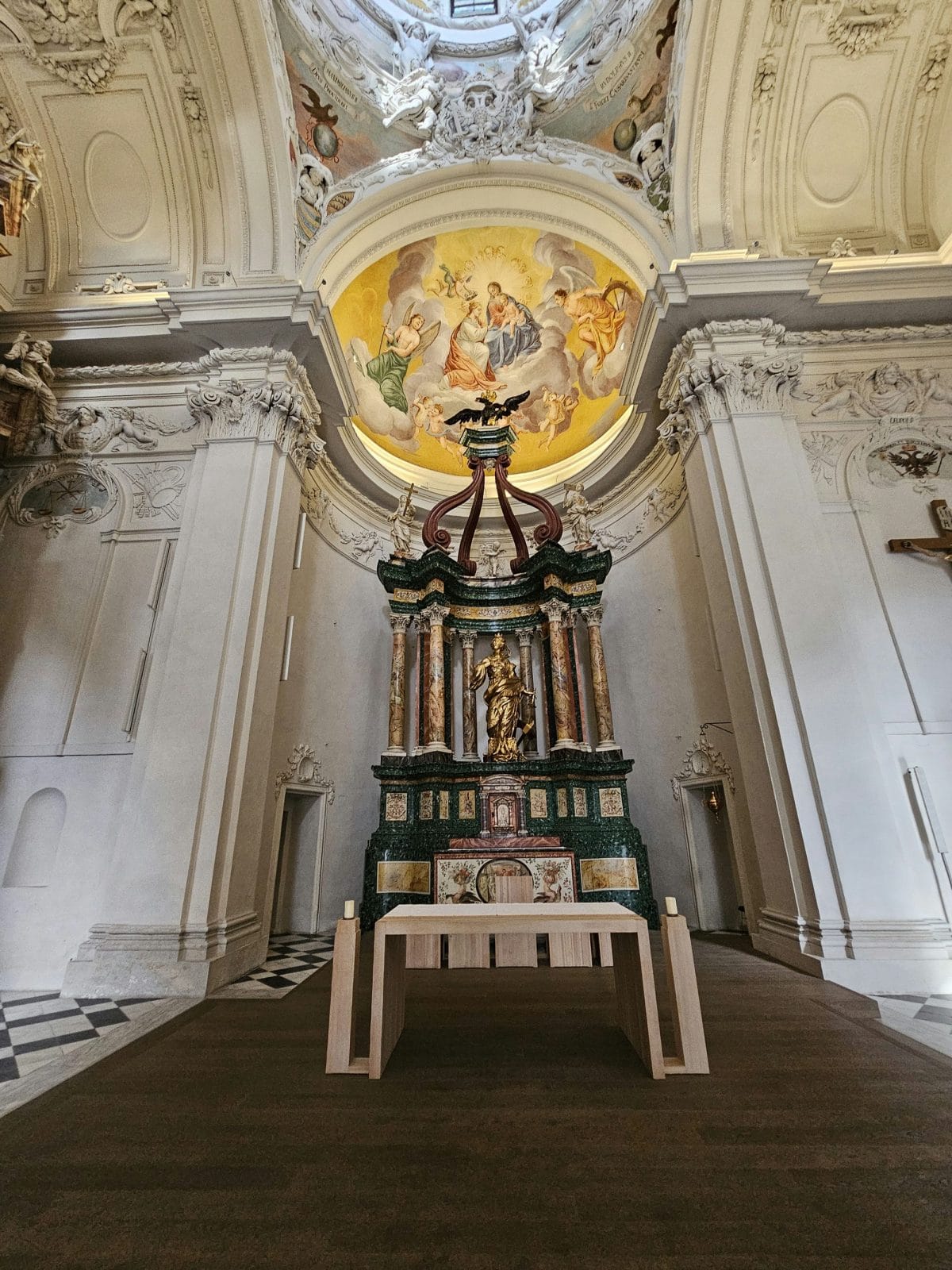
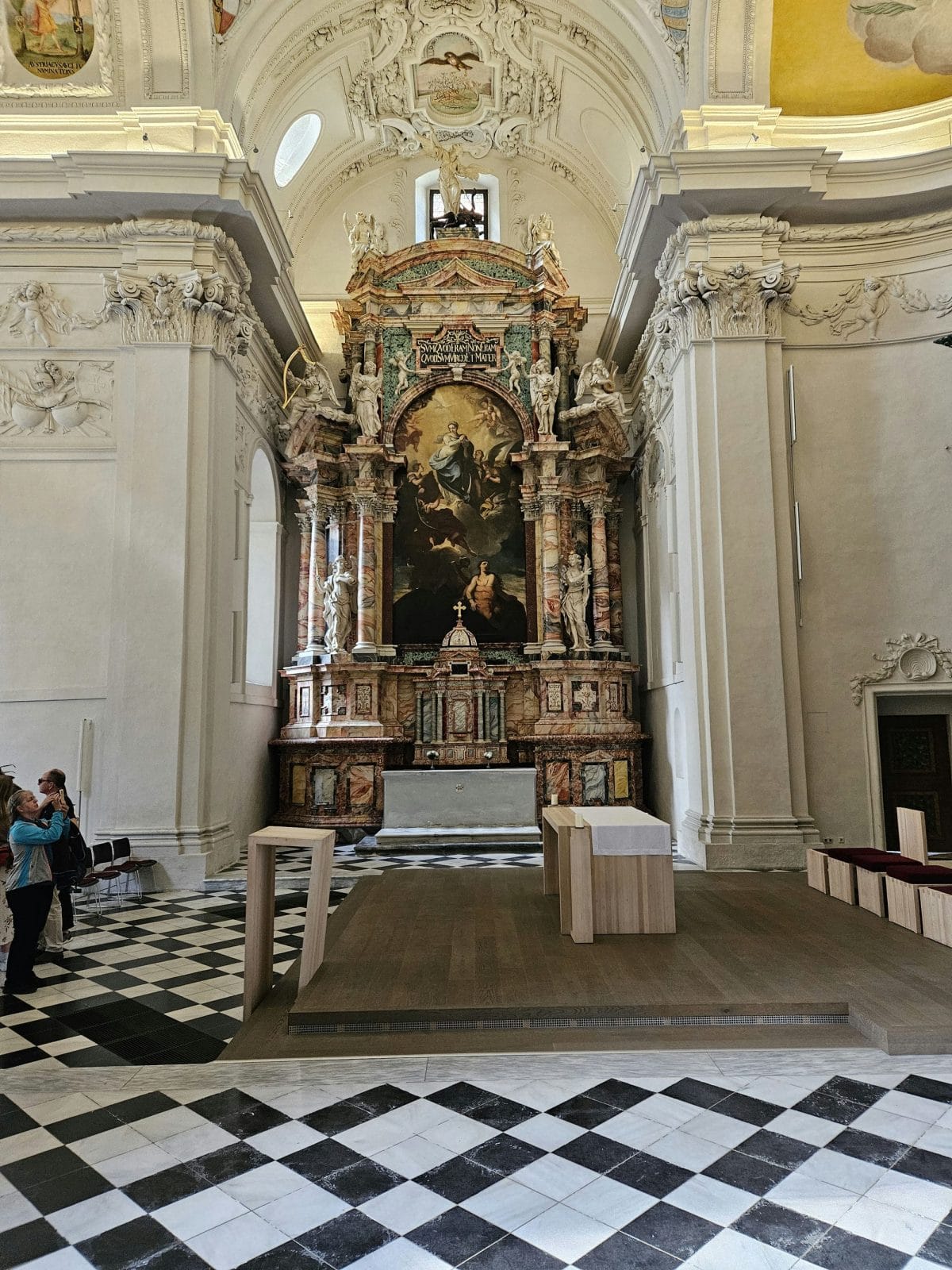
The altars in the building were pretty special, with lots of marble and decorative elements. The high altar, AKA St Catherine’s altar, is nice with many features, including a marble structure topped with the Habsburg eagle. St Mary’s Altar is to the left of the main altar.
Opening Times & Prices
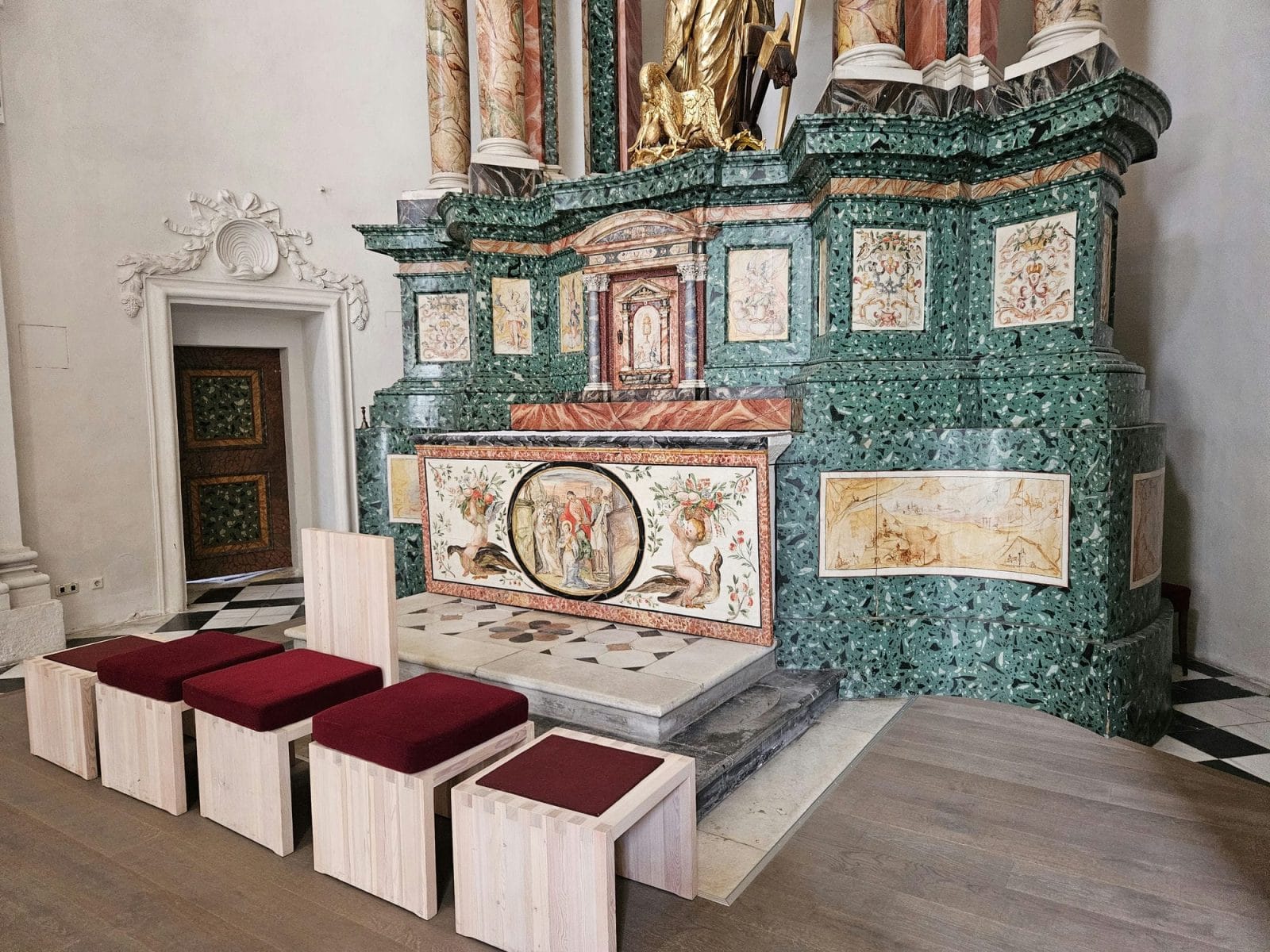
On my visit, the mausoleum was free to enter, which was nice. You can find out about opening times on their website. You can arrange private tours of the site by appointment. It was quiet on my visit in May, and only a few other visitors were mooching around.