
Things To Do In Plovdiv: Roman Attractions, Walks & Old Town
Plovdiv in Bulgaria is a fantastic city to visit, and there are lots of things to do. The city offers a great selection of tourist attractions, including many ancient Roman and medieval sites. I spent a few weeks enjoying what Plovdiv has to offer and saw loads.
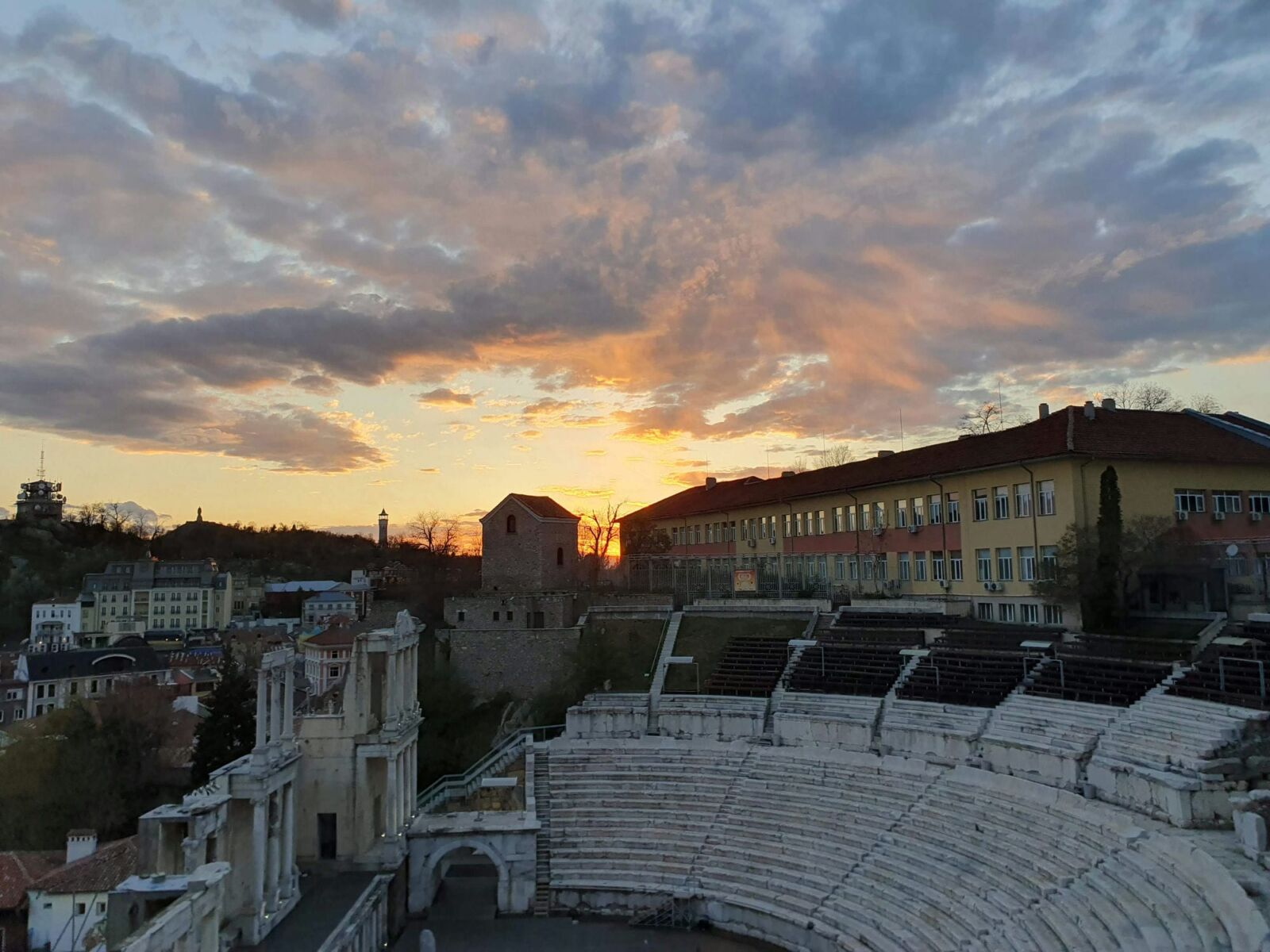
Plovdiv, Bulgaria, is quite a cheap city to spend time in; I didn’t break the bank and got to see everything that piqued my interest.
Best Things to Do in Plovdiv
Disclosure! Keep in mind that some links in these posts are affiliate links. If you click one of them, I may earn a small commission (for which I’m extremely grateful) at no extra cost to you. Thanks for visiting!
For first-time visitors, the best things to do in Plovdiv include visiting the Ancient Theatre of Philippopolis, exploring the Old Town, seeing the Roman Stadium, spending time in Kapana, visiting the Bishop’s Basilica mosaics and climbing one of the city’s hills for the views.
Plovdiv is especially good for Roman history, colourful architecture, museums, churches and food. If you’re short on time, one of the various tours listed on the Viator website might be a good fit.
Roman Sites & Ancient History
Ancient Theatre of Philippopolis
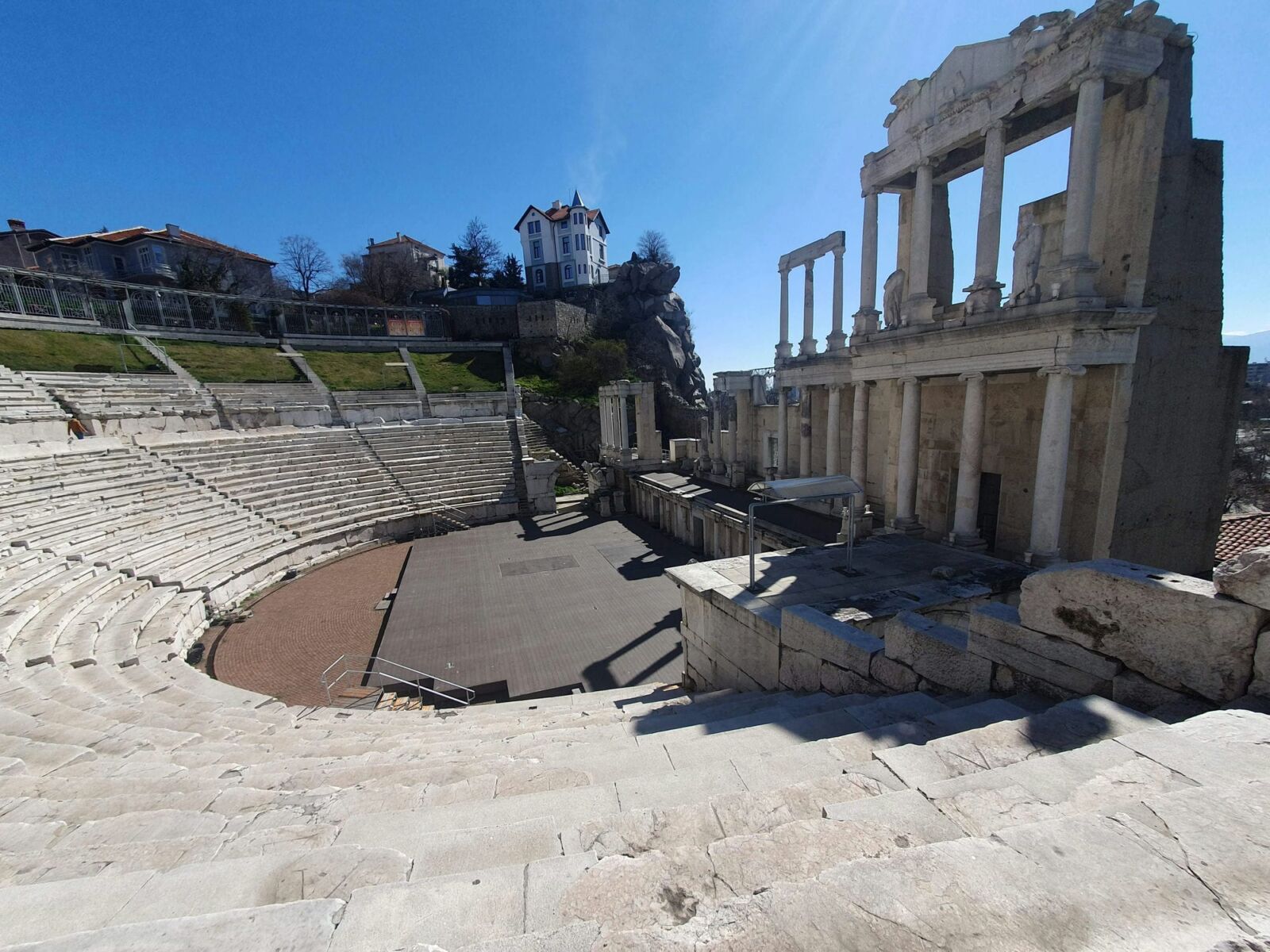
The Ancient Theatre of Philippopolis is a popular tourist attraction for visitors and for watching performing arts. It is a restored ancient Roman theatre and was one of the main public buildings of the old city of Philippopolis. The amphitheatre was in use between the early 1st century and the end of the 4th century. It is one of the best-preserved ancient theatres in the world.
Bishop’s Basilica of Philippopolis
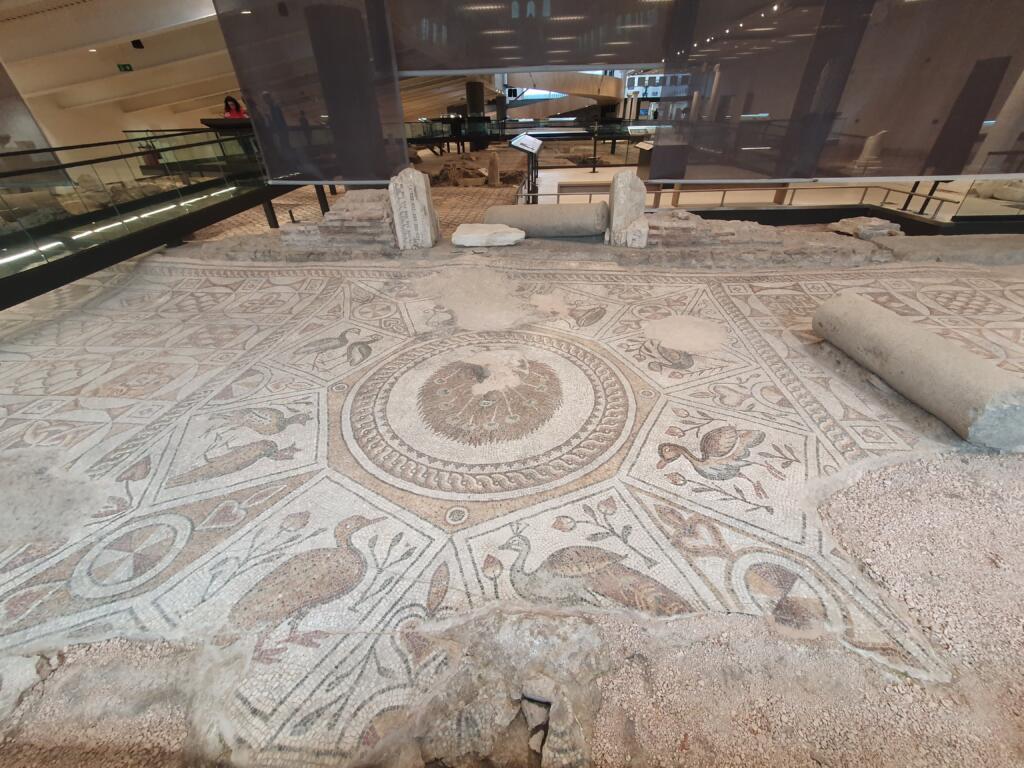
The Bishop’s Basilica of Philippopolis is an amazing place if you love Roman history and seeing some impressive mosaics. The entire museum is full of artefacts, including mosaics. One of the most impressive is the mosaic at the entrance of the former church, featuring a peacock.
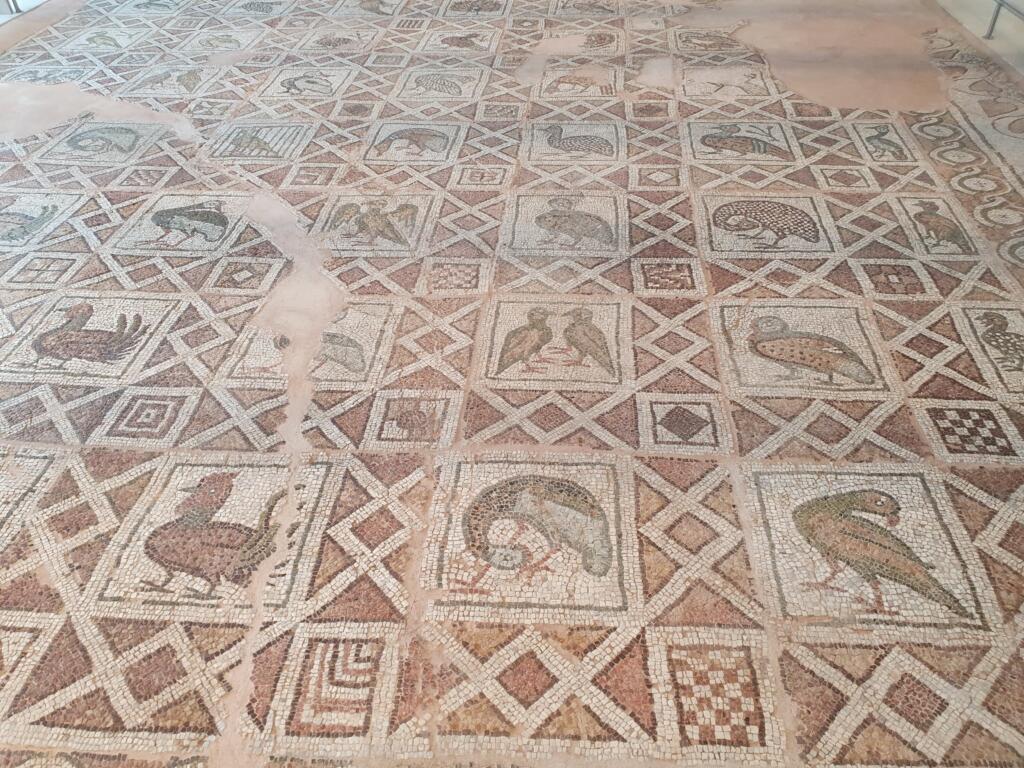
The museum also caters for children and has a few engaging, on-theme games on the top floor. You can find out more about the mosaics and plan a visit on their website.
Roman Forum of Philippopolis
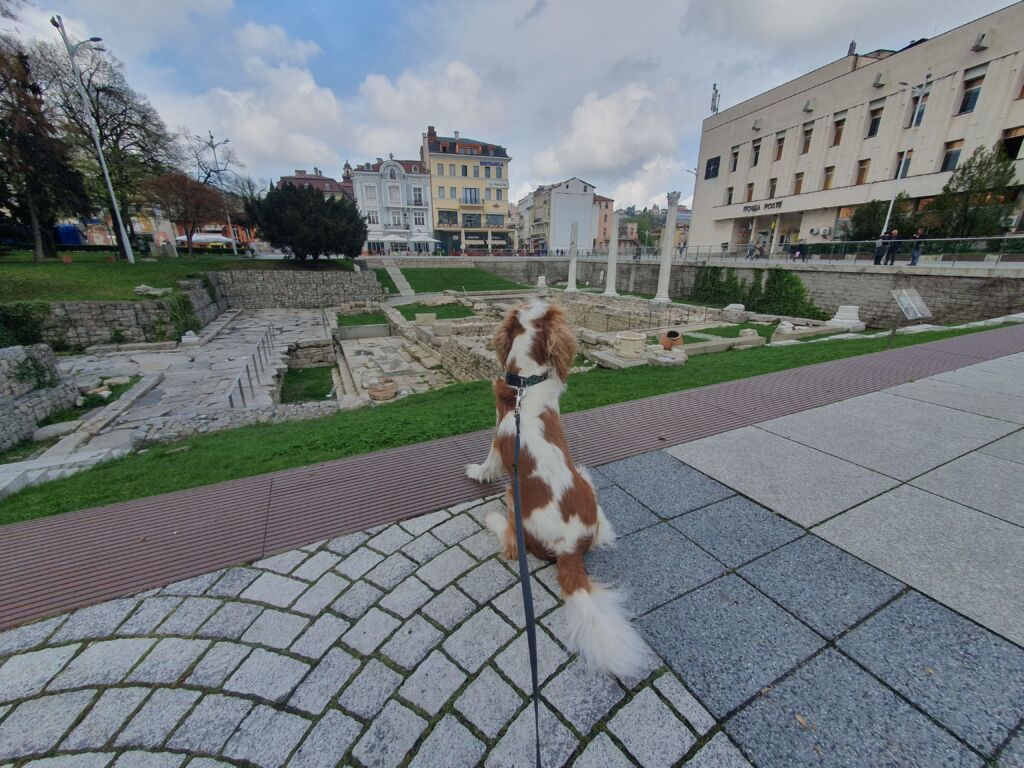
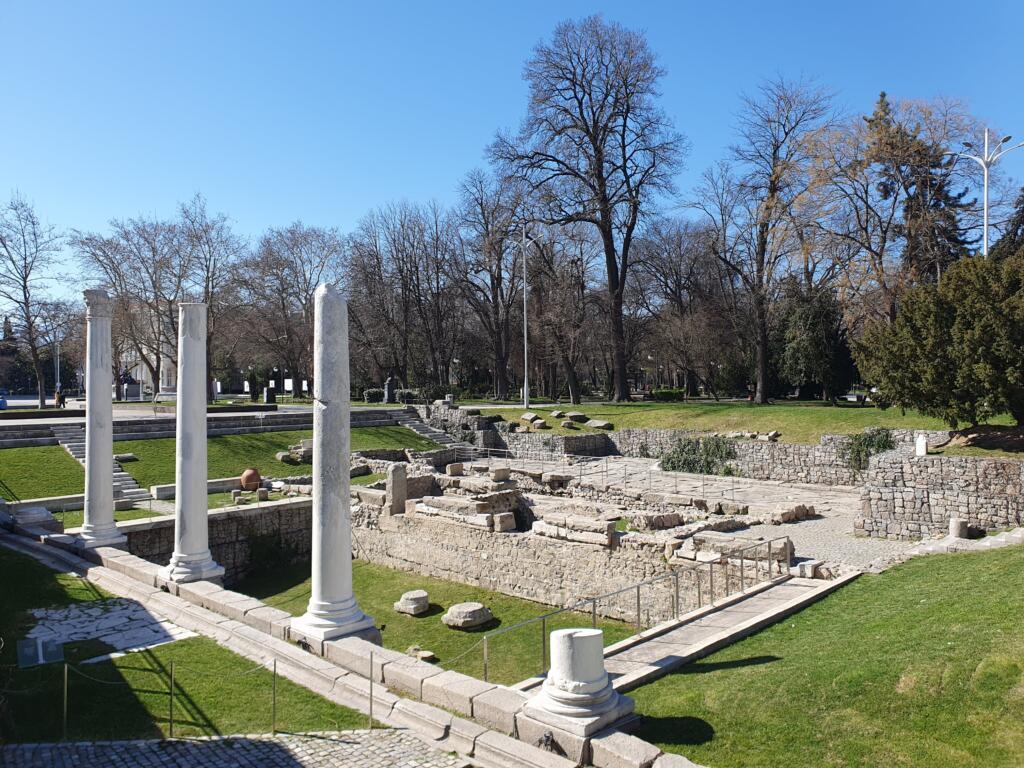
Another ancient site to visit is the Roman Forum of Philippopolis. Entry is free, and it’s a public park to explore. The Roman Forum of Philippopolis is rectangular. The ruins of several ancient administrative buildings surround it.
The forum was the centre of public, administrative, commercial and religious life in the ancient city of Philippopolis. The forum served as a market thoroughfare, where merchants and people from the city and the region gathered to trade. Common items traded included Thracian grain, wood, honey, fine pottery, and bronze vessels.
Odeon of Philippopolis
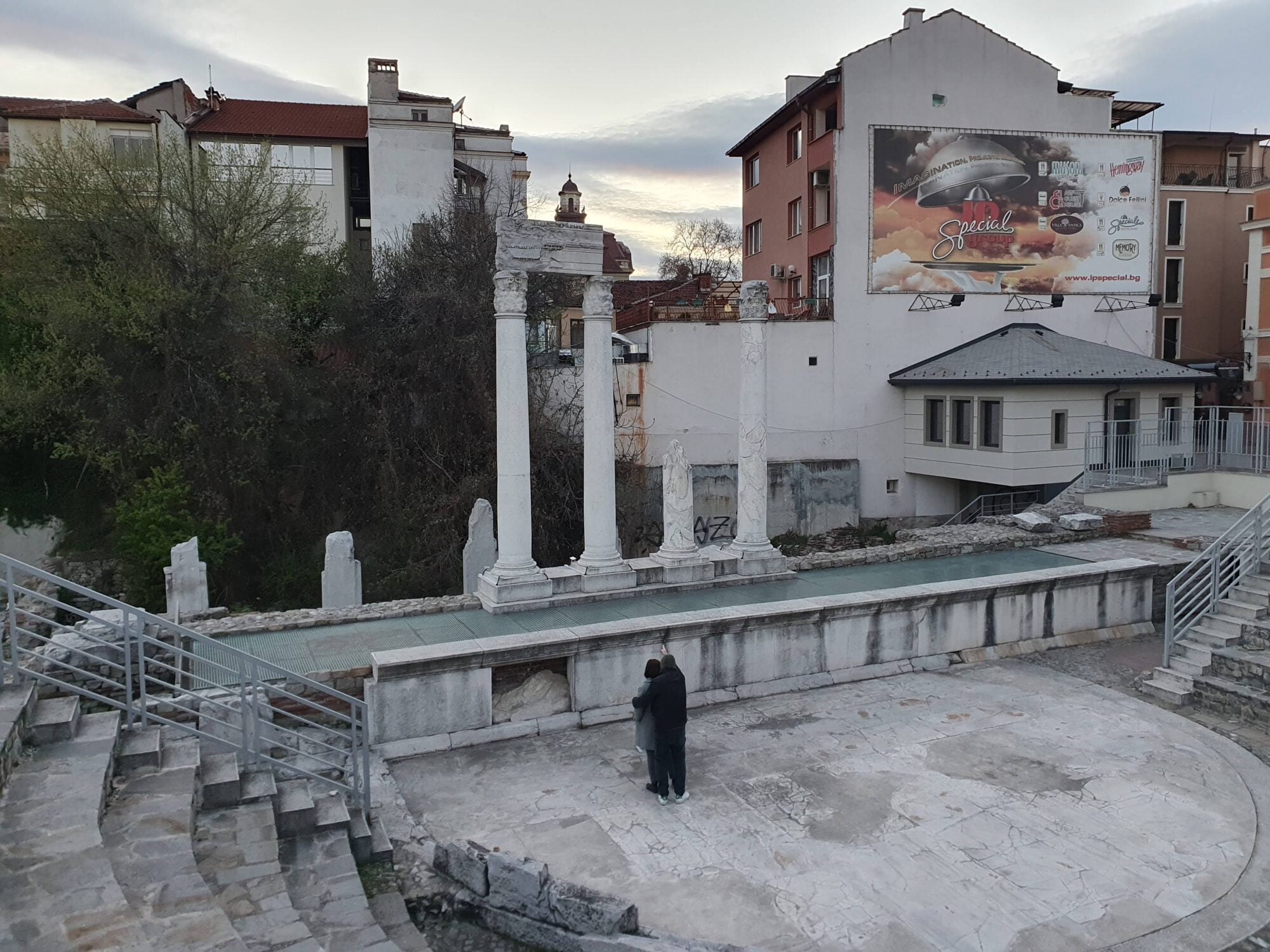
Near the forum is the Odeon of Philippopolis, another Ancient Roman site. Both were once linked; however, subsequent construction separated them. This is also free to visit, and it’s nice to see the remains. As with most Roman sites in the city, it blends with newer buildings.
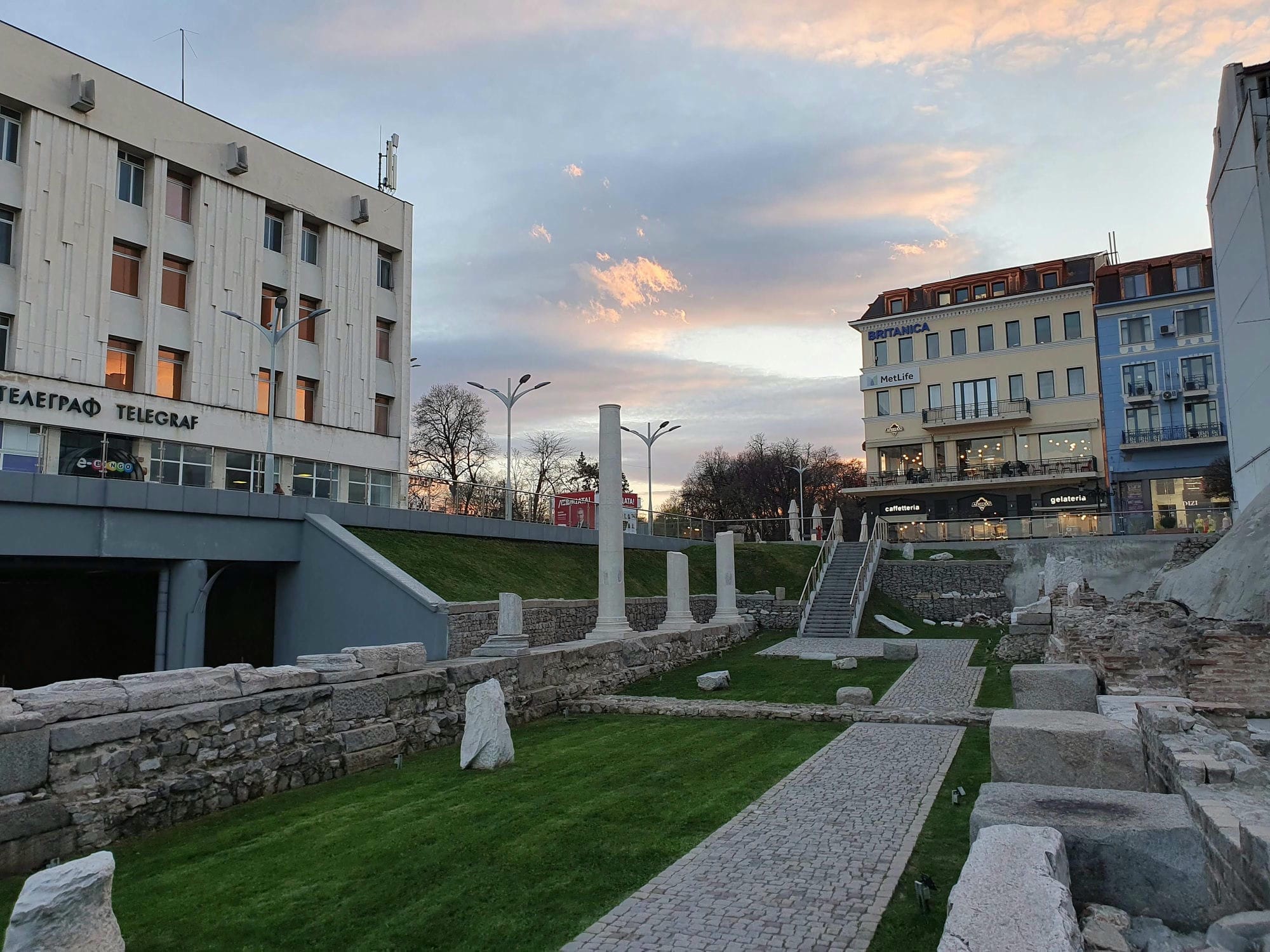
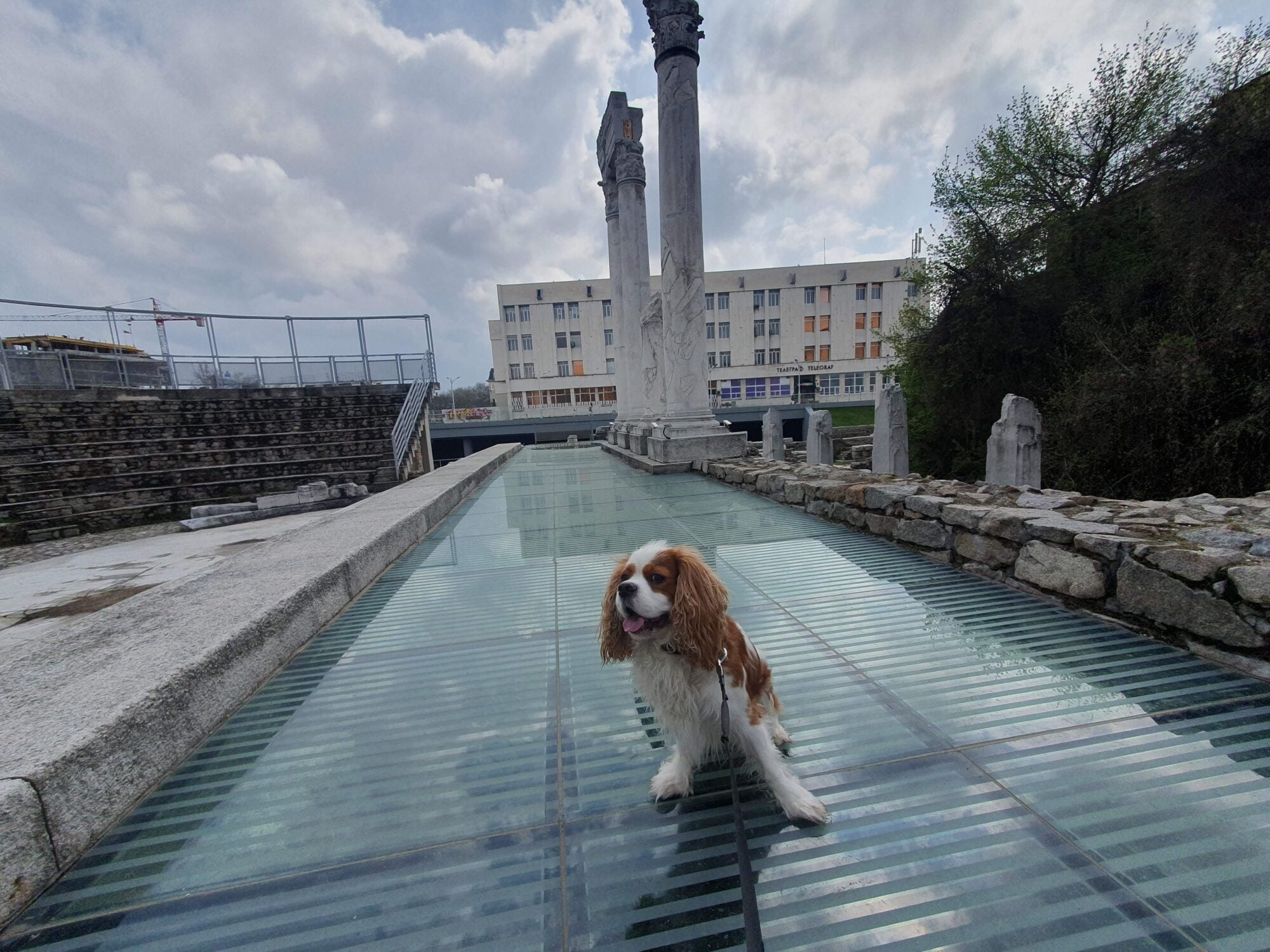
The Odeon of Philippopolis was the meeting place of the city council of ancient Plovdiv. It was also used as a theatre. The Odeon was built over four distinct periods, which started in the 2nd century AD. The Odeon shows how important Philippopolis was as a cultural and political centre at the time.
Ancient Stadium of Philippopolis & 3D Cinema
Another Roman site to visit is the Ancient Stadium of Philippopolis. This is right next to the mosque in the city’s heart. You can visit the stadium for free and see some artefacts outside. You can even climb on the stadium’s old marble seats.
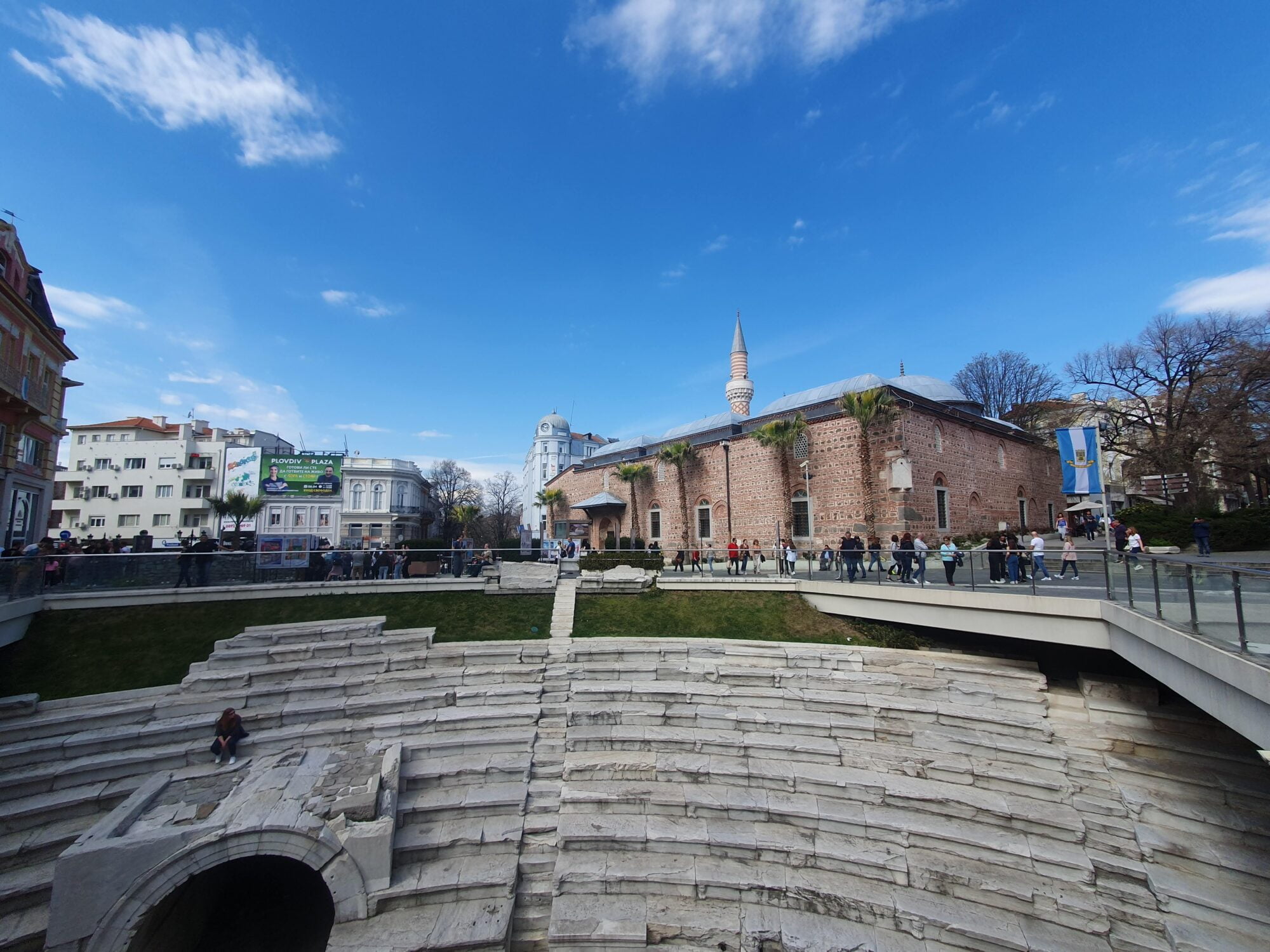
The Stadium of Philippopolis was an ancient Roman stadium built in the 2nd century AD. This was during the Roman imperial period. It is among the largest and best-preserved buildings from the Roman Empire in the Balkans.
When it was built, Philippopolis, now Plovdiv, was the capital of the Roman province of Thrace. The 3D cinema tells the story of the Ancient Stadium of Philippopolis and the games that were held there.
Trakart Cultural Centre
The Trakart Cultural Centre is another cool Roman sight to visit. It is in an underpass on the way to the more popular Basilica mosaics. Inside is a stunning mosaic and other Roman artefacts.
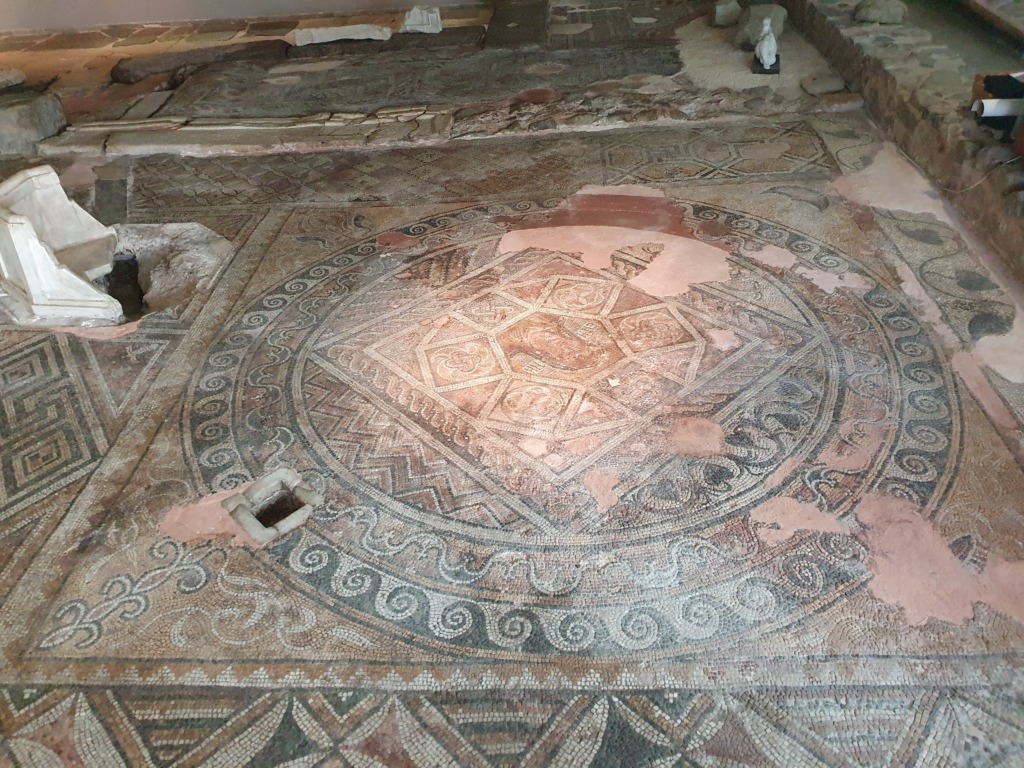
Basically, the site was the House of Eirene, an ancient Roman peristyle house with lavish mosaic floors. The Romans built the house in Philippopolis during the middle of the 3rd century AD. The house was named after the Greek goddess Eirene, who is depicted in the central mosaic. You can find out more information on their website.
The Small Basilica
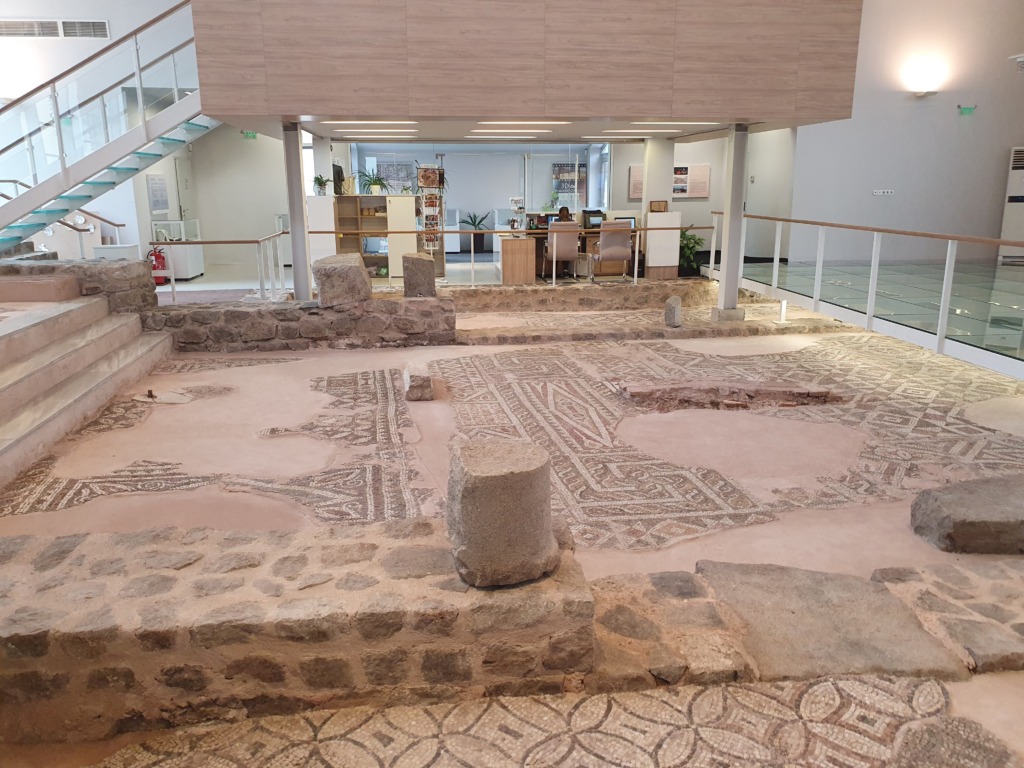
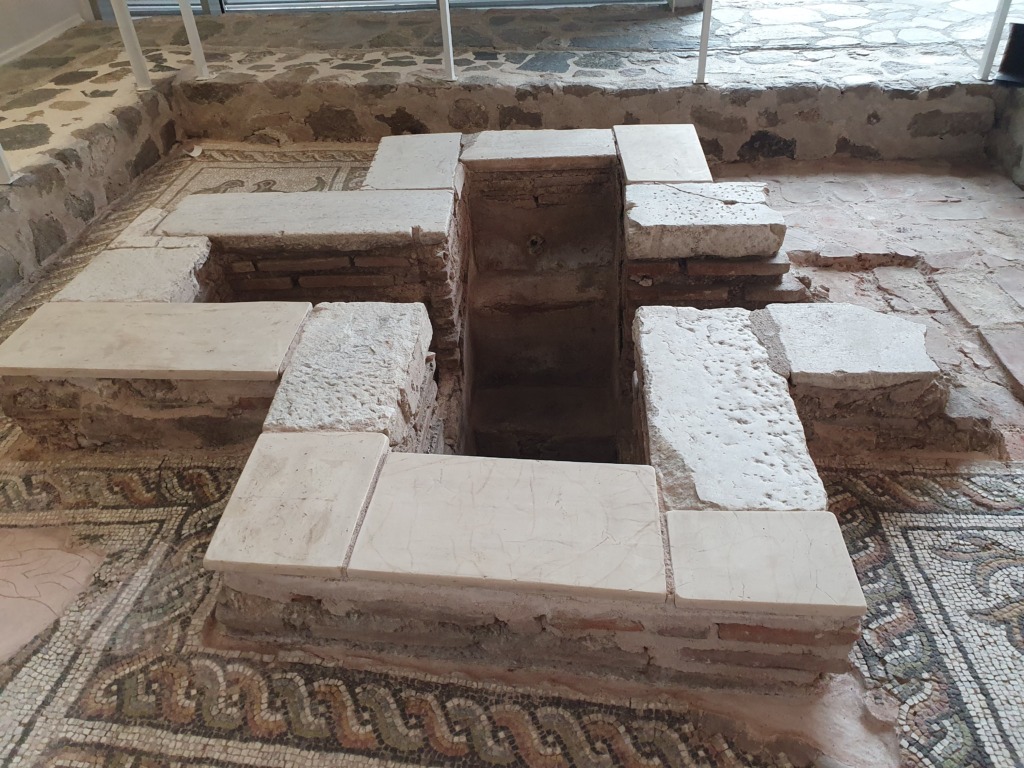
Another Roman site to visit is the Small Basilica. You can buy tickets for the Small Basilica with a combined ticket to the nearby Bishop’s Basilica of Philippopolis. Archaeologists discovered this early Christian church in 1988.
The Romans built the basilica during the second half of the 5th century. It was decorated with a marble colonnade, marble altar wall, pulpit, and synthronon. The floors were covered with a mosaic with geometrical motifs.
Roman Aqueduct at Bunardjik Hill
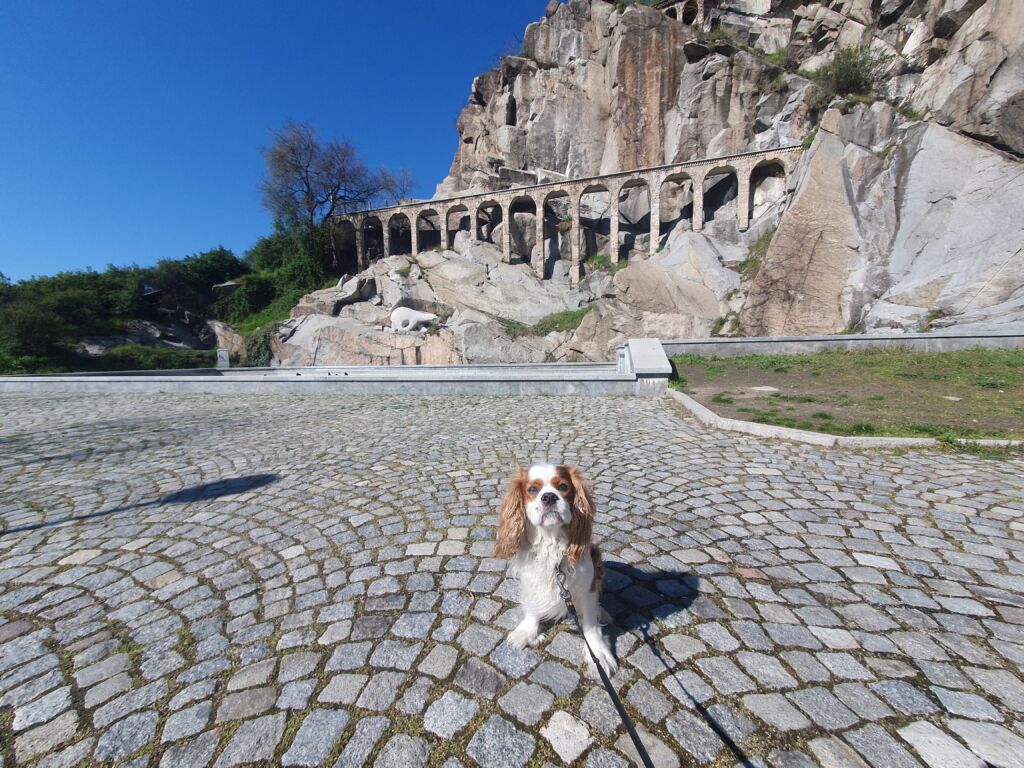
The aqueduct at Bunardjik Hill is an impressive Roman structure that once carried water to the city. The Romans built the aqueduct in the 2nd and 3rd centuries. It supplied water from the mountain springs at the foot of the Rhodope Mountains.
Old Town, Museums & Historic Houses
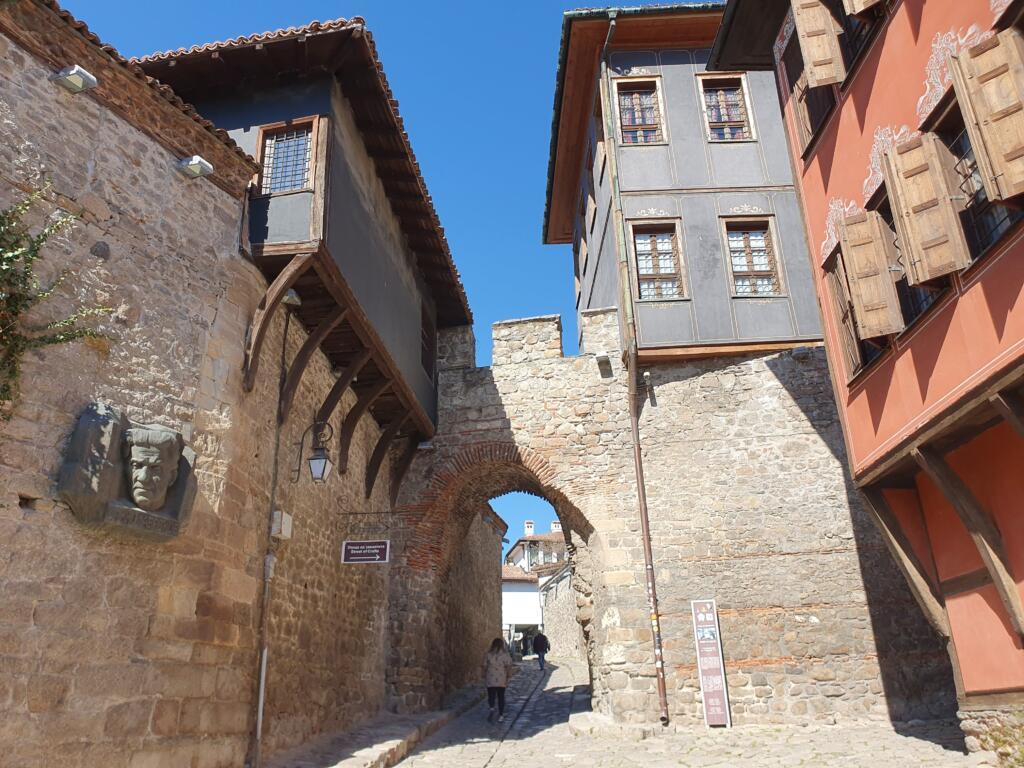
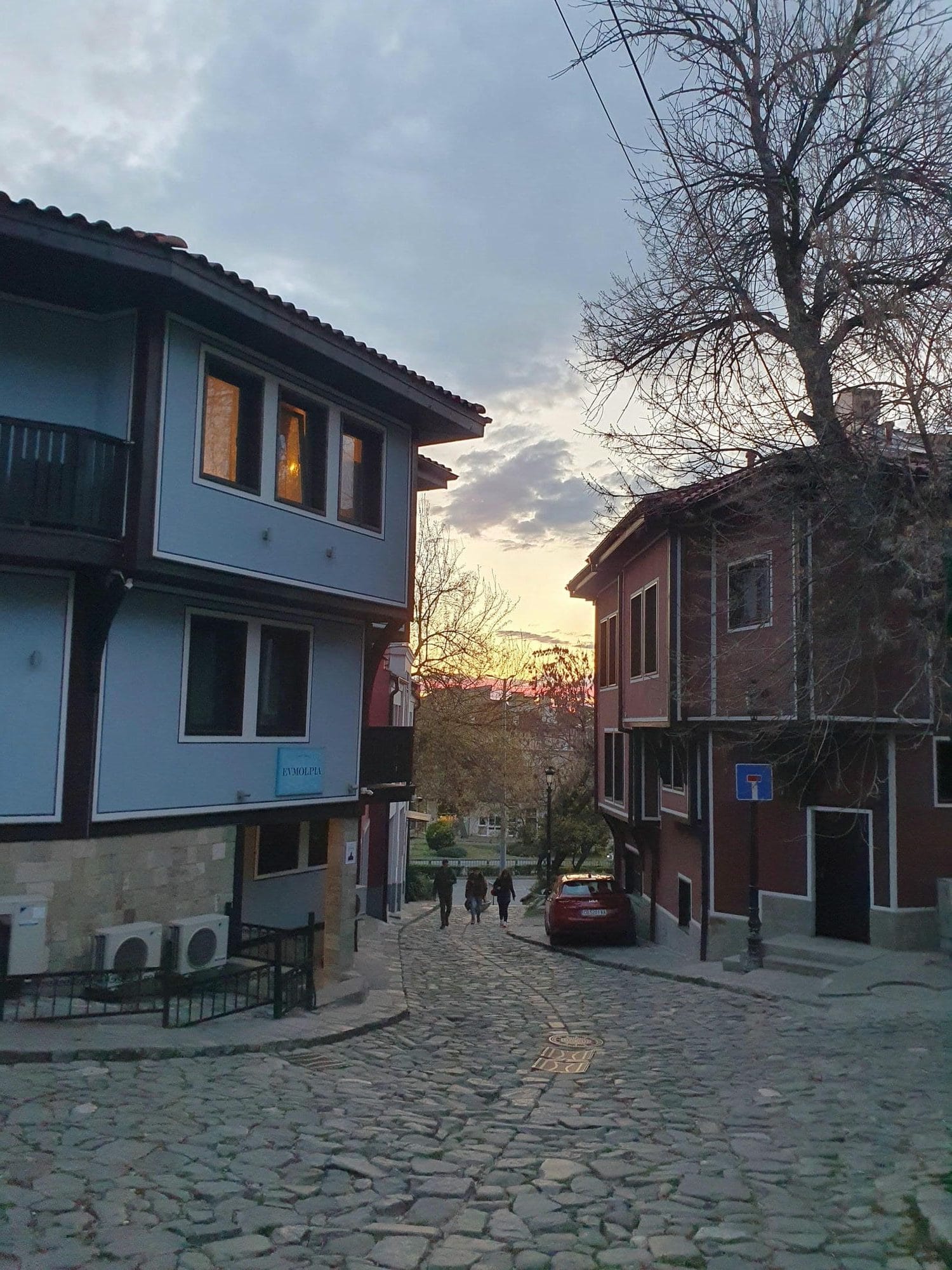
The old town has many beautiful features, including pretty buildings, medieval gates, and historic churches. The old town also has many places with colourful gardens, making for a pleasant walk.
Regional Ethnographic Museum
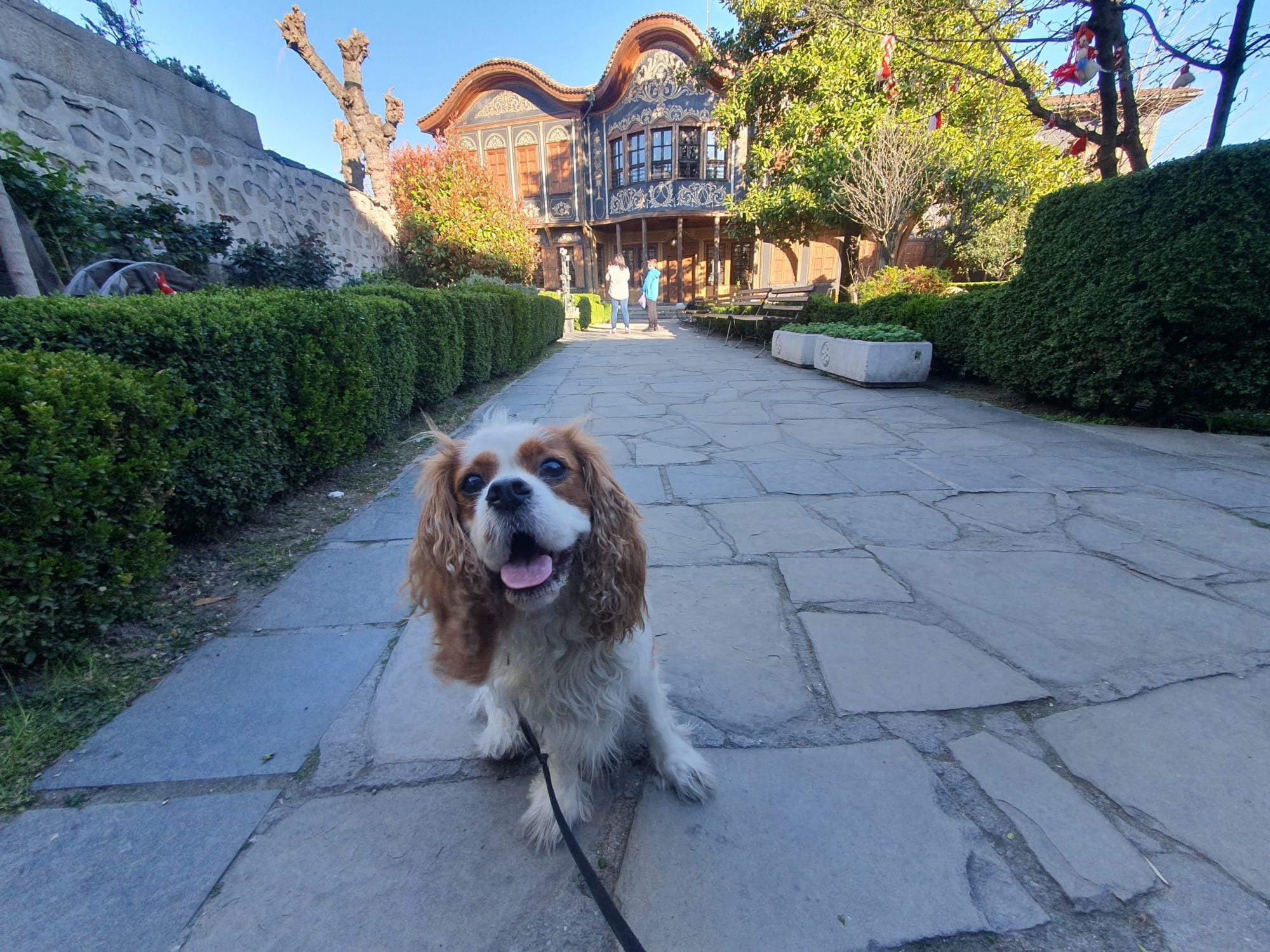
One of my favourite buildings is the Regional Ethnographic Museum. It is housed in a grand 19th-century building with a decorative fascia. The Regional Ethnographic Museum has a lovely garden; visitors can pop in for free and enjoy the grounds.
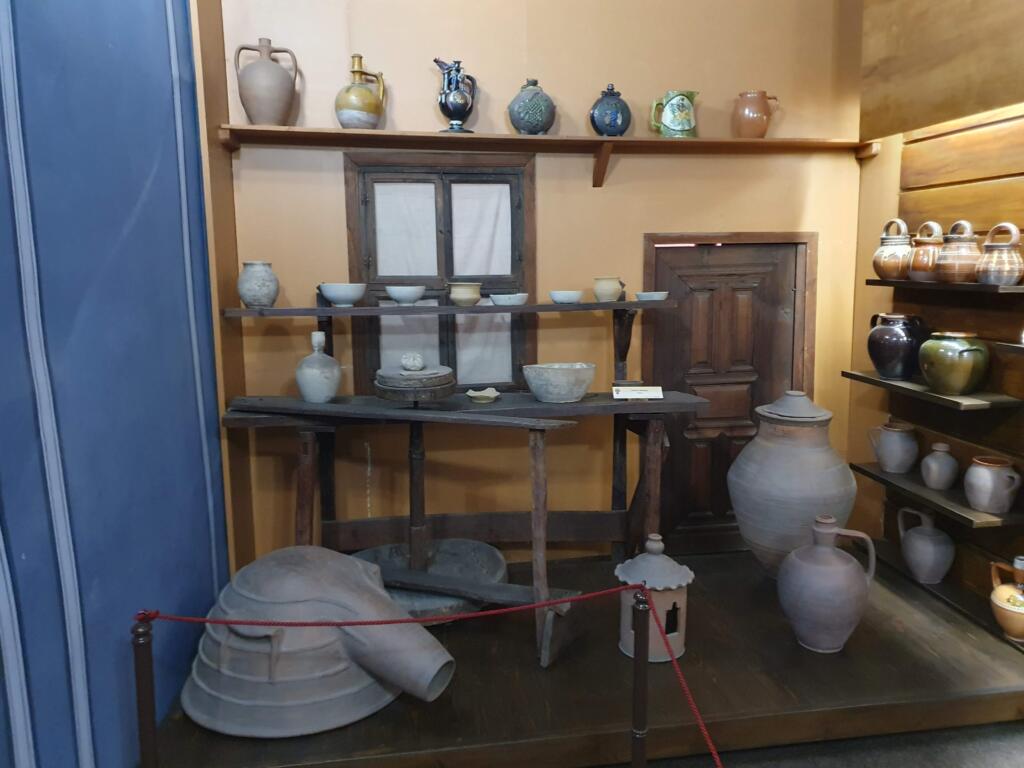
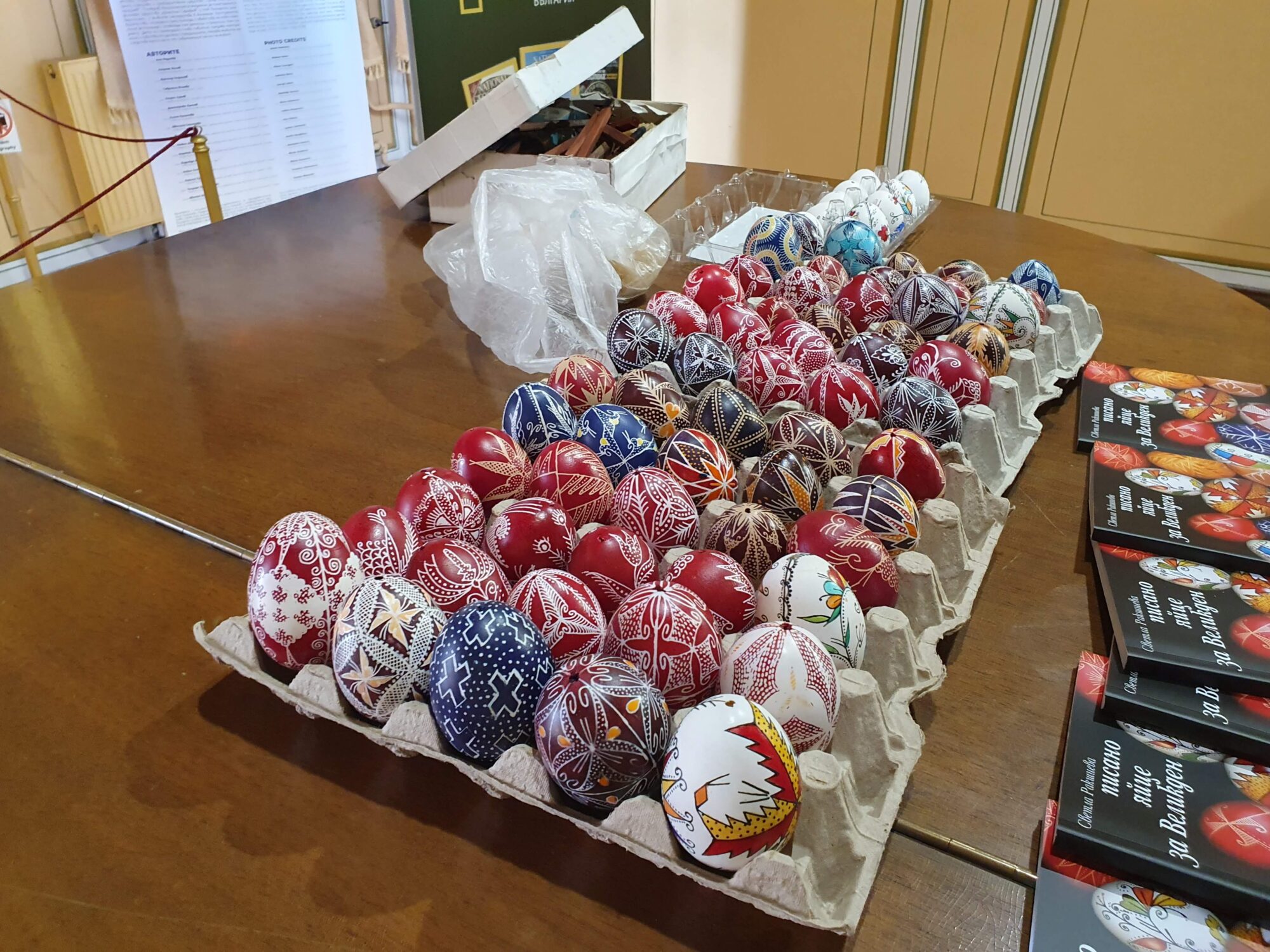
Inside, the museum is fascinating and tells the story of how Bulgarians lived in the past. The museum covered clothing, agriculture, winemaking, and more. A fascinating section was about the local tobacco crop, which has been grown in the area since the 17th century.
A firm favourite product of ours, local honey, was featured in the museum, as were the popular rose crops. As we visited during the Easter break, the museum had traditional Easter egg-painting workshops.
Regional Archaeological Museum
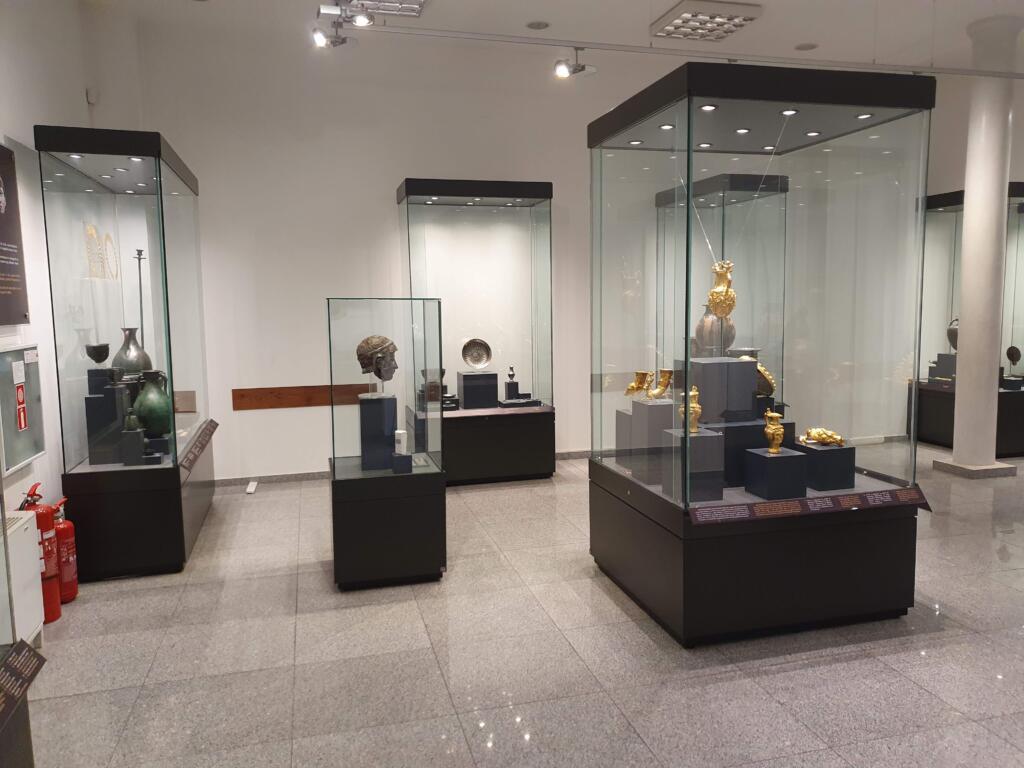
An interesting museum, a short walk from the centre, is the Regional Archaeological Museum. The museum contains some impressive Roman and Thracian artefacts, including gold coins.
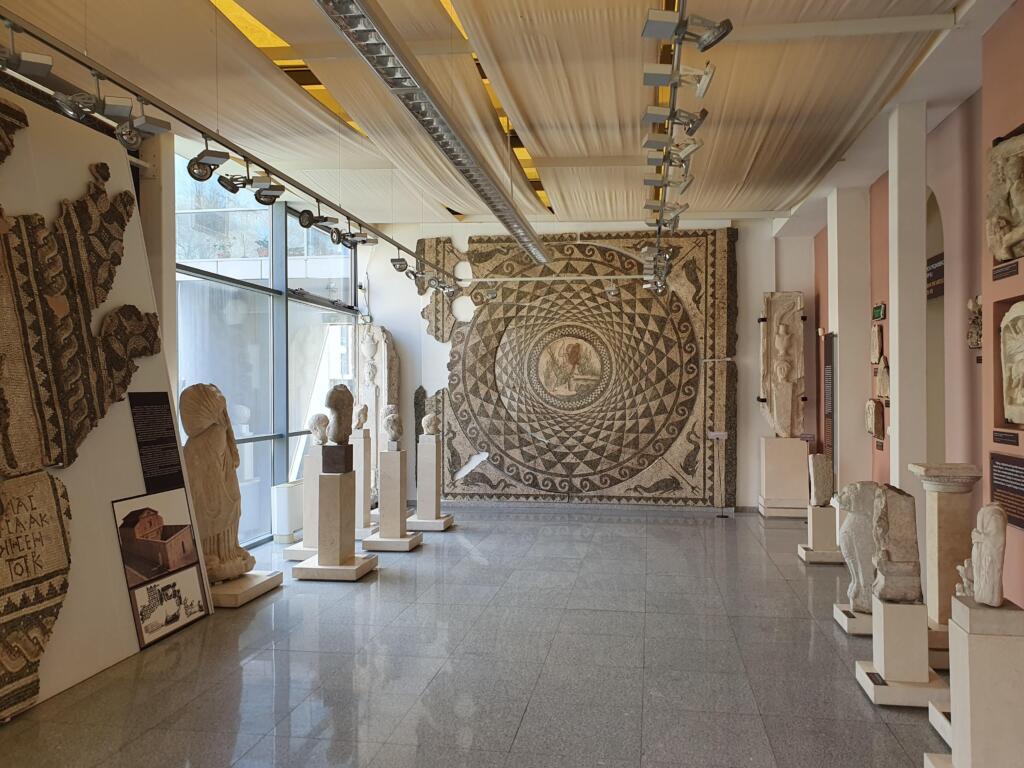
The museum covers the area’s history from the Stone Age onwards. The Roman history helped me understand more about the ancient city of Philippopolis. It also covered the era when the country was under Ottoman rule.
Regional History Museum
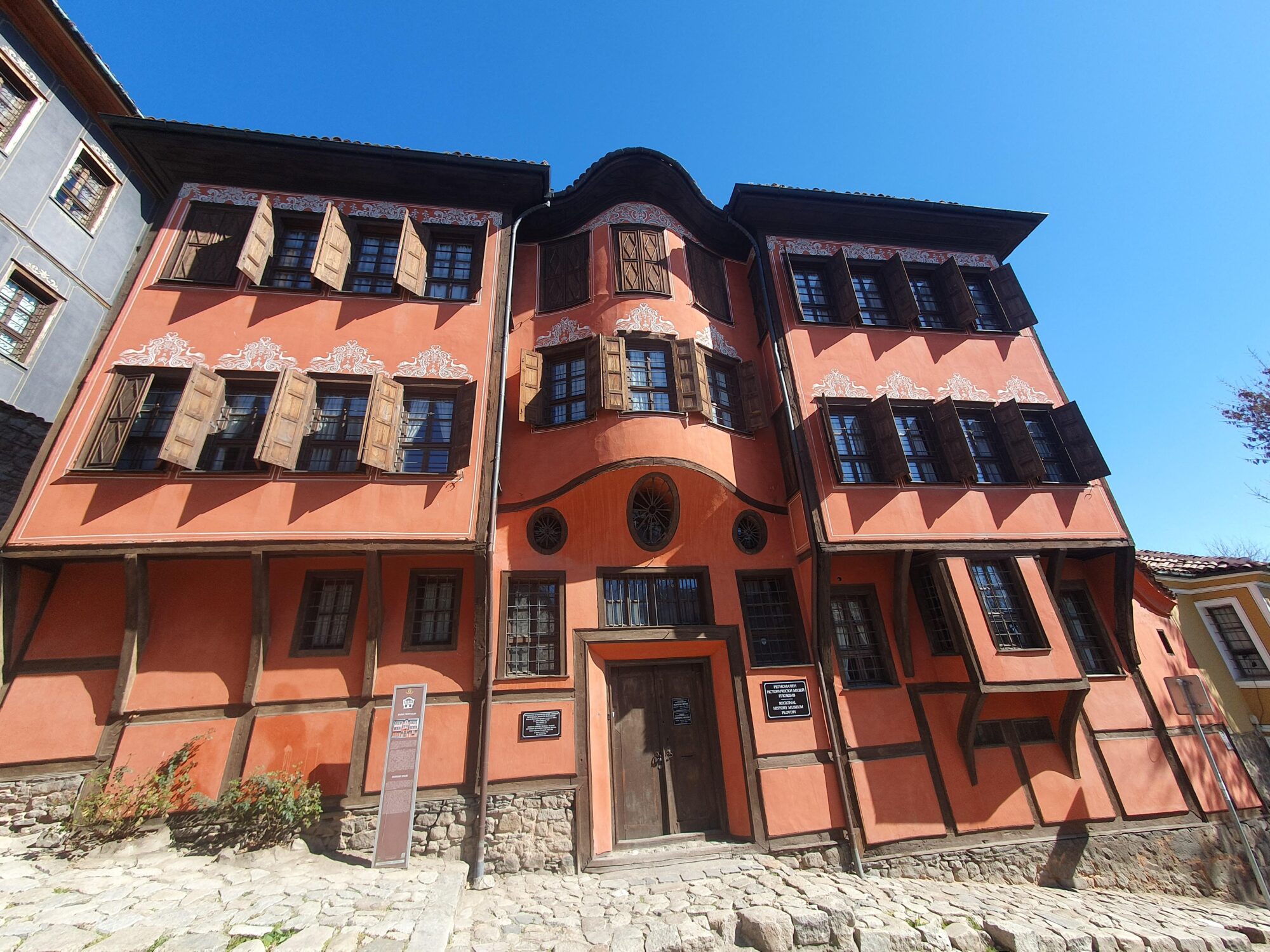
The Regional History Museum is in a gorgeous building; the gardens and interior were great to see, and the views from the windows were splendid.
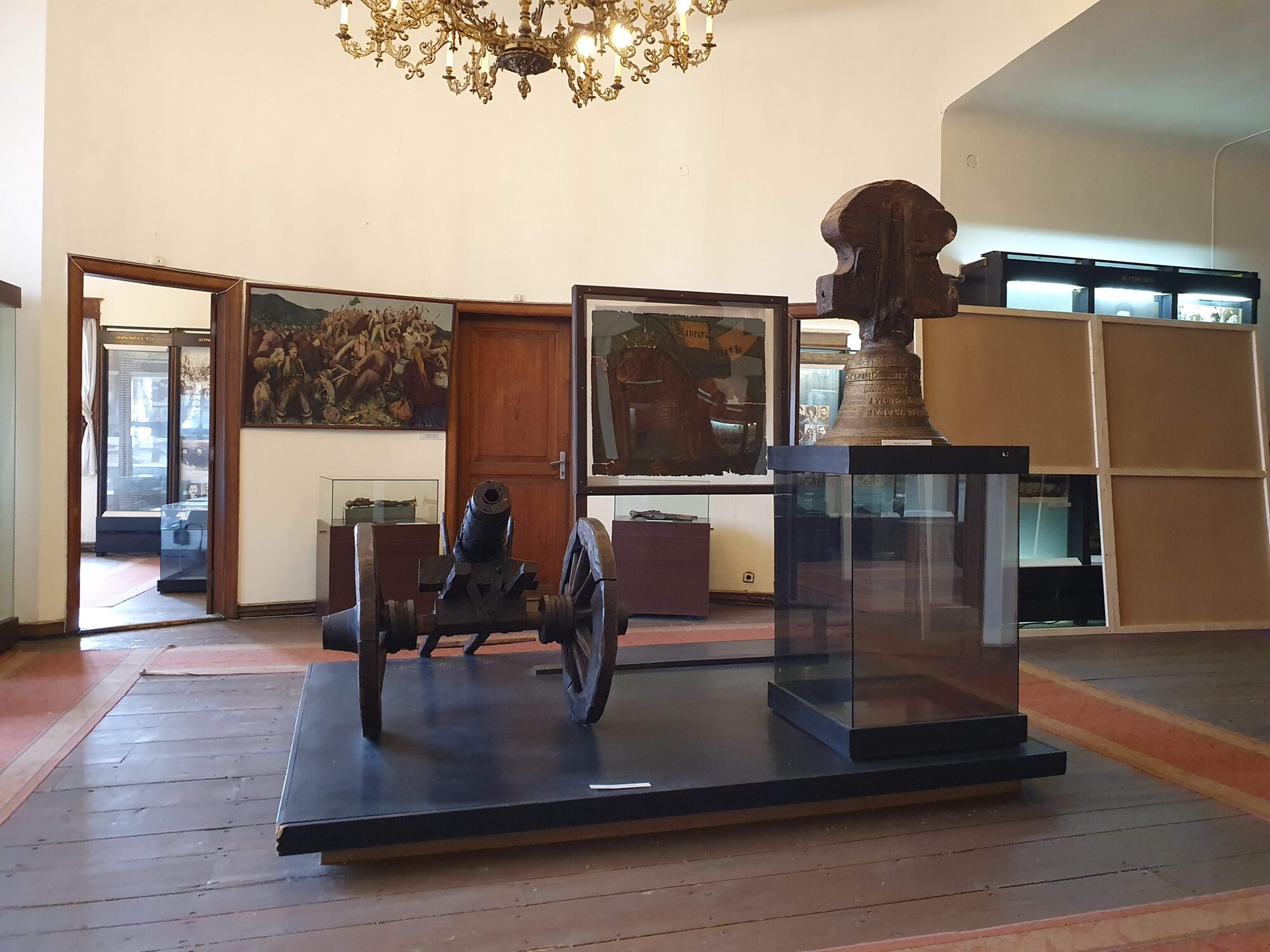
The museum covers history from the 15th to the 19th century. There are lots of nice art, weapons and other artefacts.
Early Byzantine Fortress Walls & Circular Tower

You can also see a section of the early Byzantine fortification wall of Philippopolis, which has a circular tower. The fortress wall is 3.20 m thick. This was built using alternating brick and stone. A round tower at the curve of the fortress wall served as a watchtower and for defence.
House of Stepan Hindliyan
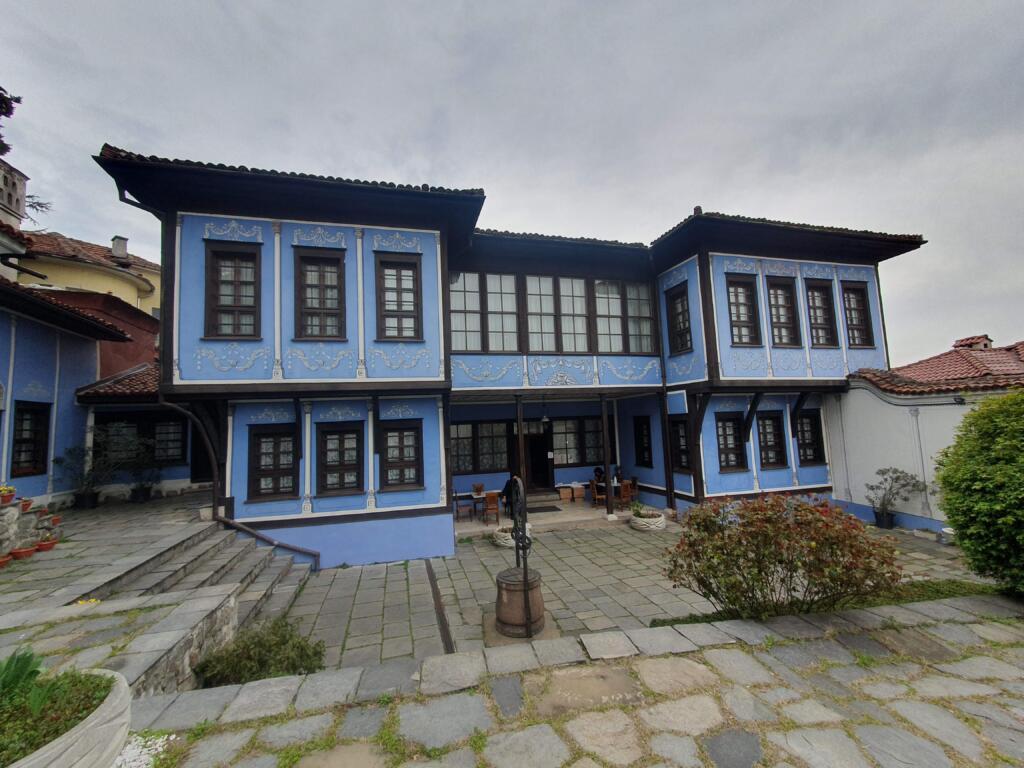
The House of Stepan Hindliyan is one of the old houses you can visit in the old town. The house was constructed in 1834 and 1835, and it’s a blue building. Some say it is one of the most beautiful buildings in the area. Stepan Hindliyan was a prominent Armenian merchant, and the luxury inside reflects this. Inside, the ground floor houses the living quarters, including one of Bulgaria’s first indoor bathrooms.
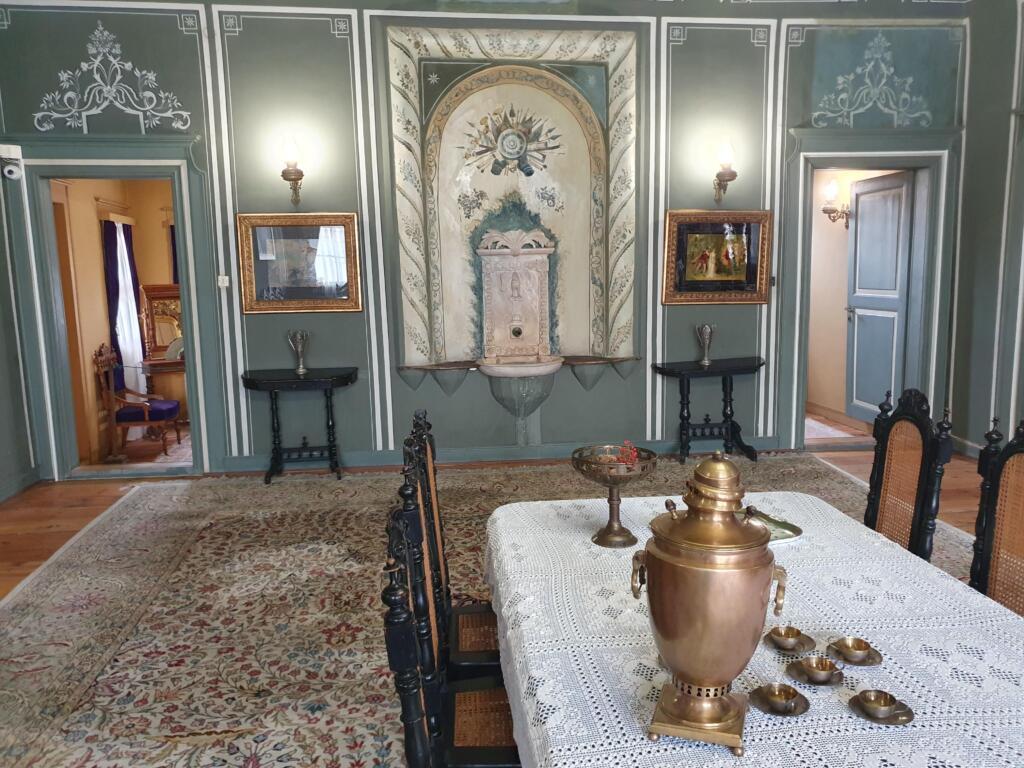
Upstairs is lavish and was used to entertain visitors; thus, it has several nice dining areas and drawing rooms.
Balabanov House
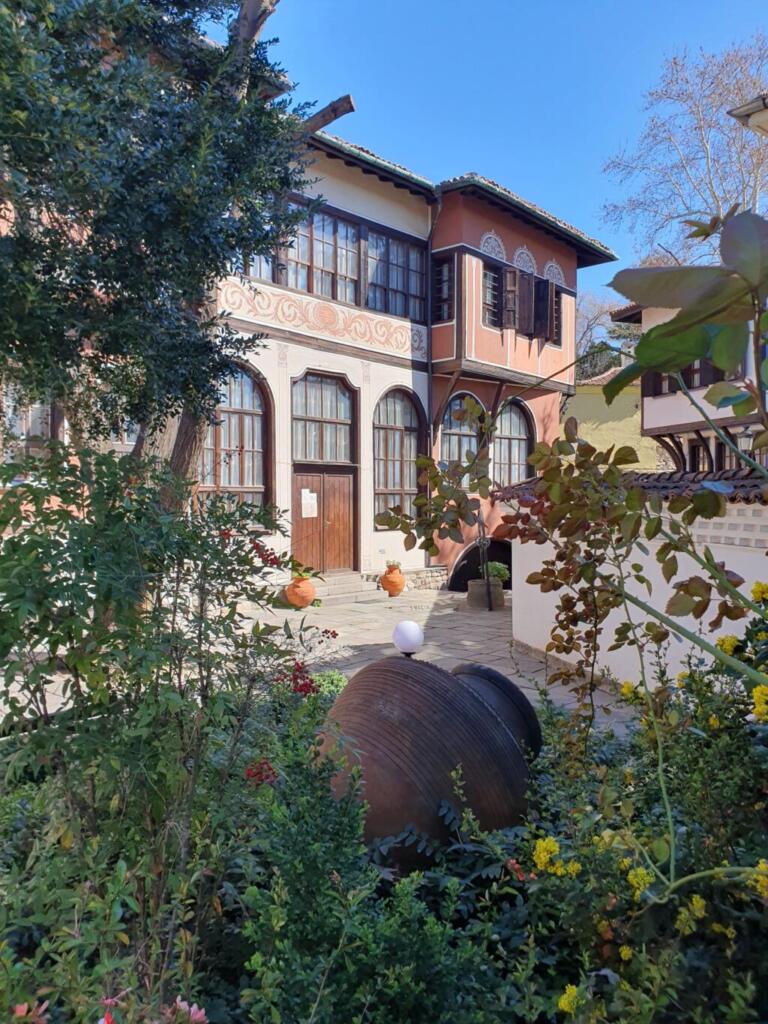
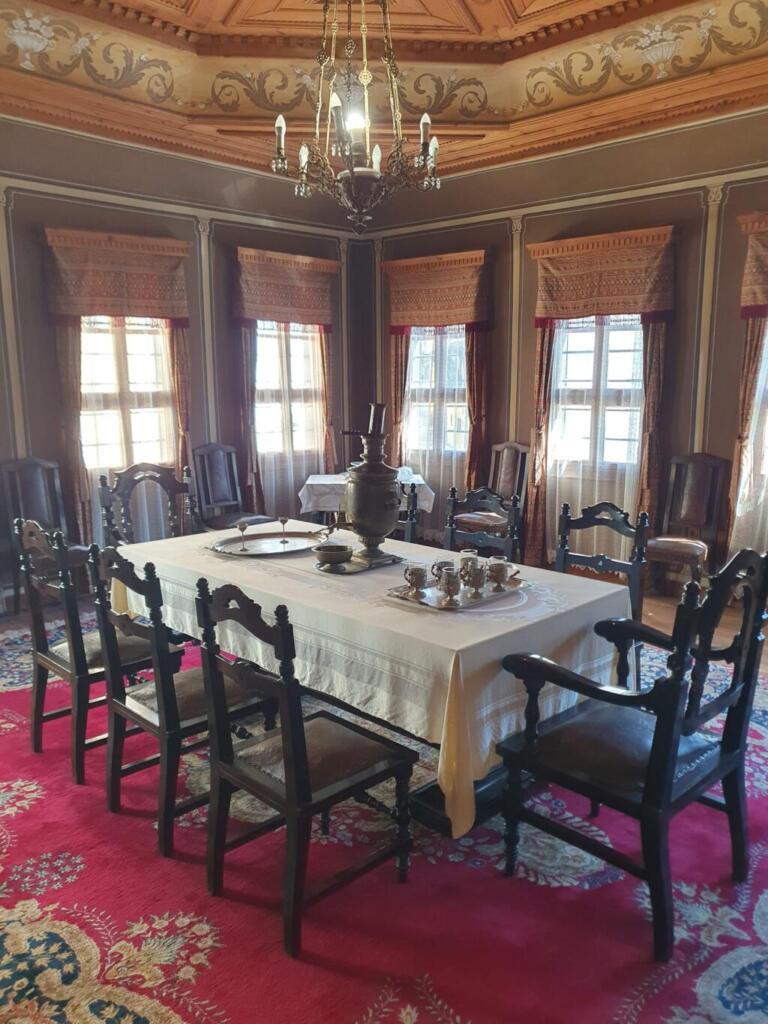
Balabanov House dates back to the early 19th century; however, it was recently rebuilt using the original plans. The interior is mostly from the Bulgarian Revival period. You can see some lavishly carved wooden ceilings, period furniture, and decorative alcoves.
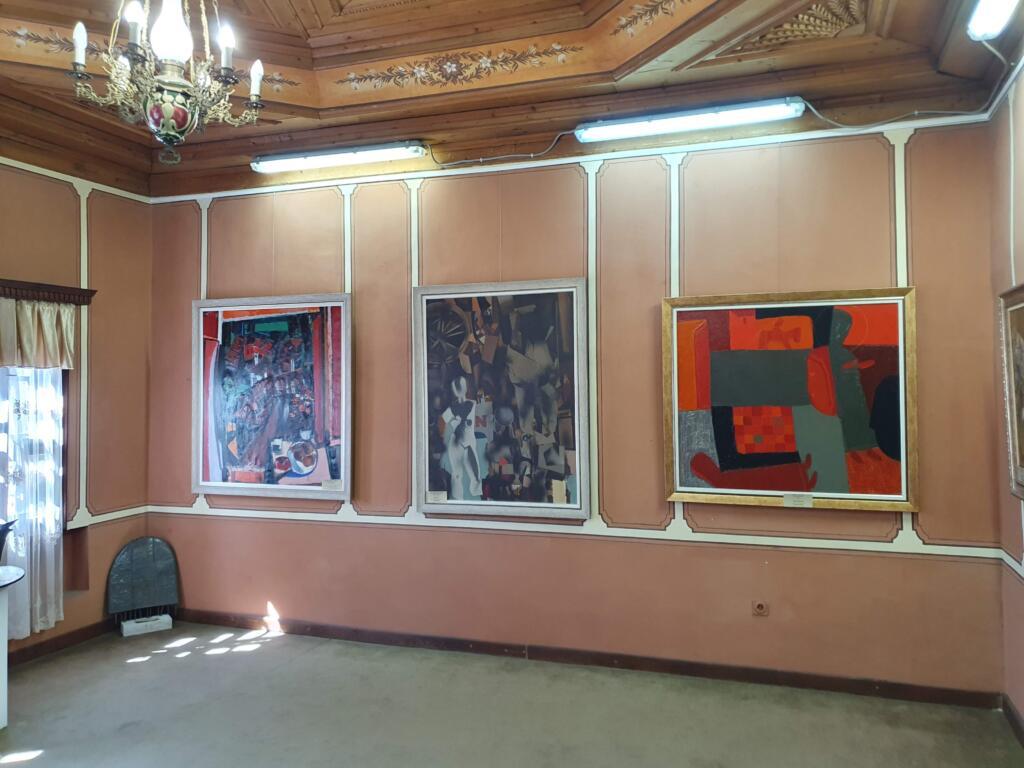
Balabanov House is also an art gallery, with paintings in the ground-floor rooms.
Nedkovich House
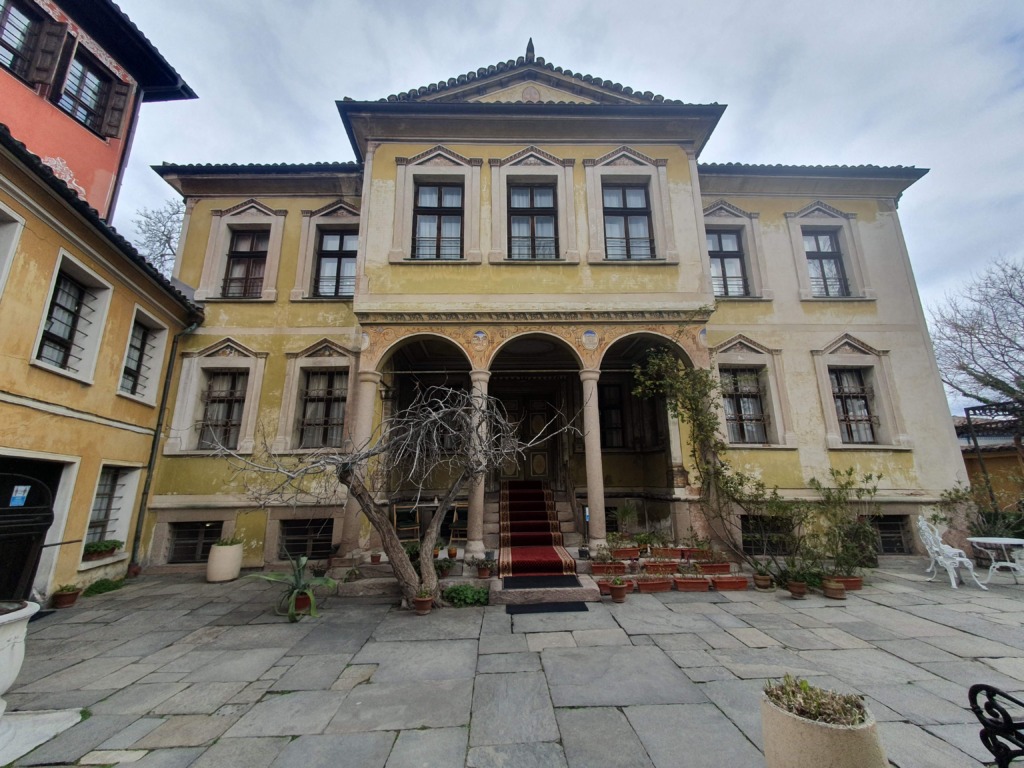
Nedkovich House is a beautiful building in the old town; it looks great from the outside. Inside, it has some lovely exhibits.
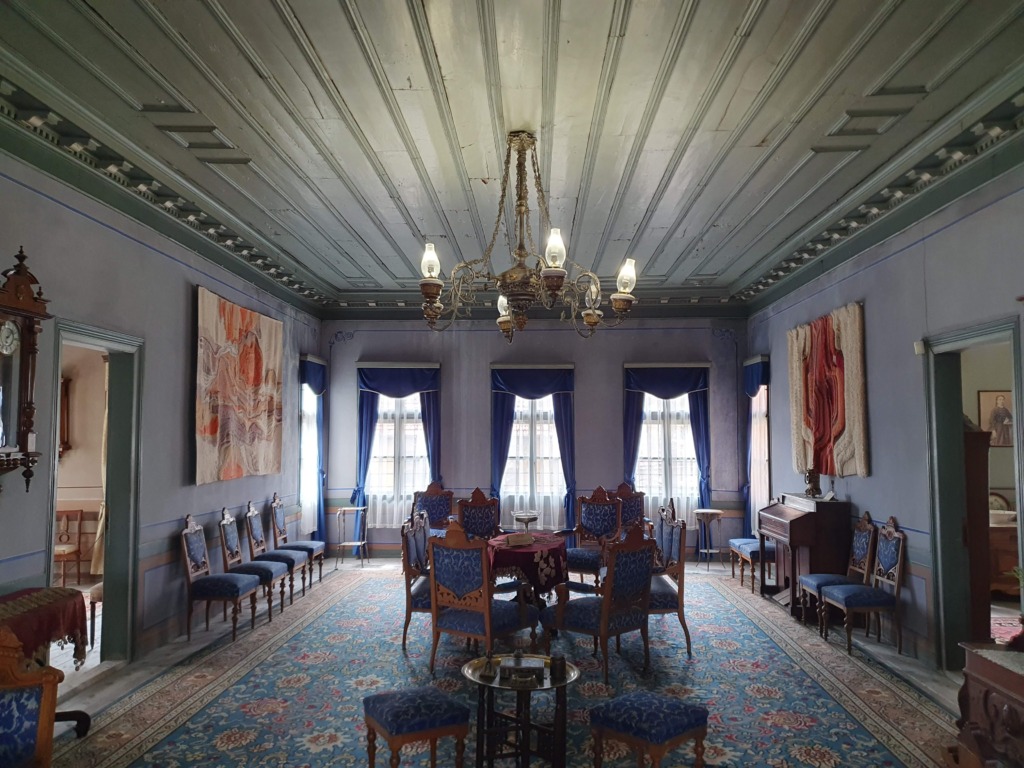
The Nedkovich House was built in the 1860s and features old furniture and elaborate decor. It shows what life was like for wealthy people in the city in the late 19th century. My highlight was seeing the lavish furniture and having the entire building to myself.
Hippocrates Pharmacy Museum
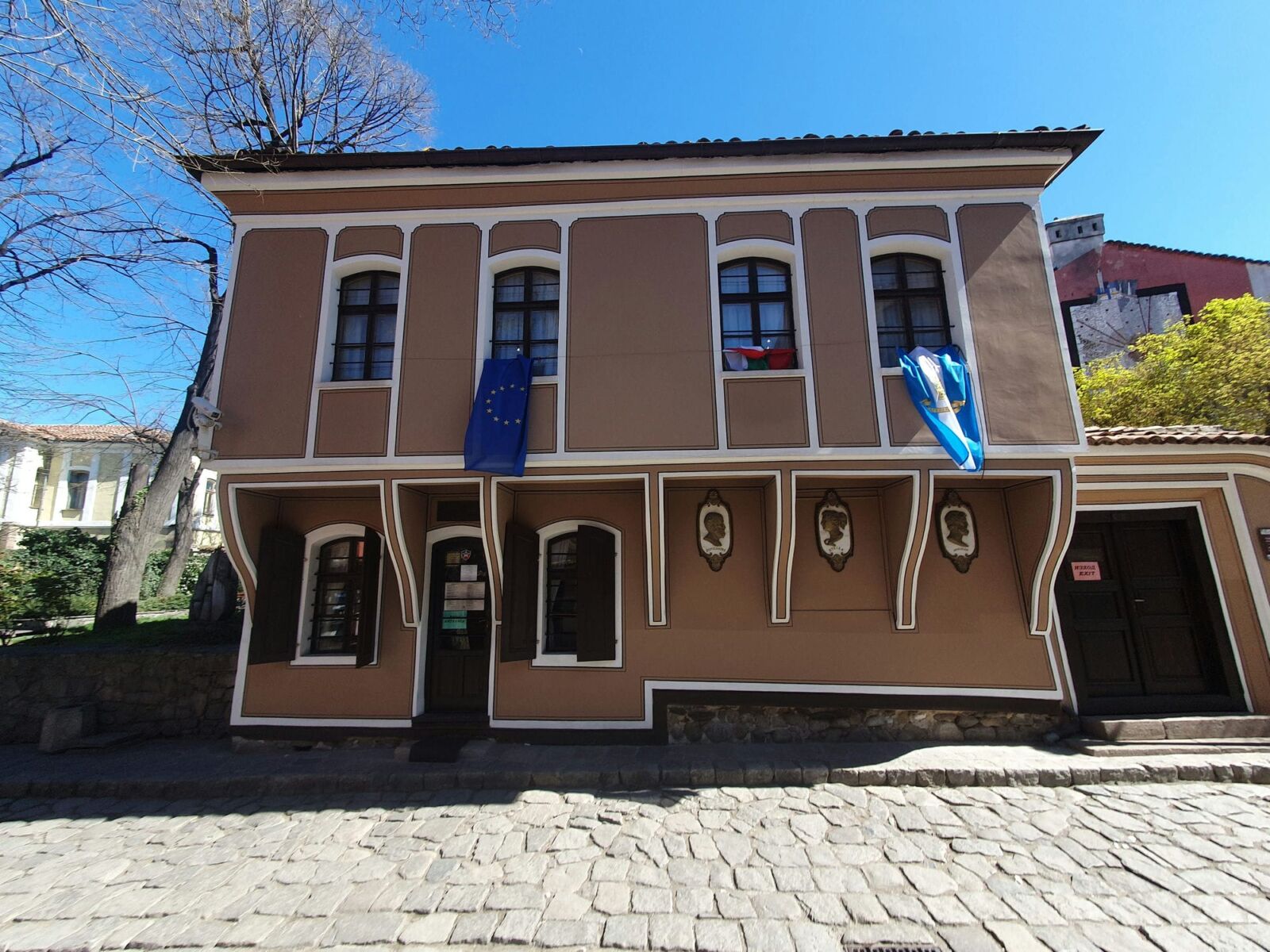
Hippocrates Pharmacy Museum dates from 1872. This used to be the best-stocked pharmacy in the area and is now a museum you can visit to learn about pharmacies of old.
Hisar Kapia
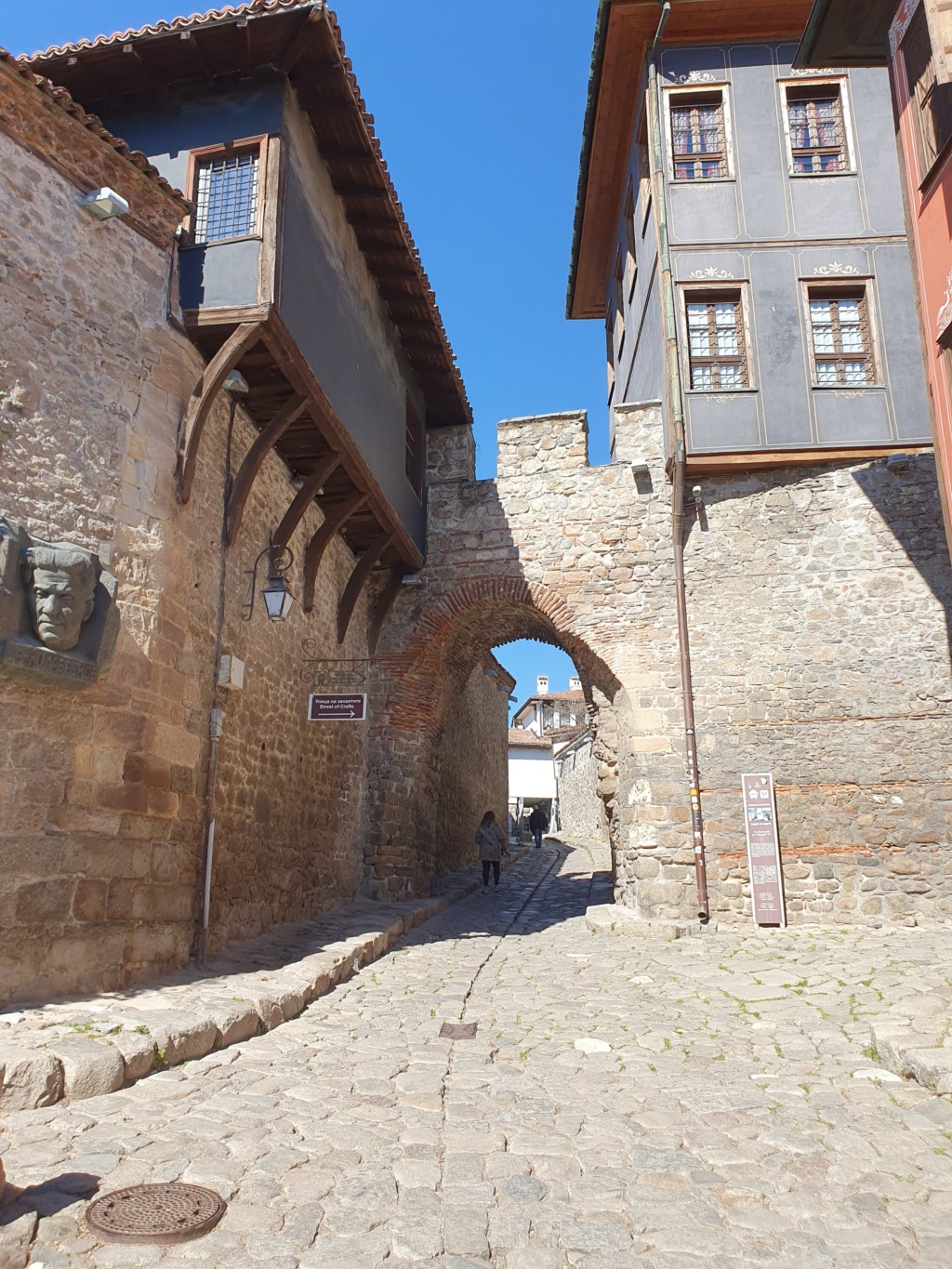
Hisar Kapia is a medieval gate that was built in the 11th century. The gate is especially photogenic alongside the cobbled streets and colourful buildings nearby. This was built atop a former Roman gate. The current version dates from the 2nd Bulgarian Empire in the 13th or 14th century.
Colourful Architecture
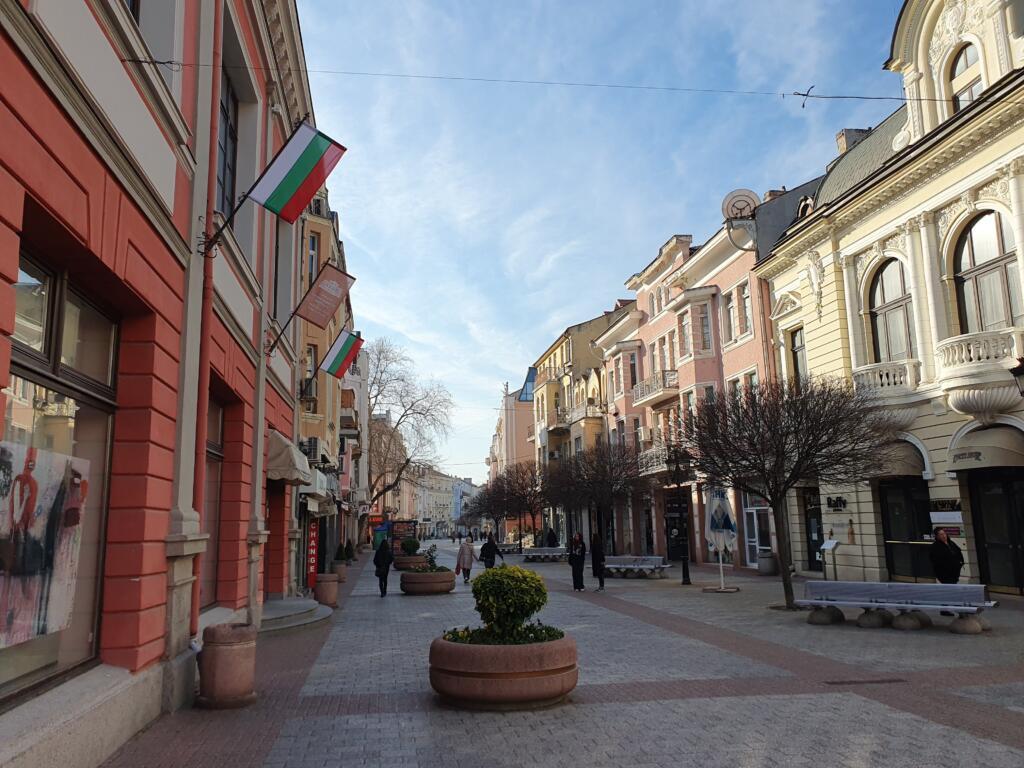
The main shopping street, ul. Knyaz Alexander, has some colourful buildings with Art Nouveau façades. Other shops have ancient artefacts integrated into their design. Ul. Knyaz Alexander is also a great place to grab some refreshments, especially on the side streets.
Churches & Religious Sites
Church of St Constantine and Helena
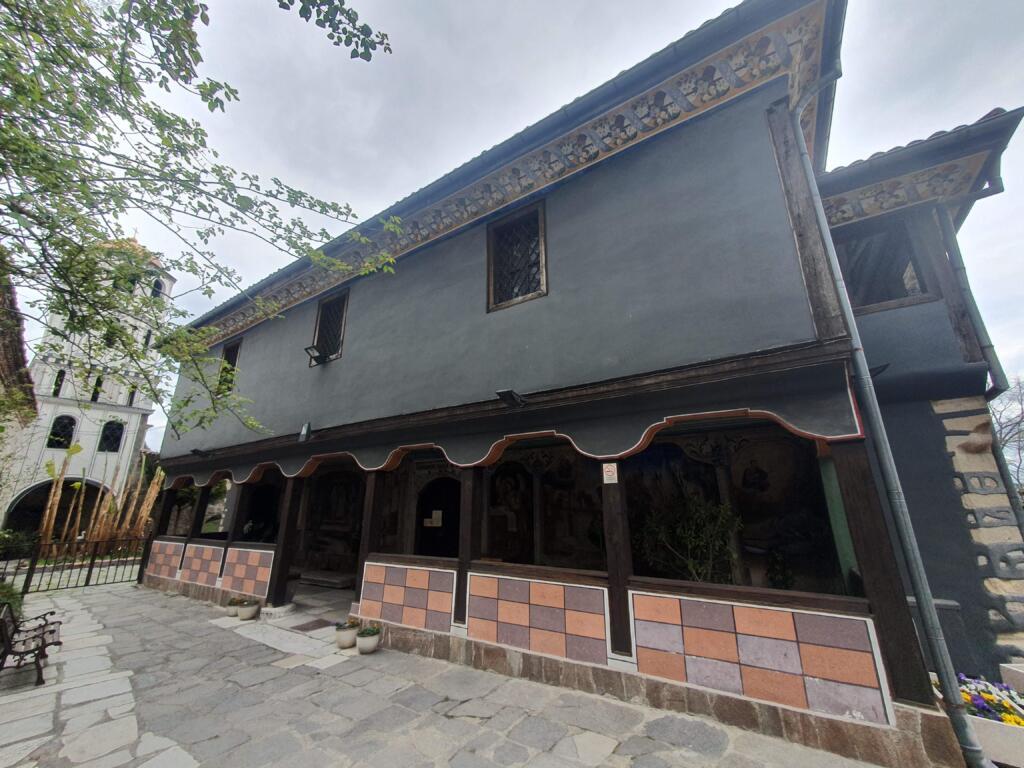
In the old town area is the Church of St Constantine and Helena, also known as the St Konstantin and Elena Church. The Church of St Constantine and Helena is one of the oldest churches in the city. Originally, it was built in 337 at the site of an ancient pagan temple on one of the fortified hills of the acropolis.
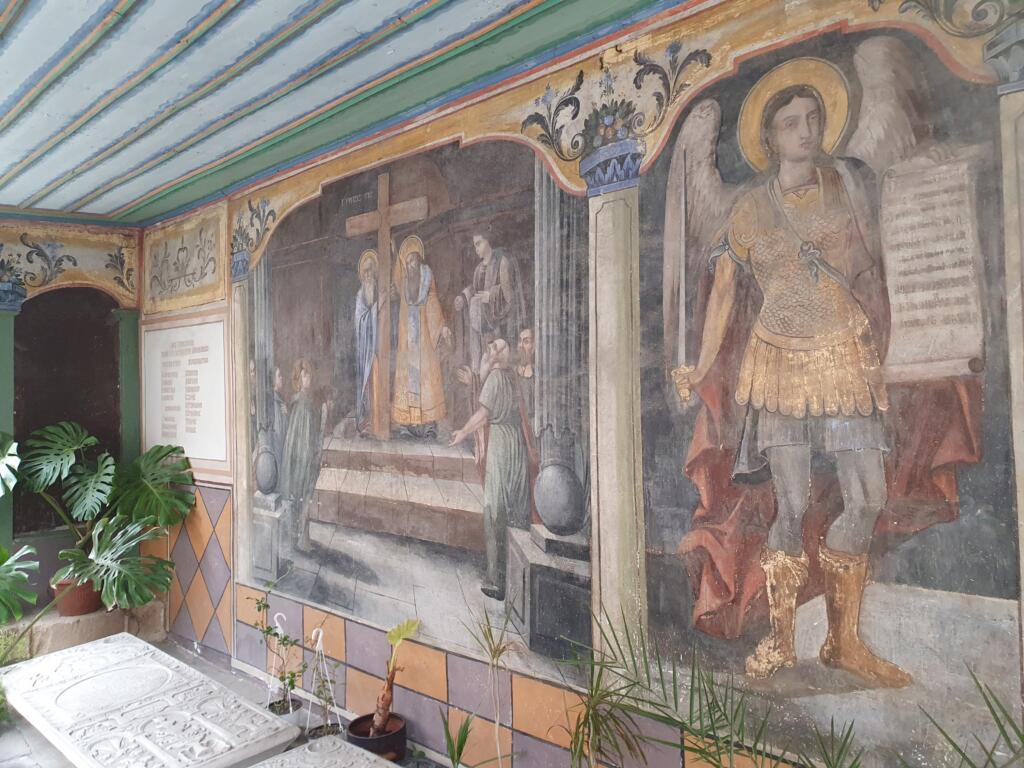
The church is named after Emperor Constantine the Great and his mother, Elena. Over the centuries, the church was destroyed and rebuilt several times; the current building dates to 1832. The church has some amazing frescoes at the entrance, and the inside is fantastic. The church was free to enter; however, they didn’t allow photographs inside.
Church Saint Nedelya
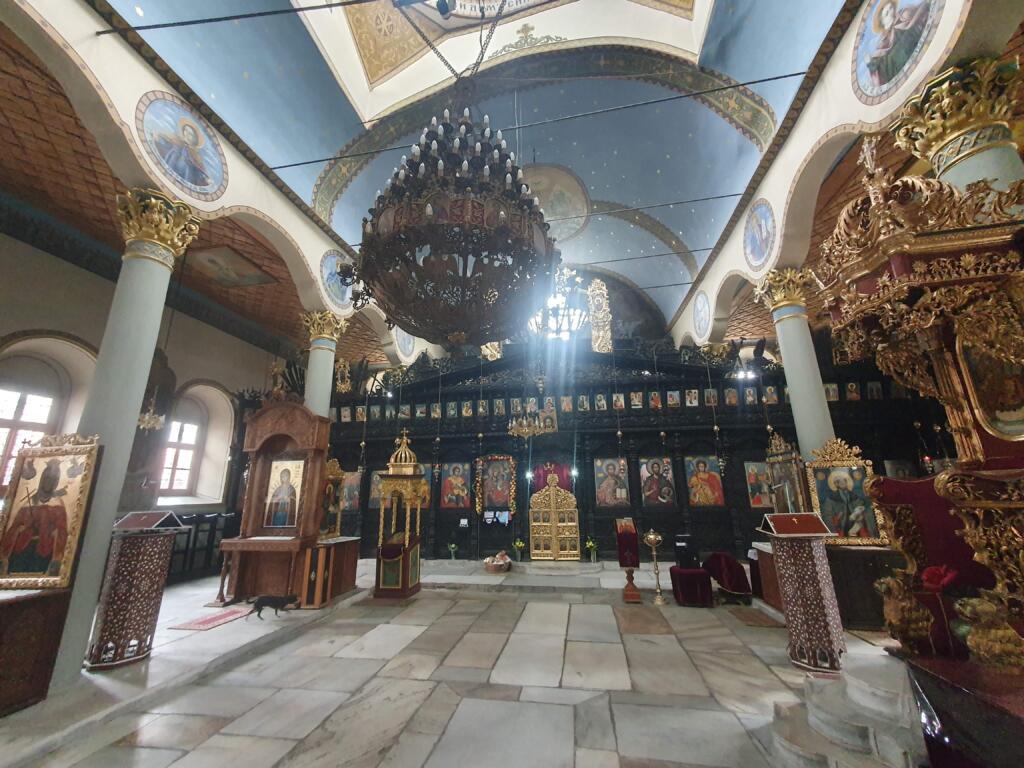
The Church of Saint Nedelya was built in the early 17th century, and it has interesting features. The church is small; however, the decorations inside are nice. The church was rebuilt in its current form in the 19th century.
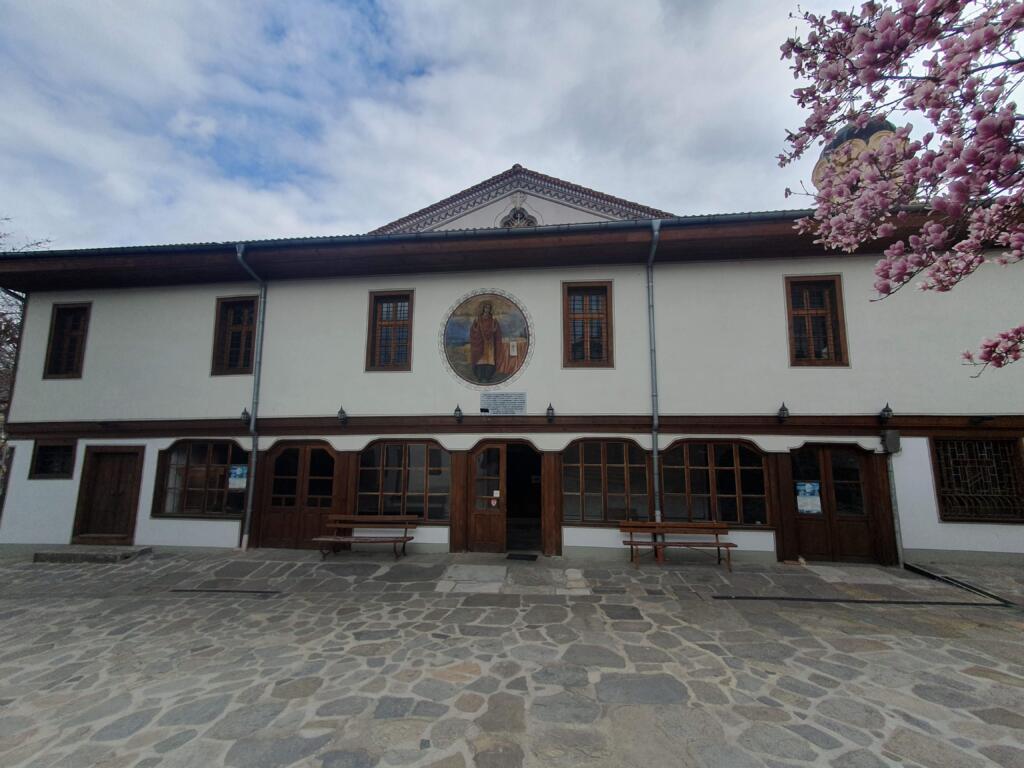
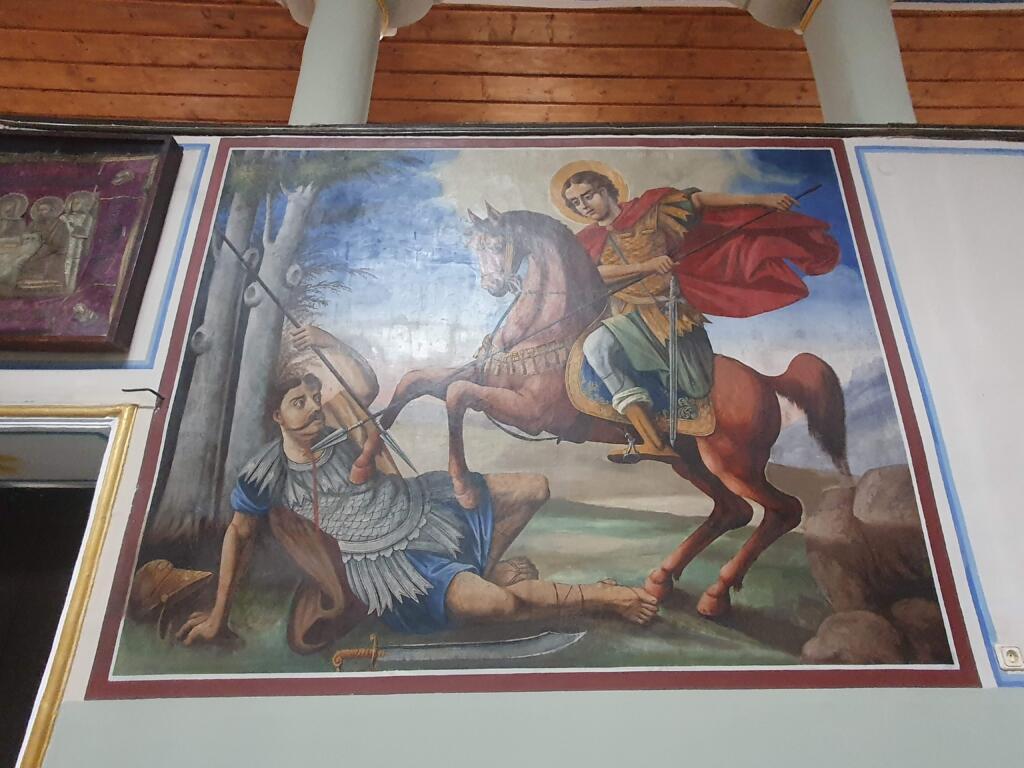
Visiting the Church of Saint Nedelya is free, and when I visited, it was empty except for another visitor with their dog. The noticeable feature for me was the amount of artwork relating to St George inside the building.
St Dimitar Church
Another wonderful church to visit in the old town is St Dimitar Church. St Dimitar Church is free to visit, and I found the staff at the site friendly and knowledgeable. A lovely guide showed me all the key features during my visit. The information about the marble altar was fascinating, as altars are usually wooden in Christianity.
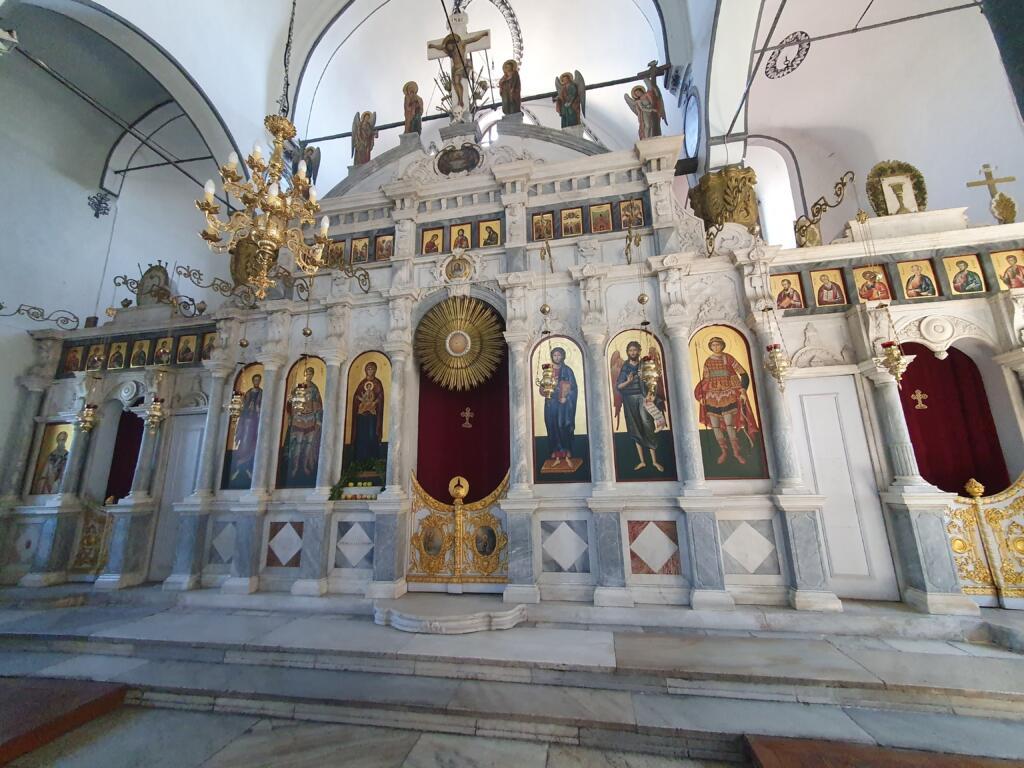
The church interior and courtyard have great decor. It is also the highest church in the city. The present building was constructed between 1830 and 1838. It was built on the site of an old church with the same name, which dates from 1230.
Djumaya Mosque
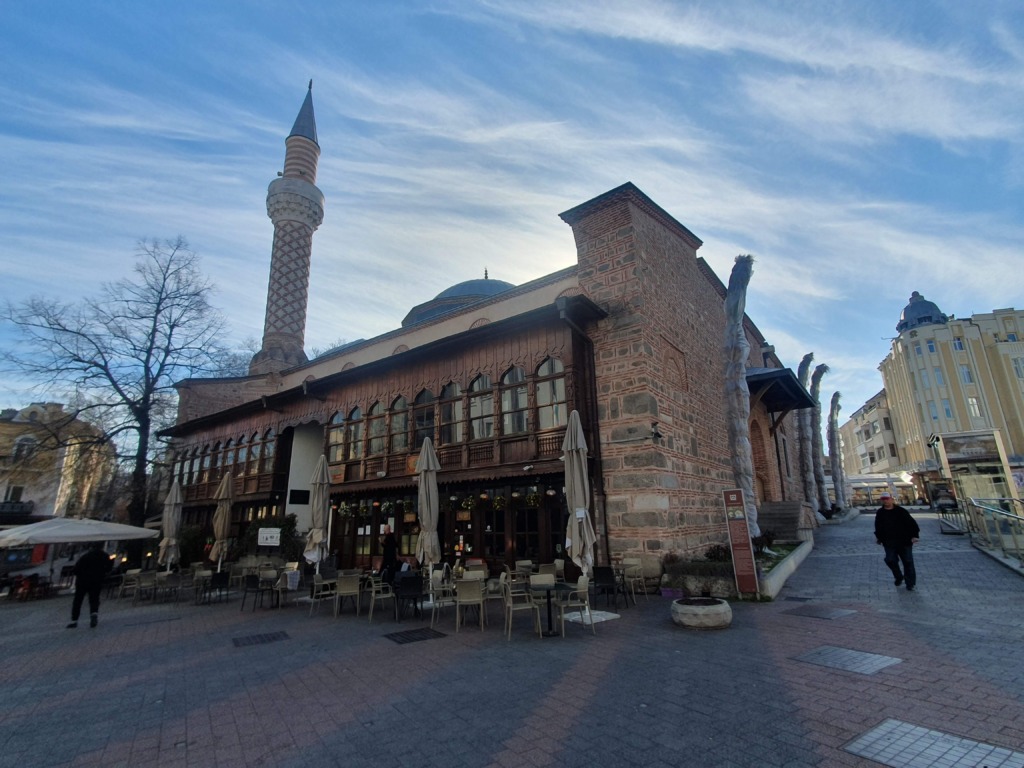
In the city centre is Djumaya Mosque, a lovely building you can visit inside, too. Djumaya Mosque was originally built in 1363 and 1364 after the Ottomans conquered Plovdiv. It was subsequently demolished and replaced with a modern-day mosque.

The Djumaya Mosque has nice domes and a big 27 m prayer hall. It also has a minaret, which is a distinctive part of the city’s skyline. The mosque is free to visit. There are rules for entry, including covering up and removing your shoes. Signs at the entrance are in English.
Orthodox Church of St Nicholas
Another fascinating church to visit in the city is the Orthodox Church of St Nicholas. This is near the old town on the walk to the ancient stadium. On my visit, I was mooching around the outside when a priest offered to show me inside. This was fascinating, and I learnt about St Nicholas and the church’s decor related to him.
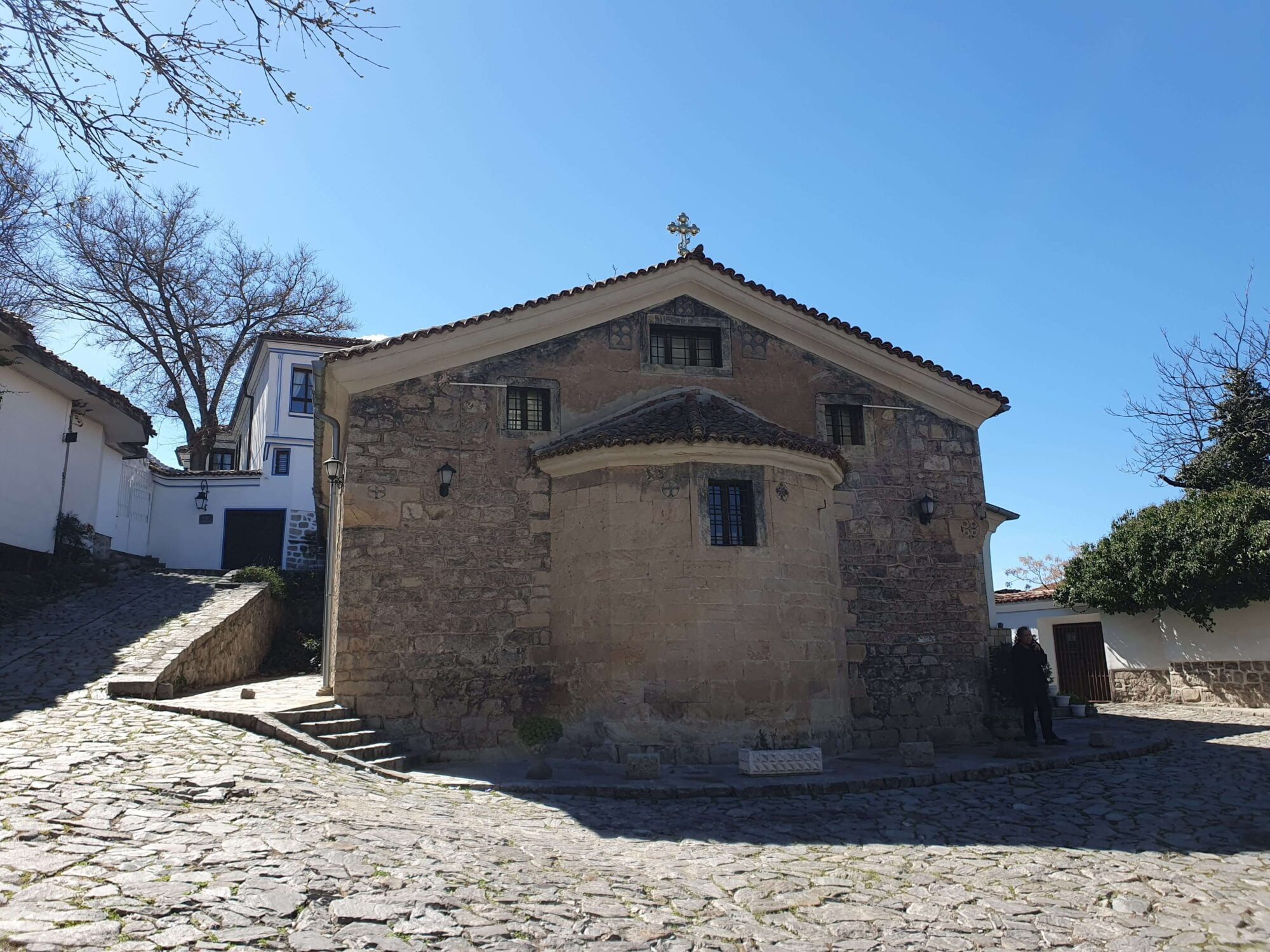
The current Orthodox Church of St Nicholas dates from 1835; however, a 14th-century church stood on the site before.
Cathedral of St Louis
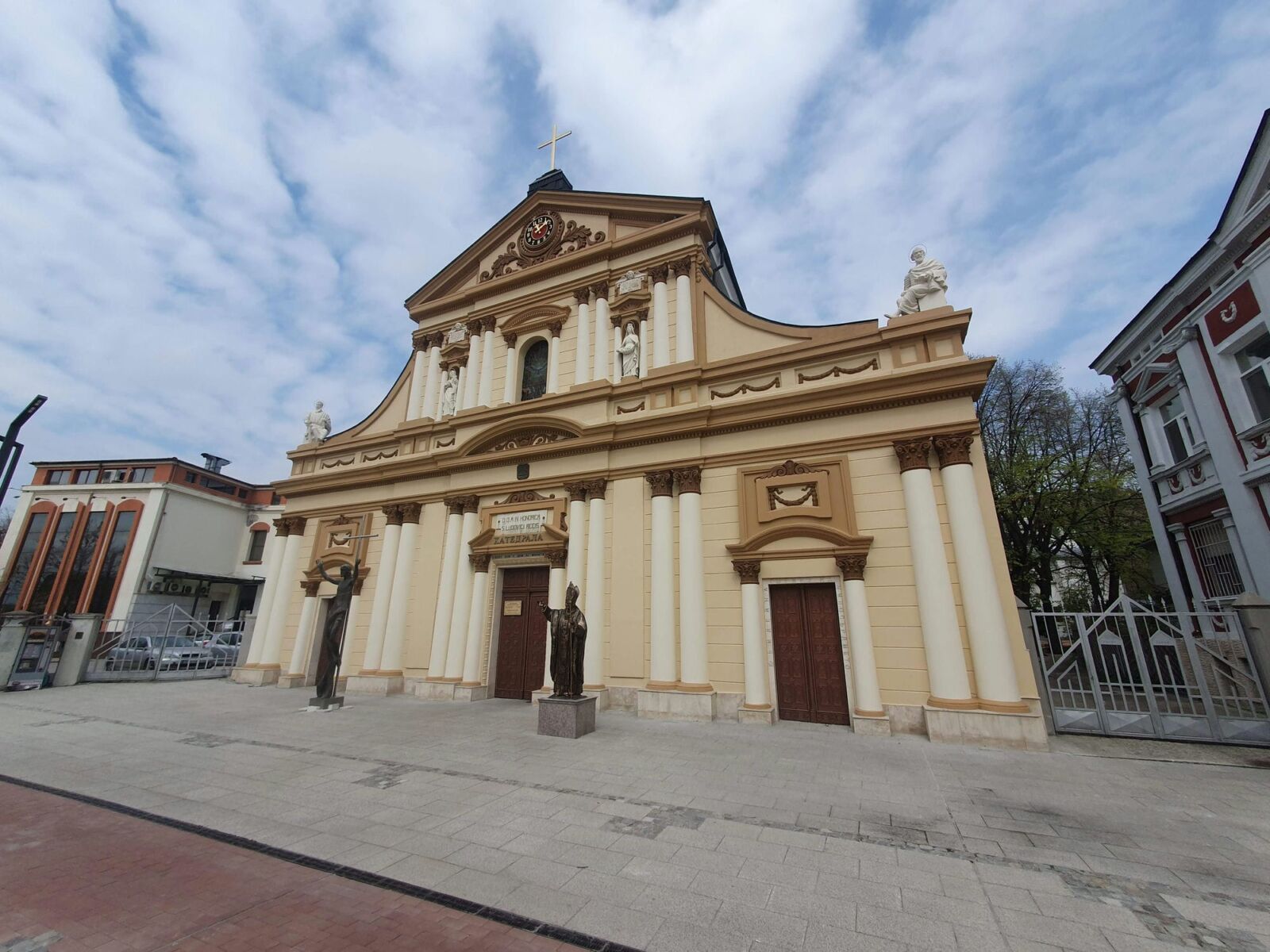
Near the ancient basilica is a newer church building, the Cathedral of St. Louis. The statues at the entrance piqued my interest. The Catholic cathedral dates from the 1850s; however, it has been renovated multiple times since then.
Walks, Hills, Parks & Viewpoints
Sahat Tepe Hill, Clock Tower & Viewpoint
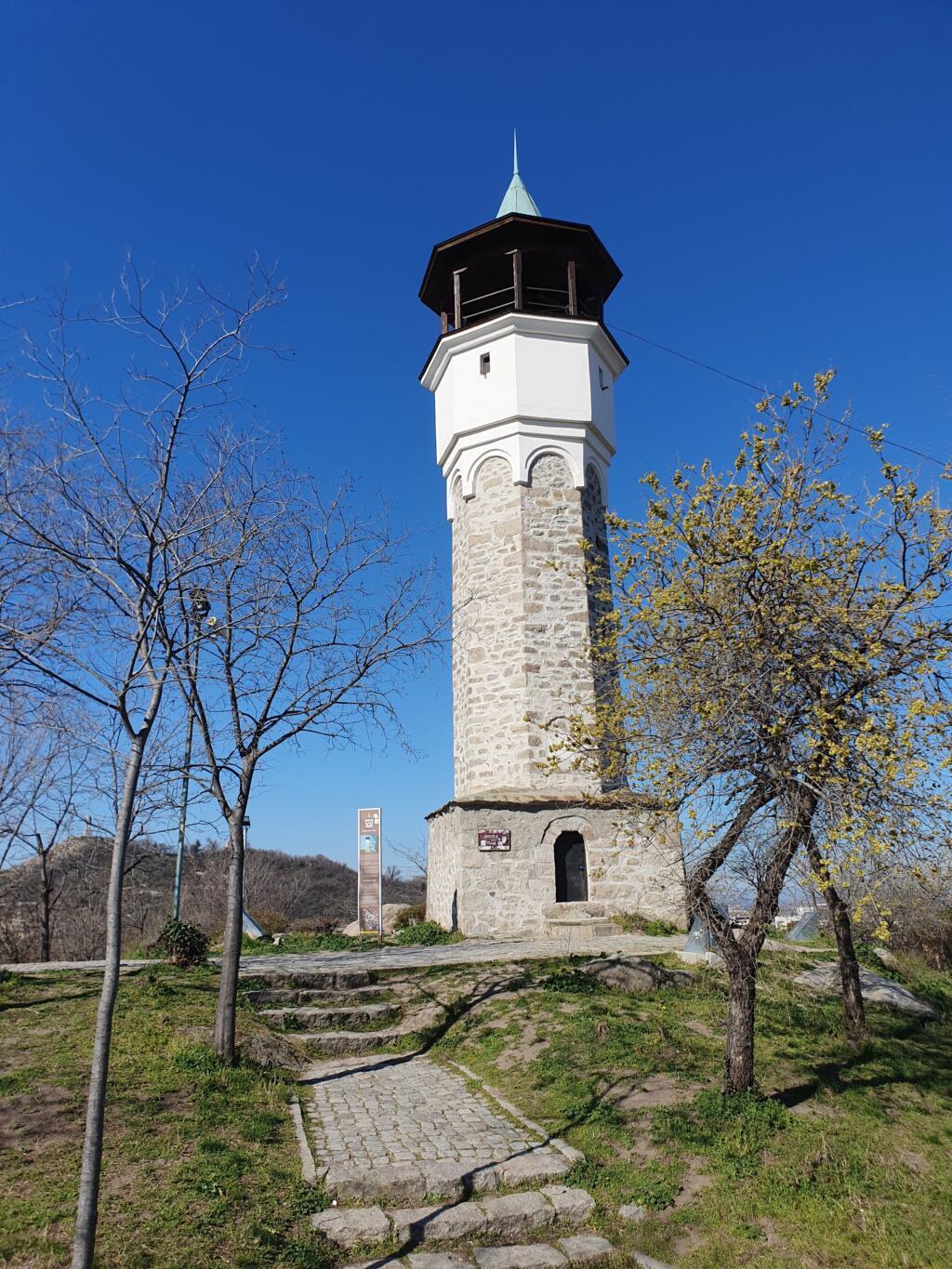
Plovdiv has 6 hills, and some are pleasant for a walk, including Sahat Tepe. At the top of Sahat Tepe stands a 17.5-metre-high clock tower. The earliest record of a tower here dates to 1623. The current version was built in 1812.
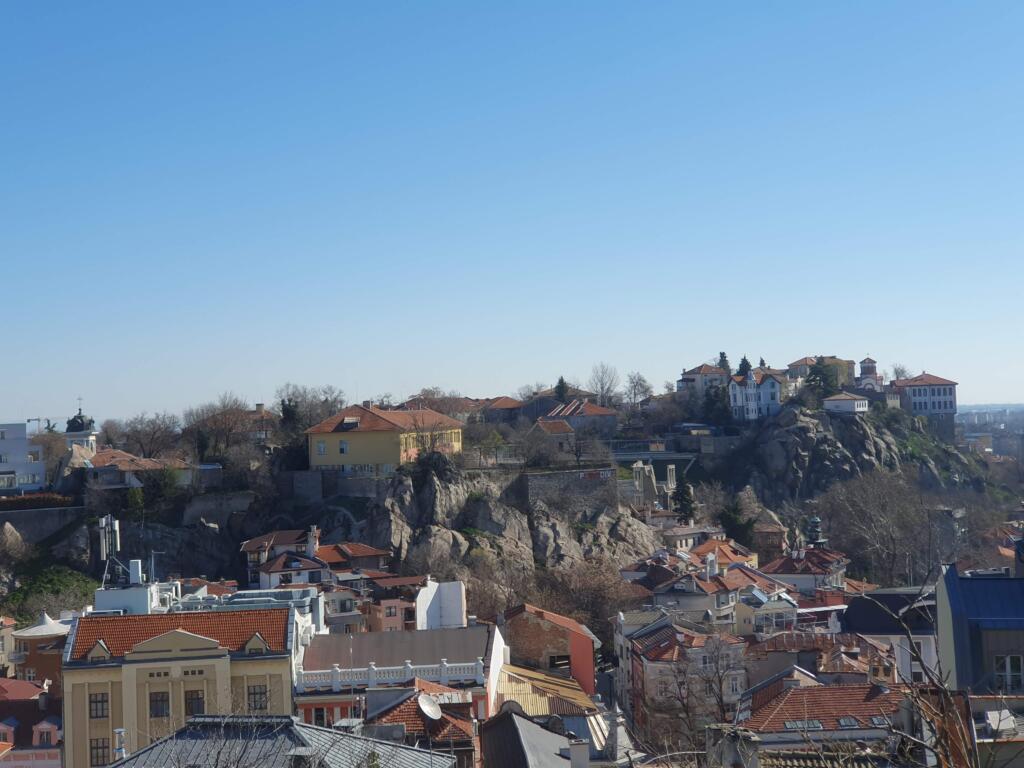
The hill doesn’t take long to climb, and there are a few statues and a viewpoint overlooking the amphitheatre and the old town.
Bunardzhika Hill and Alyosha Monument
Bunardzhika Hill is a city park on a beautiful hill. It has a selection of trails, most of which lead to a variety of monuments on the hill. Bunardzhika Hill also offers great panoramic views of the city and the Bulgarian countryside.

At the highest point of Bunardzhika Hill stands the impressive Alyosha Monument. A series of stone steps leads up to this massive 1950s statue of a Soviet soldier. The terrace around the statue has panoramic views of the city below.
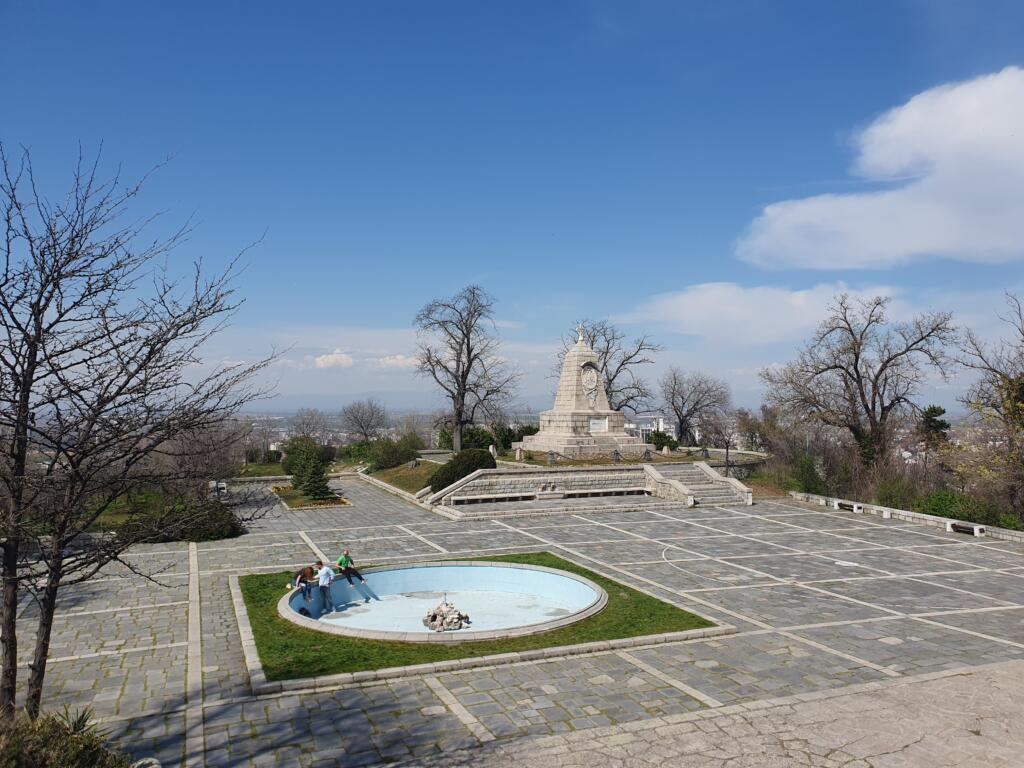
Also on the hilltop is the Alley of Cosmonauts, which commemorates the Soviet space travellers who visited the city. Nearby is the Monument of Tsar Alexander I, with colourful flowerbeds.
Tsar Simeon Garden Park

A relaxing place in Plovdiv is Tsar Simeon Garden Park. Tsar Simeon Garden Park is a large, beautiful park. The park has history and was created in 1892. It has many features, including statues, monuments, and flower beds. It is also home to the famous dancing fountains, which perform a show with music and lights in the evenings during the summer.
Watch the Sunset
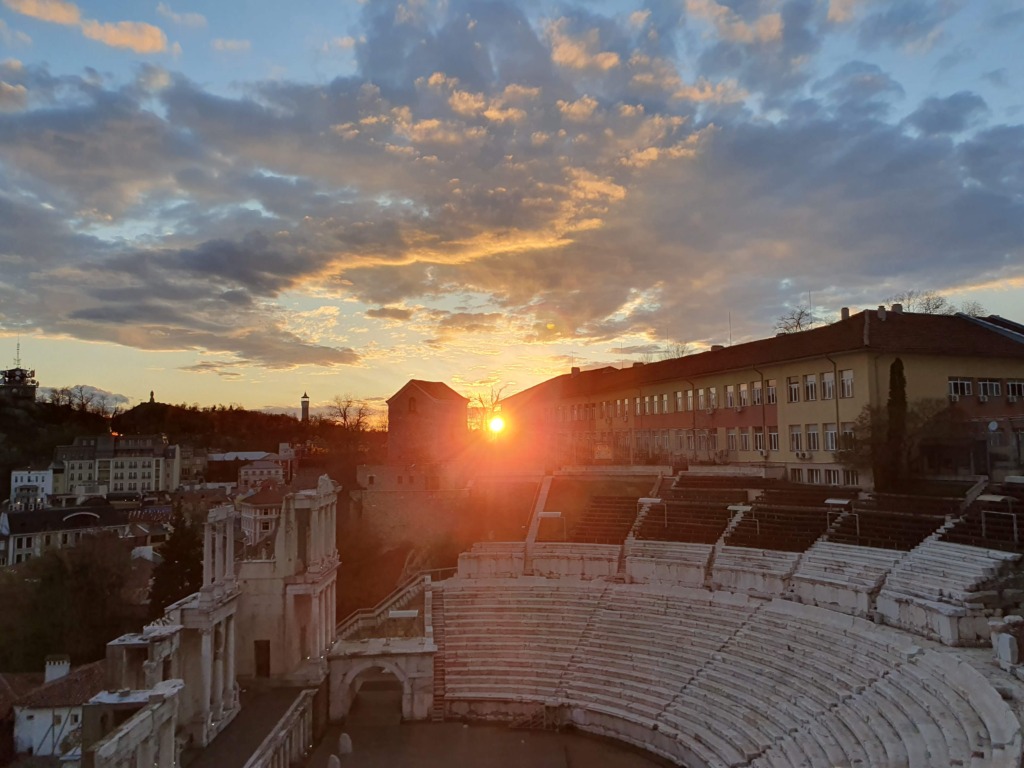
One of my favourite times of day while travelling is during the sunset. Plovdiv is a fantastic place for watching sunsets in Bulgaria. There are many options for spots to do this; however, the cafe above the Ancient Theatre of Philippopolis is my favourite.
Food and Markets
Thursday Market

If you’re staying in Plovdiv for a while, a top place to go is the Thursday Market. It’s a great place to learn about local produce and buy food for your travels. The Thursday Market is an ideal place to start. This market has a history of over 350 years; however, it has moved locations since its establishment.
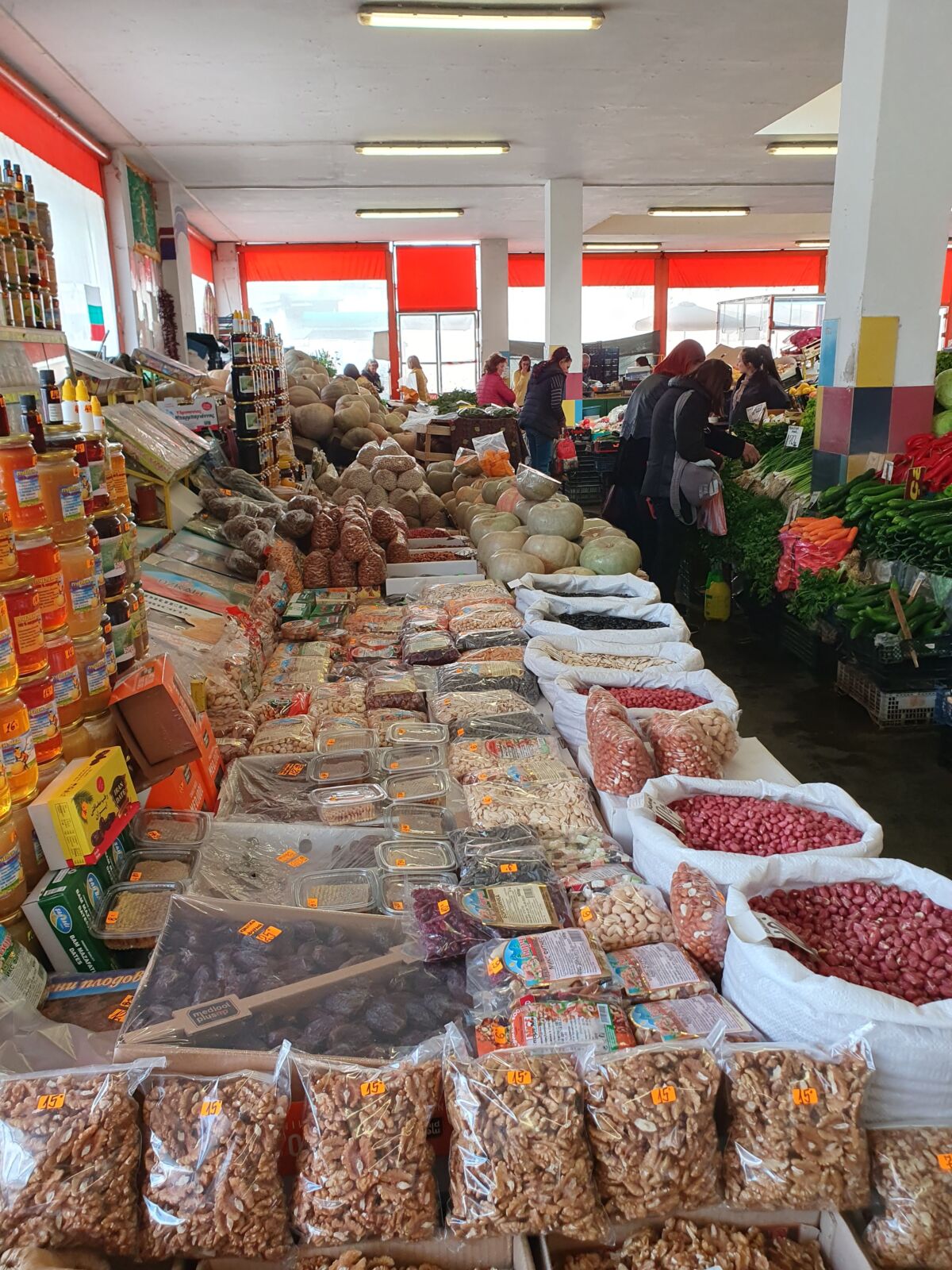
It’s a farmers’ market that sells an excellent selection of fruits and vegetables. Stalls also have a fantastic selection of nuts, pulses and spices. You can also purchase local honey at the Thursday market.
Kapana District
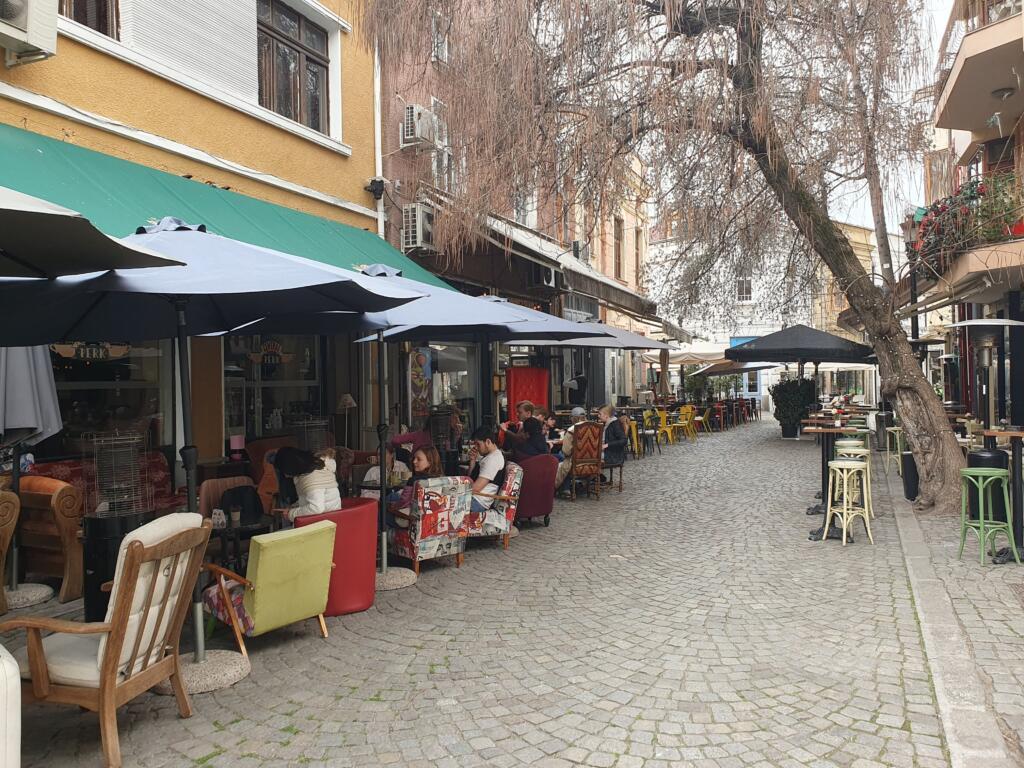
The Kapana district of Plovdiv is a cool place to mooch around or spend time, especially in the evening. The area has nice cafes, restaurants and bars to visit, including some comfy lounge-like cafes. There is also plenty of street art; some is on the walls, and other street art is part of bars.
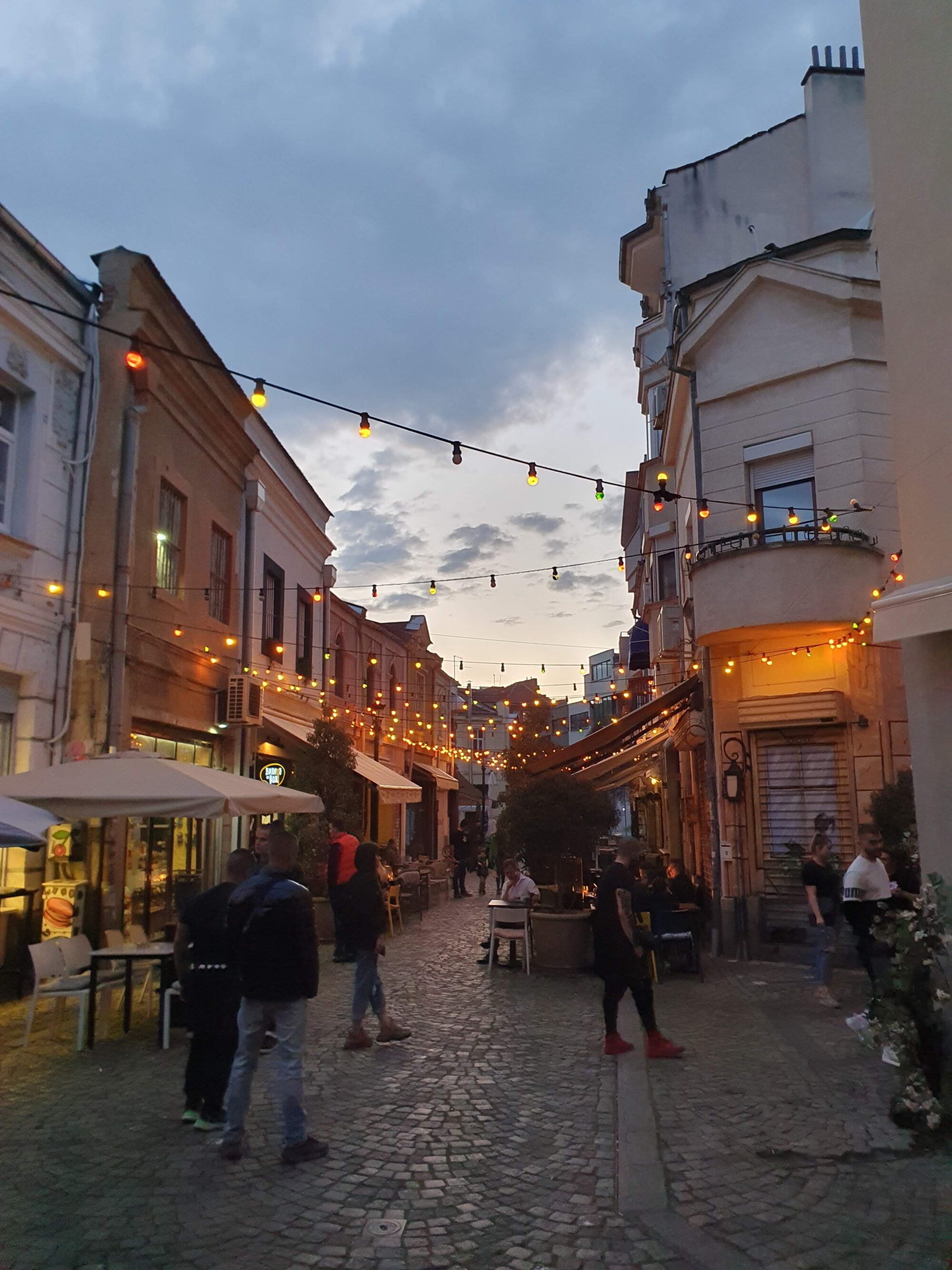
There are also some independent shops, including a chilli sauce shop. The area is mostly pedestrianised and is popular with people visiting with a dog. Arts-related events take place in the Kapana District, and it is a fun place to spend time.
Honey Tasting
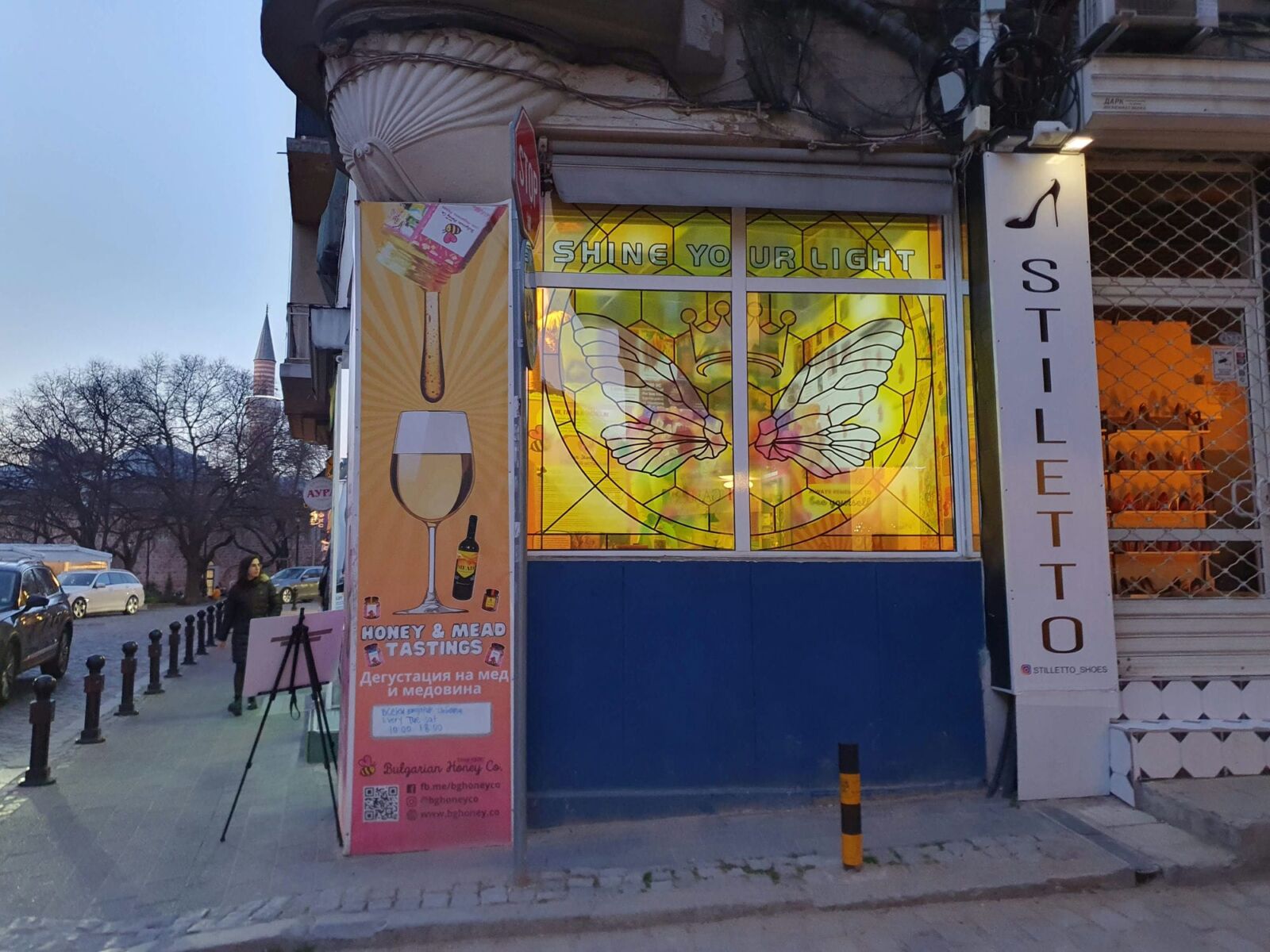
Bulgaria is famous for its honey, and while in Plovdiv, we visited a honey-and-mead tasting shop. The shop had loads to try, made from bees that pollinate specific flowers. We just popped into the store. However, you can also arrange more formal tours.
Festive Markets
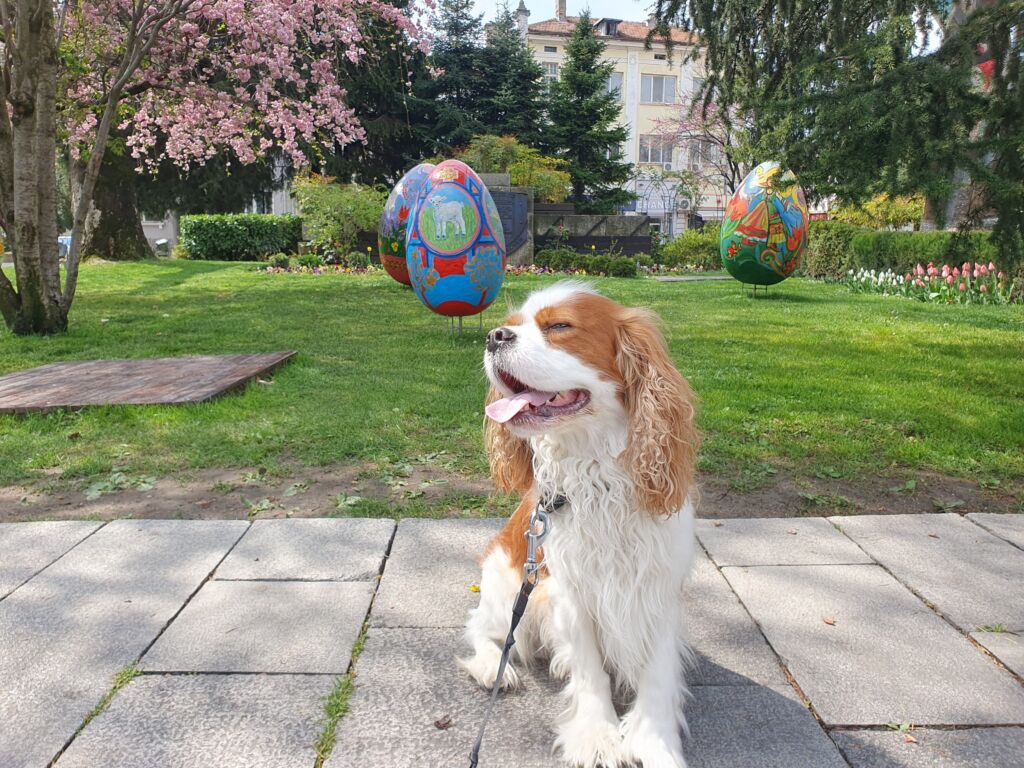
If you time your visit right, a fun thing to do is to visit the festive markets during Easter and Christmas. We visited the Easter festivities in Plovdiv. I enjoyed seeing the giant painted eggs, egg-painting workshops, markets and events.
Tours & Cultural Venues
Walking Tours
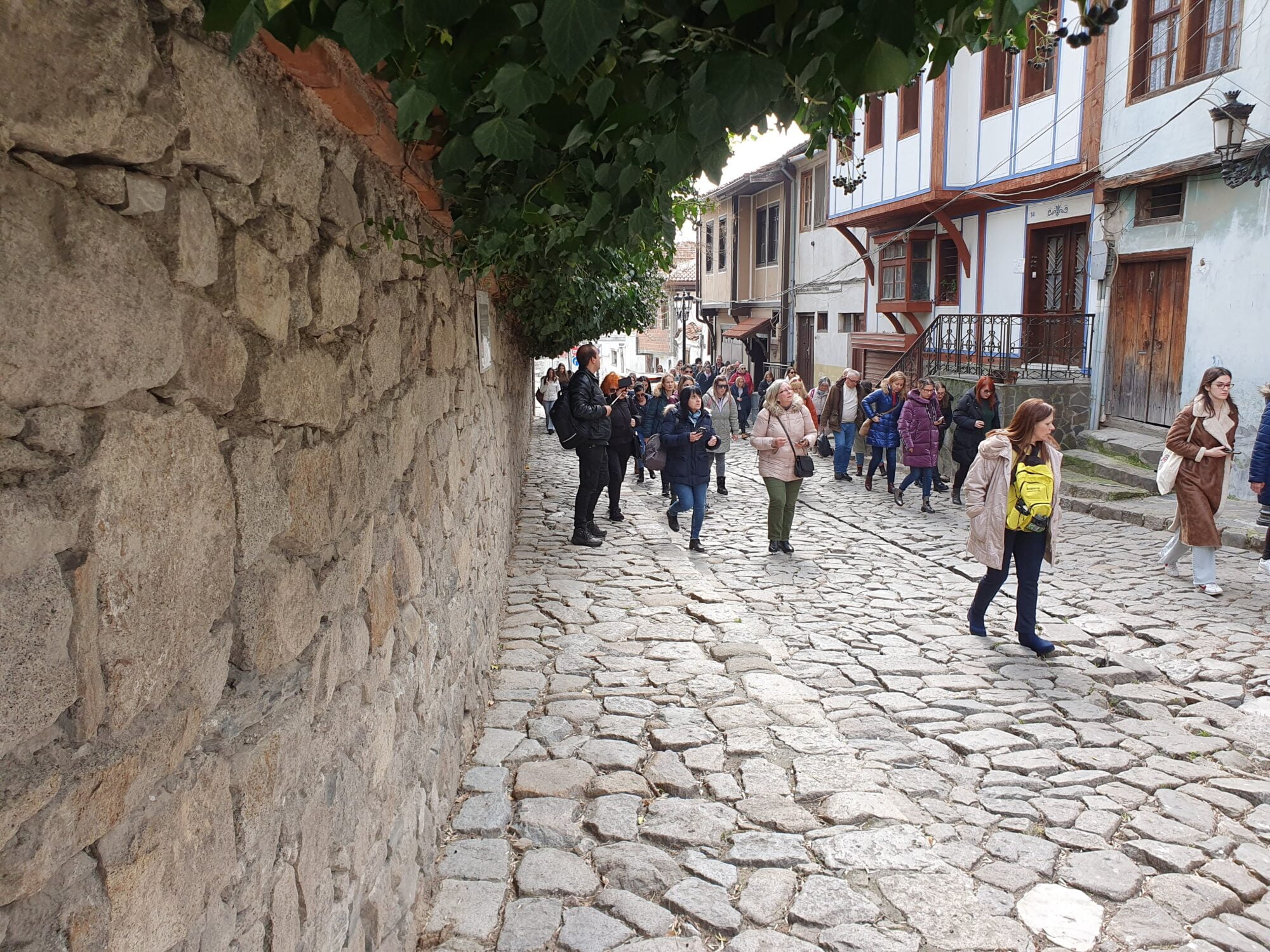
There is a good selection of walking tours, including some free ones. These are a quick, efficient way to explore the city, especially if you’re short on time. Most walking tours cover the principal attractions and explain what they are all about. These often cover ancient history, but others specialise in communism and graffiti. You can find walking tour options on the GetYourGuide website.
Boris Hristov – House of Culture
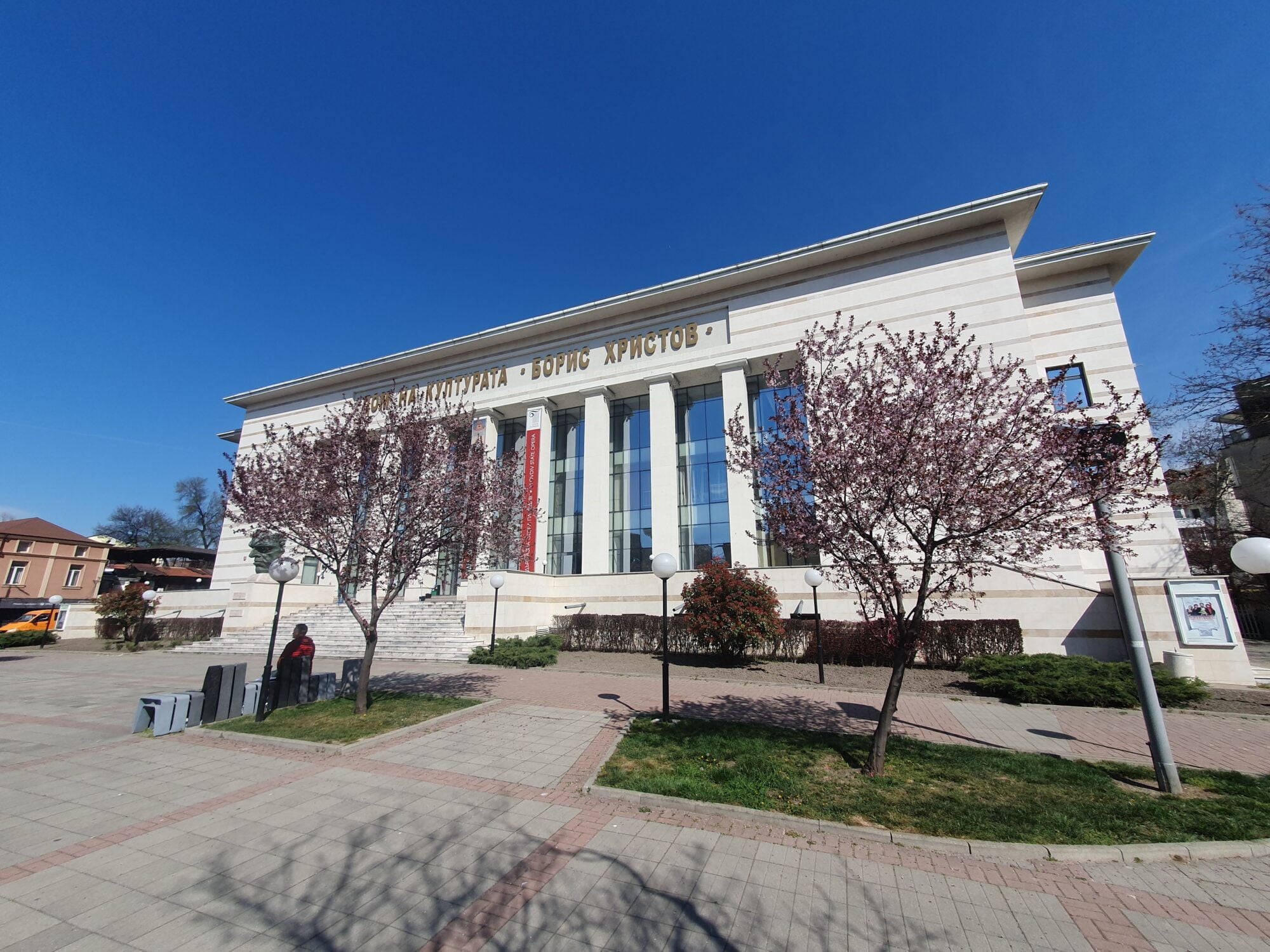
The Boris Hristov House of Culture is an interesting place just outside the city centre. The building is named after Boris Hristov, a native of the city and one of the greatest bassists of the 20th century. The building is imposing and has seating at the front. They host events here, including conferences and cultural activities. You can find out about future events on their what’s on guide.
Excellent post, Rich. Loved reading and finding out about your adventures over the winter, and I can’t wait to see what you guys get up to in the summer. Particularly looking forward to your market mooches and seeing what local recipes you cook up.
Right with you with the Bishop’s Basilica of Philippopolis. The mosaics look stunning; such a cool experience.
Great to see Henry enjoying himself, treat him to a sausage from Uncle Luke.
I followed along on Twitter when you visited Plovdiv and you have definitely piqued my interest with all your gorgeous pictures. I can understand from your directions that it’s a bit of an effort to get to the city, but it’ll be worth it. The Odeon looks like a mini version of the Forum Romanum in Rome and I love a good Old Town. Let’s hope the Instagram crowd won’t discover this city any time soon.
Carolin | Solo Travel Story