
Prejmer Fortified Church in Romania: A Fascinating Place
Prejmer fortified church in Romania is a fascinating place near Brasov. I visited on a day trip from Brasov and really enjoyed it. Nearby, you can also visit another of the region’s fortified churches, the Harman Fortified Church.
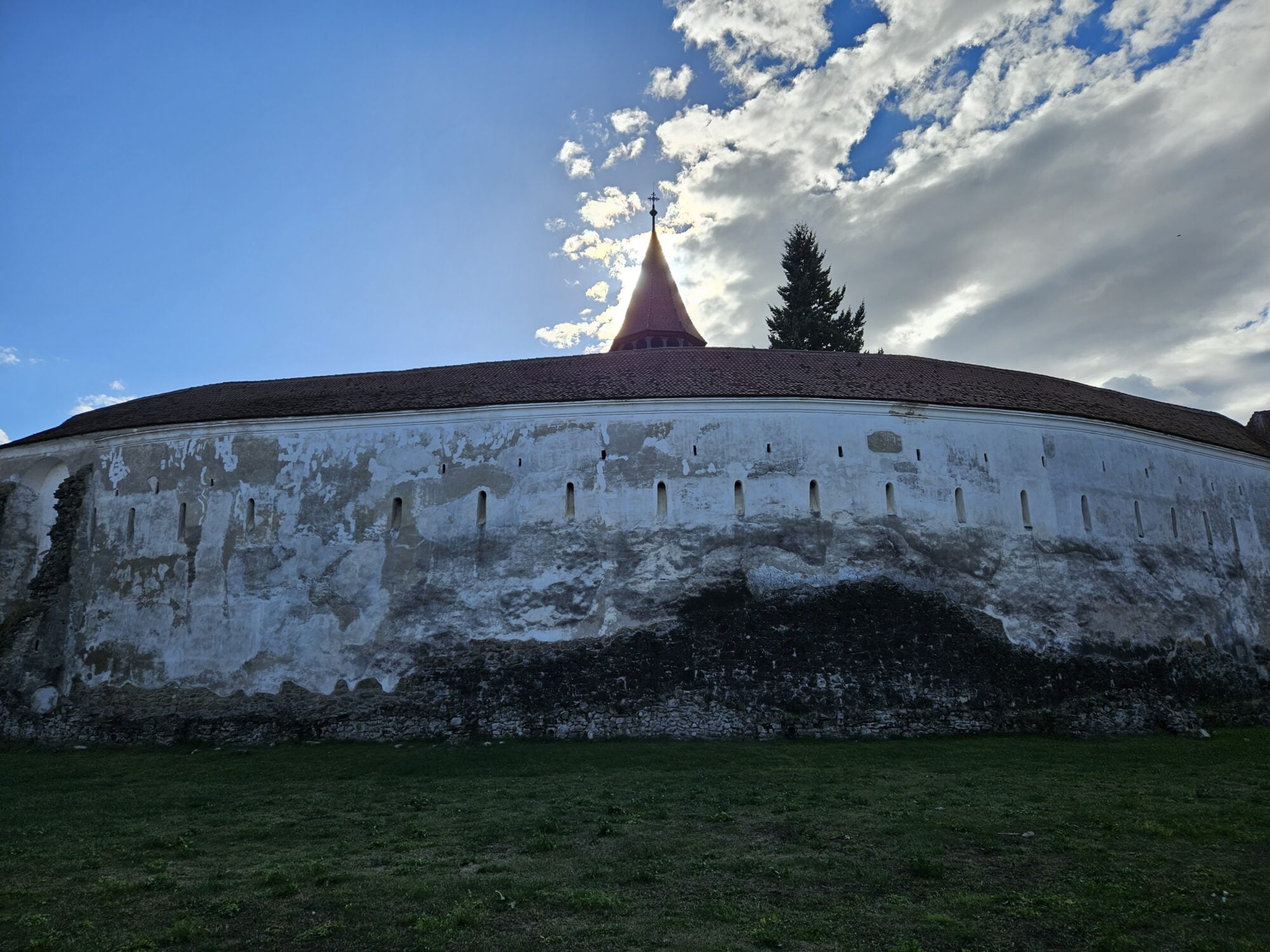
I found the UNESCO World Heritage Site interesting and spent a few hours exploring its nooks and crannies. There were many levels to explore, including the church interior and various parts of the fortifications.
About Prejmer Fortified Church in Romania
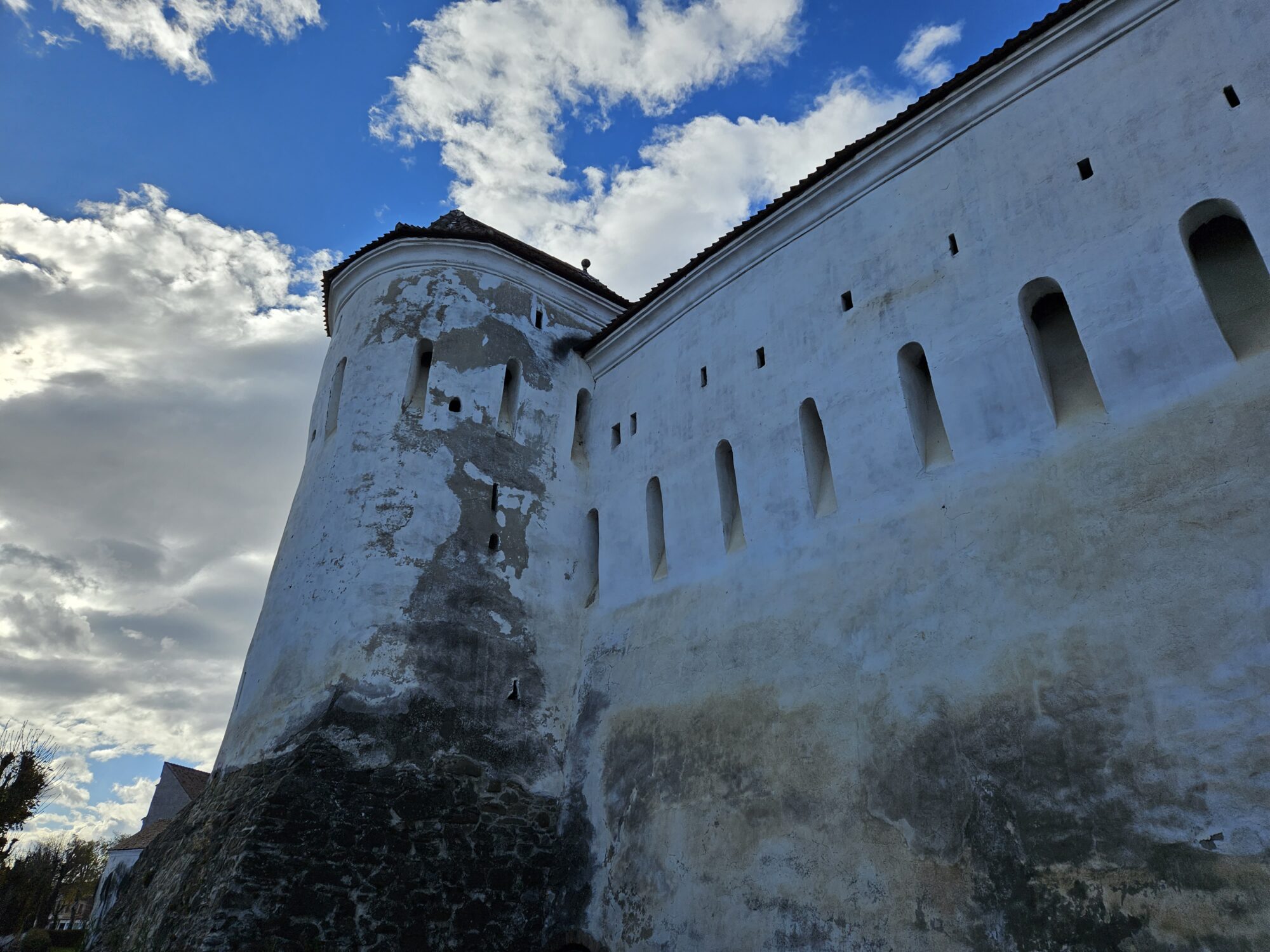
Prejmer fortified church is a Lutheran church in the Transylvania region of Romania. The Germanic Teutonic Knights founded the church, which was subsequently taken over by the Transylvanian Saxon community. Initially, the church was Roman Catholic; it became Lutheran following the Reformation.
The church dates from 1211, when King Andrew of Hungary granted the Teutonic Knights permission to settle in the area and begin construction. The knights were expelled in 1225; the Cistercians then took over construction and finished the church in 1240.
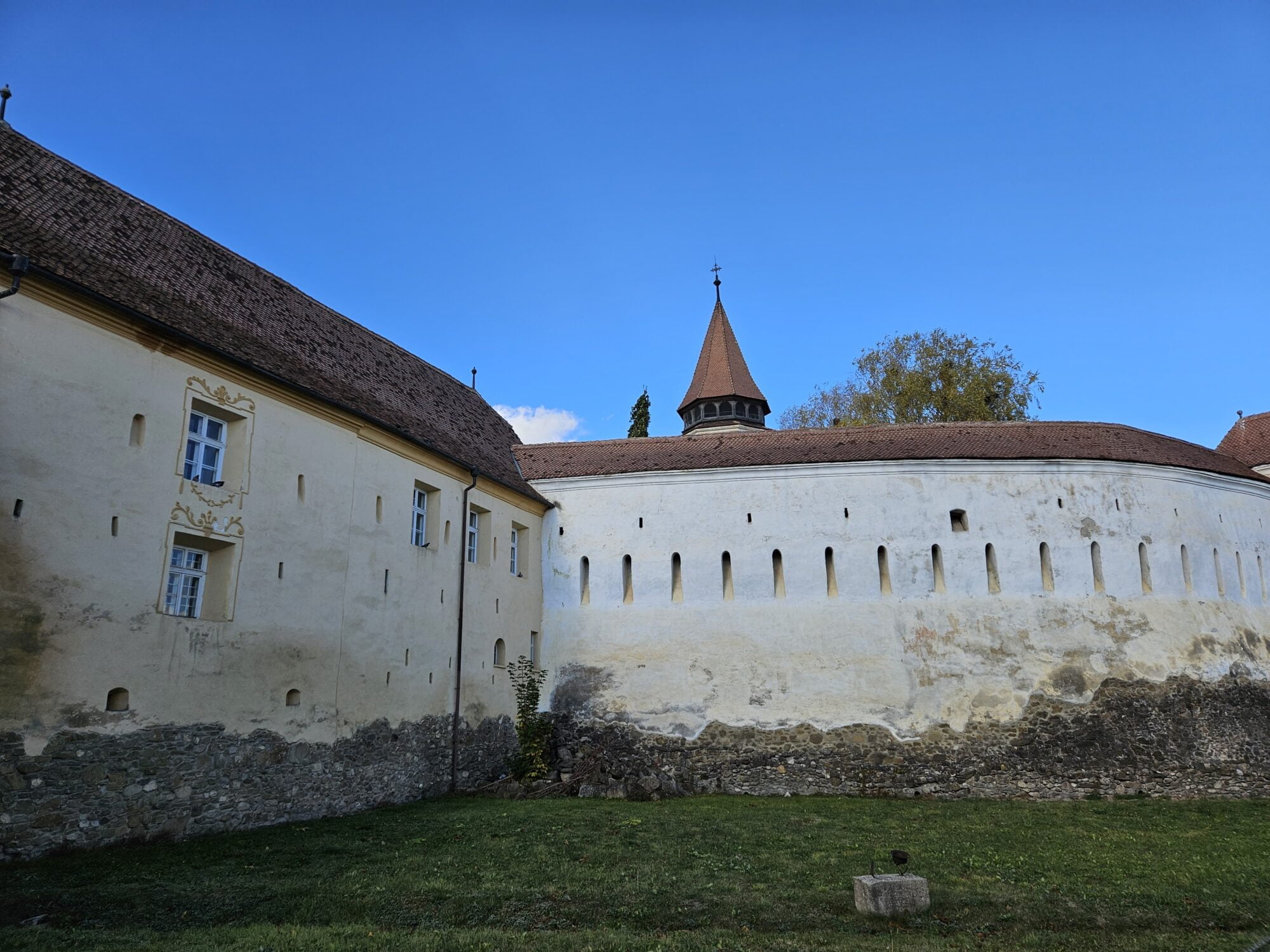
Prejmer village has been destroyed more than 50 times between the 13th and 17th centuries. However, the church was rarely captured because of its fortifications. The fortifications were added in the 15th and 16th centuries, including high walls and a moat. The circular walls of the church are up to 5 metres thick in places. Other defensive features of the church include towers and a battlement.
UNESCO World Heritage Site
Prejmer fortified church forms part of the villages with fortified churches in the Transylvania UNESCO World Heritage Site. The UNESCO status ensures that this historic site is preserved for future generations to learn about its history.
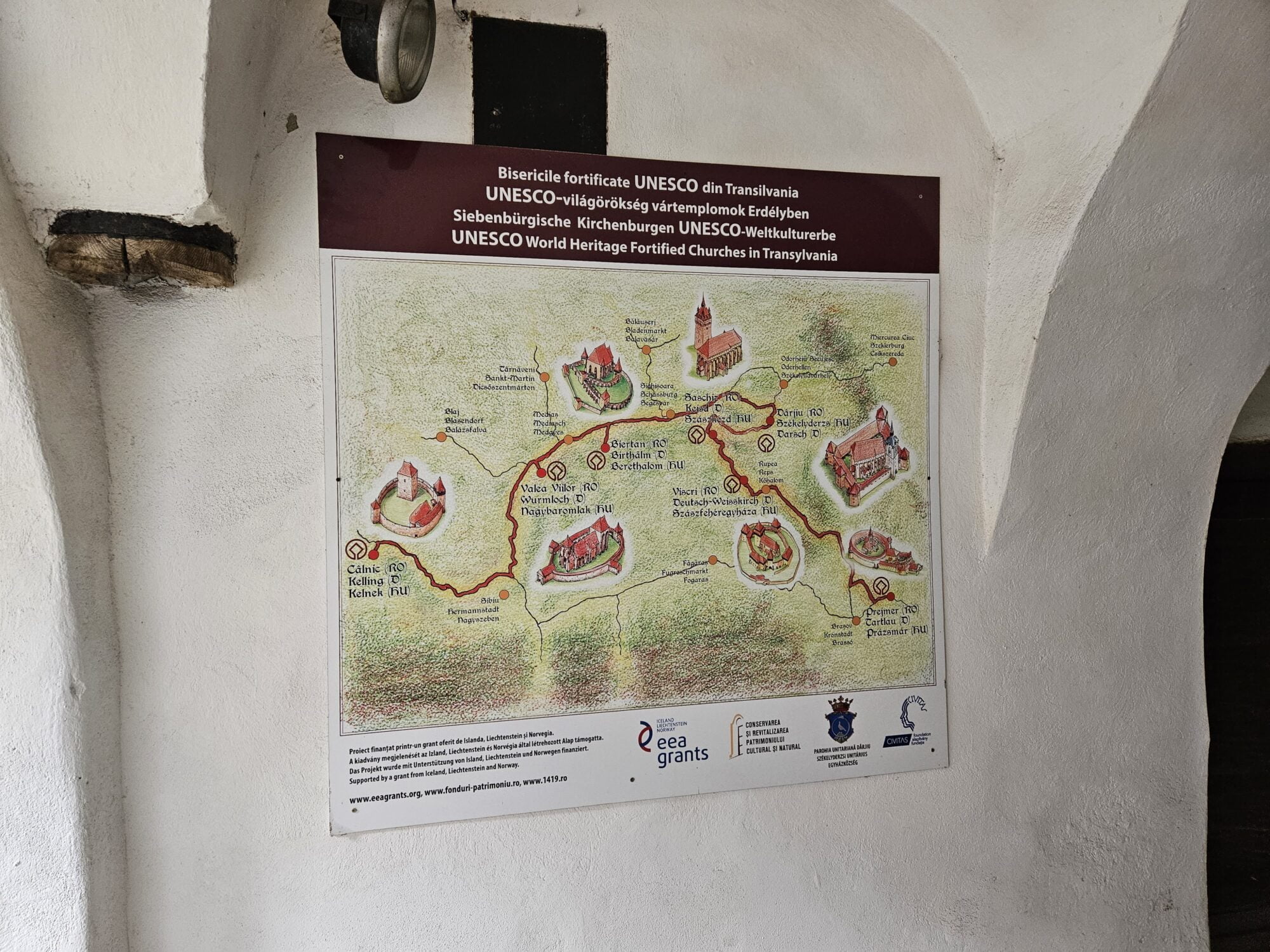
There are 7 churches included in the listing. They have an information board in Prejmer showing where the others are in the region.
Things To See at Prejmer Fortified Church
There are many things to see at the church, including a museum, the fortifications and the church building.
The Outside
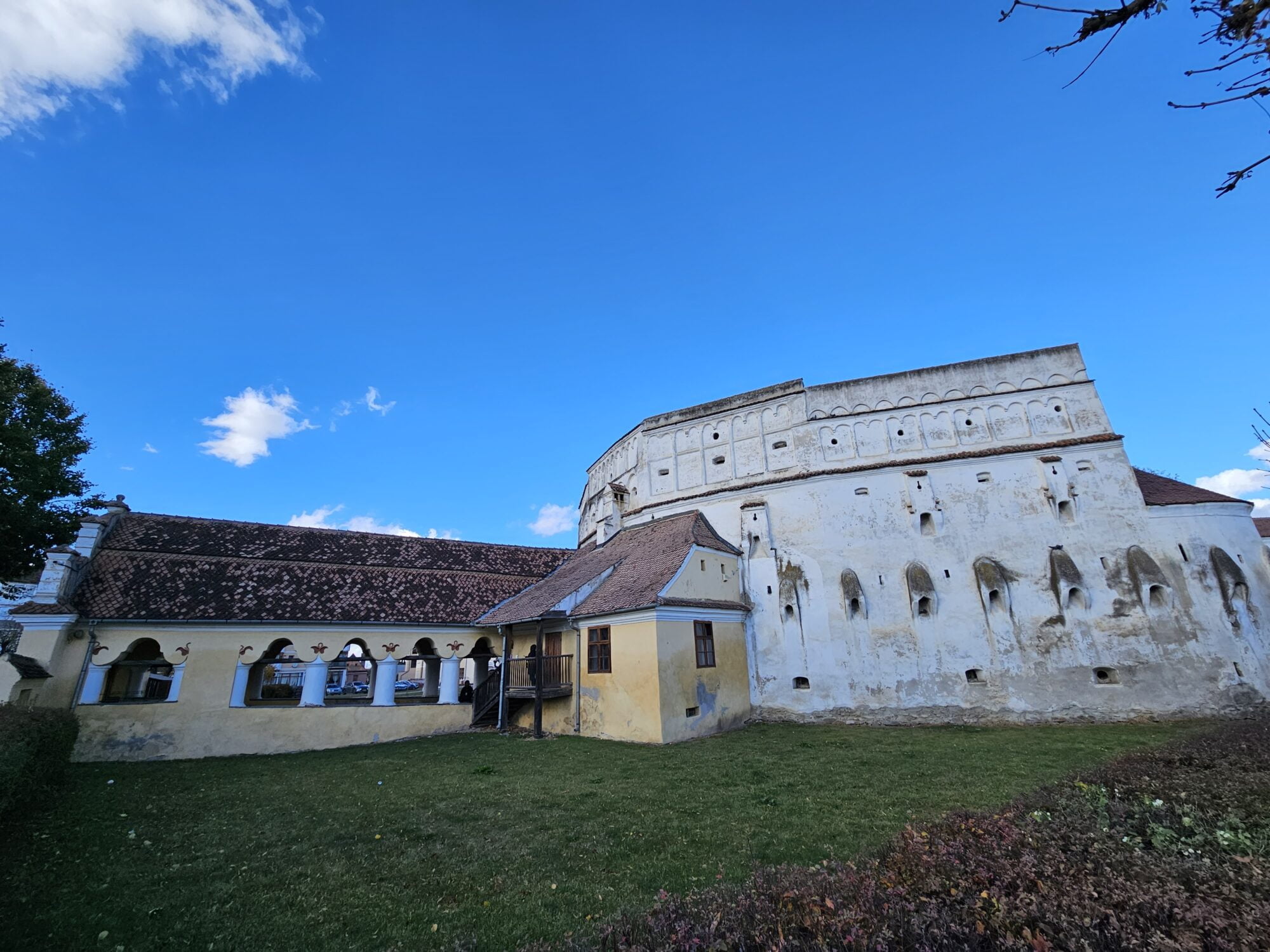
To view the outside of the fortifications, you don’t need to pay. You can walk around the perimeter and see how formidable the fortifications were.
Portcullis & Entrance
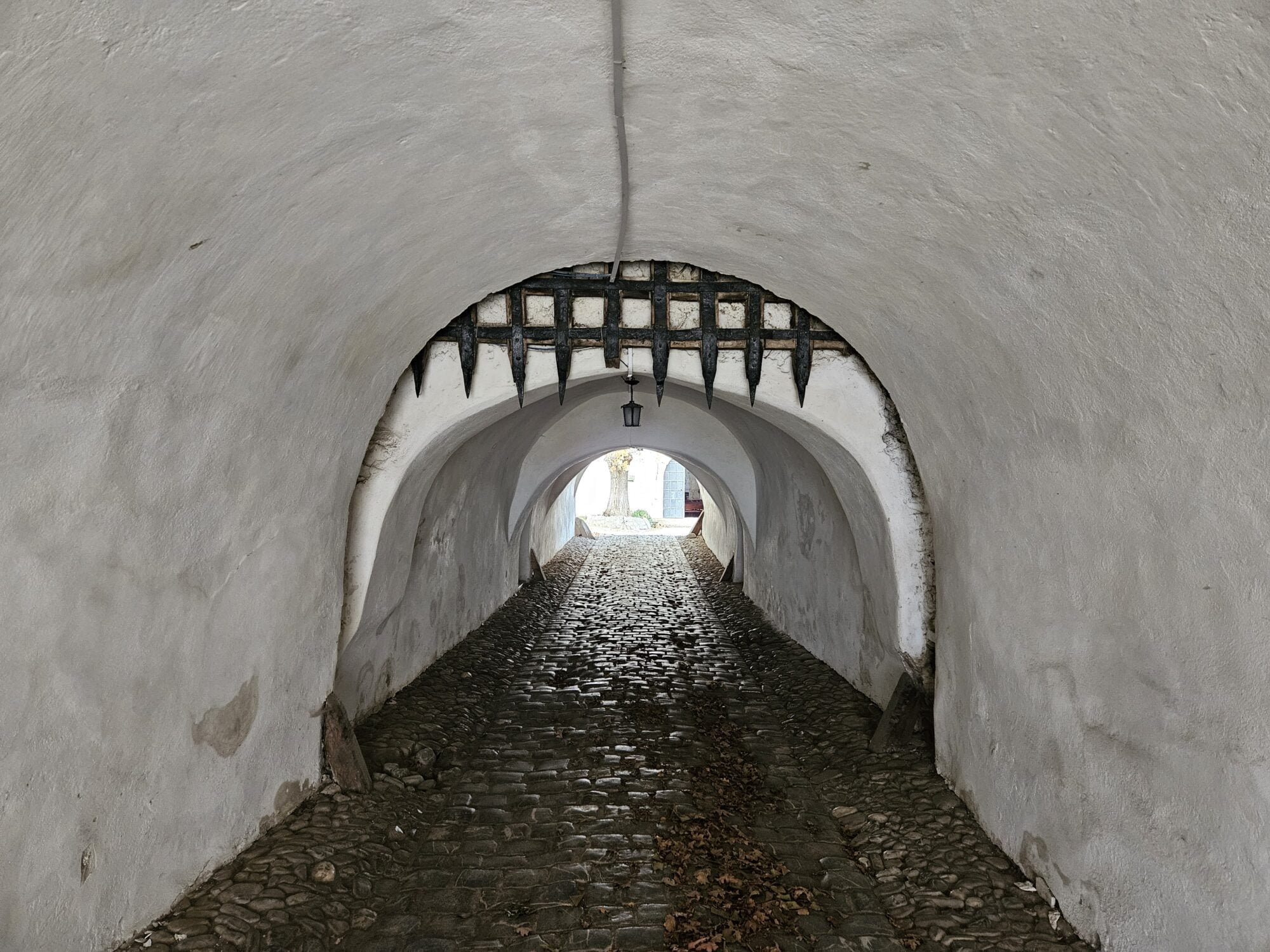
As the church is so fortified, there is only one way in and out unless you can walk through 5-metre-thick walls. Otherwise, you need to pass through a tunnel in the walls which is protected by a portcullis. These are designed to drop when under threat.
The Fortress
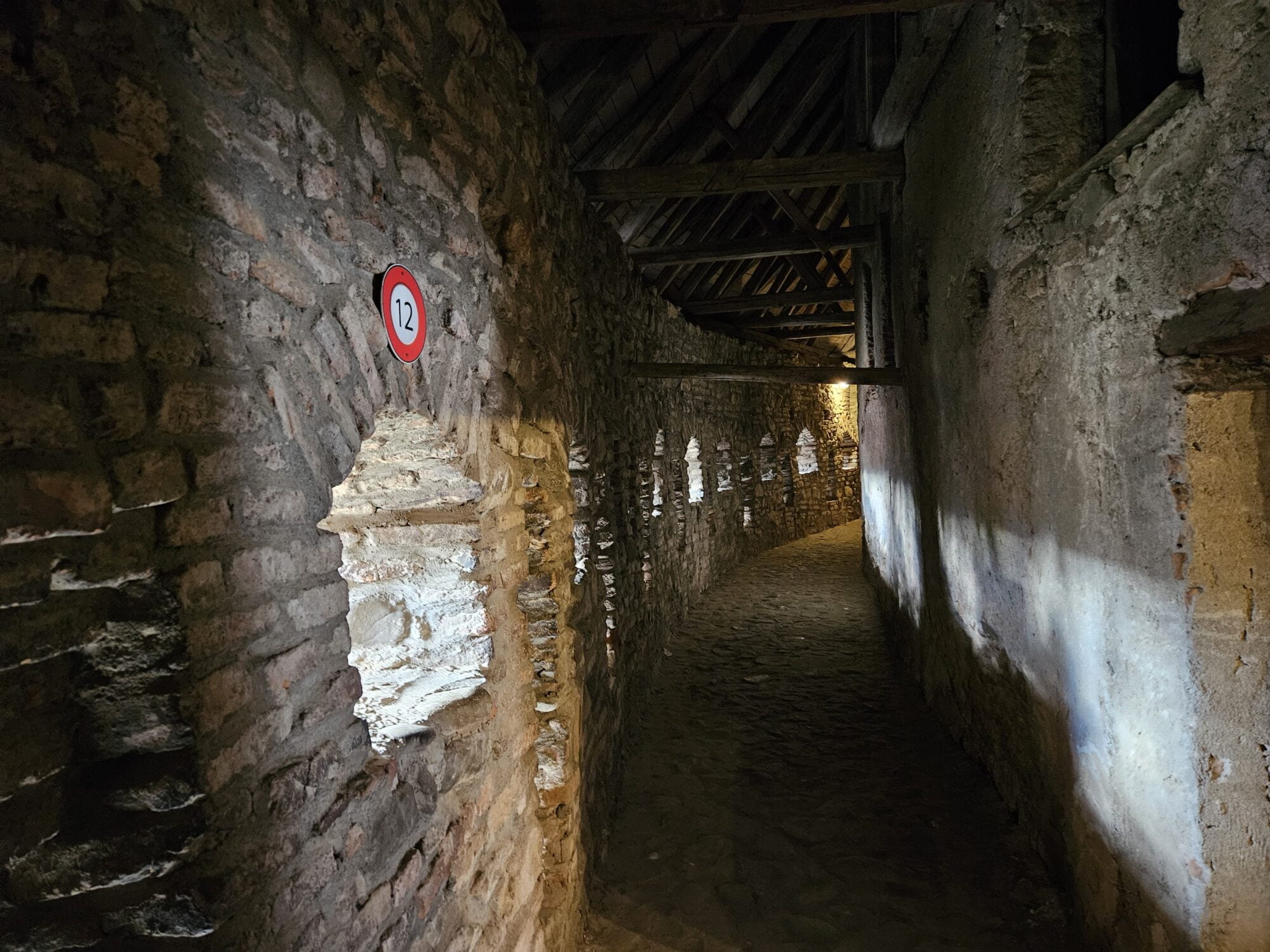
The Prejmer fortress has the most fortified walls of the fortified churches of Transylvania. Construction of the fortress began before 1300. The second construction stage is from the late 15th and early 16th centuries. In their current form, the ring walls are between 12 and 14 metres high, with a thickness of up to 5 metres at the base.
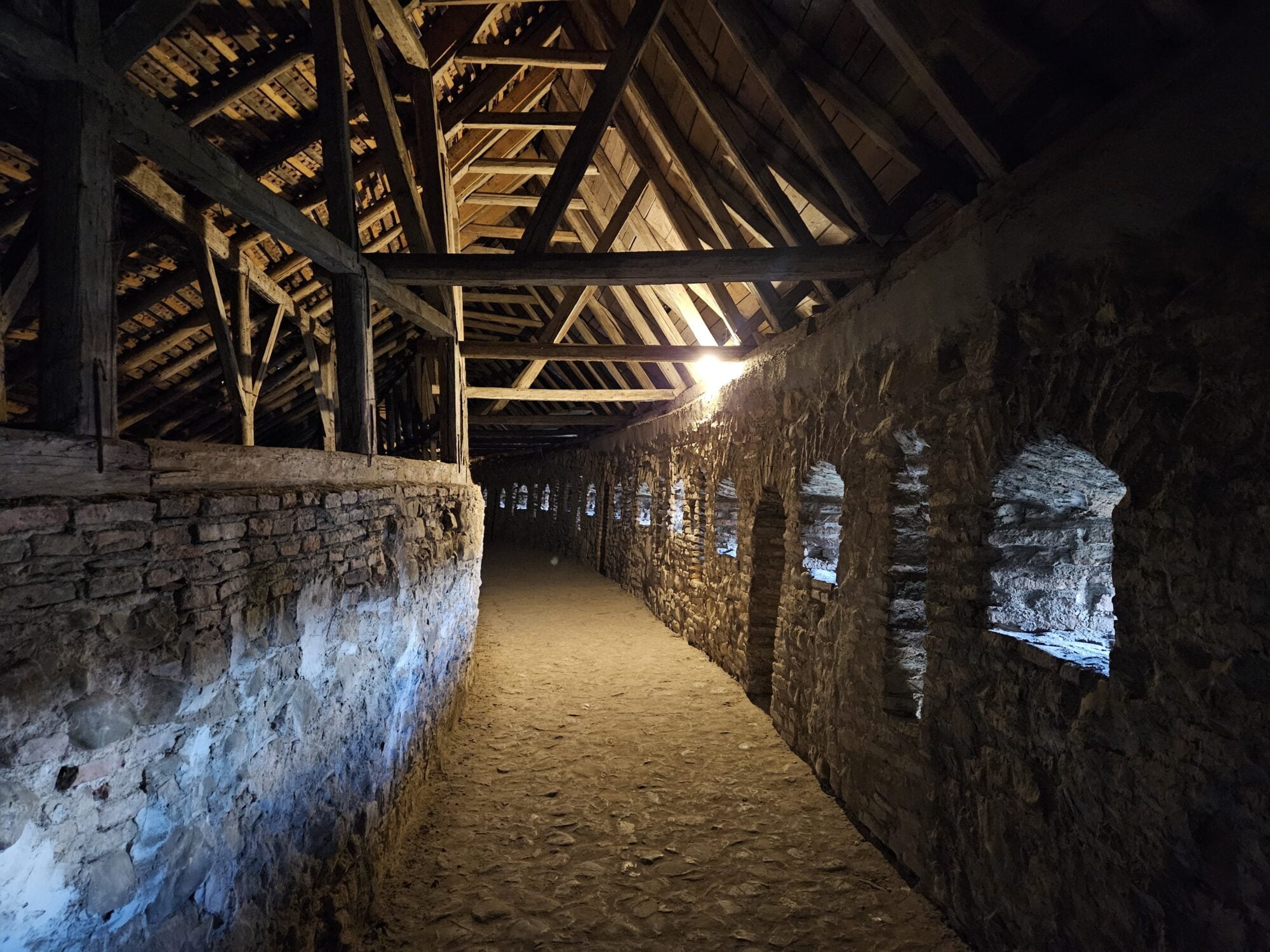
You can climb up to the top of the fortifications via various steps and walk through the loop of the battlements. This is cobbled underfoot and has views out of the arrow slots into the village and nearby countryside. This is rather eerie and dark.
Rooms Inside The Fortress
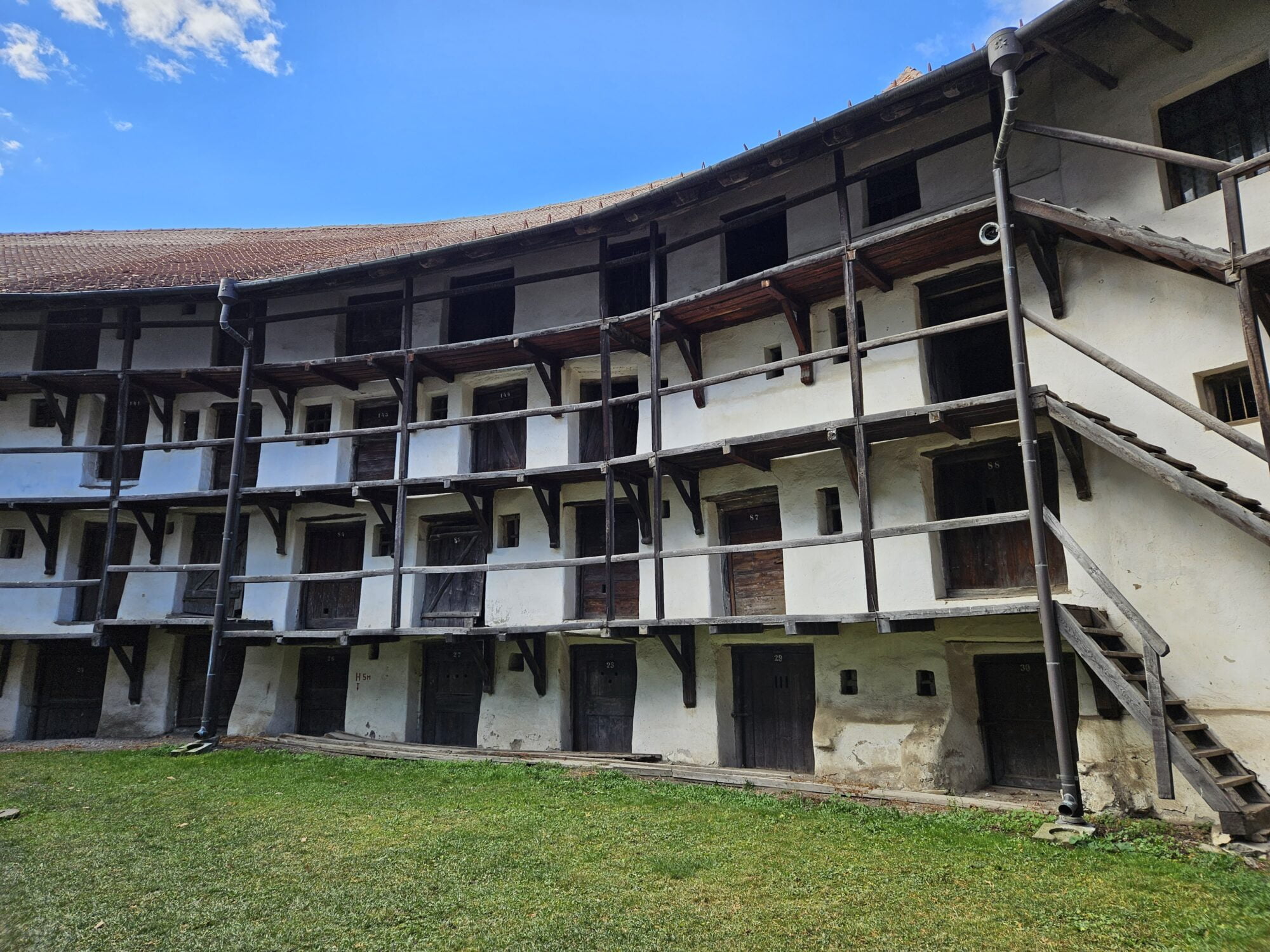
Inside the fortress, there are over 270 rooms for refuge and storage of provisions. These rooms are over two or more floor levels interconnected by balconies and stairs. The balconies and stairs also make for a good viewpoint.
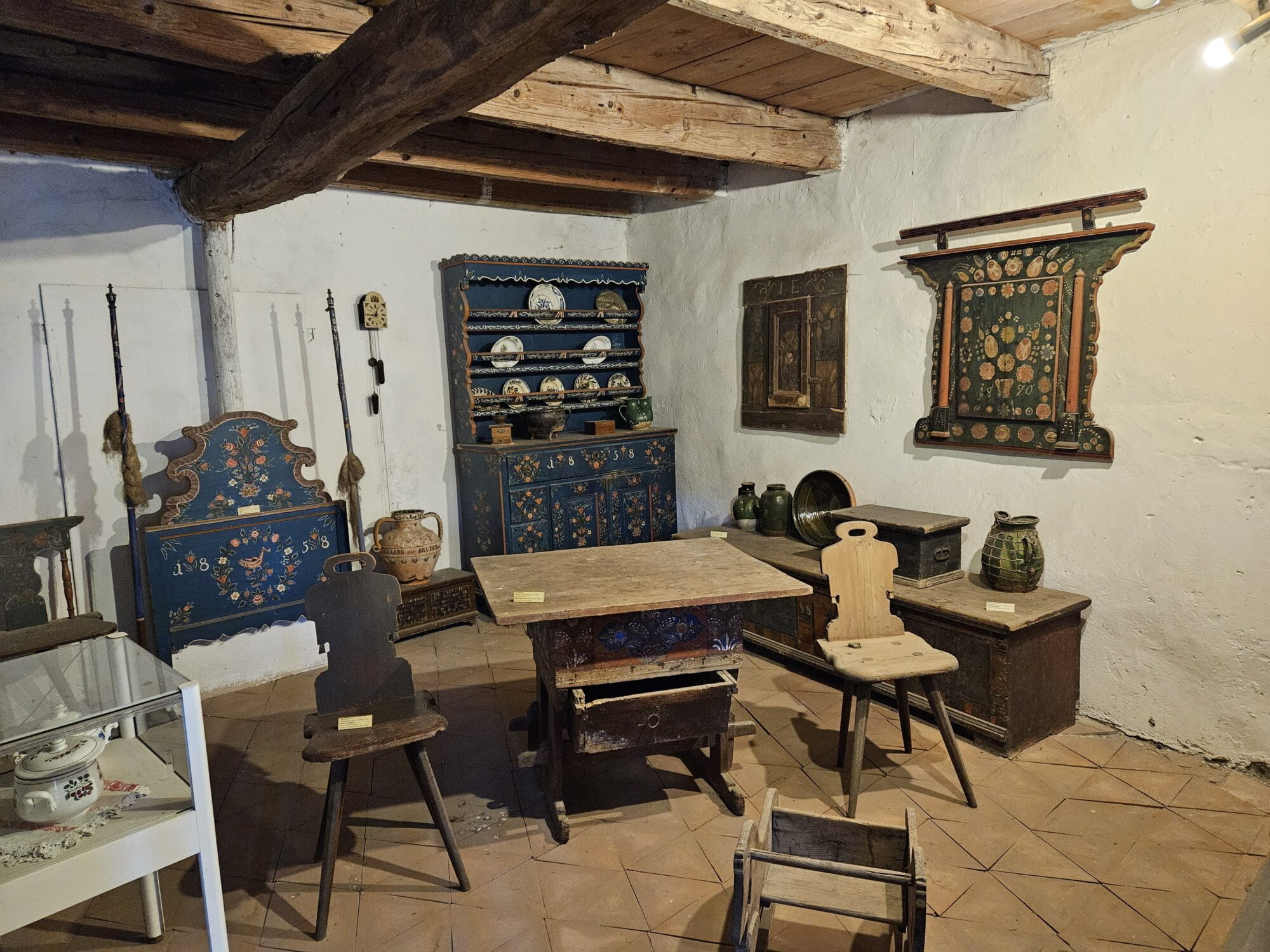
You can enter some of these rooms and learn how the locals used to live. They lay some out as living areas, and others are storage rooms. The one with the horse cart caught my eye, as did the wool weaving equipment.
The Old School
Two rooms in the southern part of the fortress are called “Old School”, one of which preserves traces of old wall paintings. At the initiative of the Transylvanian Saxon Foundation, a room has been rearranged to show what school was like.
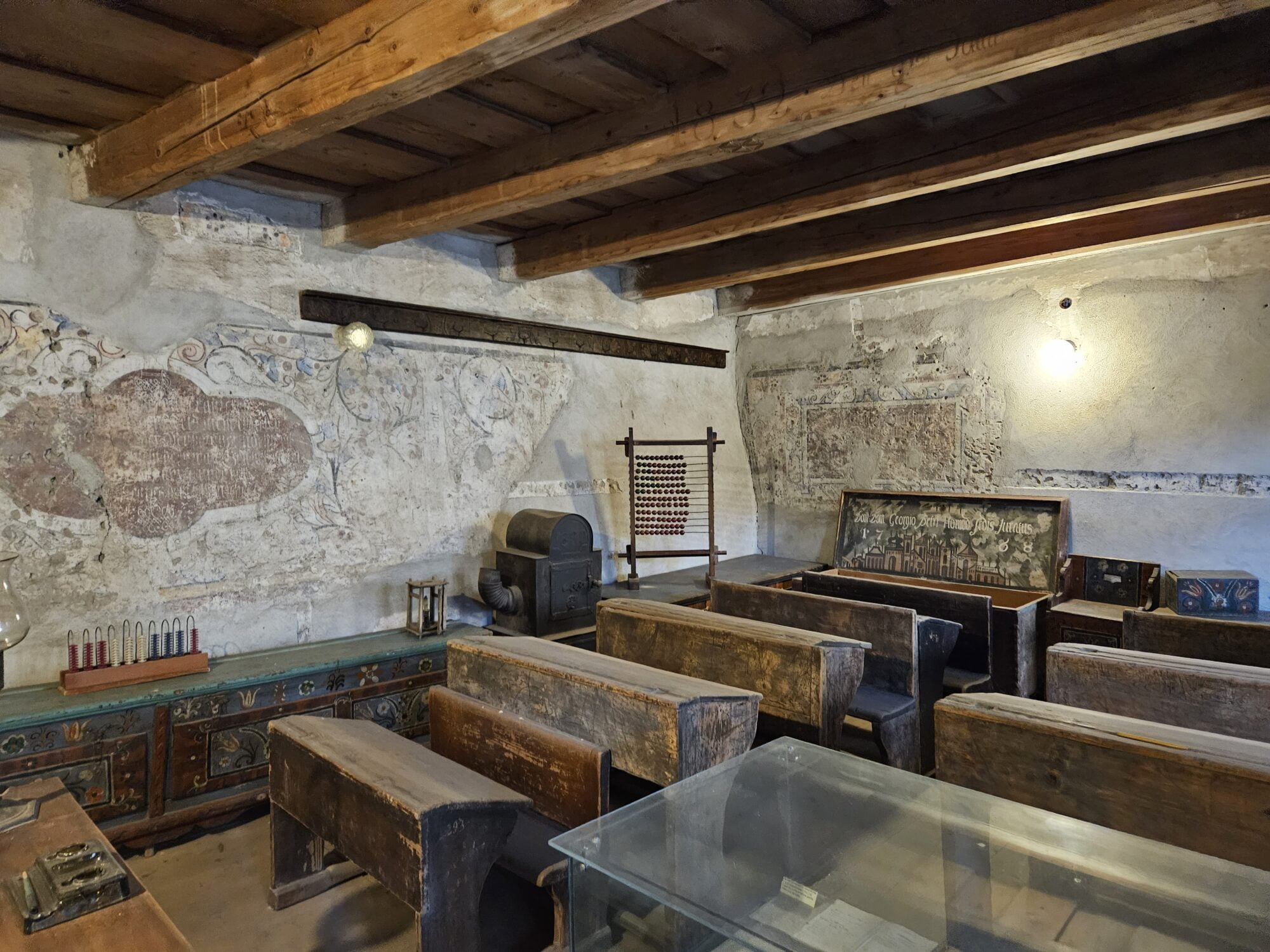
The Old School is where they taught during the sieges of the Prejmer fortress and in times of danger. They mention the church’s first teachers in the years 1460 and 1556. The classroom, decorated with 18th-century frescoes, was used until 1853.
The Courtyard
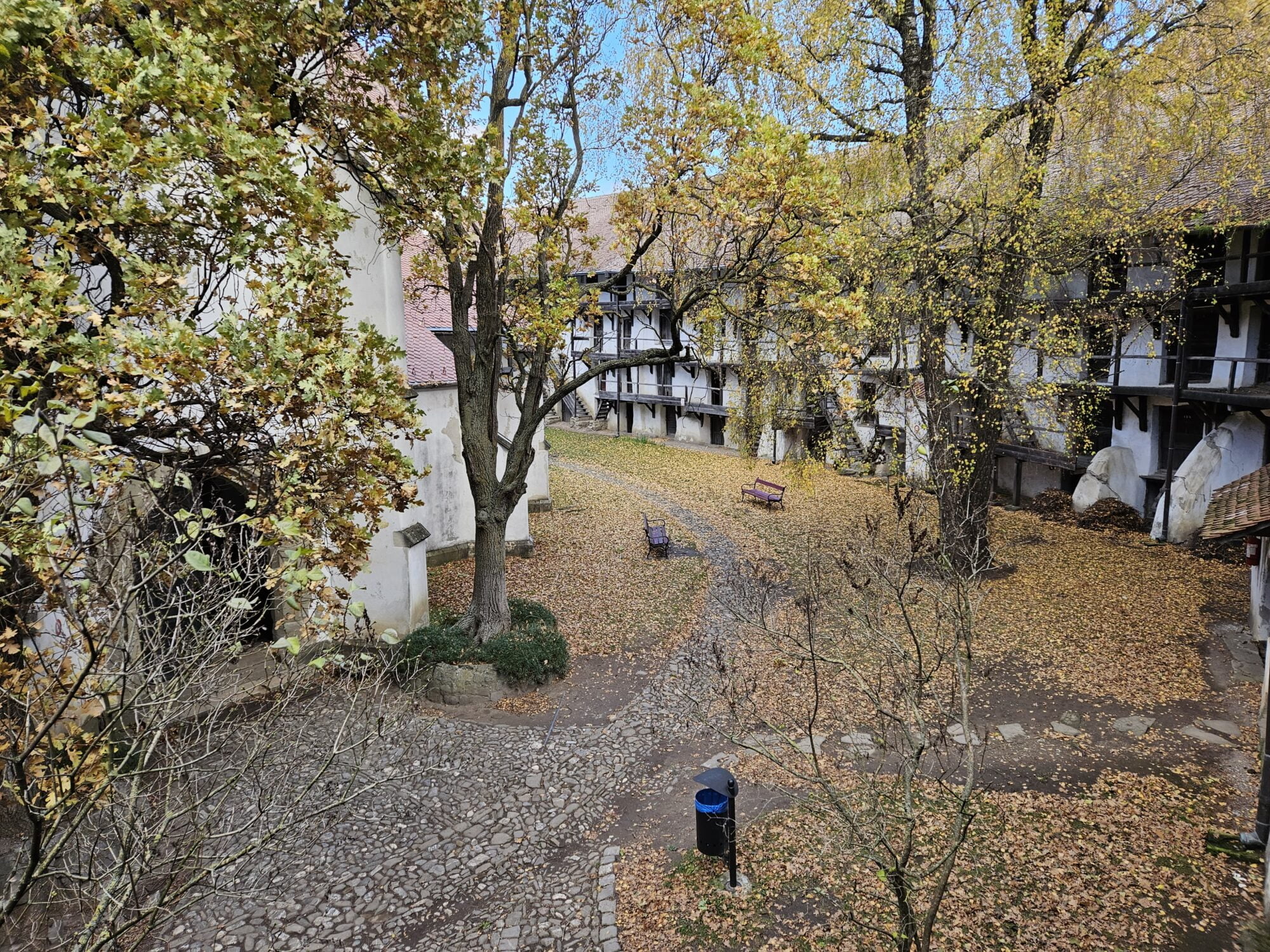
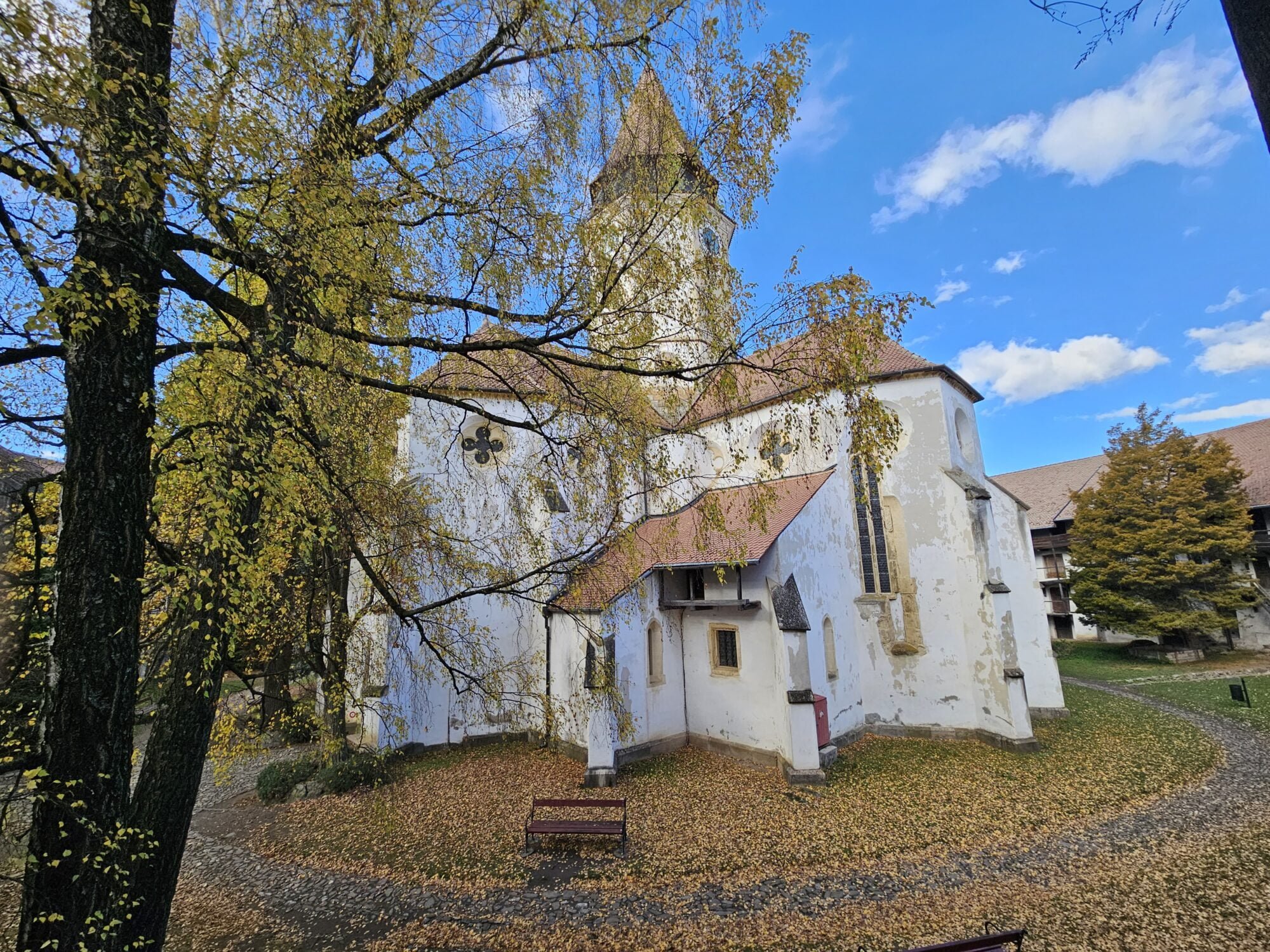
Between the fortifications and the church building, there is a lovely courtyard with trees. During my visit, it was autumn, and the colourful leaves on the trees and on the ground were especially beautiful. This area has benches where you can sit and enjoy views of the church and fortress.
Church Entrance
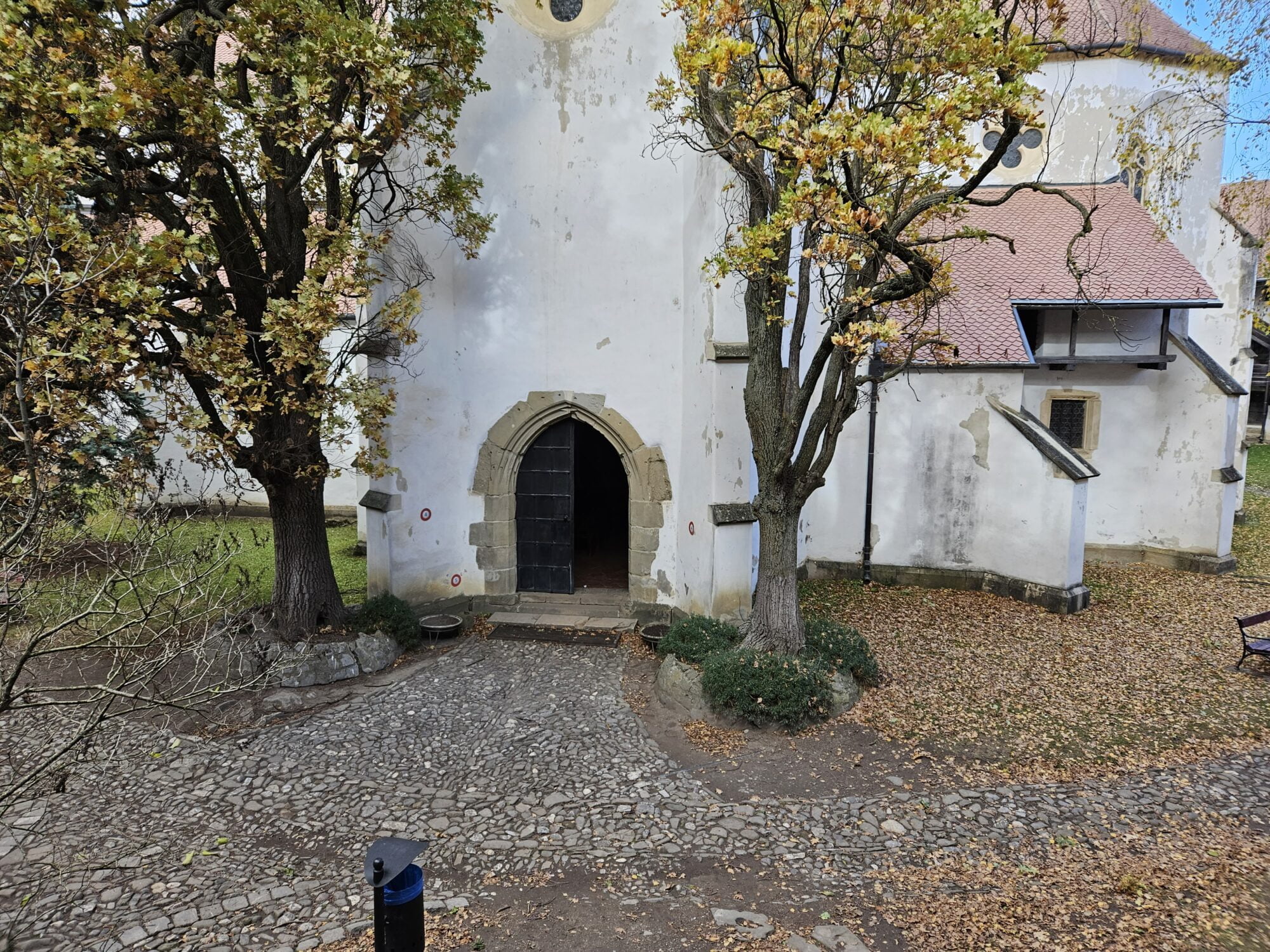
The church entrance is visible from the courtyard and has a fascinating feature: the stone of shame. They tied thieves and adulterers to the stone of shame as a form of punishment on Sundays. Those arriving at church then mocked the offenders. This practice stopped in 1855.
Inside The Church Building
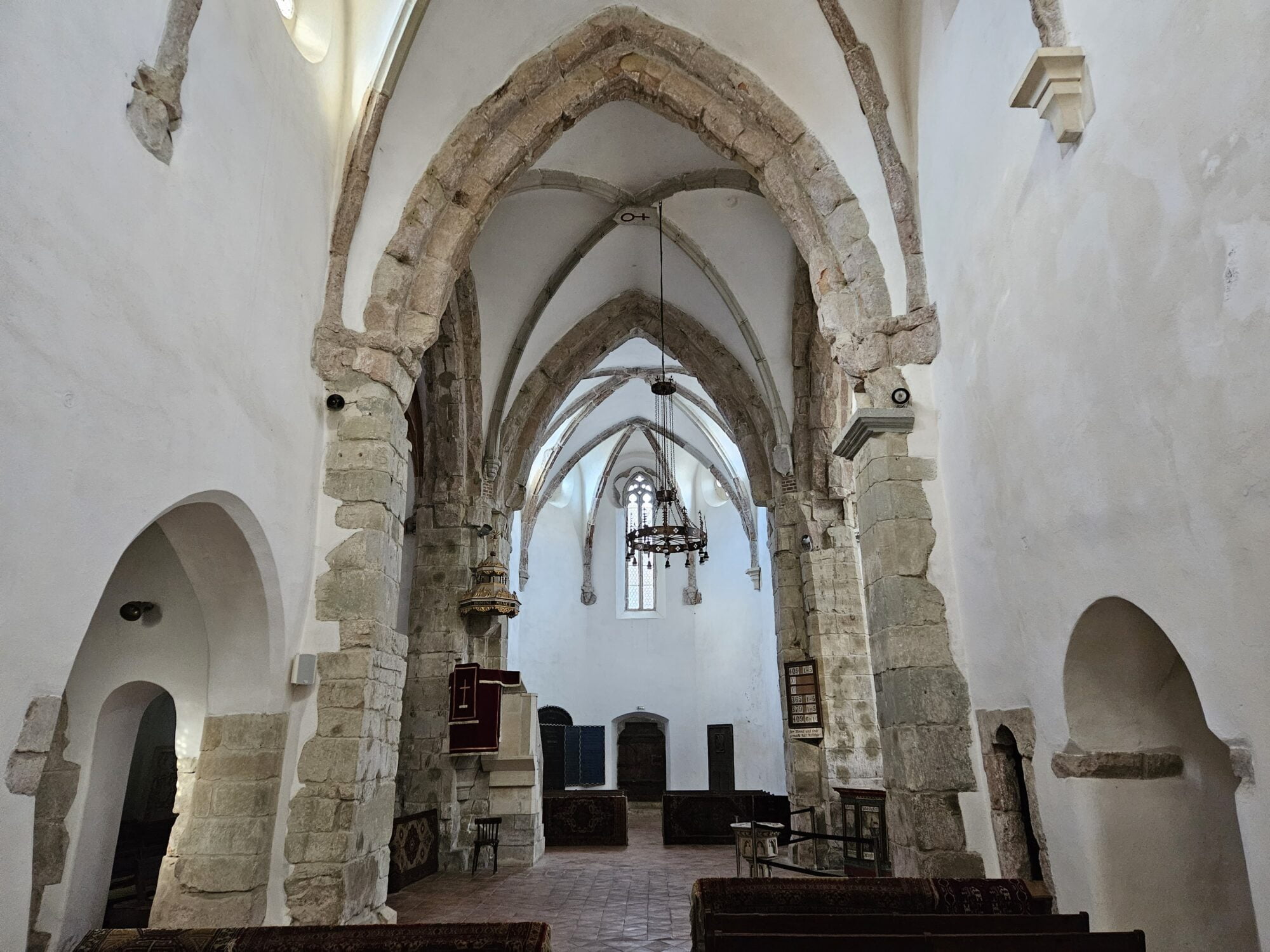
Inside the fortifications is the church’s main feature. Originally, these were built in the form of a Greek cross; however, they have been added to since then. The inside of the church has some interesting features.
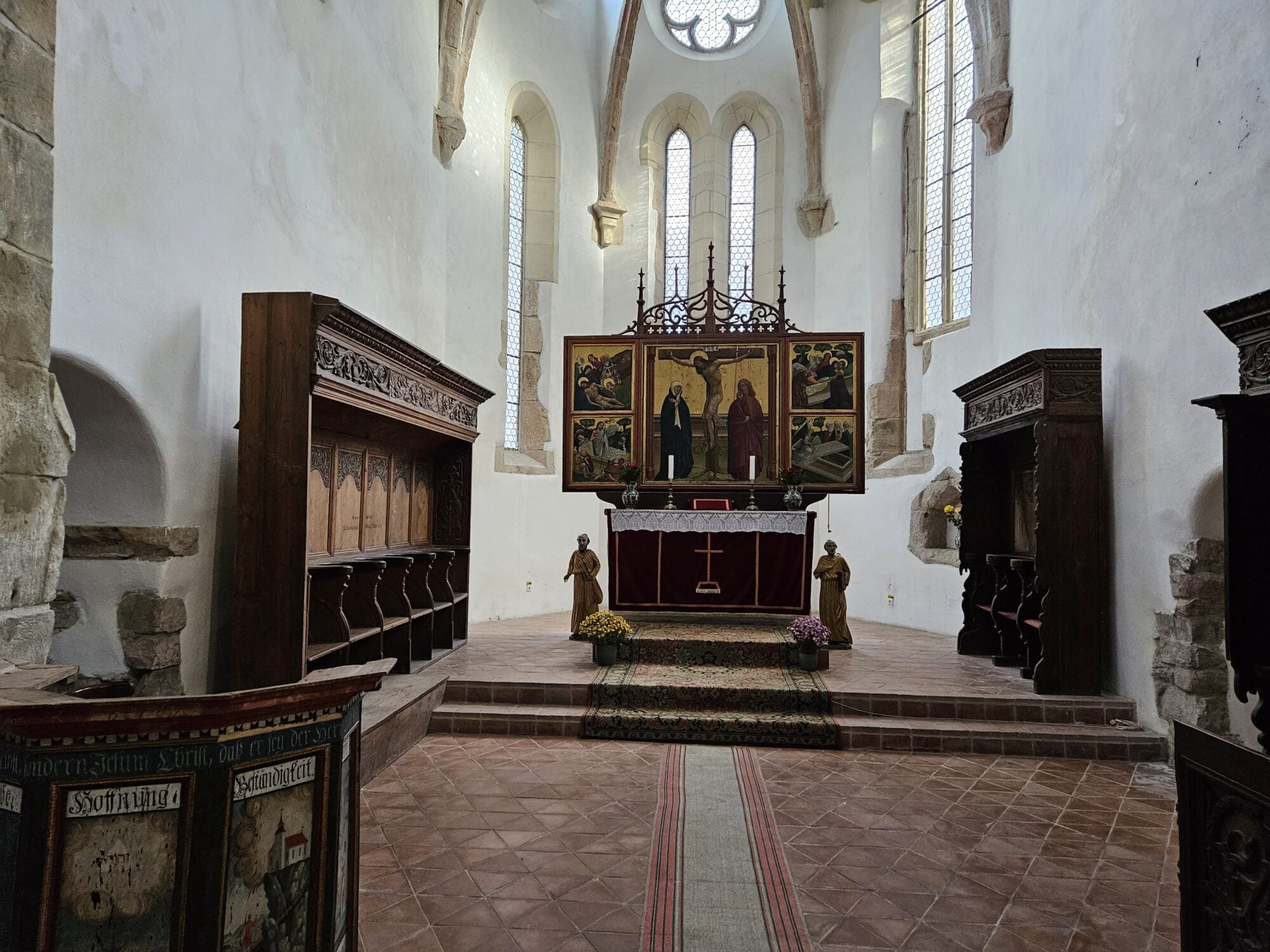
They have a triptych altarpiece, the oldest in Transylvania. This multi-panel work of art dates to around 1450. The main panel is joined to the side panels and painted on both faces at two levels. The triptych shows scenes from the Passion of Christ.
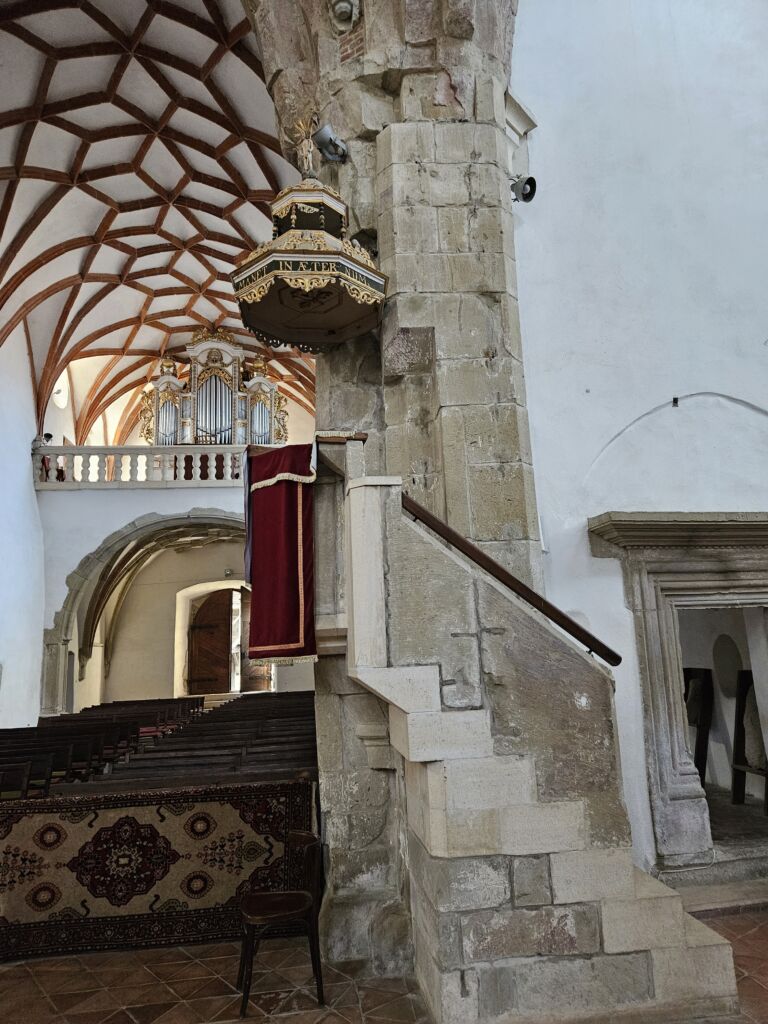
They brought the church organ to the church in 1676. Since then, they have restored it most recently in 1970. Another old feature in the church is the pulpit, dating to the 18th century. The pews of the church are rather old too. The priest’s pew is from 1515, and the choir dates from 1526.
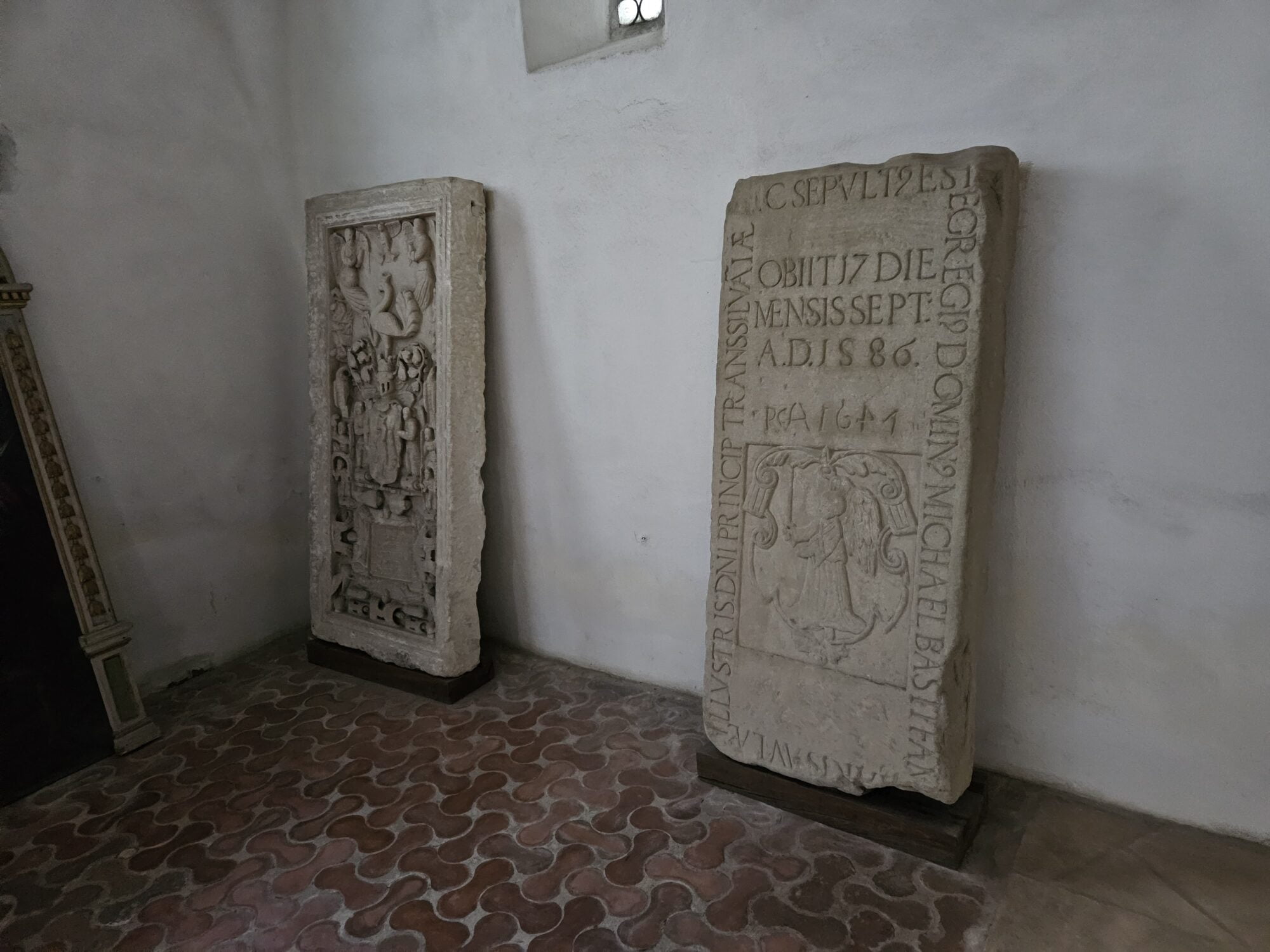
I enjoyed mooching around the church and seeing the various artefacts and features inside.
Museum
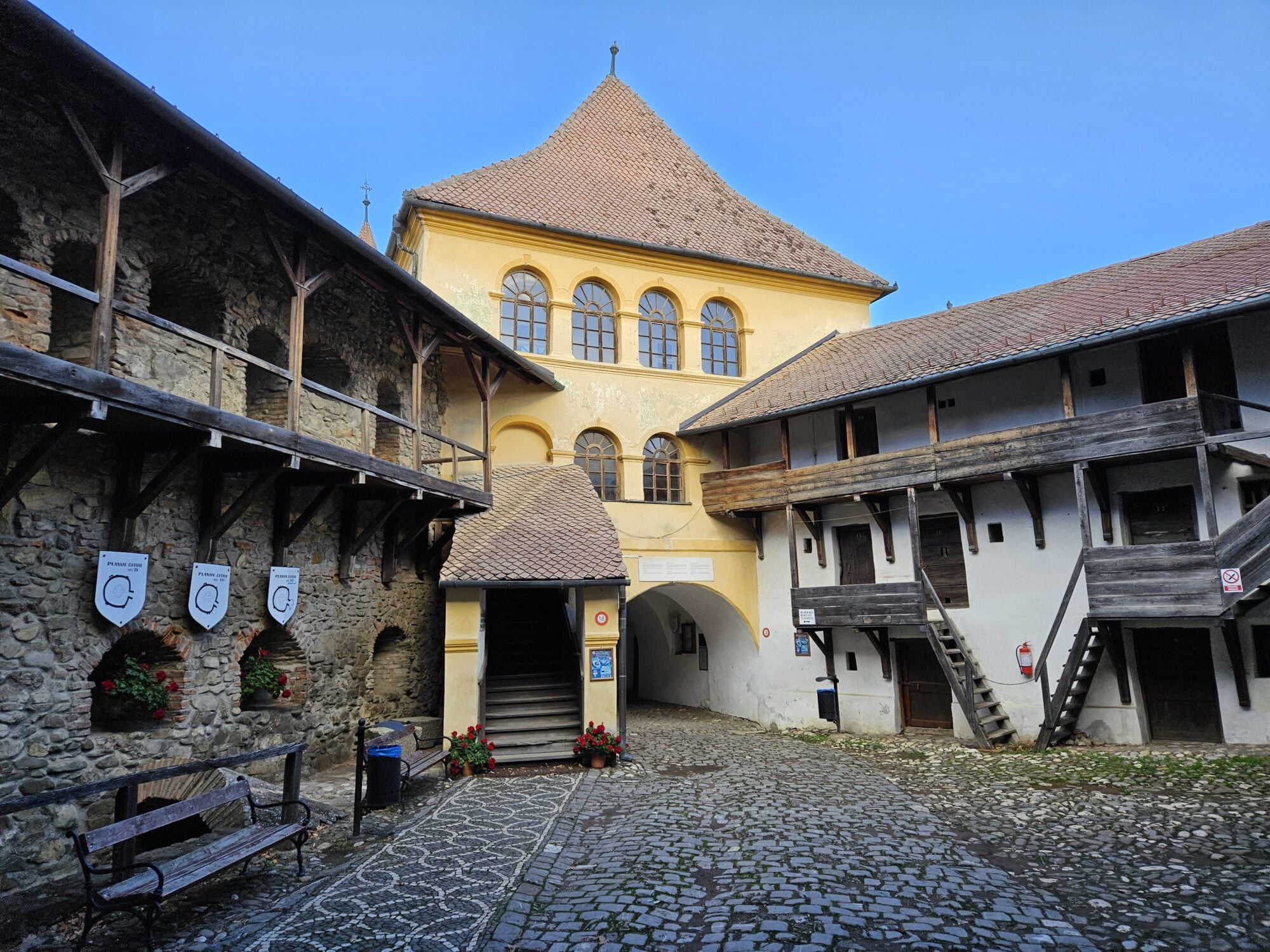
Another fascinating part of the complex is the museum, which has an extensive collection. It is in the first tower you reach after entering the fortification.
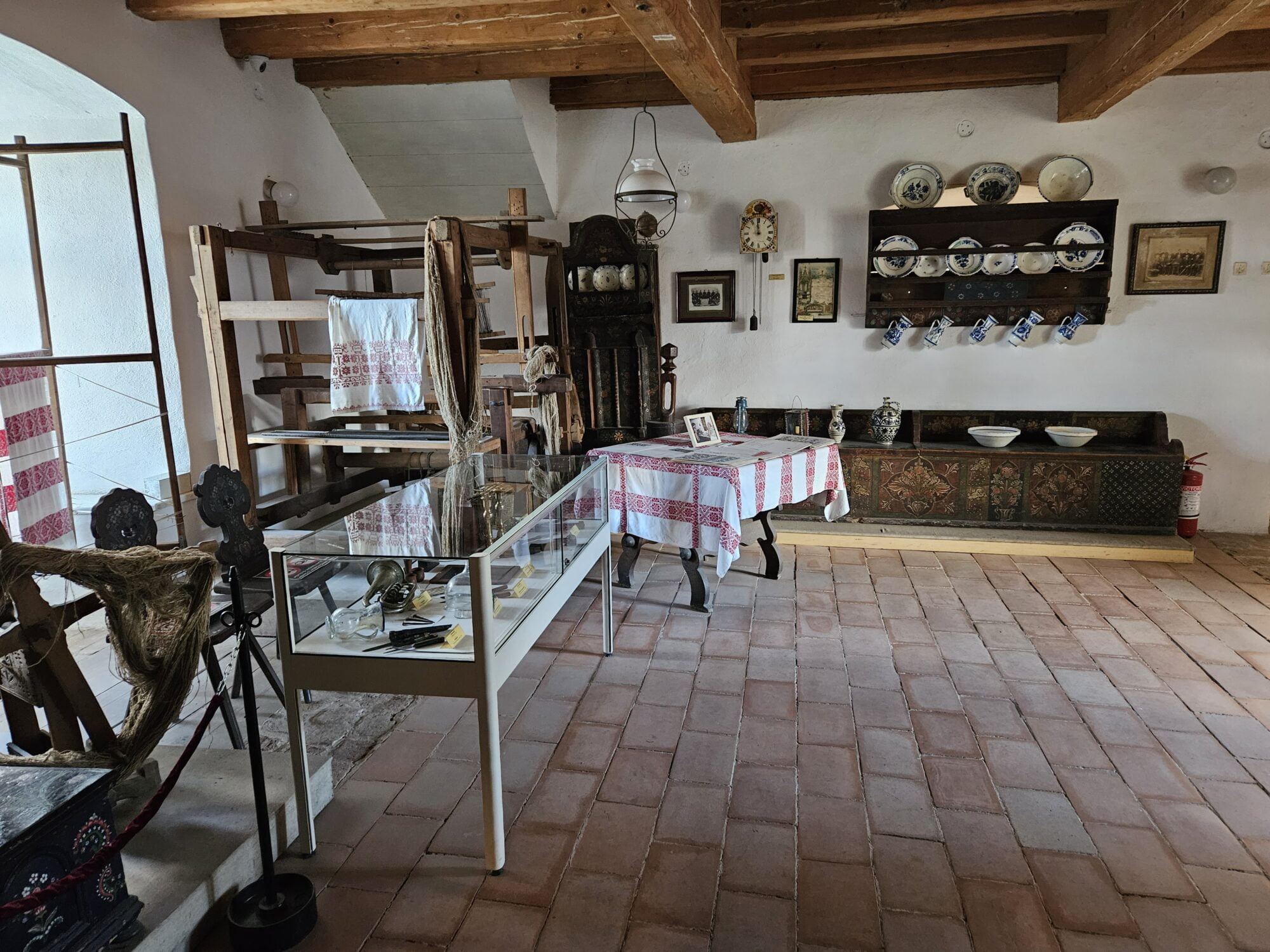
The artefacts in the museum were formerly a private collection that teacher Herta Wilk donated to the church. Inside, you can learn the teacher’s history and how she made the collection.
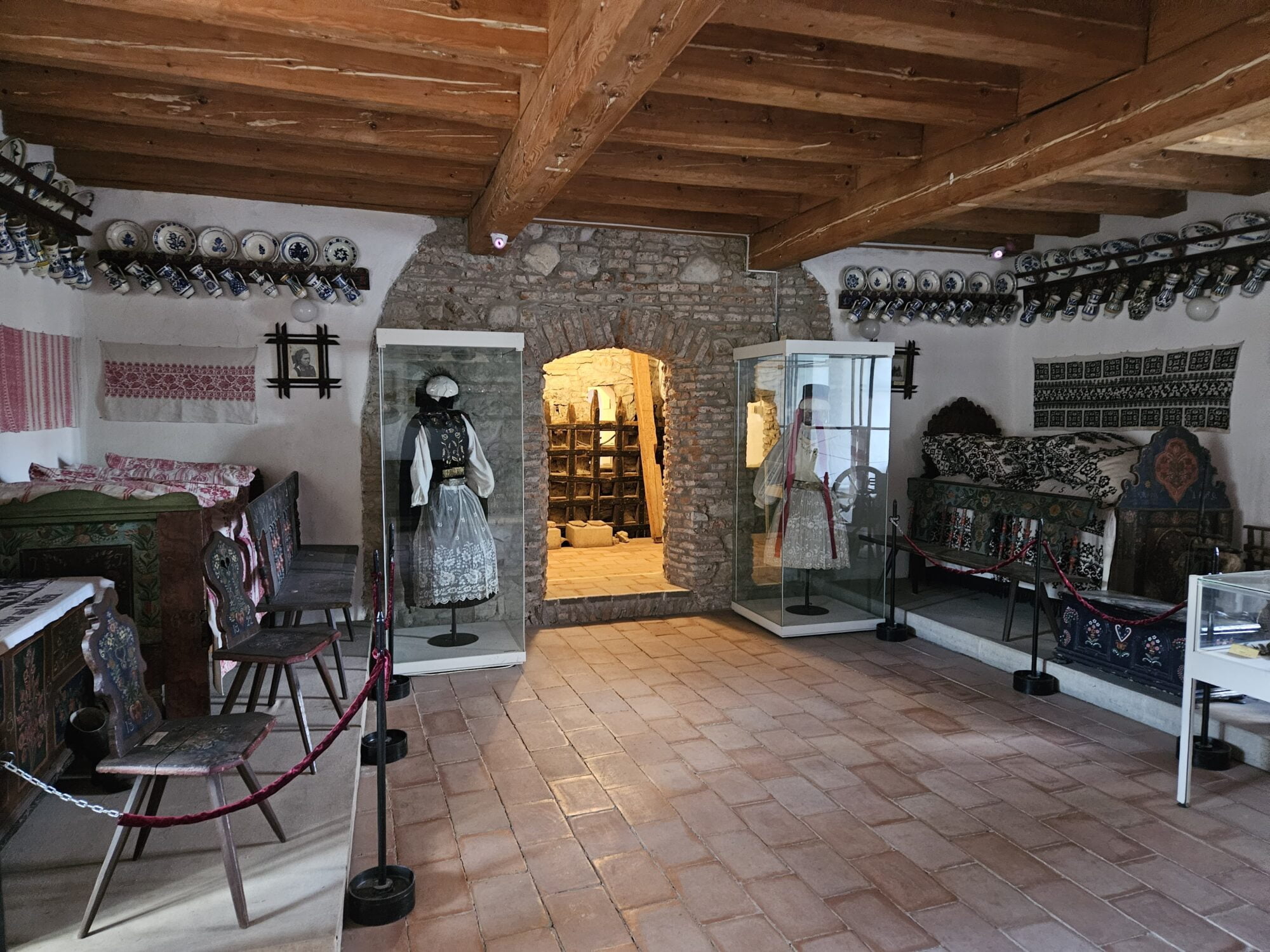
The artefacts in the museum include Saxon linen embroidery, folk art, and historically used kitchenware. You can also see historic clothing and furniture from the era.
Gift Shop
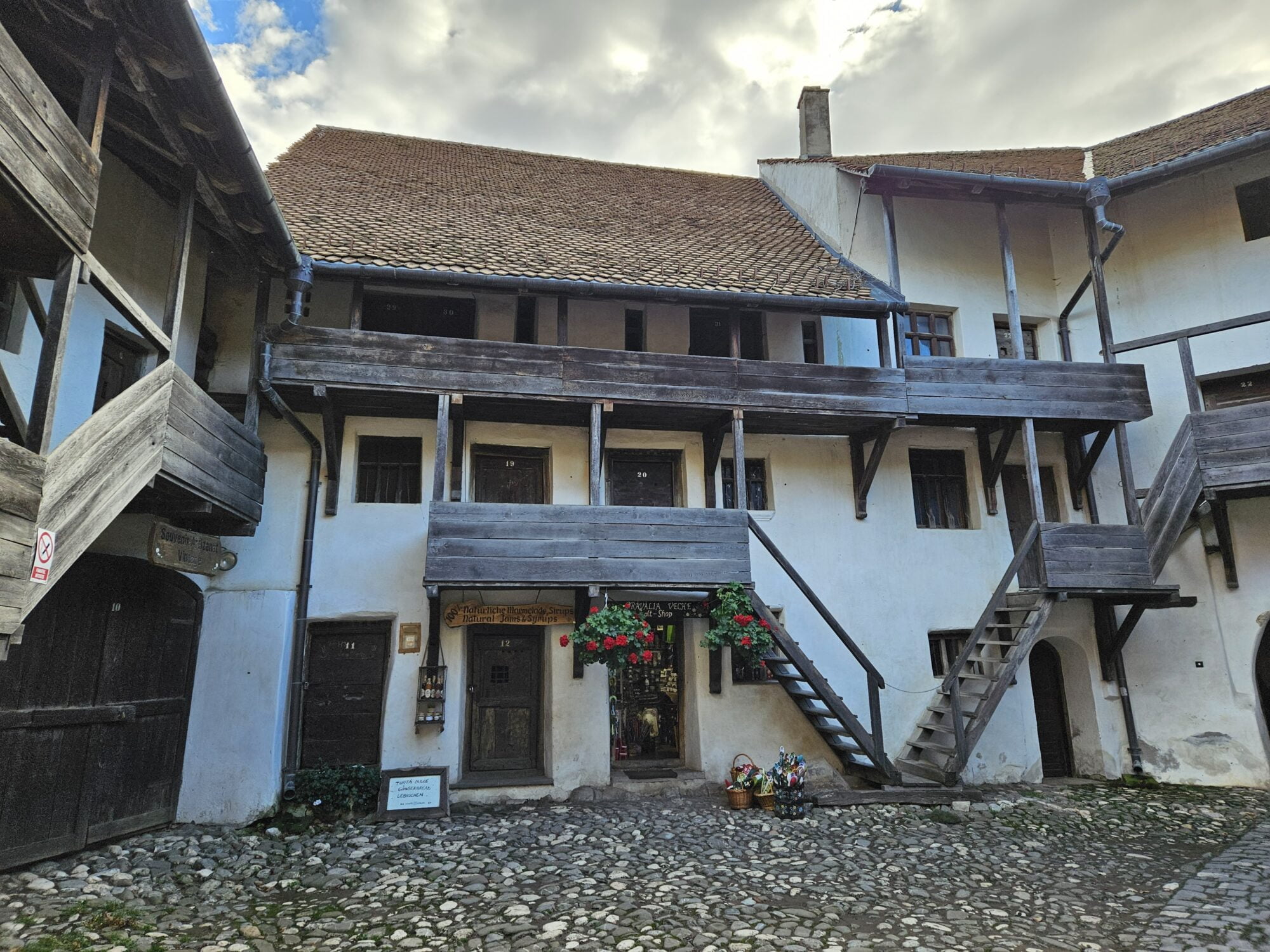
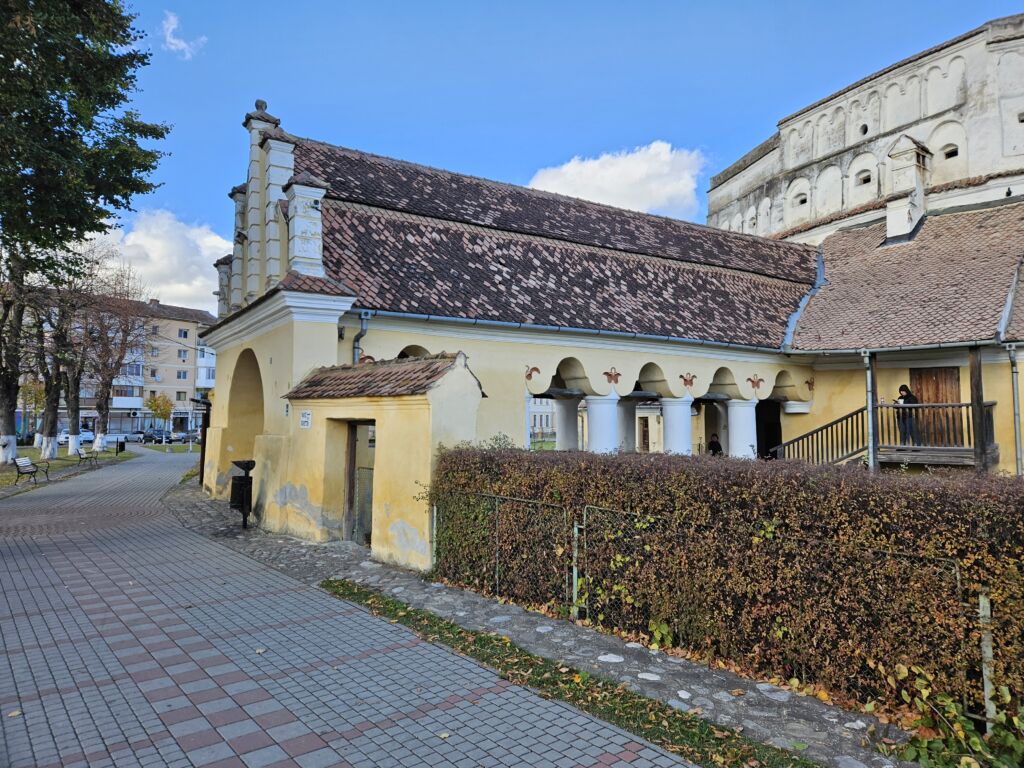
On-site, near the entrance and the tower museum, there is a gift shop. Inside, you can purchase all sorts of local souvenirs, including foods like preserves. There are also some pretty craft items and pictures you can purchase, too.
Tickets & Prices
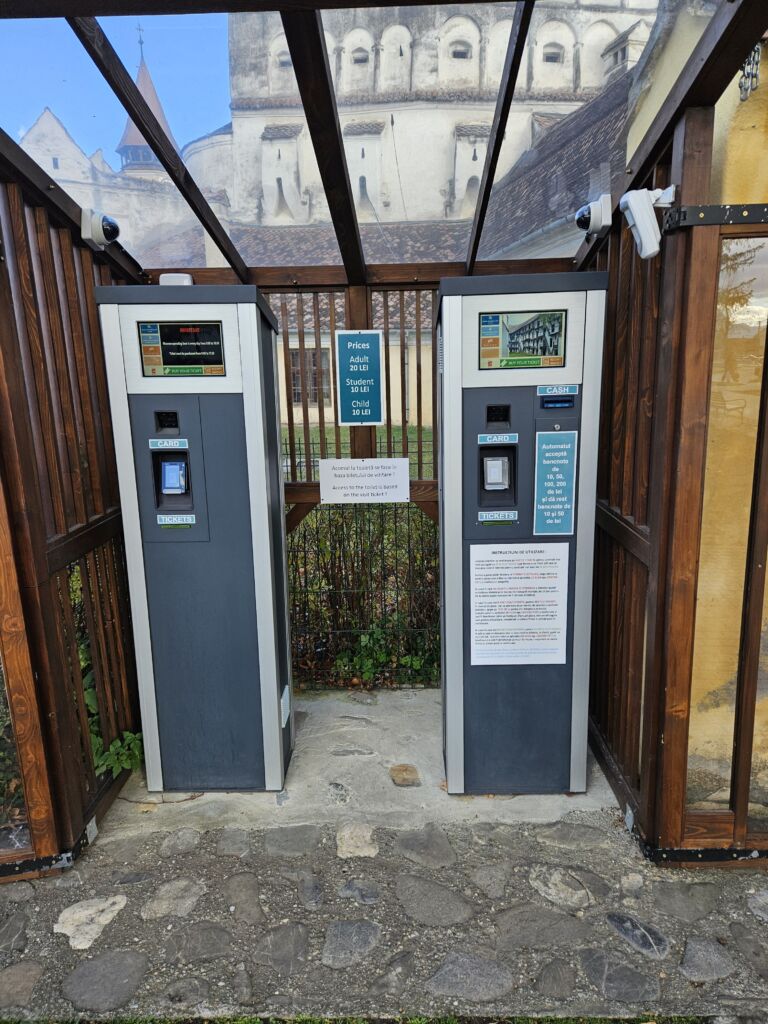
I purchased tickets at the entrance from a machine near the main gate. Once purchased, you must show the ticket to use the turnstile. You can find out current prices and opening hours on the church’s website.
What Else is in Prejmer Village in Romania
Bars & Cafes
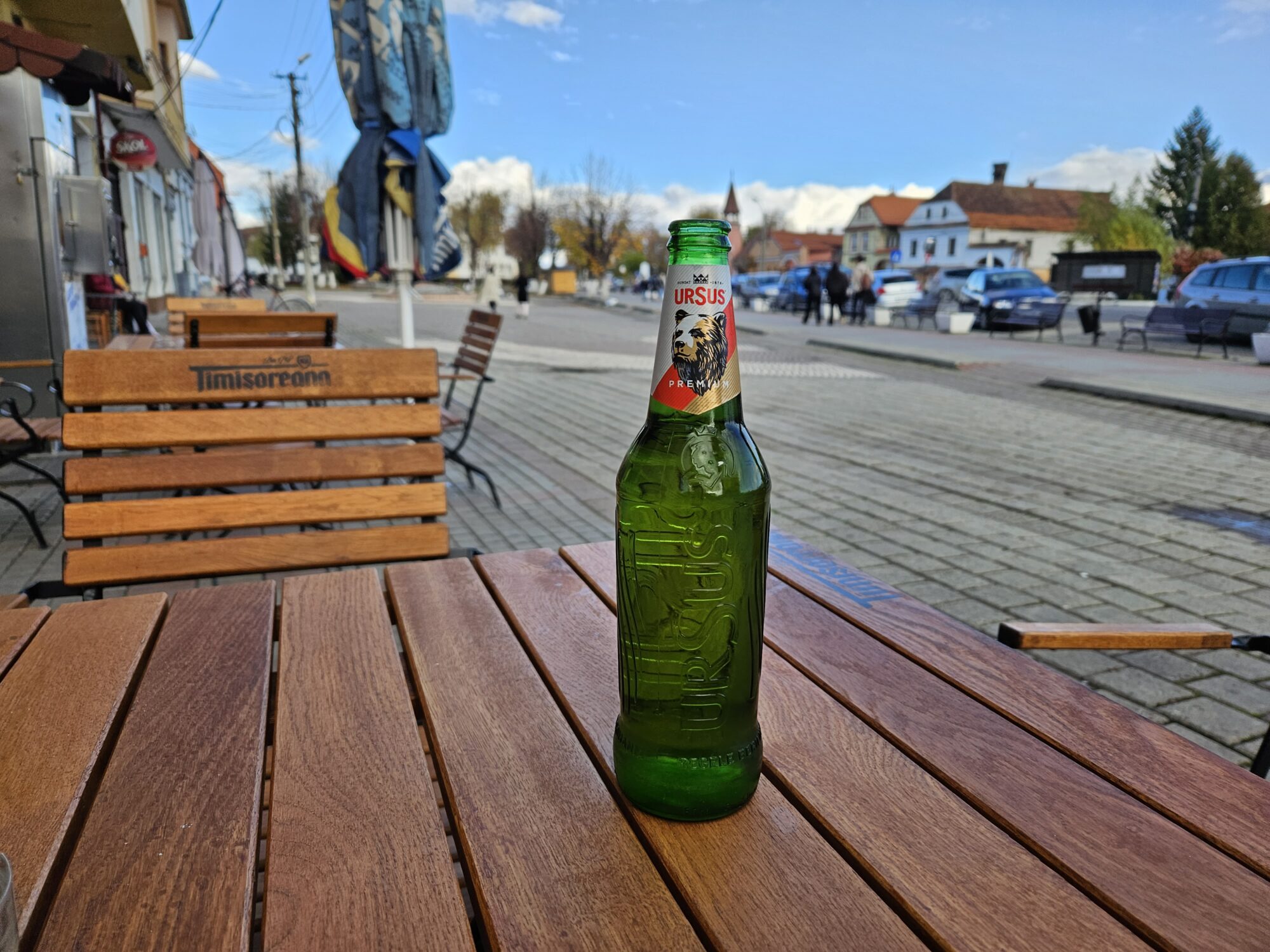
There are bars, cafes, and restaurants near the church for refreshments. I enjoyed a few beers at New Red, a cheap bar. They had outdoor seating, which was great for the views and for getting a sense of the town’s vibe.
Architecture
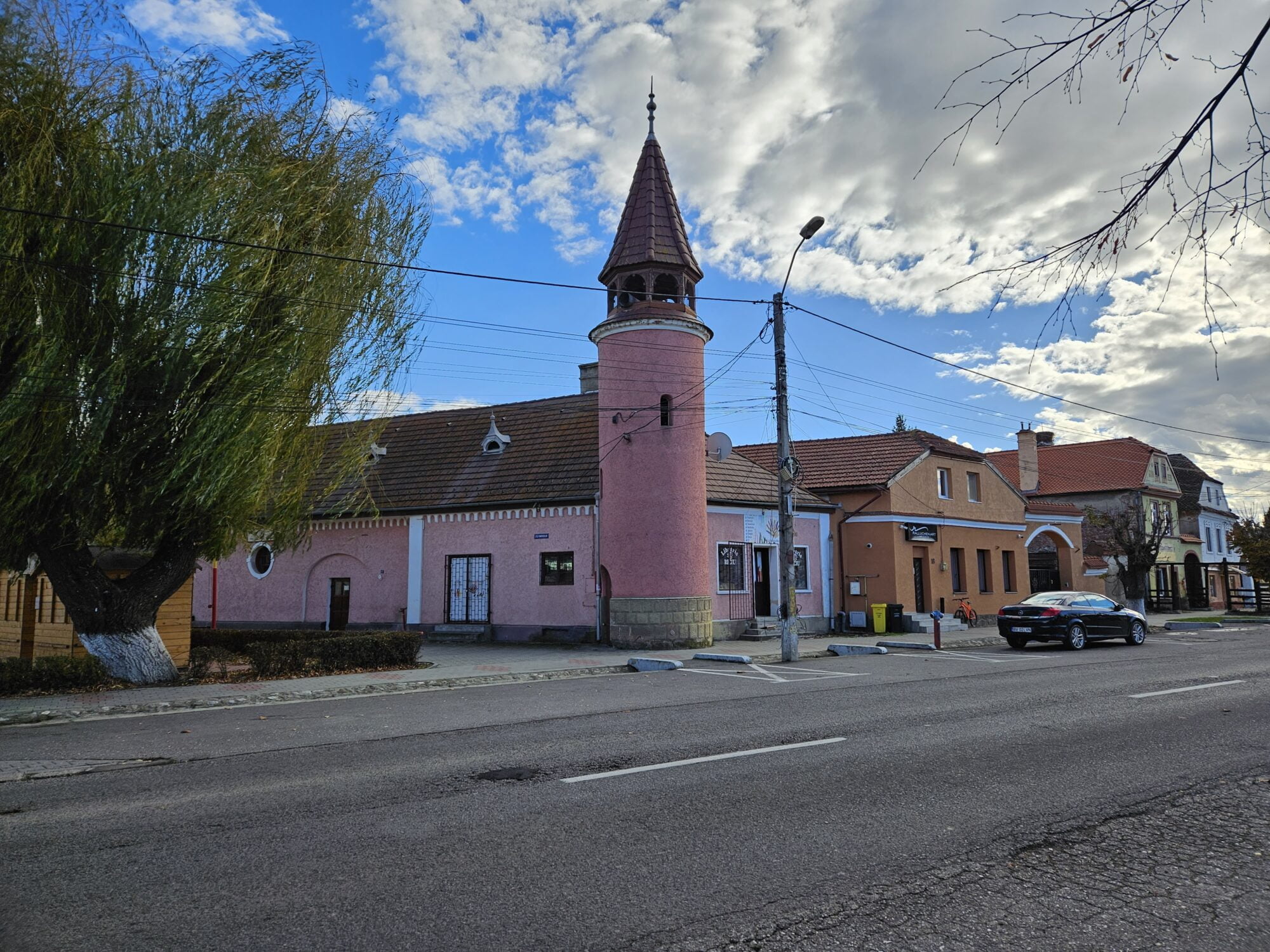
In the village, there are some rather unique buildings to see, especially on the road outside the church. One that caught my eye especially was the pink building with a tower.
Getting To Prejmer
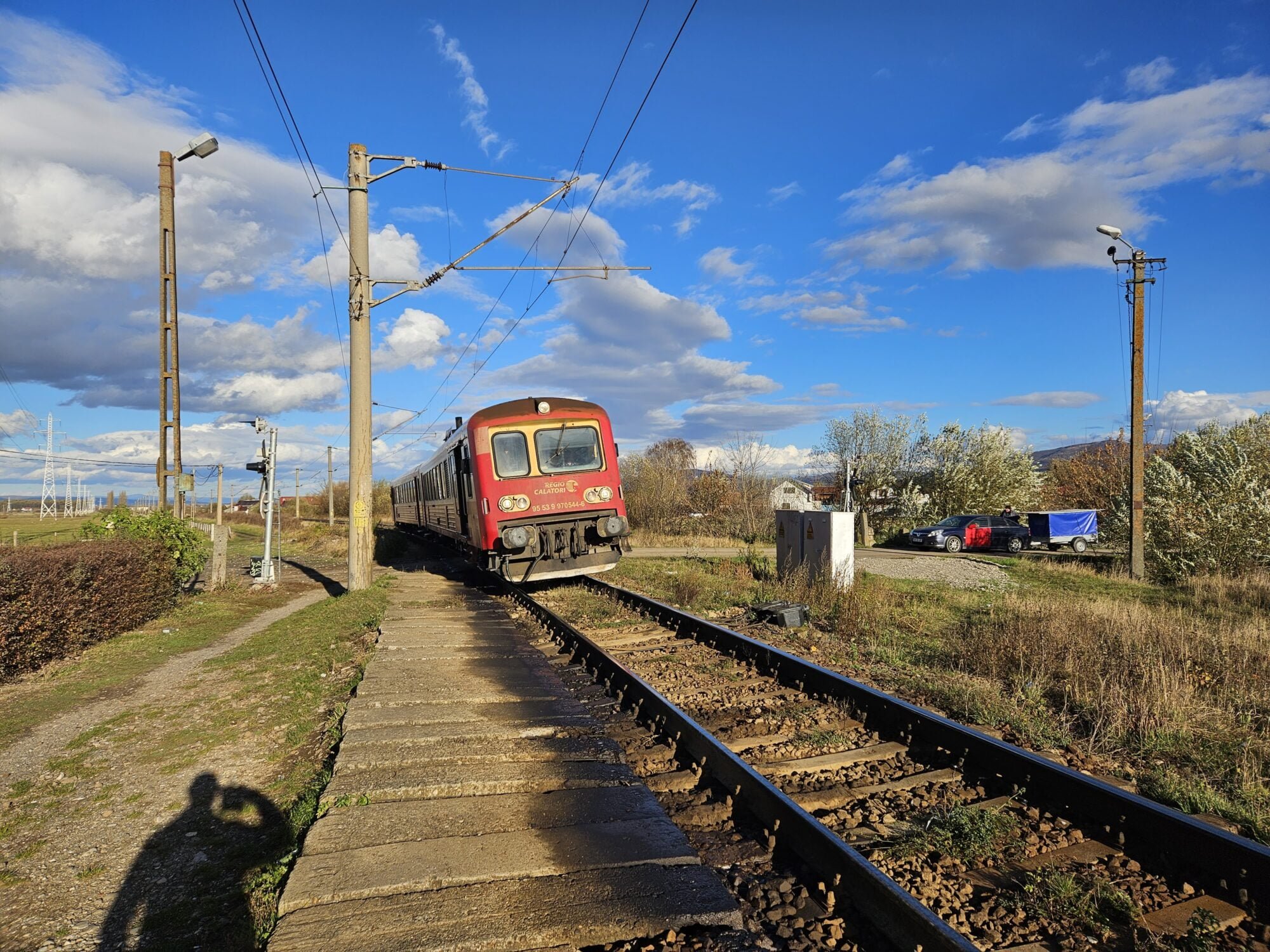
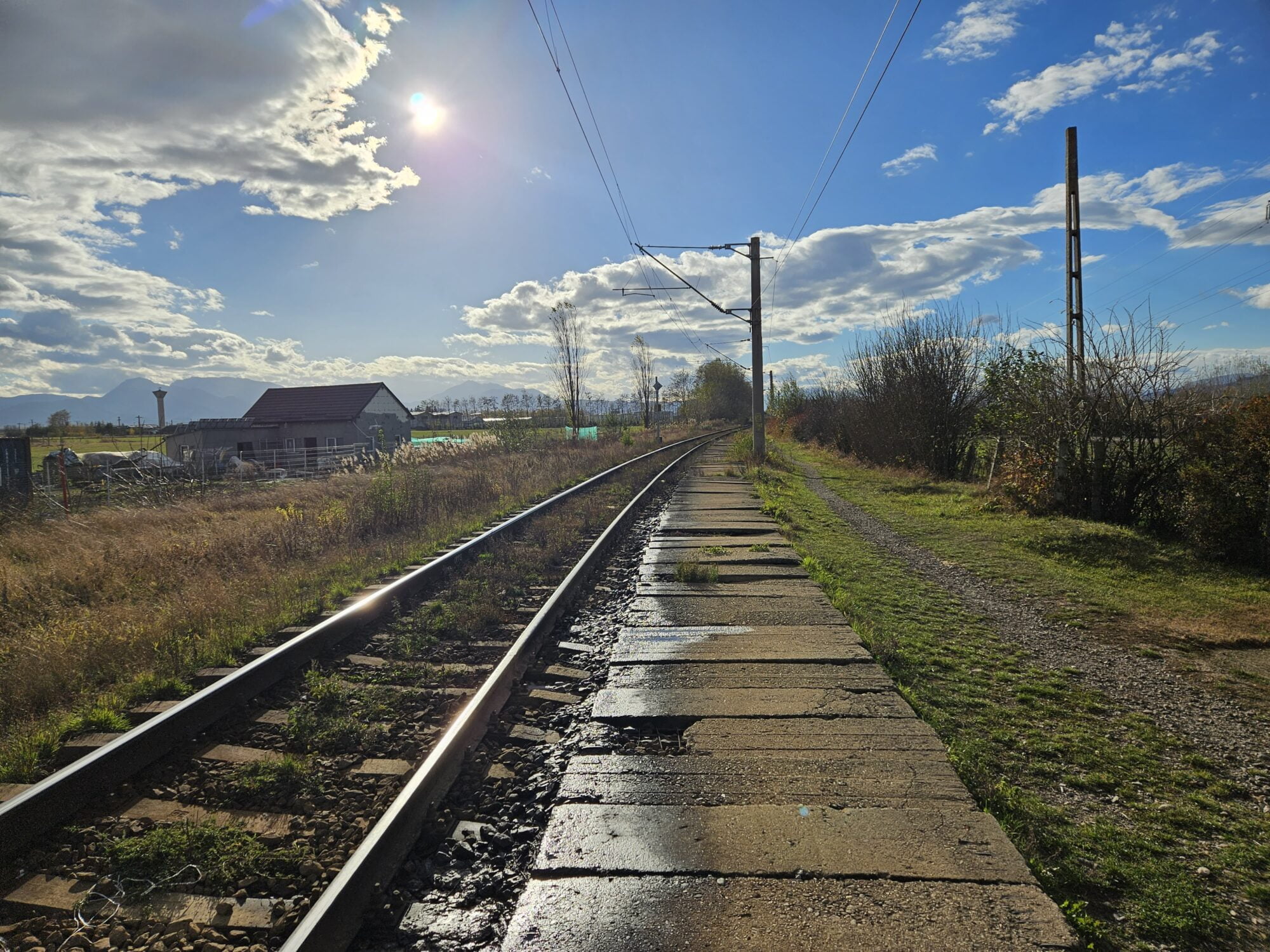
Prejmer is pretty straightforward to reach by train via Brașov, and the trains are regular. You can find current train times on the CFR Calatori website. The railway station is a 10-15 minute walk from the church. It is a basic platform in the countryside with no facilities. The train was cheap.
You can also catch a bus from various places in the area. The best way to find the current timetable is on the Moovit app or on Google Maps. If in a rush, you can get an Uber to the church; this is the most expensive option.
Is Prejmer Fortified Church Worth Visiting?
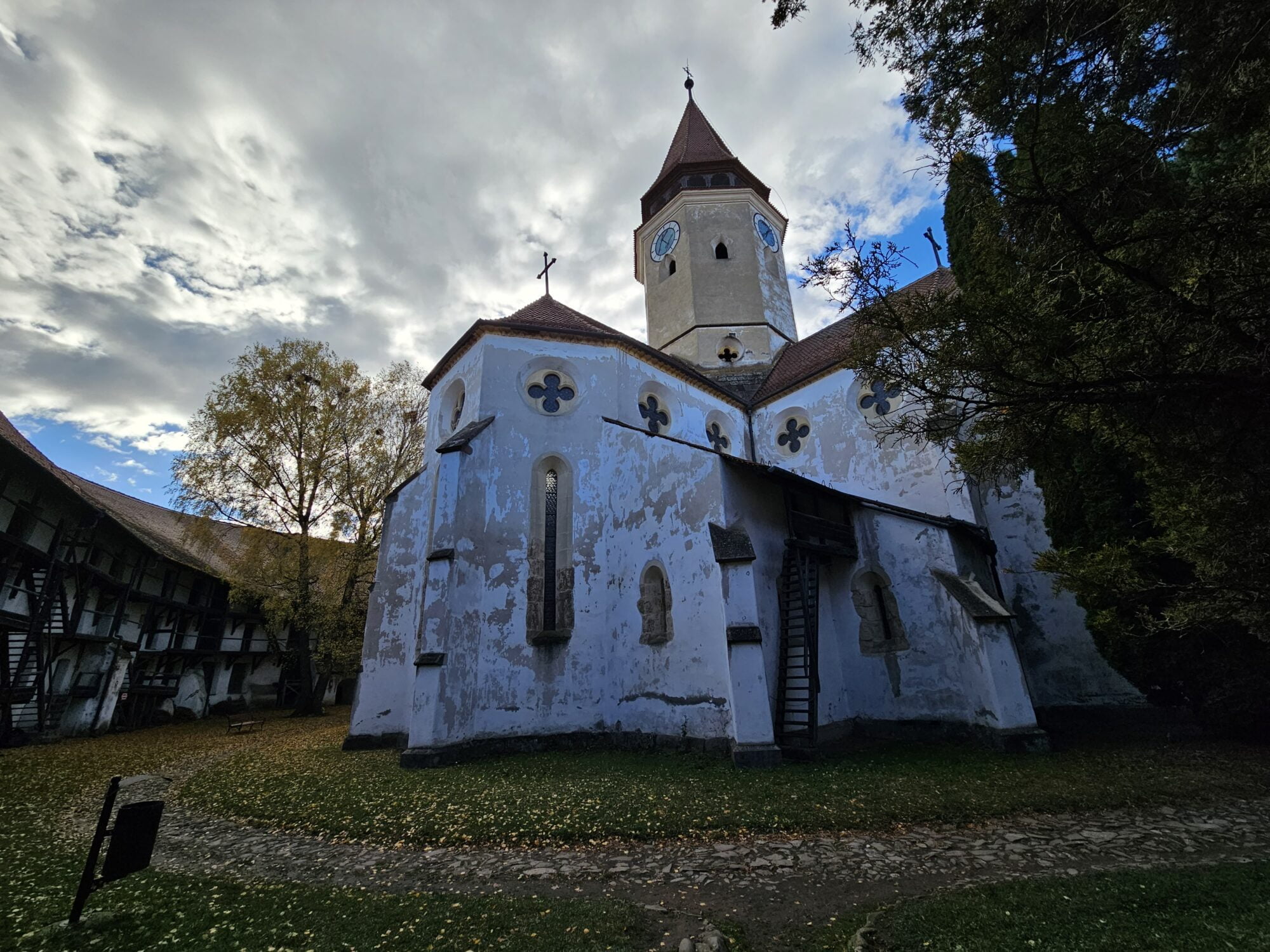
I really enjoyed the Prejmer fortified church as part of a day trip combined with the nearby Harman fortified church. The site was fascinating to see and to learn a bit about its history.
Because it is part of the UNESCO World Heritage Site of the fortified churches of Transylvania, I’m keen to visit the other churches in the region.
Pretty! I think I liked the gate pic the most – lovely! The rest is great too.
We visited the Prejmer fortress church some years ago but it was closed so we never got to see the inside. It was great to see your pictures. I think we will have to return – what an amazing place.
Very interesting structure, I’ll be interested to see how you like the other fortified churches in the UNESCO listing. I love the Old School frescoes – they are beautiful.
I haven’t seen a church built like a fortress before. This was very interesting to read and learn about. And the fact that it’s lasted this long through many battles is really interesting.