
Is Pompeii Worth Visiting? Visiting Pompeii Ruins, Italy
Pompeii is well worth visiting if you are interested in Roman history, with the enormous archaeological park being the main reason to visit. We stayed near Pompeii for several days and spent a full day exploring the ruins, as well as visiting parts of the modern town and the surrounding area.
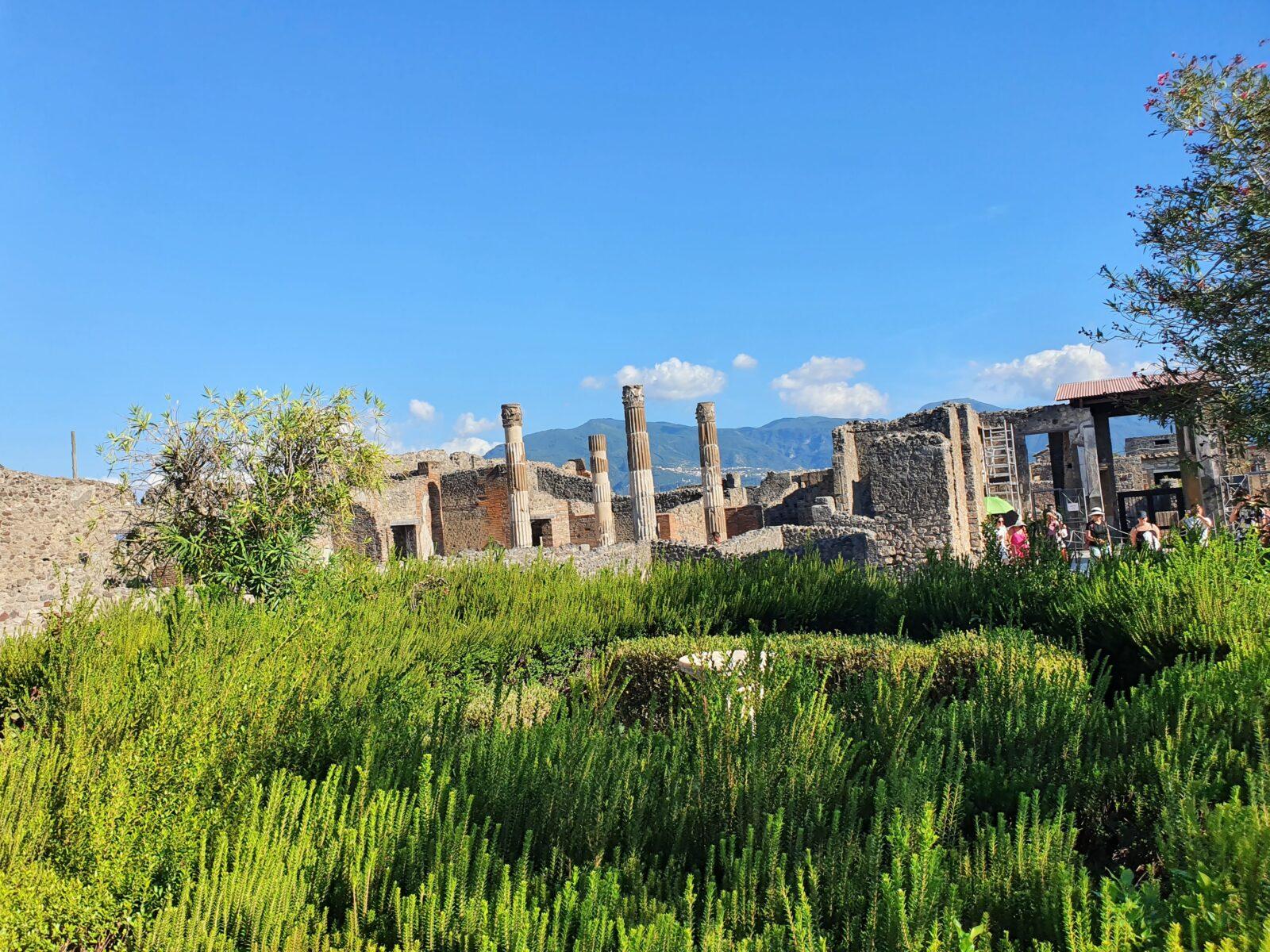
Our stay also gave us time to enjoy views of Mount Vesuvius, try a few local restaurants, and see what Pompeii was like as a base rather than simply arriving on a day trip. It’s not a perfect destination for travelling with a dog compared to other pet-friendly places we visited in Italy.
Is Pompeii Worth Visiting?
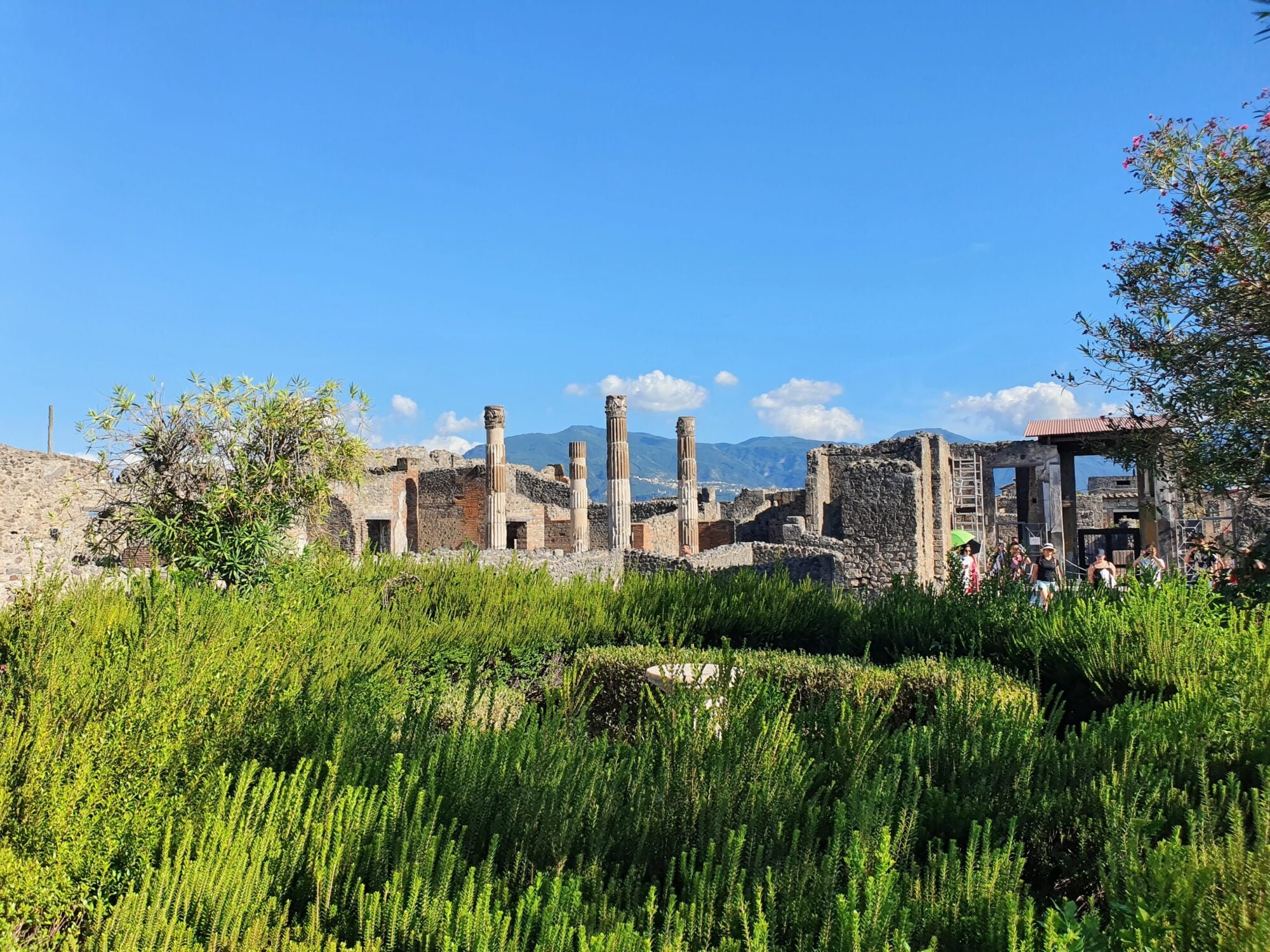
Pompeii is a fascinating place to visit, especially for the Roman ruins in the archaeological park. This is the most popular tourist attraction for excellent reasons.
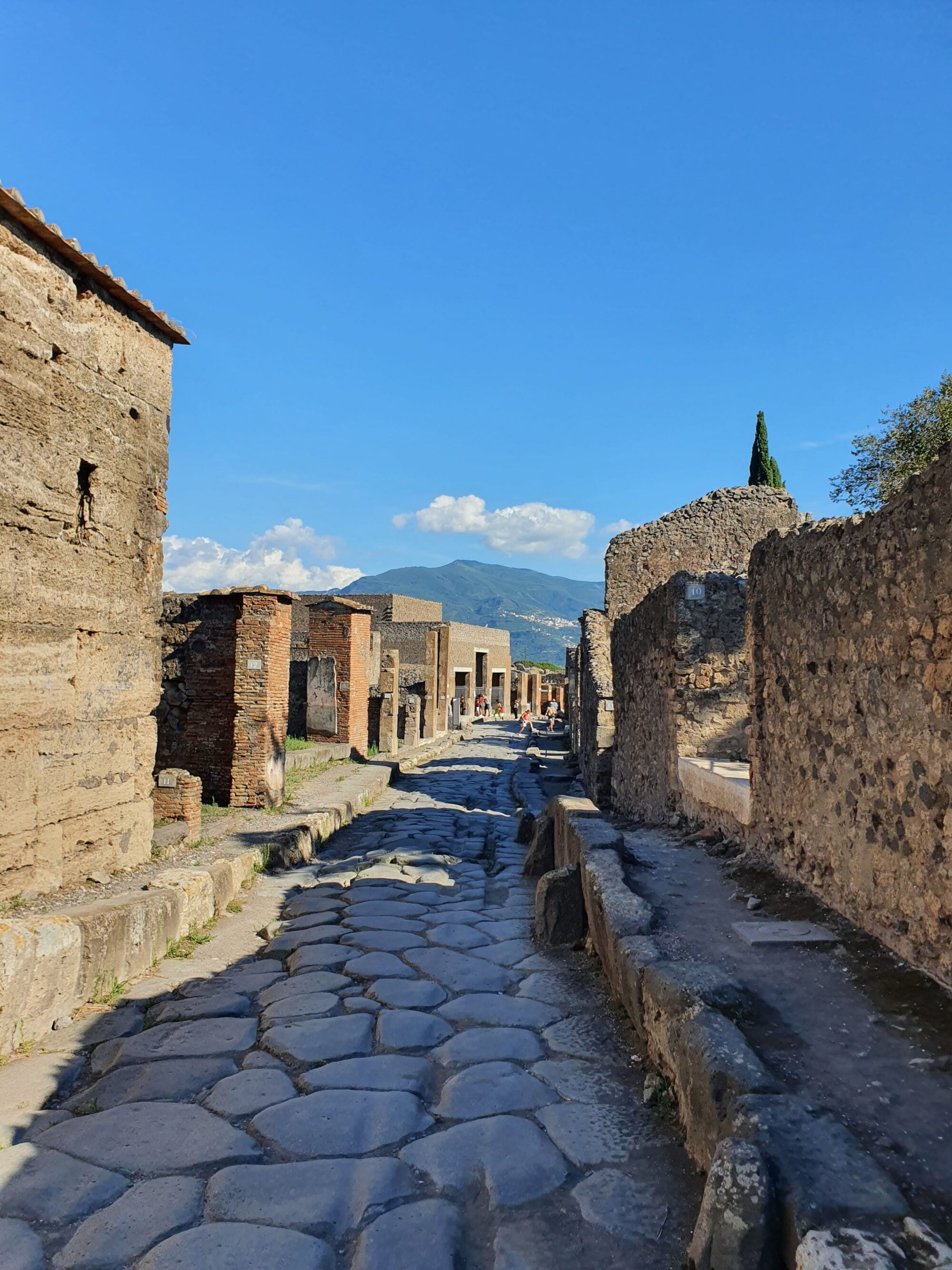
It is so well preserved, and anyone interested in Roman history would love it. We enjoyed exploring the ruins and learning the historical function of the parts we saw. Highlights were the amphitheatre, vineyard, forum, and Roman brothel. Overall, I feel the Pompeii Ruins are great for a day trip, and if travelling with a dog, be alert.
Visiting Pompeii Archaeological Park
The main reason for our stay was to explore the ancient Roman ruins. After a few days enjoying the local countryside, views of Mount Vesuvius, and relaxing, we chose a sunny day to explore.
When we visited, we simply bought our tickets at the entrance without booking ahead. The system has since changed, with named tickets, entry time slots, and a daily visitor limit, so I would now check the official website and consider booking in advance. We picked up a map with the tickets. You could also book a tour; there are options on GetYourGuide.com.
What To See at the Pompeii Ruins?
The Archaeological Park is massive, with plenty to see and photograph as you explore. Our modus operandi was to wander through the site aimlessly, in no particular order. We had a few must-see items we had identified beforehand; the fun was just seeing what was around the next corner.
Amphitheatre

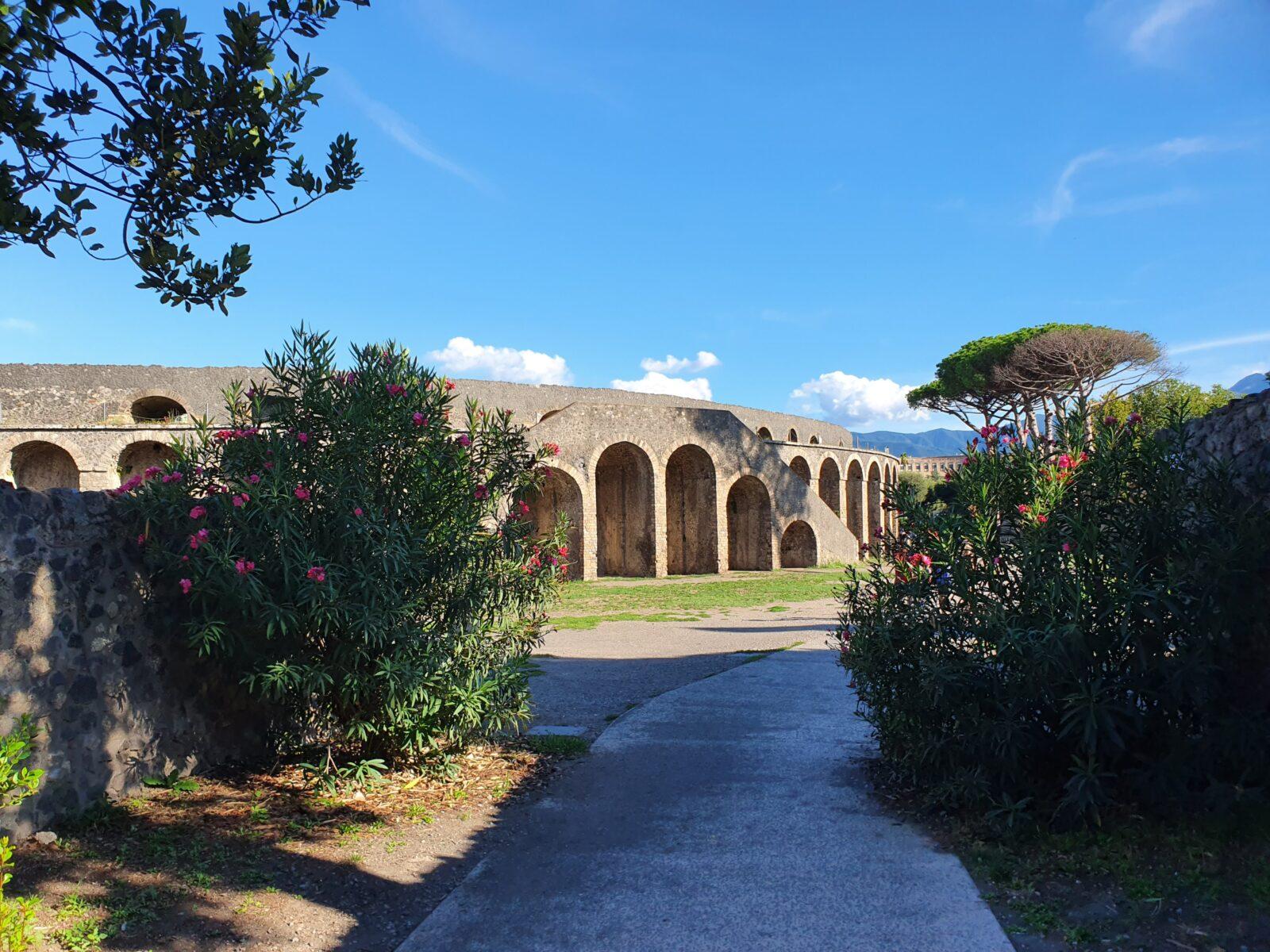
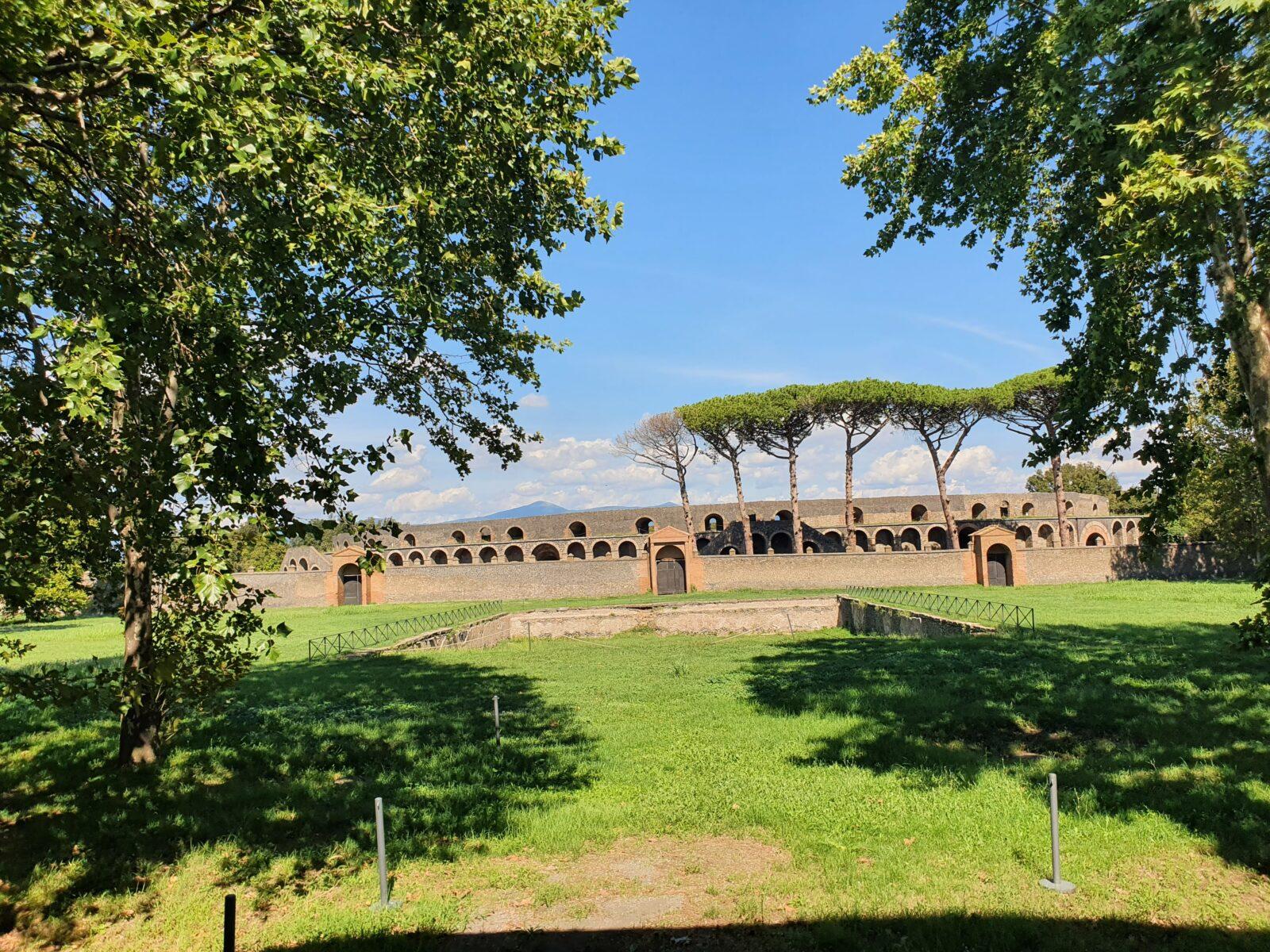
The Amphitheatre of Pompeii is one of the oldest Roman amphitheatres that still exists. They built this amphitheatre in roughly 70 BC. It was one of the first Roman amphitheatres that they built of stone. Before then, the Romans constructed them with wood.

The amphitheatre was buried by the eruption of Mount Vesuvius in 79 AD and subsequently excavated. You can walk around the edges and then into the main arena.
Lupanar Grande: Roman Brothel

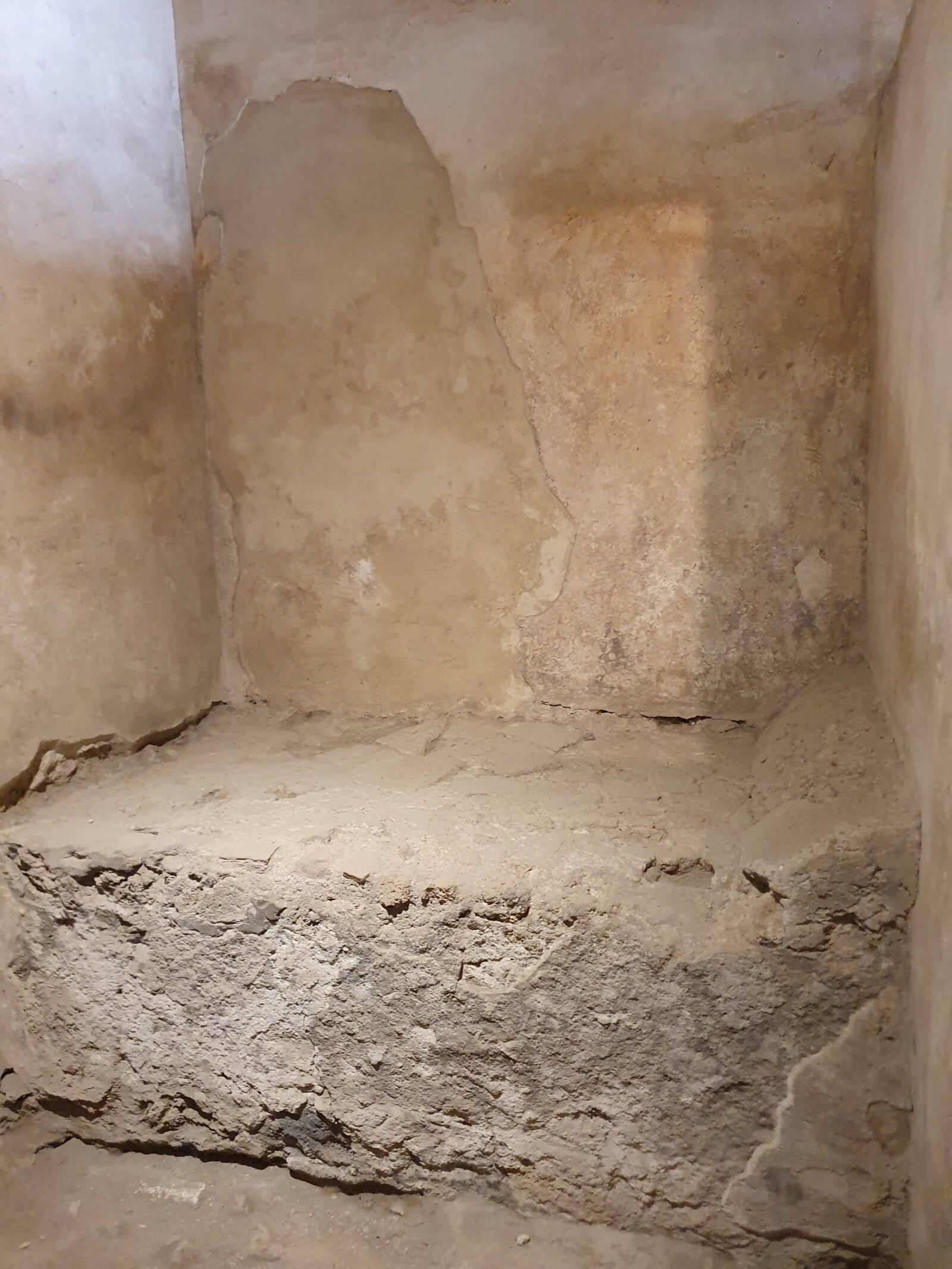
The Lupanar Grande was a bottleneck and was popular with people intrigued by the building. The Lupanar is the remains of a brothel in the ancient Roman city.
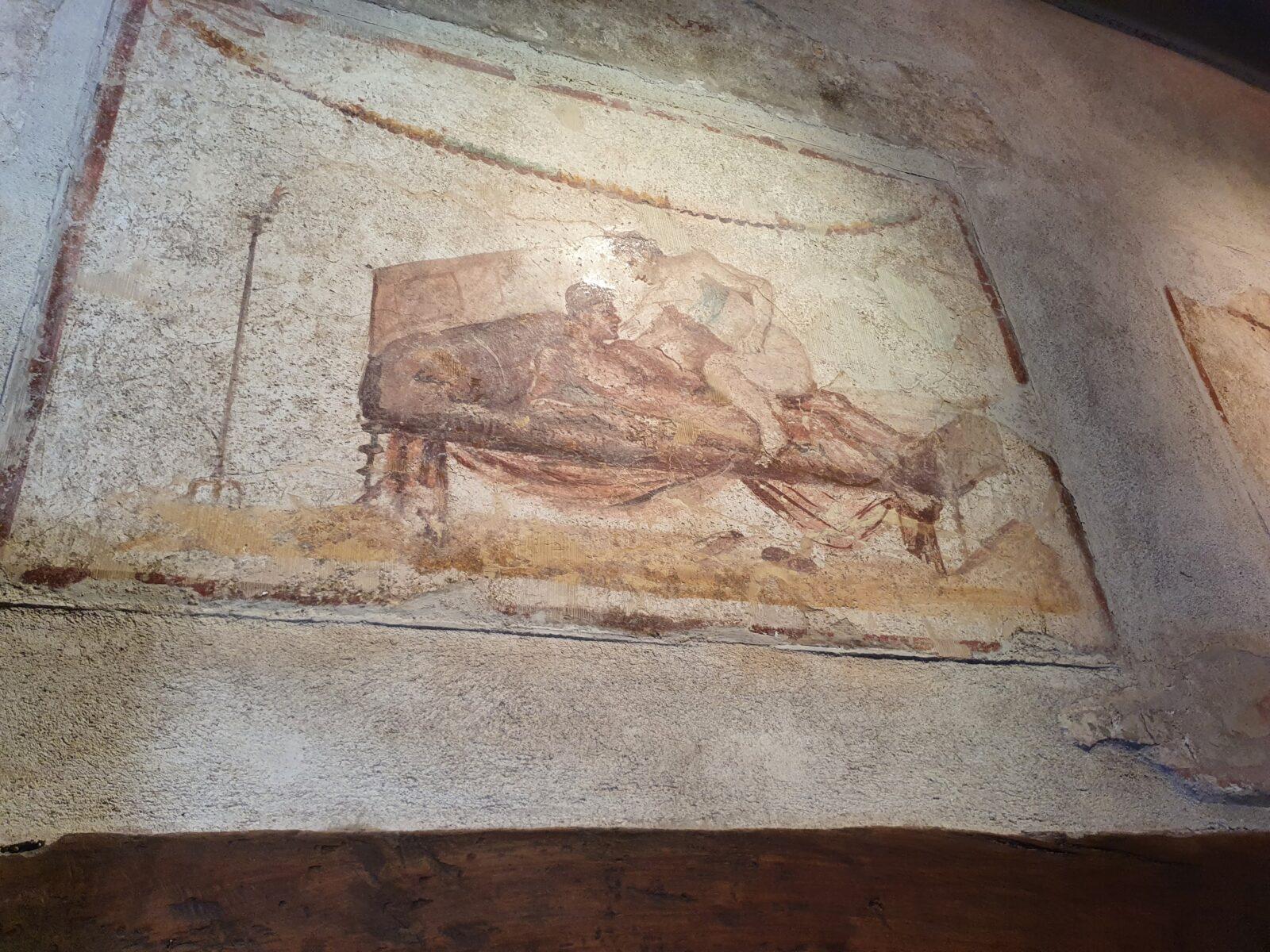
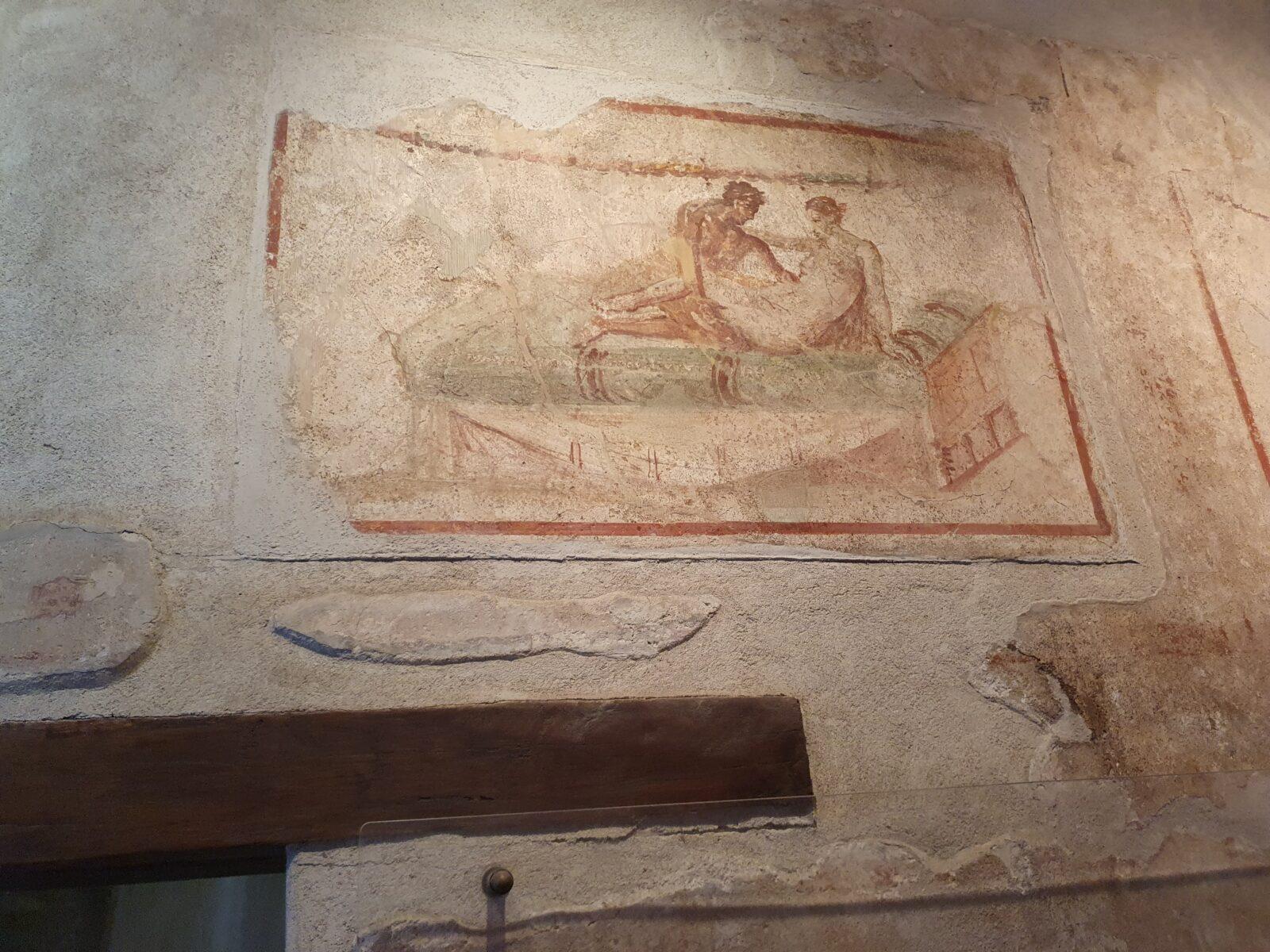
The erotic paintings on its walls are a must-see. ‘Lupanar’, translated from Latin, means ‘brothel’. The Lupanar was purpose-built. The reviews were intriguing, too.
Foro di Pompei
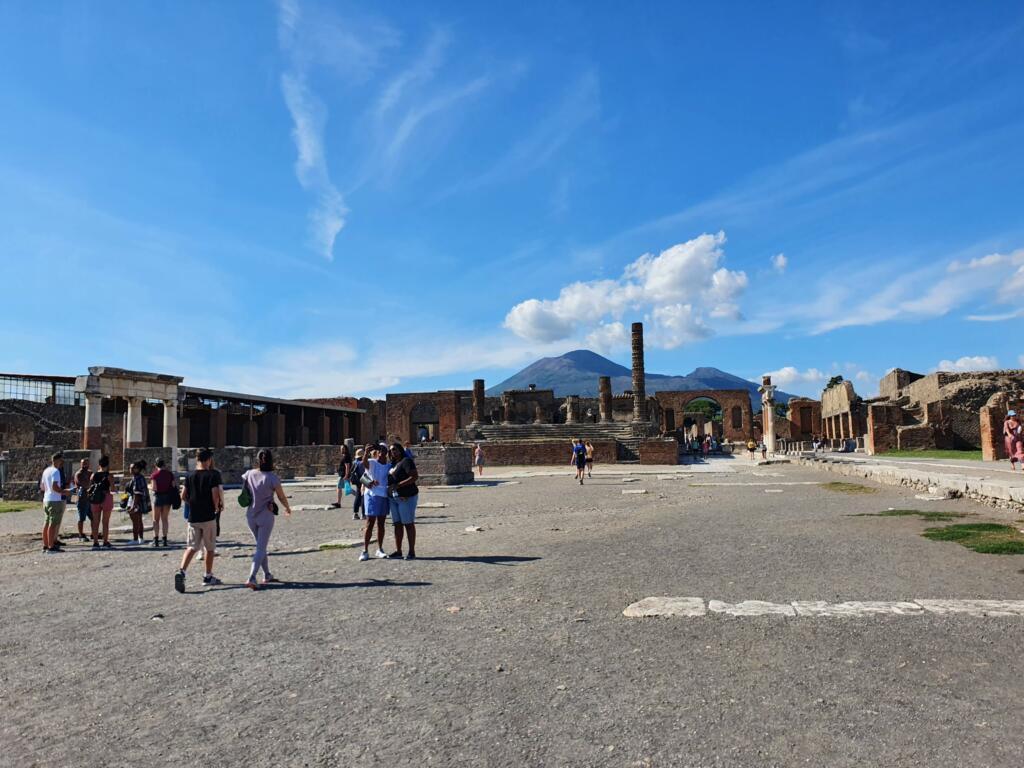
The Foro di Pompei is a lovely open space with plenty to see, including pillars, buildings, and gates. In Roman times, the forum was the heart of daily life and was home to many public buildings.
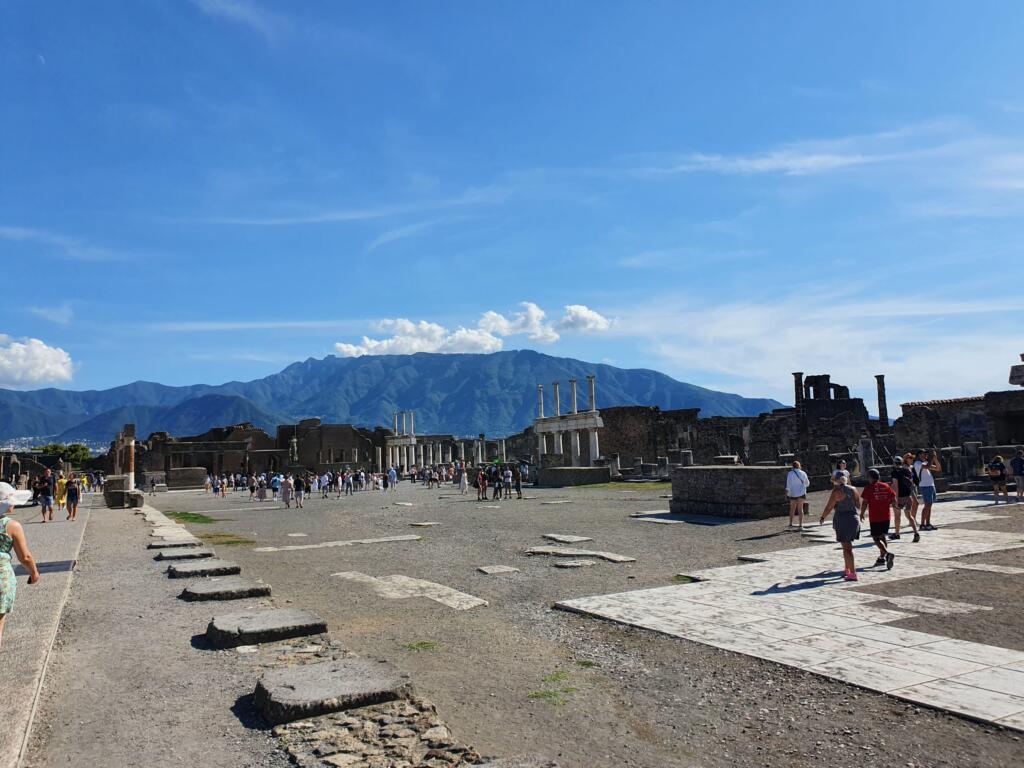
The area is open, with special views, including into the nearby mountains. This part of the site seemed busier, but the forum’s size spread people out.
Arco di Caligola
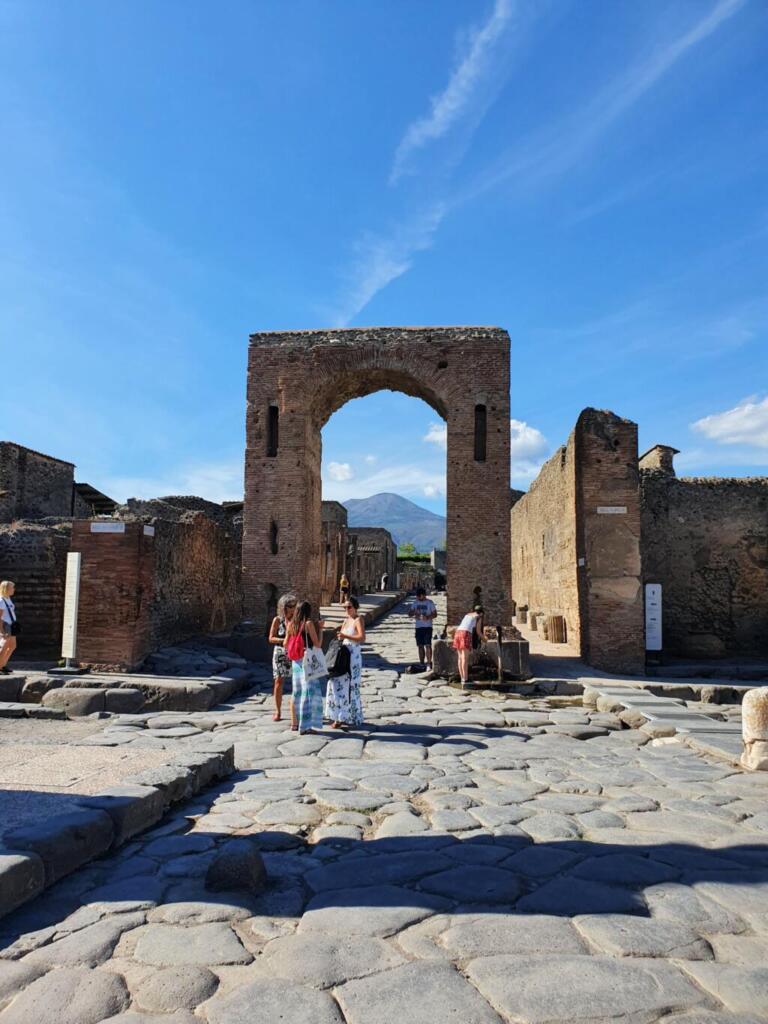
Arco di Caligola, also known as the Arch of Caligula, marks the beginning of Via di Mercurio. It is next to the Forum Baths and the Temple of Fortuna Augusta. They built the Arco di Caligola as an honorary arch, which was apparently topped with a bronze equestrian statue of Caligula.
Vineyard
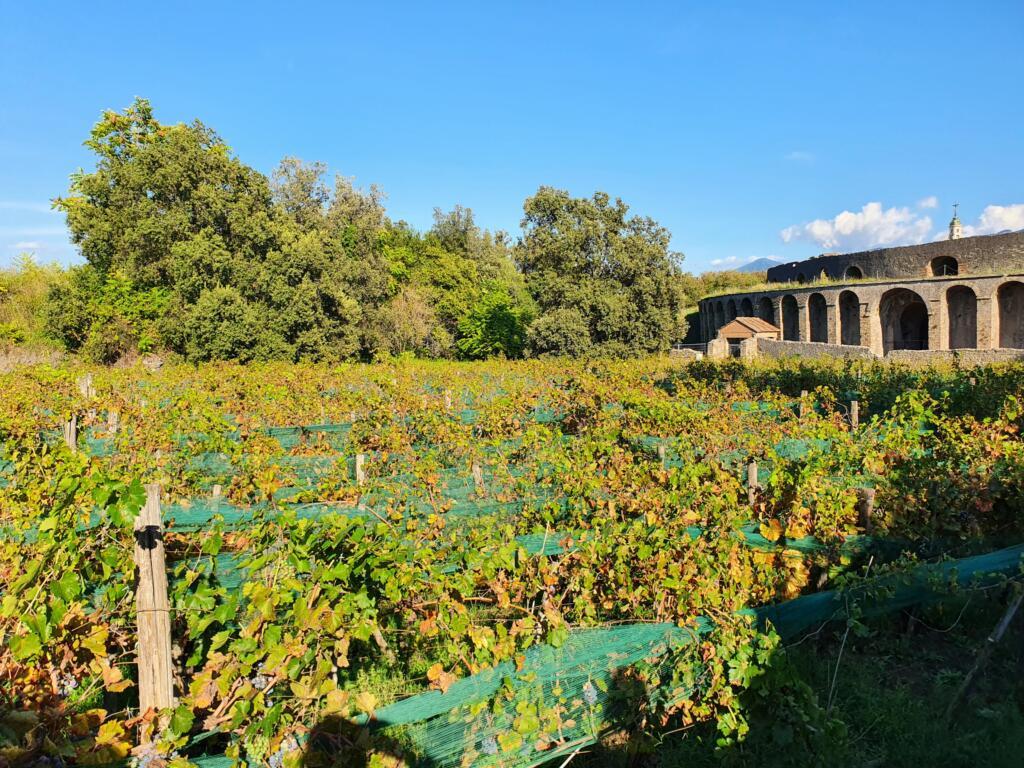
A lovely area of greenery near the amphitheatre is the Foro Boario vineyard. Wine was important in the city before the volcano buried it. During the excavations, archaeologists originally believed it was a cattle market. Today, they have replanted the vineyard with relatives of ancient grape varieties grown in the Roman era.
Dog Mosaic in the House of Paquius Proculus

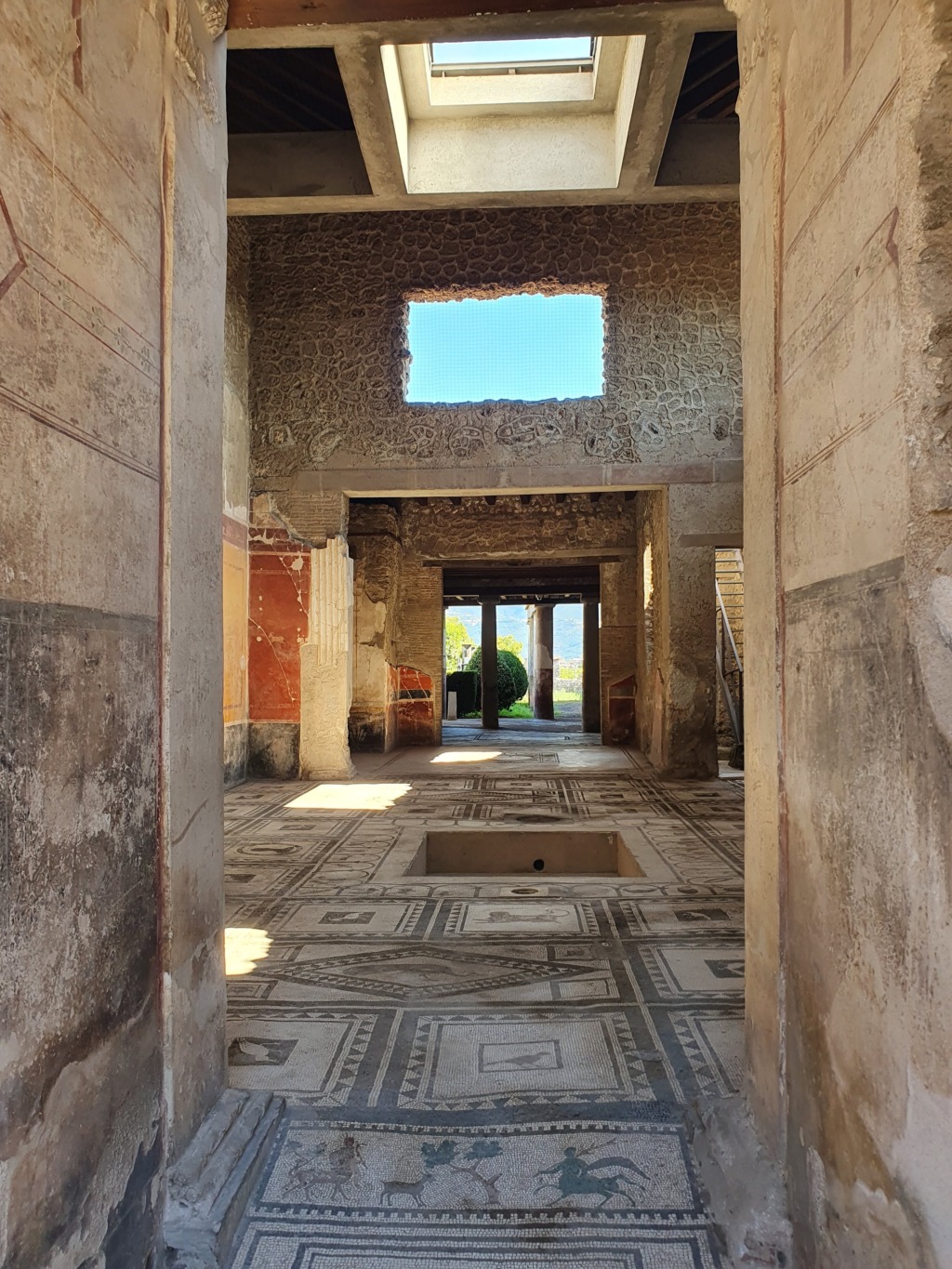
The floor near the entrance of the House of Paquius Proculus is paved with a fine mosaic featuring a chained guard dog at a door. The House of Paquius Proculus has many other floor mosaics, mostly featuring animals. The mosaic flooring in this building is the finest in Pompeii.
Palaestra at Stabian Baths
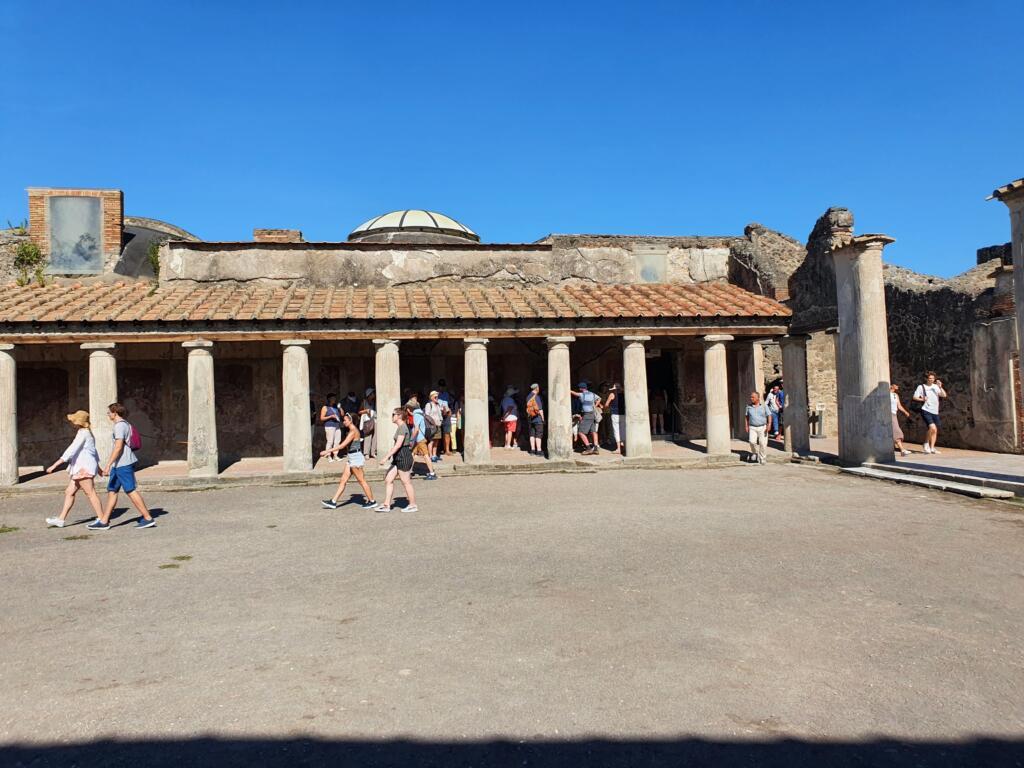
The palaestra at the Stabian Baths ruins was fascinating. This is the exercise yard outside the Stabian Baths, which is surrounded by colonnades. The bath complex is large, covering 3,500 square metres.
Side Streets
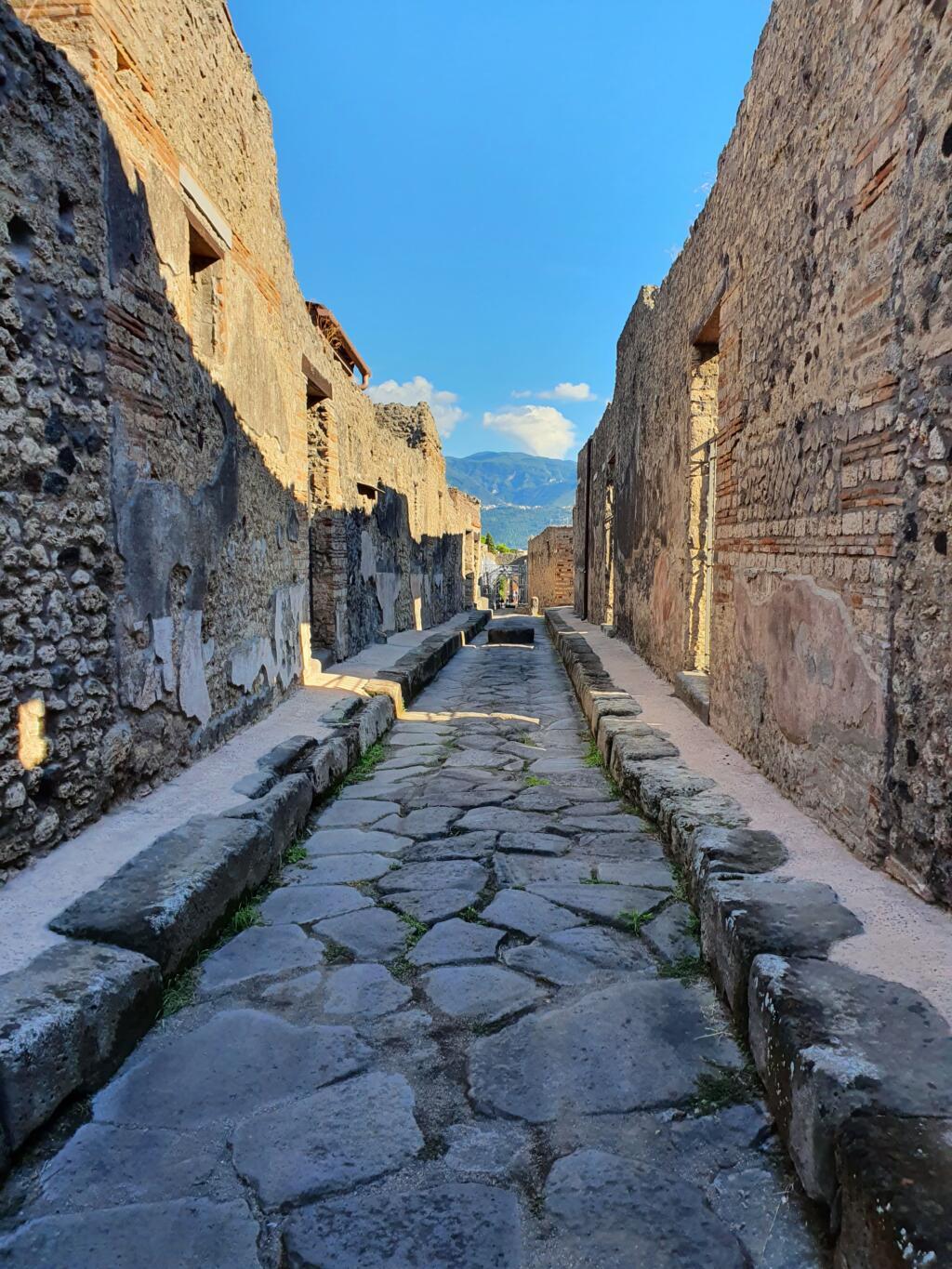
I found the ancient side streets fantastic for mooching and letting my imagination run wild. They are a great place for a break from the busy, popular spots and tour groups. During the summer, finding a bit of shade to cool down and hydrate is important.
Tempio di Vespasiano
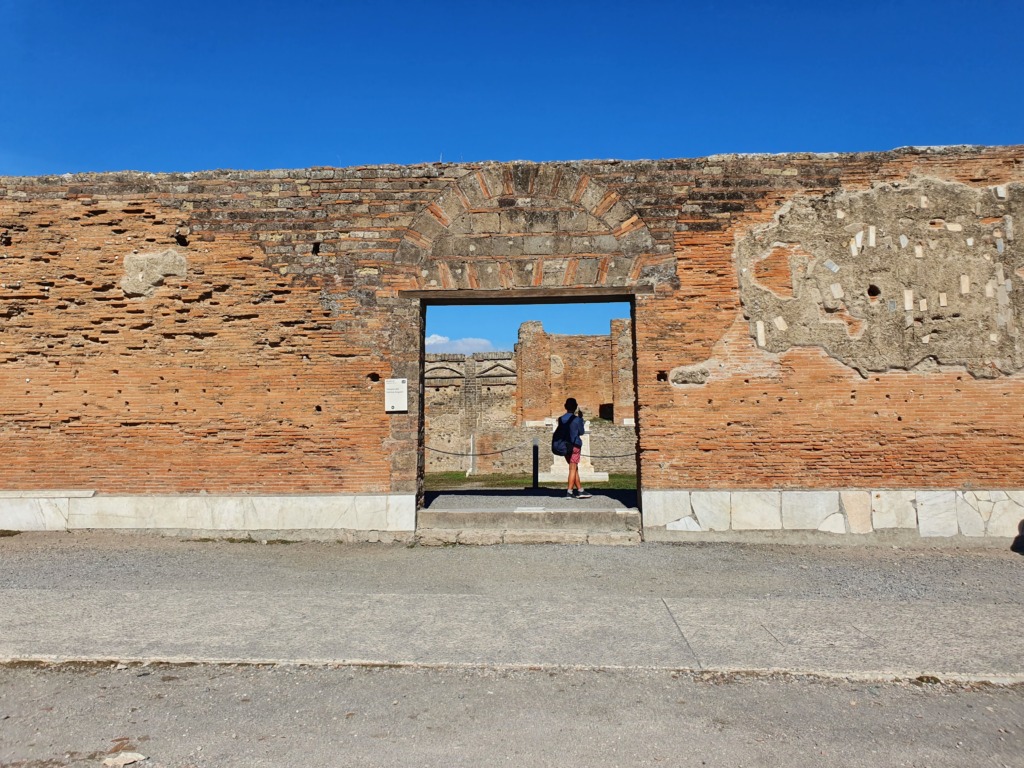
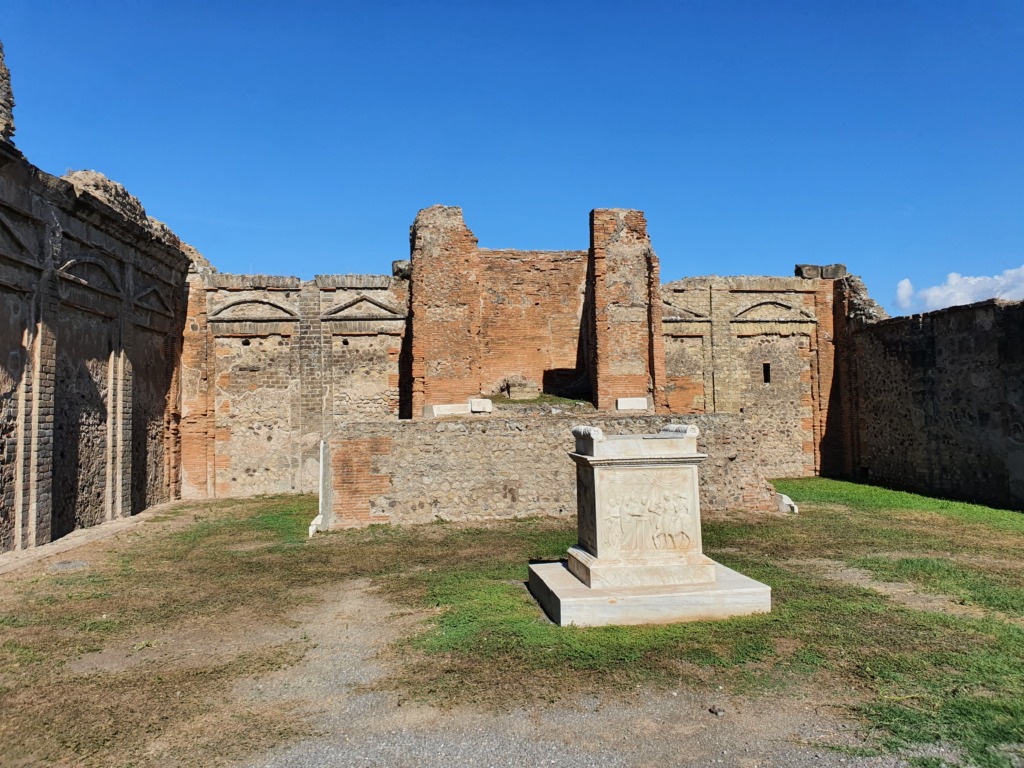
The Tempio di Vespasiano is another interesting sight. They dedicated the 1st-century temple to the genius of Roman emperors. You can wander in the former temple, and one impressive feature is the decorative marble altar.
Casa del Larario di Achille
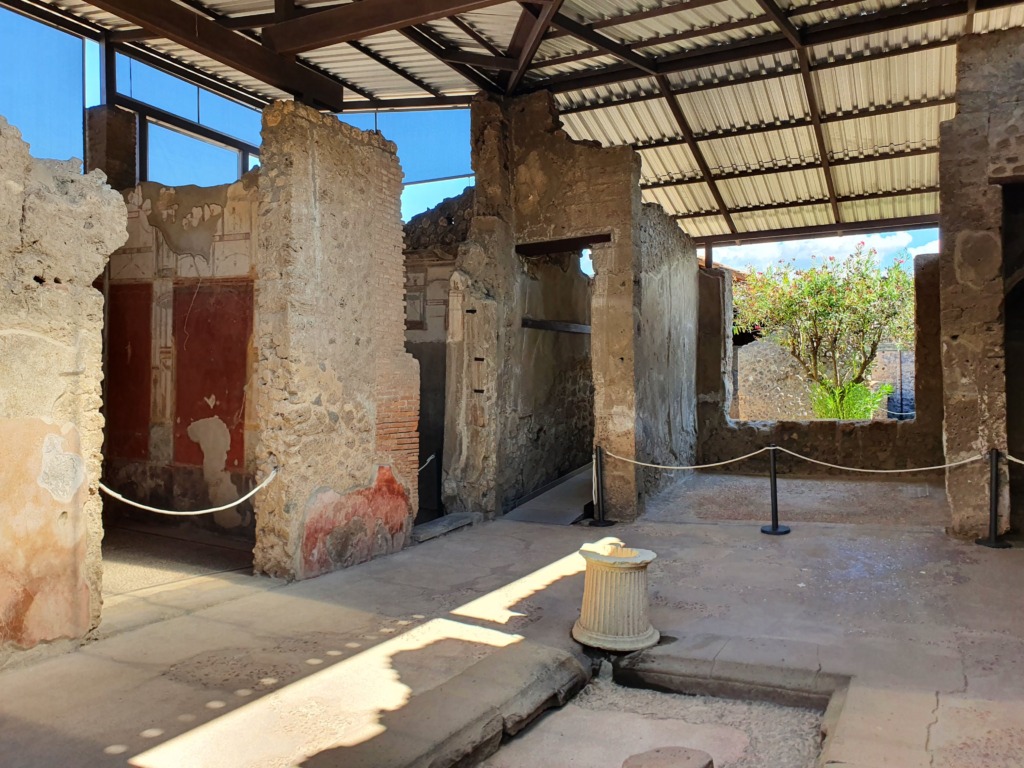
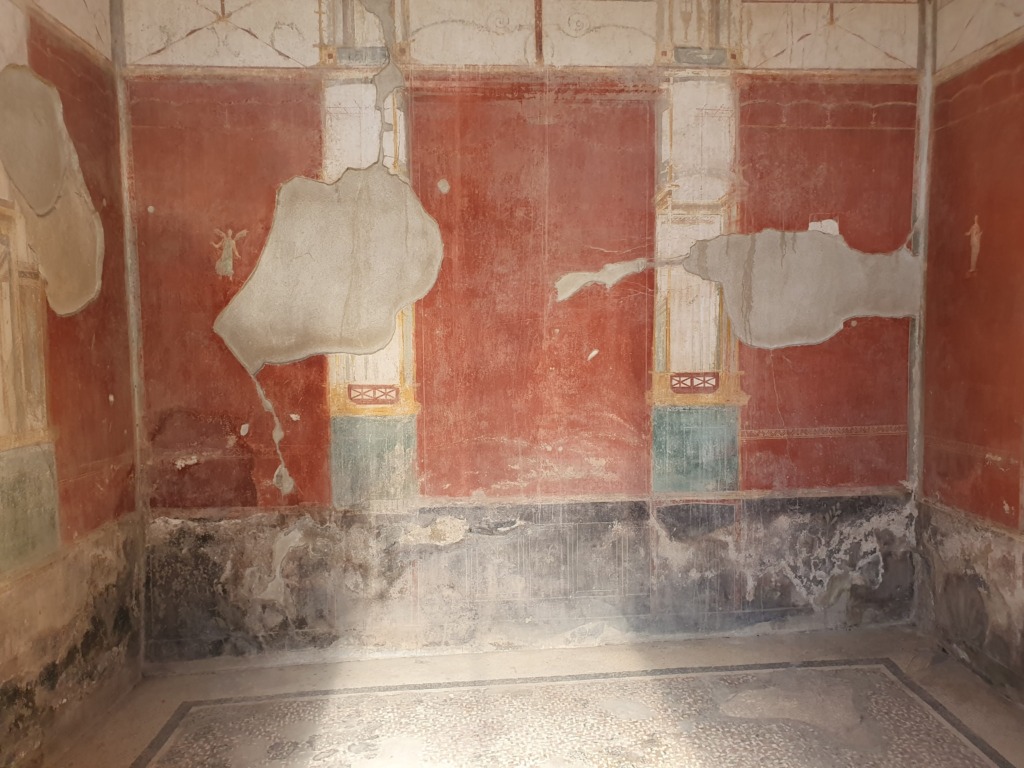
Another pleasant building you can wander around inside is Casa del Larario di Achille. There are beautiful frescoes here, including a large one featuring two elephants.
Bodies Frozen in Time
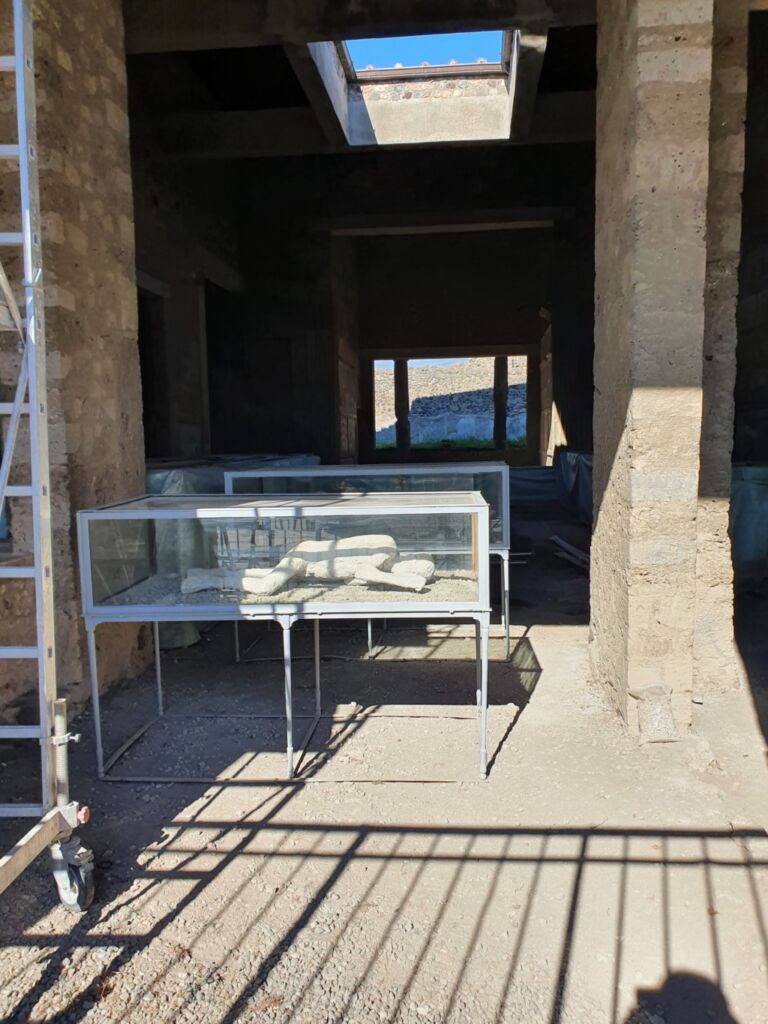
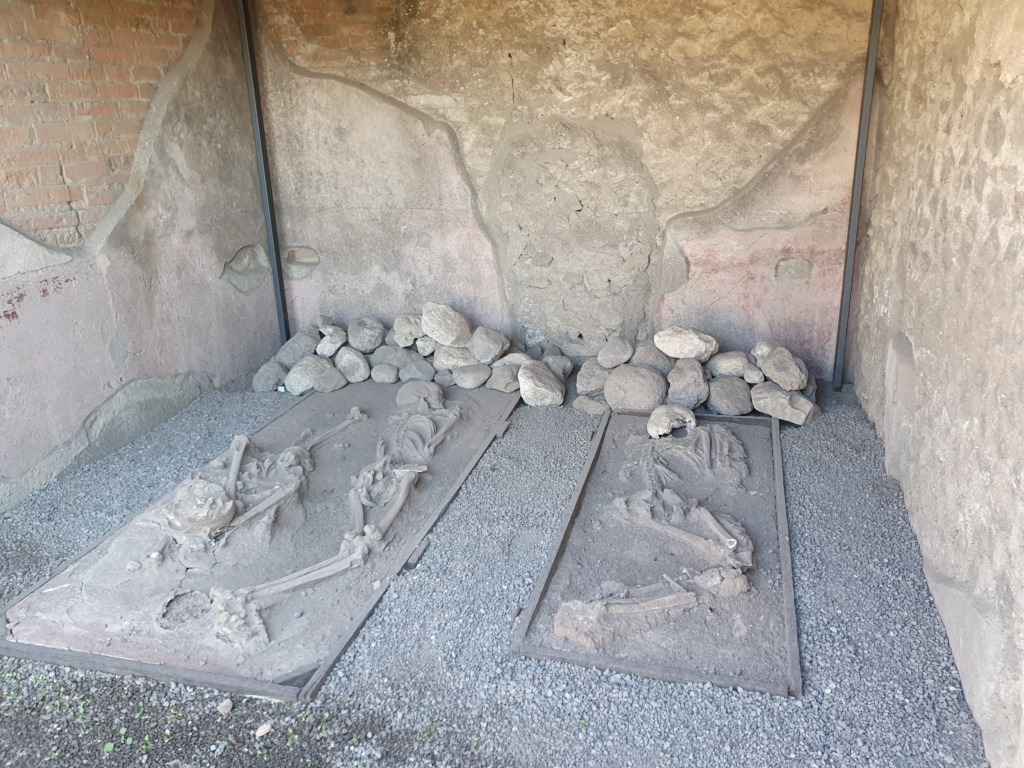
Because of the eruption of the volcano Mount Vesuvius, which destroyed the city, there are many bodies that were frozen in time. During the excavations, archaeologists have found over 1000 bodies killed by the eruption. The ash covered the bodies and preserved them. They have created casts, which you can see. They also have skeletons on display. These were from people crushed in buildings at the time of the eruption.
Macellum – The Provisions Market
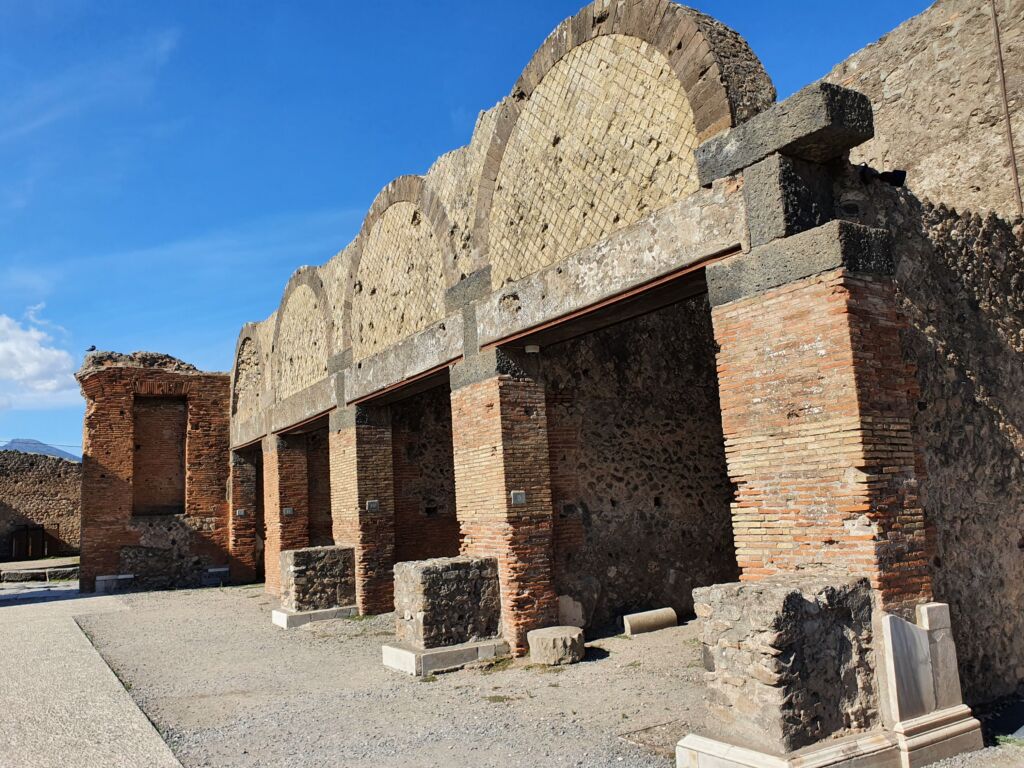
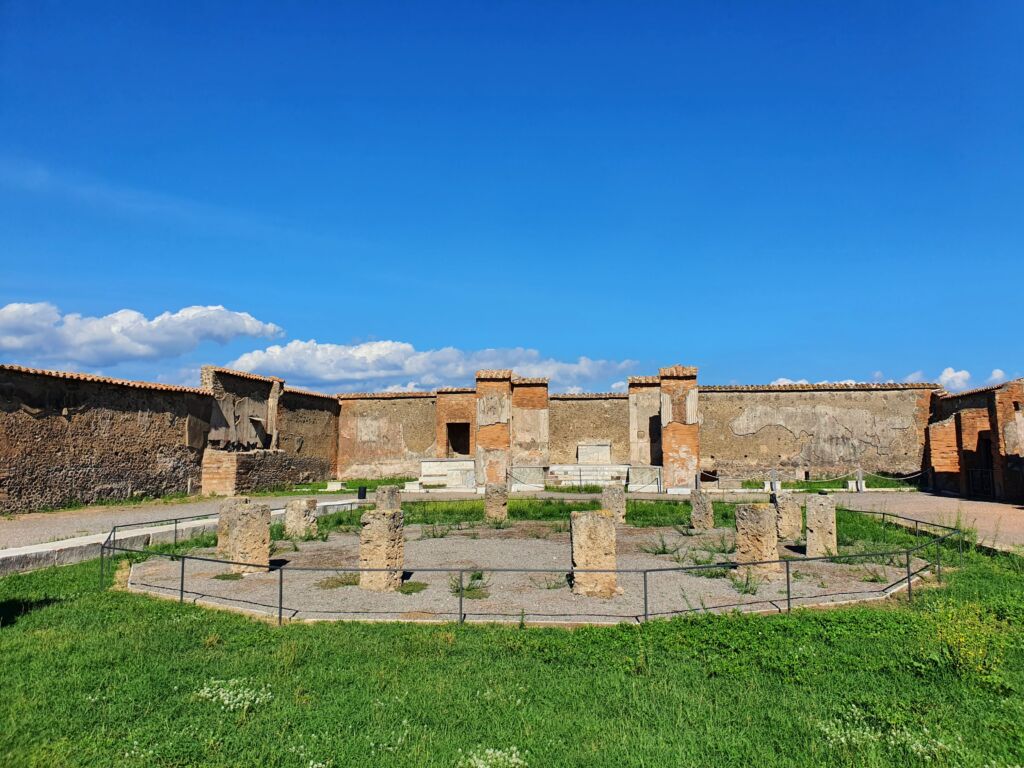
The Macellum of Pompeii was in the Forum and served as the provision market. This was one of the focal points of the ancient city, much like today’s markets. A section of the Macellum is thought to have been dedicated to the imperial cult.
See The Ruins From Above
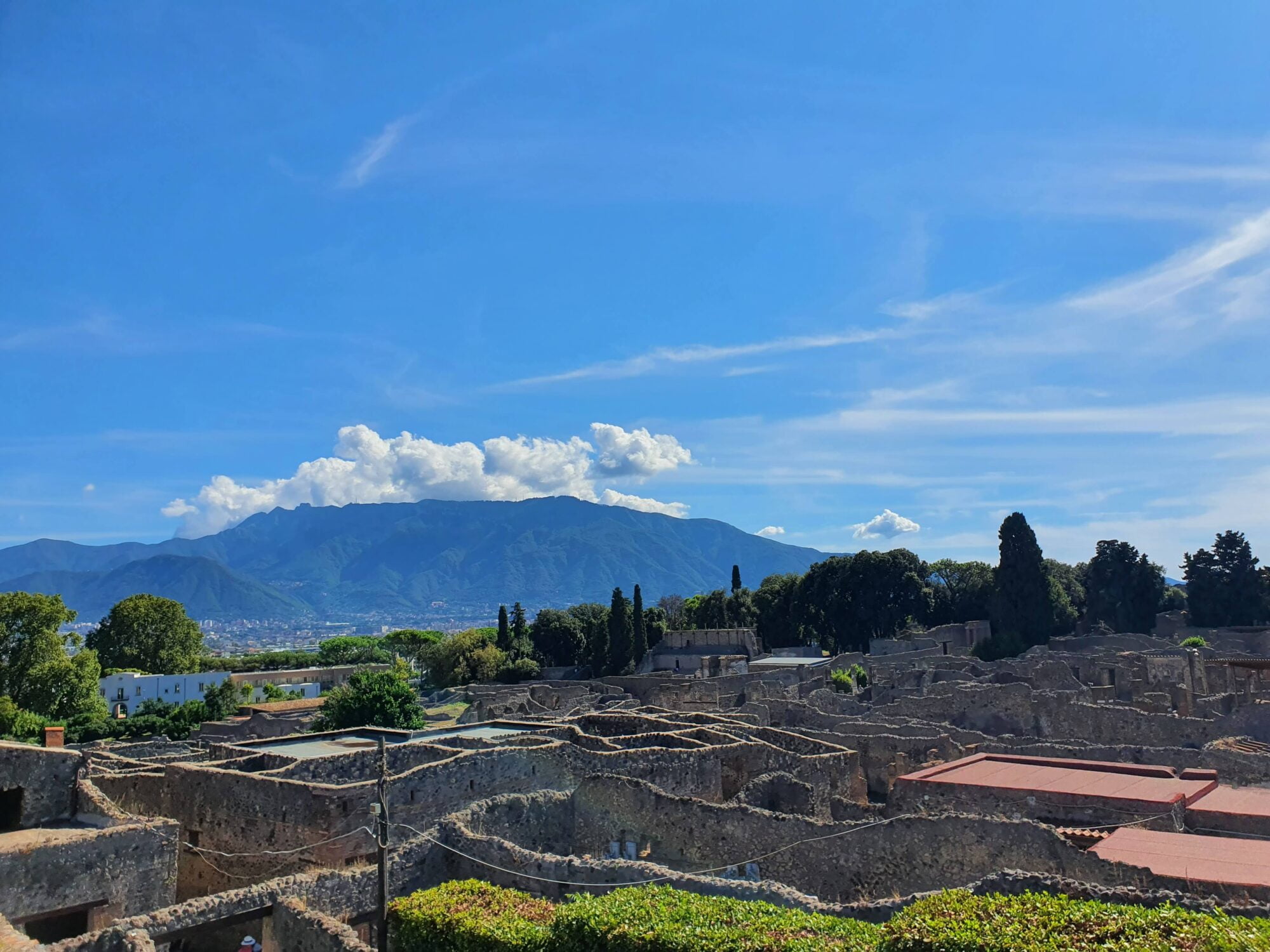
There are fantastic viewpoints for photos. These have a wonderful mountainous backdrop. One of my favourite viewpoints was near the toilets in the centre.
Ancient Roman Art
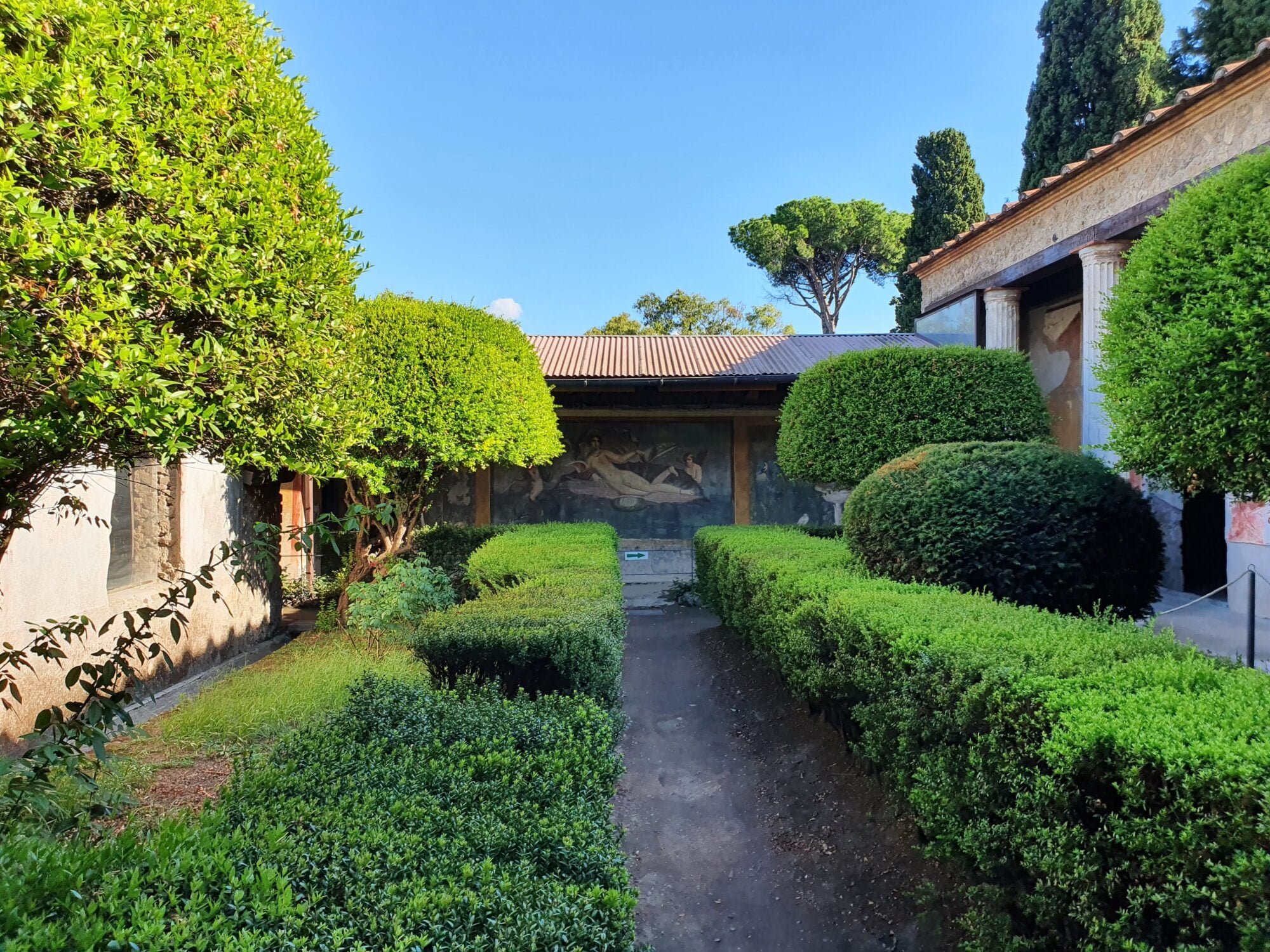
At various points throughout the ruins, you can see preserved Roman art. This includes some fantastic frescoes and mosaics. I spotted one of my favourites in the garden while perusing the ruins.
Pompeii Ruins History
The first known settlements at Pompeii date to the 8th century BC, when the Oscans from central Italy founded five villages in the area. Later, Pompeii, near Naples in Italy’s Campania region, became an ancient Roman city.
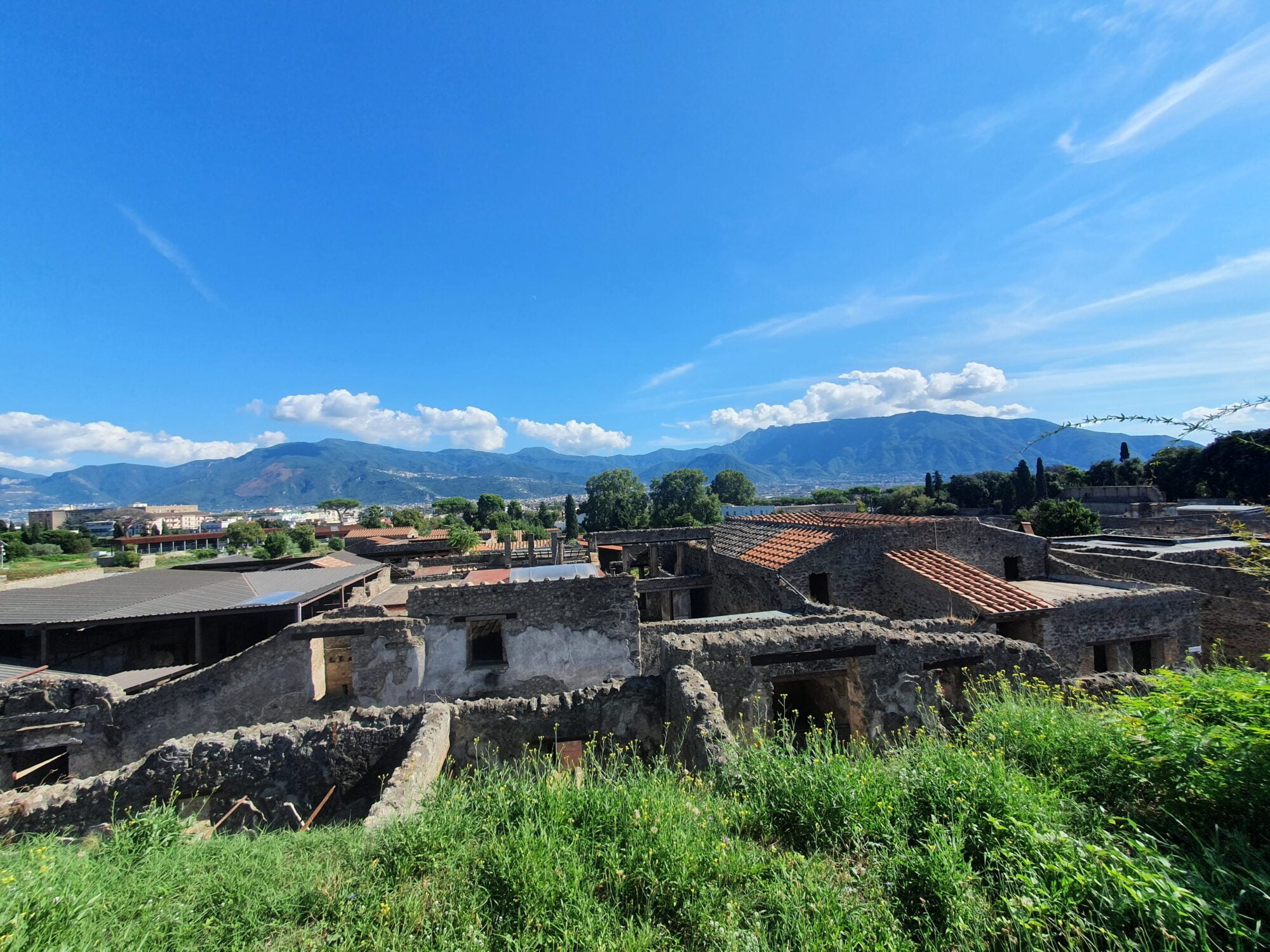
The area is now known as Pompeii, along with Herculaneum and many villas in the surrounding area, which were buried under 4 to 6 m of volcanic ash after the eruption of the nearby volcano, Mount Vesuvius, in 79 AD.
Largely preserved beneath the ash, the excavations offered a unique snapshot of Roman life, frozen at the moment of its burial. Sadly, much of the detailed evidence of its inhabitants’ everyday life was lost in the excavations. It was a wealthy town, with a population of 11000 when the volcano buried it in AD 79. The town had many fine public buildings and luxurious private houses with lavish features, including works of art.
Things to Do Beyond the Ruins

The town’s main attraction is its archaeological sites; however, the main town square also has some pleasant buildings. The Santuario de la Virgen del Rosario de Pompeya is a beautiful church. It’s a relatively young building, completed in 1901.
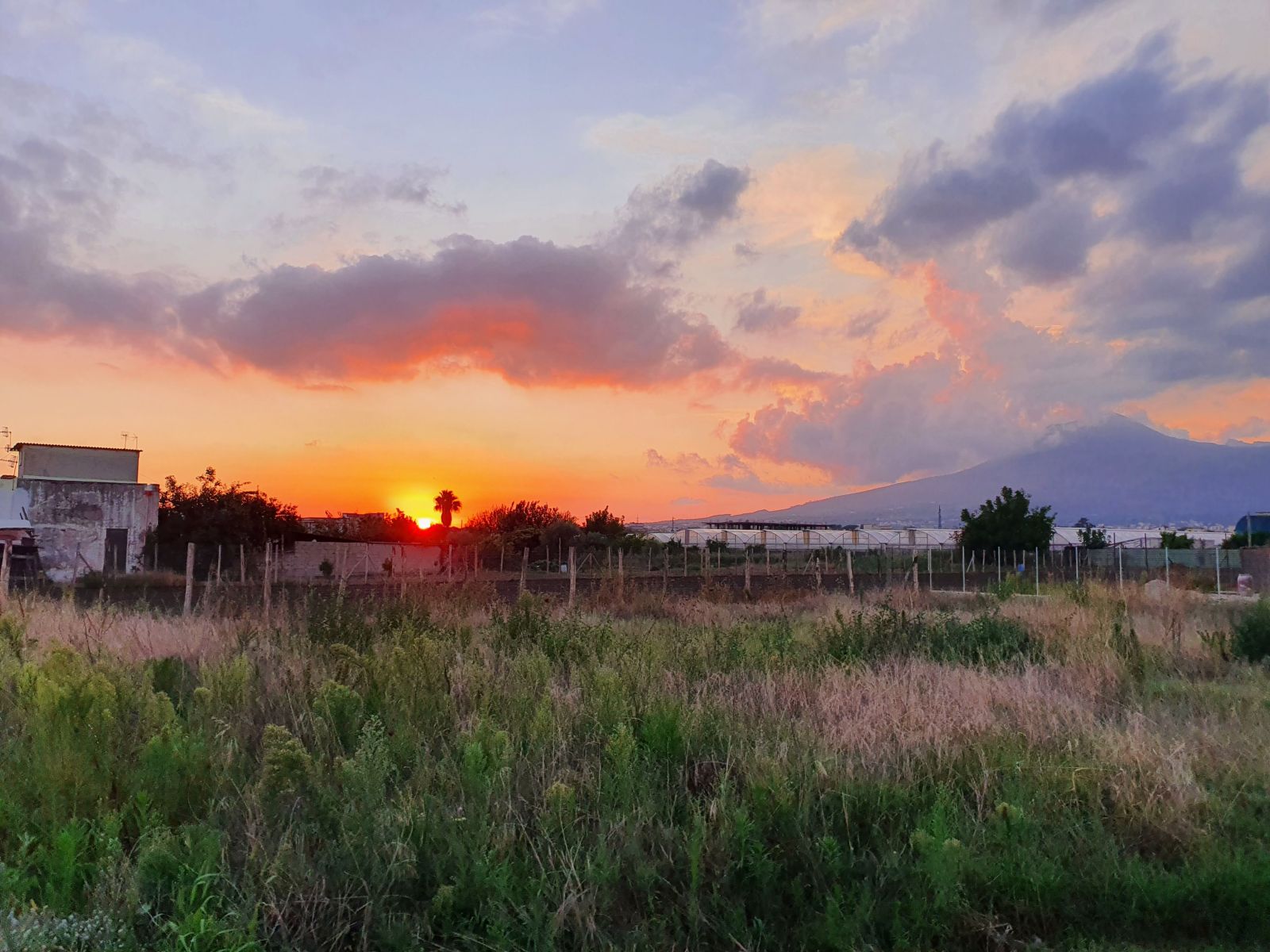
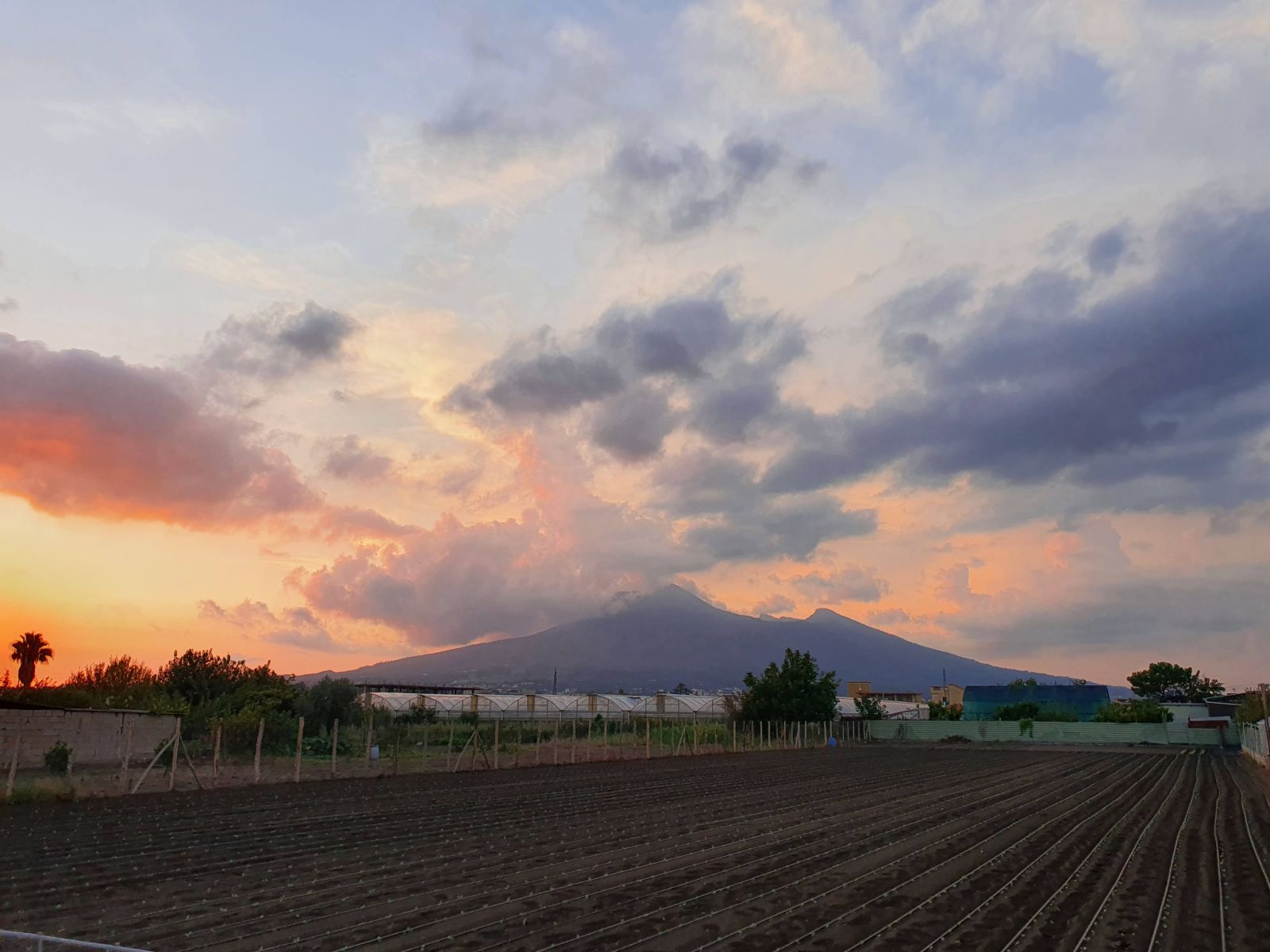
Pompeii also has all the tourist trimmings, like souvenir shops, places to eat, a tourist train, and a small funfair for children. If staying, you can also visit Naples, Mount Vesuvius and the Amalfi Coast. I really enjoyed seeing the sunset towards Mount Vesuvius during our stay. The volcano with red skies behind it was special.
How to Get to Pompeii
We travelled from Rome to Pompeii on the penultimate travel day on our Interrail pass. From Rome, the journey was a bit of a mission. First, we crossed the city to Roma Termini station.
The direct InterCity train from Rome to Naples was a relaxing journey with lots of space. There was another option for a high-speed train that would have shaved some time off the journey. The trip from Naples to Pompeii was a quick train ride.
Where to Stay When Visiting Pompeii?
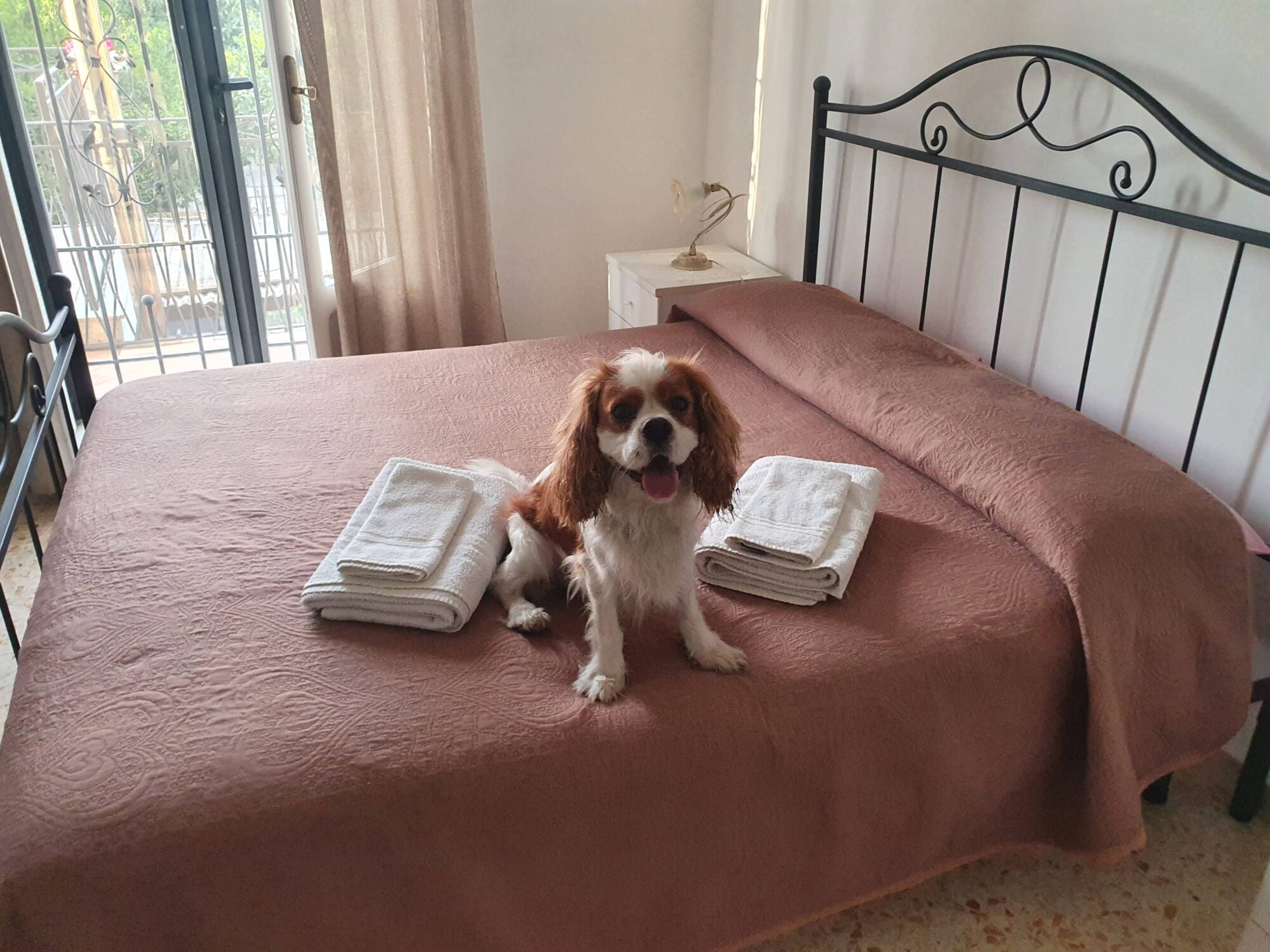
We stayed in a pleasant apartment in the countryside near the city center. It was a pleasant walk with views and nearby amenities, without the crowds at the key sights. There were plenty of dog-friendly places to stay in the city. You can check out the options on Booking.com.
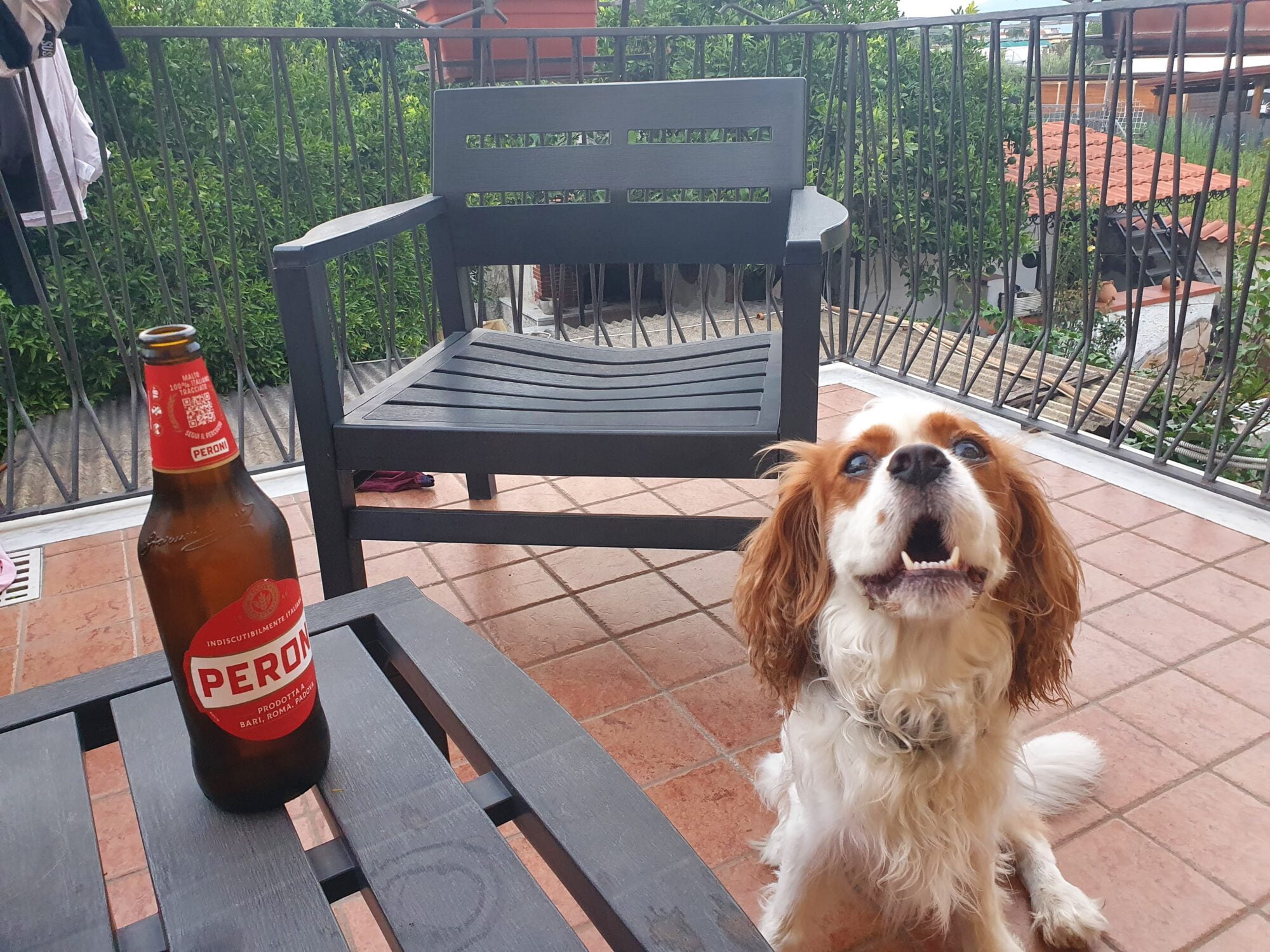
The apartment we booked was lovely, with a balcony overlooking Mount Vesuvius. It was well equipped and comfortable. Many visit for a day trip and stay in nearby Naples, which has easy rail links, but it was nice for us not to have to worry about getting to and from the archaeological site.
Is It Dog Friendly?
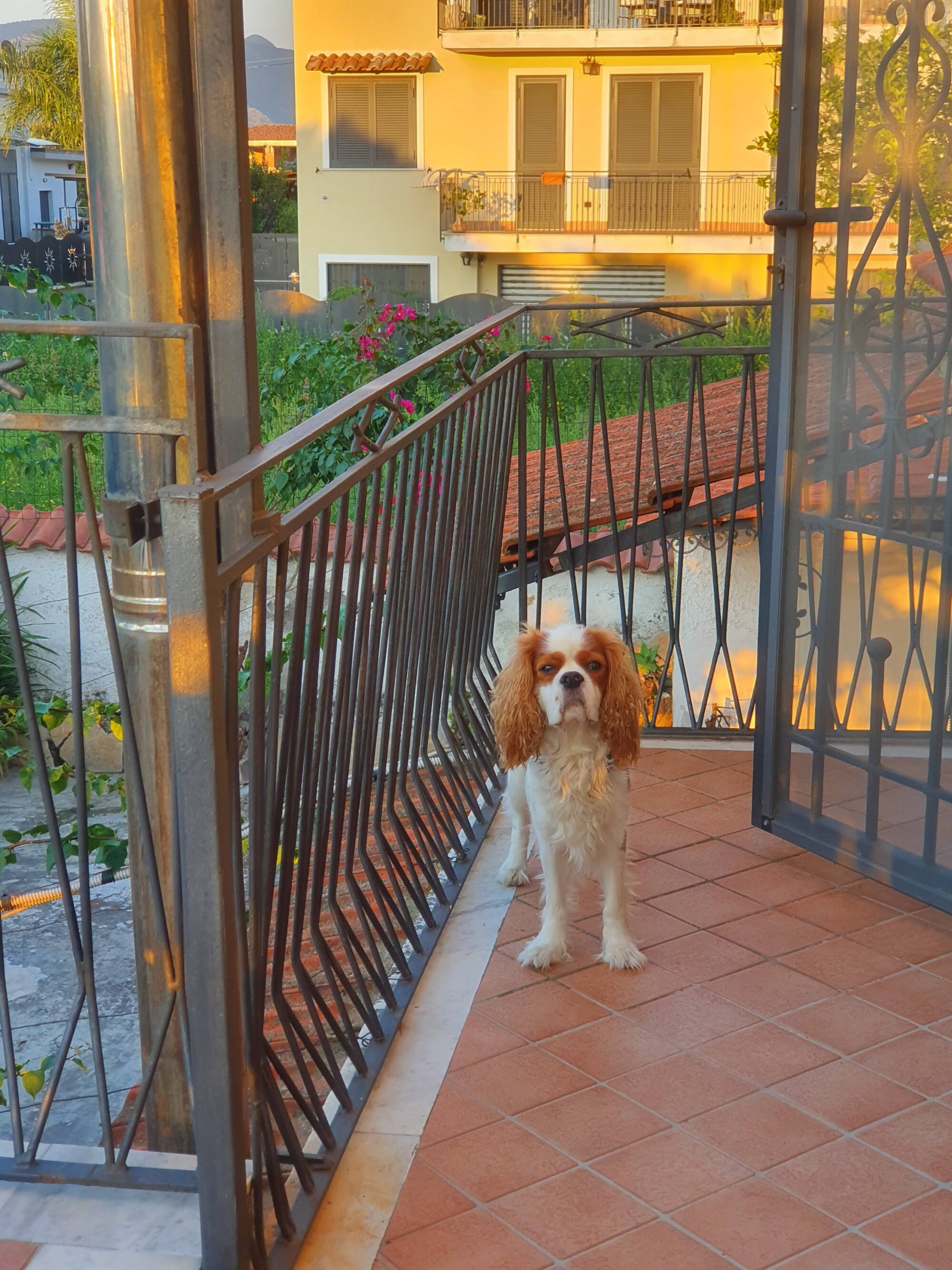
Pompeii has some dog-friendly aspects, but we never felt it was that good. There were dog-friendly accommodation options; the bars and restaurants, in the main, were welcoming to dogs. What downgraded the city in my rating was the number of poorly socialised and feral dogs in the area.
Pompeii Ruins has various rules on visiting with pets on their website. The rules limit dog size: 10 kg and 40 cm tall is the cutoff. Hearing about the territorial strays who call the park home was the deciding factor in not taking Henry.
Tried and Tested Bars & Restaurants
Alleria Pizzeria Newpolitana
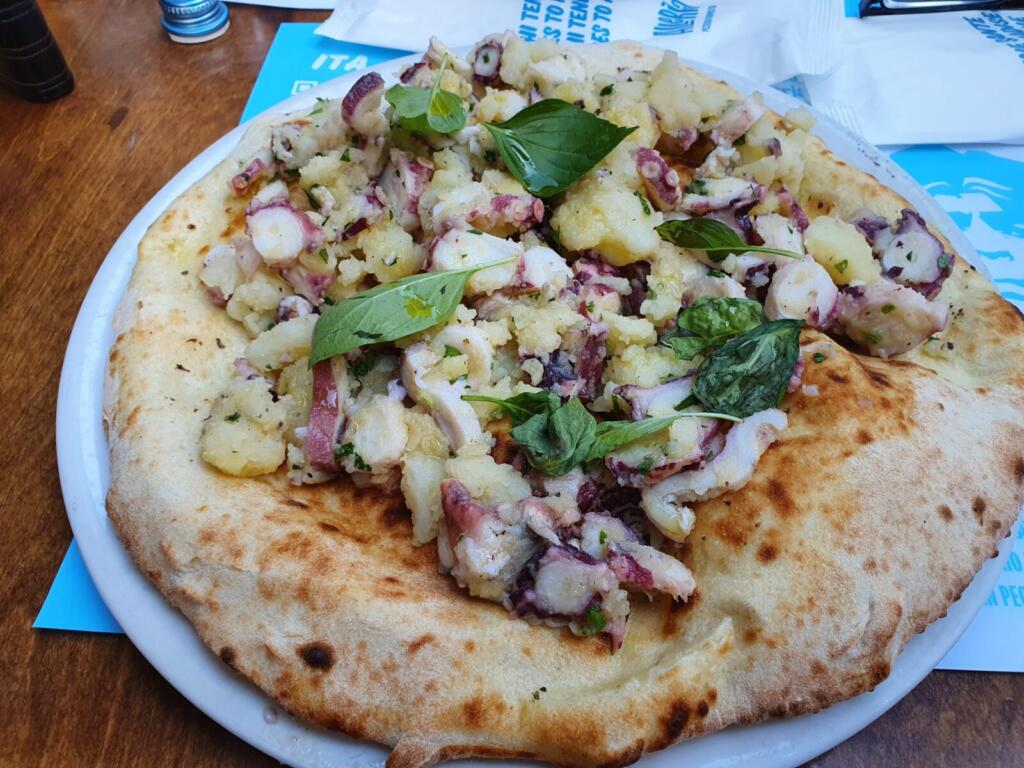
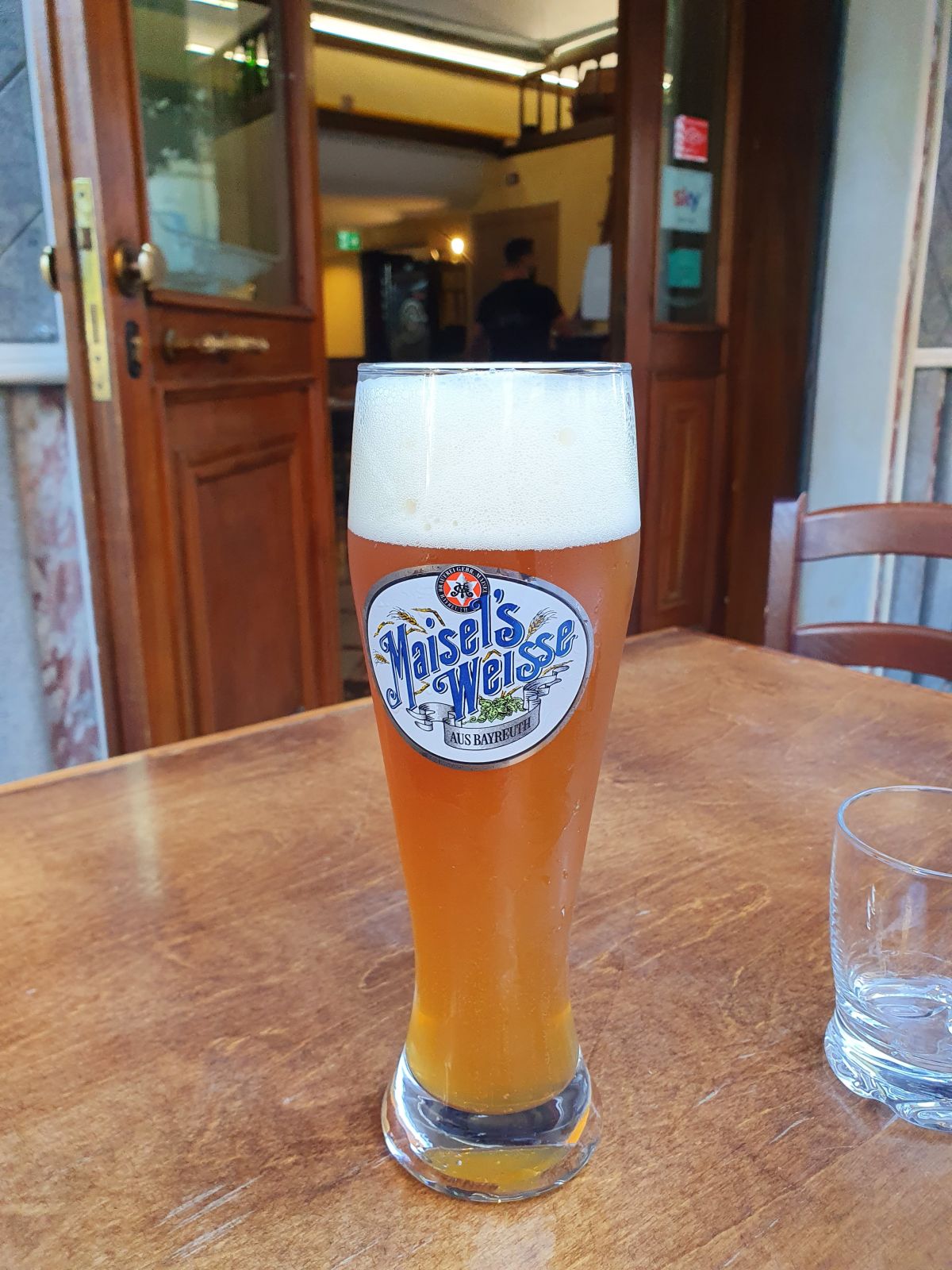
One of the few restaurants we dined at was Alleria Pizzeria Newpolitana. I fancied something different and enjoyed an interesting focaccia with octopus salad, which was filling and tasty.
Smoke No. 5 Coffee Shop
Another cafe we visited with Henry was Smoke No. 5 Coffee Shop, a small place near our accommodation. They have a pleasant terrace outside of the cafe, which was perfect on a summer’s day. They had plenty of drink options and snacks. We enjoyed a couple of bottles of Peroni Italian beer on multiple visits.
Coffee House
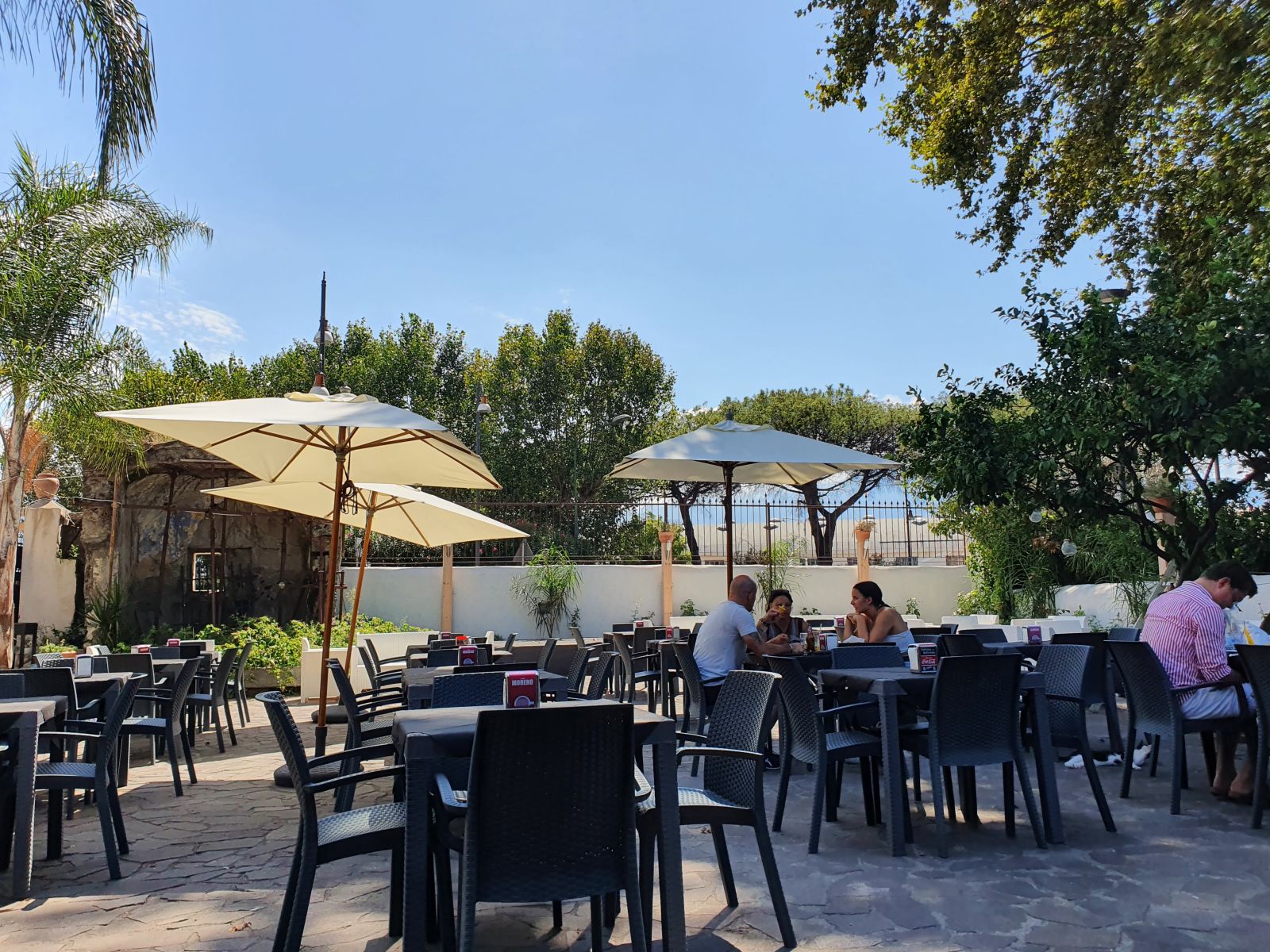
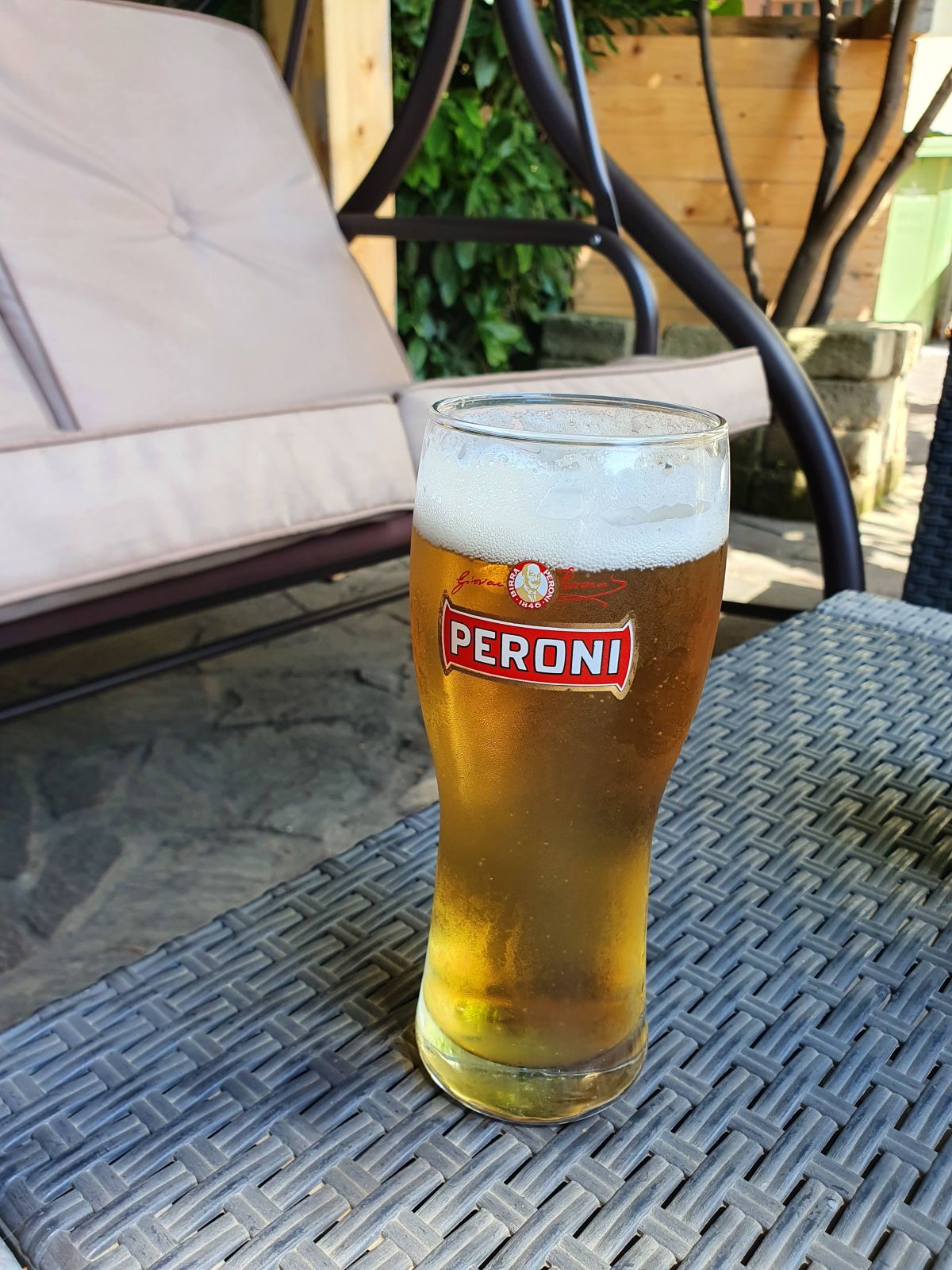
Near the entrance and the car park is Coffee House. Coffee House in Pompeii has a nice garden where you can enjoy a drink. Their terrace is comfortable, especially the swinging chairs, and they provide table service. We enjoyed a Peroni draught beer while at Coffee House, and it was a good pint.