
Hofburg Palace Vienna | What to See, Free Areas & Tickets
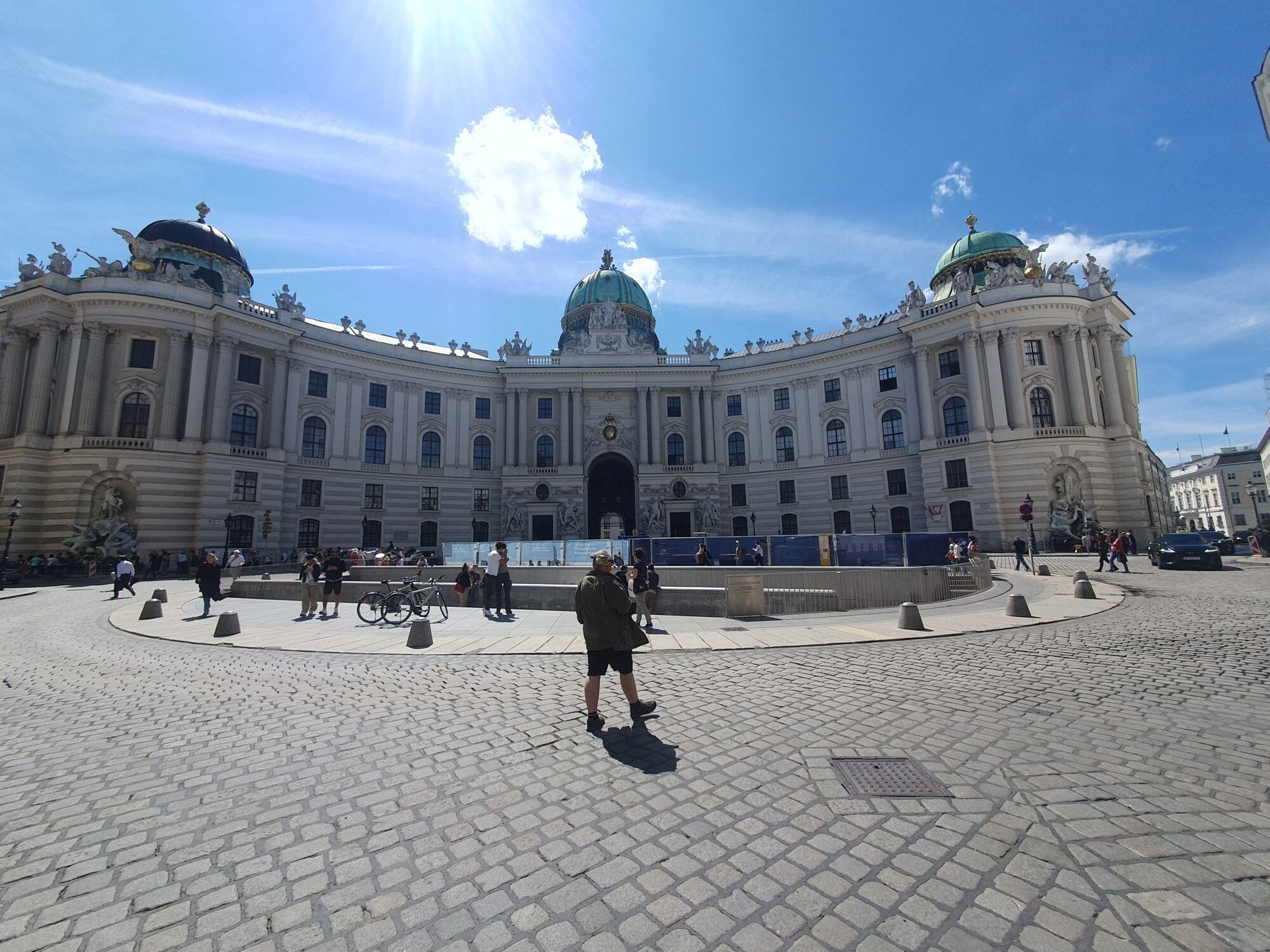
The Hofburg Palace is a top place to visit with iconic architecture in the centre of Vienna. There are plenty of things that you can see for free. This includes the wonderful buildings that make up the palace, as well as the courtyards.
Disclosure! Keep in mind that some links in these posts are affiliate links. If you click one of them, I may earn a small commission (for which I’m extremely grateful) at no extra cost to you. Thanks for visiting!
On all four visits to Vienna, we have explored the Hofburg Palace during winter, spring and summer trips. The palace courtyards, gateways and outdoor areas are free to explore, while attractions such as the Sisi Museum, Imperial Treasury and Spanish Riding School require tickets.
What is the Hofburg Palace in Vienna?
The Hofburg Palace is the former principal imperial palace of the Habsburg dynasty rulers. It was built in the 13th century and expanded several times. In the days of the empire, it served as the imperial winter residence.
The palace is a fantastic place to have a wander, including admiring the statues in Heroes Square and the inner courtyard. The St Michael’s Wing is stunning, with three green domes on top and intricate architecture.
Things To See For Free At The Hofburg Palace in Vienna
These parts of the complex are open 24/7, and you are free to explore at any time. I really enjoyed the hour before sunrise when it is empty. There are other free places to visit on my travel guide.
The St Michael’s Wing
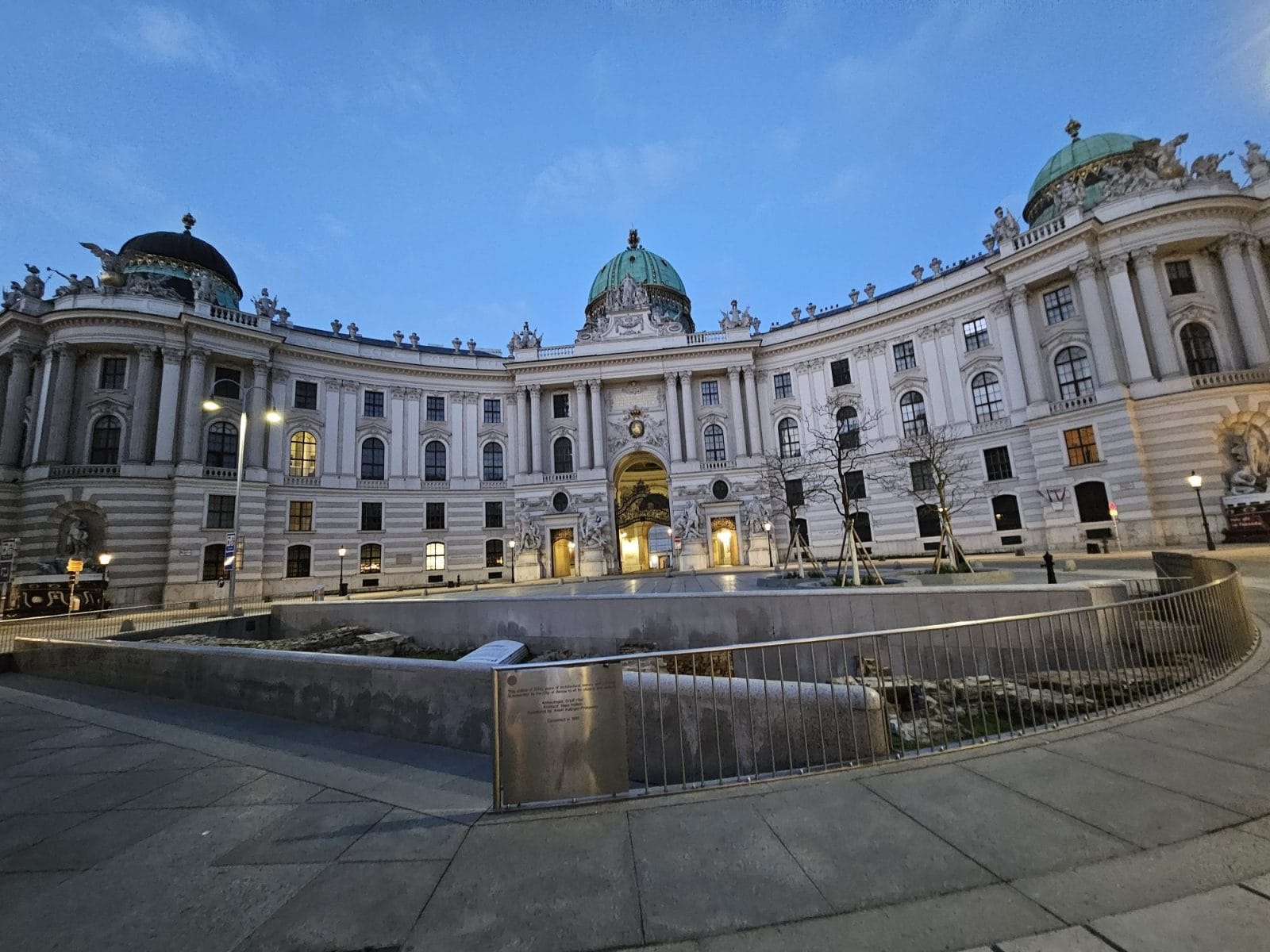
St Michael’s Wing of the palace is pretty iconic and eye-pleasing. This is a white building with a central green dome and two other domes at the edges. The view from Michaelerplatz is one of my favourites. St Michael’s Church is opposite the square at the entrance.
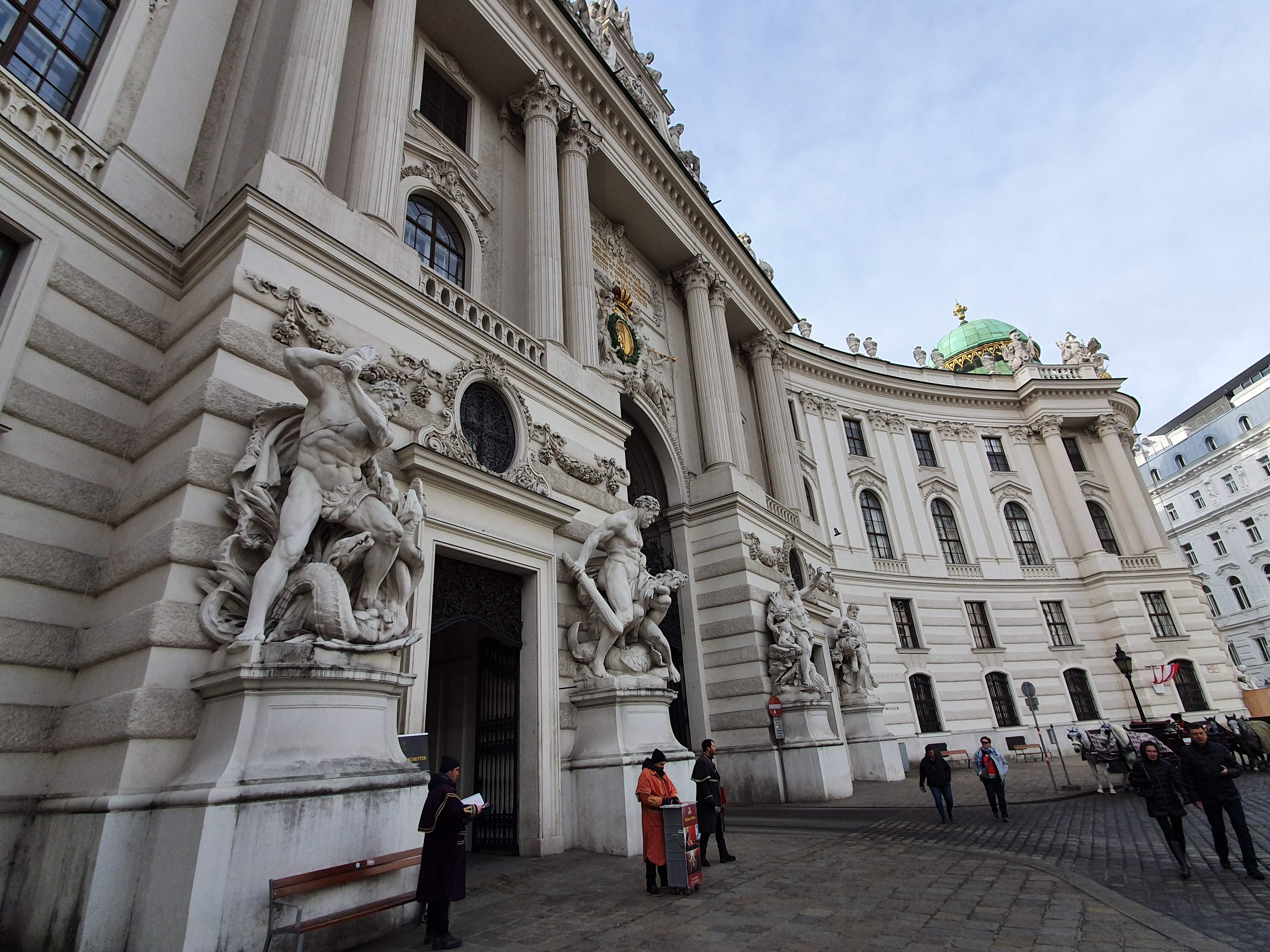
The square in front of this entrance gets crowded with tourists, especially at peak times. The entrance into the complex here is decorative with statues and golden emblems.
Michaelertor Gate
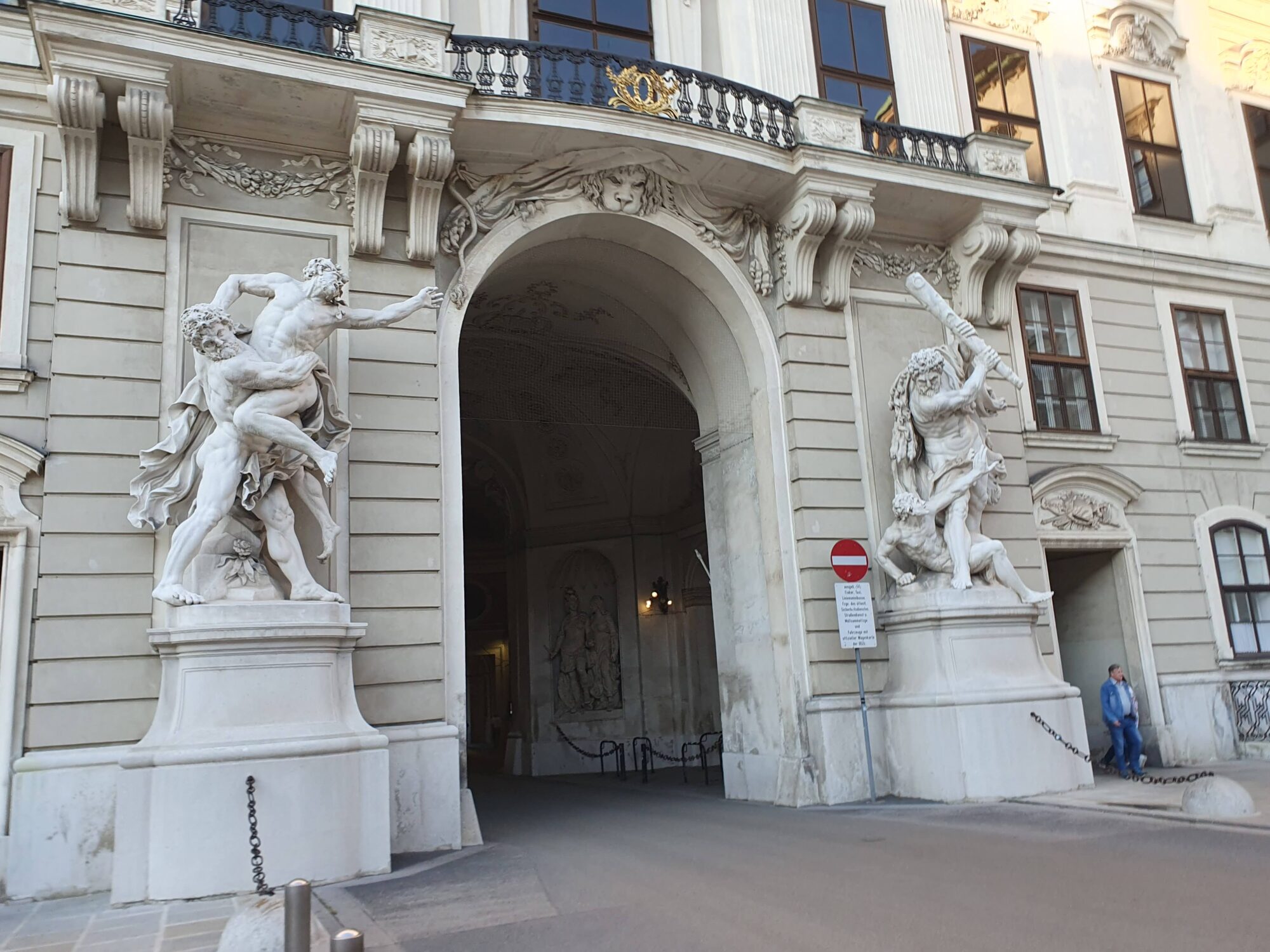
The Baroque Michaelertor Gate is one of the main entrances to Hofburg Palace, connecting Michaelerplatz to the Inner Courtyard.
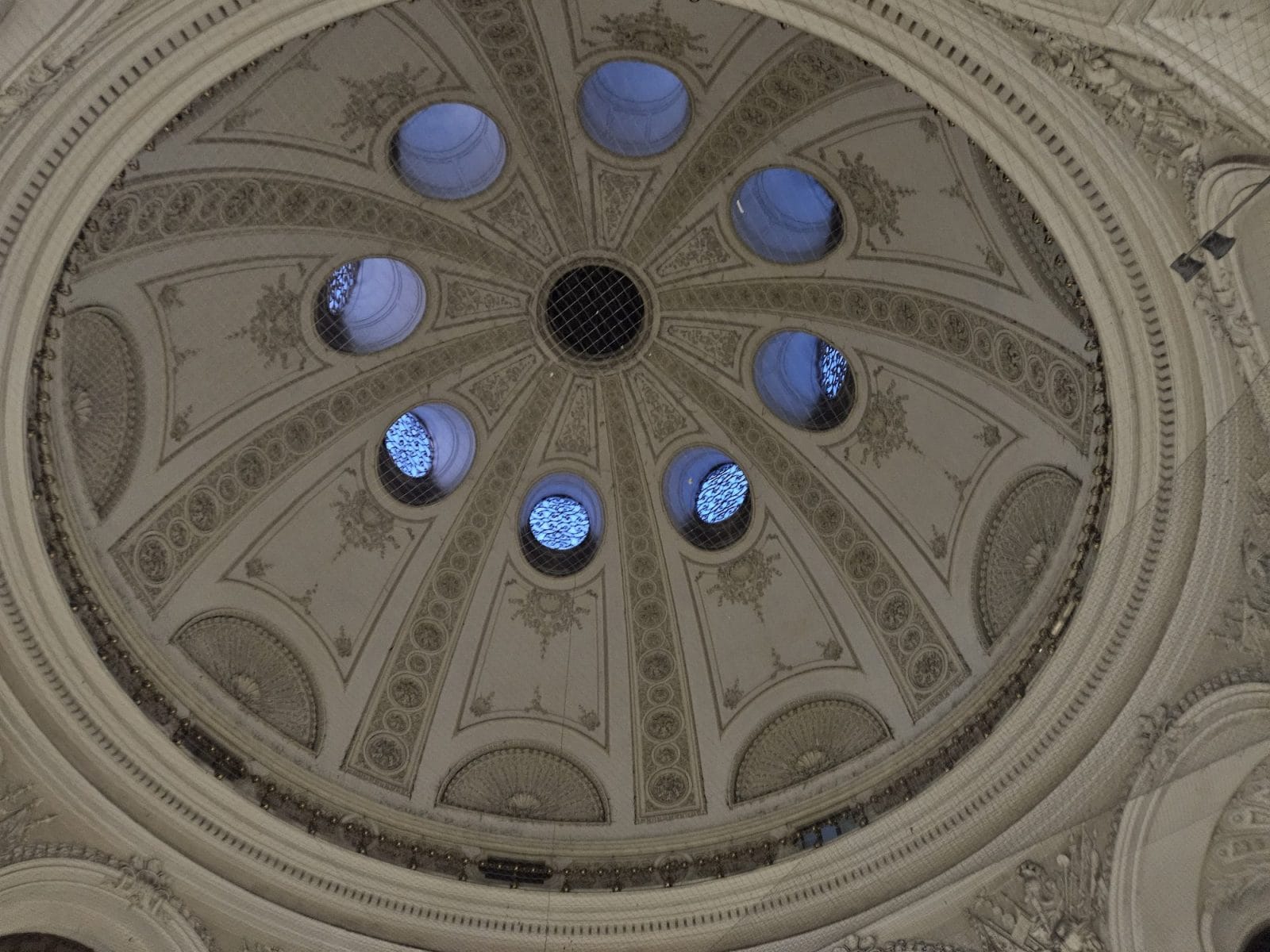
Inside the gate, you walk under the distinctive dome and pass the entrance of the Sisi Museum. Inside the gate, it is beautifully decorated with sculptures. The inside of the dome is splendid, so make sure you look up as you pass through. This gets busy with daytime visitors, but at dawn it is eerily quiet.
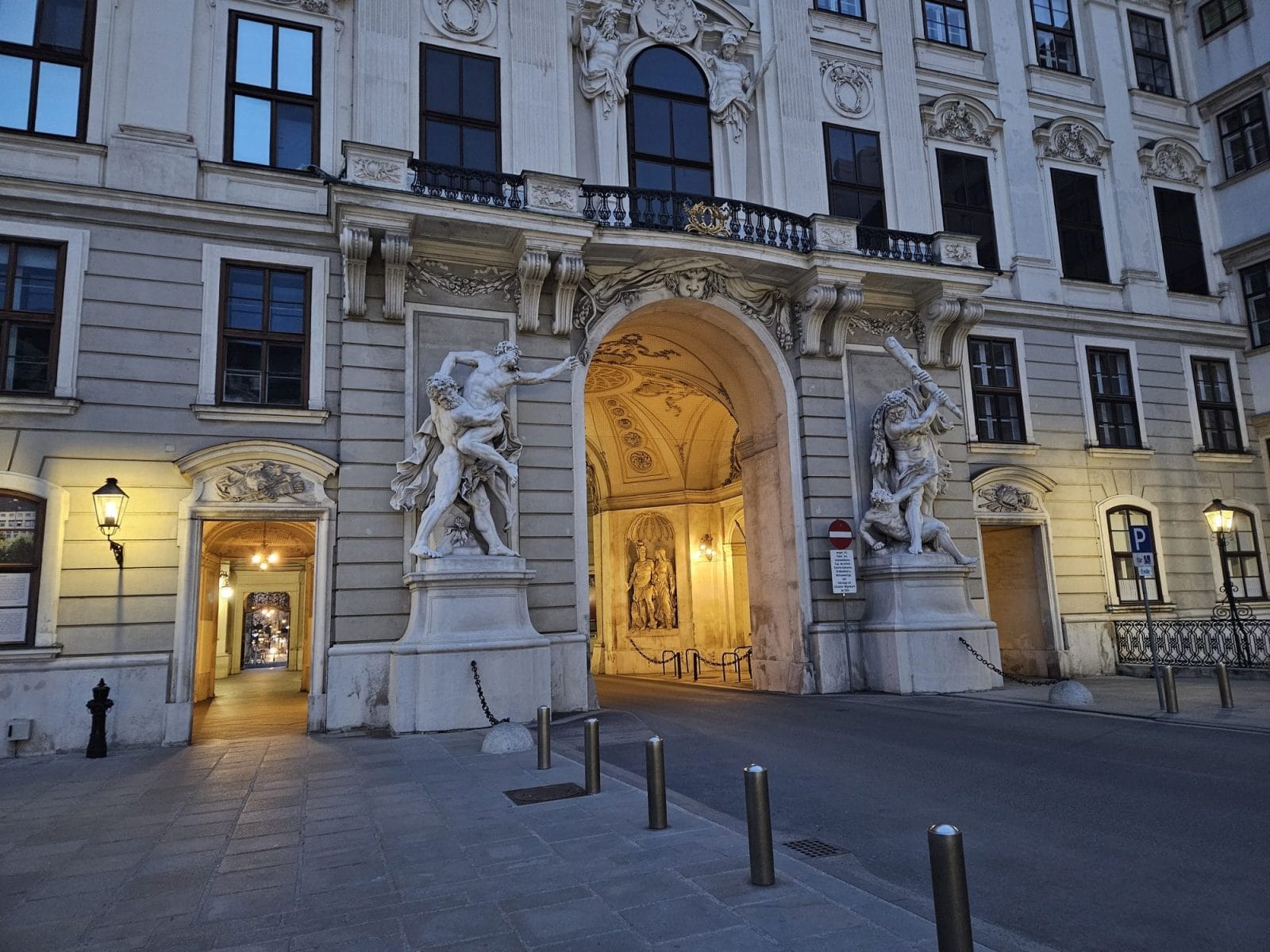
The décor of the gate from the inner courtyard is eye-catching and blends perfectly with Michael’s Wing.
Inner Courtyard
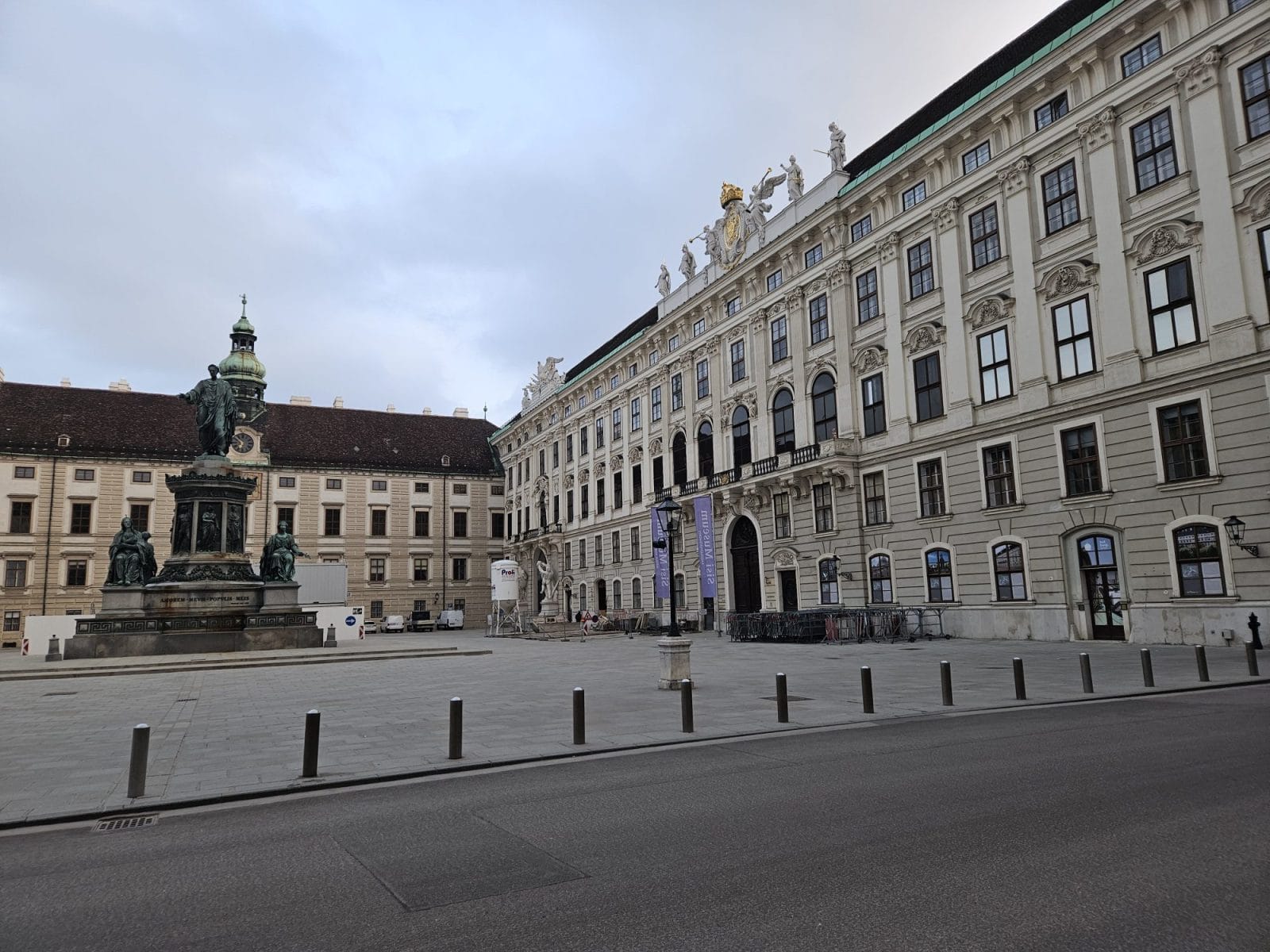
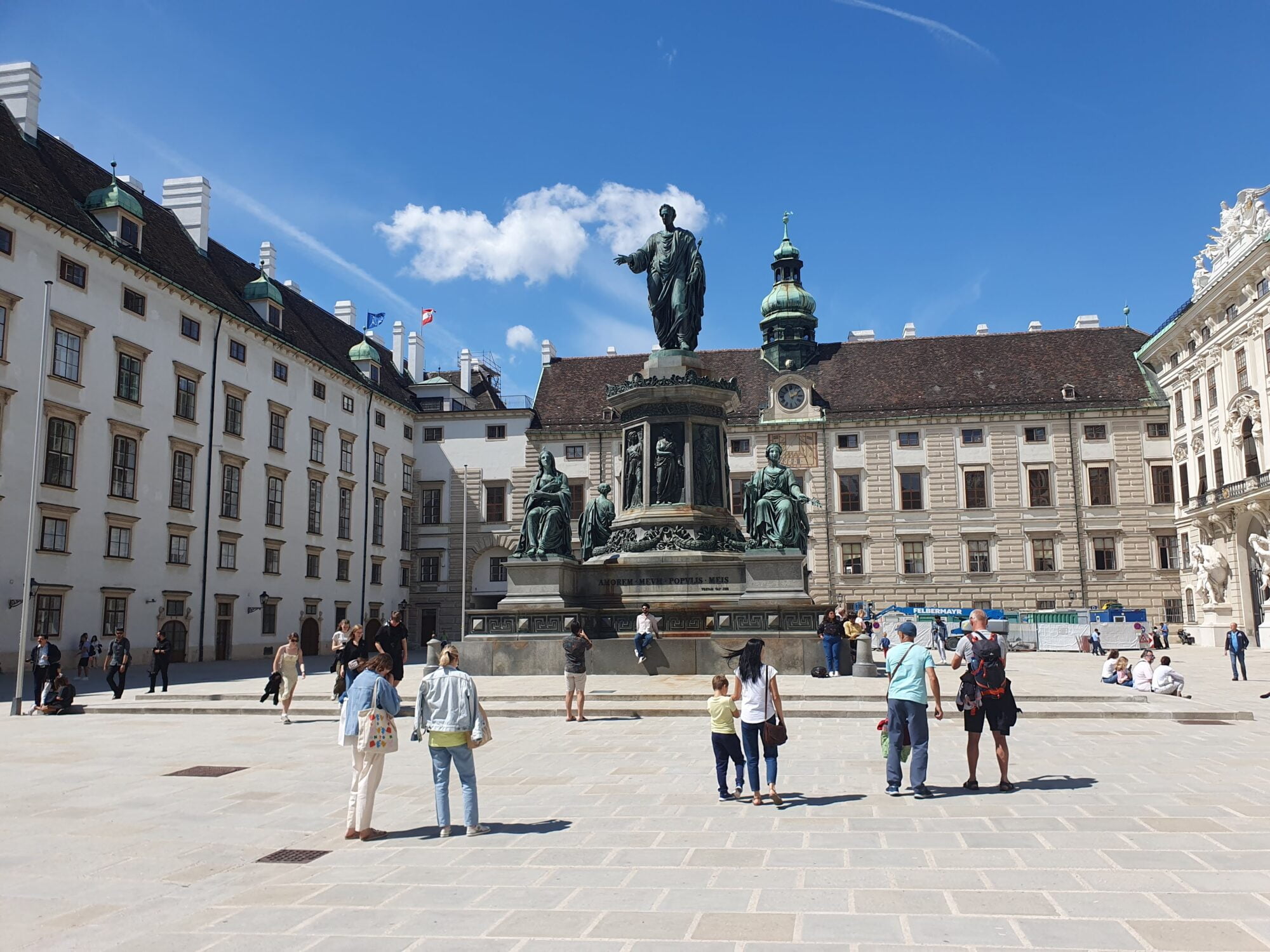
The inner courtyard behind St Michael’s Wing is a photogenic square home to the Kaiser Franz Monument, an ornate work of art.
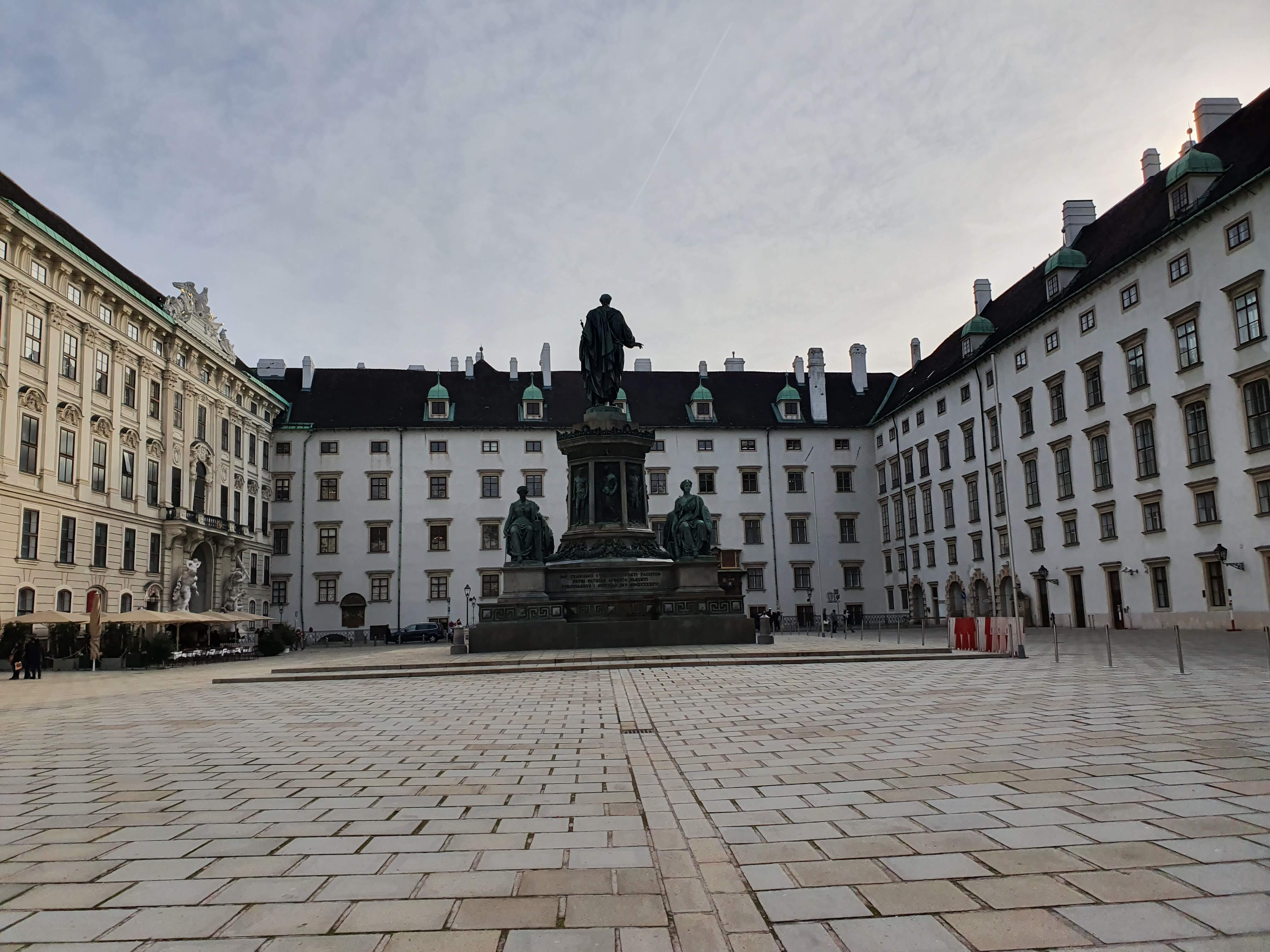
The square is large, with the only entrances and exits being through ornate arches.
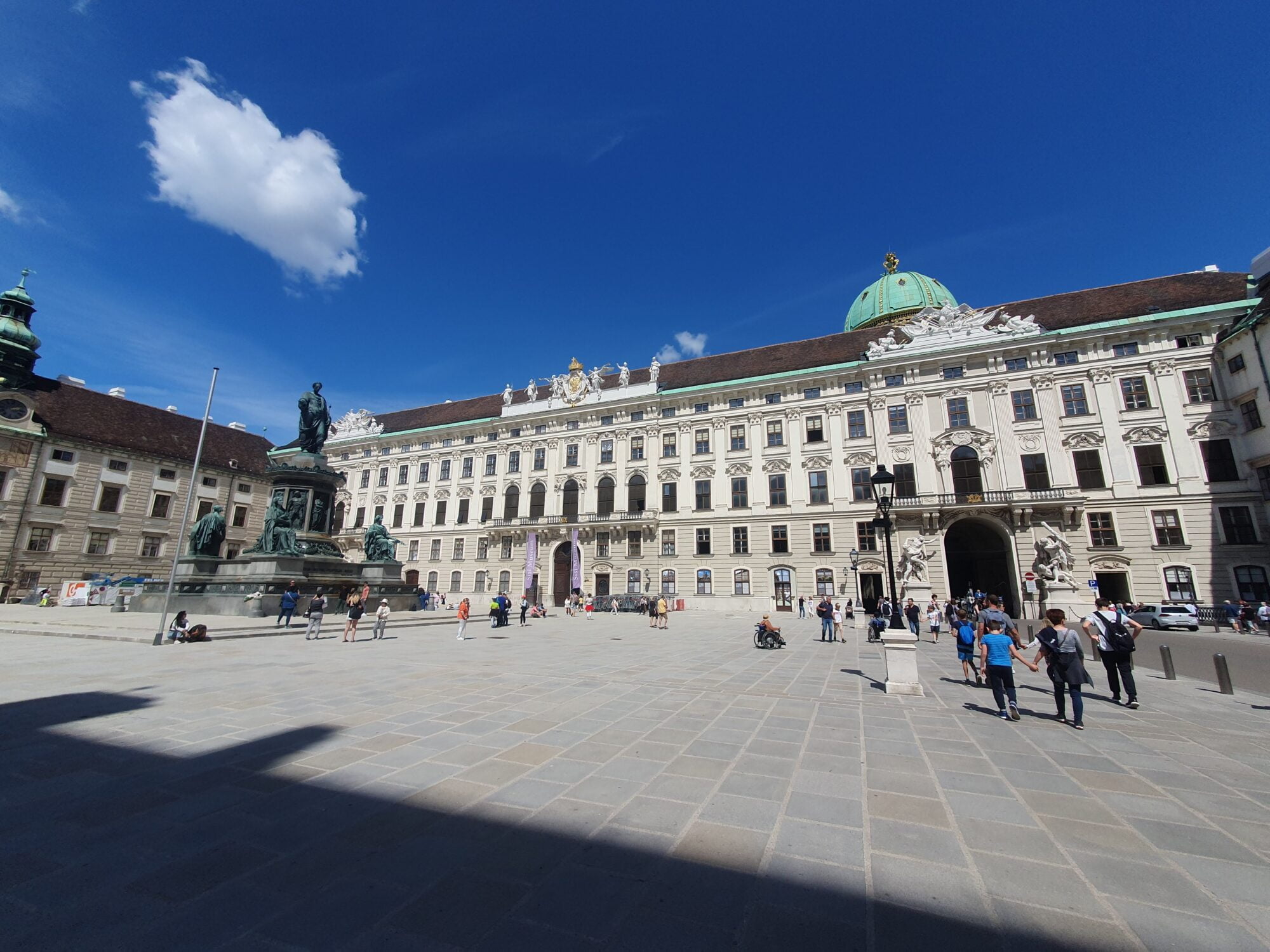
Here, you might spot a marching band practising in full military attire; however, you will also see horses and carts ferrying tourists around.
Kaiser Franz Monument
In the centre of the inner courtyard is the ornate Kaiser Franz Monument. The monument was built to commemorate Francis II, the last Holy Roman Emperor. He was also the first Emperor of Austria after the dissolution of the Holy Roman Empire.
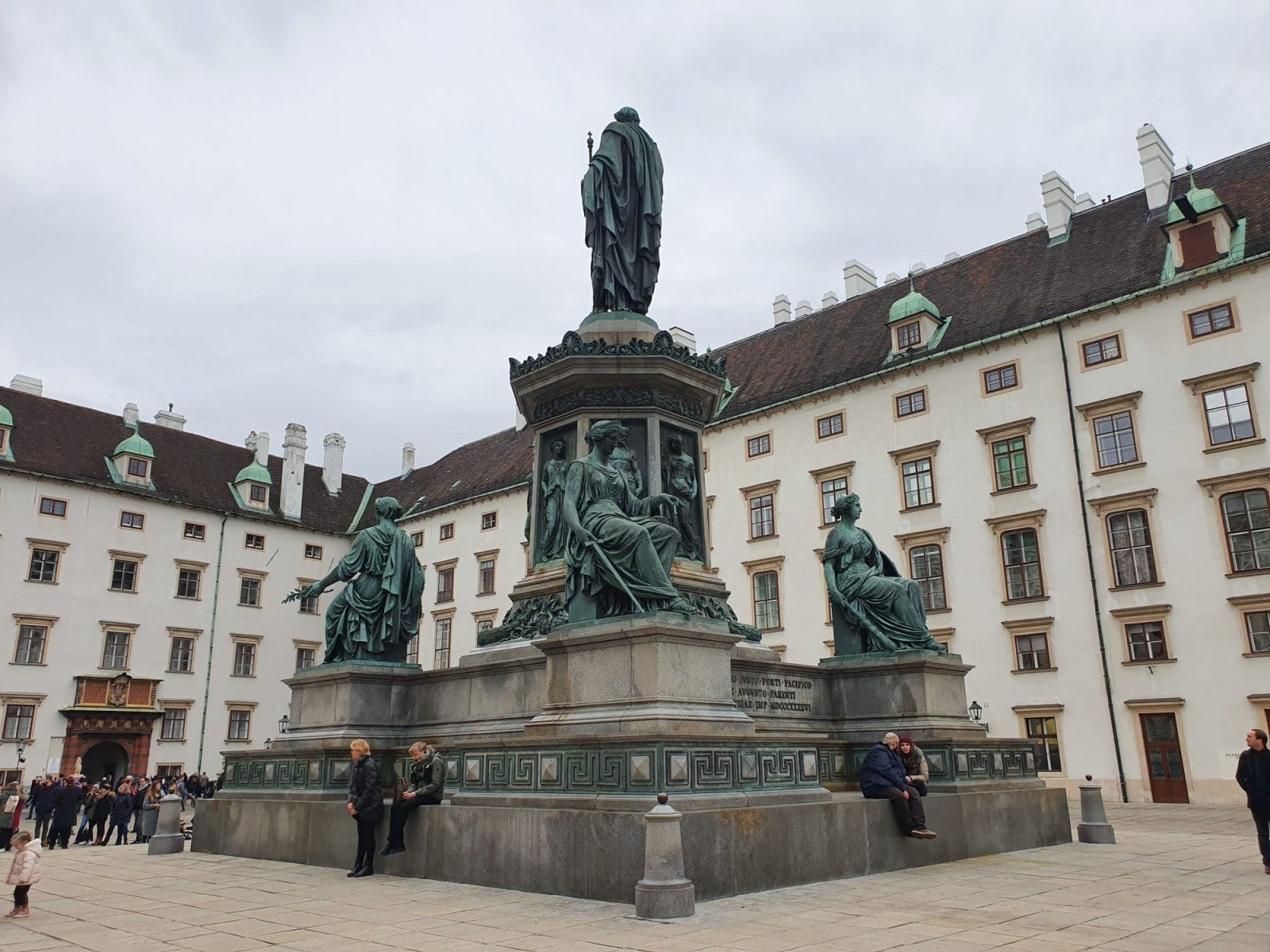
This is a bronze statue of Emperor Francis I. Emperor Francis is in classical Roman attire on this statue. At each corner of the monument are four statues depicting the imperial virtues. These values were religion, peace, justice, and strength.
Heldenplatz
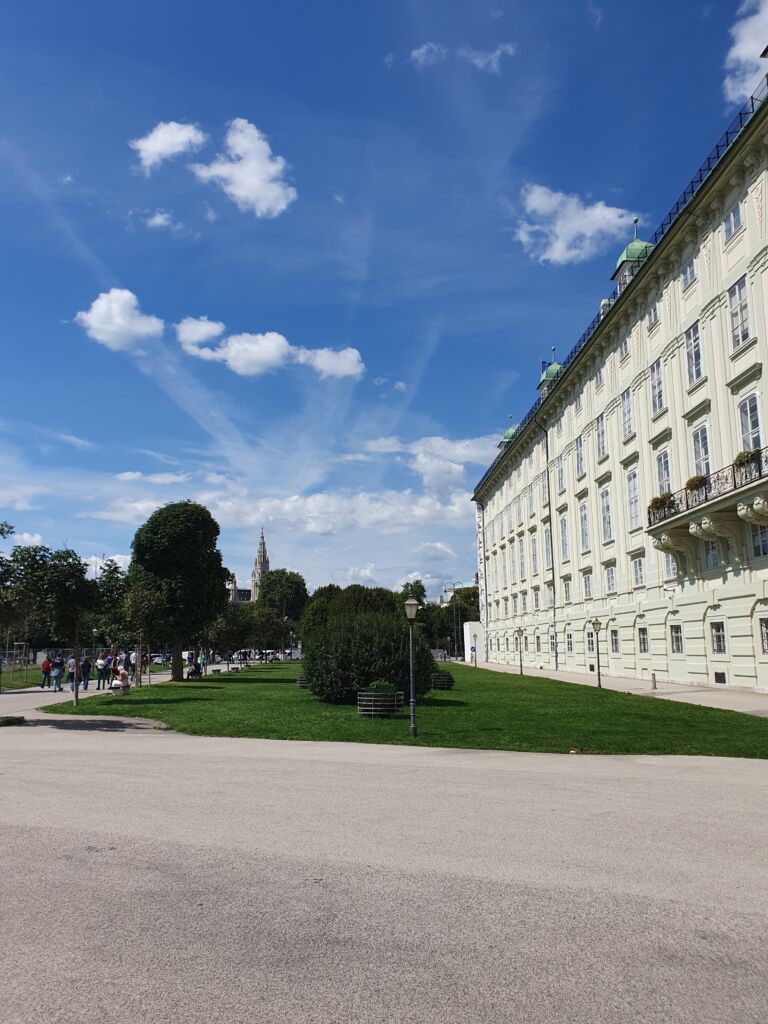
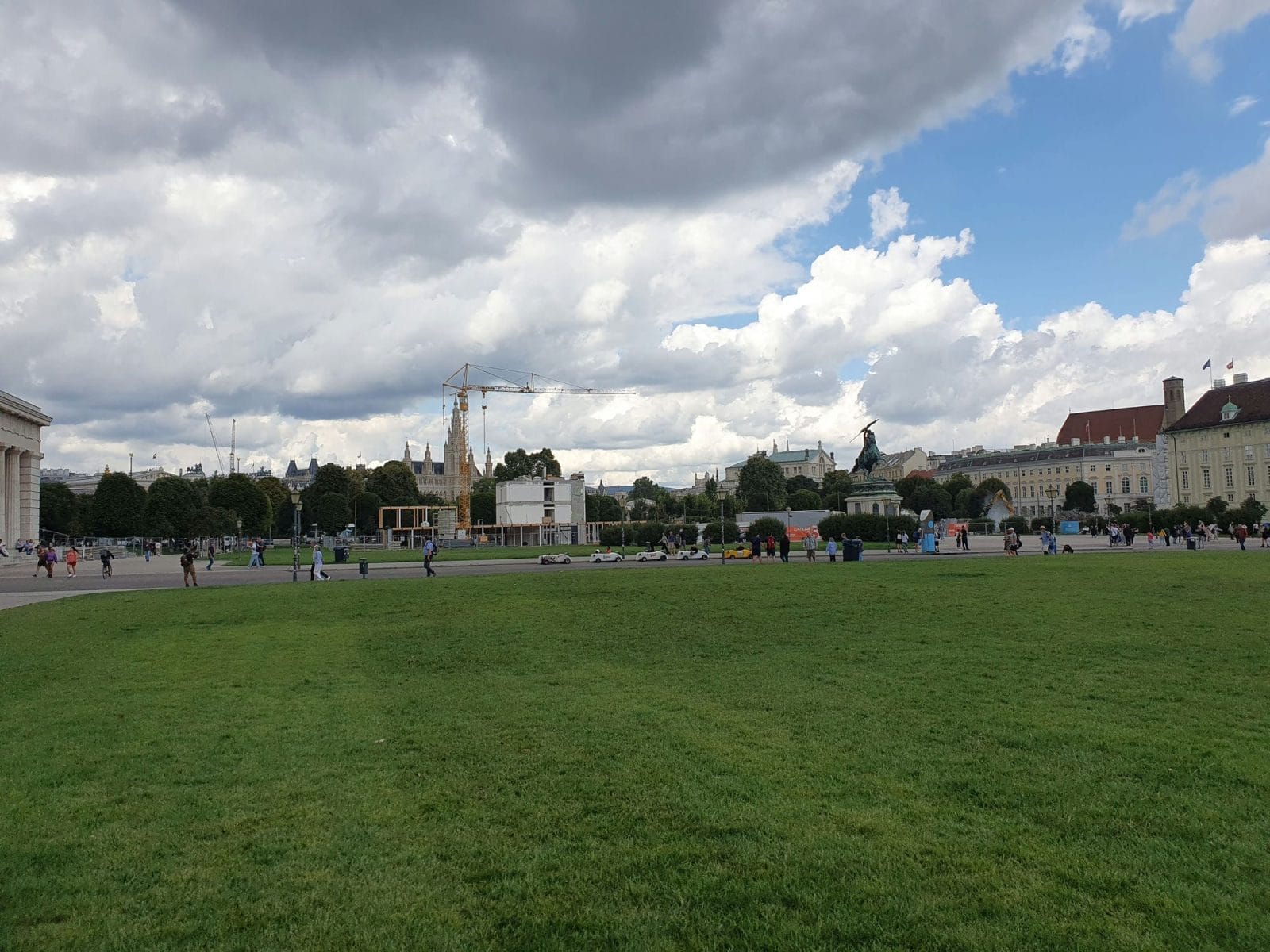
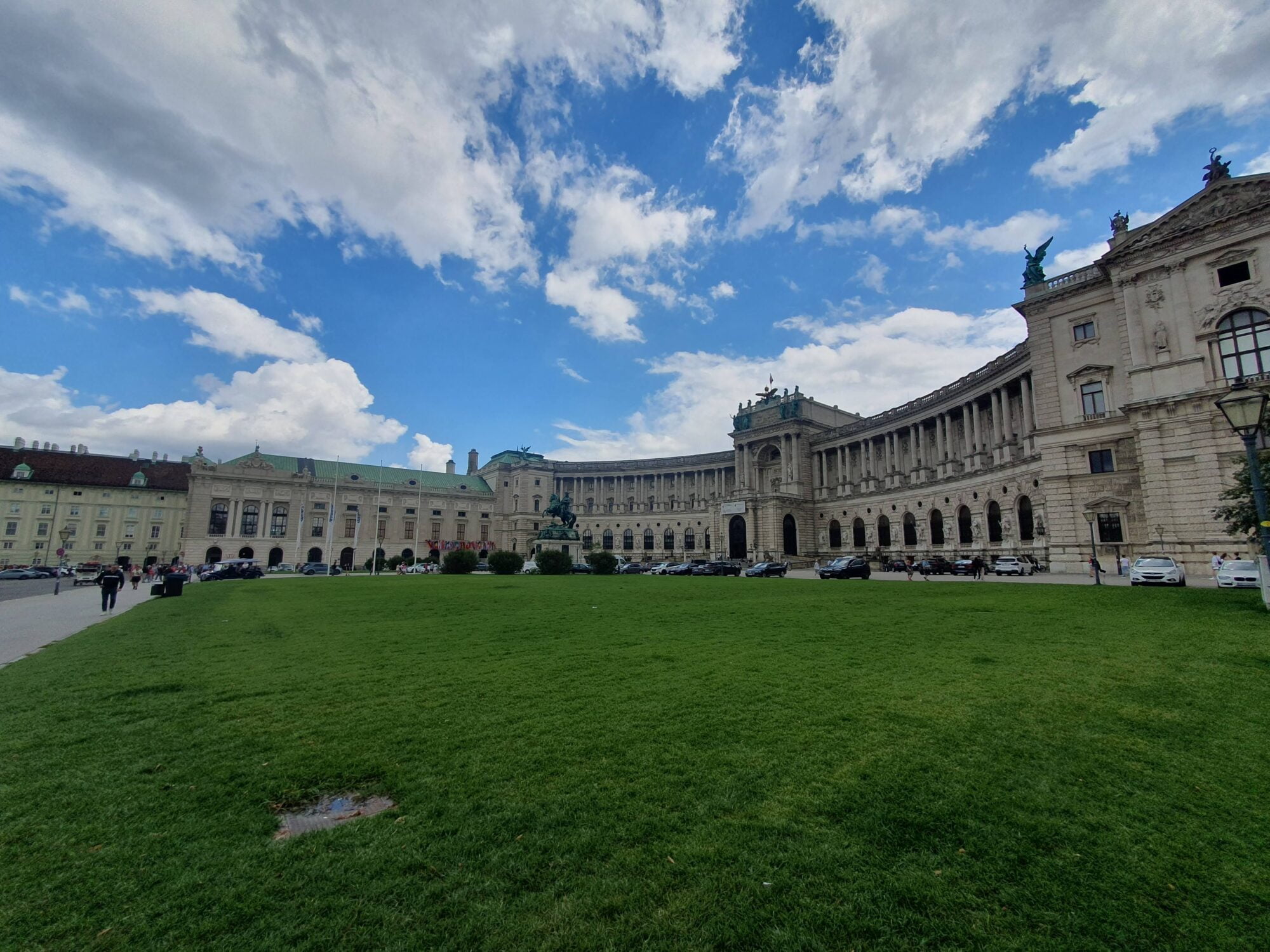
Towards the rear of the inner courtyard is a grassy area called Heldenplatz, which is ideal for the dog on his extender lead. This area is a delightful spot for seeing the other wings and the impressive outer gates.
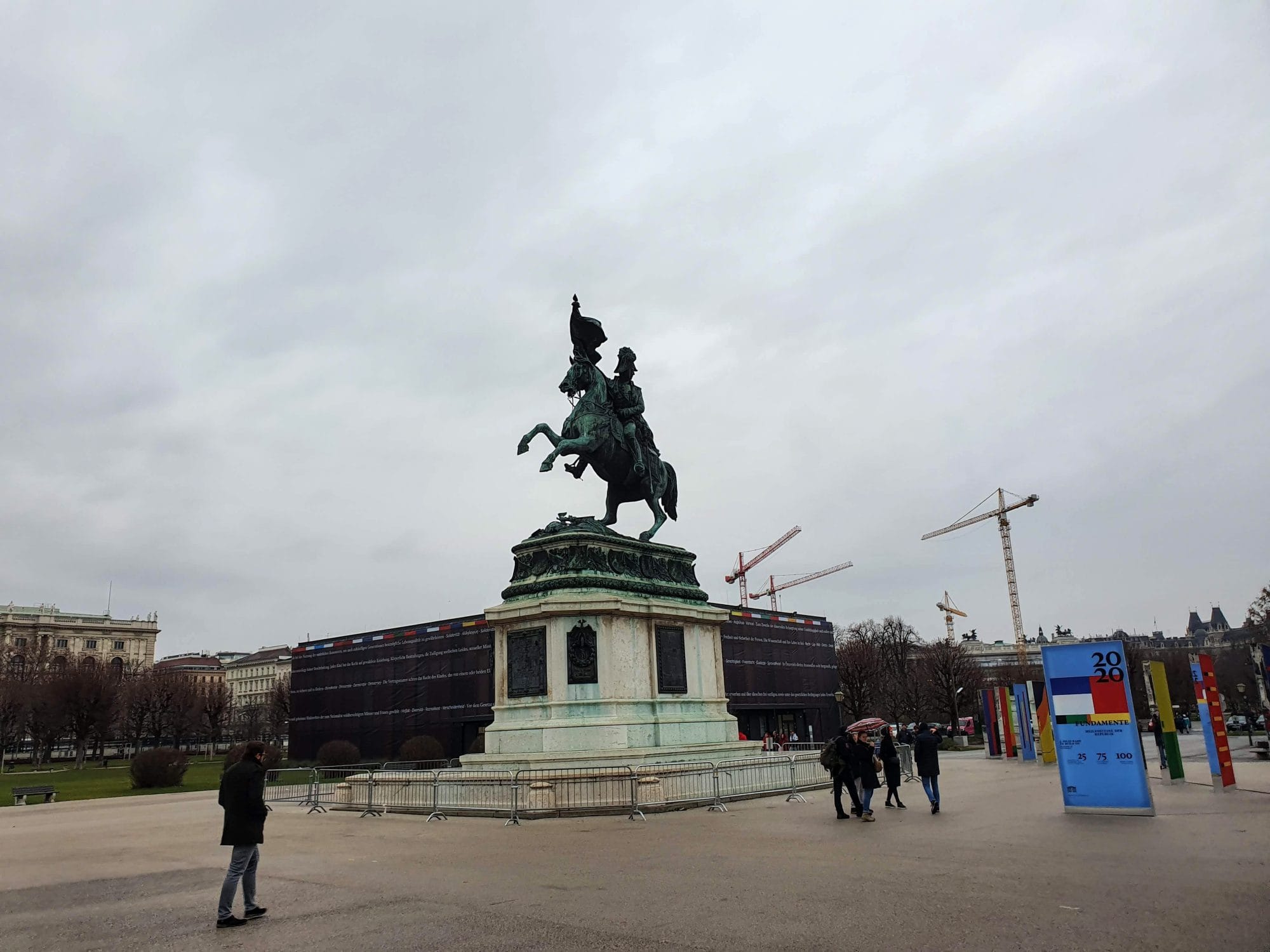
Heldenplatz is a public square & garden with some imposing statues. One such statue is the Erzherzog Karl Equestrian Statue. He was an Austrian field marshal and the third son of Emperor Leopold II.
Neue Burg Wing
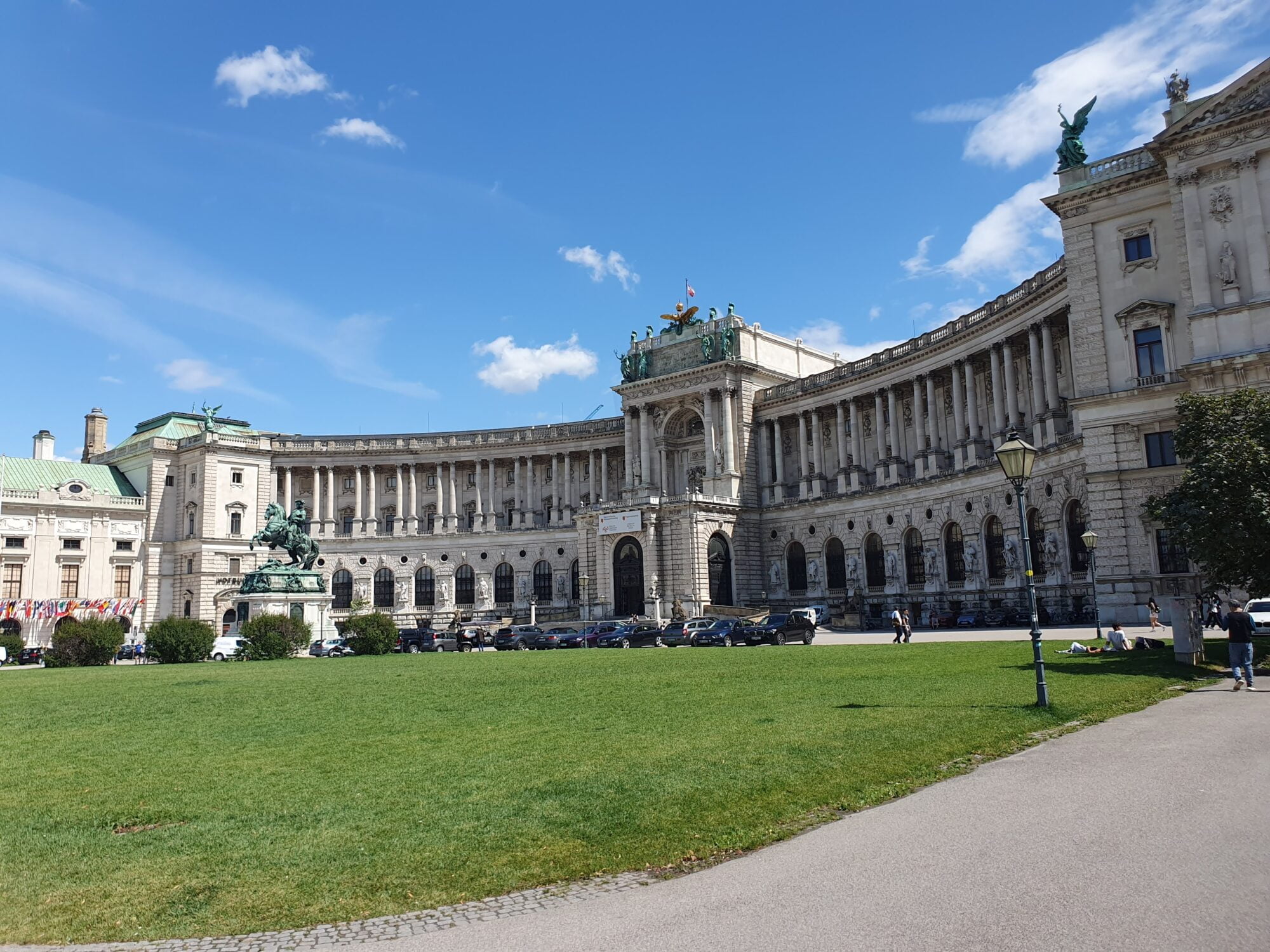
Also visible from Heldenplatz is the Neue Burg wing of the palatial complex. This is a relatively new wing, completed in the 20th century.
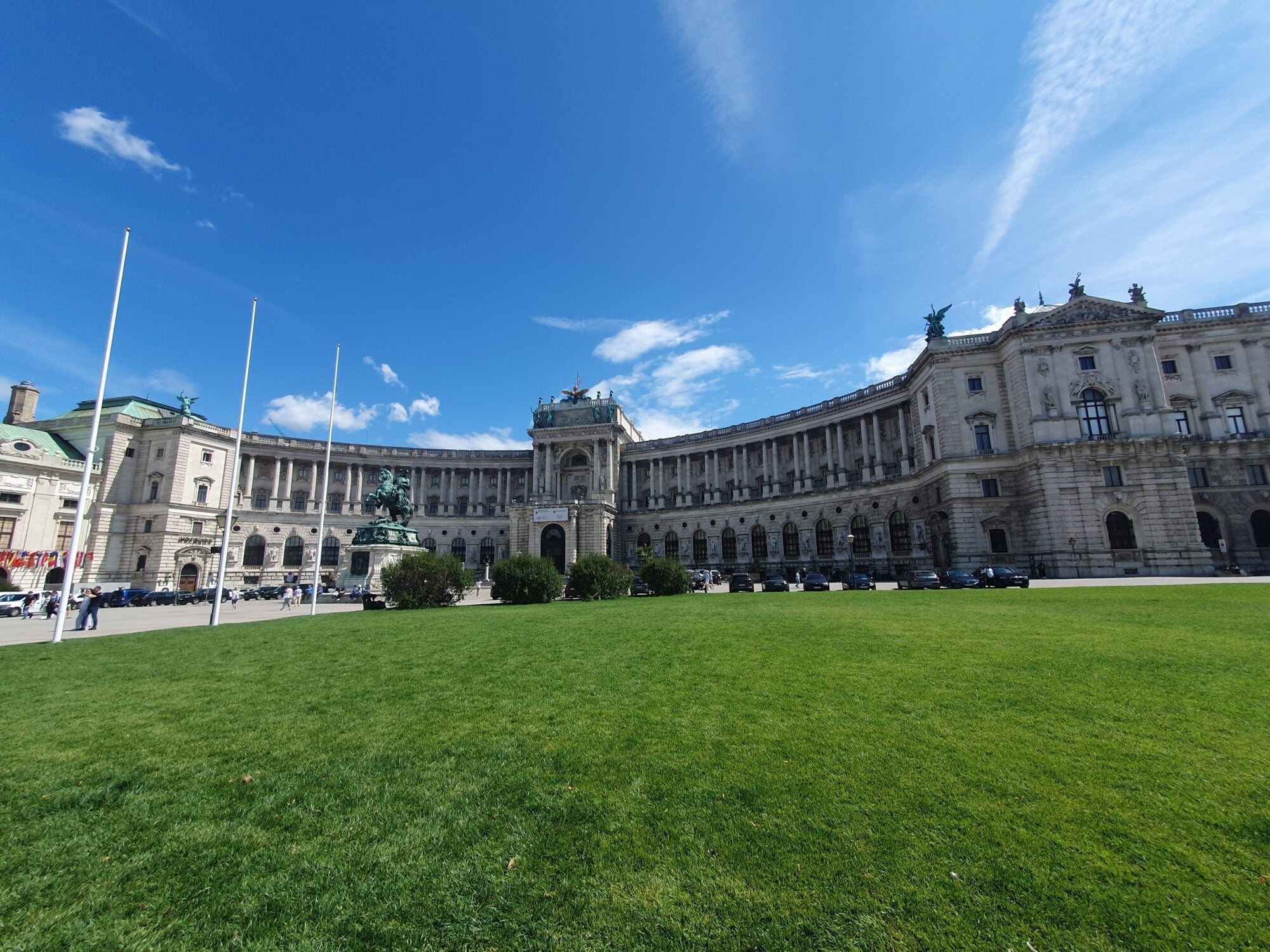
Heldenplatz is home to the National Library and a few museums. In dark times, Hitler used the balcony of this wing to announce Austria’s annexation into Germany.
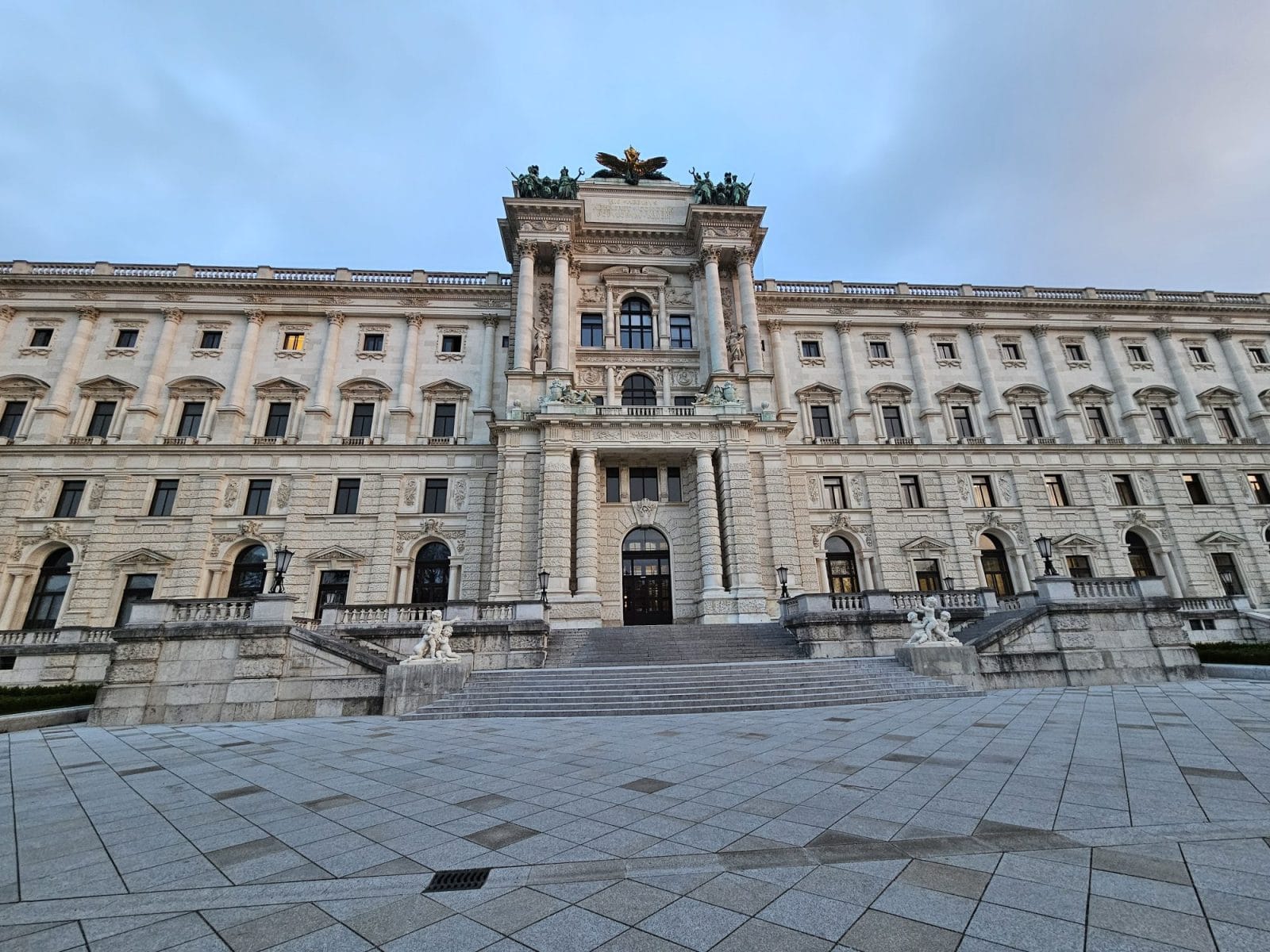
The rear of the wing in Burggarten is a bit more chilled and has no cars; thus, it is worth popping around. The gardens are lovely too, with cafes overlooking the site.
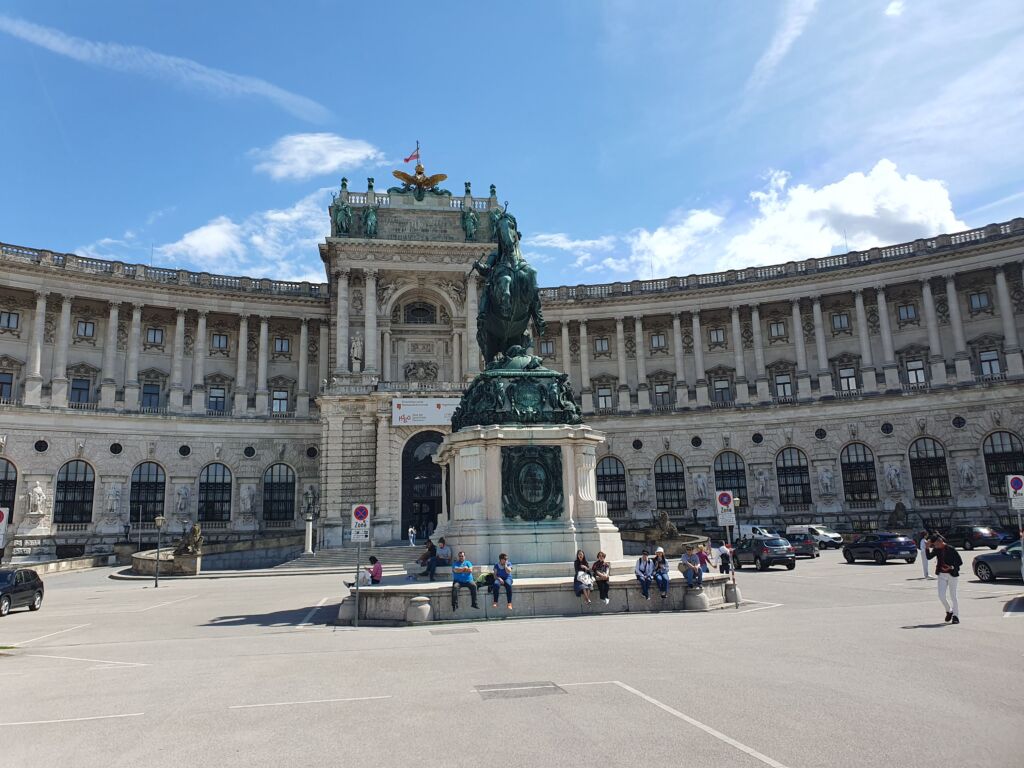
At the front of the Neue Burg Wing in Heldenplatz is the Prince Eugene Equestrian Statue.
Outer Castle Gate
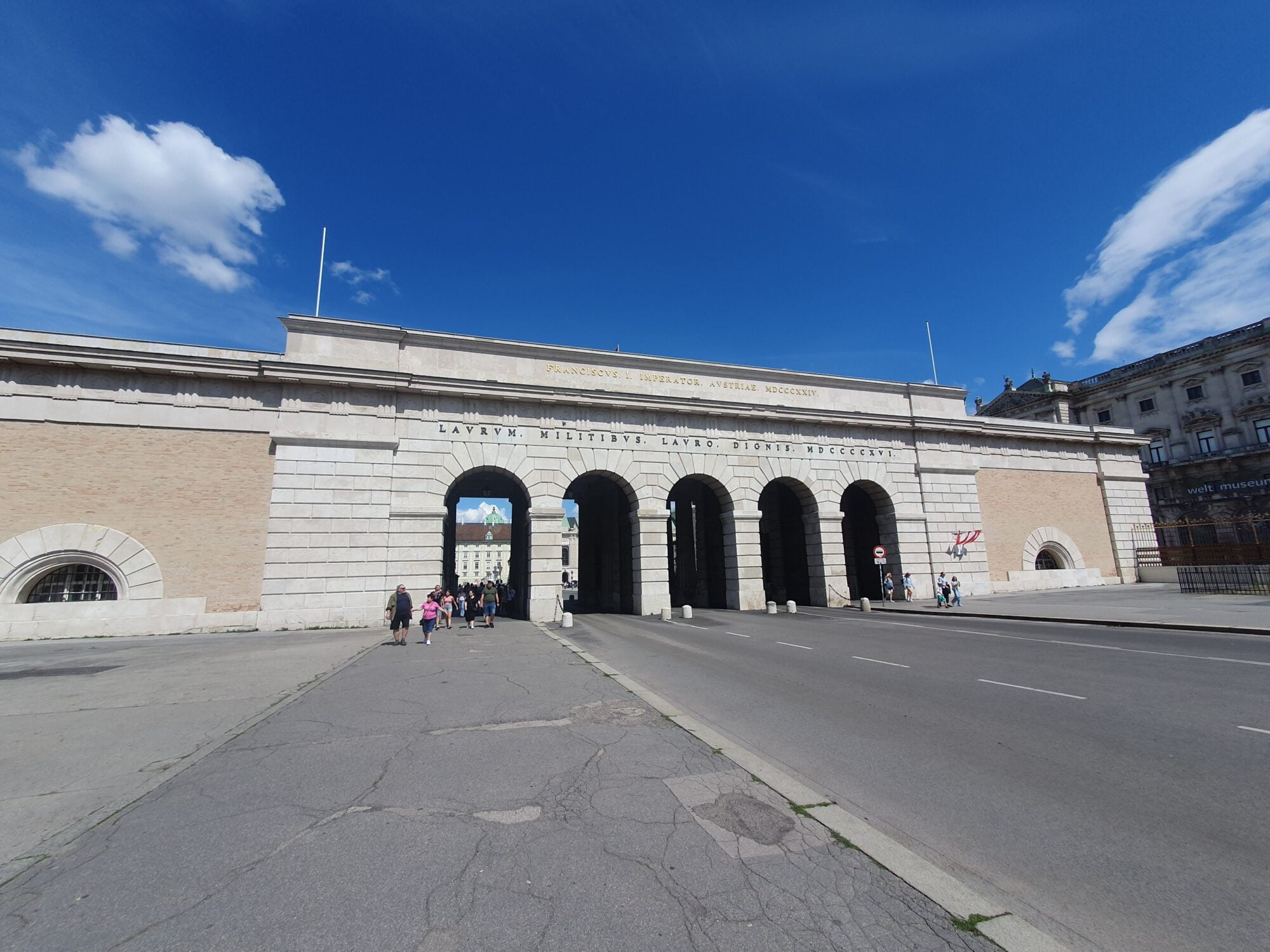
Another significant structure is the grand Äußere Burgtor, or Outer Castle Gate. This gate leads into the museum quarter and the picturesque Burgring.
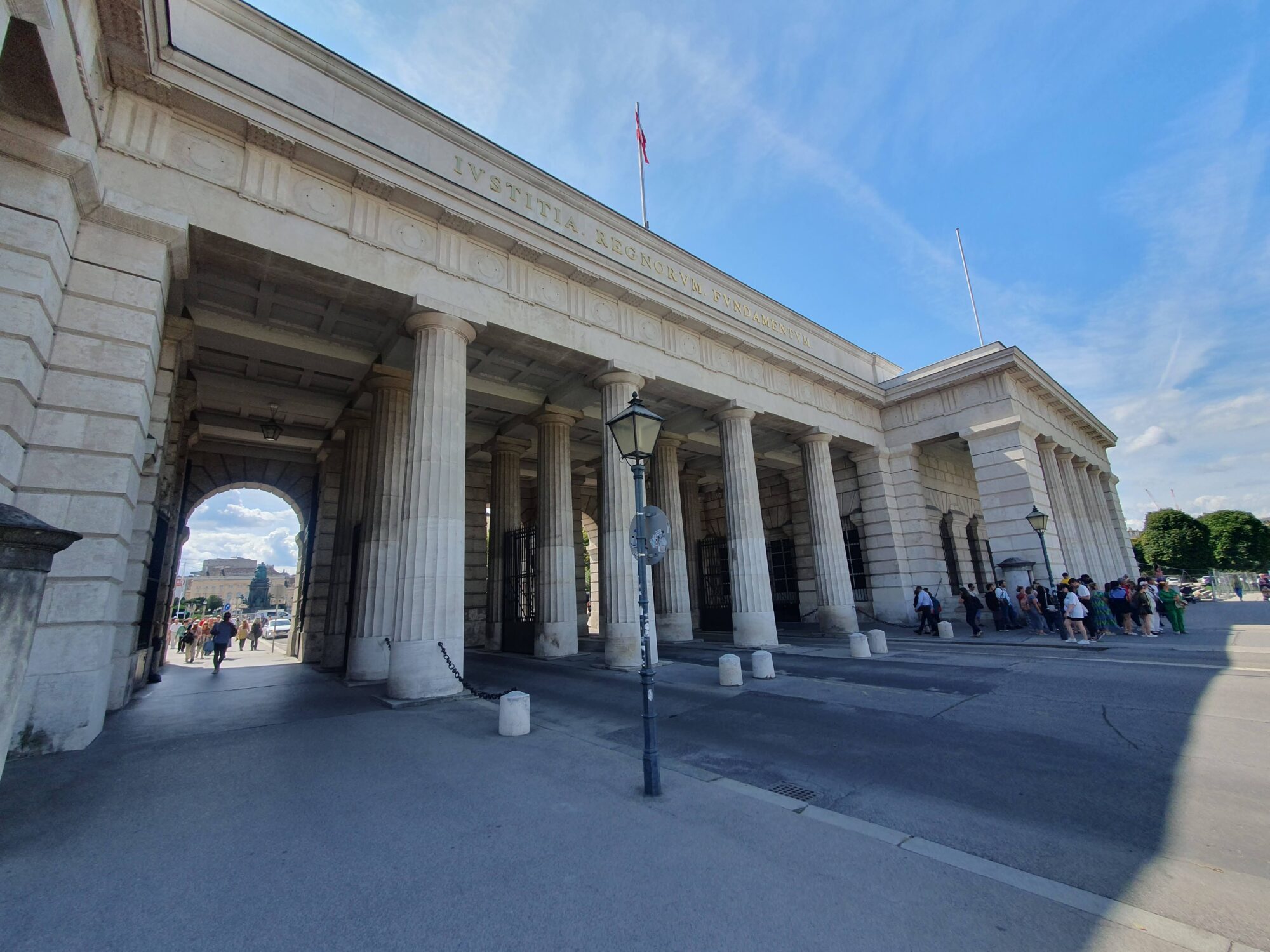
The Outer Castle Gate has 5 major arches, which look impressive. The gate was built in the 1800s to replace the one destroyed by Napoleon’s army.
Joseph’s Statue at Josefsplatz in Vienna
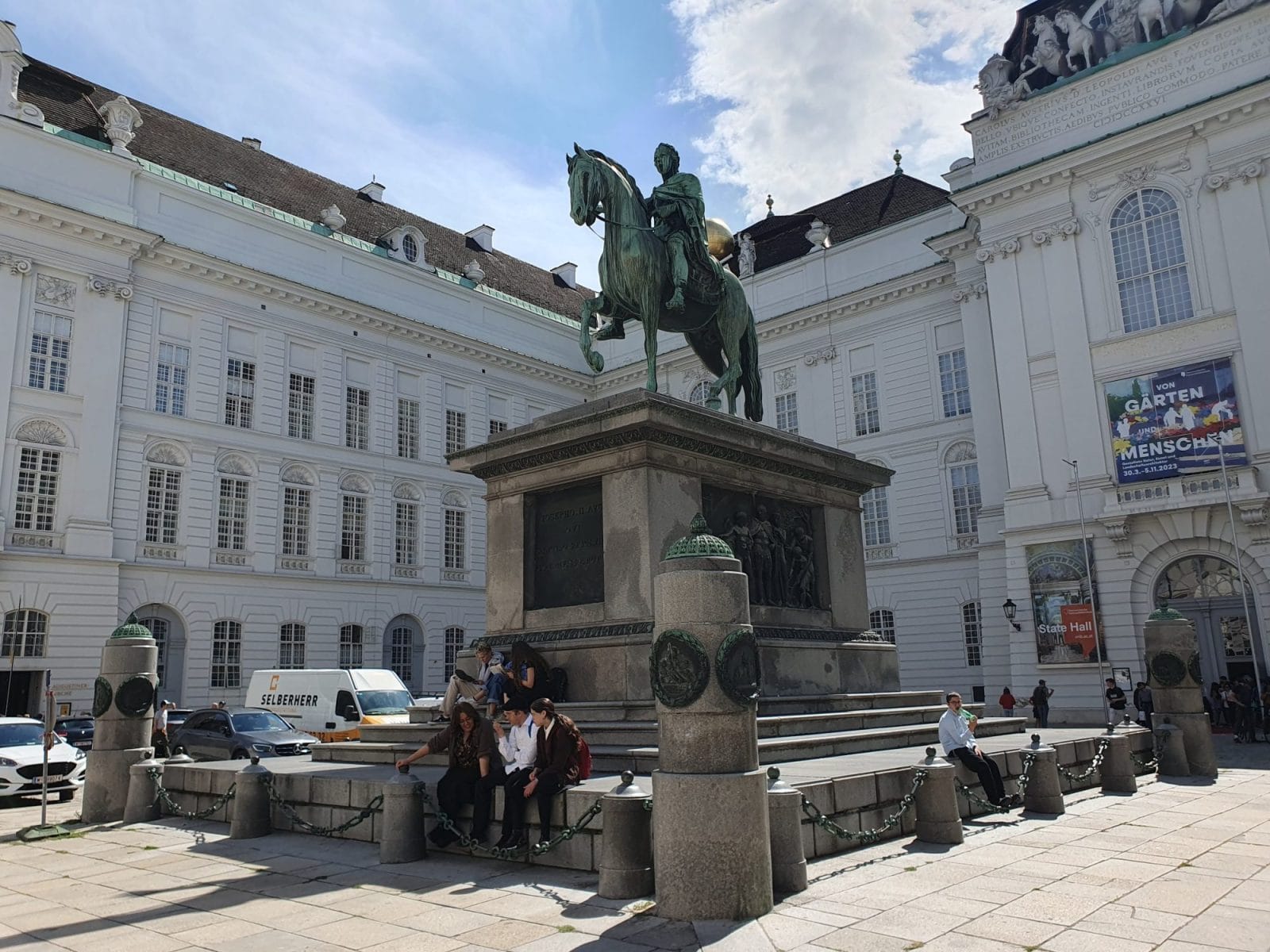
Josefsplatz is home to Josephs-Statue, an impressive statue of Kaiser Joseph II. This is on the east side of the complex towards Stallburg. As it is outside the complex, this area was much quieter to explore with the dog. The statue was modelled on the statue of Marcus Aurelius on the Capitol in Rome. It was created between 1795 and 1807 at the Academy of Fine Arts.
Schweizerhof – Swiss Court
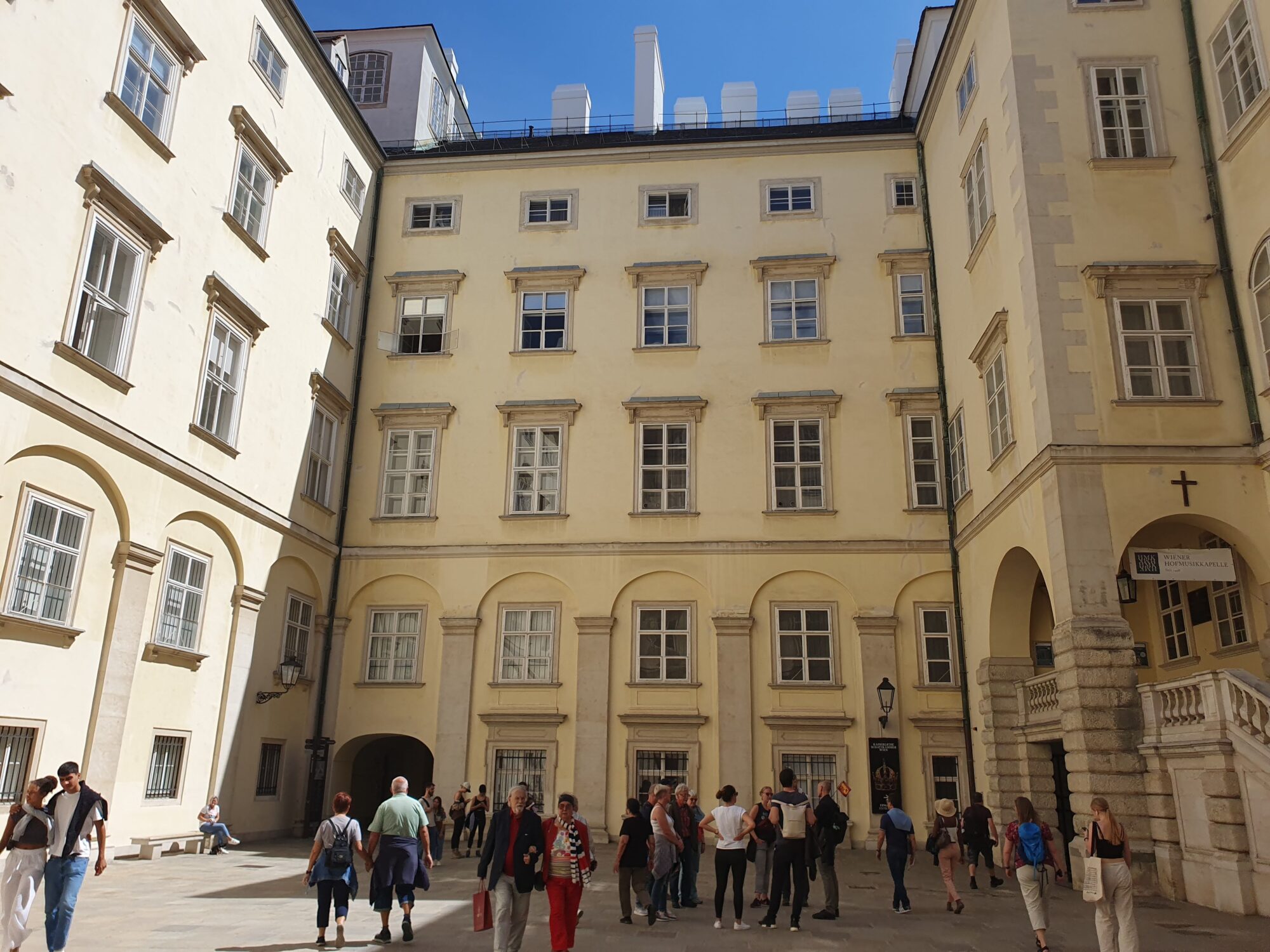
Another pleasant courtyard to find is Schweizerhof. ‘Schweizerhof’ translates to ‘the Swiss Court’.
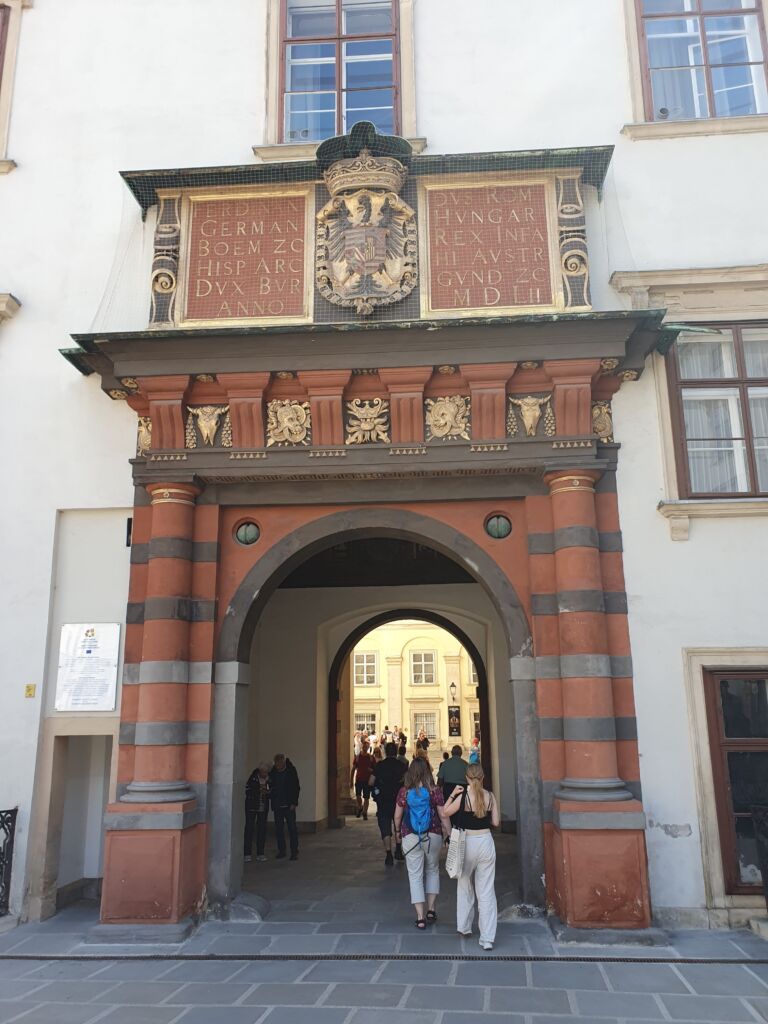
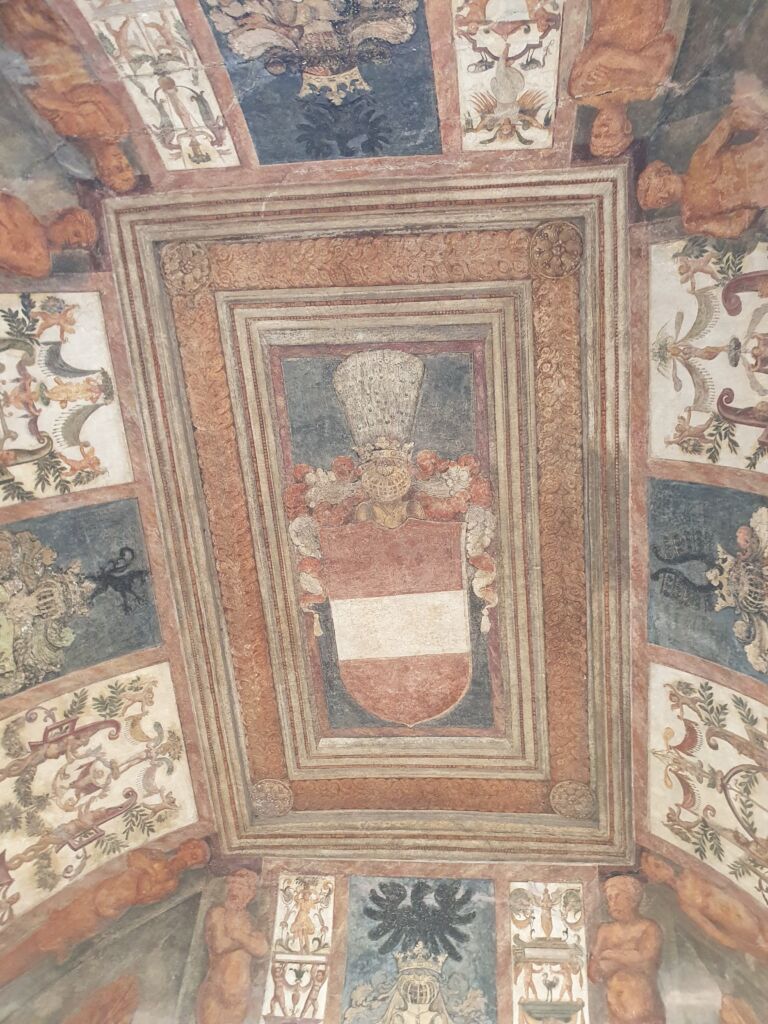
The most eye-catching feature here is Schweizertor, aka the Swiss Gate, which is nicely decorated and colourful. The gate was constructed in 1552 and 1553, and in the 18th century it was named after the Swiss Guard. One thing to see on the gate is the crest of Emperor Ferdinand I. If you look up as you pass through the gate, the frescoes are beautiful.
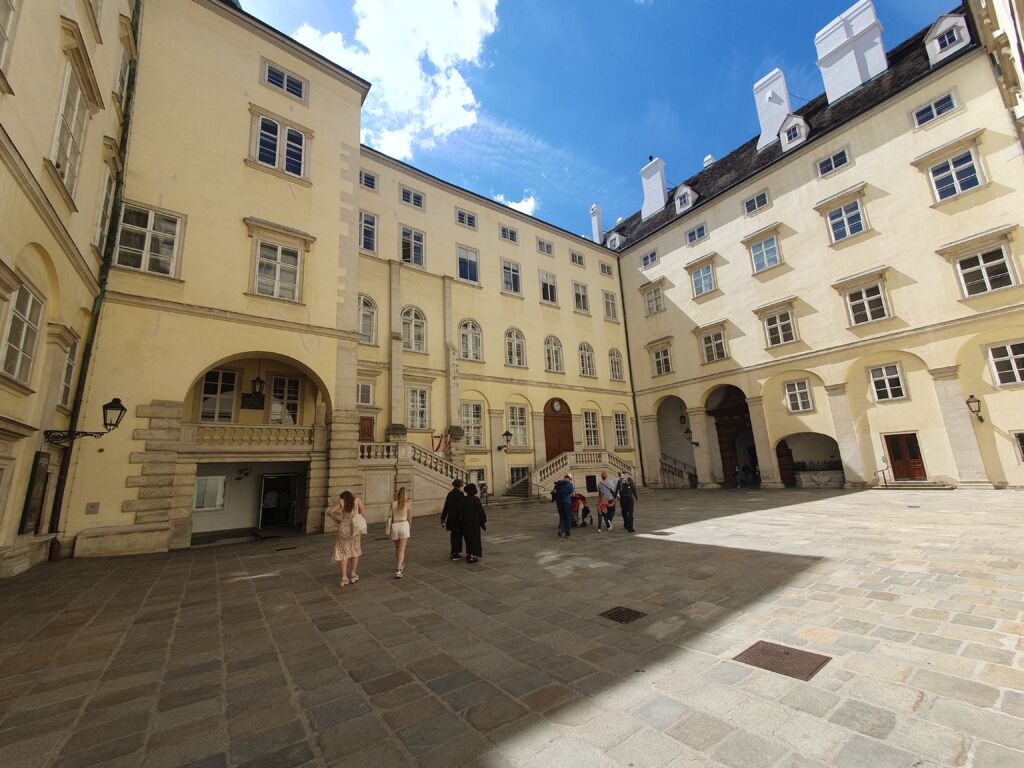
From Schweizerhof, you can access the Imperial Treasury and crown jewels, which are part of the paid admission. The Imperial Treasury is a paid attraction; some Vienna sightseeing passes may offer entry or discounts, so it is worth checking the current options. Also nearby is the Hofburgkapelle, a chapel that served many of Vienna’s imperial families.
Volksgarten: A Nice Place To Sit
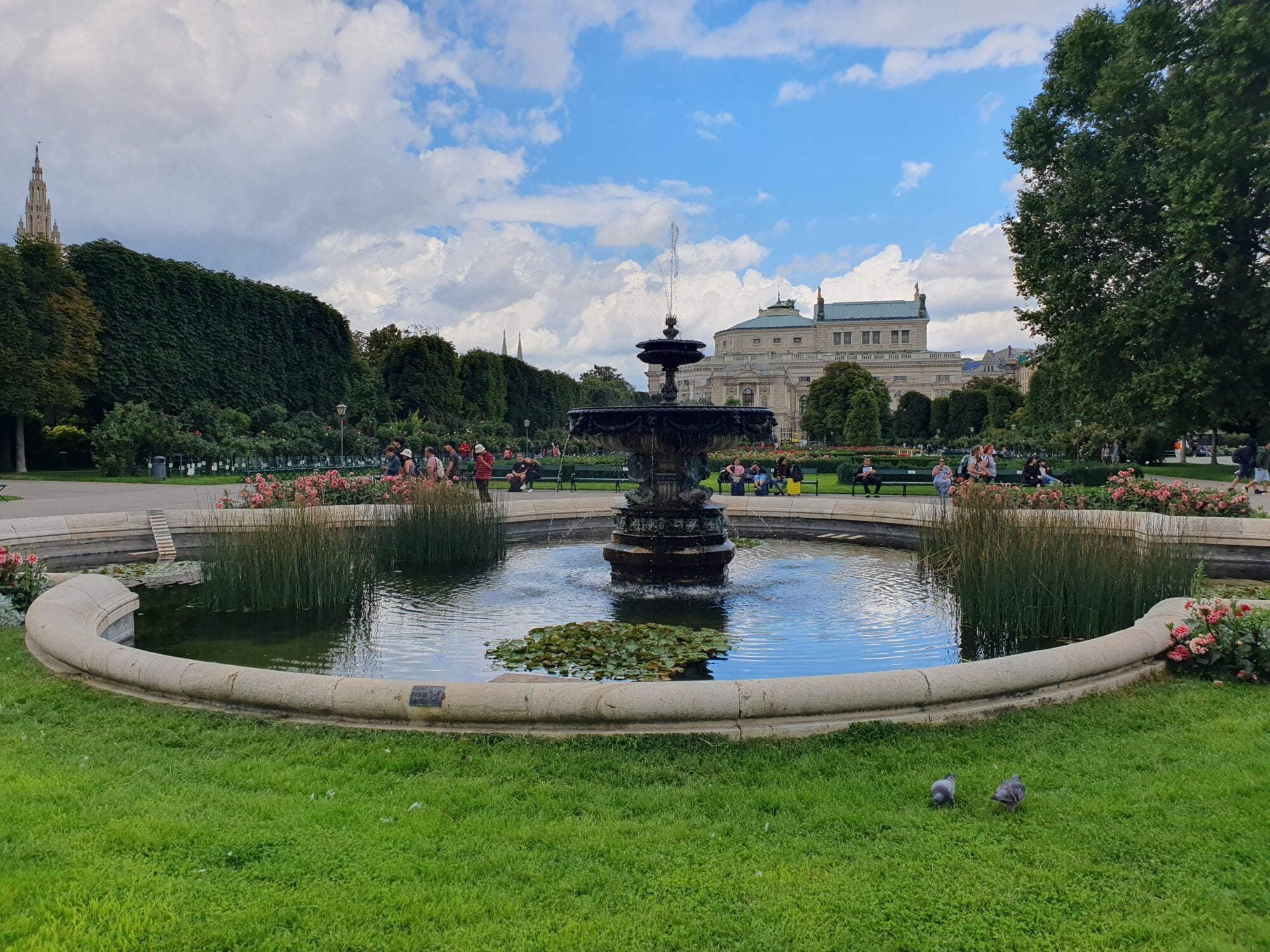
If you want to sit and chill while exploring the complex, head to Volksgarten. Volksgarten, or People’s Garden, is free to enter and has plenty of benches to sit on and enjoy the views. There is a cafe in the gardens for refreshments and drinks.
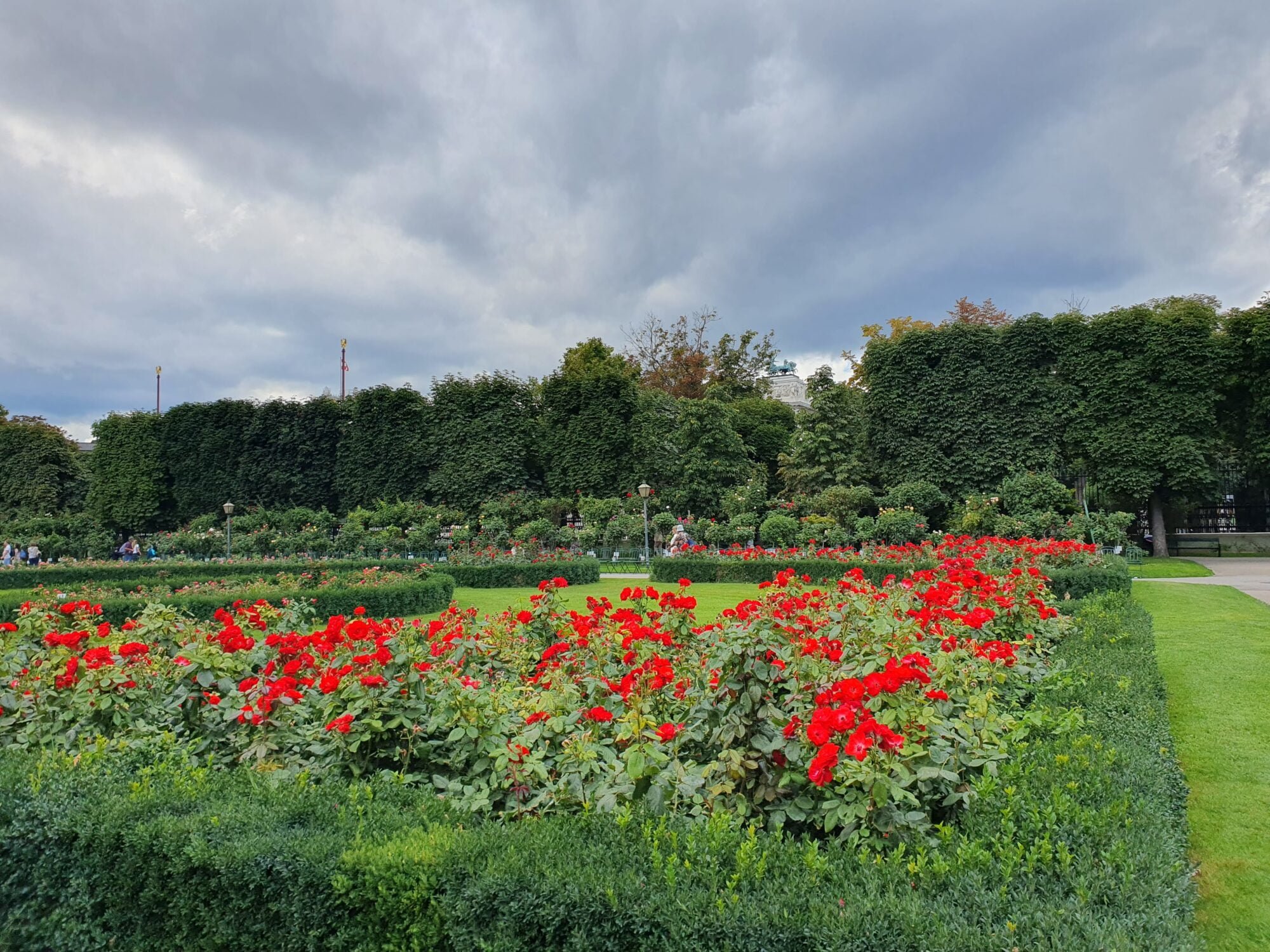
Volksgarten is one of the famous parks in Vienna, and it is closest to the Hofburg. The park dates back to 1821, and was built on the old city fortifications that Napoleon destroyed in 1809. The flowerbeds and garden features are well worth seeing when in Vienna.
Burggarten
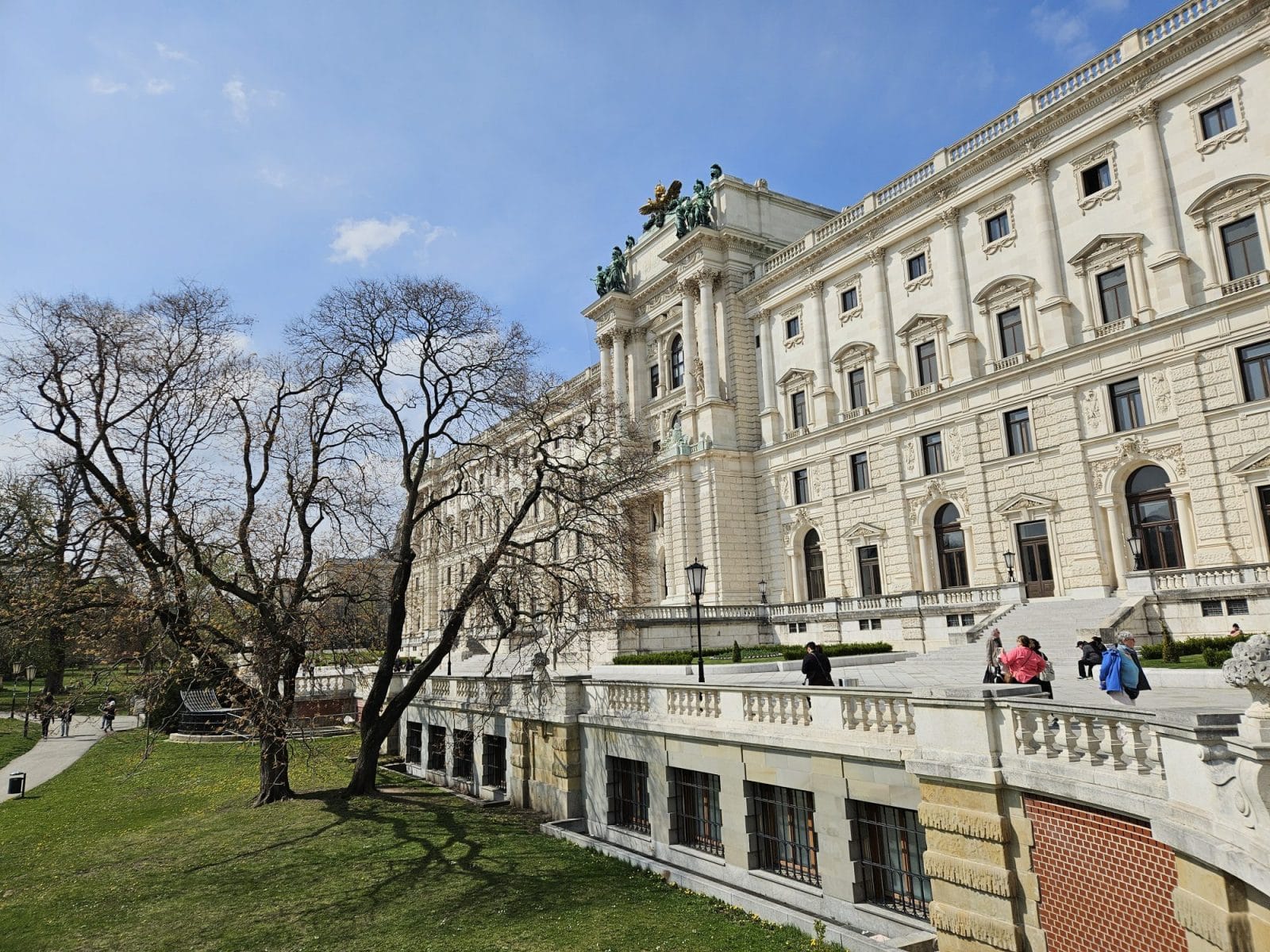
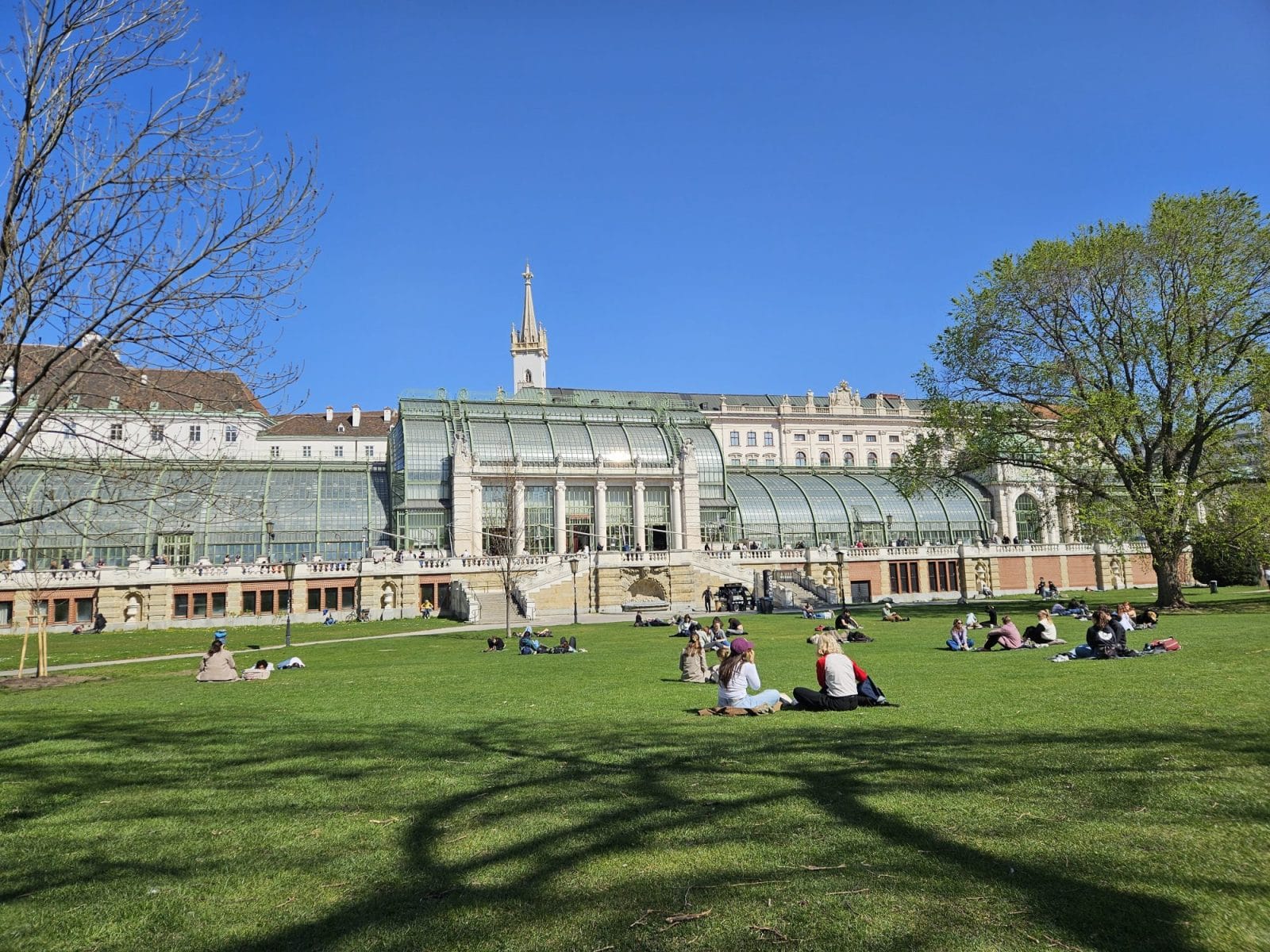
Another open space at the palace is the Burggarten, which is surrounded by pretty buildings. From the Burggarten, you can see the Neue Burg Wing terrace and the Palmenhaus.
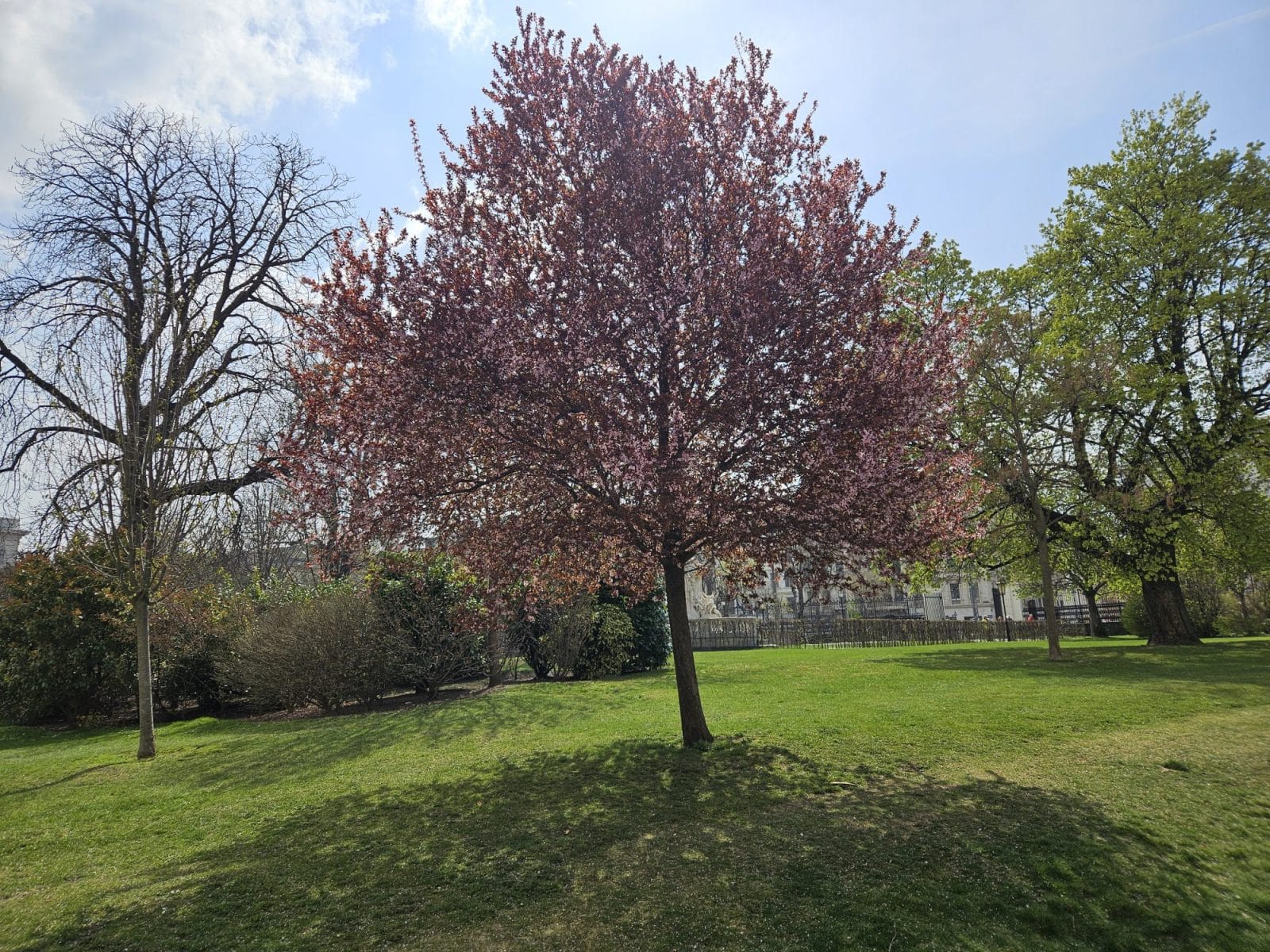
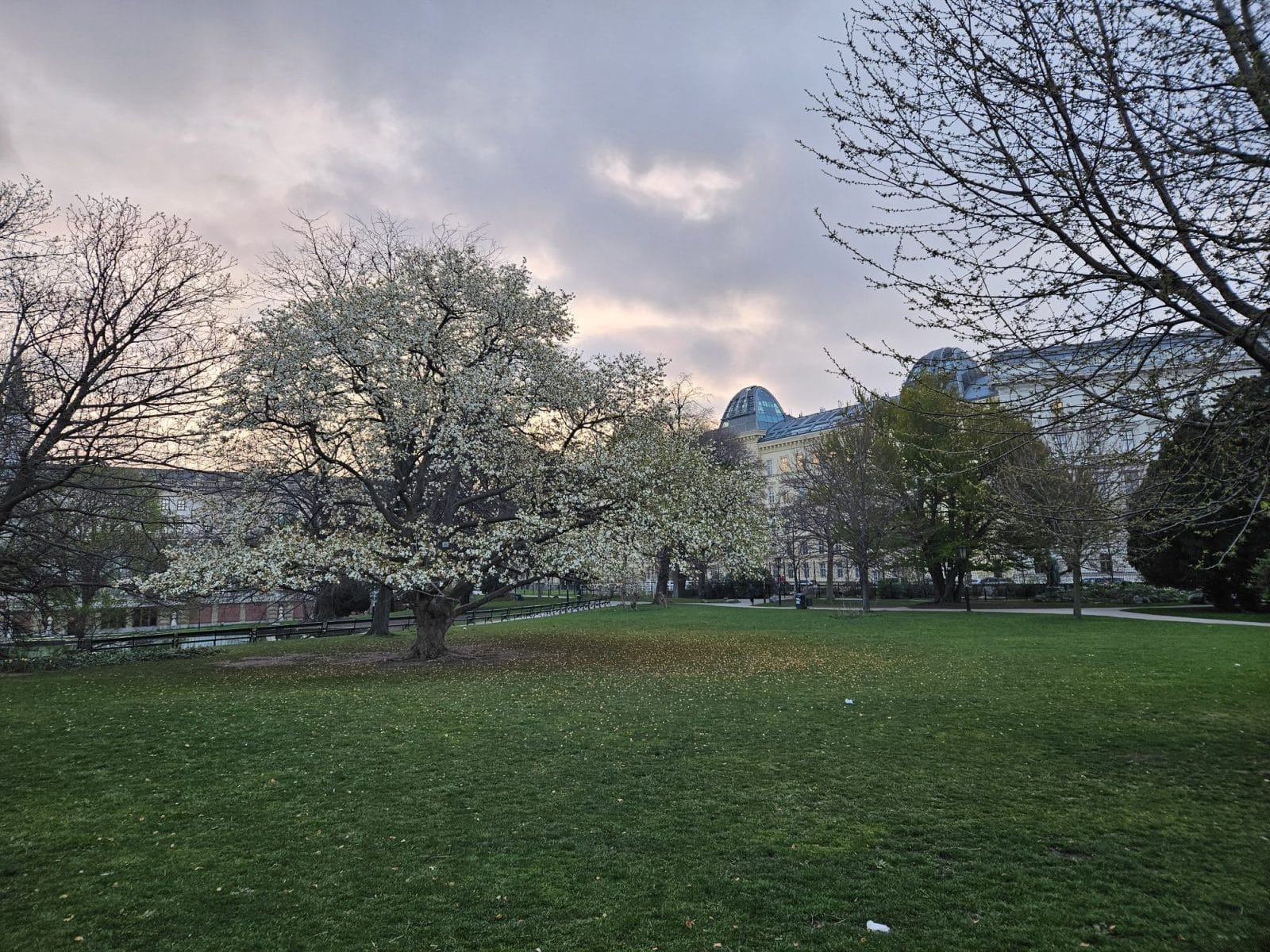
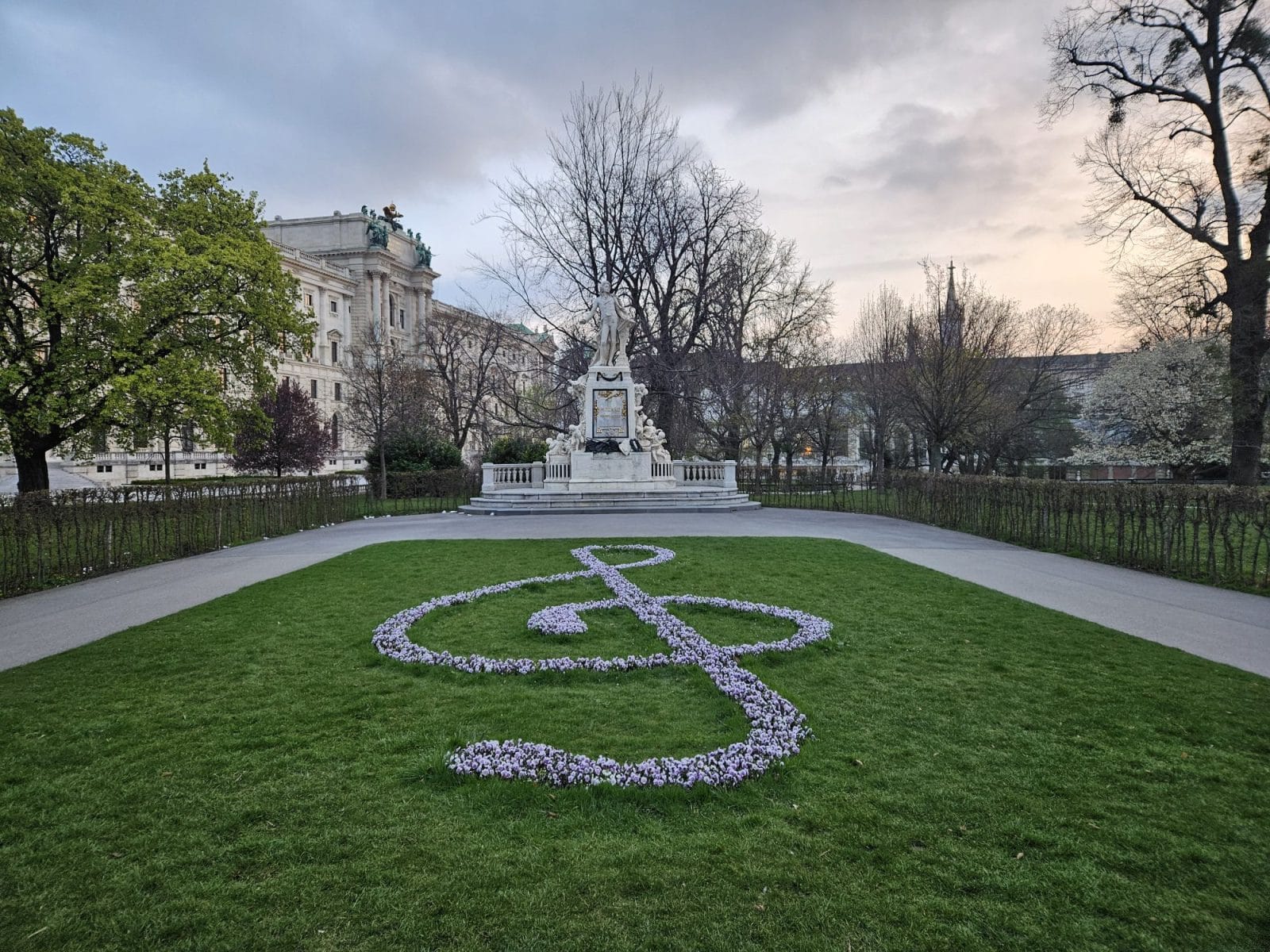
The park is perfectly manicured and home to several statues, including the Mozart Monument and the Emperor Franz Joseph Monument. Burggarten also has a lake, and its grounds are popular with people enjoying the summer weather. I also found it to be an excellent place for a sunrise walk.
Ticketed Attractions at the Hofburg Palace
You can arrange these individually; however, many are included in the Vienna Pass.
Stallburg and Spanish Riding School
The Stallburg is a Renaissance-style building which is part of the palatial complex. This is on the east side of the complex. However, it’s not joined to the main palace. They constructed this unique building in the mid-16th century to be the residence of Maximilian II. Maximilian II of the Austrian House of Habsburg was the Holy Roman Emperor from 1564 until his death in 1576.
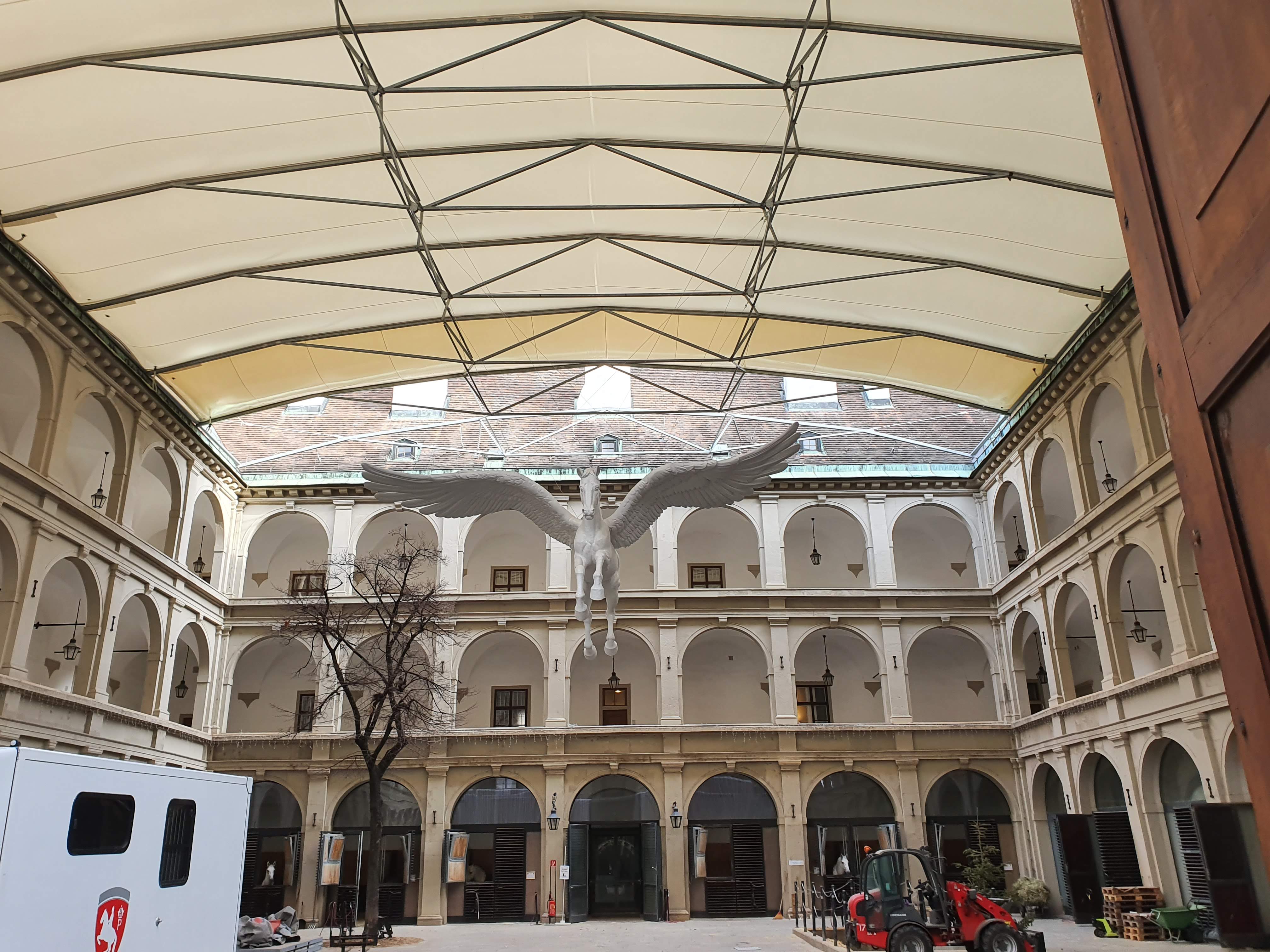
They subsequently used the building as the Stallburg Gallery and then the Imperial stables. Currently, it’s used by the Spanish Riding School, or Spanische Hofreitschule. The Spanish Riding School is an institution dedicated to the preservation of classical dressage and the training of Lipizzaner horses. The horses performing here are a popular tourist attraction.
Sisi Museum and Imperial Apartments
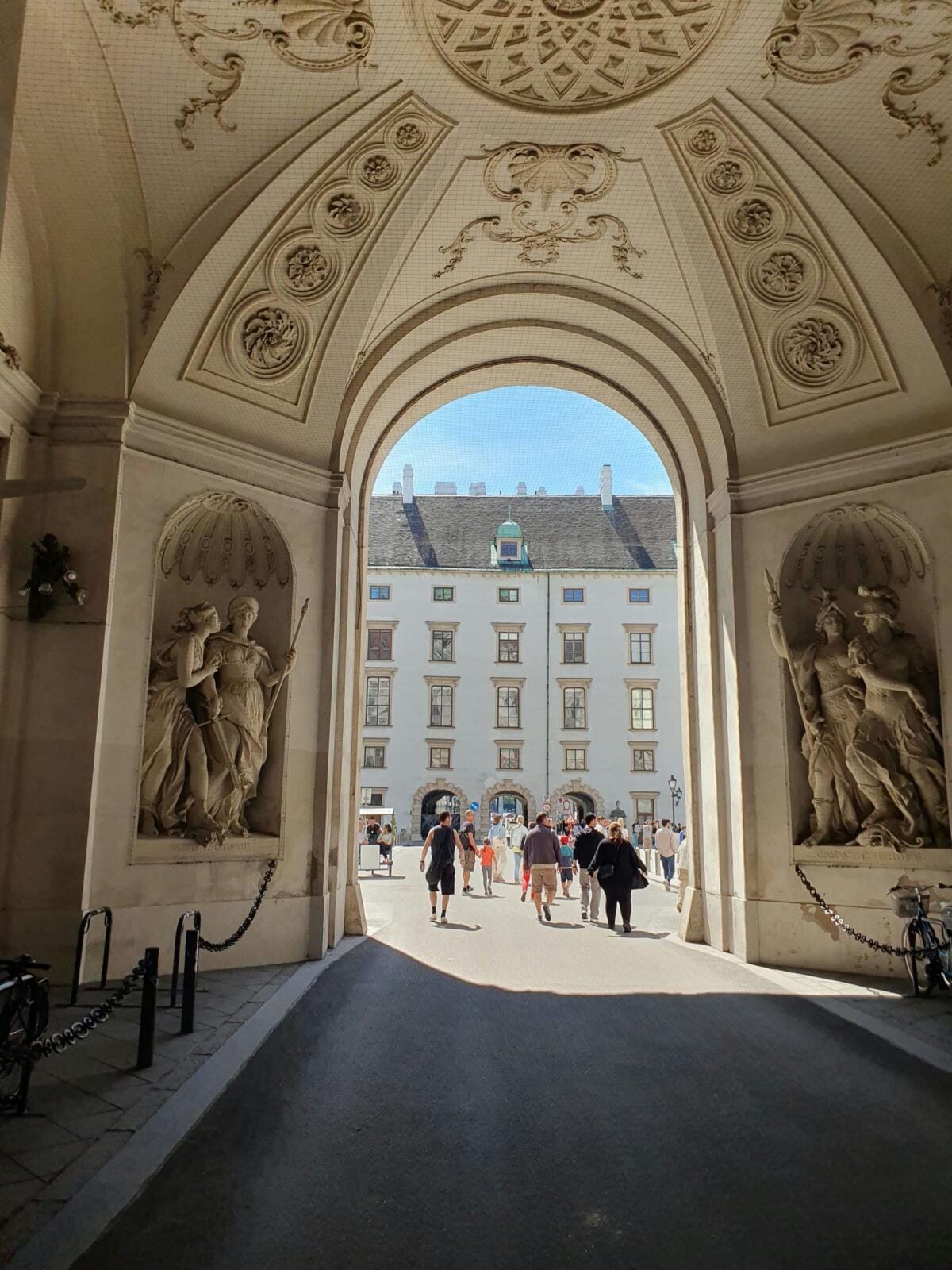
The Sisi Museum and Imperial Apartments are in the St Michael’s wing, with the entrance under the distinctive dome. It’s one of the more popular parts of the site to visit.
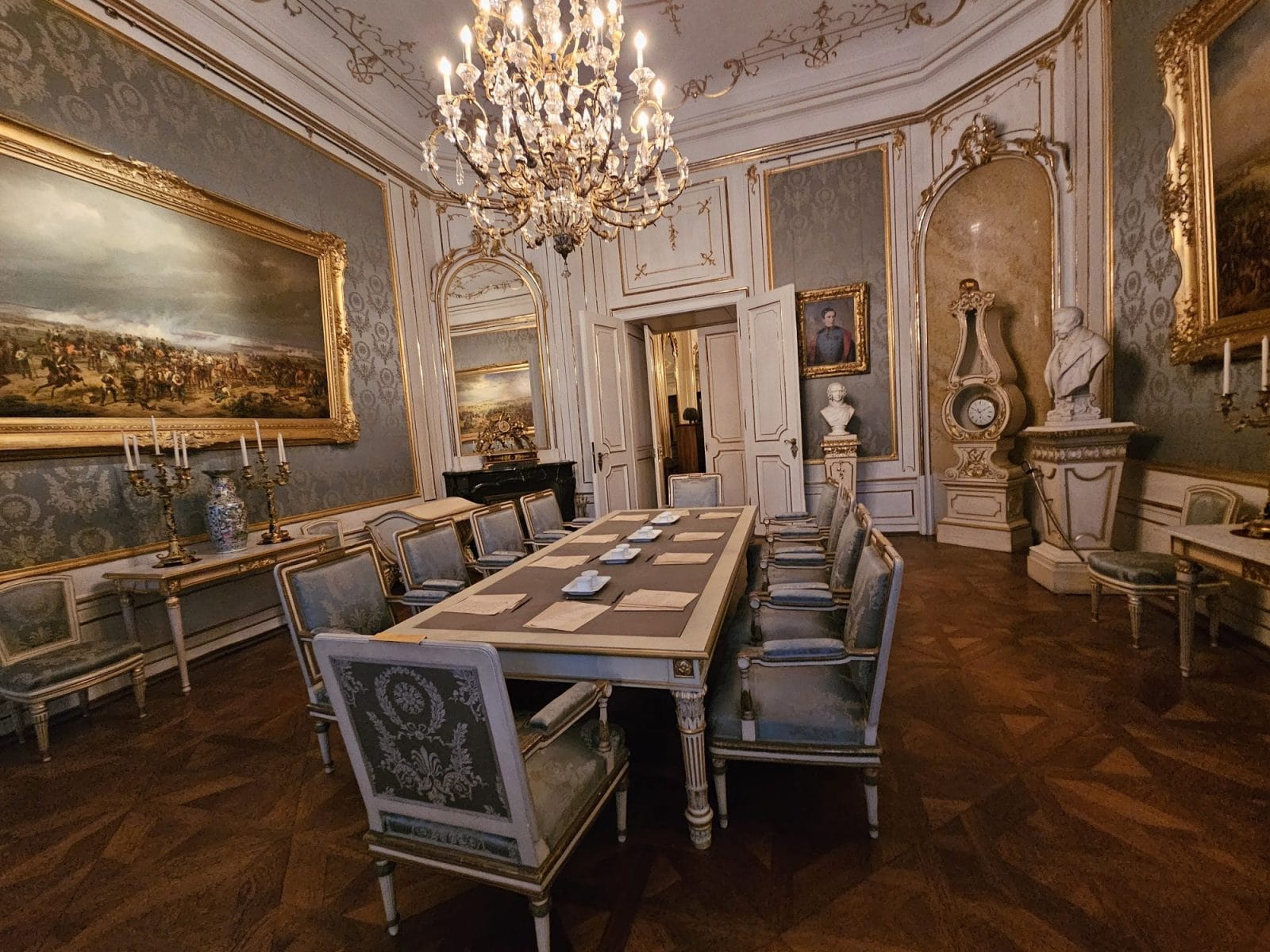
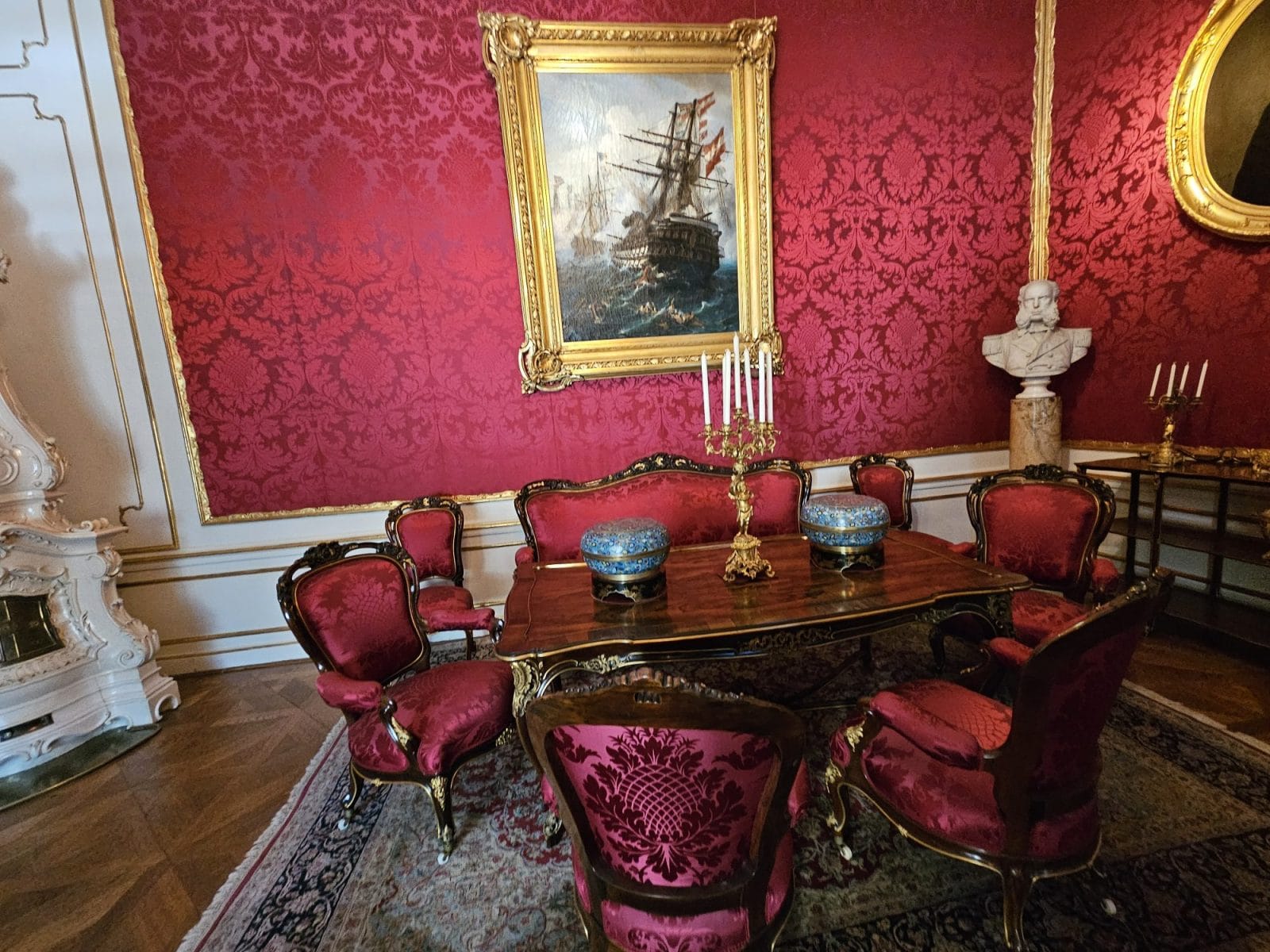
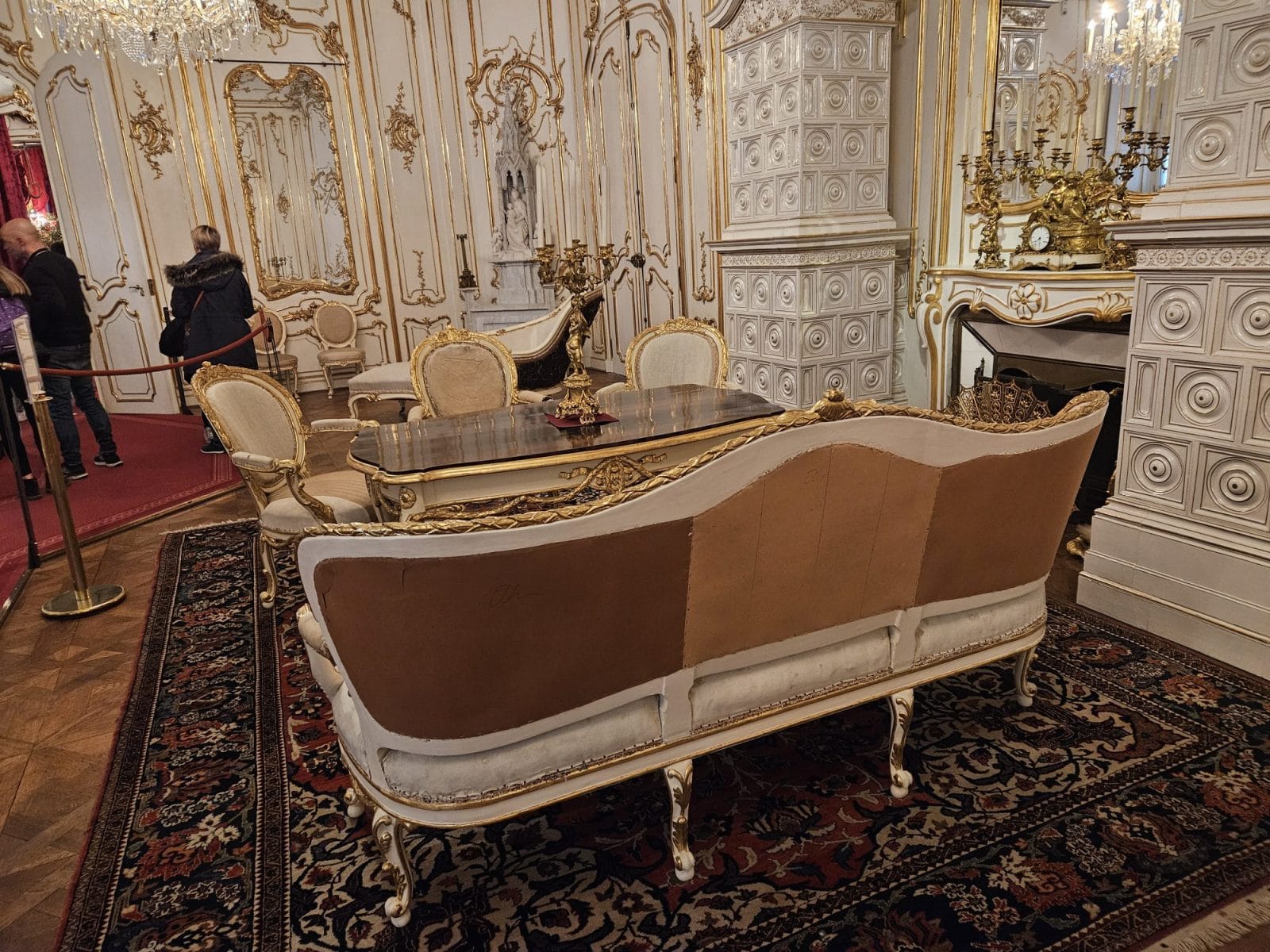
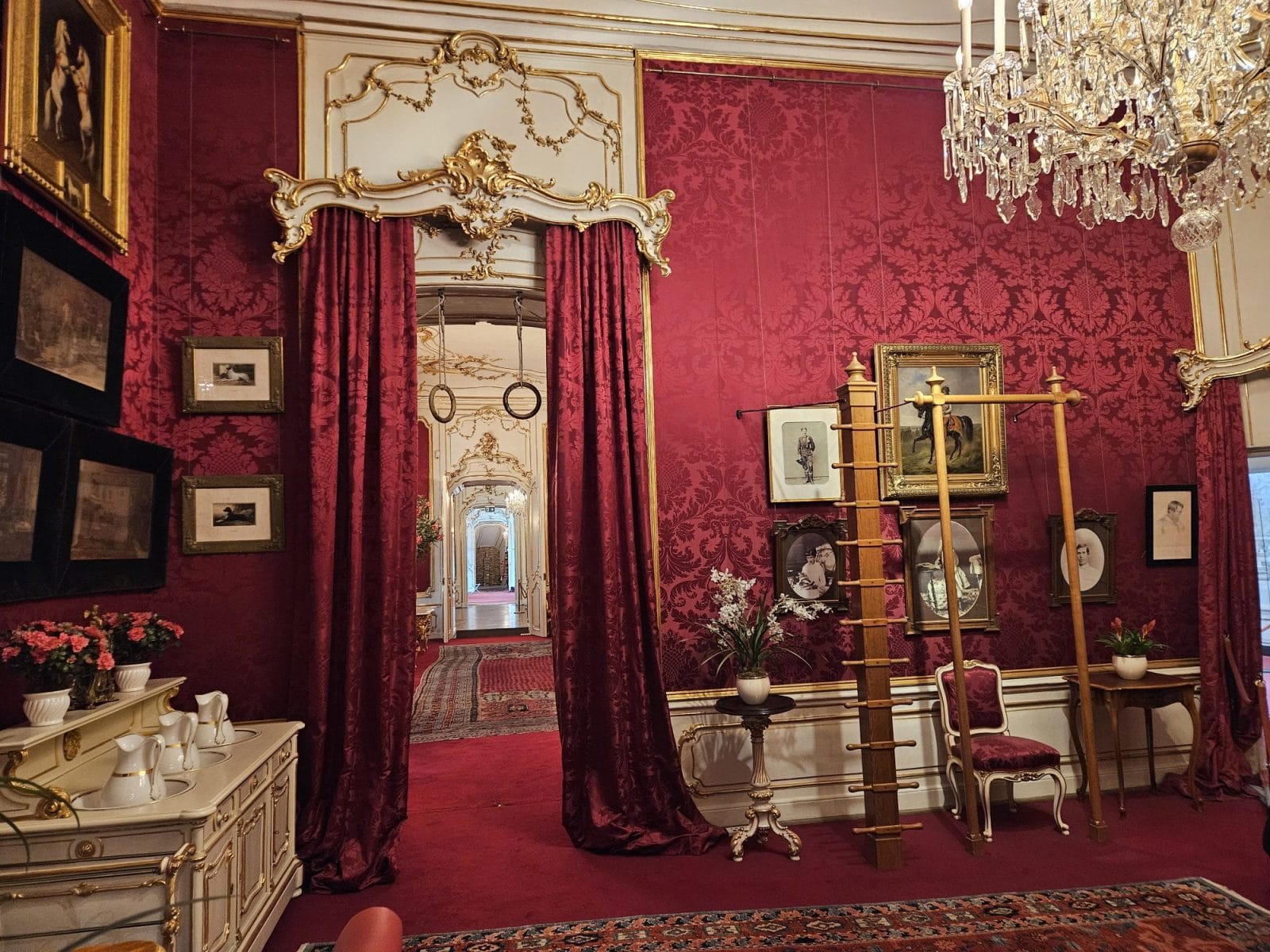
I really enjoyed seeing the rooms in the Imperial Apartments, especially the lavish decor and furniture. The dining rooms and lounges particularly impressed me.
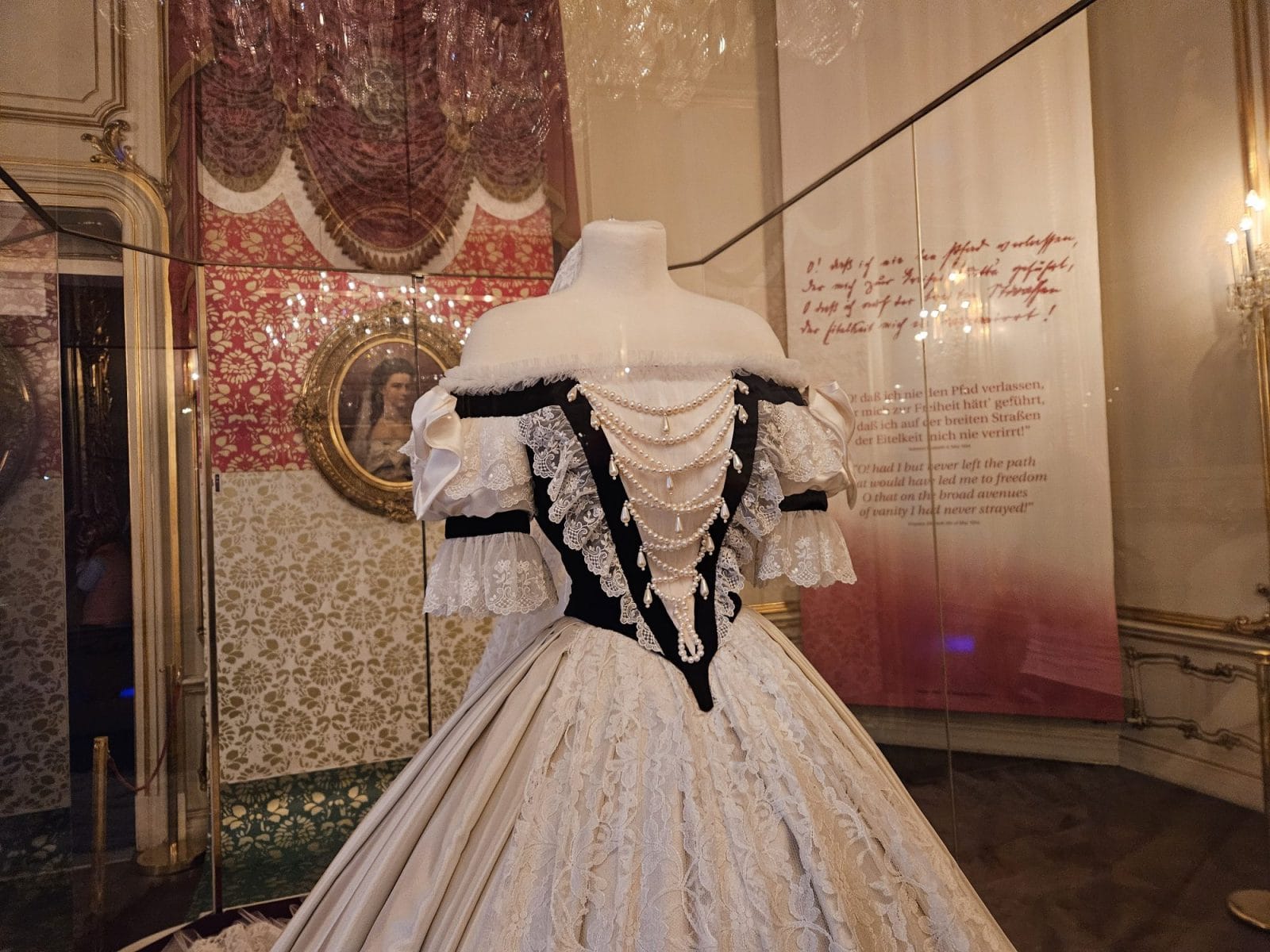
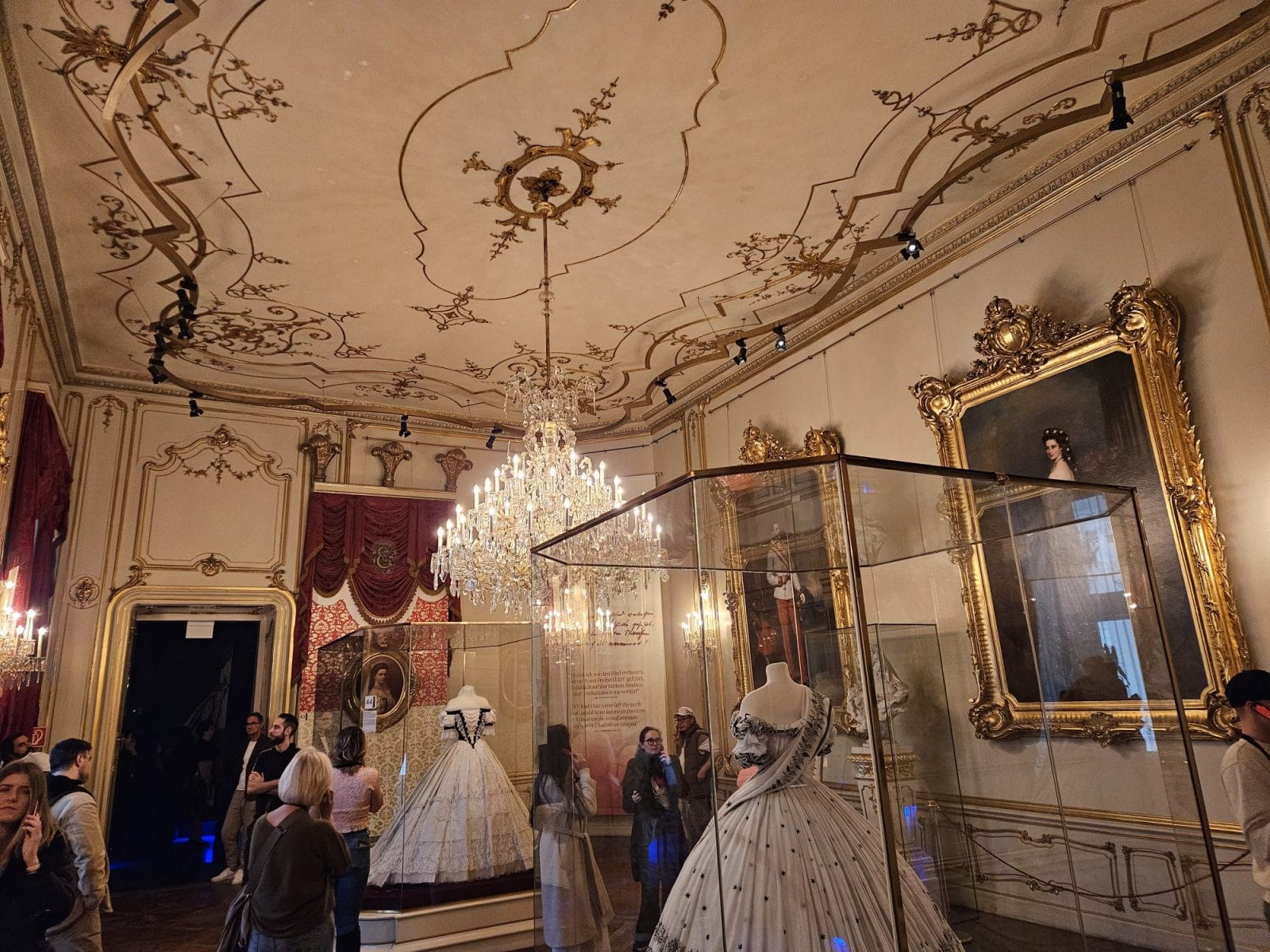
In the museum, there are personal items that once belonged to Empress Elisabeth. The collection includes items such as fans, clothing, gloves, and even her travelling medicine chest. I found the Sisi Museum fascinating and a great slant on Viennese history. One thing to note: it does get busy, especially with tour groups.
Schmetterlinghaus
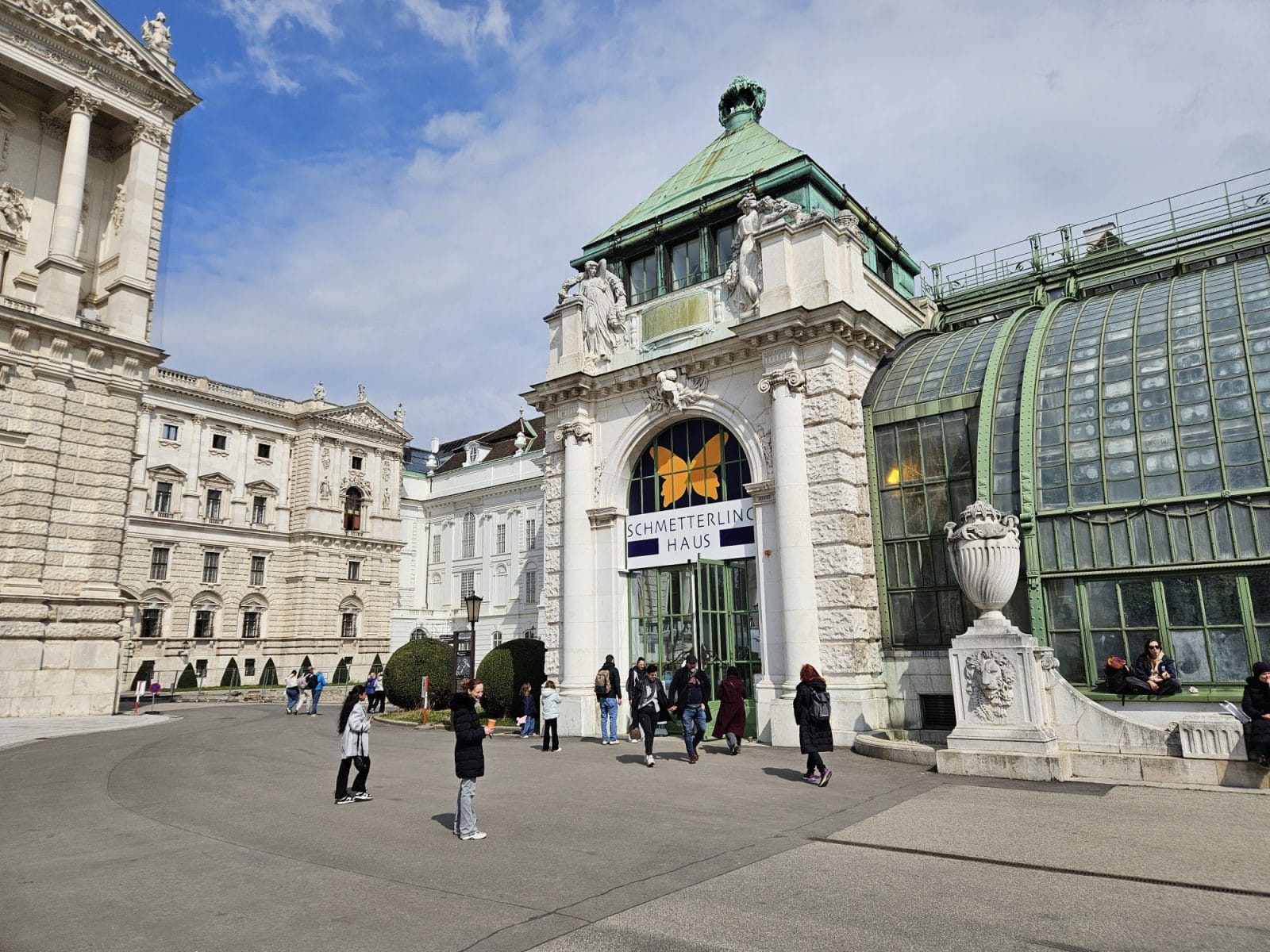
Burggarten’s Schmetterlinghaus is a fascinating butterfly house. This is an Art Nouveau palm house and home to many butterflies, including some that are 30 cm wide. These live in a tropical-like setting.
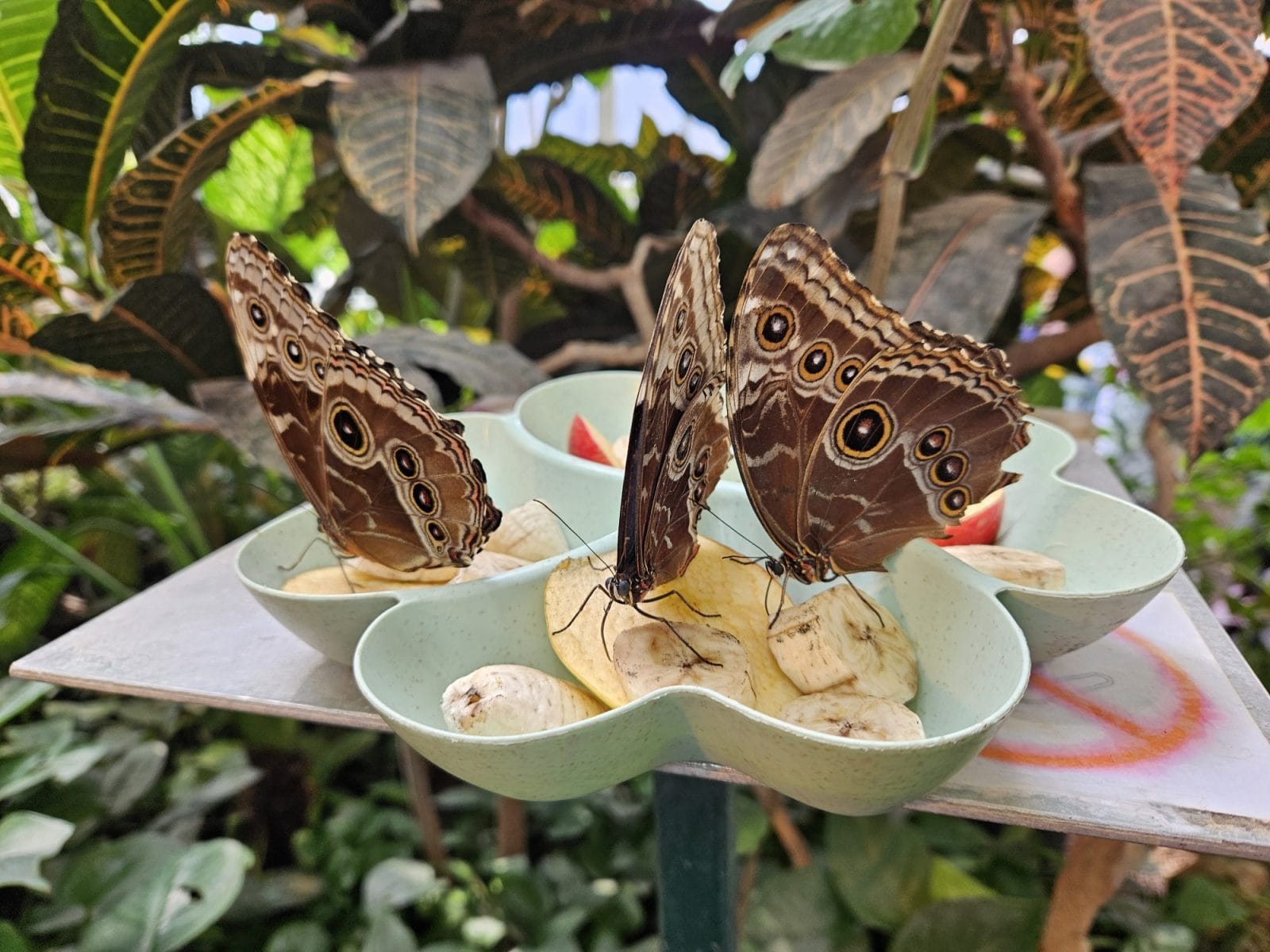
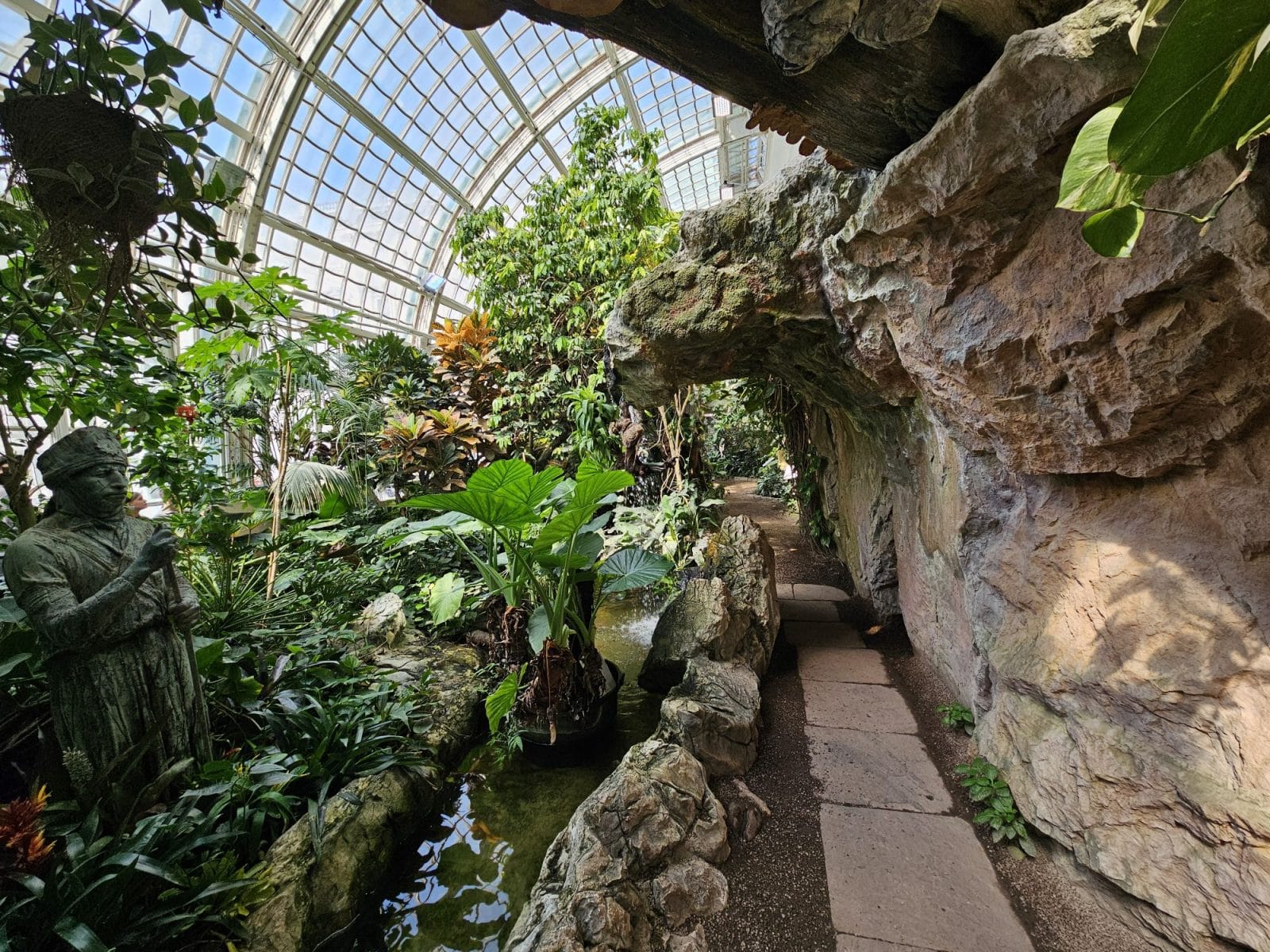
I really enjoyed visiting inside here to see the architecture, plants and butterflies. They have many butterfly species inside. They have some places where the butterflies are fed, which I found fascinating to watch and photograph.
Weltmuseum Wien
Weltmuseum Wien is in the Neue Burg Wing and contains ethnographic and archaeological collections from around the world. Its ticket also includes the Imperial Armoury and the Collection of Historic Musical Instruments.
Can You Visit The Hofburg Palace With A Dog?
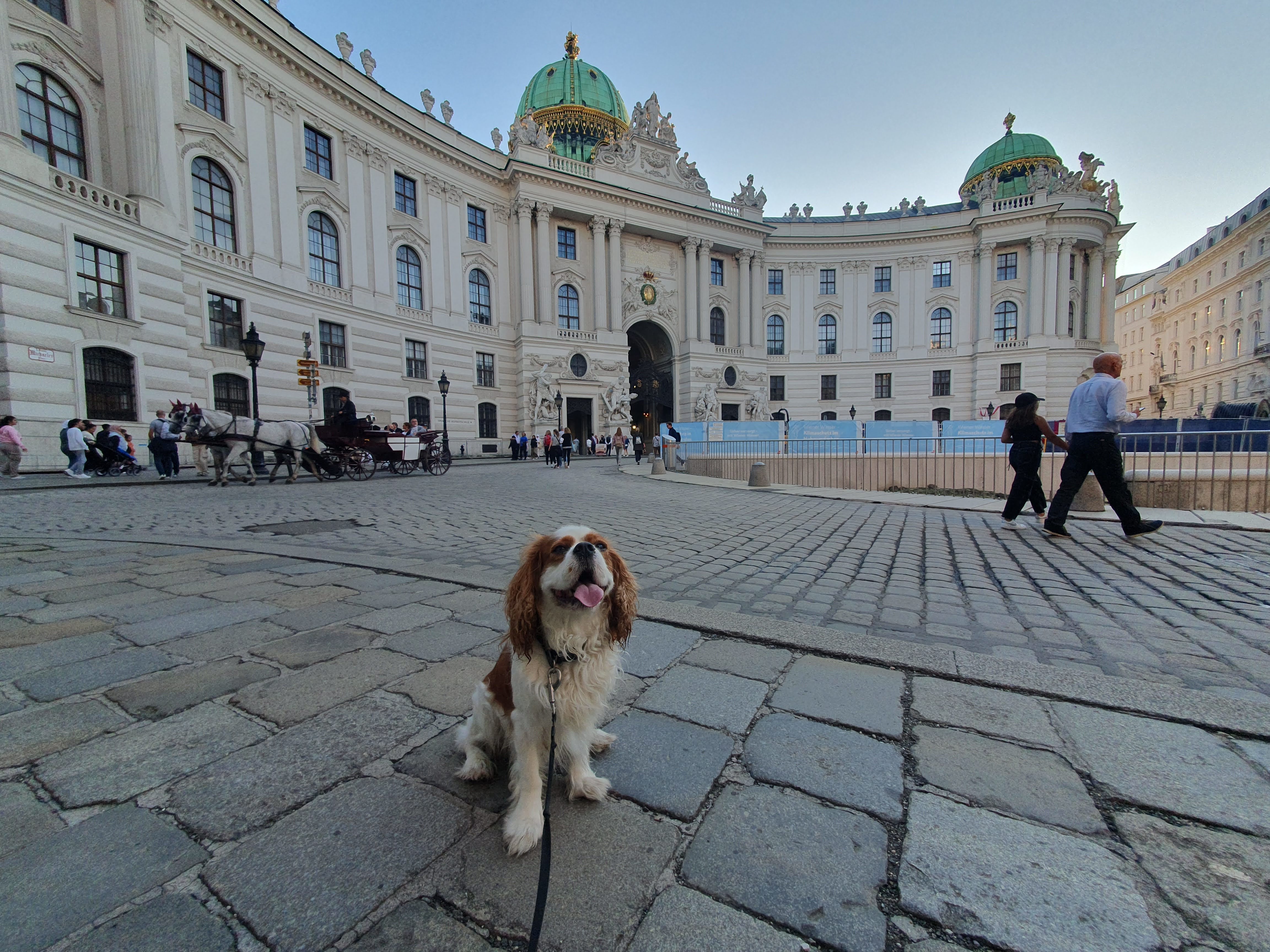
Dogs are allowed to explore the complex grounds, and it was great fun. It is an ideal way to enjoy the grand architecture, especially as dogs are not usually welcome inside Vienna’s major palaces.
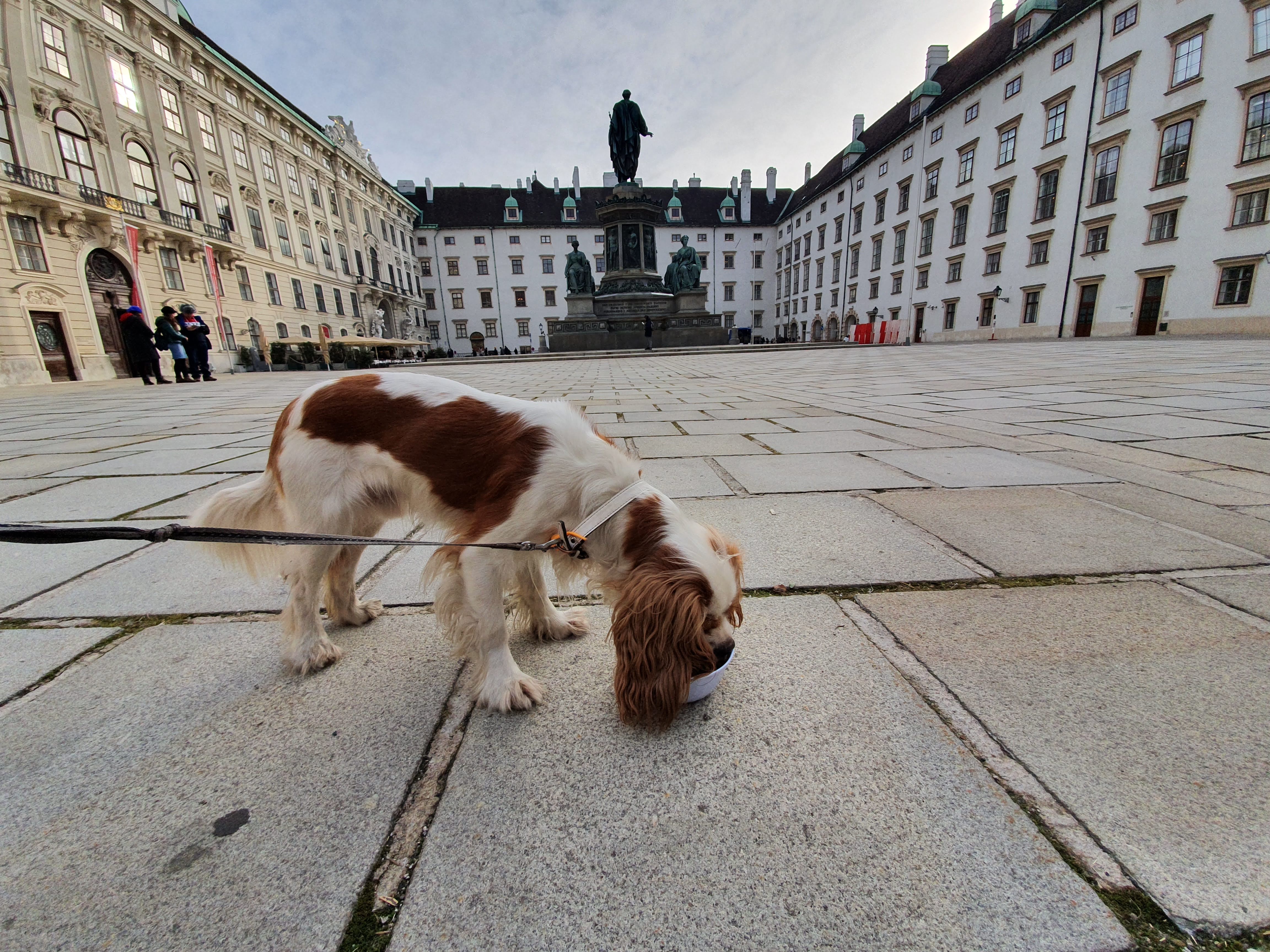
Visiting with the dog, however, had some limitations, such as the inability to browse the interior. We met other dog owners exploring the grounds and courtyards. Heldenplatz was a popular hot spot for canine visitors.
Visitor Information
You can choose from various options for building tours, including an audio tour or a guided tour with a knowledgeable guide. The palace has a comprehensive visitor information section on its website. You can also book tours, including the Hofburg Palace, on the GetYourGuide website.
Is the Hofburg Palace in Vienna Worth Visiting?
The Hofburg Palace and its grounds are a top sight in Vienna’s city centre and are well worth visiting. You can stroll through the grounds for free, which we did many times, including on dog walks. The architecture and monuments impressed me, and I really enjoyed seeing them. The Hofburg is near other places of interest in Vienna, so you may pass by frequently, as we did.