
The Medieval City Walls & The White & Black Towers in Brașov
The medieval walls surrounding Brașov’s old town make for a fantastic walk, where you can see many of the city’s sights. You can see various towers, bastions and gates. The medieval city walls are pretty well preserved on the east and west sides of the city. Unfortunately, the north and south walls were demolished as the city grew. Construction of the walls began in 1395, when the city was under Hungarian rule.
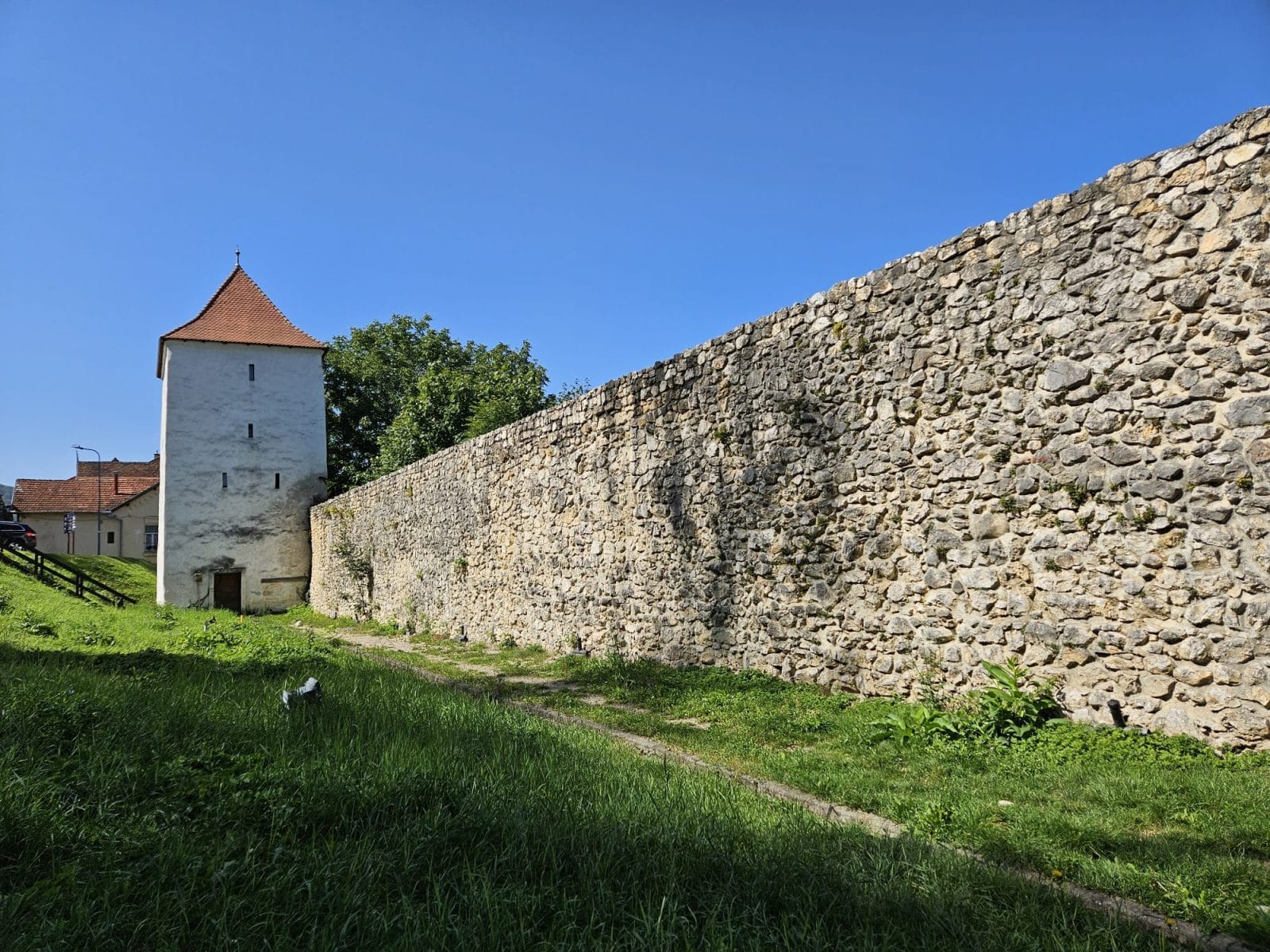
Brașov has a history of repeated attacks, which led to the development of defensive walls and fortifications. A devastating Ottoman attack in 1421 necessitated the defences. The defences were at their peak back in 1641, when the walls had 8 bastions and 28 towers.
What To See On The Medieval City Walls
Some key features I enjoy seeing while walking around the city walls in Brasov.
The Black Tower
A nice thing to do in Brasov is to visit the white and black towers overlooking the old town. They built the Black Tower, AKA Turnul Negru, in the 15th century. It currently houses a weapons exhibit. The Black Tower has benches where you can sit and admire another view of the city, including Council Square and the Gothic Black Church.
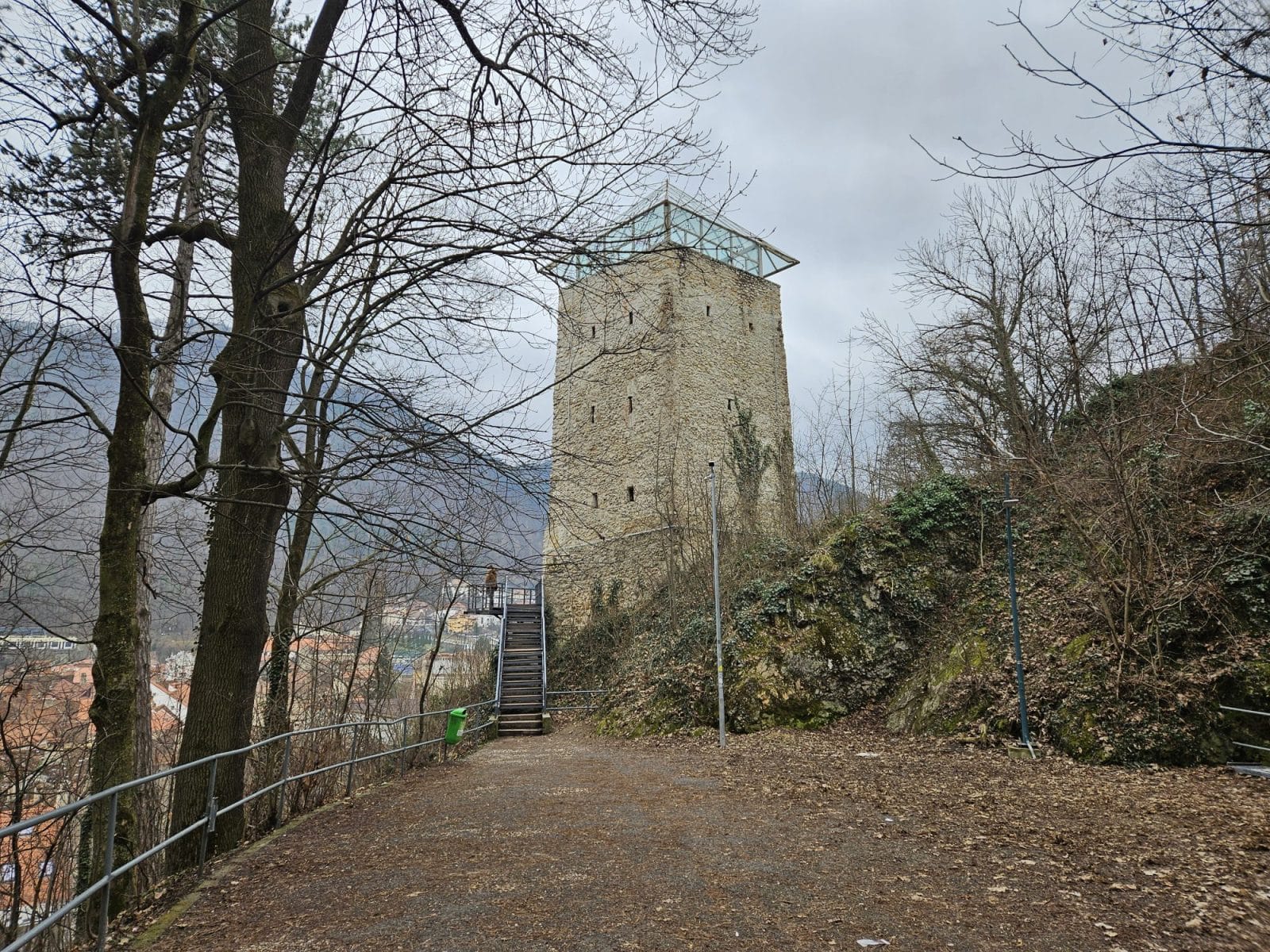
The Black Tower is one of the four former observation towers of the Brasov Fortress. It was built as an independent fortification outside the main fortress walls. Turnul Negru stands over 11 metres tall and is near the Blacksmiths’ Bastion.
Visit The White Tower & Viewpoint Above Old Town
The White Tower is also a former medieval watchtower. The White Tower was built in the 15th century. It has steps to reach the main entrance, which offers fantastic views across the city and Mt Tampa.
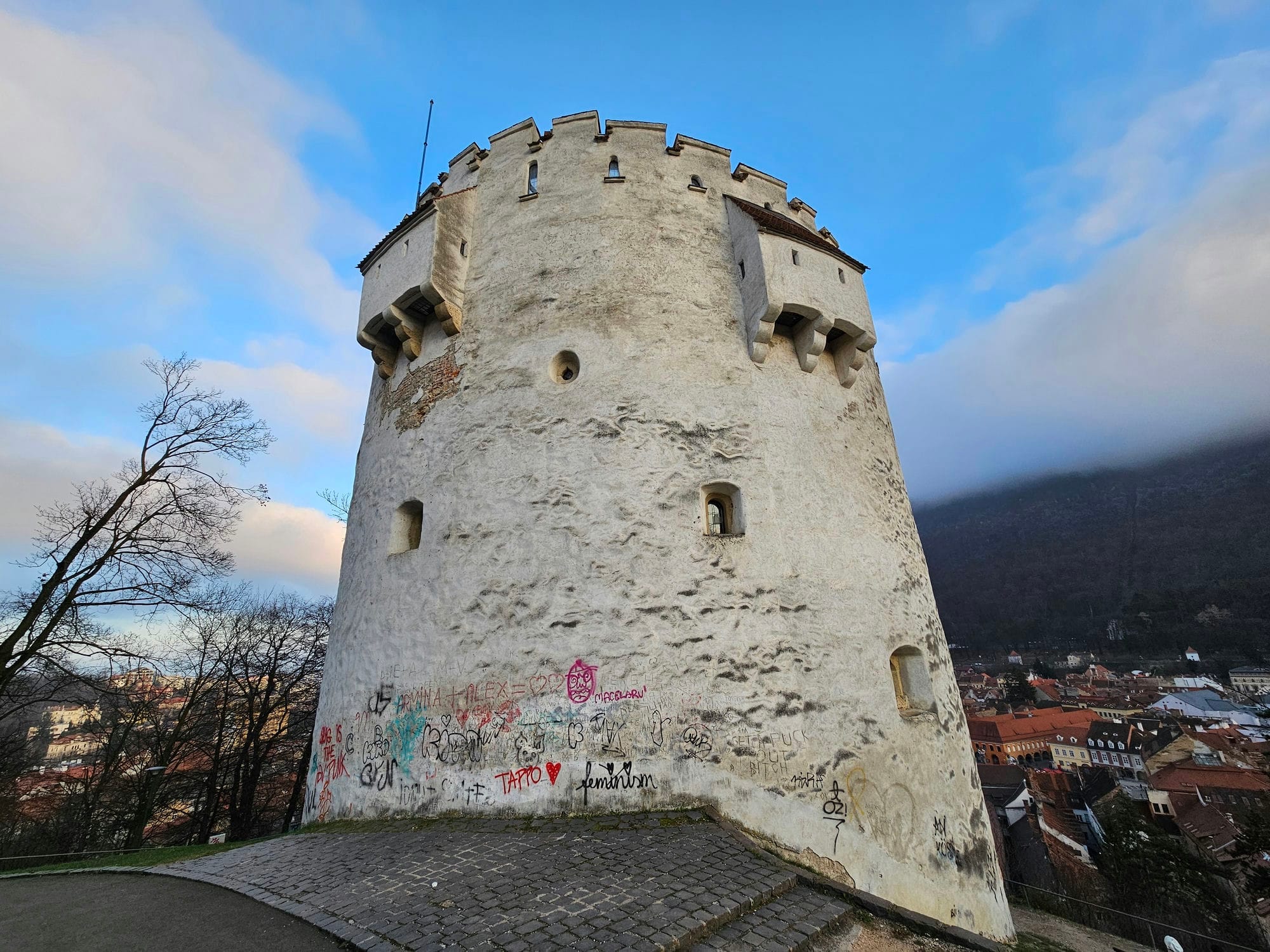
Built between 1460 and 1494, the White Tower is 30 metres above the city walls. The tower is about 19 metres in diameter. The tower has ramparts, pit holes, and observation balconies. It’s a great viewpoint above the city and a must-see sight for those interested in history.
Catherine’s Gate
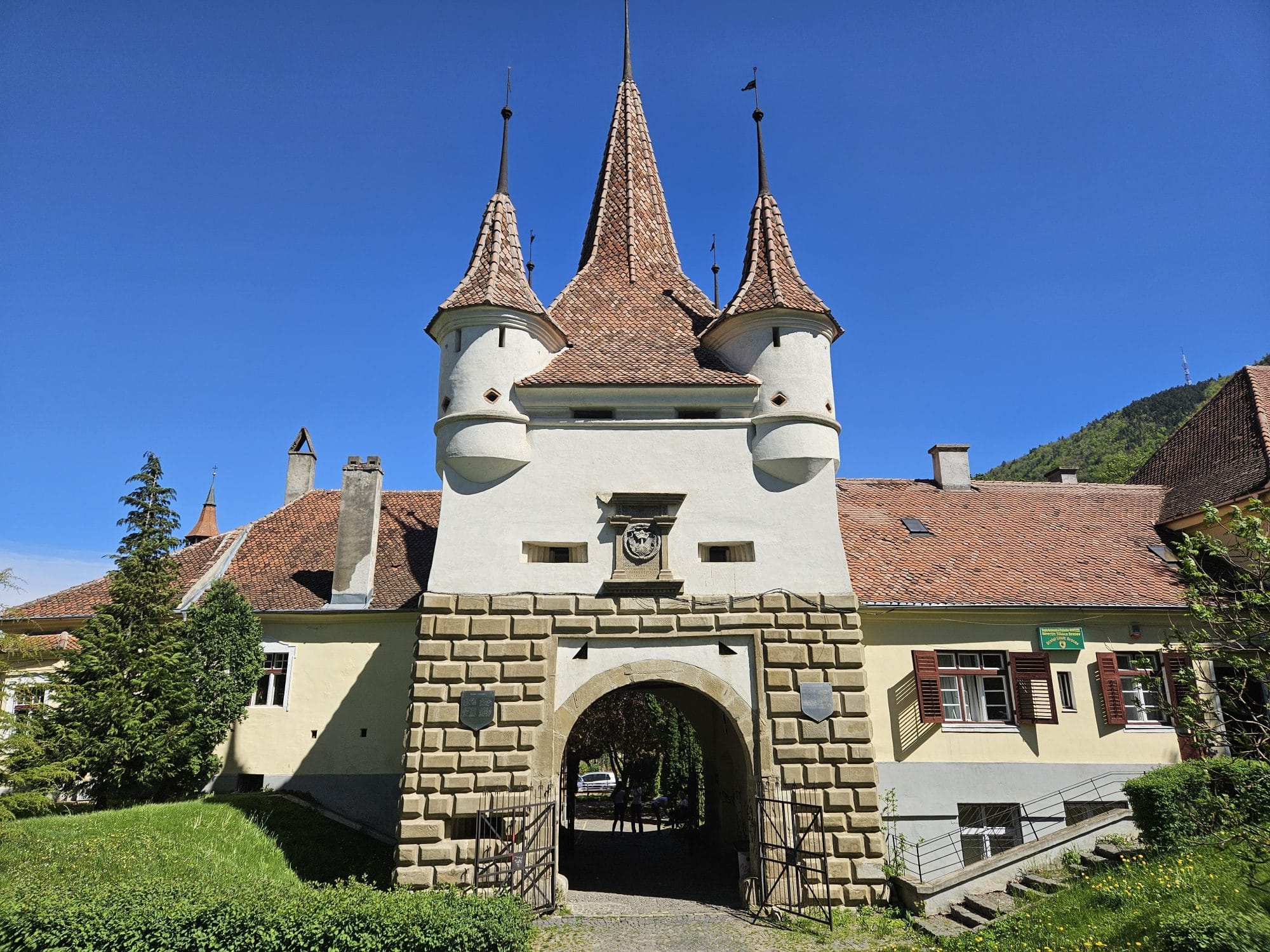
The historic Tailor’s Guild built Catherine’s Gate in 1559 as part of the city’s defence. They named it after St Catherine’s Monastery, which was once located here. When the Saxons ruled the city, Romanians could not live within the city walls, and this was the only entrance they could use to enter the town centre.
The Catherine Gate looks like something out of a fairy tale with its four corner turrets. These four corner turrets symbolise the city’s judicial autonomy and the right of the sword. This means that the city may decide on aspects of capital punishment. Above the gate is Brasov’s coat of arms, a crown on an oak tree trunk and roots.
Weavers Bastion
When exploring the city, one nice sight is the Weaver’s Bastion. In Romanian, it is known as Bastionul Țesătorilor, which was built in a few phases between 1421 and 1573. Various trade guilds defended Brasov’s fortifications. Historically, the Linen Weavers Guild maintained and defended this bastion. It’s a pleasant part of medieval Brasov to see, and today the bastion houses a museum covering the county’s culture and history.
Drapers Bastion
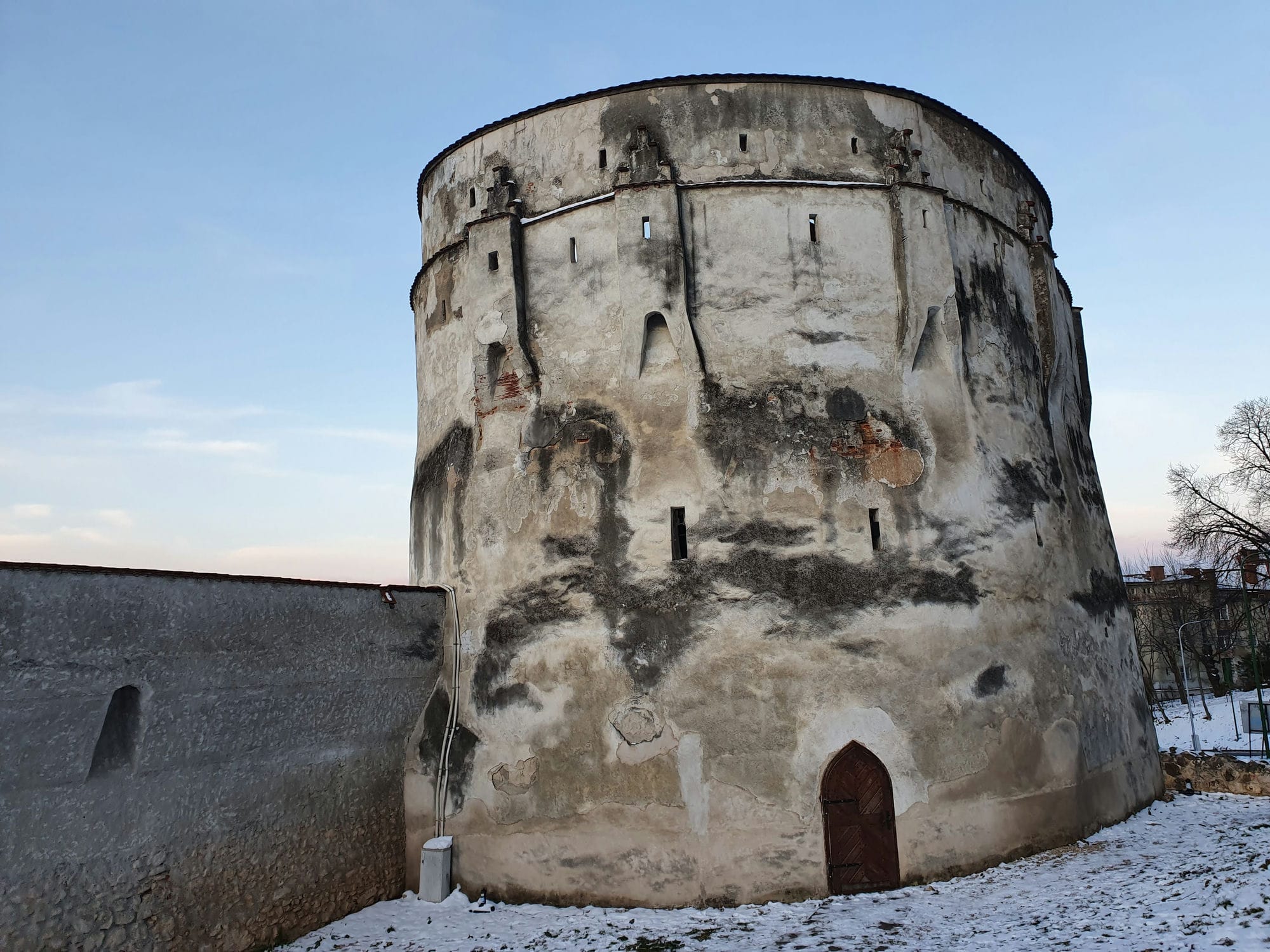
Another nice part of the medieval fortifications to see is the Drapers Bastion. The Goldsmiths’ Guild built this fortification and completed it in 1455. It’s impressive and looks impenetrable. This bastion is 20 metres high, has four floors inside, and has walls two metres thick. The bastion has openings for firing small cannons and other weapons. This is one of my favourite features of the old town walls.
The Carpenters Tower, Turnul Lemnarului

Along the fortress walls is Turnul Lemnarului, also known as the Carpenters’ Tower. This well-preserved tower has a red, pointy roof and light walls. They designed the tower for storing powder for its original purpose. They renamed it the Carpenter’s Tower, and it now houses the wood-turning workshop of Ioan Croitor-Badescu.
The Hunters Tower, Turnul Vânătorilor
The Hunters Tower, or Turnul Vânătorilor, is the closest fortification to the Mt Tampa cable car. They designed this tower to store gunpowder in the Middle Ages. This rectangular-shaped tower has a red roof. It subsequently got renamed from The Powder Store Tower to The Hunters Tower.
Bastionul Fumarilor

The Bastion of Fumarilor was the first bastion mentioned in historical city documents in 1416. Bastion Funarilor is hexagonal and was initially 10-12 metres tall. They fully equipped the bastion with firing holes. Fires in 1461 and 1689 damaged the bastion. The 1689 fire caused severe damage to the original structure.
The Arts Tower
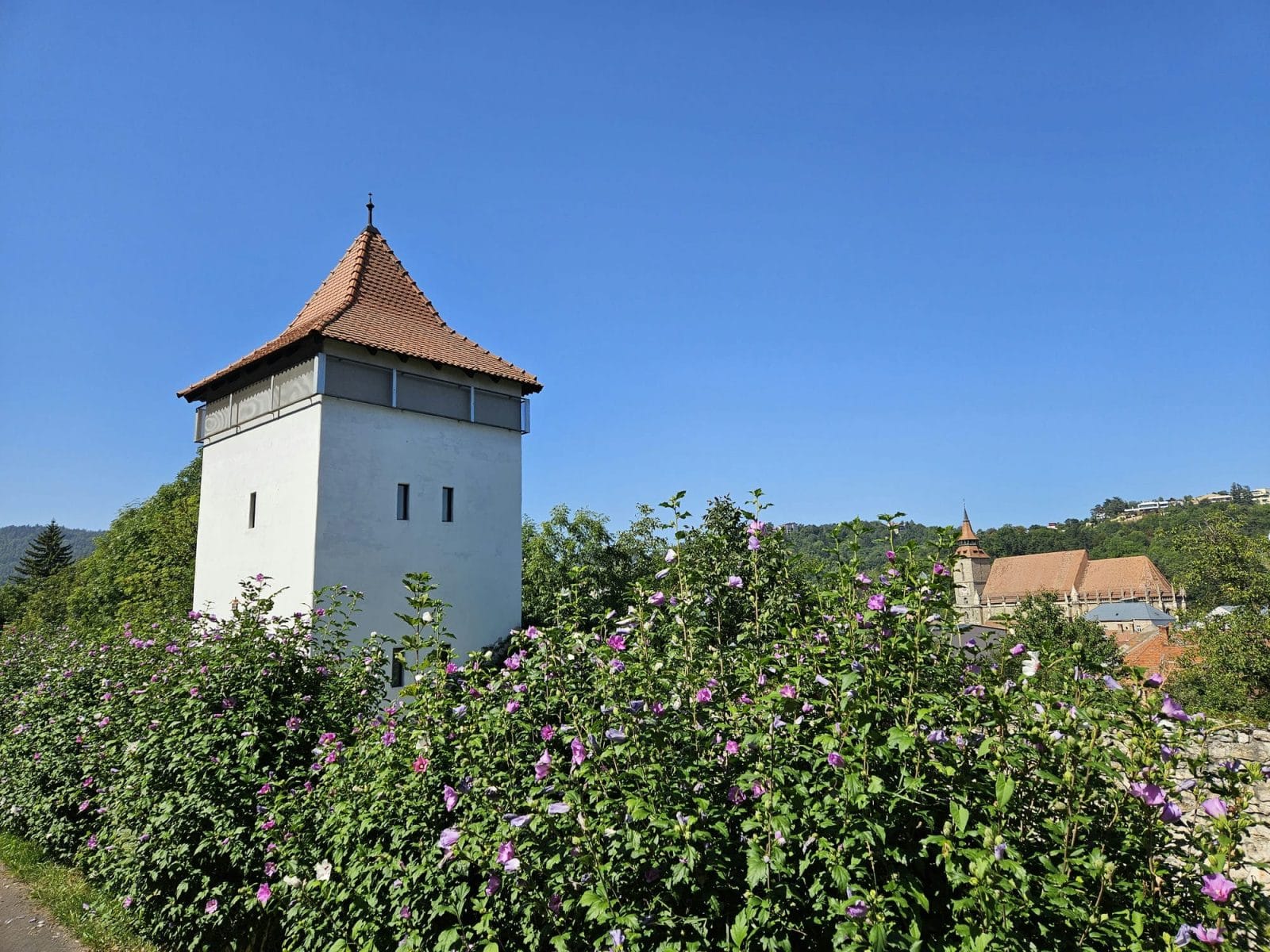
The next significant part of the wall heading clockwise is the Turnul Artelor, or Arts’ Tower. The tower has steps leading up to the door and is a great vantage point. It’s a great spot for photographing the city, offering a magnificent view of the Black Church. This tower currently houses various art exhibitions.
Graft Bastion
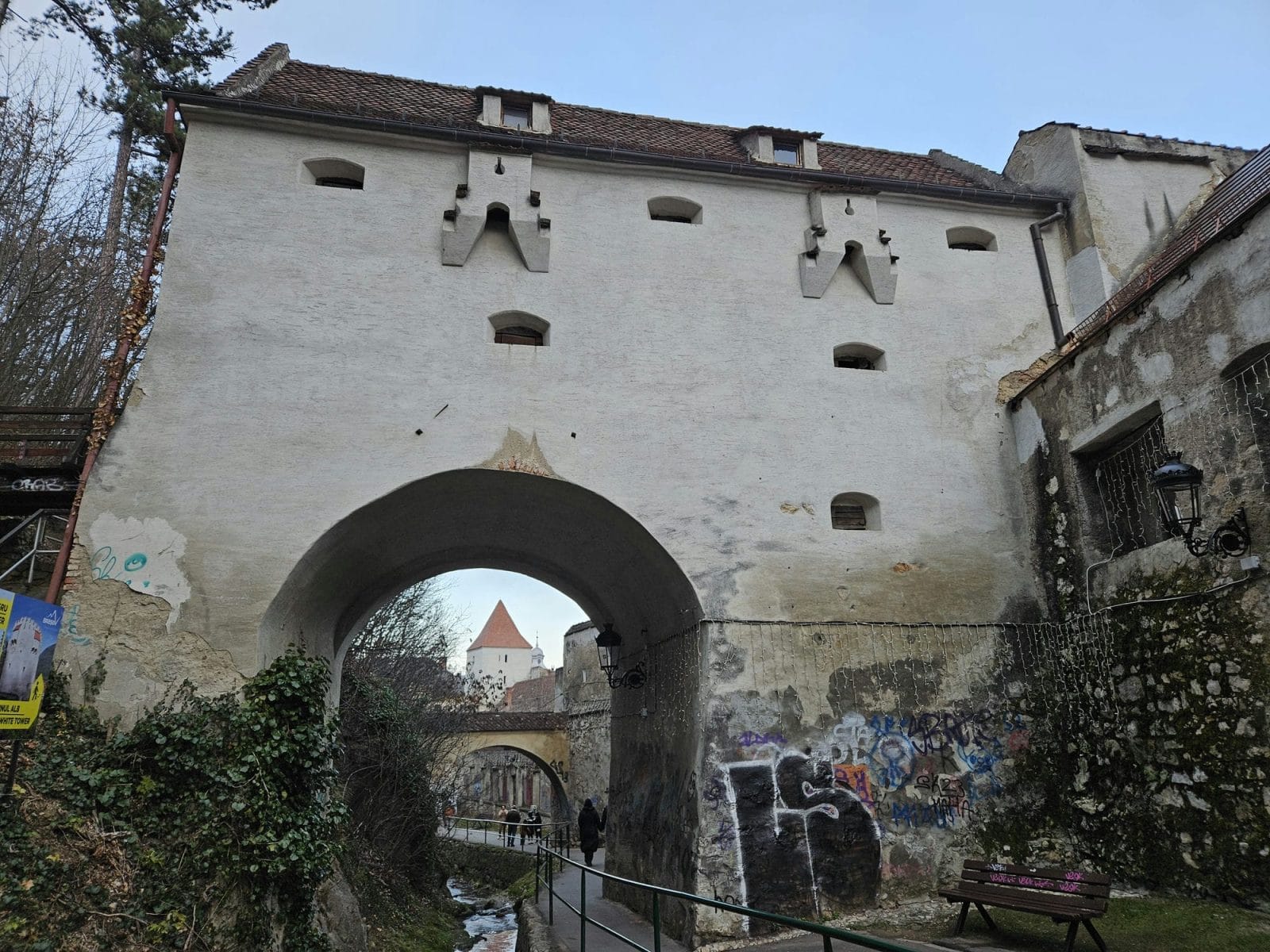
Just along the stream from the Black Tower is Bastionul Graft, which has a bridge across the water. They built the Graft Bastion in the 1500s as part of the old town walls. It was built to protect the northwest side of the city. The historic Saddlers Guild defended and maintained this bastion. It connected to the White Tower on the hill overlooking this section of the fortress walls. Bastionul Graft currently houses local history exhibitions.