
St Stephen’s Cathedral Vienna: Free Entry & Paid Areas Inside
St Stephen’s Cathedral in Vienna is a place I’ve enjoyed visiting several times and is wonderful to see inside and out. Its imposing structure makes it one of the finest attractions in Vienna. The architecture and decor inside are stunning, particularly the high altar and Gothic pulpit.
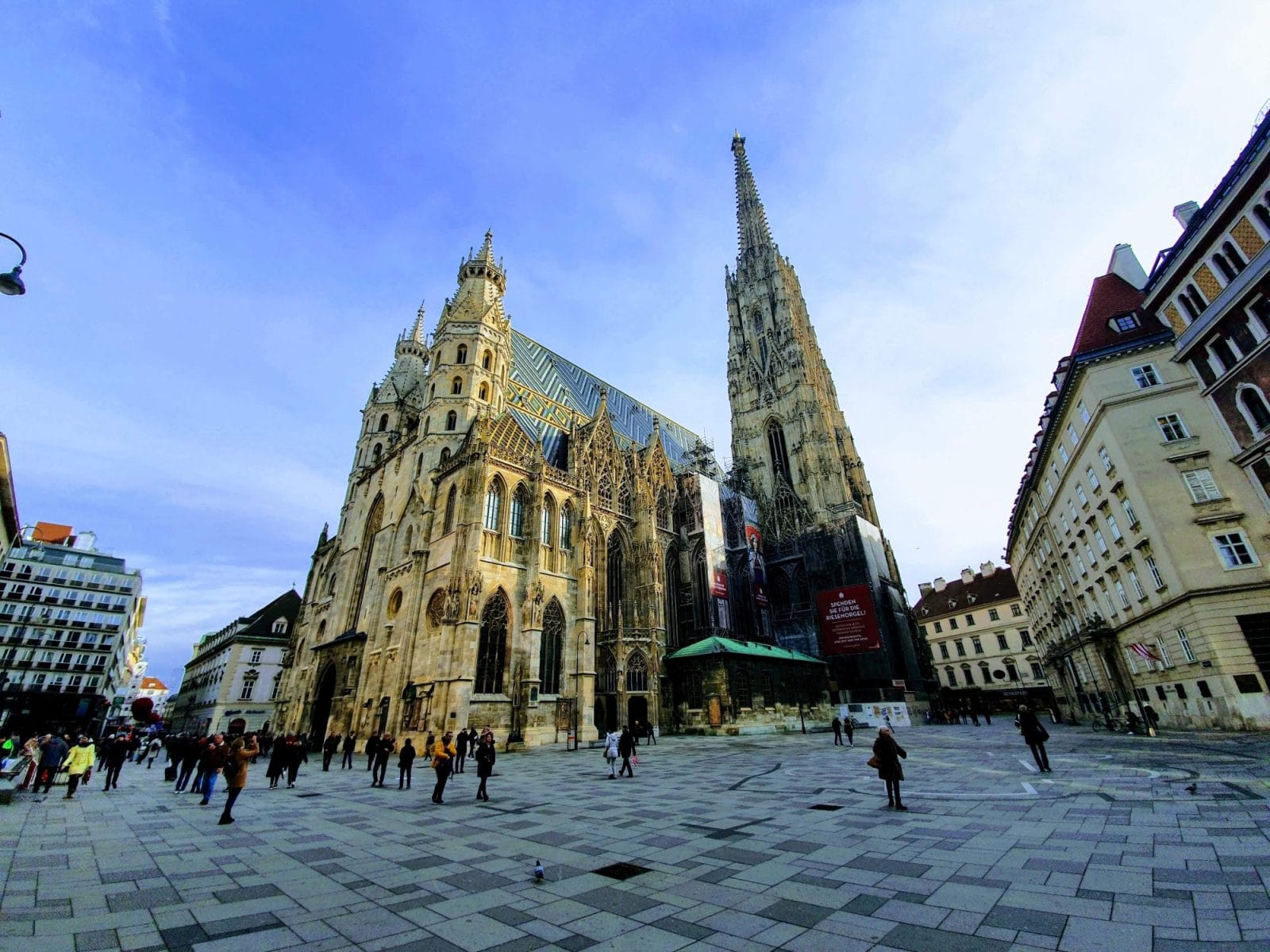
The cathedral is in Stephansplatz, a town square at the city’s geographical centre. Visiting here was one highlight of my visits to the city. Make sure to look up to see the mosaic roof.
About St Stephen’s Cathedral in Vienna
St Stephen’s Cathedral, also called Stephansdom, is the mother church of the Roman Catholic Archdiocese of Vienna. Because of this, it is the seat of the archbishop of the city. Duke Rudolf IV initiated the building’s current Romanesque and Gothic design in the 14th century.
Disclosure! Keep in mind that some links in these posts are affiliate links. If you click one of them, I may earn a small commission (for which I’m extremely grateful) at no extra cost to you. Thanks for visiting!
St Stephen’s Cathedral stands atop the ruins of two earlier churches. The oldest of these churches was consecrated in 1147. St Stephen’s is the most important of all the religious buildings in Vienna.
It has been involved in many important events in Habsburg and Austrian history. One of my favourite classical music composers, Mozart, also got married here.
Visiting St Stephen’s Cathedral in Vienna: Free & Paid Parts
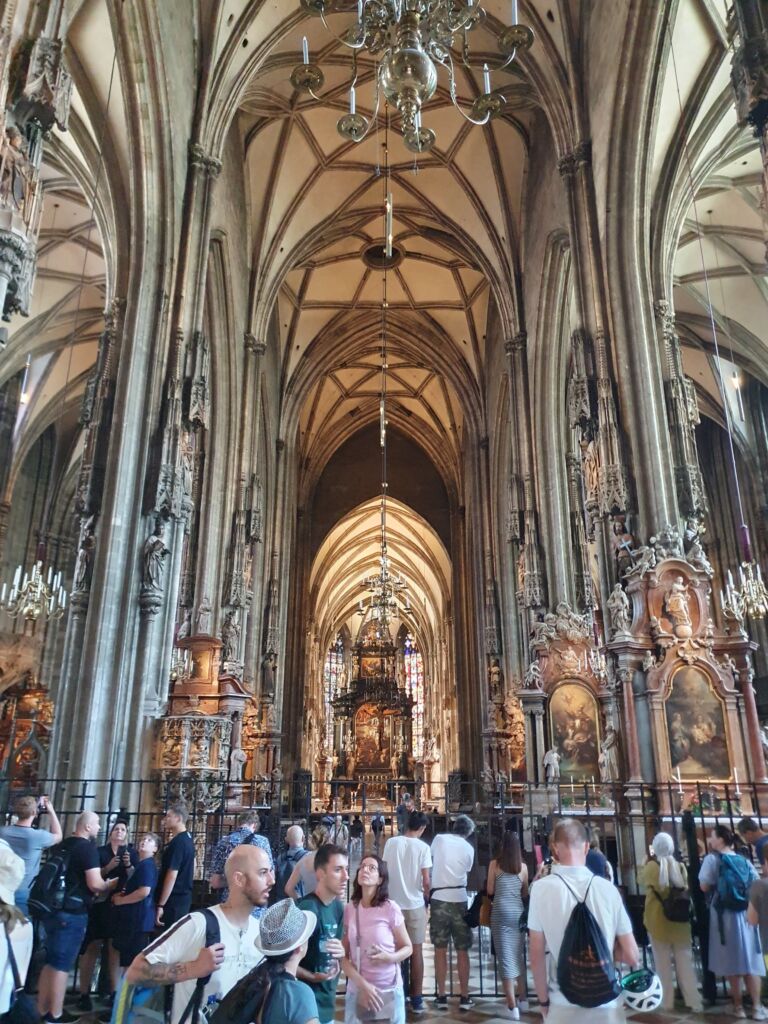
There are various options for visiting the interior, including a free section where you can see parts of it. There is also a paid section where you can get up close with all the interior features, including the nave and altars.
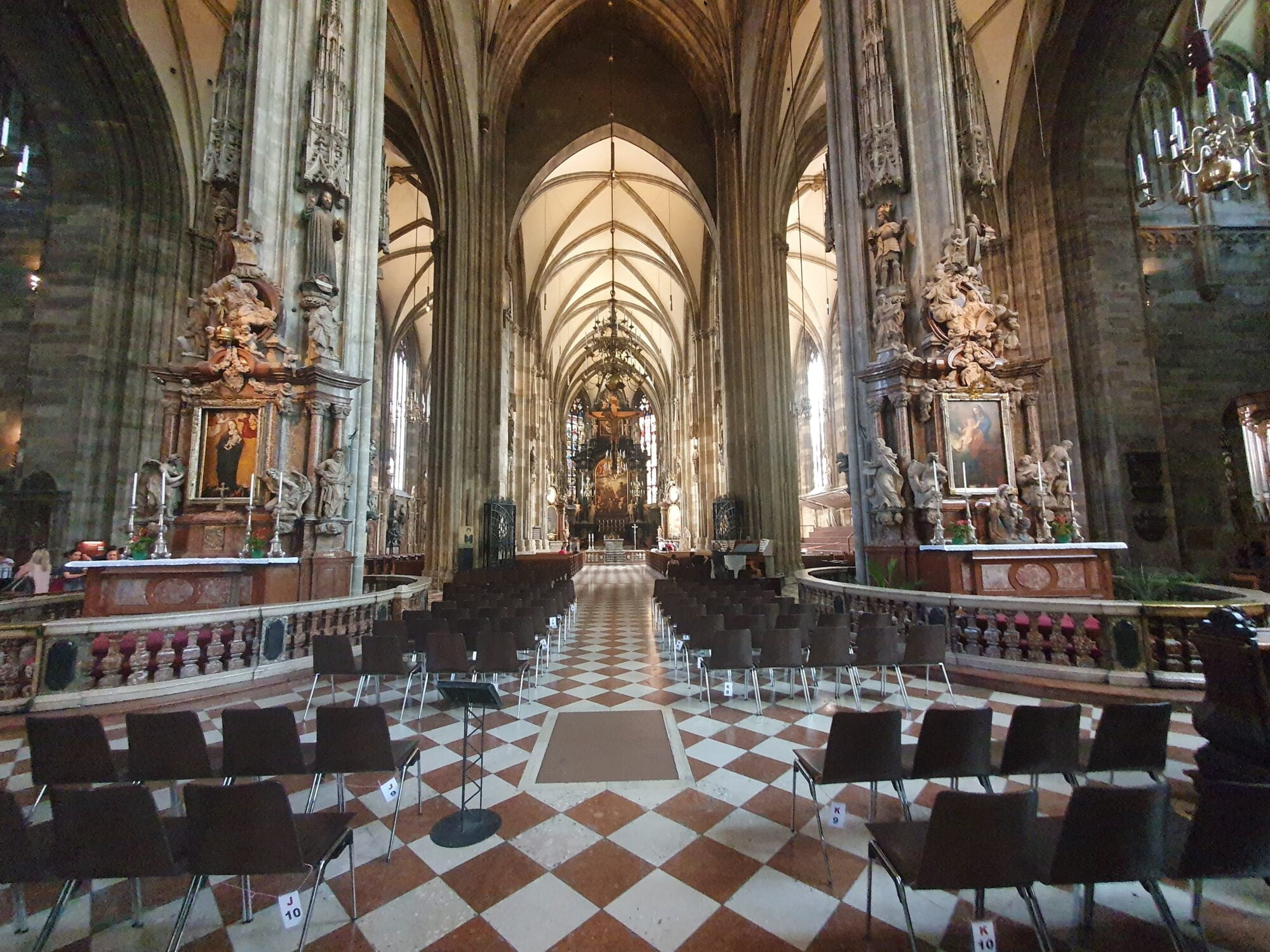
Here you can see many interesting artworks, features, and chapels. This is quieter compared to the free section near the entrance and is well worth the entrance fee. The Vienna Pass includes many of the paid options.
Other options for visiting include seeing the catacombs or climbing to the top of both the north and south towers. There are also guided tours of the cathedral to help you learn more about the building and its history.
What to See Outside St Stephen’s Cathedral
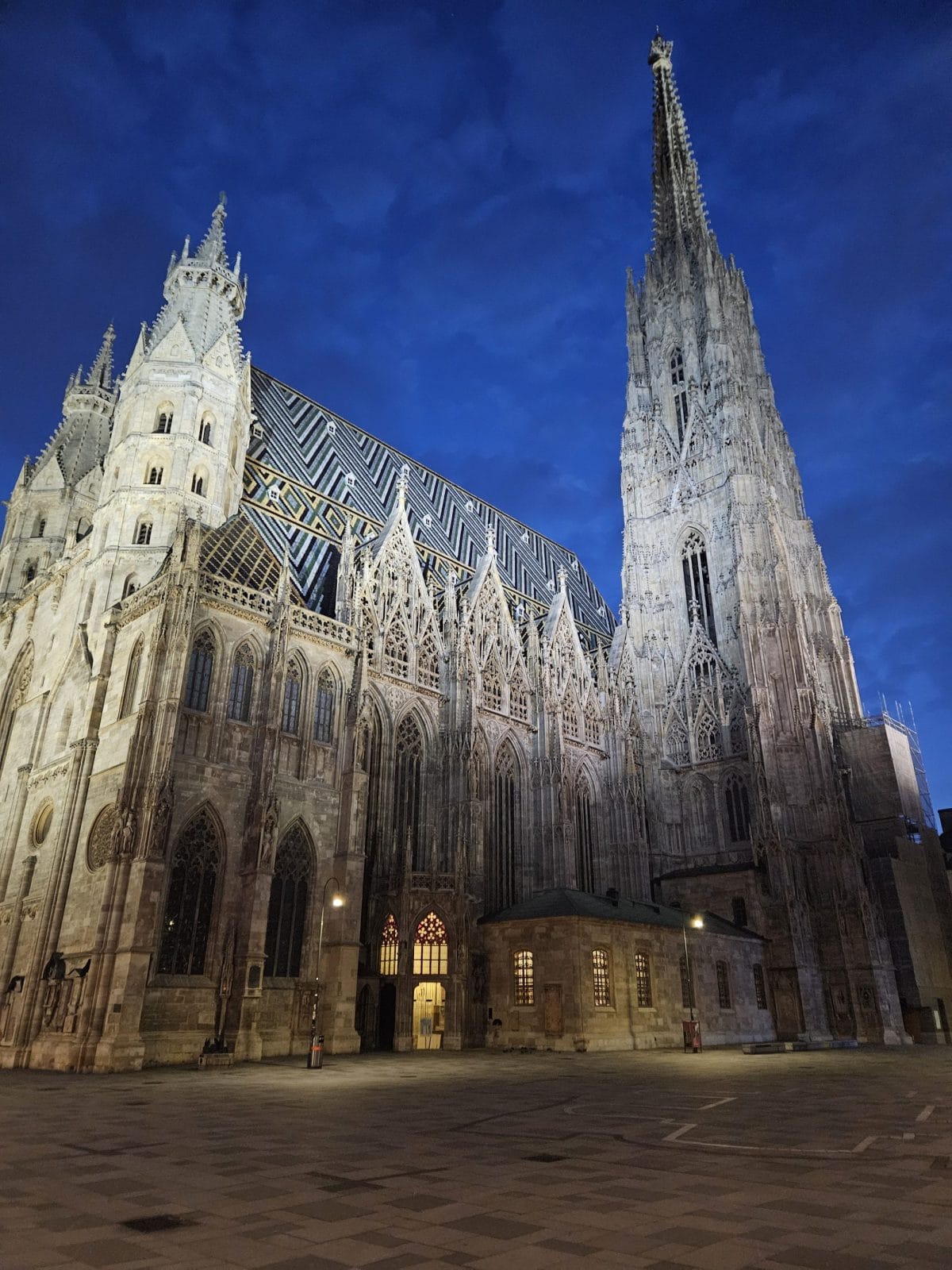
You can see the exterior at any time, and it costs nothing to admire the building from Stephansplatz.
Stephansdom Roof
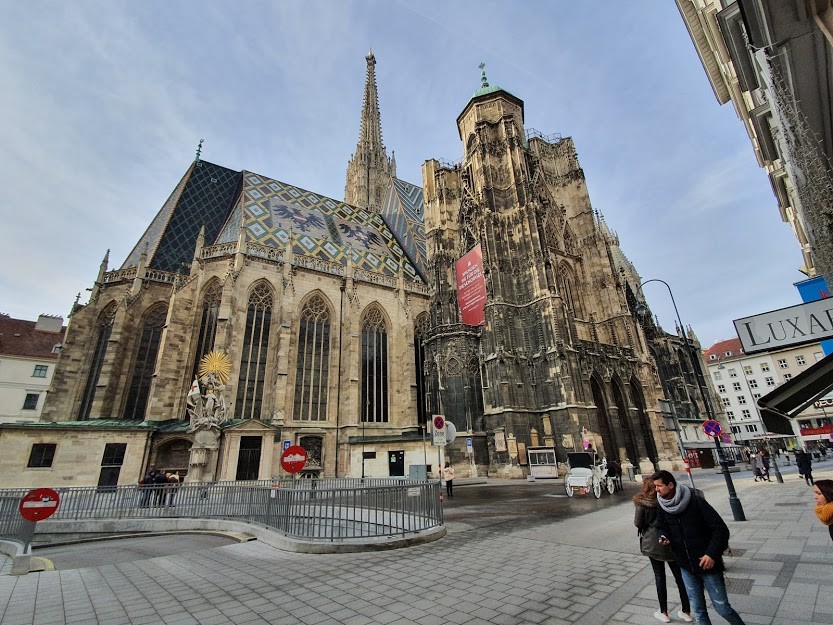
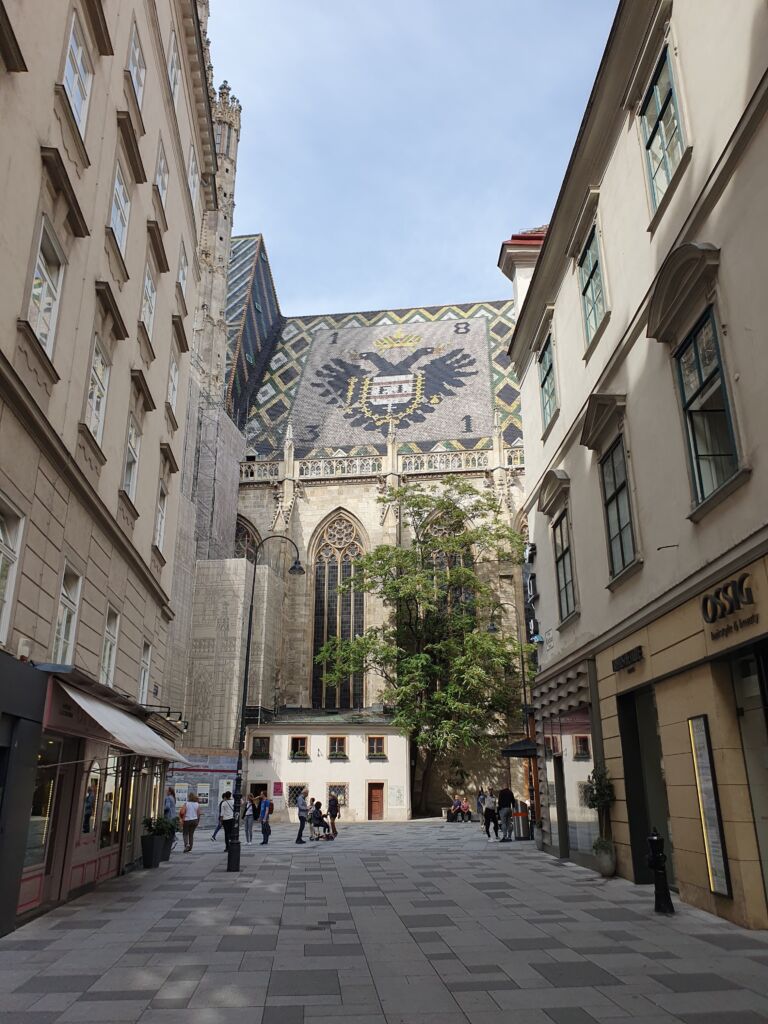
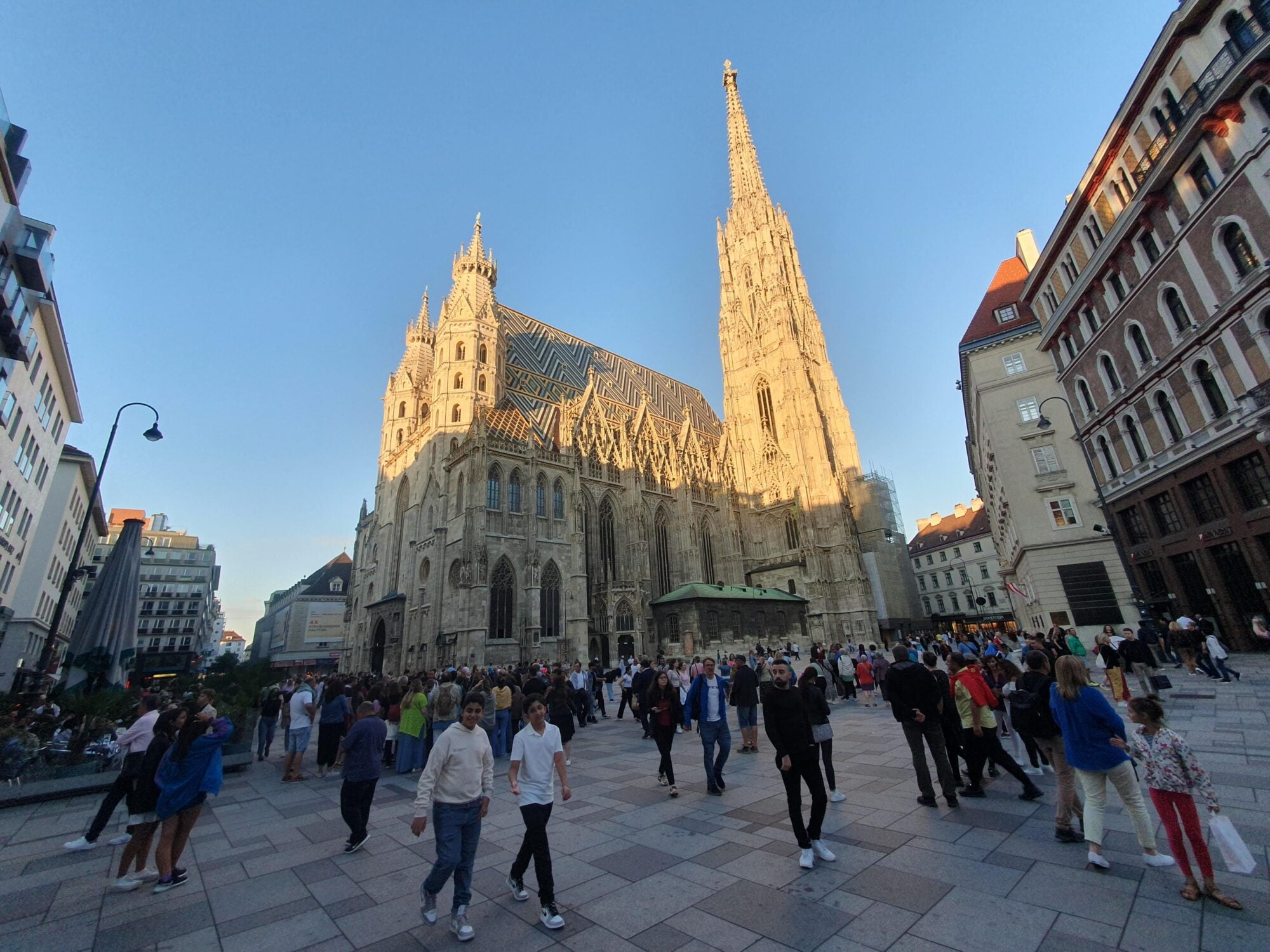
One of the most distinctive features of the building is the multi-coloured tile roof. It has become one of Vienna’s most recognisable buildings. The cathedral roof is ornate with its coloured mosaic of tiles. The tiled roof includes the Habsburg double-headed eagle and the city’s coat of arms. I found it easiest to appreciate from the edges of Stephansplatz, where you can step back from the building. I found the roof best viewed from a distance, stepping to the edges of Stephansplatz.
The Towers
Standing 136 metres tall, St Stephen’s Cathedral’s massive south tower is its highest point and has a commanding presence on the city’s skyline. It took 65 years to build and was finally completed in 1433. At the very top of the tower stands the double-eagle imperial emblem.
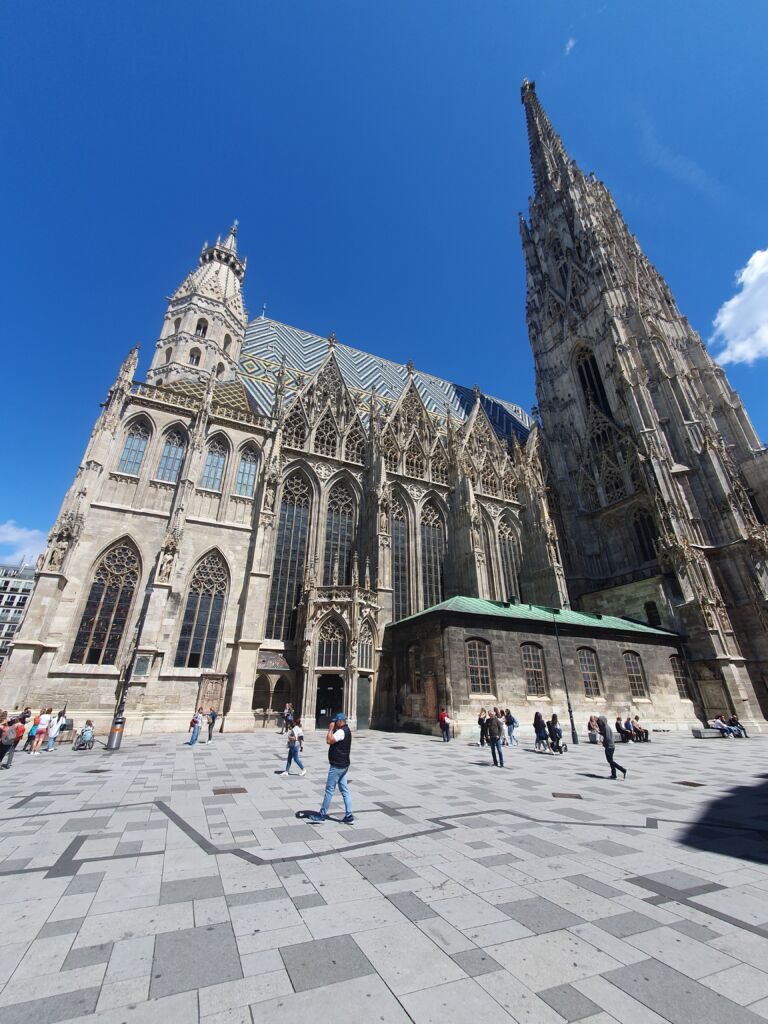
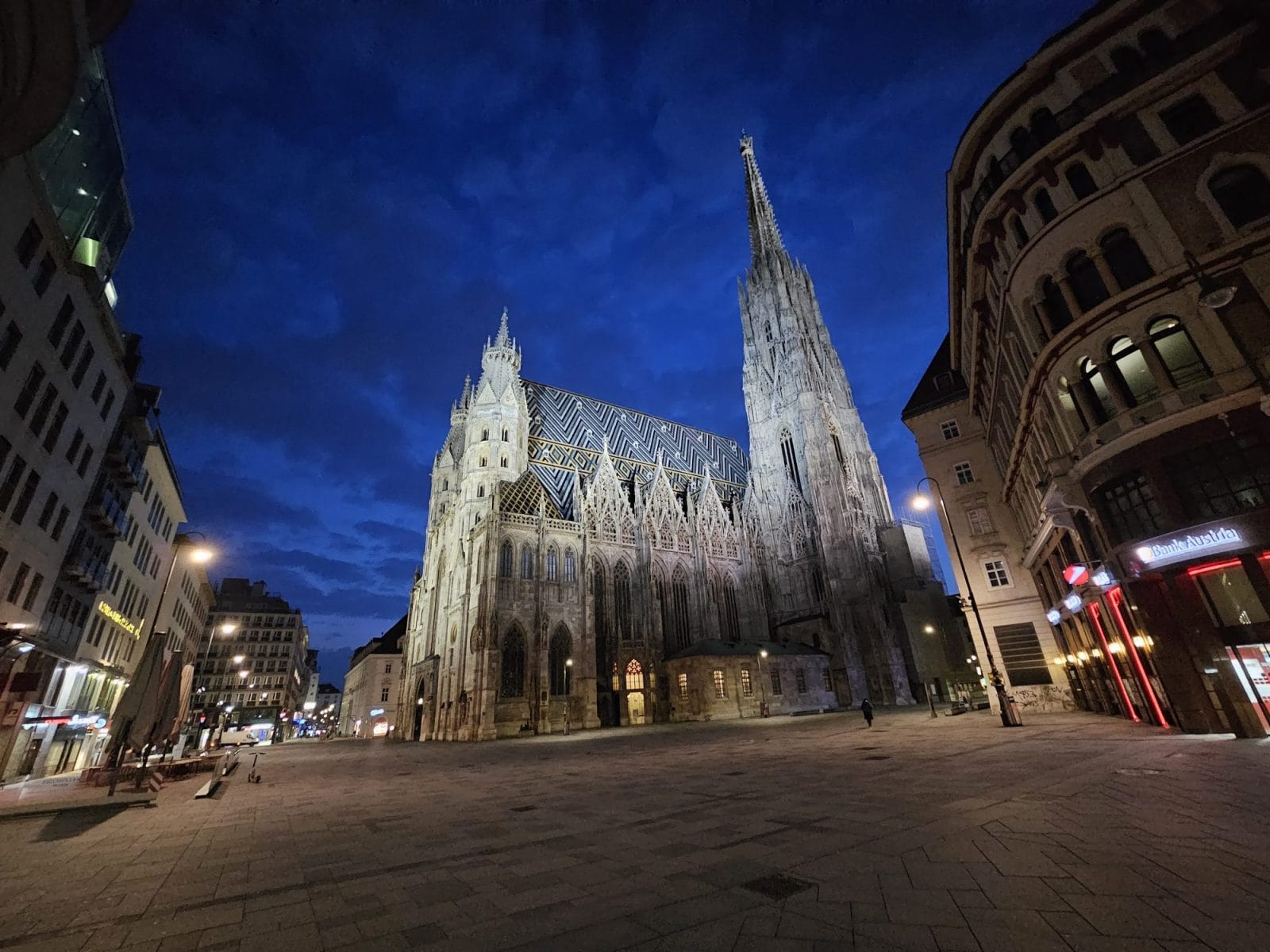
This has the Habsburg-Lorraine coat of arms on its chest. This is surmounted by a double-armed apostolic cross. The cross refers to Apostolic Majesty, the imperial style of the kings of Hungary. The north tower was planned to mirror the south tower. However, this proved too ambitious. This tower now stands at 68 metres tall.
Giant’s Door: The Main Entrance
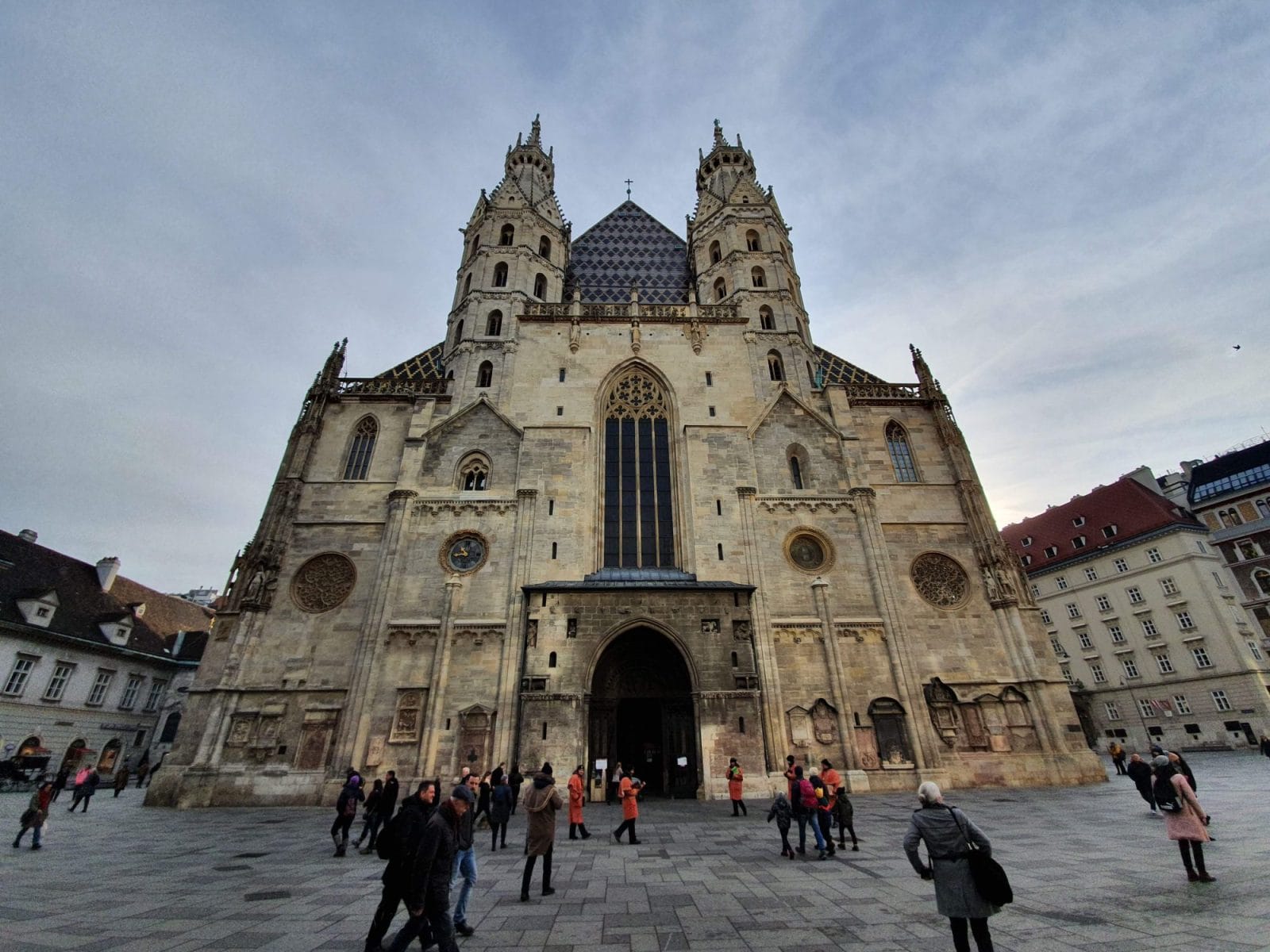
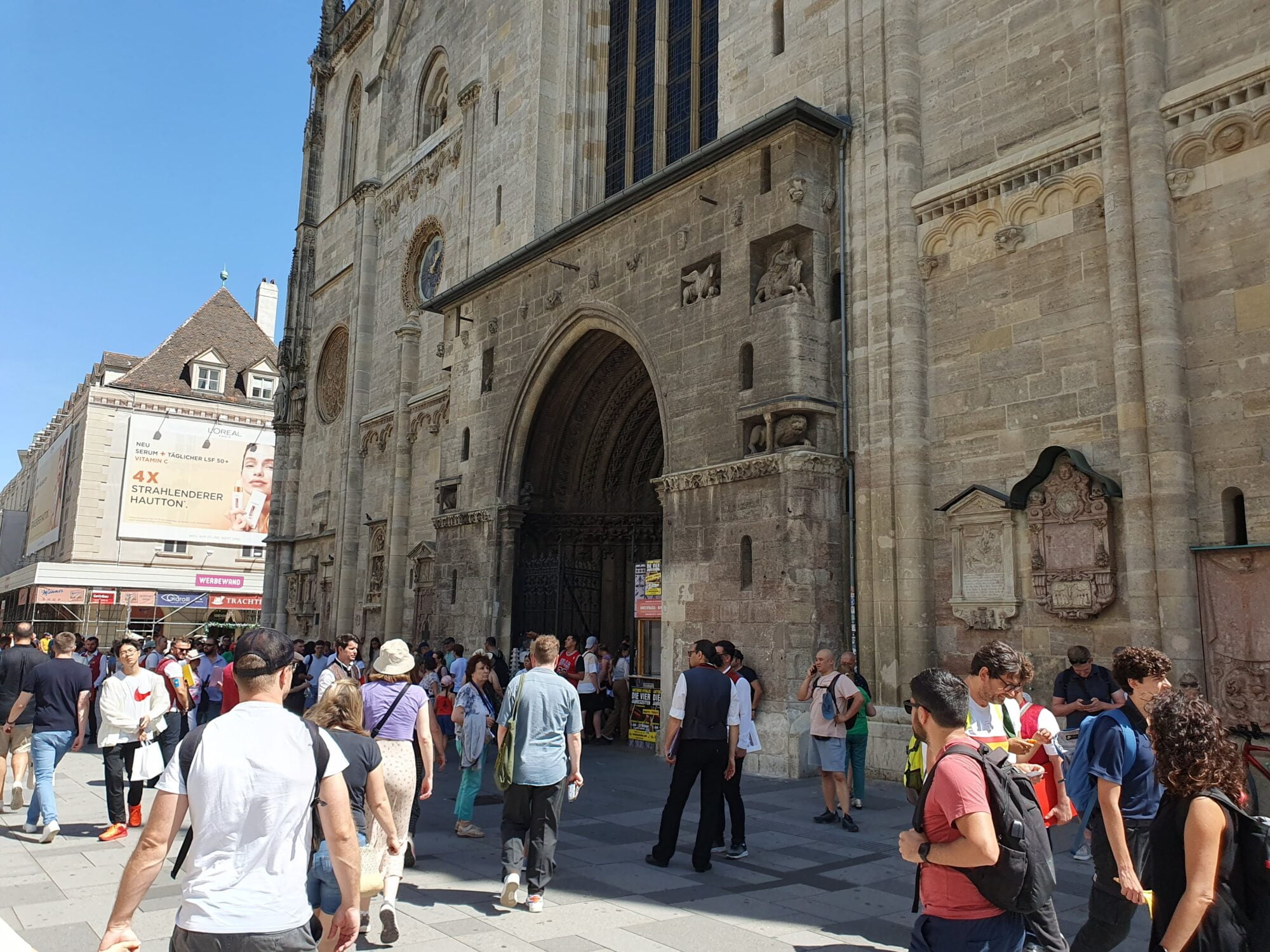
The main entrance to the building is called the Giant’s Door. A tympanum above the Giant’s Door depicts Christ Pantocrator, flanked by two winged angels. On the left and right are the two Roman Towers, or Heidentürme, each approximately 65 metres tall.
The name for the towers derives from the fact that they were constructed from the rubble of Roman-era structures. The Roman Towers, together with the Giant’s Door, are the oldest parts of the church.
Details on the Outside Walls
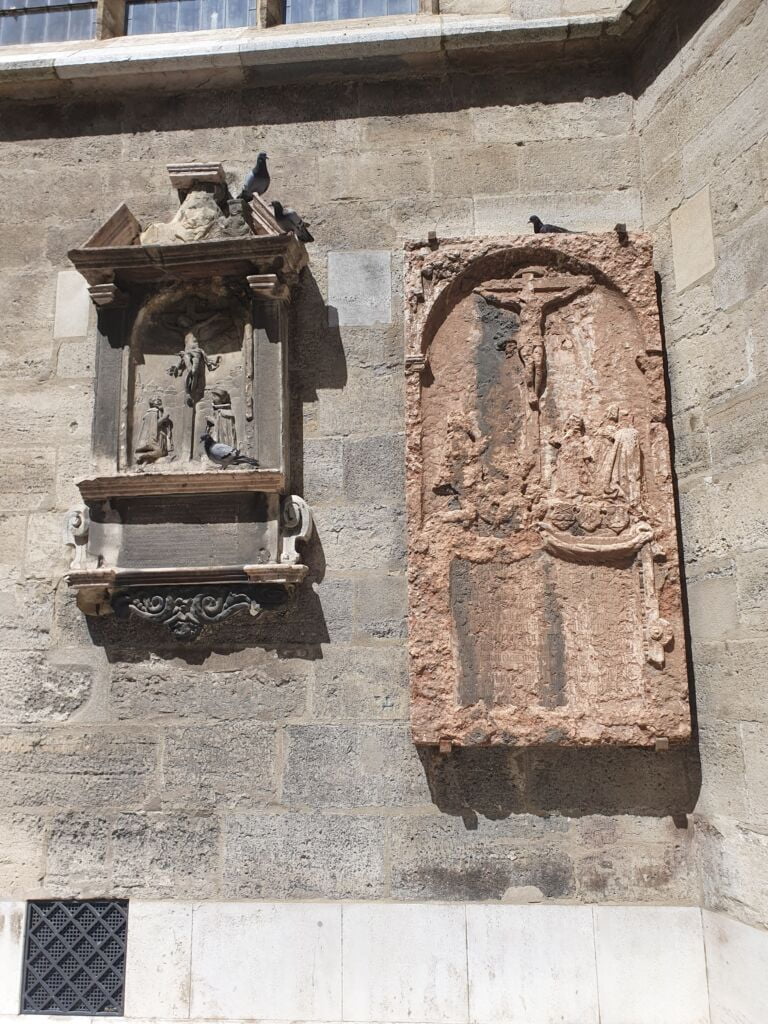
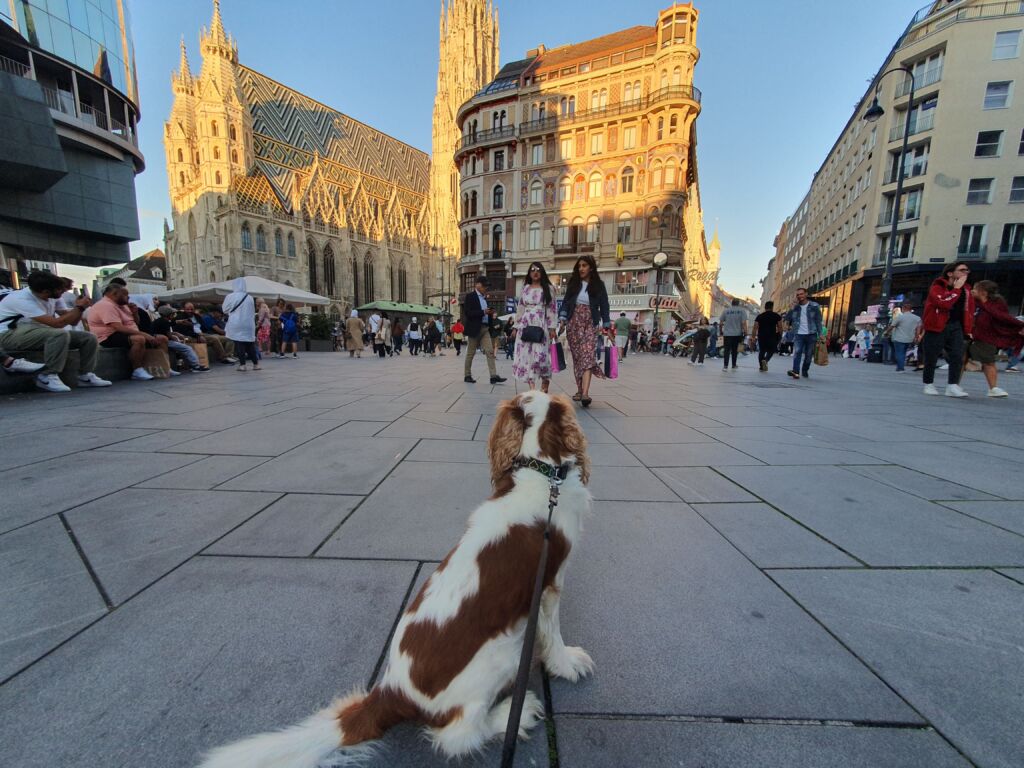
There are loads of things to see on the outside walls of the cathedral. This includes the Capistran Chancel, which was a pulpit. This is linked to St John Capistrano and the 15th-century campaigns against the Ottoman advance in Europe.
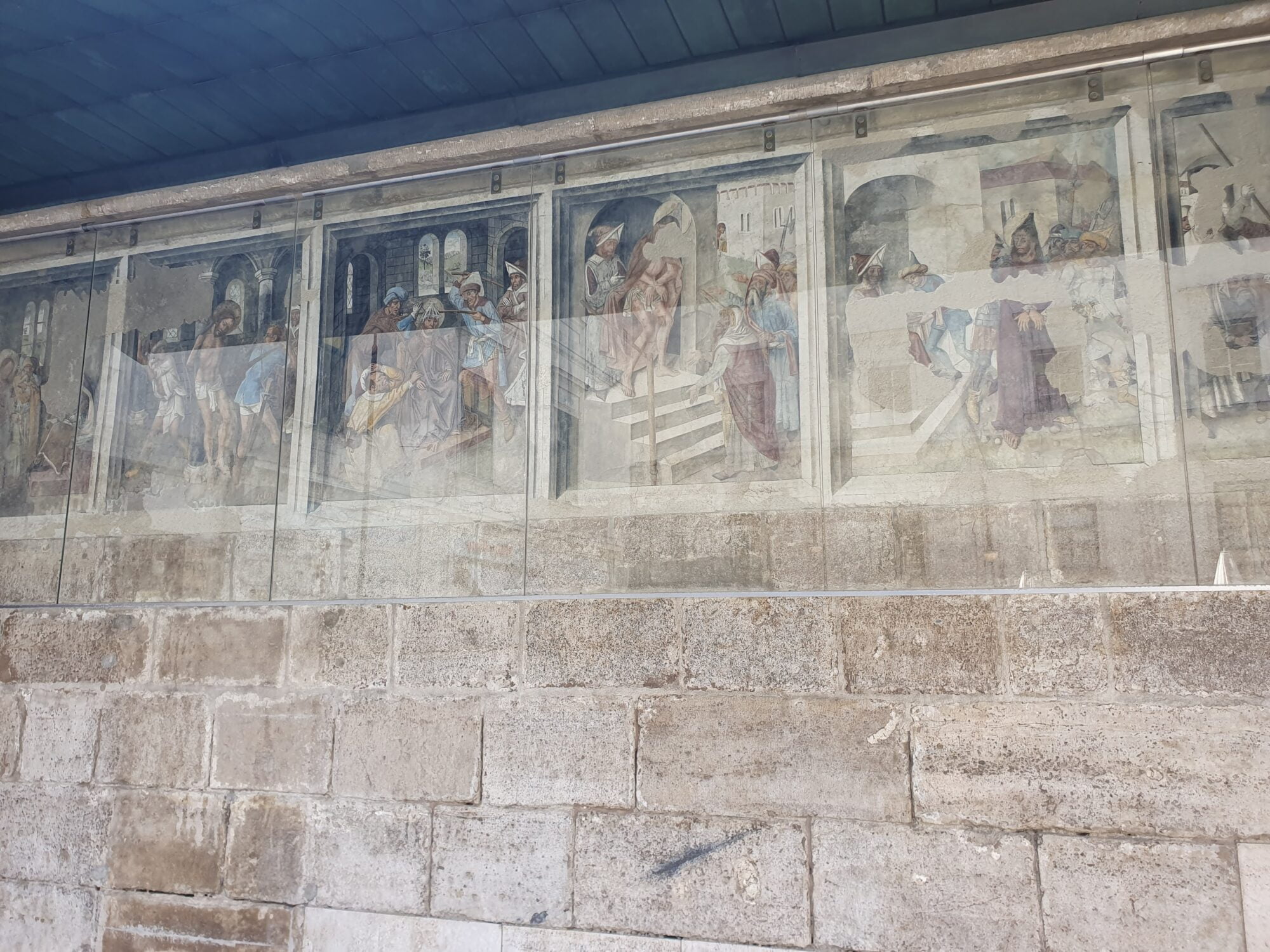
Also on the walls are memorial tablets and measuring devices for products from the Middle Ages. These enabled visiting merchants to comply with local rules. These included measurements for linen to be sold in the city.
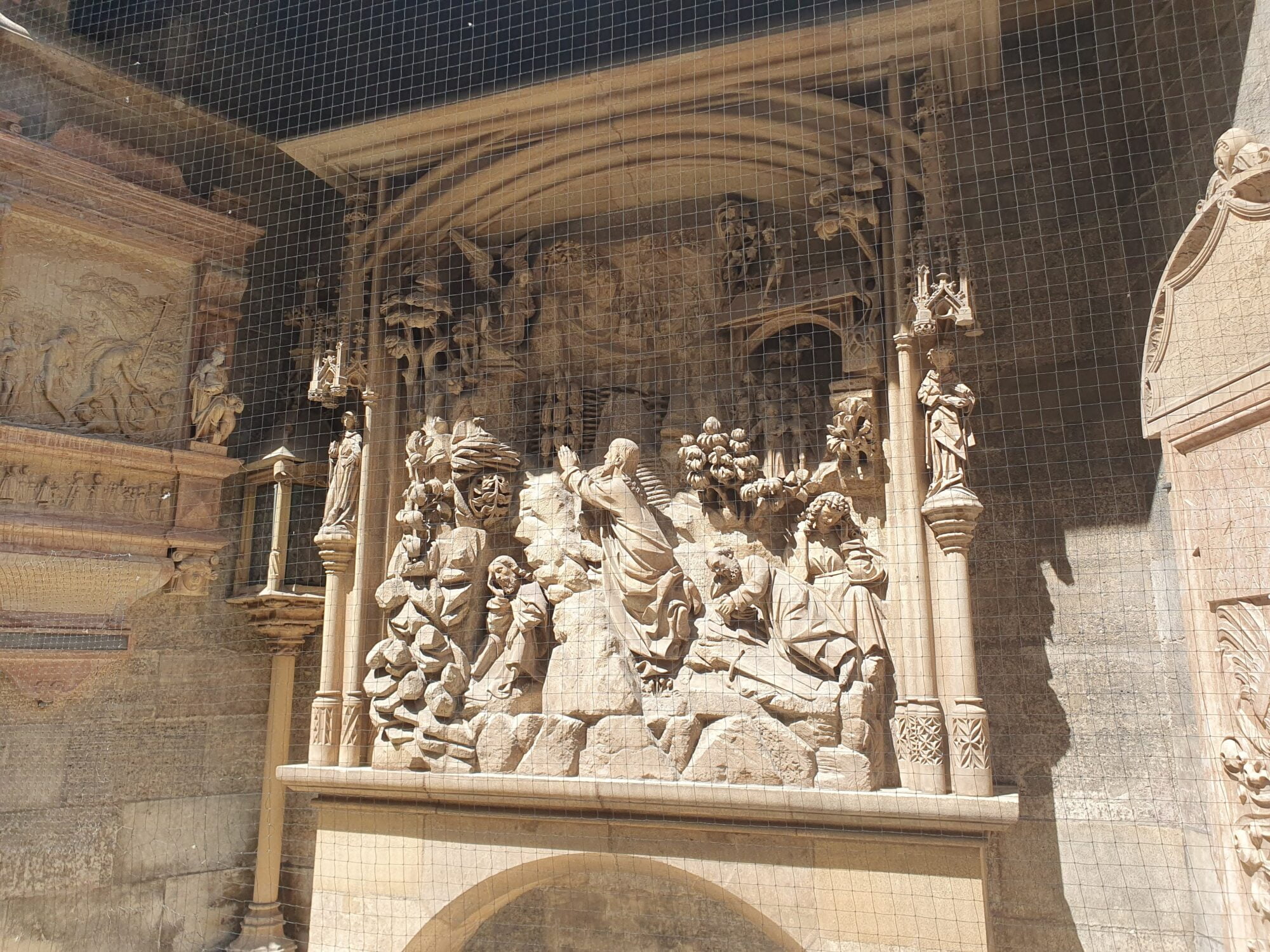
At the rear of the cathedral are some carvings, including the Lackner epitaph with a Mount of Olives motif, and a sandstone relief with a late Gothic frame. To the sides are tombstones of the Lackner family of councillors.
The Cannonball
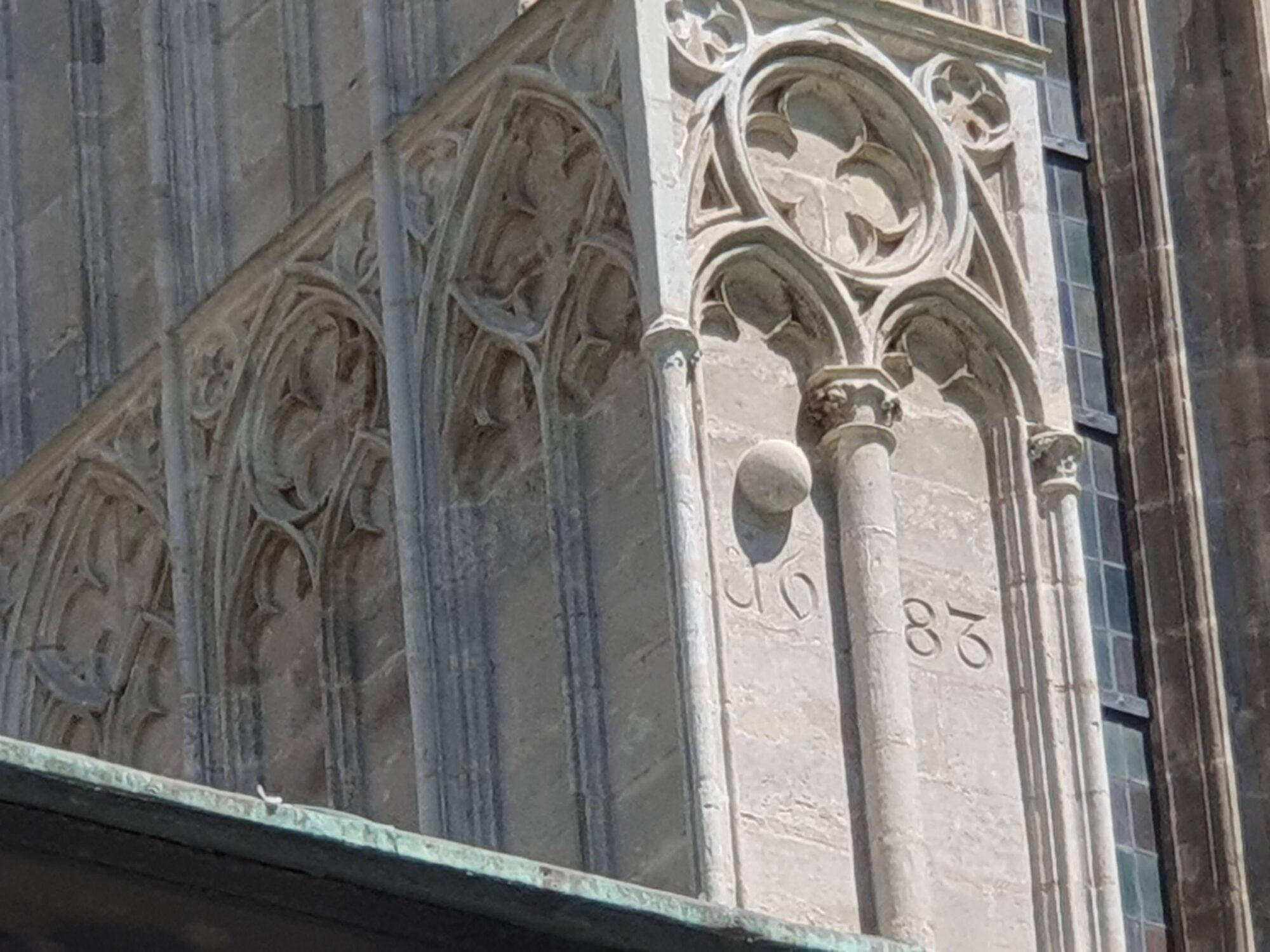
On the outside of the cathedral, there is a cannonball embedded in the wall. You can see this on the south wall of the building. A cannonball was fired at St Stephen’s during the Turkish siege in 1683. There is a date inscribed next to the cannonball.
Free Area Inside St Stephen’s Cathedral
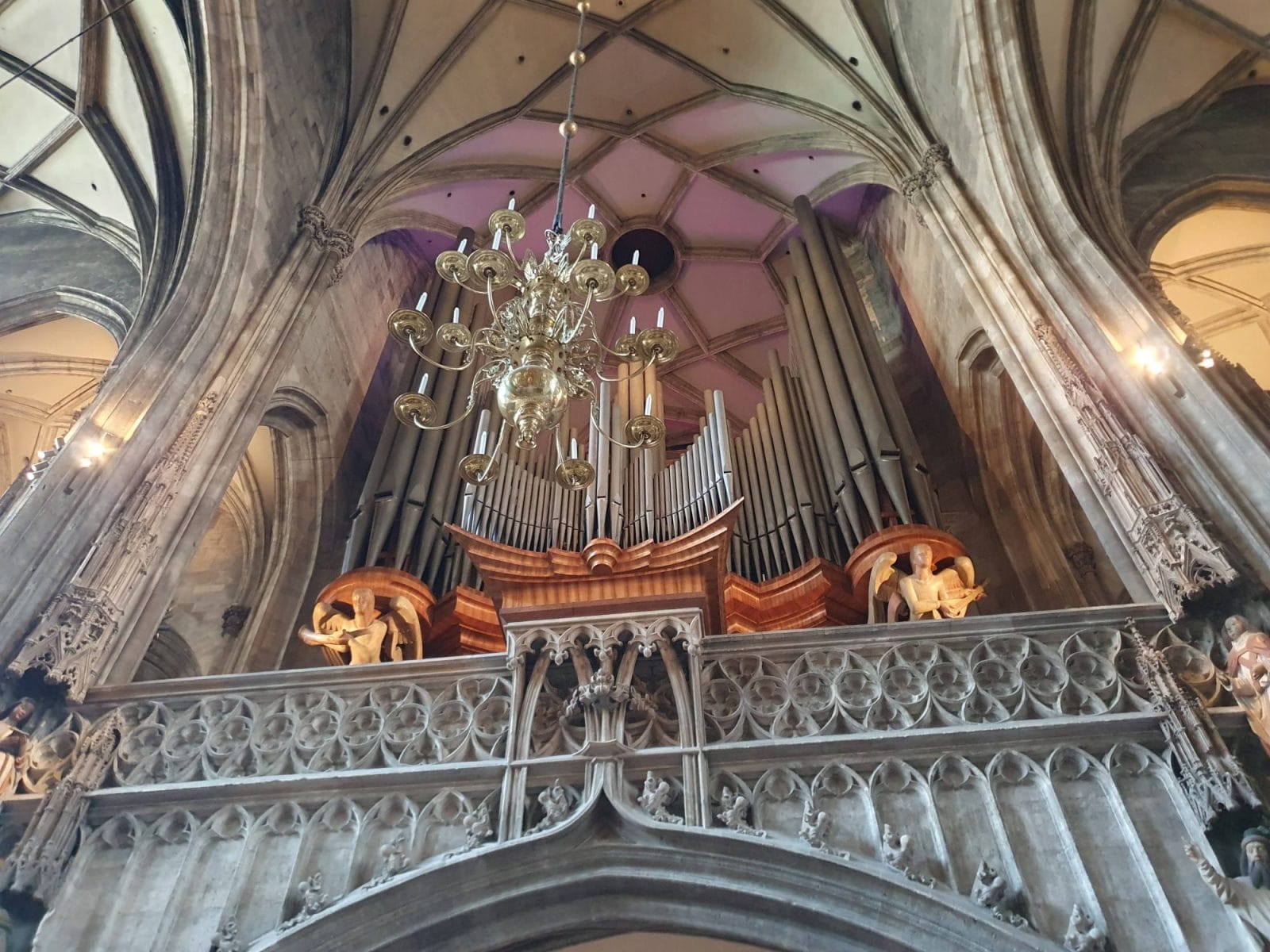
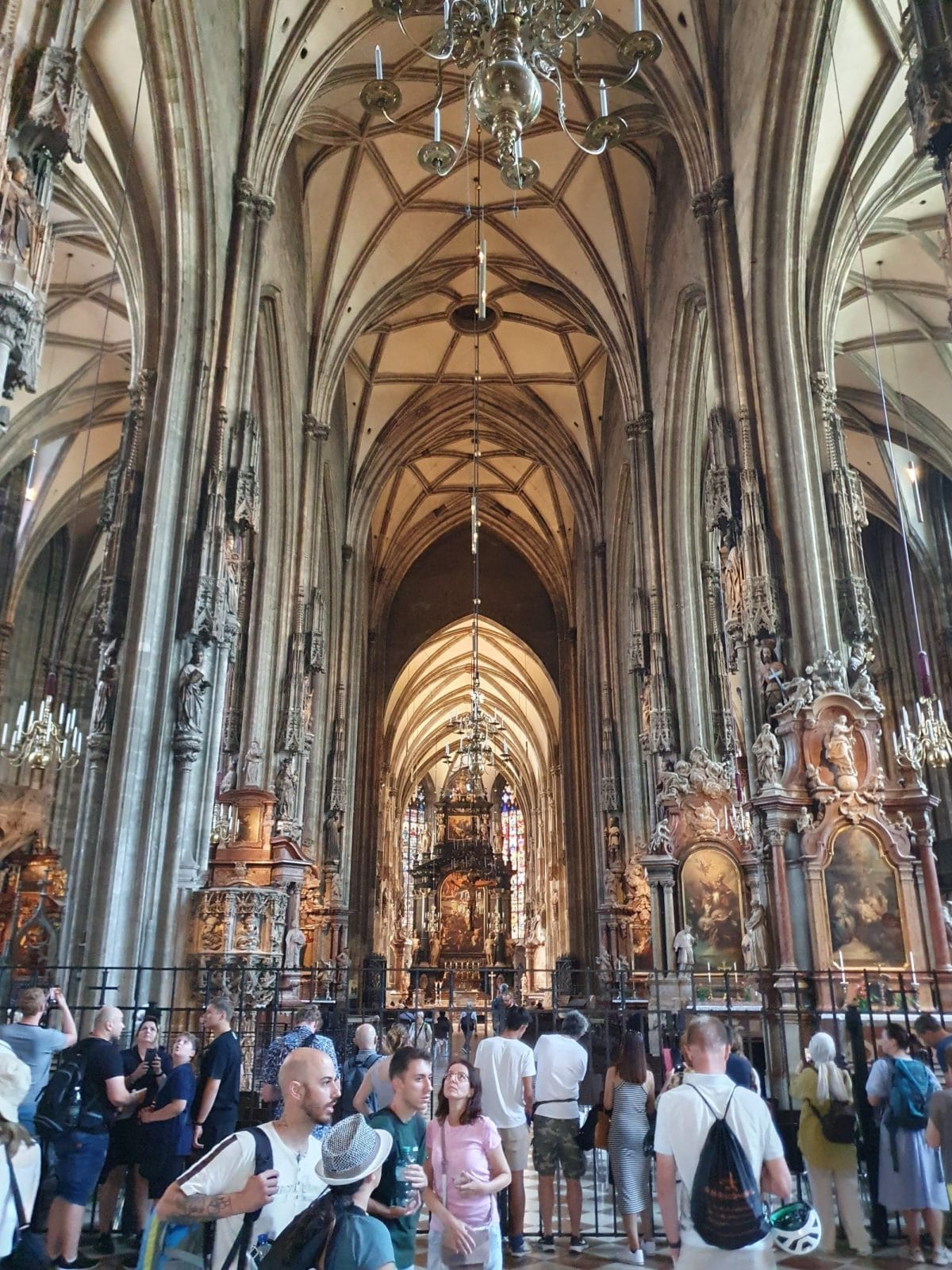
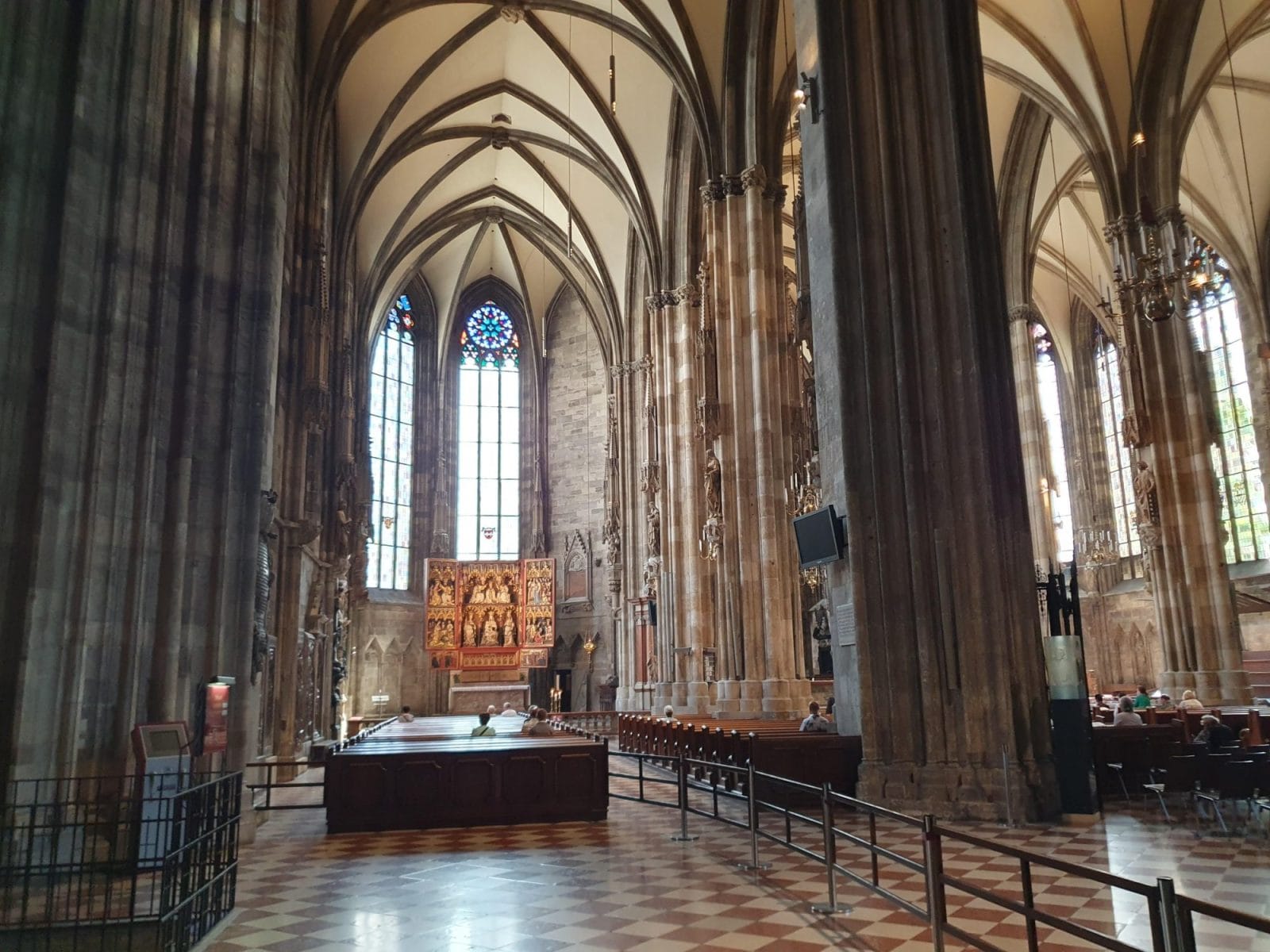
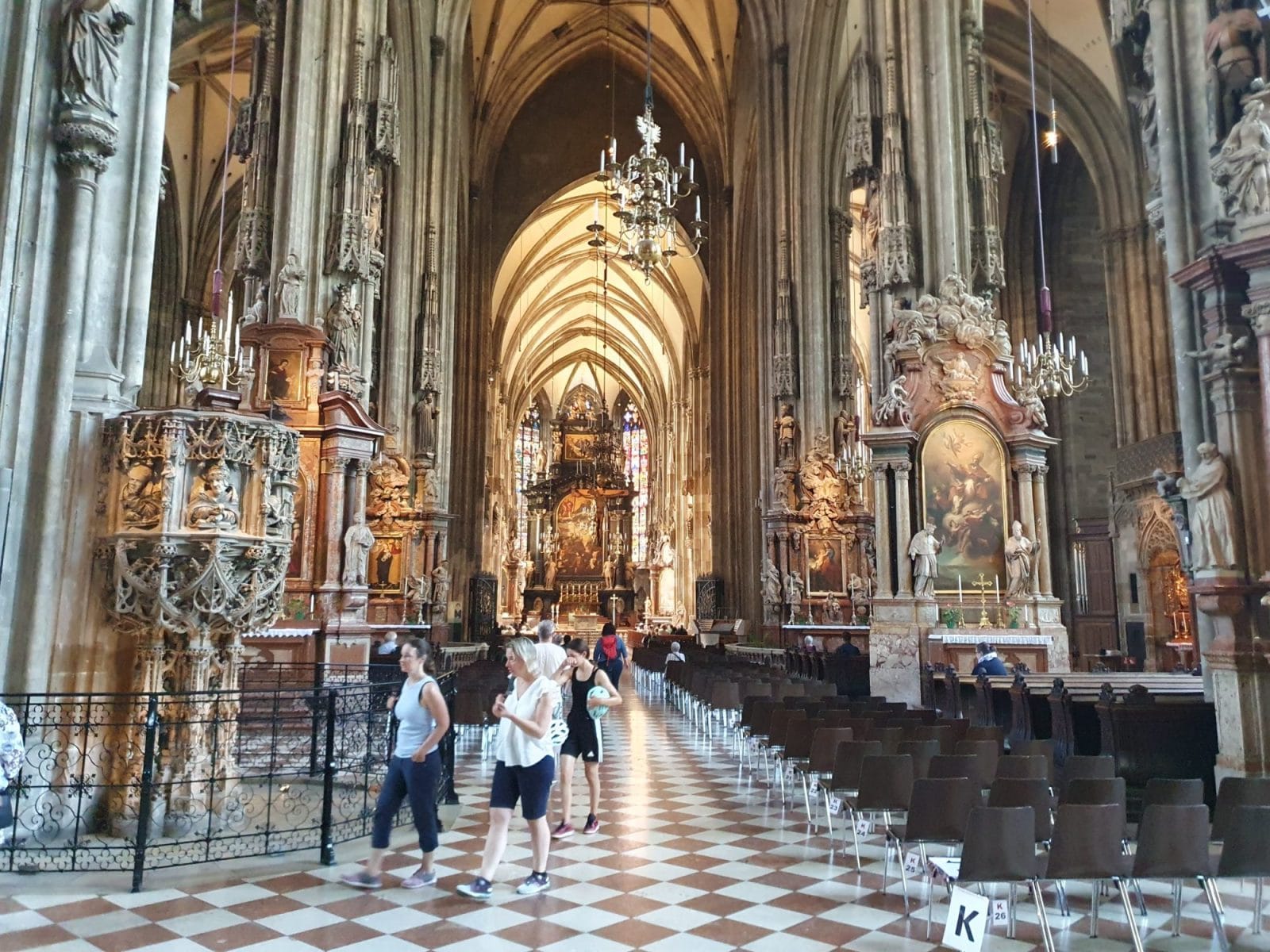
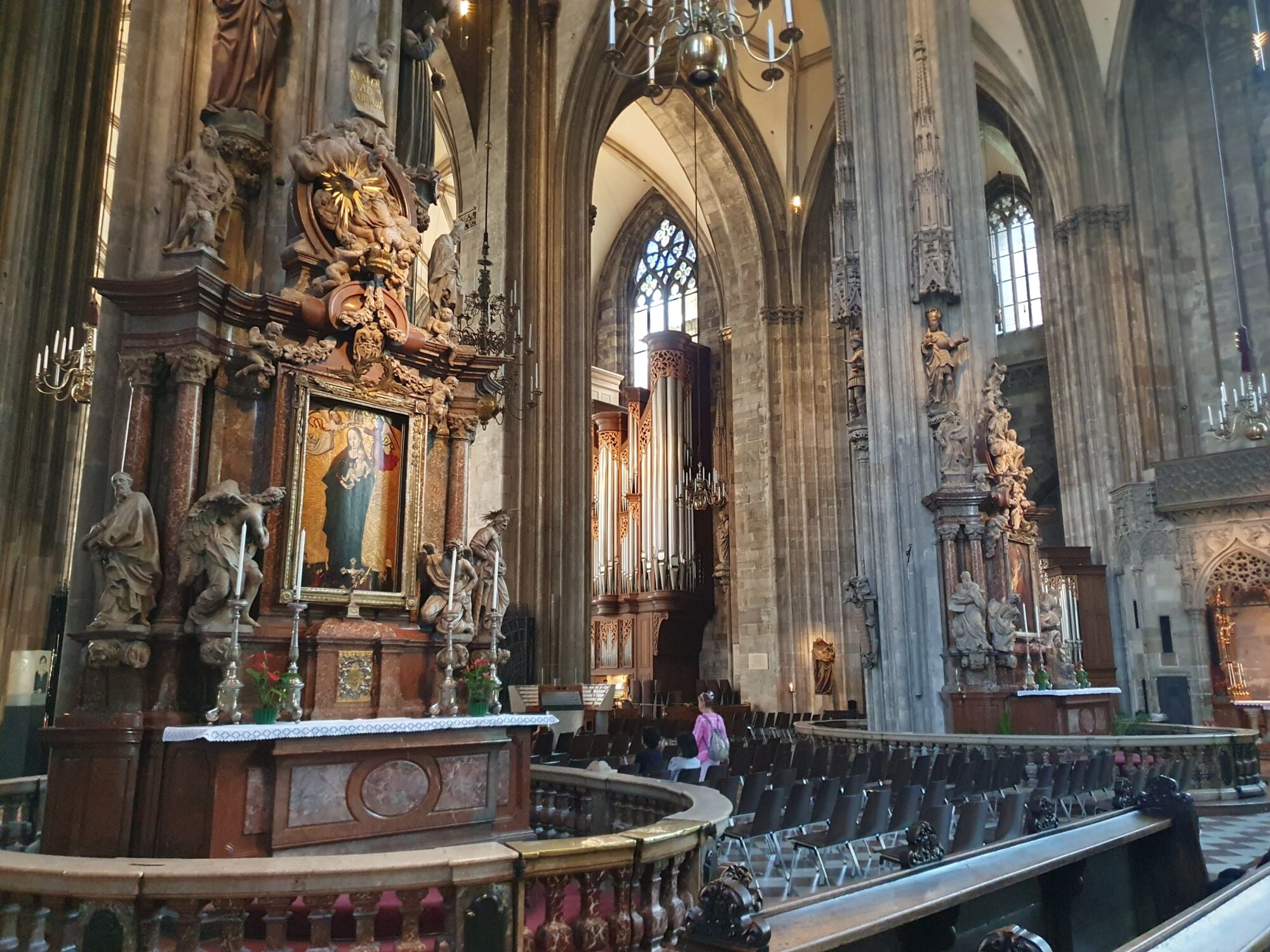
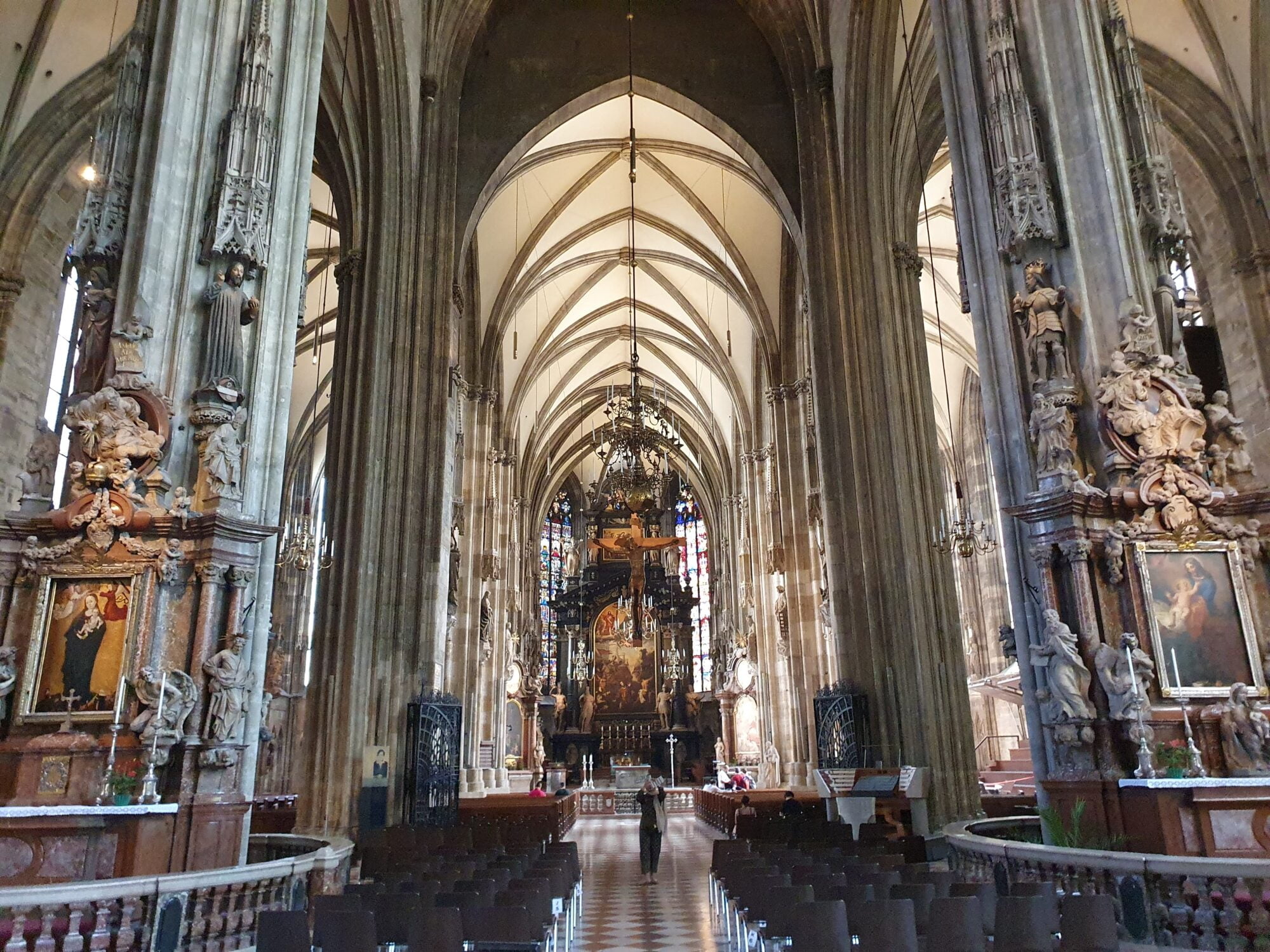
You can pop inside and see a small part of the cathedral for free via the Giant’s Door. One of the highlights of the free part is the view up the nave, where you can appreciate the building’s scale and see some of the decor from afar. The photos above are all from the free part.
What to See Inside St Stephen’s Cathedral
These are the main interior features I saw in the paid area of St Stephen’s Cathedral.
The Nave
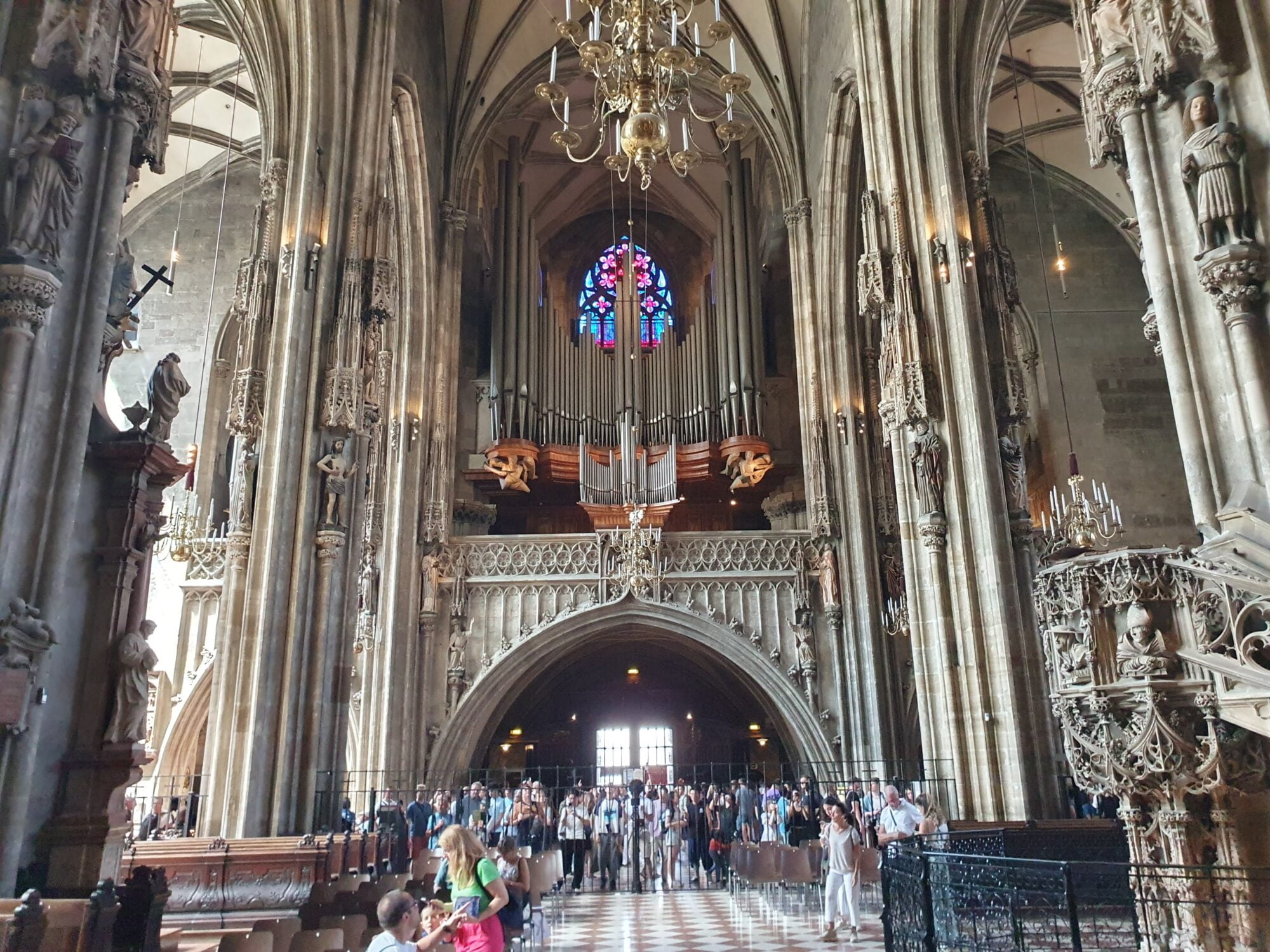
One of my favourite spots to view the inside of churches and cathedrals is the nave. From the nave, you can see all the features facing the high altar or backwards towards the organ. In St Stephen’s, you can see lots of things, including columns, a decorative pulpit and the extravagant high altar.
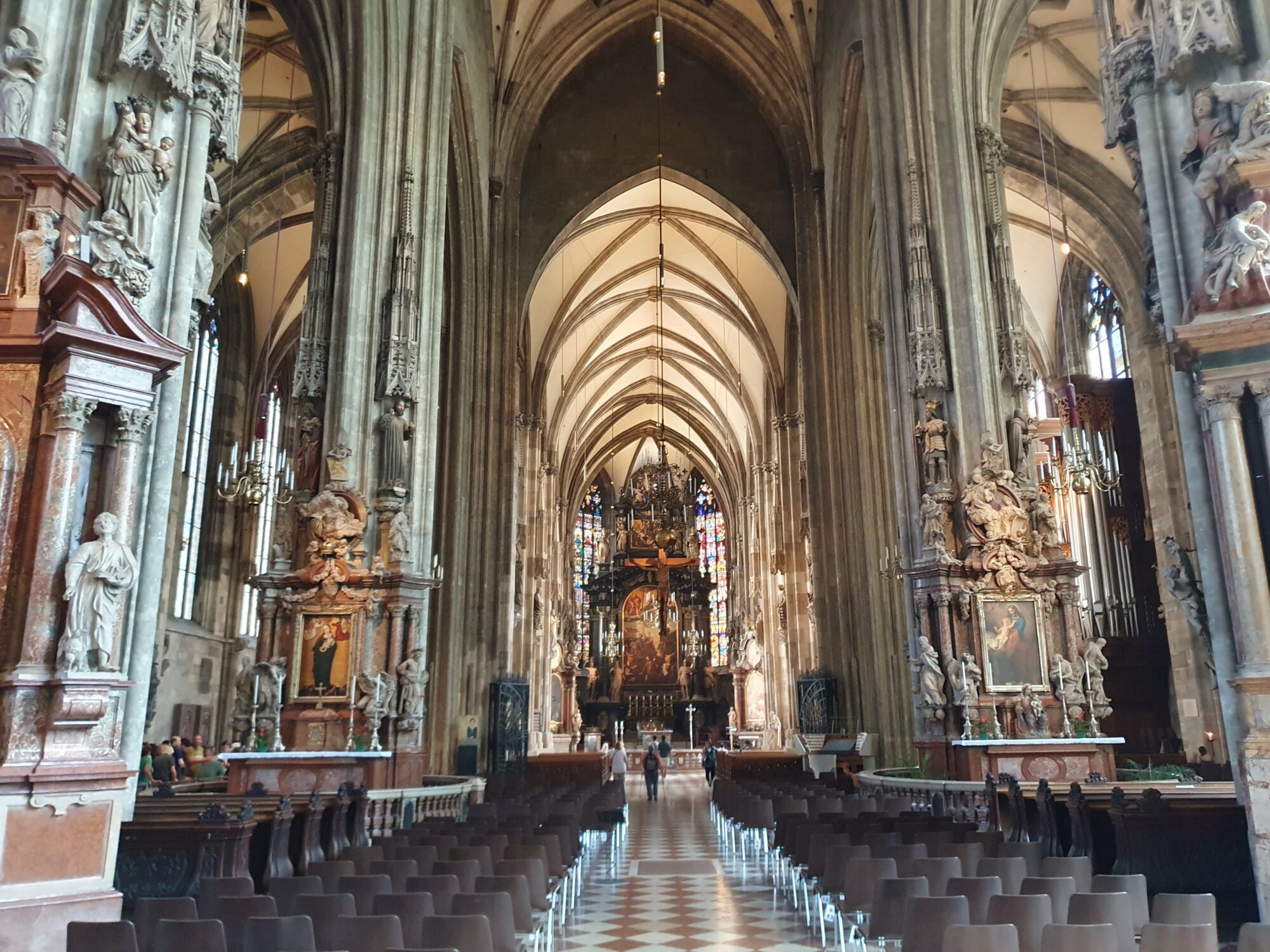
You can see the nave from the free section if you can get past the people to the fence. When paying to visit the main part of the cathedral, there is lots of space to stand and look. You can also take a seat and admire the grand nature of the building.
The High Altar
The high altar is the focal point of cathedrals and is an impressive structure. The one at St Stephen’s Cathedral is no different. You can see the high altar from throughout the main part of the church except for obstructions from the cathedral’s columns.
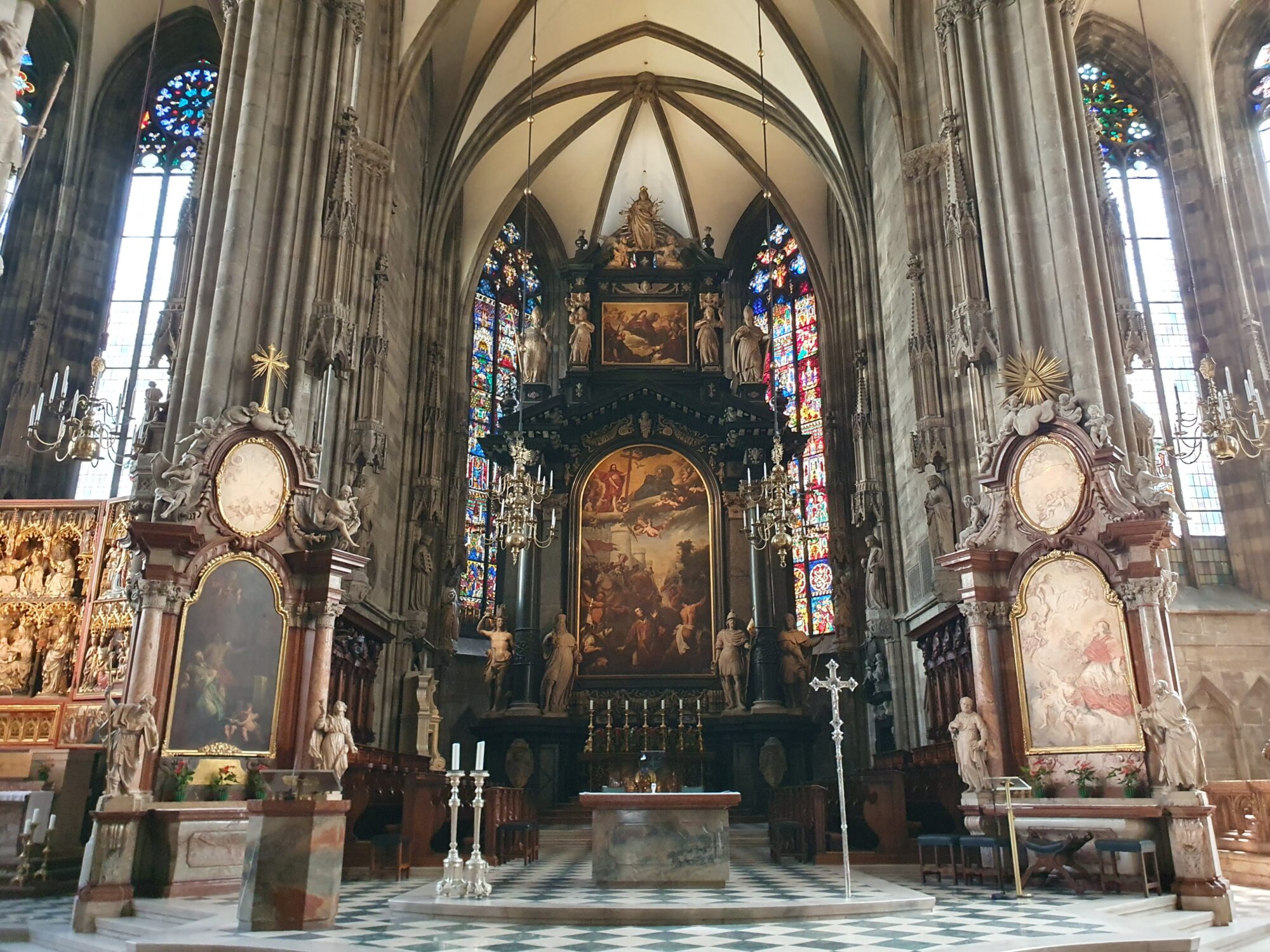
The high altar took seven years to build, between 1641 and 1647. This was built in the Baroque style. It depicts the stoning of the church’s patron and namesake, St Stephen. The altar was framed with the patron saints of the surrounding areas.
Gothic Pulpit
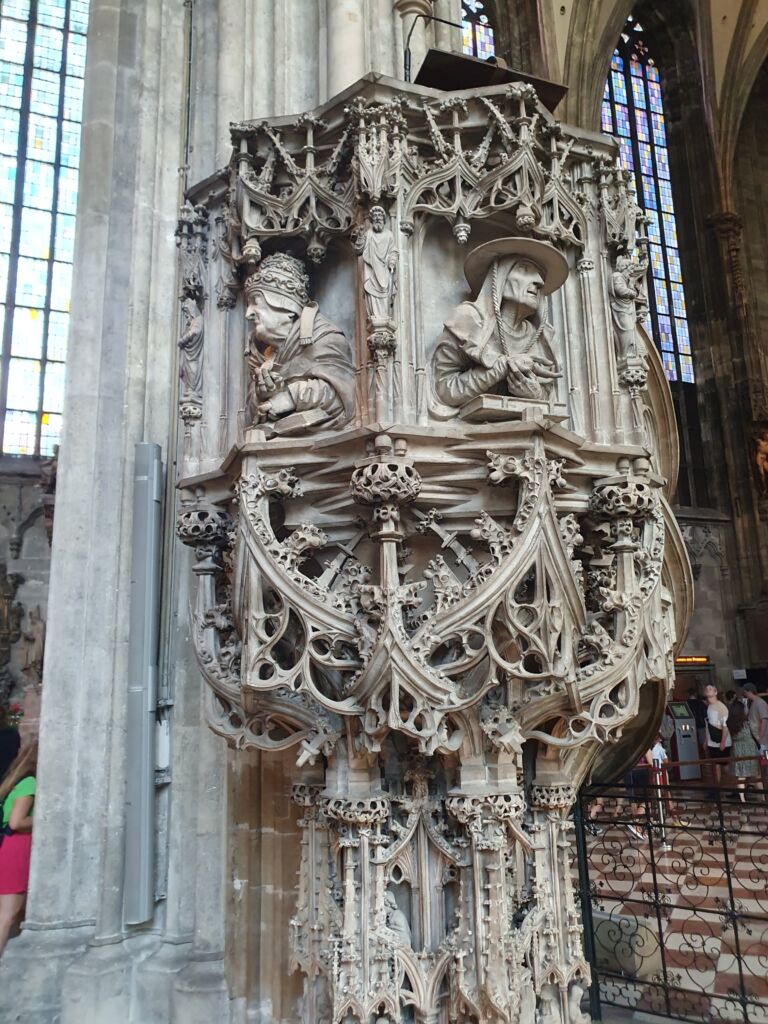
One of the cathedral’s eye-catching features is the Gothic pulpit. It has many fantastic decorative features and is well worth seeing up close. The pulpit is made of stone and is a late Gothic sculpture. It depicts the four original doctors of the church: St Augustine of Hippo, St Ambrose, St Gregory the Great, and St Jerome.
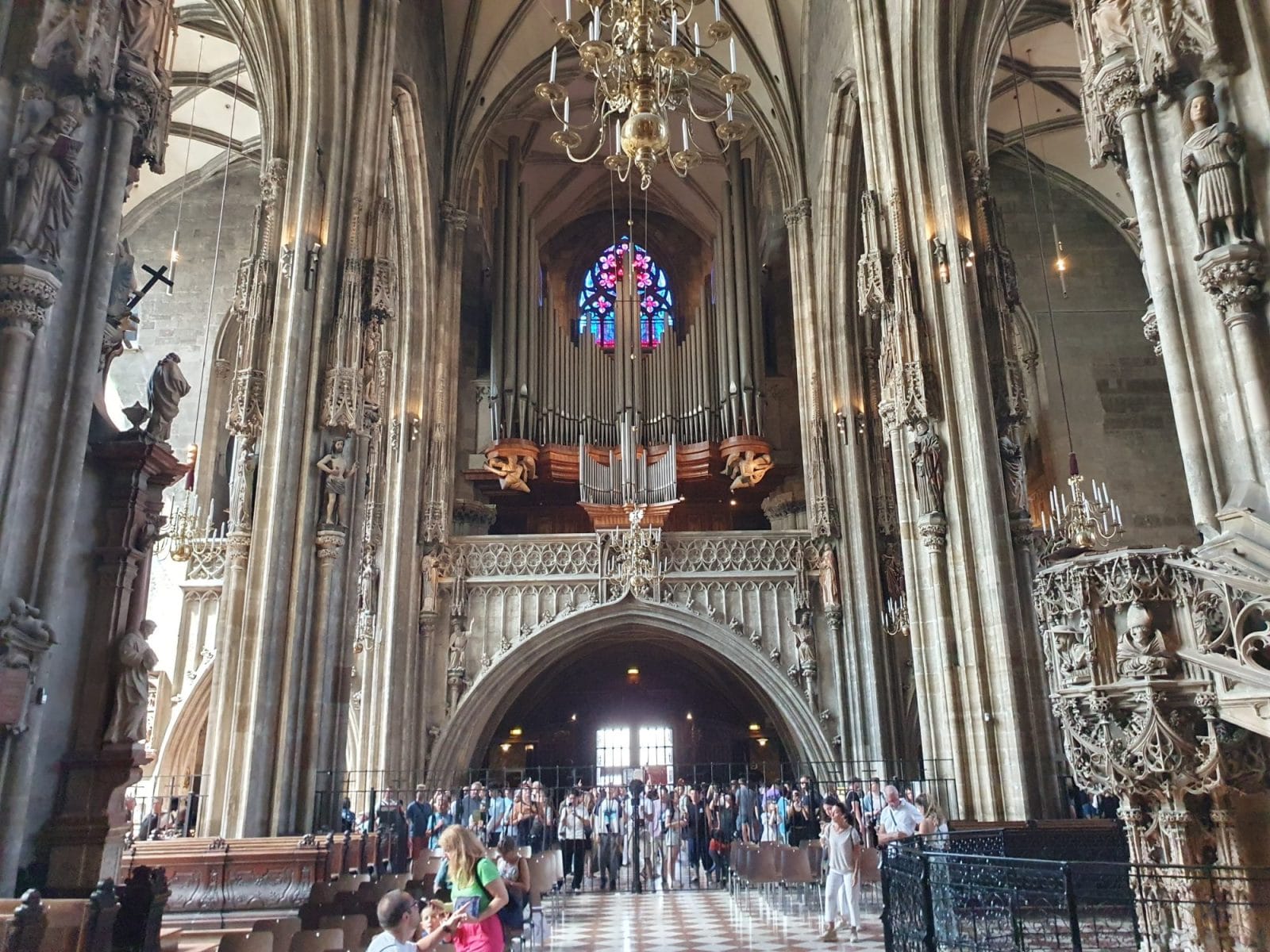
The handrail of the stairway has some interesting features, including toads and lizards biting each other. Apparently, this symbolises the fight between good and evil. On a dog-friendly note, there is a puppy at the top of the pulpit stairs, created to protect the preacher from intruders.
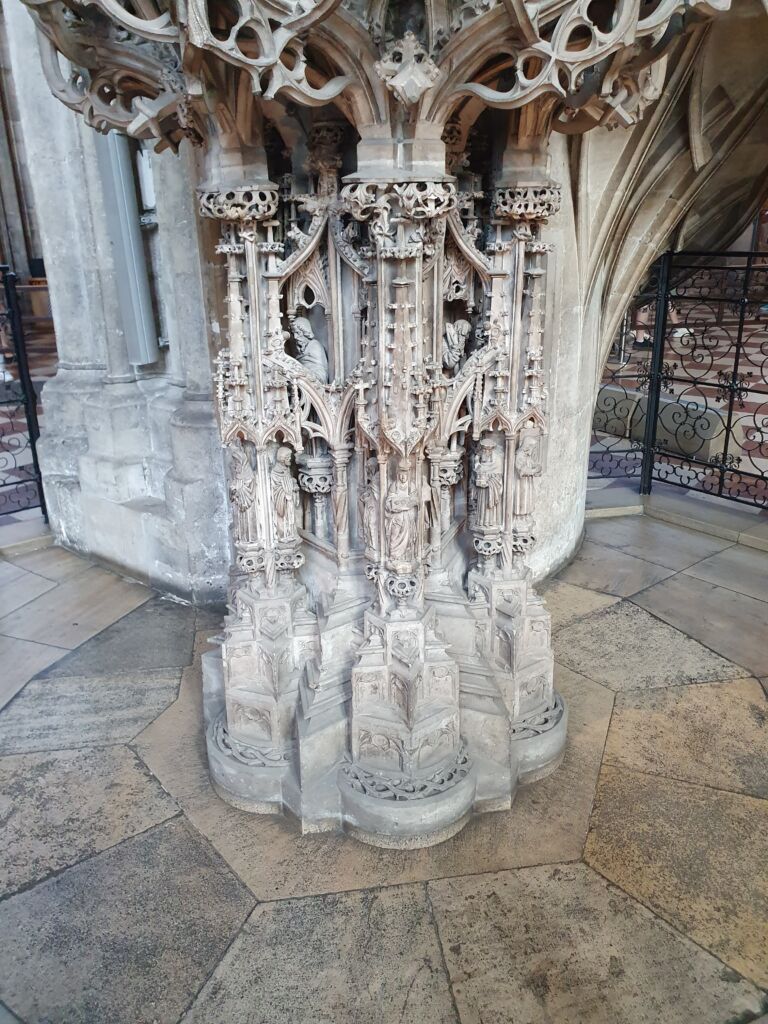
The base under the stairs is also striking. It apparently includes a self-portrait of the sculptor. This includes the stonemason’s signature and a chisel in the subject’s hand.
Wiener Neustädter Altar
Another altar inside the cathedral is the Wiener Neustädter Altar. The Wiener Neustädter Altar caught my eye, so I went and had a look up close. Interestingly, it is a convertible altar with a main shrine, and the two outer wings can move. The carvings on the altar are partly painted and partly gilded, which made them stand out to me.
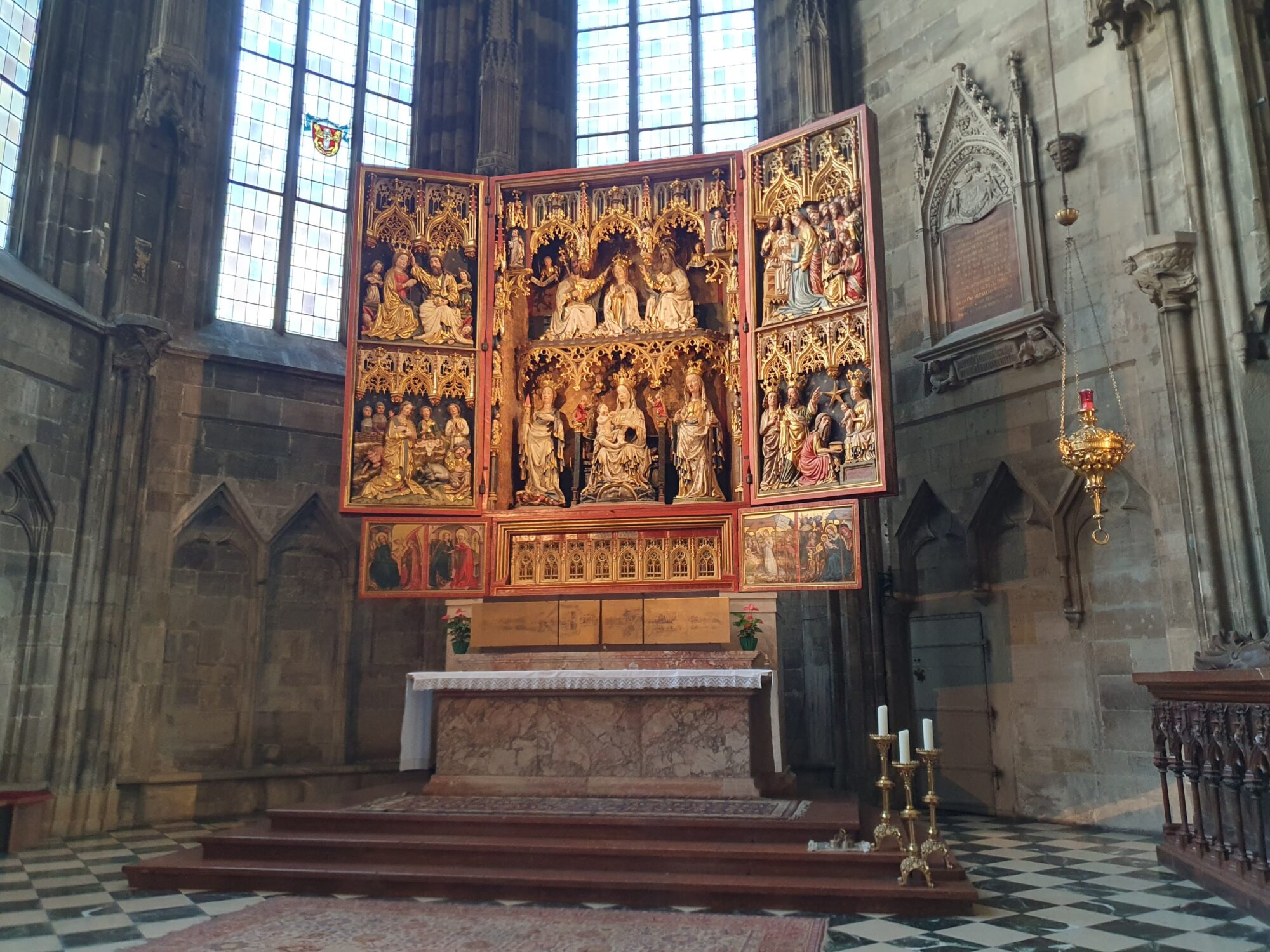
The Wiener Neustädter Altar was made in 1447; however, it was relocated to Vienna in 1884. For a while after World War 2, this served as a temporary high altar due to damage to the cathedral.
Organs
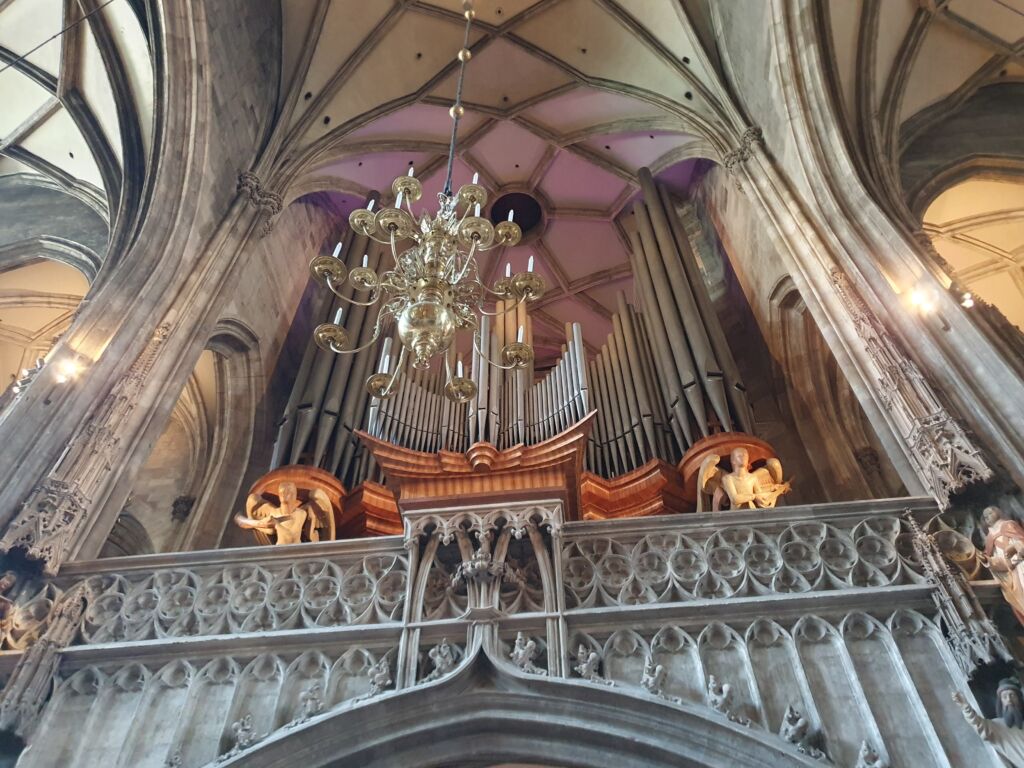
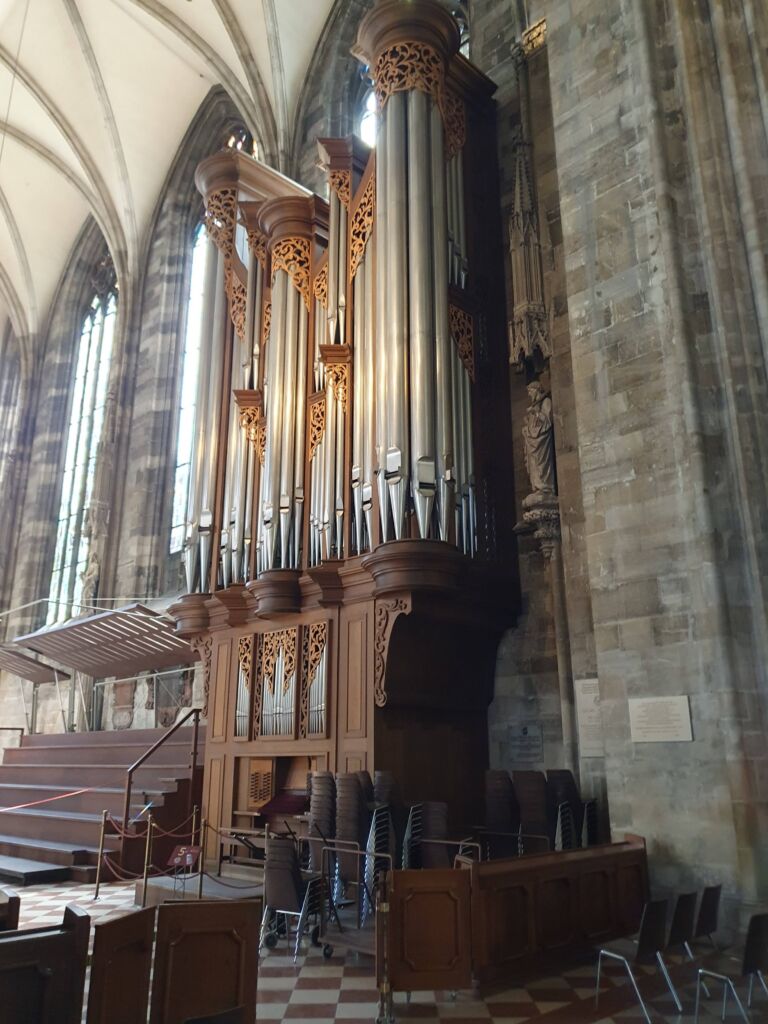
There are two organs inside the church: the big one above the door and a smaller choir organ on the right of the nave. There have been organs in the cathedral since 1334. These have been replaced/renovated many times, including after a fire in 1945. The organs have a separate console that allows them to be played together or individually. If you want to hear them, you can visit a concert or service in the cathedral.
Chapel of St Katherine And The Gothic Baptismal Font
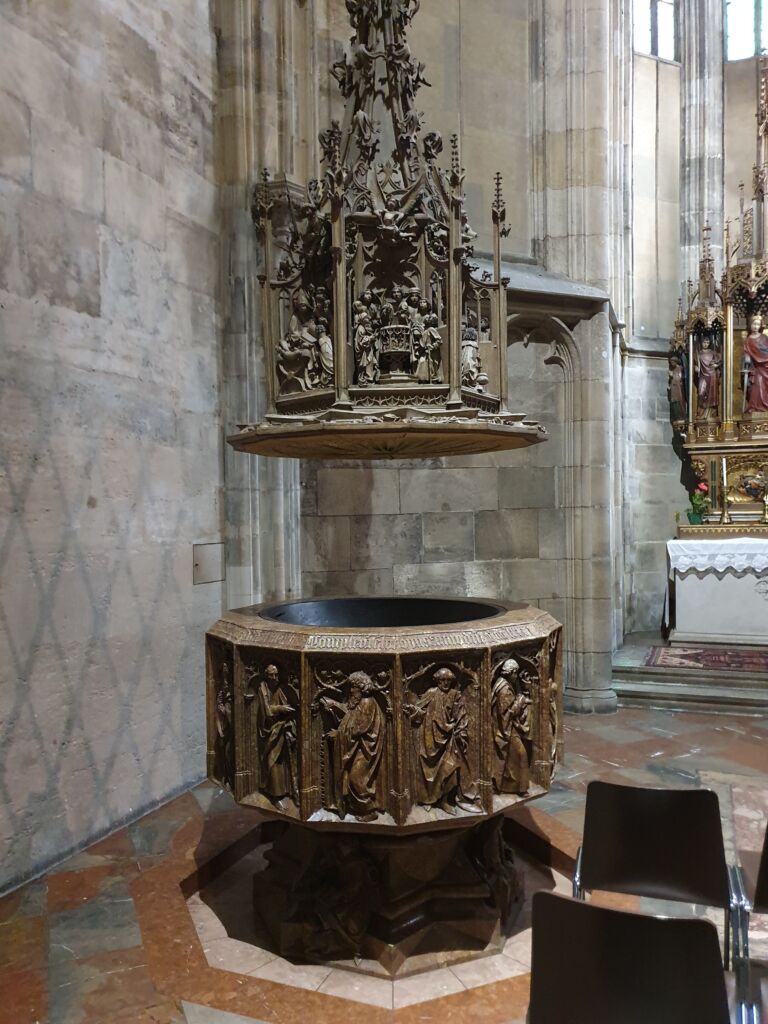
Another of the main chapels in St Stephen’s Cathedral that drew me in was the Chapel of St Katherine. The Chapel of St Katherine has a distinctive baptismal font with a Gothic lid. The baptismal font has 14 sides and was completed in 1481. The basin features the twelve apostles as part of its decor.
Imperial Oratorio
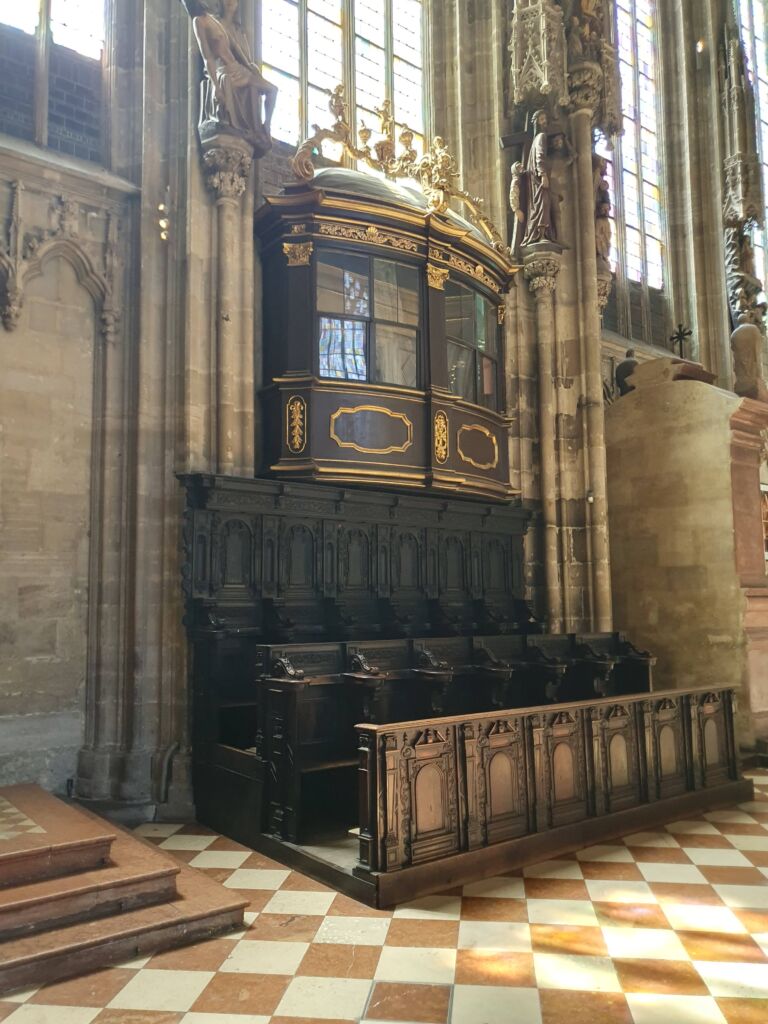
Another feature inside the cathedral is the Imperial Oratorio. Construction began in 1644 and was completed in 1646.
High Grave of Emperor Frederick III
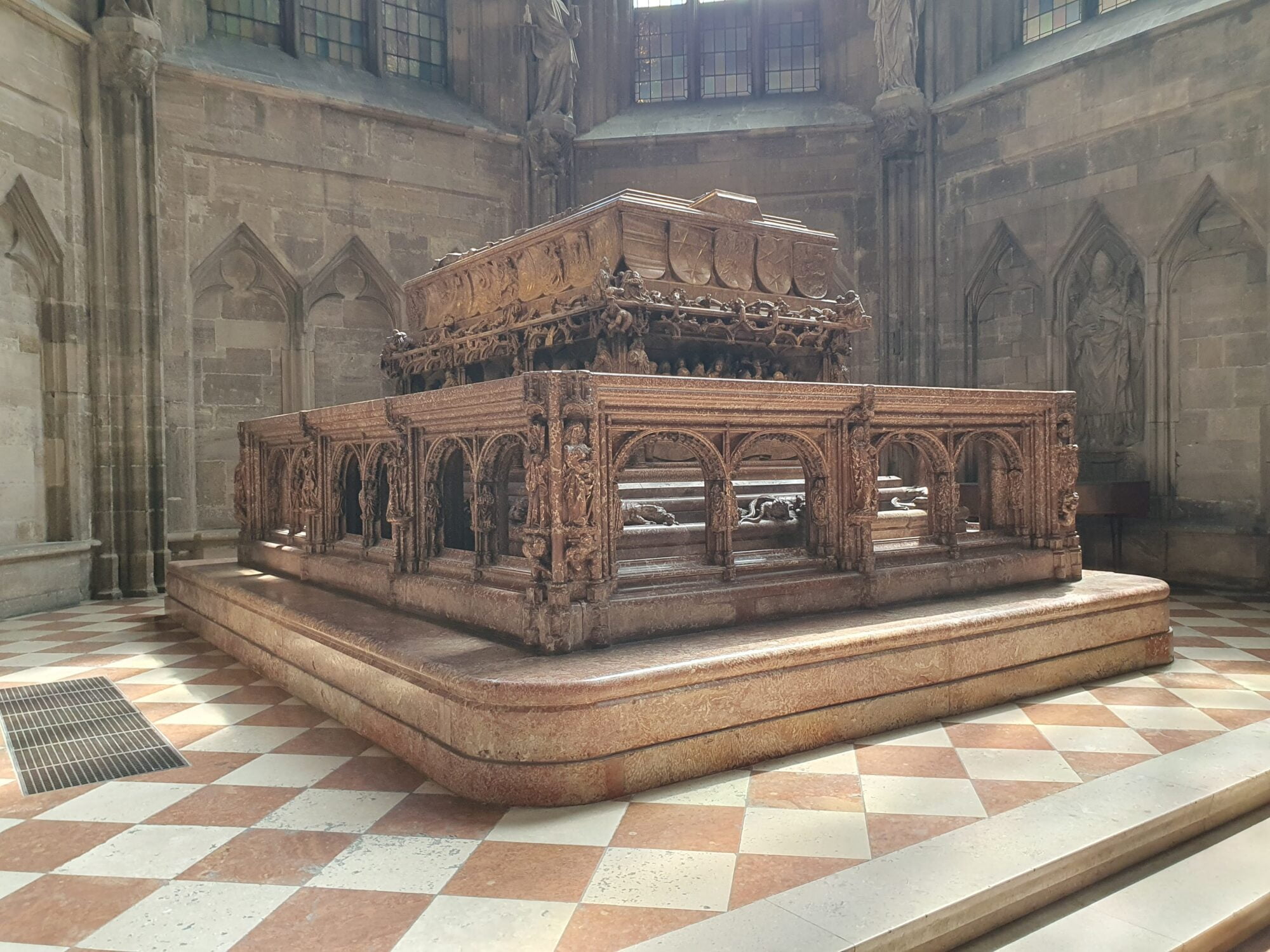
The High Grave of Emperor Friedrich III, to the right of the high altar, is impressive. Emperor Friedrich III was the Holy Roman Emperor between 1452 and 1493. His tomb has been in St Stephen’s Cathedral since 1513. His remains are inside, along with a crown, a sword, coins and more.
Turks Liberation Monument
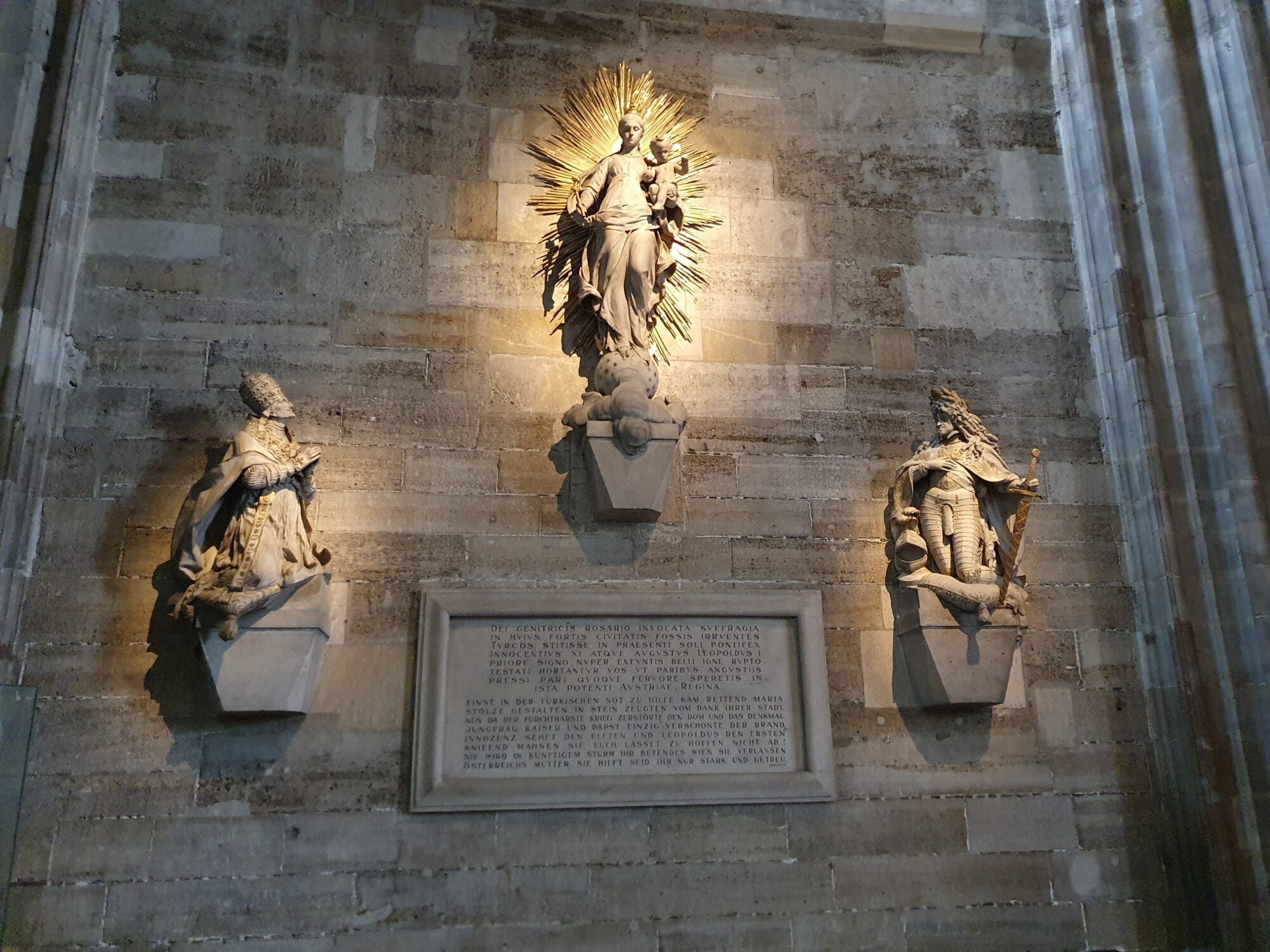
The Liebenberg monument caught my eye. It was built to commemorate the 200th anniversary of the defence of Vienna against the Ottomans in 1683. The monument includes details of Madonna, Emperor Leopold I, and Pope Innocent XI. What you see today are the remnants of the monument that was destroyed by fire in 1945.
When’s the Best Time to Visit?
I visited St Stephen’s on three occasions, and it impressed me on each visit. Each time had its unique advantages. However, it was the least busy inside during our January jaunt.
First Visit At Christmas in December
The first visit was on my Interrail trip in December 2019. It was Christmas time, and the festive market surrounded the cathedral. The market had stalls around the edges, and horse-and-cart rides were departing from here.
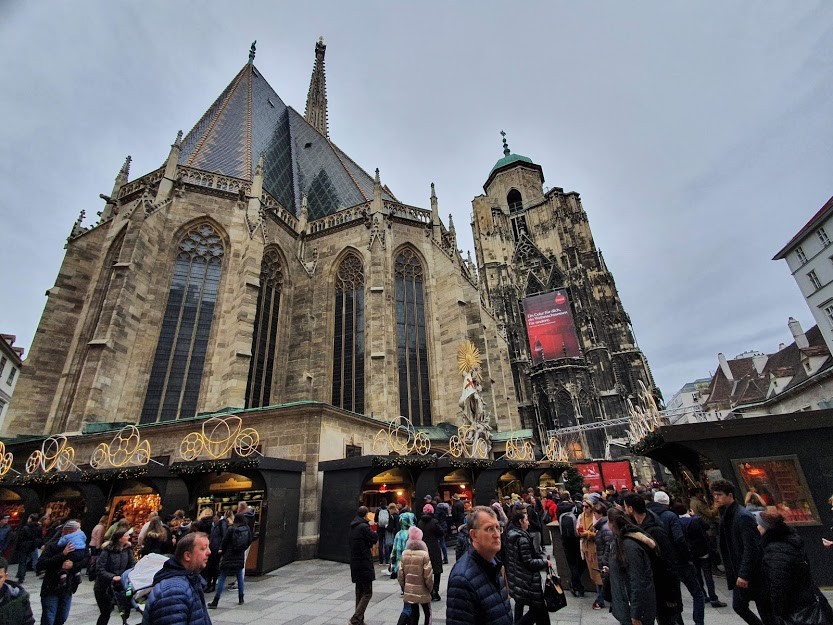
We enjoyed browsing the market stalls for gifts and souvenirs. We then had a drink of mulled wine and a bottle of beer. This allowed me to enjoy admiring the building from the outside. We had a dog in tow; the rain was falling, and it was very busy because of the time of year. Because of this, we opted not to enter but earmarked it for the return visit to Vienna.
January: The Free Parts Inside
My second visit to St Stephen’s Cathedral in Vienna was on a weekday in mid-January. The atmosphere was different; it was much quieter in the area, and the weather was cold, with blue skies. The cathedral was busy, but it wasn’t as crowded as it was at Christmas.
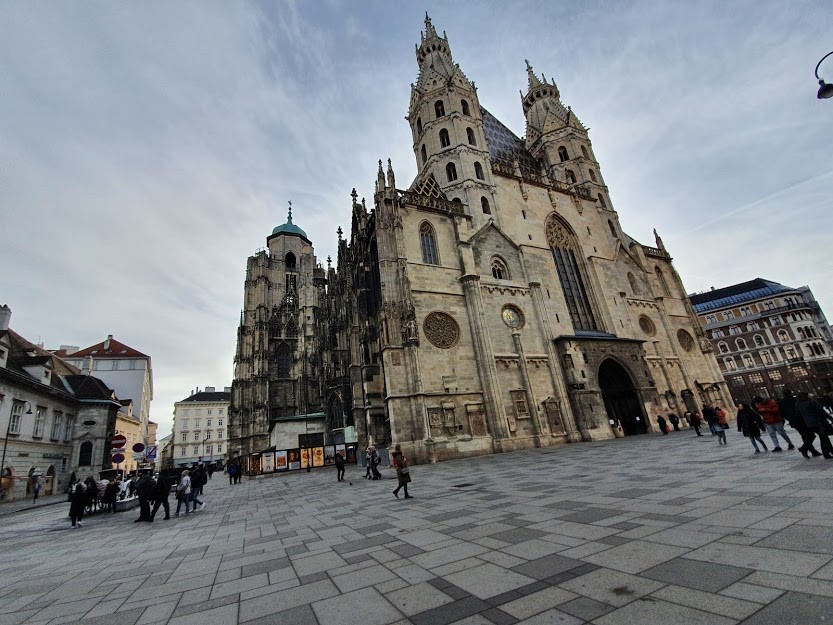
We still had the dog in tow, so we took turns entering the building for a look around. I went in first, and it impressed me, particularly with its decoration and height. There were a few organs inside.
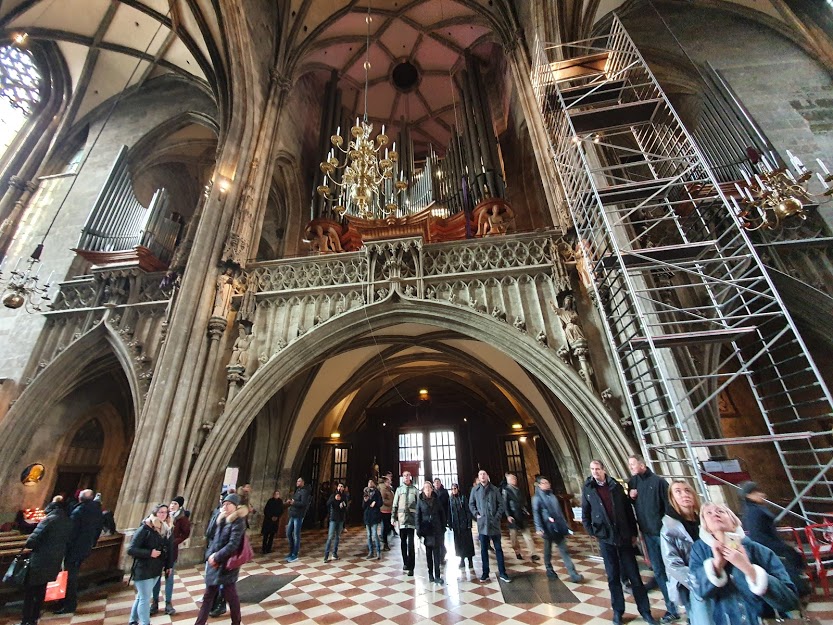
I imagined being at a service when inside, and I would bet the acoustics would be perfect. Sadly, there was no service, but there were still a number of people inside, with some rude people clamouring over others to photograph things.
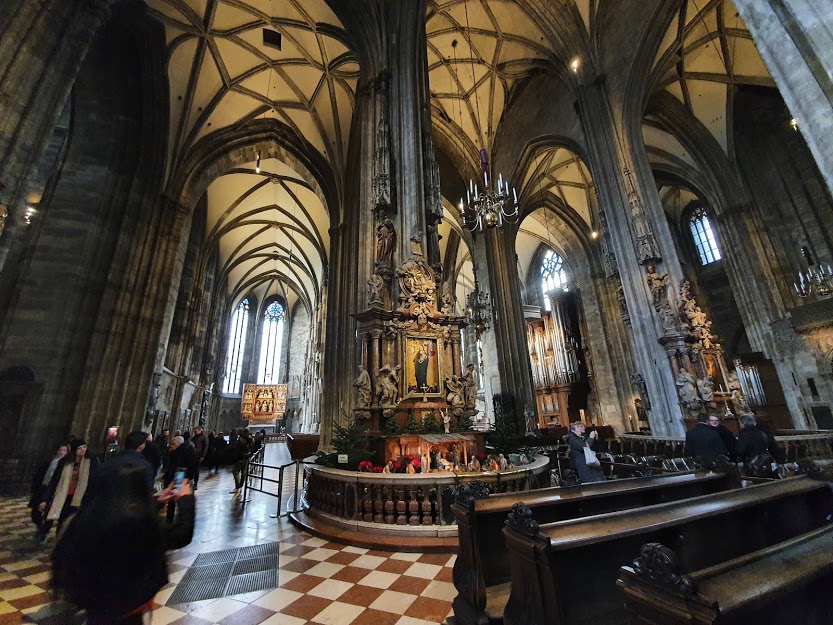
I enjoyed my look around and was excited to swap places with my partner and take the dog’s lead. I sat on a bench at the front, put my S10 phone into wide-angle mode, and made the dog aware of some cheese in my pocket.
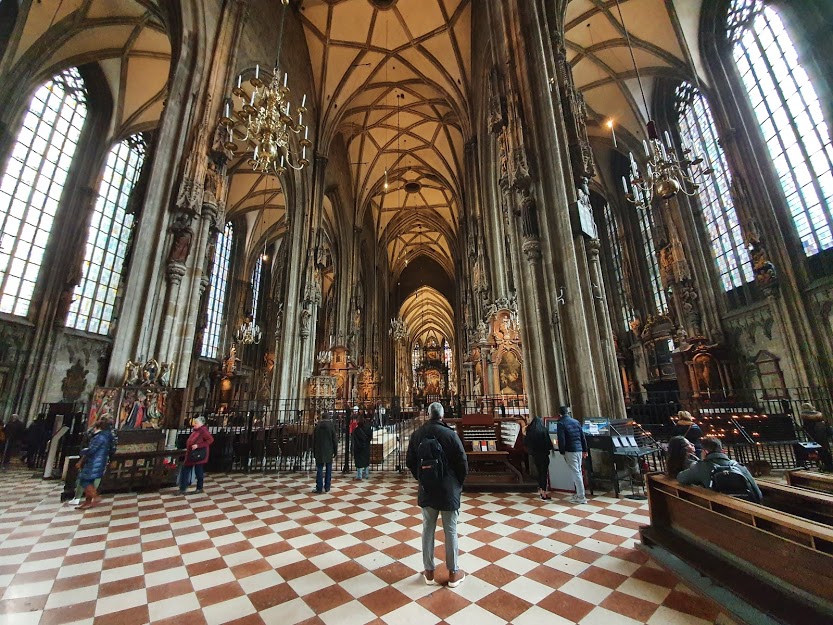
We played a game of ‘sit’ while I photographed him, with a reward if he didn’t get distracted. I got some great exterior photos by my standards, and was delighted with my visit.
During The Summer
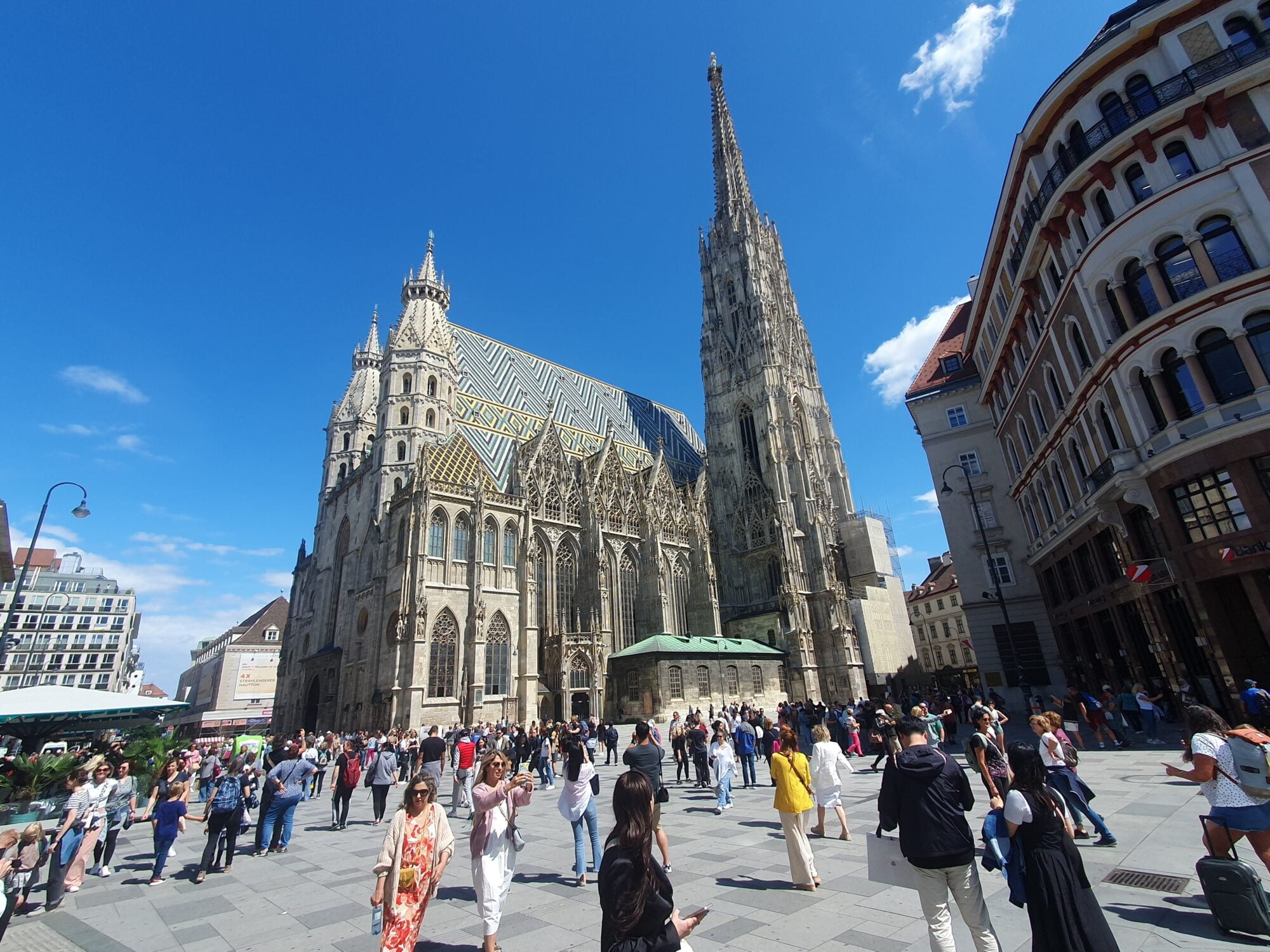
My third visit to St Stephen’s Cathedral in Vienna was during the summer on our August trip to the city. This trip to Vienna lasted 9 days, so I had more time to see the parts I wanted in greater detail at a relaxing pace. During the summer, it was the busiest I have seen the area outside and the free parts.
This time, I decided to visit the paid area inside the cathedral to learn more about it.
Are Dogs Allowed Inside?
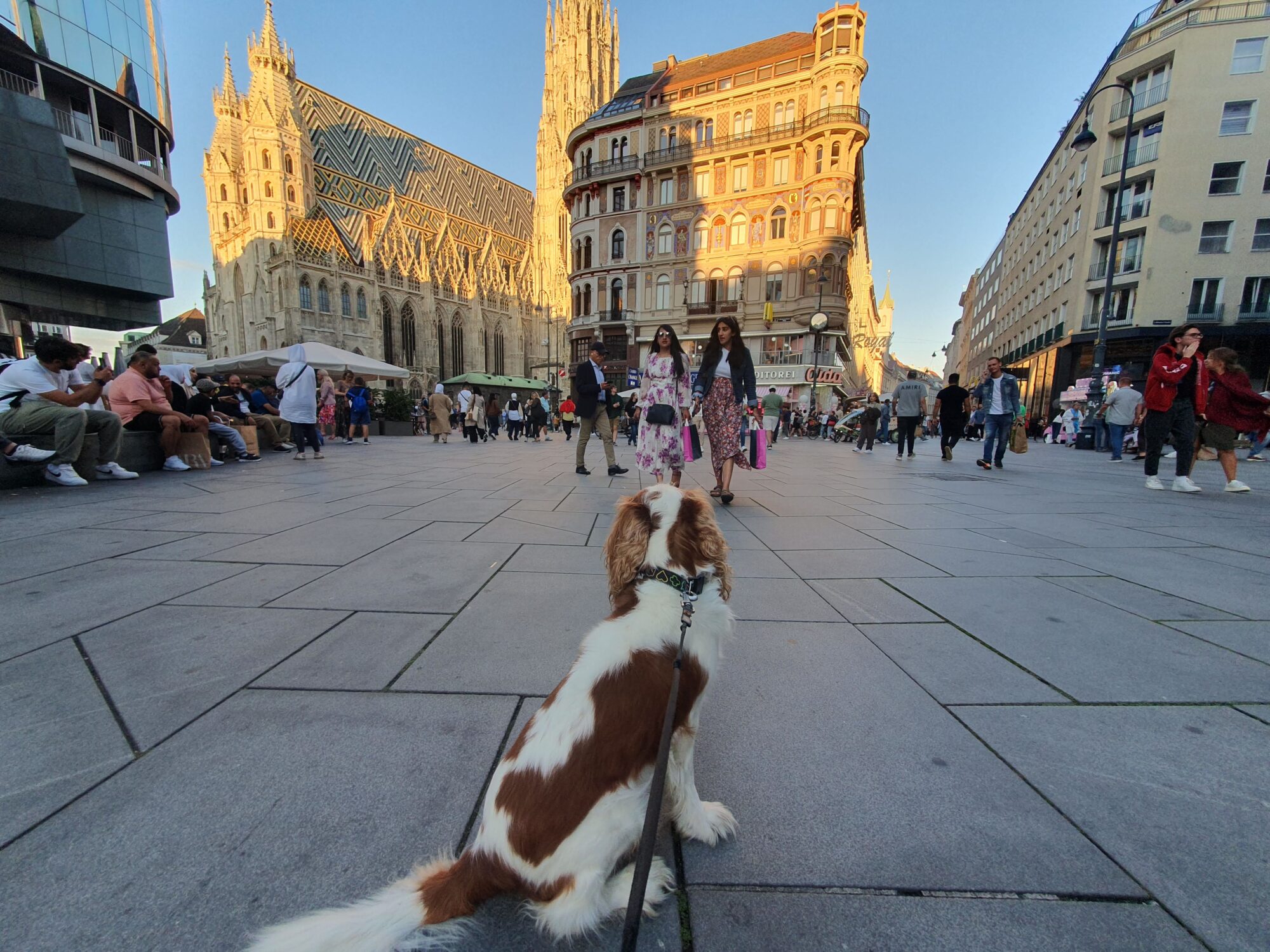
Unfortunately, dogs are not allowed inside the cathedral; however, the area is lovely for a dog walk, with a few places to sit and enjoy the view. Be aware that, if your dog gets upset by horses, you might want to avoid the area near the north tower, as there are loads of carts stopping there.
Getting Here
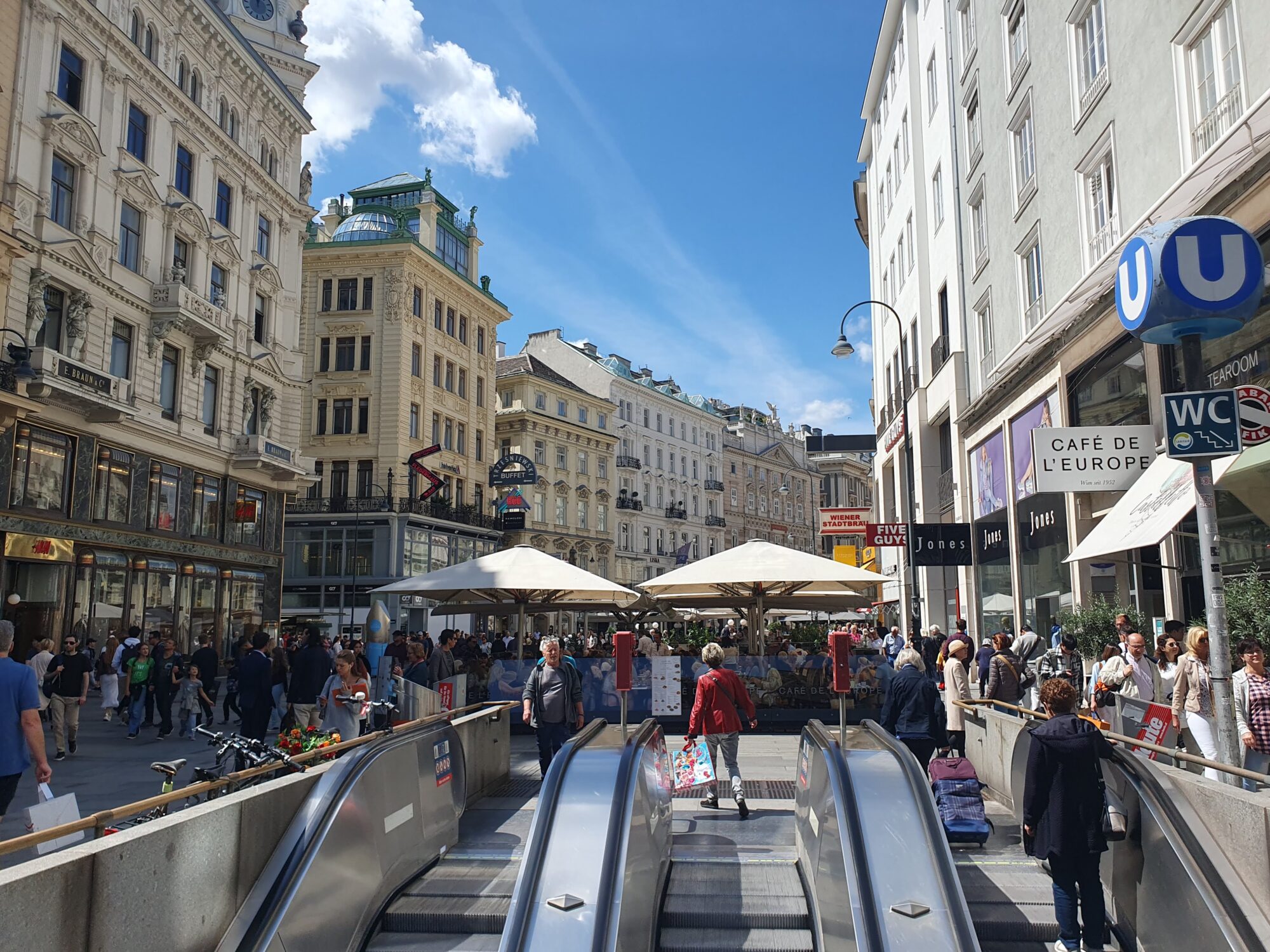
The central areas of Vienna are quite walkable, and the prime tourist sites are close to one another. If visiting from further afield, such as Schönbrunn Palace, then the underground is the most efficient way to get here. You just need to head to Stephansplatz station. This is on the U1 and U3 lines.
Is St Stephen’s Cathedral in Vienna Worth Visiting?
St Stephen’s Cathedral is an imposing building and well worth visiting. The exterior is impressive, especially on a clear, quiet morning. The free section is nice, albeit busy, and is a good option if visiting Vienna on a budget.
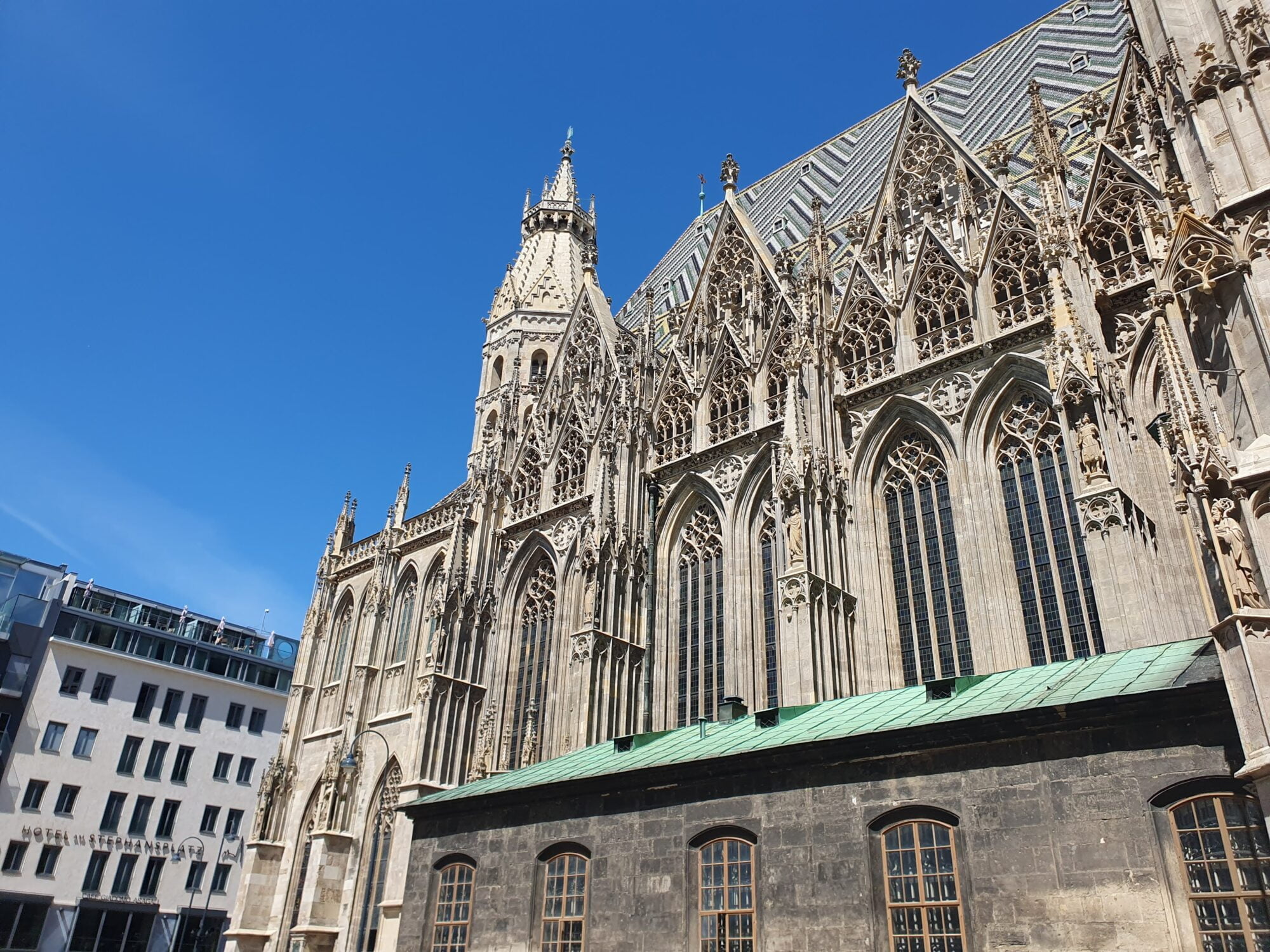
If you enjoy seeing all the details of churches, then the paid-for area is great and relatively quiet. If you enjoy views, then the towers are well worth the climb. When visiting, it’s best to decide early on which areas to visit first, then purchase the appropriate ticket. Overall, St Stephen’s Cathedral is a top sight in Vienna’s city centre. As a bonus, there are many other pleasant churches in Vienna.
Lovely photos as always. Never been to Vienna
My memory was back to 2007, when I visited this Stephen’s Cathedral and I miss to be here again. Thanks for giving us the detail information.
This is an immaculate cathedral. I particularly loved the roof.