
Pula Amphitheatre & Spectacula Antiqua Gladiator Event
Pula Amphitheatre is one of the top historic sites in the city and is a big draw for tourists. The arena is a 1st-century Roman amphitheatre that is very well preserved and is used locally to host events, including the Spectacula Antiqua Gladiator Event.

We really enjoyed the event and looking around the site in the daytime before. We have visited various iconic amphitheatres before, including in Rome and the Ancient Theatre of Philippopolis in Bulgaria. However, for the Pula Amphitheatre, we noticed the event and thought this would be a unique way to enjoy the experience. As a bonus, the amphitheatre and the event are both dog-friendly. However, when we visited, Henry was tired after a long day of moving across the city.
About Pula Amphitheatre
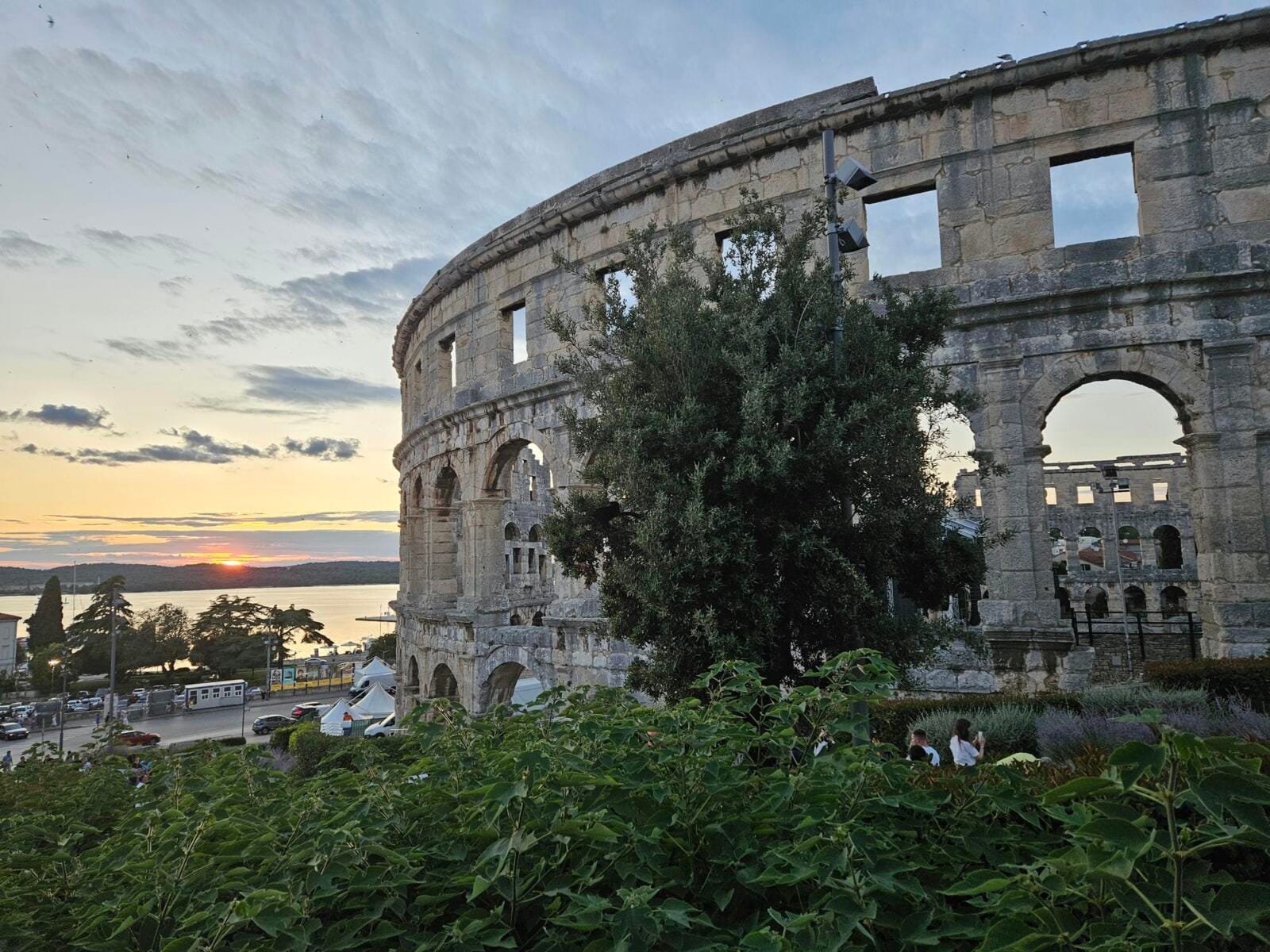
They built Pula Arena between 27 BC and 68 AD because the city of Pula became a regional centre of Roman rule. Back then it was called Pietas Julia. Initially, during the reign of Augustus, a wooden amphitheatre was built. Then, during the reign of Claudius, a small stone amphitheatre was created. Then Vespasian began enlarging it to host gladiator fights. It was finally completed in 81 AD under the rule of Emperor Titus, which is the theatre you see today.
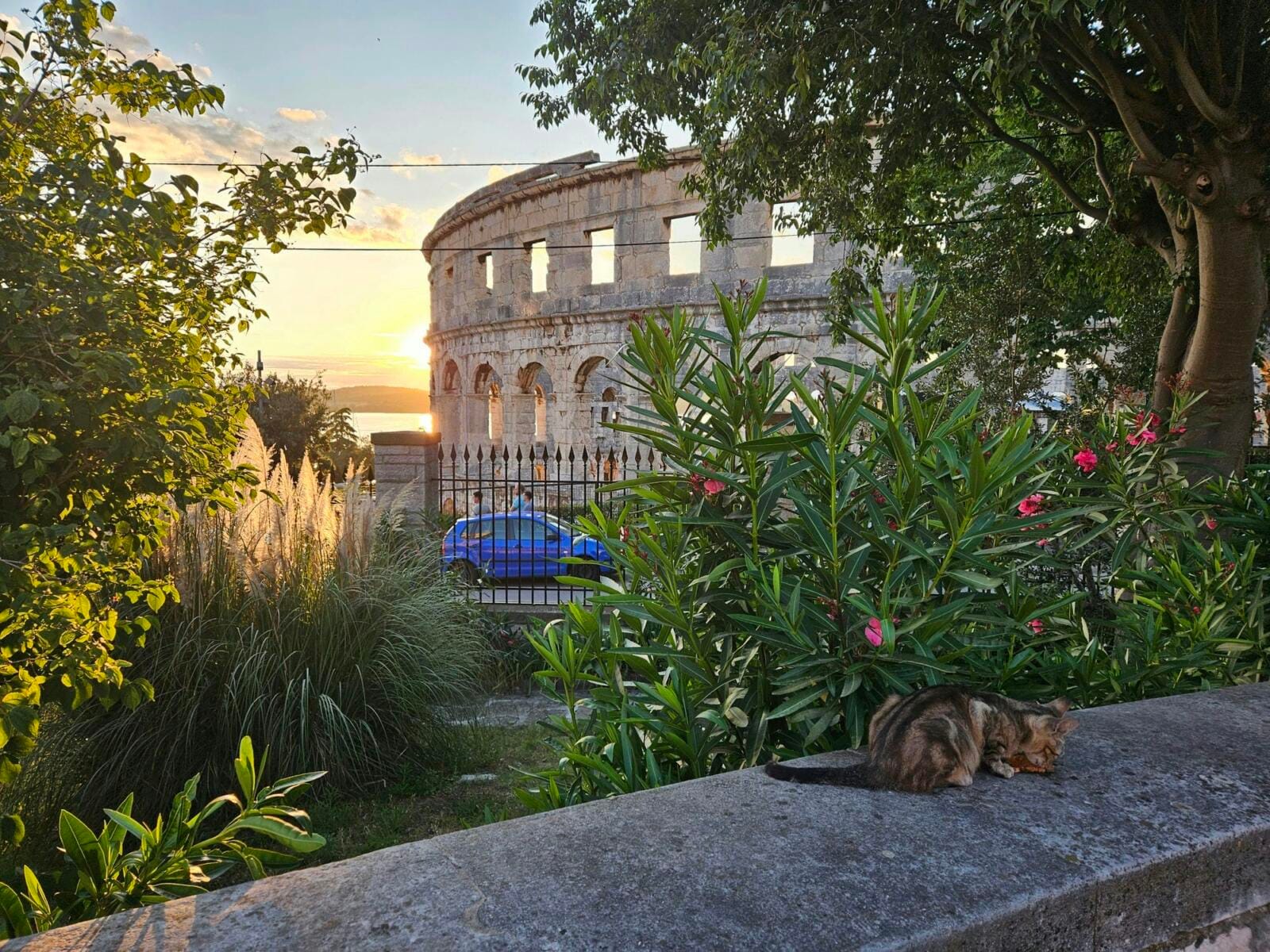
From then on, the amphitheatre remained in use until the 5th century, except for the fantastic reenactments you can see today. Since then, stone from the site has been used for other purposes, including the foundations of Pula Cathedral.

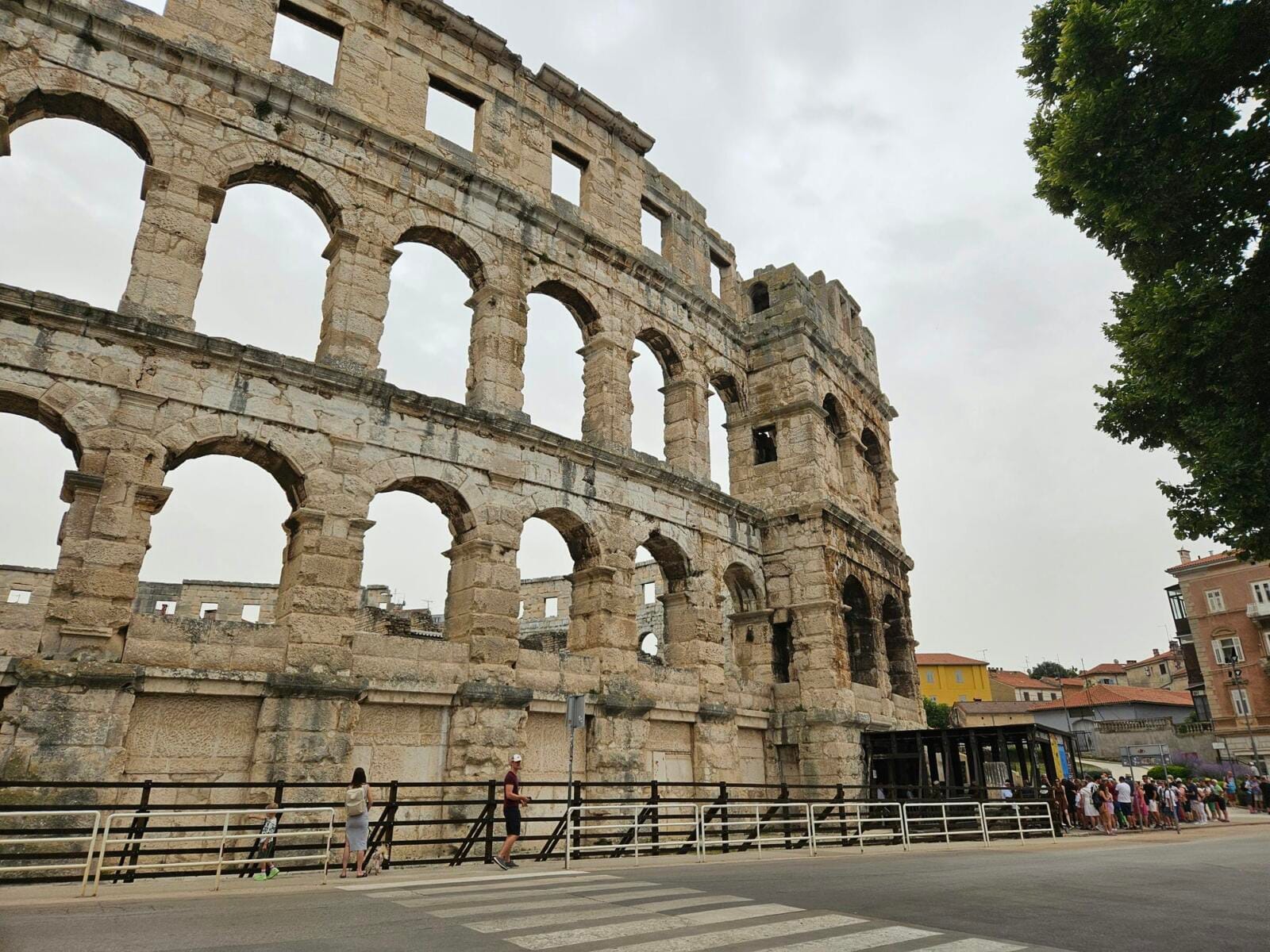
The outside wall of the site was built with limestone. Because the amphitheatre is on a hill, the side closest to the sea has 3 storeys, and the other side has 2. At its highest point, the wall is just over 29 metres tall. The local archaeology museum has a fantastic article detailing the construction. It certainly is a highlight of visiting Pula.
Spectacula Antiqua Gladiator Event
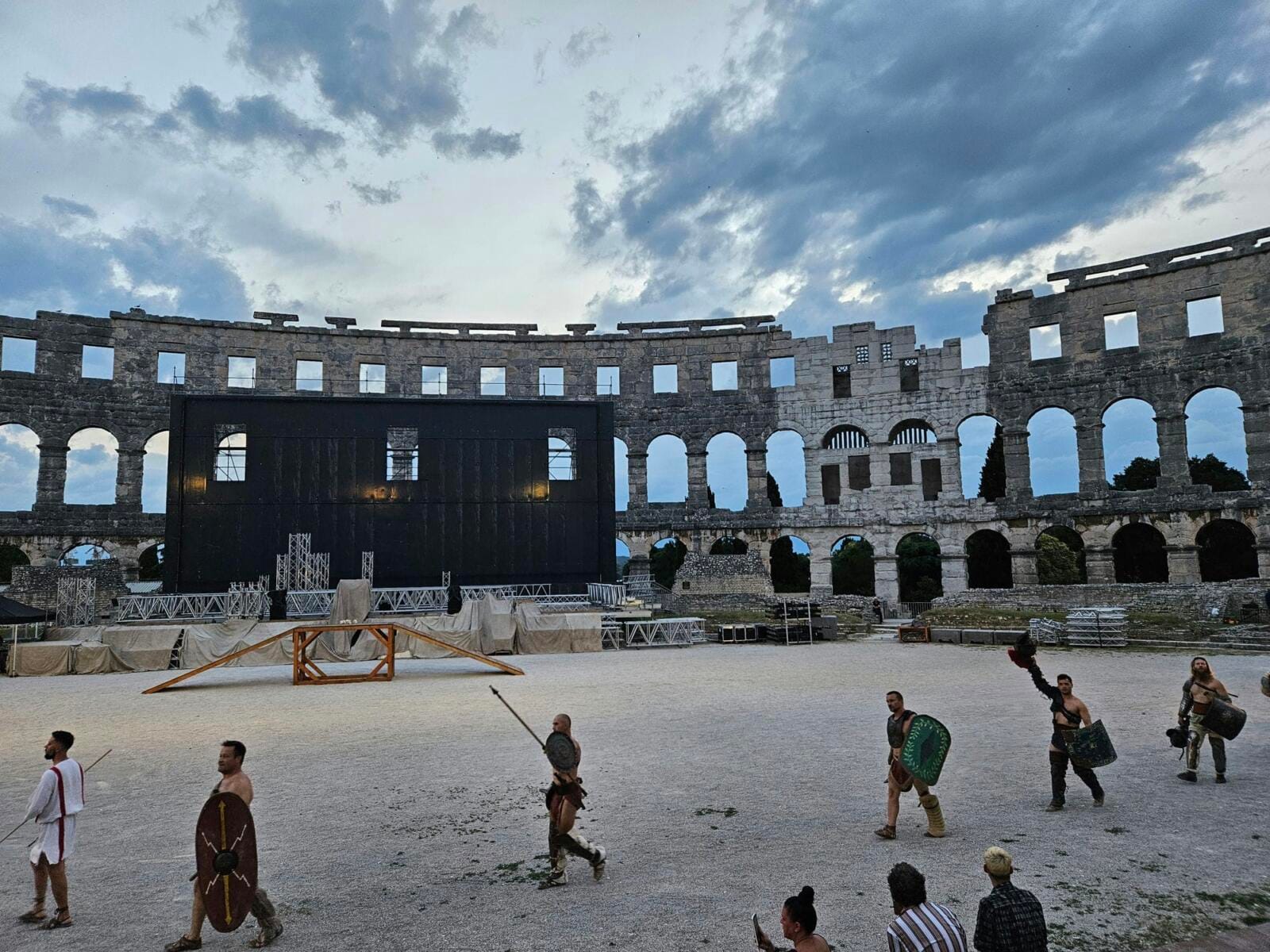
The Spectacula event takes place throughout the summer and is rather special. It is a unique way to see the site and enjoy an evening out. The event is entertaining, with some history thrown in, as the host covers the site’s history with help from the performers.
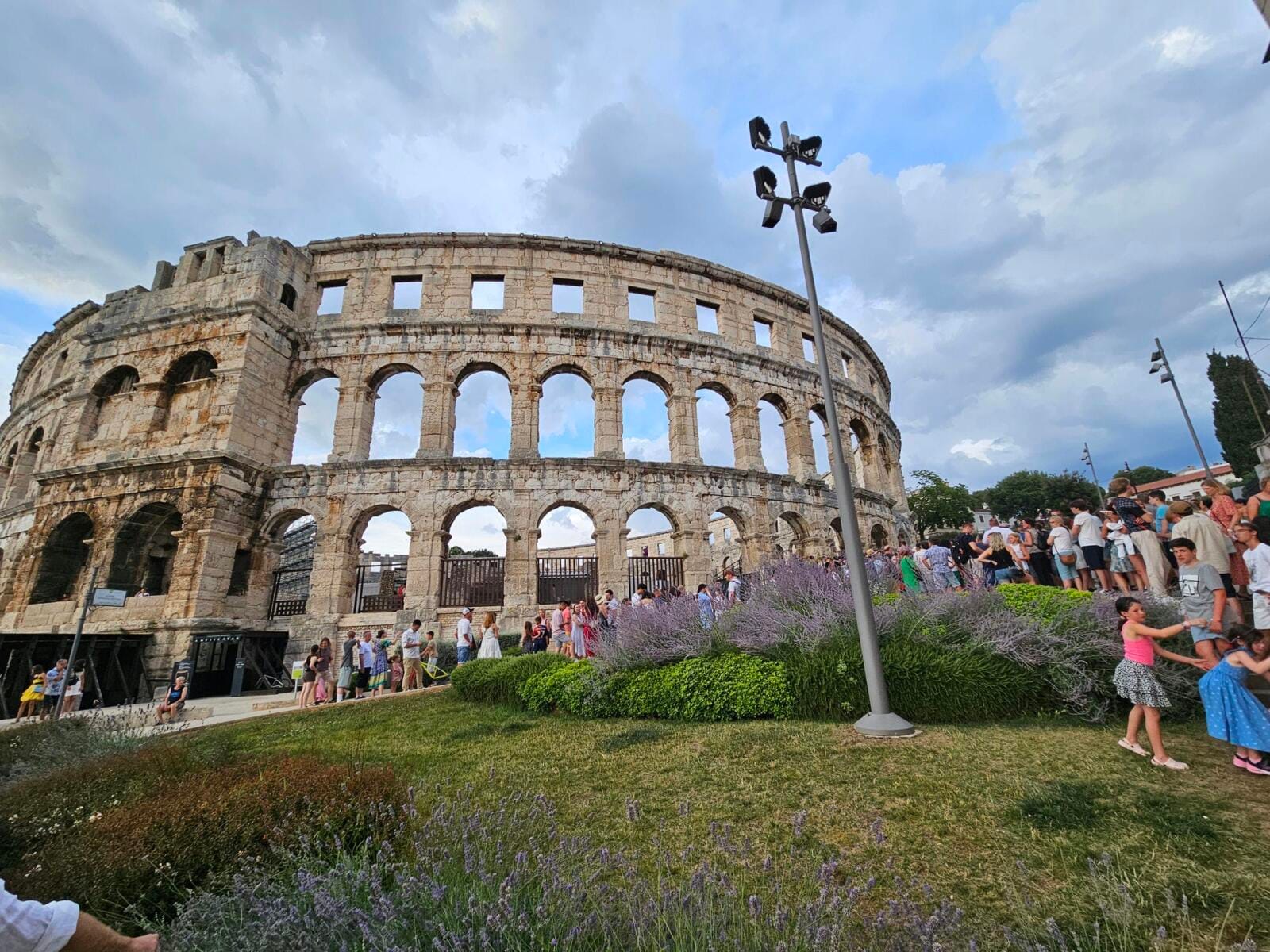
Once we had purchased tickets, there was a queue to enter the site. The queue was to the right of the ticket office and moved quickly. We took a drink in, which was handy, as I couldn’t see anywhere to purchase any at the event.
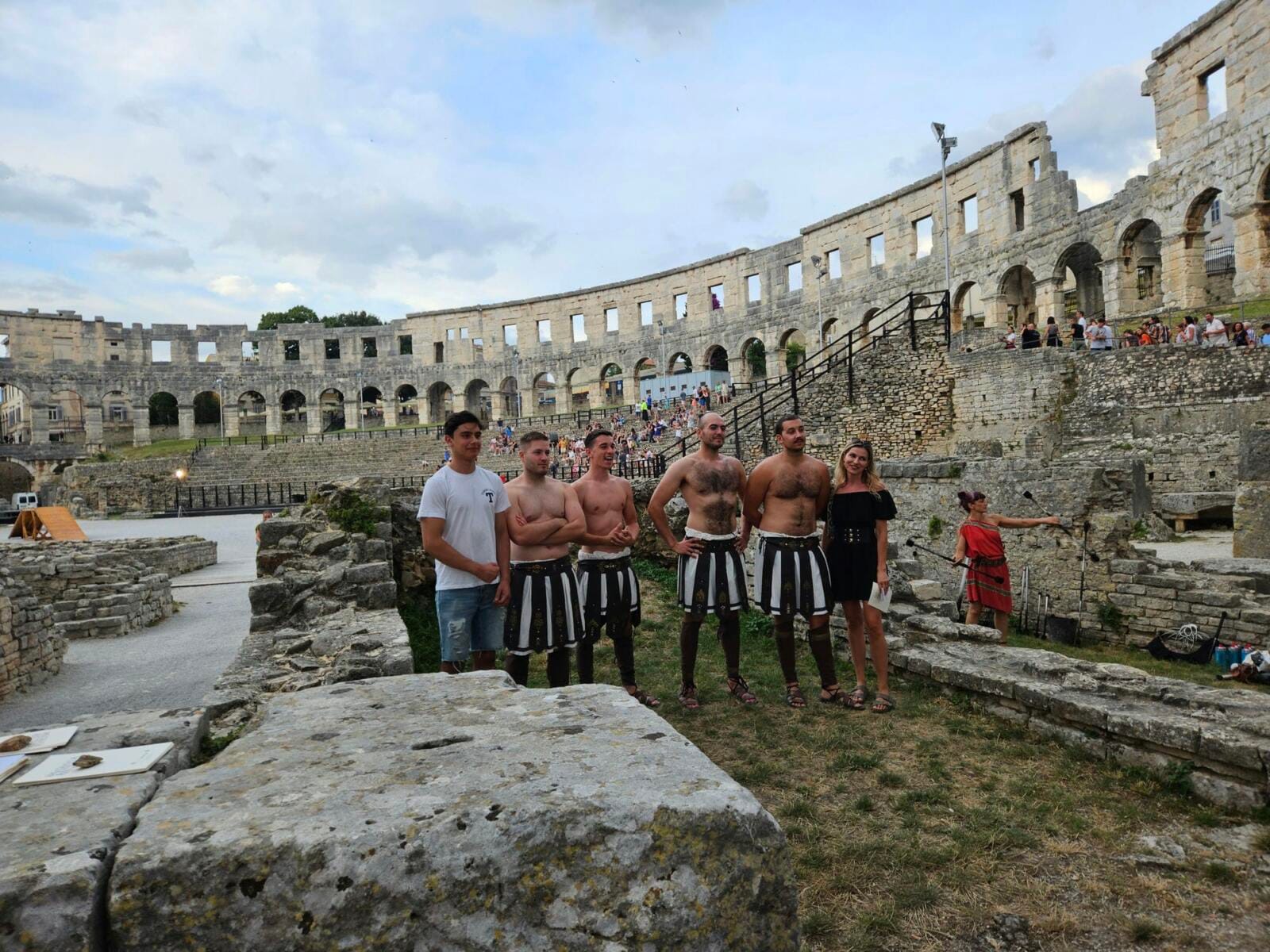
Once through the gate, you got to pass the performers and pose for photos with them. This included photos with gladiators and some centurions. They were very friendly and happy to pose for photos. As with all these things, a small minority love to barge in.
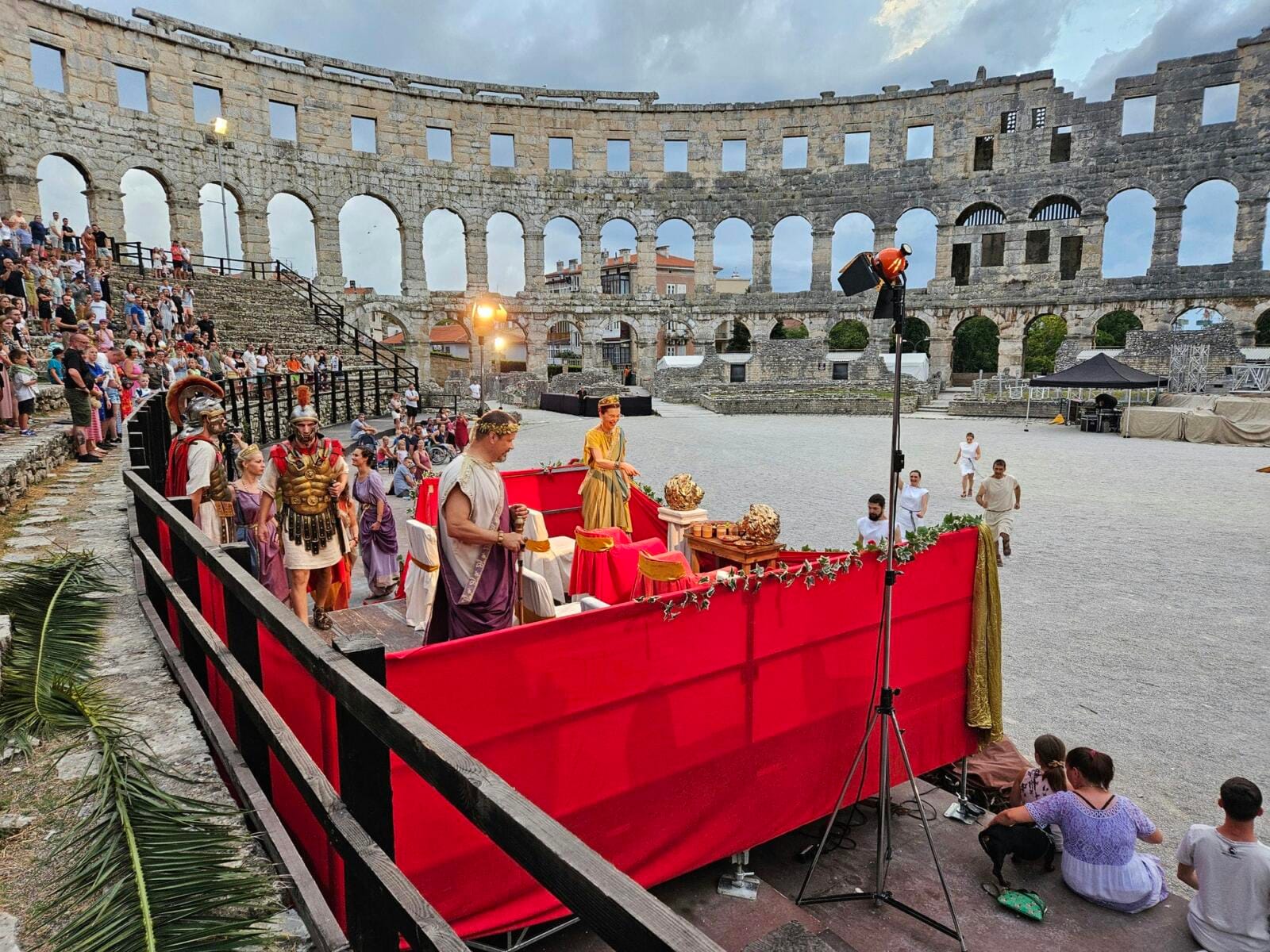
The show began with a visually presented historical introduction that told the story of the construction of the Pula Arena. This was followed by the emperor and guests taking the central stage in the prime seats. They were all dressed in period costumes and looked pretty cool.
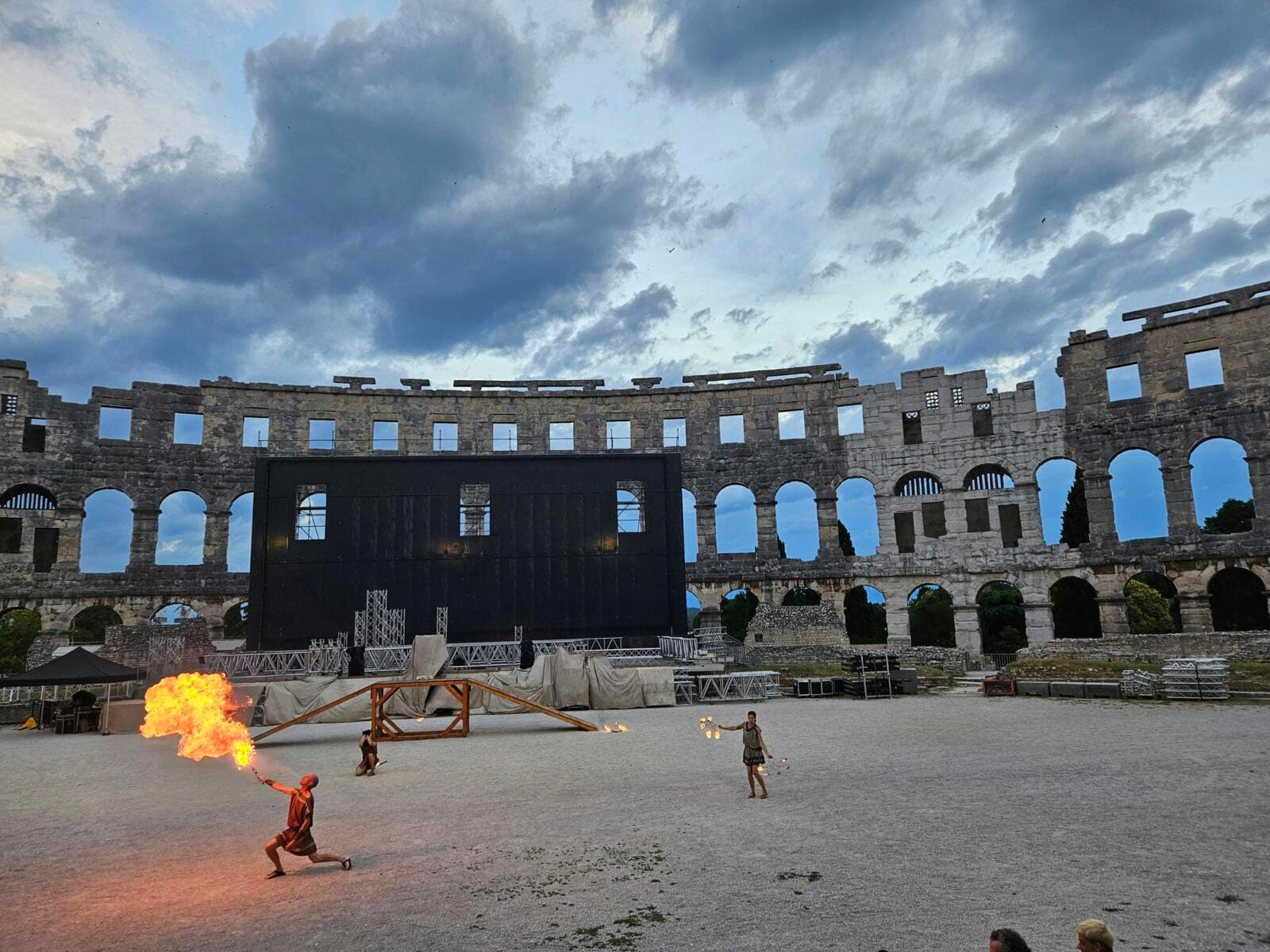
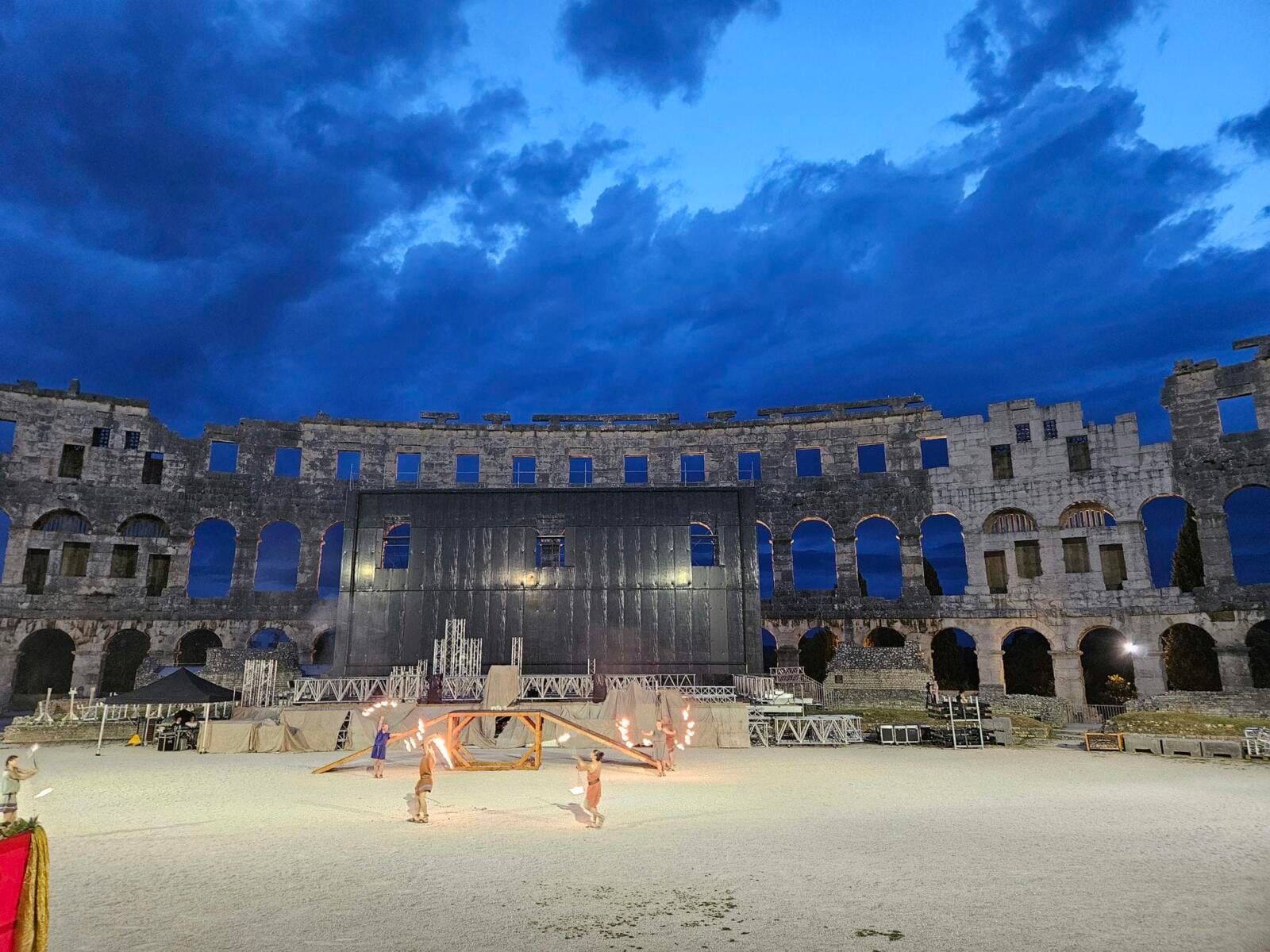
We then watched some impressive fire performers, including jugglers and fire breathers. This happened twice and was a great interval of entertainment between the gladiator duels. During our visit, this was enhanced by a severe thunderstorm approaching, which gave us a special light show.
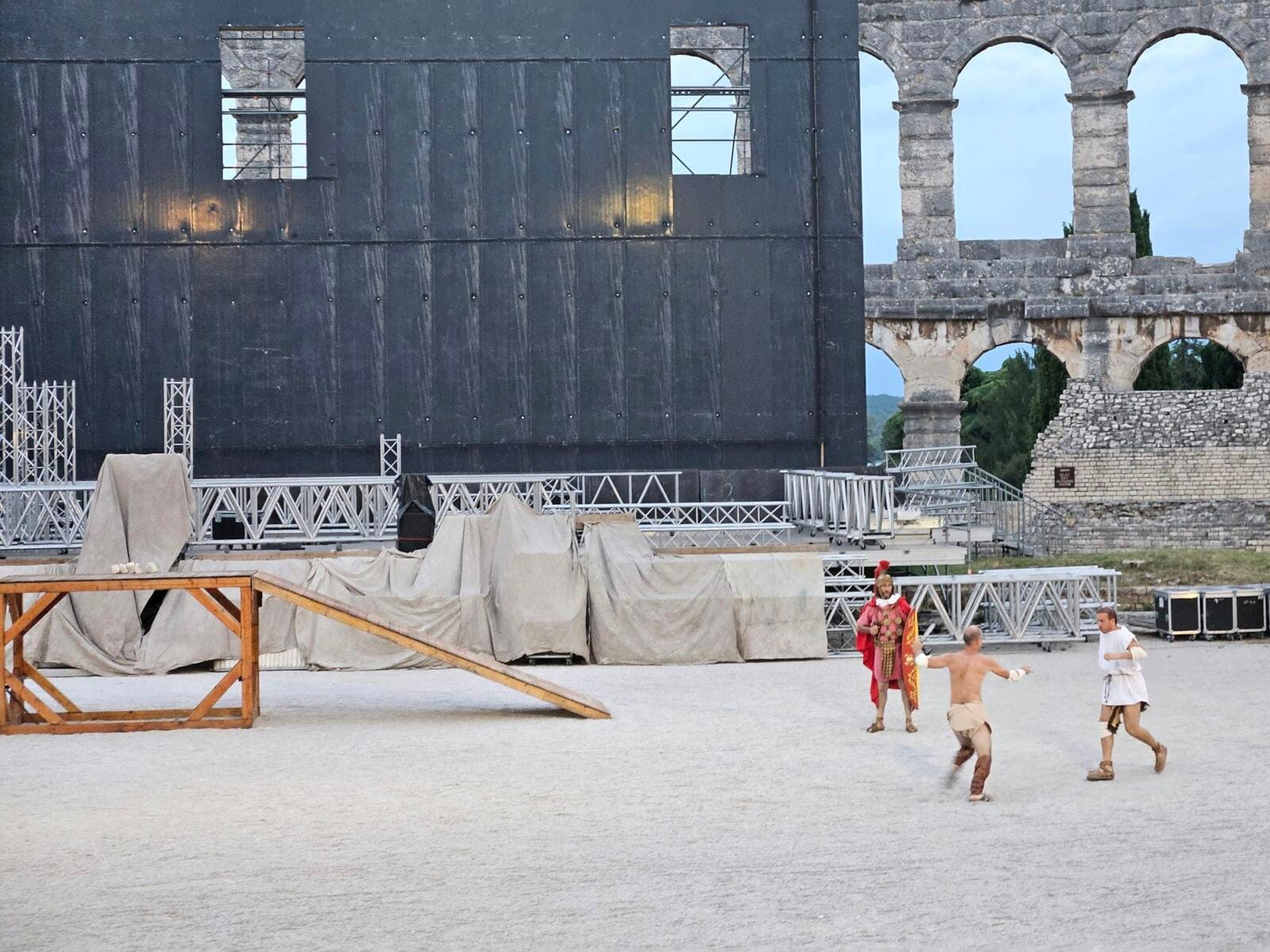
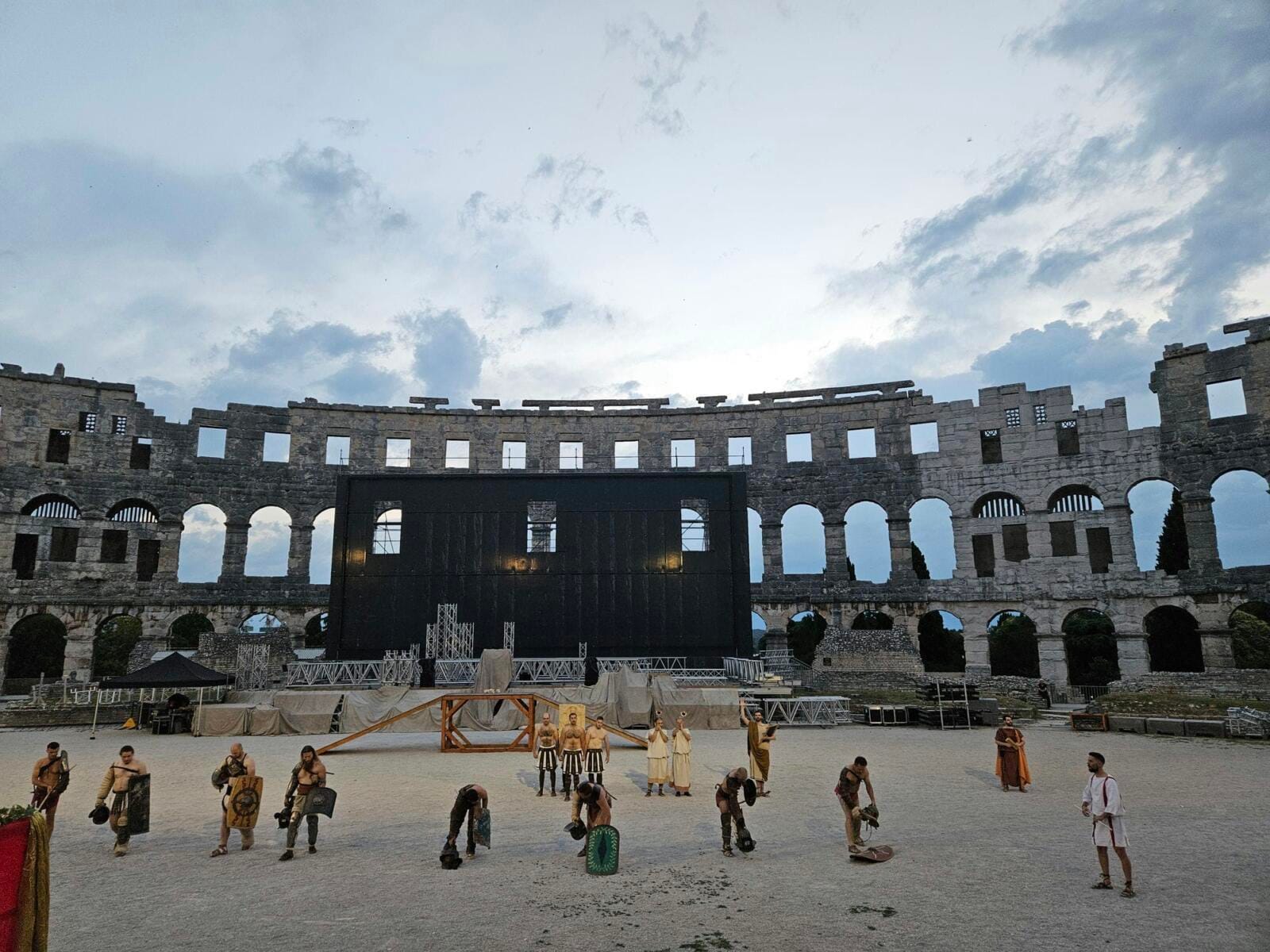
The gladiator duels were pretty special and, in parts, looked quite brutal; I bet the performers had some good bruises in the morning. Once a winner had been announced, it was over to the crowd to decide if they deserved death or mercy. The final decision was from the emperor. Most were offered mercy, except for the last loser, who was dispatched.
We were also shown how they confirmed the fighters were dead, which involved a big hammer hitting their heads. A melon was used to show the brutality. After this, the thunderstorm went epic, and the host joked that the gods were not happy with us.
Photos Of The Outside The Roman Amphitheatre
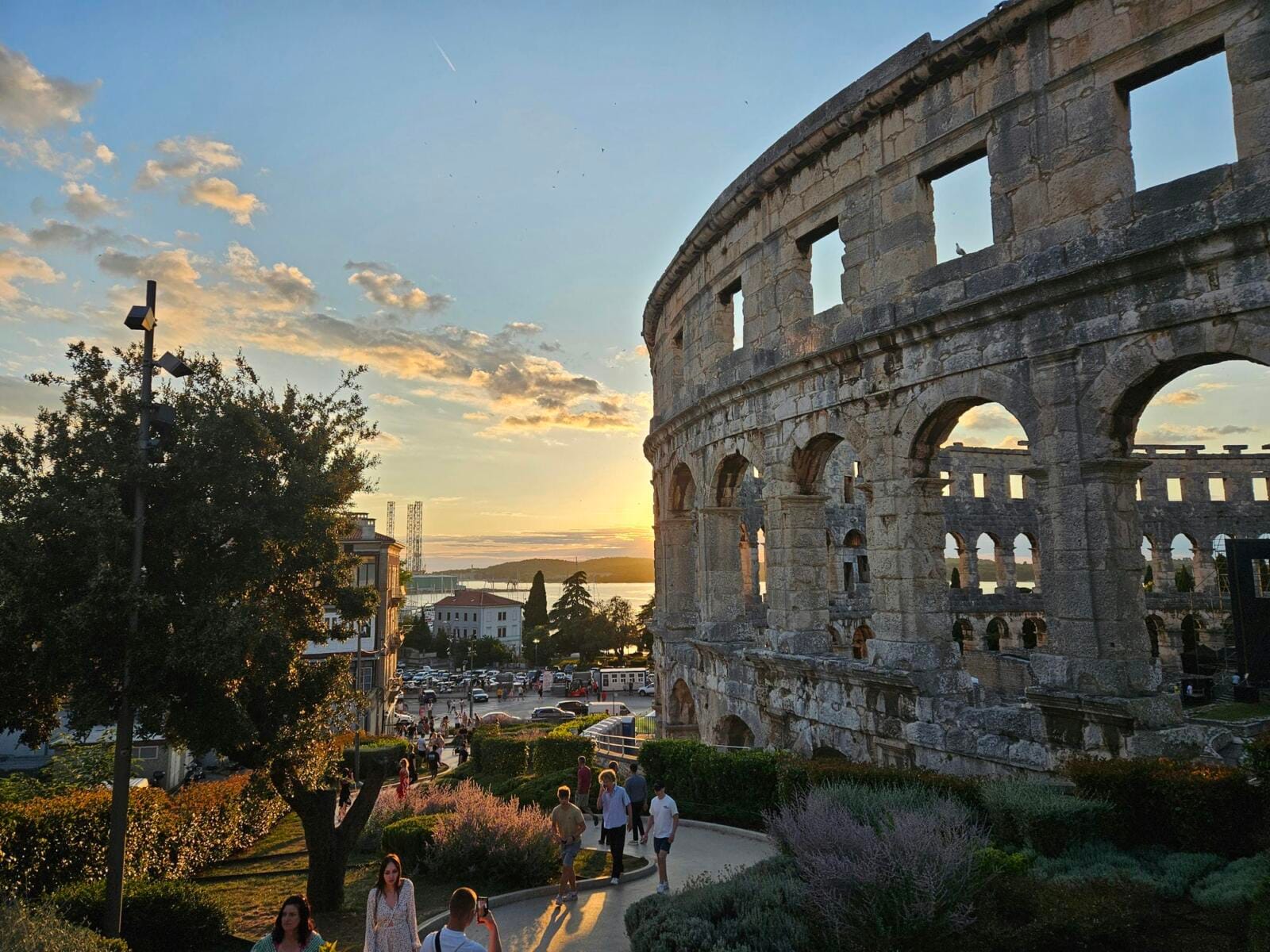
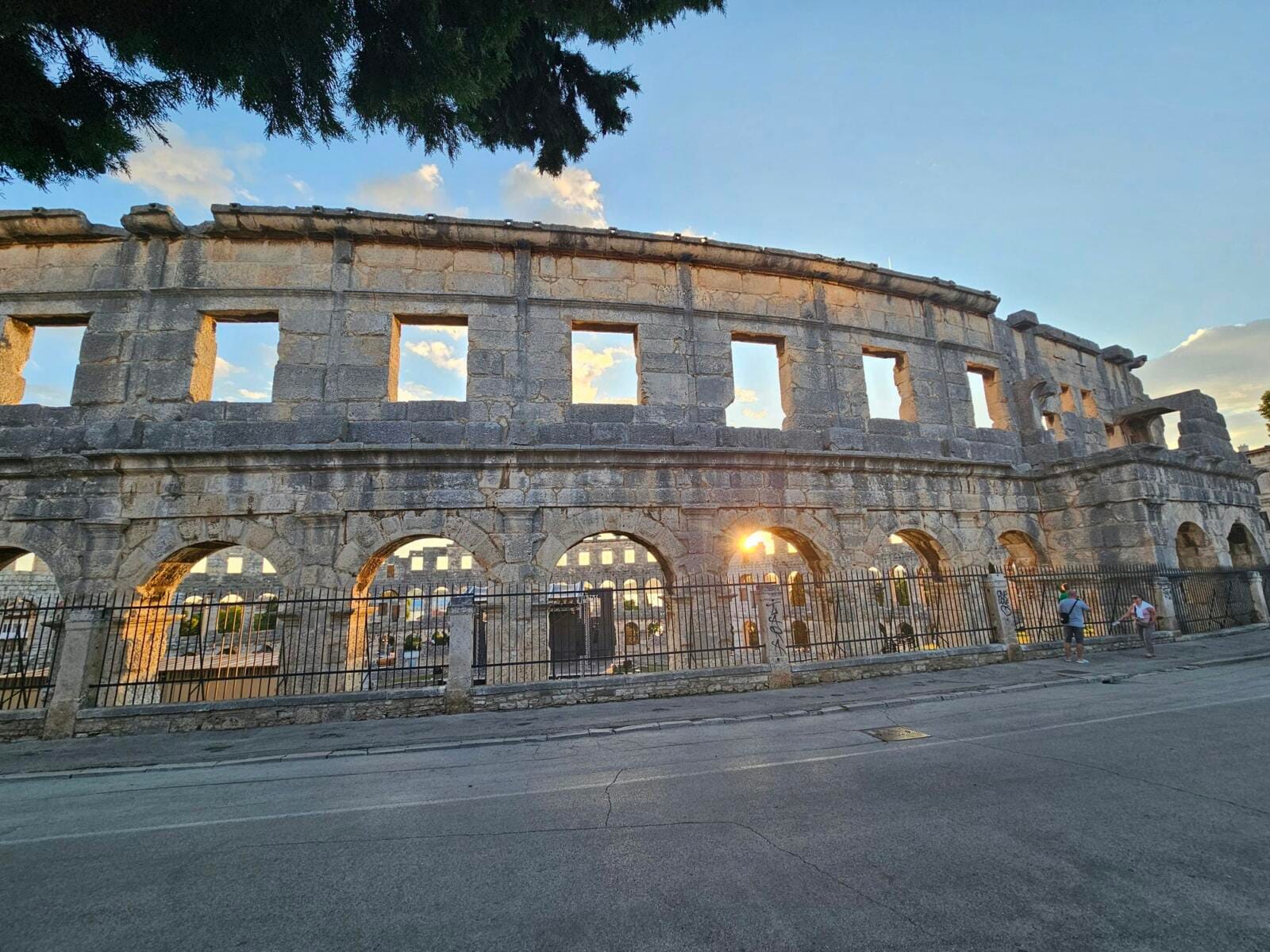
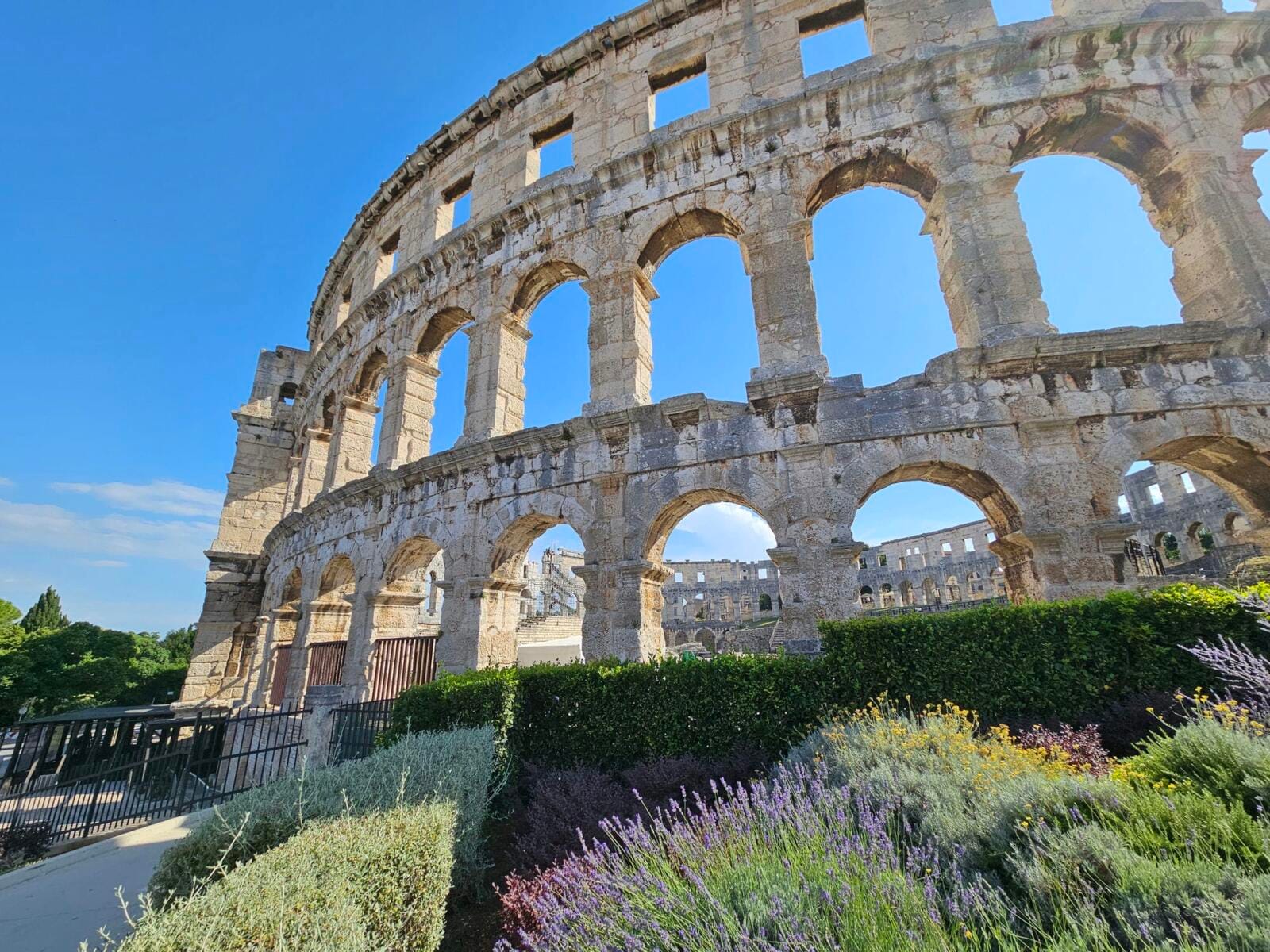
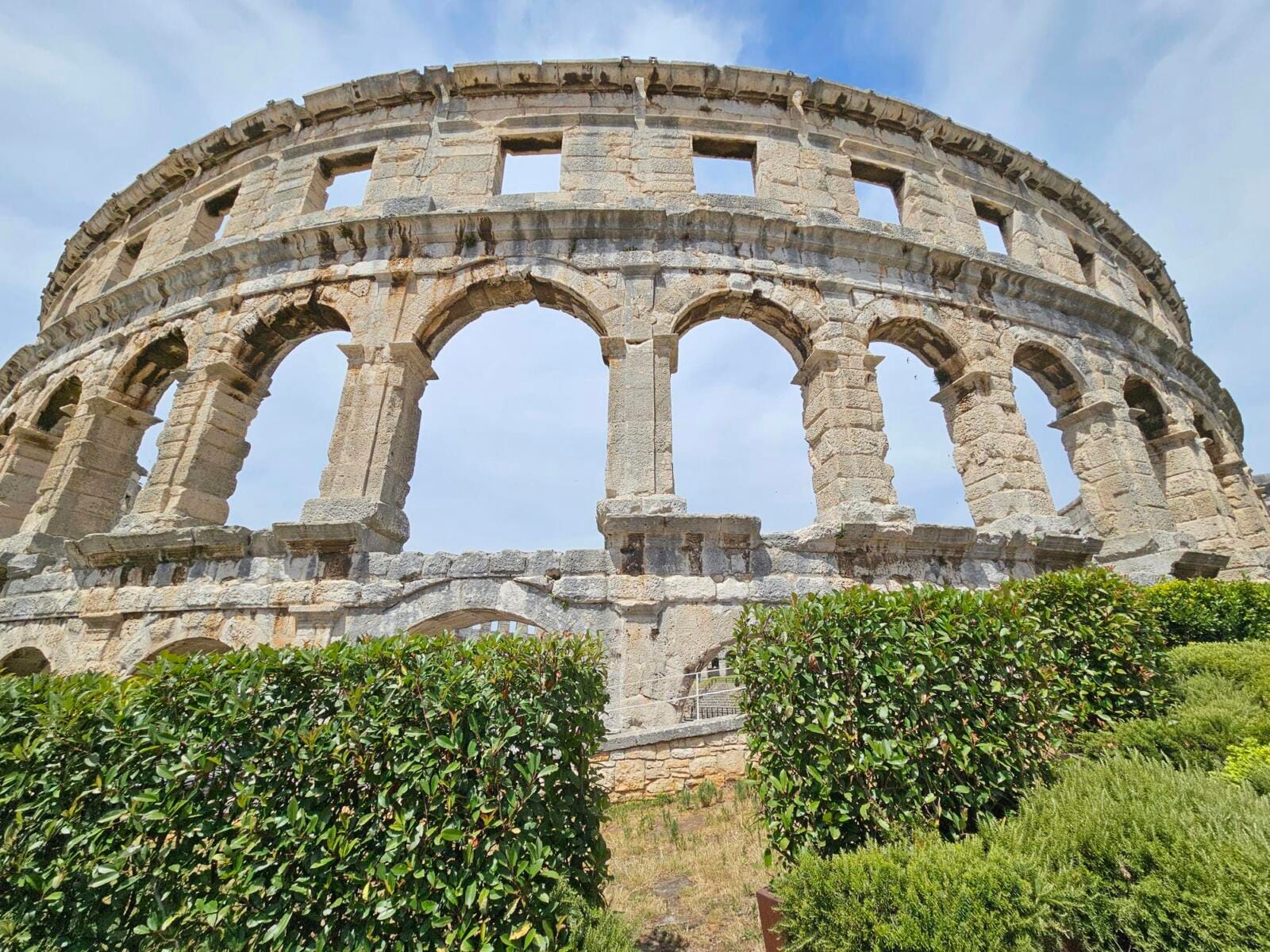
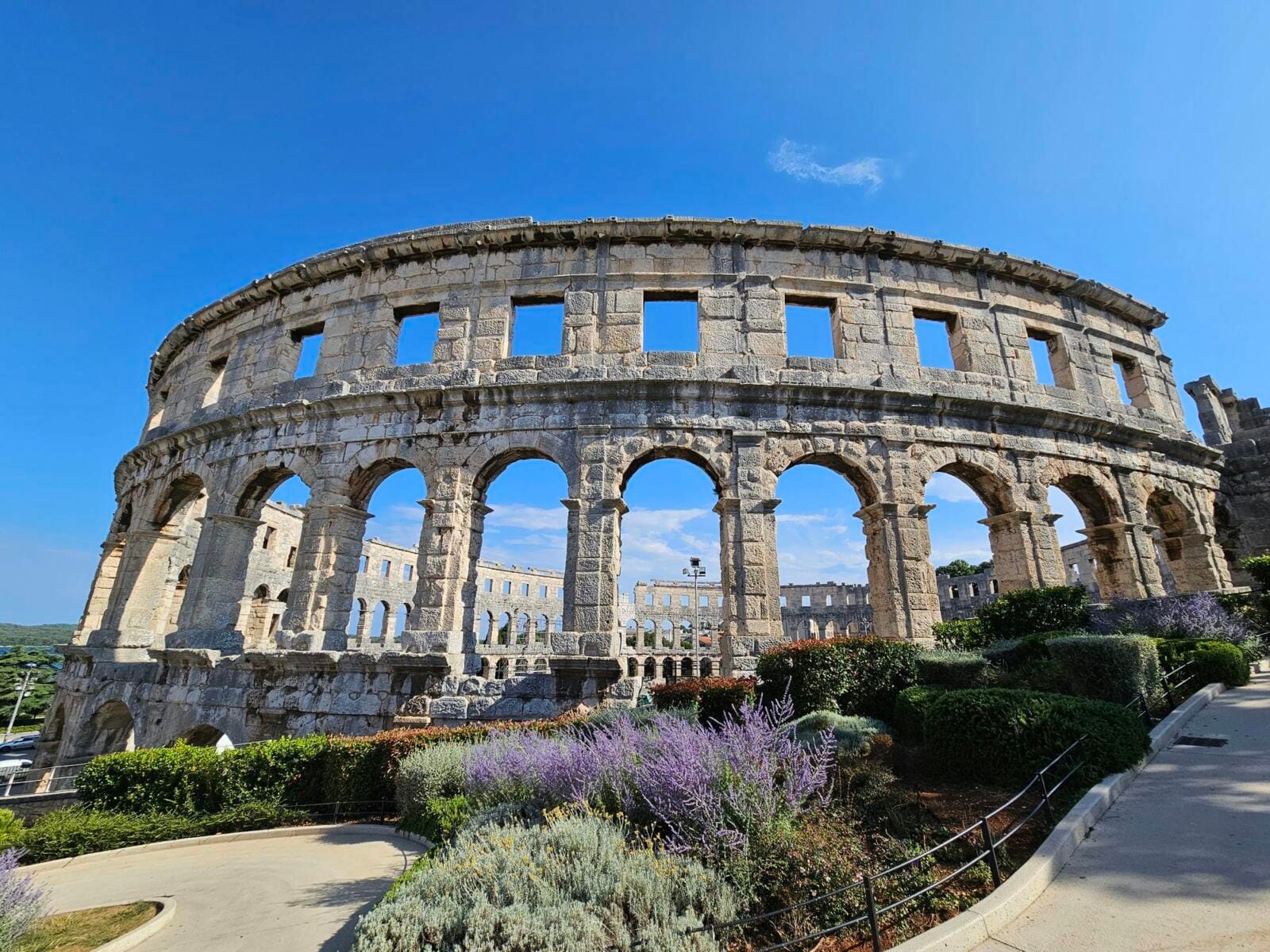
During the later stages of our holiday in Pula, we stayed near the amphitheatre, and it became a common spot for morning dog walks. It is a great place to walk around and admire the views of the ancient Roman site. One of my favourite parts was the colourful gardens to the right of the entrance.
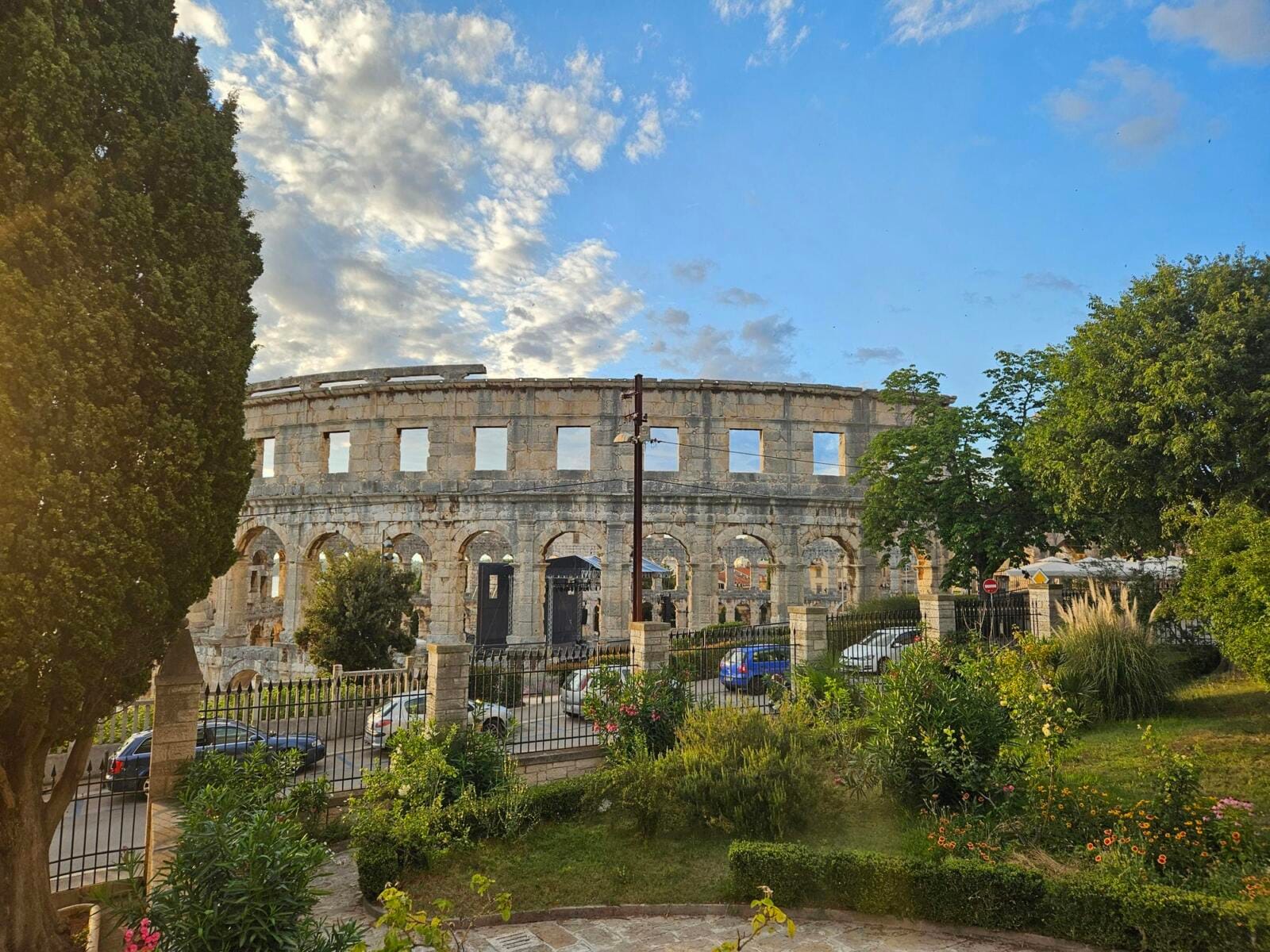
One of my favourite places for views was in the car park and on the steps to the Church of St Anthony. It’s a nice church to pop into, and when there are no services on, it is quiet and good to enjoy the scenery. The gates seemed locked around 9 pm during my visit.
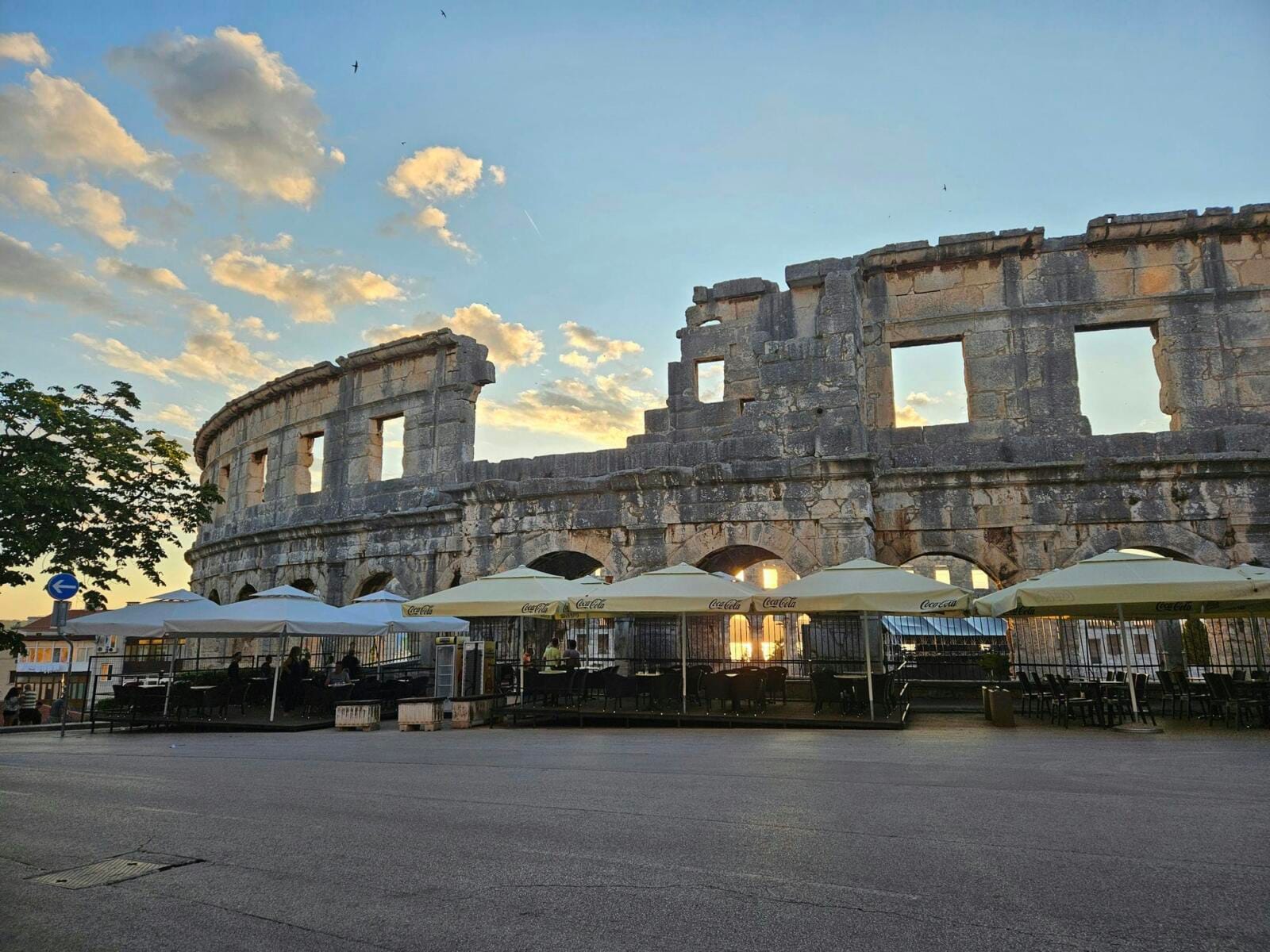
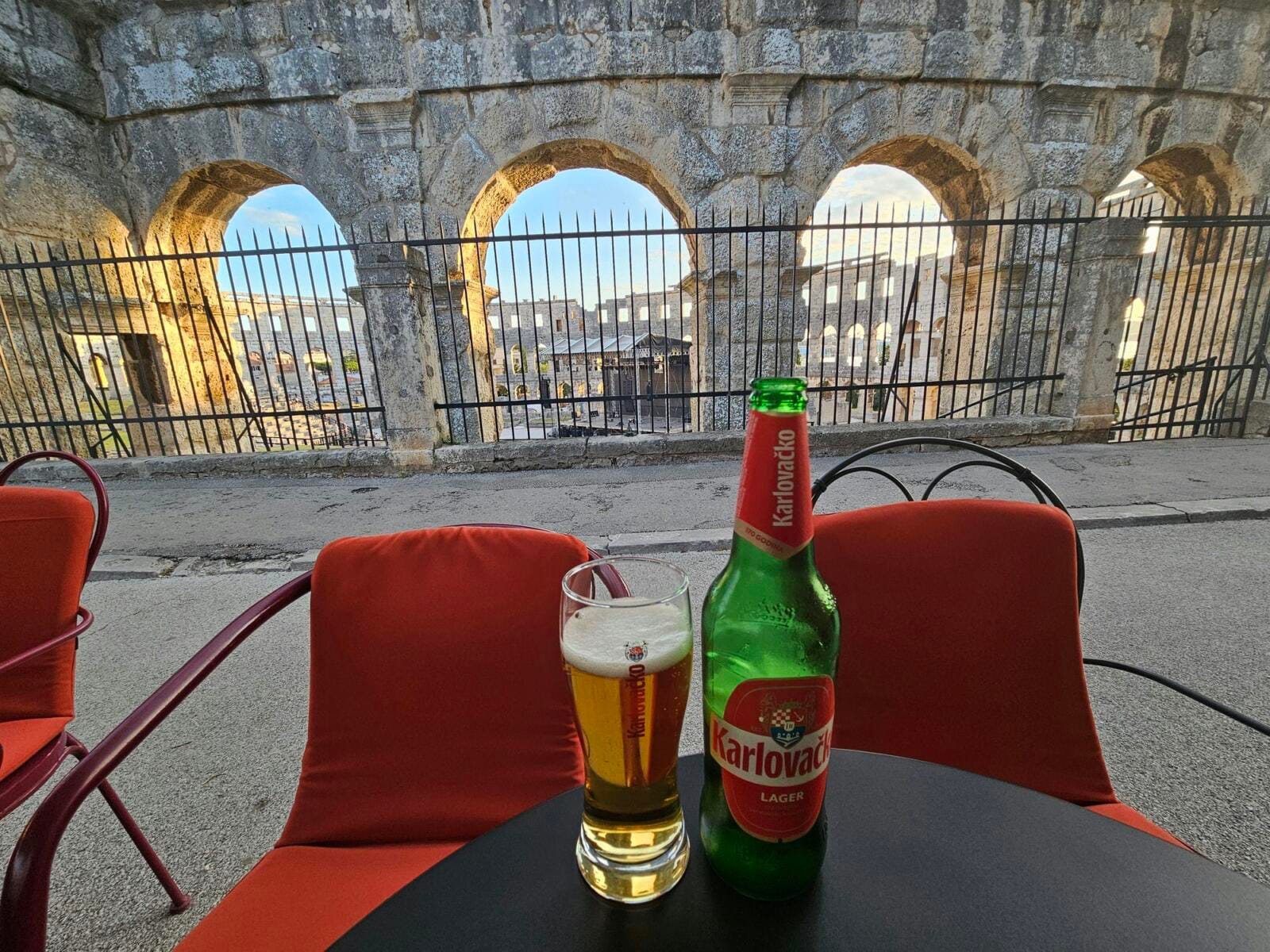
Towards the rear of the Roman site, there are a few nice cafe bars where you can enjoy a drink with a view. I enjoyed a few Croatian beers here and found them to be pleasant and not too expensive. My favourite was Caffe Bar La Resistance, which is very close to the wall.
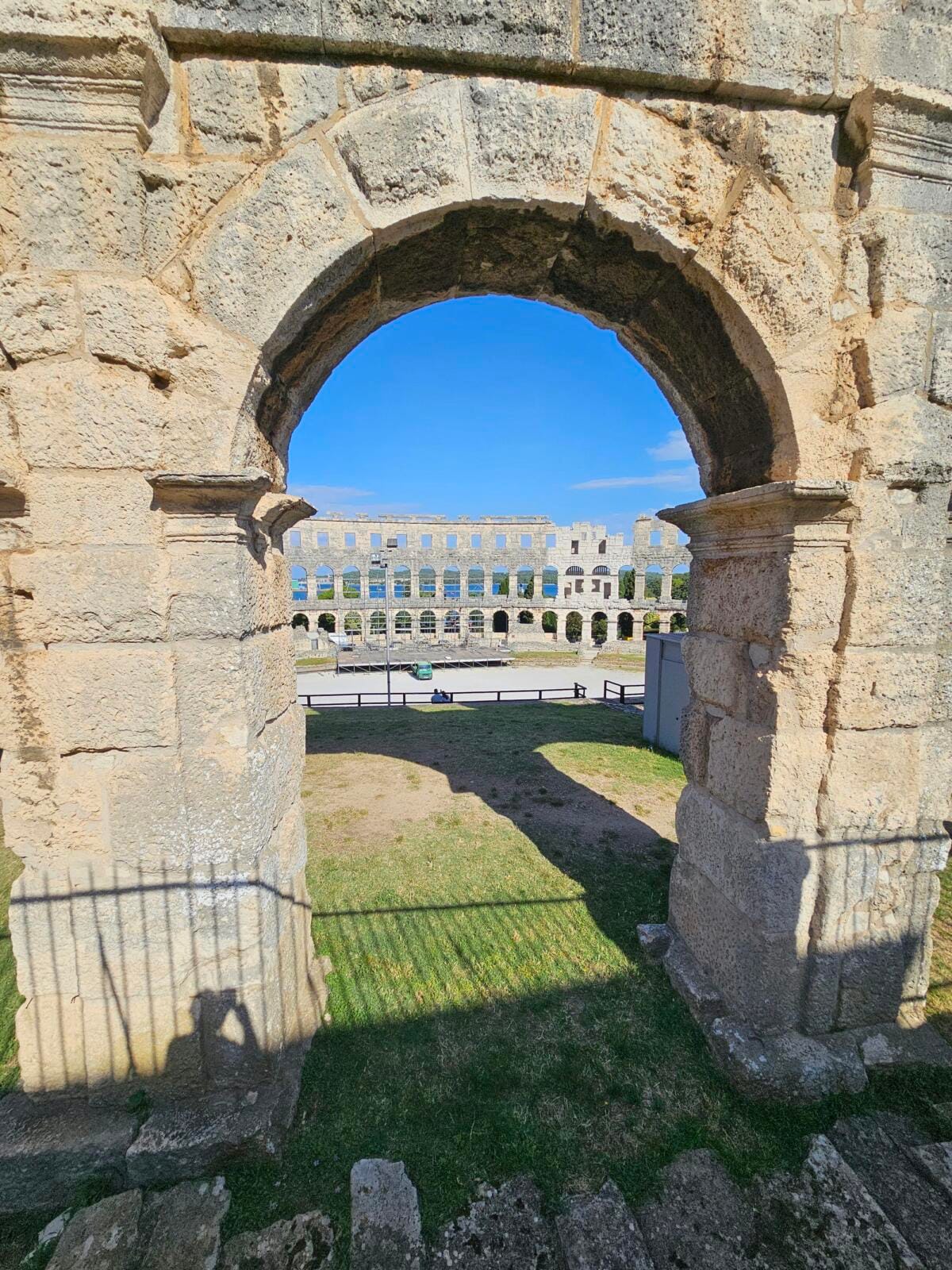

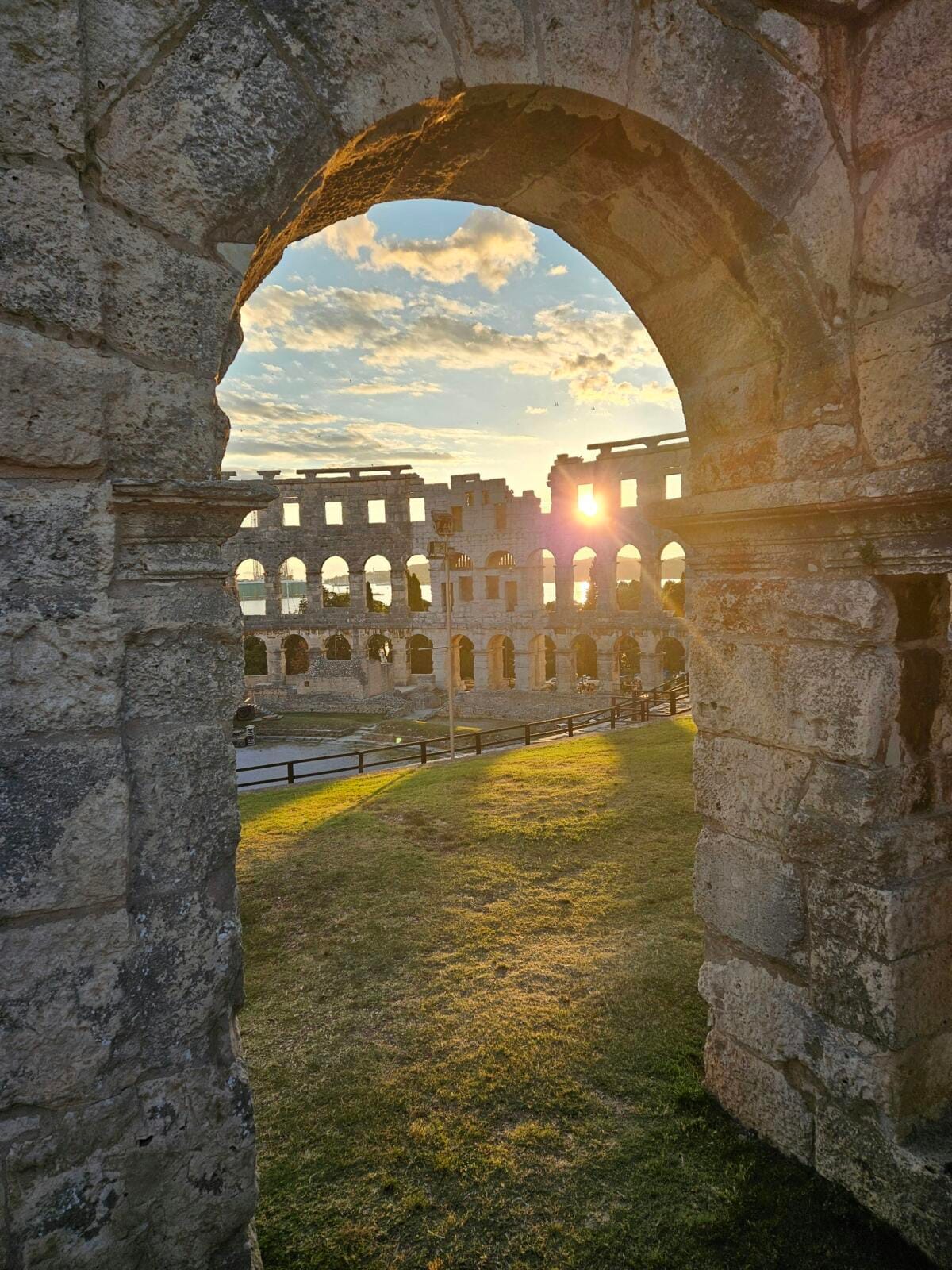
There are various outdoor places with fantastic views of the area, so you don’t need to enter. I found these fantastic for photographs, and they were pretty special when the arena was closed to visitors, especially in the early morning or during sunset.
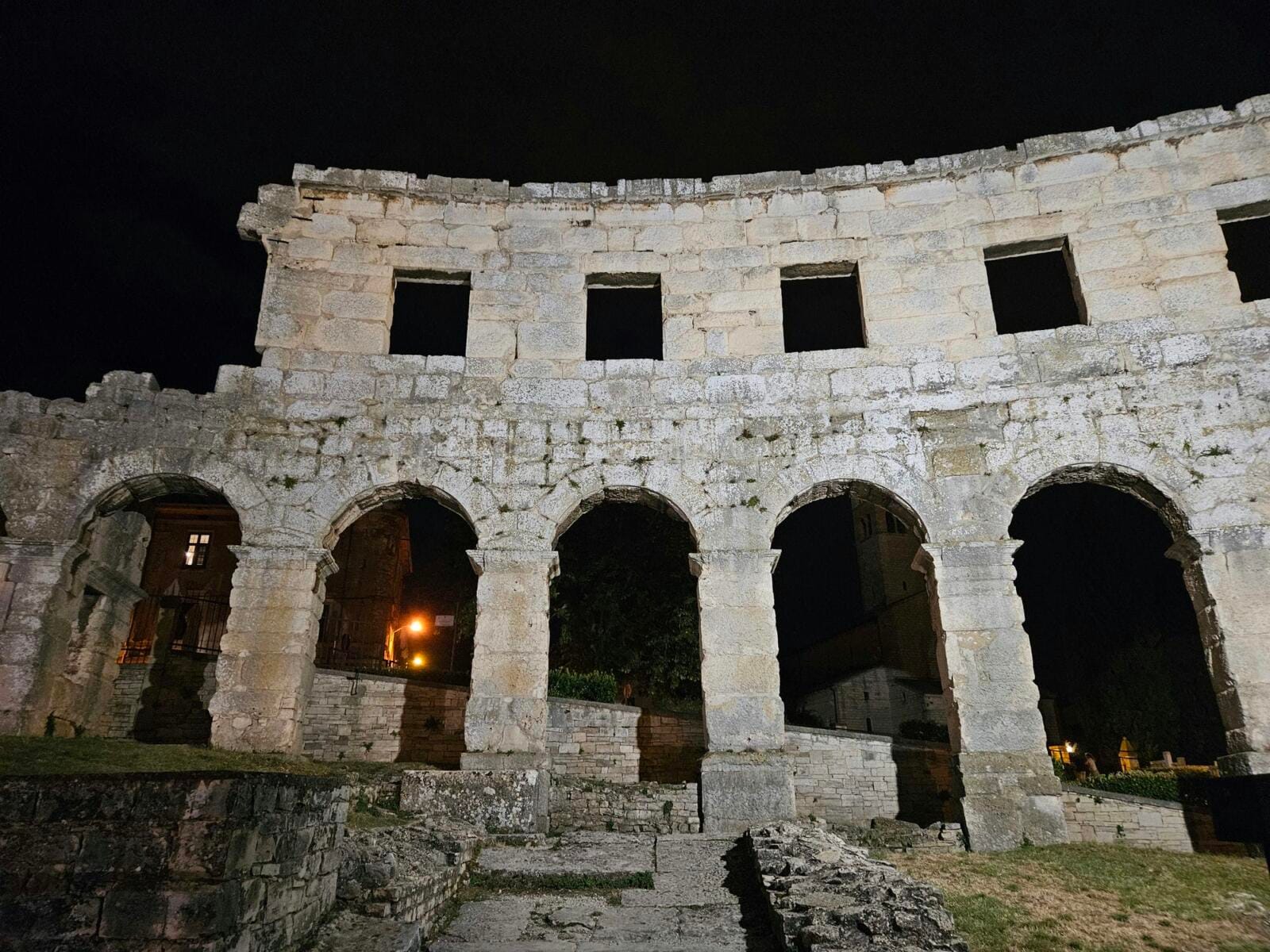
After dark, it’s also pretty special to see, as it’s well lit and contrasts with the black sky. We enjoyed it after the sun went down at the gladiator event. I also imagine it’s pretty special at one of the many music events that the site hosts. During our visit, the band Simple Minds played, and the city was very busy.
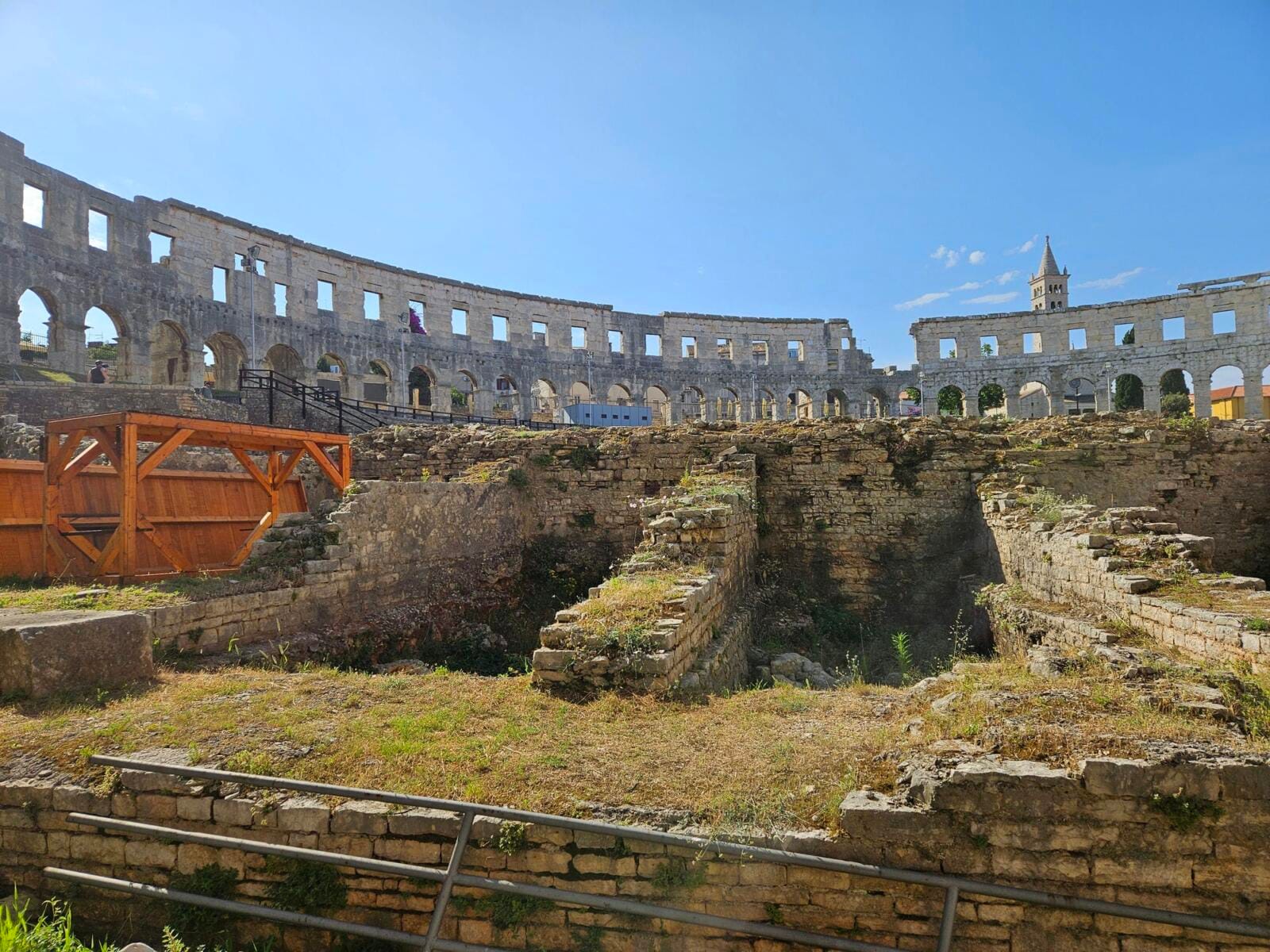
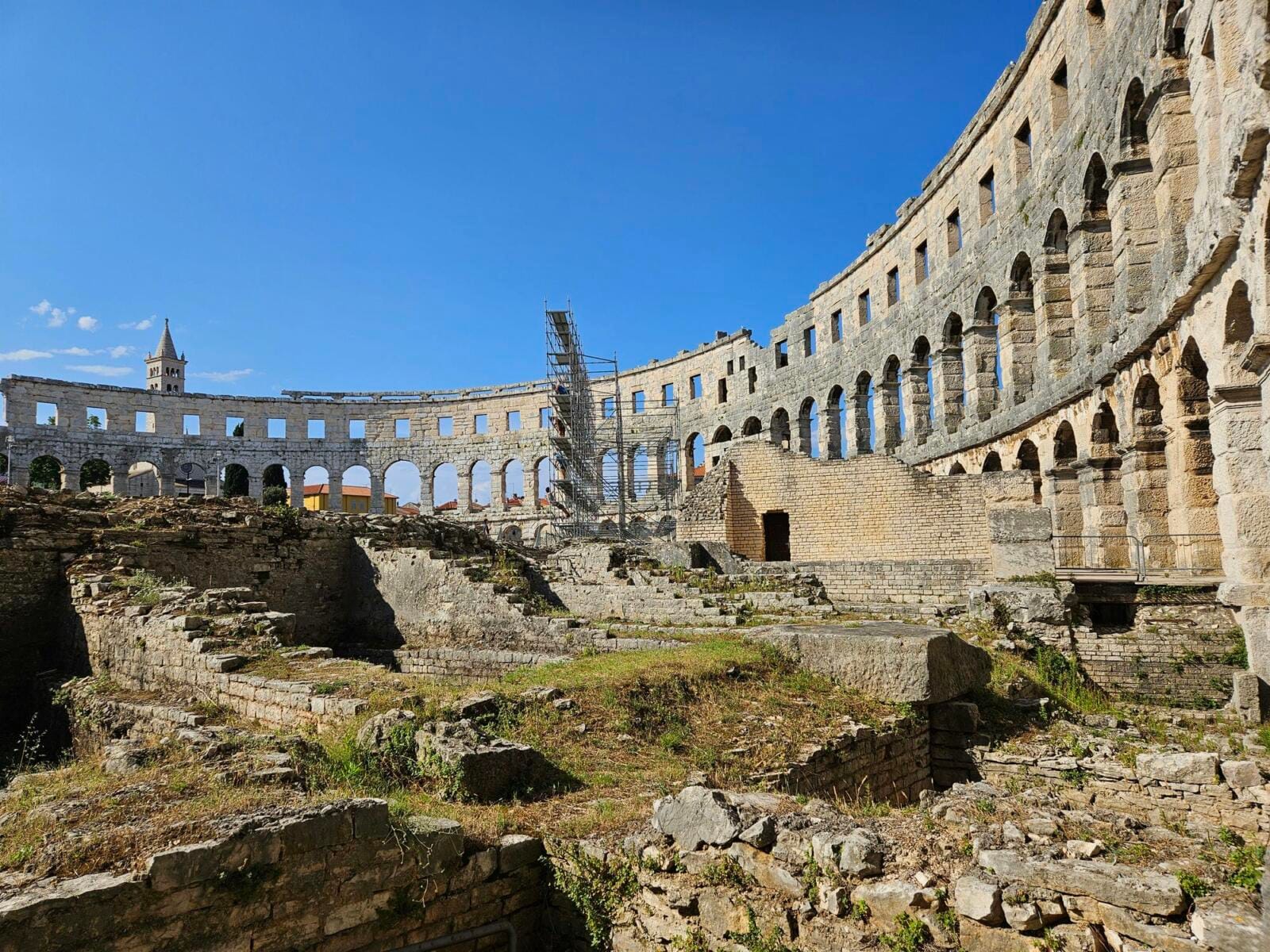
In addition to the main structure, there are many ruins to see at the site, which is pretty cool. Parts reminded me of some fantastic features at the Pompeii ruins.
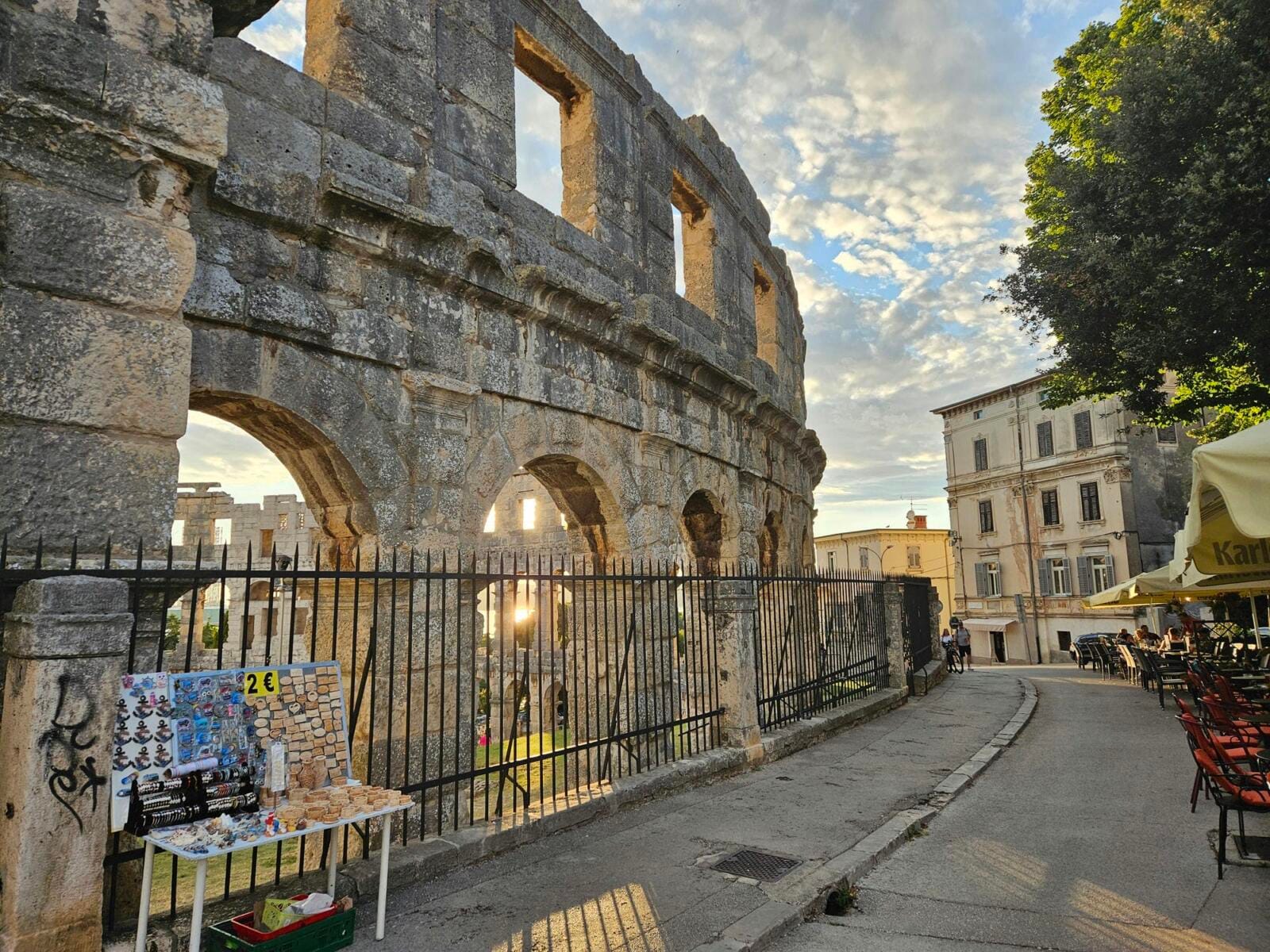
Also outside, you can buy on-theme gifts, including clay models of the arena if souvenirs are your thing.
Disclosure! Keep in mind that some links in these posts are affiliate links. If you click one of them, I may earn a small commission (for which I’m extremely grateful) at no extra cost to you. Thanks for visiting!
Tickets & Information
We purchased tickets at the entrance, and despite it being popular, the queue wasn’t long. You can find out more about tickets and opening times on their website. You can also book tours or entrance tickets on the Viator website. They also have many other local experiences you can book too.