
Schönbrunn Palace Gardens | Free Park, Map & What to See
The Schönbrunn Palace Gardens in Vienna are a fabulous, free place to visit and a great spot for photos. I’ve enjoyed many walks in the grounds, and every time I spot something new to feast my eyes on. It’s also a lovely place for a walk on a dry day and to enjoy a picnic on one of the many benches in the gardens. This is one of the most popular and photographed tourist attractions in Vienna.
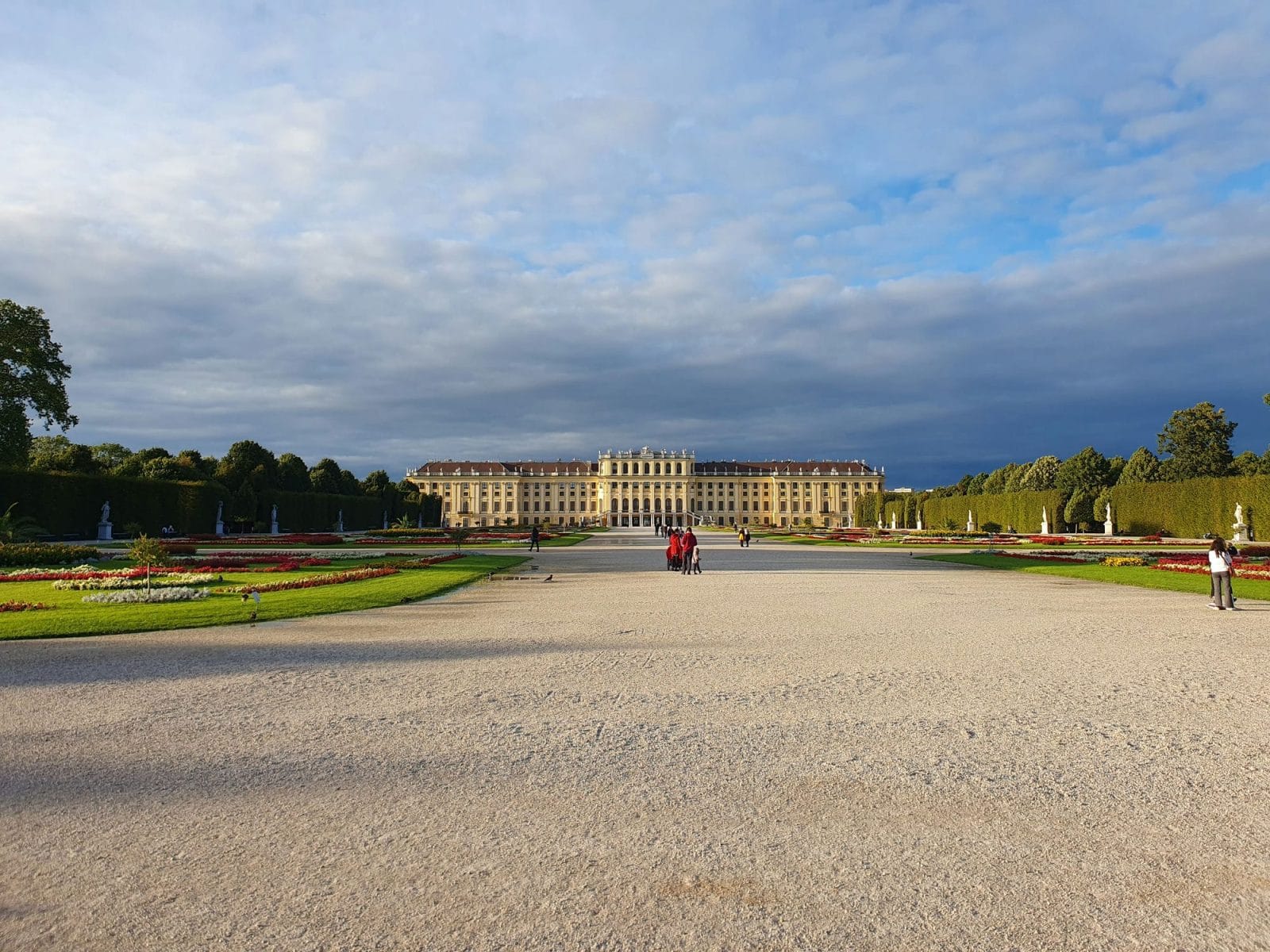
Schönbrunn was the main summer residence of the Habsburg rulers. The palace and gardens have more than 300 years of history and are among Vienna’s most important historic sites. The Baroque palace has 1441 rooms and is one of Austria’s most important architectural, cultural, and historic sites.
Are Schönbrunn Palace Gardens Free to Visit?
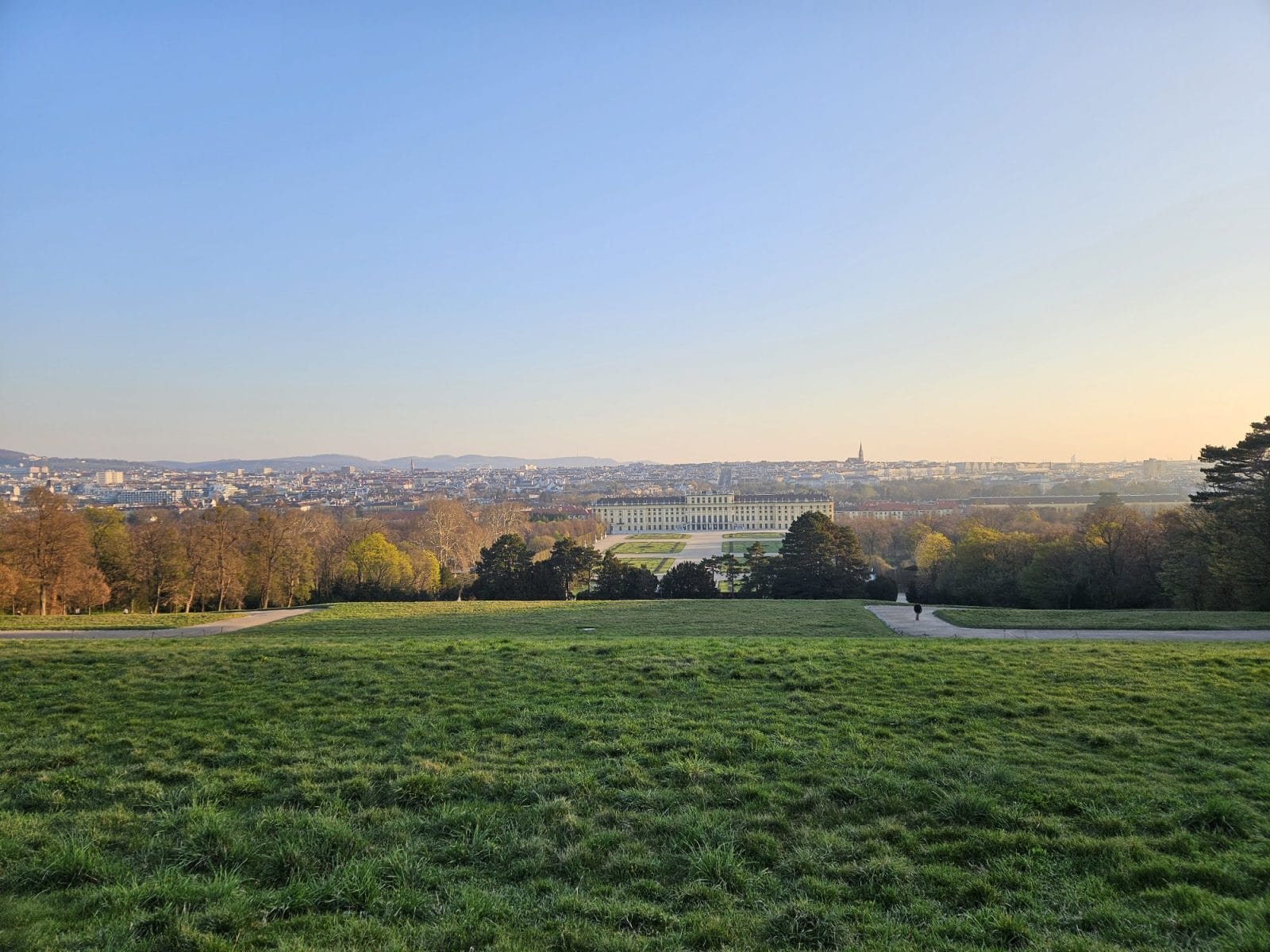
The gardens are stunning and free to pop in and explore. Various gates and entrances let visitors explore the site. We enjoyed all the free parts on our visit.
Map of the Gardens
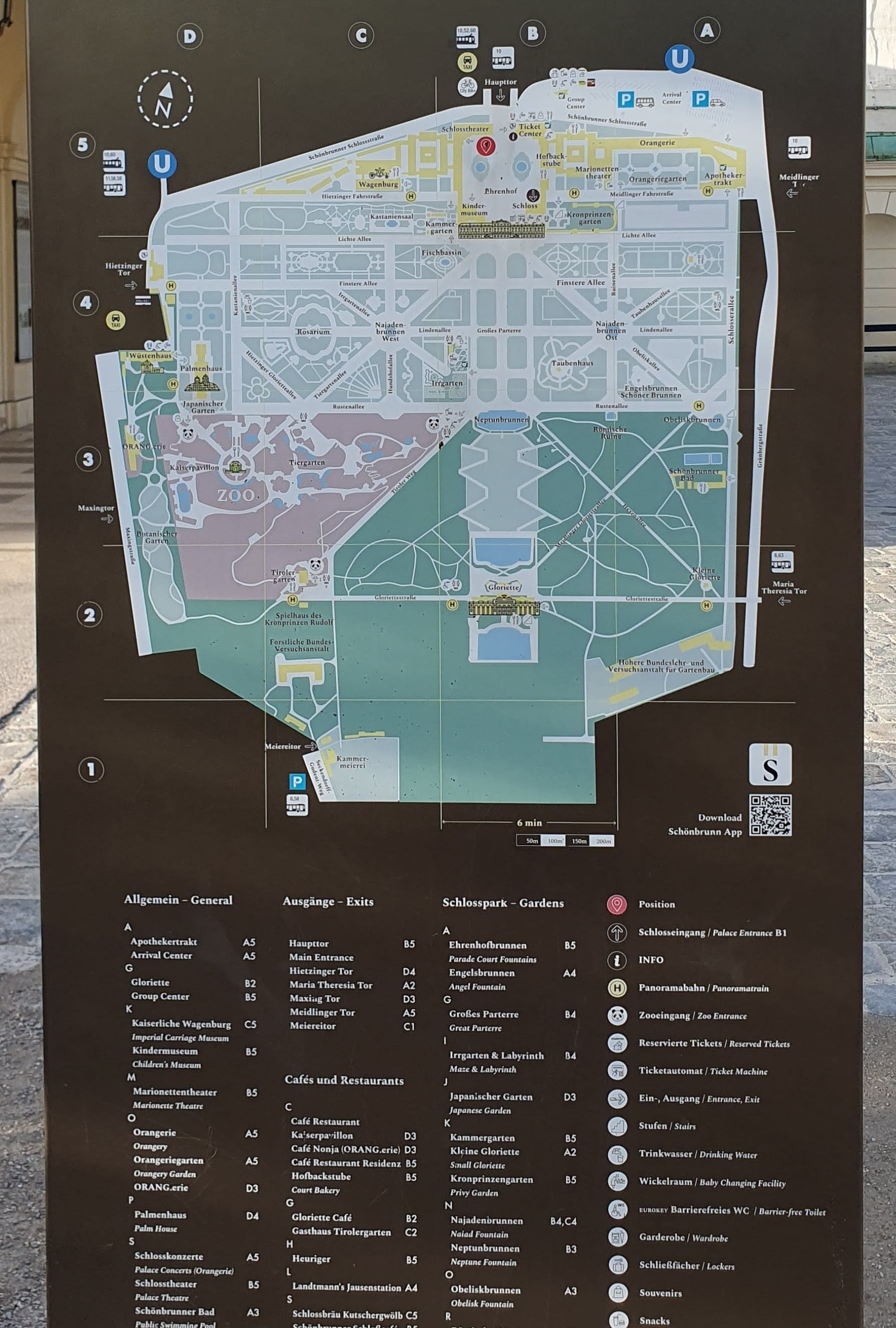
The site has several maps to help you find your way around. Google Maps is also handy, with lots of detail on key places of interest at the palace.
Things to See at Schönbrunn Palace Gardens
Some photos from my various visits exploring the site’s grounds.
Great Parterre
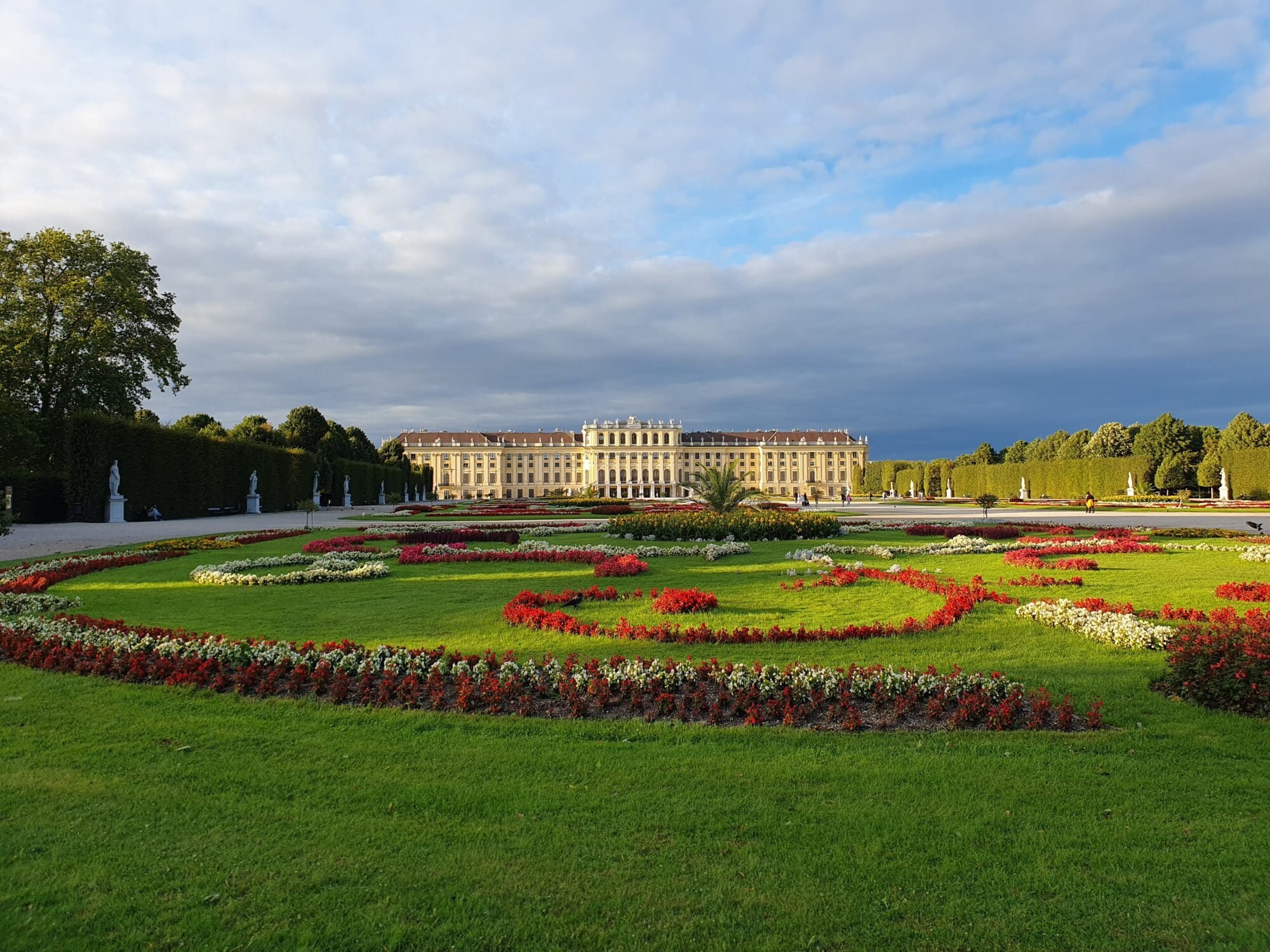
The sculpted garden space between Schönbrunn Palace and the Neptune Fountain is called the Great Parterre. This dates back to 1695, when Jean Trehet, a disciple of André Le Nôtre, planned the French-style garden. This is a colourful, grand part of the palace’s gardens, with beautiful views of the palace.
You’ll find lovely flowerbeds and statues here. Along the edges are benches where you can sit and enjoy the view. On summer days, it can get very hot in the nearby open areas. However, the edges offer shade. This is a must-see part of the gardens.
The Gloriette
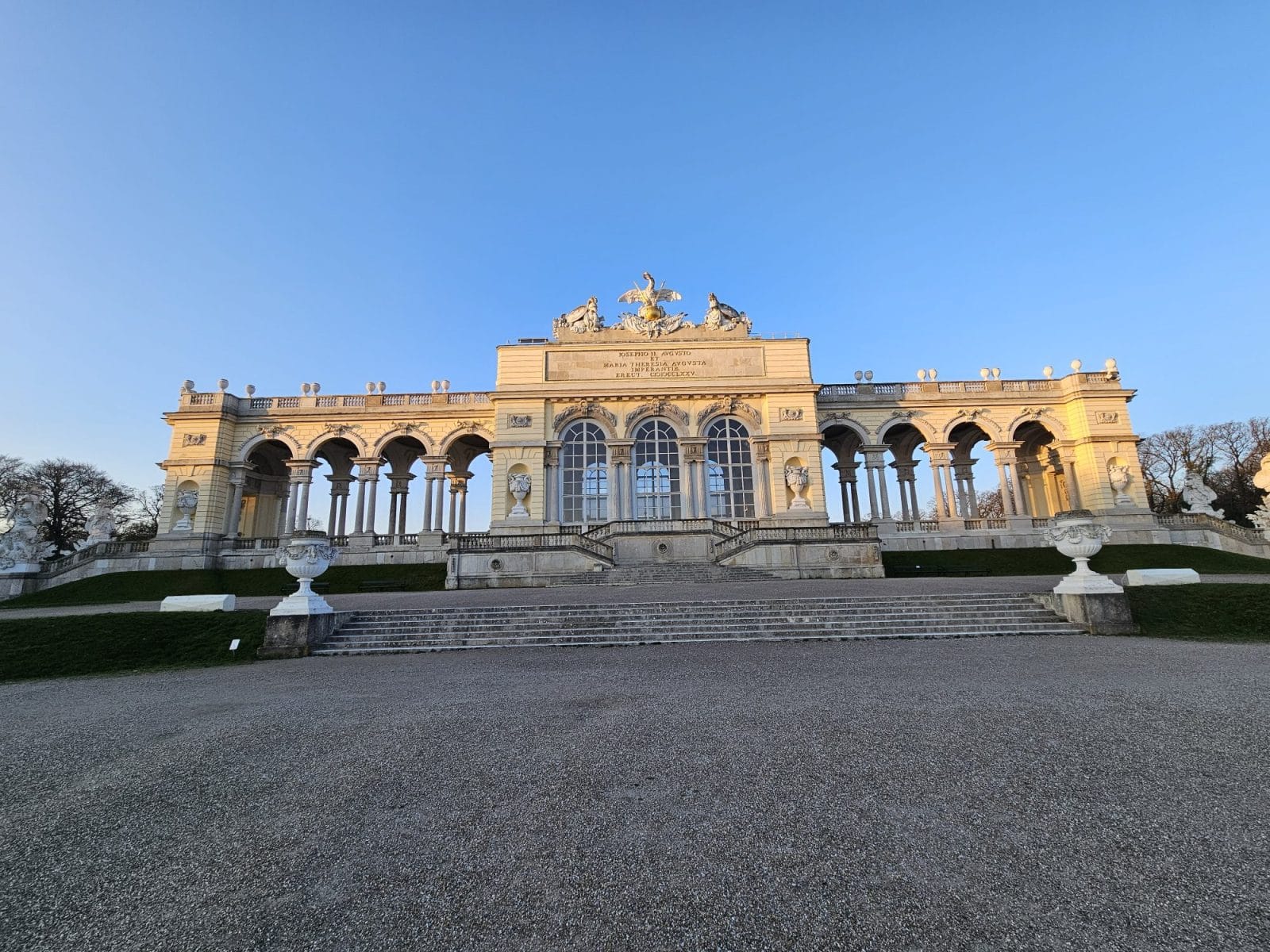
The Gloriette was built in 1775 during the reign of Maria Theresa and designed as the palace gardens’ high point. Its arches and viewing terrace overlook Schönbrunn Palace, while the central hall now houses Café Gloriette.
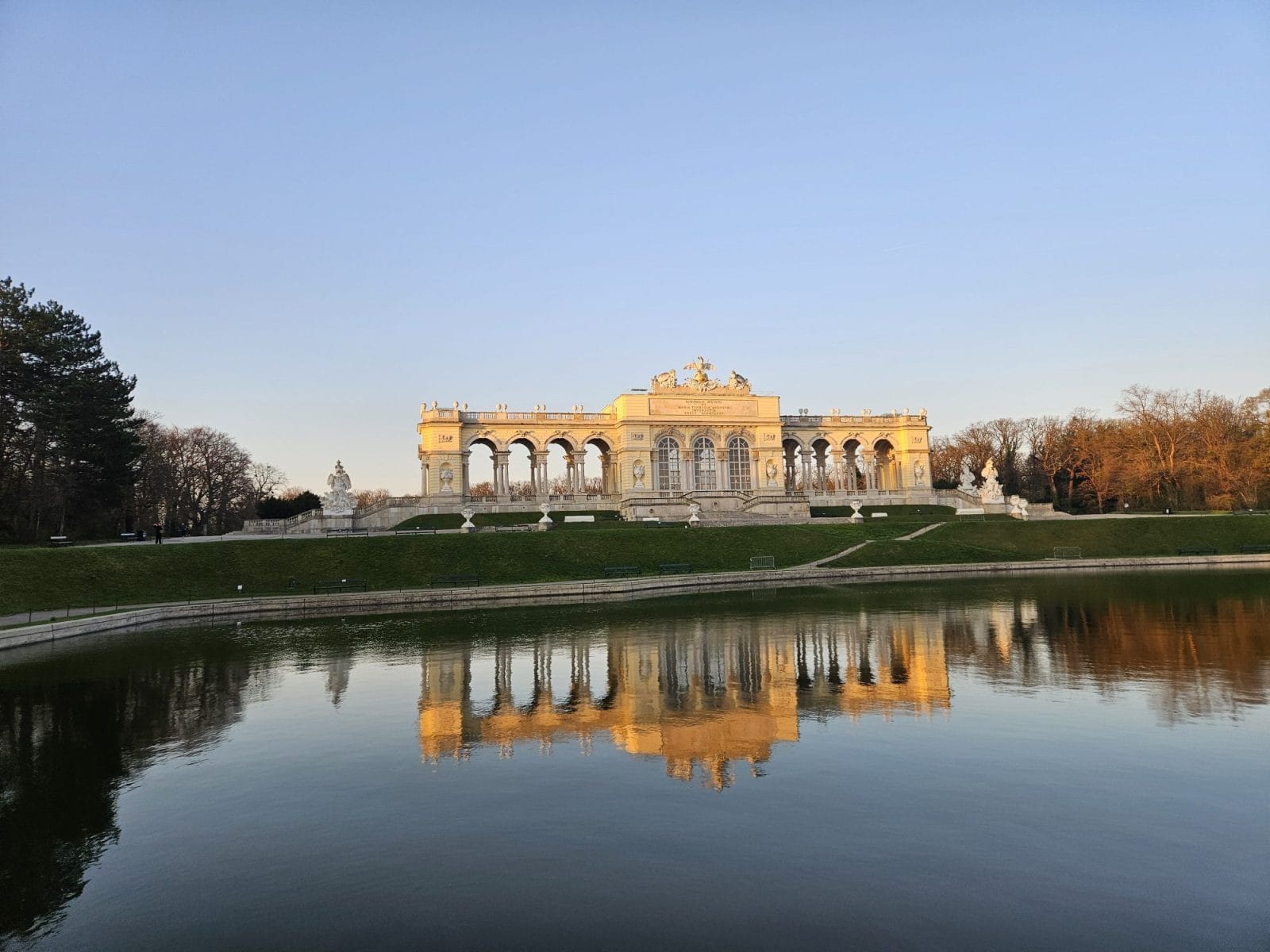
I visited the Gloriette at sunrise, when the gardens were quiet, and the early light was reaching the building. The views towards Schönbrunn Palace were excellent, and the Gloriette’s reflection in the northern basin made this one of my favourite photo spots in the gardens.
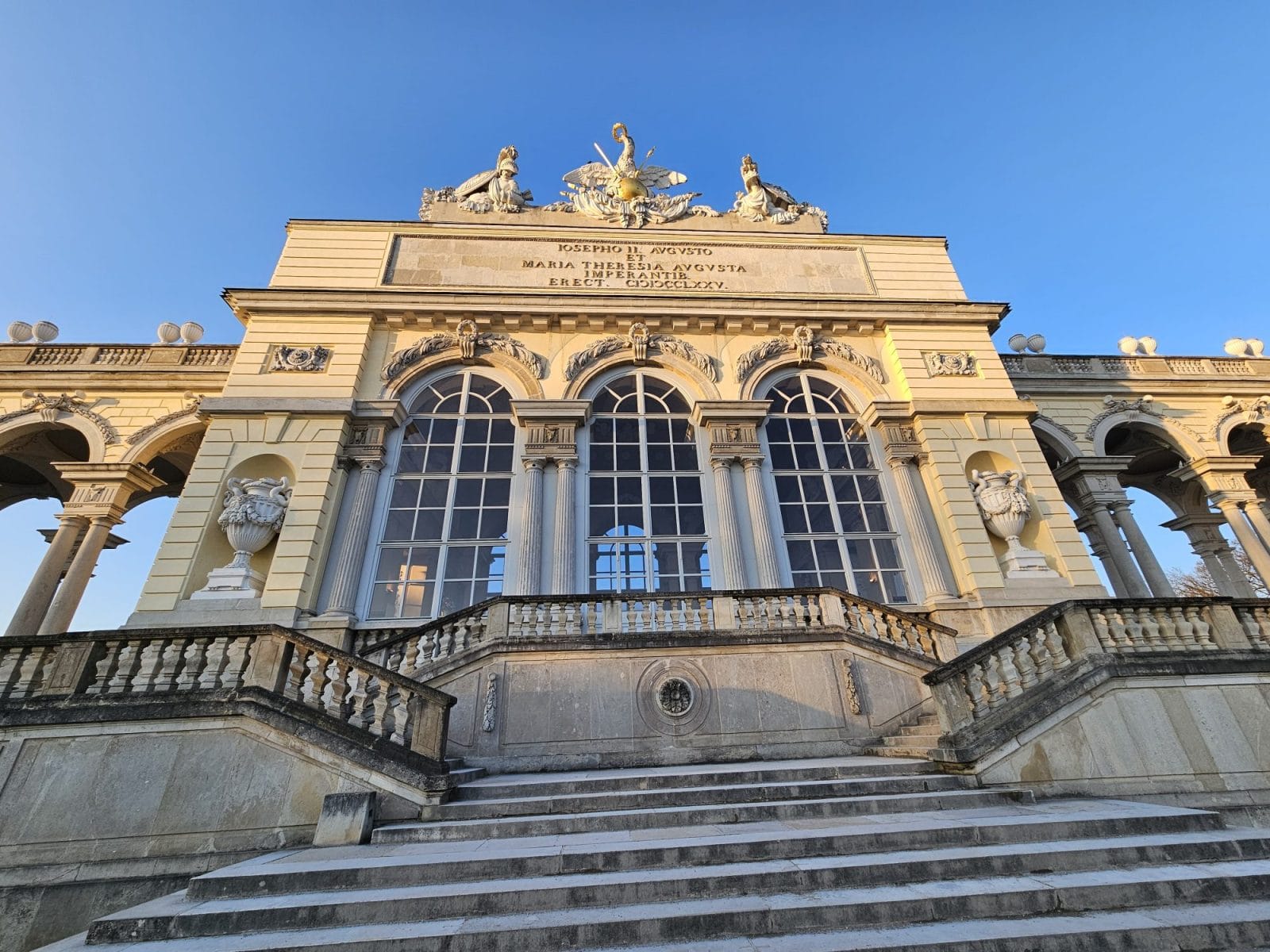
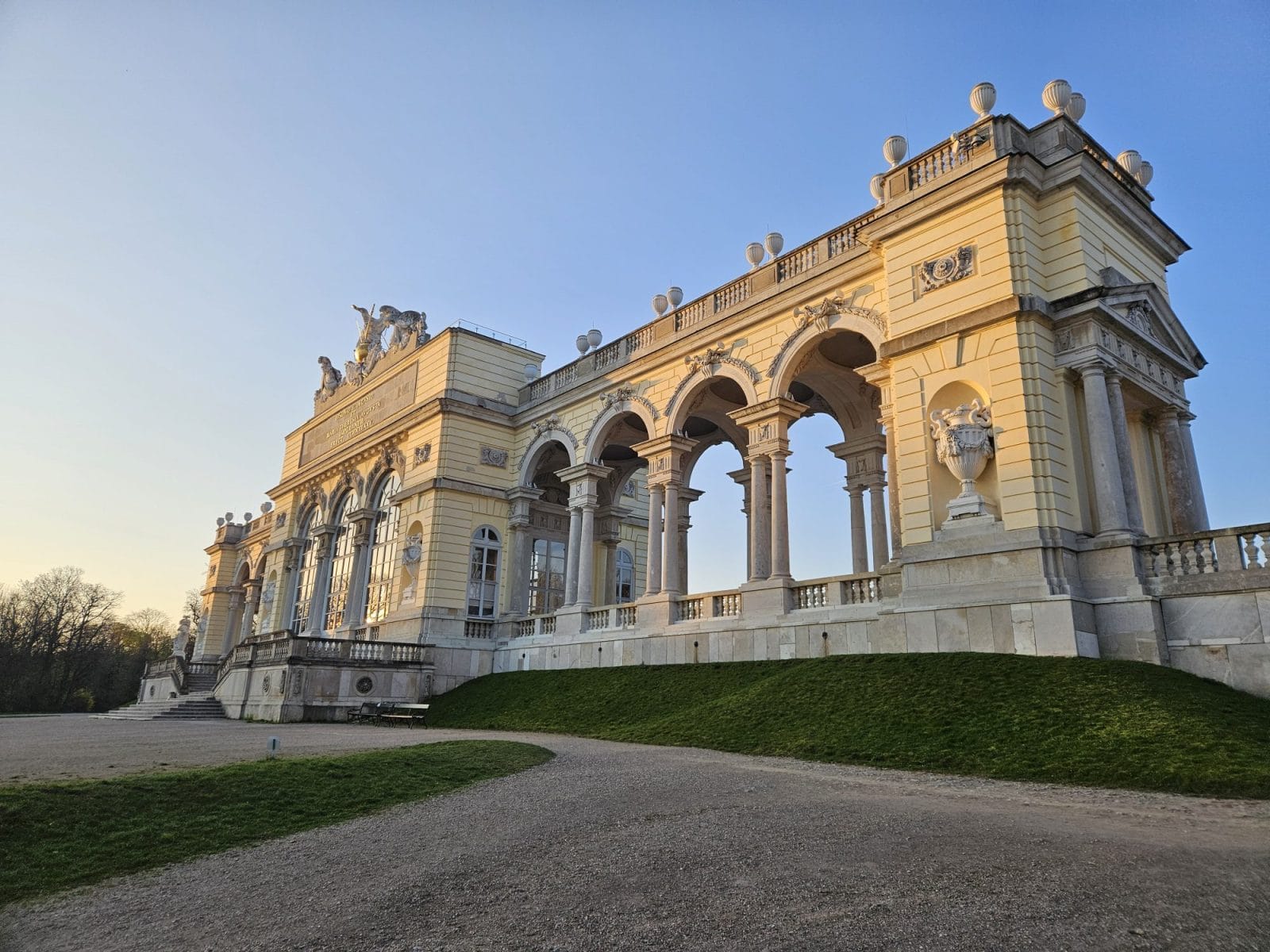
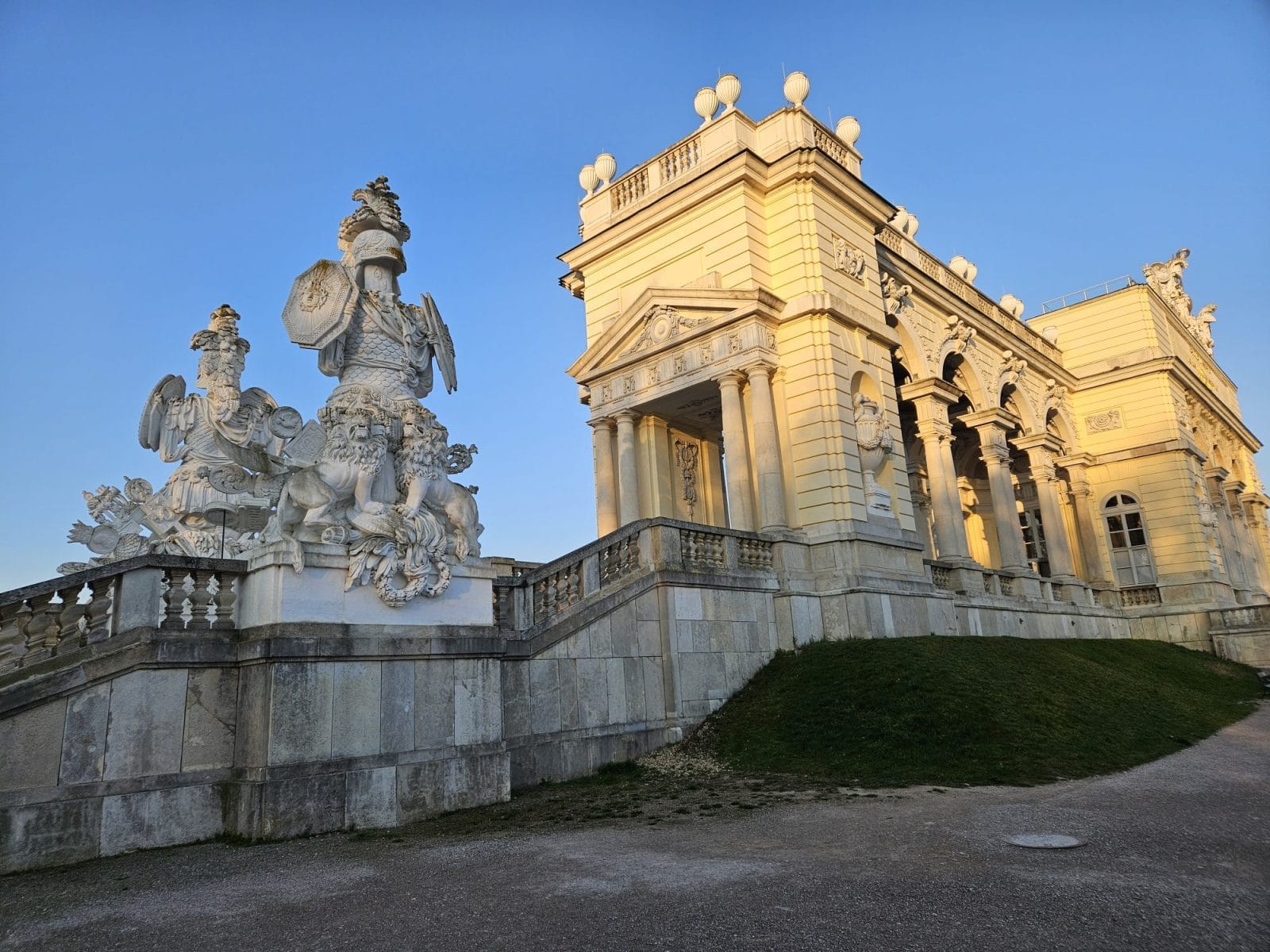
In the morning, people were running on the hill, but it was nice for me to sit, enjoy the views, and look at the architectural details up close.
The Roman Ruin
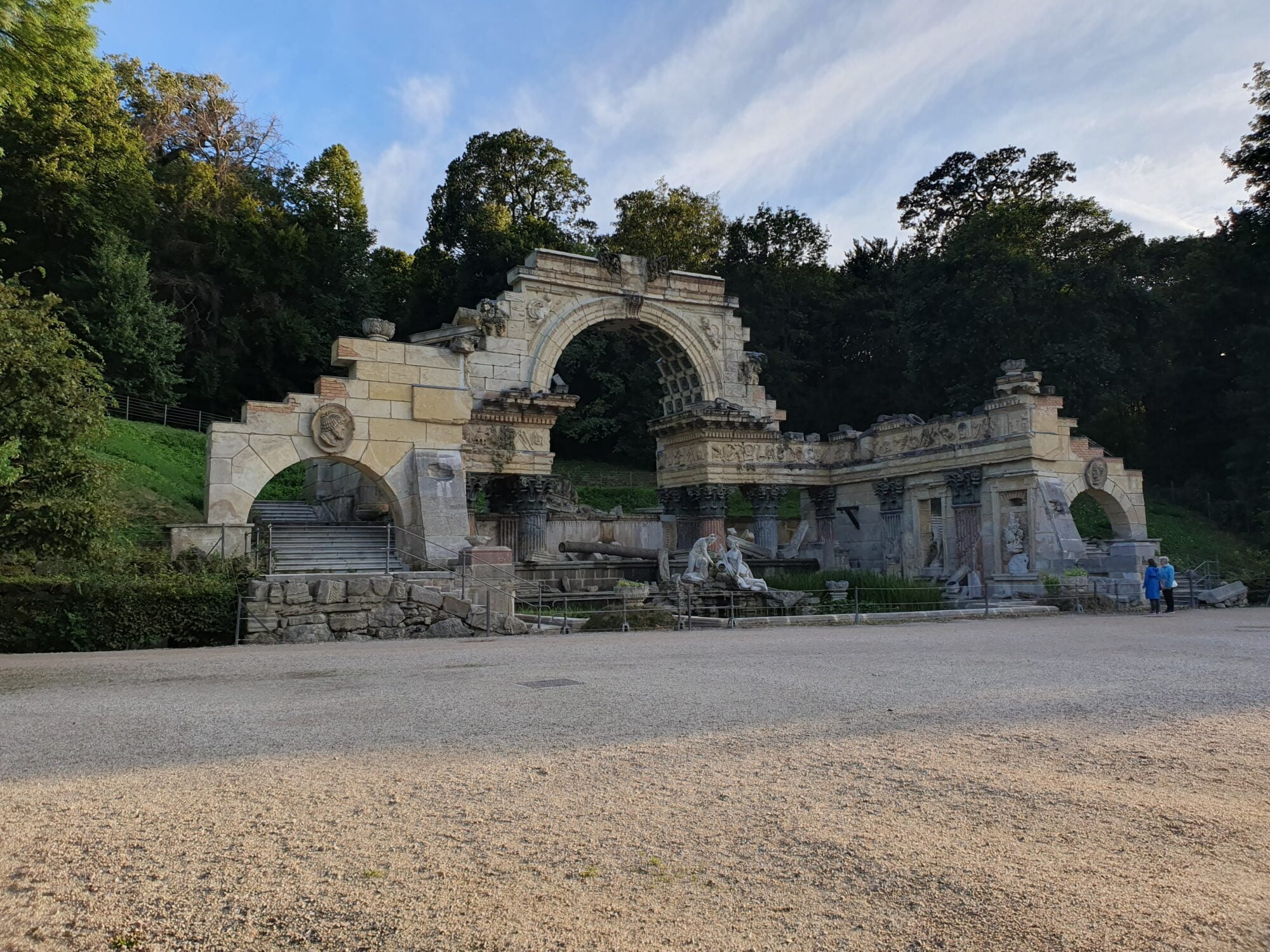
One of my favourite features of Schönbrunn Palace Gardens was the Roman Ruin. It’s a fantastic monument on a prominent point in the garden, just below the hill and near a wooded area. It was originally called the Ruin of Carthage. Johann Ferdinand Hetzendorf von Hohenberg designed it, and it was built in 1778. It is basically an artificial ruin.
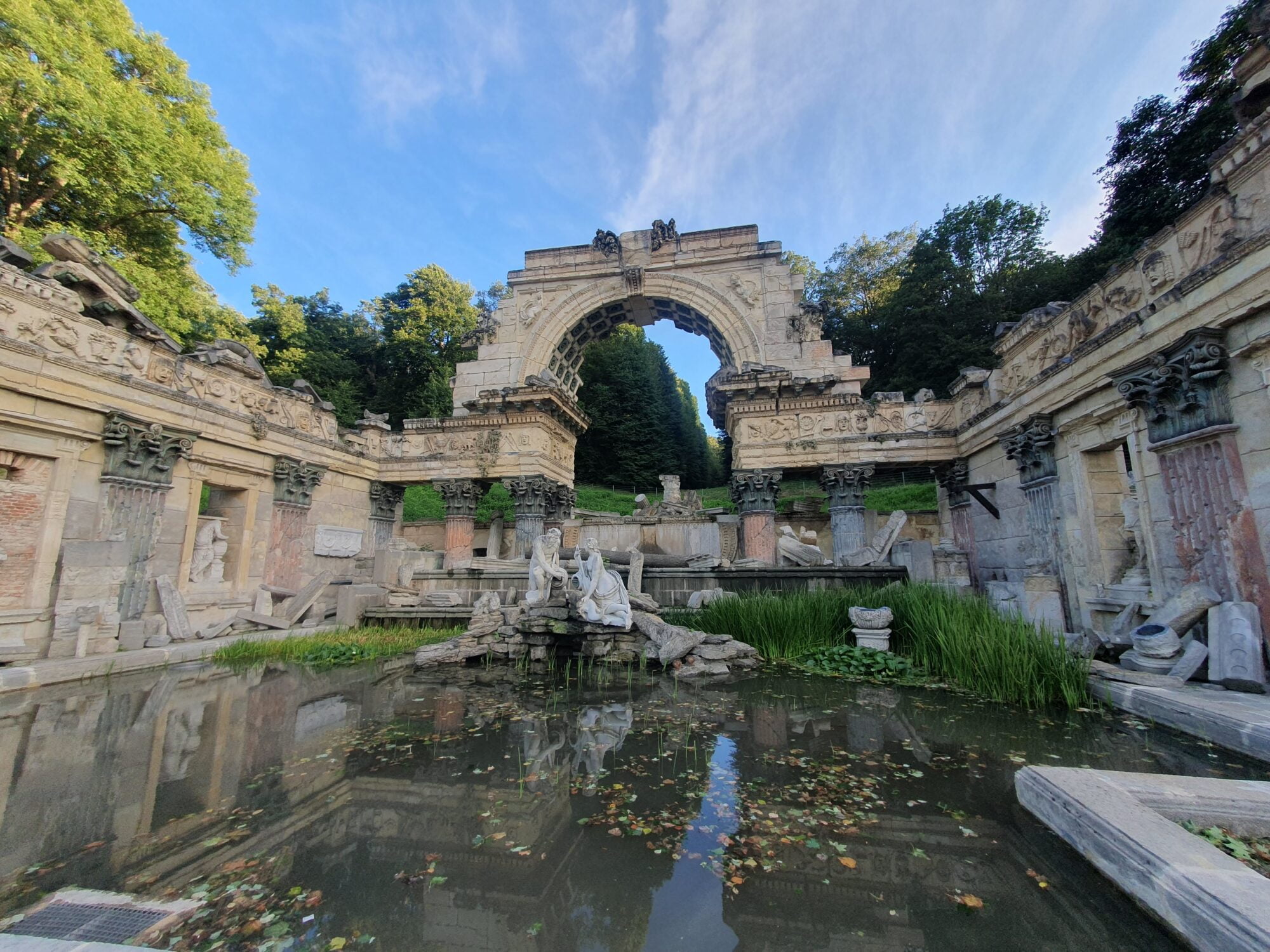
A pool sits in front of the ruin, with a group of figures representing the gods of the Danube. Overall, the Roman Ruins are stunning and a great place to take photos or just enjoy the garden art.
Neptune Fountain
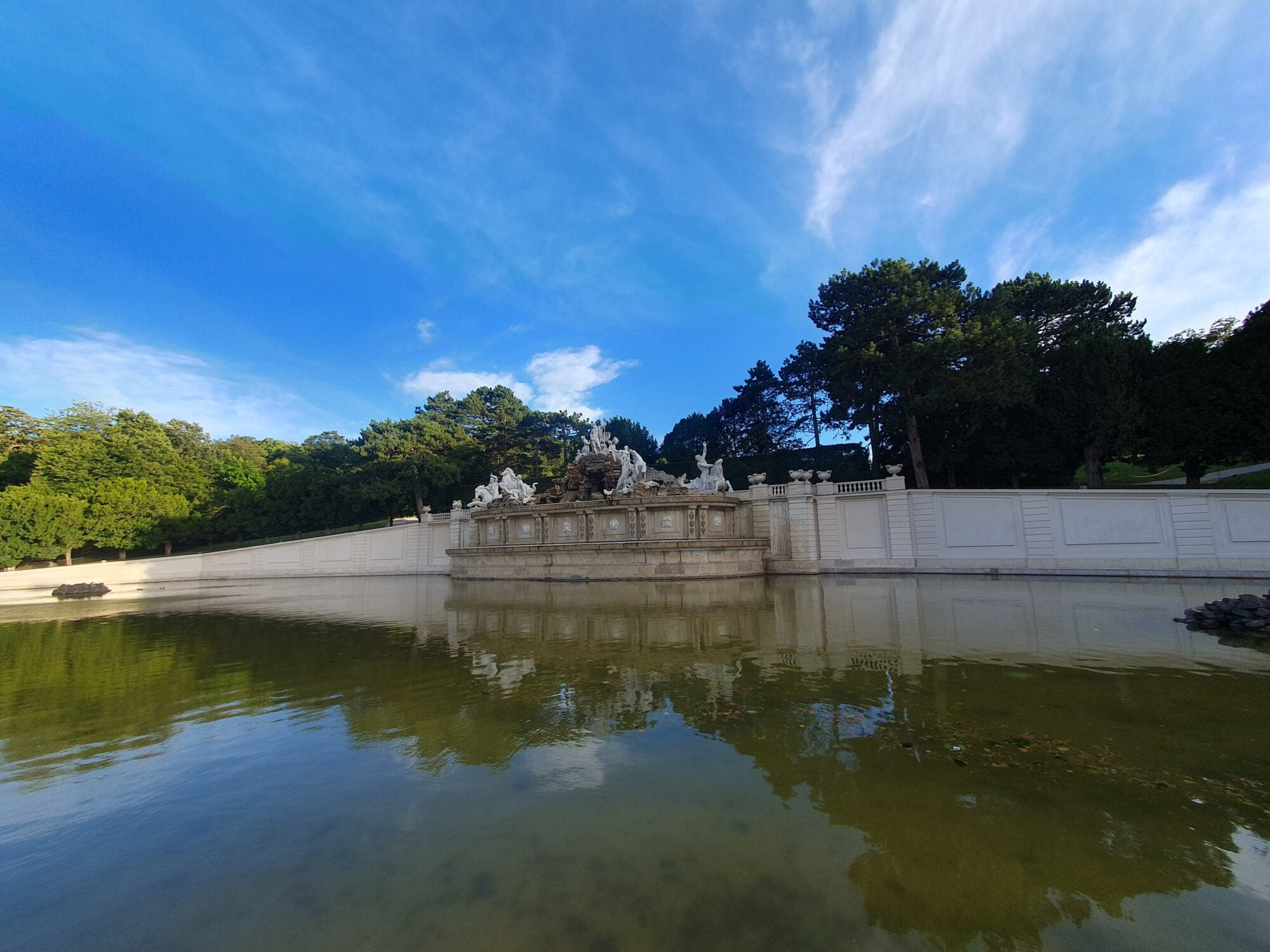
Separated from the palace by the Great Parterre, the Neptune Fountain is a prominent feature of the gardens. This prominent garden feature sits at the bottom of Schönbrunn Hill. It’s a fantastic sight and one of the major features Maria Theresa commissioned in the 1770s.
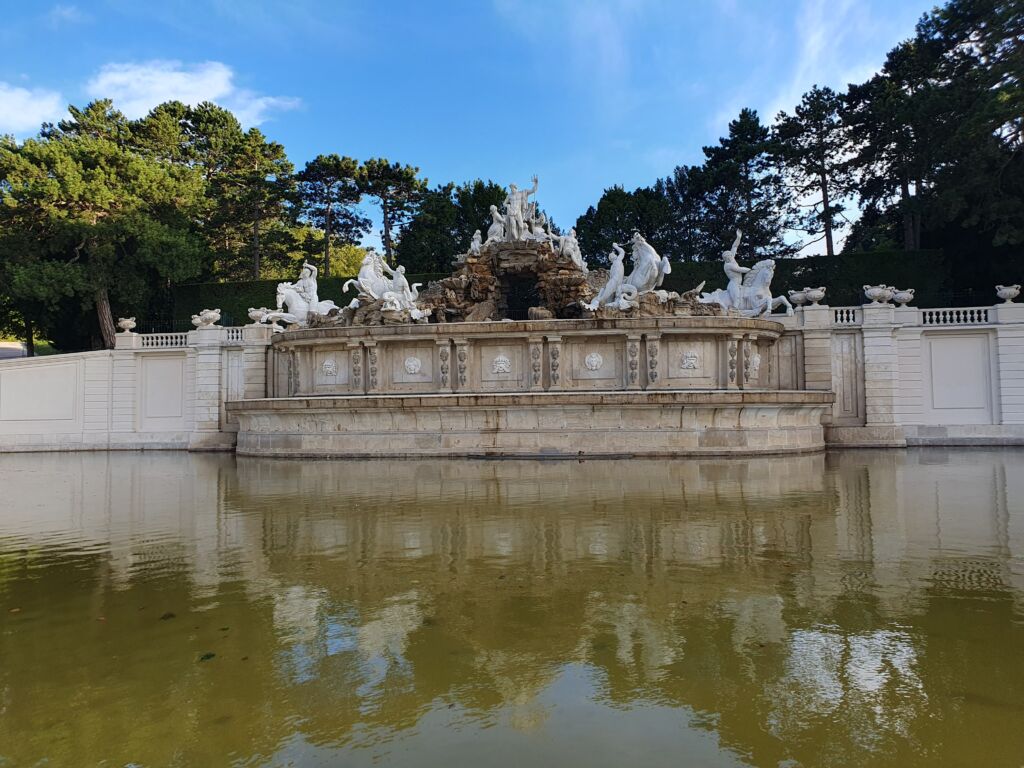
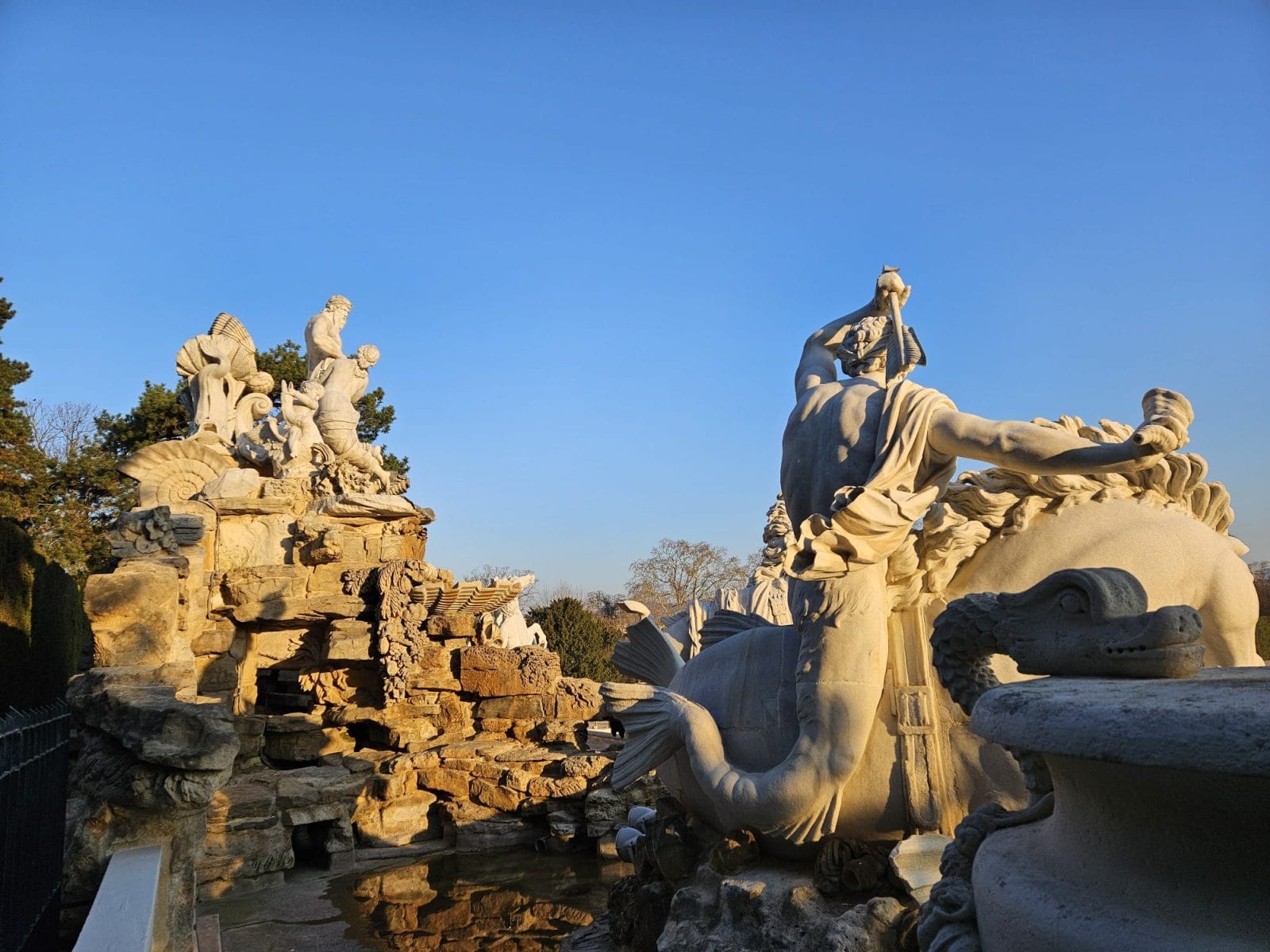
The fountain has lots of features to see, including its centrepiece, Neptune. Neptune holds his trident in one hand and rides in a shell-shaped chariot. Next to him is a nymph and the sea goddess Thetis. The Neptune fountain is another must-see feature when walking in the gardens.
Schöner Brunnen
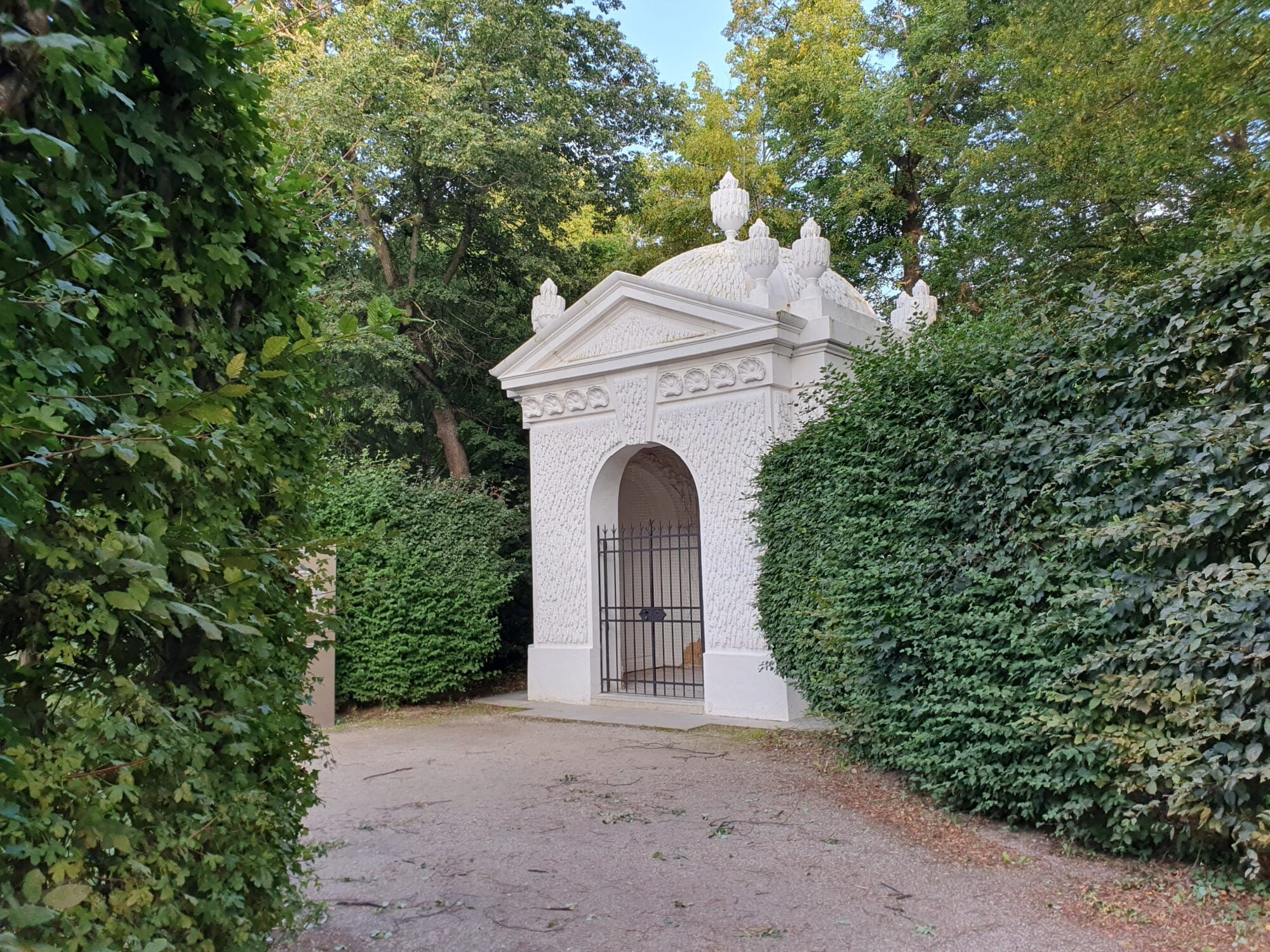
The name Schönbrunn, which means “beautiful spring,” comes from the artesian well Schöner Brunnen. The court consumed water from Schöner Brunnen. The well house was built in 1771 as a pavilion.
The facade is covered in a stalactite-like surface, and the architecture is adorned with shells. The building has arches which frame the figure of Egeria, the guardian nymph of the spring. It’s a lovely spot in the gardens to find while enjoying a walk.
Obeliskenallee: A Great Photo Spot
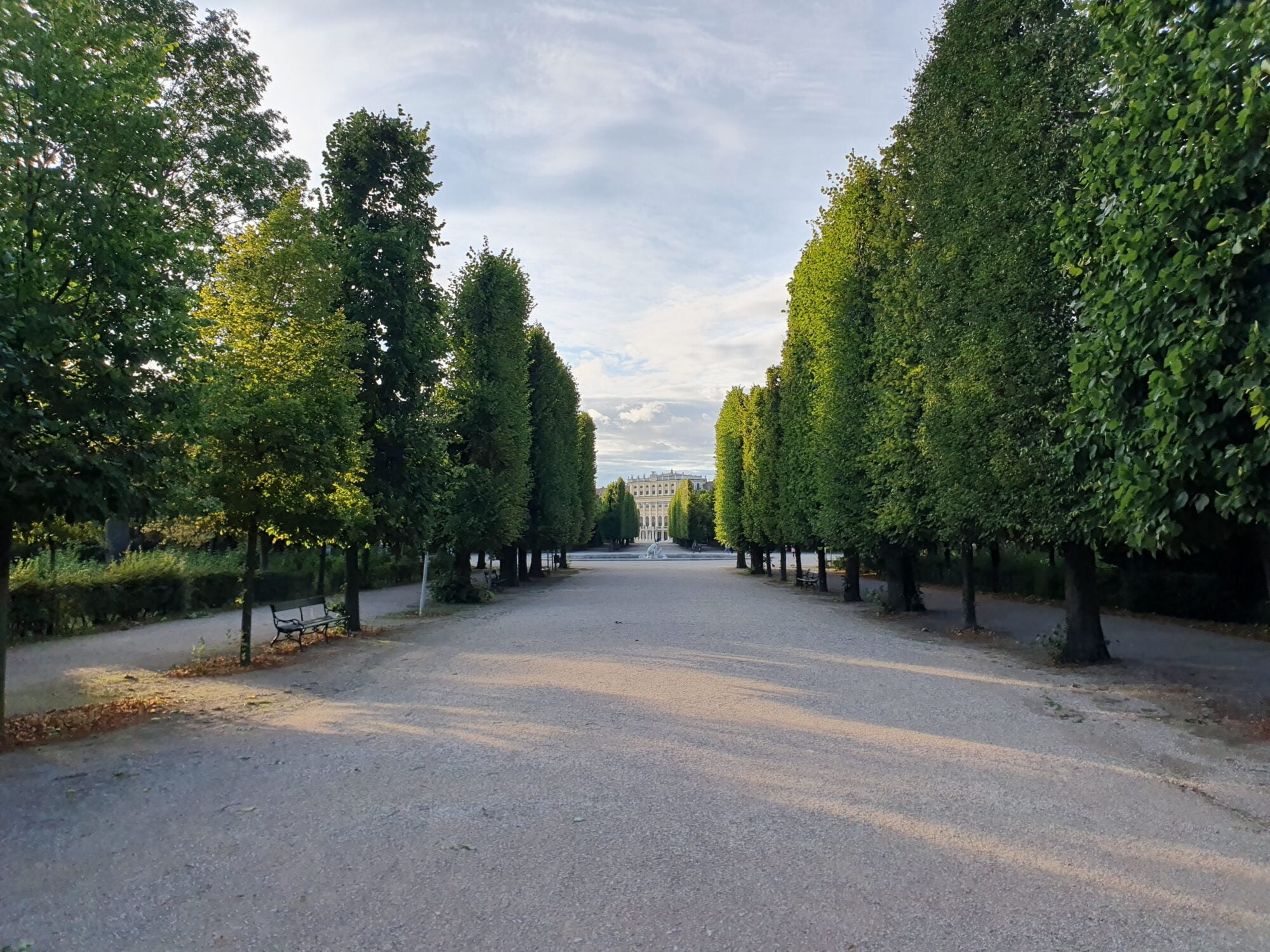
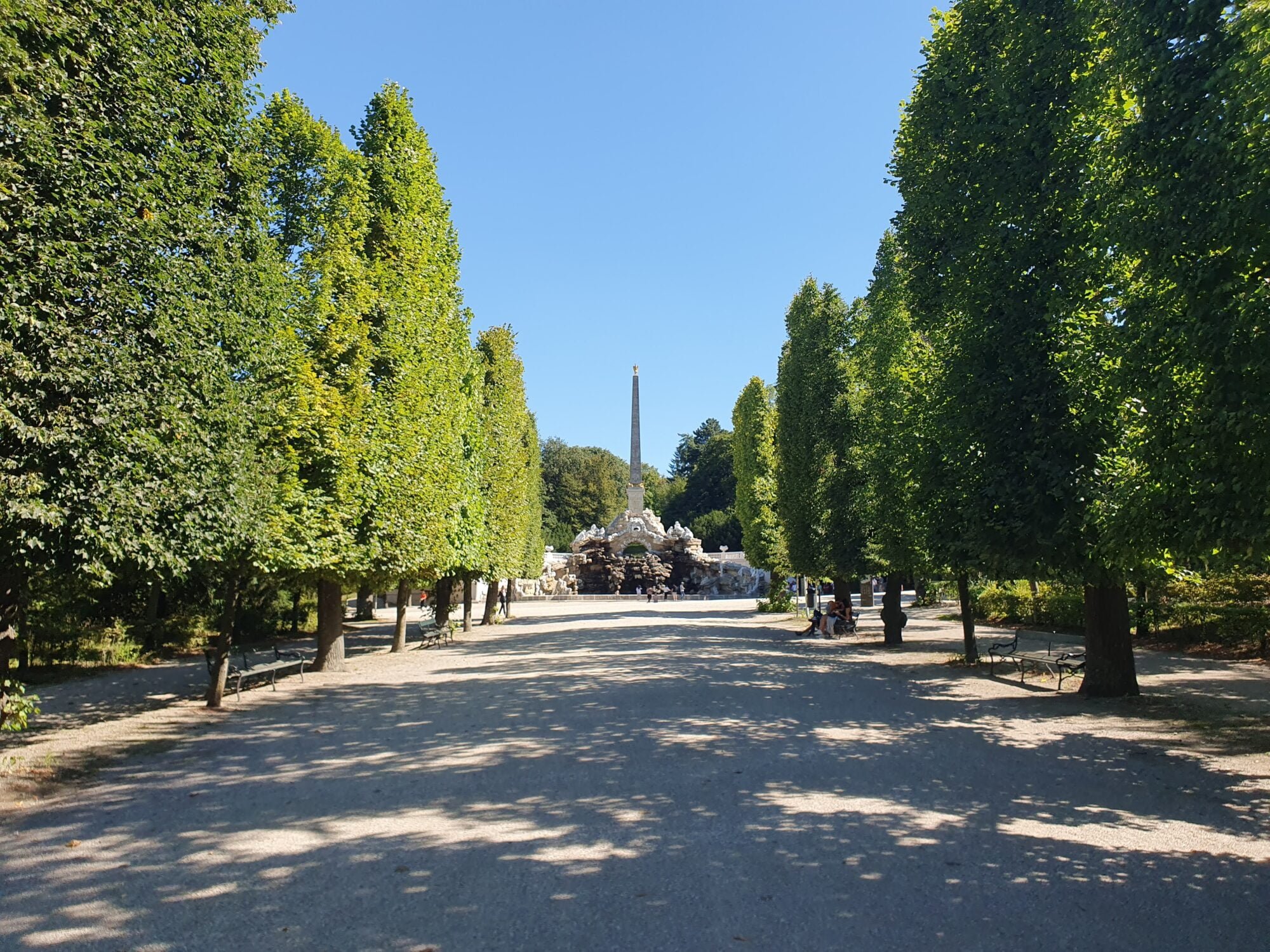
The palace’s formal gardens have many paths, including Obeliskenallee. Obeliskenallee is rather nice, as the views at either end of the tree-lined path are superb. One end offers a nice view of the main building of Schönbrunn Palace.
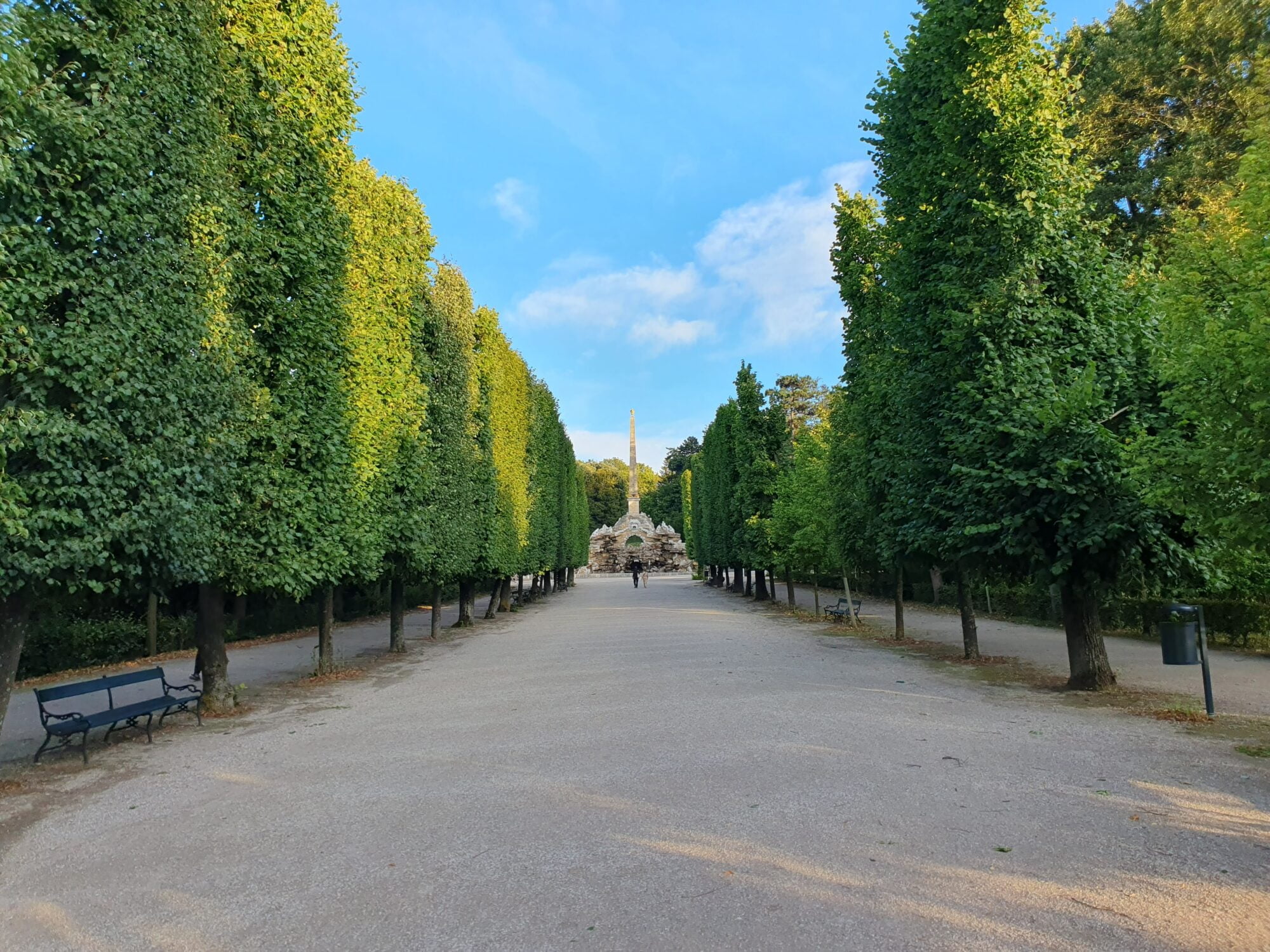
Looking in the other direction, you get views towards the impressive obelisk fountain. As Obeliskenallee is tree-lined, there is plenty of shade. A few benches let visitors rest their legs and enjoy the sights. Halfway along Obeliskenallee is Najadenbassin, another fountain.
Parade Court & Fountains
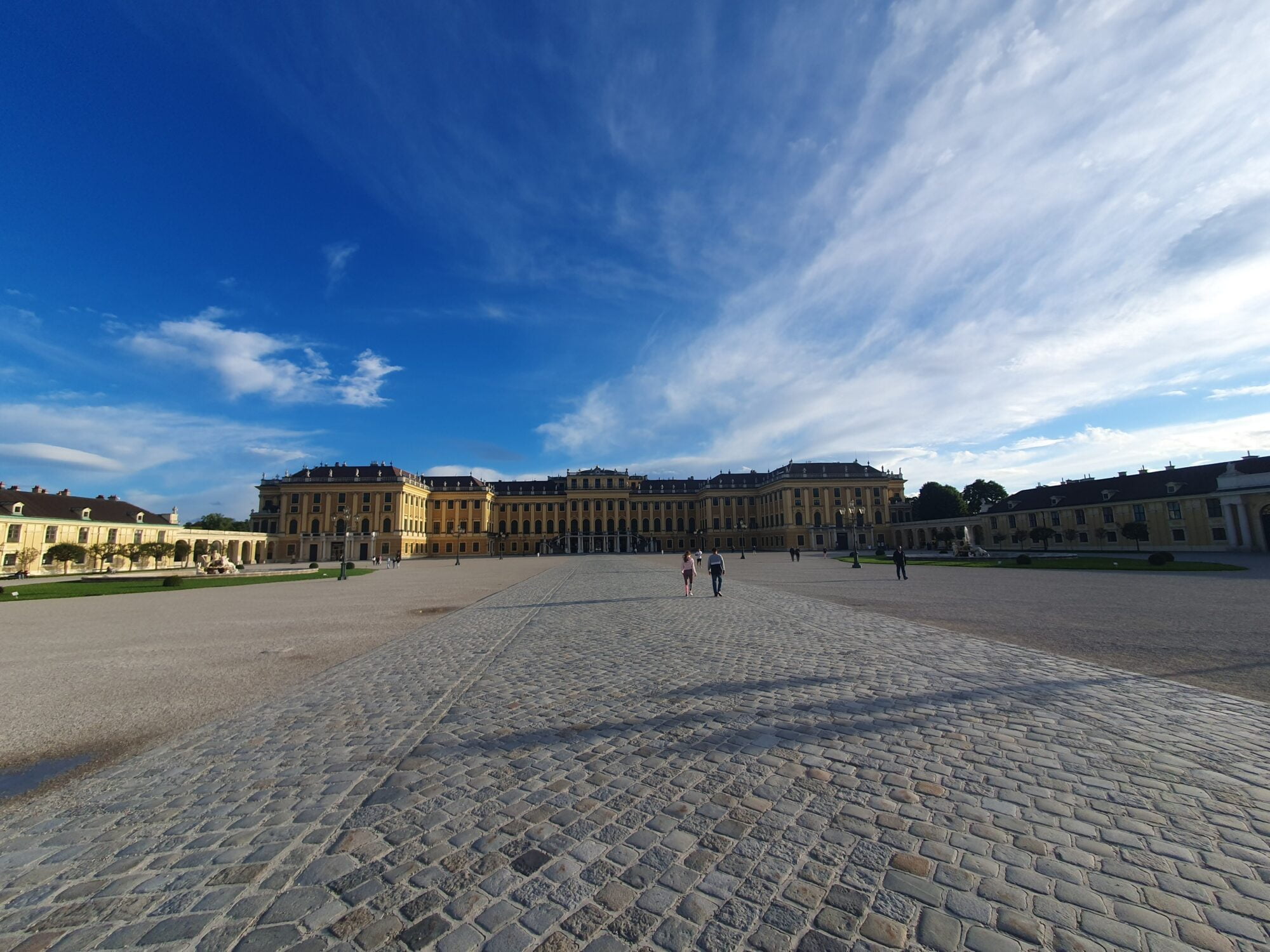
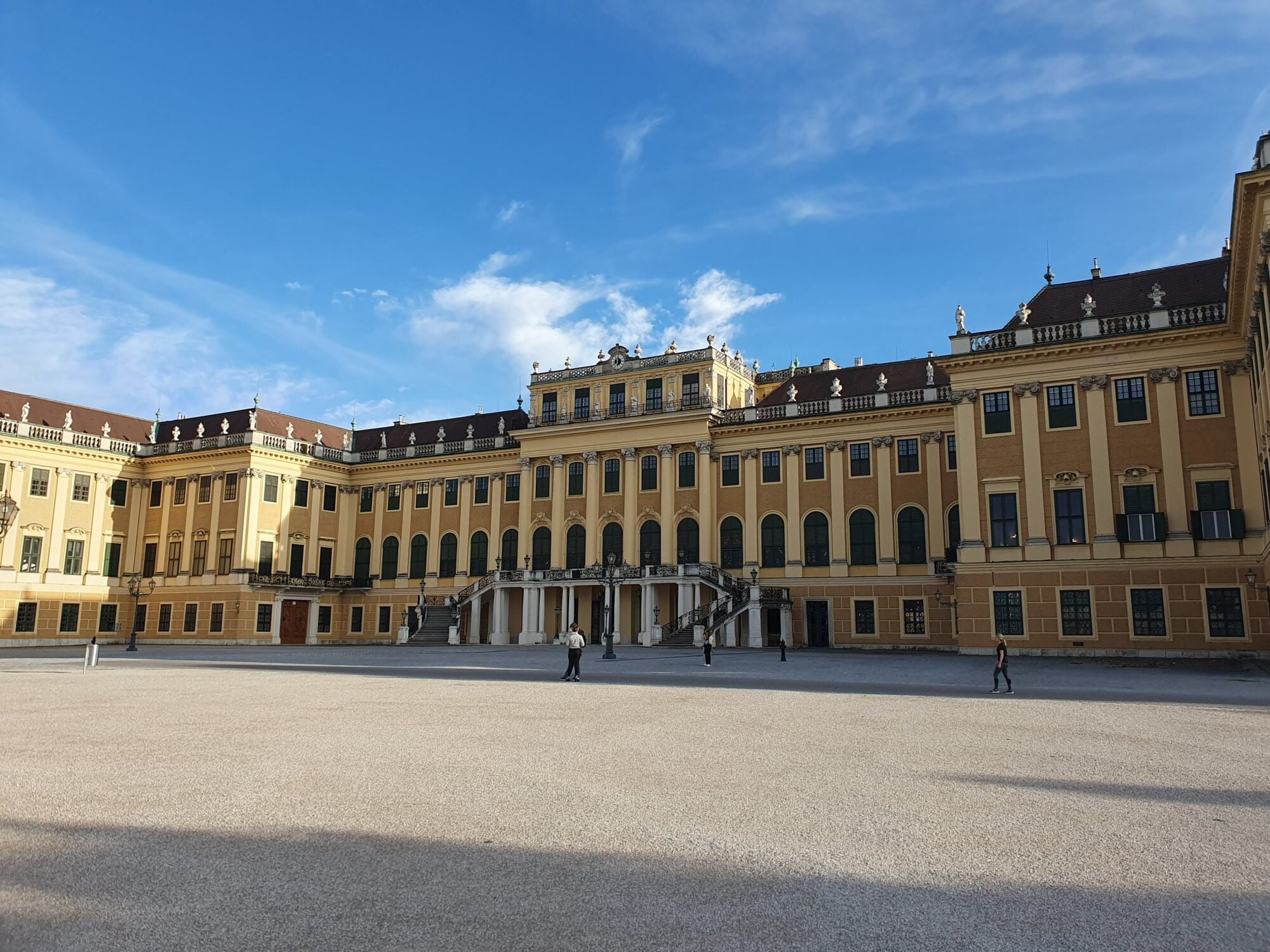
The Parade Court sits in front of the main building of Schönbrunn Palace. This is an epic space to see the buildings and some very nice fountains.
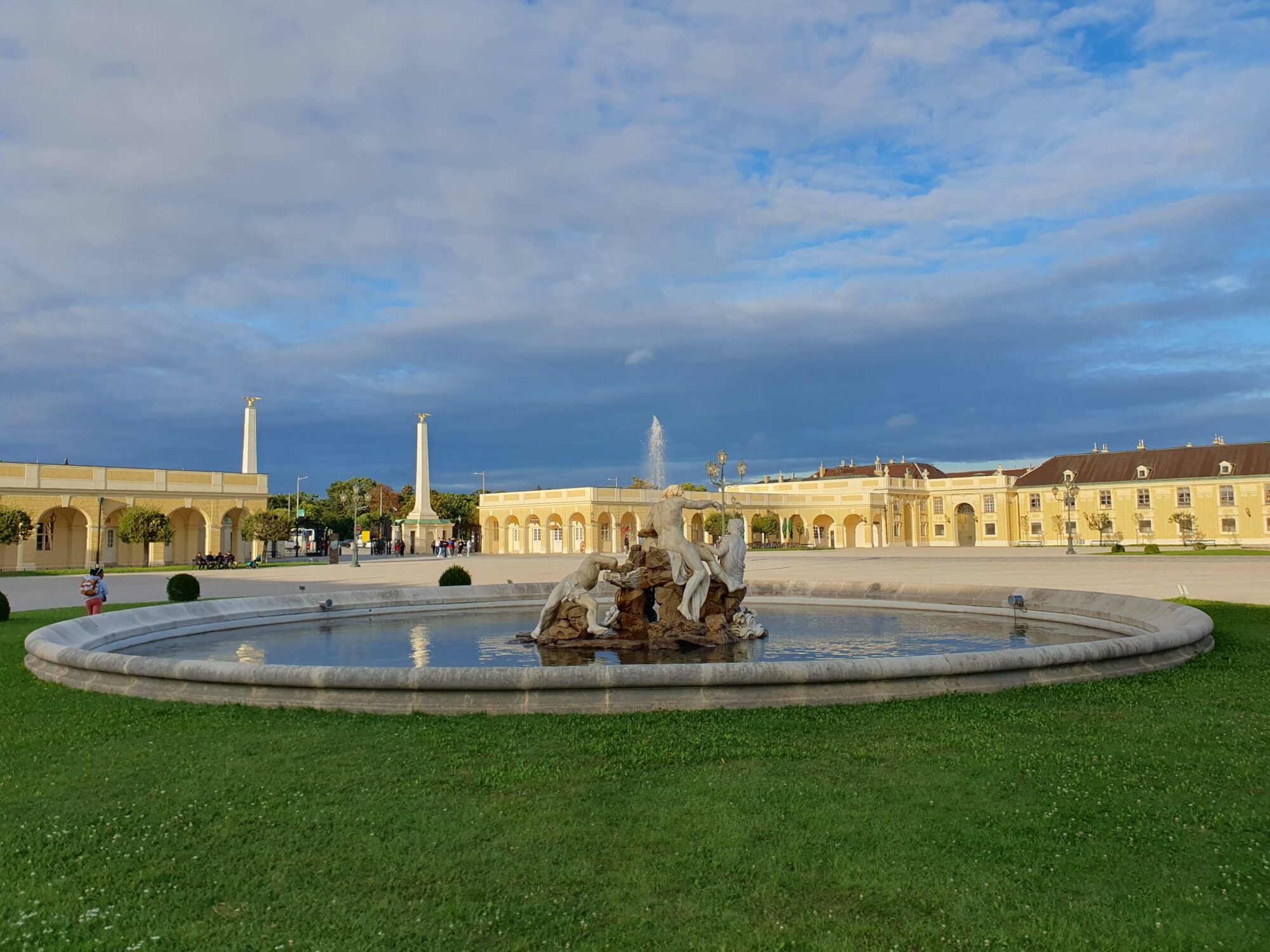
The fountains date from 1776, and the sculptures decorating them look fantastic. You can also see the cavalier wings at the edges of the Parade Court too.

The Parade Court hosted the Easter market on our last visit, which added another dimension to the visit. We enjoyed food and drinks here before getting some gifts to take home. The Christmas markets are also here.
Chamber Garden – Kammergarten
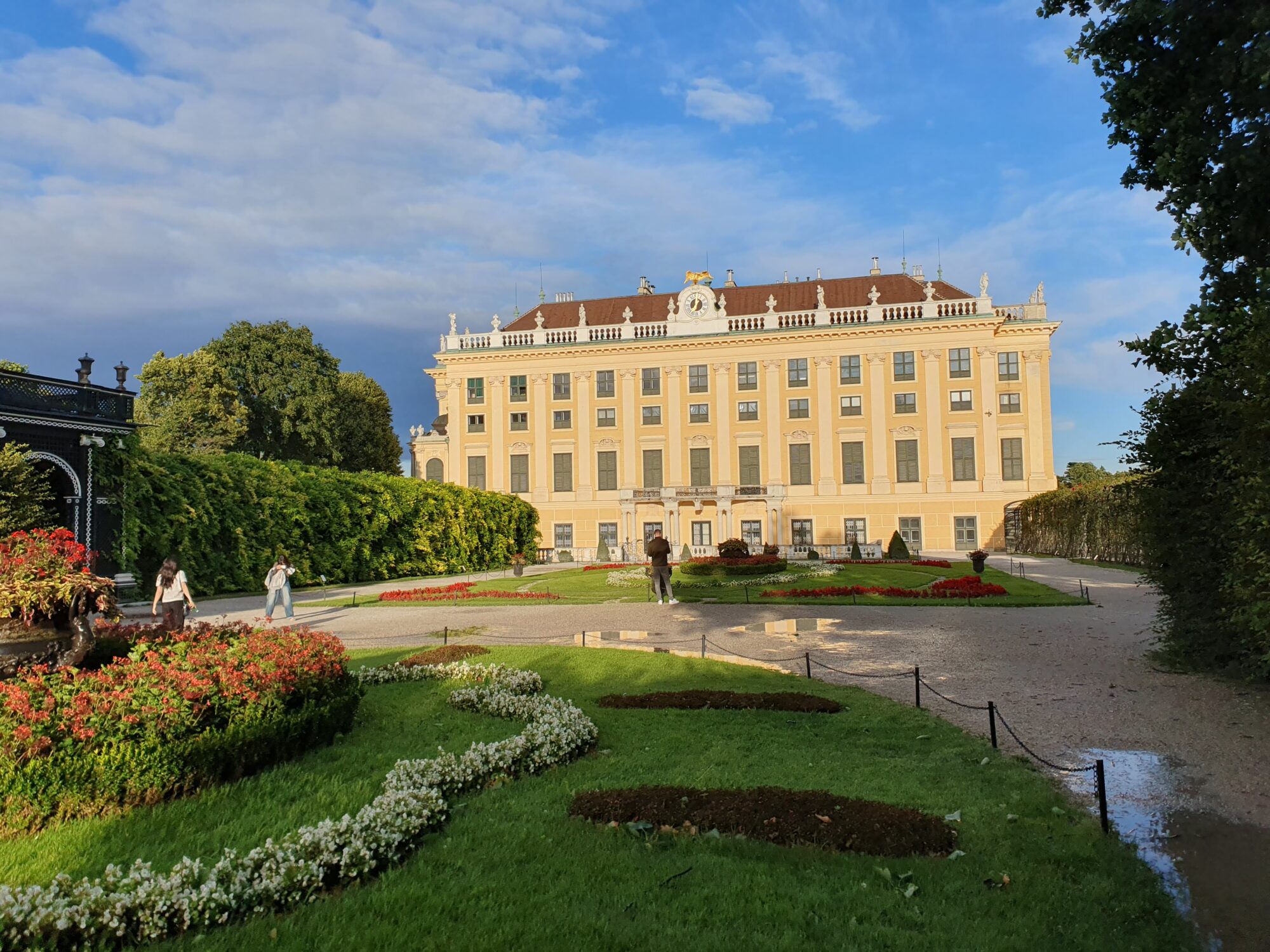
The Chamber Garden, or Kammergarten, is to the side of the main palace building. I really enjoyed visiting here, as the flowers were beautiful, including lots of roses. The shaded rose tunnels helped too on a hot summer’s day.
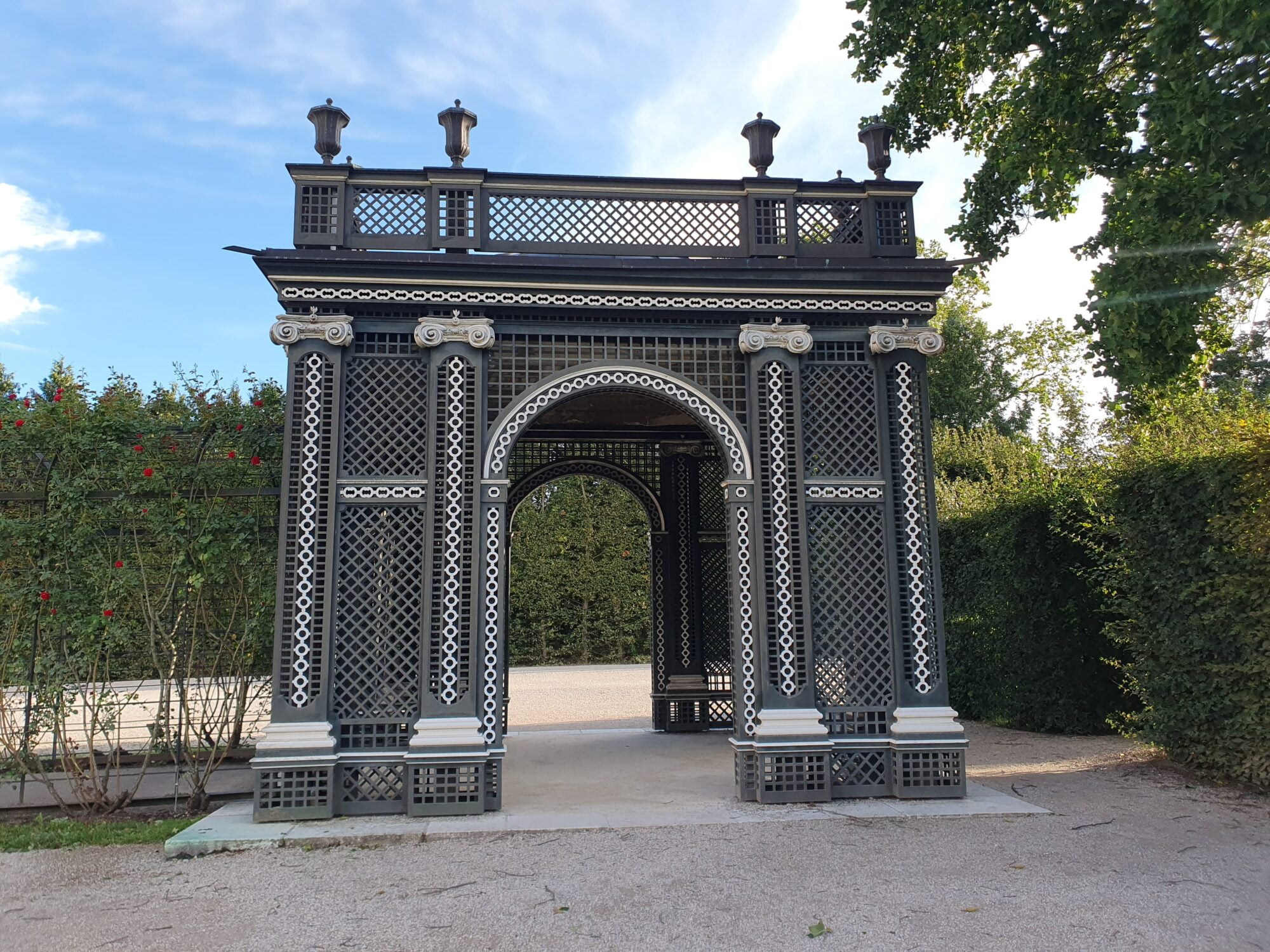
There are lots of flower beds to see, places to relax, and some rather impressive gazebos. You can find this to the west of the main building, and it is well worth a mooch around. It’s especially interesting for those interested in rose gardens.
Obeliskbrunnen – Obelisk Fountain
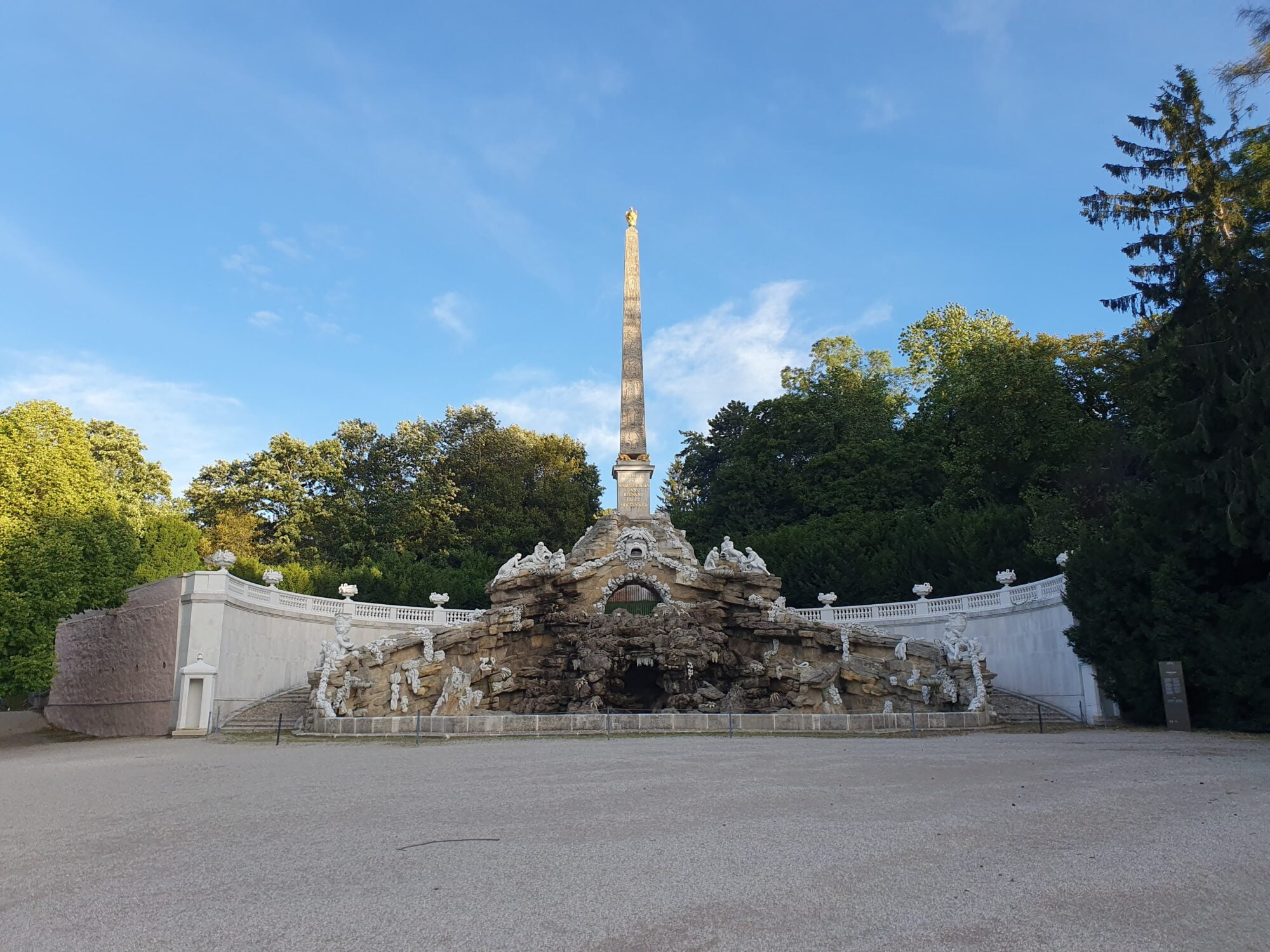
Another nice sight is the Obelisk Fountain, or Obeliskbrunnen. You can see the fountain from near the palace if you look along the tree-lined Obeliskenallee. It is on the east side of the gardens and well worth a look, like the other fountains in the park.
The Obeliskbrunnen is quite large and over 32 metres tall. The fountain dates from 1777; however, the reservoir that operates it was added in 1838. Apparently, Franz Joseph I had his first swimming lesson at the fountain.
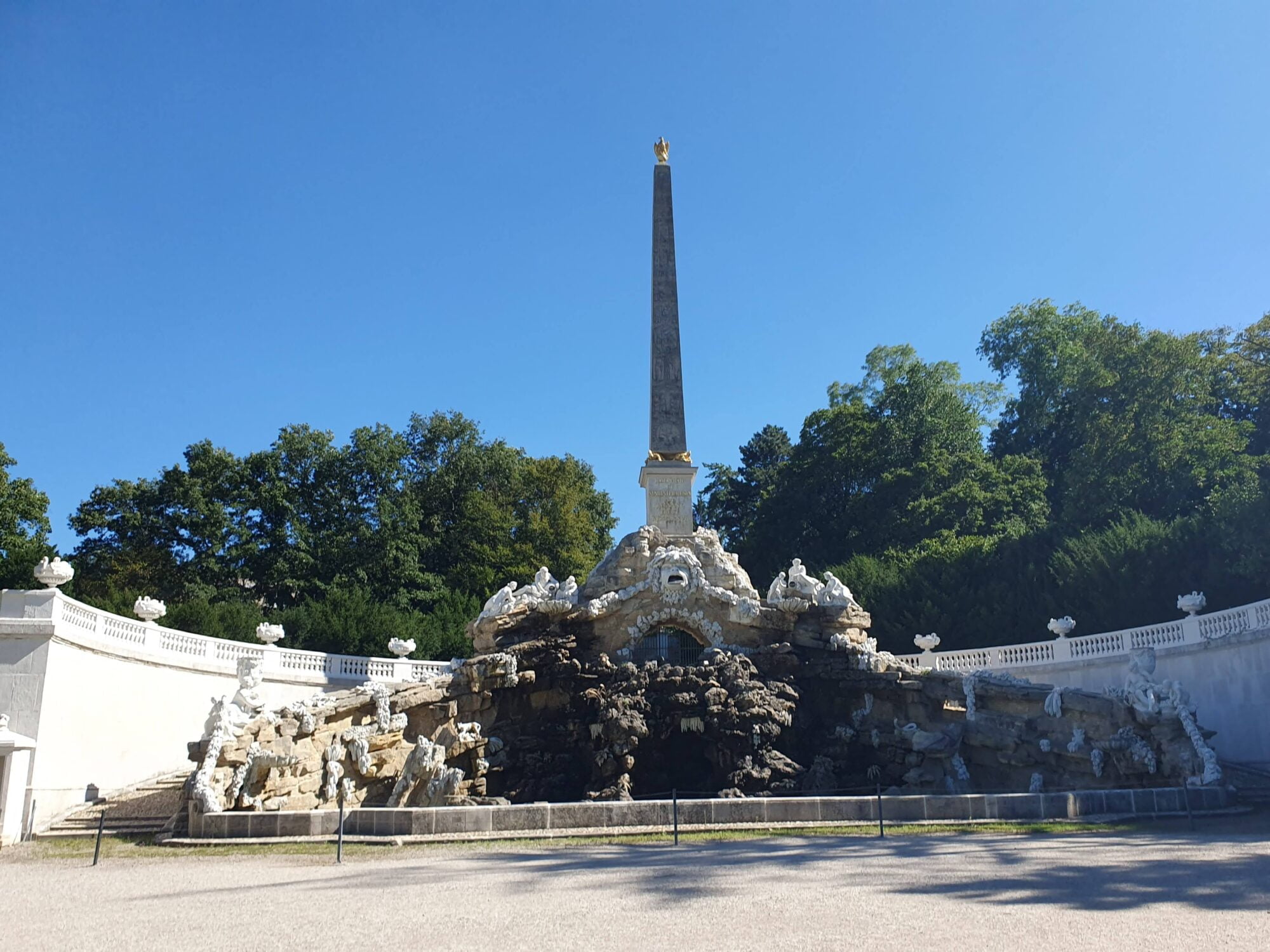
The fountain has various parts to see, including the obelisk. The Grotto Mountain is the beautiful stone at the base. At the top of the obelisk, an eagle is perched on a golden ball. This eagle and ball symbolised an emperor in both Roman and German Europe. At the base of the obelisk are 4 turtles, representing stability and eternity.
Palm House
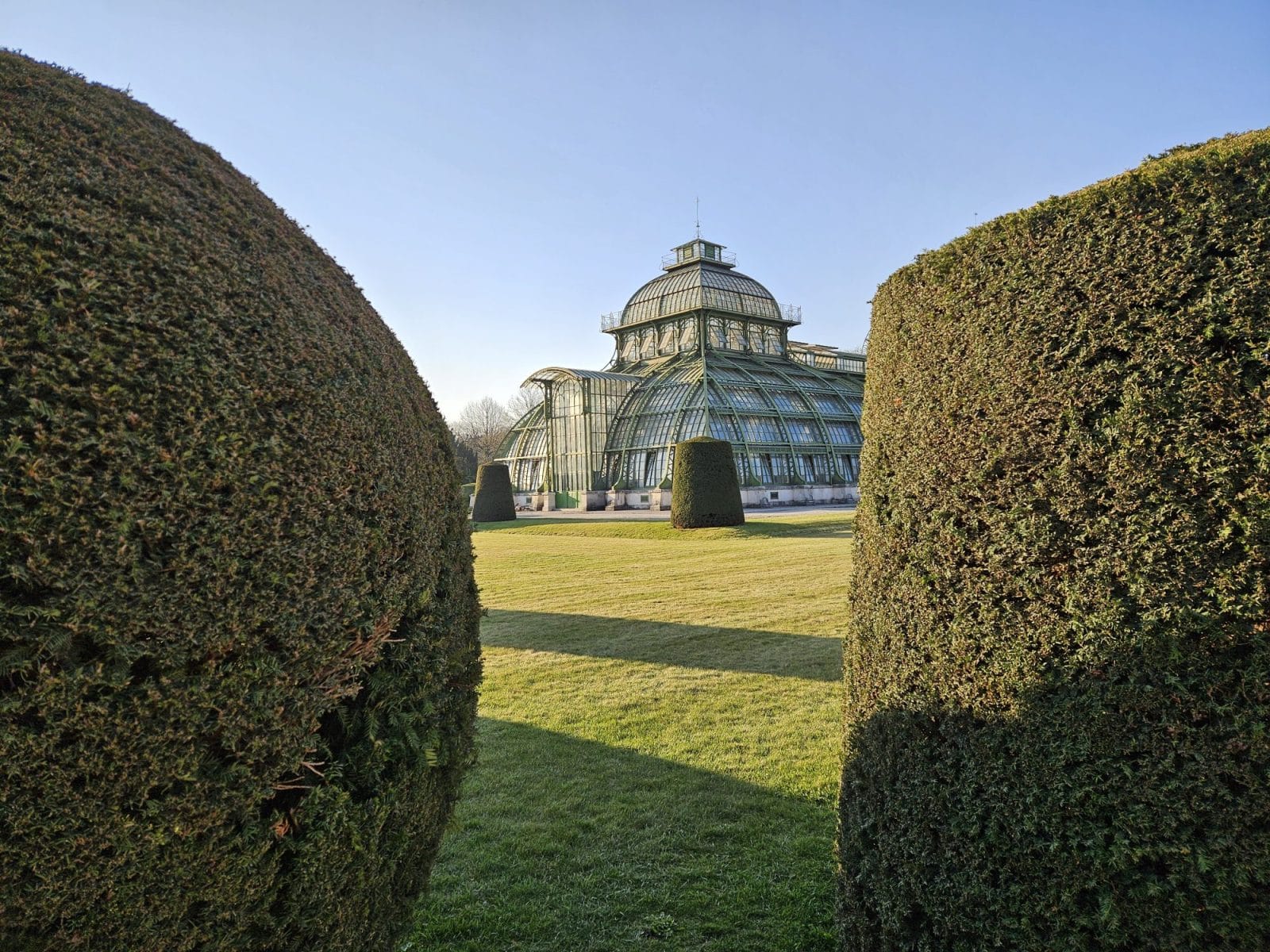
The Palm House is one of the most distinctive buildings in the grounds. I liked the glass-and-iron design, especially when viewed through the nearby shaped hedges. I also visited early in the morning, when the surrounding paths were quiet.
Japanese Garden
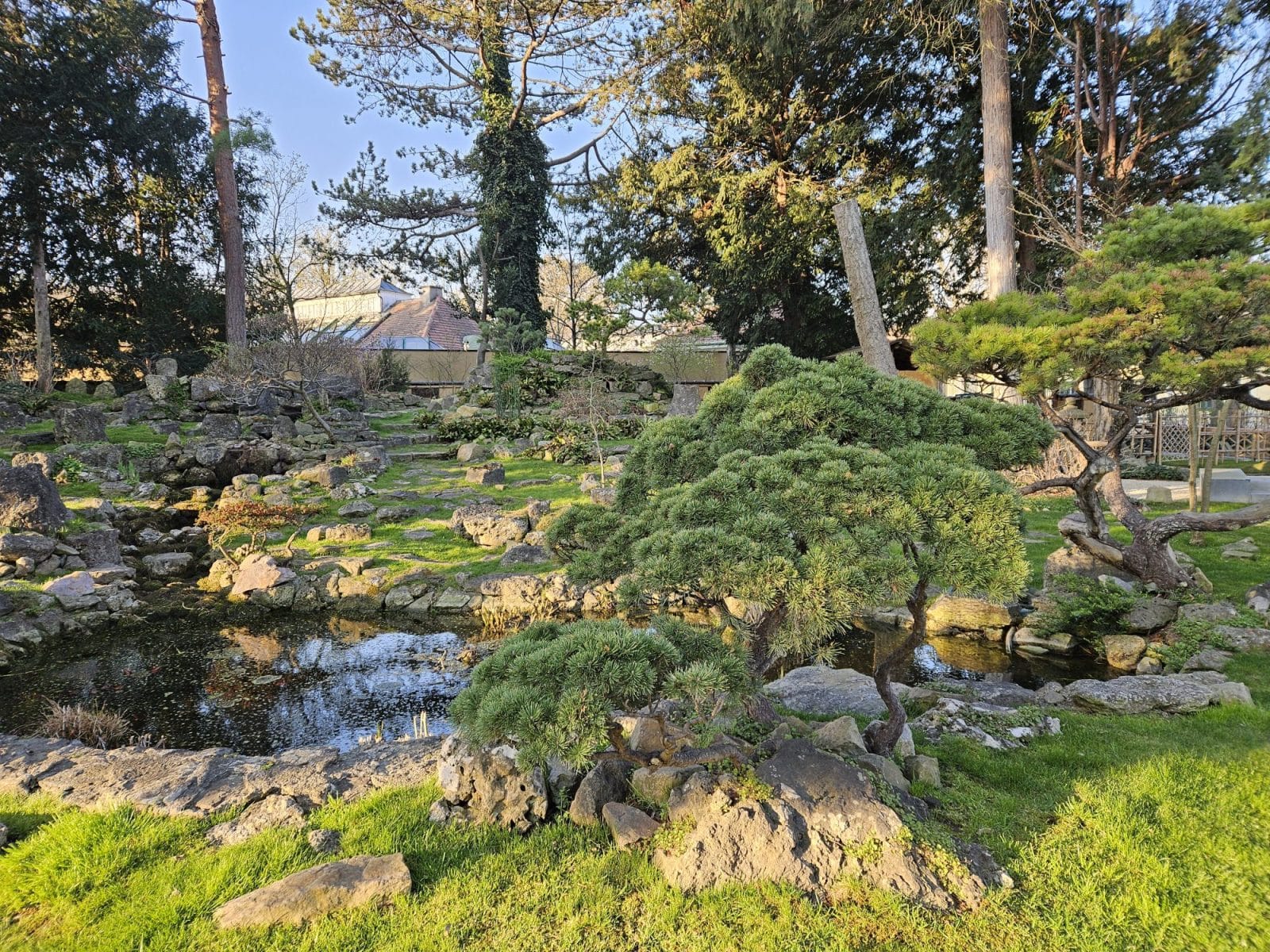
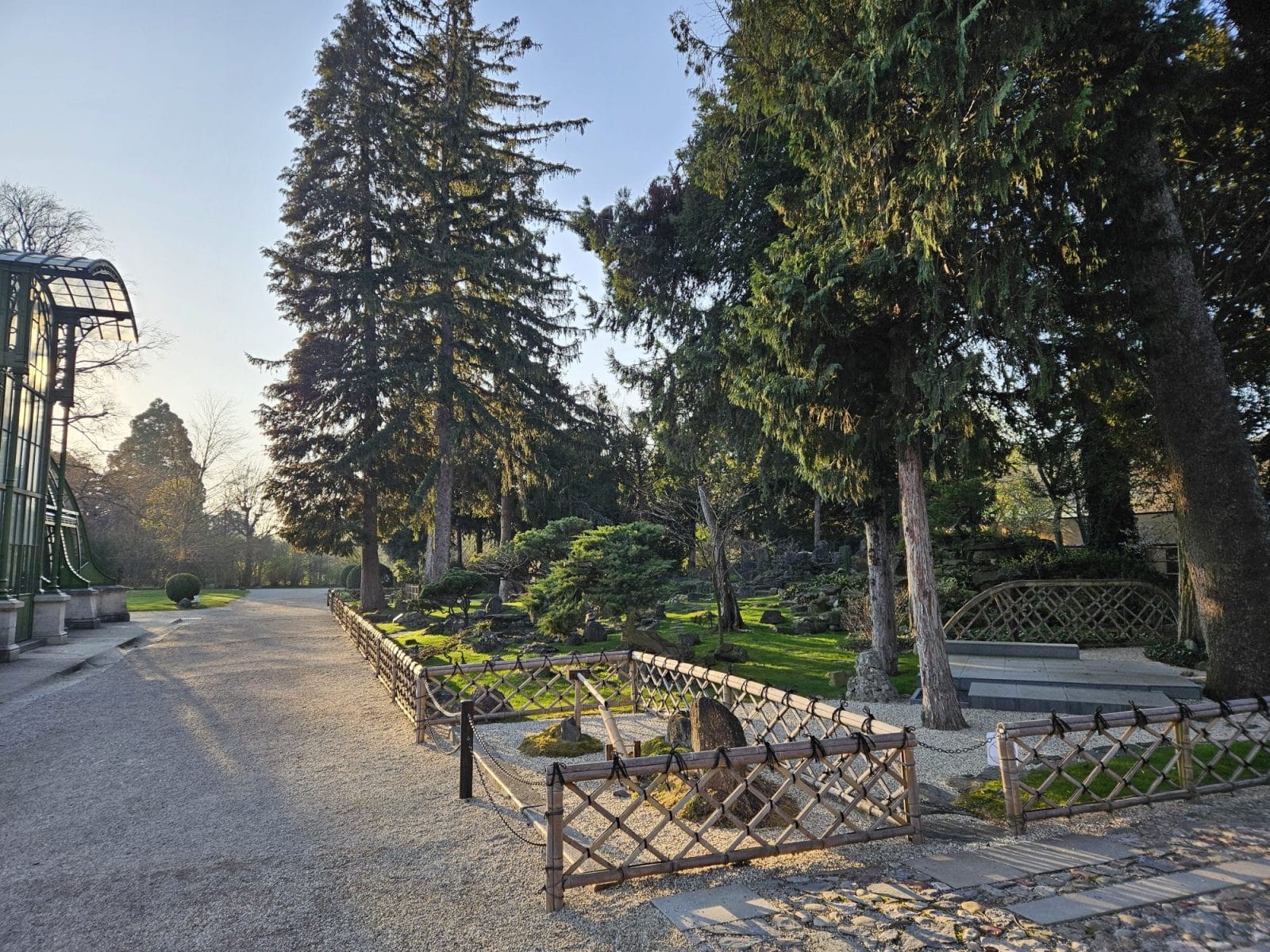
The Japanese Garden is a smaller and quieter part of the Schönbrunn grounds near the palm house. It has some cool trees, including smaller bonsai-type trees, as well as water features. There are paths that let you view the garden from different angles.
Meidlinger Tor
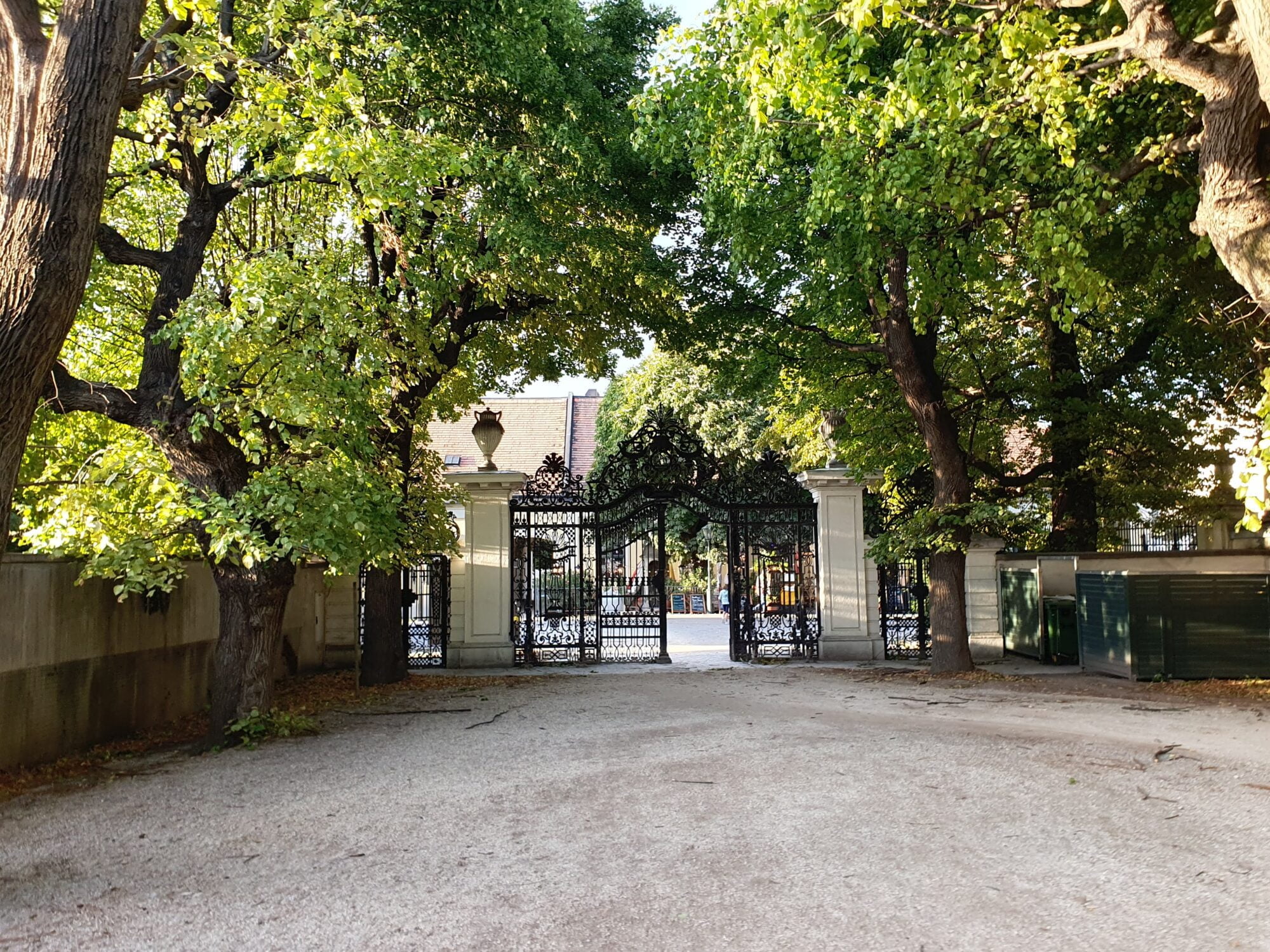
The nearest entrance to the gardens from the Schönbrunn underground station is Meidlinger Tor. Meidlinger Tor is a pleasant gate on the northeast corner of the site. The area near the gate is pleasant and tree-lined, leading to some interesting parts of the garden. Toilets are nearby, and just outside the gate, there are a few places for drinks or food.
Picnic in the Grounds
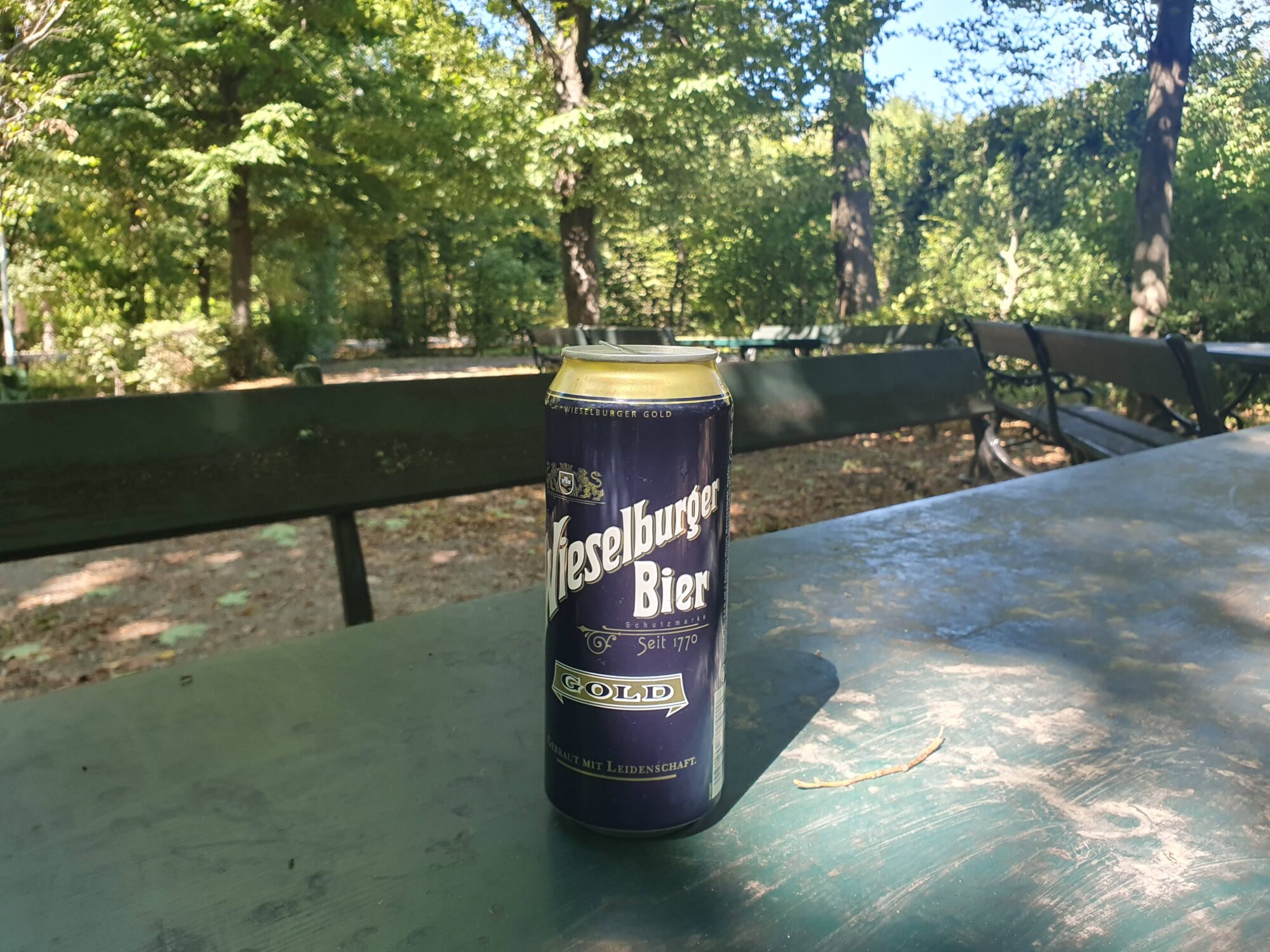
We spotted various places to sit down and enjoy a picnic and beer. We found a lovely group of tables a few minutes’ walk from the Roman Ruins. These tables were big and suitable for larger groups to enjoy a social. However, we had the entire area to ourselves, which was nice for a summer’s afternoon when the rest of the palace was quite busy.
Paid Areas of Schönbrunn Palace
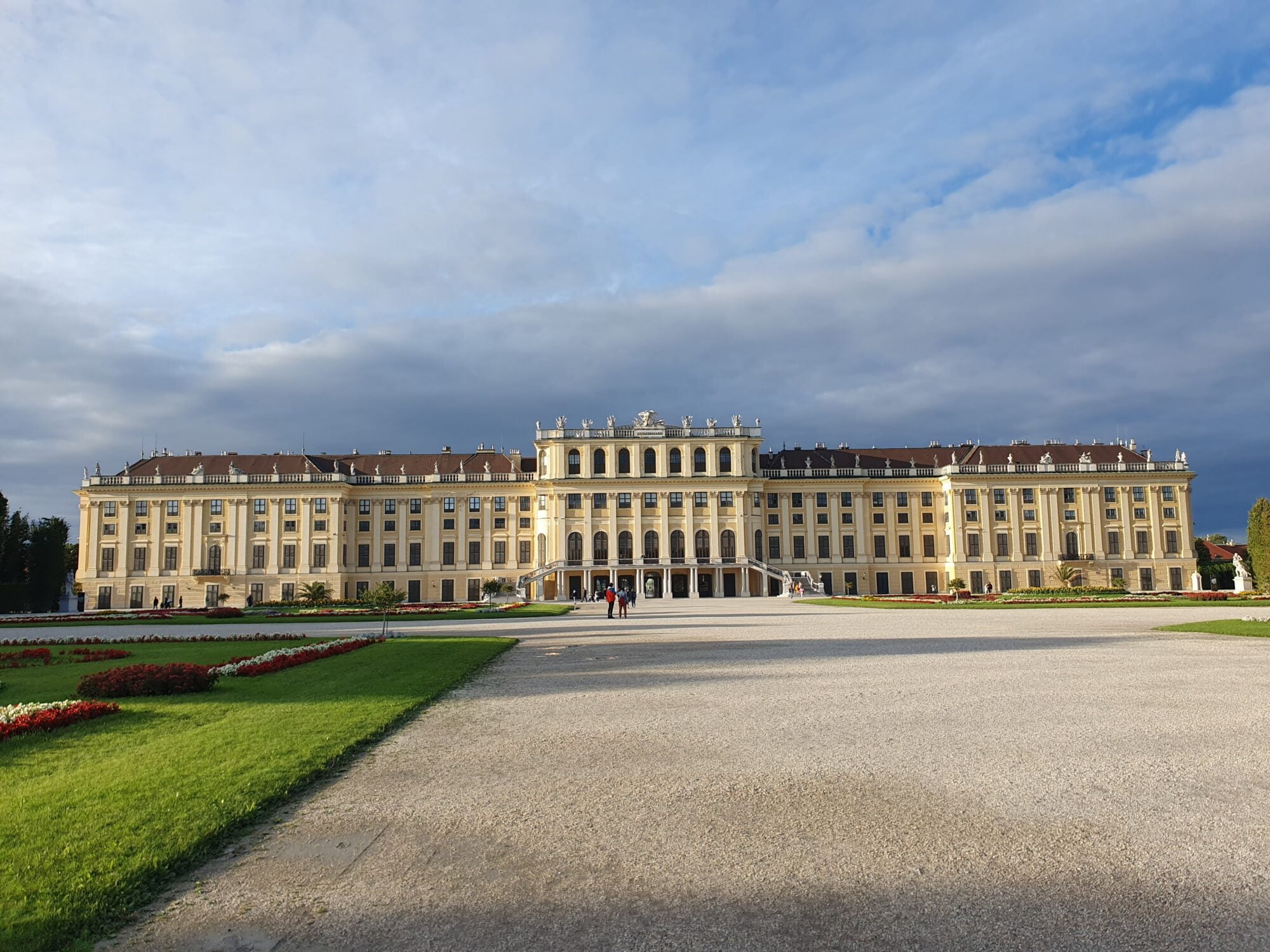
You can pay to visit inside the palace and other attractions on the site, or explore the beautiful gardens for free. The palace has mazes, a zoo, and lots of other features to keep you busy. You can also book tickets in advance.
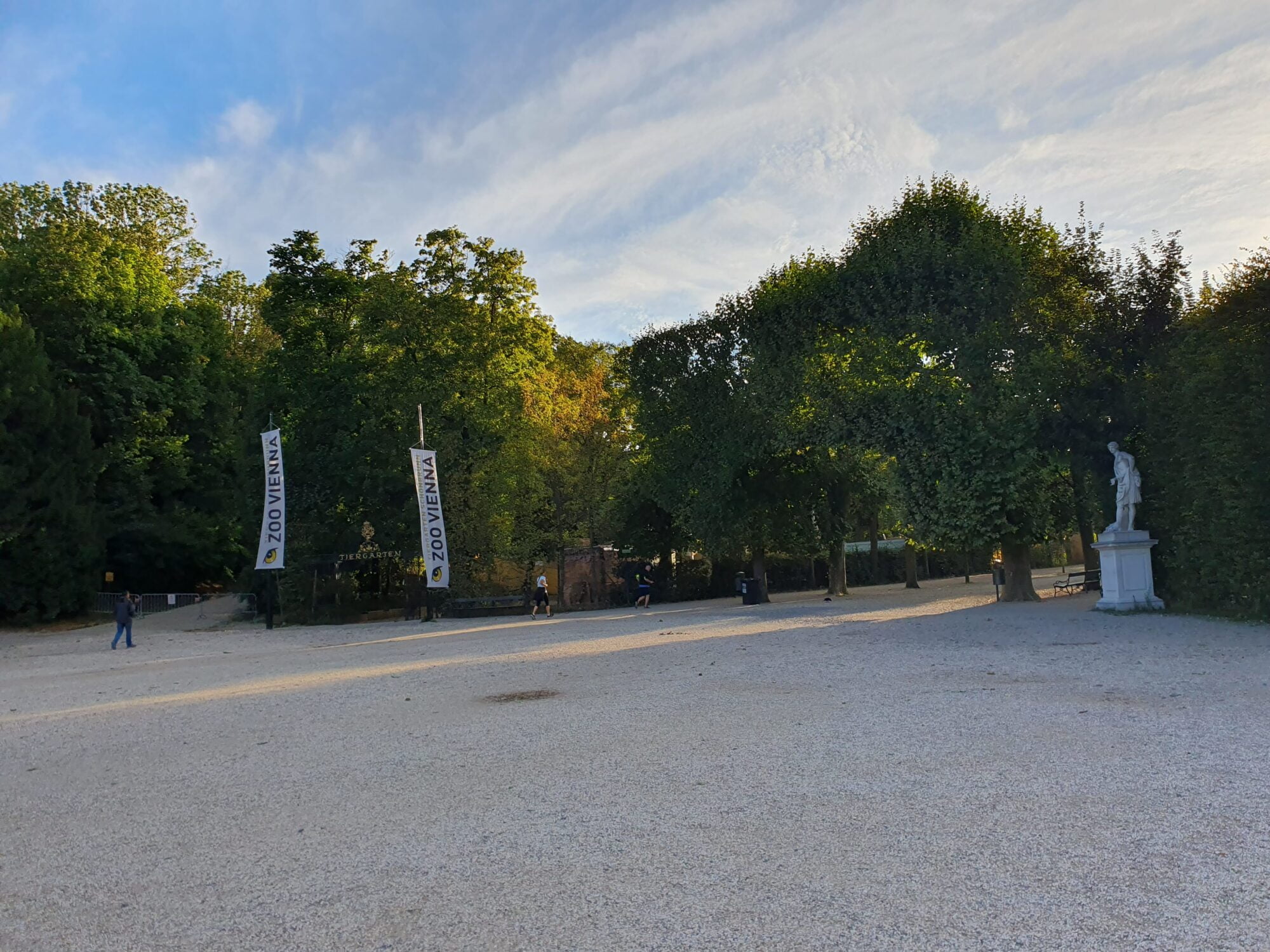
The garden also includes a zoo, a popular attraction for visitors. The zoo is a 17-hectare facility established in 1752. It is the world’s oldest zoo still in operation. The zoo has many animals to see. What piqued my interest was seeing the polar bear enclosure.
Visitor Information
Are the Gardens Dog Friendly?
Sadly for Henry, my dog, the Schönbrunn Palace gardens, like many other royal gardens in Vienna, are not dog-friendly. Thus, booking pet-friendly accommodation nearby is imperative.
Travel Information
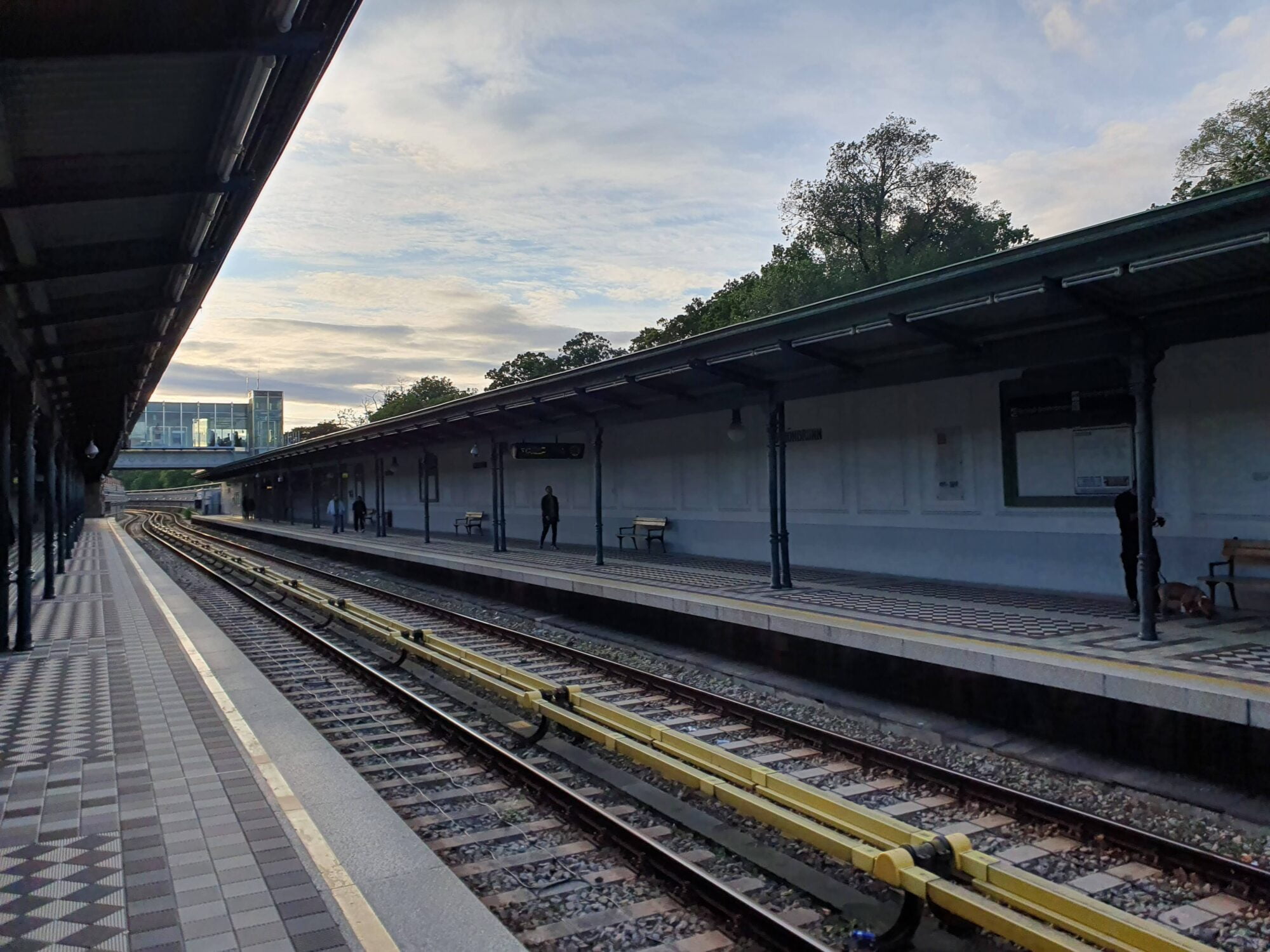
I found the easiest and quickest way to reach Schönbrunn Palace was by using the underground. You need to alight at Schönbrunn station on the U4 line. I usually joined this line at Karlsplatz station after changing.
The U-Bahn station is lovely and was originally part of the city railway line. The station was built between 1896 & 1897. It has some interesting decorative features to see while waiting for the next train.
Refreshments
There are refreshments available in the gardens if you didn’t bring your own picnic. Cafes include the famous Café Gloriette, which overlooks the site. You can also find several places to dine nearby before or after your visit. We chose Wiener Grill Haus, a lovely restaurant with a fantastic beer garden.
Are the Schönbrunn Palace Gardens in Vienna Worth Visiting?
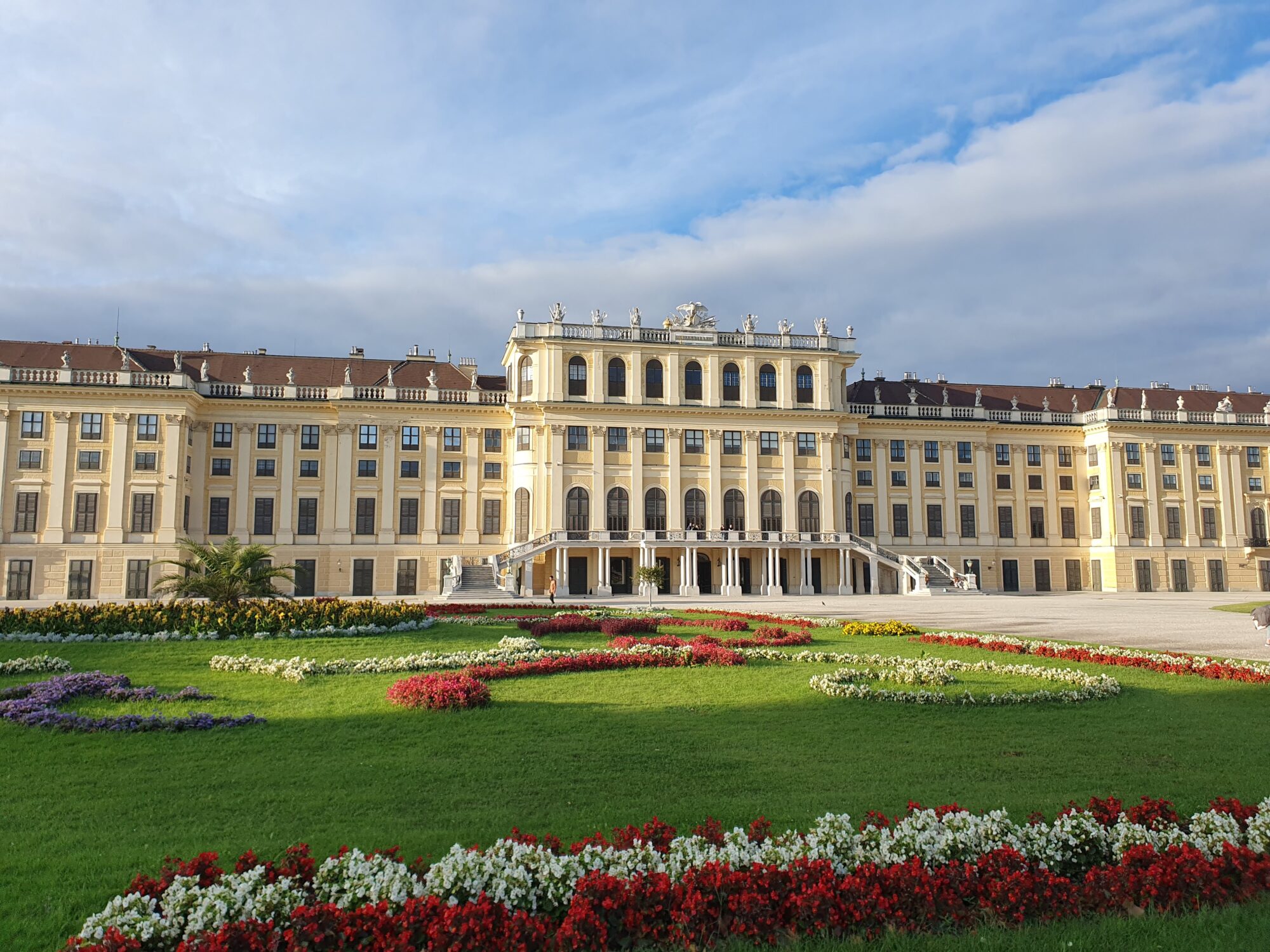
The gardens are amazing and well worth visiting. You can see loads of things for free. The main palace building, viewed from various points in the garden, was a highlight for me. It’s a lovely place for a walk, and there are even spots to sit and enjoy a beer or a picnic. This was one of my favourites among the many palaces in Vienna.
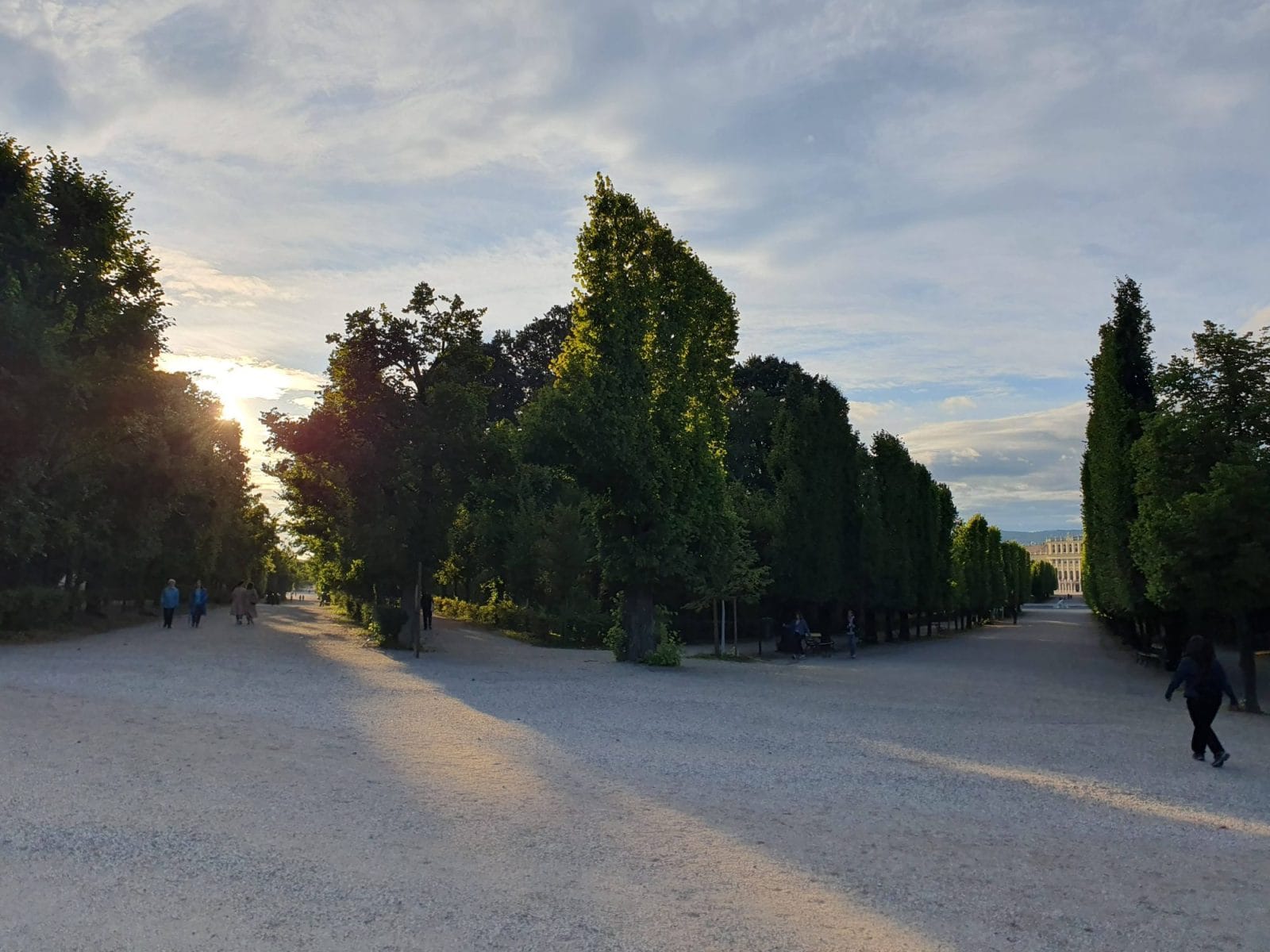
It’s also a lovely place to visit in the late sun and the light it casts. As a bonus, during the summer things have cooled down and the crowds are thinning out. If you like it quiet, arriving as the gates open is very special, and sunrise views from the Gloriete are worth the uphill walk.